




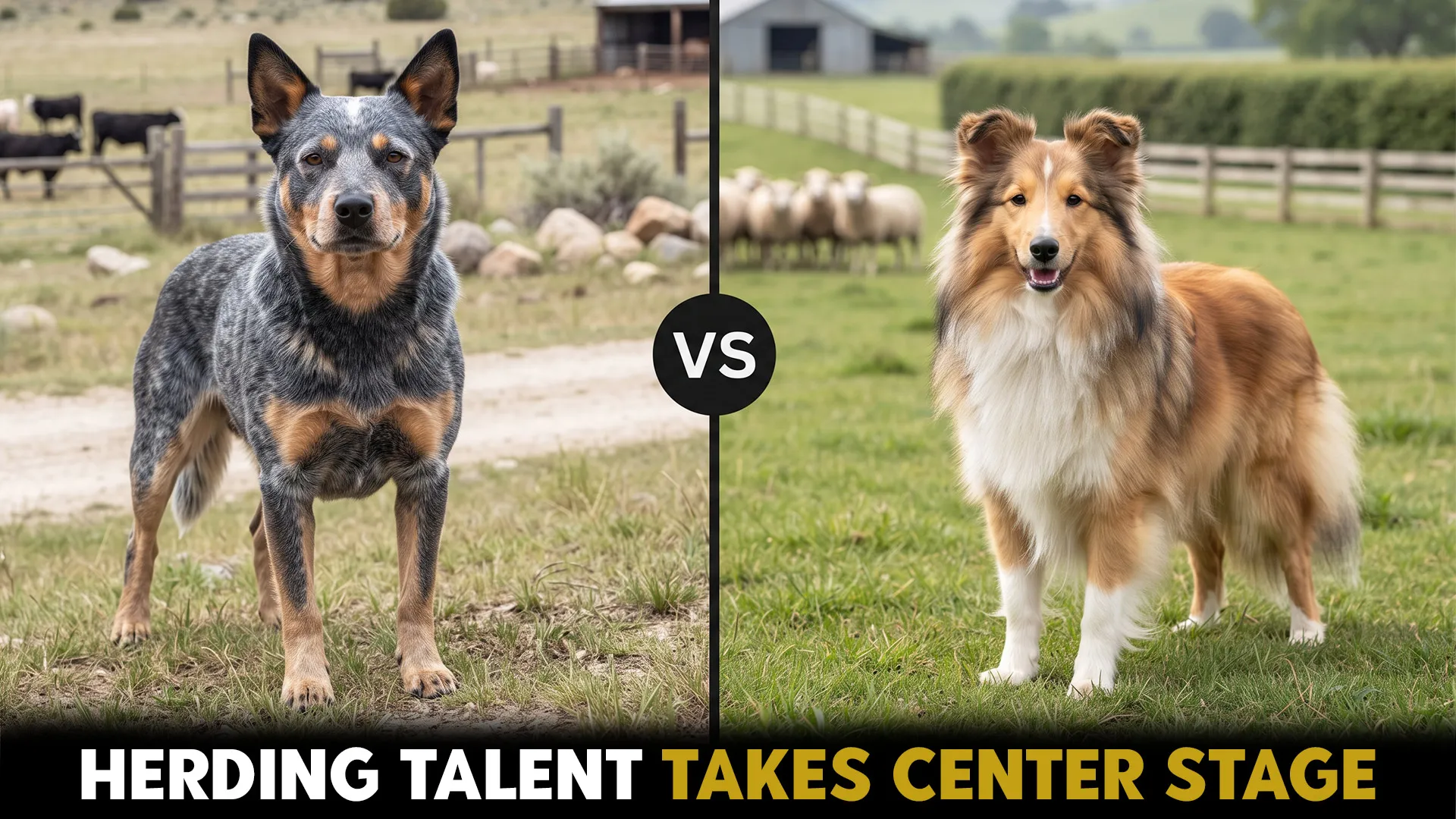
One was shaped to push stubborn cattle across the Australian outback; the other learned to manage flocks across the rugged Shetland Islands. Put these two dog breeds side by side, and the contrast gets instantly interesting.
The Australian Cattle Dog vs. Shetland Sheepdog comparison reveals two sharp-minded herders with very different ways of moving through life.
Both belong to the herding breeds, but their personalities tell different stories. The Australian Cattle Dog carries grit, independence, and remarkable stamina, whereas the Shetland Sheepdog pairs athletic ability with sensitivity and a strong connection to its people. Their shared working ability runs deep, yet each one brings a distinct character to family life.
Read on to explore how these two remarkable herders compare across every key trait!
Australian Cattle Dog vs. Shetland Sheepdog Dog Breeds: Top Qualities
1. Size and Strength
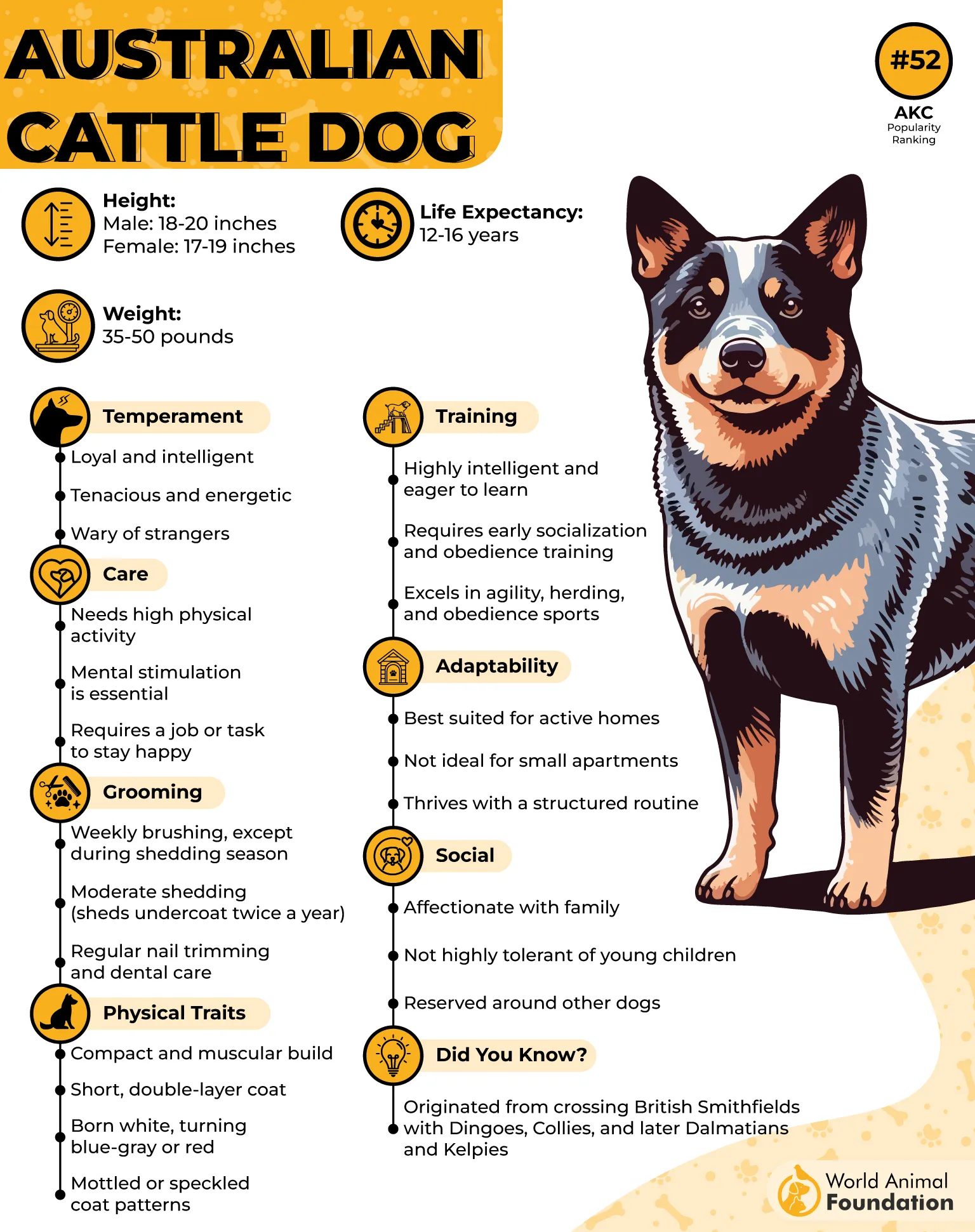
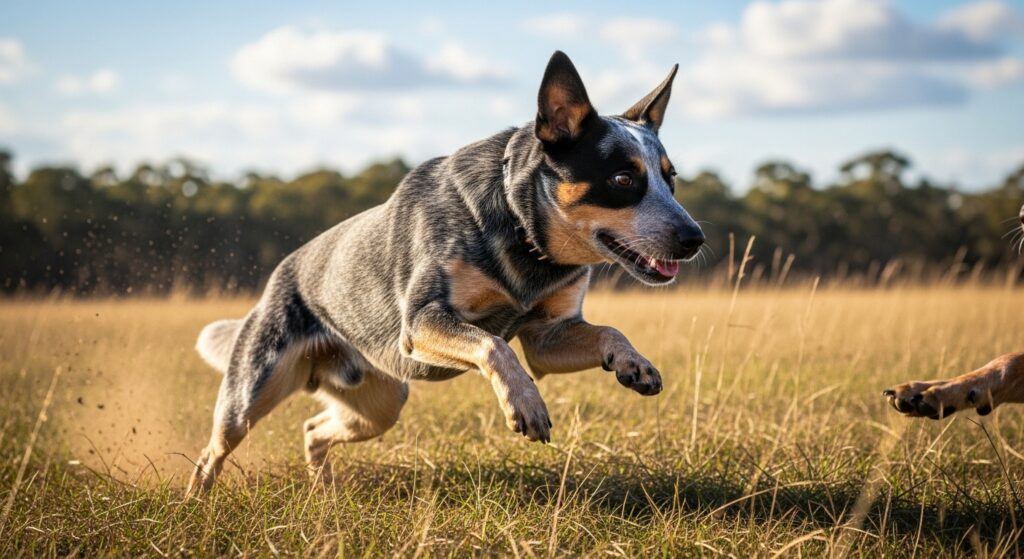
Think heavy-duty horsepower versus lightweight agility. The Cattle Dog built its reputation on raw power and physical presence, tailored for maneuvering herd animals across punishing terrain.
Typically standing 17–20 inches tall and weighing 35–50 pounds, this Australian Cattle Dog packs substantial density into a medium-sized frame without ever looking clunky.
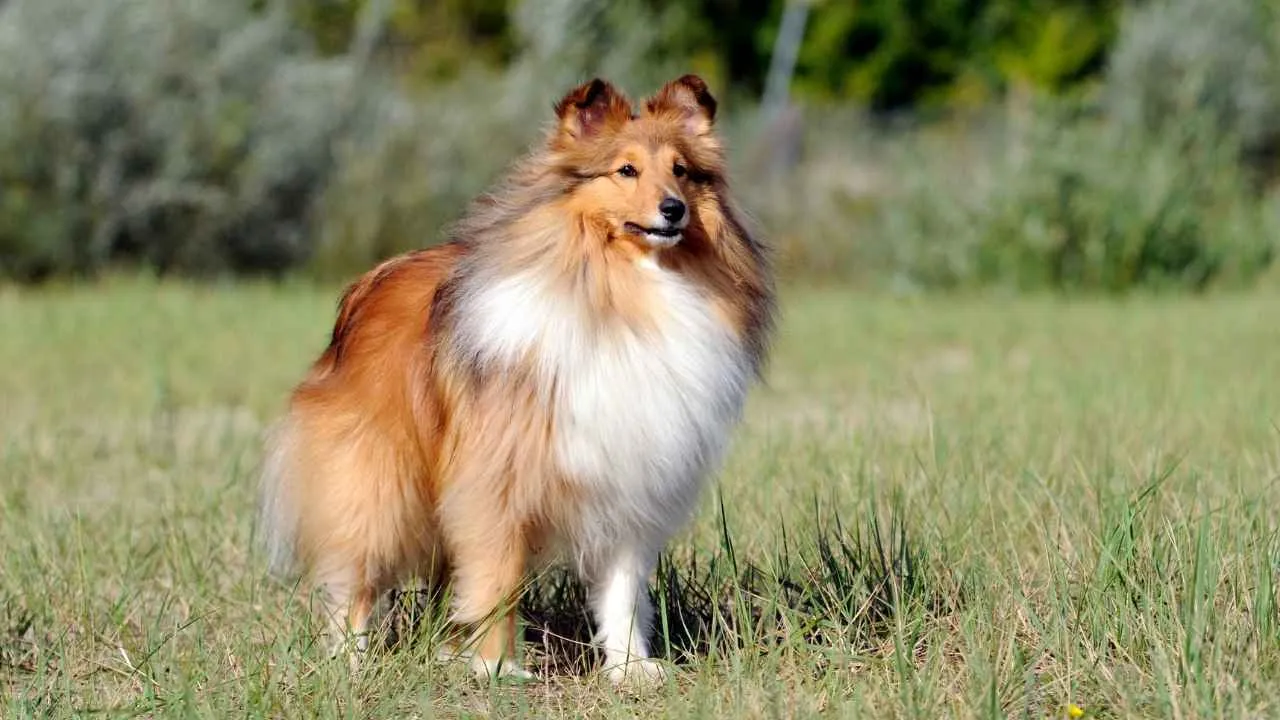
Step over to the Shelties, and the blueprint flips entirely toward lightning-fast acceleration. Tipping the scales at a modest 15–25 pounds and standing 13–16 inches tall, this smaller herder trades brute force for refined coordination and razor-sharp maneuvering.
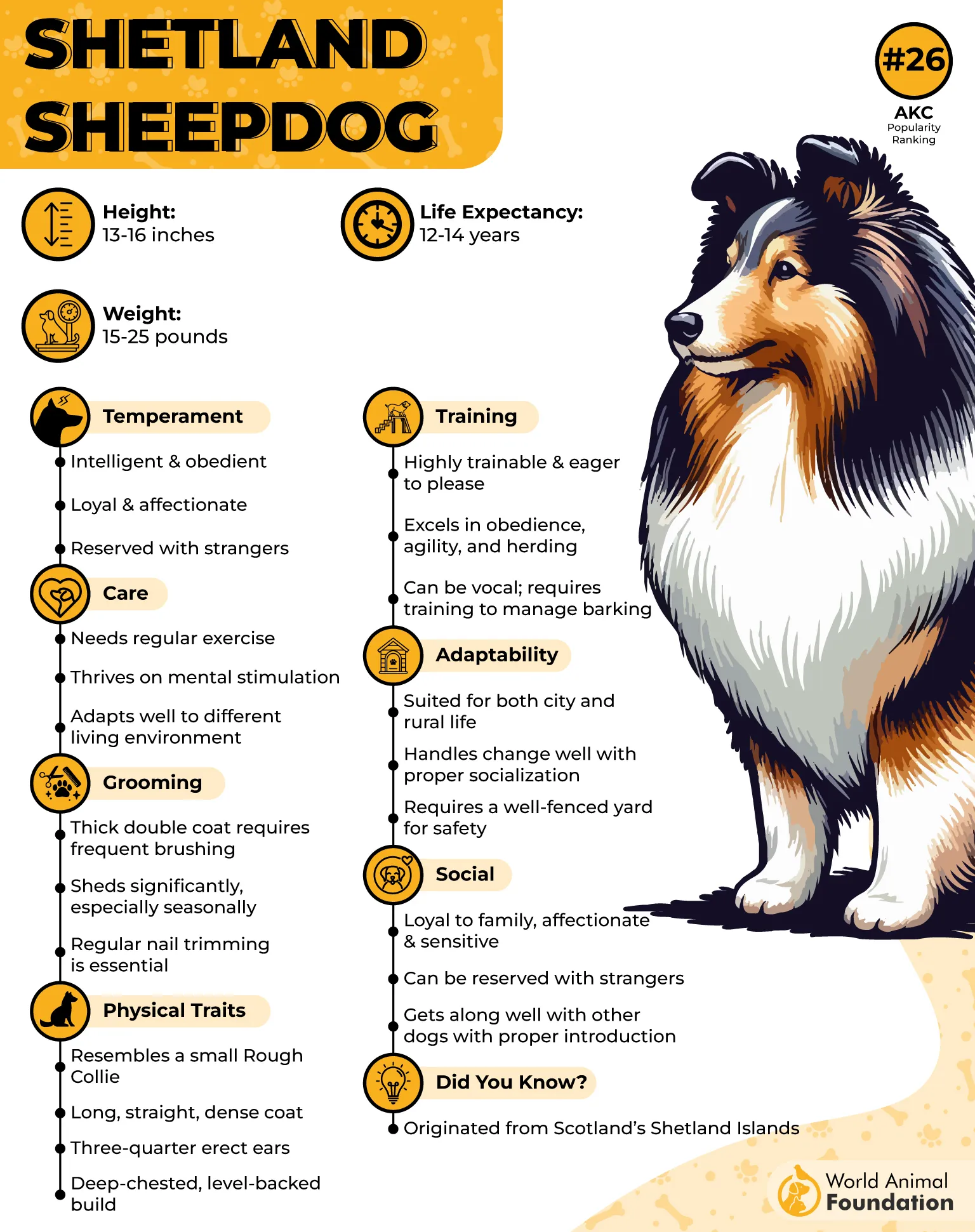
Their history of herding sheep required a body built for quick shifts and instant turns rather than physical confrontation. Where one breed looks ready to anchor a moving herd, the other looks ready to weave through traffic and vanish in a flash. This is a physical contrast that dictates how each dog handles daily life.
2. Temperament and Personality
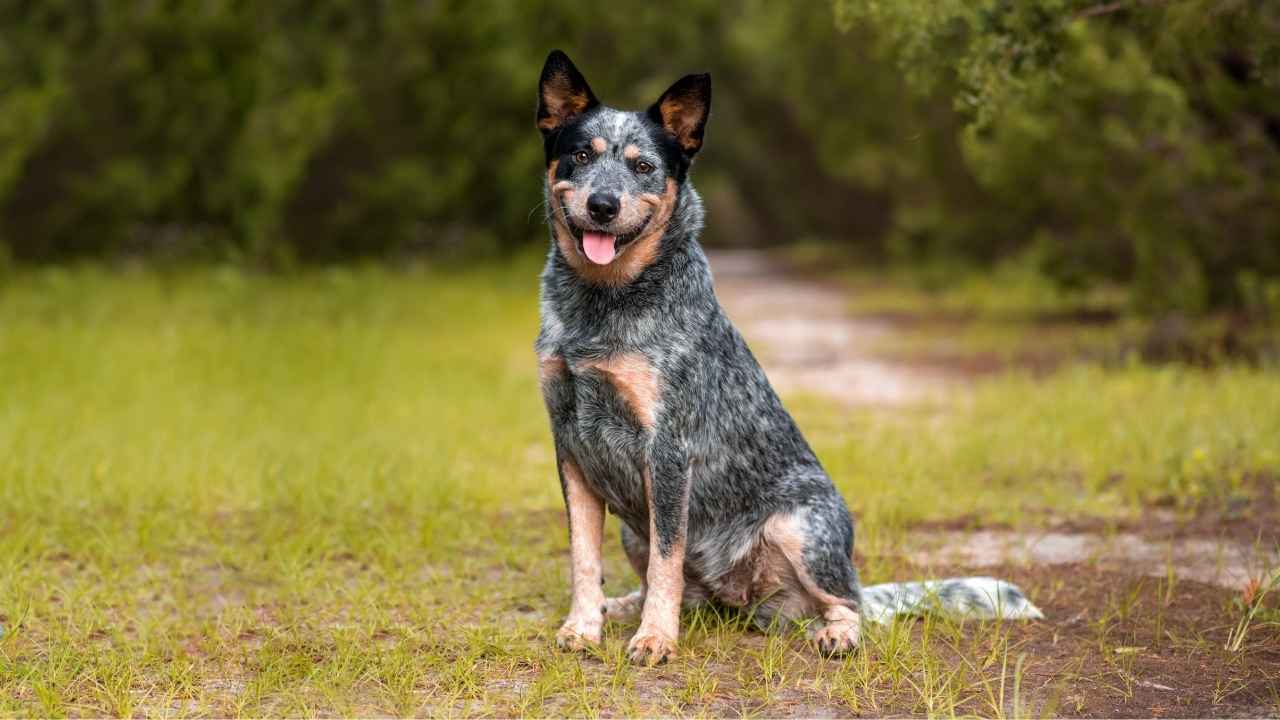
When an Australian Cattle Dog links up with its crew, that loyalty is etched in stone. Beneath that devotion, however, lies an independent streak that keeps this worker from ever being a pushover. Unfamiliar visitors won’t get an automatic pass either; an alert, watchful glare and a naturally reserved attitude toward strangers keep this dog on constant watch.
The Sheltie, by contrast, operates like an emotional tuning fork. Highly affectionate and deeply attuned to the household vibe, this intelligent companion thrives on mutual affection and naturally gravitates toward its favorite person with pure eagerness. Britannica states that when newcomers arrive, its guarded side comes wrapped in a distinctly vocal announcement rather than a silent stare.
It creates two entirely different household dynamics: the Cattle Dog brings intense focus and stoic independence, while the Sheltie delivers cooperative charm and heart-on-its-sleeve closeness.
3. Health and Lifespan
Built like a tough all-terrain vehicle, the Australian Cattle Dog boasts a strong constitution that frequently keeps it active over an expected 12–16-year lifespan. To protect that long-term vitality, responsible breeders screen for progressive retinal atrophy, hip dysplasia, and inherited deafness, while routine veterinary care ensures this relentless worker stays in top physical form.
The Shetland Sheepdog commands an impressive life expectancy of its own, typically flourishing for 12–14 years. Preventive care for this breed zeros in on hip, eye, thyroid, and skin wellness, alongside screens for breed-specific concerns such as dermatomyositis, von Willebrand disease, epilepsy, and gallbladder mucoceles.
Genetics write the initial script, but daily commitment finishes the story. Balanced nutrition, meticulous dental care, routine checkups, structured activity, and a quick eye for physical changes keep both working breeds thriving.
4. Training and Exercise
Mentoring an Australian Cattle Dog feels less like basic pet ownership and more like managing an ambitious, highly smart executive. Skipping the basics isn’t an option.
Early socialization and clear obedience boundaries are vital to direct that legendary drive. They crave high-stakes engagement, thriving when channeled into performance work, tracking, or advanced tasks that give their working heritage purpose for farmers and trainers alike.
The Sheltie steps into the training ring with a totally different vibe: pure, unadulterated enthusiasm. Boasting exceptional trainability, keen responsiveness, and a deep-seated willingness to please.
This quick-witted partner routinely dominates in agility, herding, and tracking trials. Upbeat learning becomes a game they never want to stop playing.
Boredom is the enemy for both, but their motivations diverge. The Cattle Dog demands a meaningful challenge, while the Sheltie thrives on fluid communication, shared goals, and collaborative learning.
5. Grooming Needs
If low-maintenance utility is the goal, the Australian Cattle Dog keeps things delightfully simple. Engineered for the rugged outdoors, its short double coat naturally sheds dirt and weather. A basic routine of regular brushing, boosted during the two major seasonal shedding cycles. Periodic baths and routine nail trims keep this worker clean and ready for action.
The Sheltie takes the stage with a show-stopping coat that demands a serious time commitment. Beneath that dramatic, flowing outer layer lies a dense undercoat prone to heavy shedding and stubborn mats around the ears, legs, and tail if neglected.
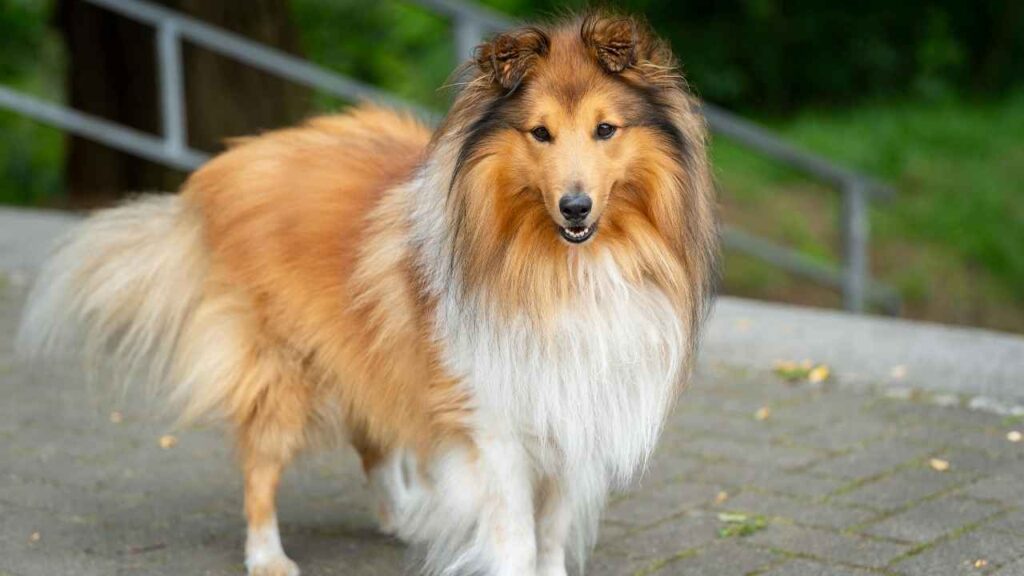
Whatever you do, keep the clippers away: shaving is a major misstep because that double coat insulates against extreme heat, harsh cold, and sun damage.
It comes down to practical simplicity versus hands-on beauty care: one needs a quick sweep, while the other invites a daily grooming ritual to maintain.
6. Energy Level
You will run out of daylight long before an Australian Cattle Dog runs out of stamina. Built for endless miles of cattle driving across the ranch, this relentless worker treats a casual neighborhood walk like a warm-up stretching session. High-octane active lifestyles filled with trail running, backcountry hiking, farm chores, and demanding dog sports are mandatory to keep this energetic dog satisfied.
The Sheltie packs an incredible amount of athletic spark into a compact package. Omlet mentions that daily walks, interactive fetch, agility games, and puzzle toys easily fulfill its physical and mental appetite. Thanks to its adaptable nature, a well-exercised Sheltie has the ability to settle and adapt smoothly to smaller quarters once its daily drive has been satisfied.
The key distinction lies in the output required. The Cattle Dog calls for continuous, heavy-duty endurance, whereas the Sheltie excels with a balanced combination of playful movement, interactive play, and mental stimulation.
7. Natural Guard Instincts
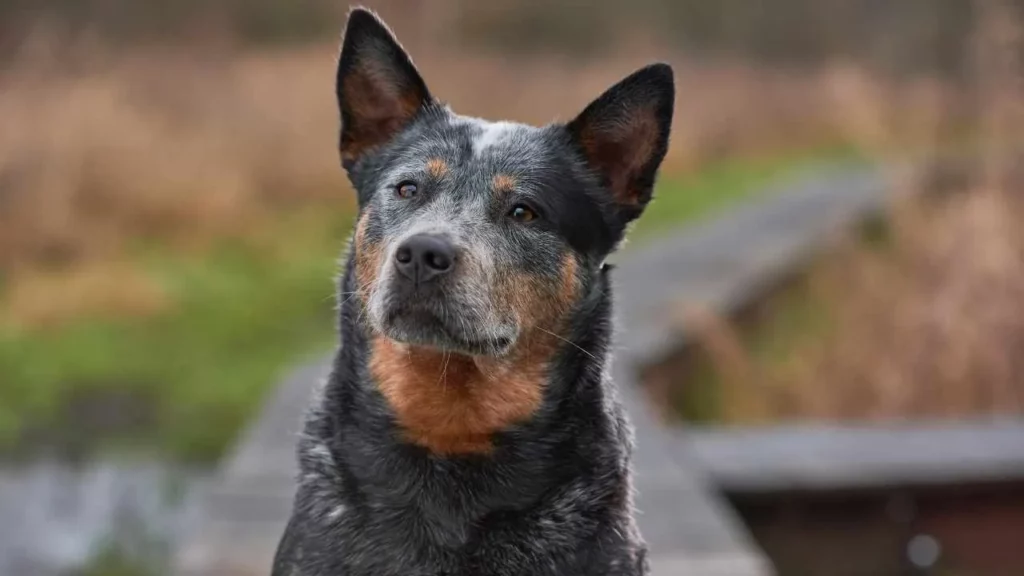
Nothing sneaks past the watchful gaze of an Australian Cattle Dog. Possessing fierce, protective instincts over its family, home, and livestock, this breed carries the serious authority of a dedicated guardian over its property. It’s no surprise the official AKC breed standard explicitly highlights the Australian Cattle Dog as a courageous, watchful, and protective defender of its domain and people.
The Sheltie acts as a high-frequency alarm system. What it lacks in imposing size, it makes up for with immediate, vocal vigilance, sounding an instant alarm at the first sign of an unfamiliar approach or unusual disturbance. Orvis honors the Sheltie as an exceptional watchdog, pointing out its naturally reserved, discerning attitude around strangers.
While neither dog replaces a modern security system, both maintain an unmatched awareness of their environment. One offers a formidable physical defense, while the other makes sure the whole block knows the moment something changes.
Conclusion
These two herders offer two distinct kinds of companionship. The Australian Cattle Dog carries the rugged spirit of the ranch, ready for demanding work, outdoor adventures, and purposeful challenges. The Sheltie brings a softer spark, combining athleticism with close companionship and a remarkable eagerness to learn.
Your lifestyle ultimately shapes the experience. An active household with plenty of structure might appreciate the Cattle Dog’s intensity, while someone seeking a responsive companion with a lively personality might find the Sheltie a great choice. Either way, these versatile working dogs turn ordinary days into something far more energetic, engaging, and memorable.
