




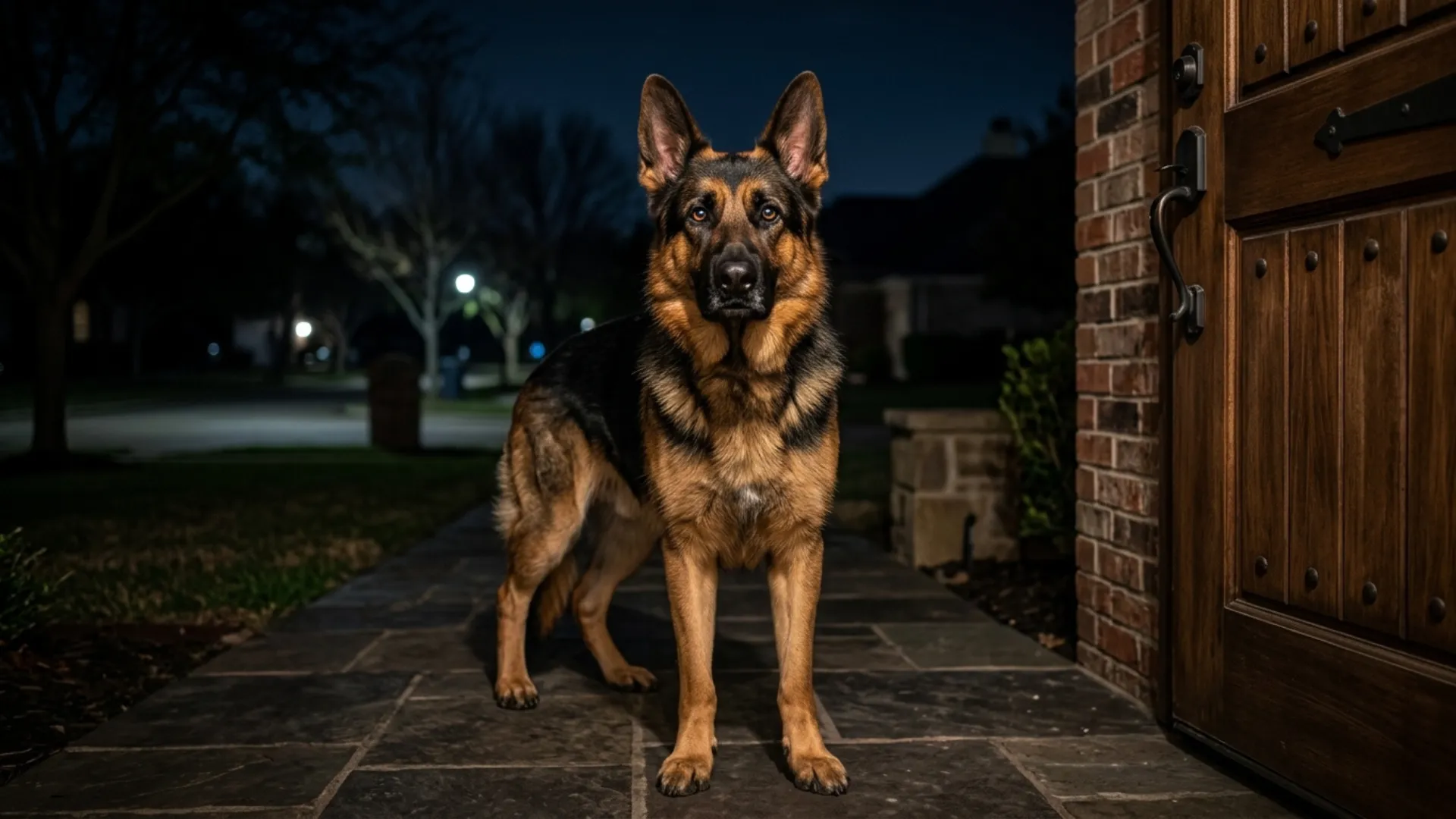
When the sun goes down, some dogs seem to switch into a different mode. Their sharp senses, strong awareness, and protective instincts can help them notice movement and activity that humans might miss in the dark.
But what makes a dog especially interesting for nighttime protection? It is not simply about having a bold appearance or a loud bark. Dogs rely heavily on their senses in low-light conditions, particularly their vision, hearing, and sense of smell.
Some breeds have traits that can give them an advantage when keeping watch after sunset, while their natural loyalty and alertness make them devoted protectors of their families.
Let’s take a closer look at seven fascinating breeds known for their remarkable ability to see and navigate in low-light conditions.
Exotic Dog Breeds With Night‑Vision Capabilities for Protection
1. Doberman Pinscher
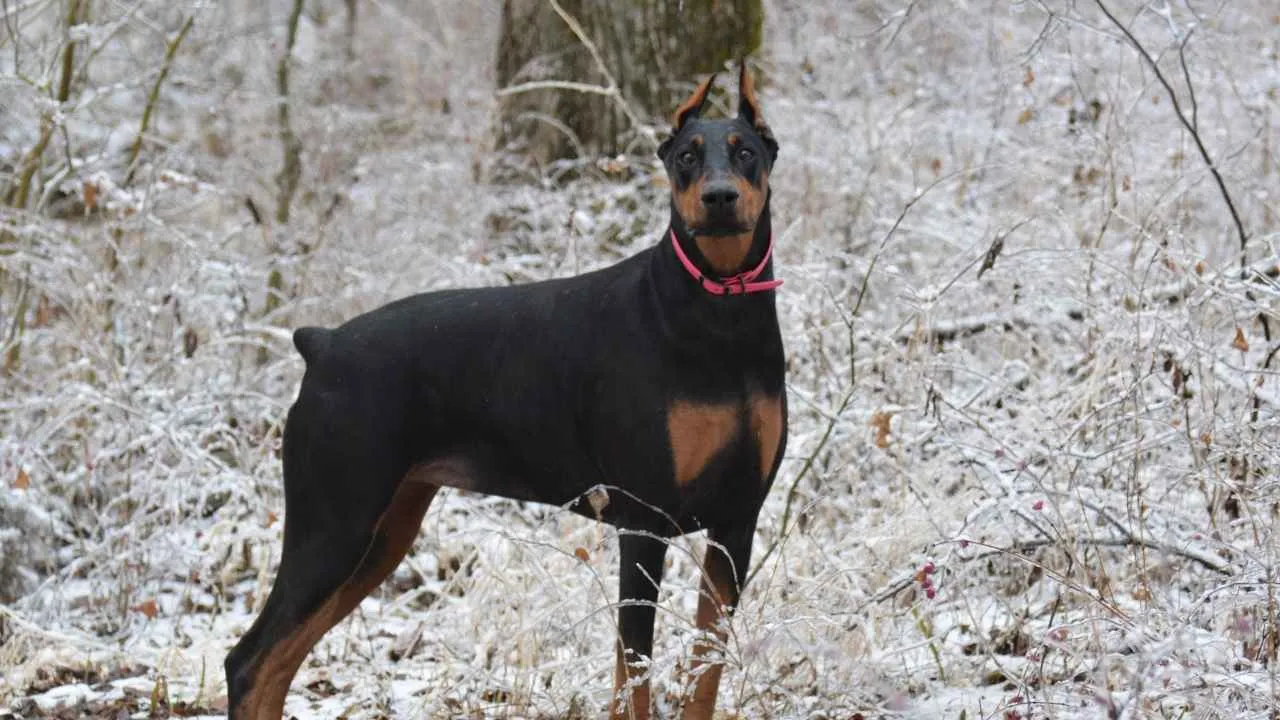
The Doberman Pinscher was developed in Germany in the late 1800s by Louis Dobermann, a tax collector who wanted a dependable guard dog for his work.
According to Omlet, the breed was likely created by crossing several dogs, including the Old German Shepherd, German Pinscher, Manchester Terrier, and Greyhound. Over time, it became known for roles in police work, security, military service, and search and rescue.
Personality and Traits
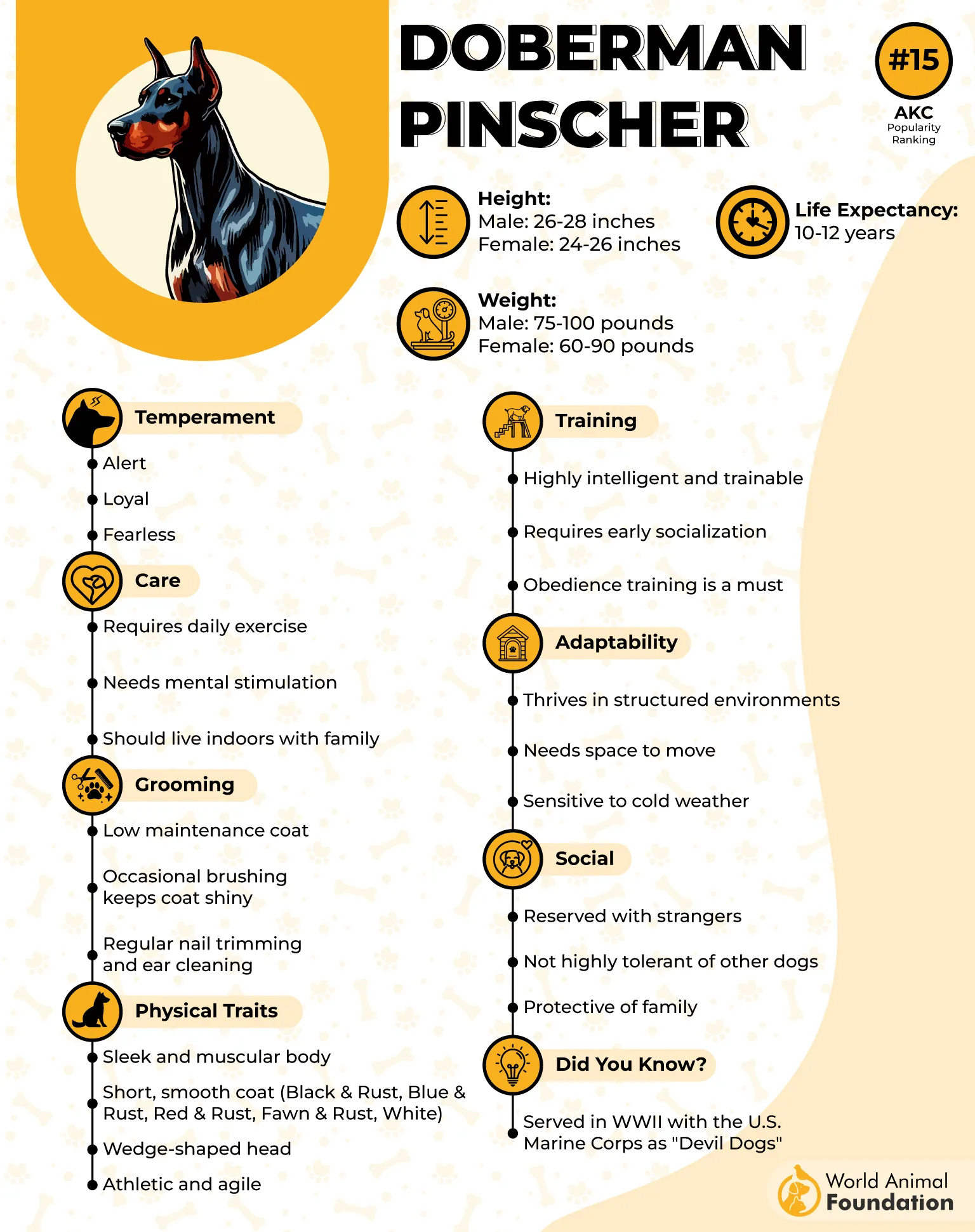
Dobermans are intelligent, loyal, curious, and highly alert dogs that form strong bonds with their families. They are naturally protective and can be wary of strangers and unfamiliar dogs.
Their energy and intelligence mean they need regular exercise, training, and mental stimulation. Without enough activity, they may become bored and develop unwanted behaviors.
Care and Training
Early and consistent training and socialization are important for this protective breed. Dobermans generally enjoy obedience training and activities that keep their minds busy.
They also have a strong prey drive and may chase smaller animals, so good control is important when they are outside. Their very short coat needs minimal grooming, with occasional brushing to keep it neat and glossy.
2. German Shepherd
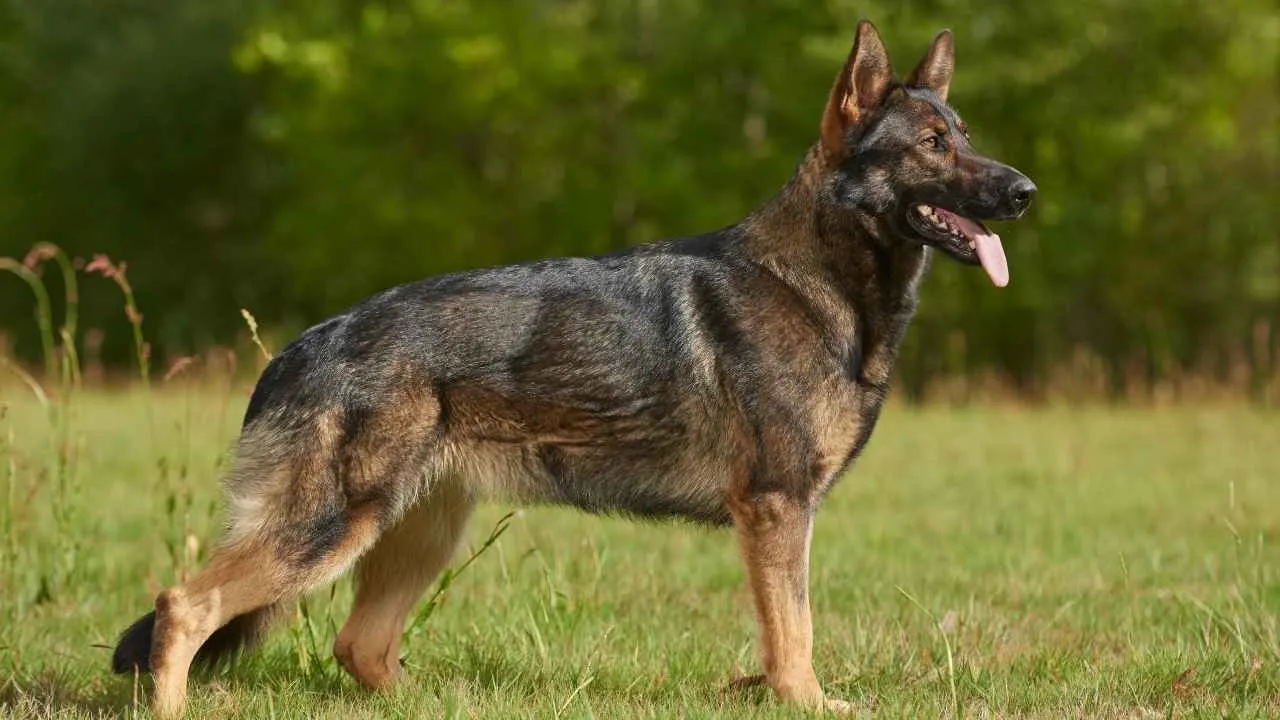
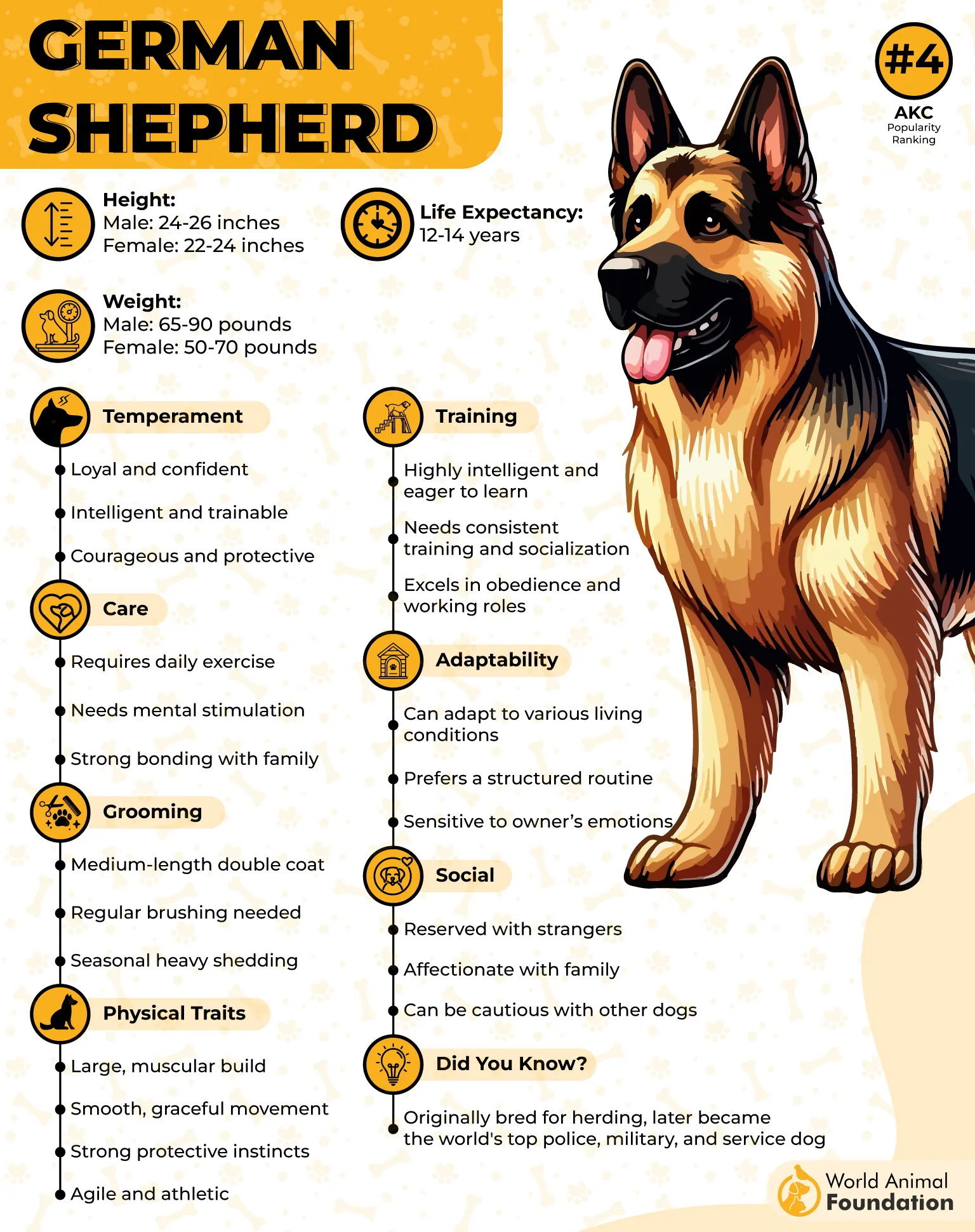
German Shepherds are large, muscular, agile dogs known for their intelligence, loyalty, and athletic ability. Originally developed as herding and working dogs, they have become valued for many roles, including police and military work, search and rescue, service work, and protection.
Personality and Traits
German Shepherds are playful, energetic, devoted, and protective. They often form strong bonds with their handlers and families while remaining reserved around unfamiliar people.
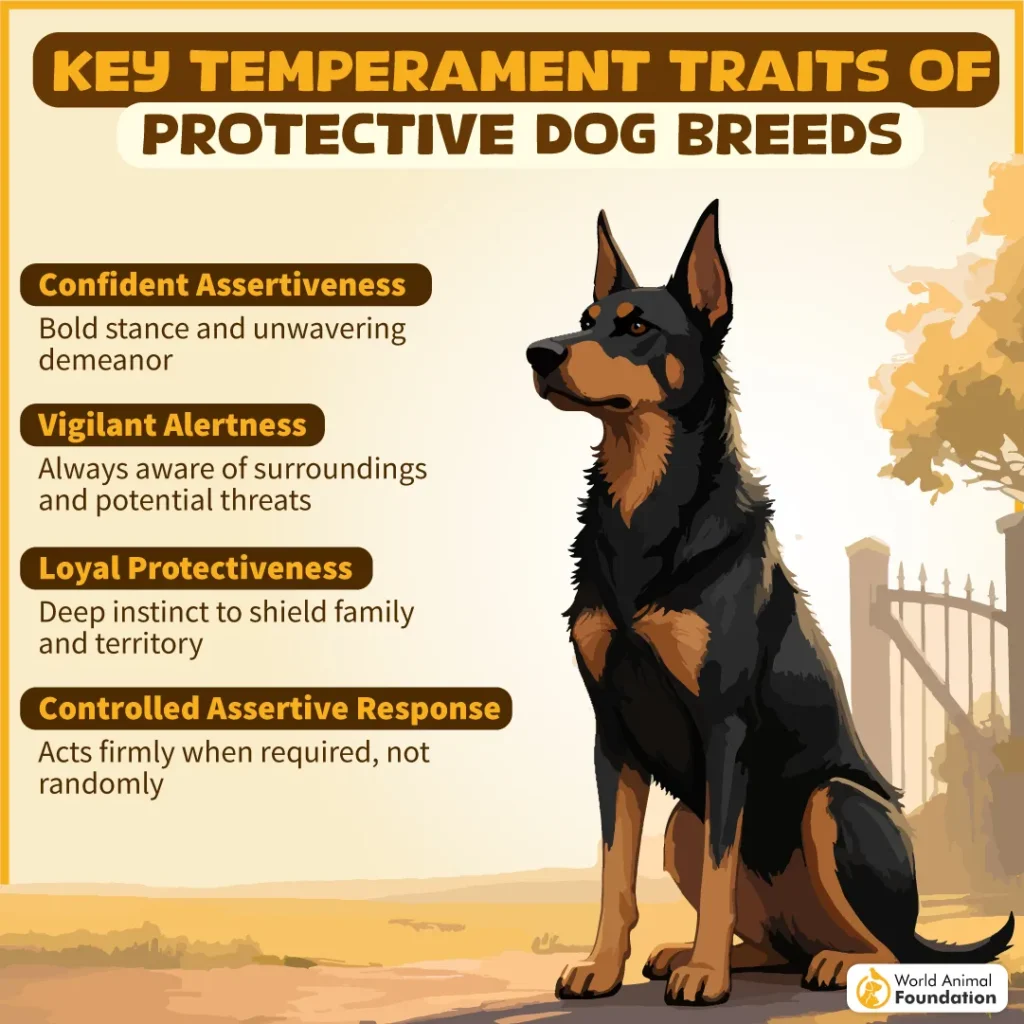
They can be good companions for children and seniors when properly trained and socialized. Their alert nature means they may bark when they notice a perceived threat, but they are not generally known for being constantly noisy.
Training and Exercise
These intelligent dogs learn quickly and usually enjoy having a job to do, but they need clear and consistent guidance.
Early socialization and obedience training help channel their protective instincts in appropriate ways. German Shepherds also need around one to two hours of exercise each day, along with mental stimulation.
3. Great Dane
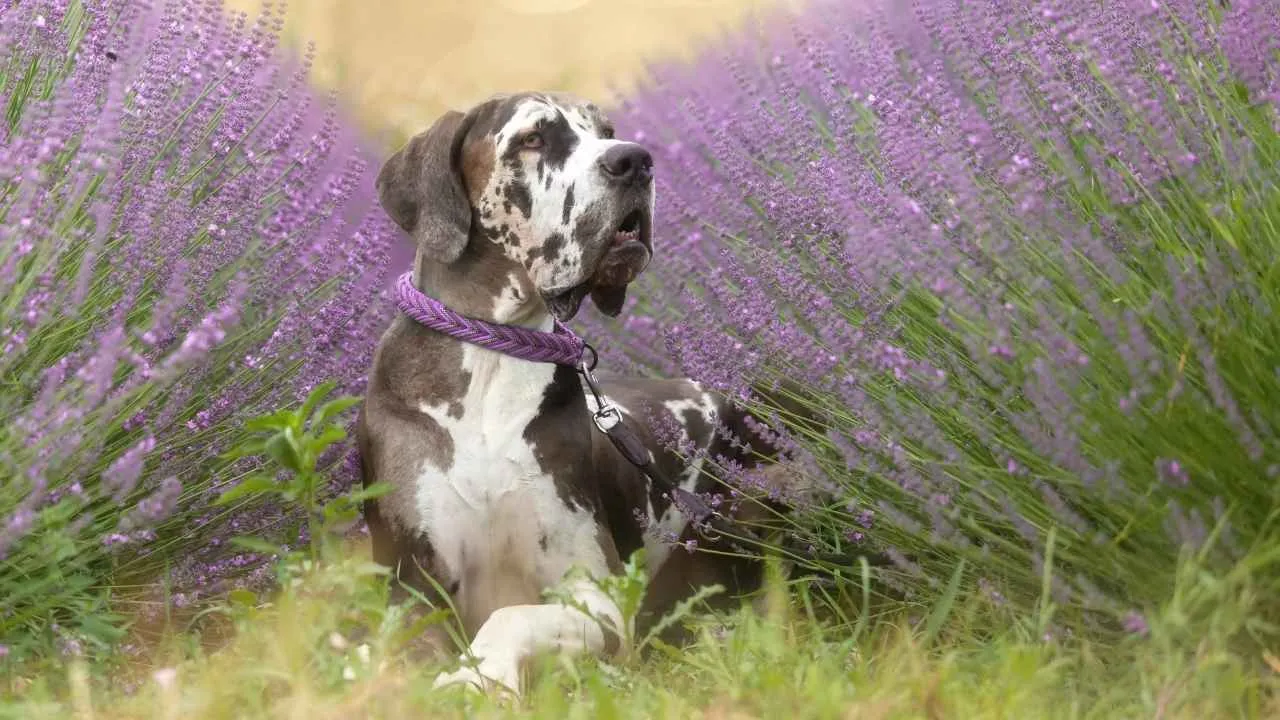
The Great Dane is a gentle giant with a history that dates back to 1800s Germany, where the breed was developed for hunting wild boar and guarding estates.
Despite its name, the breed has no roots in Denmark, as PetMD mentions. Today, Great Danes are known for their impressive height and their calmer, family-friendly nature.
Personality and Traits
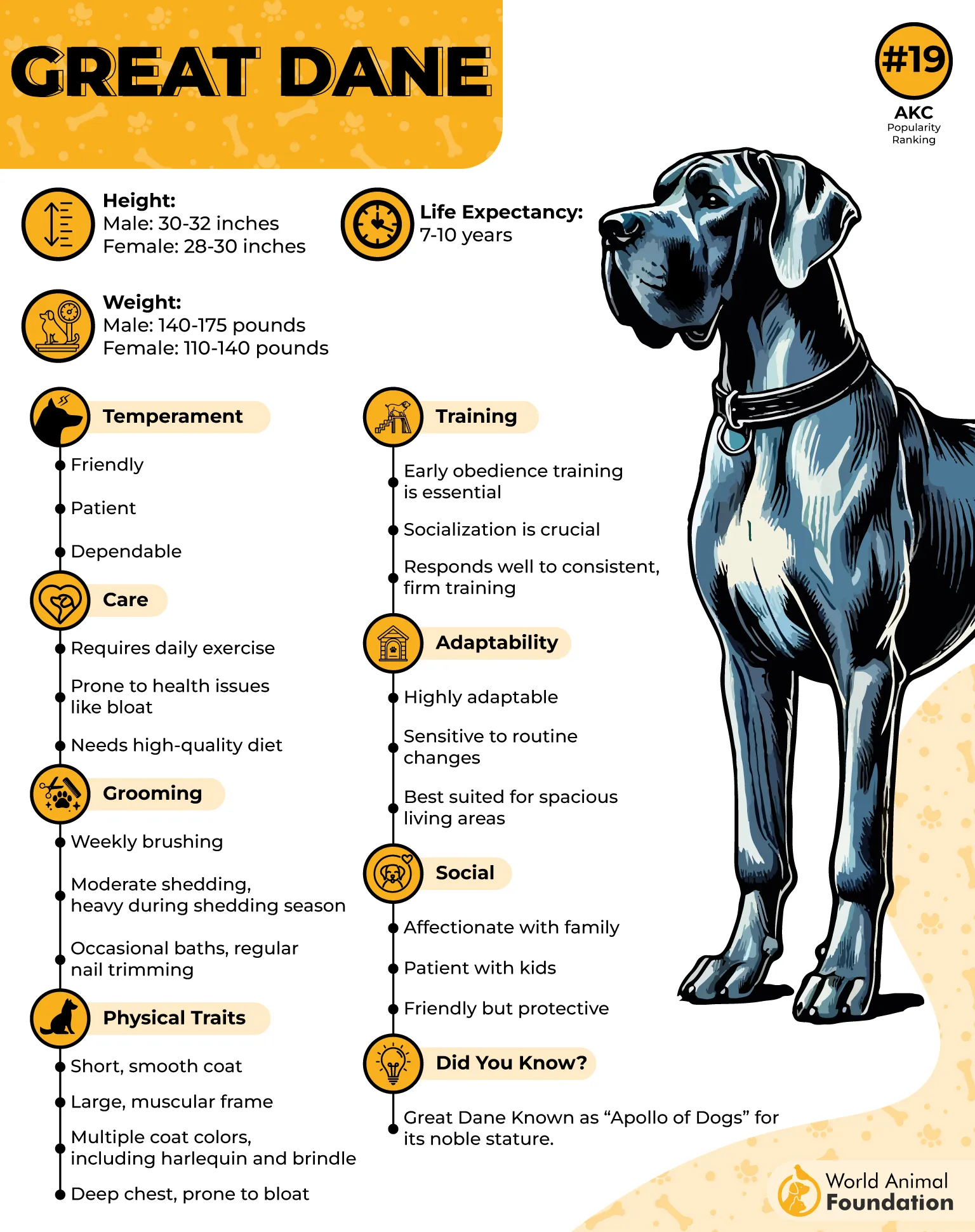
Great Danes may look intimidating, but they are generally kind, loyal, affectionate, and sociable. They enjoy staying close to their families and may even try to squeeze onto a lap despite their enormous size.
Their deep, powerful bark can alert people to something unusual, but they typically do not bark without reason. They are also often friendly toward unfamiliar dogs and can live well with other household pets.
Training and Exercise
Great Danes have a fairly low energy level and usually enjoy short periods of play before settling down again. They are generally easy to train but may not respond as quickly as some other dogs. Early socialization helps them become comfortable around new people and animals.
Their enormous size and strength also mean that interactions with children and older adults should be supervised, even though their temperament is generally gentle.
4. Akita
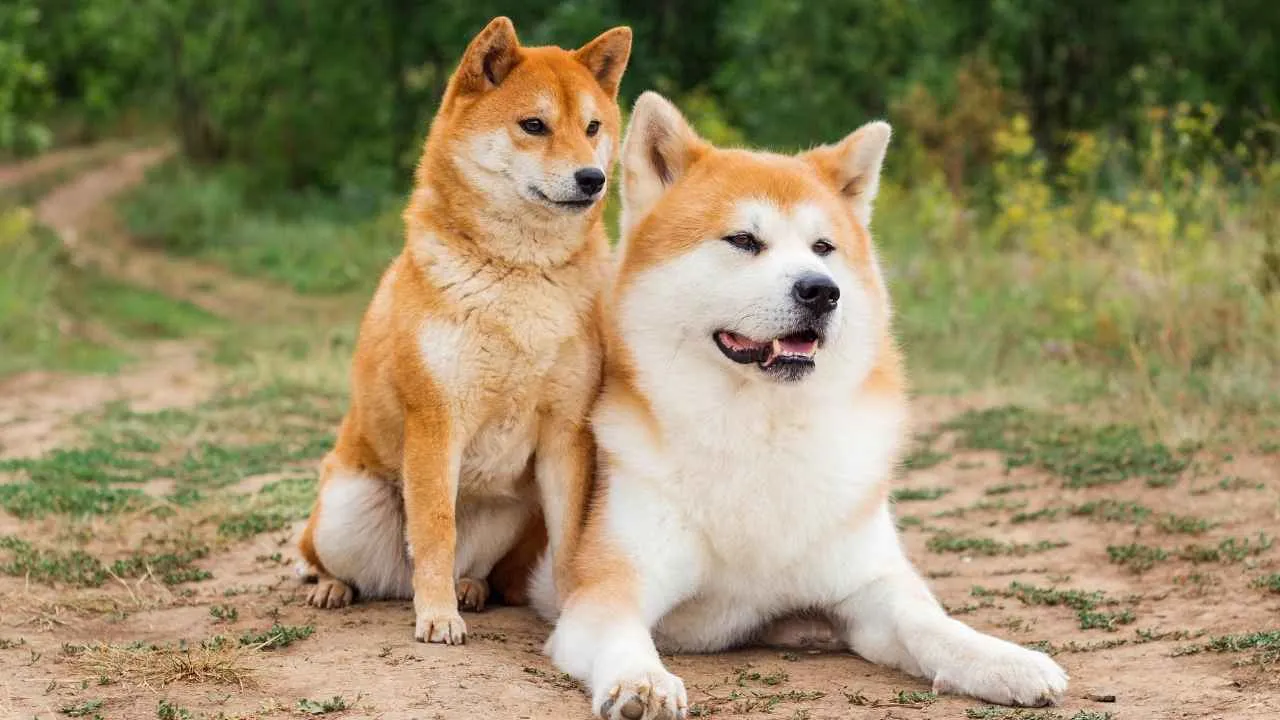
The Akita is a large Japanese breed originally developed as a hunting and working dog. Unlike breeds bred to work in groups, Akitas were developed to work independently or in pairs. Today, they are known for their dignified nature, loyalty, and strong protective instincts.
The breed is also deeply associated with Japan and is recognized as a national monument. Its history includes the famous Hachiko, whose story became a symbol of remarkable loyalty.
Personality and Traits
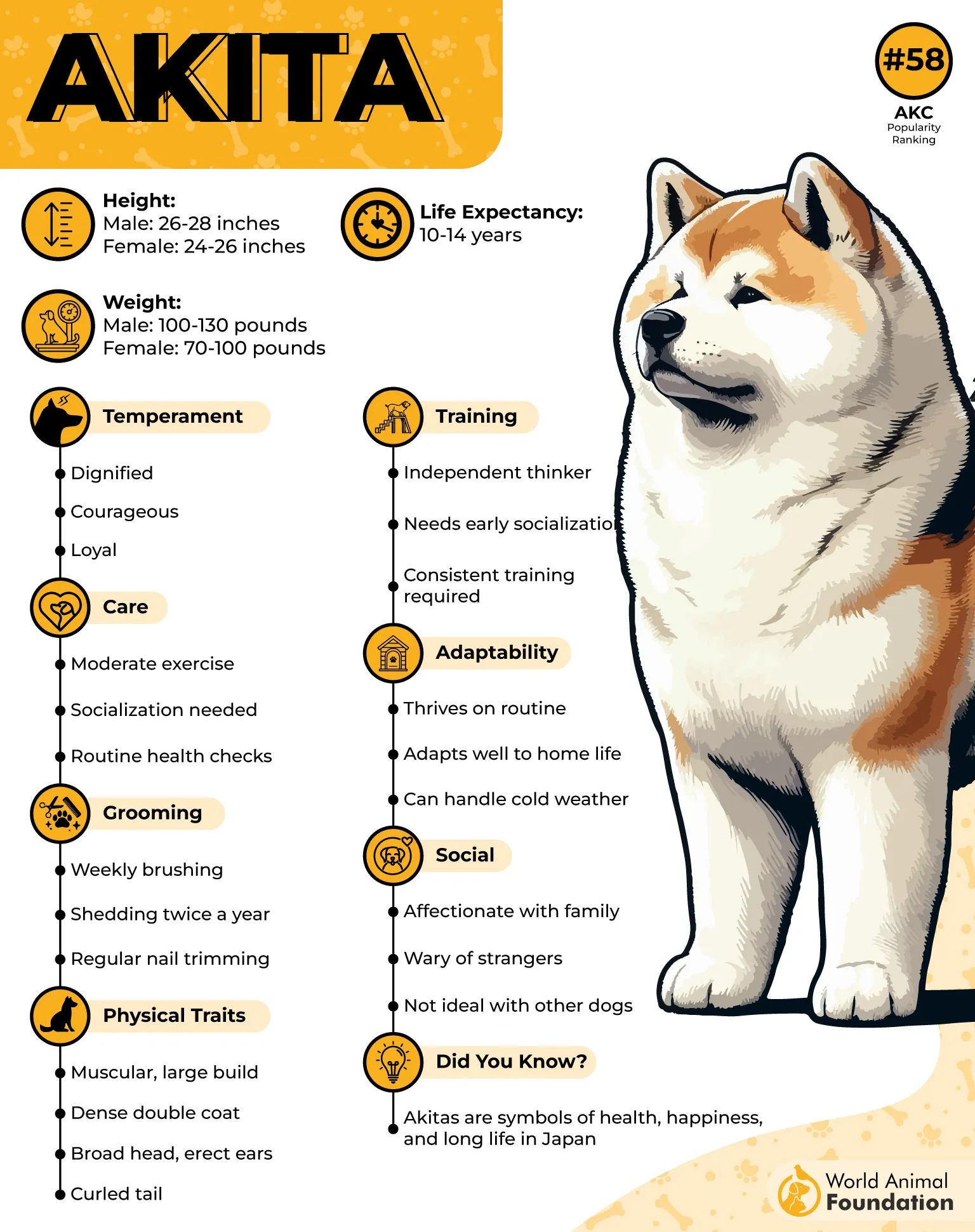
Akitas form strong bonds with their families and are naturally territorial about their homes. They tend to be reserved around strangers and unfamiliar dogs.
As excellent watchdogs, they usually stay quiet but will bark when something seems wrong. They are affectionate with their families but can be strong-willed and independent.
Training and Exercise
Akitas are intelligent, strong-willed, and energetic, so they need consistent training and early socialization. Repetitive lessons can bore them, making varied challenges and activities more effective.
Long walks, hikes, and mental exercises can help keep them engaged and focused. Because of their strength and independent nature, they are generally better suited to experienced owners.
5. Cane Corso
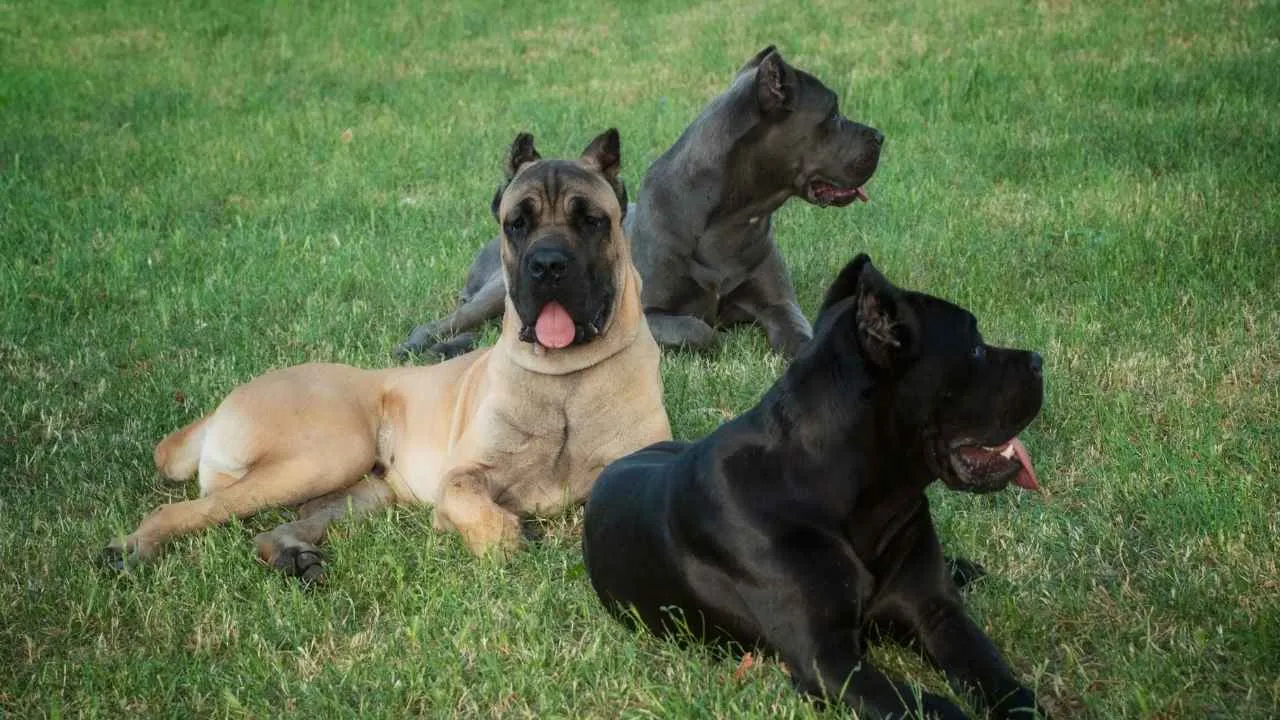
The Cane Corso, also known as the Italian Mastiff, is a large working breed with roots tracing back to ancient Greece and Rome.
Historically, these powerful dogs served as watchdogs, farm workers, and even canine soldiers. Their name can be translated from Latin as “guard dog of the courtyard,” reflecting their long history as guardians.
Personality and Traits
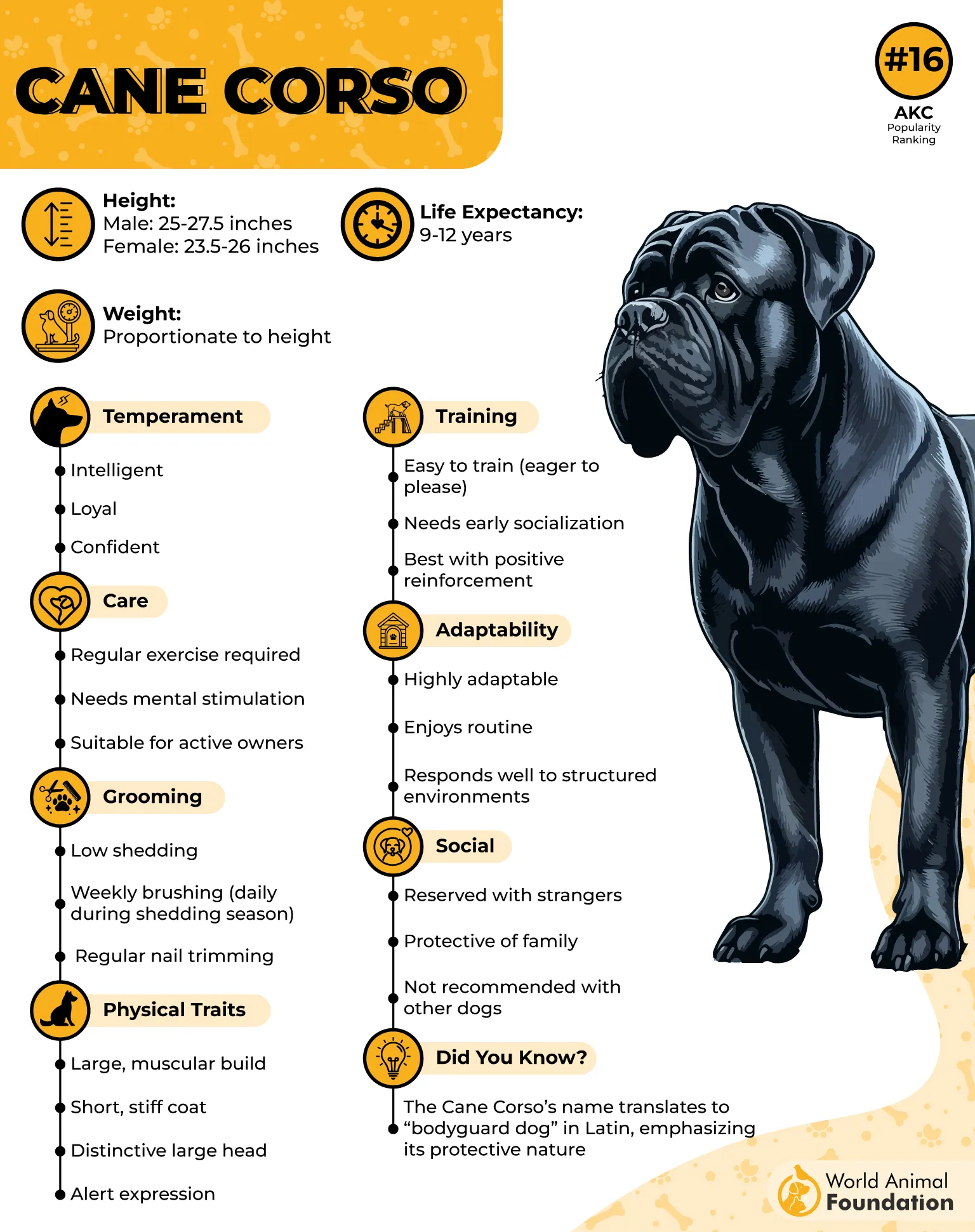
Cane Corsos are intelligent, affectionate, eager to please, and intensely loyal to their families. They can be serious and wary of unfamiliar people, especially when protecting their home.
Despite their intimidating appearance, they respond well to love and rewards and can form close bonds with children when properly socialized.
Training and Exercise
Their size, strength, and protective instincts make early socialization and consistent positive-reinforcement training especially important.
Cane Corsos are active working dogs that need plenty of daily exercise and mental stimulation. They enjoy activities such as obedience, tracking, agility, and protection sports, particularly when given a clear job to do.
6. Great Pyrenees
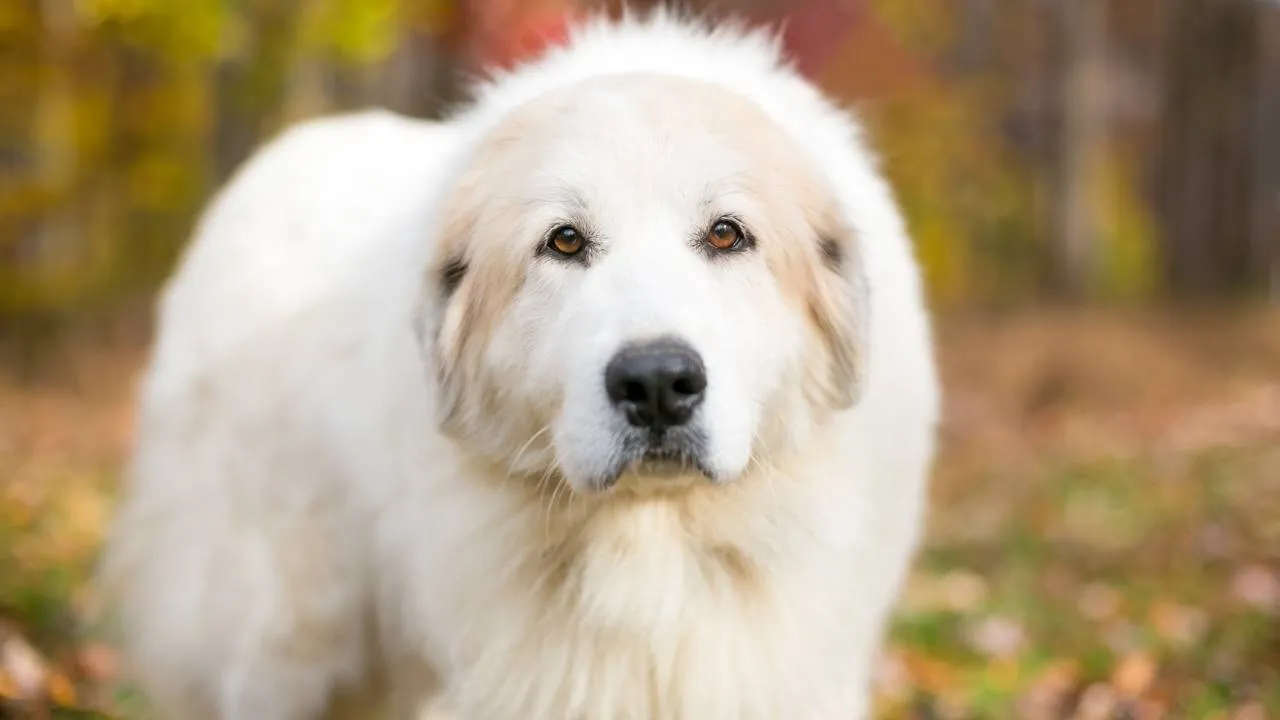
The Great Pyrenees, also known as the Pyrenean Mountain Dog, was originally bred to guard livestock in the Pyrenees Mountains between France and Spain.
Its thick white coat helped it blend into snowy surroundings while protecting sheep from predators such as wolves and bears. The breed was also used as a messenger and pack dog by the French army during World War II.
Personality and Traits
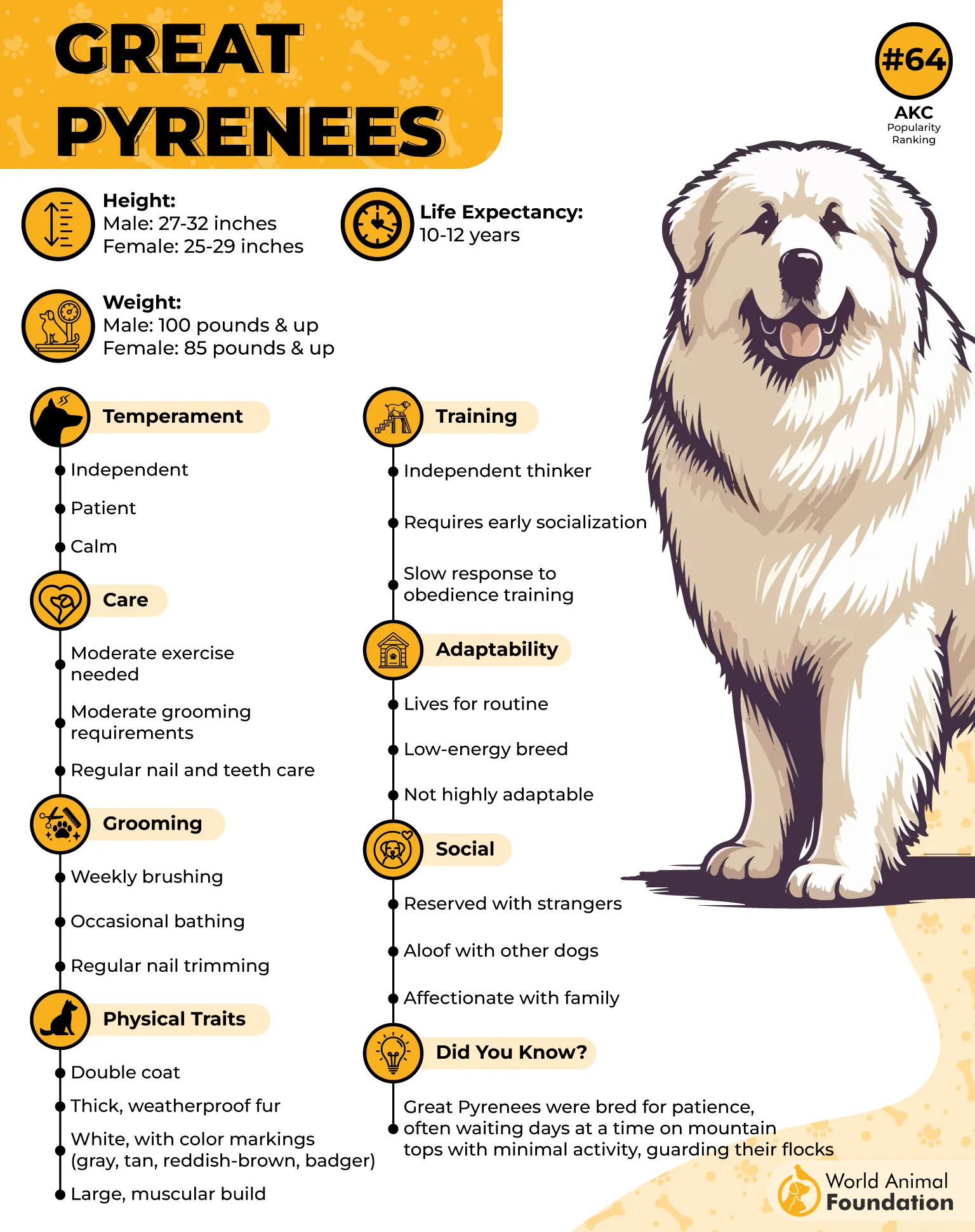
Great Pyrenees are calm, gentle, independent, and deeply devoted to their families. Despite their impressive size and strength, they are usually mellow at home.
Hill’s Pet says they can be reserved with strangers and naturally protective of their household. Their deep, commanding bark helps alert their families when they sense something unusual.
Training and Exercise
These dogs are intelligent but independent, so they may become bored with repetitive obedience training.
Early socialization and consistent training are important because of their size and territorial nature. Great Pyrenees are not overly active and generally do well with daily walks or playtime in a secure yard.
7. Tibetan Mastiff
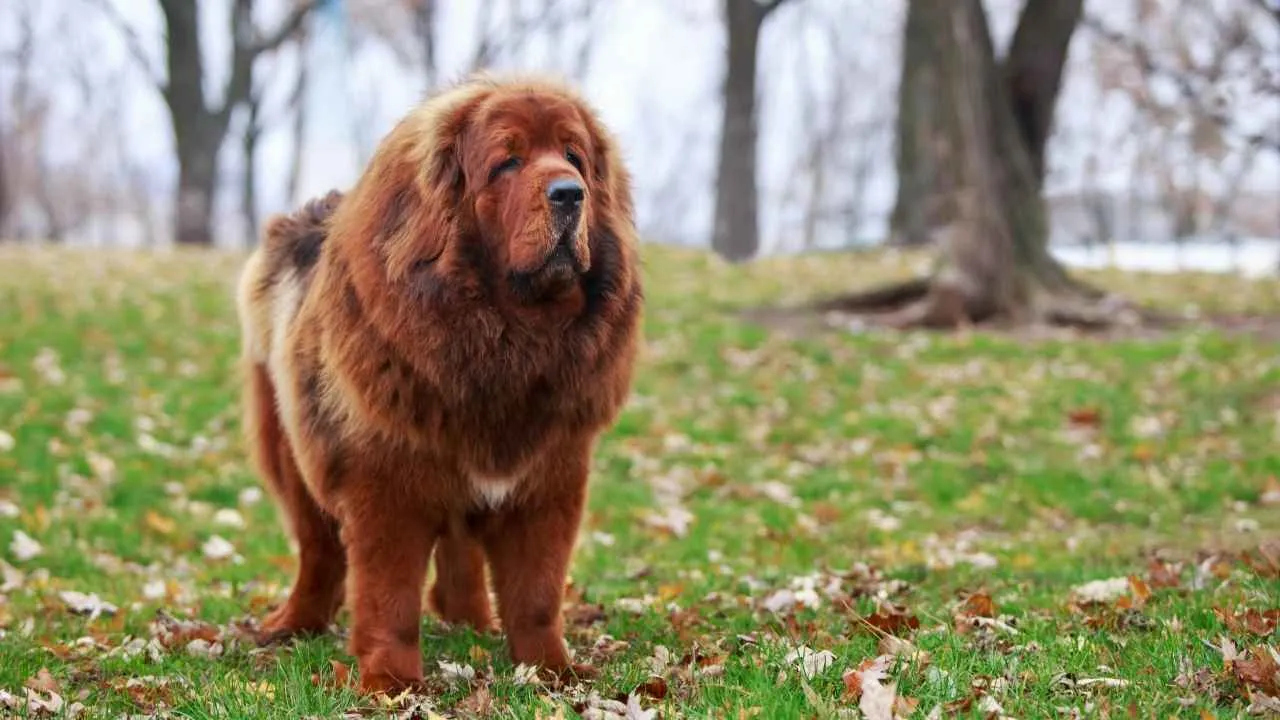
The Tibetan Mastiff is an ancient breed from Tibet, with written records dating back to around 1100 BCE. Historically bred to guard families and property, these dogs are known for their massive size and lion-like appearance.
In Tibet, they are called “do khyi,” meaning “home guard,” reflecting their long history as territorial protectors.
Personality and Traits
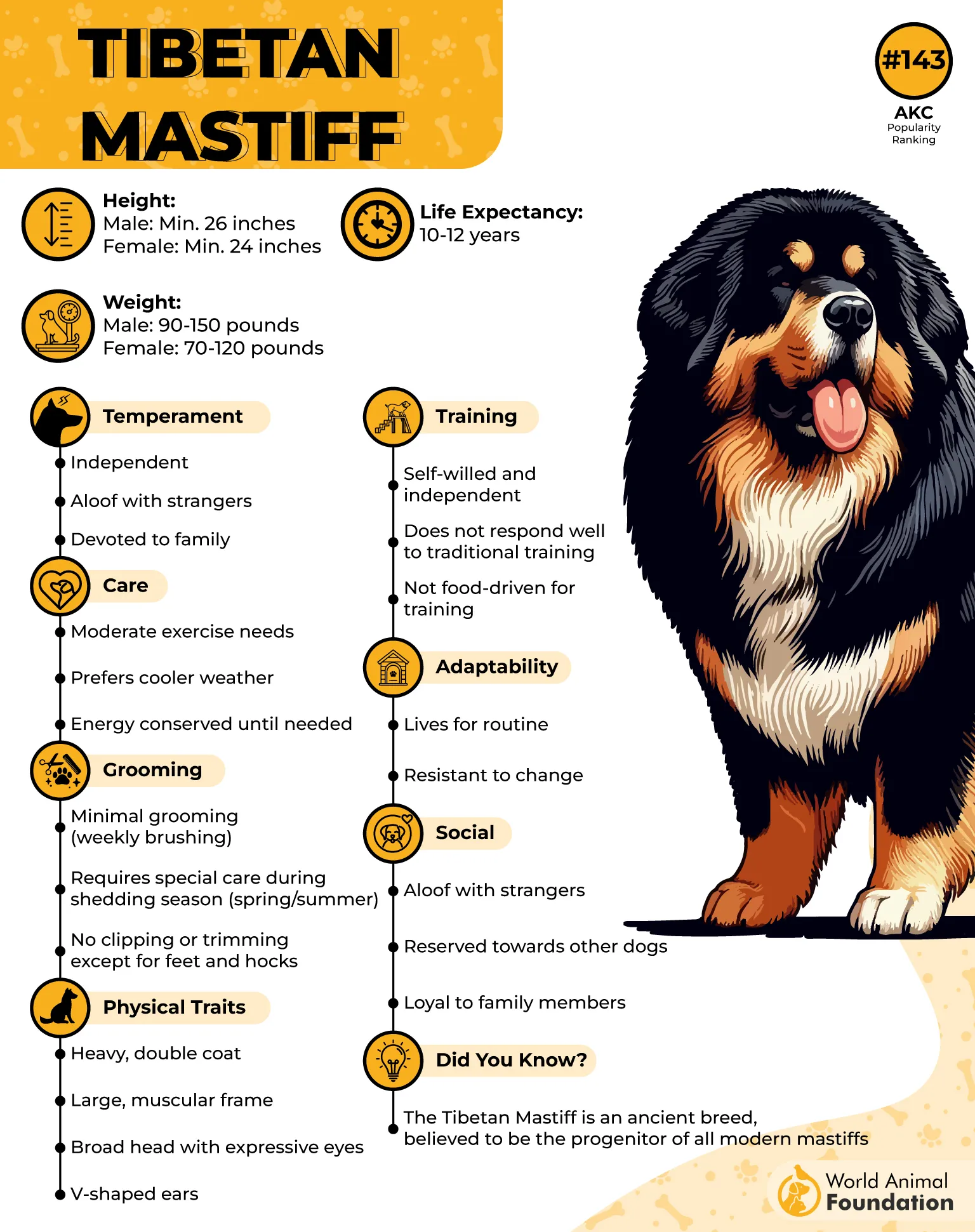
Tibetan Mastiffs are intelligent, independent, loyal, and fiercely protective of their families. They are generally calm and watchful but can be aloof with unfamiliar people and animals.
Their powerful build, thick mane, and confident presence make them imposing guardians, while they can be patient and affectionate with people they know.
Training and Exercise
Their independent nature means they need experienced owners, consistent training, and early socialization. They can be strong-willed and may not always follow commands, so training requires patience and commitment.
Tibetan Mastiffs are powerful and agile but lack endurance, making moderate daily exercise more suitable than long runs.
Conclusion
These exotic dogs bring together striking appearances, strong protective instincts, and impressive awareness of their surroundings. From their loyal family bonds to their ability to stay alert in dark environments, each breed has traits that can make nighttime security especially interesting.
Before choosing one, consider more than size or appearance. Training, socialization, exercise needs, temperament, and your living environment all matter when bringing a powerful guardian into your home.
The right preparation can help these remarkable dogs become not only watchful protectors but also devoted members of the family.
