




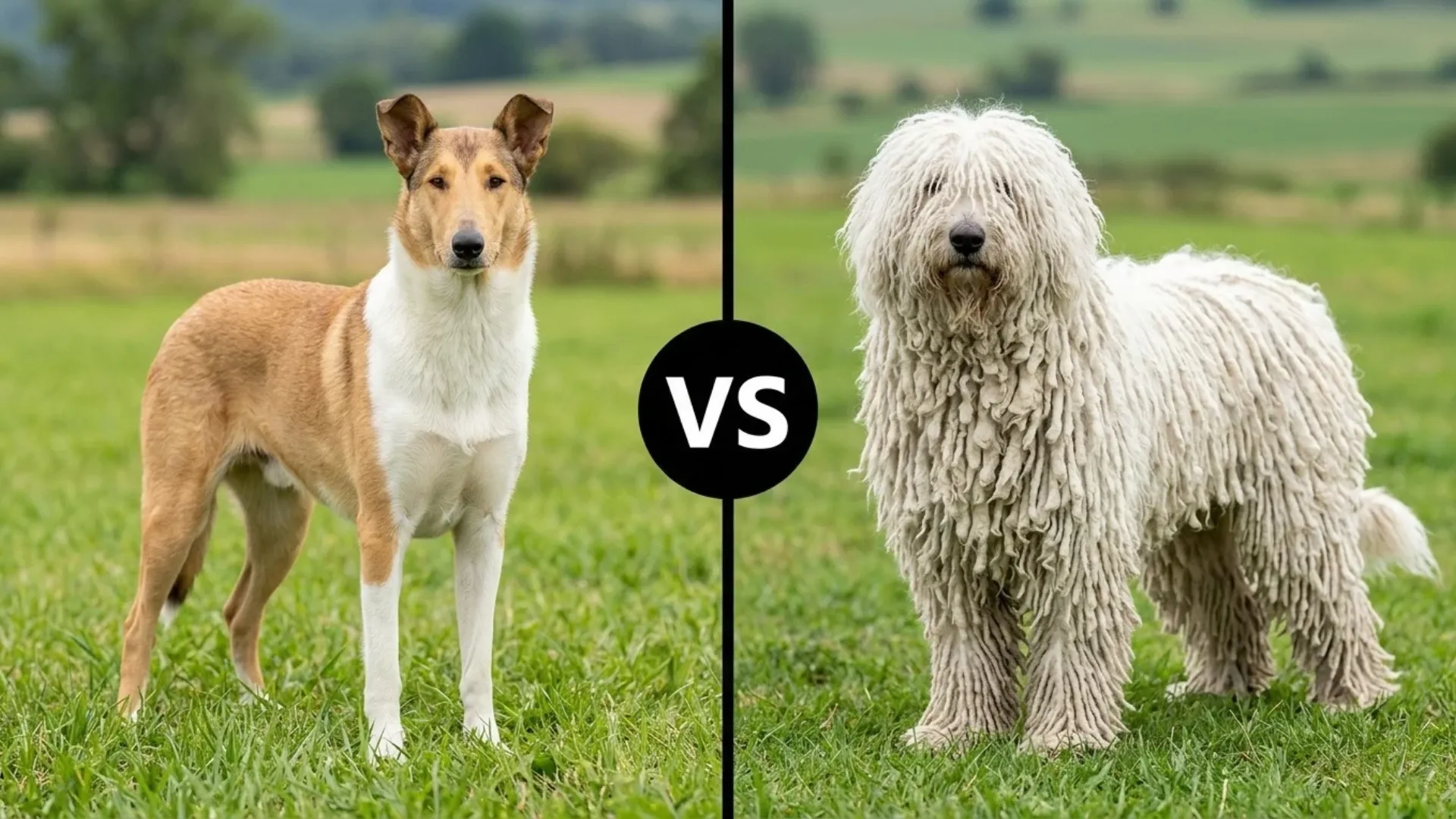
The Smooth Collie and Komondor may both be devoted, intelligent dogs, but they are very different in appearance, personality, and everyday care. One is sleek and graceful, while the other is famous for its unusual corded coat and strong guarding instincts.
Smooth Collies are generally social, responsive, and closely connected to their families. Komondors, on the other hand, are more independent and naturally protective, traits that come from their long history as livestock guardians.
Their exercise, grooming, training, and space needs can also vary a lot. These differences can make one breed easier to manage depending on your home, experience level, and lifestyle.
So, Smooth Collie vs. Komondor—which breed is the better match for you? Let’s compare their size, temperament, coat care, exercise needs, trainability, and family compatibility to understand what truly sets these two distinctive dogs apart.
Smooth Collie vs. Komondor: Must‑Know Differences
Smooth Collies and Komondors are both smart, loyal dogs, but they differ greatly in looks, temperament, and care needs. Let’s compare their key traits to see what makes each breed unique.
Origins & Purpose
Smooth Collies were bred to work sheep in the Scottish Lowlands, where the milder weather made a shorter coat more practical than the heavy covering of their Highland relatives. Sheepdogs of this type have existed in Scotland for centuries, with working ability shaping their development more than appearance.
The recognizable Smooth Collie has existed for more than 200 years and was refined through crosses with Greyhounds and Rough Collies. Queen Victoria helped boost their popularity after taking an interest in them during visits to Balmoral in the early 1860s, as mentioned in Purina.
Komondors are an ancient Hungarian breed believed to have descended from the Caucasian Shepherd and arrived with traveling nomads during the 13th century. According to the UKC, in Hungary, they were valued for guarding sheep rather than herding them, with their white coats helping them blend among the flock.
The breed gained American Kennel Club recognition in 1937 but nearly disappeared during the World War II era, leaving only a few dozen dogs. It was gradually re-established in Hungary and remains relatively rare today, while its distinctive appearance gained unexpected fame through Beck’s 1996 album Odelay.
Size & Build
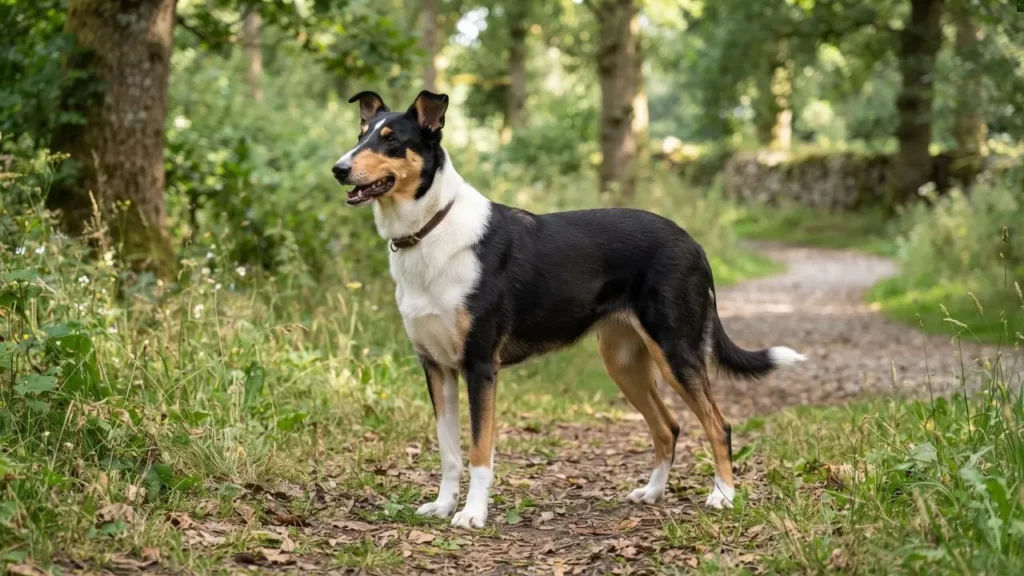
Smooth Collies stand around 20 to 24 inches tall and have a compact, capable frame suited to working livestock. Their strong but agile build includes a deep chest, firm back, muscular body, and wedge-shaped head, giving them the proportions needed for active herding work.
Weight generally falls between 40 and 65 pounds, with females usually lighter than males. Their medium-sized almond-shaped eyes and semi-pricked ears add to an alert expression, while their clean frame keeps them looking athletic rather than bulky.
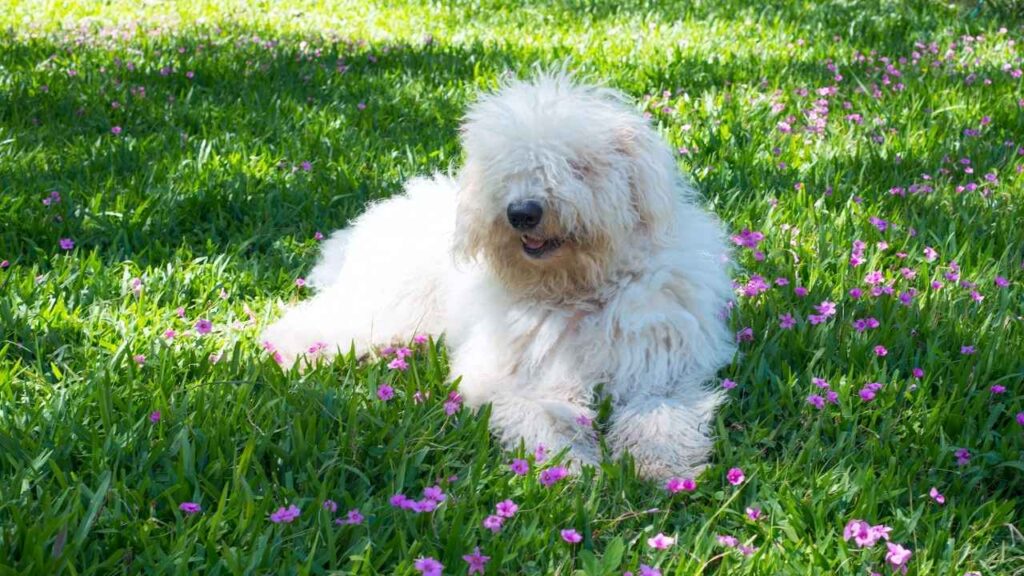
Komondors have a much larger physical presence, with males standing at least 27.5 inches and females at least 25.5 inches, as stated in the AKC. Their heavy bone, deep chest, and substantial muscle give them a powerful frame built for physically demanding guarding work.
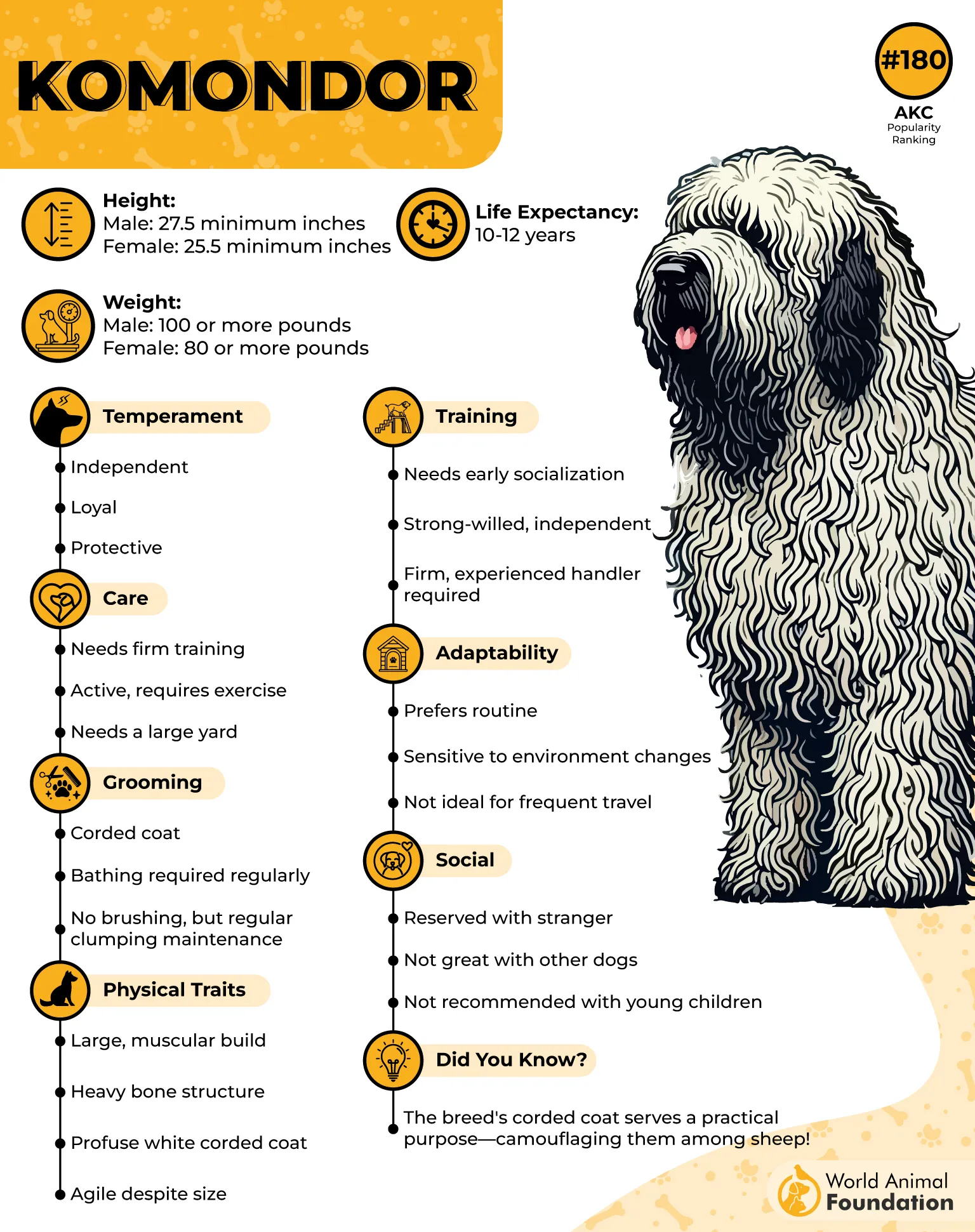
Males generally weigh 100 pounds or more, while females weigh 80 pounds or more. Males tend to have broader heads, thicker necks, and heavier forequarters, while females have a slightly lighter frame and more refined appearance beneath the same distinctive corded coat.
Pricing & Availability
Smooth Collie puppies from reputable breeders generally cost around $1,000 to $3,000, with pedigree, health testing, and location affecting the final price. Show-quality or champion-line puppies can cost even more, while rescue adoption usually falls around $200 to $500.
Rescue availability can require patience since Smooth Collies are less common than Rough Collies. Adoption fees often cover essentials such as spaying or neutering, microchipping, and basic vaccinations, while local shelters and Collie rescues can be worth checking.
Komondor puppies typically cost around $800 to $1,200, although dogs from particular bloodlines or lineages can be considerably more expensive. Buyers should look for responsible breeders and review the available health and registration information before choosing a puppy.

Adoption is another option for finding this relatively uncommon breed. Prospective dog owners can contact Komondor rescue organizations or check local shelters, although availability may vary depending on the area.
Temperament & Personality Style
Smooth Collies are friendly, cheerful, and eager to please, making them affectionate family companions. They usually get along well with children, pets, and other dogs, although their herding instincts and tendency to bark can need early guidance.
Their sensitive nature responds best to praise and gentle handling rather than harsh treatment. They strongly prefer company and may become noisy when left alone too long, while their intelligence and willingness to work can also make them useful as assistance dogs.
Komondors have a dignified, protective personality shaped by their long history as flock guardians. They can be loving and peaceful with their families and household pets, yet their independent nature makes them cautious about unfamiliar people and animals.
Early socialization and firm, fair training are important because they may initially be extremely wary of strangers. At home, they can settle quietly beside their owners, while nighttime often brings a more alert side as they listen for unfamiliar sounds outside.
Exercise Needs & Energy Levels
Smooth Collies need moderate to high levels of daily exercise, with around two hours or more helping them stay physically and mentally satisfied. Walks, hiking, herding activities, interactive games, and varied training can keep their active minds occupied.
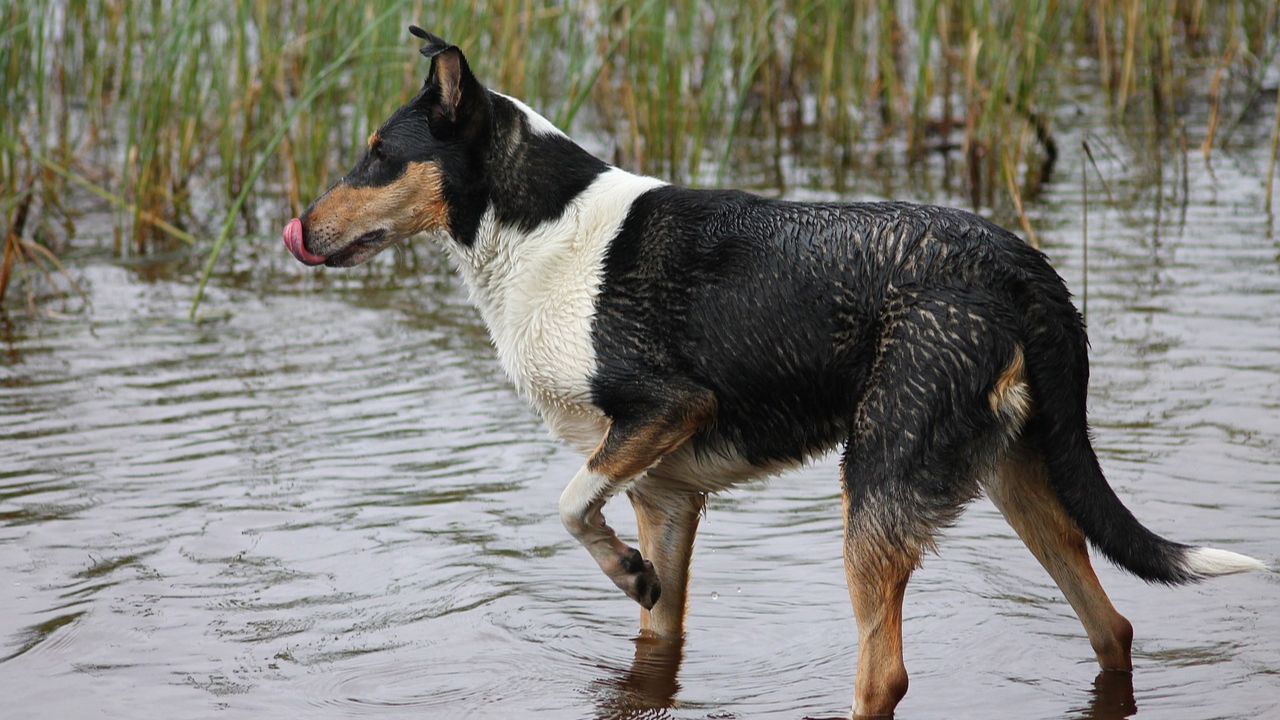
They also enjoy having a purpose beyond simple exercise and can compete at a high level in many dog sports. Positive reinforcement works well with their responsive nature, while changing walking routes and adding mental enrichment can prevent their routine from becoming too predictable.
Komondors have surprisingly athletic bodies beneath their heavy coats, but they are not high-energy dogs. Around 30 minutes of daily exercise, usually through one or two walks, is generally enough, while free-running in a securely fenced yard can provide additional movement.
Their guardian instincts also influence where they should exercise. Dog parks can create problems around unfamiliar dogs, while swimming is often inconvenient because their long cords can take considerable effort to dry after getting wet.
Trainability & Obedience
Smooth Collies are intelligent, people-oriented, and eager to please, which makes them generally responsive to training. They still need steady leadership, but their quick understanding and friendly nature can make them suitable even for first-time dog owners. Positive reinforcement and consistent methods help bring out their willingness to learn.
Early socialization helps puppies become confident around different people, animals, and environments. Training works best when sessions stay varied and mentally engaging, using obedience exercises, interactive games, rewards, and praise while avoiding harsh handling that can unsettle their sensitive nature.
Komondors are highly intelligent and independent thinkers, so early socialization and obedience training are essential. Their protective instincts can become difficult to manage without clear leadership, making calm, confident, and consistent guidance especially important from puppyhood.
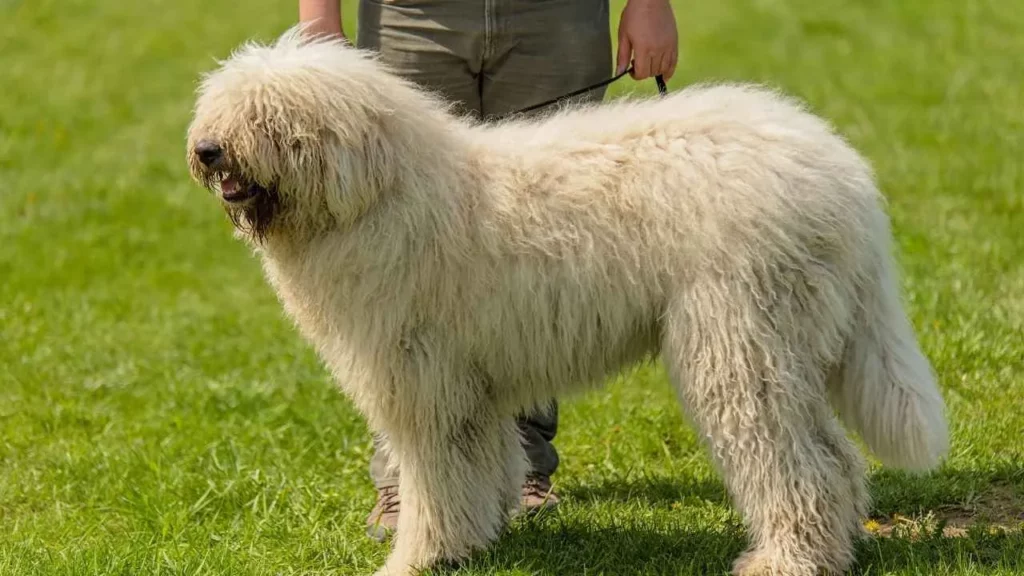
This herding breed responds well to structure, including consistent commands and rules that remain the same every day. Keeping sessions interesting with games or treats can prevent boredom, while controlled exposure to new people, places, and situations helps them learn how to respond appropriately.
Grooming Needs & Shedding
Grooming smooth collies is manageable. They have a short, dense double coat that is fairly simple to maintain with weekly brushing. A pin or slicker brush helps remove loose hair, while extra attention around the rear “pants” and front-leg fringes keeps thicker areas tidy.
They shed moderately throughout the year, with heavier undercoat loss once or twice annually. Bathing is usually only needed a few times a year, while monthly nail trims and weekly ear checks round out their routine grooming needs.
Komondors shed very little in the usual sense because loose hairs remain trapped within their distinctive cords. That means less loose fur around the house, but the coat can collect leaves, twigs, dirt, and mud instead of dropping them naturally.
Their cords need to be separated by hand every few weeks to prevent large mats from forming, and brushing should be avoided. Bathing can take hours and requires thorough drying, while trimming around the eyes, ears, belly, and sanitary areas helps maintain cleanliness.
Working Roles & Natural Instincts
Smooth Collies bring a mix of responsiveness, problem-solving, and environmental awareness to their working roles. Their ability to track, focus, and read people makes them useful in search and rescue, assistance work, therapy settings, and demanding canine sports such as agility and obedience.
Their herding instinct can still surface at home through gathering and circling people, cats, or children. They are highly sensitive to tone and respond best to positive handling, while boredom may lead them to create their own activities through barking or other unwanted behaviors.
Komondors rely heavily on their own judgment when assessing people, animals, and unfamiliar situations. They tend to remain watchful of their surroundings and can be naturally wary of strangers, while their strong protective instinct makes them deeply devoted to the people they consider their family.
That independence can sometimes look like stubbornness during training, especially when they see no reason to follow a request. Firm, consistent, positive leadership helps provide direction without relying on harsh discipline.
Health & Lifespan
Smooth Collies are generally healthy, though several inherited and breed-associated conditions can affect them. Hip dysplasia may cause pain and mobility problems, while Collie Eye Anomaly and Progressive Retinal Atrophy can affect vision. Epilepsy and dermatomyositis are also concerns involving neurological and skin health.
Regular veterinary care can help monitor these potential issues as the dog ages. Health screening is particularly useful when choosing a puppy, especially for inherited eye, joint, and other conditions that may not be obvious early in life.
Komondors have no known health problems considered specific to the breed, though responsible breeders screen their dogs for hip and eye health. Their large size also puts them at risk of bloat, a sudden and potentially life-threatening stomach condition that requires immediate attention.
Owners should also learn the warning signs of bloat so they can seek veterinary care quickly if symptoms appear.
Smooth Collie vs. Komondor: Which Dog Matches Your Lifestyle Best?
Smooth Collies can be a practical choice if you want a dog that enjoys staying involved without bringing an overwhelming physical presence into your home. Their manageable size, athletic build, and responsive nature can work well for owners who enjoy training, walks, and regular interaction with their dog.
They can also suit households that prefer a dog with an alert but approachable personality. If you want an intelligent companion that can join you in everyday activities without the sheer size and grooming demands of a Komondor, the Smooth Collie may feel easier to manage.
Komondors make more sense for owners who are comfortable handling a very large, powerful dog with a distinctive coat that needs consistent care. Their size alone means daily routines, handling, space, and general management require more consideration than they would with a Smooth Collie.
The better match ultimately depends on what you want from your dog each day. A Smooth Collie may suit an active household looking for a lighter, versatile companion, while a Komondor can appeal to someone prepared for the responsibility that comes with a larger and more demanding dog.
Conclusion
These two working dogs may share a history around livestock, but their roles created very different companions. One was shaped to work closely with people and respond to direction, while the other was expected to make decisions while guarding its flock. That difference still affects training, physical exercise, temperament, and life at home, giving collie owners different needs to consider.
Coat care is another major consideration, particularly when comparing rough and smooth varieties, as each coat type requires its own routine. Owners should also think about size, living space, socialization, health screening, and potential health issues. Looking at those practical details can make it easier to find the better fit for your household and daily routine.
