




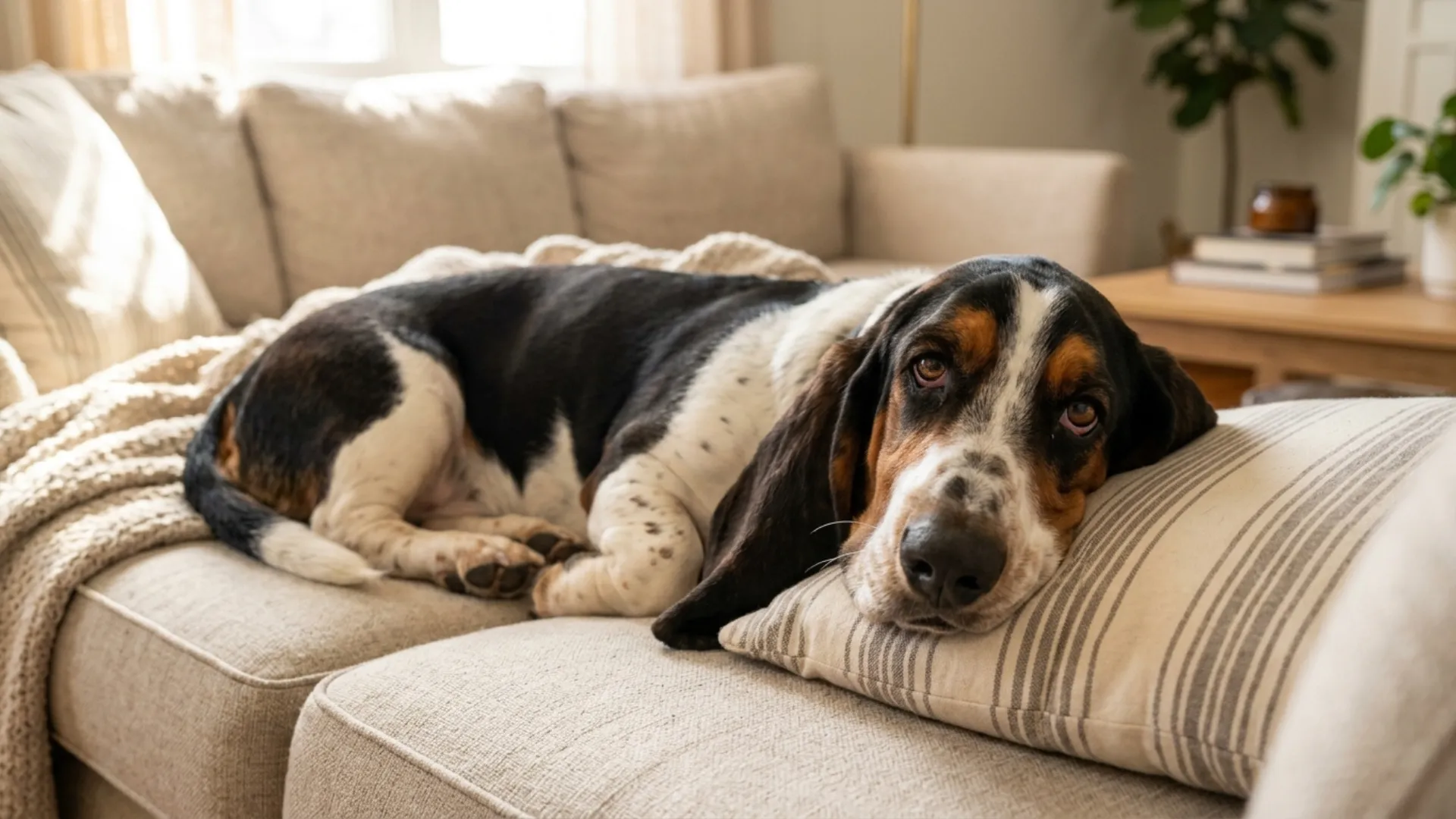
Some dogs seem to have one favorite activity: finding the coziest spot in the house and settling in for a long, peaceful nap. If you love the idea of a furry companion who would rather curl up beside you than spend all day racing around, gentle couch potatoes may be right up your alley.
These easy-going dogs are often known for their mellow personalities, affectionate nature, and ability to relax at home. They can enjoy playtime and a little exercise, but they are usually just as happy to stretch out on the couch, lounge at your feet, or quietly keep you company while you unwind.
Of course, every dog has its own personality, and even calm pups need daily exercise, attention, and positive training. Still, choosing a breed known for a gentle and relaxed temperament can make life a lot easier for anyone who wants a loving companion without constant chaos.
Here are some of the best dog breeds that are gentle and know how to take lounging seriously.
Key Takeaways
Meet Pugs, Basset Hounds, and other gentle breeds made for cozy days.
See why Cavaliers and Pekingese love attention, cuddles, and family time.
Discover how Newfoundlands, Great Danes, and Saint Bernards balance size with calm temperaments.
Compare exercise, grooming, and care needs before bringing home a couch-loving companion.
Gentle Dog Breeds That Are Natural Couch Potatoes
1. Pug
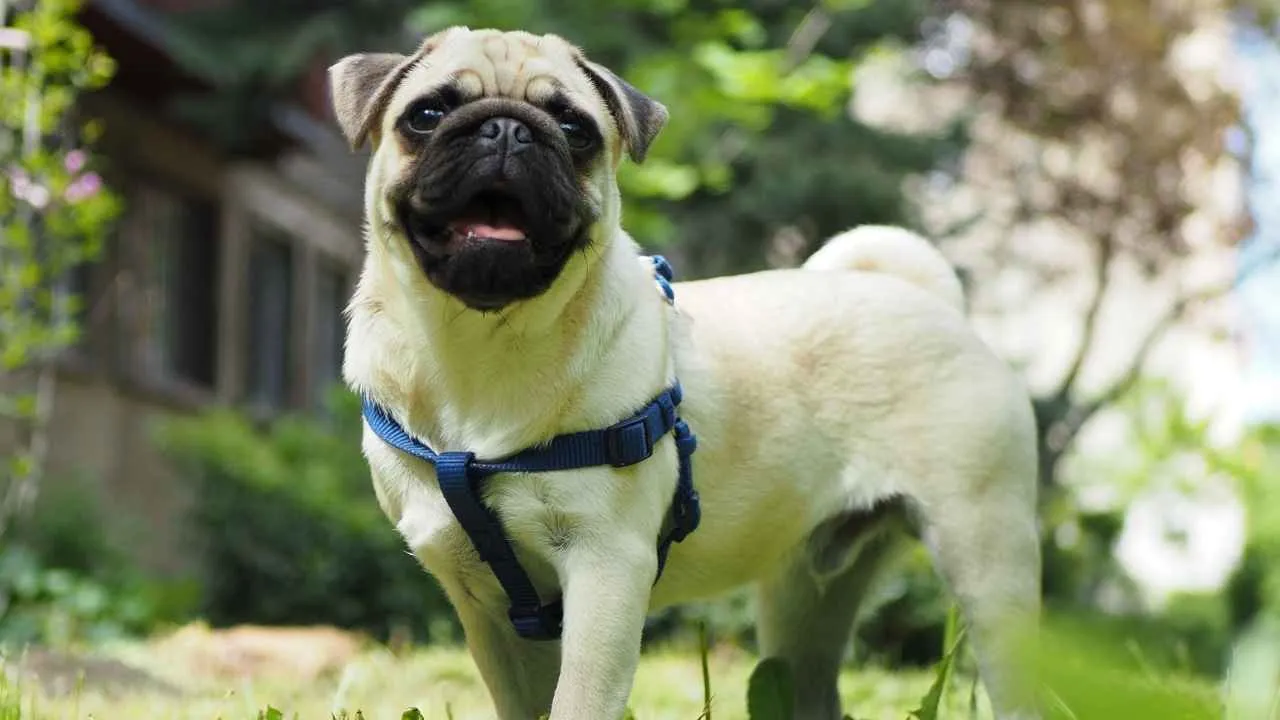
Pugs are an ancient dog breed that originated in China around 2,000 years ago. They later became favorites of royals around the world and are now popular companion dogs. Their flat, wrinkly faces, curly tails, and distinctive snorts make them easy to recognize.
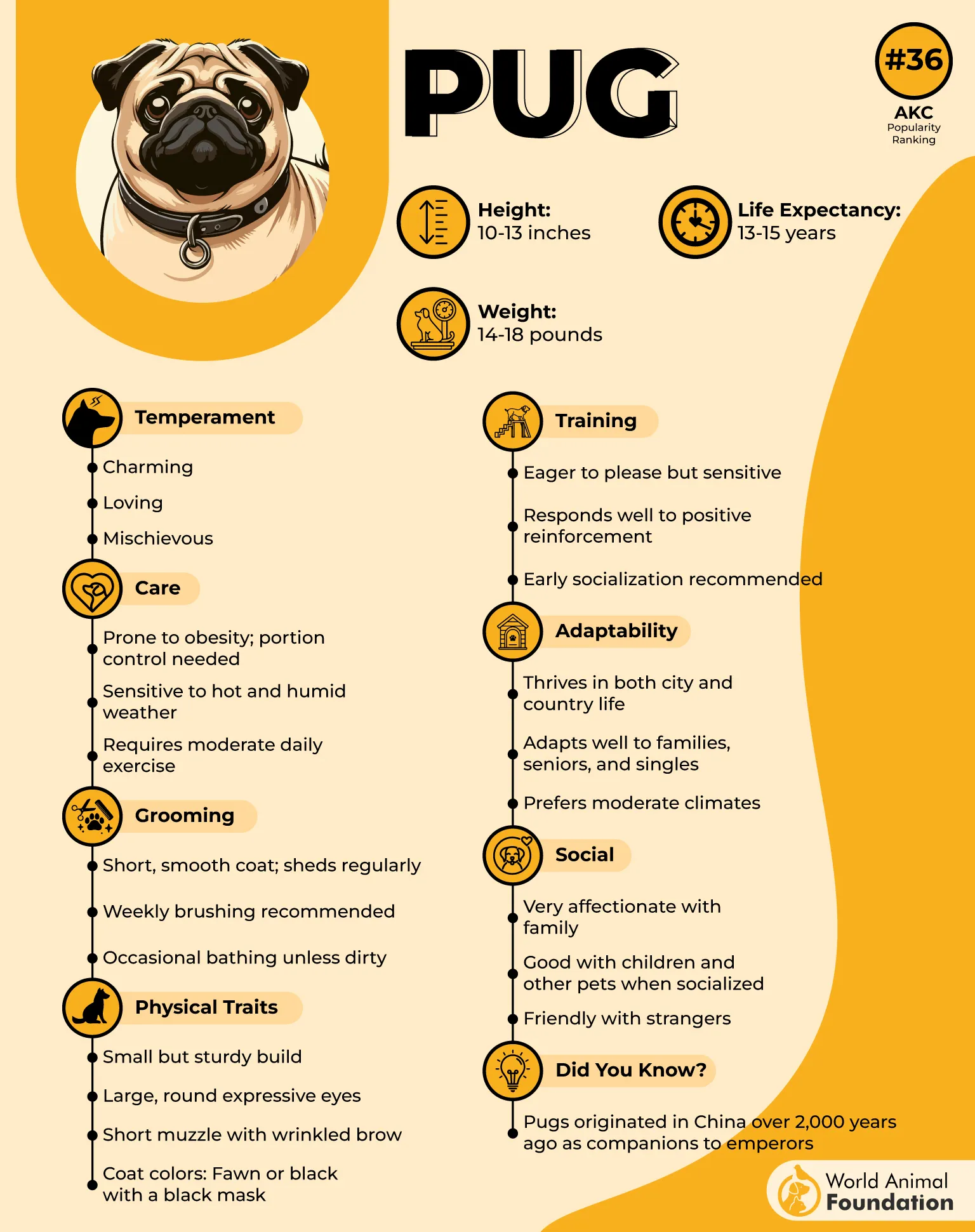
Personality and Temperament
Pugs are cheerful, playful, and affectionate dogs that love being around their people. They enjoy attention and like to be included in family activities. They are friendly with children, other pets, and strangers and are rarely aggressive.
They can be funny little clowns when seeking attention, but they are also natural couch potatoes who love curling up on sofas, laps, and favorite chairs.
Exercise and Care
Pugs need daily walks, with several short 15–20-minute walks working well for most. Casual walks and quick games of fetch are better suited to them than running or agility.
Omlet says their flat faces can make breathing harder, so they should avoid extreme exercise and hot weather. They can also be prone to obesity, making regular walks and careful food portions important.
2. Basset Hound
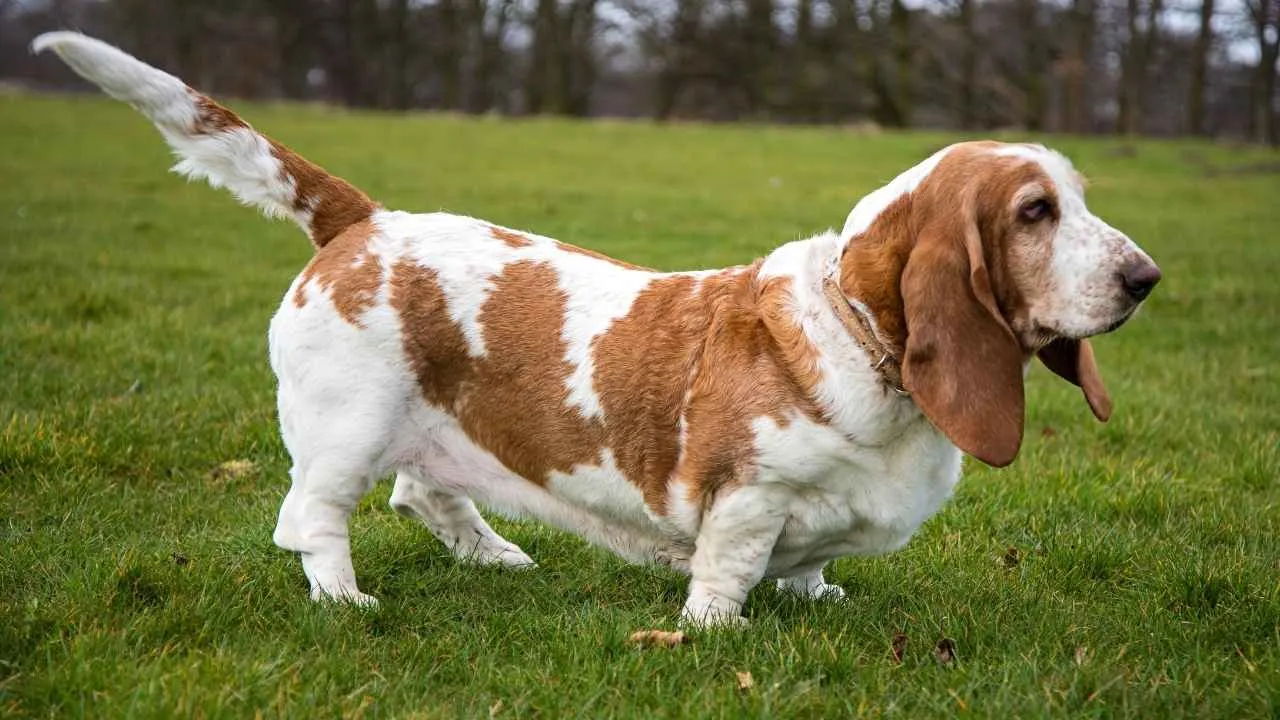
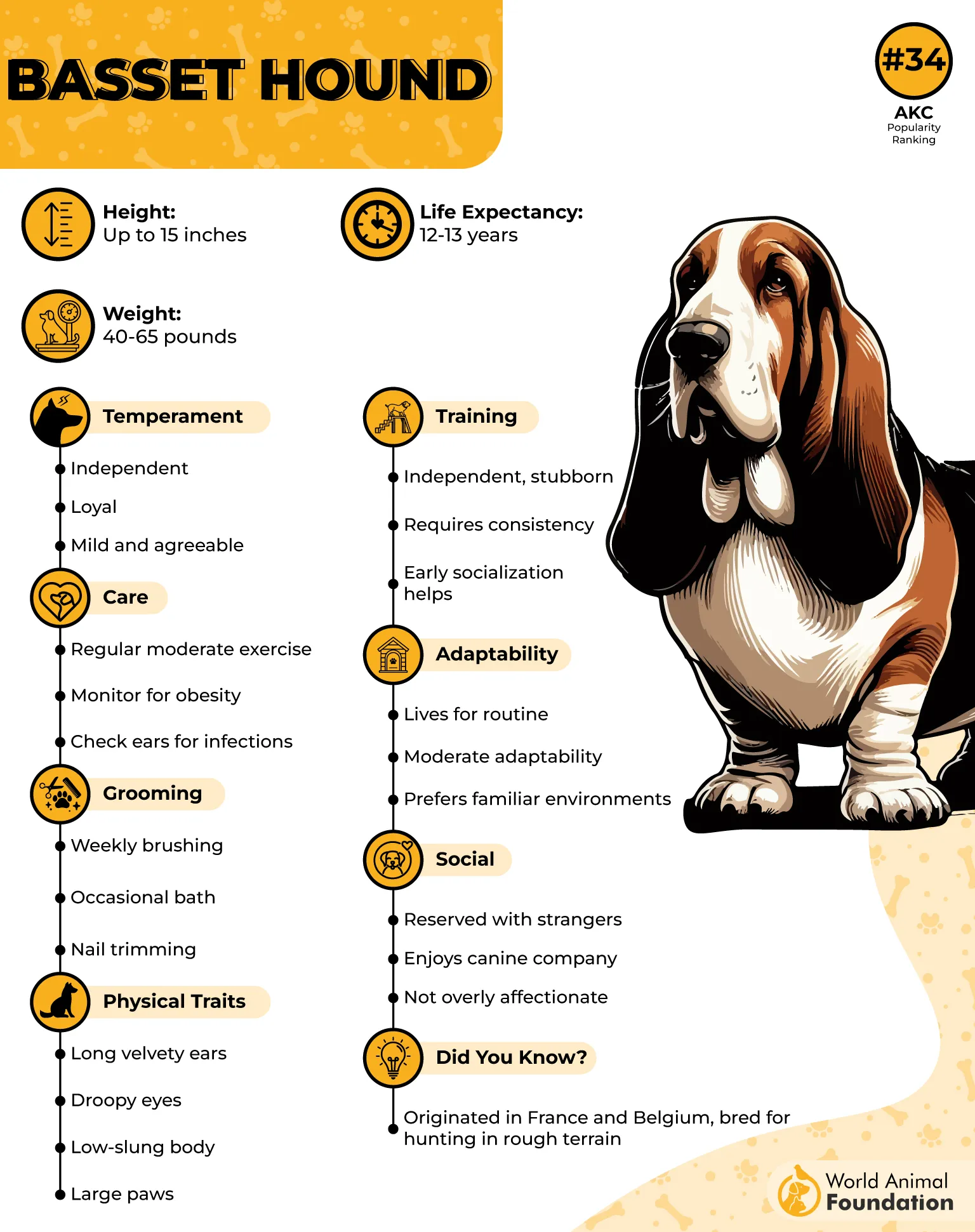
Basset Hounds are hound dogs that originated in France and were bred to hunt rabbits and hares. Their name comes from the French word “bas,” meaning low or short. They later became popular companion dogs and were introduced to Britain in the late 1800s.
Personality and Temperament
Despite their serious-looking faces, Basset Hounds are calm, sociable, and quietly playful. They are affectionate with people they know and more reserved with strangers. They usually get along well with children and other dogs.
With training, they can also live with other pets. These companionable dogs enjoy company, unhurried walks, and plenty of sofa time. They can be a little lazy, but they are also known for their loud barking and drooling.

Exercise and Care
Basset Hounds need at least one walk each day to stay active and help prevent obesity. They are often very food-motivated and may steal food when given the chance.
Their strong noses can also lead them after interesting scents, so leashes or secure areas are best for walks. Training can be challenging because of their tracking instincts, but treats can make it easier.
3. Cavalier King Charles Spaniel
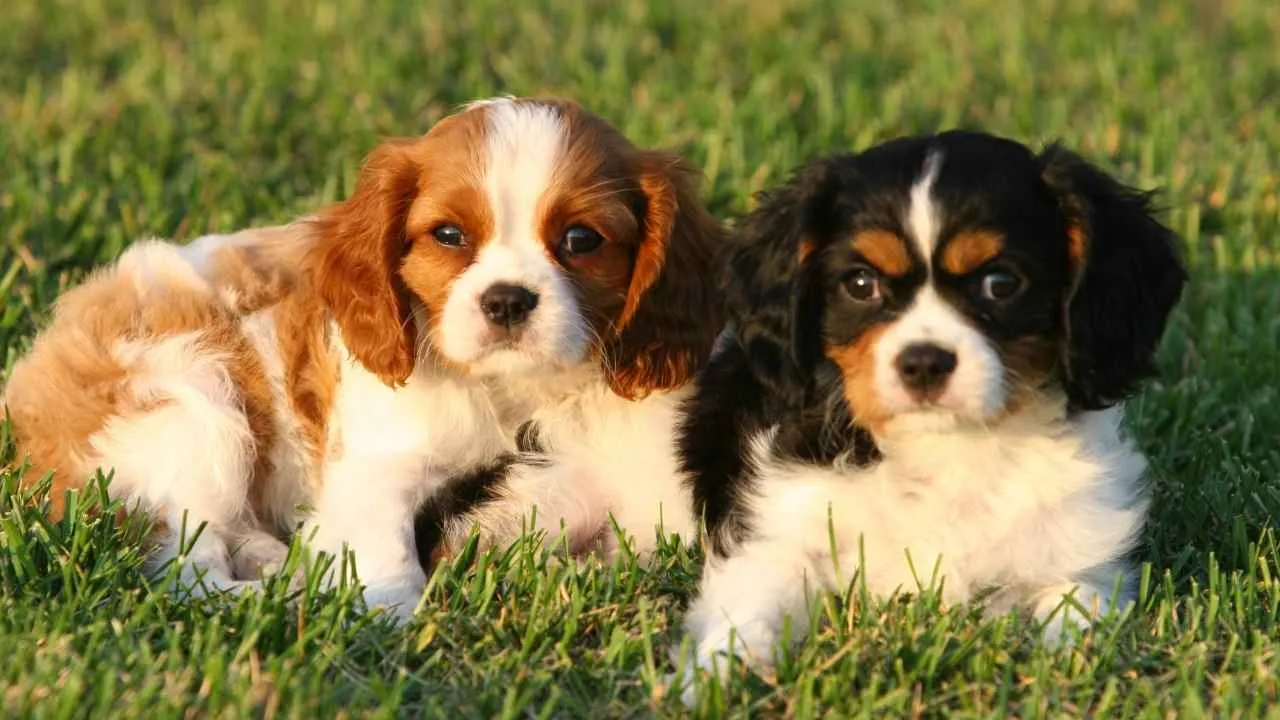
The Cavalier King Charles Spaniel is a loving small breed with strong ties to British royalty. King Charles I and Charles II were so fond of these dogs that they took them everywhere, even to Parliament, according to PetMD. Cavaliers were also bred to warm laps in chilly castles and on cold carriage rides.
Personality and Temperament
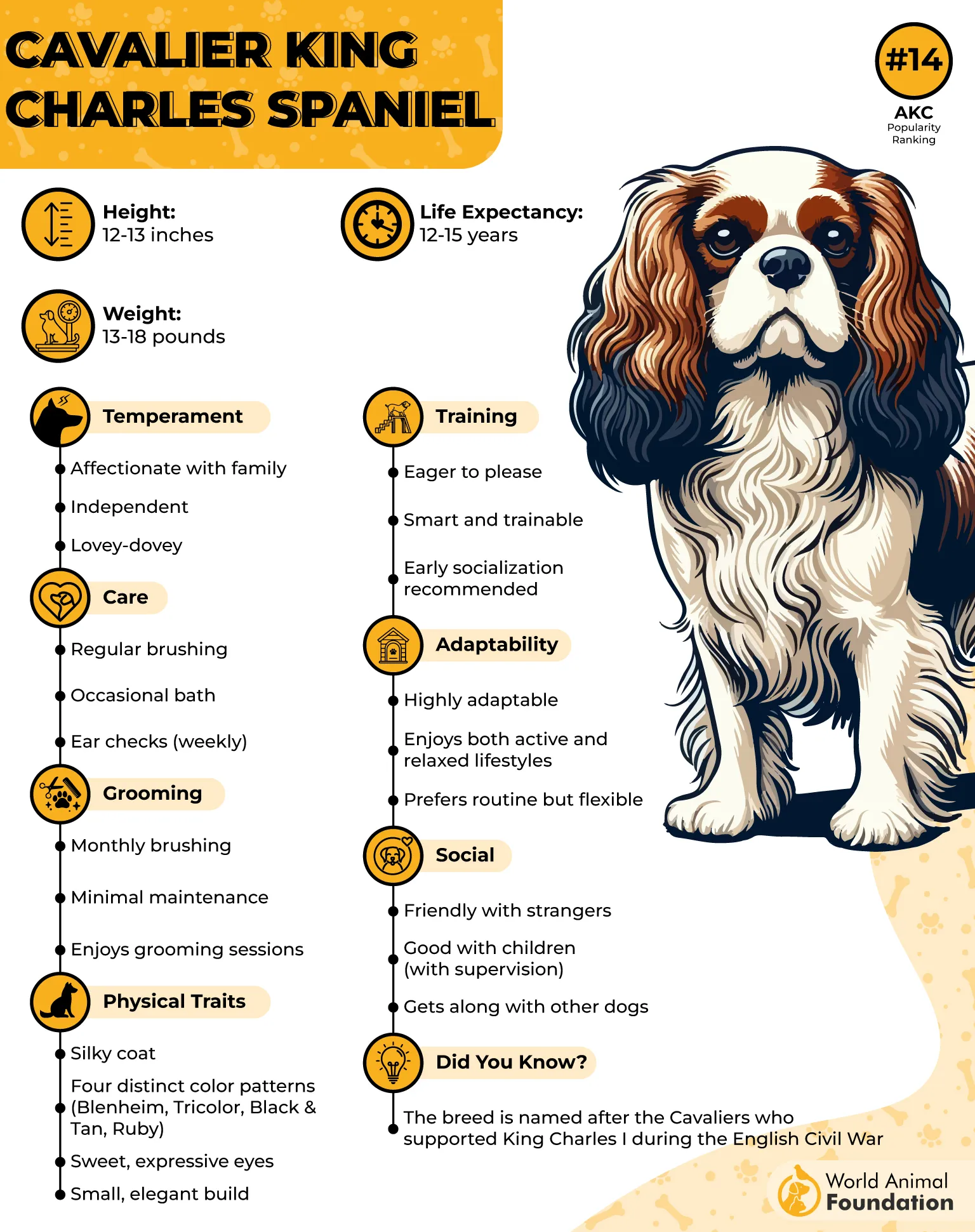
Cavaliers are gentle, affectionate, and friendly dogs that love being close to their people. They are patient with children and usually get along well with dogs, cats, and other animals. These social dogs enjoy meeting new people and can adapt well to different homes.
They are not big barkers and are happiest when they have plenty of human company. They can be playful and enjoy outdoor time, but they are just as happy spending a lazy day relaxing at home.
Exercise and Care
Cavaliers have moderate exercise needs. Two 20–30-minute walks each day, along with some playtime and mental stimulation, can keep them content.
Once their energy is used up, they are happy to lounge on the couch or curl up beside their families. Their long coats need regular brushing, while their ears and eyes should be checked weekly.
4. Newfoundland

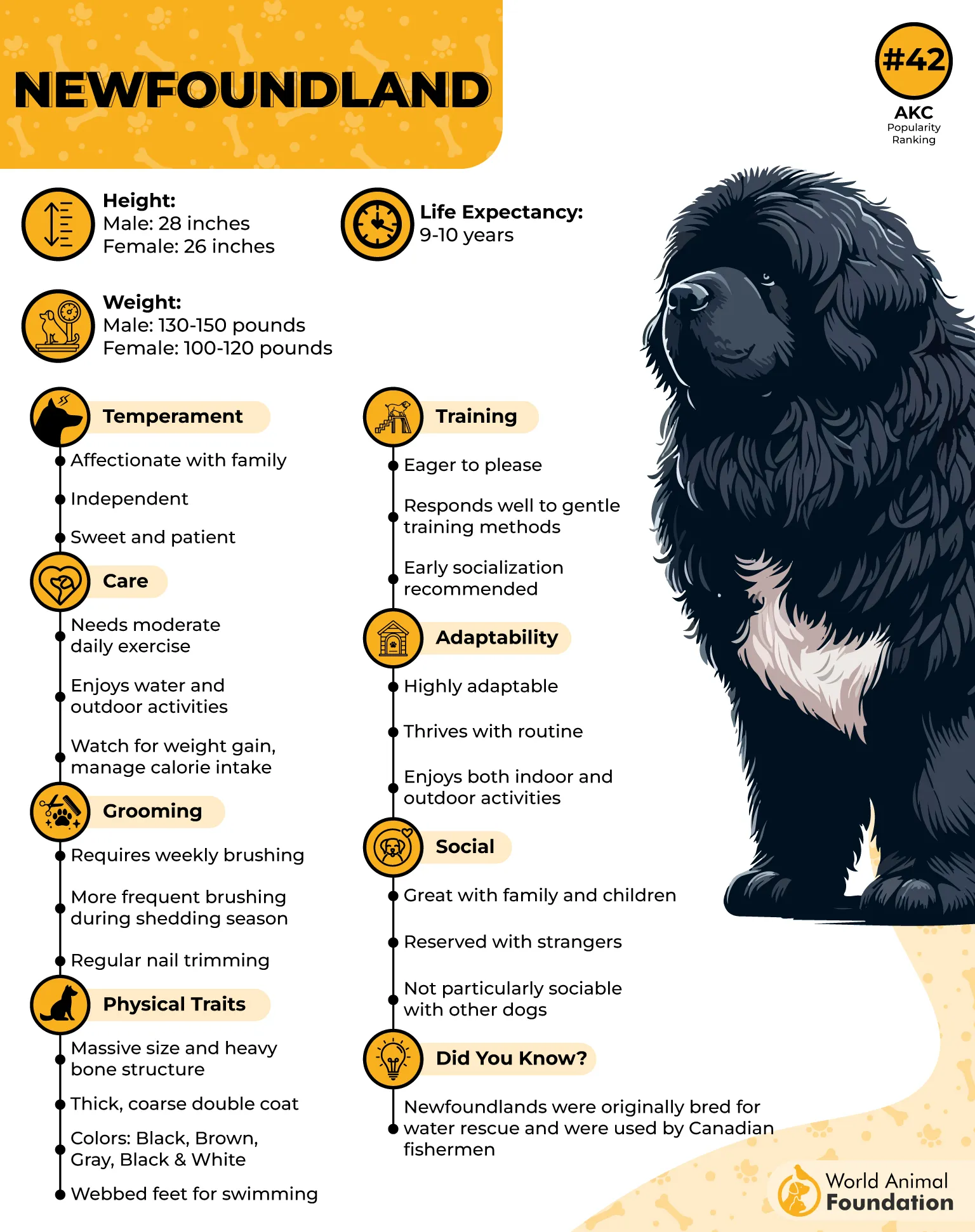
Newfoundlands, often called Newfies, originated in Newfoundland, Canada. They worked alongside fishermen and were also used as water rescue dogs. Their webbed paws and thick double coats made them strong swimmers who could handle cold water.
Personality and Temperament
These gentle giants are known for being calm, patient, friendly, and devoted. They love people and usually get along well with children, dogs, and cats. Their sweet nature has earned them the nickname “nanny dog.”
Newfoundlands enjoy attention and may even try to climb onto your lap despite their huge size. They are rarely aggressive, but they can become protective if they or their family feel threatened.
Exercise and Care
Newfoundlands love swimming and remain strong, natural swimmers. They also need regular exercise and early training because their size and strength can become difficult to manage as they grow. They are intelligent and willing to please, although they learn at their own pace.
Their thick double coat sheds year-round and needs consistent brushing. They also drool and can overheat easily, so keeping them comfortable indoors is important.
5. Great Dane
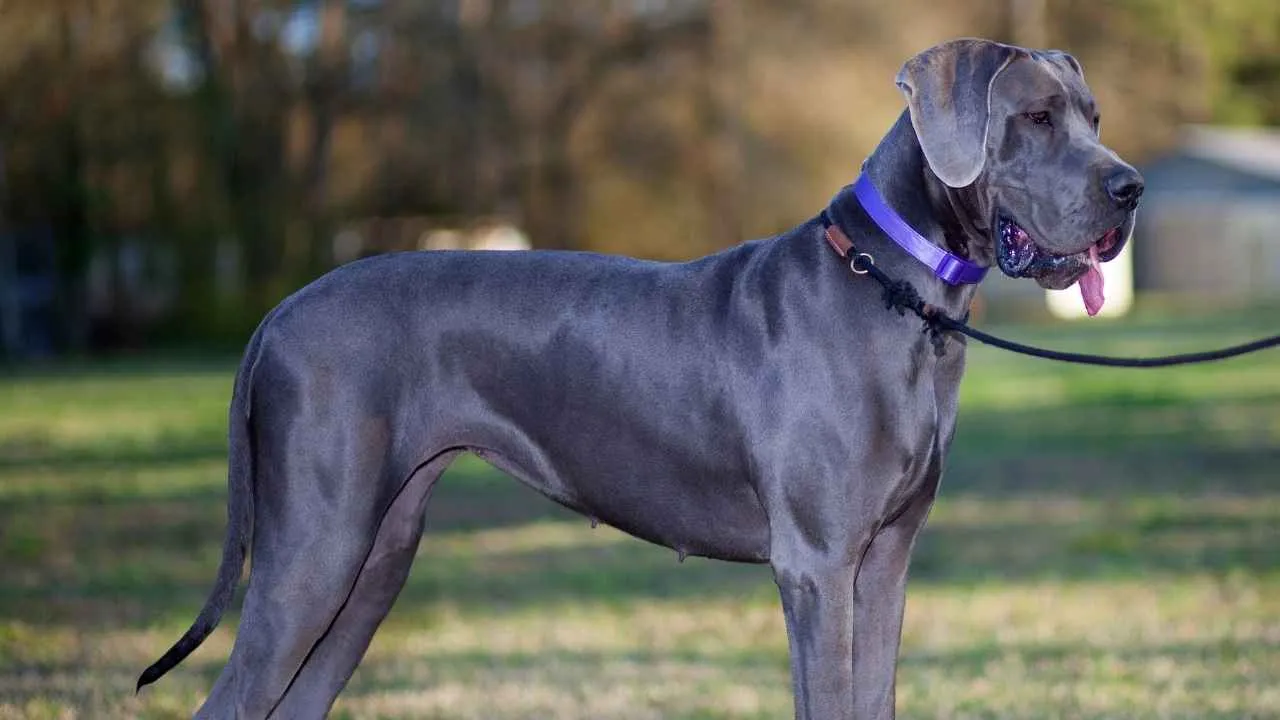
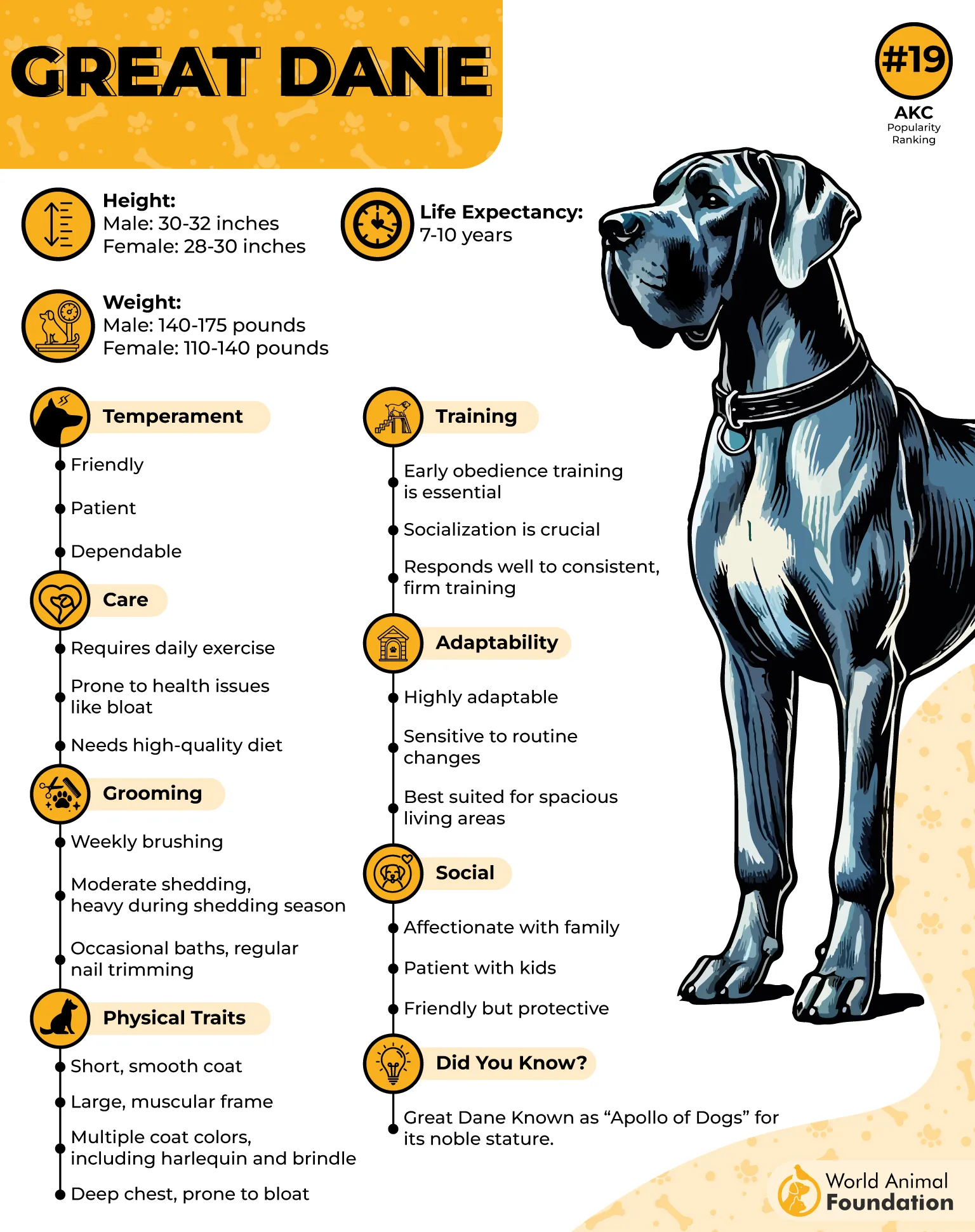
Great Danes were developed in Germany in the 1800s for hunting wild boar and guarding estates. Despite their name, they have no roots in Denmark. They are also known as German Mastiffs and are often called the “Apollo of dogs” because of their impressive stature.
Personality and Temperament
Great Danes may look intimidating, but they are generally friendly, affectionate, and gentle with both family and strangers. They have fairly low energy levels and enjoy relaxing at home after some playtime. They are usually friendly with other dogs and can live well with housemates.
They also tend to bark only when there is a reason. Their size can be difficult for small children or seniors to manage, though, and supervision is important around smaller family members and animals.
Exercise and Care
Great Danes enjoy play but usually do not need endless activity. They are easy to train, although they may not respond quickly. Their short coat needs weekly brushing.
Because they grow quickly and become extremely large, their size can also mean higher food and veterinary costs. Their impressive build makes them strong watchdogs, while their affectionate nature allows them to settle comfortably into family life.
6. Pekingese
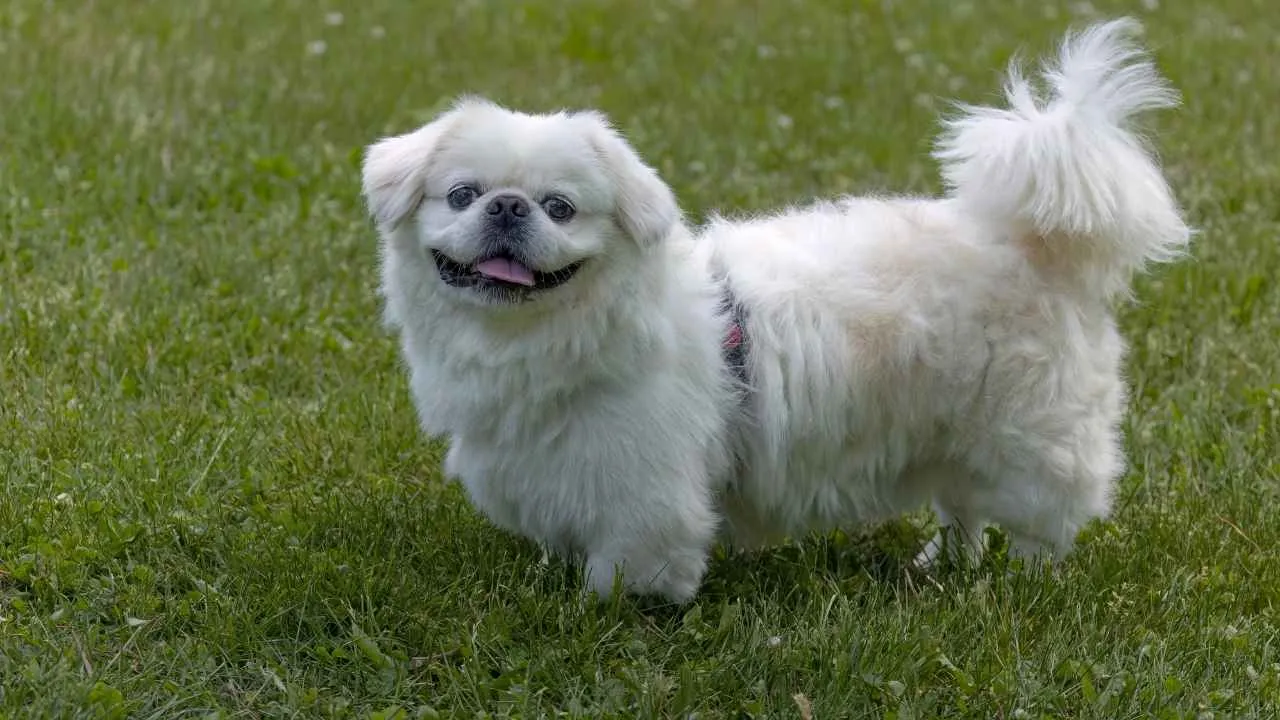
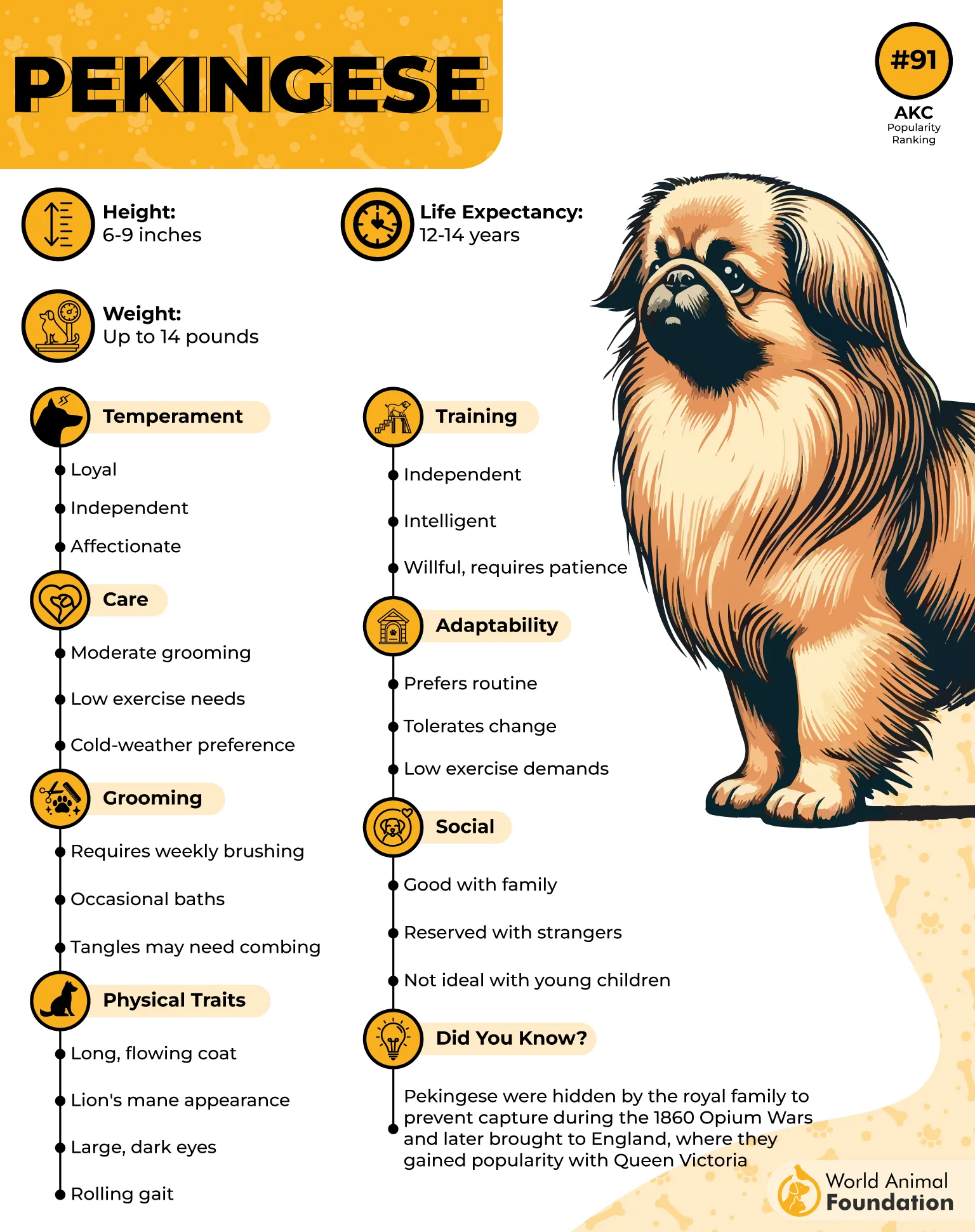
Pekingese have a long history in ancient China, where they were bred to live with royalty and were known as “Lion Dogs.” This small dog breed dates back around 2,000 years. In 1860, five Pekingese were brought to England, helping introduce the breed to the West.
Personality and Temperament
Pekingese are affectionate, loyal, and outgoing with the people they love. They can also be independent, stubborn, and reserved around strangers. Despite their small size, they are brave and make alert little watchdogs.
They enjoy being involved with their families and may happily jump onto a lap for a cuddle. They are generally good with other dogs and pets, but early socialization helps them become comfortable around different people and animals.
Exercise and Care
Pekingese have moderate exercise needs but are not built for strenuous activity. As flat-faced dogs, they can overheat easily, so hot-weather exercise should be avoided.
Their thick double coat also needs frequent brushing to prevent mats. Training can take patience because they are strong-willed and learn at their own pace.
7. Clumber Spaniel
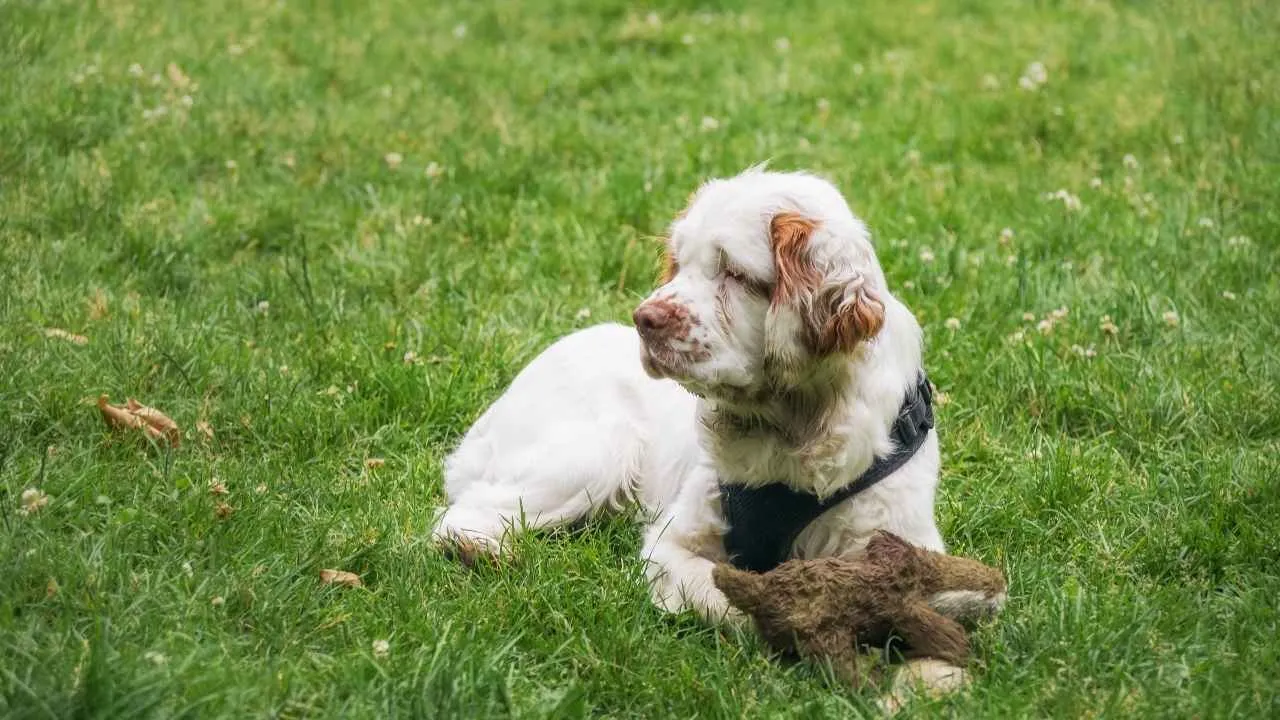
Clumber Spaniels originated in England and are one of the oldest spaniel breeds, with a history dating to the 18th century. They were named after Clumber Park in Nottinghamshire and became favorites of British nobility and royalty. They were valued for their skills in retrieving game.
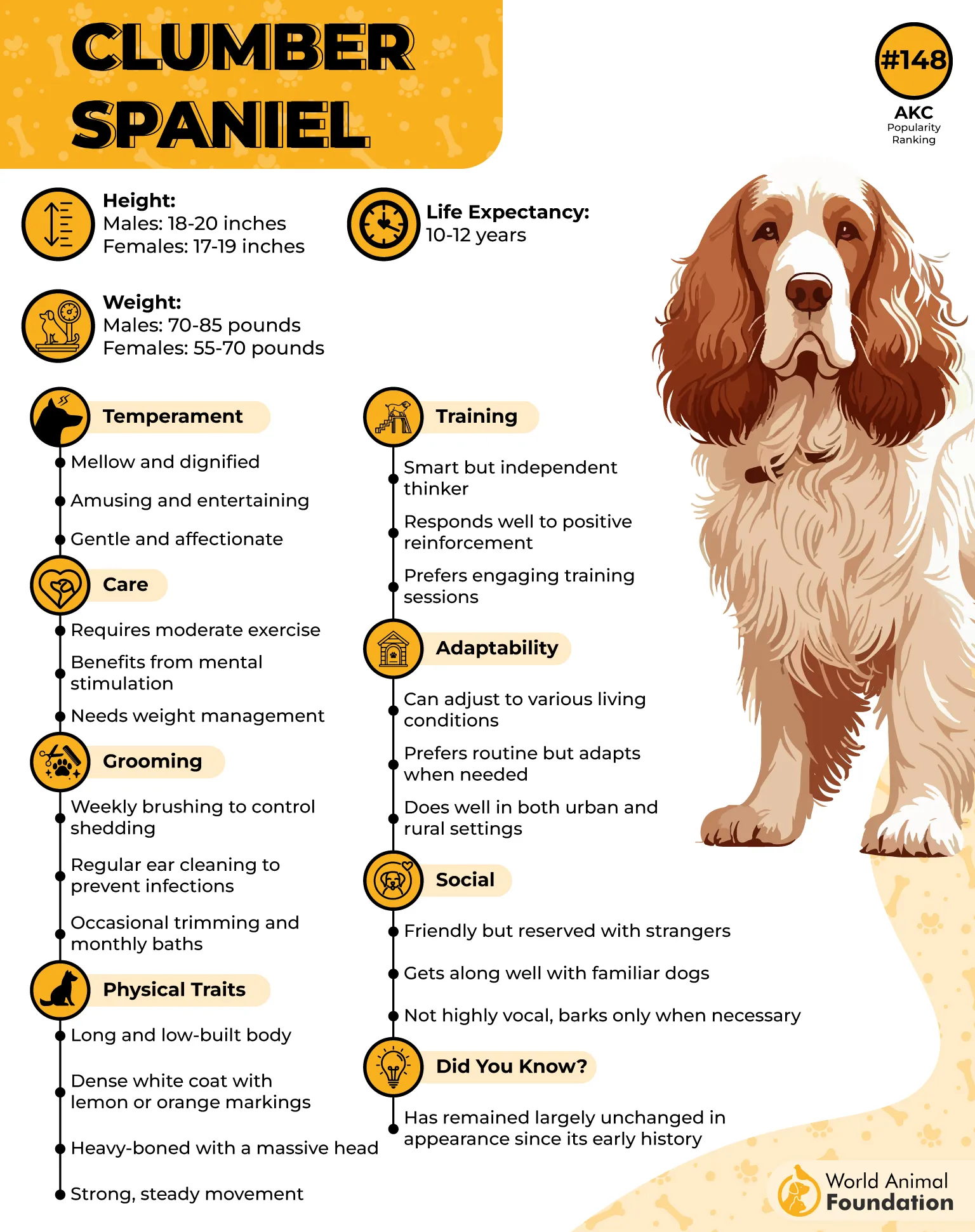
Personality and Temperament
Clumber Spaniels are affectionate, gentle, and good-natured dogs with a calm, dignified nature. They are devoted to their families and usually make excellent family companions. Orvis says they can be somewhat reserved with unfamiliar people at first, but often warm up with time.
These dogs are laid-back and enjoy relaxing on the sofa, yet they also have a playful side and may become silly with their families. Their steady nature can also make them suitable for first-time dog owners.
Exercise and Care
Although they are relaxed at home, Clumber Spaniels need regular outdoor exercise and play. They enjoy following scents and have strong hunting and retrieving instincts.
Their independent streak means consistent, positive training works best. Their dense coat needs combing two or three times a week, along with regular baths.
8. Japanese Chin
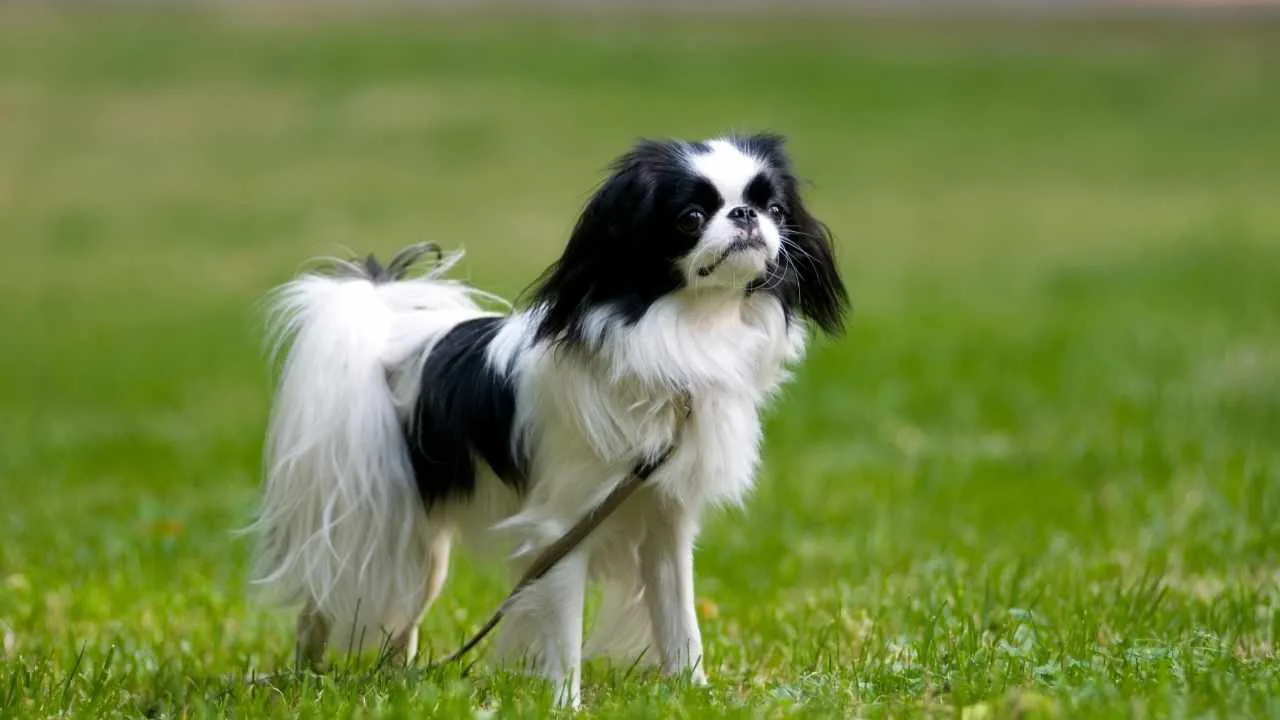
Japanese Chins are ancient companion dogs with a long connection to Asian nobility. Their true origins are unclear, and despite their name, the breed is often linked to China. They were kept by Buddhist monks and gifted to nobility, eventually becoming familiar sights in Imperial palaces.
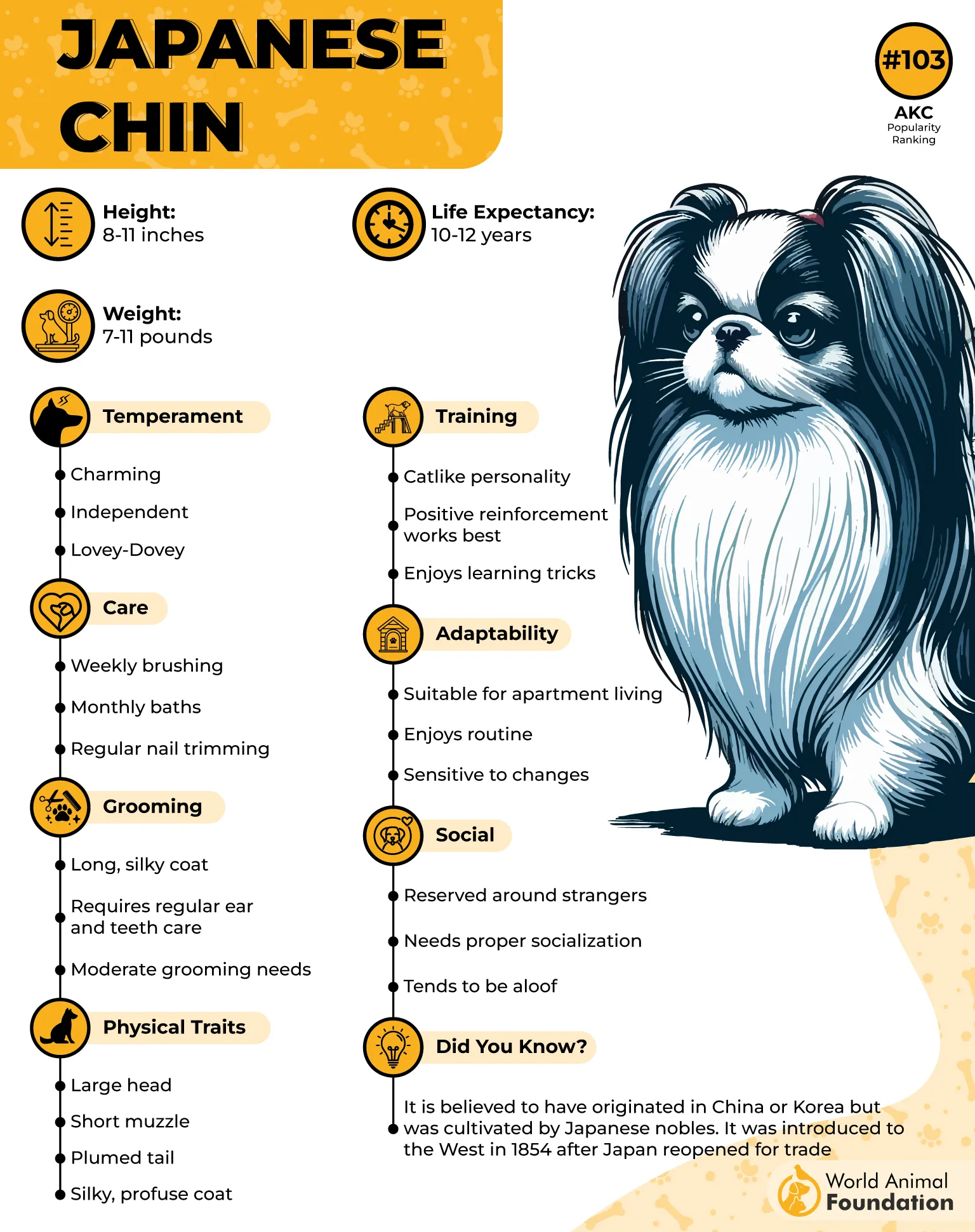
Personality and Temperament
Japanese Chins are affectionate, playful, and relaxed dogs that love being close to their people. They can be strong-willed and independent, but proper training helps them become well-behaved companions. Their catlike nature is one of their most charming traits.
They groom themselves, enjoy climbing, and may perch on the back of a sofa or chair. They are also known for their playful “Chin spin” when excited and their unusual singing rather than typical barking.
Exercise and Care
Japanese Chins have modest exercise needs and can live comfortably in apartments. They enjoy walks and performing tricks but are equally happy lounging at home.
Their silky coat is fairly easy to maintain, with brushing once or twice a week and baths when needed. They thrive on human companionship and may struggle when left alone for long periods.
9. Saint Bernard
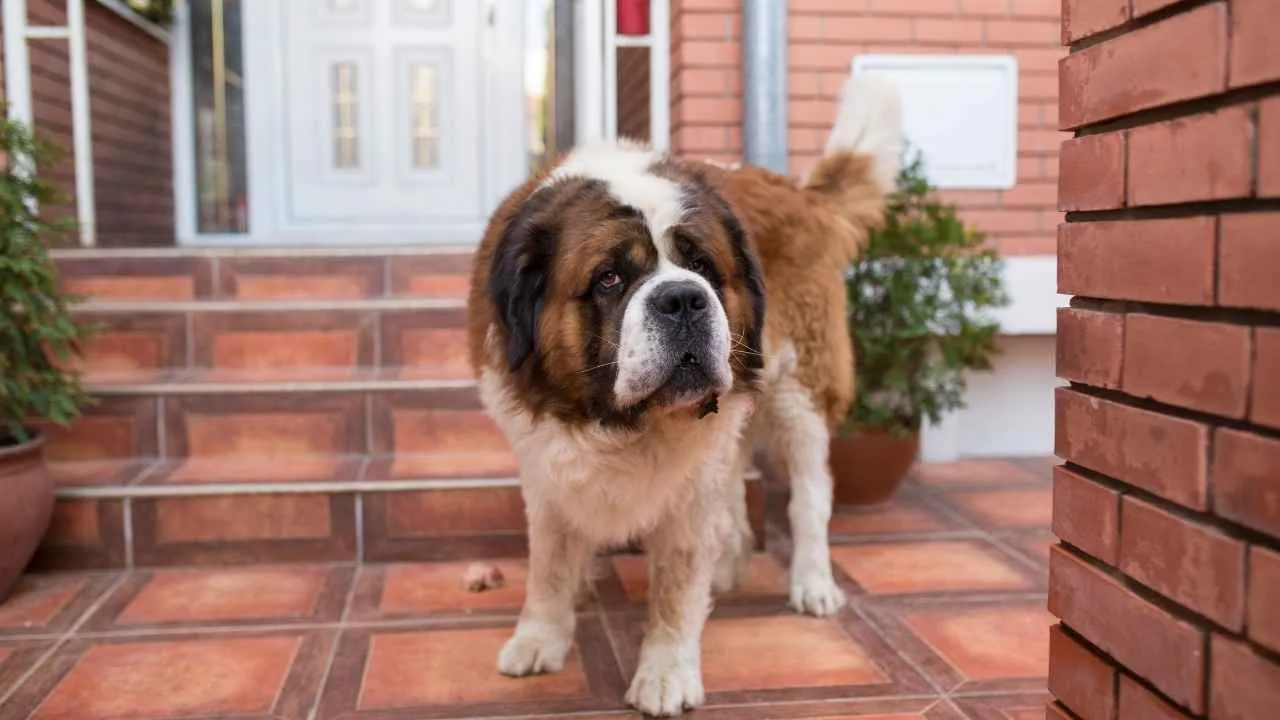
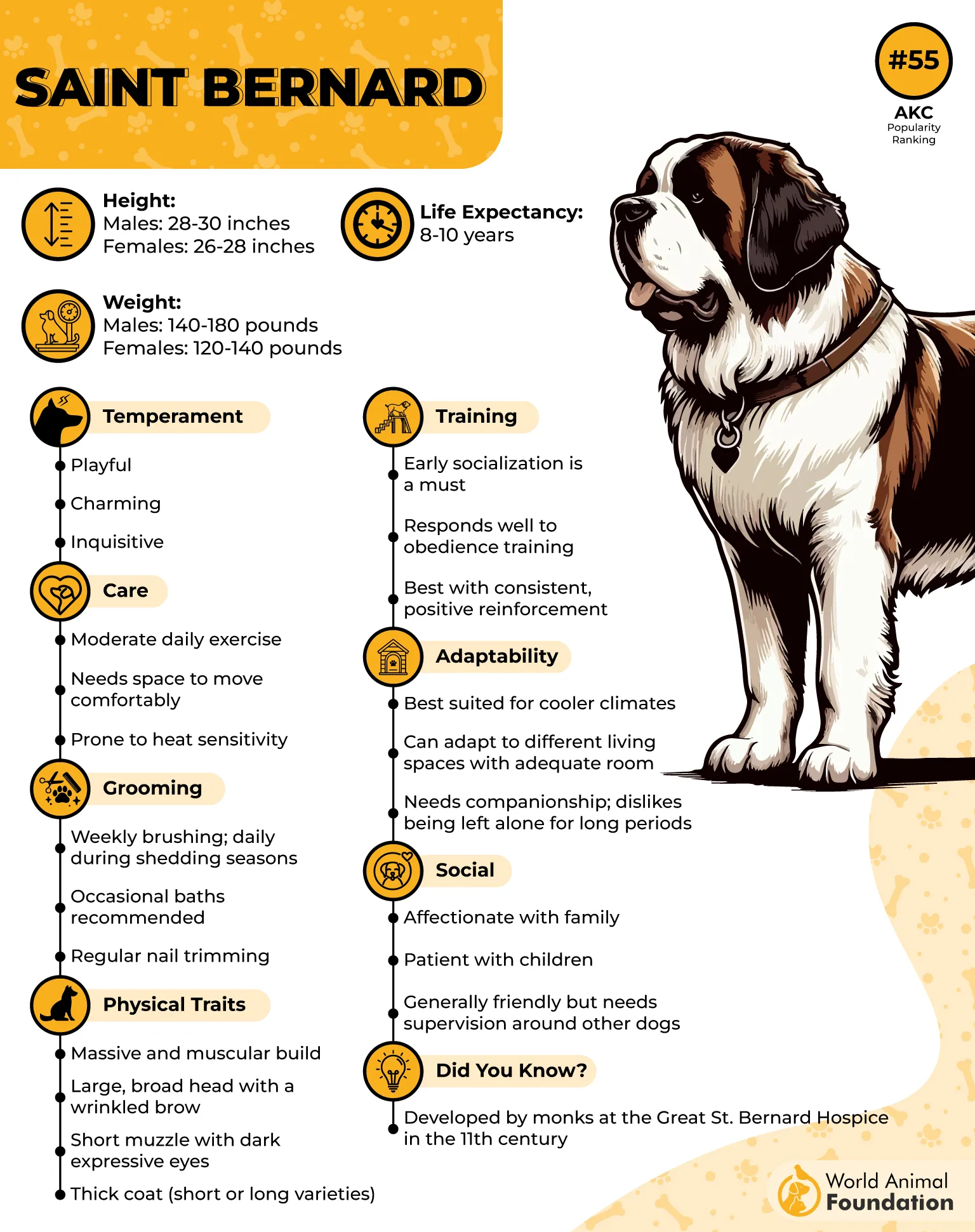
Saint Bernards are giant dogs with a remarkable history. Monks in the Swiss Alps first trained them in the 1600s to locate and rescue people buried by avalanches. Although they are still associated with rescue work, most now live as affectionate family companions.
Personality and Temperament
Saint Bernards are loving, placid, and easygoing dogs. They are patient and gentle with children and usually get along well with household dogs and cats. They are eager to please, which can make training easier.
These people-oriented dogs love being near their families and may happily follow them around the house. They can be protective when they believe their family is in danger, but they are generally friendly toward strangers.
Exercise and Care
Saint Bernards have moderate energy needs and usually need at least one 30-minute walk each day. They can enjoy longer walks in cool weather, but they are not suited to strenuous exercise in the heat.
They love snow and handle cold conditions much better. Their size means they need plenty of space, while their large heads can also mean plenty of drooling.
Conclusion
Gentle dog breeds can bring a calm and loving presence to the home without needing constant activity. From playful lap dogs to mellow giants, these breeds enjoy spending time with their families and are often just as happy relaxing on the couch as they are going for a walk or having some playtime.
The key is to choose a dog whose exercise, grooming, and companionship needs fit your daily routine. With the right care and plenty of time together, a laid-back dog can make home feel even more comfortable, peaceful, and full of companionship.
