




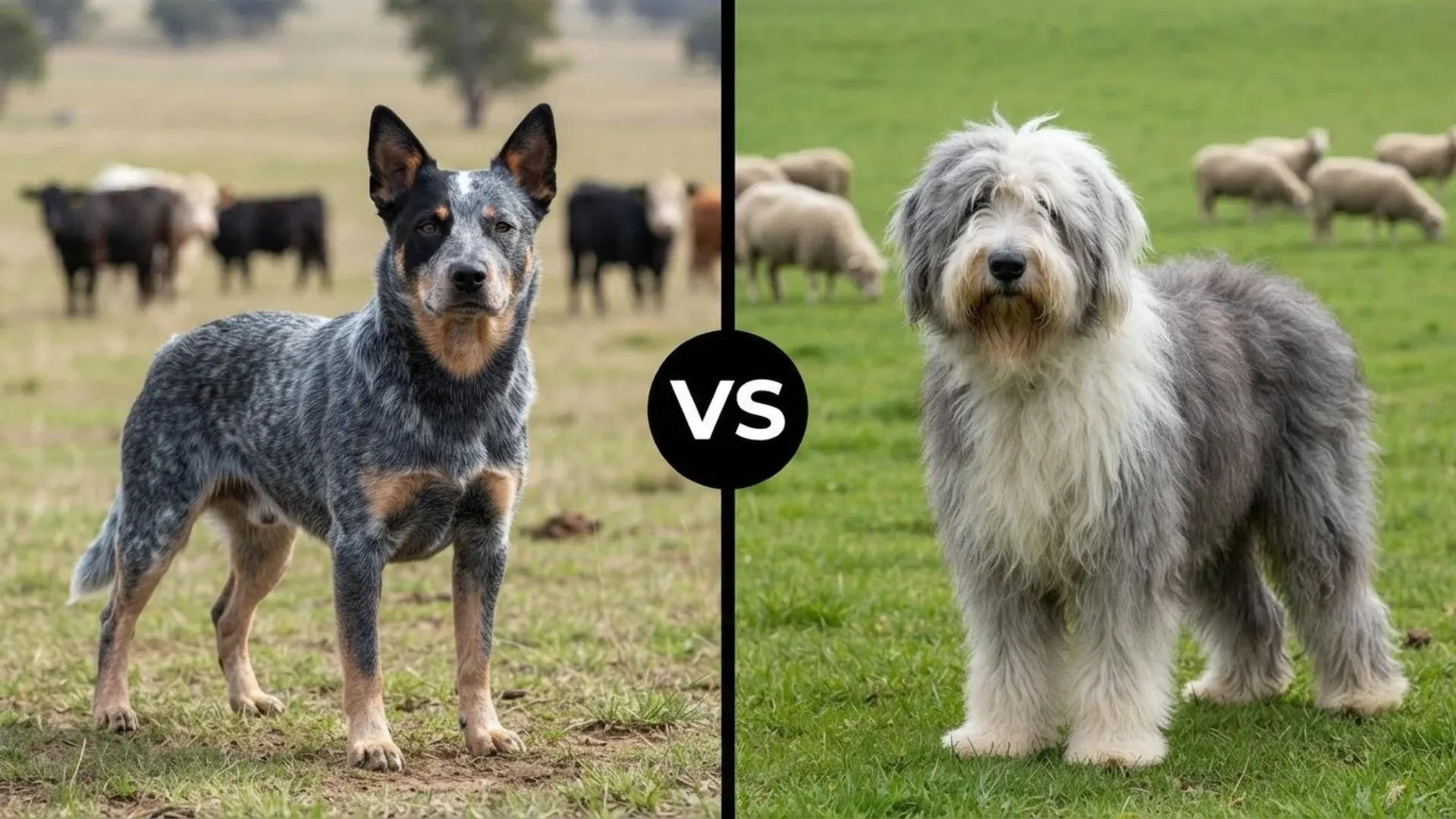
Choosing between Australian Cattle Dogs and Old English Sheepdogs is a real hassle, as both are herding dogs. Both breeds share a proud history as driven and hardworking livestock dogs. They are loyal, intelligent, and also have protective instincts that make them good watchful guardians.
BUT both are different breeds in their herding styles, size, temperament, behavior, and physical build. ACDs are famous as ‘Heelers’ as they nip to move herds, whereas the OES relies on bounding and boundary-pushing body checks.
Apart from this, there are distinct differences in their grooming and coat types. Therefore, we have compiled this guide to help you understand which one you should choose. While none of them is better than the other, they actually have different ideal family types and work.
In addition, you will also learn about their trainability, size, build, shedding, and work drive. So read ahead to know an unbiased and fair comparison between these two herding dogs.
Australian Cattle Dog vs. Old English Sheepdog: Key Differences Explained
1. Origins & Purpose
Australian Cattle Dogs were bred in the mid-to-late 1800s to manage and herd cattle over massive distances. These medium-sized dogs usually crouch low and nip at the ankles of stubborn cattle to force them to move forward.
In comparison, the Old English Sheepdogs were originally bred in England in the 1700s. They were used as drover’s dogs for herding sheep and cattle on long walks from farms to city meat markets. Their heavy and thick double coat actually makes them weather-resistant.
Although these two breeds herd cattle, they actually differ in their herding styles. ACDs can work in harsh, rough terrain, while OESs were bred to drive herds over soft and rolling countryside. Apart from that, Australian Cattle Dogs nip, and OESs are soft-mouthed yet vocal drovers.
2. Size & Build
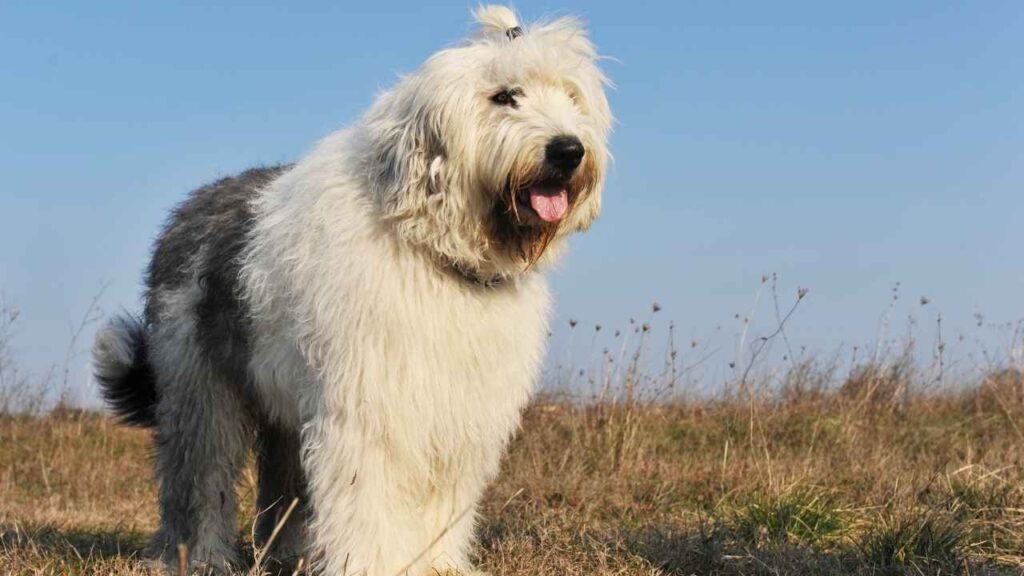
Old English Sheepdogs stand around 21-22 inches with 60 to 90+ pounds in weight. They have a large, square, and sturdy build. OES are heavily boned with a broad chest and a muscular frame, as they also have a rare body line that rises at the loin.
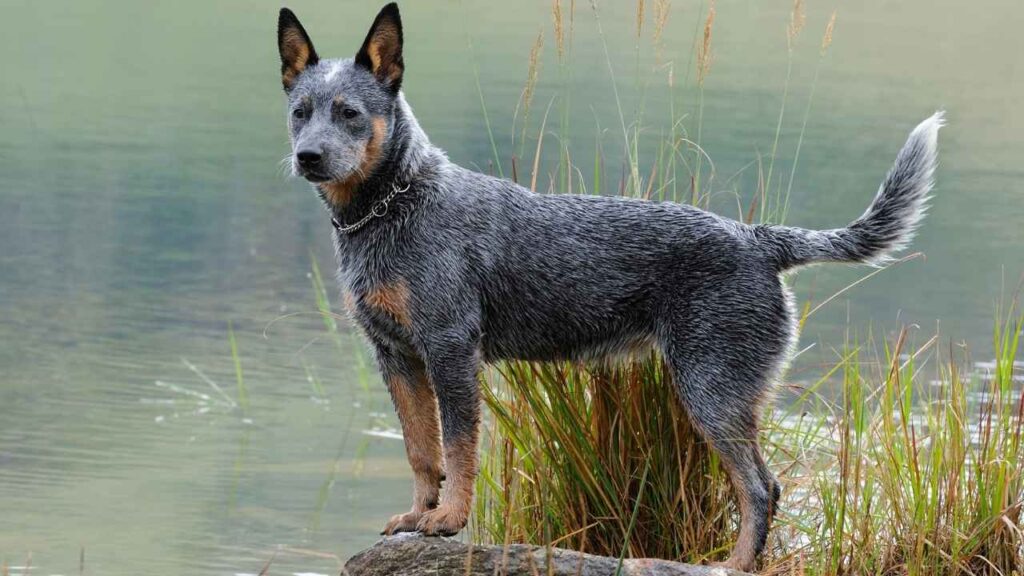
In contrast, the Australian Cattle Dogs stand 18-20 inches (males) with around 35-50 pounds in weight. These blue dogs have a medium size and low-slung body. They are built for power and agility with a broad skull and strong neck.
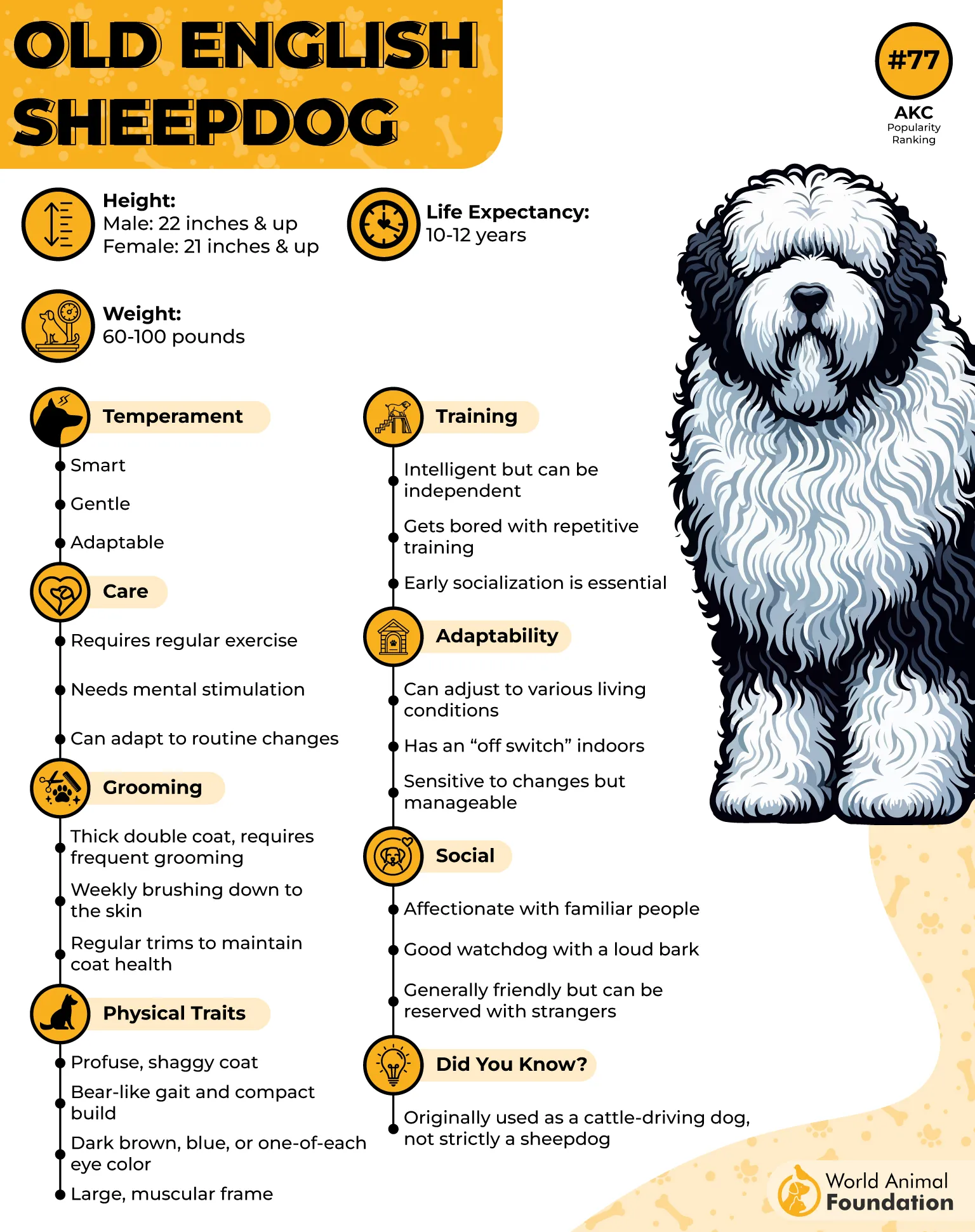
So these two herding dogs differ quite a lot in their size and build. One sits close to the ground while the other has a structured and top-heavy silhouette for physical power. They not only differ in their size but also in their build, which makes them recognizable.
3. Pricing & Availability
Australian Cattle Dogs cost around $800-$1,200 from a reputable breeder generally, though they can also be around $1,500 depending on the source. These medium-sized dogs are widely available because they are bred as both working farm dogs and pets for families.
In comparison, OES ranges from $1,200 to $2,500 from a reputable breeder, though their price can also go above $3,000. However, these fluffy dogs are relatively low to moderately available. They are comparatively less common than ACDs and often have waitlists.
So in short, the Old English Sheepdogs have a higher upfront cost and are also harder to find than Cattle dogs. However, you can also find these dogs from shelters and rescue organizations, especially ACDs, which makes getting herding breeds a lot easier.
4. Temperament & Personality Style
Old English Sheepdogs are easygoing, adaptable, and playful. They are often described as big clowns and retain their puppy-like enthusiasm well into adulthood. However, they are loving and family-oriented dogs that do well with children. OES kind of have a bubbly and affectionate personality.
On the other hand, Australian Cattle Dogs are intense, highly focused, and independent thinkers. They possess a high work drive and need a clear job to keep their sharp minds engaged. ACDs often bond strongly with one person and suspect strangers.
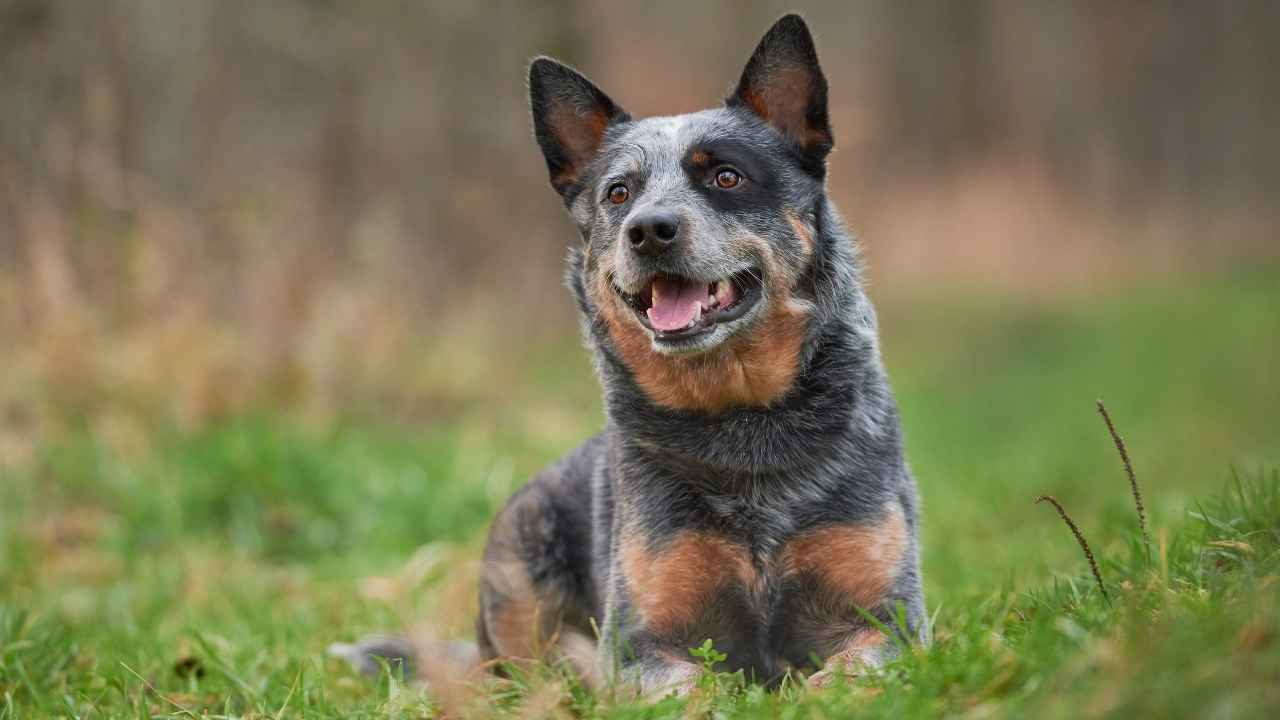
That being said, OES actually enjoy being surrounded by humans and balance their protective nature with a gentle and good attitude. While ACDs are mouthy and may try to nip, they struggle when changing owners.
5. Exercise Needs & Energy Level
Old English Dogs have moderate energy levels and steady stamina but are generally happy to settle down inside after a good outing. They generally need 60-90 minutes of physical activity for mental stimulation, including long walks and some outdoor playtime.
In comparison, Australian Cattle Dogs are highly energetic dogs and require about 1.5 to 2 hours of exercise, as PetMD shared. They enjoy agility training, flyball, long runs, hiking, and playing intense games of frisbee. However, they also become destructive when their energy needs are not met.
That said, both breeds require experienced owners and proper training and early socialization. They do well in active families who meet their energy needs and also make perfect dogs for those who love exploring the outside world.
6. Trainability & Obedience
Australian Cattle Dogs are highly intelligent and often rank among the smartest dog breeds. They pick up commands quickly and respond best to agility and task-based training. These medium dogs also enjoy mental challenges like puzzles and toys.
On the other hand, Old English Sheepdogs are intelligent, playful, and generally eager to please. Although they are known for a gentle personality, they can be stubborn occasionally. OES respond best to treats, praise, and fun games that are short to keep them engaged.
That being said, ACDs learn faster but have heel-nipping instincts. Likewise, OES are playful, but both breeds actually require experienced owners. ACDs do well with active owners, while the OES require gentle trainers for calm training.
7. Grooming Needs & Shedding
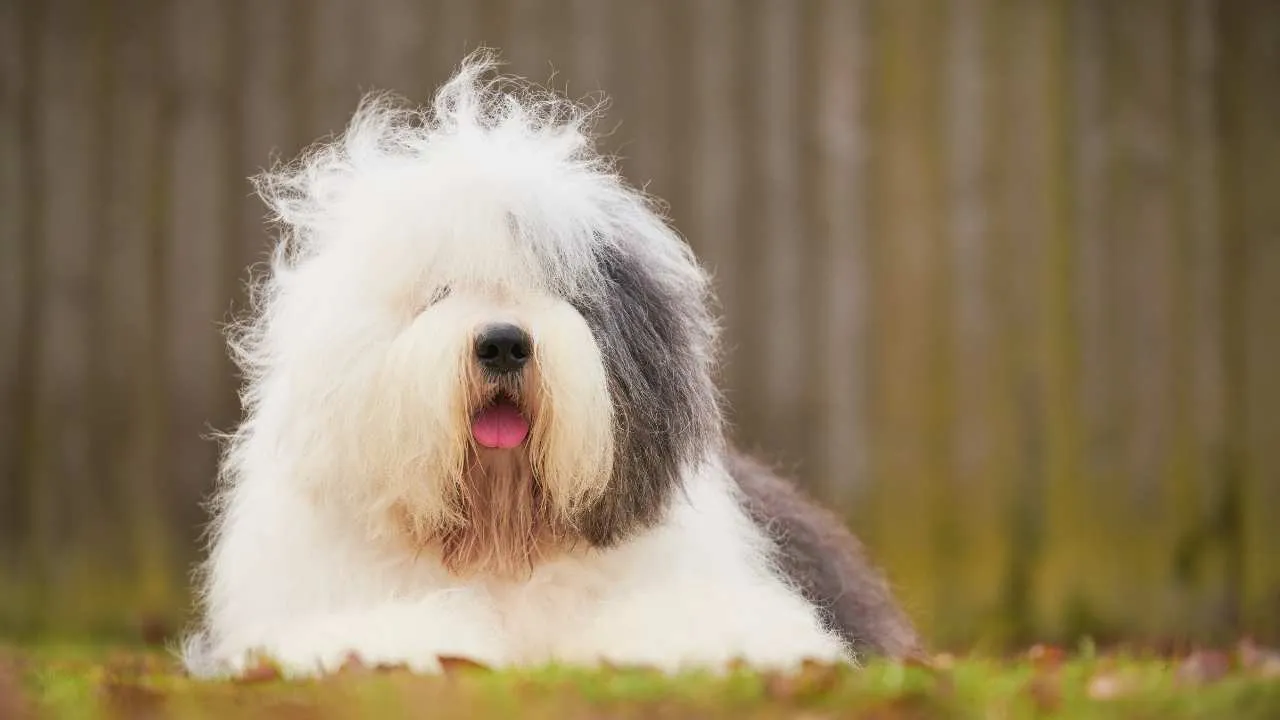
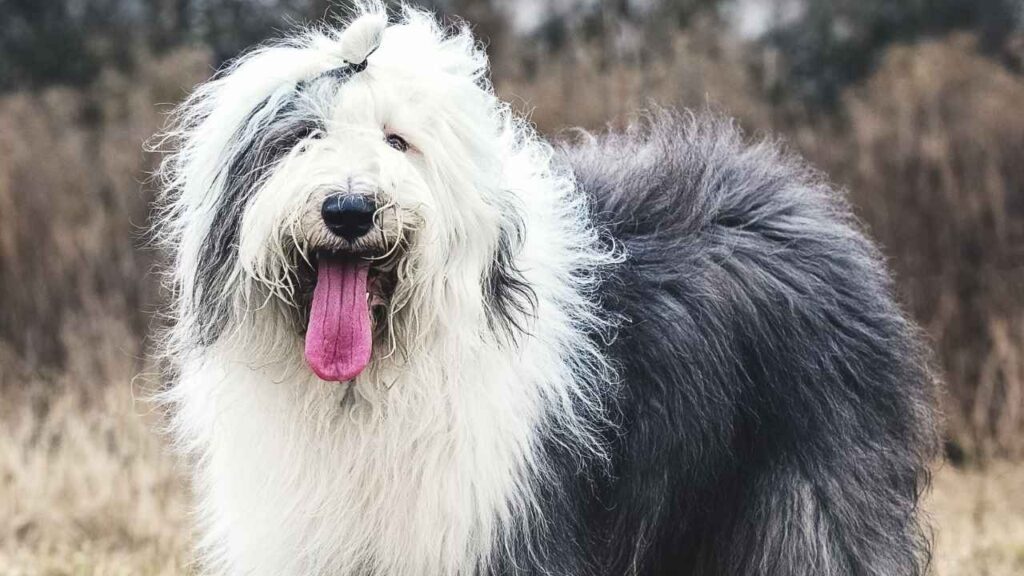
Old English Dogs (OES) have a thick double coat with a shaggy outer texture and a soft undercoat. These working-group dogs actually shed a lot. So they need thorough brushing at least 3-4 times a week to prevent painful mats and skin infections.
You can also go for a puppy cut, which reduces their brushing needs quite a lot. In comparison, Australian Cattle Dogs have a straight, dense double coat that repels dirt, rain, and burs. However, they shed moderately and are low-maintenance dogs. ACDs require weekly brushing, as Purina also shared.
That said, they also blow their coat during seasonal shifts, so brushing may increase to daily. However, OES need professional grooming every 6-8 weeks, whereas ACDs rarely need grooming, but they require occasional baths and nail trimming.
8. Herding & Work Drive
ACDs and OES both were herding dogs, but they have different styles. The OES rely on their body, pressure, and shoulder bumps to herd cattle instead of biting or making intense eye contact. In contrast, the Australian Heelers herd by nipping at the heels of cattle.
They have relentless energy and super high energy, which helps them to move quickly. However, these Heelers (Blue or Red) may also try to herd running children, so training is non-negotiable. Whereas Sheepdogs have plenty of stamina and bark loudly, which makes them good watchdogs, as the AKC shared.
So that’s why they are happy to lounge once they are done with their job. So choose the one that aligns with your goals. If you want a truly dedicated livestock herding dog with super high energy, then an ACD is yours, while OES do best as both farm and family pets, which is their PLUS point.
9. Health & Lifespan
Old English Sheepdogs have an average lifespan of around 10-12 years compared to 12-16 years of life expectancy of ACDs. Both breeds experience some health issues at some point in life. OES are likely to experience hip dysplasia, PRA, and multiocular defect (MOD).
Bloat (GDV) and congenital deafness are also common in these dogs. In comparison, ACDs are prone to progressive retinal atrophy (PRA), PLLA, congenital deafness, and joint wear and tear. Make sure to run health tests and choose a reputable breeder who does genetic testing for healthier puppies.
That said, you can also help them live longer with regular exercise, vet checkups, dental appointments, and a balanced diet with quality protein. Provide them with foods that are allowed and avoid toxic ones like food containing xylitol, grapes, and chocolates.
10. Australian Cattle Dog vs. Old English Sheepdog: Which Herding Dog Is Right for You?
The right choice depends on your needs, interests, and goals. Choose OES if you want an affectionate and gentle companion and have time for regular grooming sessions. They are good if you don’t mind taking them for outdoor play.
On the other hand, ACDs are best if you are highly active and want tireless companions. They are absolutely best if you want a wash-and-wear dog and one that enjoys outdoor adventures (though OES also like exploring). But they are actually low maintenance, which is their plus point again.
That being said, they both are independent and stubborn herding dogs, but OES kind of do well with active owners if their energy needs are met. Whereas the ACDs have no room for first-time owners and strictly need firm and confident leadership.
Conclusion
ACDs and OES actually give tough competition, and it’s no wonder if you are confused between these two because the tension is GENUINE. However, they both do differ in some aspects, as mentioned above. OES are sweet, gentle, independent, and clownish herding dogs with loud barks.
ACDs are work-oriented, intense, and super energetic dogs. So yeah, the answer is clear. Choose the OES if you are looking for both family and herding dogs. And ACDs are best if you want a MASTER herder.
