




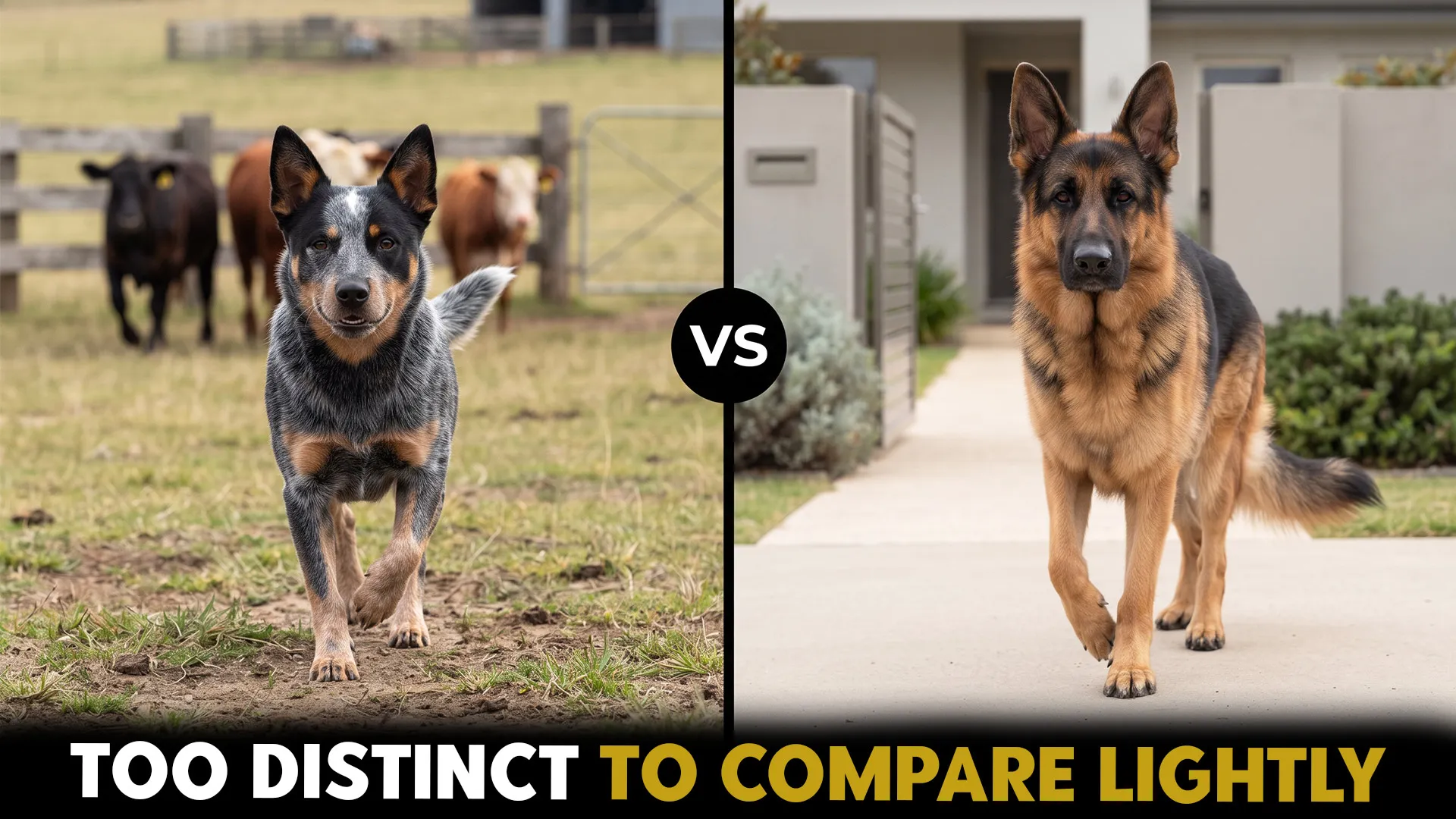
Choosing between an Australian Cattle Dog and a German Shepherd is not exactly a coin toss. Both are smart, athletic working dogs, but they bring different energies to the home.
The Cattle Dog is compact, intense, and is famously independent, while the German Shepherd is larger, more versatile, and often more eager to work closely with its person.
One may happily manage the herd; the other can switch from a family companion to a serious working partner in a heartbeat. Their differences matter just as much as their strengths.
So, which one fits your lifestyle better? Let us compare their origins, build, temperament, exercise needs, training style, grooming, work drive, and health to make that choice a whole lot easier.
Australian Cattle Dog vs. German Shepherd: Traits and Temperament Compared
1. Origins & Purpose
Both have different historical development, geographical roots, and primary and secondary working purposes.
Australian Cattle Dog: This herding dog was developed in Australia to drive cattle over long distances. Bred by Thomas Simpson Hall in the 19th century, the ancestors of the breed were imported from the United Kingdom and were crossed with the Dingo, according to Wikipedia.
German Shepherd: The medium-to-large-sized dog was originally bred in Germany in the year 1899 as a herding dog by Max von Stephanitz. Also known as the Alsatian in Britain, it was used to herd sheep, and today it widely serves in the fields of protection, police and military departments, and in SAR operations.
2. Size & Build
The Australian Cattle Dog has a medium body and sturdy physique, while the German Shepherd Dog is more rectangular and taller.
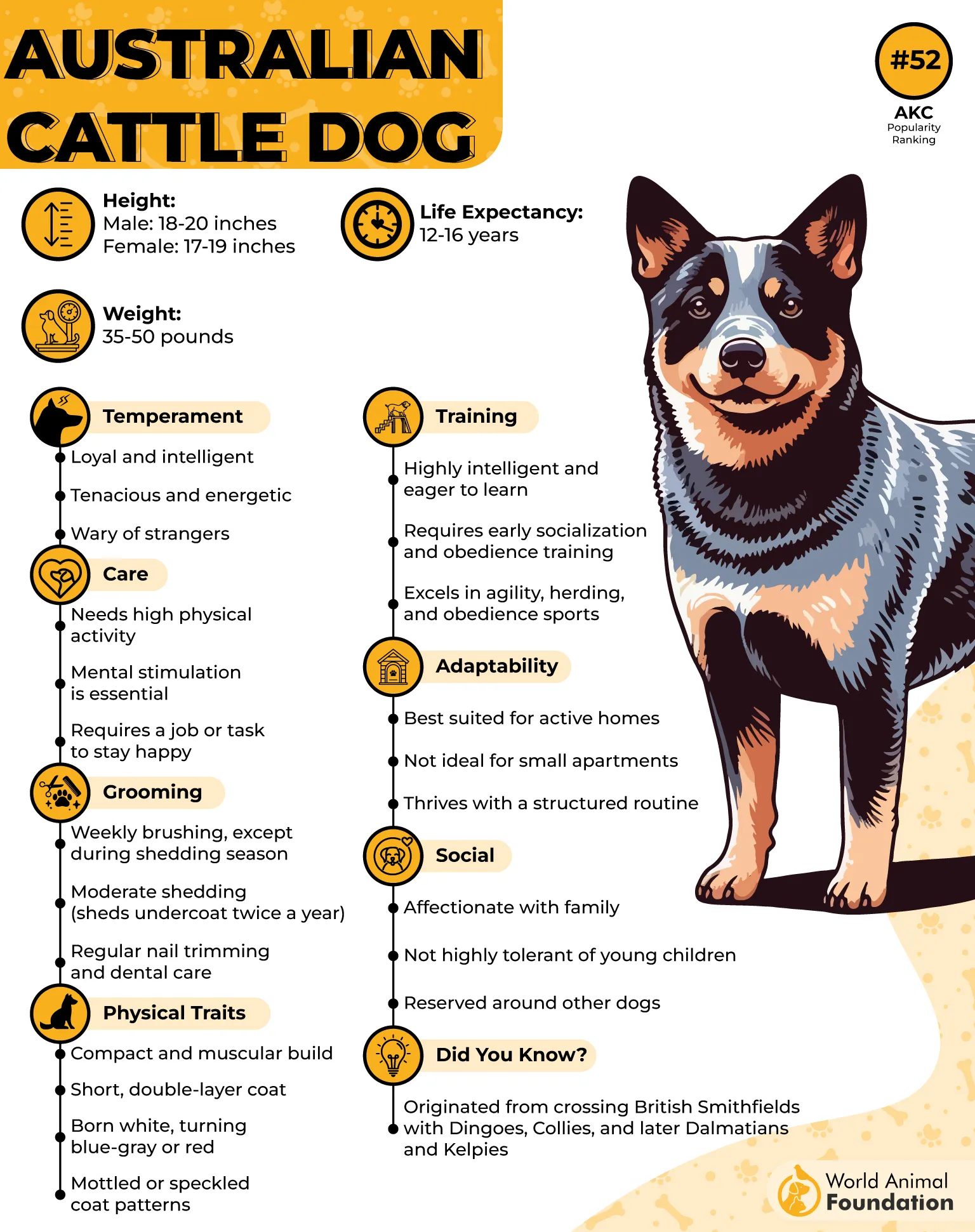
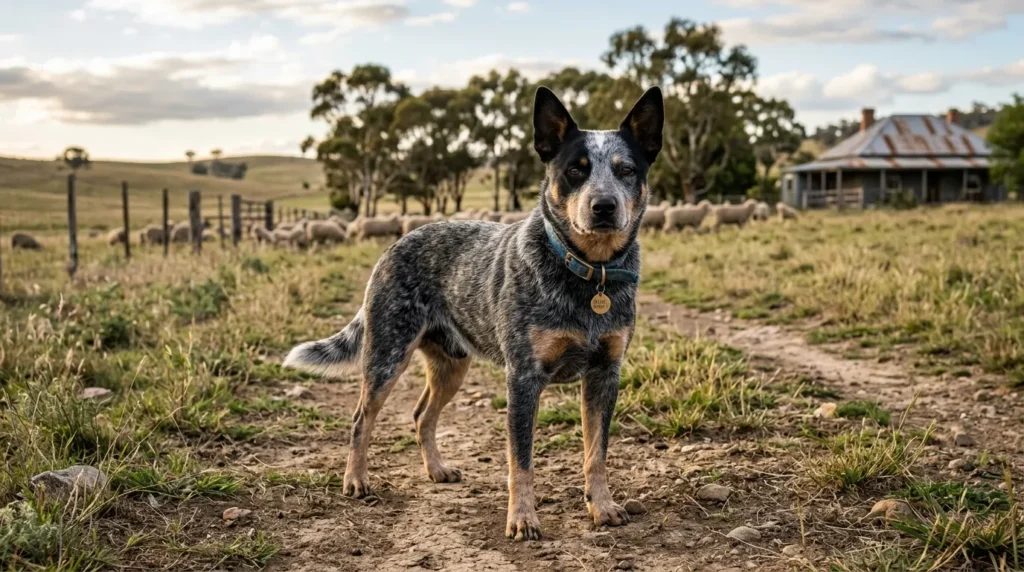
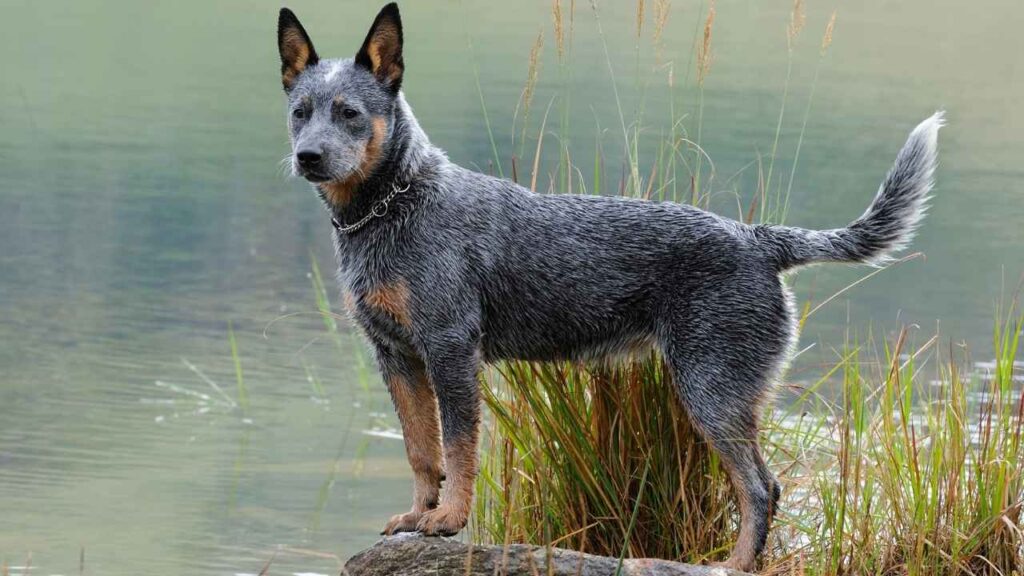
Australian Cattle Dog: The breed stands 17-20 inches tall and typically weighs around 35-50 pounds. It has a deep and muscular chest, a weather-resistant double coat, medium-sized erect and pointed ears, and a broad skull with a slight stop.
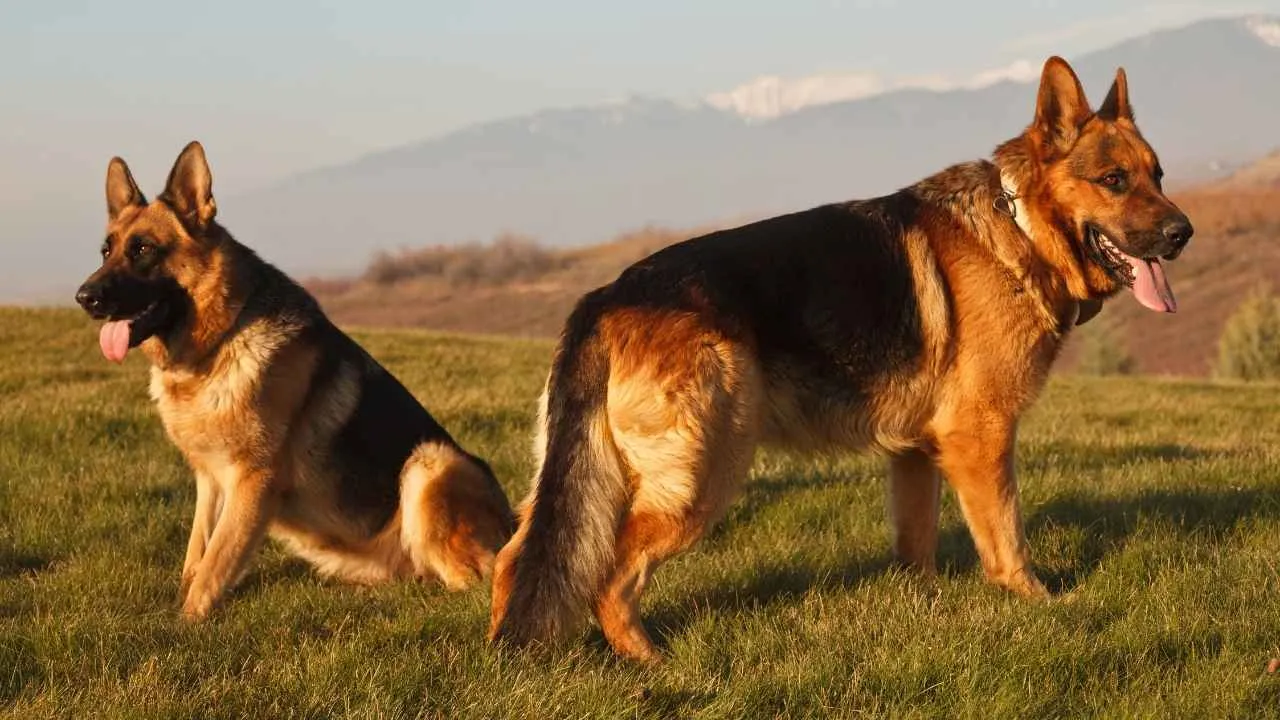
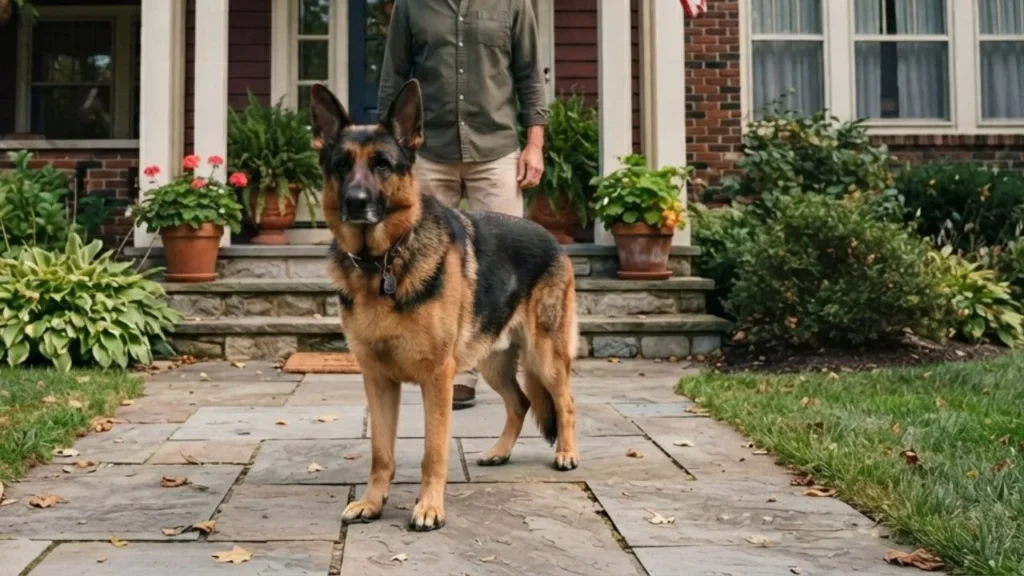
German Shepherd: The athletic dog stands 22-26 inches tall and weighs 50-90 pounds. Built for endurance and speed, the dog has a well-muscled body, a long muzzle, a black nose, erect ears, and almond-shaped eyes with an alert expression, as noted by Britannica. The medium-length, double coat protects the breed from external stimuli.

3. Pricing & Availability
The adoption and maintenance cost of a German Shepherd is more than that of the Australian Cattle Dog.
Australian Cattle Dog: An average ACD puppy typically costs between $600-$1,000. However, if you are contacting a reputable breeder, the cost may rise to $800-$1,500. The breed is commonly available in Australia, North America, and some parts of Europe.
German Shepherd: A GSD typically costs between $1,500-$4,000. But if you contact an adoption or rescue centre, an adult dog will cost $50-$300. A show line or a K9 working breed has the highest price. Kennel Club breeders are the most common source for adoption.
4. Temperament & Personality Style
The ACD is an independent, high-energy breed, while the German Shepherd is an eager-to-please and confident dog.
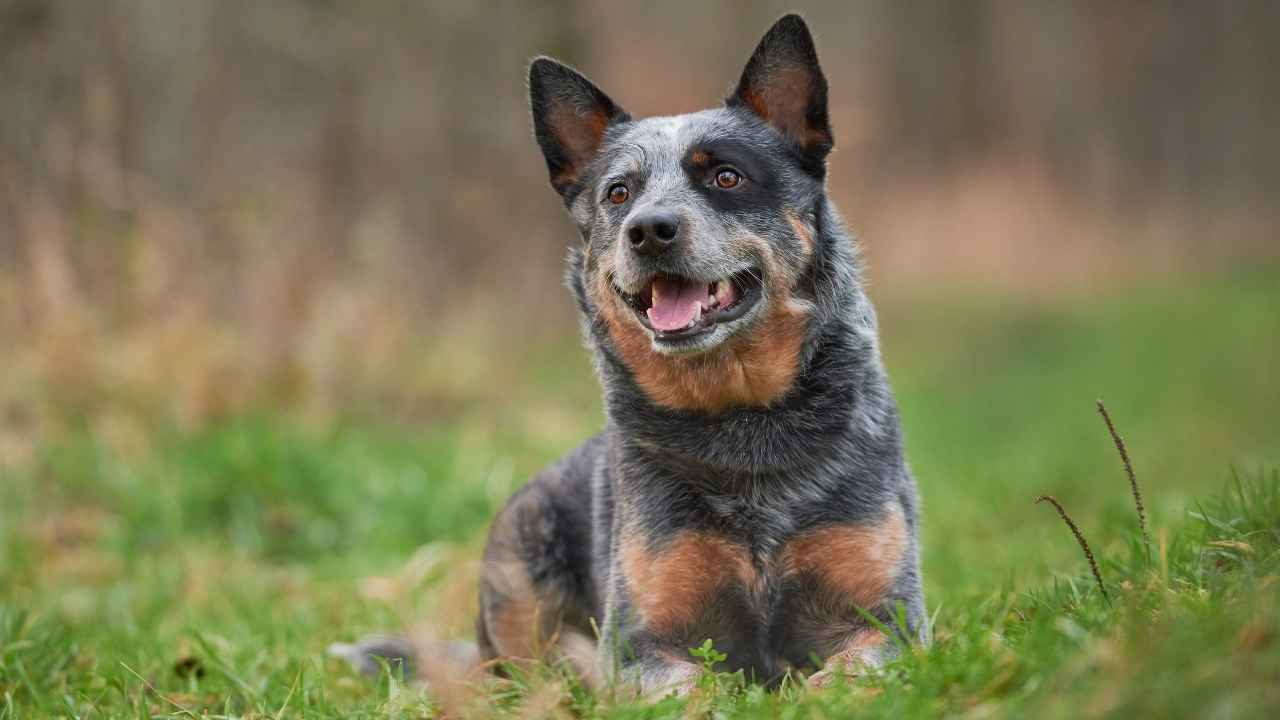
Australian Cattle Dog: It forms strong bonds with the primary owner and is naturally aloof with strangers, making it an exceptional protection and watchdog. Since it is independent in nature, it needs consistent training and early socialization. Physical and mental stimulation is required to avoid destructive behavior.
German Shepherd: The breed has a pack mentality and has naturally alert and protective instincts. It is ranked as the third most intelligent breed; thus, it can learn complex commands and tricks easily. It does not panic easily and can handle stressful situations easily.
5. Exercise Needs & Energy Levels
Both are high-energy working breeds, but the Australian Cattle Dog has more stamina since it was developed to work on rough terrain. The German Shepherd is more intelligent and highly trainable.
Australian Cattle Dog: The herding breed requires 1.5-2 hours of daily exercise: jogging, hiking, brisk walks, long runs, and intense fetching. It also excels in agility courses, such as flyball and herding sessions. Mental stimulation for 15-20 minutes is recommended: puzzle toys and hide-and-seek.
German Shepherd: It needs intense exercise daily (1.5-2 hours): walking, running, tug-of-war, swimming, agility and obedience training, and fetching. 5-minute rule is recommended for puppies (increase by 5 minutes of exercise each month till the breed reaches the age of 18-24 months.
6. Trainability & Obedience
Being eager-to-please in nature, the German Shepherd is easier to train, while the ACD has an independent streak and needs an experienced owner to be handled.
Australian Cattle Dog: The breed needs a constant job and excels in agility, herding, and tracking. Reward-based training with positive reinforcement is required. Since it is prone to nipping at the heels of children and other moving objects, early socialization is highly recommended.
German Shepherd: The highly intelligent breed tends to learn complex commands within a few repetitions. It needs constant and confident leadership, as it quickly reads emotions and body language. It has a natural guarding instinct that can be turned into over-protectiveness; thus, careful handling is required.
7. Grooming Needs & Shedding
The ACD has a shorter coat and sheds less; thus, it has minimal grooming needs, whereas the German Shepherd has a medium-length coat.
Australian Cattle Dog: Use a rubber curry brush or a slicker brush for weekly brushing to evenly distribute natural oils and remove dust. The loyal dog needs bathing every 6-8 weeks. Avoid over-bathing, as it can strip natural oils from the skin. Trim the nails monthly and regularly clean the ears and teeth.
German Shepherd: This breed has a dense double coat that sheds heavily round the year. It needs to be brushed 3-4 times a week and daily during the shedding seasons (summer and spring). Never shave the breed entirely, as the coat is a natural thermal regulator for the dog.
8. Herding & Work Drive
Both are wonderful dogs in the field of herding, but each has a different working drive, decision-making, and herding style.
Australian Cattle Dog: Since the great dog has dingo ancestry, it can endure intense weather conditions without stampeding sensitive cattle. It has a high pain tolerance and fast-twitch muscles, letting it react instantly if a cow kicks. It nips at the heels of a stray cow to keep it in the herd.
German Shepherd: The energetic breed naturally tends to patrol the perimeter of a flock and works closely near the herd. The working line has a higher intensity, while the showline breed has moderate energy levels. An independent nature and high work drive make it chase heavy livestock or handle protection tasks.
9. Health & Lifespan
Both breeds spend a healthy life, but the Australian Cattle Dog lives longer and has fewer genetic disorders than the German Shepherd.
Australian Cattle Dog: The average lifespan of the large breed is 12-16 years. However, the oldest canine breed to ever exist was an ACD named Bluey that lived 29 years and 5 months. Some common health issues involve hip dysplasia, deafness, and PRA. Weight management, enough exercise, and regular vet checkups are highly suggested, says the AKC.
German Shepherd: The dog typically lives between 9-13 years and is prone to degenerative myelopathy, elbow/hip dysplasia, bloating, and cancer. Regular exercise is recommended to maintain muscle mass and cardiovascular health.
10. Australian Cattle Dog vs. German Shepherd: Which Intelligent Working Dog Is Right for You?
It highly depends on the lifestyle preferences of the owner. However, both require an active family that can commit to a structured daily routine.
Features | Australian Cattle Dog | German Shepherd |
Energy Level | It has an intense energy level and may become destructive if not exercised properly.` | It has high energy levels and needs protection and herding tasks constantly. |
Training | It needs a patient owner who understands how to handle a stubborn breed. | Highly responsive to commands and is less rebellious than an ACD. |
Temperament | Being highly focused, it keenly assesses the situation to make its own decisions. | Naturally aloof with strangers and thrives in dog sports |
Lifespan | Healthier, stronger, and less prone to genetic diseases. | It is prone to more health issues and needs proper health care. |
Conclusion
An Australian Cattle Dog and a German Shepherd are both impressive working breeds, but they are not interchangeable. The Cattle Dog tends to suit an active, experienced owner who appreciates independence, toughness, and a dog with plenty of grit.
The German Shepherd may be the better match for someone seeking a larger, highly trainable companion with strong versatility and a natural desire to work alongside its family. Neither breed is a low-effort choice, and both need structure, exercise, socialization, and meaningful interaction.
