




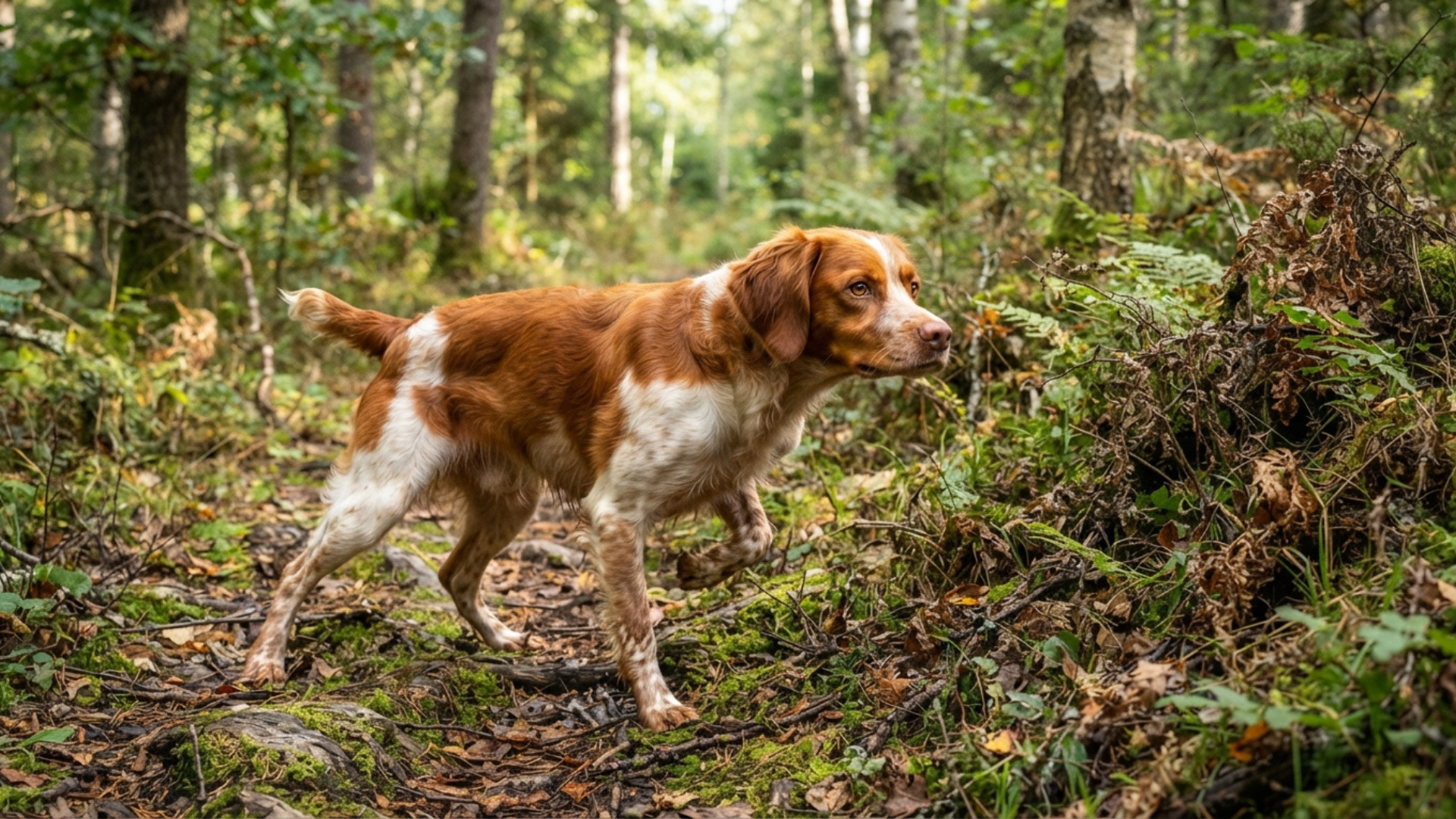
A dog’s brain devotes roughly 40 times more space to smell than a human’s does, and in a dense forest, that gap decides who finds hidden game and who walks straight past it without ever noticing. Open fields are forgiving; thick canopy is not.
Under heavy tree cover, scent doesn’t travel in a clean, predictable line the way it does in open country. Humidity traps it low, wind swirls without warning, and game tucks into spots a nose has to work hard to reach.
Some breeds are built exactly for this kind of forest hunting, searching, tracking, and locating hidden game where most others lose the trail completely. Keep reading to see which ones actually earn their keep in the woods.
Dog Breeds That Excel at Finding Hidden Forest Animals
1. German Shorthaired Pointer
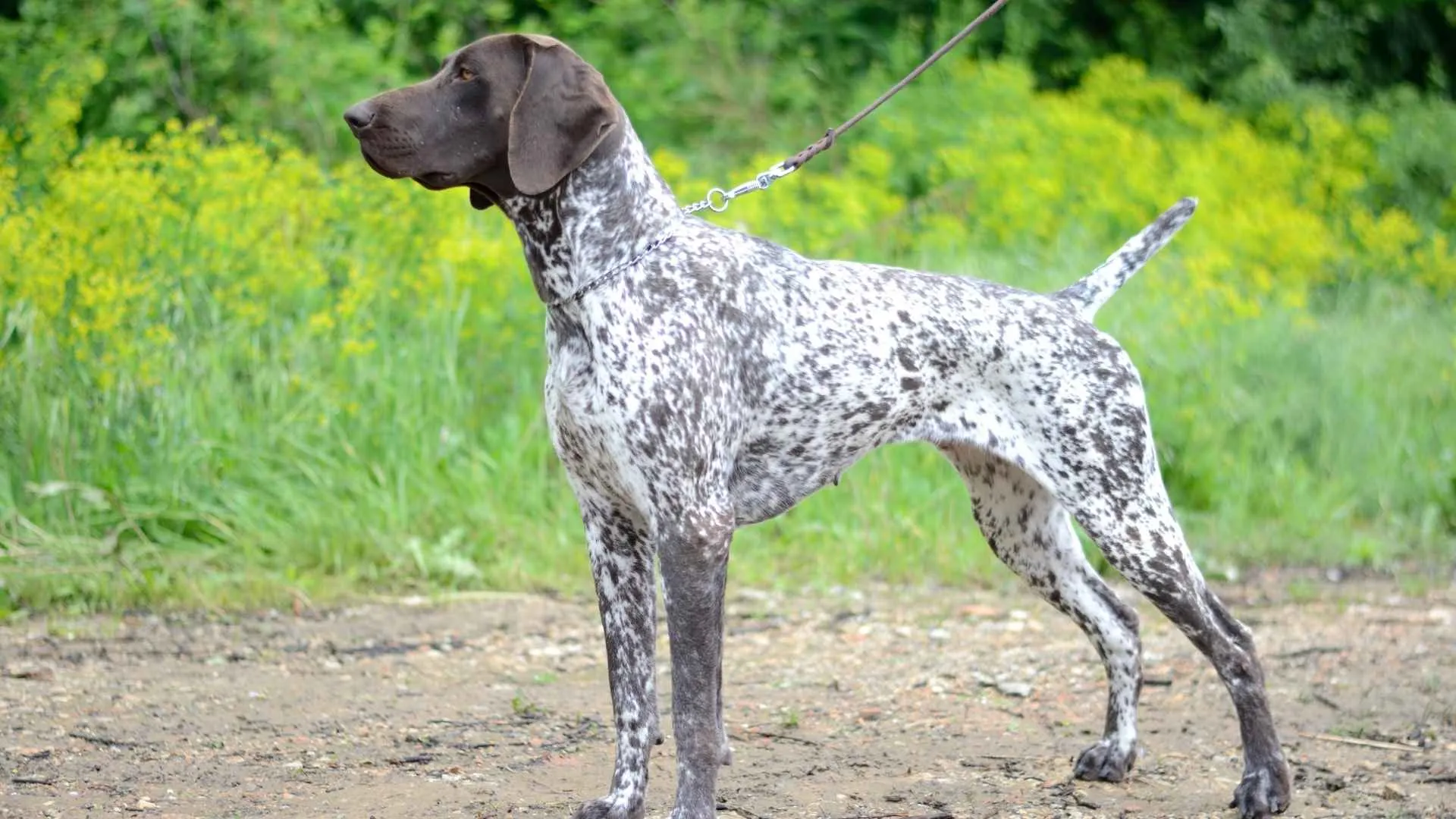
Liver and white, lean, and always on alert, the German Shorthaired Pointer looks built for the job, because it was. German breeders in the late 1800s crossed several Pointer lines to get exactly that dog. It crossed the Atlantic in the 1920s and never looked back.
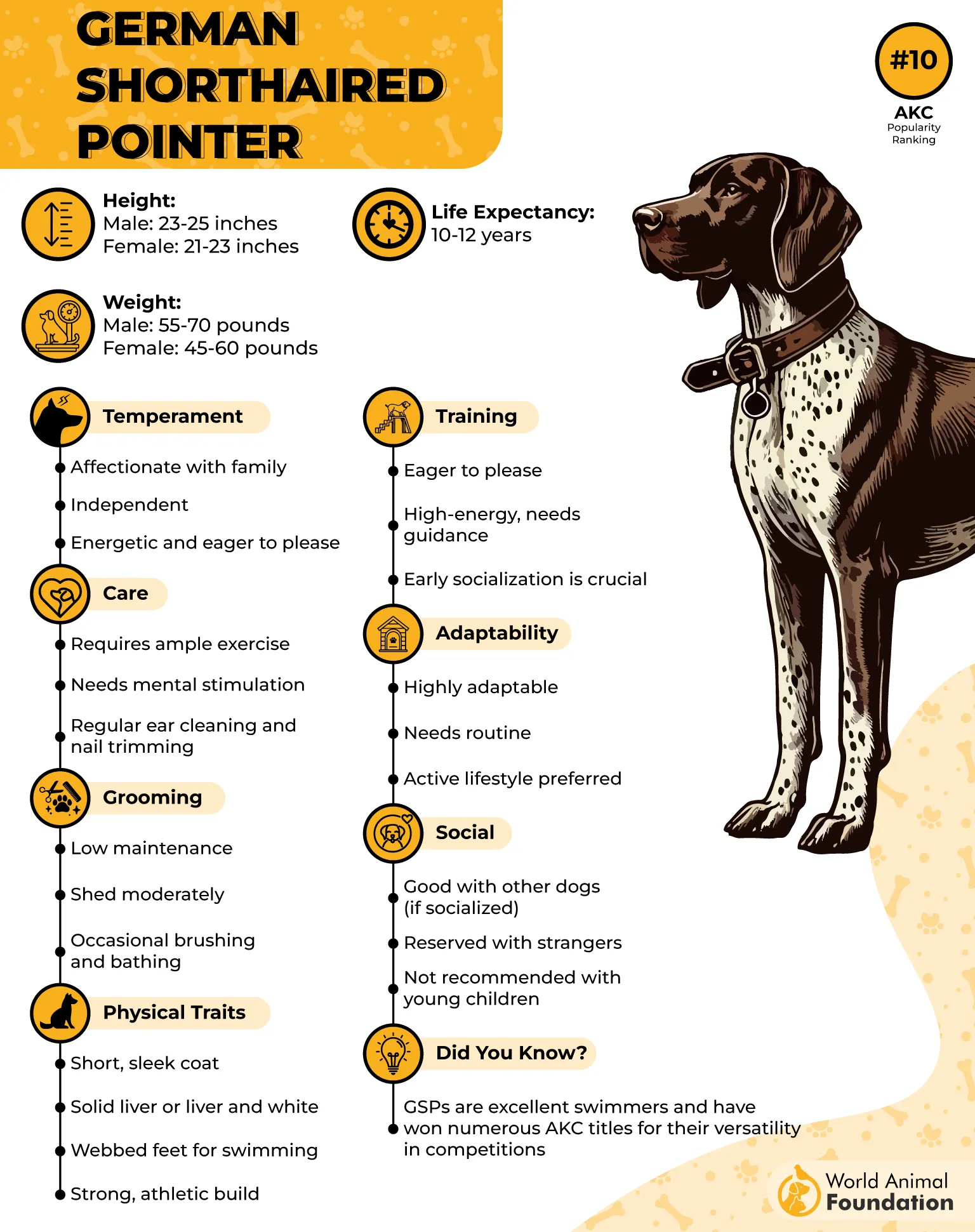
This quick learner thrives in dense forest cover chasing upland birds, rabbits, and pheasant. It handles rough terrain and cold water with the same easy confidence. Few hunting breeds offer this much range in one dog.
Energy is basically the GSP’s whole personality. PetMD notes this breed needs real daily exercise, or that drive turns into chewed shoes and general chaos. Loyal and quick to learn, it still wants a task, not a nap.
Instead of trailing scent on the ground, this dog scents the air, nose lifted, reading smells carried on the wind. When it locks onto something, it freezes mid-stride into a point. Hunters call that stillness the payoff.
2. Brittany
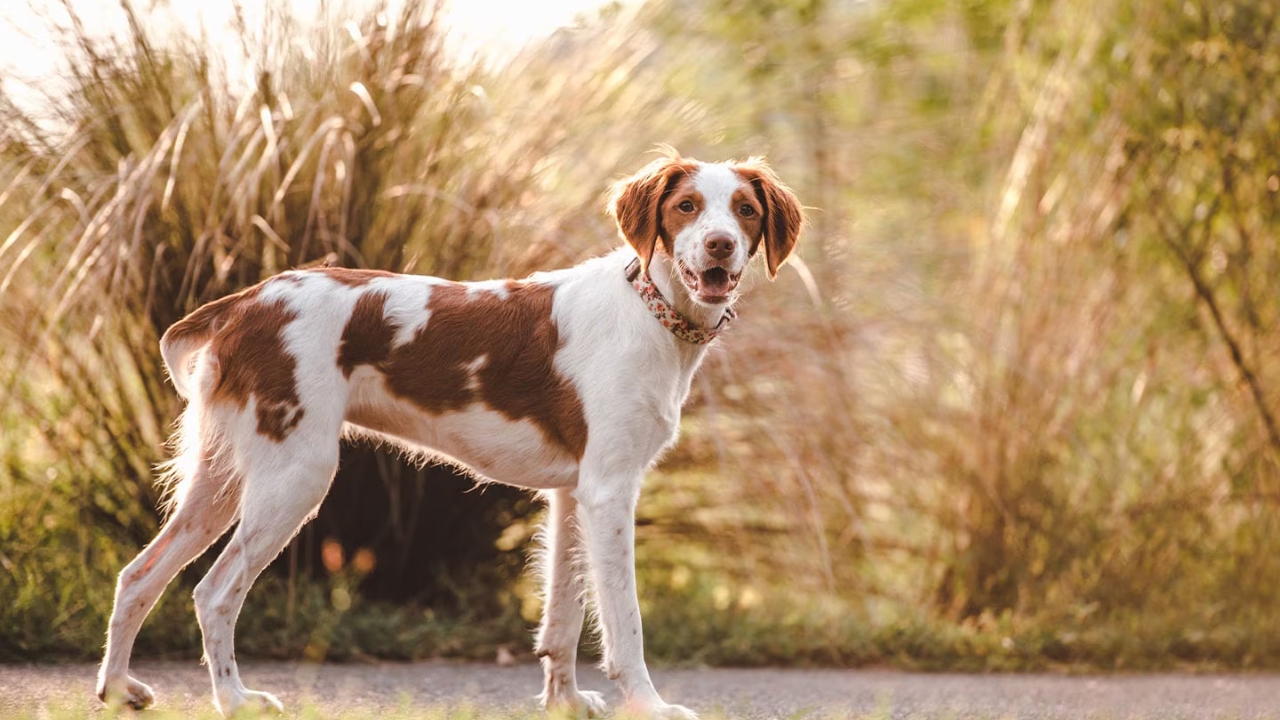
Compact, orange and white, and endlessly cheerful, the Brittany was born in northwestern France centuries ago. Local hunters wanted a dog small enough to stay close but tough enough for thick hedgerows. What they built became one of the most versatile bird dogs around.
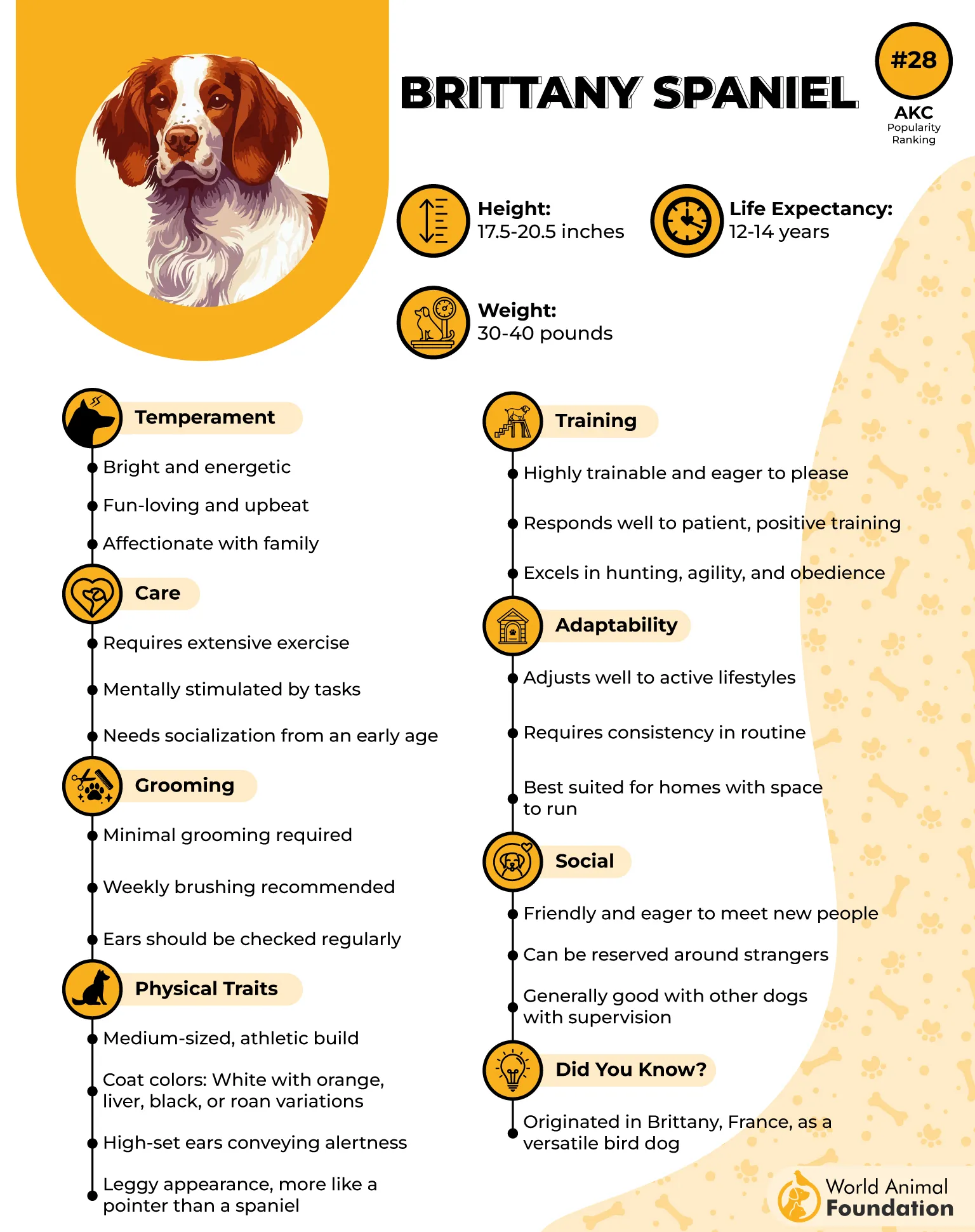
This tracking dog breed built its name on upland birds like quail and woodcock. Dense brush barely slows it down, since its coat is long enough to shrug off brambles. Water retrieves come just as naturally to a Brittany as running a field.
Don’t expect a couch potato. VCA describes the Brittany as friendly and eager to join in on anything, though a little sensitive to a harsh tone. Positive training brings out its best side fast.
Rather than flushing blindly, the Brittany points first, holding steady until the hunter is ready. It can also flush and retrieve when the job calls for it. That flexibility is exactly why “spaniel” got dropped from its name.
3. Plott Hound
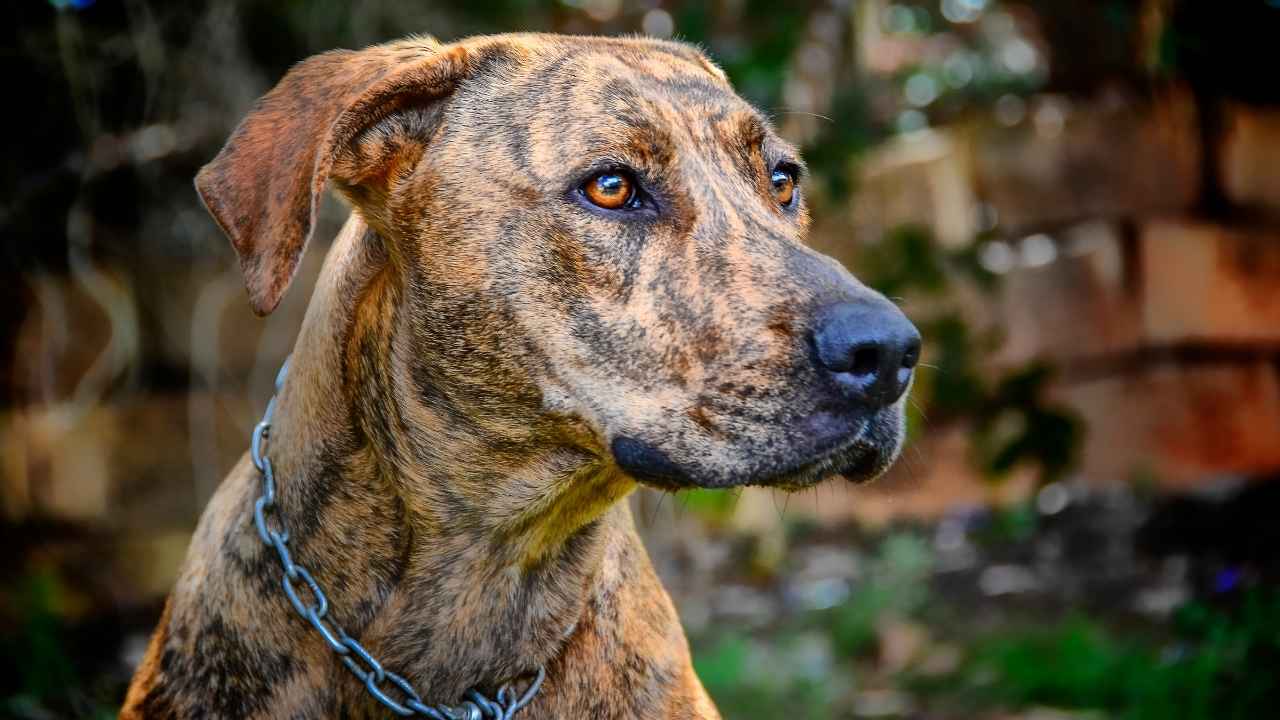
Brindle-coated and built like a mountain athlete, the Plott Hound has German roots planted deep in North Carolina soil. Settlers brought five Hanoverian hounds over in 1750, and their descendants became the toughest big-game dog in Appalachia. Even its bark carries a bit of that mountain grit.
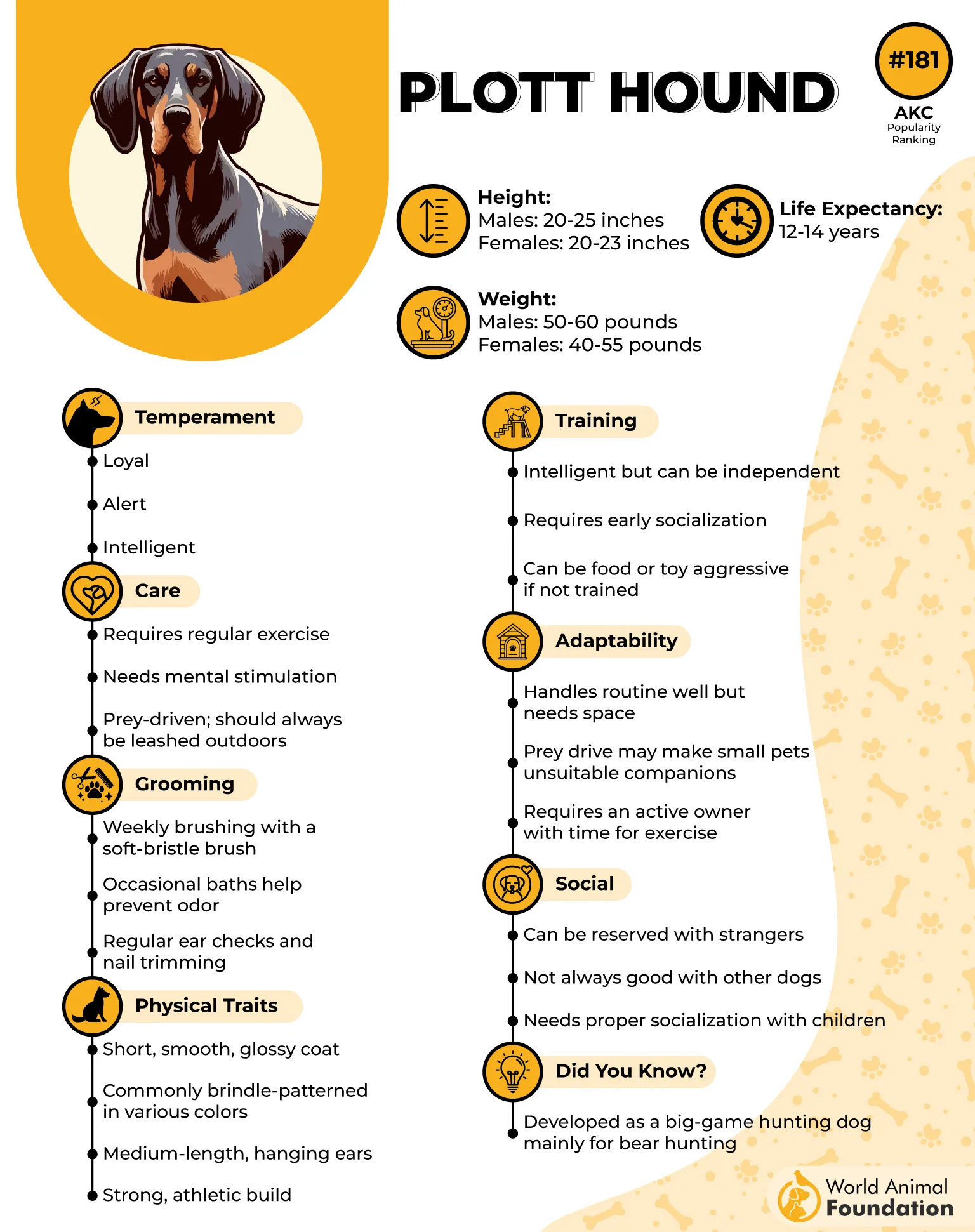
Bears and wild boar were the original targets, not rabbits or pheasant. Britannica describes the Plott as an alert, confident hunter built for exactly that kind of dangerous ground game. Steep terrain and thick forest are where this breed feels most at home.
Independent barely covers it. This is a dog that makes its own calls mid-chase, then turns into a calm, affectionate housemate once the hunt ends. New owners should expect strong will alongside all that loyalty.
The Plott’s nose stays low, working ground scent instead of air currents. It trails patiently, then bays loudly once it corners game up a tree. That bark is basically a location pin for the hunter following behind.
4. English Springer Spaniel
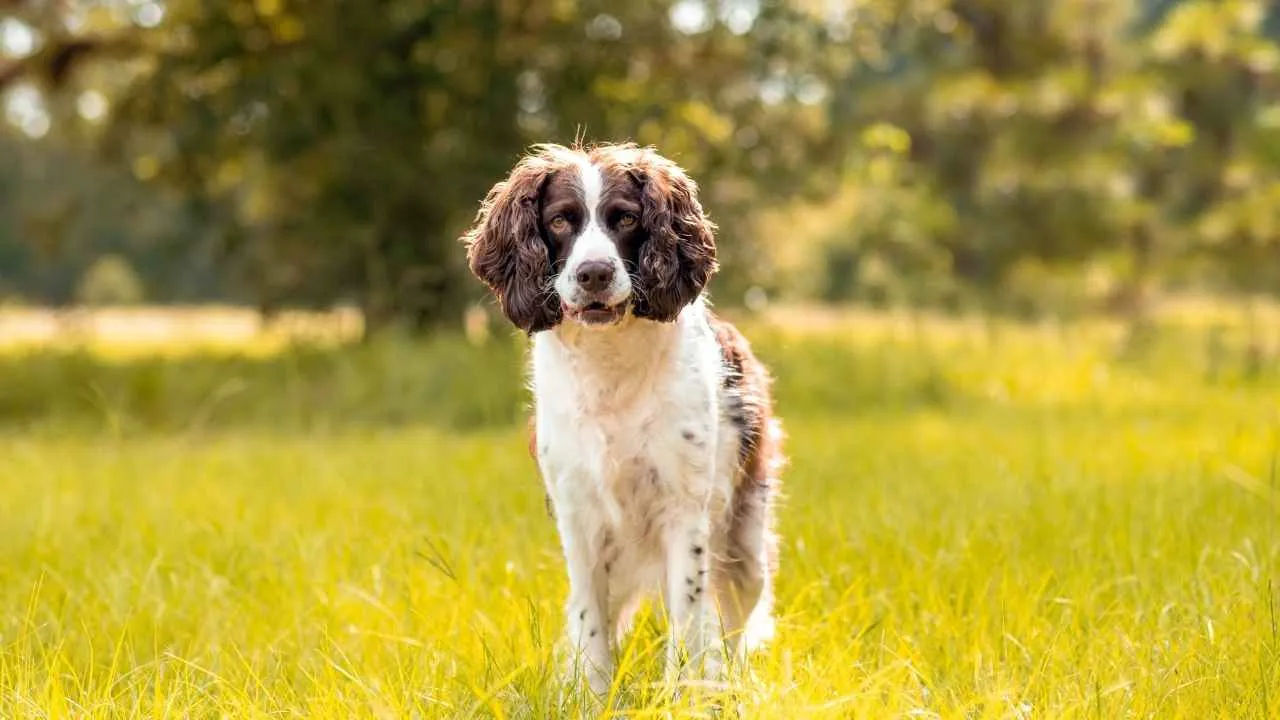
Long-eared, silky-coated, and always wagging, the English Springer Spaniel has been a hunting companion since at least the 16th century. Cockers and Springers actually started as one litter, split by size alone. The bigger pups got the Springer name and a job to match.
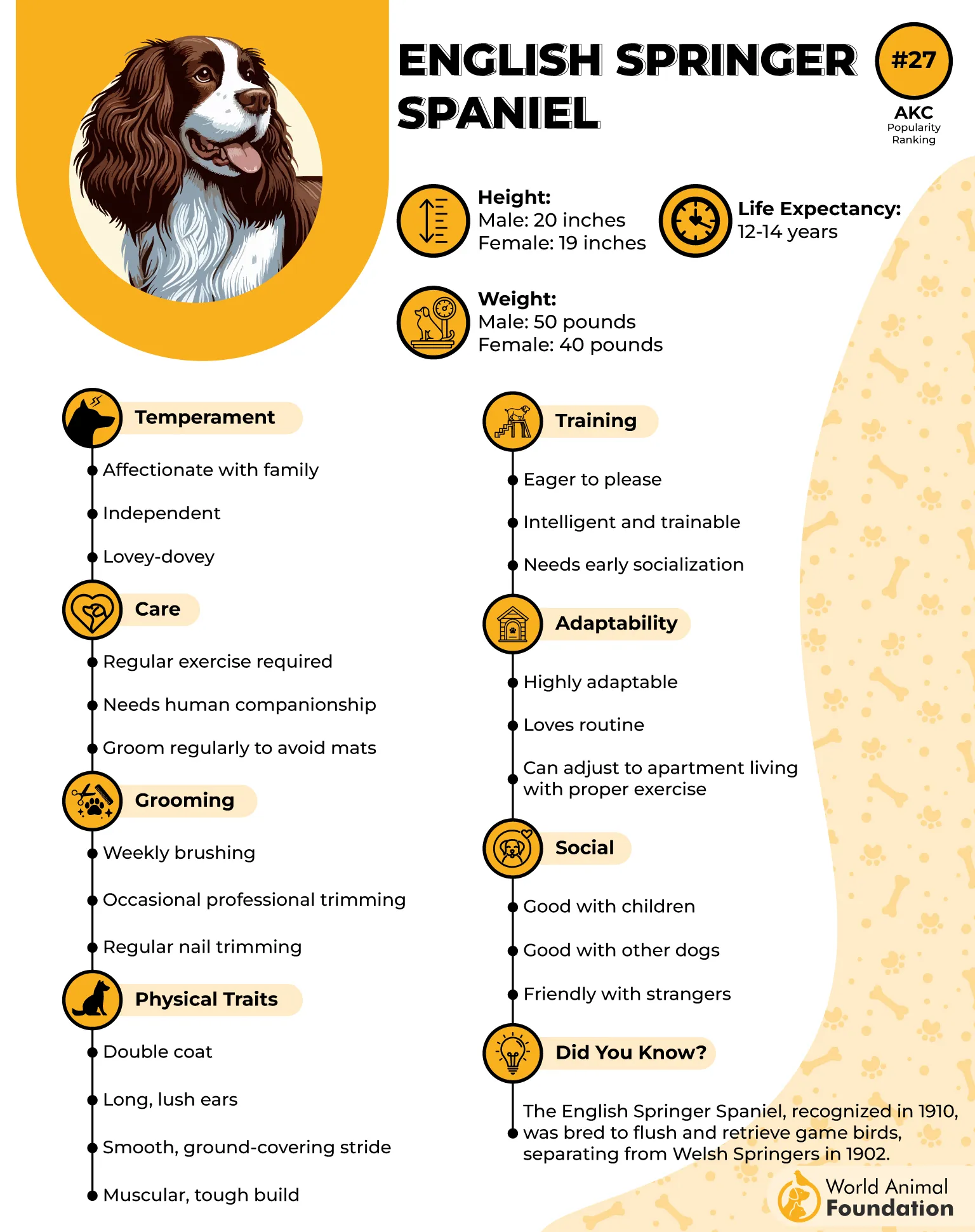
The English Springer Spaniel specializes in upland birds hiding in heavy cover. AKC notes it was bred to flush game by springing directly at it, forcing birds into the air. Ducks over water are just as much on the menu.
Eager to please barely scratches the surface here. Springers are famously biddable, which makes training smoother than with most hunting breeds. That same devotion makes them easygoing family dogs off duty.
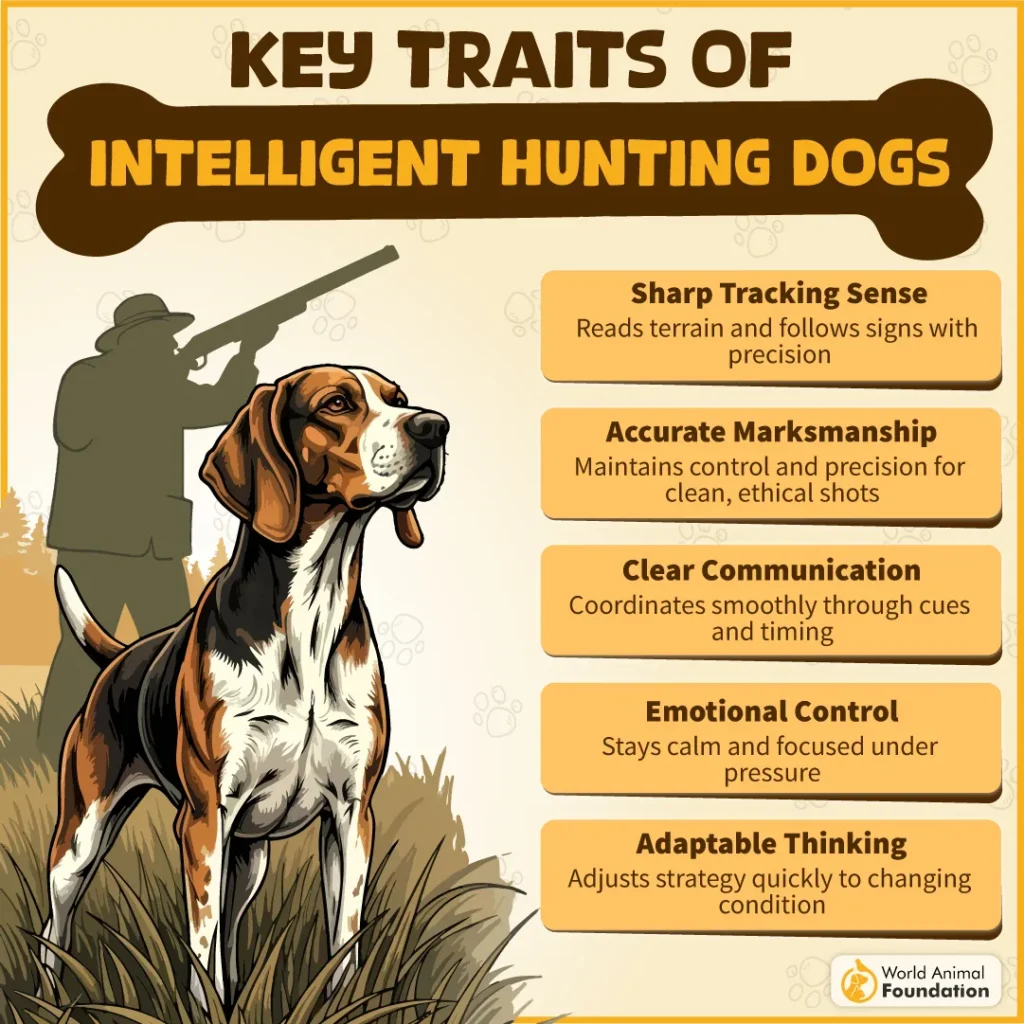
Rather than pointing and waiting, this Spaniel runs a quartering pattern, sweeping ground back and forth until it finds something. Once it locates game, it flushes hard and holds steady through the shot. Speed and precision make this dog a forest specialist.
5. Wirehaired Pointing Griffon
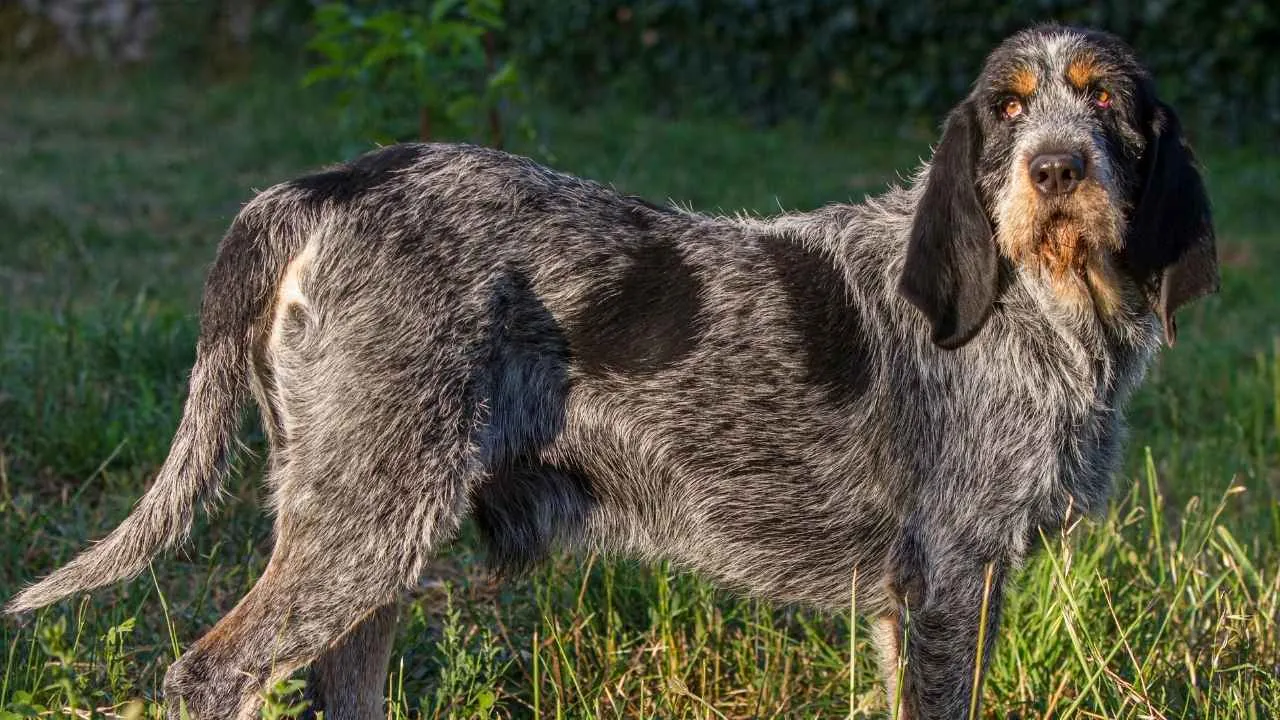
Shaggy, bearded, and a little unkempt-looking, the Wirehaired Pointing Griffon was built by a Dutch breeder chasing the perfect all-terrain gundog. That wiry double coat isn’t just for looks; it shields the dog from thorns and freezing water alike. Function clearly won over fashion here.
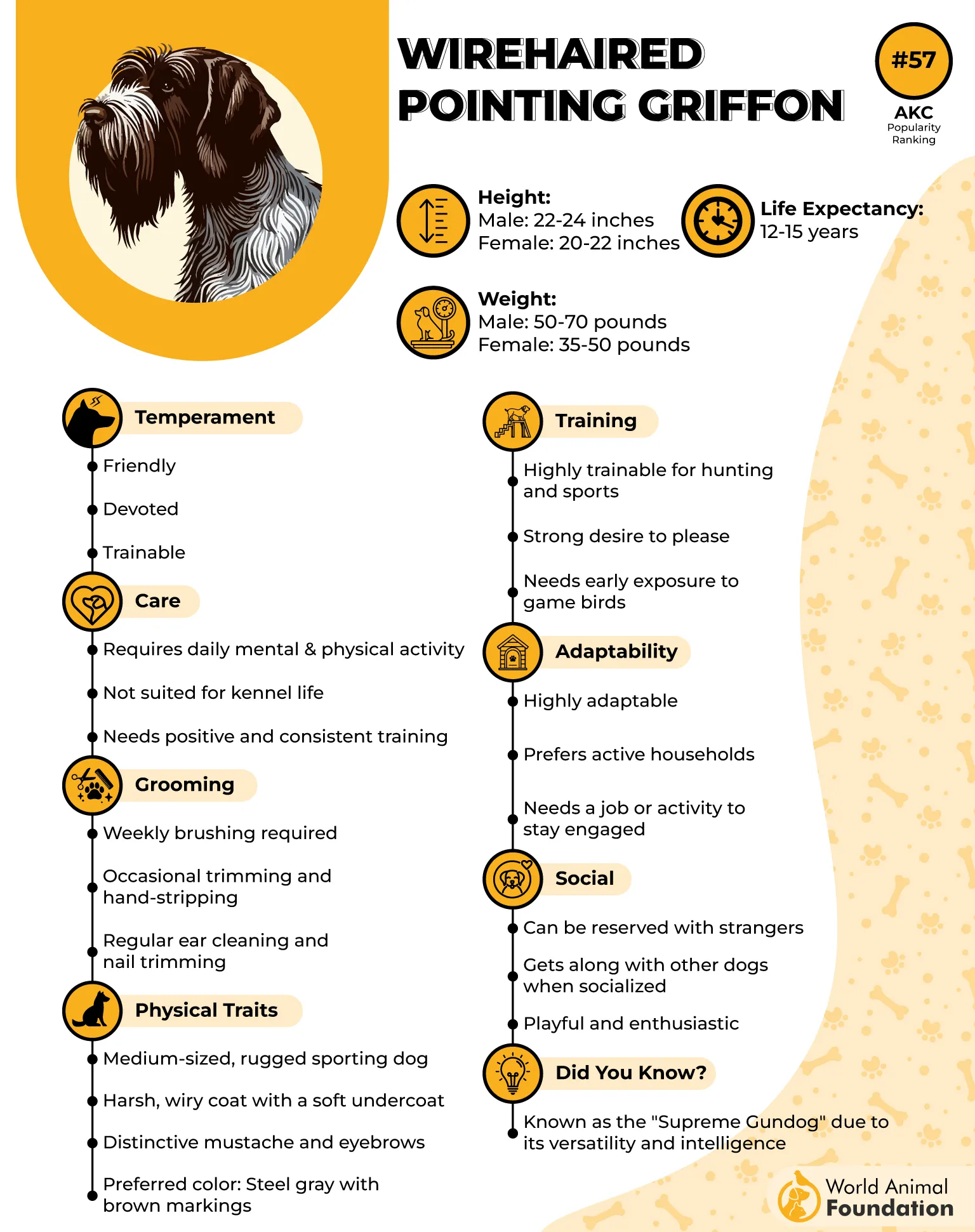
This breed hunts upland birds and waterfowl across rugged, mixed terrain. Thick brush and cold water barely register as obstacles. Few gundogs handle this much variety without missing a step.
Affectionate almost to a fault, the Griffon wants to be near its people constantly. It’s friendly, trainable, and occasionally a bit goofy once the hunt ends. Strangers get a slower, more cautious welcome, though.
This dog works methodically, covering ground at a steady pace rather than racing ahead. Once it catches scent, it points and holds, giving the hunter time to move in. Patience, not speed, is this breed’s real strength.
6. Treeing Walker Coonhound
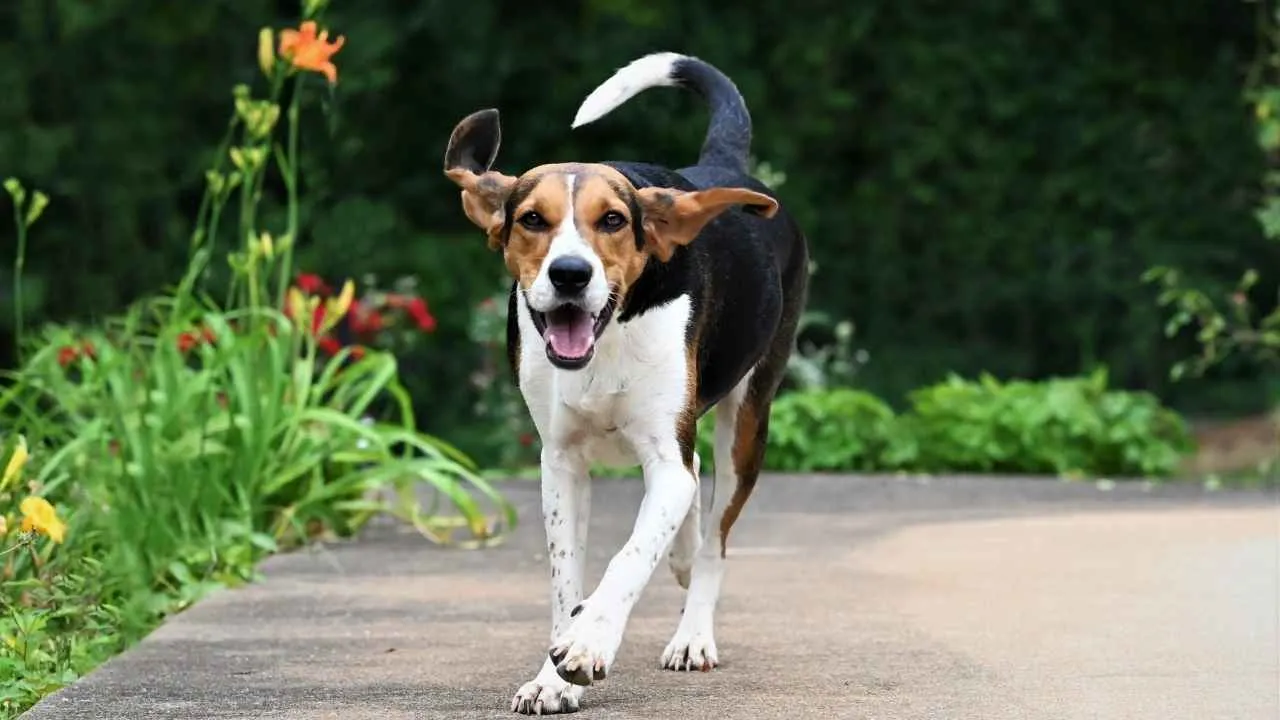
Tri-colored and built for speed, the Treeing Walker Coonhound traces back to a mystery dog named Tennessee Lead crossed with a Walker Foxhound in the mid-1700s. That pairing produced one of the fastest scent hounds in the coonhound world. The South claims this breed as its own.
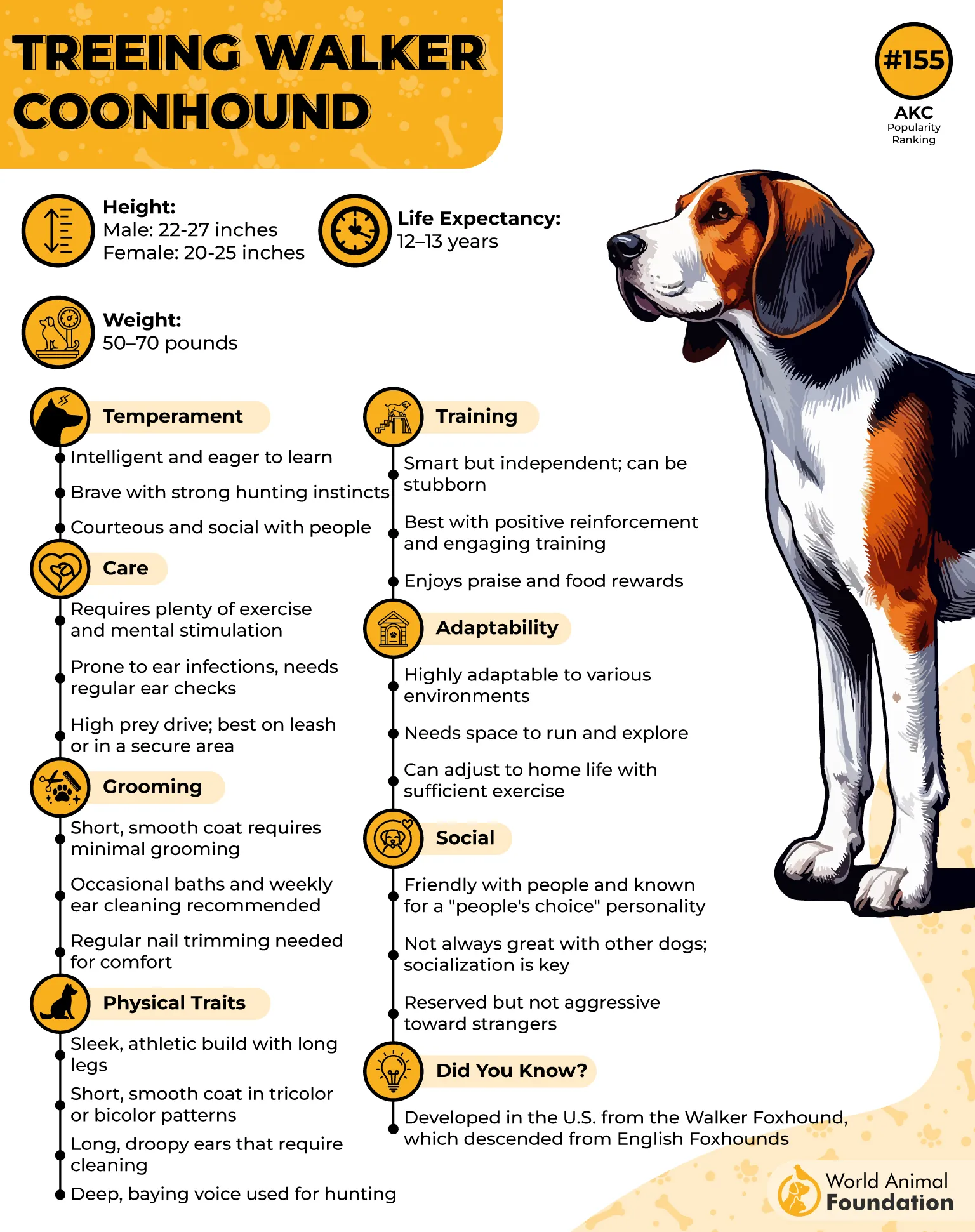
Raccoons were the original quarry, though this dog will chase almost anything up a tree given the chance. Nighttime hunts are actually where it shines brightest. Speed and stamina let it cover forest ground fast.
Independent and a little stubborn, this hound still warms up to people quickly. It’s social, vocal, and always ready for the next outing. Training takes patience, but the payoff is a loyal hunting partner.
Known as “hot-nosed,” this breed drops an older trail the second it catches a fresher one. That habit means more catches per outing than most competing hounds. A bugling call on the trail switches to short barks once game is treed.
7. Bluetick Coonhound
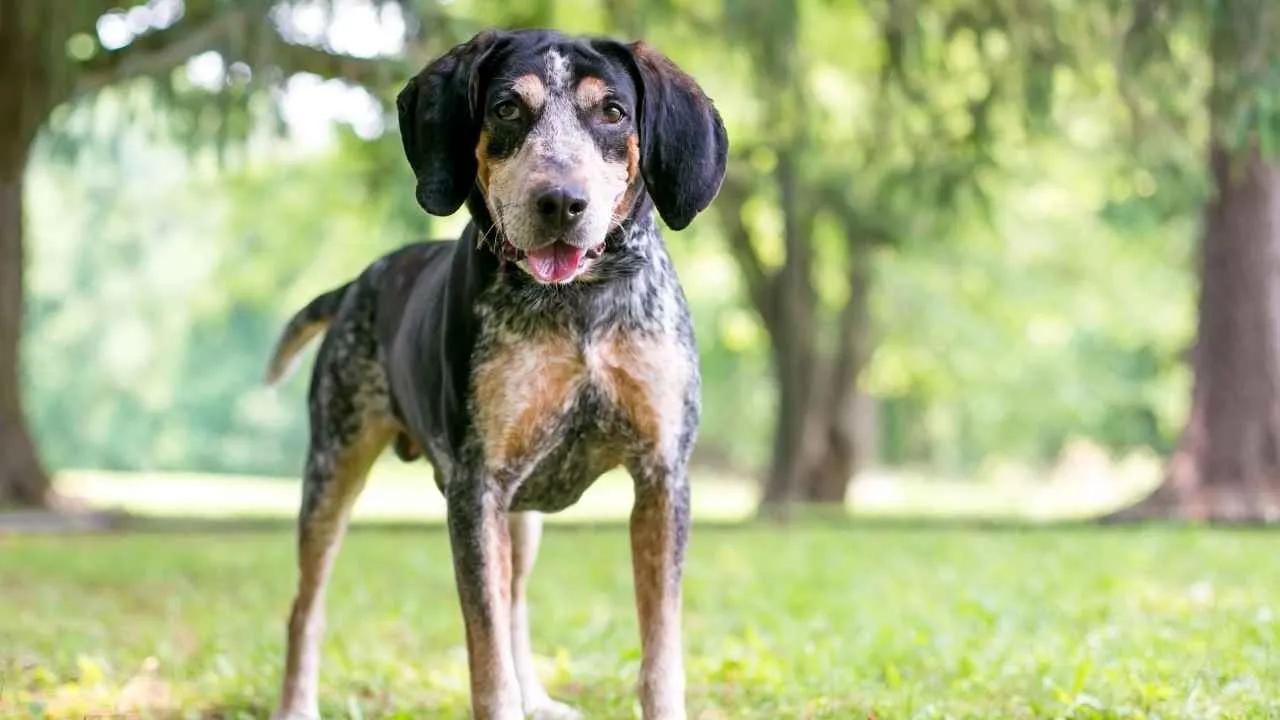
Mottled blue-gray with a deep, rolling bawl, the Bluetick Coonhound traces its roots to French hounds gifted to George Washington centuries ago. Orvis notes the breed later picked up foxhound speed and bloodhound nose through careful crossbreeding. The result is equal parts charm and grit.
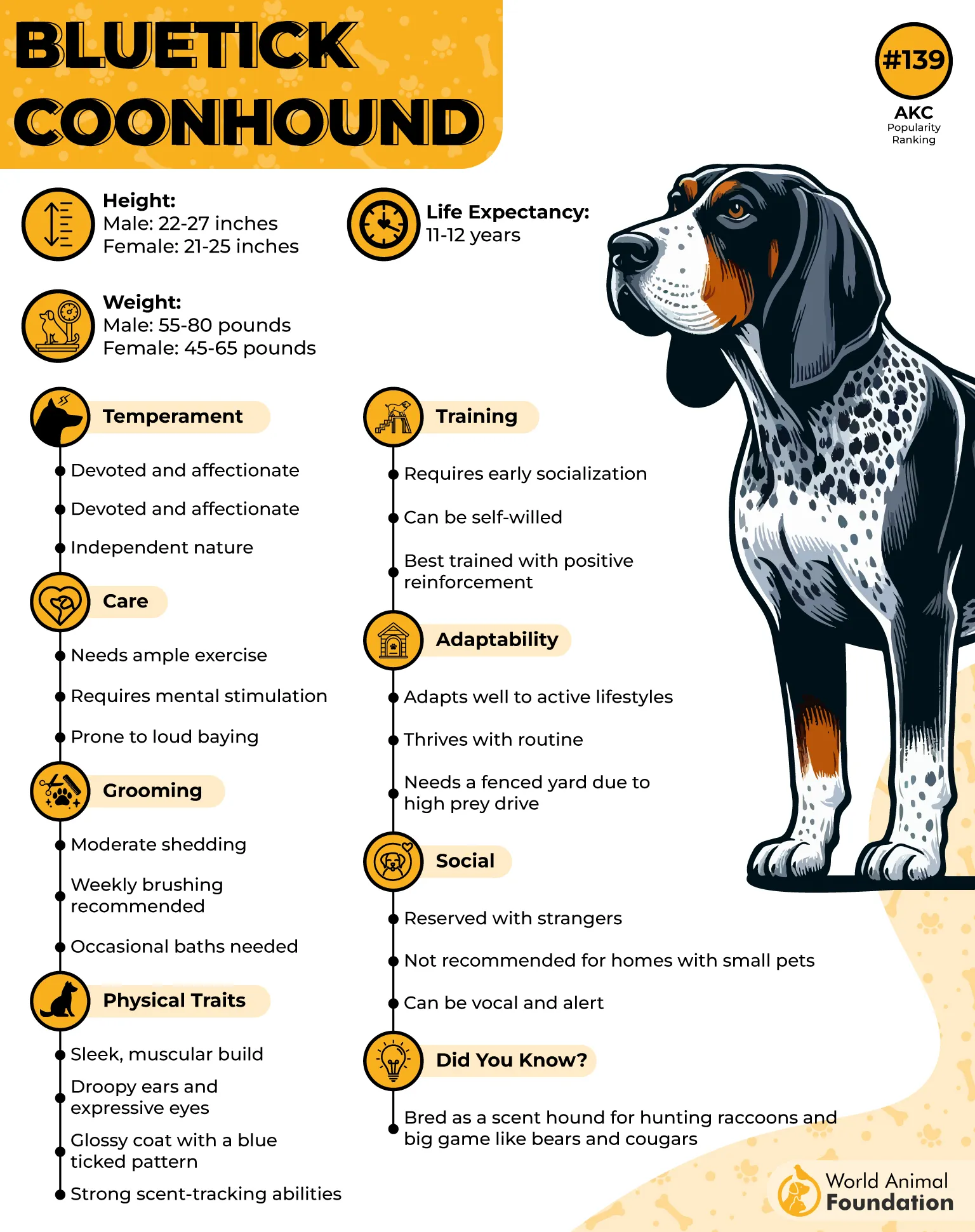
Raccoons remain the classic target, though this hound has tackled bigger game across Southern woods for generations. Thick, unfamiliar forest is exactly where its nose earns its keep. Few hunting breeds handle challenging tasks and old, cold trails this well.
Stubborn but lovable sums up the Bluetick pretty well. It bonds hard with its family and would rather nap on the couch than the floor. That big voice means country living suits it better than apartment life.
Unlike faster, hot-nosed hounds, this breed works cold trails, picking up scent left behind hours or even days earlier. It moves slower but rarely gives up once locked on. Patience wins the day for this methodical tracker.
Conclusion
Every dog on this list finds hidden game the same way it was bred to, by matching a specific nose, gait, and instinct to a specific kind of ground. That’s the real thread here; there’s no single best nose, only the right nose for your woods.
Before you pick a breed, walk your usual hunting ground and note what actually slows you down: thick brush, cold trails, or birds that scatter fast. Bring that list to a breeder or trainer who works field lines, and ask which dog matches it.
