




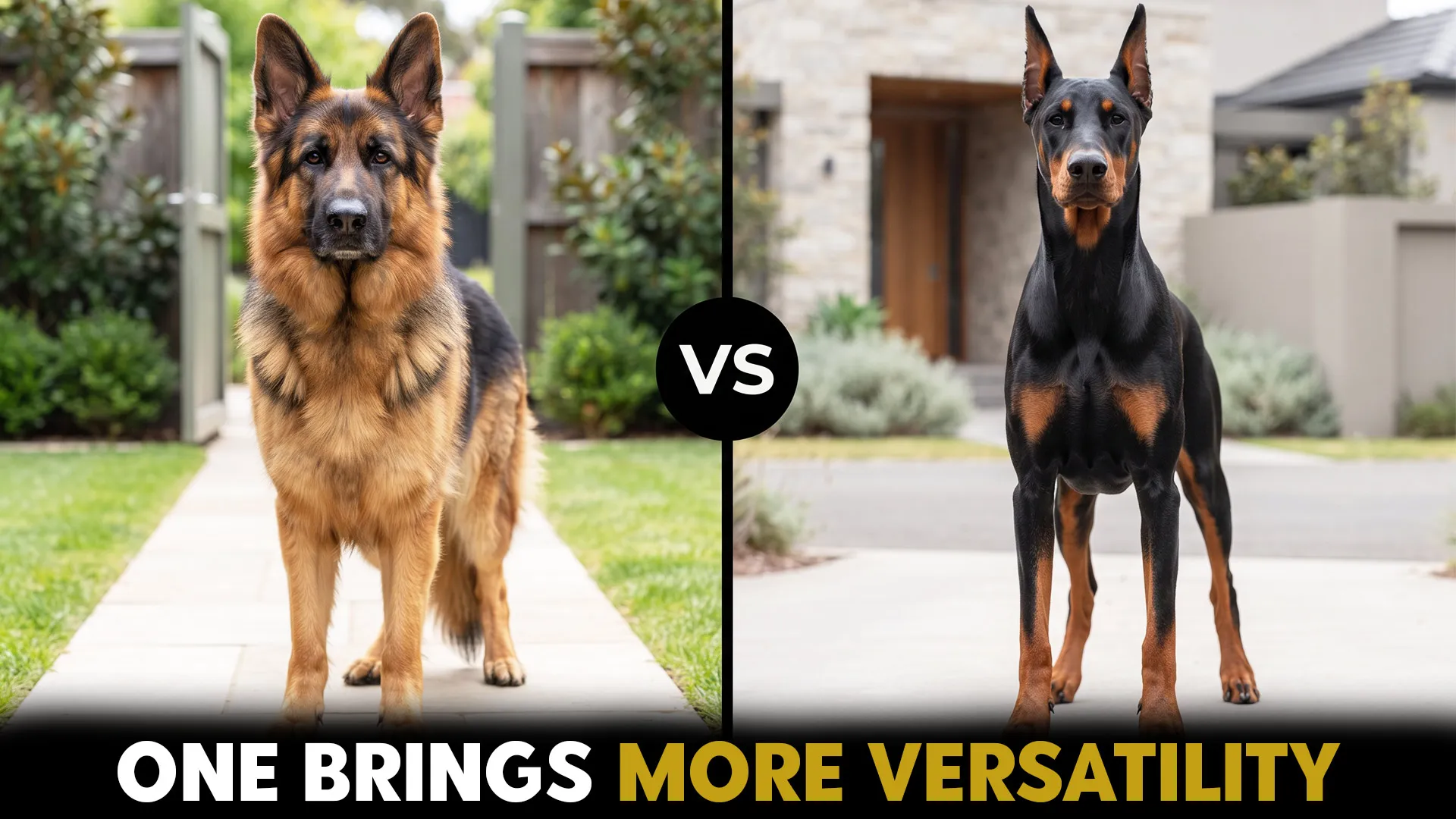
German Shepherds and Doberman Pinschers are both famous for their protective nature, sharp intelligence, and serious strength. The two breeds have earned solid reputations as guard dogs and are both well suited to protection work.
Both are active, athletic dogs that need plenty of daily exercise to stay sharp, physically and mentally. But while German Shepherds and Doberman Pinschers share some similarities, there are quite a few key differences between them.
The two breeds were developed for different purposes and even look distinct from one another. German Shepherds are versatile herding dogs, while Dobermans were bred to be guardians. This article breaks down the differences between them.
Here’s a practical, side-by-side comparison of German Shepherds and Doberman Pinschers.
German Shepherd vs. Doberman: Two Guardians Compared
When two of the world’s most legendary personal guardians stand side by side, it comes down to a choice between versatile power and athletic precision. Let’s compare the loyal German Shepherd against the sleek Doberman Pinscher to see which iconic protector fits your lifestyle best.
Origins & Purpose
German Shepherds and Doberman Pinschers were both originally bred in Germany, but for different purposes.
German Shepherds were primarily developed for herding and guarding sheep in the late-19th century. Max Emil Friedrich von Stephanitz wanted to create a working dog breed with unwavering loyalty.
In the late 1800s, a German tax collector named Louis Dobermann was responsible for the creation of Doberman Pinschers. This ferocious dog used to accompany him on the job. Later, Dobermans became famous worldwide as all-purpose working dogs.
Size & Physical Build
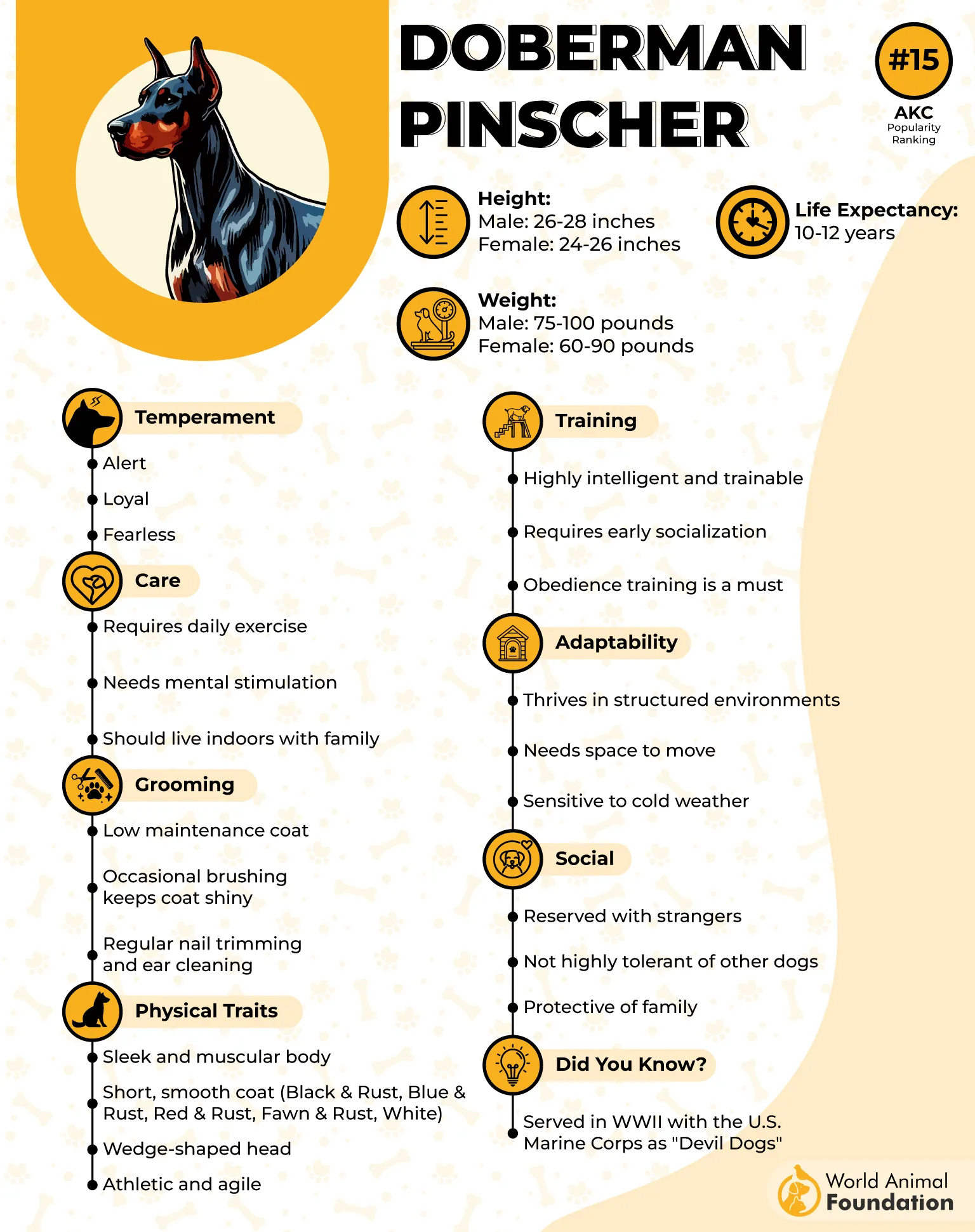
German Shepherds and Doberman Pinschers, both are large and muscular dogs. However, Doberman Pinschers tend to be larger in size.
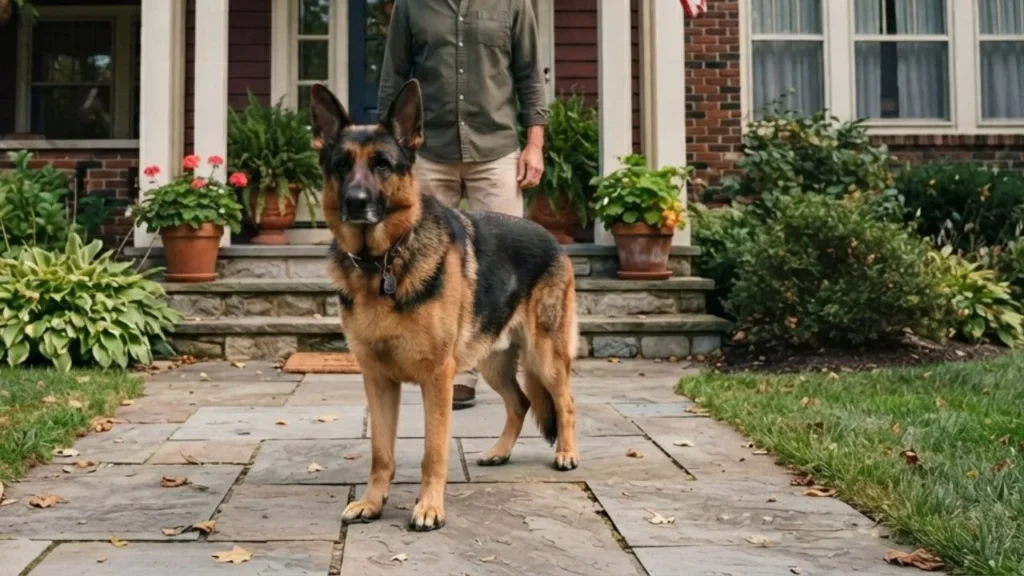
German Shepherds stand 22 to 26 inches tall at the shoulders and weigh around 50 to 90 pounds. Females tend to be a little smaller than males. These agile dogs have a robust build and present a picture of smooth and graceful curves rather than angles.

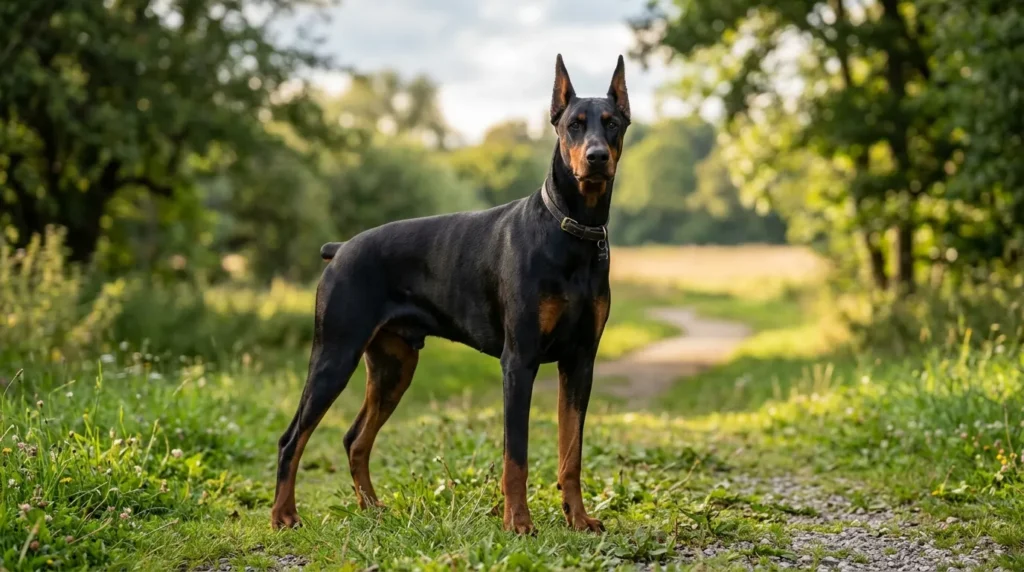
One of their kind, Doberman Pinschers are compactly built dogs standing 24 to 28 inches tall at the shoulders and weighing 60 to 100 pounds. Females are smaller than males. Their sleek and substantial bodies and athletic way of moving have earned them the reputation of royalty in the dogdom.
Temperament & Personality
German Shepherds and Doberman Pinschers share many behavioral similarities, but there are some differences between their temperaments as well.
German Shepherds are unwaveringly loyal canines who love spending time with their humans. They form strong bonds with their family and can go to any extent to protect them. Thanks to their natural protection instincts, GSDs make excellent guard dogs.
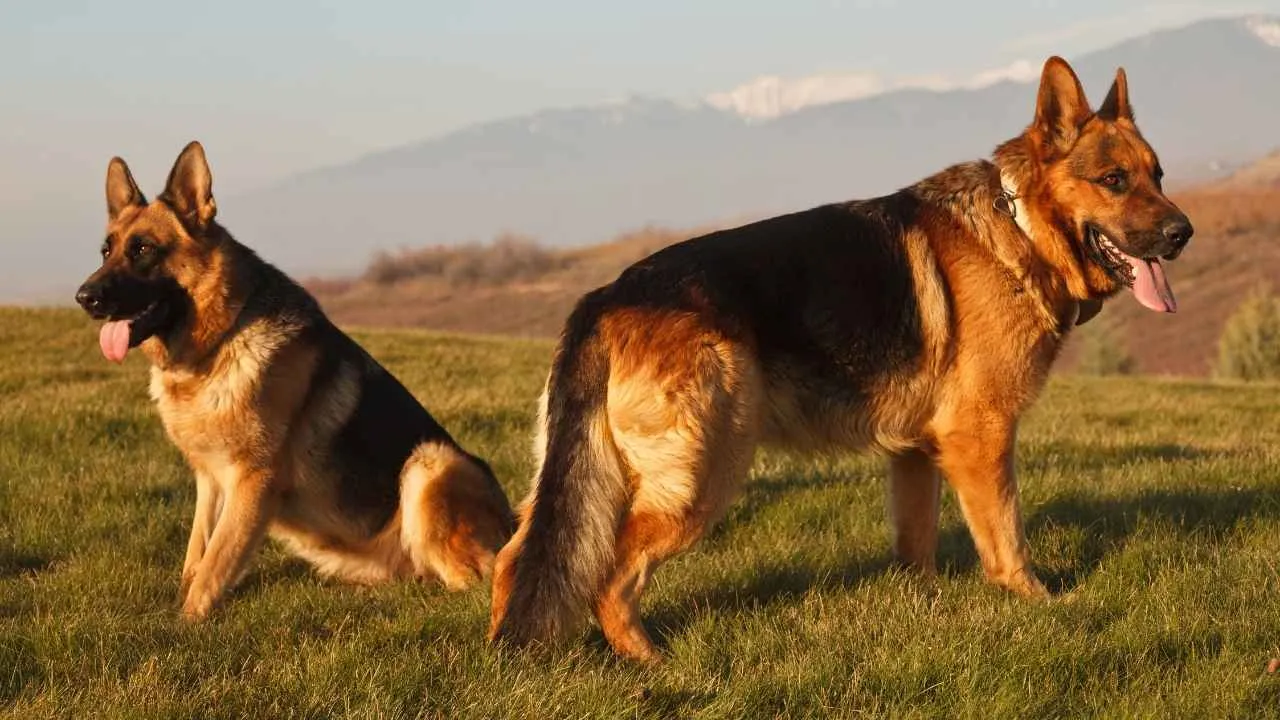
GSDs are naturally wary of strangers and are highly territorial. However, they are not naturally aggressive, according to PetPlan. Well-trained and properly socialized German Shepherds get along nicely with kids and are more mischievous than Dobermans.
Dobermans are also incredibly loyal dogs who thrive in active homes and can become destructive when left alone for extended periods. They are usually patient with young children, but they may knock over very small children due to their excitable nature.
Dobermans have a strong prey drive, which may lead them to chase small animals, including cats. However, properly socialized Dobermans get along well with cats. Like GSDs, they also excel at protection roles and make ideal guard dogs.
Exercise & Energy Levels
German Shepherds and Doberman Pinschers are very active and athletic dogs, full of energy. GSDs require one to two hours of daily exercise to channel their energy. Their stamina, enthusiasm, and intelligence demand regular physical and mental stimulation.
You can exercise your GSD by taking them for long walks, runs, or jogs. They also make excellent hiking companions and enjoy playing games of fetch and tug-of-war with their owners. GSDs also benefit from canine sports like agility, herding, and tracking, according to the AKC.
Dobermans are also very energetic dogs requiring at least an hour of daily exercise for physical and mental enrichment. These incredible dogs enjoy going for long walks or hikes with their humans.
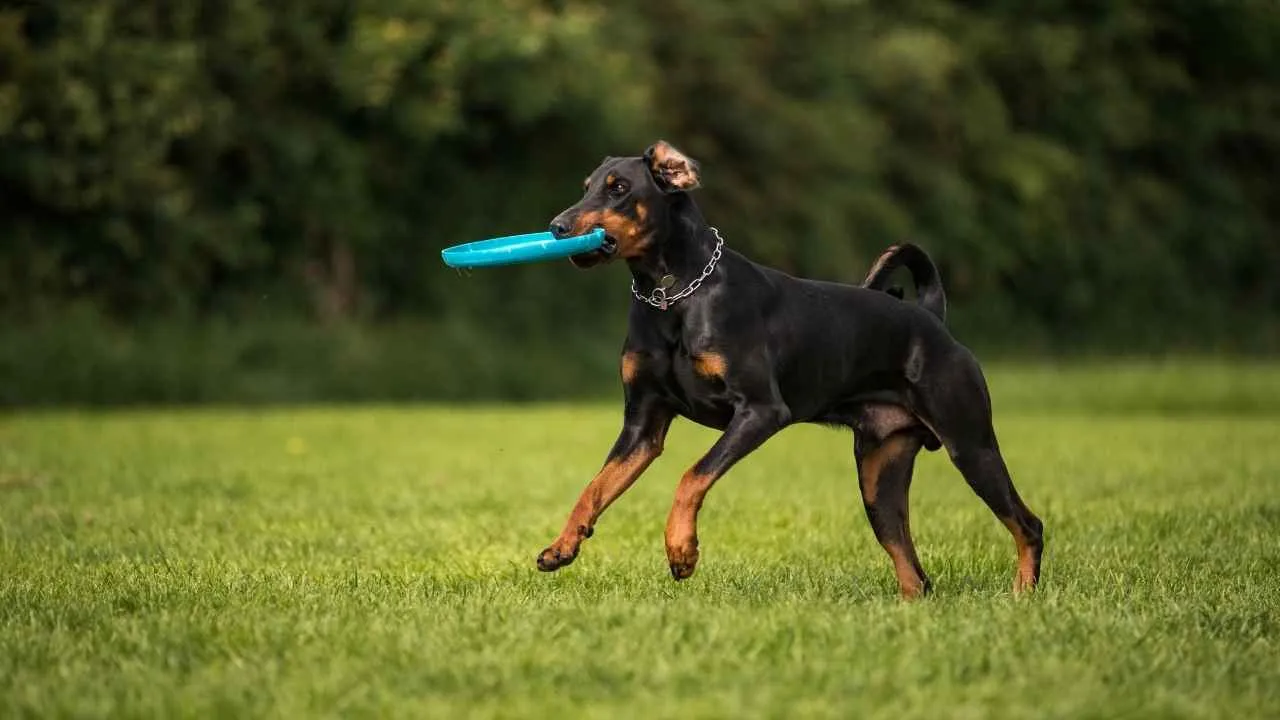
Participation in canine sports like obedience, tracking, and agility also help them exercise their minds and bodies.
Training & Intelligence
German Shepherds and Doberman Pinschers, both are highly intelligent dogs. However, there are some differences between their intelligence and trainability.
Ranking third on the American Kennel Club’s list of the smartest dog breeds, German Shepherds are slightly more intelligent than Doberman Pinschers. They possess excellent problem-solving skills and pick up on new things quickly.
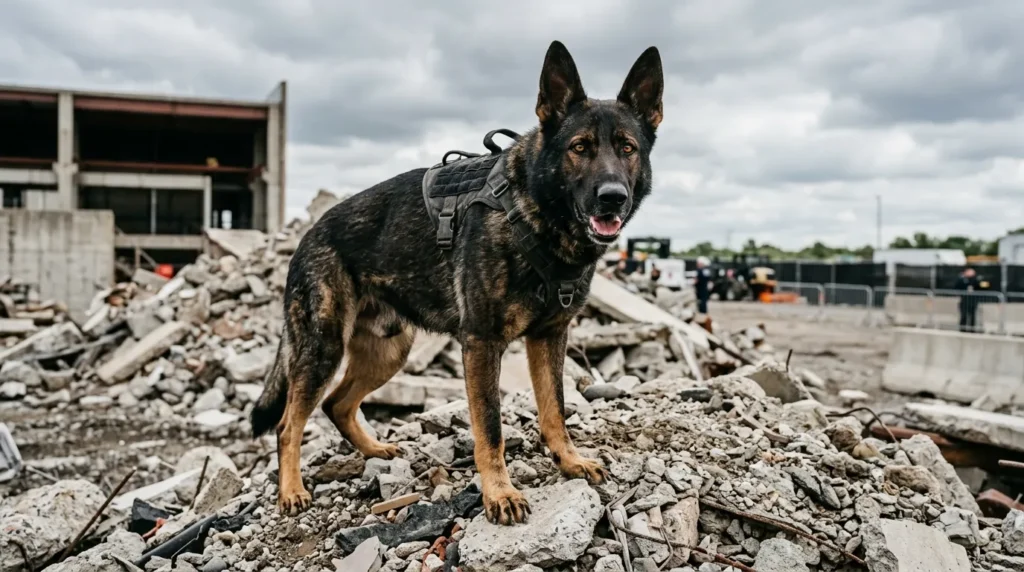
Thanks to their confidence and high brain power, they can be trained easily using positive reinforcement methods. You can train them to serve as service dogs, police dogs, and part of search and rescue missions.
Doberman Pinschers rank fifth on the AKC’s list of the smartest dog breeds. Their laser-like focus and keen intelligence make them one of the smartest and highly trainable dog breeds. Capable of learning and retaining information, Dobermans learn commands quickly.
Like German Shepherds, Dobermans are also well suited for various roles. They make wonderful police dogs, military dogs, and search and rescue dogs. Both GSDs and Dobermans are also an important part of bomb detection squads.
Proper training and early socialization are a must to turn both breeds into well-behaved family pets.
Coat Maintenance
German Shepherds possess a thick double coat which not only gives them a striking, wolf-like appearance, but also protects them from harsh climate conditions. The undercoat is soft while the outer coat is tight, rough, and heavy.
They shed a lot and experience two shedding seasons. PetMD recommends brushing your German Shepherd using a pin brush. Frequent grooming is required during the shedding season.
Dobermans, on the other hand, have a short and smooth single coat. Their signature black and tan coat sheds moderately to heavily. The coat needs to be brushed a few times every week to manage shedding.
Health & Lifespan
German Shepherds and Doberman Pinschers are both healthy and hardy dogs who stay with you for more than a decade.
German Shepherds have a life expectancy of 12 to 14 years. During their life, they may be prone to certain health conditions such as hip and elbow dysplasia, degenerative myelopathy, allergies, heart diseases, bloat, and Gastric Dilatation Volvulus (GDV).
Dobermans have a shorter lifespan of 10 to 12 years. Like GSDs, they may also develop health issues like GDV, hypothyroidism, dilated cardiomyopathy, hip dysplasia, and Von Willebrand disease.
You can significantly reduce the risk of such problems by purchasing the dog from a reputable breeder.
German Shepherd vs. Doberman Pinscher Suitability as Family Pets vs. Guard Dogs
German Shepherds are highly active dogs who need regular exercise for physical and mental stimulation. Their high energy levels, athleticism, and strength make them better suited for experienced pet parents.
German Shepherds are pack dogs, so potential owners should act like pack leaders who can provide guidance and structure. Like GSDs, Dobermans are also suitable for dog owners who can keep up with their energy levels and exercise needs.
Both breeds do well as family pets and guard dogs, but GSDs are more adaptable to family life. If you are looking for a low-maintenance protection dog, a Doberman may be the right choice for you.
Conclusion
Doberman Pinschers are German Shepherds; both are versatile dogs who make excellent guard dogs, police dogs, and military dogs. Dobermans are slightly larger in size and were bred as guardians, while German Shepherds were meant to be herding dogs.
Both are active and agile canines who require lots of regular exercise for physical and mental stimulation. GSDs, however, require more exercise than Dobermans and are relatively more intelligent. They tend to live a little longer than Dobermans.
Lastly, proper training and early socialization are important to turn both breeds into well-mannered family dogs.
