




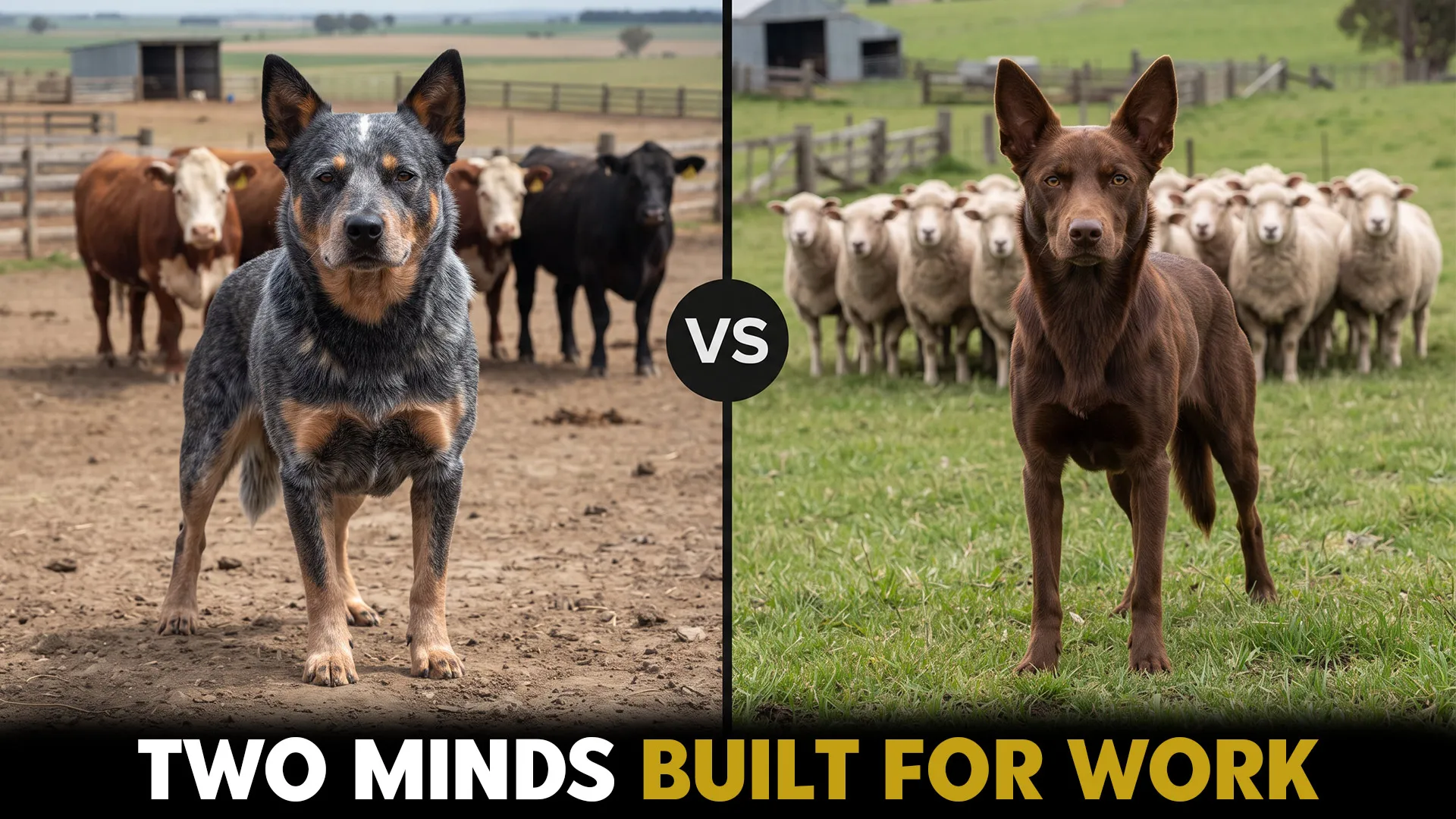
When it comes to hardworking herding dogs, the Blue Heeler and Australian Kelpie are two breeds that truly stand out. Both are smart, energetic, and built for demanding jobs, but they bring very different working styles to the field.
The Blue Heeler is known for its determination, toughness, and strong loyalty, while the Australian Kelpie is admired for its speed, agility, and quick problem-solving skills. Both breeds need plenty of exercise and mental challenges to stay happy and well-behaved.
So, which breed has the stronger work drive and sharper intelligence? Let’s compare the Blue Heeler vs. Australian Kelpie to see how these talented working dogs differ in energy, trainability, instincts, and everyday personality.
Blue Heeler vs. Australian Kelpie: Dog Breeds Work Drive and Intelligence Showdown
When two of the world’s most relentless working dogs go head-to-head, it’s a true battle of grit and brainpower. Let’s pit the tireless Blue Heeler against the lightning-fast Australian Kelpie in the ultimate work drive and intelligence showdown.
Origins & Purpose
Picture two dogs clocking in before sunrise, one built to move stubborn cattle and the other bred to sweep sheep across vast country. The Australian Cattle Dog is the official breed name; “Blue Heeler” (or Red Heeler) is the common name or color variety.
They developed in nineteenth-century Australia to control and herd cattle by nipping at their heels, while the Australian Kelpie emerged in the 1870s as a tireless sheep worker. Both breeds descend from working dogs shaped for punishing outdoor conditions, not ornamental garden laps.
The American Kennel Club describes the Heeler as compact and muscular, while its Kelpie AKC profile highlights an alert dog capable of untiring work. Their shared homeland explains the stamina; their herding/stock jobs explain the very different ways they apply pressure.
Size & Build
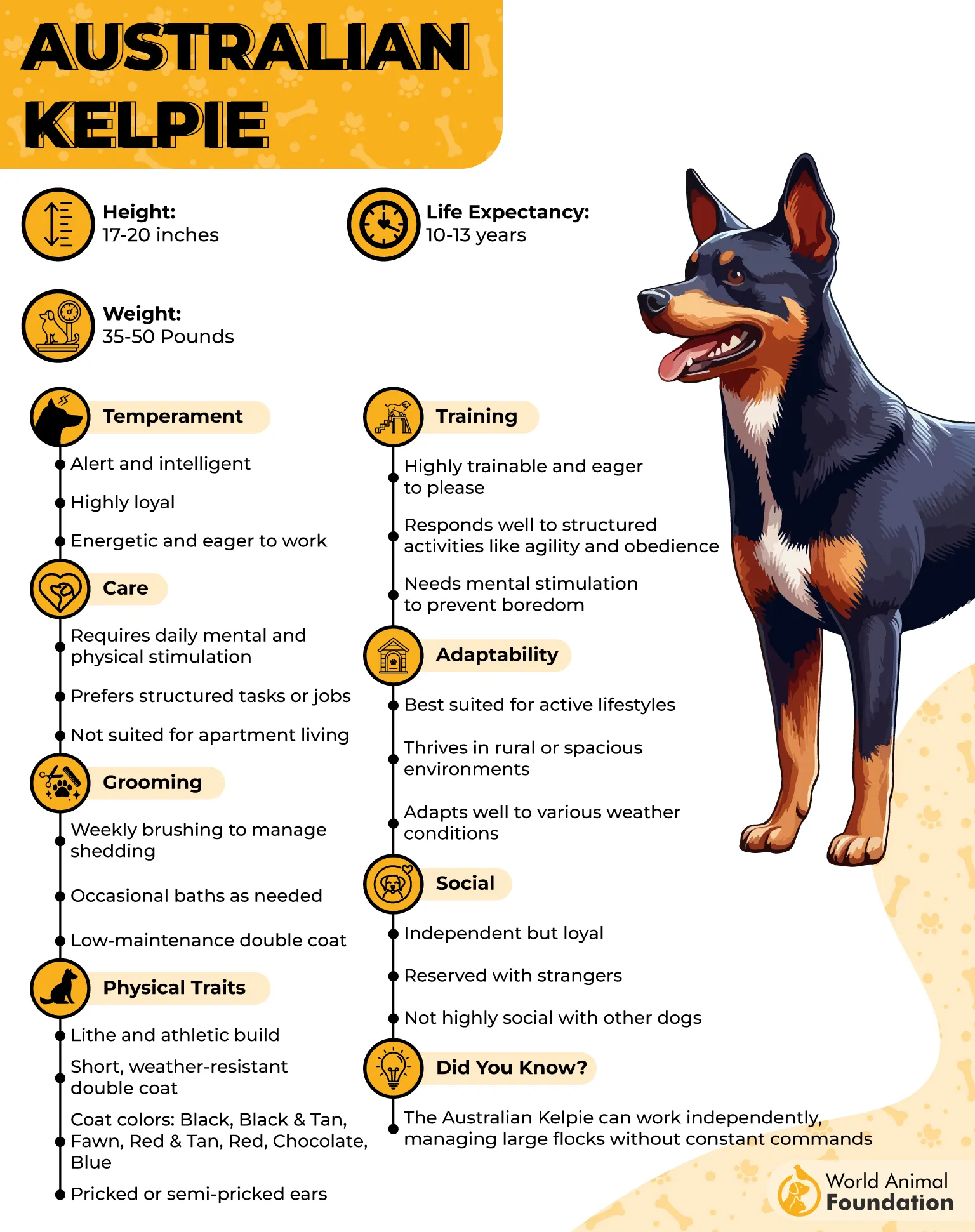
The Blue Heeler packs a surprising amount of dog into a modest frame. Adults typically stand 17 to 20 inches tall and weigh 35 to 50 pounds, with a stocky body that helps them turn quickly and stand their ground around cattle.
The Australian Kelpie is leaner and more elastic, usually standing 16 to 20 inches and weighing about 31 to 46 pounds. It looks less like a compact tank and more like an athlete waiting for the starting whistle. In short, the Heeler brings sturdy power, while the Kelpie brings light footwork and endless bounce.
Pricing & Availability
A Blue Heeler (Australian Cattle Dog) typically costs between $500 and $2,000
Australian Kelpie puppies from reputable breeders typically cost between $1,000 and $4,000
Finding either breed takes more patience than picking up a generic puppy from the nearest listing. Responsible breeders should provide health information, allow you to meet the dogs, and send puppies home no earlier than 8 weeks, so a suspiciously quick handover is a giant red flag wearing a tiny collar.
Blue Heelers are generally easier to find in the United States, while well-bred Kelpies can be scarce outside working dog circles.

Budget beyond the purchase fee for training, fencing, gear, and veterinary care, depending on location and insurance coverage. The better question is not “Can I buy one?” but “Can I properly fund its lifestyle?”
Temperament & Personality Style
A bored herding dog does not quietly take up knitting. Blue Heelers often form an intense bond with one person, stay watchful around strangers, and can try to organise children, guests, or the family cat with a well-timed heel nip.
Kelpies are also loyal and switched on, but many show a more openly eager, task-focused style that suits handlers who enjoy constant teamwork. Early socialisation during the first 12 weeks matters for both, yet it is especially useful for a Heeler puppy learning that every moving thing is not livestock.

The real split is flavour: the Heeler can feel more guarded and forceful, while the Kelpie often feels more restless and ready for the next assignment.
Exercise Needs & Energy Levels
Neither dog is satisfied by a gentle 20-minute stroll around the block. A Blue Heeler generally needs at least 60 minutes of vigorous daily activity plus agility training or puzzle work, while an Australian Kelpie often thrives with 90 minutes or more of serious movement and a purposeful job.
For the Heeler, fetch, hiking, agility, and structured obedience can burn energy without turning every outing into a marathon. For the Kelpie, long runs, farm chores, scent work, or dog sports are usually a better fit because sheer athletic stamina is part of the package.
Give either of these intelligent breeds only physical exercise, though, and its brain may still open a renovation project in your living room.
Trainability & Obedience
Training a Blue Heeler feels like working with a clever colleague who occasionally questions management. It learns fast, excels at obedience and sport skills, and responds best to positive reward-based work delivered in two or three short sessions rather than one long lecture.

The Australian Kelpie is famously quick to spot patterns and may repeat a task for far longer when it has a clear purpose. Ten-minute skill sessions, daily impulse control practice, and a weekly class or sport outlet can keep its brain pointed in a useful direction.
The divergence is simple: Heelers often test boundaries, while Kelpies more often ask, “What is next?” at a frankly unreasonable speed.
Grooming Needs & Shedding
Good news: neither breed needs expensive coat sculpting or a salon appointment every month. Both have weather-resistant dense double coats, need occasional baths, and benefit from brushing at least once a week to lift loose hair and spread natural oils.
The Blue Heeler usually sheds more noticeably, especially during two seasonal undercoat blows each year, when brushing every day for 7 to 14 days is far less dramatic than finding blue fur in your coffee.
The Kelpie’s short double coat is similarly practical but often feels easier to manage between shedding peaks. Keep nail trims on a 3- to 4-week schedule, particularly for dogs whose work does not naturally wear them down.
Herding & Work Drive
Both breeds were made to notice movement, make fast decisions, and keep working long after most dogs have requested a nap. Their instincts can spill into home life as circling, staring, barking, or attempts to direct children and pets, so a 10-minute training game alone will not satisfy either brain.
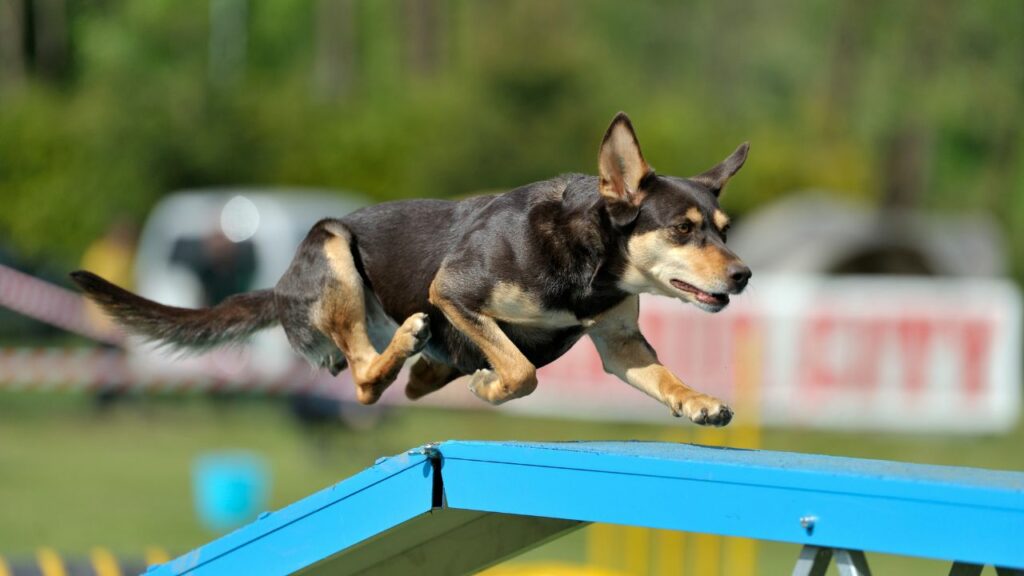
The Blue Heeler works close to cattle, using grit, quick turns, and controlled heel nipping to move animals many times its size. The Australian Kelpie is more of a distance specialist, covering huge ground while reading sheep and solving problems with startling independence.
Beyond livestock, both can excel in agility, scent work, disc, obedience, and search work, but the Kelpie usually craves longer endurance tasks while the Heeler relishes a hands-on challenge.
Health & Lifespan
Active bodies still need thoughtful maintenance. Blue Heelers commonly live about 12 to 16 years, while Australian Kelpies often reach 10 to 13 years, so either choice is a long-term commitment rather than a brief athletic phase.
For Blue Heelers, PetMD flags inherited deafness, progressive retinal atrophy, hip dysplasia, and some heart or eye concerns.
Kelpies can also face hip dysplasia, eye conditions, and joint strain when high activity meets poor conditioning. Ask breeders for relevant health testing, schedule yearly veterinary exams, and protect growing joints by keeping repetitive jumping sensible during the first 12 to 18 months.
Blue Heeler vs. Australian Kelpie: Which Working Breed Is the Better Choice?
The Blue Heeler can suit an experienced owner with a secure yard, firm routines, and 60 to 90 minutes daily for training and vigorous activity. It is often a strong match for someone who values a devoted, protective sidekick and enjoys teaching clear rules from puppyhood.

The Australian Kelpie fits a runner, farmer, dog sport competitor, or highly active household that can offer 90 minutes or more of meaningful daily work. A rural home with livestock or regular access to training spaces gives the Kelpie’s remarkable engine somewhere useful to go.
For apartment dwellers away 8 hours for most days, first-time owners seeking a relaxed pet, or families unable to supervise herding behaviour around young children, neither breed is the kindest choice.
Conclusion
The real contest is not about crowning the cleverest dog; it is about matching serious work drive with an owner who enjoys daily training, purposeful exercise, and a little controlled chaos. A brilliant dog without a job will happily create one, usually on your furniture schedule.
Before committing, map out seven ordinary days of walks, training sessions, and enrichment, then be honest about the gaps. Visit a rescue or responsible breeder, meet adult dogs, and choose only after seeing that energy in real life.
