




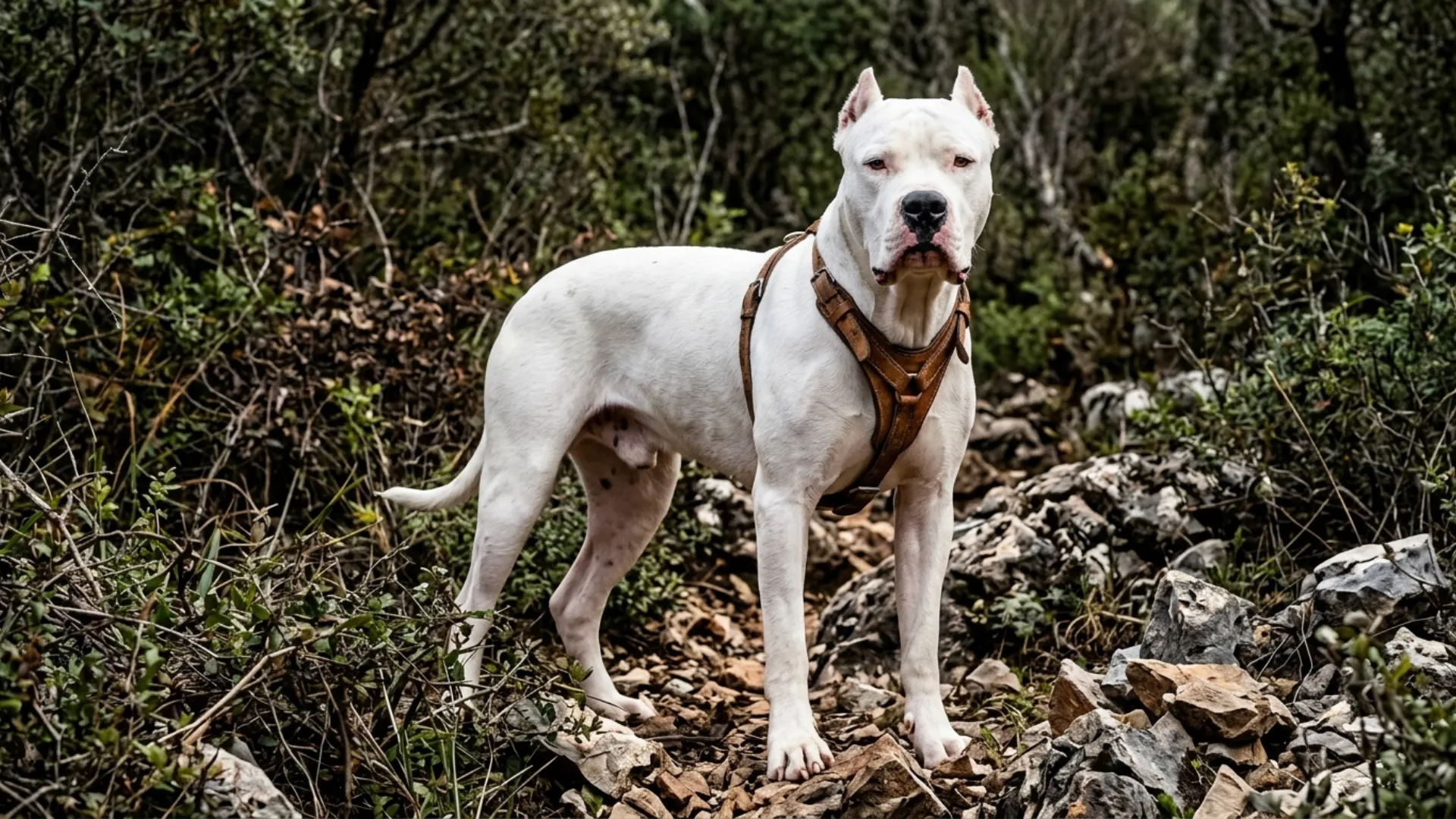
Wild boar are strong, fast, smart, and genuinely tough animals to hunt, which is exactly why certain dog breeds were developed specifically for this kind of dangerous, large-game work. These breeds aren’t interchangeable, though. Each one brings a different specialty to the job.
Some excel at tracking, others focus on locating and baying to alert hunters, and some were bred to work up close, holding and catching game with real physical strength and courage.
The seven breeds below all have proven histories as hog hunters, spanning American working dogs, European catch dogs, rare Japanese breeds, South American dogs, and more. Despite their differences, they all share a few core traits: courage, stamina, exceptional prey drive, and the versatility to work in genuinely challenging terrain.
It’s also worth drawing a clear line between a breed’s historical working purpose and its role as a modern-day pet. Even as companions, these hunting breeds often retain strong natural instincts, meaning they typically need experienced handling, plenty of exercise, consistent training, and responsible, thoughtful ownership.
Legendary Dog Breeds That Dominate Wild Boar Hunting
1. Catahoula Leopard Dog
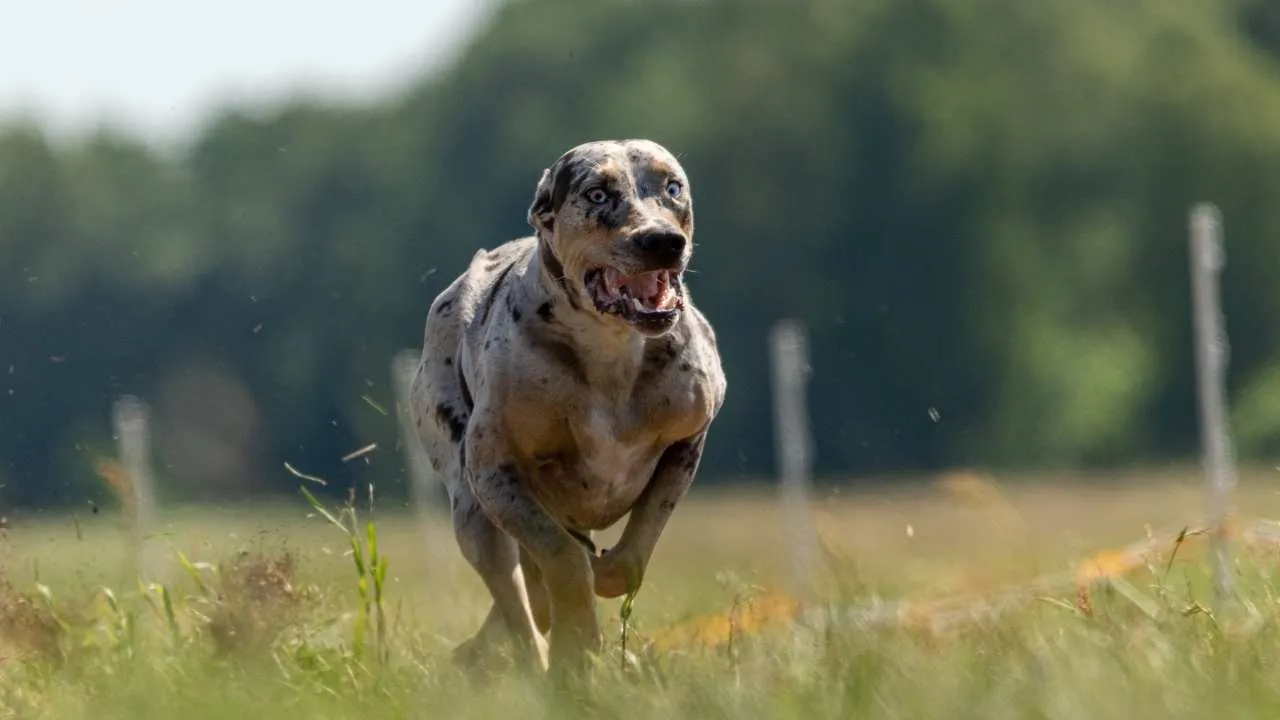
The Catahoula Leopard Dog is one of America’s most iconic hog-hunting breeds, originally developed in Louisiana to work cattle and drive wild game through the tough, unforgiving terrain of the American South.
According to PetMD, the breed’s original job was tracking and driving hogs and cattle through Southern swamps and dense forests, and that muscular, independent, high-stamina nature is still very much part of who they are today.
What makes this breed especially fascinating is that it’s not just about raw power. Catahoulas are remarkably agile too, capable of maneuvering through thick undergrowth while staying laser-focused on the task at hand.
Because of their independence and seemingly endless energy, the modern Catahoula isn’t typically an easy fit for first-time dog owners unless they already have some experience handling working breeds. Distinguished by its rugged Southern roots, this breed remains a serious working dog built for rough country and demanding hog work.
2. Dogo Argentino
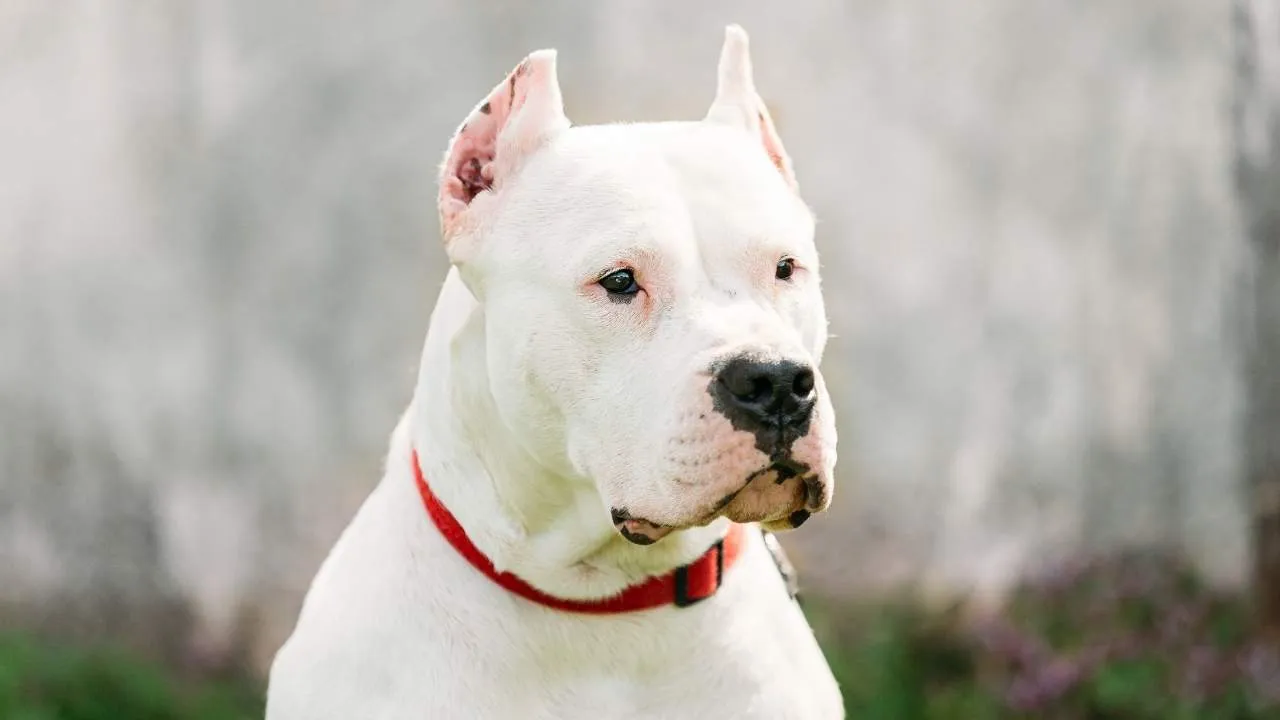
The Dogo Argentino is arguably one of the top breeds when it comes to handling feral hog populations. Developed in Argentina during the 20th century, this breed was purpose-built for hunting large, dangerous game like wild boar.
Bred specifically to take on formidable prey such as wild boar and even puma, the Dogo Argentino works well as a pack hound. According to the AKC, it’s strong, intelligent, and remarkably quick to respond in the field.
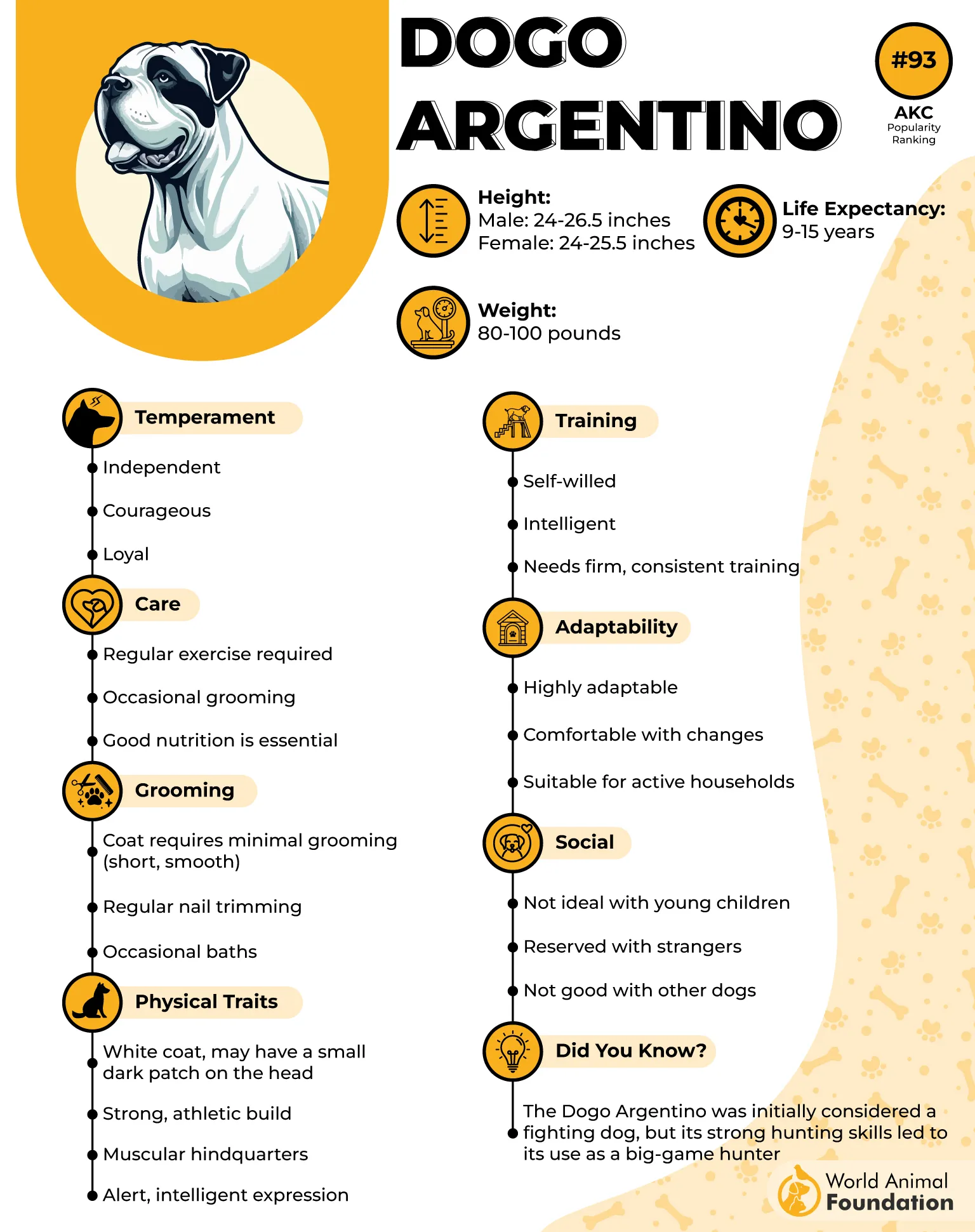
Its physical build reflects that purpose perfectly. Unlike heavier, slower mastiff-type breeds, the Dogo has a lean, muscular, athletic frame built for speed and agility. It combines toughness with explosive power, backed by a strong prey drive and equally strong protective instincts.
Despite that intensity, many Dogos are genuinely loving and devoted to their families. Given their strength and protective nature, though, early socialization is absolutely essential to help them grow into well-balanced, well-mannered companions.
3. Plott Hound
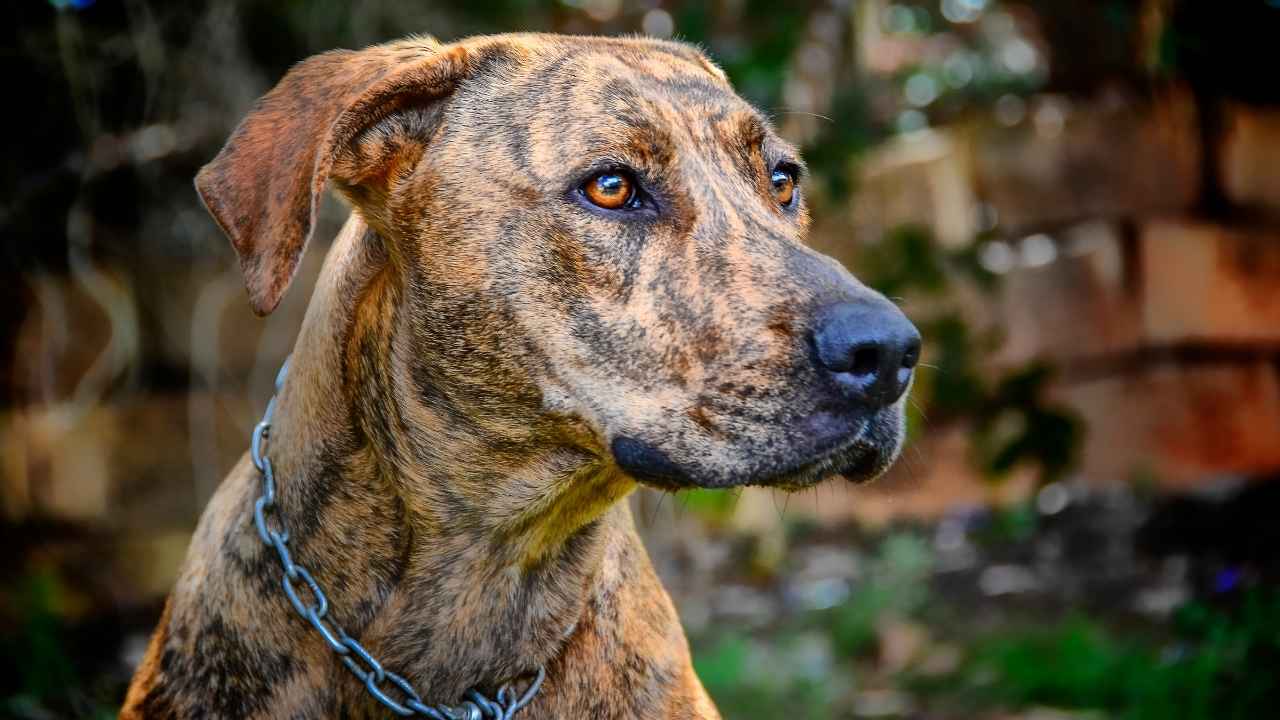
The Plott Hound brings a completely different skill set to hog hunting, relying less on brute strength and more on an exceptional sense of smell, sheer tenacity, stamina, and bravery.
This hound breed traces its roots back to German hunting dogs originally bred for boar hunting, with the Plott family later refining and developing the breed further in North America. Today’s Plott Hound remains a serious big-game hunter, still specializing in tracking large, tough quarry like wild boar, bears, and mountain lions.
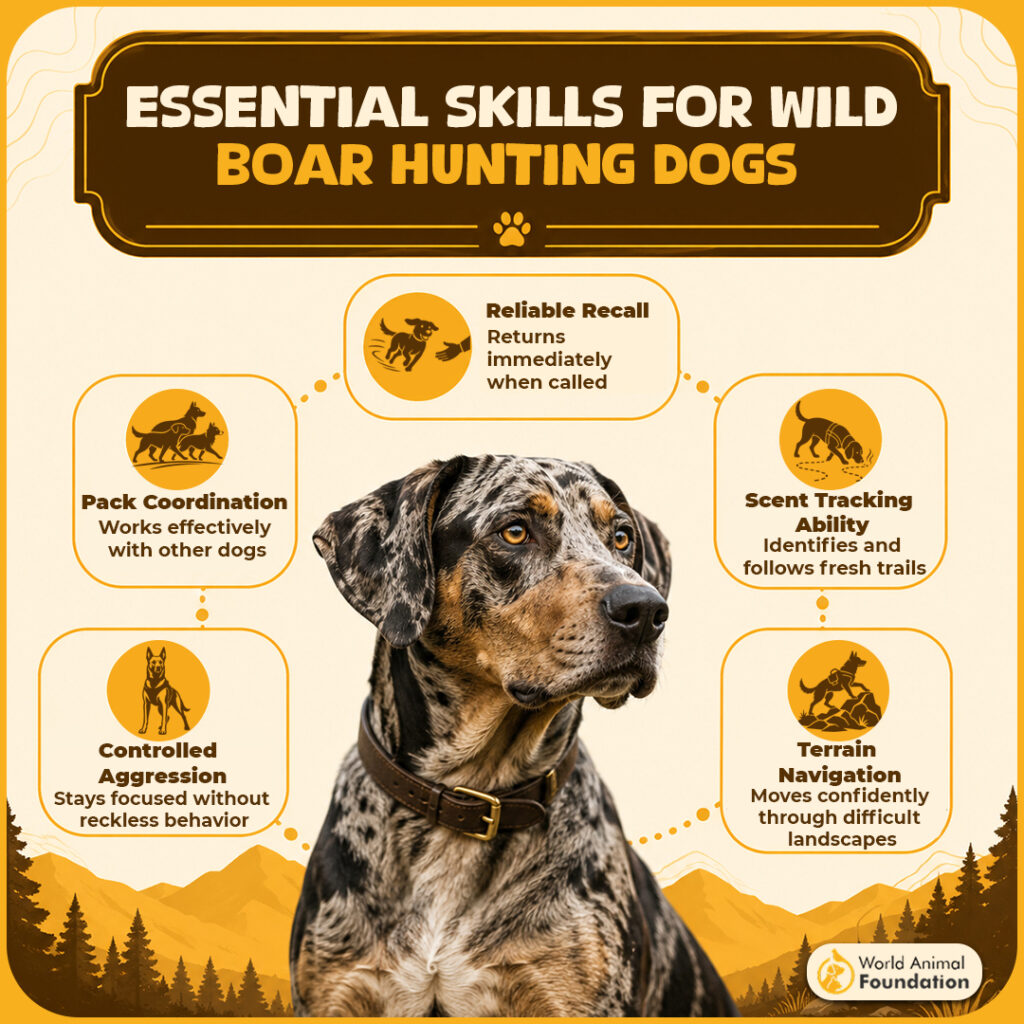
Plotts truly excel at trailing and patrolling difficult terrain, and as scent hounds, their remarkable noses play a central role in their success out in the field.
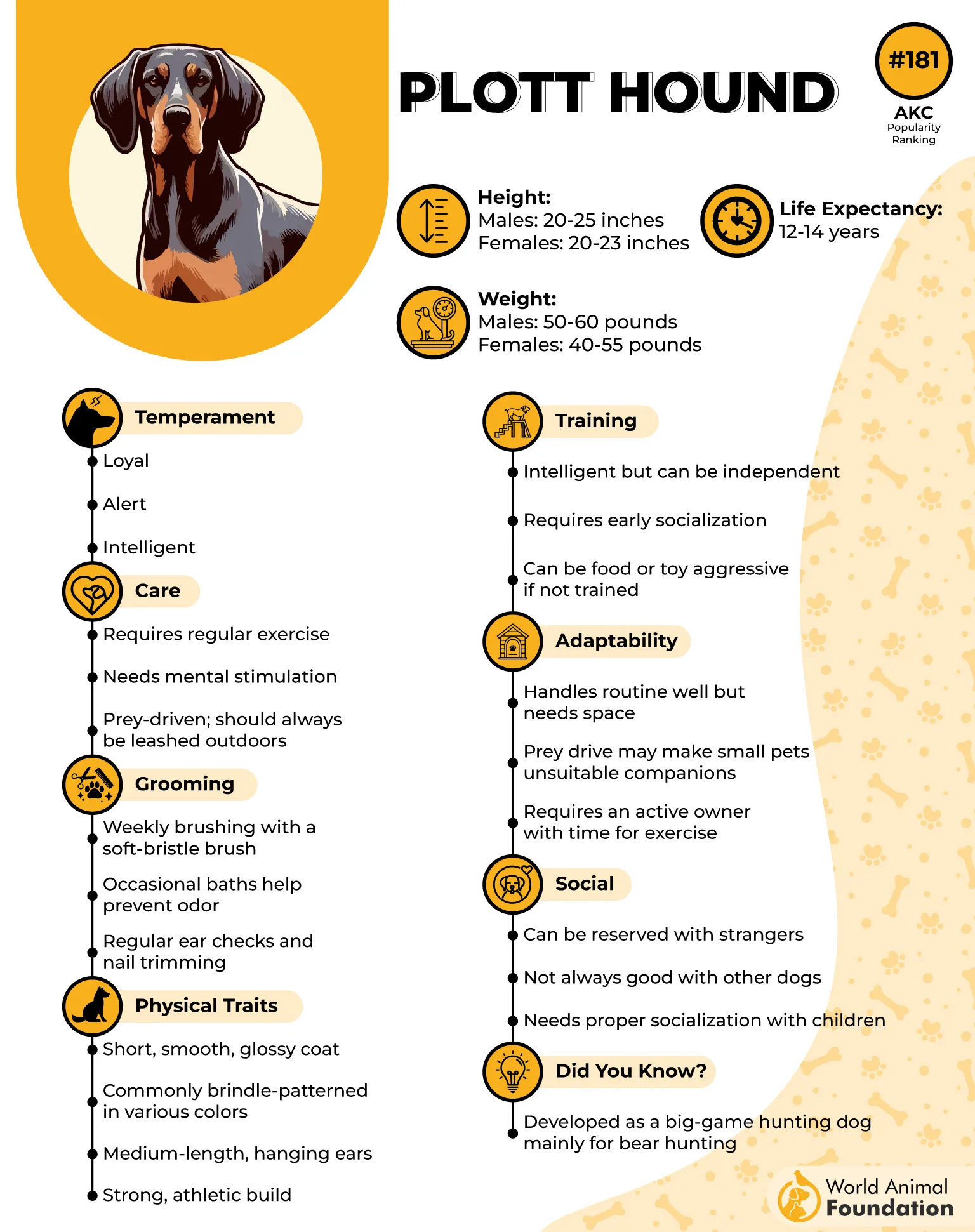
Despite their serious hunting background, Plott Hounds can make genuinely sweet, affectionate companions at home, as long as their physical and mental needs are consistently met. Daily exercise and proper training remain essential parts of caring for this breed.
4. Cimarron Uruguayo
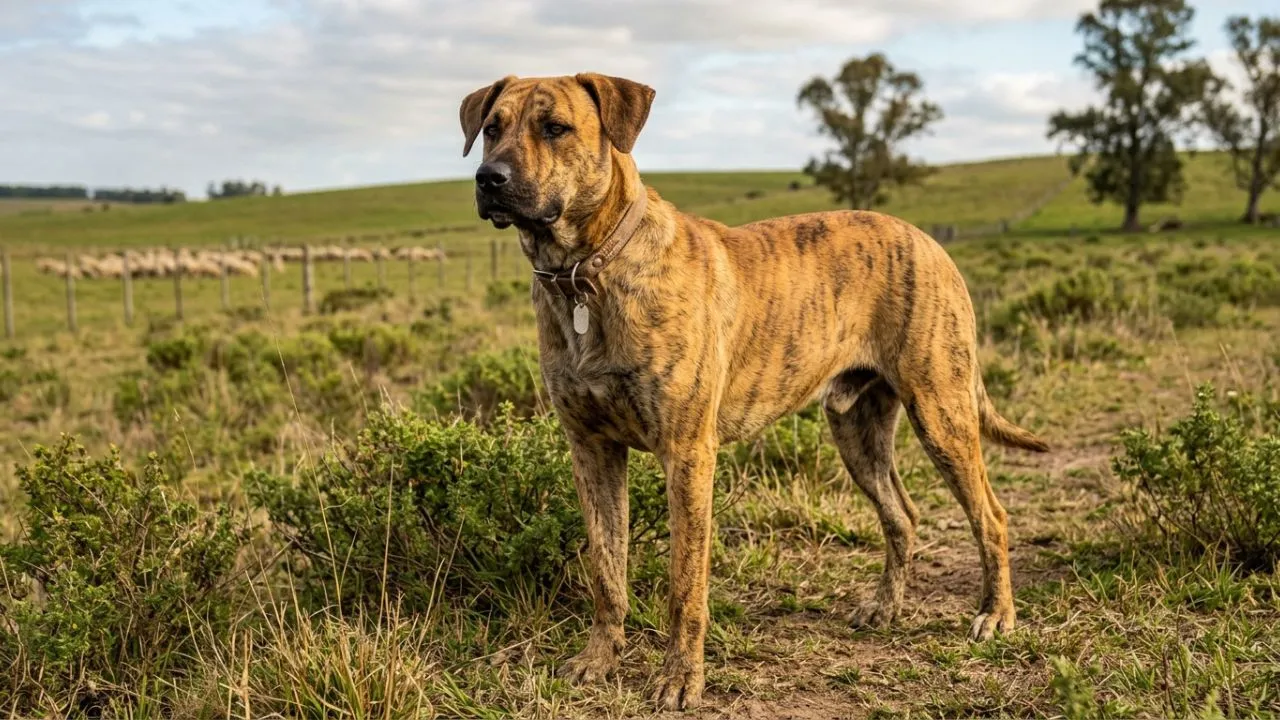
One of the largest breeds on this list, the Cimarron Uruguayo, brings an impressive working resume paired with remarkable survival instincts.
This breed originated in Uruguay, descending from dogs introduced by Spanish and Portuguese settlers. Strong, intelligent, and highly adaptable, these dogs were shaped by their environment over time, and local communities eventually put them to work in livestock herding, guarding, and hunting.
Their physical build reflects that demanding history well. The Cimarron Uruguayo is athletic, sturdy, and genuinely hardy. This isn’t a breed that was developed to be a purely decorative companion dog. It evolved through close, practical partnership with working people, and that self-assured, self-reliant nature comes directly from that background.
Because of this, a Cimarron Uruguayo really needs a purpose and consistent, regular handling to thrive. Distinguished by its toughness, this South American working breed brings natural strength, adaptability, and genuine big-game capability to the table.
5. Blue Lacy
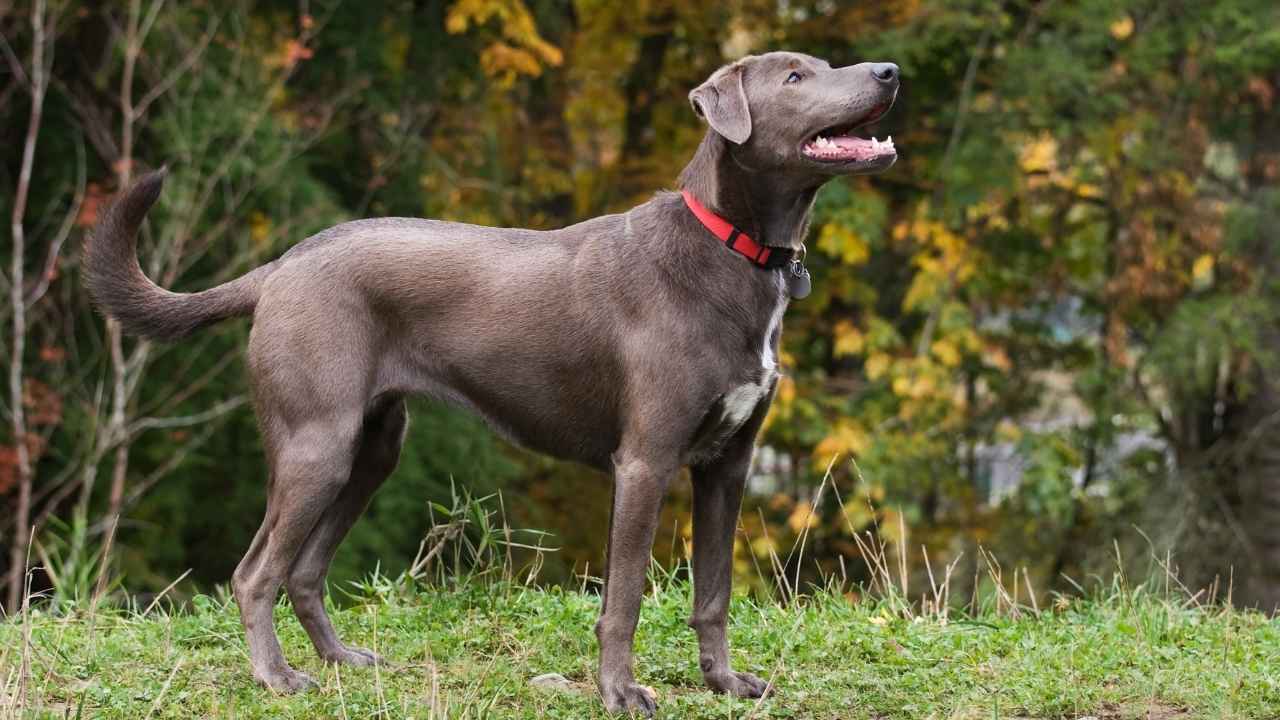
The Blue Lacy is a true Texas breed with deep ties to hog hunting, according to CKCUSA. Developed by the Lacy family in Texas during the 19th century, this breed was shaped into a capable ranch and hunting dog. Smart, fast, and naturally active, Blue Lacys handle herding, tracking, baying, and hunting with equal skill.
One of their standout traits is their exceptional ability when it comes to hog work. Their tracking instincts and skill at baying hogs are genuinely hard to match.
Unlike some of the heavier catch-type breeds built for brute force, the Blue Lacy dog is fast and hardy with a medium-sized, agile frame that lets it move efficiently through tough terrain.
Distinguished by its speed and versatility, this quick, medium-sized Texas working breed carries a proven track record when it comes to baying and managing hogs in the field.
6. Kai Ken
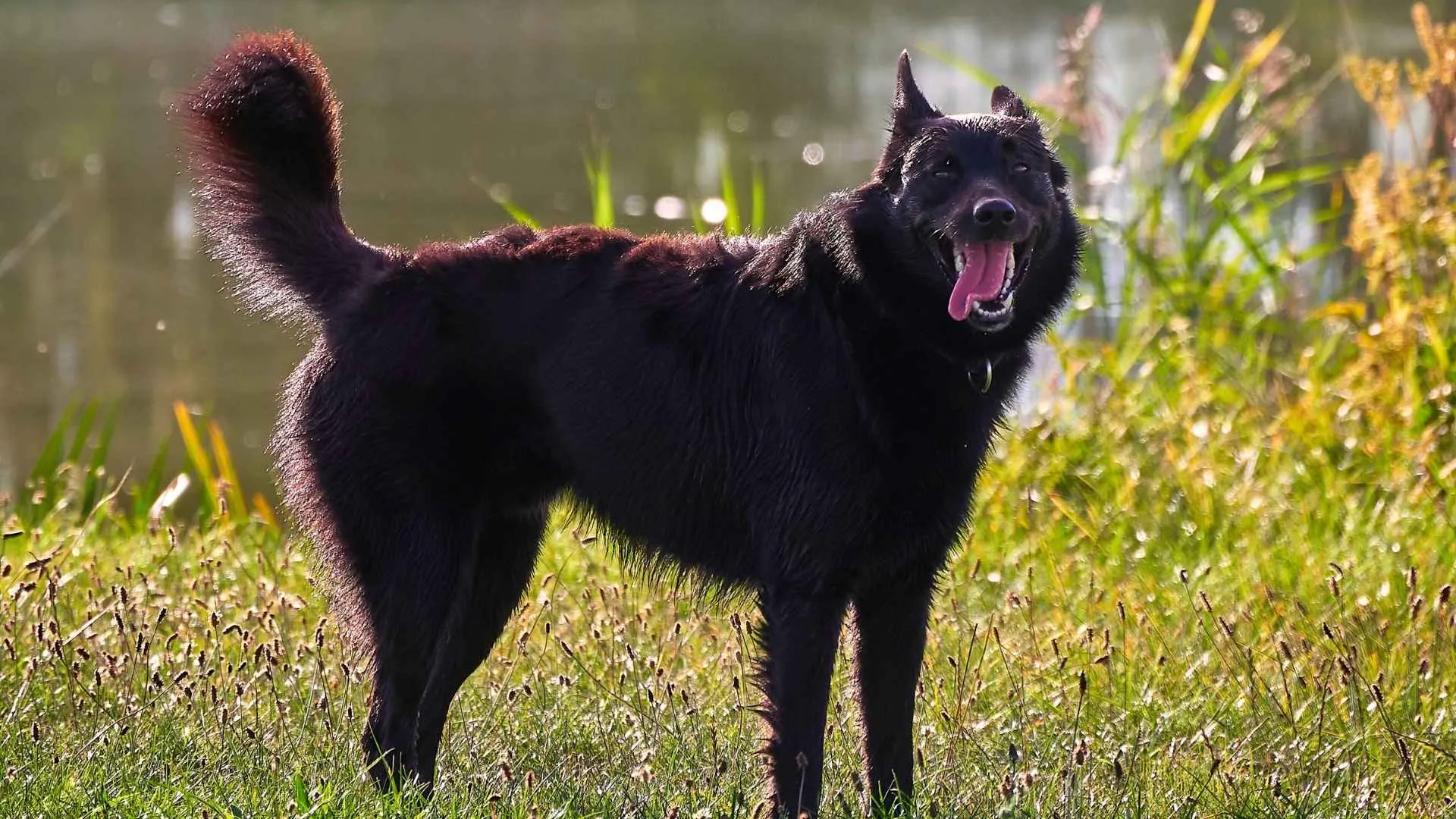
Described as strong and intelligent by Purina, the Kai Ken carries one of the more unique hunting histories on this list. This rare breed originated in Japan’s mountainous Yamanashi Prefecture, where it was developed to hunt a variety of native game.
The Kai Ken played an important role in hunting wild animals such as wild boar and the Japanese serow, a goat-antelope native to the region.
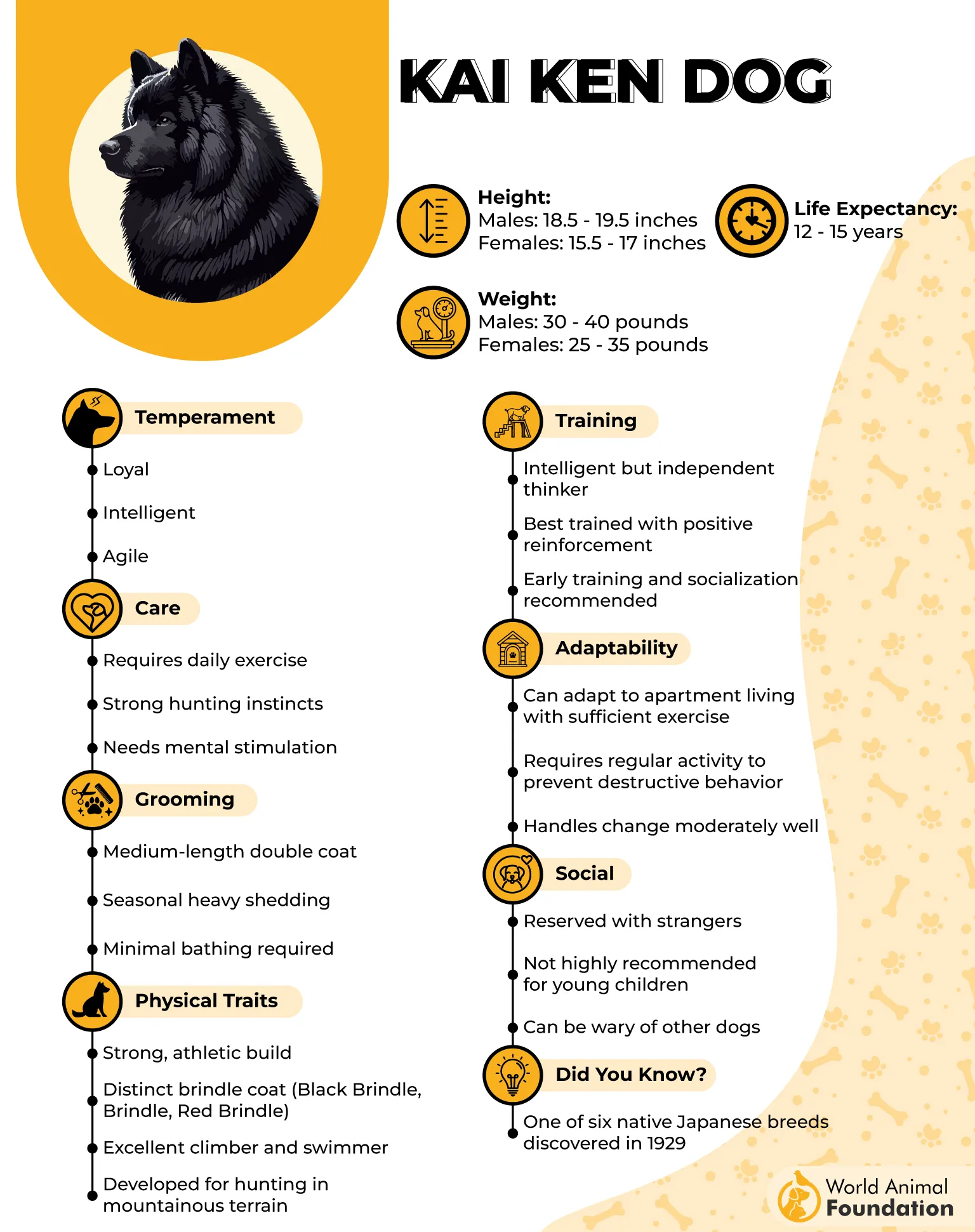
Traditionally, two distinct types of Kai Ken existed: a stockier “boar type” and a lighter “deer type.” While the modern breed has merged these traits into one, that historical distinction still offers a fascinating glimpse into the breed’s specialized hunting past.
Today, most Kai Kens live as companion dogs, and the breed remains rare even within Japan. Still, those natural predatory instincts remain deeply woven into its behavior and personality. As a rare Japanese breed with a long-standing tradition of boar hunting, the Kai Ken remains remarkably agile, especially suited to navigating steep, mountainous terrain.
7. Alano Español
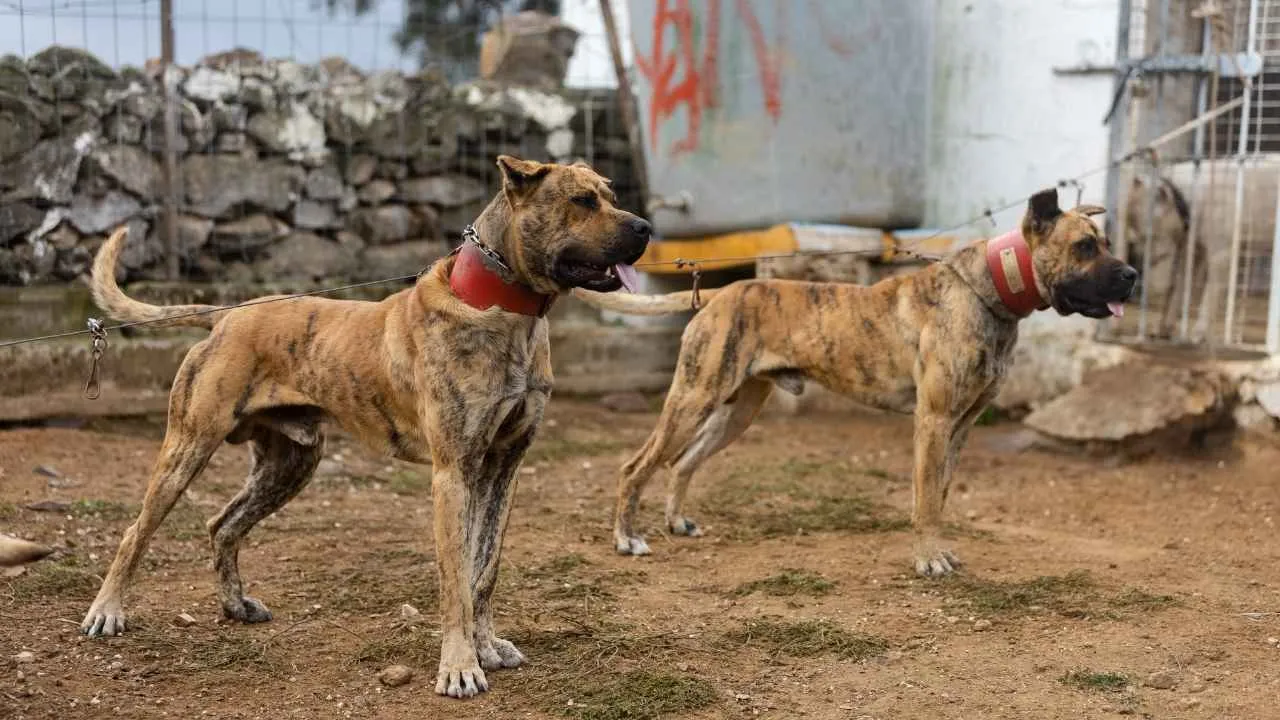
The Alano Español holds a well-established place in Spain’s big-game hunting history. Traditionally used both for cattle work and hunting large animals like deer and wild boar, this breed has deep roots in practical, physically demanding labor.
Spain’s official breed standards even confirm the Alano Español as a strong, muscular catch-type breed with a long, traditional role in boar and deer hunting.
Its physique makes that history obvious at a glance. With sizable bones, a muscular build, a deep chest, and a powerful head, this breed wasn’t shaped for looks. Every trait serves a clear working purpose.
The Alano Español is also a highly confident animal, which means proper socialization and consistent training are essential. Before considering this breed as a companion, it’s important to genuinely respect its history as a serious, capable working dog.
Distinguished by its officially documented legacy in Spanish cattle work and wild boar hunting, the Alano Español remains a breed built for real, demanding work.
Conclusion
These seven different dog breeds really show how different working dogs can approach the same demanding challenge, tackling wild hogs in their own distinct ways.
For anyone considering one of these hog dog breeds as a boar hunting companion, the most important question really comes down to this: does that breed’s original working nature actually align with your lifestyle?
At the end of the day, a strong game hunting breed needs far more than just its natural instincts. Proper socialization, consistent training, plenty of physical activity, regular veterinary care, and genuinely responsible ownership all matter, well beyond whatever working role the breed was originally bred for.
