




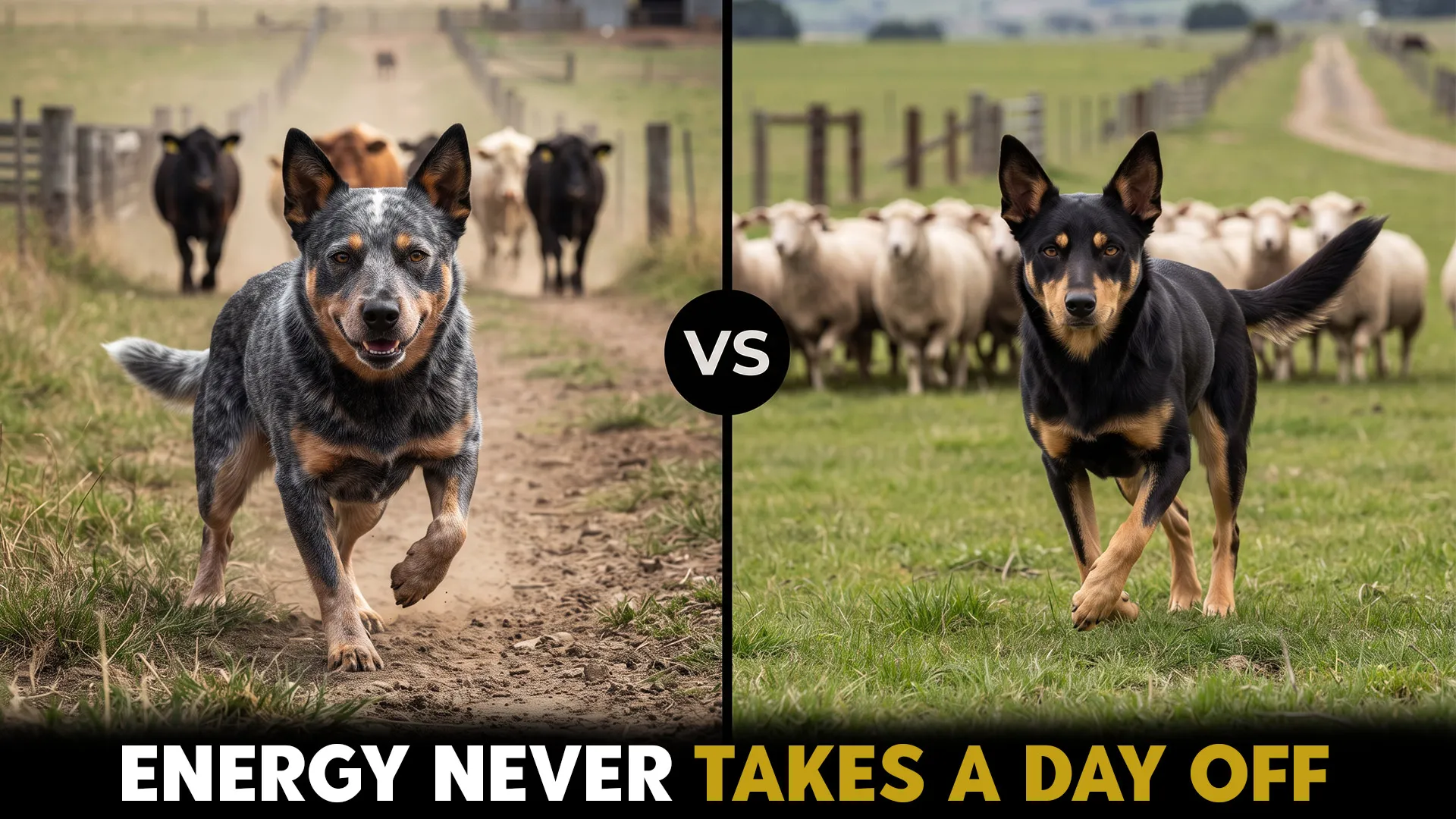
Australian Cattle Dogs and Australian Kelpies were both originally bred as herding dogs in Australia, and given their shared purpose, it’s no surprise they have quite a bit in common behaviorally.
Australian Cattle Dogs, often nicknamed Blue Heelers or Red Heelers, were technically developed for cattle work, while Kelpies were bred more specifically as sheepdogs. That said, both breeds are incredibly versatile and capable of herding all kinds of farm animals when needed.
In terms of temperament and appearance, these two breeds share a lot of similarities too. Both are fiercely loyal, highly intelligent, and constantly alert to their surroundings. They’re also hardworking dogs with a noticeable independent streak. Still, a few key differences really do set them apart.
Here’s a closer look at the major differences between Australian Cattle Dogs and Australian Kelpies.
Australian Cattle Dog vs Australian Kelpie: Which Dog Has More Drive
Now, let’s compare the Australian Cattle Dog and Australian Kelpie to see which hardworking herding breed has more drive and energy. Both are smart, athletic dogs, but their working styles, stamina, and personalities are a little different.
Origins & Purpose
Australian Cattle Dogs and Kelpies were both primarily developed in Australia as herding dogs, though their backstories take some interesting turns.
Australian Cattle Dogs, also known as Blue Heelers or Red Heelers, trace their history back to the early 19th century, when breeders set out to create a tough, versatile dog capable of handling the harsh conditions of the Australian outback. According to Purina, the breed is the result of roughly 60 years of careful crossbreeding, with Dingoes among its notable ancestors.
Australian Kelpies, on the other hand, are medium-sized dogs that were developed in Australia but actually have Scottish roots. They were bred mainly from Collie-type dogs and remain a common sight working on ranches and farms today.
Fun fact: Kelpies are named after a shape-shifting aquatic creature straight out of Celtic mythology.
Size & Build
Both Australian Cattle Dogs and Kelpies fall into the medium-sized category, though their build and appearance have a few subtle differences worth noting.
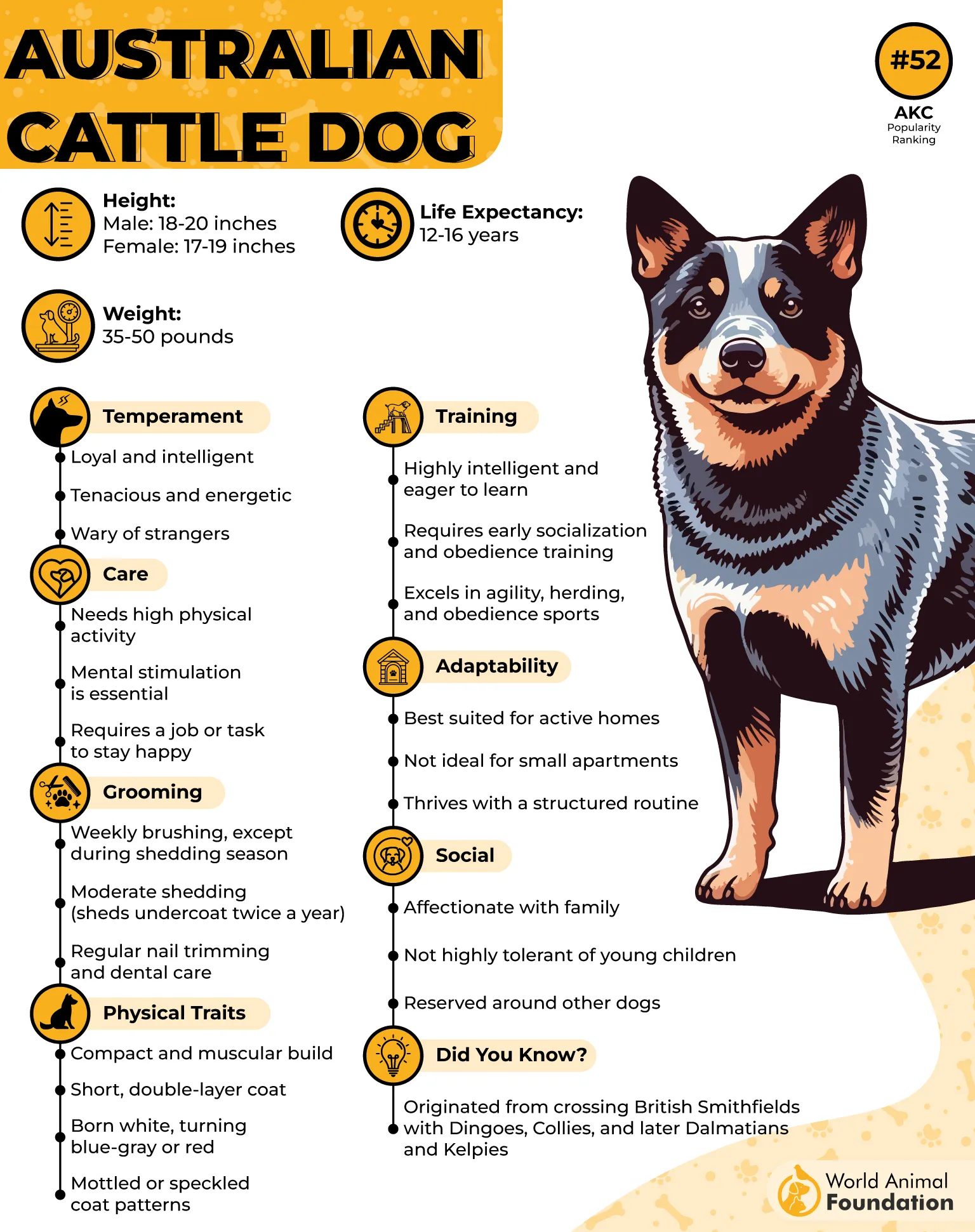
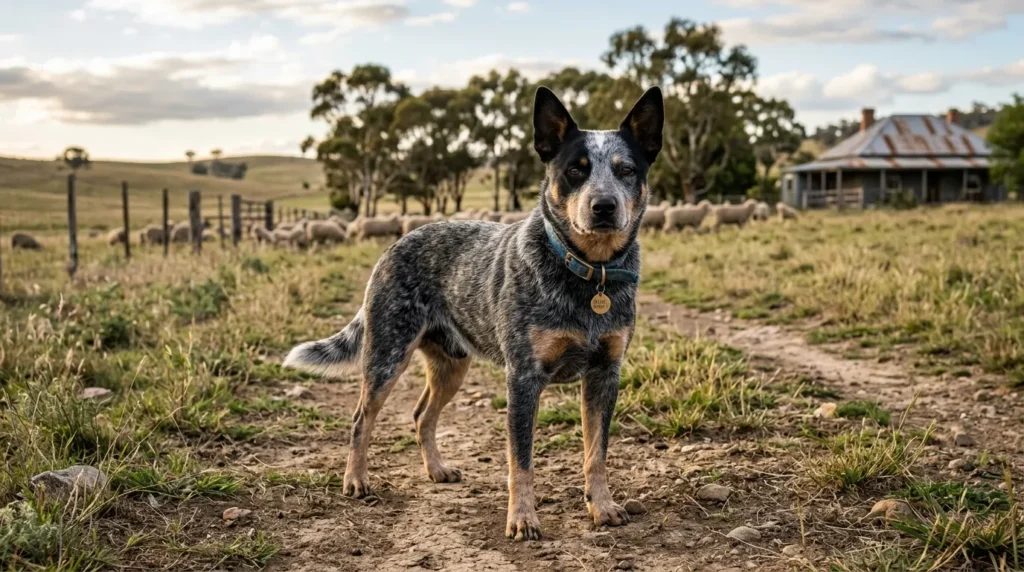
Australian Cattle Dogs, one of the more popular working breeds out there, are agile, muscular dogs built for tireless work. Their sharp, alert eyes and erect ears give them a constantly attentive expression. According to the American Kennel Club, they typically stand 17 to 20 inches at the shoulder and weigh between 35 and 50 pounds.
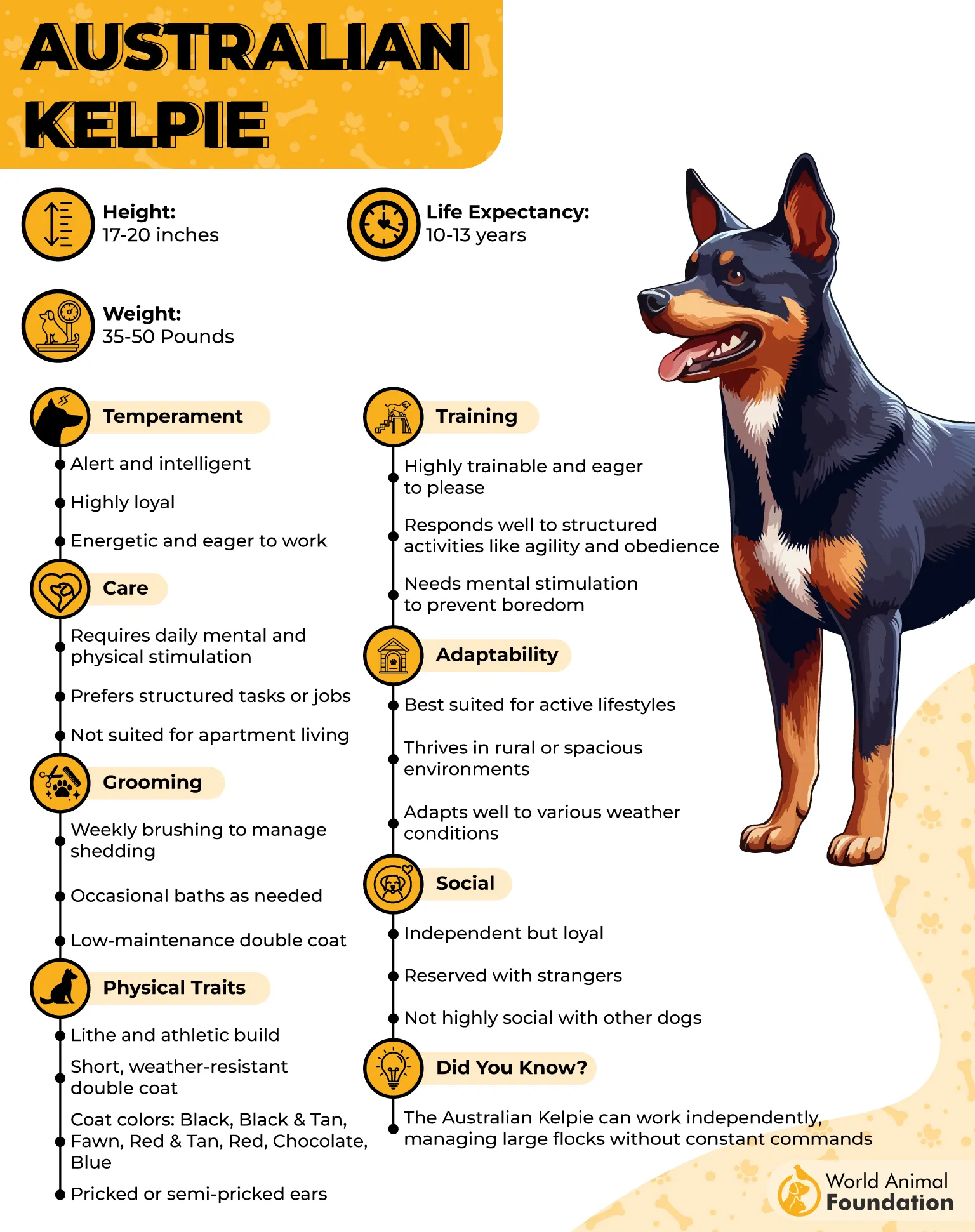
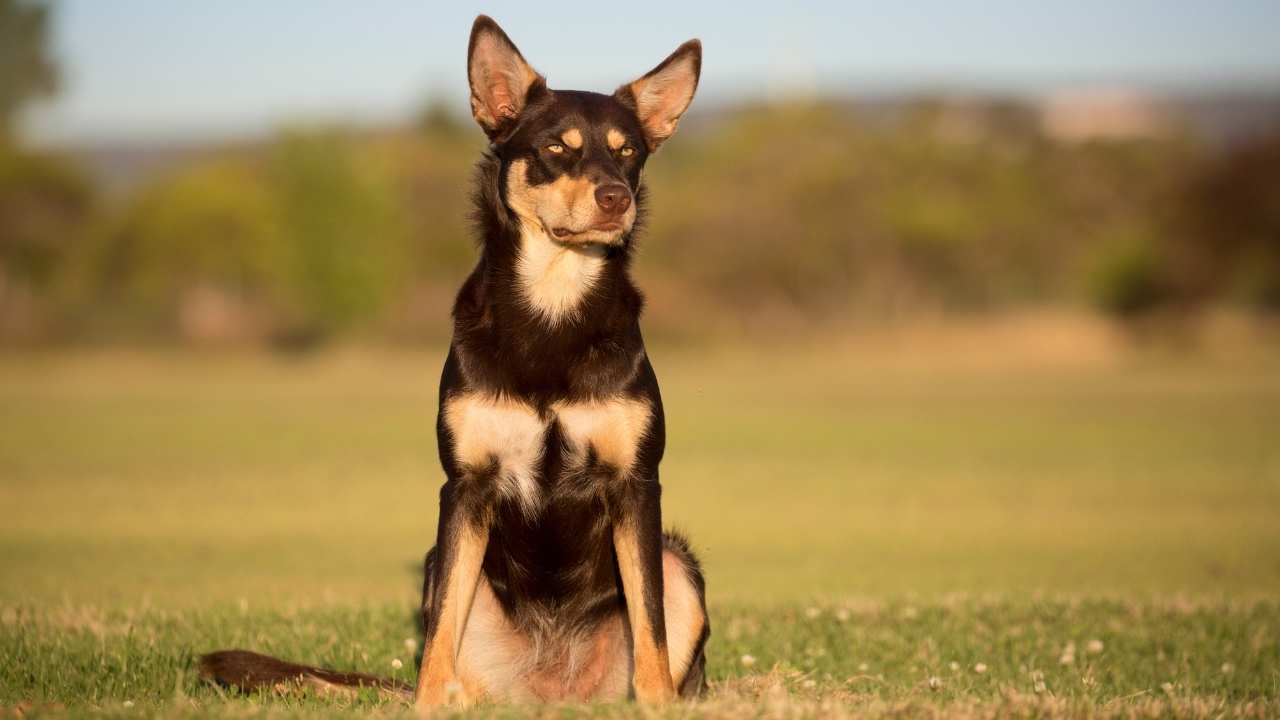
Australian Kelpies share a similarly agile, muscular build, with well-proportioned bodies and those same alert, upright ears. Their height and weight are fairly close to Cattle Dogs, but Kelpies tend to carry a leaner, more athletic look overall.
Pricing & Availability
Australian Cattle Dogs tend to be more common than Kelpies, and puppy prices typically range from $500 to $2,500.
Kelpies aren’t quite as widespread, though they’re still far from a rare breed. Prices for Kelpie puppies usually fall somewhere between $500 and $4,000.
Whichever breed you decide on, it’s always worth purchasing from a reputable breeder you trust.
Temperament & Personality Style
Since Australian Cattle Dogs and Kelpies were bred for such similar purposes, it’s no surprise their temperaments overlap quite a bit too.
Australian Cattle Dogs are highly intelligent, hardworking dogs that form strong bonds with their owners. That said, they do carry an intense protective streak and tend to be wary of strangers, according to PetMD. They can become reactive when triggered, though generally speaking, they’re friendly and eager to please.
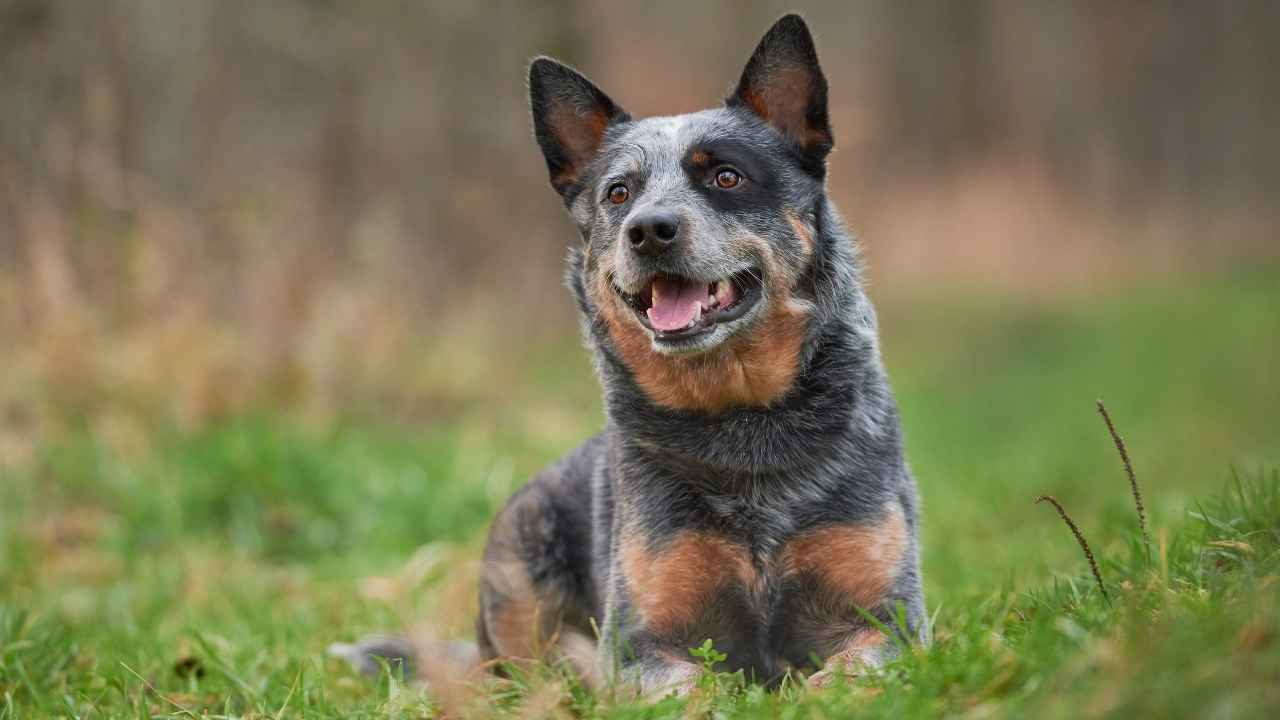
Some Cattle Dogs also tend to be a bit “mouthy,” meaning nipping or light biting can show up, but with proper training and early socialization, this behavior is very manageable. Cattle Dogs are also known for their fearless, courageous nature, which historically allowed them to confidently herd animals many times their size, including cattle.
Kelpies bring a similarly driven, energetic personality to the table. They genuinely thrive on hard work and love having a job to focus on. Their friendly, affectionate side makes them well suited to family life, and they tend to form loyal, lasting bonds with owners who understand their needs.
Like most herding dogs, Kelpies also have a natural instinct to chase and herd smaller animals, cats included, though early socialization goes a long way in curbing that tendency.
Exercise Needs & Energy Levels
Being working breeds through and through, both Kelpies and Cattle Dogs have boundless energy and genuinely need regular exercise to stay happy and healthy.
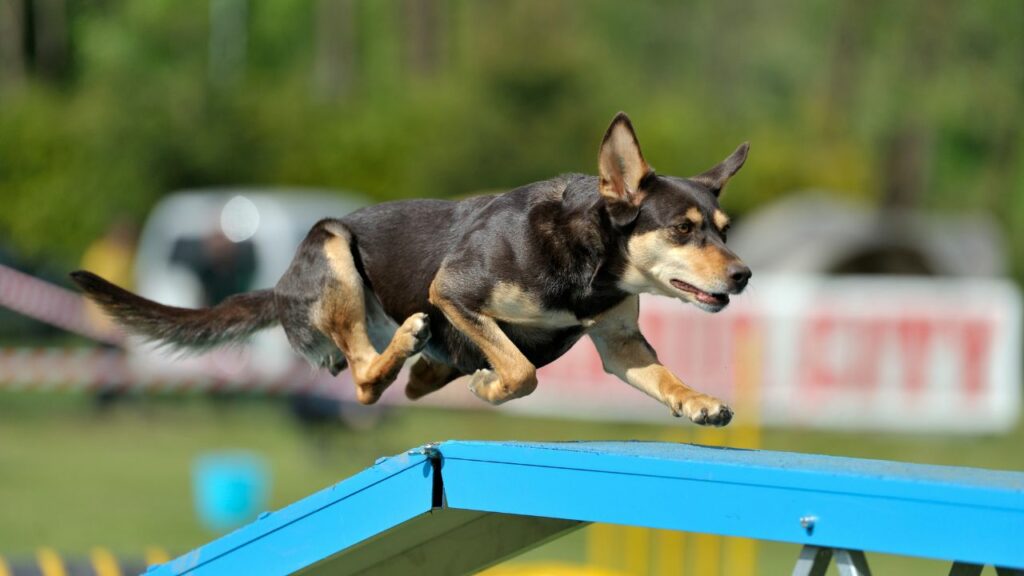
Adult Australian Cattle Dogs typically need at least two hours of daily exercise paired with mental stimulation. They love the outdoors and genuinely enjoy exploring new surroundings, making them great companions for long hikes. Games of fetch and dog sports like agility courses are also fantastic outlets for burning off that extra energy.
Kelpies are just as demanding when it comes to exercise, needing at least two hours of vigorous daily activity to stay balanced both physically and mentally. They love hiking and jogging alongside their owners and tend to excel at a variety of dog sports, including agility, herding trials, and other competitive events.
Trainability & Obedience
Australian Cattle Dogs are relentless, sharp-minded dogs. Their high intelligence combined with a genuine desire to please makes them highly trainable, and most really do enjoy picking up new tricks. That said, a stubborn streak can show up now and then.
Firm, consistent handling paired with positive reinforcement-based training tends to work best. Cattle Dogs are great candidates for obedience training and can even be trained to help with livestock work and property patrolling.
Kelpies are equally intelligent and carry a strong desire to please the people they love. However, since they were bred to make independent decisions out in the field, that same independence can sometimes get in the way of training. Sticking with positive reinforcement techniques really helps keep things on track with this breed.
Grooming Needs & Shedding
Australian Cattle Dogs have a dense double coat made up of a short undercoat paired with a straight, water-resistant outer layer. They handle both hot and cold climates well and are just as happy outdoors with proper shelter as they are curled up indoors with their family.
Cattle Dogs come in two main colors, blue or red speckled, and they’re moderate to heavy shedders. Brushing once or twice a week is usually enough to keep the coat in good shape, though an occasional professional blowout can help manage shedding season.
Kelpies have a smooth double coat too, and while their grooming needs are generally minimal, heavy shedding periods may call for a bit more attention. Their coat is naturally water-resistant and always comes in solid or bi-color combinations, such as red and tan, black and tan, black, tan, brown, or red.
Herding & Work Drive
Both Heelers and Kelpies have a strong herding instinct and work drive, but their techniques out in the field look pretty different. Australian Cattle Dogs herd by nipping at the heels of livestock, using quick, precise movements before darting back out of kicking range.
Kelpies take a different approach, relying on intense eye contact and wide outruns to control a herd. Their exceptional stamina also plays a huge role in helping them keep up with demanding herding work over long stretches.
Health & Lifespan
Australian Cattle Dogs are generally hardy, healthy dogs with an impressive life expectancy of 12 to 16 years, making them one of the longer-lived breeds compared to Kelpies. That said, they can still be prone to certain health issues over their lifetime, including heart conditions, hip dysplasia, eye problems, and deafness.
Kelpies typically live between 10 and 13 years and are also considered a fairly healthy breed overall. Still, they can be susceptible to a handful of conditions, including hip dysplasia, luxating patella, cerebellar abiotrophy, and progressive retinal atrophy.
Australian Cattle Dog vs. Australian Kelpie: Which Energetic Herding Dog Is Right for You?
Both Australian Kelpies and Australian Cattle Dogs need active owners who can genuinely keep up with their exercise demands. They tend to thrive best on farms or in larger homes with yards, where they have plenty of room to roam and keep both their minds and bodies engaged.
At the end of the day, choosing between these two energetic, hardworking breeds really comes down to personal preference.
Conclusion
Australian Cattle Dogs and Kelpies were both originally developed in Australia as herding dogs, and given their shared purpose, the two breeds naturally share a lot of physical and behavioral traits. Still, some real differences set them apart.
For starters, Kelpies tend to look lighter and more athletic, usually coming in solid or bi-color coats, while Cattle Dogs stick to just two color patterns: blue or red speckled.
Both breeds are highly intelligent, friendly, and deeply loyal to their people, though Kelpies tend to carry a bit more independence than Cattle Dogs. The biggest difference ultimately comes down to herding style. Cattle Dogs herd by nipping at heels, while Kelpies rely on intense “eyeing” to control their flock.
At the end of the day, the right choice between the two really depends on your lifestyle and what you’re personally looking for in a dog.
