




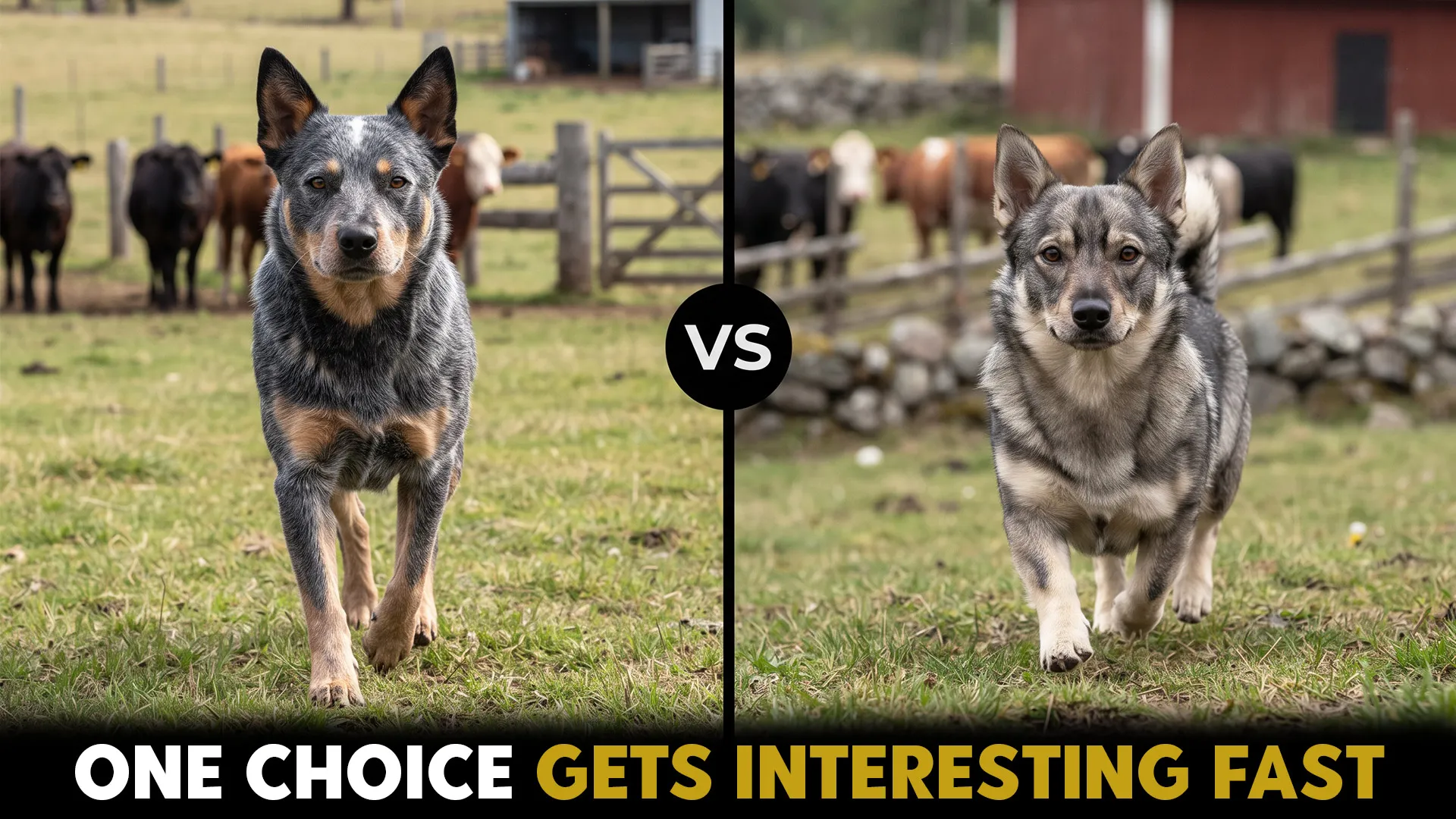
When it comes to high-energy herding breeds, few can match the relentless grit and intelligence of the Australian Cattle Dog and the Swedish Vallhund. Both breeds were born to work livestock by nipping at heels, yet their origins couldn’t be more distinct—one forged in the scorching Australian Outback, and the other tracing its roots back to ancient Viking farms.
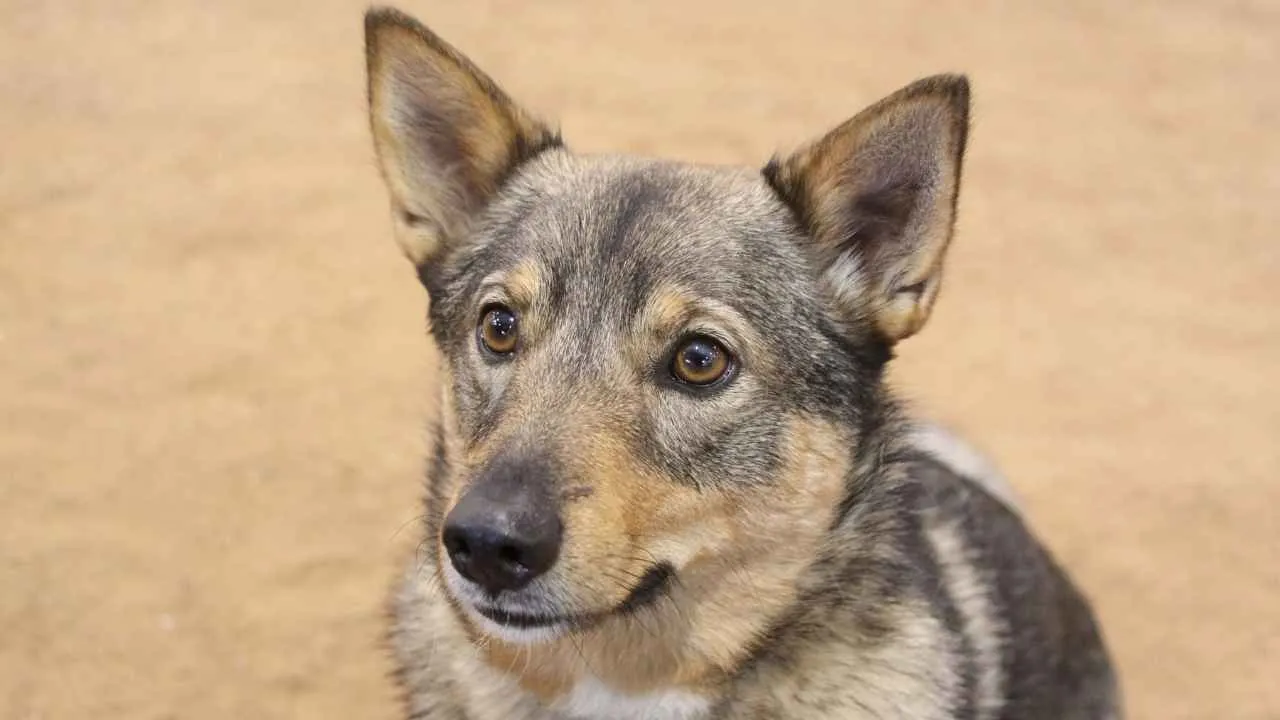
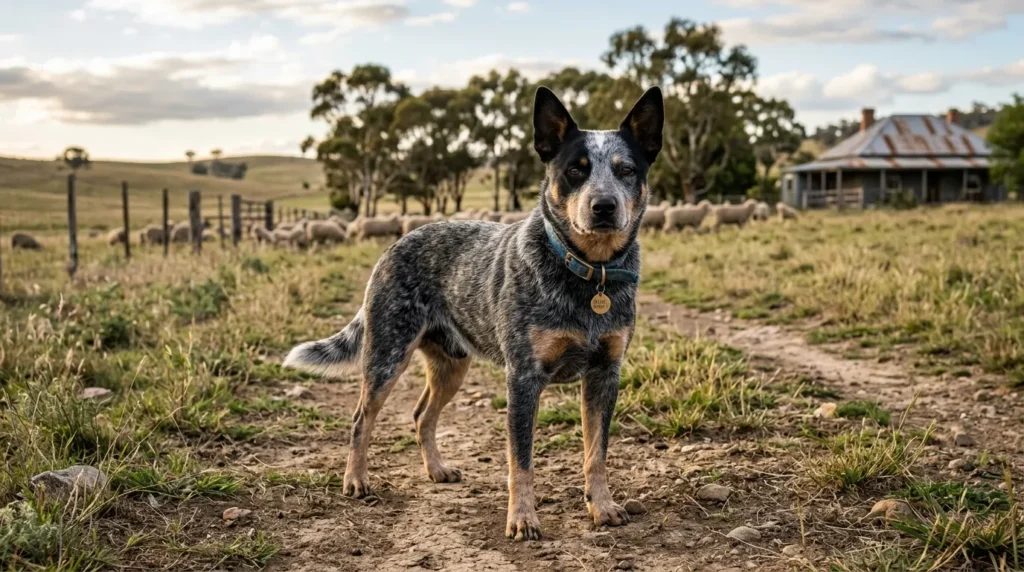
The Australian Cattle Dog, often known as the Blue Heeler, is a medium-sized powerhouse built for endurance, intensity, and extreme loyalty to a single master. In contrast, the Swedish Vallhund packs big-dog herding instinct into a compact, short-legged frame resembling a spitz-type Corgi, known for its cheerful, vocal demeanor and adaptable nature.
While both dogs thrive on having a job to do, choosing between them comes down to matching their distinct personalities, grooming needs, and exercise requirements with your lifestyle. Understanding their core traits will help you determine whether the relentless drive of the Cattle Dog or the spunky charm of the Vallhund is your ideal companion.
Australian Cattle Dog vs. Swedish Vallhund: Key Traits of These Dog Breeds
Let’s compare the Australian Cattle Dog and Swedish Vallhund to see how these energetic herding breeds differ in size, personality, and everyday needs. From working style to temperament, each breed brings its own unique strengths and charm.
Origins & Purpose
The Australian Cattle Dog was built for hard labor, not for lounging. Breeders in nineteenth-century Australia crossed Blue Smooth Highland Collies with dingoes, then added Dalmatian and Kelpie blood to sharpen the result, according to ACDCA. The goal was a tireless drover capable of herding large herds of cattle across brutal outback terrain for days at a stretch.
The American Kennel Club (AKC) recognized the breed in 1980, though fans still call it the Blue Heeler, Red Heeler, Queensland Heeler, or, in older records, the Australian Heeler.
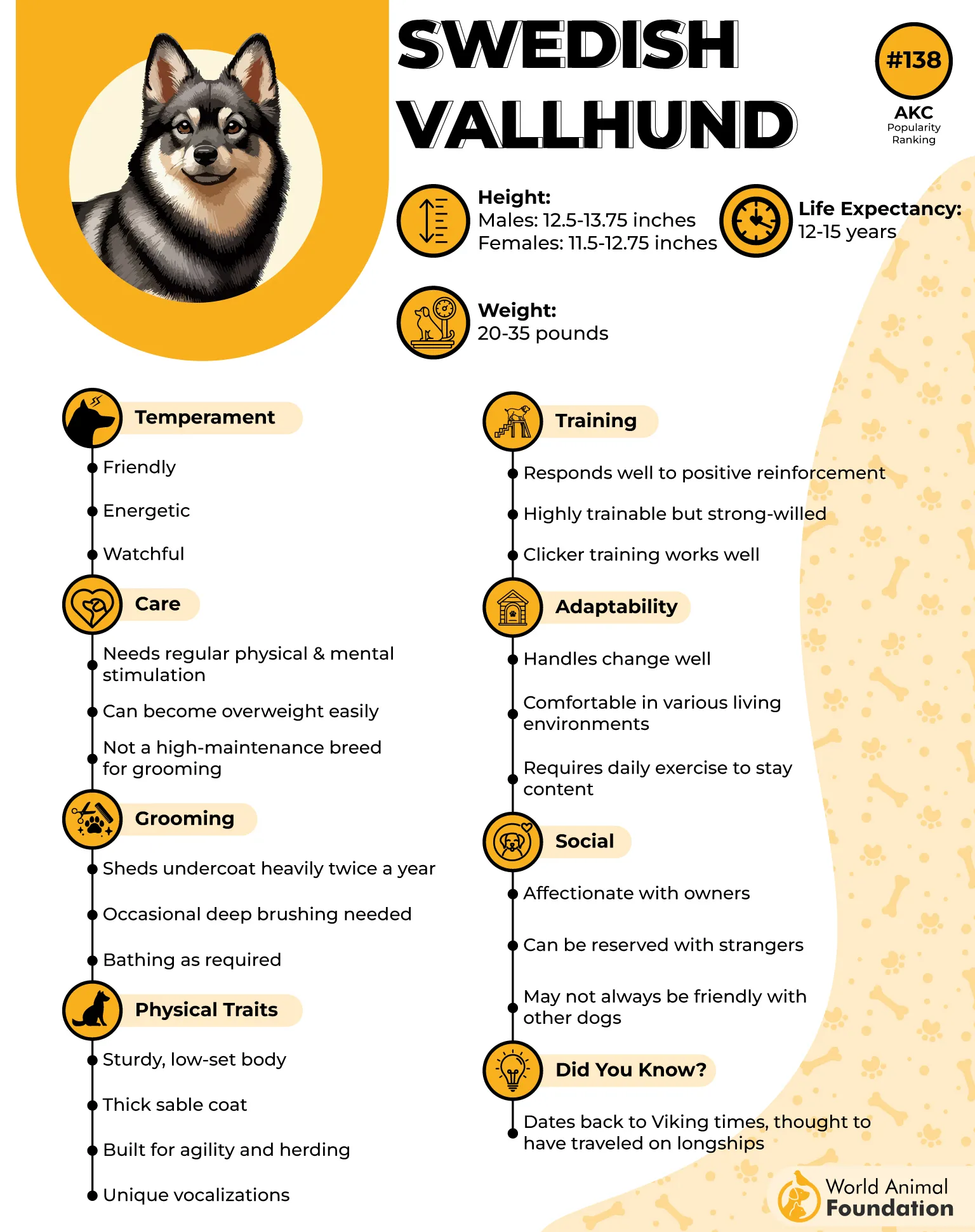
The Swedish Vallhund carries a much older resume. Vikings kept this compact herder over a thousand years ago in Västergötland, using it to herd cattle, guard property, and control vermin on the farm.
Mechanized farming nearly erased the breed by 1942, until two Swedes tracked down the last survivors and rebuilt the line, according to VCA Animal Hospitals. It was added to the Herding Group in 2007, decades after its Australian counterpart.
Size & Build
Twelve and a half inches. That is roughly how tall a male Swedish Vallhund stands at the shoulder, making it one of the more compact dogs in the Herding Group. Females measure even less, and both sexes typically weigh 20 to 35 pounds on a long, low, muscular frame built to duck under a kicking hoof.
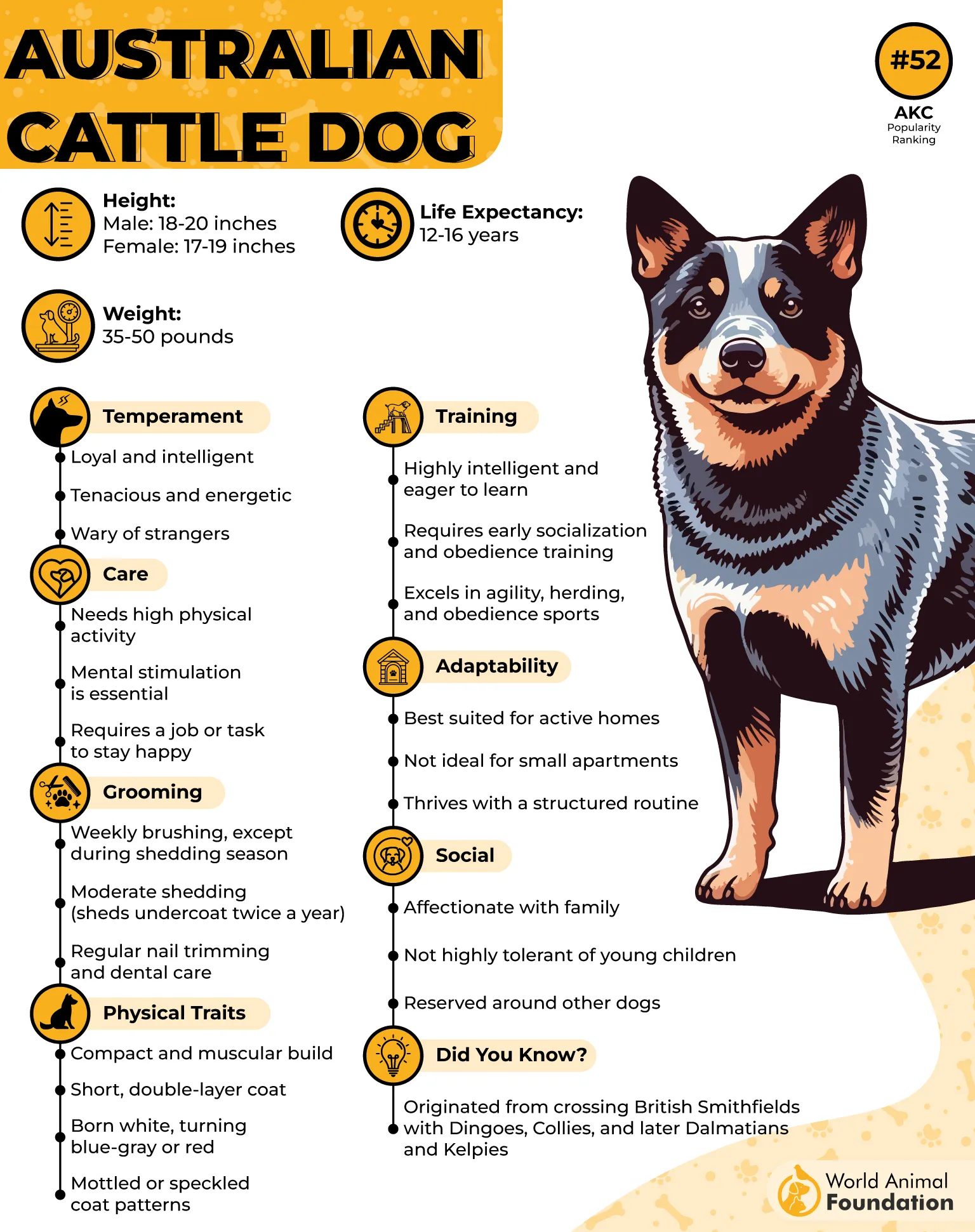
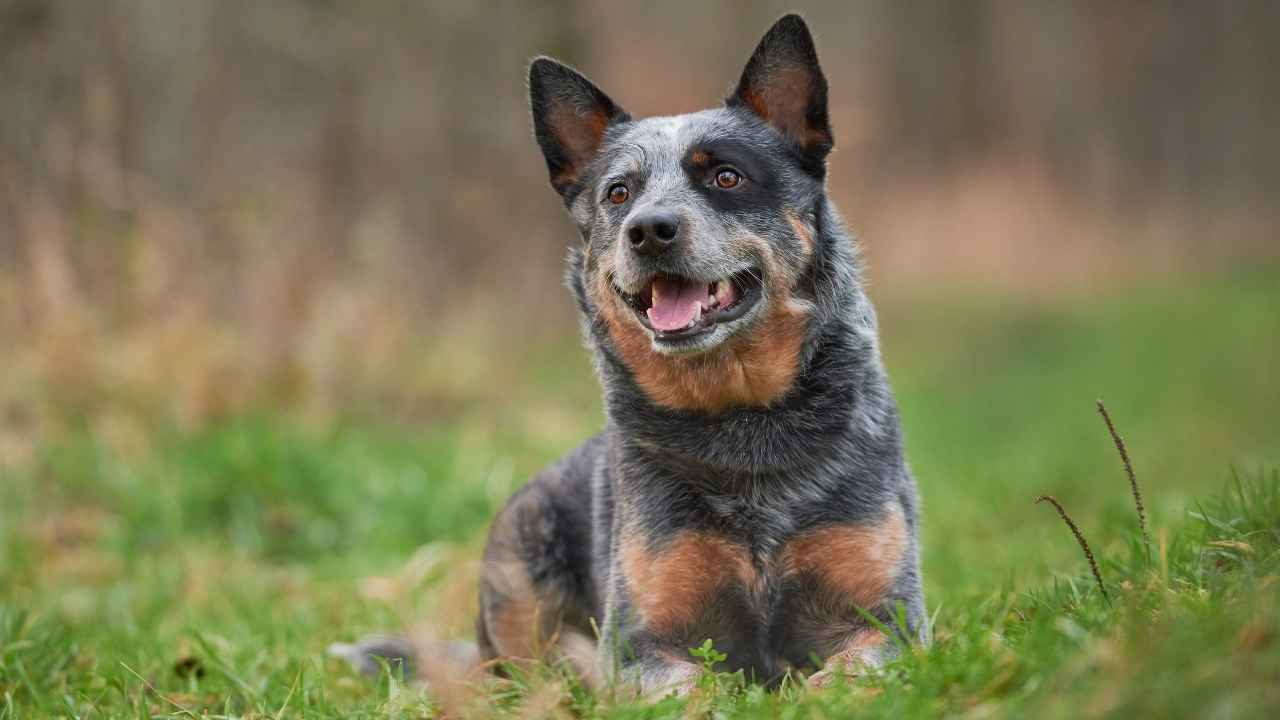
The Australian Cattle Dog plays in a different weight class. This compact but muscular breed stands 17 to 20 inches tall and weighs 35 to 50 pounds, built longer than tall with a deep chest and powerful hindquarters.
Where the Vallhund’s low profile helped it dodge cattle kicks, the Cattle Dog’s taller, denser build gave it the stamina to cover open property for a full working day. Both breeds pack surprising muscle into their frames, but only one of them can look you in the eye without you bending down.
Pricing & Availability
What does it actually cost to bring one of these herding dogs home? Expect a real range, since price depends on health testing, lineage, and how far you travel to find a breeder.
Australian Cattle Dog: Typically $500 to $1,500 from a reputable breeder, with the standard champion bloodlines and full health testing pushing costs toward the top of that range.
Swedish Vallhund: Typically $1,200 to $2,500, reflecting how rare the breed still is outside Sweden and how small most litters are.
Availability: Cattle Dogs are widely bred across Australia and the United States, while Vallhund buyers often join a waiting list months ahead.
Ongoing costs: Both breeds need routine veterinary care, quality food, and pet insurance, which runs higher for the Vallhund given its breed-specific eye condition.
Temperament & Personality Style
The ACD does not do idle chit-chat. This intensely loyal, protective dog has an independent streak a mile wide, quick to bond with family members and slow to trust strangers or other dogs it does not know.
That intelligence cuts both ways. A bored Cattle Dog invents its own entertainment, usually at your furniture’s expense, and it tends to treat children and other pets the way it treats cattle, by herding them.
The Swedish Vallhund brings a lighter, more playful energy to the same intelligence. Standards describe it as watchful, energetic, fearless, alert, and eager to please, and it is generally friendlier with strangers and other dogs than the Cattle Dog. Vallhunds are also famously vocal, chatting and barking their way through the day, a trait owners either love or find exhausting.
Exercise Needs & Energy Levels
Sixty to ninety minutes of real exercise a day is the minimum a Swedish Vallhund needs to stay out of trouble, and that means active play or training, not a stroll. Skip it, and this small dog channels its energy level into barking, digging, or redesigning your yard.
The Australian Cattle Dog raises that bar considerably. Owners should plan on at least two hours of exercise daily, split across running, hiking, or structured activities that work both body and brain.
Neither breed tolerates long periods of inactivity well, since both active dogs were bred to work, not wait. An under-exercised dog from either breed tends to write its own job description, and you probably will not enjoy the results.
Trainability & Obedience
Can a dog be brilliant and stubborn at the same time? The Australian Cattle Dog answers that daily. It is highly intelligent and learns quickly, yet its independent streak means it often decides which commands are actually worth following.
Consistency and an experienced hand go a long way here, since this breed thrives on structured obedience and agility training rather than repetitive drilling.
The Swedish Vallhund is generally the easier student. It is eager to please and picks up cues fast, making it a popular choice for agility training, herding trials, and everyday obedience work.
That eagerness does not erase every challenge, since Vallhunds carry a real prey drive and will bark at every passing threat, so early socialization matters just as much here as it does for the Cattle Dog.
Grooming Needs & Shedding
Twice a year. That is how often an Australian Cattle Dog blows its dense double coat, with light, steady shedding filling the gaps between.
Australian Cattle Dog: Brush about twice a week according to Orvis, bathe roughly once a month, and expect coat colors in blue speckle or red speckle, sometimes with tan markings.
Swedish Vallhund: Brush two to three times a week to manage its dense double coat, with colors ranging from gray to darker red markings and a distinctive harness pattern across the back.
Shedding season: Both breeds shed more heavily during coat changes, so a deshedding tool earns its keep with either dog.
Bathing: Neither breed needs frequent baths, since both coats are naturally weather-resistant and shrug off everyday dirt.
Herding & Work Drive
The Swedish Vallhund was built to work close and low. Its short legs let it duck under a kicking cow while nipping at heels, herding cattle and sheep across small Scandinavian farms rather than the vast distances its Australian counterpart covers.
It still carries strong herding instincts today, channeling that drive into agility, obedience, or the occasional attempt to herd family members around the living room.
The Australian Cattle Dog was engineered for a bigger job entirely. Bred to herd cattle across harsh, sprawling properties with minimal guidance, it developed the independence to make decisions on its own, a trait that shows up as stubbornness at home. Give either breed livestock, a flock of sheep, or a serious sport like agility, and that ancient work drive comes roaring back to life.
Health & Lifespan
How long can you expect either herder to stick around? Both breeds share a similar life expectancy, generally 12 to 15 years, which is solid longevity for active, medium-energy dogs.
Australian Cattle Dog: Prone to hip dysplasia, deafness, and progressive retinal atrophy, so responsible breeders screen hearing and hips before placing puppies.
Swedish Vallhund: Prone to hip dysplasia, cataracts, and a breed-specific form of progressive retinal atrophy, according to PetMD, which recommends DNA testing for the mutation.
Shared risks: Both breeds benefit from lean body weight, since extra pounds accelerate joint problems in dogs built for constant motion.
Insurance: Pet insurance is worth budgeting for either breed, given the long-term cost of hip or eye treatment.
Australian Cattle Dog vs. Swedish Vallhund: Which Herding Dog Fits Your Lifestyle?
Neither of these breeds is a decoration. Match your daily routine honestly to one of these profiles before committing to either dog.
The working landowner: Acreage, livestock, or a serious appetite for daily hiking and dog sports makes the Australian Cattle Dog’s stamina and independence a natural fit.
The active small space family: A fenced yard, tolerance for cold climates, and kids old enough for a playful, vocal companion point toward the Swedish Vallhund, especially for families who enjoy training together.
The frequent traveler in a city apartment: Long work hours, little outdoor space, and limited time for exercise mean neither breed belongs here, since both develop anxiety, barking, and destructive habits when left alone too long.
The first-time owner craving a mellow lap dog: Both breeds are intelligent, energetic, and demanding in their own ways, so anyone hoping for a calm, low-maintenance companion should look toward gentler breeds instead.

Conclusion
Every trait in this comparison points back to the same truth: these are working dogs first, and pets second. A herding brain left without a job does not relax; it improvises, usually in ways you will not enjoy.
Before you commit, spend a day with a local herding or agility club and watch one of these breeds work in person. Then talk to a breed-specific rescue about a meet and greet, so you know exactly what you are bringing home.
