




Wild boar pursuit is not a job for just any dog. It demands a combination of courage, stamina, speed, sharp instincts, and the confidence to work in challenging terrain.
Dogs used for this kind of work need to stay focused while tracking strong, unpredictable prey, often through dense brush, rough ground, and difficult conditions. That is what makes the dogs bred for the task so impressive.
If you are curious about which dogs have the right combination of grit, athleticism, and hunting instinct for the job, you are in the right place.
In this article, we’ll explore top dog breeds known for their ability to track, pursue, and work around wild boar, along with the traits that make each one suited to this demanding type of hunting.
Key Takeaways
Meet the Dogo Argentino and other fearless dogs built for wild boar pursuit.
See why the Catahoula Leopard Dog stands out in tough and physically demanding terrain.
Discover what makes the Blue Lacy, Plott Hound, and others such determined and seasoned hunters.
Explore the stamina, tracking instincts, training, and drive these working dogs need to enhance your hunting experience.
Proven Dog Breeds That Excel at Wild Boar Pursuit
1. Dogo Argentino
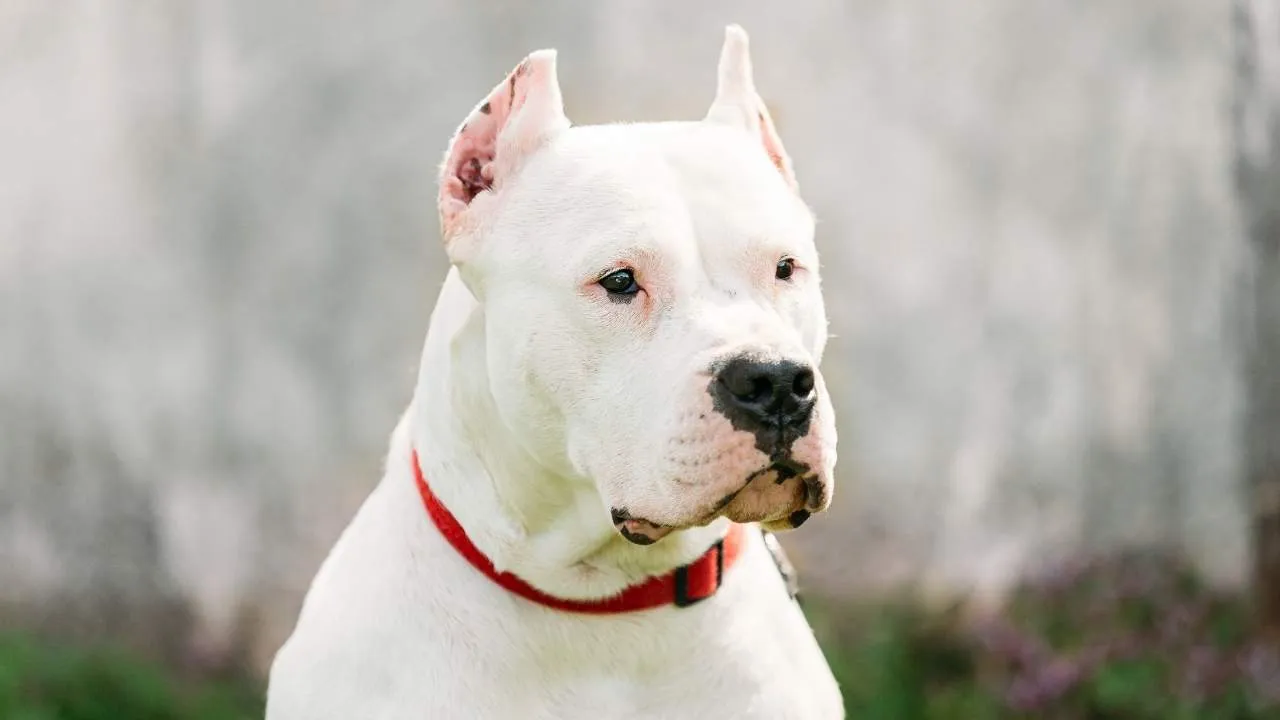
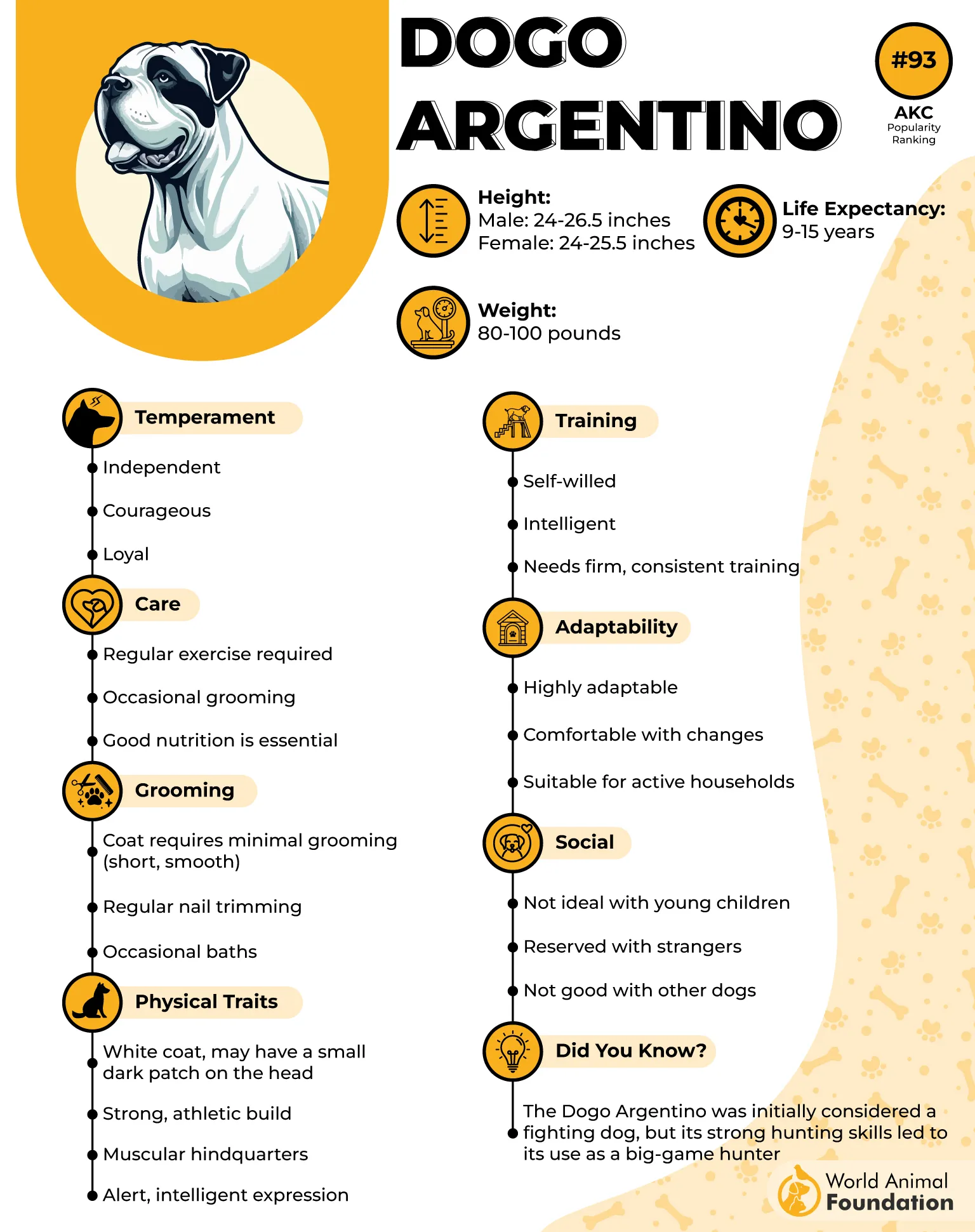
The Dogo Argentino was developed in Argentina as a powerful partner for big-game hunting. Dr. Antonio Nores Martinez created the breed by crossing several large, hardworking dogs. His goal was to develop a courageous and capable hunting companion.
Dogos were later used in packs to pursue wild boar, pumas, and other large prey in the Argentine wilderness, as noted by Britannica.
Why They Excel at Wild Boar Pursuit
Strong, athletic, and energetic, the Dogo Argentino has many qualities needed for demanding wild hog hunts. The breed is known for its courage, tenacity, intelligence, and strong sense of smell.
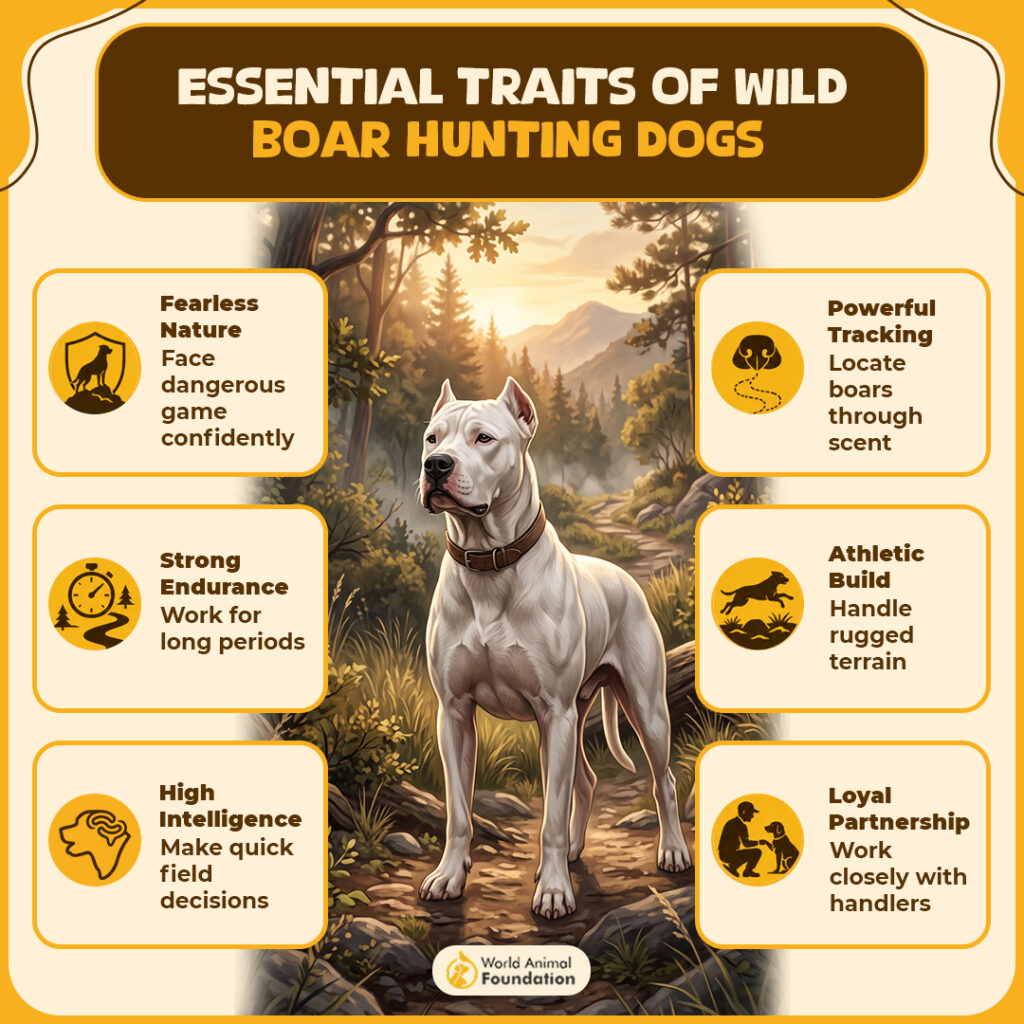
Its high prey drive also gives it a natural instinct for the chase. Dogos can work independently, but this trait means they need an experienced handler who can provide consistent training and clear direction.
Training and Daily Needs
Dogo Argentinos need plenty of physical activity and mental stimulation. Regular running, long walks, fetch, agility, and obedience work can help keep them engaged.
Early training and socialization are also important because of their strength, energy, and prey drive. Their short white coats are easy to maintain, although regular brushing helps manage shedding.
2. Catahoula Leopard Dog
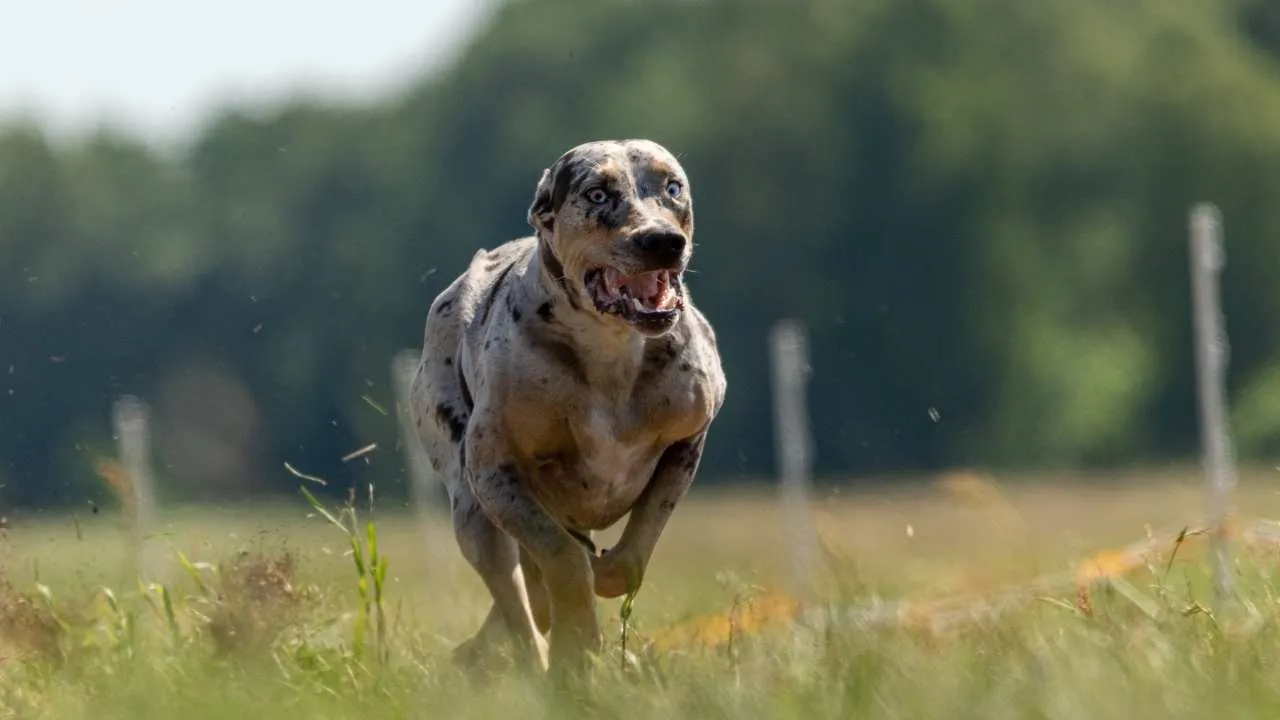
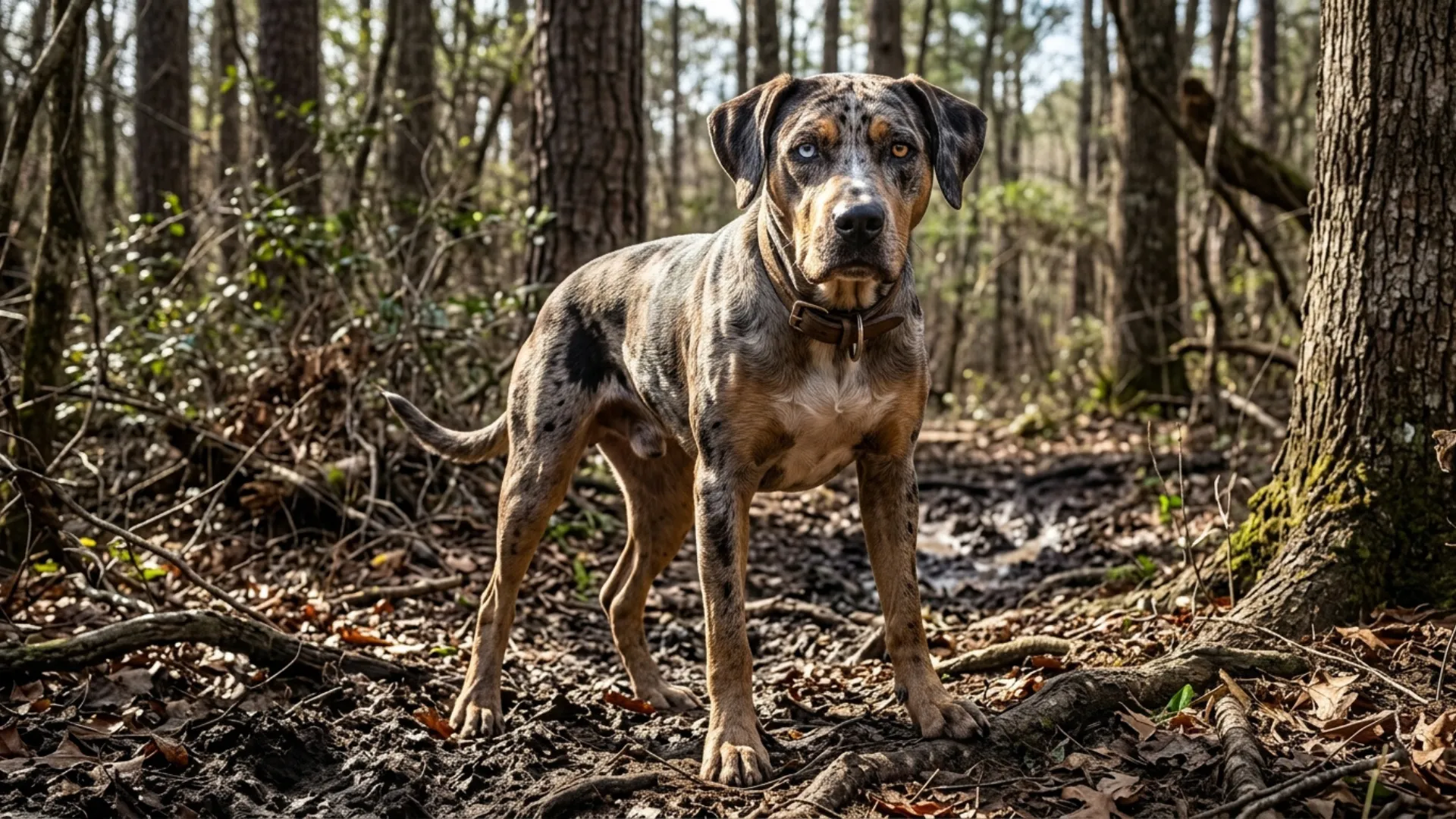
The Catahoula Leopard Dog has a strong history as a working and hunting dog. Also called the Catahoula Hog Dog or Catahoula Cur, the breed originated in Louisiana. These dogs were bred to track and drive wild hogs and cattle through the swamps and forests of the South.
Their ability to work in tough conditions helped shape the independent and hardworking nature they still have today.
Why They Excel at Wild Boar Pursuit
Catahoulas have the energy, stamina, and instincts needed for demanding wild boar pursuits. Their broad noses and strong sense of smell help them track game, while their athletic build allows them to move through challenging outdoor terrain.
They are also intelligent and highly focused when they have a job to do. Their independent nature can be useful in the field, but it also means they need confident and consistent handling.
Training and Exercise Needs
These energetic dogs need plenty of daily activity and mental stimulation. Running, hiking, swimming, fetch, agility, and other working activities can help keep them engaged.
Early training and socialization are important because Catahoulas can be wary of unfamiliar people and animals. Their short, smooth coats are also easy to maintain, usually needing only regular brushing.
3. Plott Hound
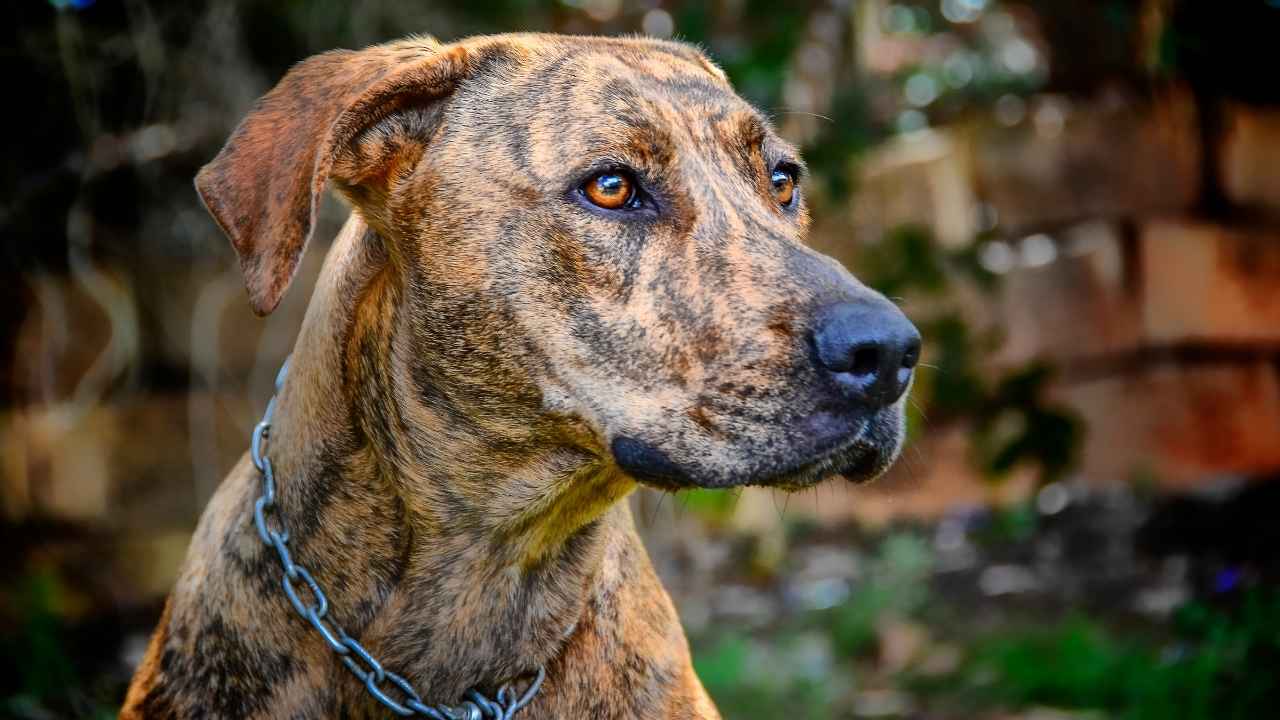
The Plott Hound has deep roots in big-game hunting. In the mid-1700s, German gamekeeper Johannes Plott brought Hanoverian hunting dogs to North Carolina, according to the American Kennel Club. His family later bred these dogs with local hunting dogs, creating the Plott Hound.
The breed was used to hunt wild boar and bears and became known for its strong scenting ability and fearless hunting nature.
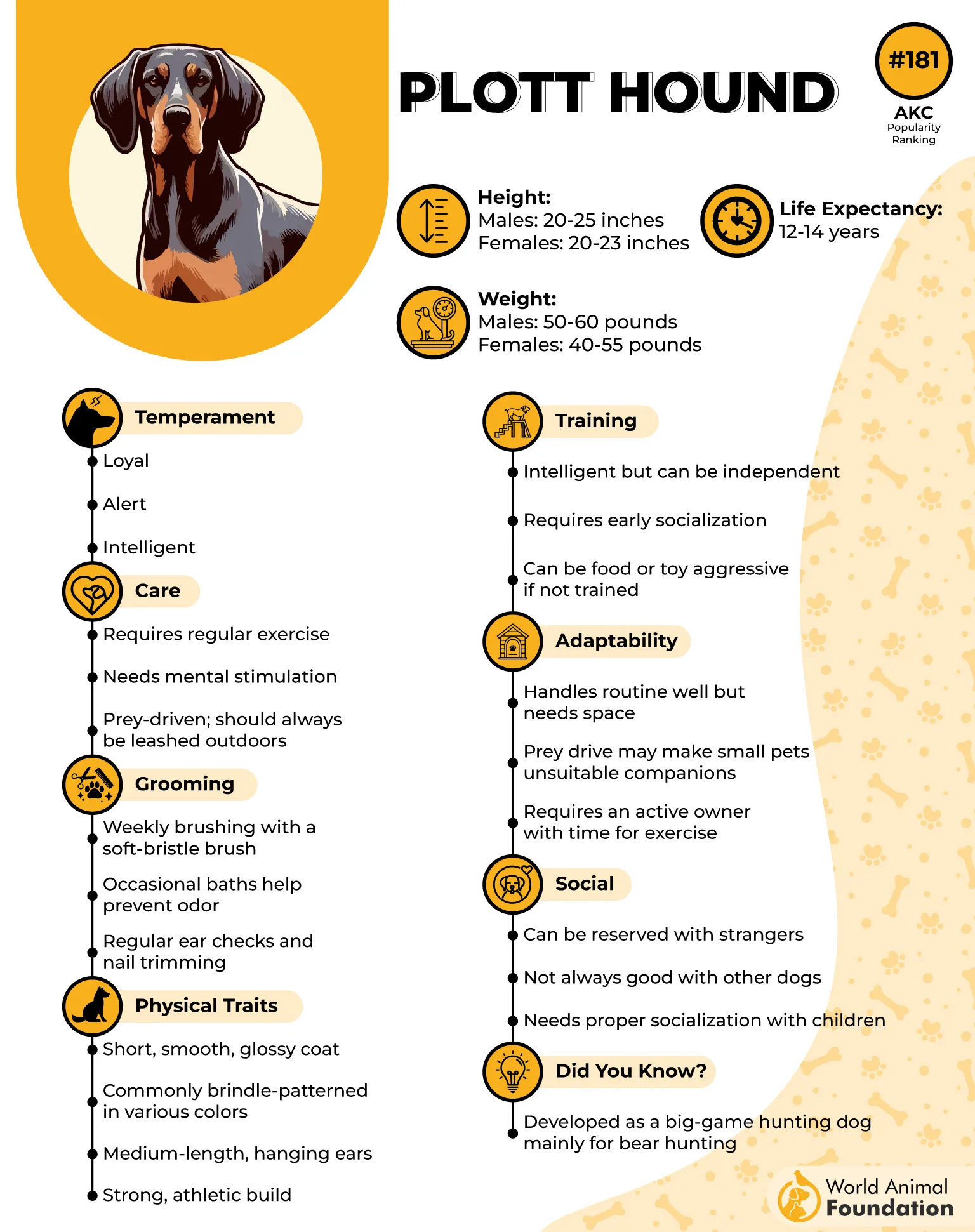
Why They Excel at Wild Boar Pursuit
Plott Hounds combine a powerful nose with impressive stamina, speed, and determination. Their scent-hound background helps them follow challenging trails, while their muscular build and long legs support demanding pursuits.
They are also bold, alert, and dedicated when working, making them well-suited to tracking big game through difficult terrain.
Training and Exercise Needs
These energetic hounds need plenty of daily exercise and mental stimulation. Long walks, running, tracking, agility, and other active pursuits can help keep them focused and satisfied.
Their strong prey drive means they should be kept on a leash or in a securely fenced area outdoors. Early training and socialization are important, as Plott Hounds can be somewhat stubborn and wary of strangers.
Positive reinforcement and varied training sessions can help keep their intelligent minds engaged.
4. Black Mouth Cur
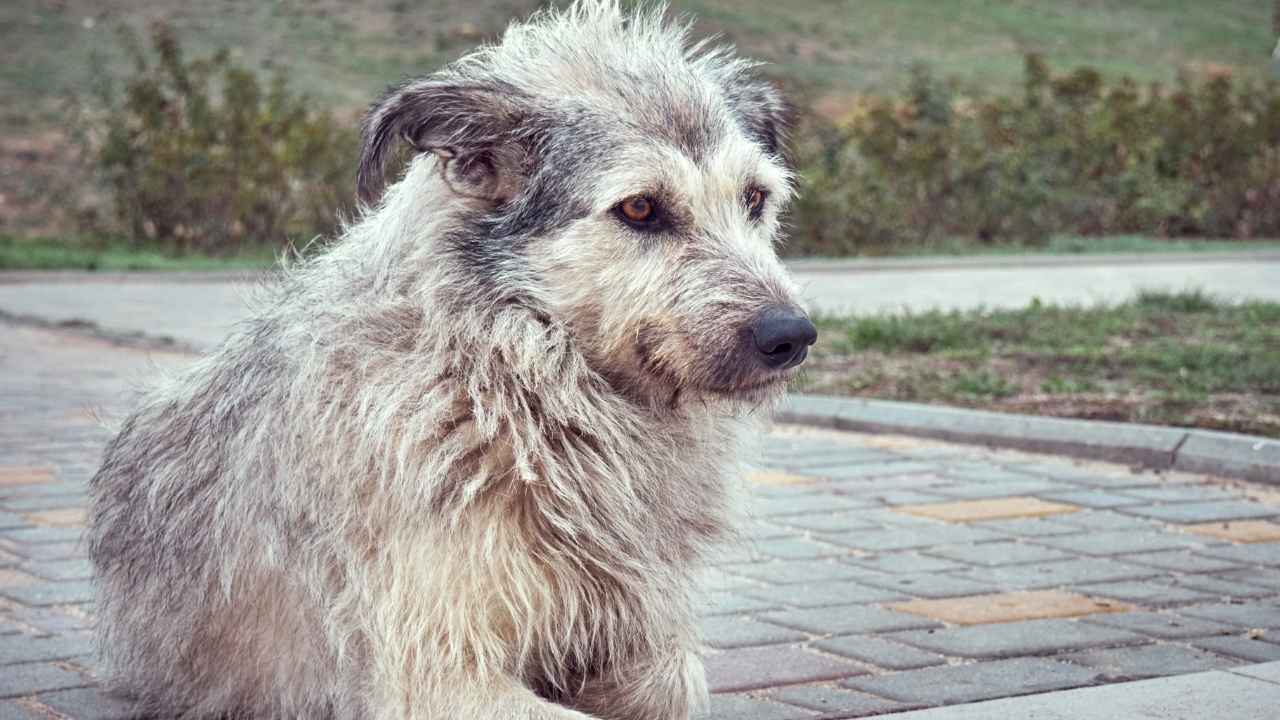
The Black Mouth Cur is a versatile working dog developed in the southern United States. Early settlers relied on these dogs for hunting game, herding livestock, protecting property, and helping around the ranch.
Their strong work ethic, energy, and courage made them valuable all-purpose working companions.
Why They Excel at Wild Boar Pursuit
Black Mouth Curs have the combination of stamina, tenacity, and prey drive needed for demanding hunts. Their well-developed noses support scent work, while their muscular, athletic bodies help them handle active outdoor tasks.
They are also intelligent, driven, and highly focused when given a job, making them capable hunting partners for outdoor enthusiasts.
Training and Exercise Needs
These energetic dogs need plenty of physical activity and mental stimulation to stay content. Running, hiking, swimming, agility, obedience, and nose work can give them useful outlets. They respond well to positive reinforcement and enjoy training when it provides a clear purpose.
Early socialization is important because their protective and territorial instincts can affect how they respond to unfamiliar people or animals.
5. Mountain Cur
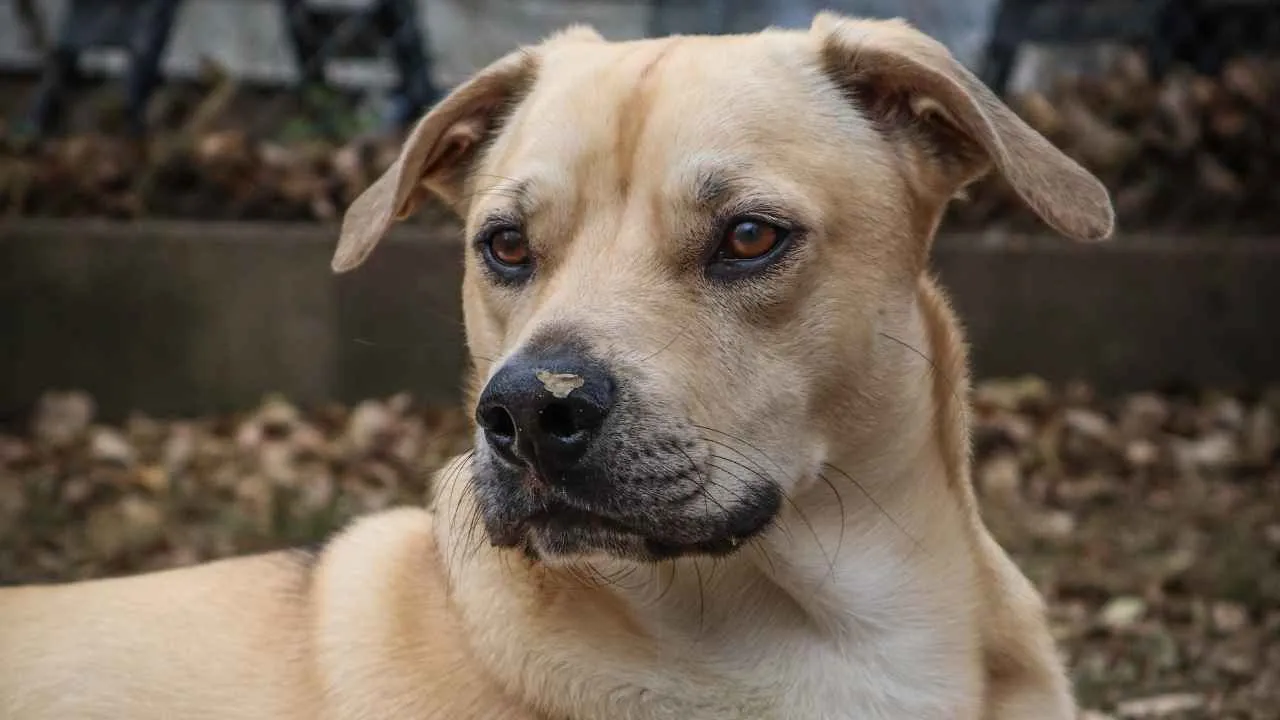
The Mountain Cur was developed in the United States as a hardworking companion for pioneers. These dogs helped families hunt game, protect homesteads, and handle tasks around the farm.
They were used to pursue everything from small game to larger prey, including wild boar, and their ability to work in rugged mountain terrain helped shape the breed’s tough and dependable nature
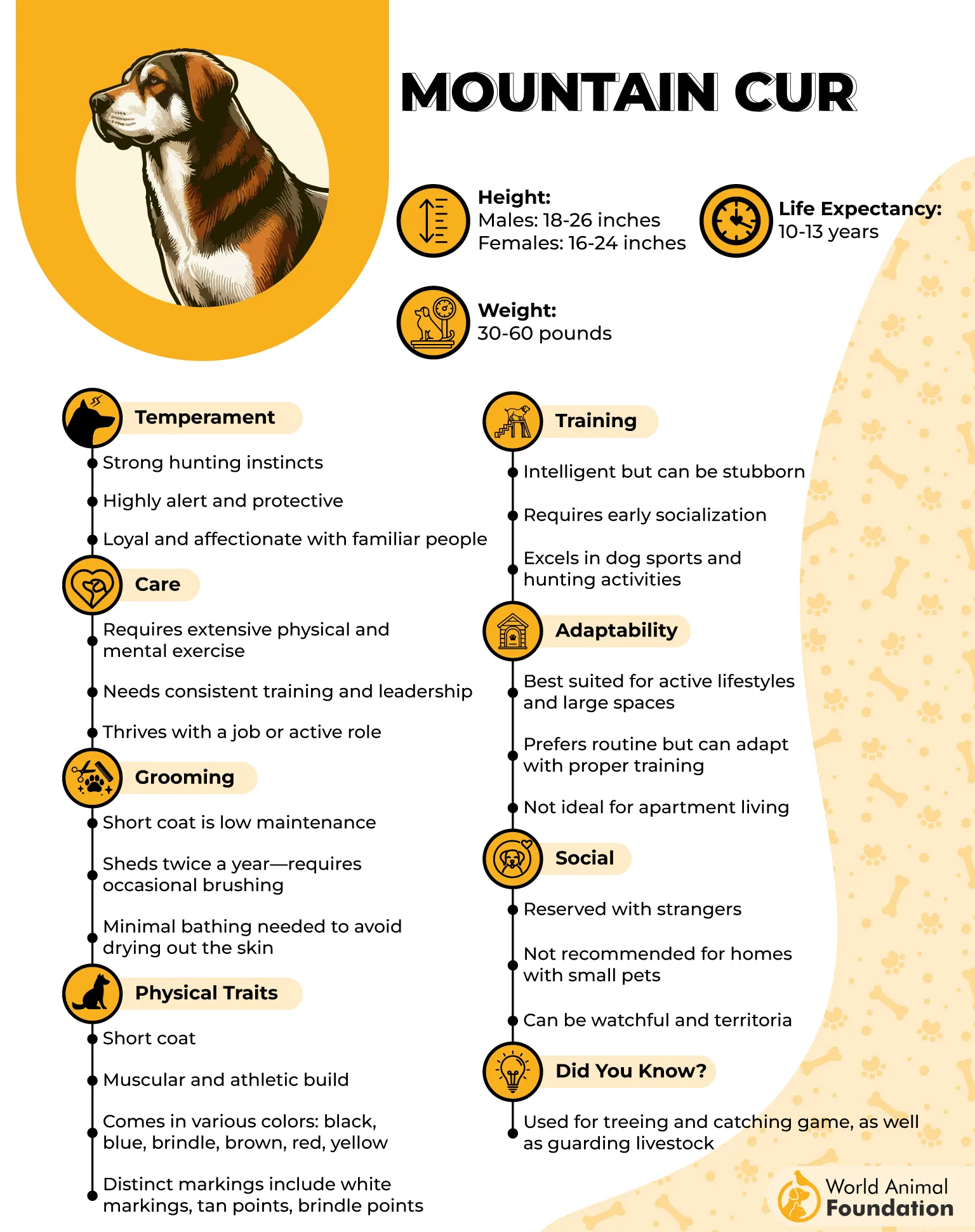
Why They Excel at Wild Boar Pursuit
Mountain Curs have the intelligence, courage, stamina, and tenacity needed for demanding hunts.
Their strong hunting instincts and high prey drive make them determined when following game, while their athletic build helps them handle challenging outdoor terrain.
They also thrive when given a clear job, making their natural working drive especially useful during active pursuits.
Training and Exercise Needs
These energetic dogs need vigorous daily exercise and plenty of mental stimulation. Hiking, running, swimming, hunting, and active outdoor tasks can help keep them physically and mentally satisfied.
Mountain Curs are intelligent and capable of learning many tasks, although they can sometimes be stubborn. Consistent training and early socialization help channel their energy and hunting instincts in the right direction.
6. Bavarian Mountain Scent Hound
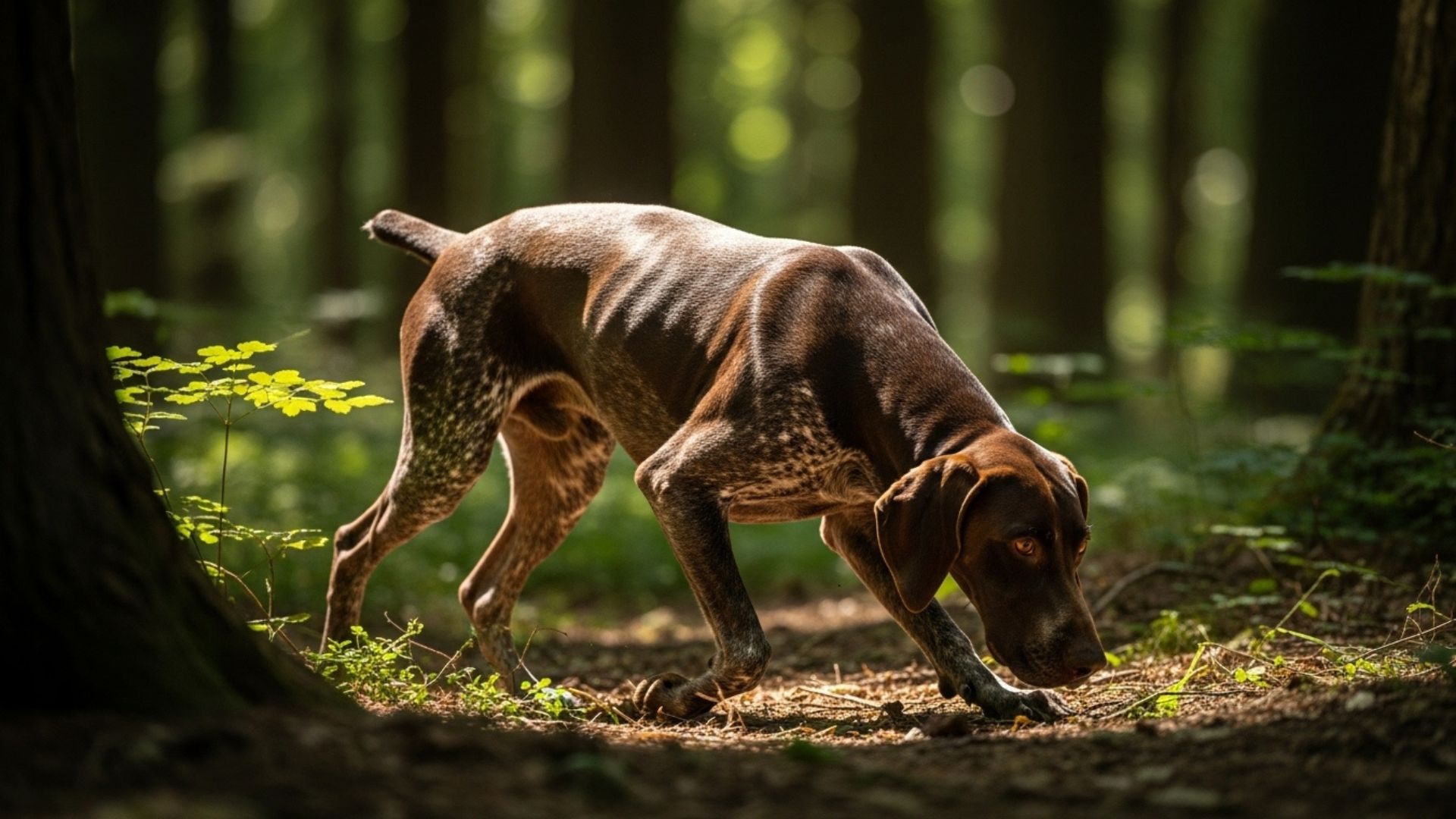
The Bavarian Mountain Scent Hound originated in Germany and was developed as a skilled scent hound for tracking injured game. Hunters valued its ability to follow trails across hilly and difficult terrain.
Its lighter build also helped it move efficiently through challenging landscapes while staying focused on the scent.
Why They Excel at Wild Boar Pursuit
The Bavarian Mountain Scent Hound stands out for its exceptional “cold nose” tracking ability. Its highly sensitive nose can distinguish the scent of injured game from other animals of the same species.
This strong tracking instinct, combined with courage, agility, and stamina, allows the breed to follow demanding trails with impressive persistence.
Training and Exercise Needs
This is an active working breed that needs plenty of daily exercise and mental stimulation. Scent training, running, agility, and other purposeful activities can help satisfy its strong hunting instincts.
Training should use patience, consistency, and positive reinforcement. Recall can be challenging because these dogs may follow an interesting scent for miles, so secure outdoor spaces and careful off-leash management are important.
7. Blue Lacy
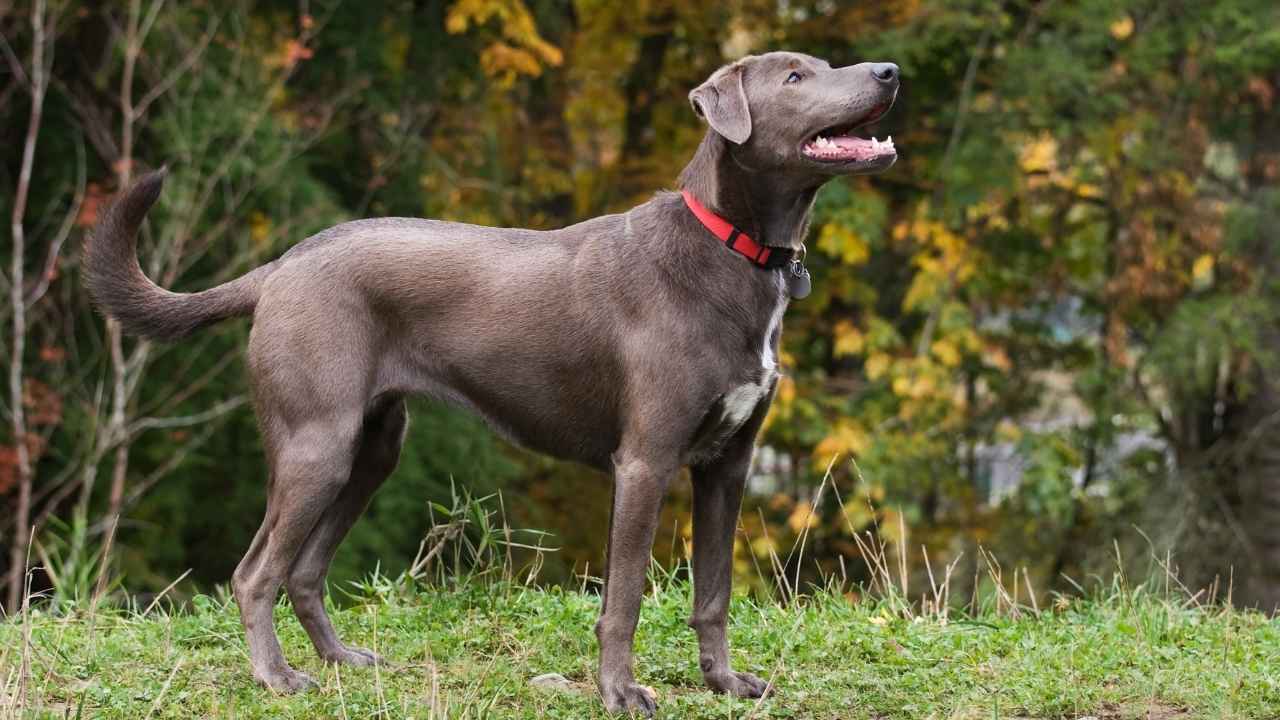
The Blue Lacy was developed in Texas during the mid-1800s as a hardworking ranch dog, as PetMD notes. The Lacy brothers bred dogs to help herd cattle and hogs, and the breed later became valued for hunting, tracking, and locating game.
Its strong working instincts and versatility made it a favorite among ranchers, hunters, cowboys, and trappers.
Why They Excel at Wild Boar Pursuit
The Blue Lacy was originally developed to work with feral hogs, giving it a natural connection to wild boar pursuit.
It is fast, strong, highly focused, and driven to work. Its hunting and tracking skills, high prey drive, and impressive endurance allow it to stay active and engaged during demanding pursuits.
Training and Exercise Needs
Blue Lacys need extensive daily physical and mental activity to stay focused. Running, hiking, scent work, tracking, agility, hunting, and herding can give them useful outlets for their energy.
They are intelligent and generally easy to train, but respond best to calm, consistent, positive reinforcement. Early socialization is also important because their territorial nature and strong prey drive can affect how they interact with other animals.
Conclusion
The above-mentioned breeds each bring something different to wild boar pursuit. Some stand out for their courage and strength, while others rely more on scent, stamina, speed, or determination.
What they all share is a strong working drive and the ability to handle demanding outdoor conditions. Choosing a dog for this kind of work should go beyond hunting ability. These breeds need proper training, plenty of exercise, experienced handling, and a clear purpose.
If you are considering one, take time to understand its instincts and needs first. The right match can turn a talented hunting dog into a reliable partner in the field.
