




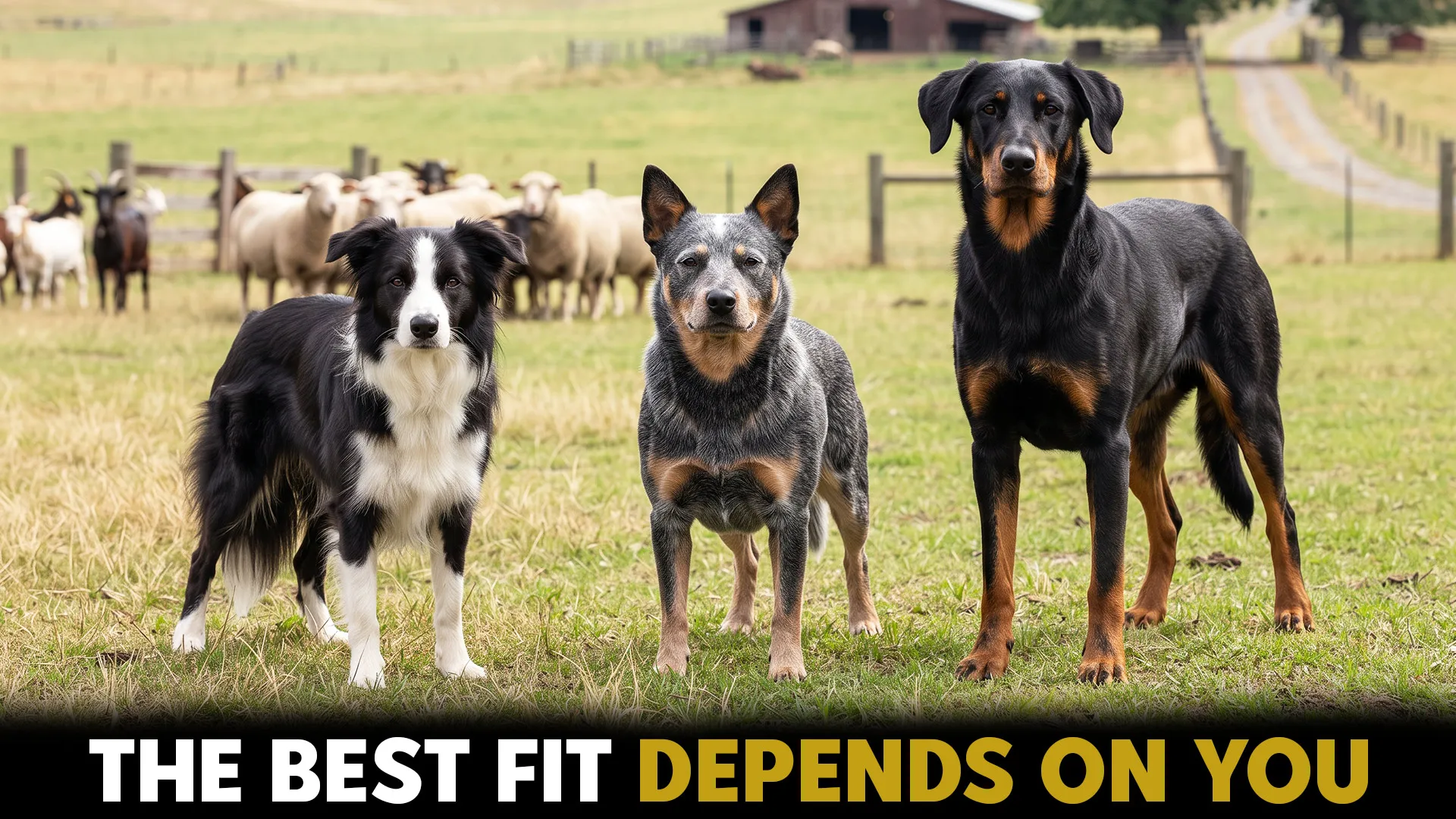
The right herding dog can turn a walk into a training session, a weekend hike into a favorite routine, and a simple game into mental work.
These dogs were selected for tasks that required them to notice movement, respond to human direction, and keep working for long periods. Those qualities remain visible in companion dogs. They may learn quickly, notice changes around the home, and become intensely focused on activities that give their instincts a purpose.
The challenge comes when daily life has little room for that energy. Boredom can lead to unwanted chasing, barking, digging, or other behaviors that leave owners wondering what went wrong. Every herding breed brings its own balance of energy, sensitivity, independence, coat care, and training needs.
Finding the right farm animal means looking beyond appearance and considering your routine. Here are seven herding dogs worth knowing, with practical details you need before choosing one.
Key Takeaways
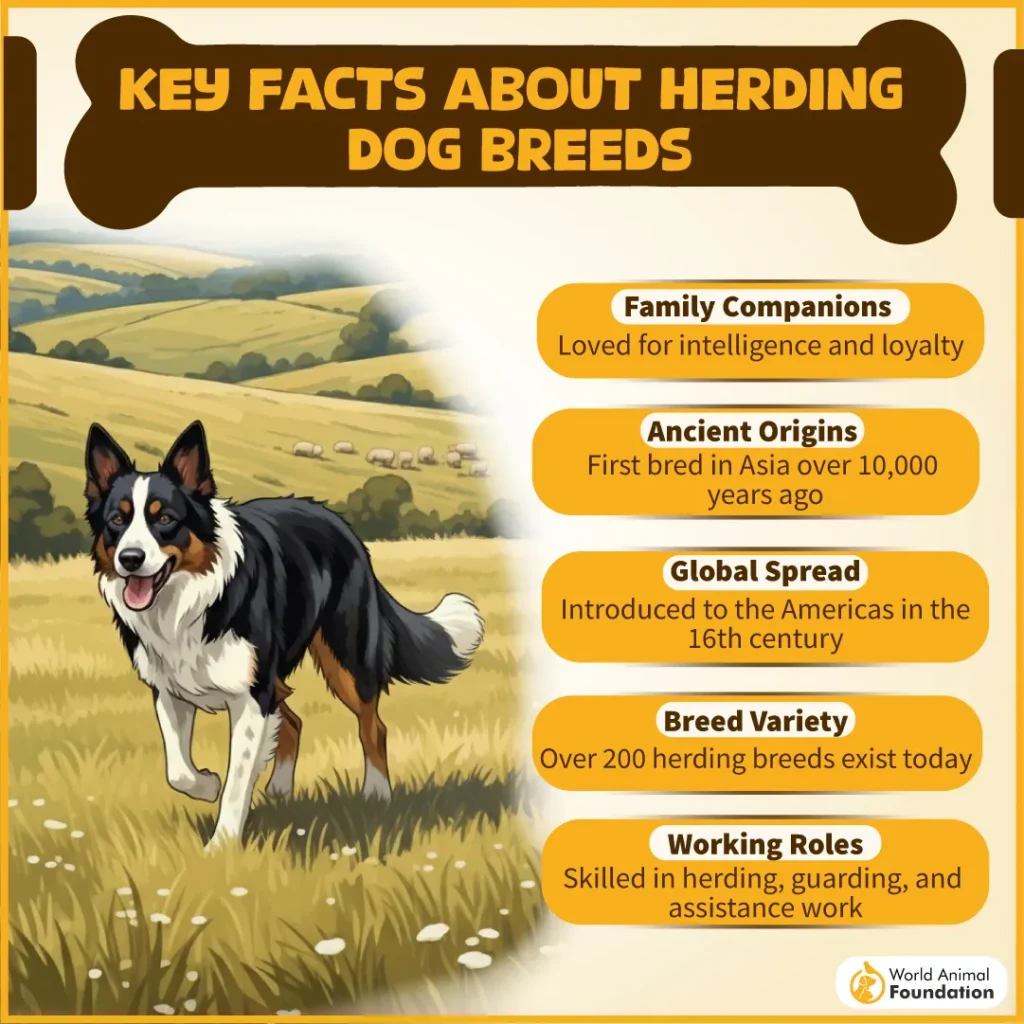
Herding dogs have a habit of noticing every movement around them, and that instinct can follow them right into the family home.
Border Collies are known for controlling sheep with their intense “eye,” while Australian Cattle Dogs use a quick dart toward the heels to keep cattle moving.
Australian Shepherds add sharp turns, fast responses, and plenty of energy to the mix, showing just how different herding styles can be.
The remaining breeds bring their own working quirks, especially when that natural drive has nowhere to go.
Best Dog Breeds for Herding: Which One Fits Your Lifestyle?
1. Border Collie
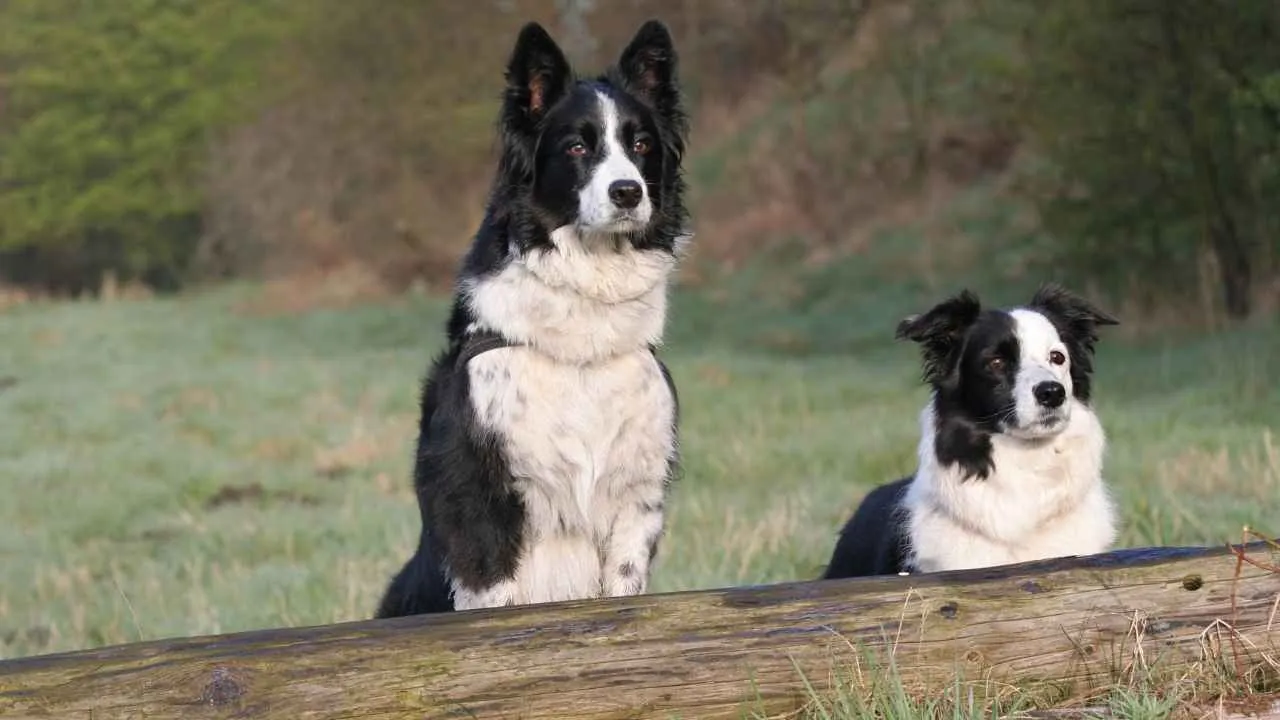
Border Collie was shaped around the Scottish-English border and was standardized by 1906 according to working ability rather than appearance or physical traits. The name Border Collie came into use in 1915, after the breed had simply been classified as a sheepdog, as stated by Omlet.
The Working Eye
This popular herding dog breed can control sheep through a low, intense stare called the “eye,” often using visual pressure with little barking or physical contact.
Its wide-gathering pattern draws scattered livestock back toward the handler, while quick directional changes help block escape routes across uneven ground.
A closer look at its herding technique reveals:
Crouched approach without biting
Opposite-side flock positioning
Precise visual tracking
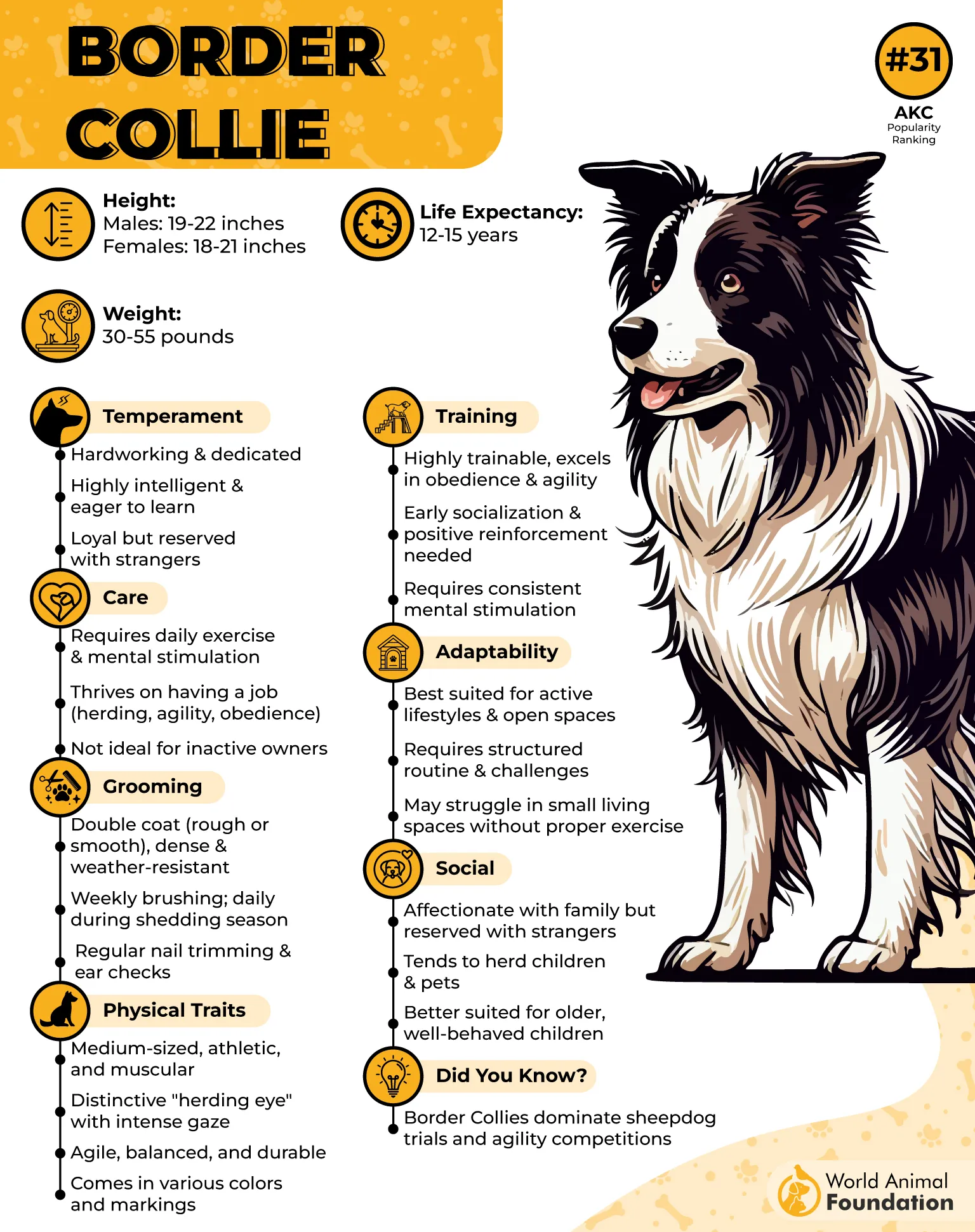
Herding at Home
A Border Collie may try to direct children or smaller pets using the same instincts it uses with livestock, including circling, staring, or controlling their movement. Irritation can also make some individuals snippy toward children, while too little activity may lead to destructive behavior.
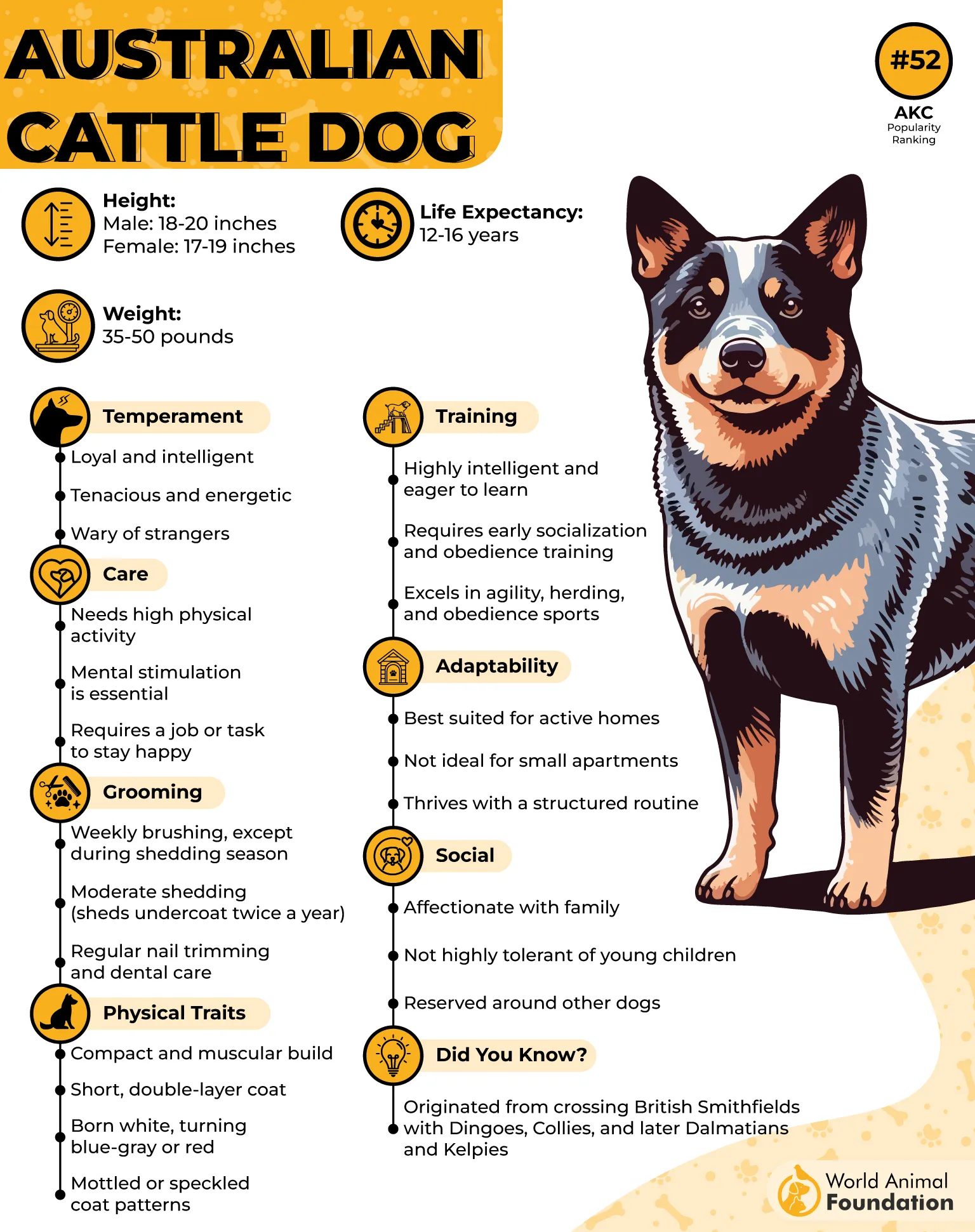
2. Australian Cattle Dog
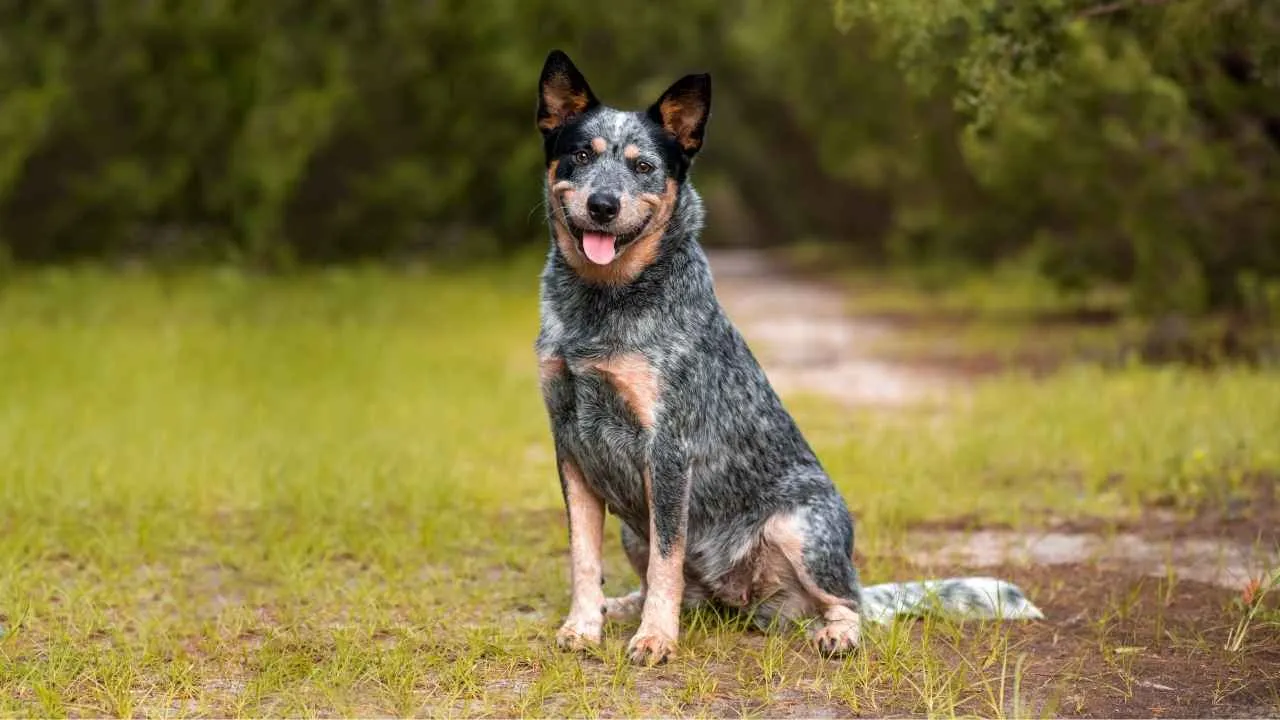
Australian Cattle Dog developed in Australia during the early 1800s, when expanding cattle grazing areas called for dogs that could cover long distances.
In 1840, Hall crossed Blue Merle Highland Collies with tame Dingoes, producing the dogs first called Hall’s Heelers for this demanding work.
A Precise Herding Style
ACD works cattle through controlled pressure, using an intense eye, low crouch, body positioning, and quick heel-nips to guide animals.
Its famous heeling technique involves darting toward the heels before pivoting away quickly to avoid a kick, making precise timing part of the job, as noted by Britannica.
That quick mind needs plenty of mental outlets:
Learns commands quickly and solves problems independently
Training can include problem-solving challenges
Flyball and agility provide focused mental stimulation
Always Watching
Australian Cattle Dog naturally scans fences, doors, and yard boundaries, sometimes circling the property as part of its stock-management instincts. It can also fixate on bikes, balls, or running children, while early socialization helps curb nipping and chasing around children and other animals.
3. Australian Shepherd
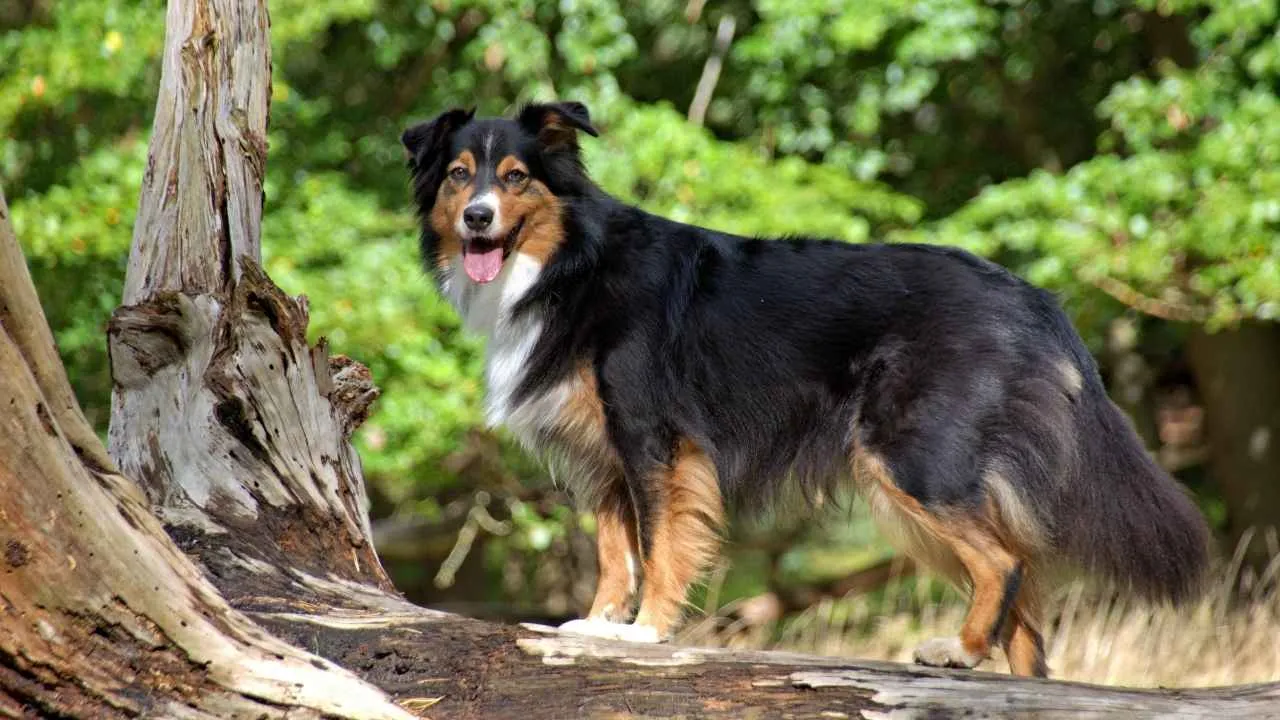
Australian Shepherd began with herding dogs linked to the Basque people of Spain, with the breed’s development later continuing in North America. Ranchers valued these dogs across the American West, where their tolerance for Rocky Mountain altitude and climate suited demanding stock work.
A Natural Stockdog
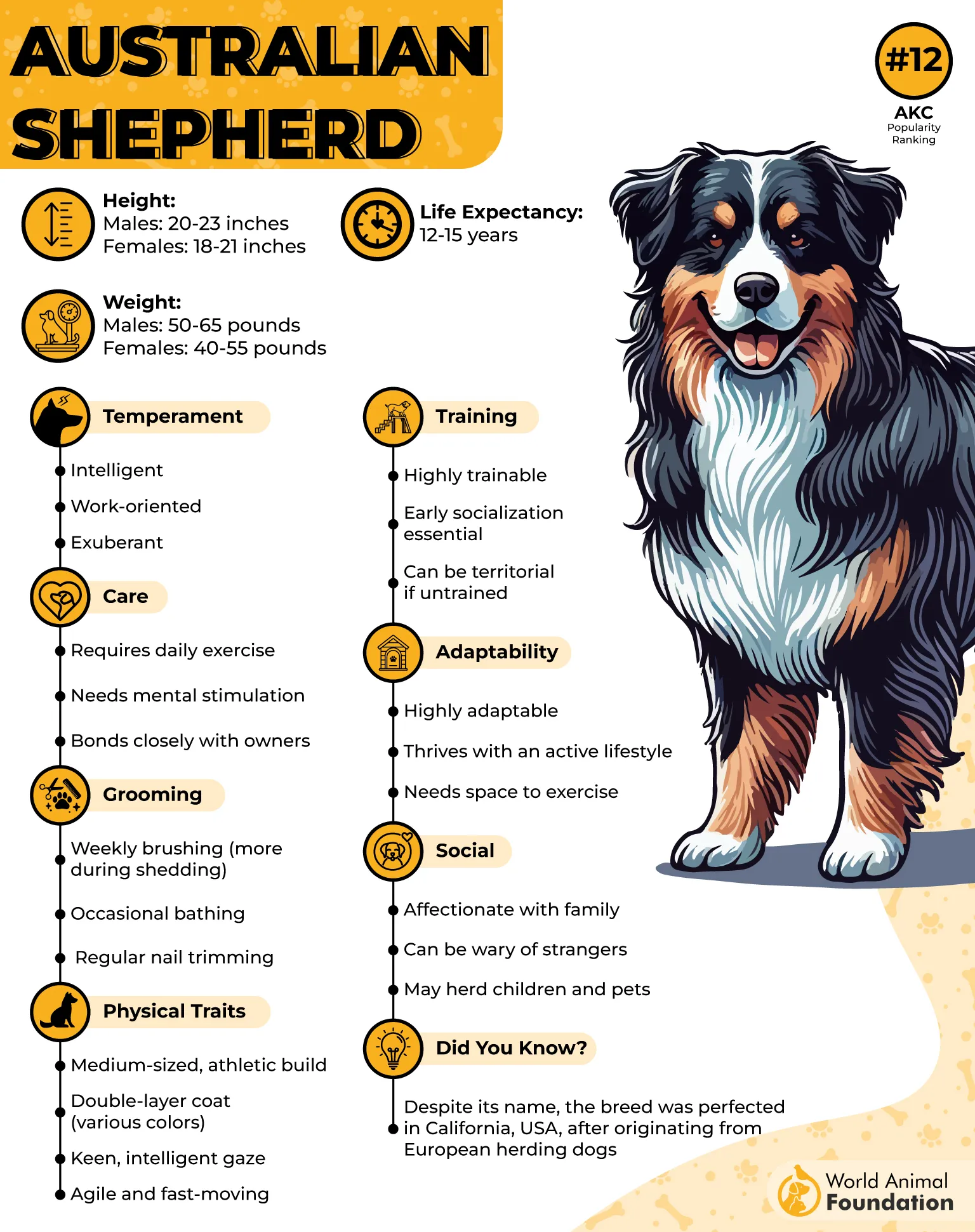
Australian Shepherd has a strong herding instinct for tracking motion and controlling where animals go, using circling and “checking” behavior to keep a group together. That same instinct can appear at home when an Aussie tries to organize children, cats, or other pets.
A few working details are easy to miss:
Heel-nipping can appear when under-stimulated
Quick lateral cuts aid livestock handling
Crouch-and-burst movement is common in play
Quick on the Cue
This farm dog responds rapidly to signals and often picks up new behaviors and basic manners during training sessions with impressive speed, as Orvis mentioned. Its athletic build and efficient gait also support long periods of trotting, sprinting, and sharp turns across uneven ranch ground.
4. Belgian Malinois
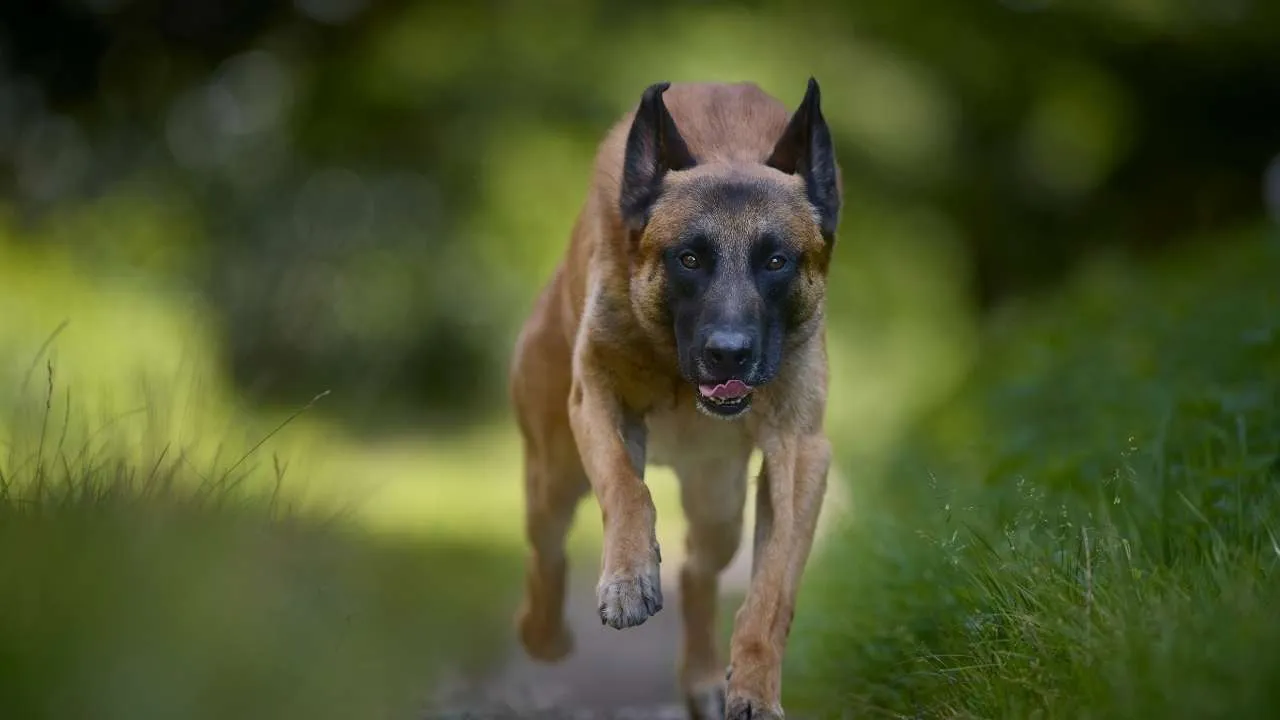
Belgian Malinois was originally bred as a herding dog in Belgium, with serious breeding efforts taking shape in the late 1800s. Its early work centered on guarding and guiding sheep and livestock, while the 1950s brought wider recognition for its abilities in military and police service.
Herding Precision
This working dog uses a remarkably focused style of livestock control, with circling, gathering, and body-blocking helping direct animals where needed. In a home, that instinct can appear as heel-nipping or attempts to control the movement of younger children.
A closer look at its working style reveals:
Stays focused on a handler, toy, or task
Keeps trying when a problem becomes difficult
Shows strong persistence when solving challenges
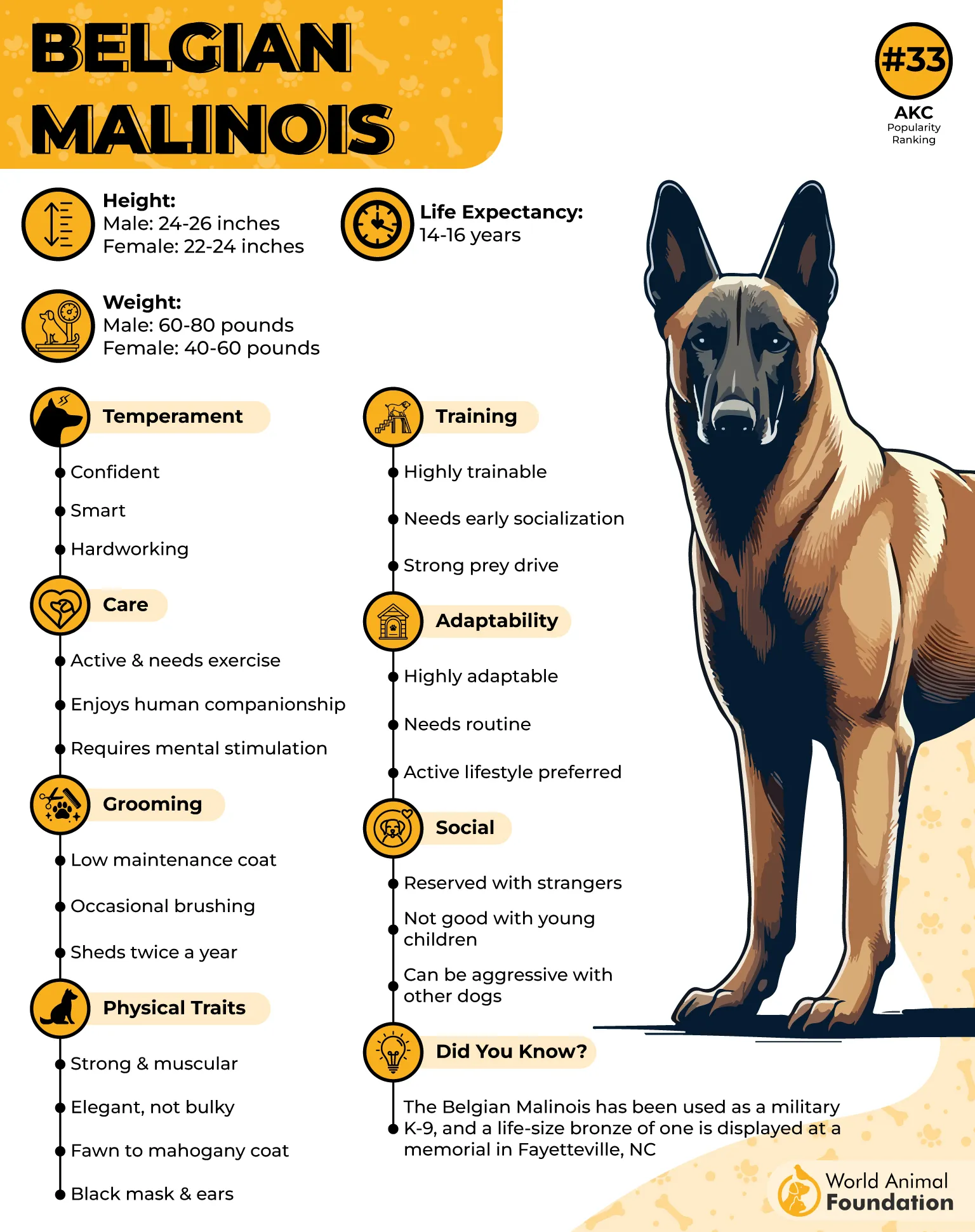
Intense at Home
Belgian Malinois notices changes in movement and sound quickly, so careful socialization and impulse-control training matter in busy households. Its strong chase-and-grab drive can also make tugging and retrieving useful training rewards, while close shadowing keeps it attentive to its handler.
5. Shetland Sheepdog
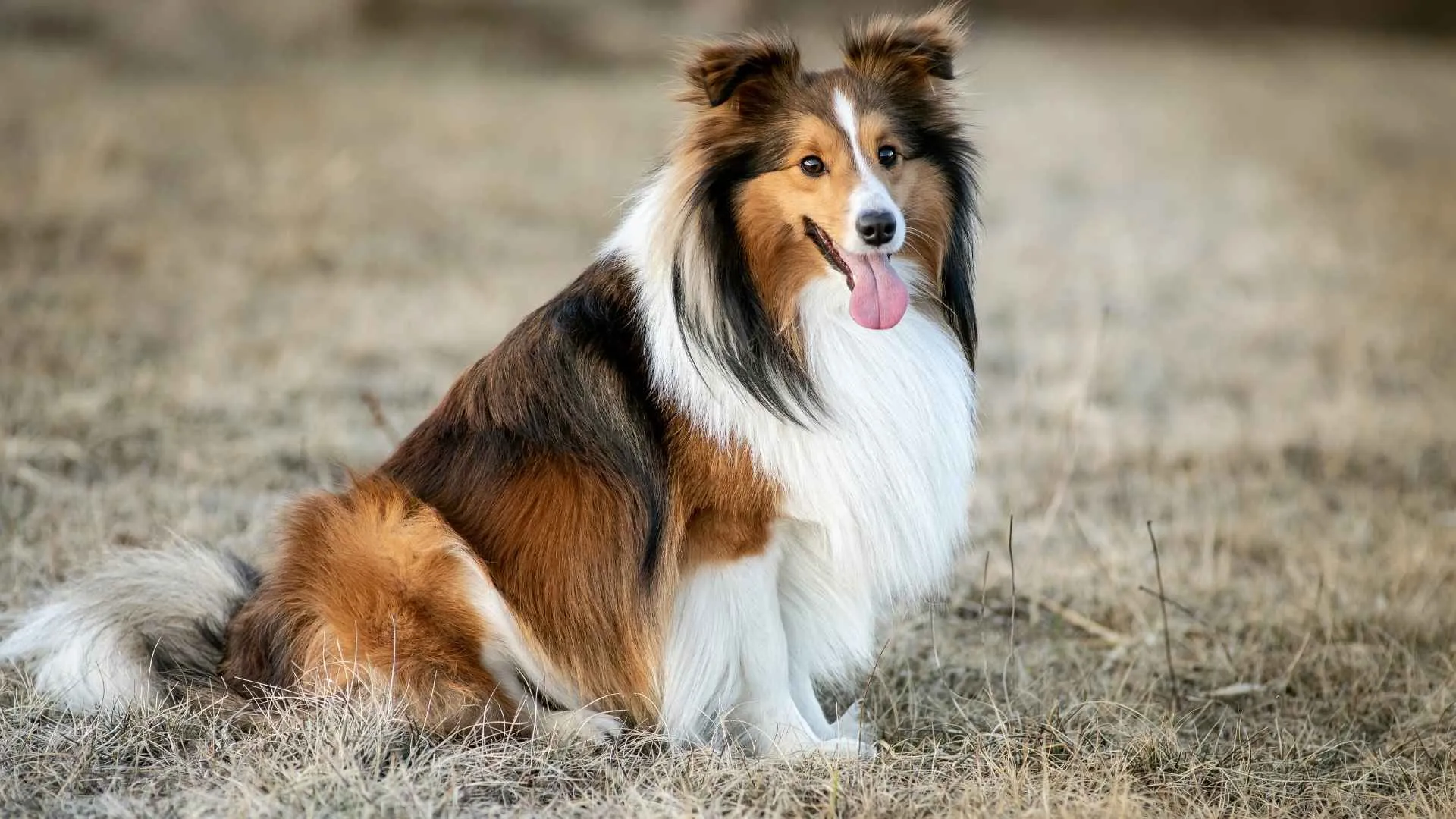
Shetland Sheepdog emerged in Scotland during the 1800s, shaped by Scottish herding dogs and Collies into a smaller working dog suited to the islands. Sparse vegetation on the Shetland Islands supported smaller livestock, so a compact herder suited the local conditions.
Quick on Stock
Shelties bring a smaller, agile frame to herding, giving them the ability to turn quickly while tending animals across uneven ground. Its intense focus on movement can lead to staring, circling, or darting around people and animals as it tries to control their direction.
These working instincts are especially noticeable:
Sharp reaction to sudden movement
Strong human responsiveness during training
Natural tendency to flank moving animals
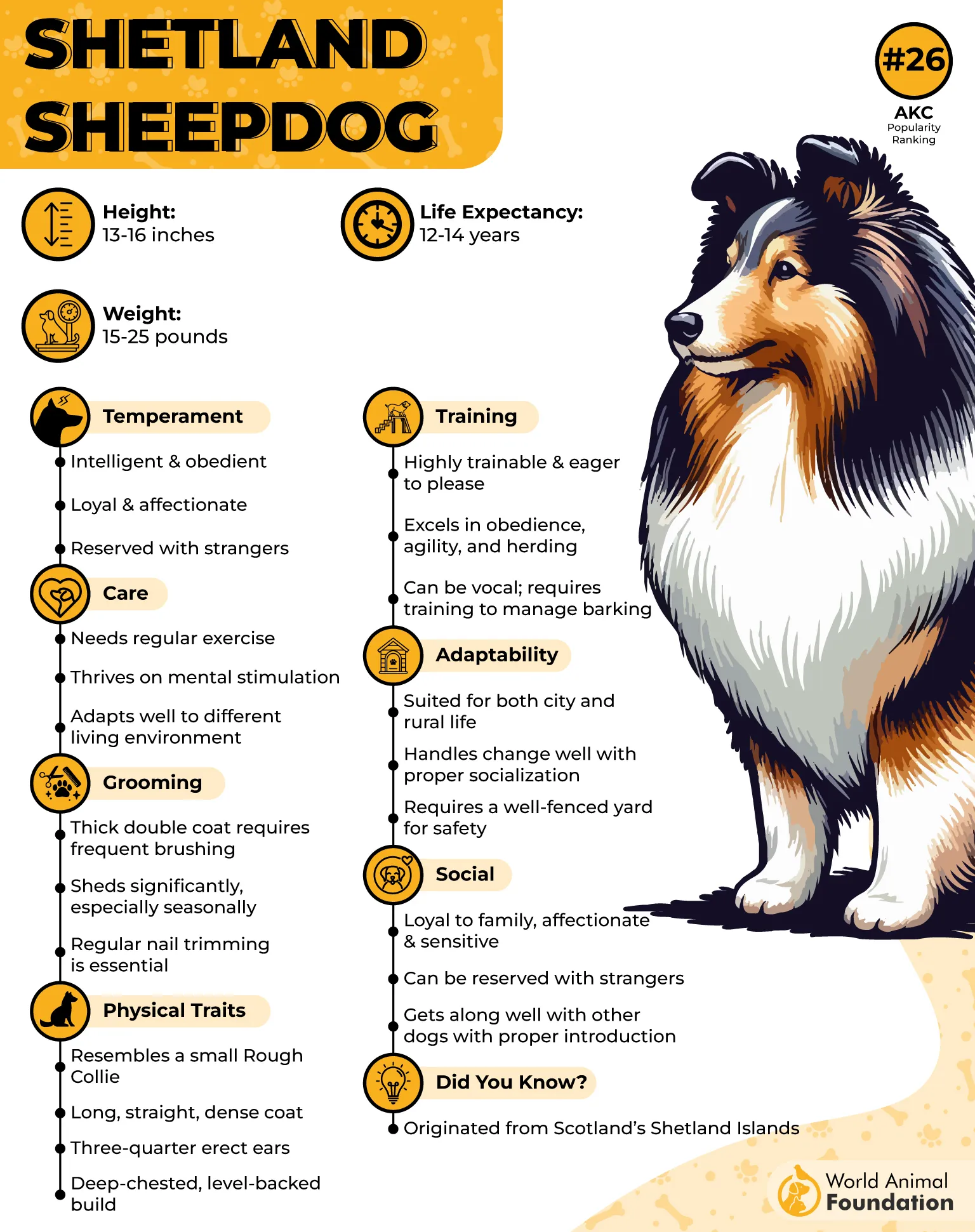
Vocal by Nature
Shetland Sheepdog is quick to announce a visitor, bird, passing airplane, or unfamiliar sound, so teaching a quiet command early can be useful. Its herding instinct may also lead to heel-nipping when children or bicycles rush past, while some individuals even gather toys or other pets into a small group.
6. Beauceron
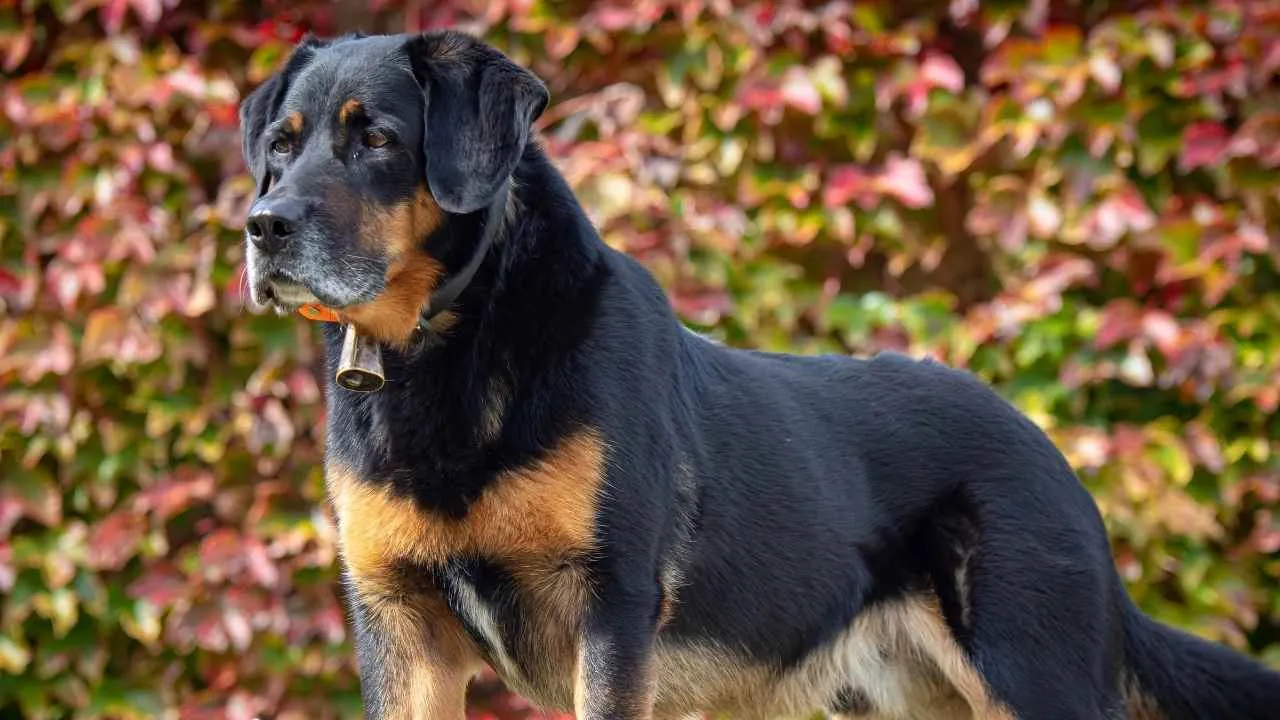
Beauceron is a French sheepdog dating to the 1500s, when it served across farms as a shepherd, guardian, and protector of flocks from predators.
During the First World War, its duties expanded to messenger work in trenches, land-mine detection, police work, and search-and-rescue operations.
A Natural Herding Sense
Beauceron can use body position, shoulder blocks, and controlled forward pressure to guide livestock, and that instinct may also appear around children in a family. Its working style can include circling and checking boundaries, giving it a habit of monitoring the spaces around it.
These characteristics are especially useful to understand:
Can anticipate familiar routines
May heel-nip when under-stimulated
Uses its mouth during play
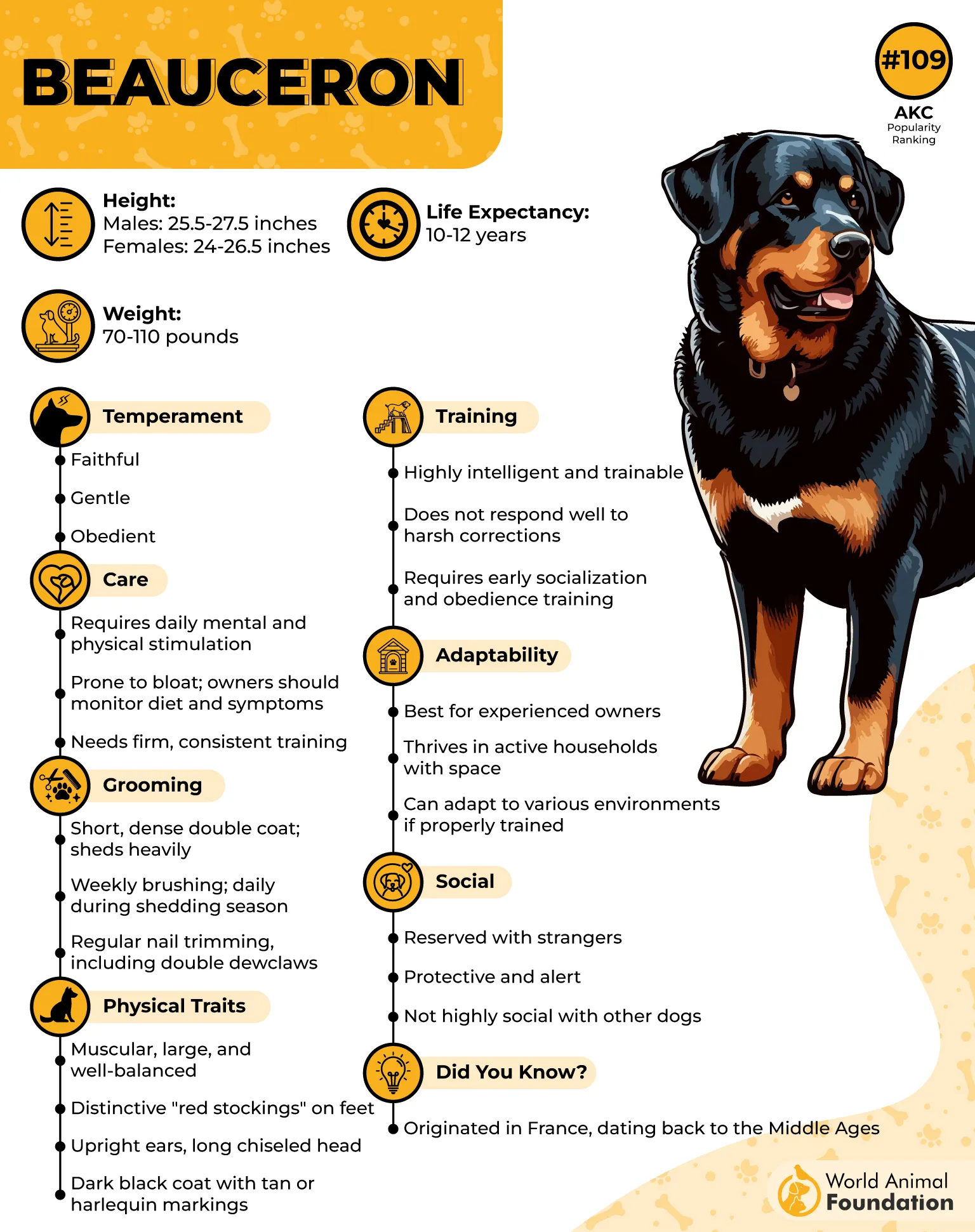
Training Takes Patience
Beauceron learns patterns quickly and can link several behaviors together, which suits obedience, rally, agility, and herding exercises. The breed matures slowly, so the first three years can require consistent guidance even when the dog is eager to cooperate.
7. Briard
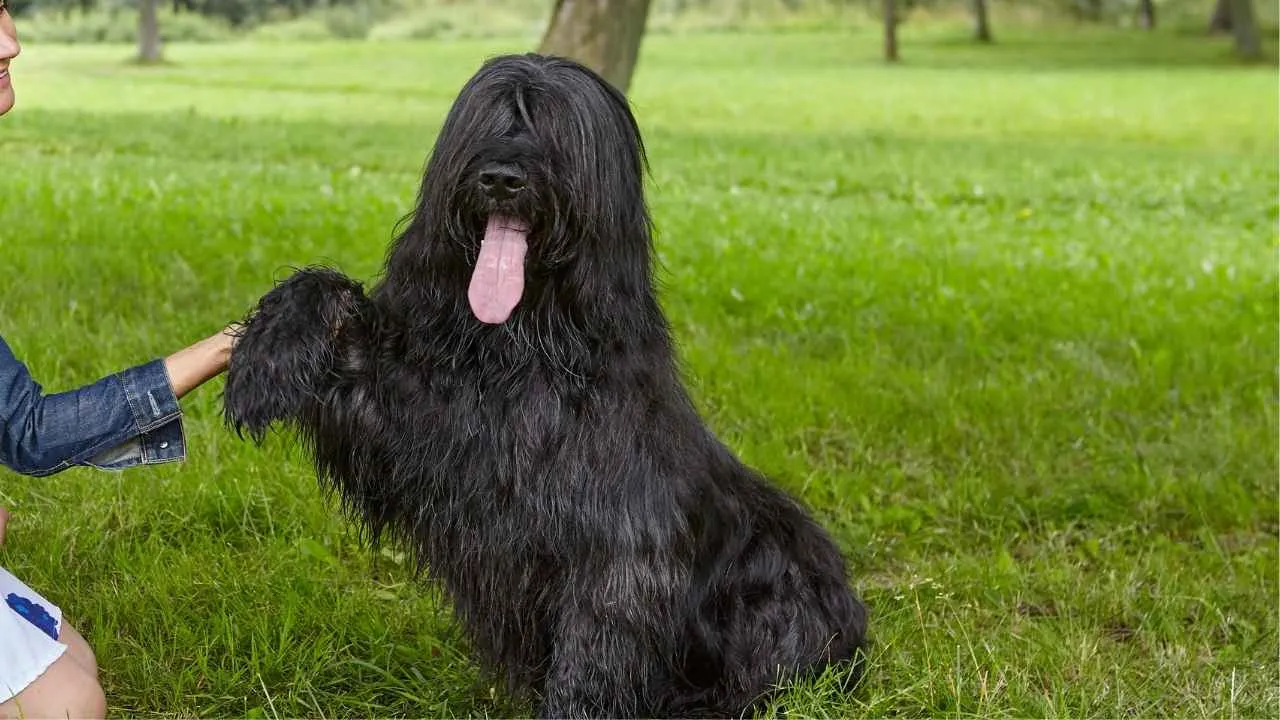
Briard originated in France as a sheep-herding dog, with its working record extending far beyond farm duties. During World War II, Briards served as messengers, sentries, and helpers in locating wounded soldiers. Their working roles later expanded into search-and-rescue and police work.
A Natural Herding Mind
Briard brings a thoughtful approach to herding, often circling people or animals to gather them into a group and guide their direction. That instinct can appear around children or pets, while a strong sense of body placement helps this large dog handle uneven ground with deliberate footing.
A few working behaviors are especially useful to recognize:
Checks gates and latches for weak spots
Uses hindquarters confidently on rough ground
May nip at heels when young
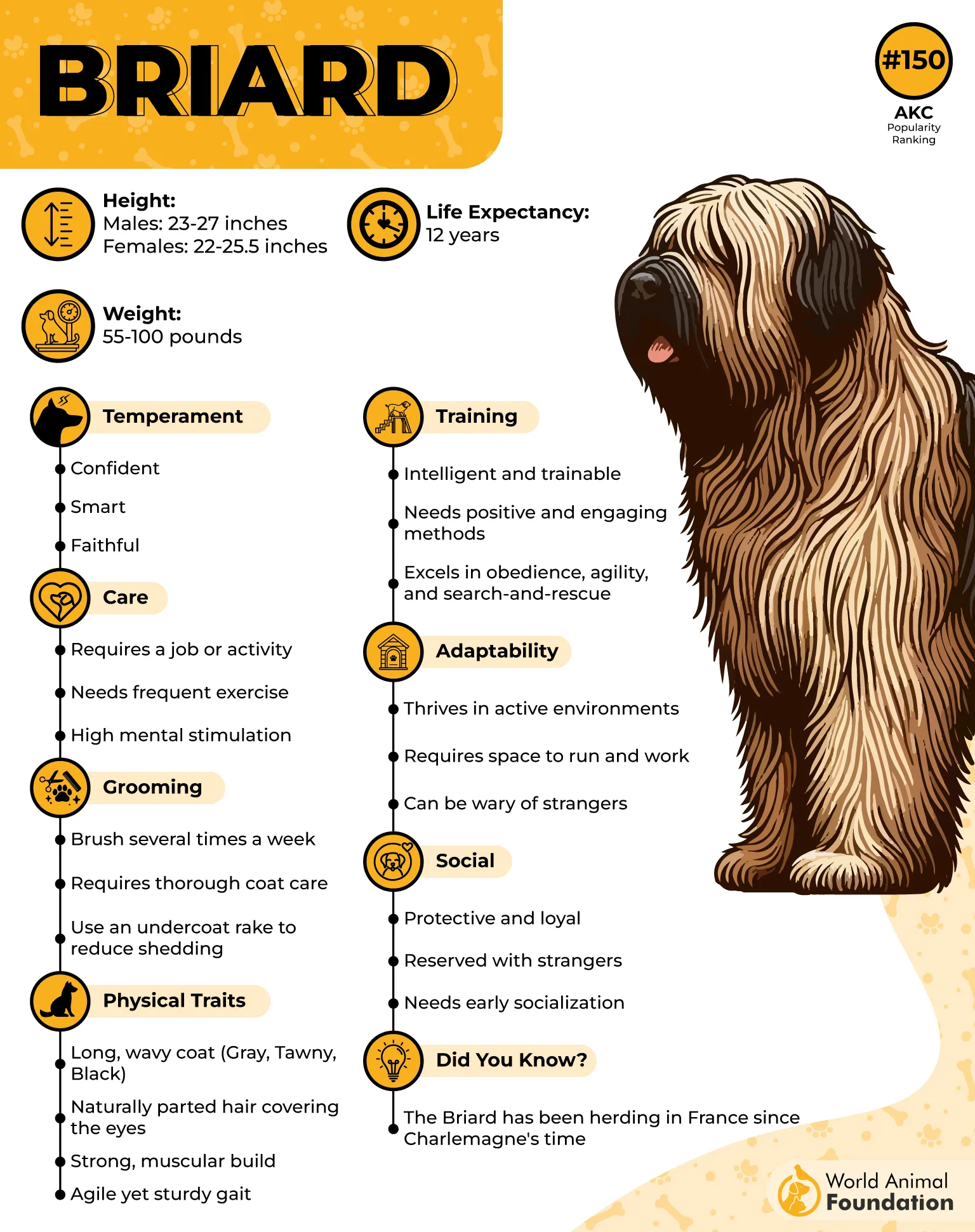
Smart With a Stubborn Streak
This intelligent dog is eager to please and capable of figuring out when training rules have weak spots. Independent thinking can make lessons challenging, while food rewards, praise, and positive reinforcement give this perceptive breed a clear reason to cooperate.
Conclusion
A good herding companion needs an owner who understands that natural working instincts do not disappear at home. Mental and physical stimulation, daily exercise, training, and controlled activities can give that energy a useful direction, especially with an active lifestyle.
Dogs bred for herding cattle or herding sheep may try to manage children or pets, while others can become vocal, restless, or destructive when their needs are overlooked. Your experience, schedule, living space, and ability to provide regular engagement should all factor into the decision.
Pet parents should consider age and individual temperament too, since young dogs often need more supervision and guidance. When the match is right, mental stimulation and everyday training can become meaningful work that fits family life, even for protective dog breeds.
