




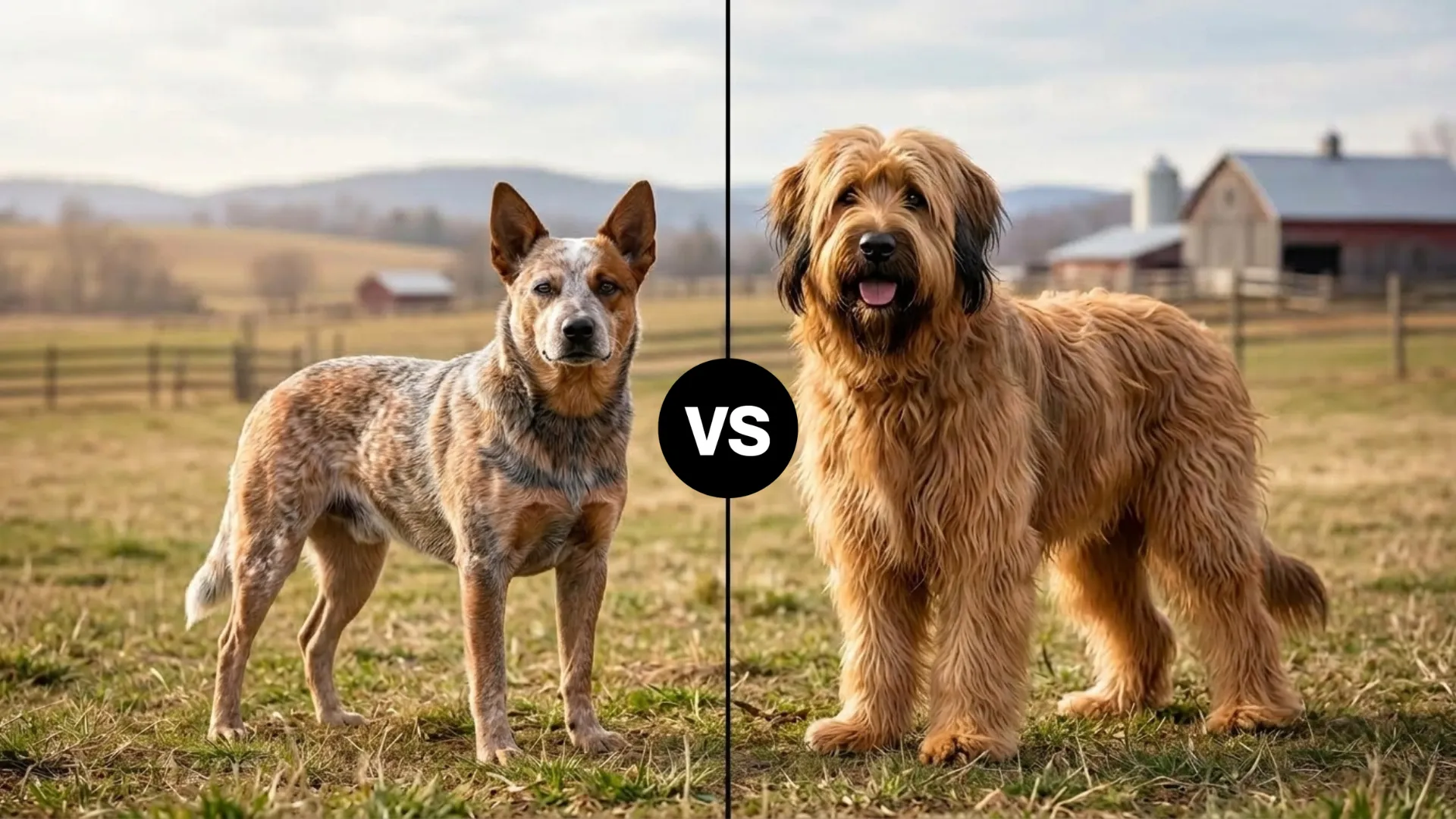
The right breed for your home depends largely on your routine, experience, and willingness to meet a working dog’s needs.
An active owner who enjoys regular exercise, training, and mentally engaging activities may find the Australian Cattle Dog a natural fit. Its short coat can also appeal to someone who prefers less demanding grooming.
The Briard may suit an owner looking for a larger, protective companion who is prepared to invest more time in grooming, training, exercise, and companionship.
Both breeds are intelligent, energetic, and shaped by strong herding instincts, meaning they need more than occasional walks and basic attention. They can be rewarding for owners who enjoy being actively involved in their dog’s daily life, but their differences matter when considering what you can realistically provide.
Looking at trainability, grooming, protective behaviour, health, and everyday demands can help first-time or experienced owners determine which of these distinctive working breeds fits their lifestyle best.
Key Takeaways
Both are working breeds: Australian Cattle Dogs and Briards have strong herding backgrounds and thrive when given purpose and engagement.
The Australian Cattle Dog is highly energetic: It needs plenty of physical activity and mental stimulation to stay engaged.
Briards are intelligent but independent: Their willingness to learn can be balanced by a stubborn or creative streak.
Training should be consistent: Positive reinforcement, clear boundaries, and early socialization can help both breeds develop appropriate behavior.
Their coats require different levels of care: The Australian Cattle Dog has a short double coat, while the Briard has a long, dense coat requiring regular grooming.
Australian Cattle Dog vs. Briard Dog Breeds: Quick Facts You Should Know
1. Origins & Purpose
The Australian Cattle Dog and Briard may come from very different corners of the world, but both were shaped by a life of work. The Australian Cattle Dog was developed in Australia during the 19th century as a tough drover’s companion.
Its job demanded stamina, resilience and the ability to make quick decisions while handling untamed cattle across rugged terrain and vast distances, according to the American Kennel Club.
The breed also helped protect the drover, horse and belongings. Its connection with the Dingo is part of its distinctive Australian heritage, while names such as Blue Heeler, Red Heeler and Queensland Heeler reflect its history and colouring.
The Briard, or Berger de Brie, has an equally strong working heritage rooted in France. One of the oldest French shepherd dogs, it was traditionally used for herding and guarding flocks. Its courage and intelligence later made it useful in military service, including patrol, messenger, and medical duties during the World Wars.
While the ACD became known for driving cattle, the Briard was valued for keeping sheep within boundaries and protecting them from threats. Both breeds, therefore, carry a deep sense of purpose in their history rather than being developed simply as companion dogs.
2. Size & Build
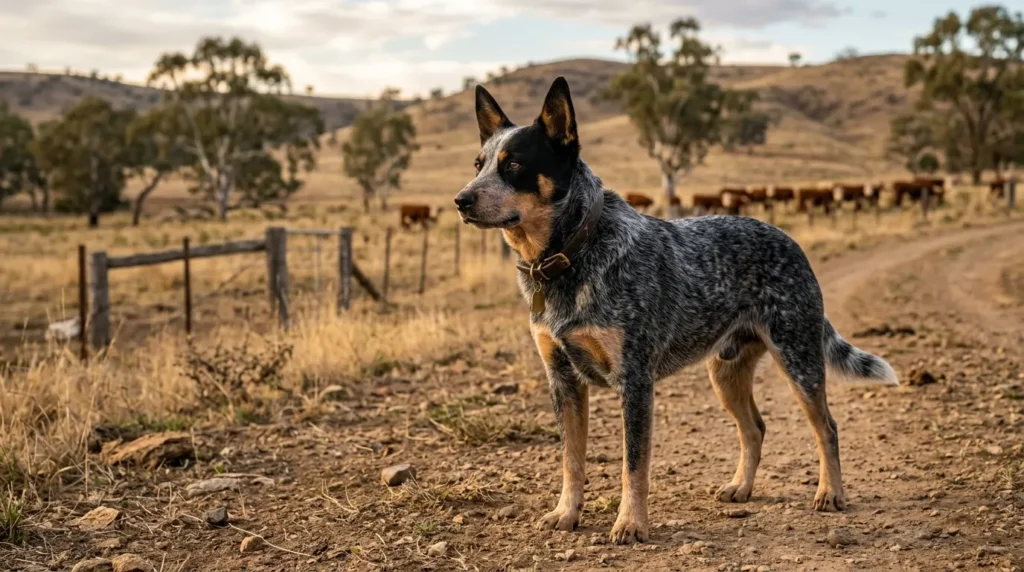
At first glance, the Australian Cattle Dog and Briard present two very different versions of the working dog. The Australian Cattle Dog is a compact and muscular dog, with a balanced body designed for strength, agility, and endurance.
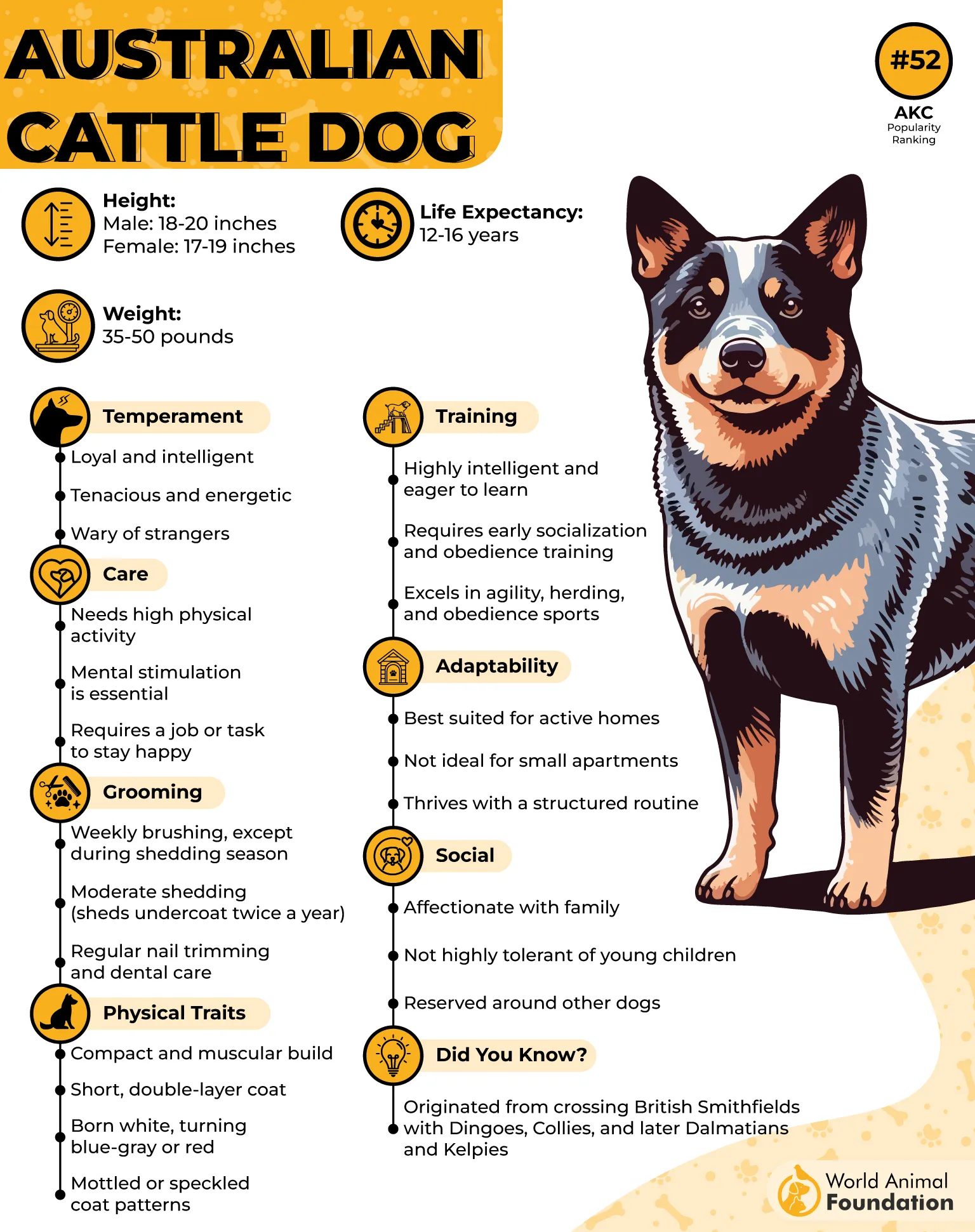
It generally stands around 18 to 20 inches at the shoulder and weighs approximately 35 to 50 pounds. Its sturdy frame gives it an athletic appearance without making it look heavy. The breed’s pricked ears, alert expression, and tail add to its keen, ready-for-action appearance.
The Briard is considerably more imposing in stature. It is described as a large but not giant breed, with males reaching up to 27 inches at the withers and weights ranging from about 55 to 100 pounds. Yet its size does not make it cumbersome. The breed is athletic, agile and capable of quick movement, qualities that reflect its former work as a herding dog.

Their coats are another obvious difference. The ACD has a short, dense, weather-resistant double coat, with blue or red colouring and distinctive speckling or mottling.
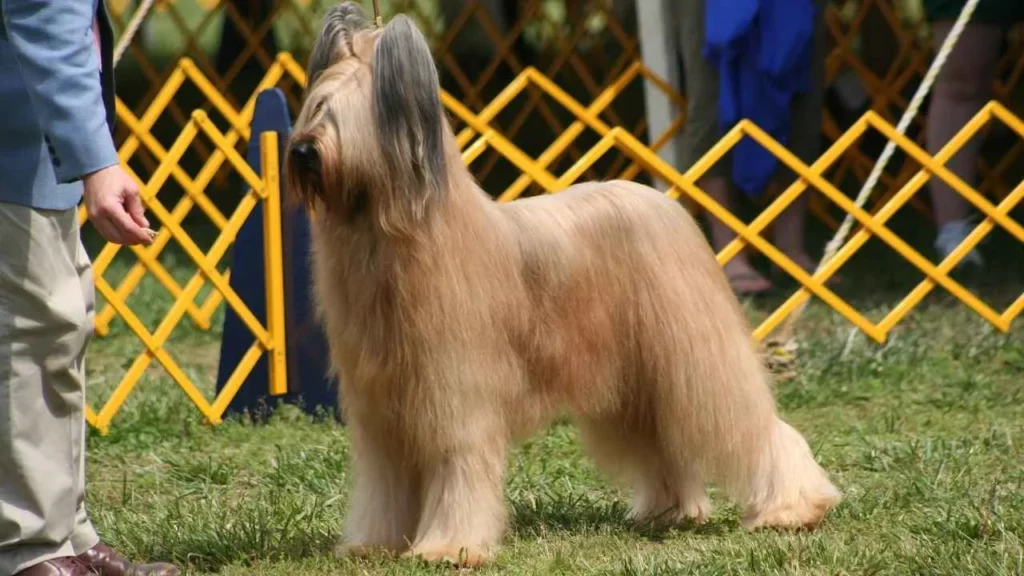
Briards, by contrast, are recognised for their long, coarse, wavy coat, which can give them a striking, shaggy appearance. The Briard’s expressive eyes, beard, eyebrows and distinctive tail add further character to an already memorable silhouette.
3. Pricing & Availability
When considering an Australian Cattle Dog or Briard, the purchase itself is only one part of the decision. Availability can also influence how long a prospective owner has to wait before bringing one home.
Briards remain relatively unknown outside their homeland, meaning someone searching for a Briard puppy may need patience.
Prospective owners are encouraged to look for a reputable breeder who follows appropriate breeding standards and completes the necessary health examinations rather than choosing simply because a puppy happens to be available nearby.
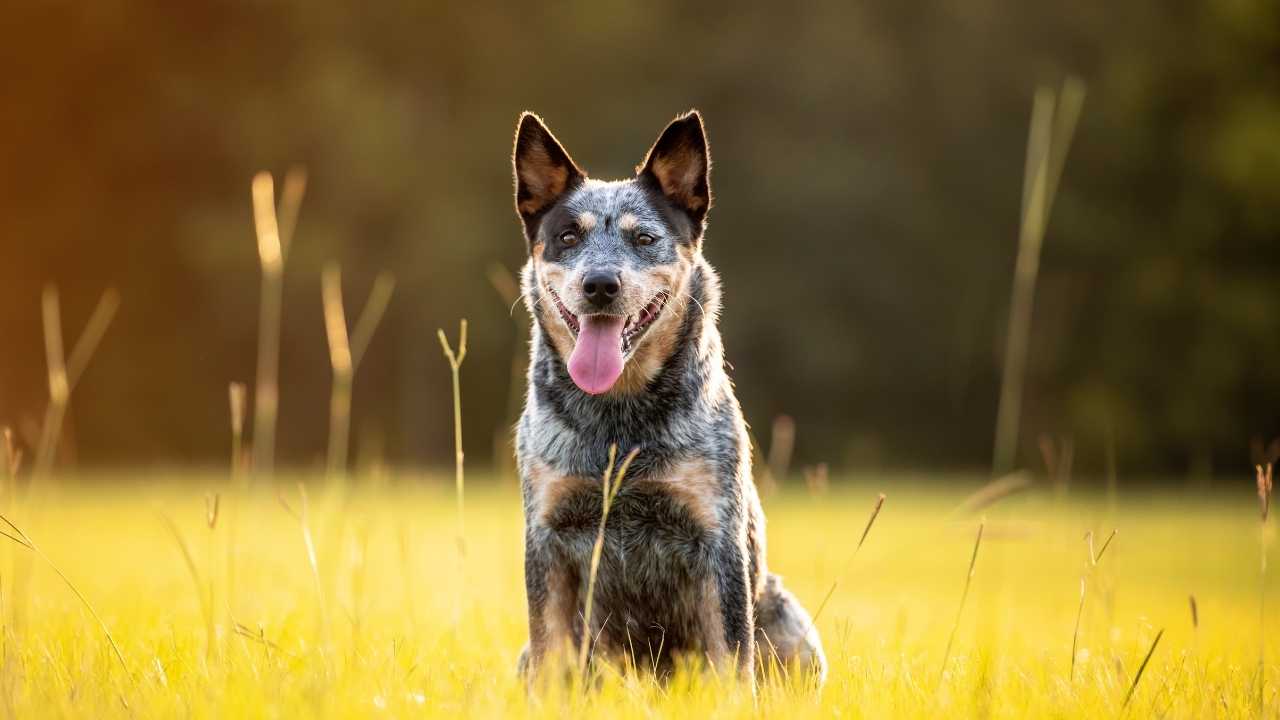
An Australian Cattle Dog (Red or Blue Heeler) puppy can cost around $1,500 or more, depending on the breeder.
A Briard puppy typically costs at least $1,000, although prices can vary between breeders.
Beyond the initial purchase price, prospective owners should also consider the ongoing costs of food, grooming, training, healthcare, and other essentials.
4. Temperament & Personality
The Australian Cattle Dog and Briard both combine intelligence, loyalty, and independence, but neither is a dog that simply switches off its working instincts. The Australian Cattle Dog is famously smart, alert and devoted to its people.
It can be wary of strangers and has an independent streak, yet it responds well to structured training when the work is interesting and challenging. Its strong herding background can also appear in behaviours such as nipping and attempts to control movement. Early socialisation and obedience training are therefore especially important.
The Briard is similarly intelligent and deeply connected to its family, as stated by Zooplus. Affectionate and loyal, it can become closely bonded to its people and naturally retains a protective instinct.
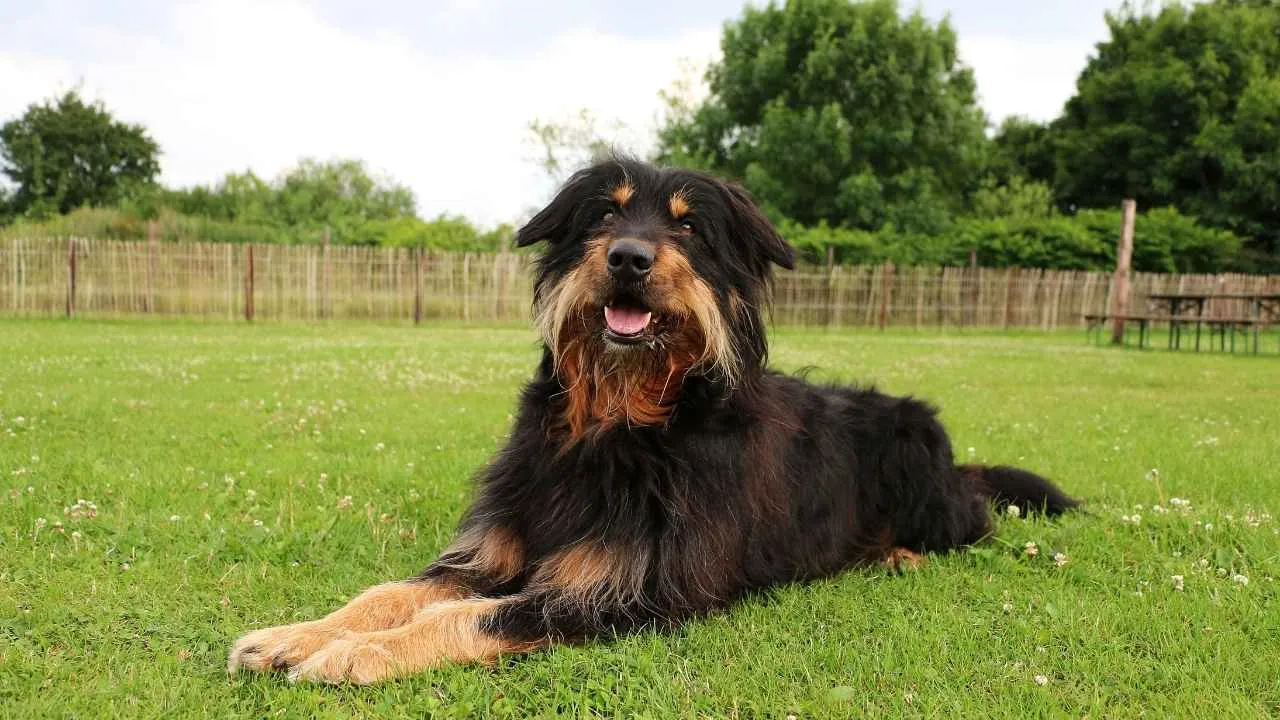
It may be suspicious of strangers and can be wilful or stubborn, making consistent training important. Its strong family instinct also means that it thrives on involvement rather than being treated as a dog that can simply be kept in the background.
Both breeds can form remarkably devoted relationships with their owners, but they ask for commitment in return. The ACD tends to channel its intelligence into work, training, and activity, while the Briard combines its working instincts with a strong desire to remain close to its family.
Neither is best understood as a passive companion. Their personalities make the relationship rewarding, but they also mean owners need patience, structure, and genuine involvement.
5. Exercise Needs & Energy Levels
If there is one area where these two breeds clearly have something in common, it is their need for an active life. The Australian Cattle Dog has immense stamina and was developed to work across large areas while moving cattle.
A short walk and a little play are unlikely to satisfy a dog with this much energy and drive. It needs both physical exercise and mental stimulation, with activities such as running, obedience, agility, herding, or tracking providing productive outlets.
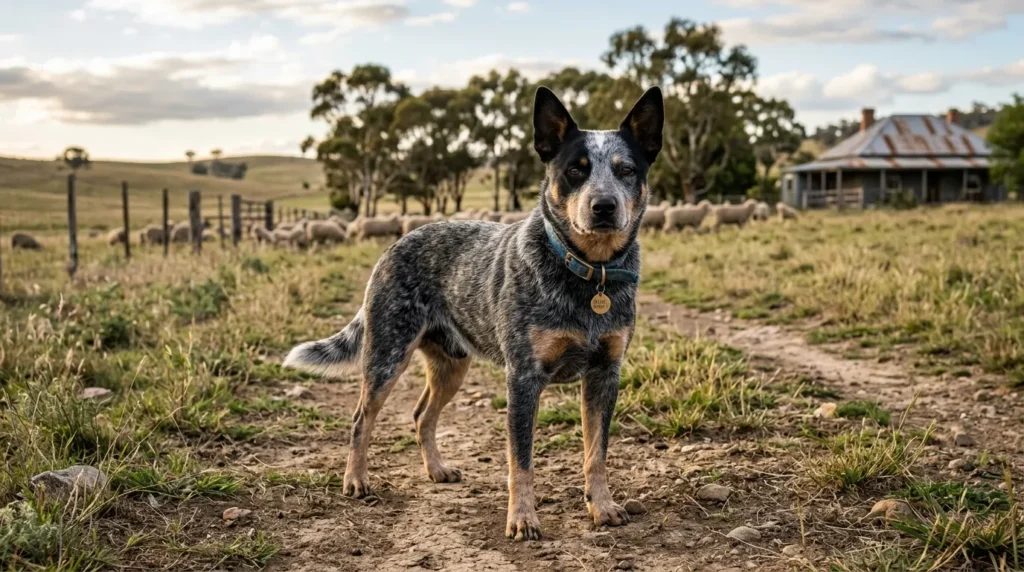
When its intelligence and energy are left without direction, boredom can lead to unwanted or destructive behaviour.
The Briard also needs considerably more than an occasional stroll. Its history as a herding and working dog has left it with a strong need for movement, activity and meaningful engagement.
Jogging, cycling, hiking, varied walks, retrieval games, search activities and dog sports can all help keep this energetic breed occupied. With sufficient exercise and stimulation, the Briard can become a calmer and more balanced companion at home.
The difference is less about which breed needs exercise and more about how much commitment an owner is prepared to give. Both can thrive alongside active people who enjoy doing things with their dogs. For either breed, exercise is not simply about tiring the dog out; it is an important part of keeping its intelligent, working-oriented mind engaged.
6. Trainability & Obedience
The Briard may look calm and elegant, but there is a sharp, independent mind behind that impressive appearance. Originally kept as a working farm dog, the breed was expected to herd livestock and handle responsibilities around the farm.
That working background is still reflected in its character today. Briards are intelligent, eager to learn, and generally willing to please their owners, which can make training rewarding.
At the same time, their independent nature means they need an owner who can provide clear, consistent guidance rather than simply expecting instant obedience.
Proper training and socialization are especially important because the breed can be reserved around unfamiliar people and has strong protective instincts. With patience, attention, and regular interaction, the Briard can become a responsive and dependable companion.
For an Australian Cattle Dog comparison, the Briard offers a different kind of working intelligence, less about simply following instructions and more about combining learning ability with independence, confidence, and a desire to remain involved with its owner.
7. Grooming Needs & Shedding
The most obvious difference between the Australian Cattle Dog and Briard may be their coats. The Briard has a distinctive long, coarse, dense double coat that gives the breed its shaggy yet elegant appearance. Its outer coat is wavy and textured, while the undercoat is softer and woolly.
Such a coat needs regular attention rather than occasional brushing. Daily brushing is recommended to keep it clean and prevent tangles from developing, particularly because the long hair can easily become difficult to manage when neglected.
Although the Briard sheds very little, that does not mean it is a low-maintenance breed. Grooming remains an important part of caring for it, as explained by PetMD. Owners also need to keep an eye on the nails, including the double dewclaws on the hind legs, while regular dental, ear, and eye care should not be overlooked.

Compared with the Australian Cattle Dog’s shorter coat, the Briard demands considerably more time and commitment from an owner who wants to keep its coat healthy and manageable.
8. Protective Instincts & Territorial Behavior
The Briard’s history helps explain why it can be such a watchful and protective companion. Originally kept on farms, the breed was valued not only for herding livestock but also for guarding responsibilities.
Its job required awareness of what was happening around the farm, and that alert nature remains part of its character. Briards are described as courageous, intelligent, and protective of their owners, while they can be reserved when meeting strangers, according to Vets Love Pets.
This combination can make them naturally watchful without taking away from their affectionate relationship with the people they know and trust. Proper socialization is therefore an important part of raising a Briard, helping it become comfortable with different people and situations.
The breed’s protective side also makes it suitable for owners looking for a dog that can remain attentive to its surroundings.
When comparing it with an Australian Cattle Dog, both breeds reflect their working backgrounds in different ways, but the Briard’s history as both a farm and guard dog is particularly evident in its alert, loyal, and protective character.
9. Health & Lifespan
The Briard is generally considered a robust breed, but, like many purebred dogs, it can be affected by certain hereditary and health conditions. Hip dysplasia is one concern associated with the breed and occurs when the hip joint develops abnormally.
Prospective owners should also be aware of eye conditions, for which DNA testing is available. Another serious concern is gastric torsion, commonly known as bloat, in which the stomach twists on itself and can become life-threatening.
Dystocia, or difficult labor, is also known to occur in the breed and may be associated with narrow birth canals or large puppies. These considerations make responsible breeding particularly important. A reputable breeder should be transparent about health testing and should prioritize the physical and mental wellbeing of puppies and their parents.
The Briard has an average life expectancy of around 10 to 12 years according to the information provided. For anyone comparing the Briard with an Australian Cattle Dog, health screening and responsible breeding should be part of the decision, not an afterthought.
10. Australian Cattle Dog vs. Briard: Which Working Breed Is Right for You?
Choosing between an Australian Cattle Dog and a Briard ultimately comes down to the kind of relationship and lifestyle an owner can offer. The Briard is a strong match for someone who wants a friendly, lively, loyal, and watchful companion and is prepared to stay actively involved in the dog’s life.
Its intelligence and willingness to learn can make training enjoyable, but its independent character calls for consistency and attention. Grooming is another major consideration: the Briard’s long double coat requires regular, often daily, care.
It also needs plenty of physical and mental activity and benefits from an owner who enjoys spending time outdoors. A rural setting and sufficient indoor and outdoor space can suit its needs particularly well.
The Australian Cattle Dog may appeal to someone seeking a different type of working companion, while the Briard brings together herding ability, loyalty, alertness, and an unmistakable long-haired appearance.
Neither choice should be based on looks alone. The better match is the breed whose exercise, grooming, training, and companionship needs fit naturally into your everyday life.
Conclusion
The Australian Cattle Dog and Briard may share a history rooted in herding and working alongside people, but each brings a distinct personality and set of needs to modern life.
The Australian Cattle Dog stands out for its intelligence, stamina, independence, and strong working drive, while its short coat makes everyday grooming relatively straightforward. The Briard offers a different appeal, combining intelligence and courage with a loyal, affectionate nature and a striking long coat that requires considerably more care.
Both breeds can be devoted companions, but neither is suited to an owner looking for a dog that requires little involvement. Training, exercise, socialization, and responsible care are important with both.
Ultimately, the best choice depends on your lifestyle, experience, available time, and willingness to meet a working dog’s needs. Understanding these differences can help you choose the breed that feels not only impressive on paper, but genuinely suited to your everyday life.
