




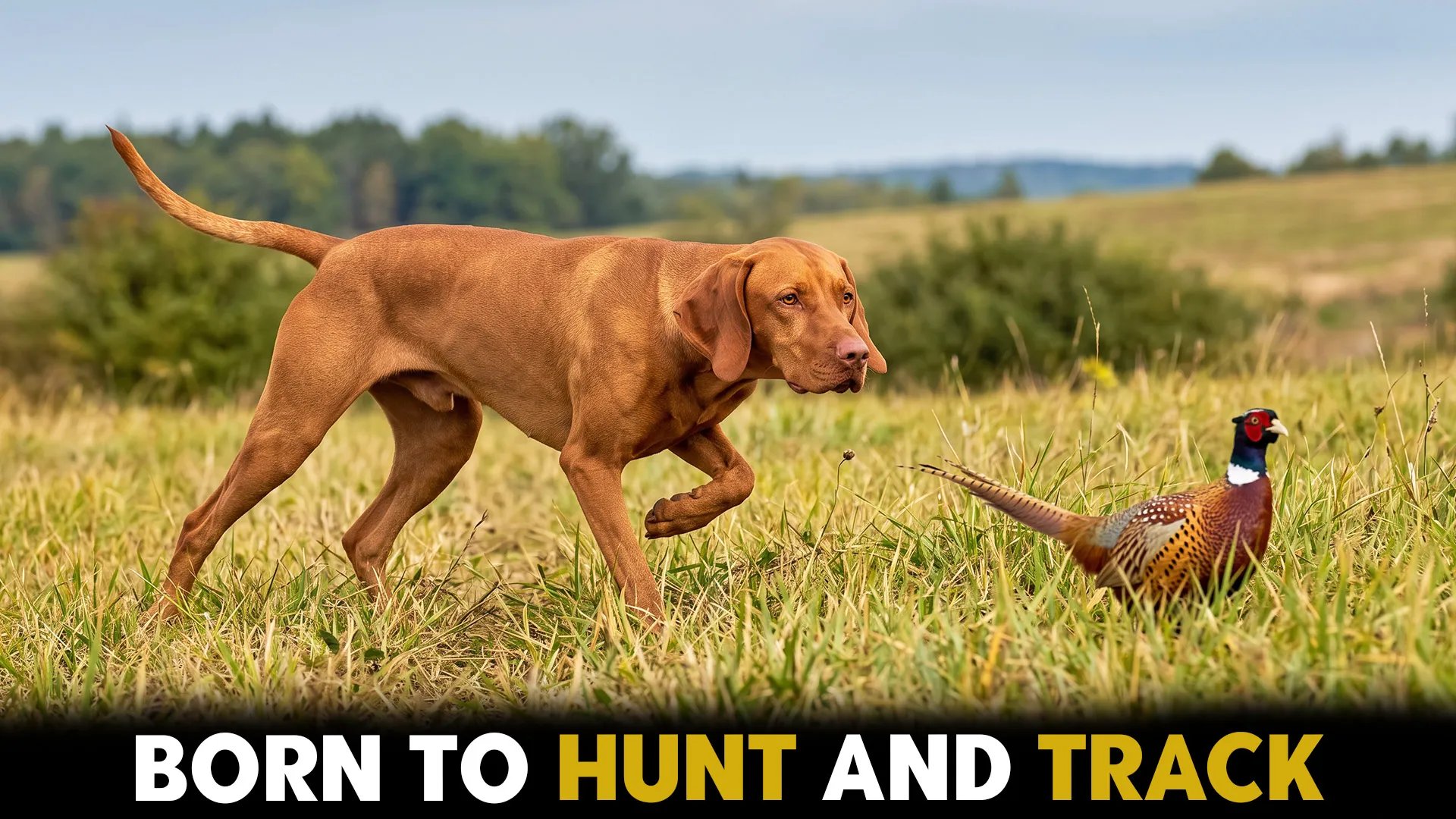
There is a certain moment in bird hunting when your dog suddenly stops being playful and starts paying attention to something you cannot even see. Their nose lifts. Their pace changes. Then they lock onto a scent, and you realize they have found the trail.
That is the kind of partnership that makes hunting with a dog so rewarding.
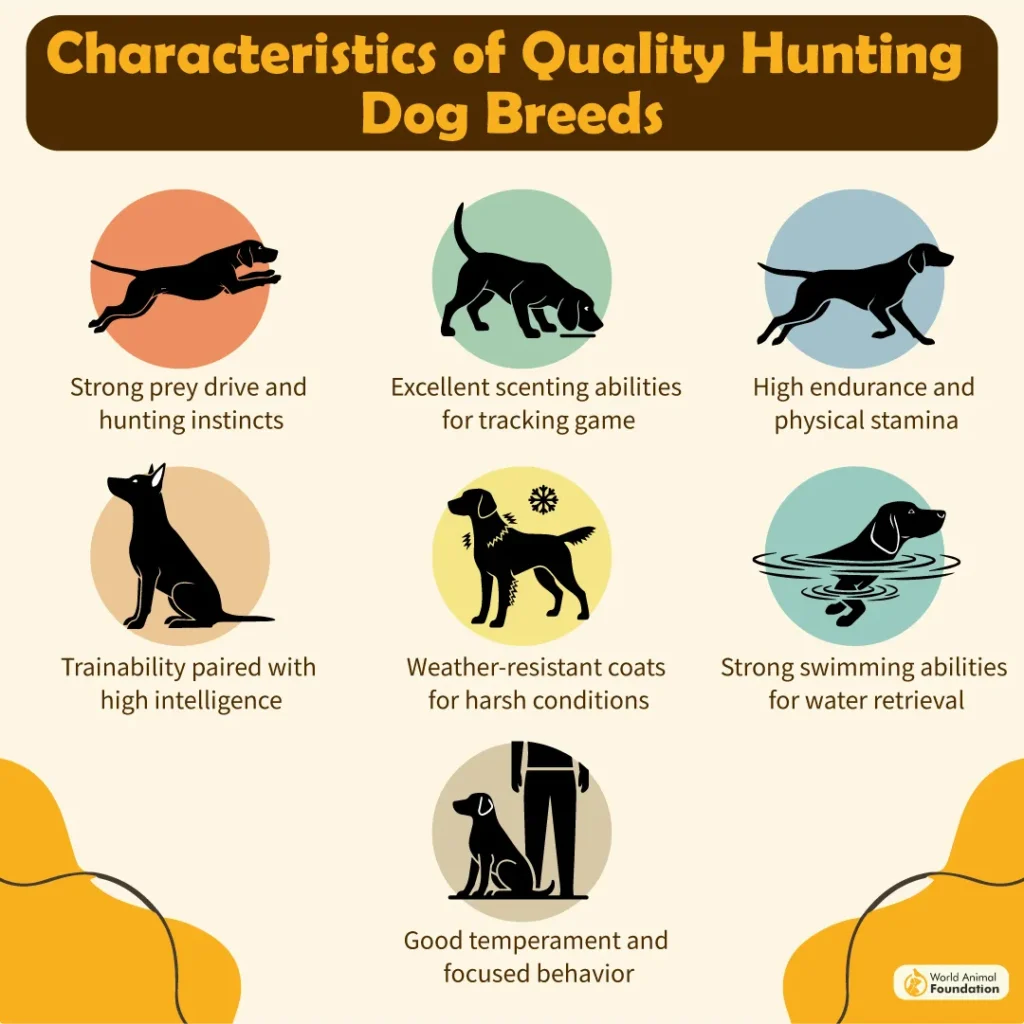
But not every energetic dog is cut out for bird work. You need the right combination of scenting ability, instincts, stamina, focus, and responsiveness. Some breeds point birds and patiently hold their position. Others charge into thick cover to flush them out. Retrievers have a different job altogether, bringing downed birds safely back to you.
The best dog breeds for bird hunting and tracking have been shaped over generations for these jobs. Yet each one brings a different style to the field.
If you are trying to find a four-legged hunting partner that actually fits your style, these seven breeds are a great place to start.
Best Dog Breeds for Bird Hunting and Tracking
1. German Shorthaired Pointer
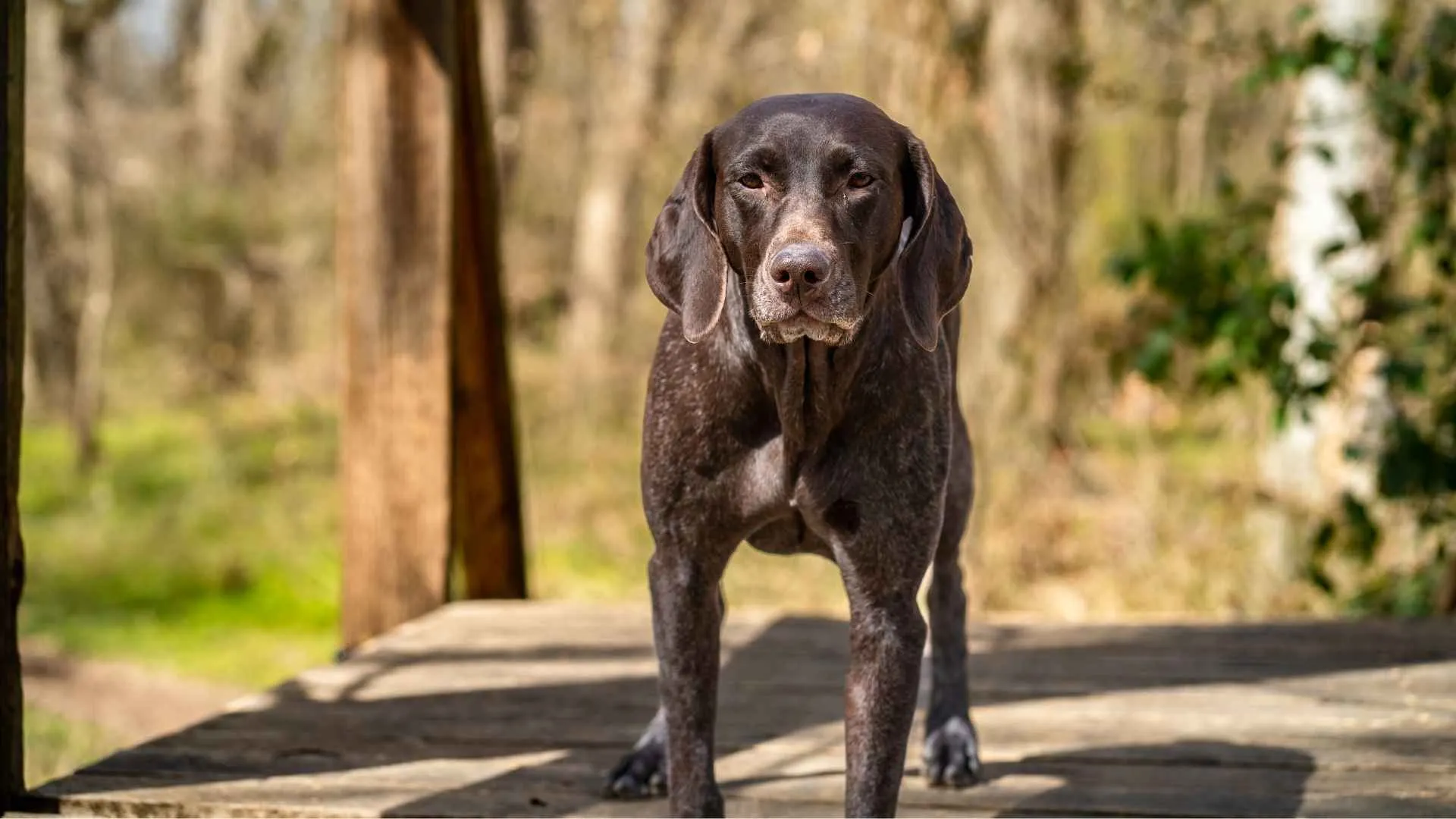
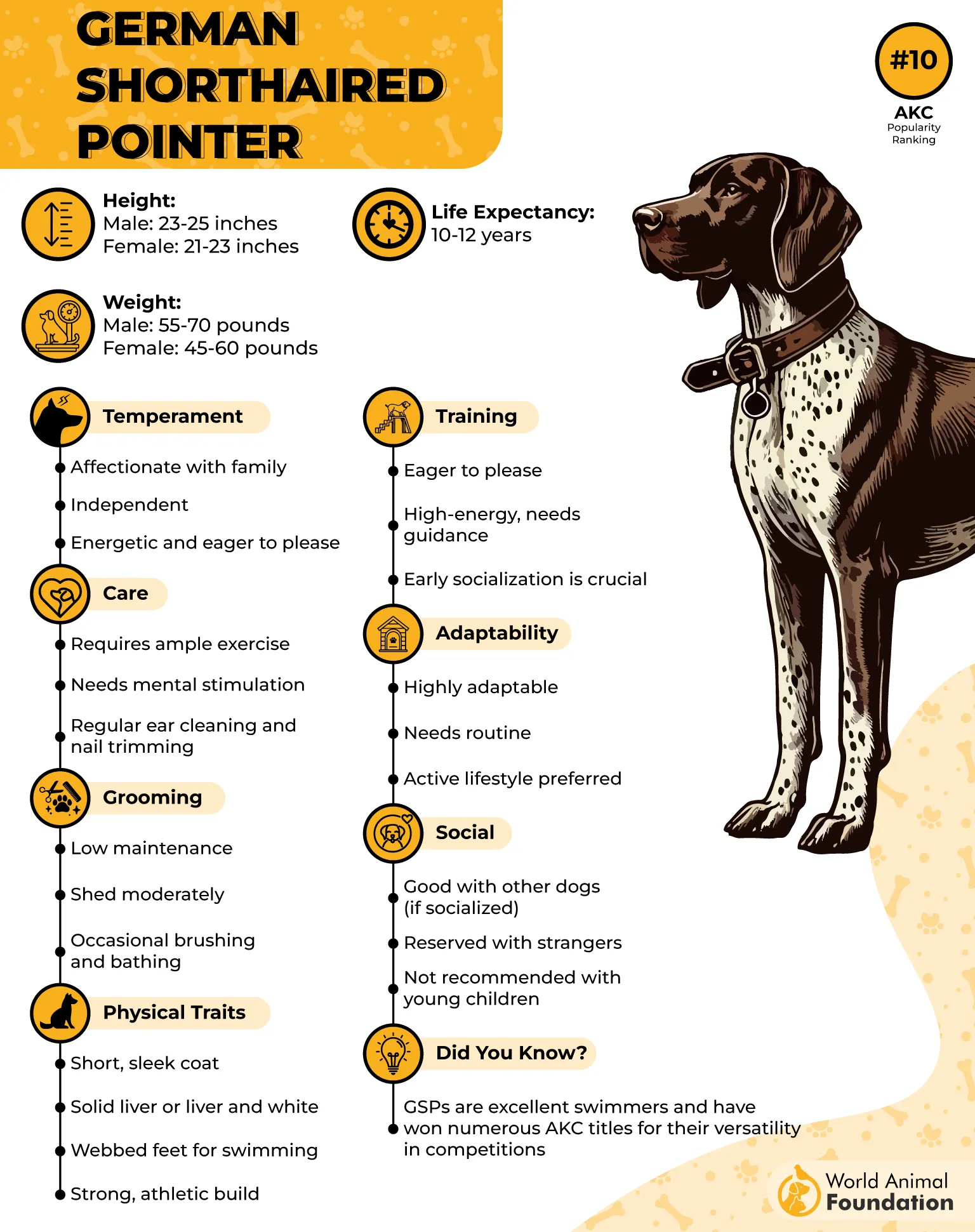
Give a German Shorthaired Pointer a stretch of open ground and a fresh scent, and you will quickly understand why hunters have valued this breed for generations. Developed in Germany as an all-purpose hunting dog, they were bred to handle several jobs rather than become specialists at just one.
For hunters who want one dog capable of contributing to multiple parts of the hunt, the German Shorthaired Pointer offers an unusually complete package. Orvis mentioned that this dog is highly trainable, enthusiastic, and energetic.
Role in the Field
A German Shorthaired Pointer can search for birds, locate them by scent, point toward their hiding place, and retrieve after the shot. It is equally comfortable working across fields, woodland edges, and water.
That makes them especially useful when your hunting day involves changing terrain or more than one task.
Its pointing behavior is particularly impressive to watch. One moment, it is sweeping through the landscape with its nose down. The next, it freezes, giving you a clear signal that something is nearby. It is almost like watching a conversation happen without a single word.
Its short coat is also practical for outdoor work and relatively simple to maintain after a long day outside.
2. Vizsla
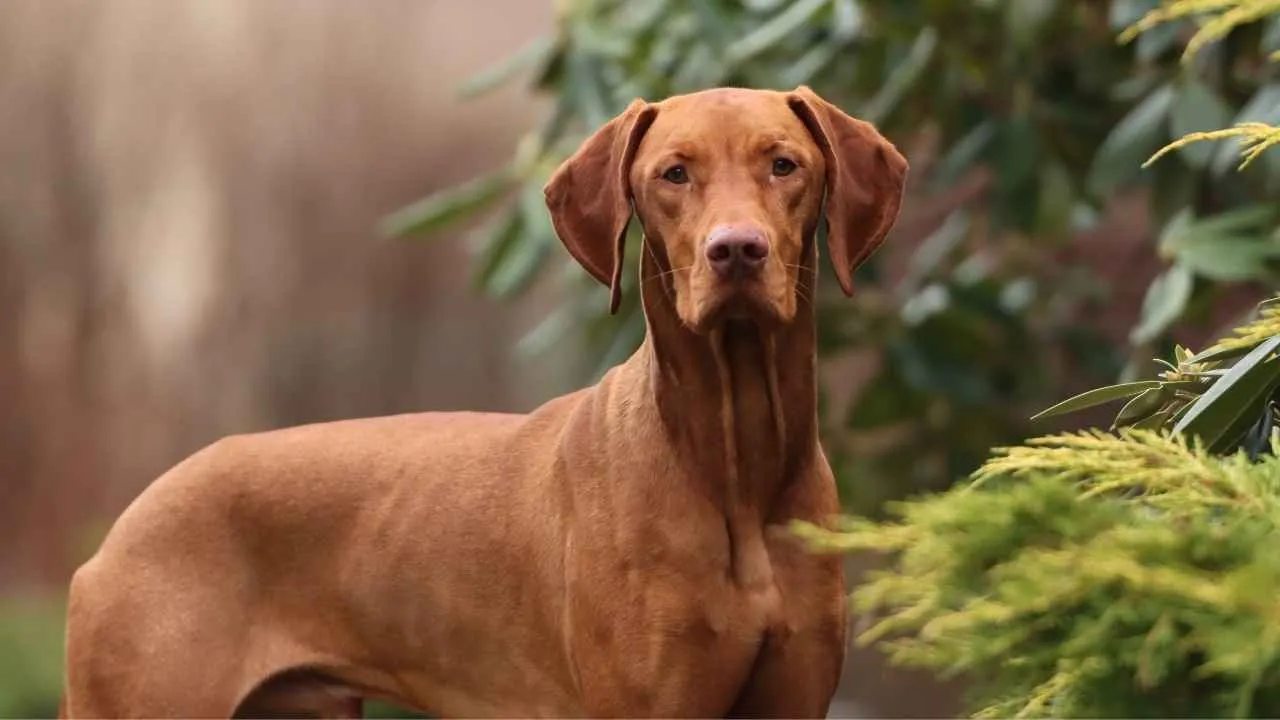
Some dogs hunt ahead of you. A Vizsla often seems to hunt with you. This Hungarian sporting breed has a close-working style that makes it particularly appealing to hunters who want an attentive partner in the field.
Originally developed as a versatile hunting dog, the Vizsla was expected to locate game, point, and work cooperatively with its handler. PetMD added that its lean, athletic build gives it the speed to cover ground without looking weighed down by the job.
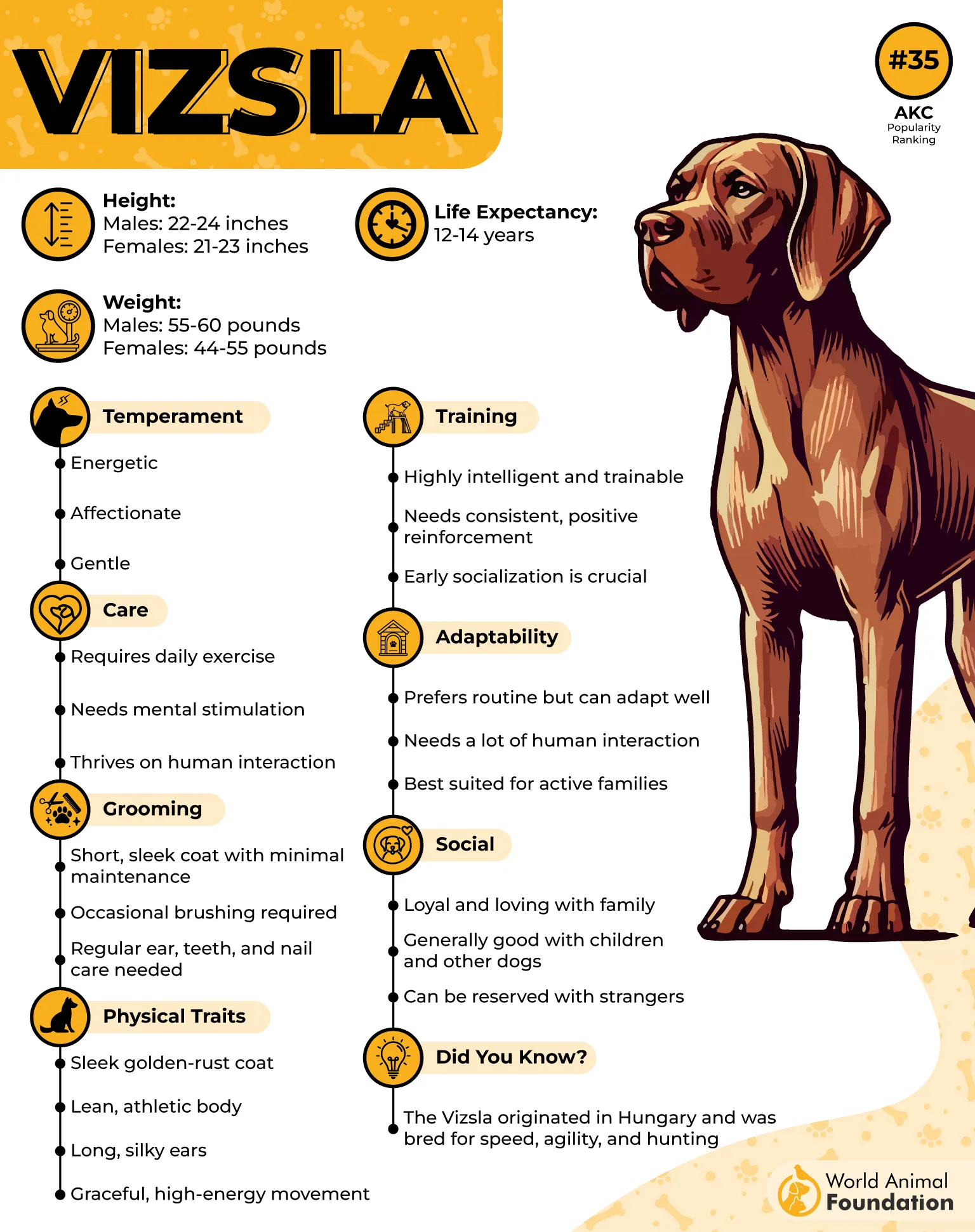
One of the Vizsla’s most distinctive qualities is its loyal personality and the relationship it builds with its handler. It tends to stay engaged with the person directing the hunt instead of treating the entire field like its own private expedition.
And then there is this affectionate side. The Vizsla is known for being very people-oriented, so the dog that spends the morning searching fields may be looking for your attention again once you get home.
Role in the Field
The Vizsla is particularly suited to hunts where you want a close-working dog that remains aware of your movements. It can move across open fields with a smooth, purposeful stride, using its nose to search for bird scent. Once it locates game, its pointing instinct gives the hunter a useful visual cue.
It can help search open ground while maintaining a steady connection with the handler, making it work feel coordinated rather than chaotic.
3. English Springer Spaniel
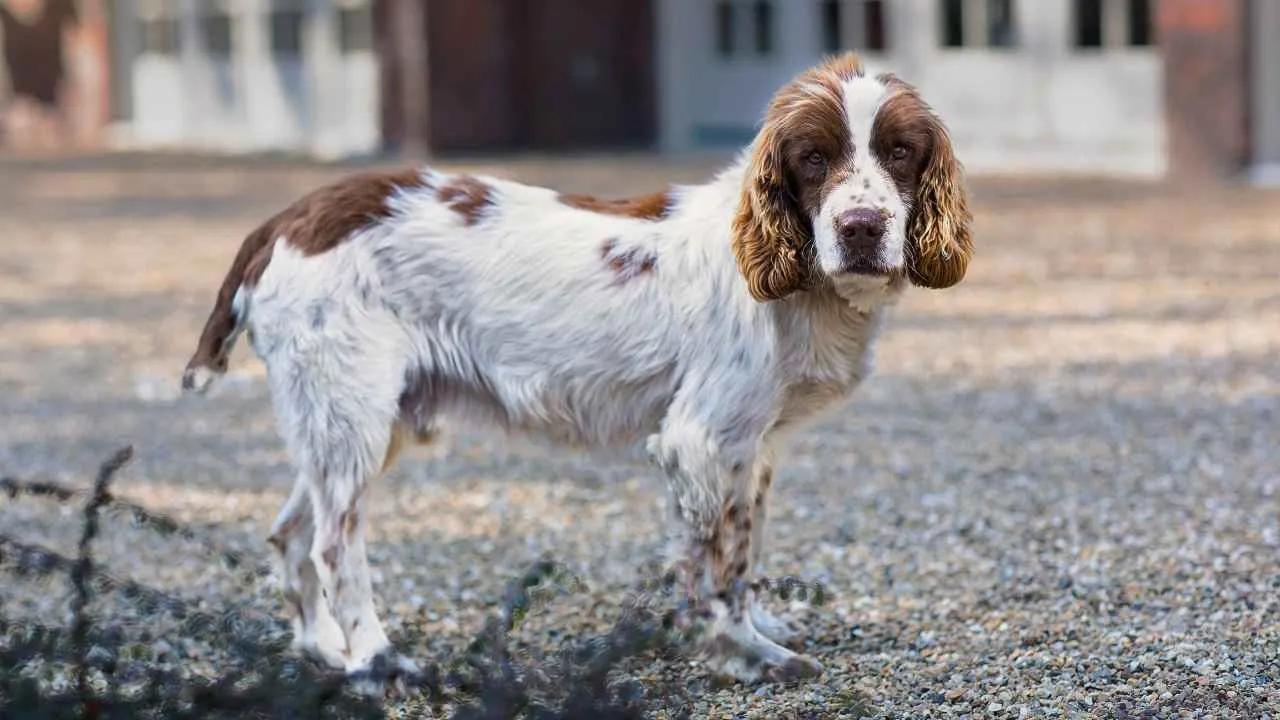
English Springer Spaniel was developed to flush game from cover. It moves into places where birds may be hiding and push it into flight, allowing the hunter to take the shot.
If thick cover is where you spend most of your hunting time, a Springer can feel completely in its element.
The English Springer Spaniel’s name comes from this traditional flushing role. The breed was developed to “spring” game from hiding, and that instinct remains central to its appeal as a hunting companion.
Role in the Field
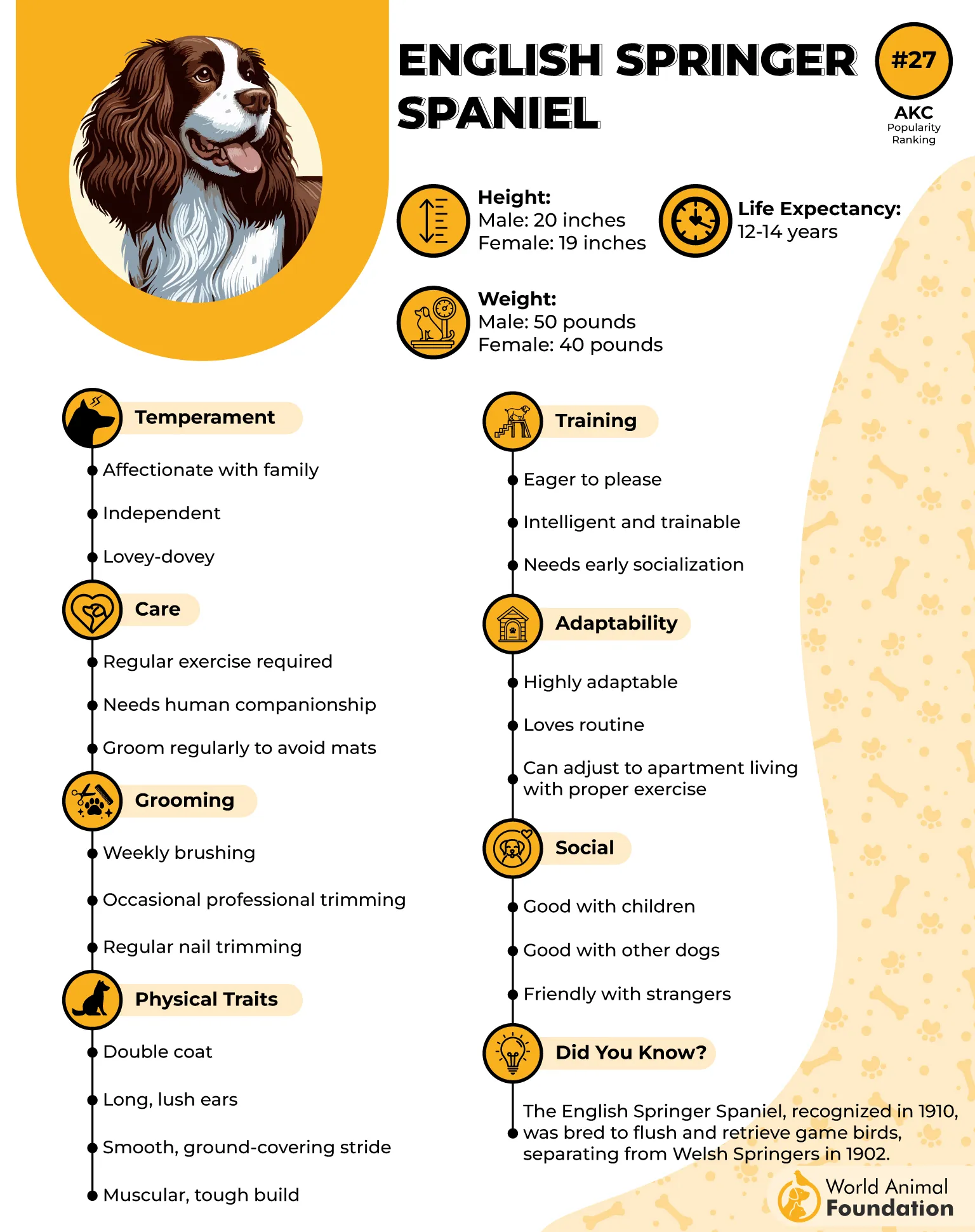
Its compact build helps it work through vegetation without becoming cumbersome. It can weave through cover, follow scent, and keep searching when the bird is nowhere obvious to the human eye.
Its long, feathered coat does require more attention than the short coat of a GSP, especially after a day spent pushing through brush.
Springers also have a natural retrieving ability, so their work can continue after the shot. That makes it particularly useful for hunters who want a dog that participates in both the flushing and recovery sides of bird hunting.
4. Brittany
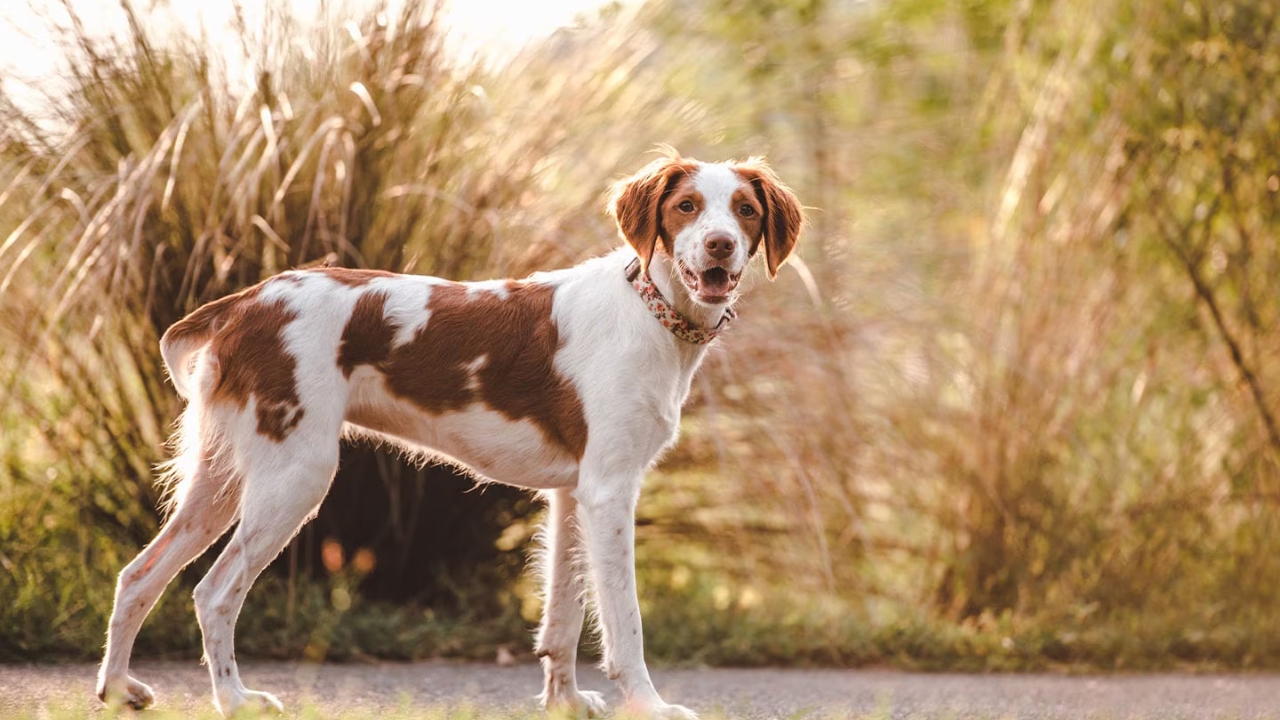
The Brittany may not have the imposing size of some sporting breeds, but spend a day watching one work, and that detail becomes almost irrelevant.
Originally developed in France, the Brittany is a versatile bird dog with a natural ability to locate and point game. That combination makes the Brittany particularly interesting for upland bird hunting.
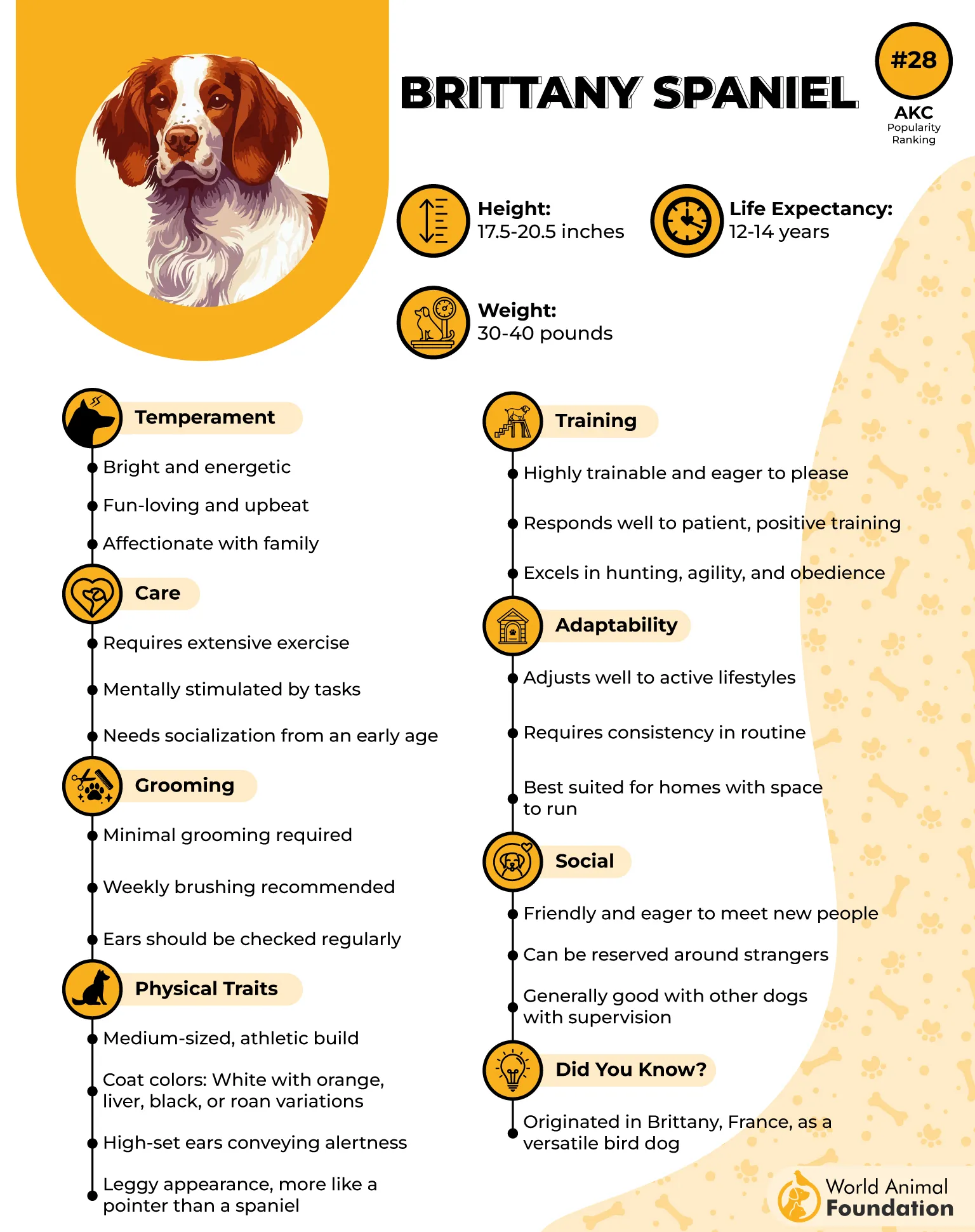
There is plenty of personality behind that athletic exterior, too. Brittany is often enthusiastic, bright, and eager to participate. It gives it a lively presence both during outdoor adventures and everyday life. Brittany makes an excellent family dog, Purina highlighted.
Role in the Field
The Brittany can cover ground with impressive enthusiasm, yet its work is not simply about running from one end of the field to the other.
Its nose is constantly involved in the search, helping it locate birds before using its pointing instinct to indicate their presence.
Its compact build allows it to work over distance while remaining practical for hunters who prefer a smaller sporting companion.
It can work across open areas, adjust to different terrain, and remain involved in the search instead of waiting for the action to come to it. Its size can also be convenient when transporting your hunting dog or moving between different hunting locations.
5. Boykin Spaniel
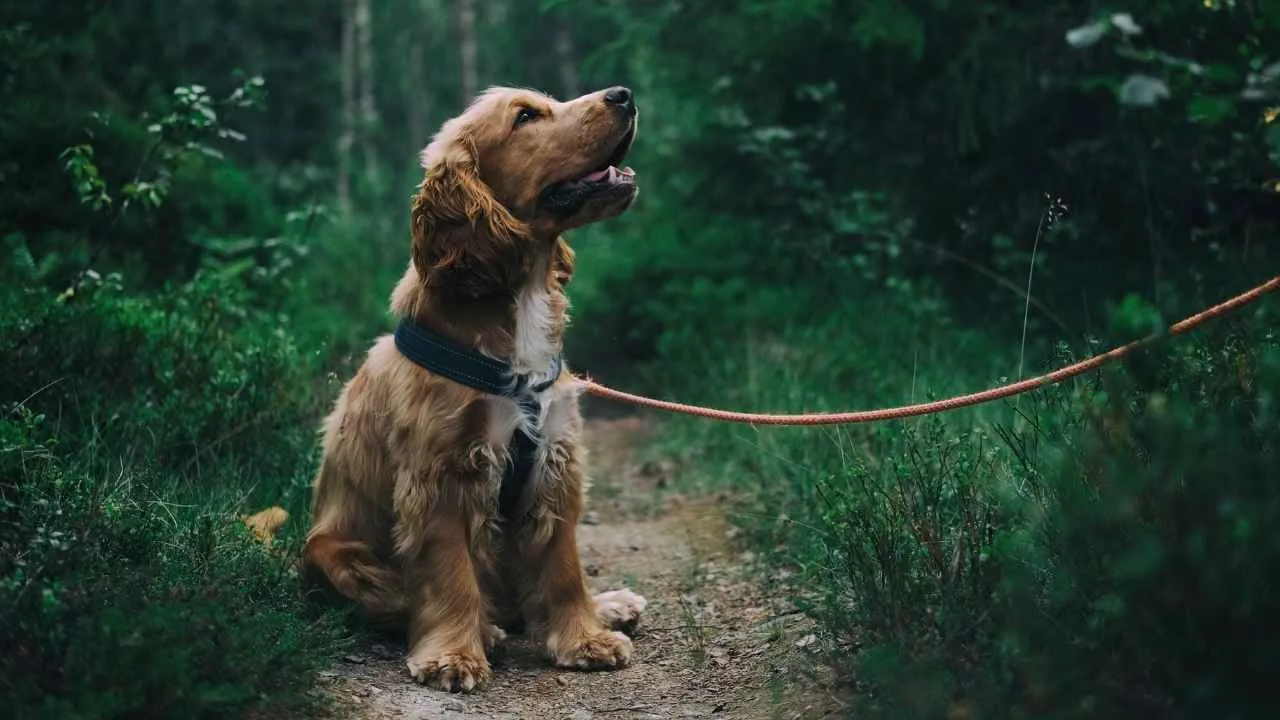
The Boykin Spaniel is the kind of hunting dog that makes more sense the messier the terrain gets.
Originally developed in South Carolina, this medium-sized sporting breed was shaped around the needs of hunters working in the region’s wetlands, waterways, and dense cover. It became valued for flushing and retrieving, giving it a useful combination of skills for bird hunting.
The breed’s enthusiasm can be hard to miss. A Boykin approaching a hunting area does not exactly give the impression that it’s hoping for a quiet morning. It is ready to search, investigate, and get involved.
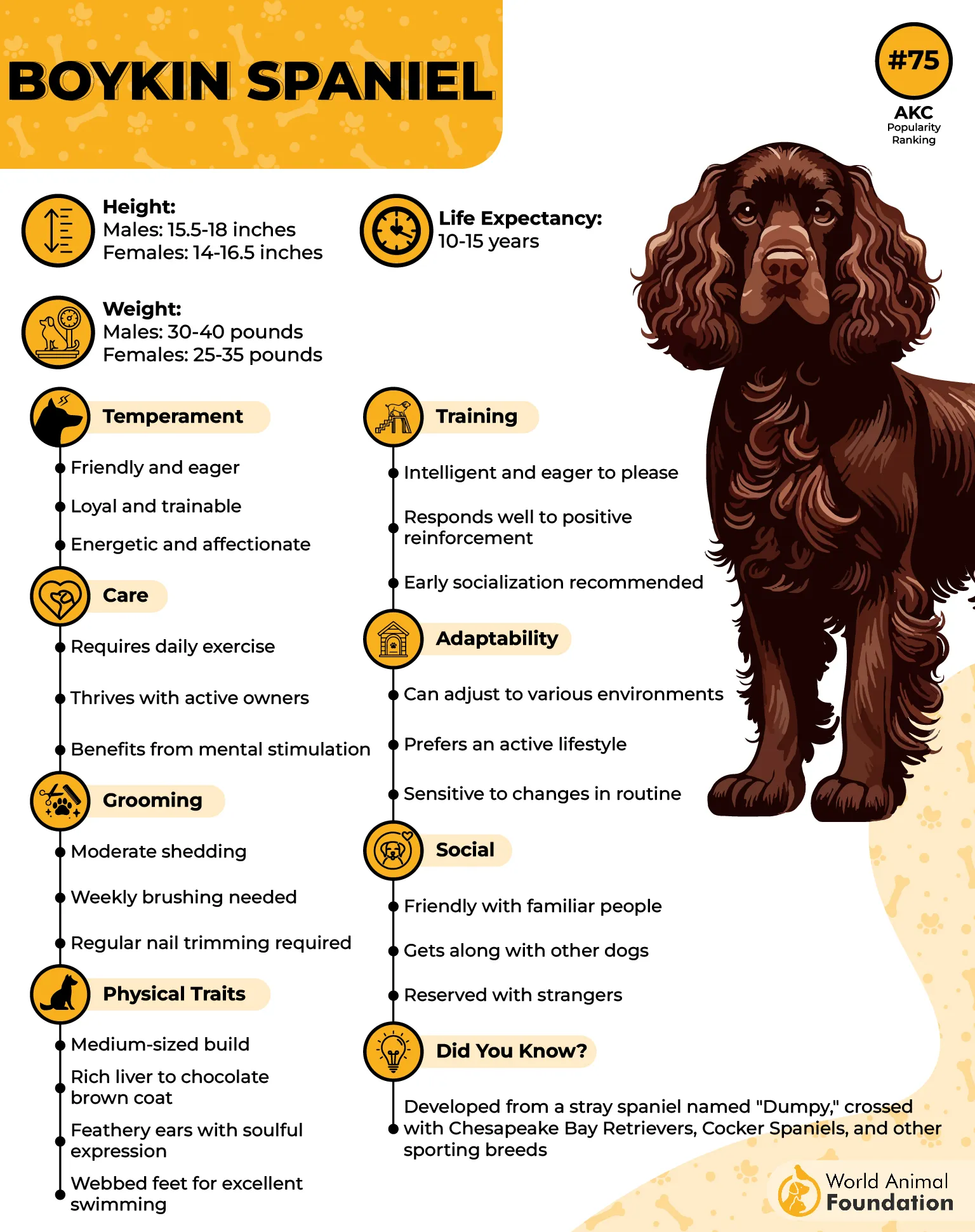
Its coat can collect debris after working through dense habitat, so post-hunt cleanup is part of the package.
For hunters who regularly move between cover and water, the Boykin Spaniel brings a particularly useful combination to the field.
Role in the Field
A Boykin’s ability to work around water is one of its biggest advantages. It can move through cover to flush birds and then handle a retrieve when the action moves toward a pond, marsh, or other wet area.
Its medium size also gives it a practical advantage. It is substantial enough to handle demanding outdoor work without having the larger physical footprint of a bigger retriever.
It can search through cover, flush birds, and handle retrieves around water, making it a practical option for hunters whose routes include wetlands and waterways.
6. Labrador Retriever
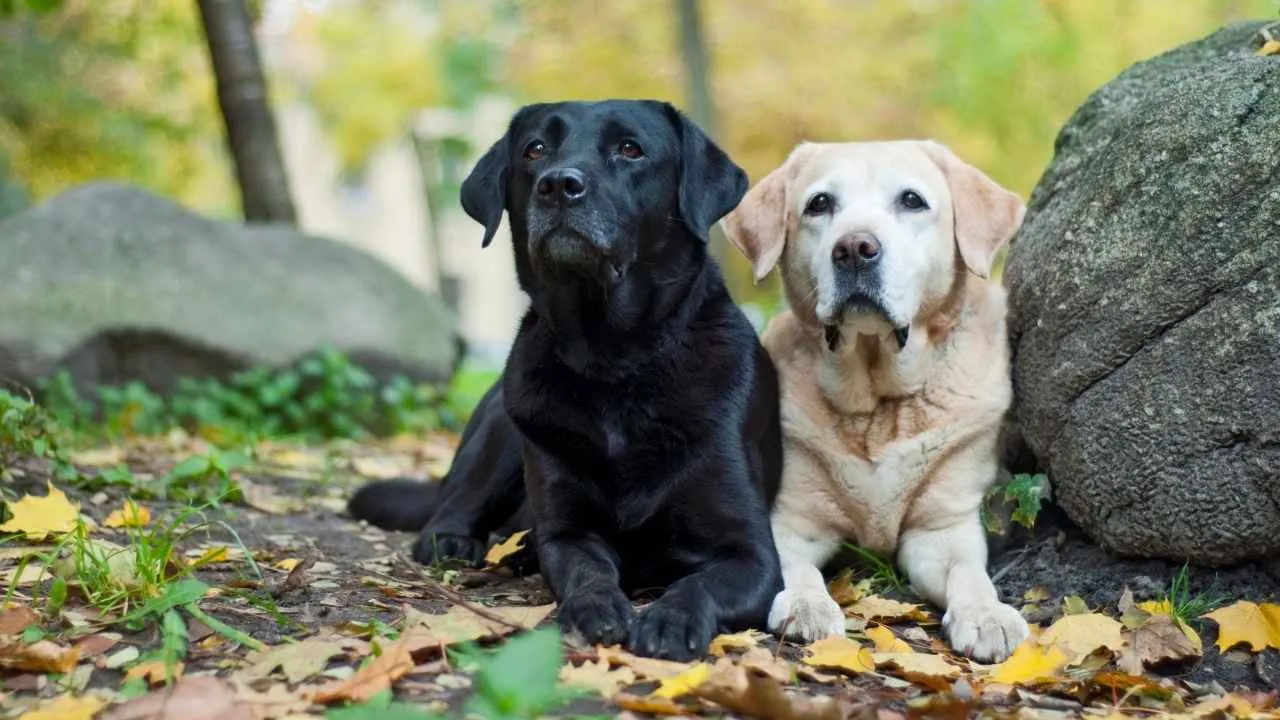
A Labrador Retriever sees a downed bird and tends to treat the situation like someone has just assigned it the best job in the world.
That natural enthusiasm for retrieving is one reason the breed has become such a popular breed in hunting circles. Labrador was developed for retrieving work, and its ability to locate and bring back game remains one of its defining strengths
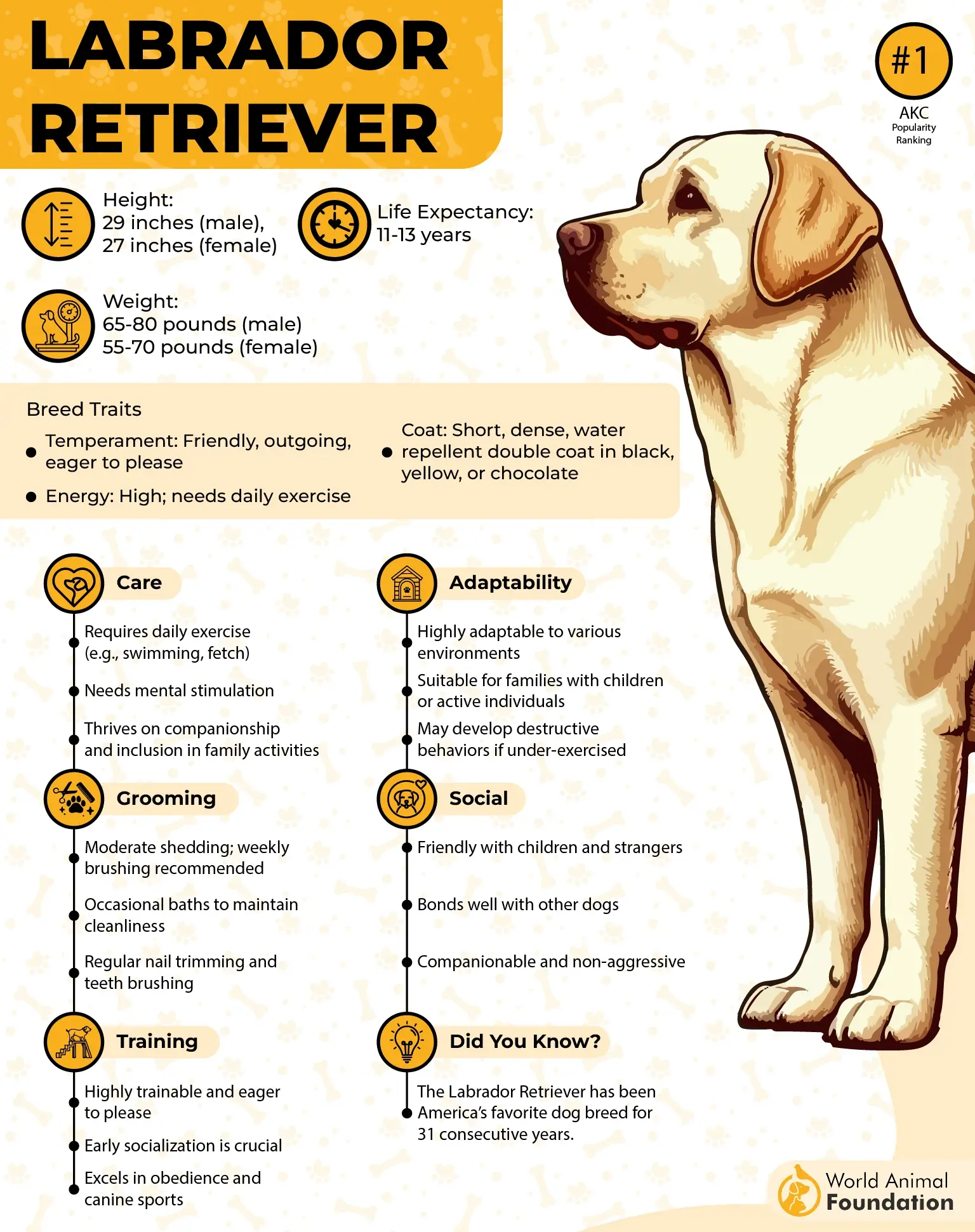
What makes the Labrador especially appealing is the combination of working ability and cooperation. It generally enjoys having a clear task and can learn detailed retrieving routines with consistent instruction.
Its reputation as a friendly family dog is well deserved, but it does not erase its sporting roots. Petplan stated that a Lab instantly becomes a family member wherever it lives.
Role in the Field
It’s particularly useful for waterfowl hunting. A Labrador can retrieve birds from ponds, lakes, marshes, and other waterways, allowing the hunter to recover game that would otherwise be difficult or impossible to reach.
Its physical build also supports this work. It has the strength and stamina to carry retrieves, while its water-friendly coat helps it handle wet conditions.
7. German Wirehaired Pointer
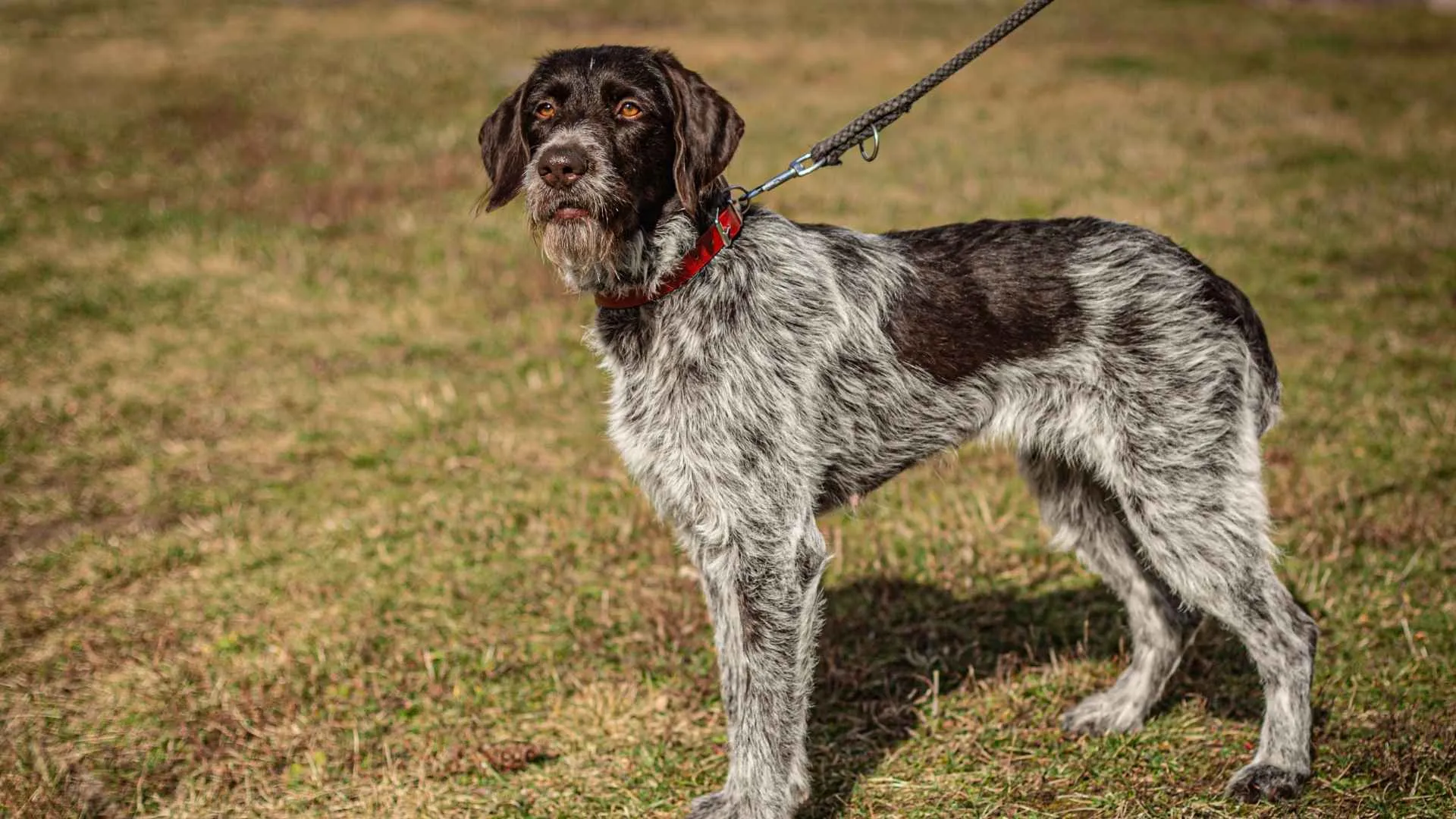
Some dogs are made for pleasant mornings in perfect weather. The German Wirehaired Pointer seems considerably less concerned about whether the day is pleasant.
This rugged German hunting breed was bred to perform multiple jobs in the field, including pointing, tracking, and retrieving. That versatility makes it especially useful for hunters who regularly encounter rough vegetation, difficult ground, or wet conditions.
There is a serious working character beneath that distinctive coat. German Wirehaired Pointers tend to thrive when their natural abilities have a purpose, particularly when they are given regular opportunities to work outdoors.
Role in the Field
The German Wirehaired Pointer is especially useful when the landscape itself becomes part of the challenge. It can work through rough habitat, handle demanding outdoor conditions, and contribute to different stages of the hunt rather than being limited to one task.
Its wiry coat is one of its most practical assets. The coat protects it while it moves through brush and thorny vegetation and gives it added resistance against wet and cold environments.
Like the German Shorthaired Pointer, it can locate birds and point them for the hunter. But its heavier coat and rugged construction give it an edge when the landscape becomes less forgiving.
Conclusion
There is no universal winner among the best dog breeds for bird hunting and tracking. The right choice comes down to what you actually expect your dog to do once you reach the field.
Before choosing, think beyond the excitement of hunting day. Consider your terrain, the birds you pursue, how much time you can spend training, and what your dog’s life will look like outside the field.
Because the best hunting dog is the one whose abilities fit your style well enough that you both know what to do when the hunt begins.
