




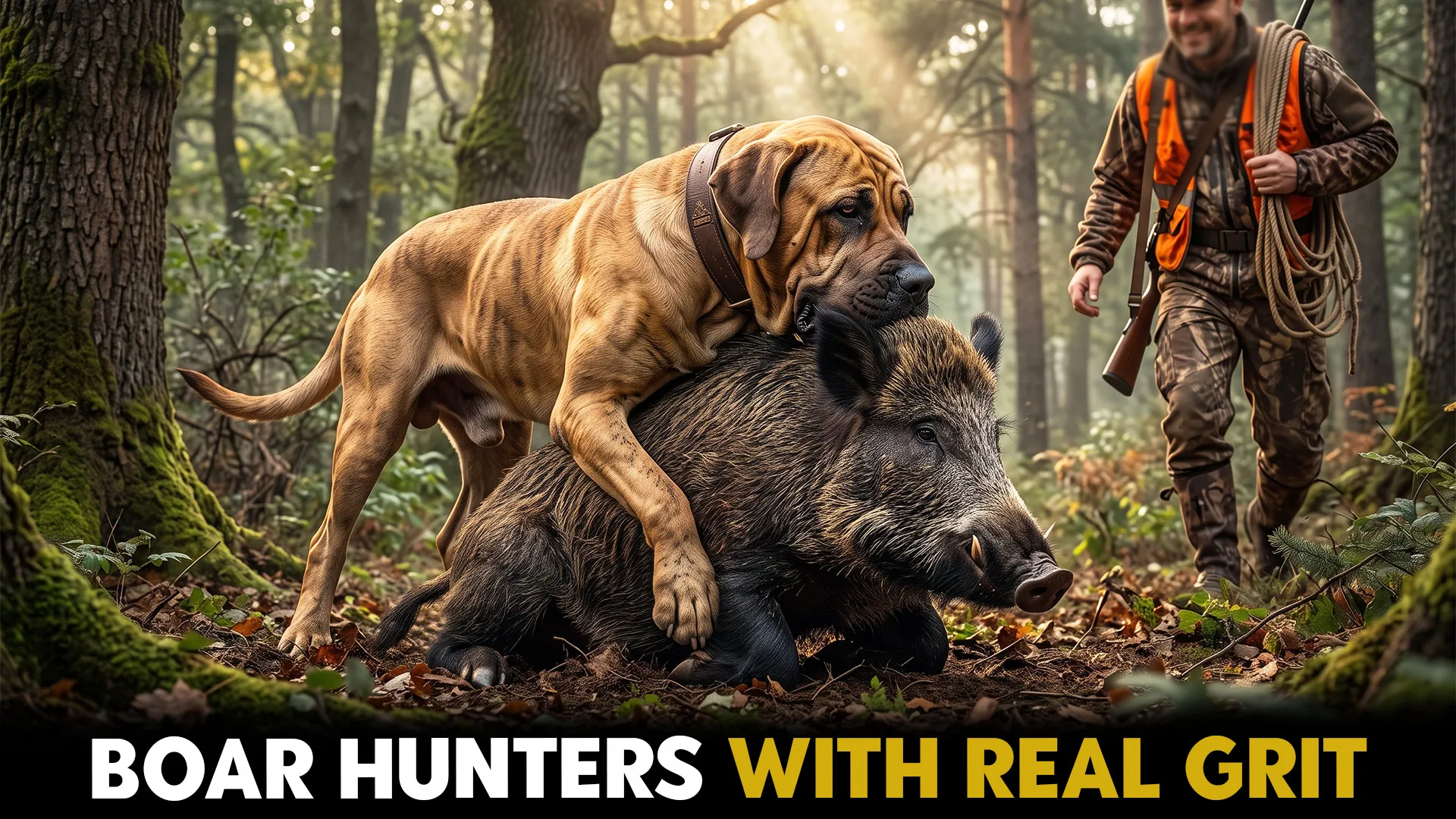
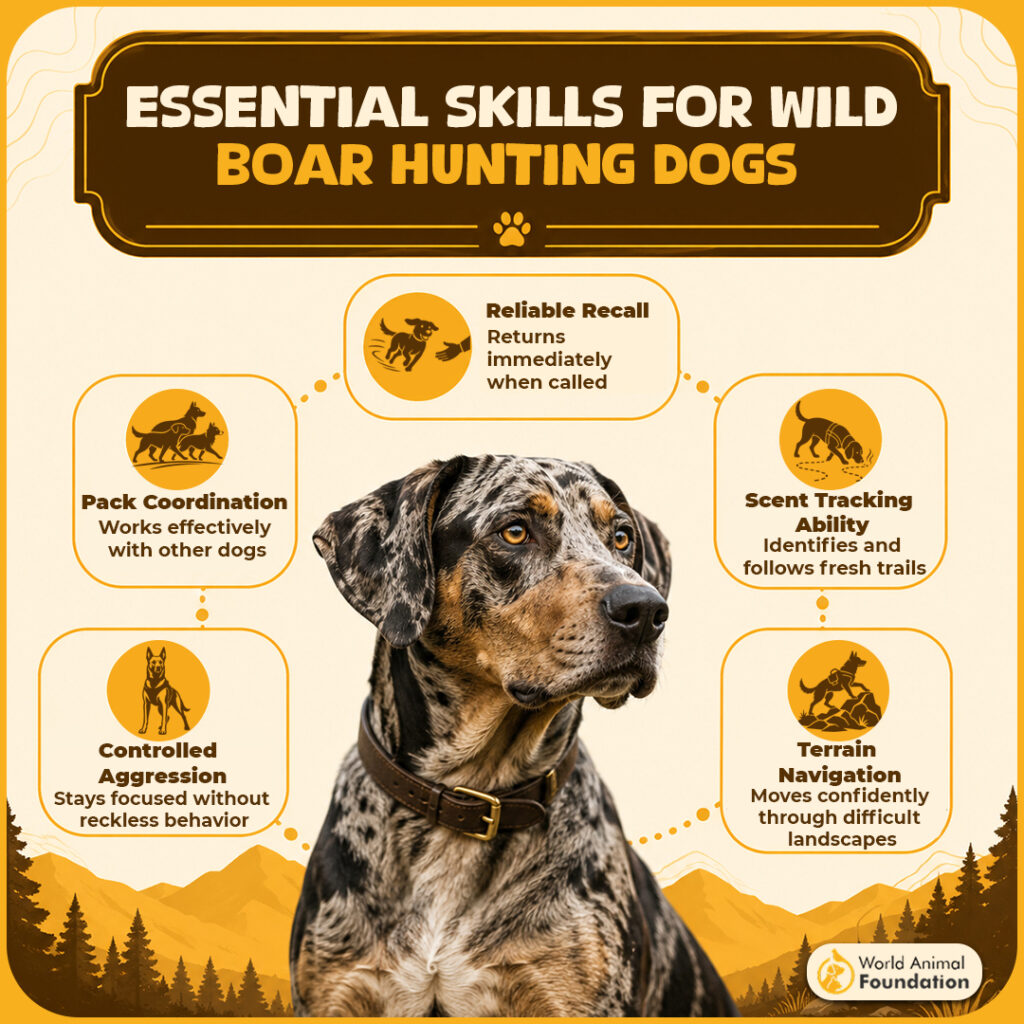
Wild boar hunting is not a “send the dog and hope” situation; it is muddy, loud, and wildly unforgiving. According to APHIS, feral wild hogs average 75 to 250 pounds, so smart planning is not optional.
Your hunting dog needs more than courage and a dramatic bark; it needs a steady head, real athleticism, and a handler who can stop the action. The right wild hog hunting breed works with you, not on its own adrenaline-fuelled agenda.
That difference separates a useful hunting partner from a forest problem. Meet the dogs with grit, training potential, and field sense to earn their place.
Must-Have Dog Breeds for Successful Wild Boar Hunts
1. Alano Español
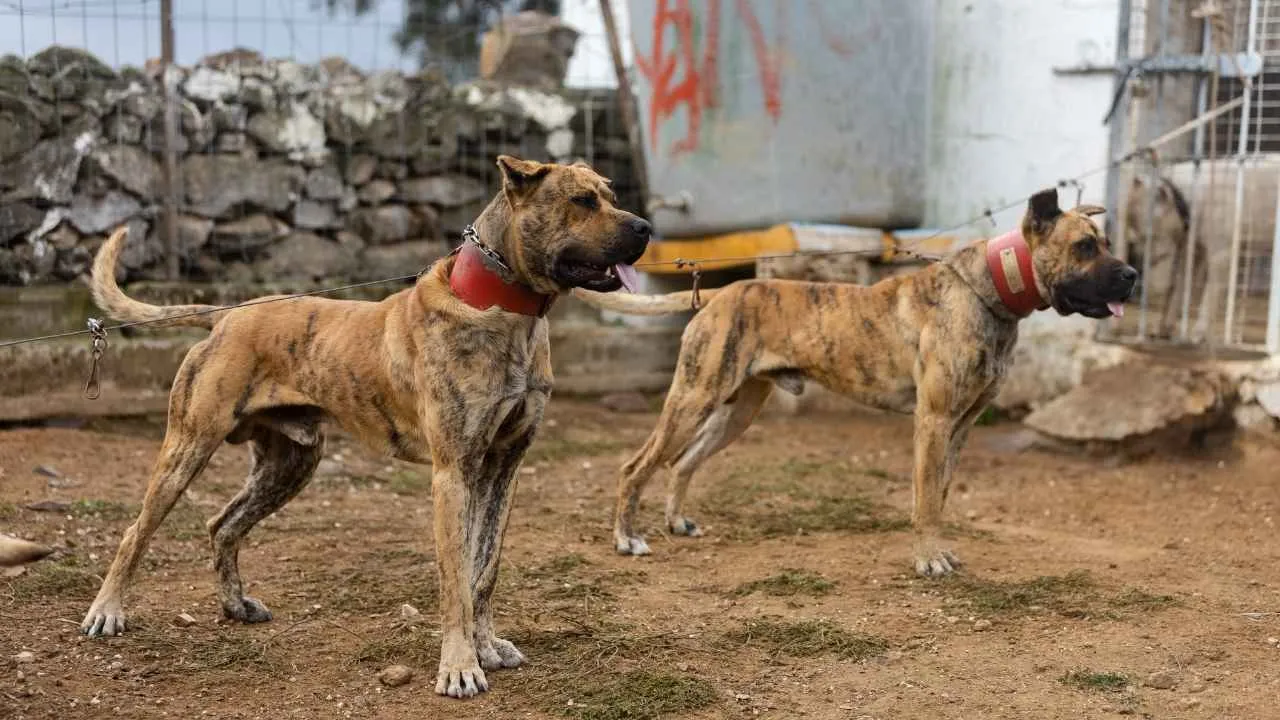
The Alano Español did not start life as a sofa ornament with a tough-guy face. In Spain, its ancestors guarded and held cattle, and surviving dogs were documented hunting boar in the Basque Mountains during the 1970s, according to the Continental Kennel Club.
That history helps explain its calm intensity: an Alano should be brave, purposeful, and switched on without becoming a free-range wrecking ball. It suits a seasoned handler who can build obedience, channel its drive, and keep sessions structured across uneven country.
Nerve: Confidence without uncontrolled aggression.
Athleticism: Powerful, efficient movement for difficult ground.
Scenting: Enough focus to follow a useful trail.
Recall: Instant response when excitement hits maximum volume.
Protection: Accepts appropriate protective gear before fieldwork.
Non-negotiables are early socialization, dependable recall, sound conditioning, and legal, humane hunting practices. Raw power means nothing if the dog cannot disengage, travel safely, or come home unhurt after hard work.
2. Boerboel
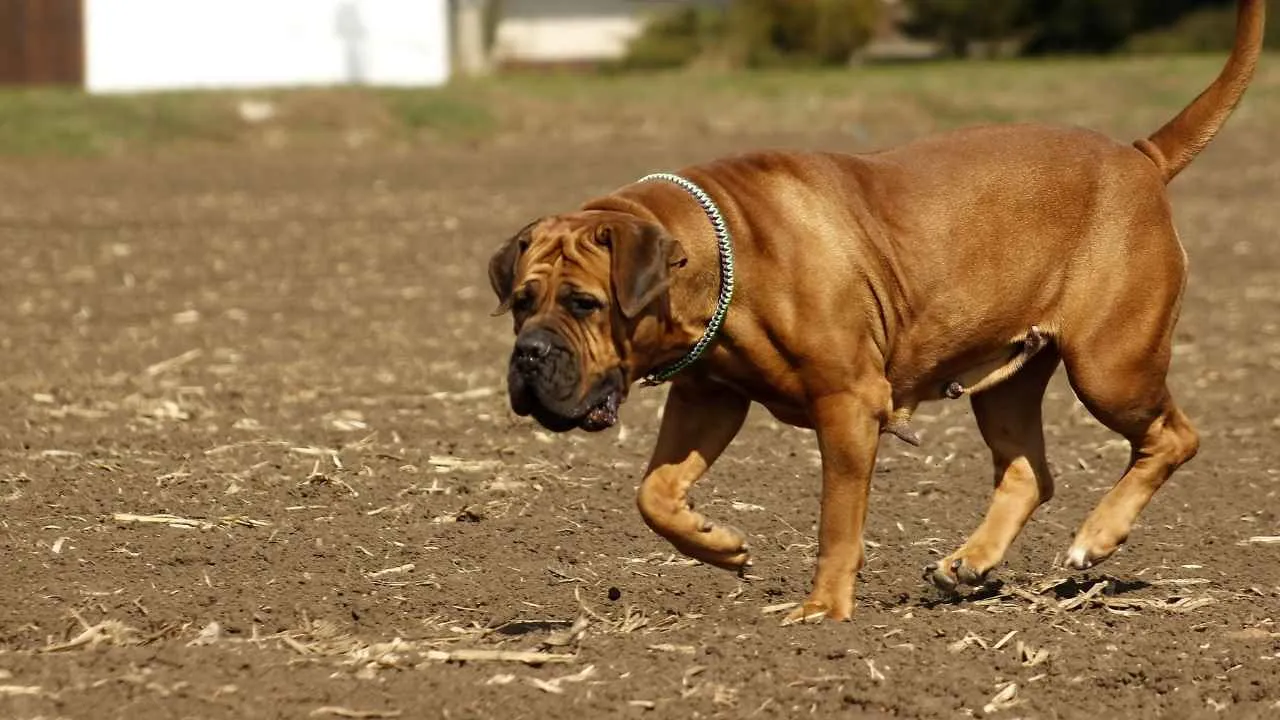
Born on South African farms, the Boerboel was a general-purpose protector rather than a specialist hunting machine. The AKC notes that these dogs tracked and held wounded large game, giving their serious working reputation some proper boots-on-the-ground history.
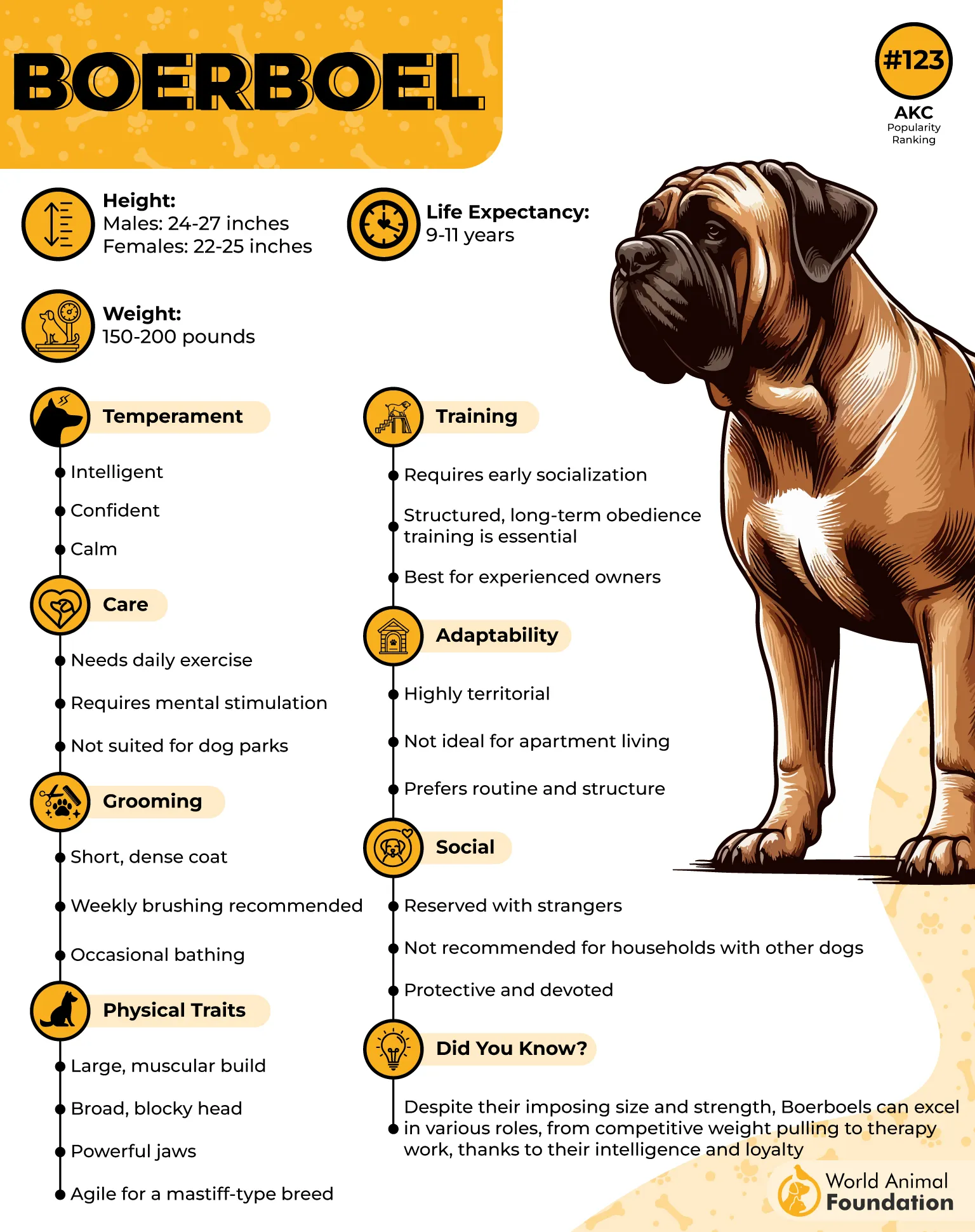
Its courage is best paired with a cool head: a Boerboel needs methodical conditioning, clear boundaries, and obedience polished far beyond “it usually listens.” This is a demanding choice for an experienced adult handler who can read body language, manage power, and stop the action on cue.
Nerve: Stable, confident judgment around pressure.
Athleticism: Sound movement over challenging ground.
Tracking: Willingness to follow trained direction, not freelance.
Recall: Immediate return when a boar changes the mood.
Protection: Comfortable wearing properly fitted field gear.
Non-negotiables include extensive socialization, secure containment, veterinary clearance, and lawful hunting practices. A powerful dog is only useful when its handler has control before, during, and after fieldwork.
3. Cane Corso
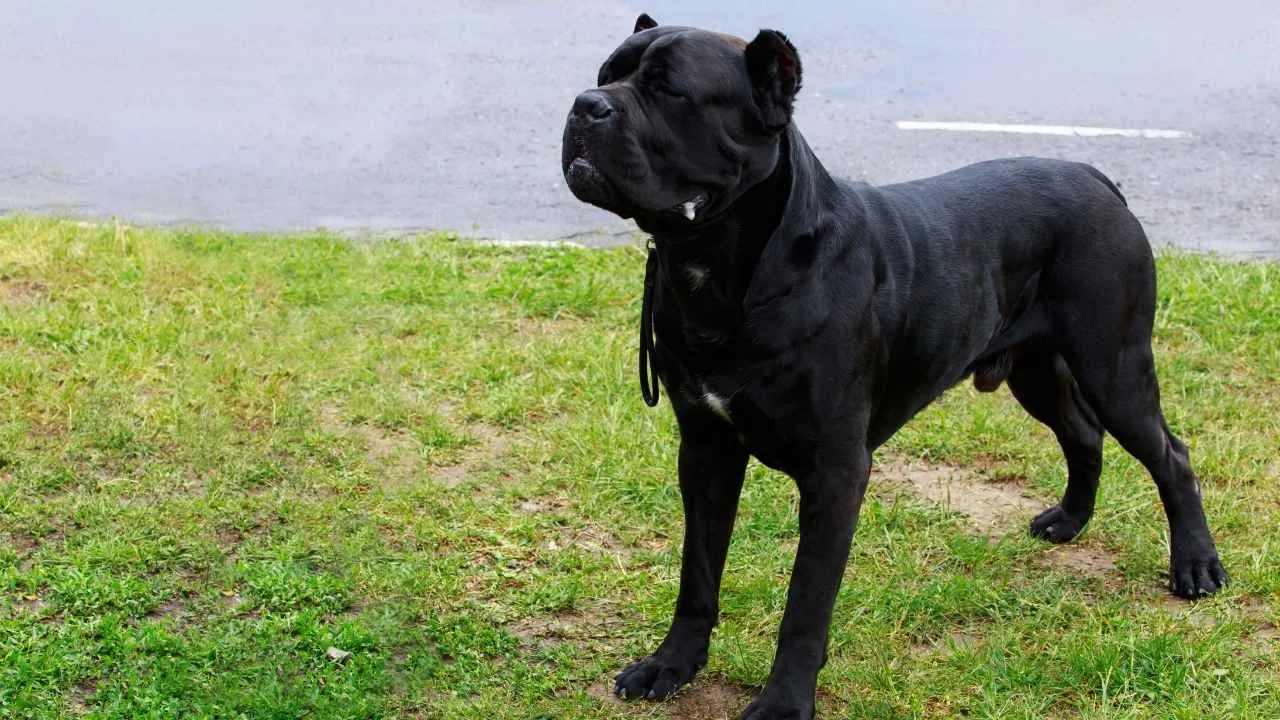
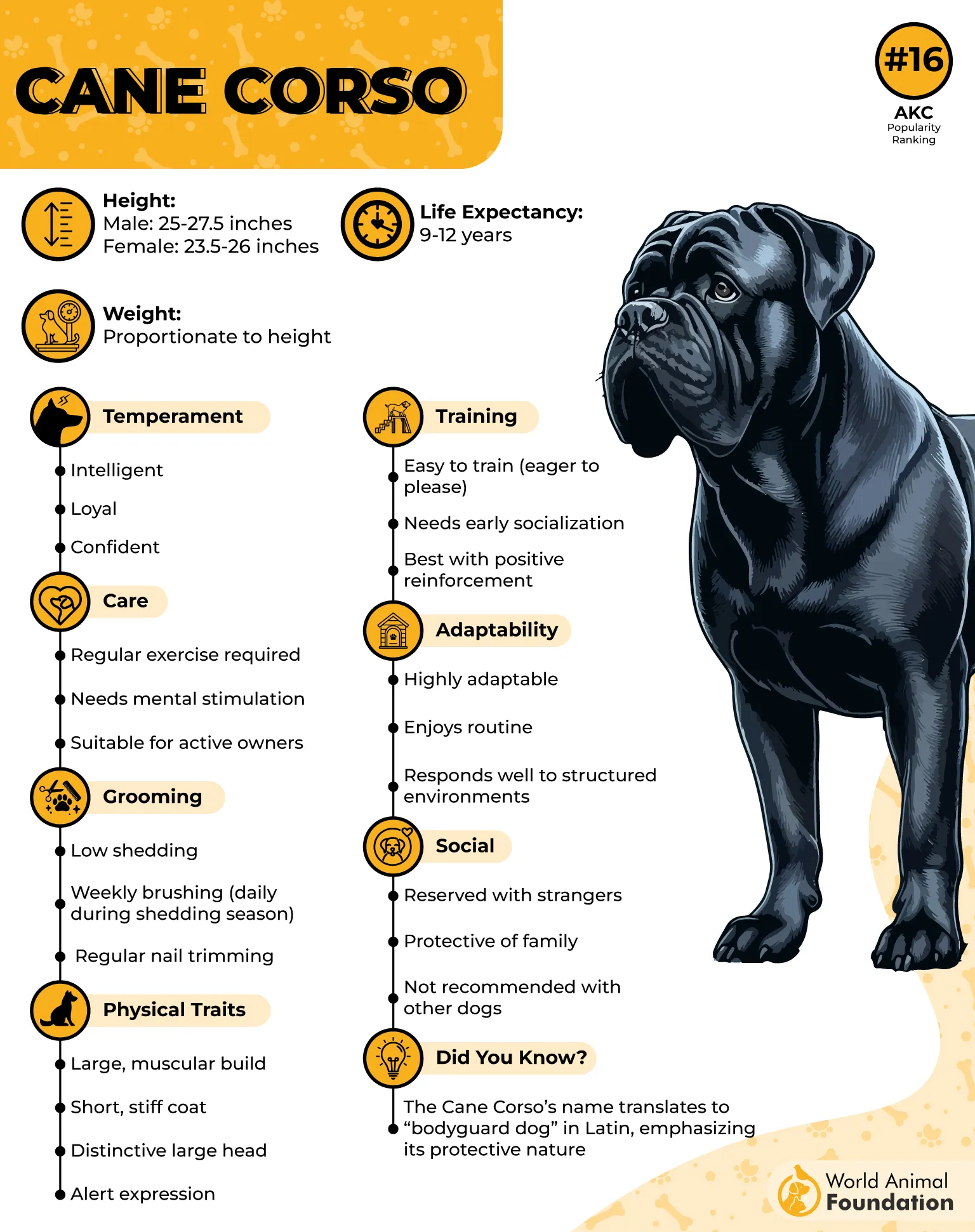
Before it became a polished household guardian, the Cane Corso was Italy’s multi-tool farm dog—part protector, part labourer, part hunting help. AKC history records Corsi chasing wild boar and flushing badger and porcupine, proof that this Mastiff’s backstory contains far more than dramatic gate-staring.
Modern work demands brains before bravado. The Corso suits an experienced handler who builds fitness gradually, rewards a reliable off-switch, and treats early socialisation and humane control as mandatory, not optional decoration.
Nerve: Calm confidence under pressure.
Athleticism: Sure-footed movement through uneven cover.
Tracking: Focus on a handler-directed trail.
Recall: Immediate response when excitement hits turbo mode.
Gear: Comfortable in correctly fitted protective equipment.
Non-negotiables are a sound adult dog, veterinary guidance, carefully introduced equipment, and local-law compliance. No owner should confuse intimidating looks with suitability: control, conditioning, and a hard-earned recall protect the dog, the handler, and everyone sharing the ground when pressure goes sky-high.
4. Fila Brasileiro
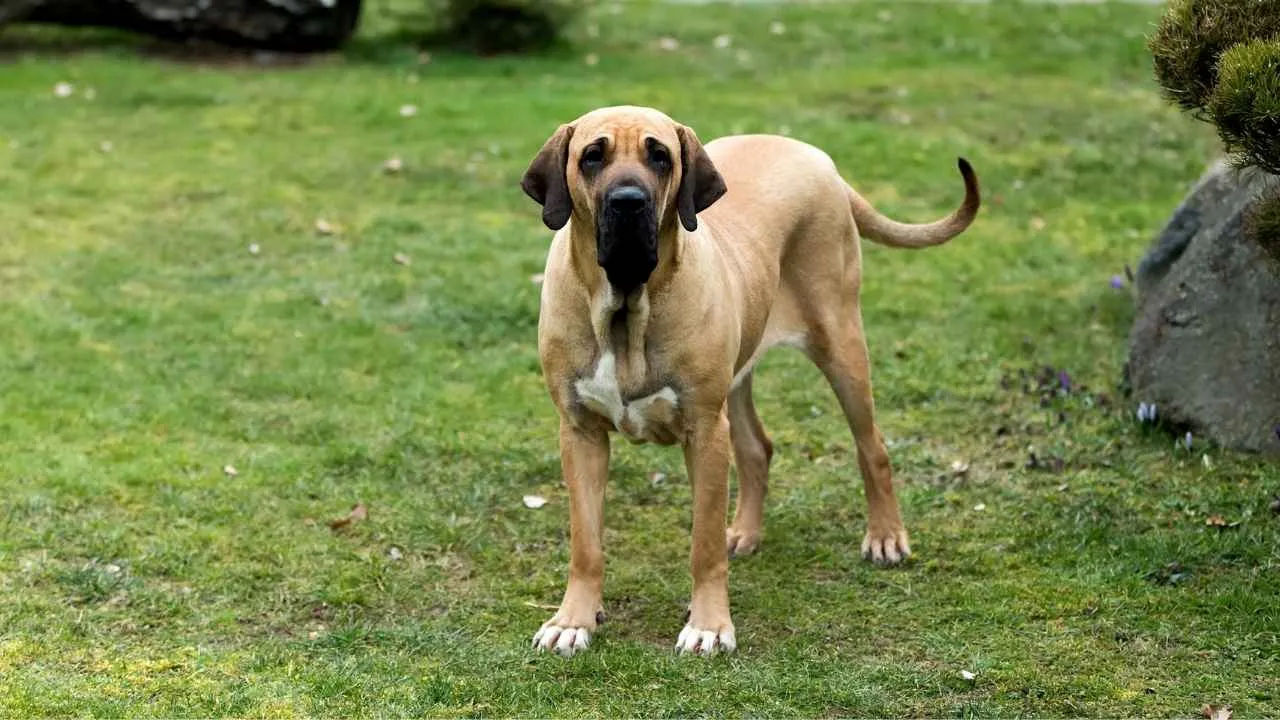
Brazilian ranchers developed the Fila Brasileiro to track and hold cattle while guarding against predators. That gripping, determined heritage gives its boar-hunting role context.
This is no casual weekend project: its courage and stamina need an expert handler who teaches calm control long before rough ground, scent, and pressure arrive.
Nerve: Steady around high arousal.
Athleticism: Durable movement over rugged country.
Tracking: Works a handler-approved line.
Recall: Returns instantly on cue.
Gear: Tolerates properly fitted protection.
Non-negotiables for this hog hunter are early socialisation, secure containment, veterinary oversight, and lawful, humane practice. A Fila earns field trust through judgment and responsiveness, never sheer intimidation.
5. Bullmastiff
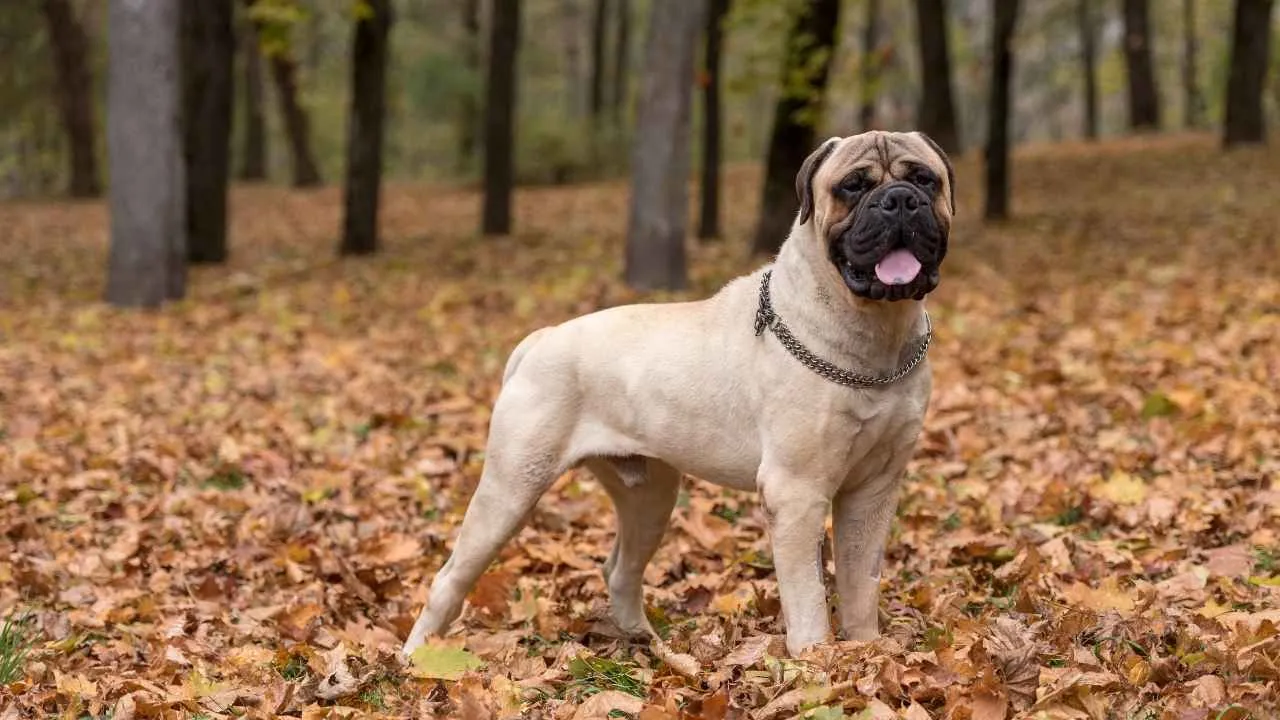
English gamekeepers developed the Bullmastiff to track and hold poachers, not chase wild pigs through bramble. Its history rewards cool, controlled restraint; that is a useful field lesson, even if it lacks a classic boar-hunting résumé.
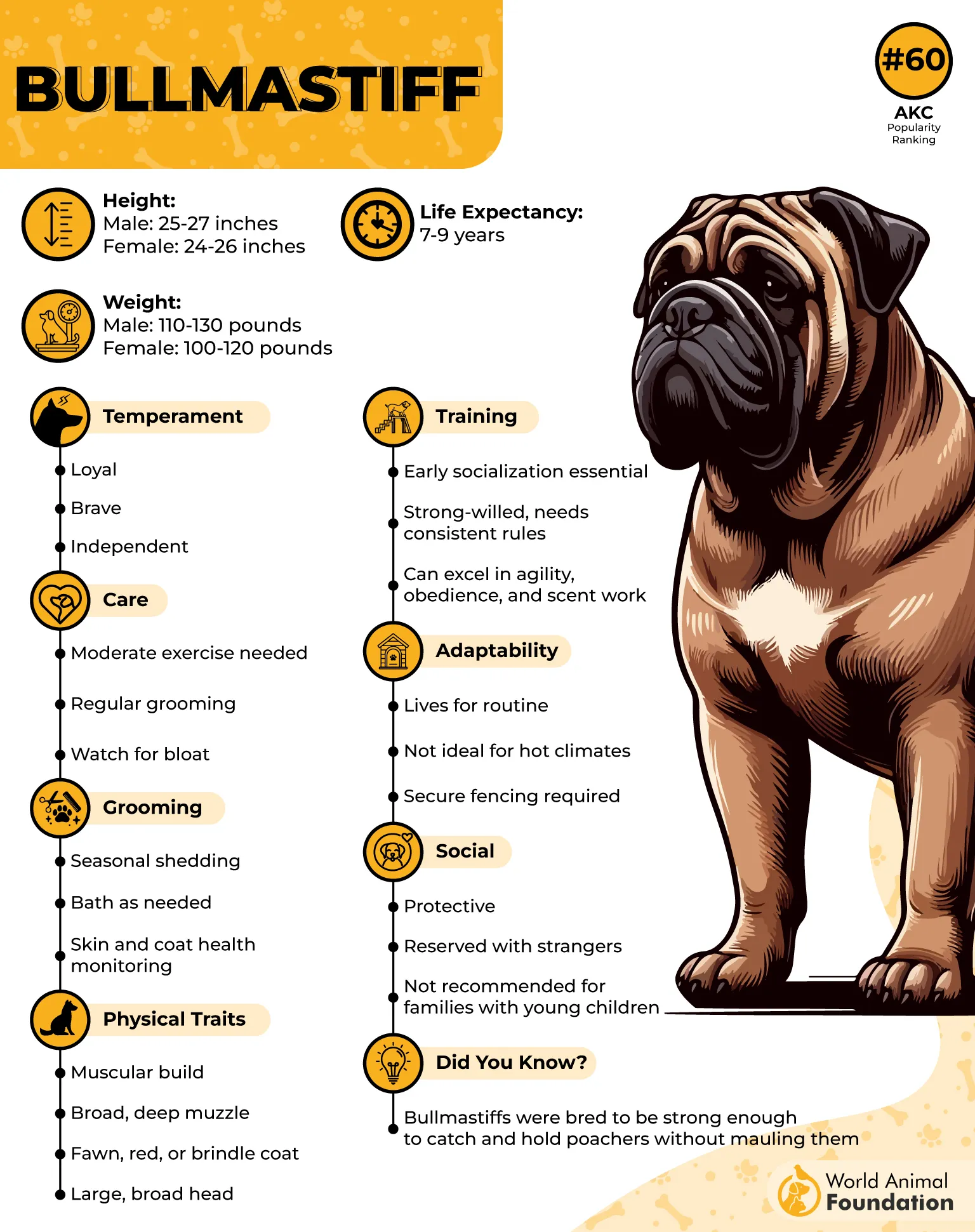
Power does not make it an automatic catch dog. Experienced handlers should focus on responsive obedience, sensible conditioning, health monitoring, and stopping work early when heat, fatigue, or terrain turns unsafe.
Nerve: Steady under rising pressure.
Athleticism: Sure-footed, not marathon-built.
Tracking: Focuses on a handler-led trail.
Recall: Comes back instantly on cue.
Gear: Accepts properly fitted protection.
Non-negotiables are skilled handling, secure containment, local-law compliance, and veterinary approval for demanding work. Bravery without control is just a liability wearing a handsome, wrinkled face.
6. Airedale Terrier
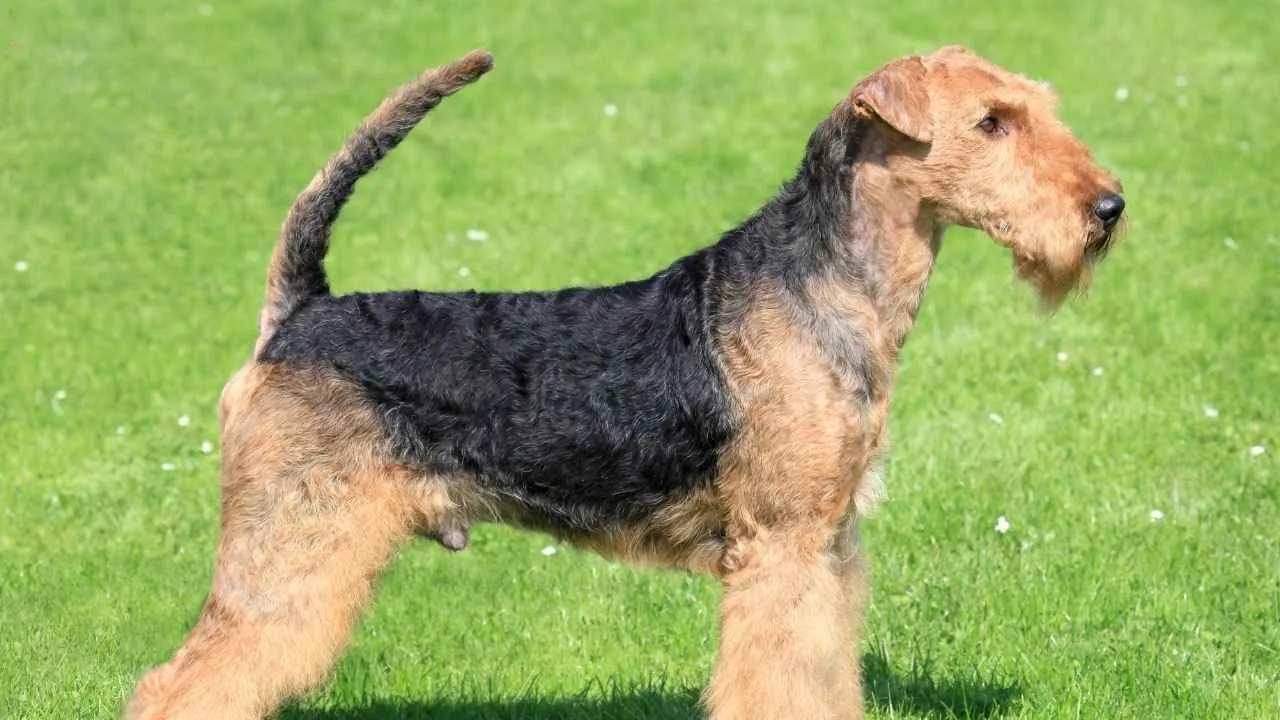
Yorkshire workers created the Airedale Terrier to hunt otters in water and small game on land. That versatile past suggests a mobile support role in boar country, not the job of confronting a boar alone.
Think lively scout, not armored gladiator. This hog-hunting, bold, high-drive terrier needs an experienced trainer who rotates exercises, channels surplus energy, and manages its independent streak before rough terrain becomes an unscheduled comedy sketch.
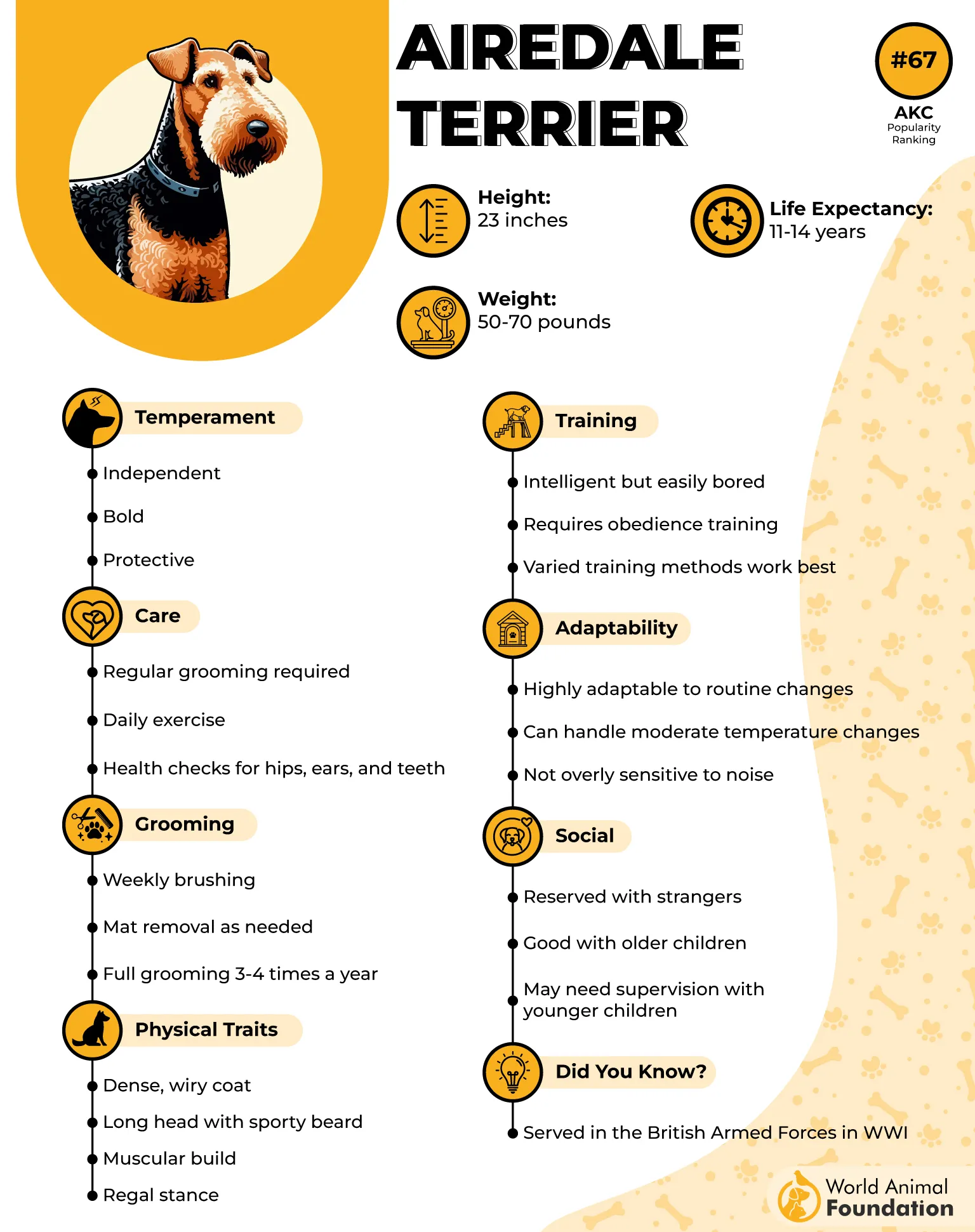
Nerve: Eager without tipping into chaos.
Athleticism: Agile through brush and uneven footing.
Tracking: Strong nose; follows a handler-directed scent line.
Recall: Returns instantly on cue.
Gear: Comfortable in properly fitted protection.
Non-negotiables are legal hunting, secure containment, conditioning, and a dog that can disengage on command. Its cleverness needs structure, not improvisation.
7. Black Mouth Cur
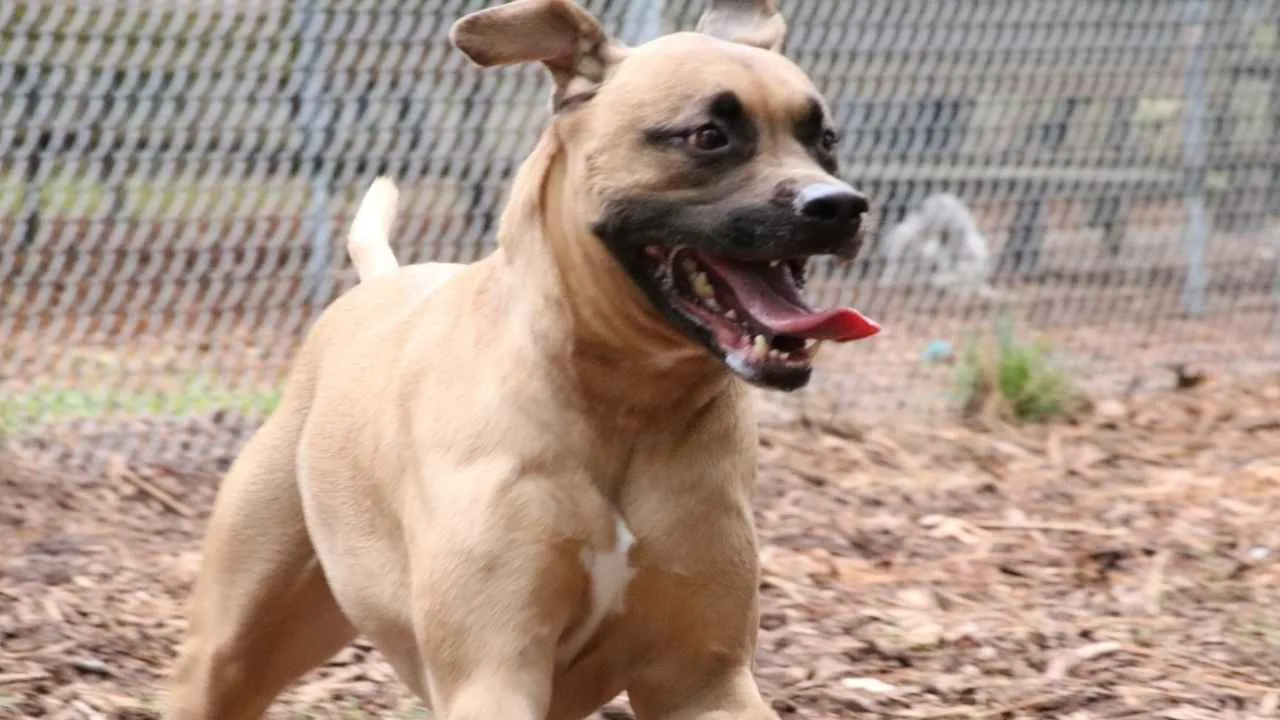
Southern homesteads relied on the Black Mouth Cur to trail game, catch hogs, pen cattle, and guard the family. That all-purpose past makes it a credible boar-work partner, built for jobs rather than decorative naps.
Expect courage, stamina, and a serious work ethic, yet none replaces training. This hog hunting dog suits a confident handler who gives boundaries, frequent practice with mental stimulation, and a legitimate outlet for its busy brain.
Nerve: Steady when excitement climbs.
Athleticism: High endurance and agility. Powerful over demanding ground.
Scenting: Works a handler-selected trail.
Recall: Turns around immediately on cue.
Gear: Accepts fitted protective gear.
Non-negotiables are careful socialisation, secure containment, suitable conditioning, and legal, humane hunting. A dog with this much natural drive needs excellent judgment at both ends of the lead.
8. Dutch Shepherd
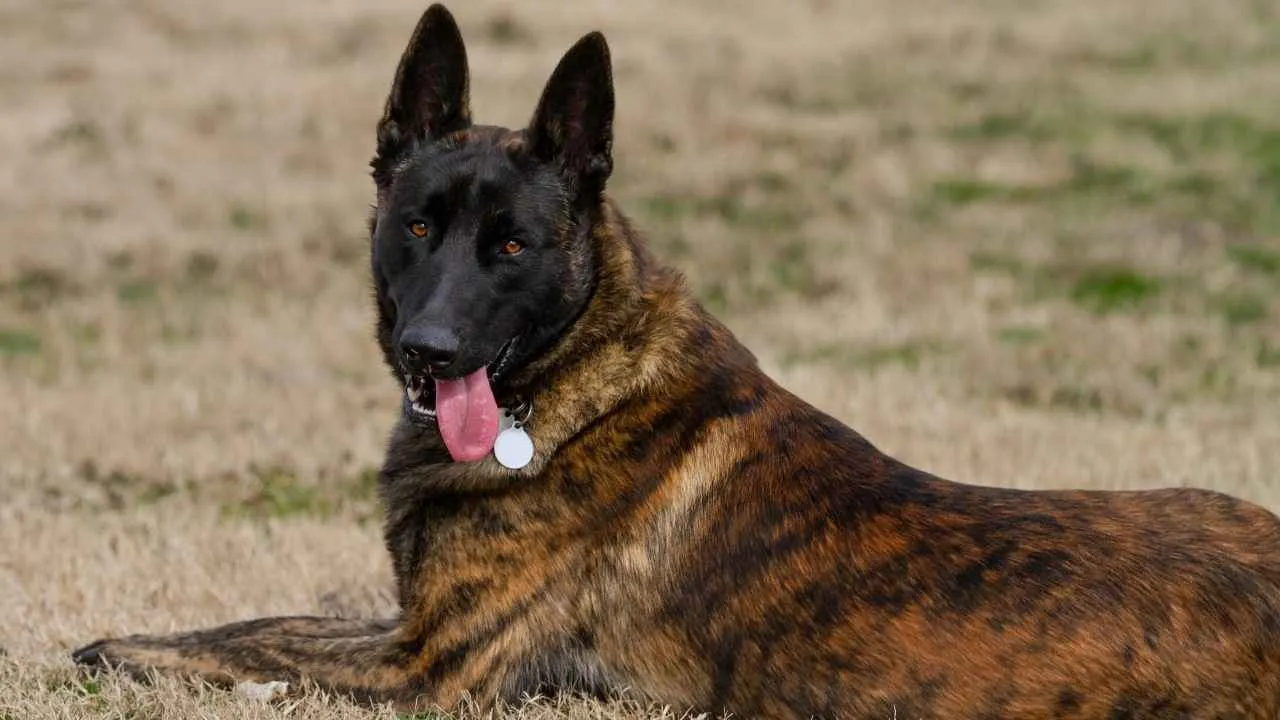
Dutch Shepherds began as versatile farm dogs, herding livestock and guarding property. In boar country, they suit tracking and controlled support, not the traditional catch-dog role.
This courageous, switched-on dog loves demanding work, but it needs experienced handling and steady training. Skip shortcuts: boredom can turn a brilliant worker into the campsite’s unpaid renovation crew.
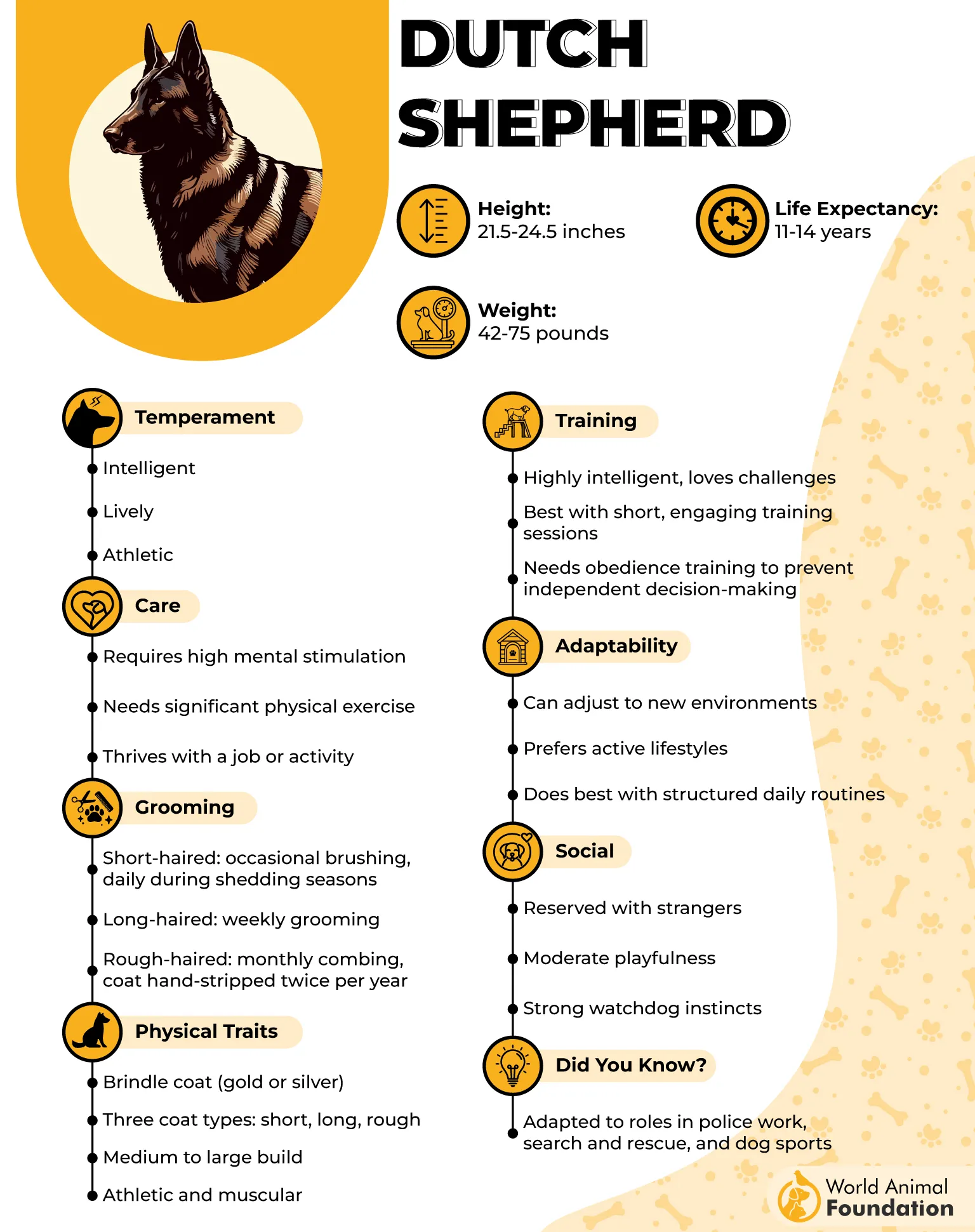
Nerve: Cool under pressure.
Athleticism: Agile on rough ground.
Tracking: With a remarkable sense of smell, follows selected scent.
Recall: Returns on cue.
Gear: Wears fitted protection.
Non-negotiables are secure containment, legal hunting, and a conditioned dog. Its talent shines with always clear tasks, fair limits, and a sensible exit plan.
9. Dogue de Bordeaux
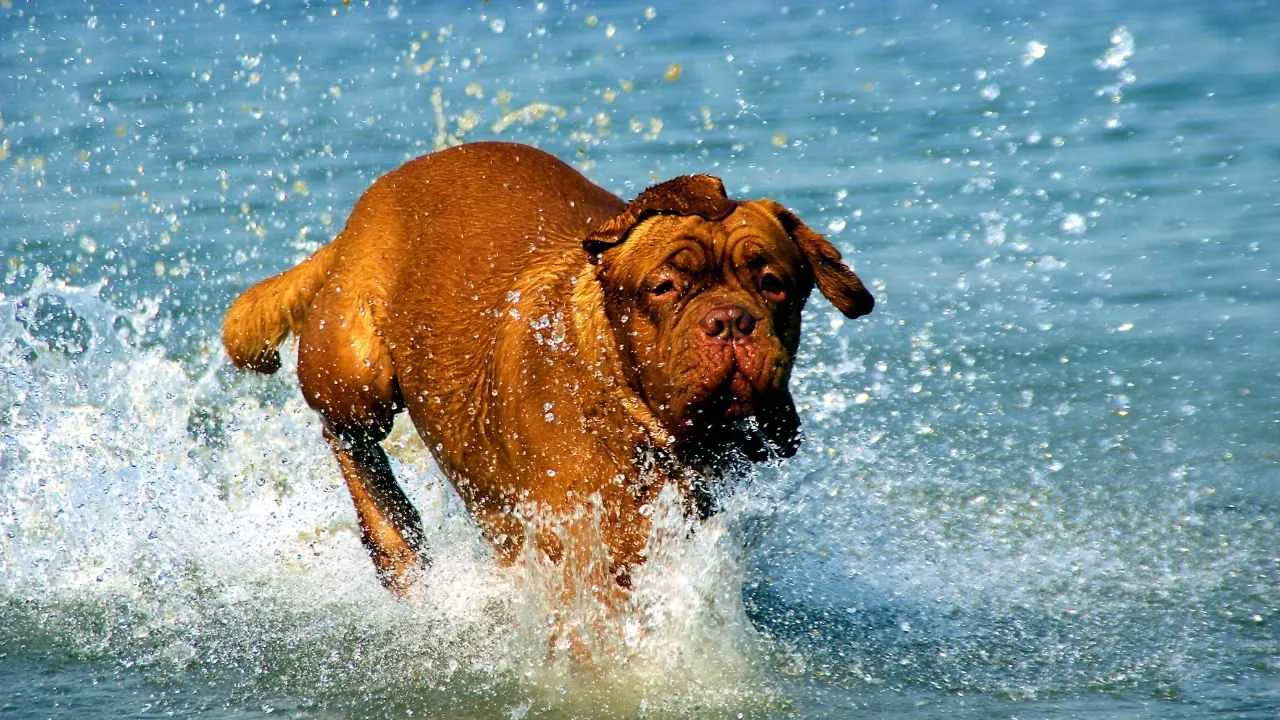
The Dogue de Bordeaux brings French mastiff drama to the woods, plus a genuine hunting backstory. Purina notes that this old breed has served as a guardian, hunter, and cattle worker, including hunting boar; its historic job was grit, not glamorous jogging.
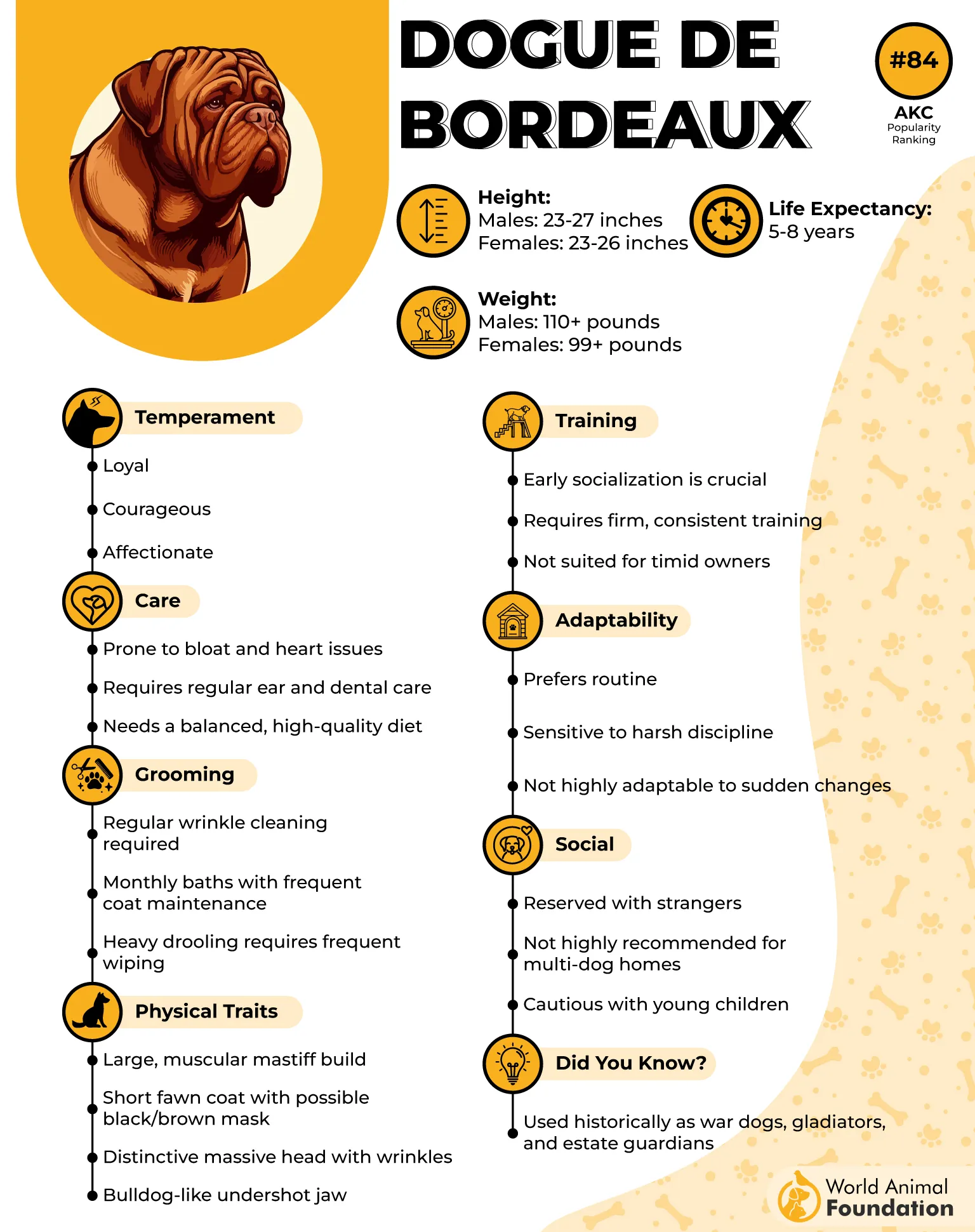
However, today’s Dogue is better treated as a carefully assessed working prospect than a plug-and-play hunting dog. Its powerful, steady temperament suits a skilled handler who prioritises joint health, incremental conditioning, calm direction, and an exit cue that works before chaos starts charging rent.
Nerve: Calm decision-making under pressure.
Athleticism: Sound, balanced movement through rough cover.
Tracking: Attention to a handler-led scent line.
Recall: Immediate return after the job ends.
Gear: Comfortable in correctly fitted protective equipment.
Non-negotiables include veterinary clearance, thoughtful weight management, legal hunting practices, and never asking a dog to outwork its conditioning. Big presence means little if the handler cannot keep decisions controlled under pressure.
Conclusion
Wild boar work reveals a simple truth: the right dog is not the loudest, biggest, or most dramatic creature in the brush. A capable partner needs clear training, sound conditioning, reliable recall, and a handler who knows that controlled teamwork beats bravado every single time.
Before choosing a hunting prospect, speak with local wildlife authorities, verify the rules, meet working-line breeders or experienced handlers, and schedule a veterinary fitness check. Then practise recall, emergency stops, and protective-gear comfort in a fenced space long before the first legal hunt.
