




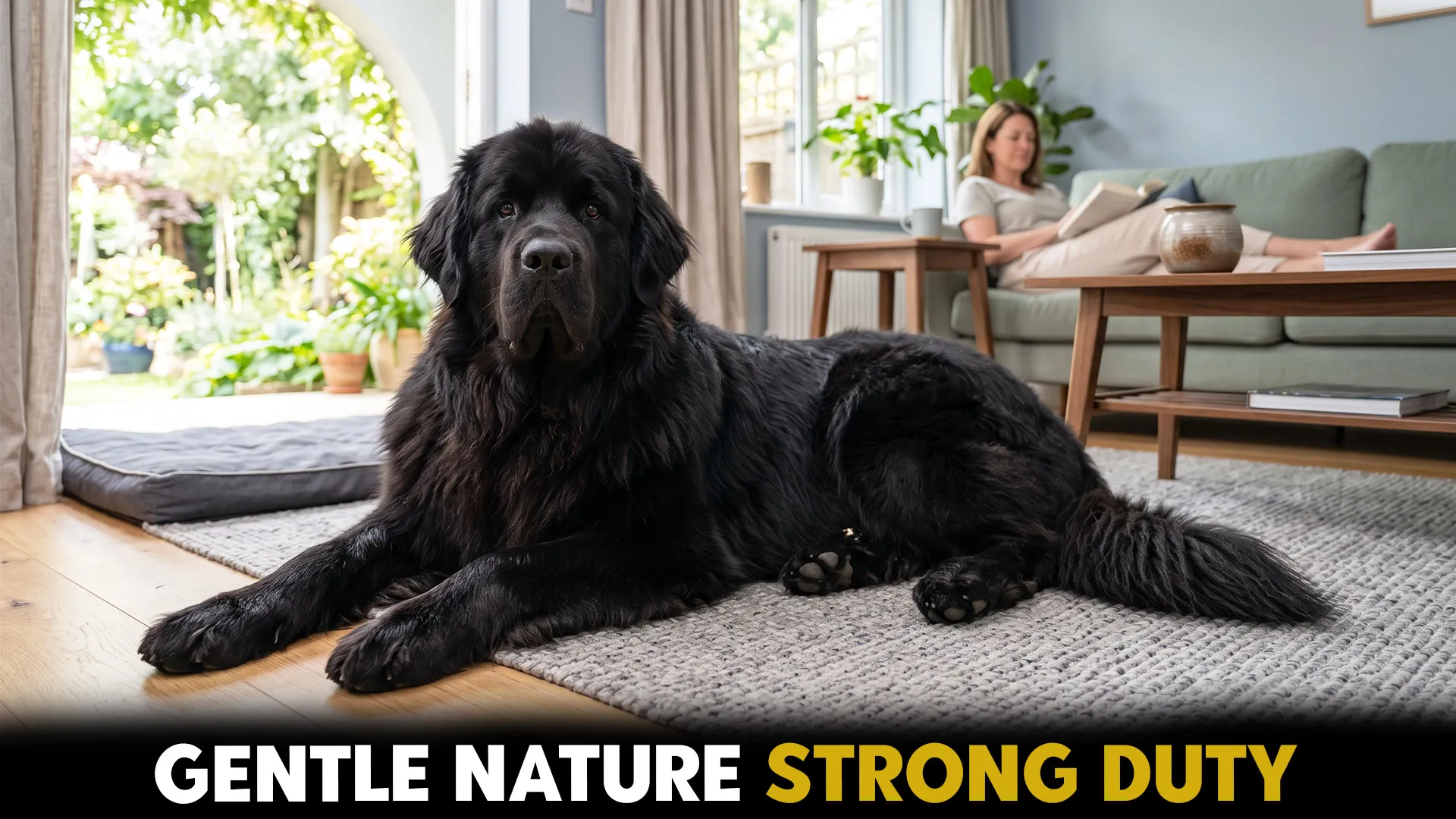
Peaceful living and home security do not have to sit at opposite ends of the same decision. A well-matched guard dog can add an extra layer of awareness around the home while fitting into ordinary routines.
Dogs naturally rely on their senses to notice sounds, movement, scents, and unfamiliar activity, which makes alertness one of their most useful household traits. Yet a protective dog also needs calm behavior, reliable obedience, and positive exposure to people and situations it will encounter regularly.
Otherwise, natural guarding instincts can become difficult to manage. Low-maintenance options are especially useful for households that want a watchful companion without extensive grooming, extreme exercise demands, or nonstop mental work.
The important details go beyond appearance. Here, you will find breeds that make that balance easier to compare at home overall.
Key Takeaways
Home security can start with something as simple as a dog that notices what is happening around the property. Some breeds are naturally suited to that role and need surprisingly little upkeep.
Great Pyrenees has a long history of protecting sheep and goats, often facing threats with confidence while keeping the animals in its care calm.
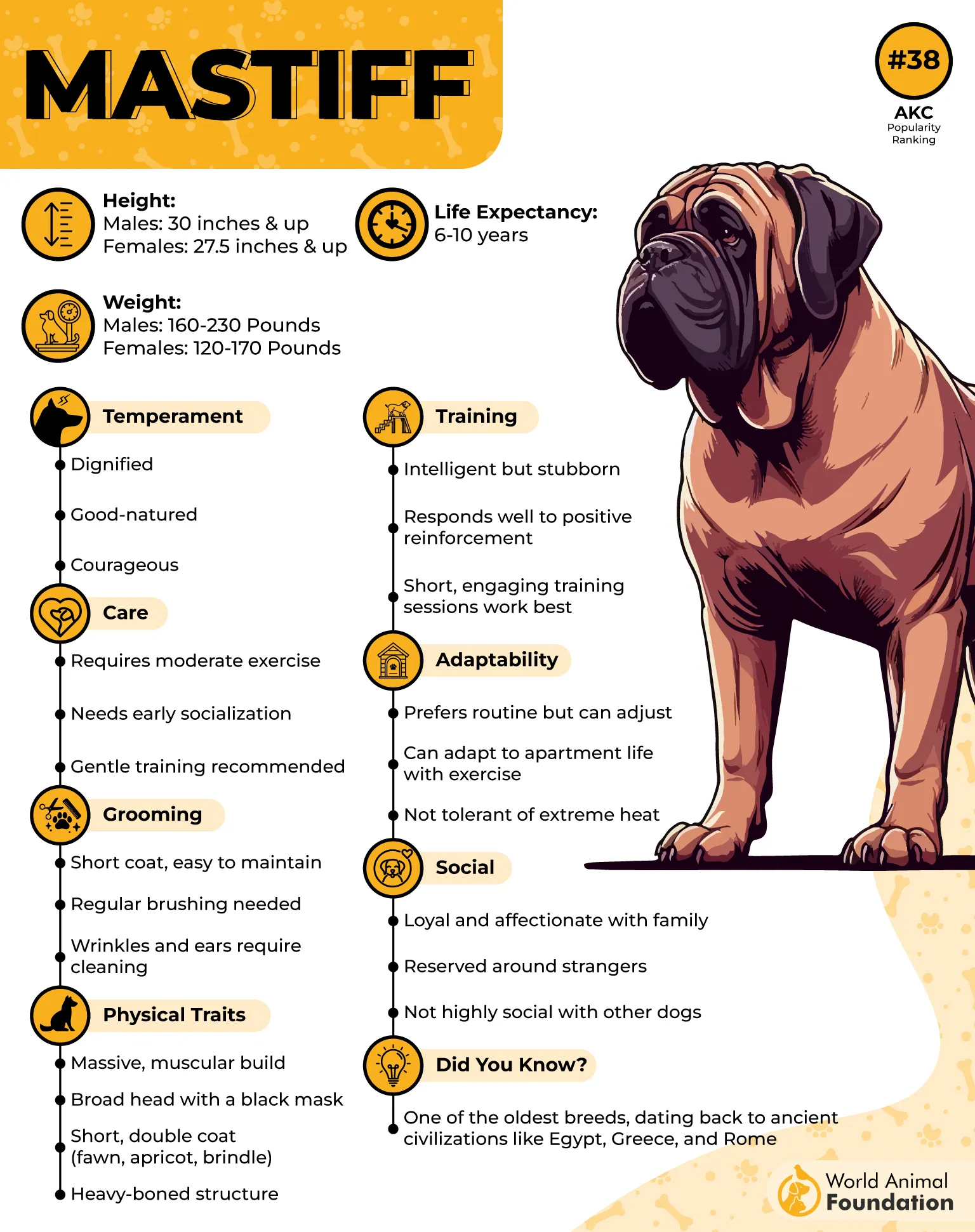
Mastiff takes a quieter approach, using its huge frame and deep bark to make its presence known without needing a highly active routine.
The next breeds add their own interesting twists, from an imposing watchdog to a dog with an unusual instinct for water rescue.
Top Low‑Maintenance Guard Dog Breeds for Peaceful Living
1. Great Pyrenees
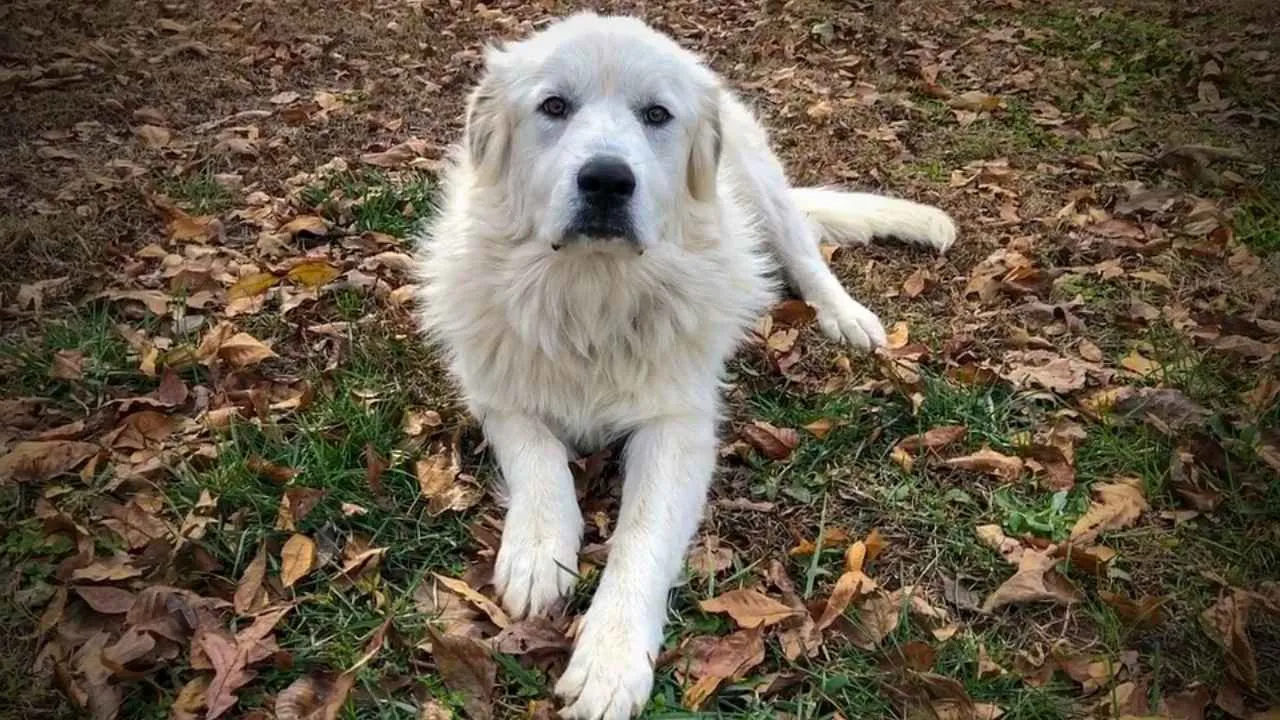
Great Pyrenees is an ancient guardian breed with roots reaching back hundreds, possibly thousands, of years, when it watched sheep and goats for its keepers. In 1675, Louis XIV named it the royal dog of France, after which its role expanded to guarding large estates across social classes.
A Different Kind of Guard
They tend to patrol in broad arcs, using posture, territorial awareness, and deep warning barks to discourage trouble before taking action.
Their guardian instincts were shaped around protecting livestock rather than chasing them, giving them a calm approach to threats, as National Pyr Rescue notes.
This is what makes their working style especially distinctive:
Gentle with sheep, goats, and poultry
Rear double dewclaws aid footing on uneven ground
Confident when facing pressure
Built for Patrolling
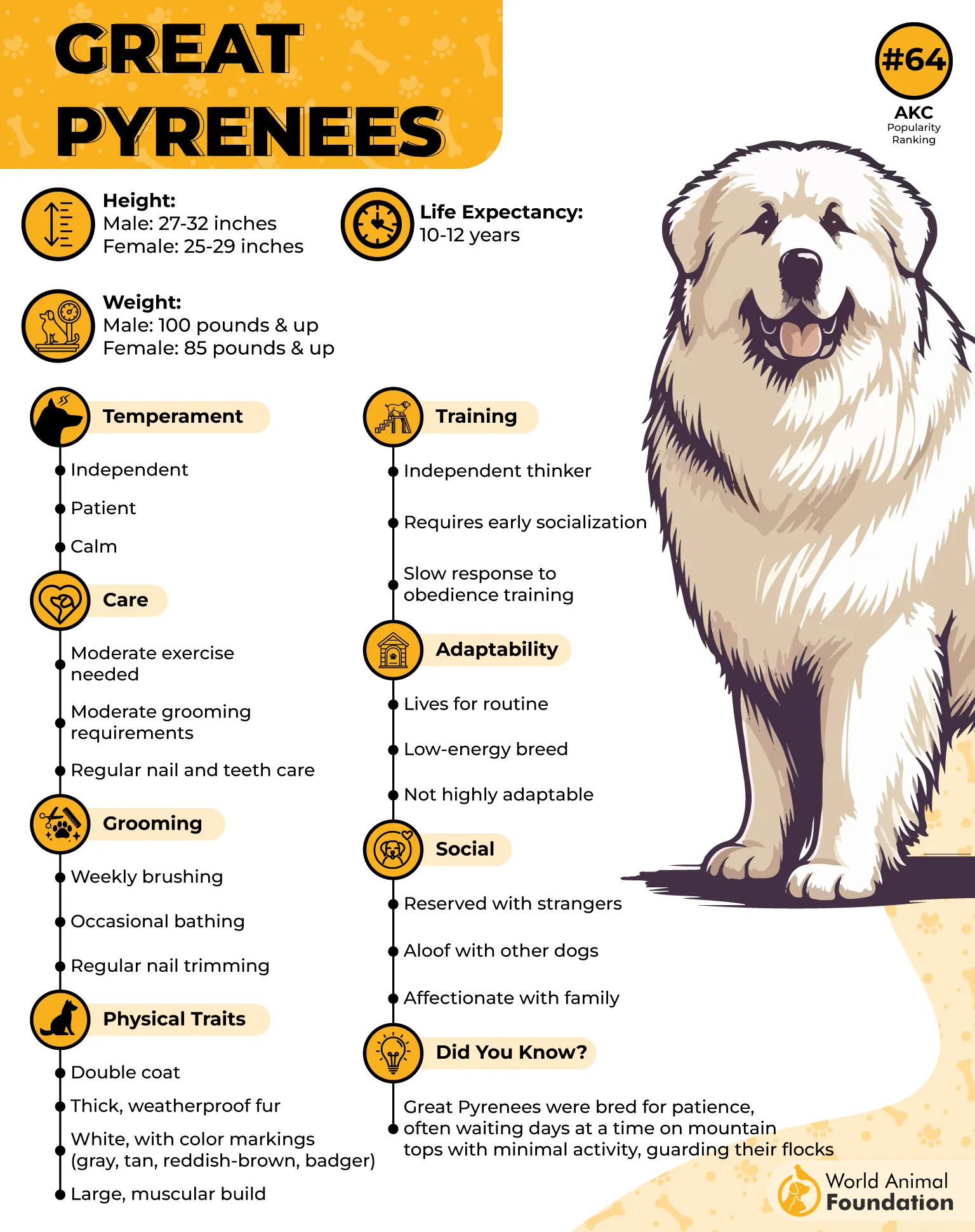
Great Pyrenees does not need intense running sessions to remain fit and can prefer a slower pace outdoors. Around 20–30 minutes of exercise a couple of times daily, such as gentle walks, hikes, or yard time, can support muscle strength and physical conditioning.
2. Mastiff
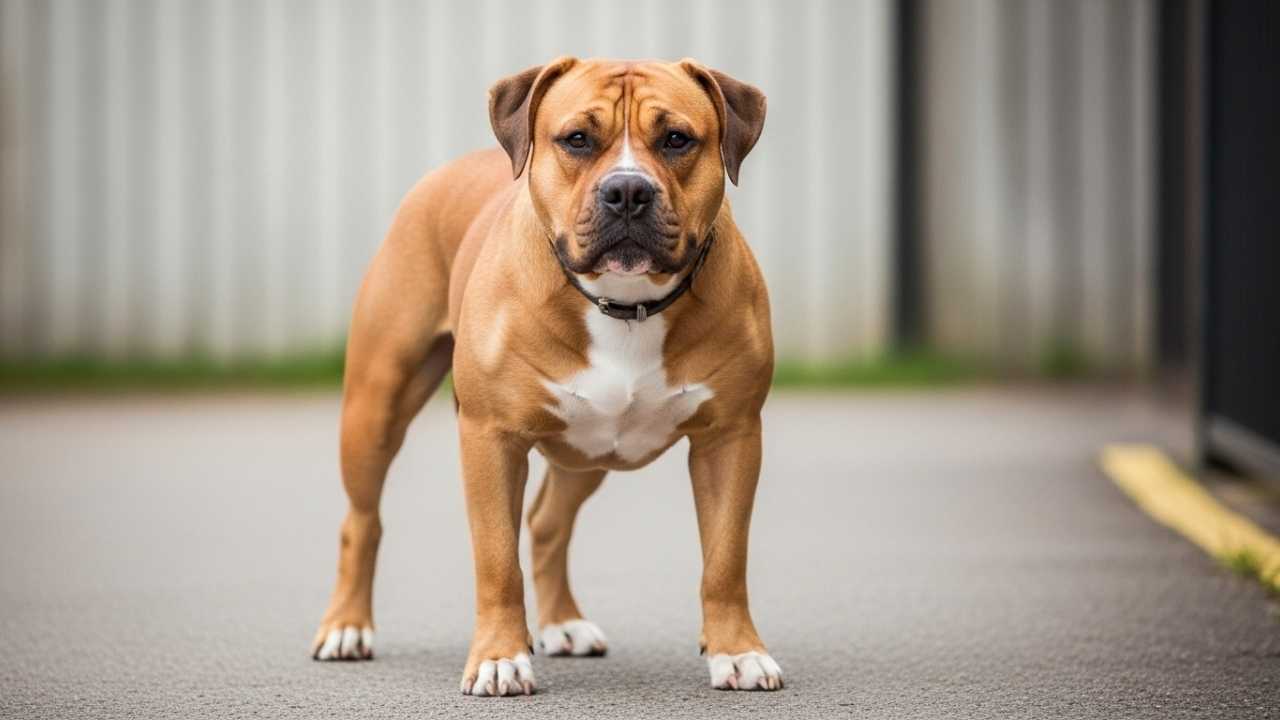
Mastiff traces its lineage to ancient Molosser dogs, with the modern English form taking shape over centuries in England. It served as a guard dog, war dog, and participant in bull and bear baiting, while some were taken abroad alongside marching armies.
Quiet Protection
Mastiff’s sheer size, broad head, powerful jaws, and substantial neck give it a formidable physical presence around a home. Its low-key energy also suits people who prefer a calmer household, with 20- to 30-minute walks a couple of times daily often enough for basic activity.
The right activities can make exercise easier:
Swimming offers low-impact exercise
Grassy paths suit its heavier build
Jogging can place stress on its joints
Gentle at Home
This protection dog is affectionate with familiar people and can be remarkably gentle within its household, including around children and other dogs, as Orvis reported.
Its sensitive nature calls for calm and careful handling, since harsh treatment can leave this large dog feeling shy, nervous, and withdrawn.
3. Great Dane
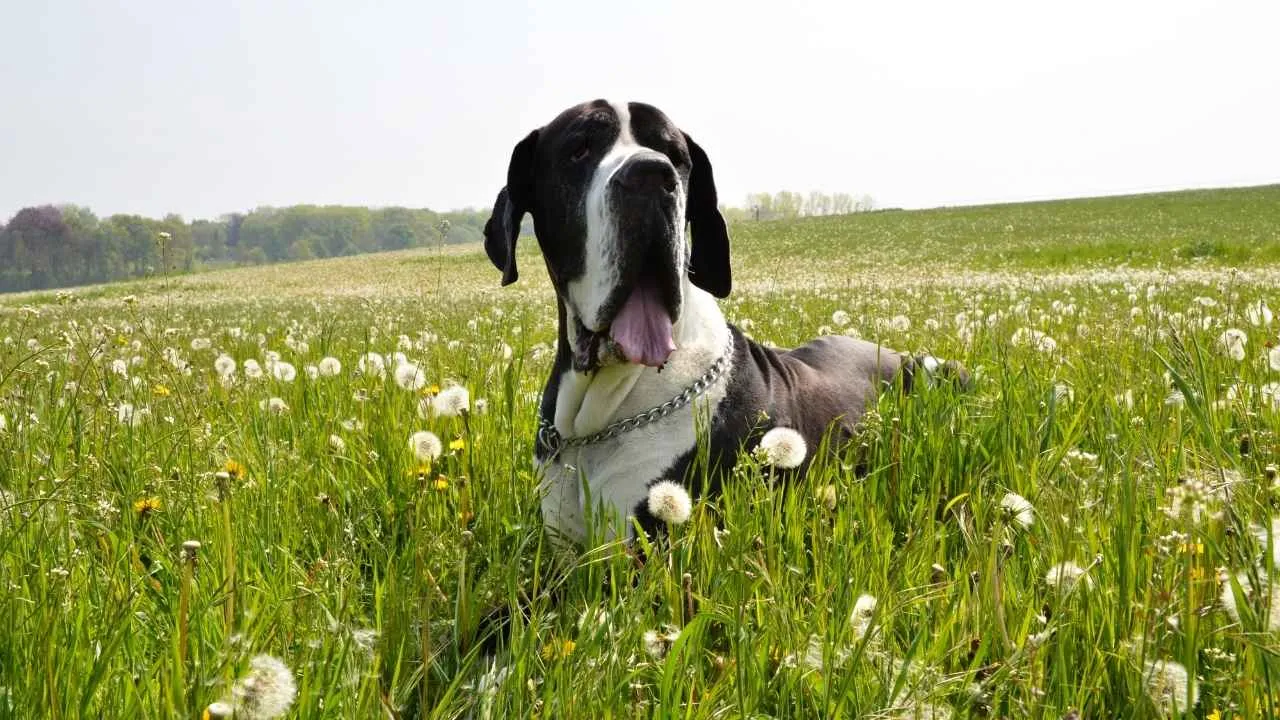
Great Dane originated in Germany as a formidable wild boar hunter, using its height, speed, and power to pursue and bring down aggressive game. British sources called the breed the “German Boarhound,” while the modern name remains puzzling because Denmark has no connection to its origin.
A Serious Watchdog
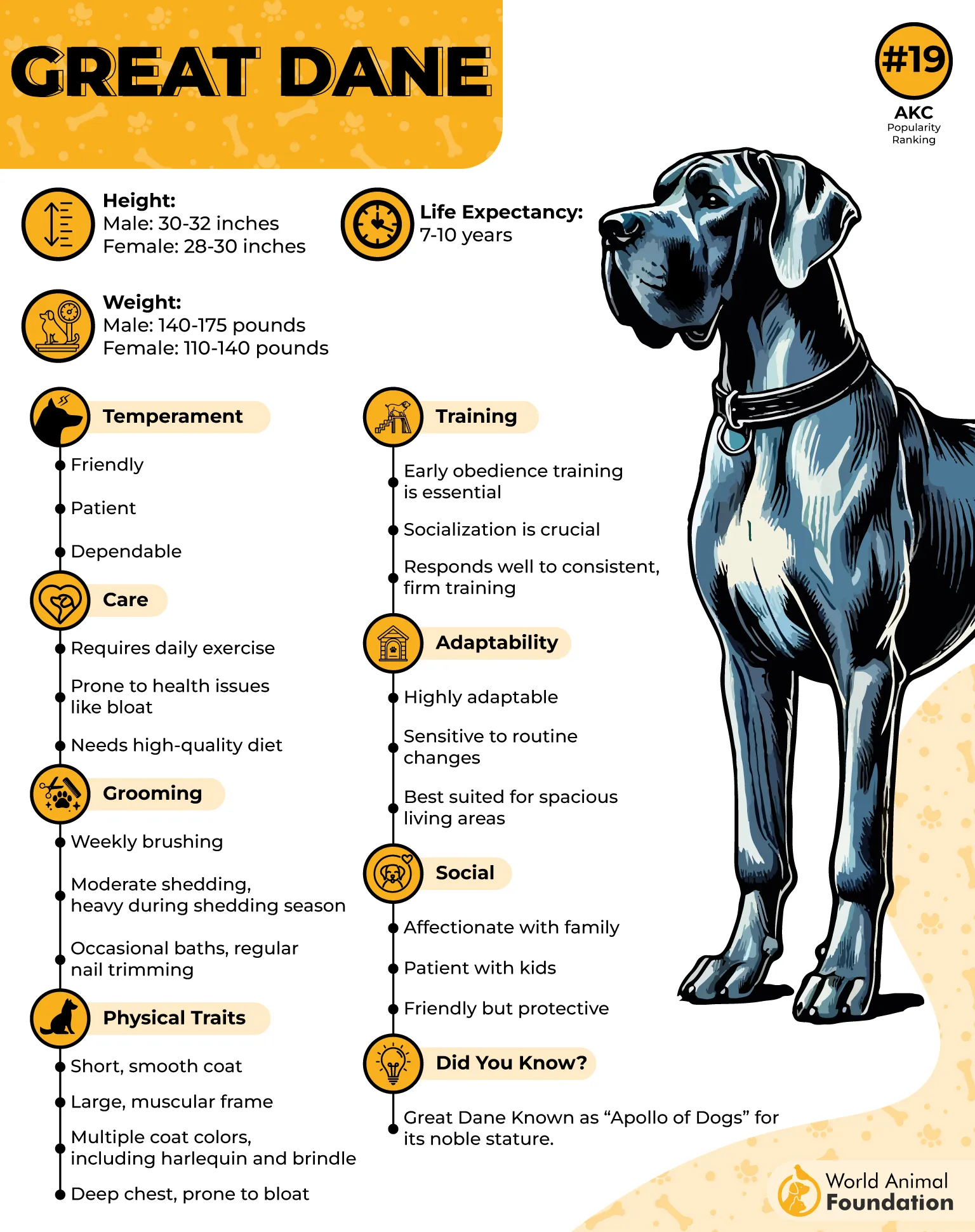
This best guard dog can bring an imposing presence to a home, backed by a deep, powerful bark that alerts people when something seems important. Its calm indoor nature pairs with a body-blocking stance that can make an unfamiliar visitor think twice.
Its upkeep is mostly simple and occasional:
Needs brushing about once a week
Bathing every couple of months is usually enough
Occasional drooling also needs a bit of upkeep
Surprisingly Low-Key
Great Dane needs about 30 to 60 minutes of daily activity, often through neighborhood walks and fenced-yard play, as Greencross Vets suggested. Adults can enjoy longer hikes and activities such as scent tracking, agility, and flyball, while strenuous jogging should wait until the joints are fully mature.
4. Newfoundland
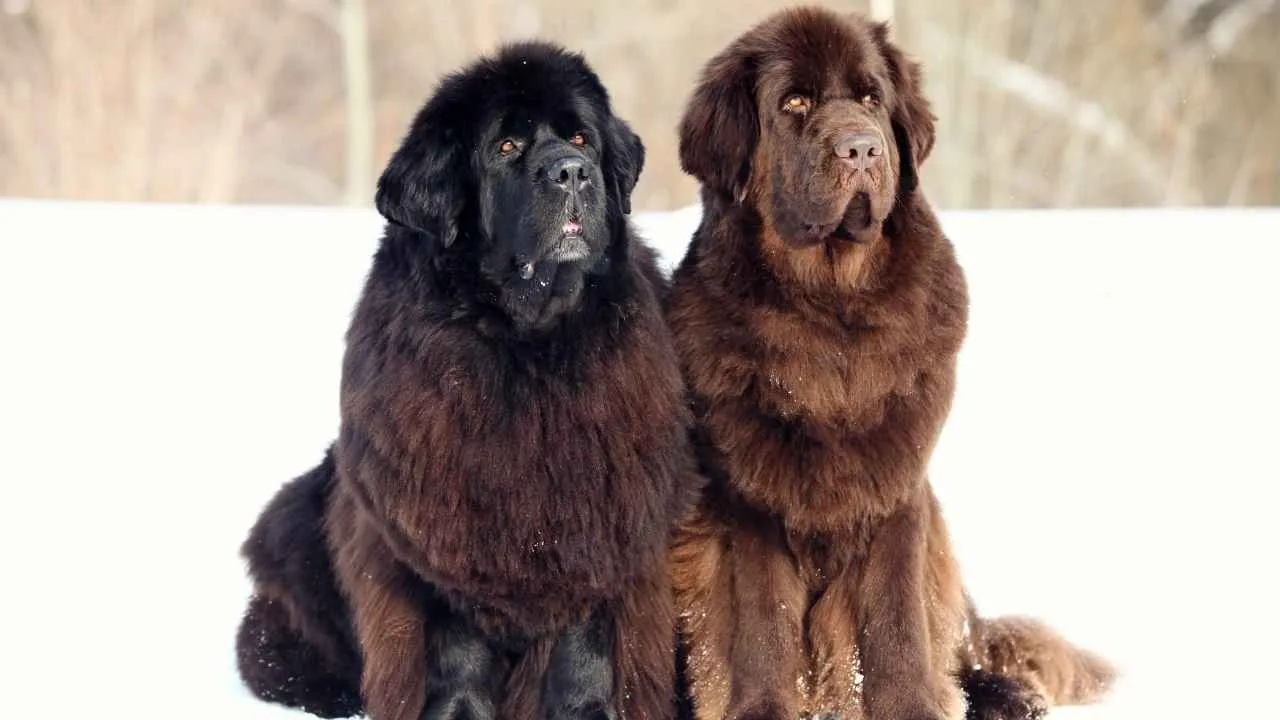
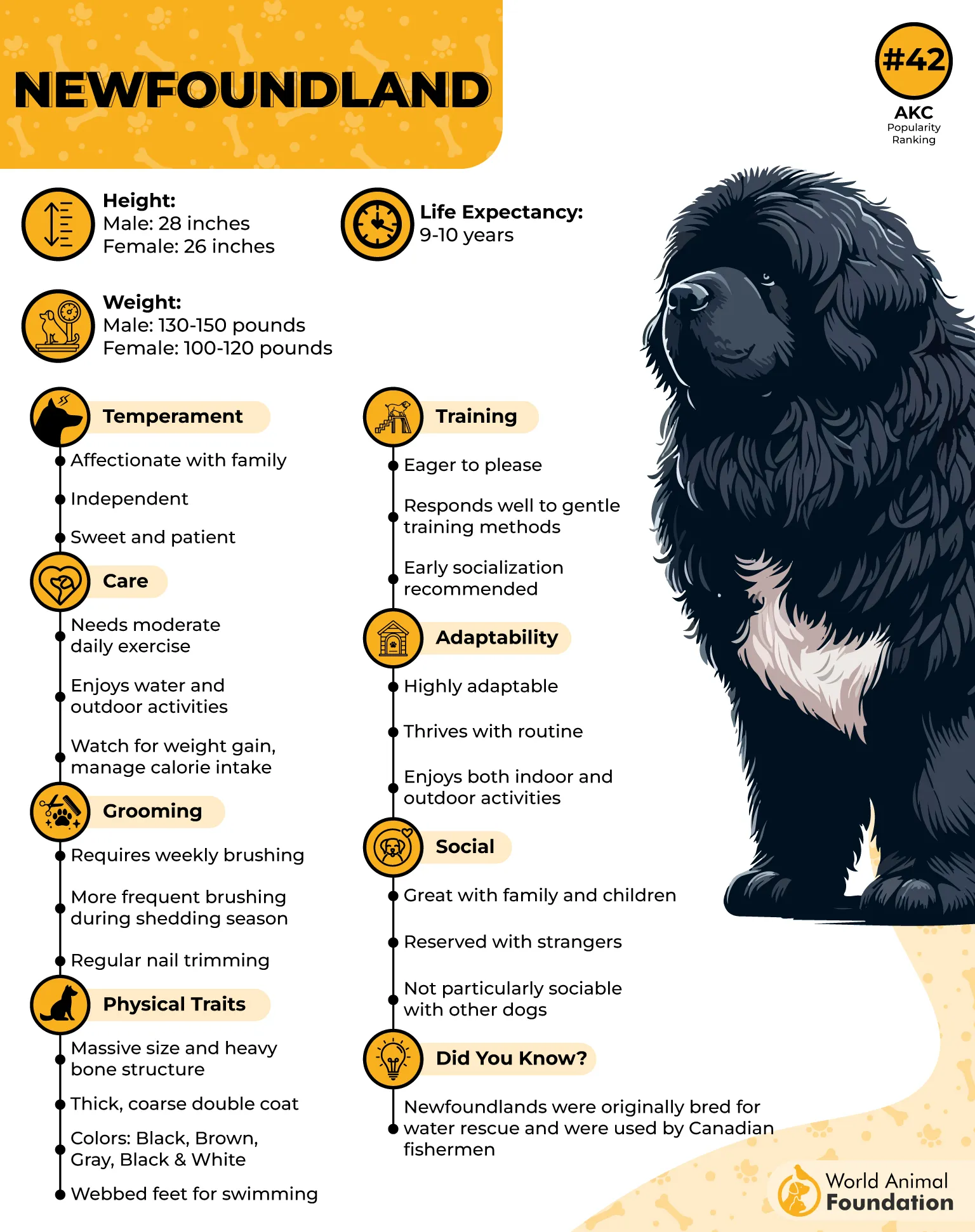
Newfoundland originated on the island of Newfoundland, Canada, where early examples were shaped by working alongside Portuguese fishermen. Their duties included hauling nets, swimming, pulling carts, and handling a wide range of demanding jobs on the water.
Calm Around Risk
Newfies have an unusual instinct for water rescue, with numerous accounts of untrained dogs entering the water when someone appeared to be in trouble. Some will even position themselves between swimmers and the shore, an instinct that can be striking to witness.
These details give their behavior more context:
Patient and gentle with children
Generally friendly toward unfamiliar people
Needs early socialization and consistent training
Easy Daily Pace
Newfoundlands do not need intense daily workouts, with around 30 minutes of activity often being suitable. Long walks, relaxed hikes, swimming, tracking, or activities such as dock jumping can provide useful outlets without demanding long-distance running.
5. Rhodesian Ridgeback
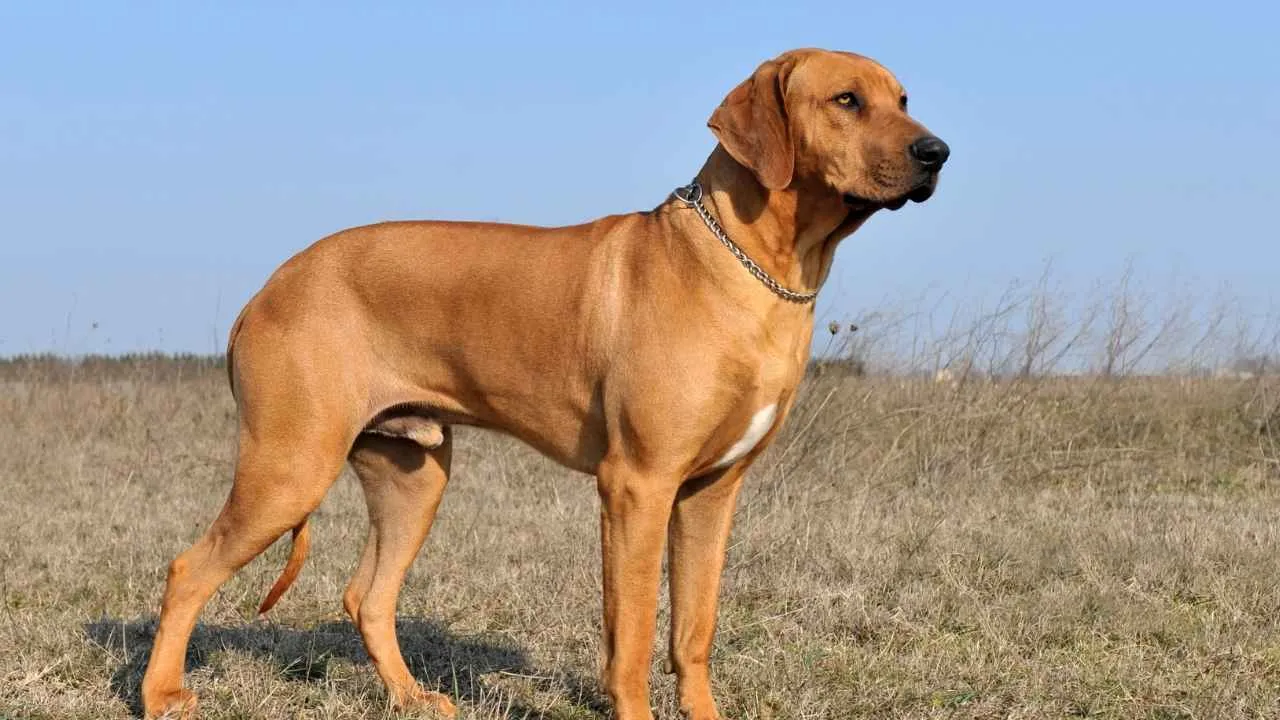
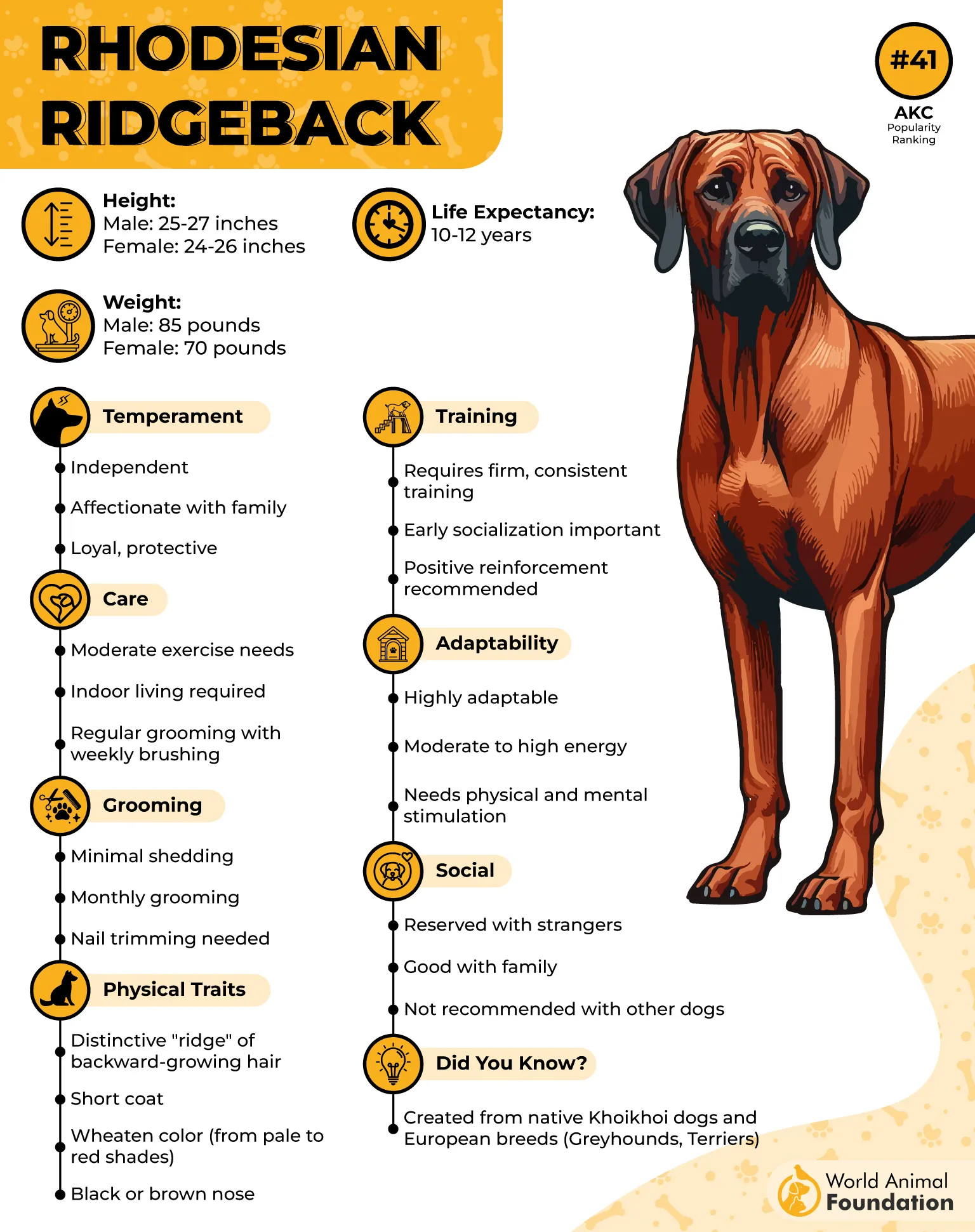
Rhodesian Ridgeback emerged from crosses between European dogs such as Mastiffs, Bloodhounds, Great Danes, Pointers, and Greyhounds with native hunting dogs.
By the late 1800s, these dogs were taken to Rhodesia, now Zimbabwe, where they tracked lions and kept them at bay until hunters could take their shot.
A Serious Watcher
Rhodesian Ridgeback brings a calm, observant presence to the home and can be quite vocal when someone approaches the property. Regular perimeter checks around the yard, particularly around dawn or dusk, can also reflect its natural watchfulness.
A few practical details add another layer:
Weekly brushing for year-round shedding
Monthly baths, with towel wipe-downs between them
Two 30-minute walks each day
Reserved, Then Playful
Rhodesian Ridgeback can be reserved around unfamiliar people while becoming silly and affectionate with familiar companions. Its intelligence brings independent problem-solving, and early socialization can help it become more comfortable around strangers and older children.
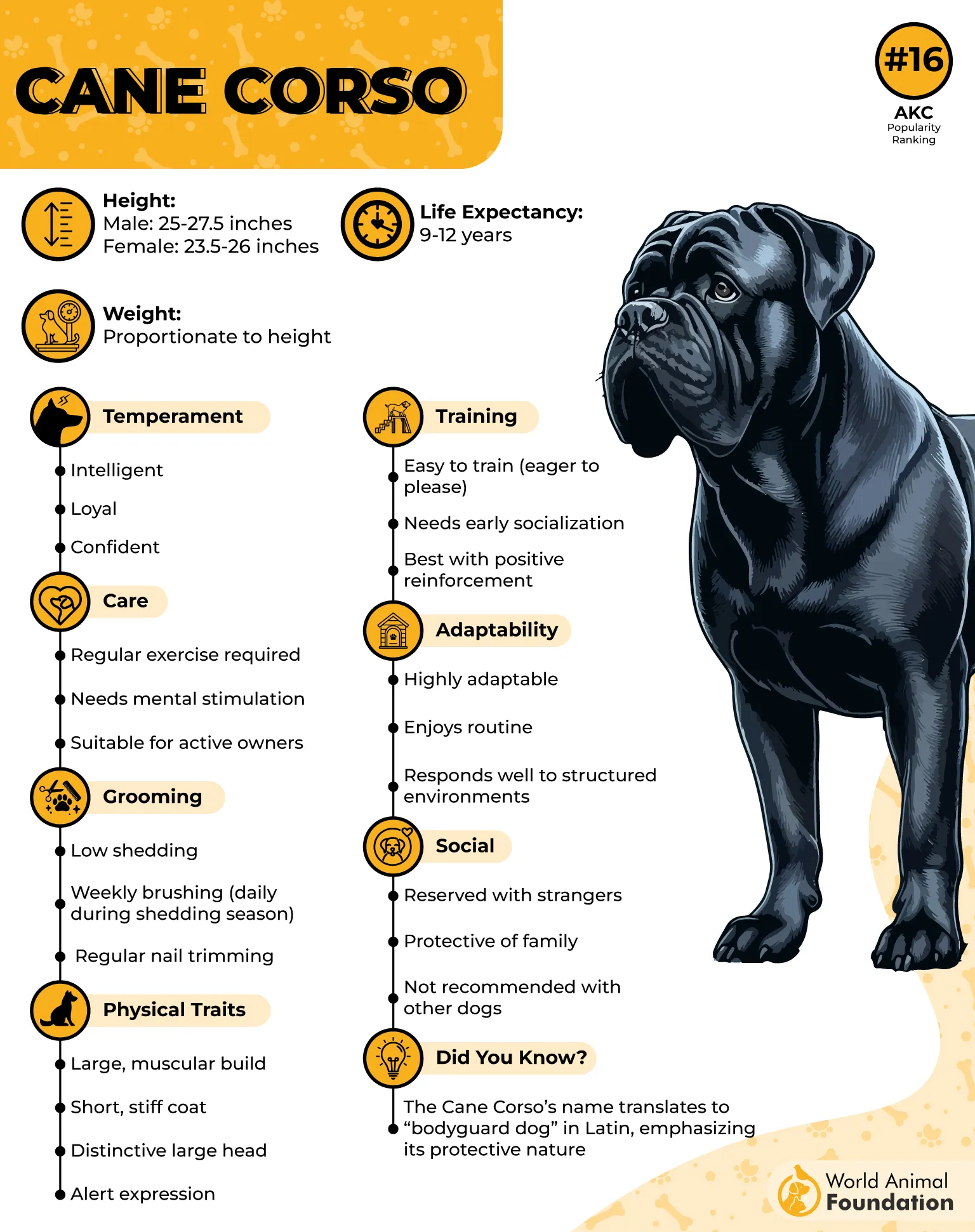
6. Cane Corso
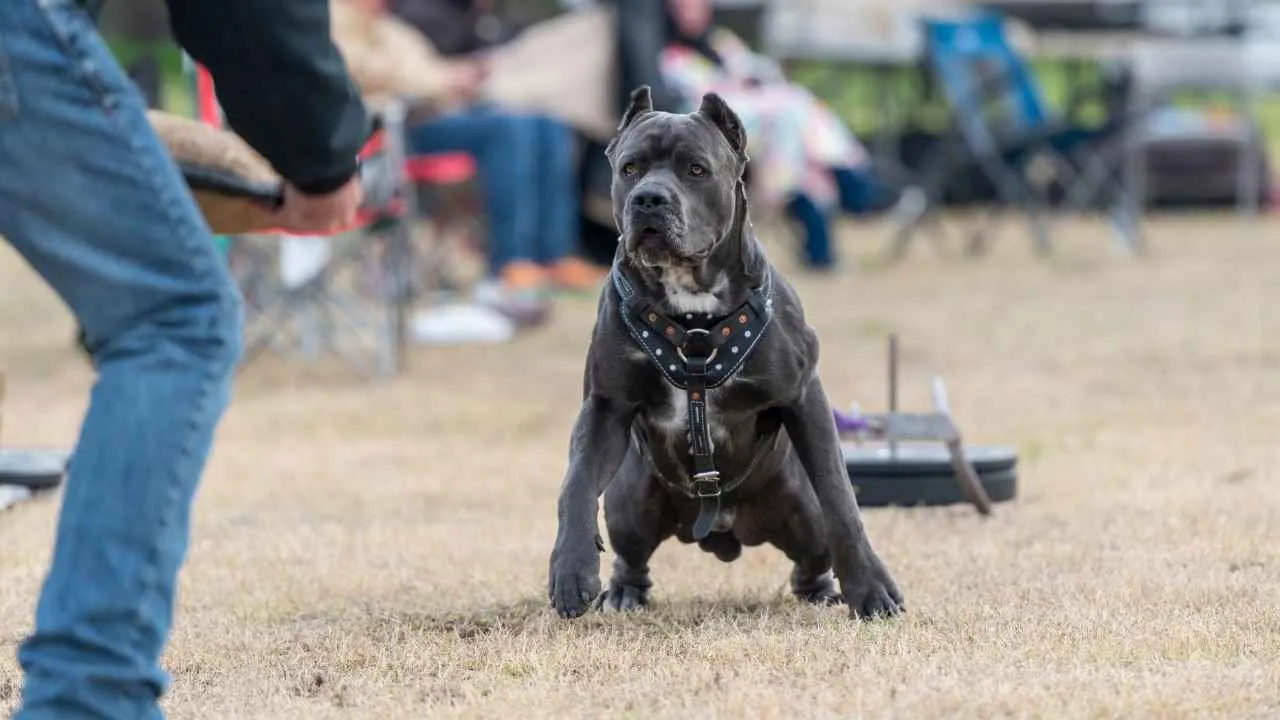
Cane Corso emerged from the ancient Molossus group linked with Greece before Roman legions brought these powerful dogs back to Italy.
Early Corsi served as war dogs, later taking on boar hunting, farm protection, and livestock-driving duties before Italian enthusiasts revived the breed in the 1970s.
Serious About Security
This excellent guard dog has a natural suspicion of unfamiliar people and animals, which can be useful when a quiet home needs a dog that notices unfamiliar activity.
Its confident presence and territorial instincts make early socialization especially important around visitors, delivery workers, and neighborhood dogs.
A little structure can keep them manageable at home:
Learns quickly with structured training
Needs consistent guidance and firm handling
Early socialization helps manage behavior around people and dogs
Easy Coat Care
Cane Corso does not require frequent bathing, with an occasional wash enough when its coat becomes dirty or develops an odor. A pet wipe can freshen the coat between baths, while seasonal shedding may call for extra brushing and vacuuming, particularly during spring.
7. Doberman Pinscher
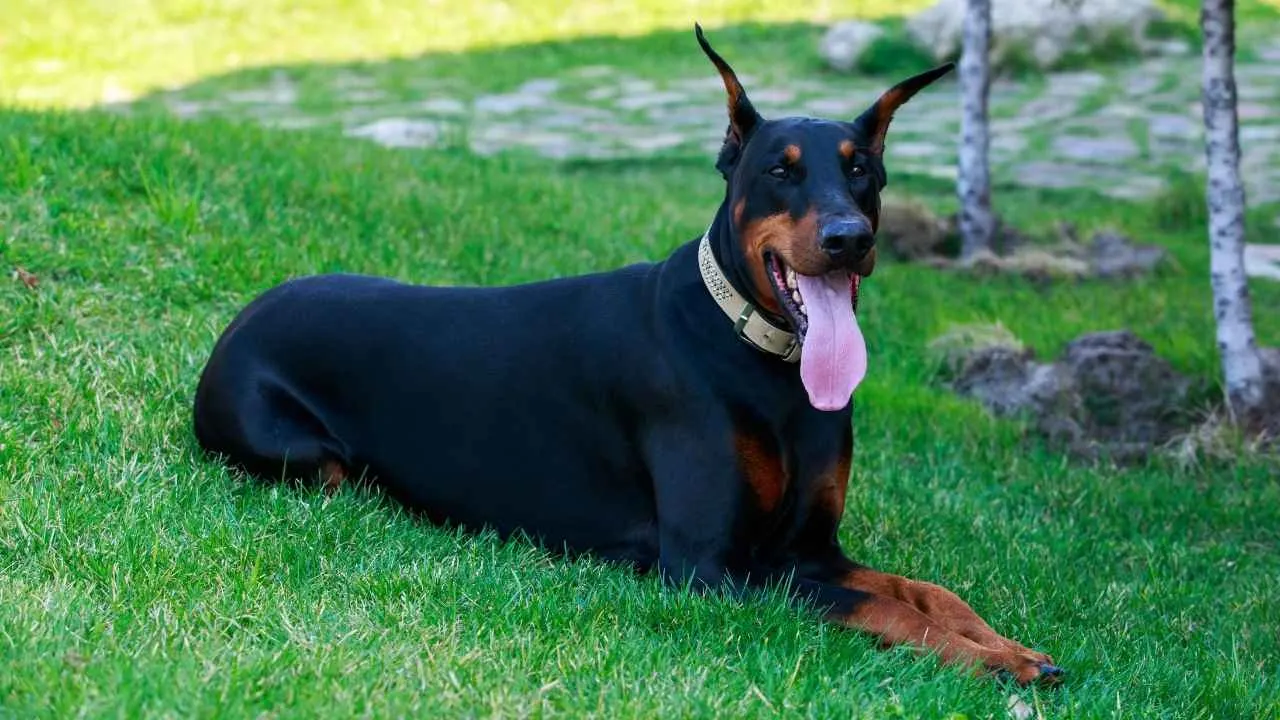
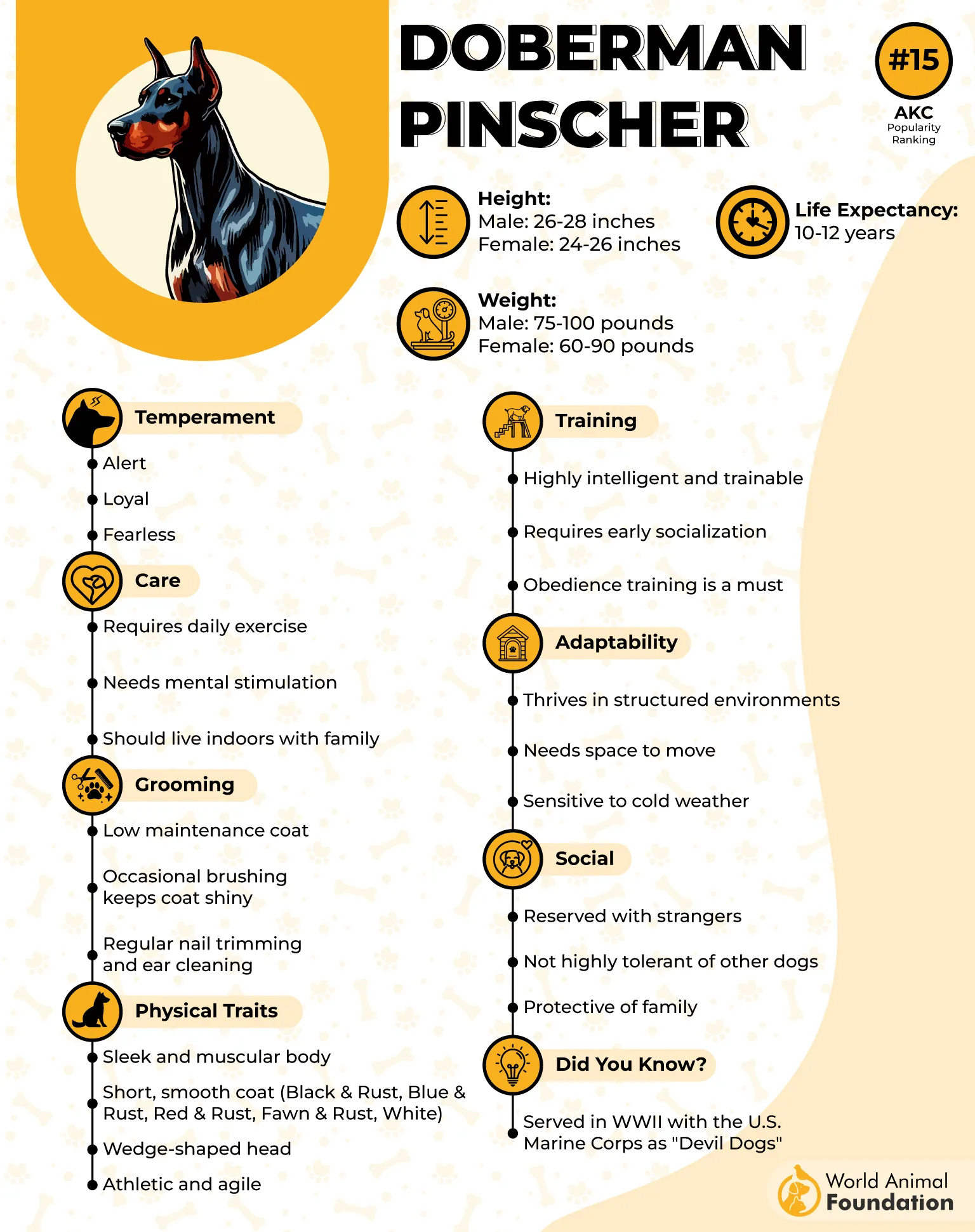
Doberman Pinscher began with Louis Dobermann, a German tax collector who wanted a dependable guardian while working door to door. Early breeding likely involved the Old German Shepherd, German Pinscher, Weimaraner, and Manchester Terrier before the sleek modern type emerged.
Made for Vigilance
That athletic frame combines a deep chest, strong hindquarters, and efficient coordination, giving the breed both endurance and quick acceleration. Its alert nature also includes keen visual tracking, with ears and eyes oriented toward movement around its surroundings.
These characteristics reveal how that vigilance works:
May position itself between family and a perceived threat
Reads human posture and tone closely
Responds well to obedience work
Loving and Low-Maintenance
The affectionate side of this loyal companion appears at home too, where this large dog may climb onto the sofa, seek cuddles, and settle close to its favorite people. A bath about once a month and brushing a couple of times a week help keep its short coat clean, shiny, and under control.
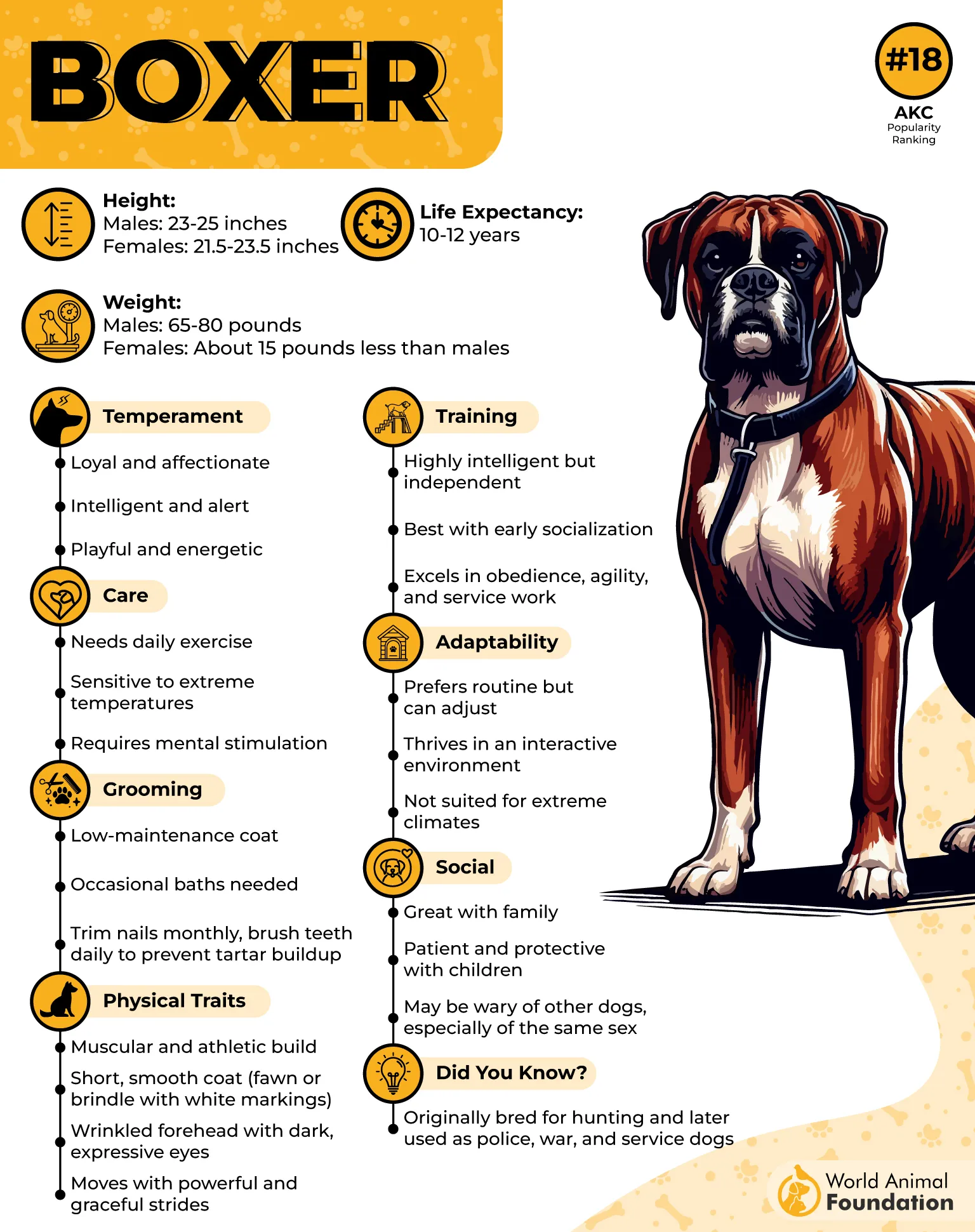
8. Boxer
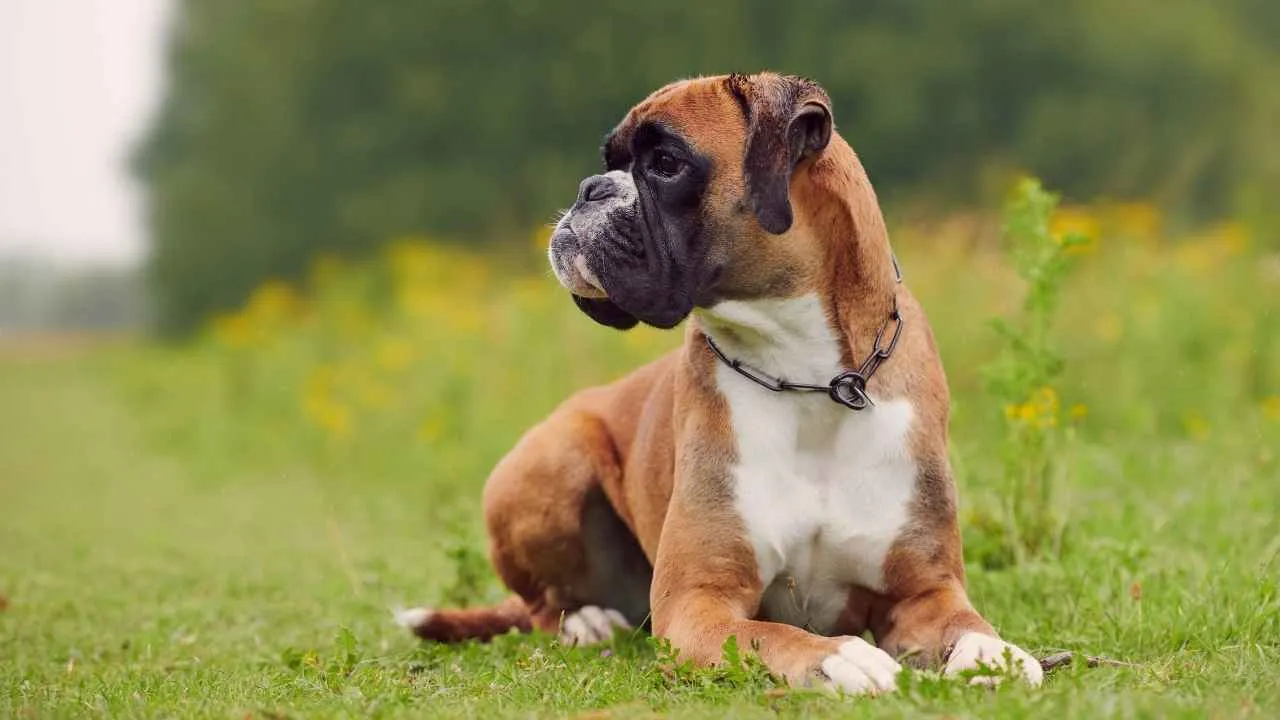
Boxer originated in Germany from the Bullenbeisser and Bulldog, with its early work centered on controlling cattle at slaughterhouses in the late 19th century. By 1903, the breed had reached America, later serving as a messenger and guard dog during the First World War.
Alert at the Door
Boxers have a protective instinct to alert their household when someone approaches, while proper socialization can help it remain accepting of guests. Its close attention to people also makes face-to-face training games especially engaging for this highly social breed.
These traits make its watchful nature more distinctive:
May position itself between family and unfamiliar people
Uses expressive grumbles and sounds during greetings or play
Watches people closely during interaction
Simple Coat Care
Boxers have a short coat with moderate shedding, so brushing several times a week with a rubber curry brush or grooming glove can help keep loose hair under control. Bathing generally only needs to happen about once a month unless outdoor adventures leave the coat especially muddy.
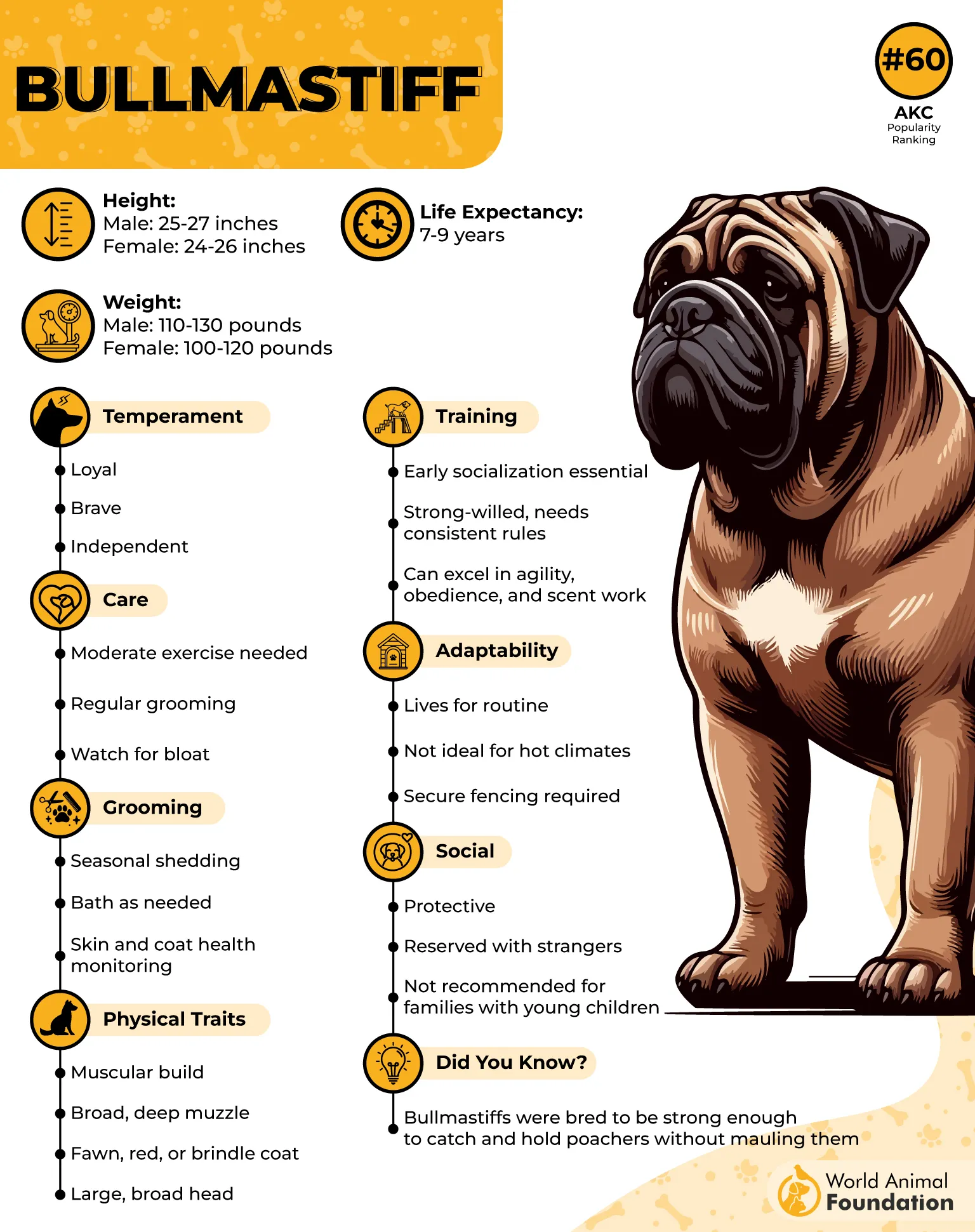
9. Bullmastiff
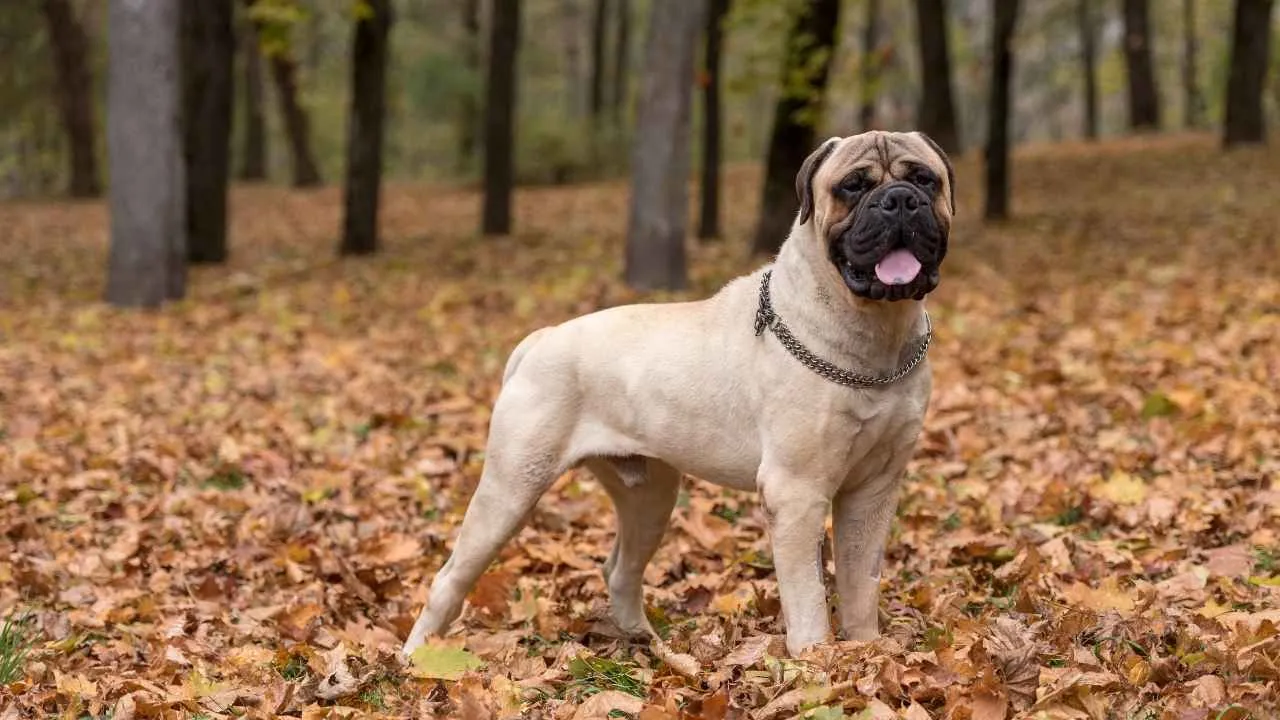
Bullmastiff first appeared in records in the late 1800s, when large estates in Britain faced serious problems with poaching. Breeders combined Mastiff and Bulldog lines to create a powerful dog that could quietly approach a poacher and restrain them until the landowner arrived.
Its original role earned it the nickname “Gamekeeper’s night dog,” reflecting the quiet, watchful work expected after dark.
A Practical Guardian
Bullmastiff has moderate energy and needs roughly 30 to 45 minutes of exercise each day, making its physical demands fairly manageable for a large guardian breed. Neighborhood walks and relaxed games such as fetch can provide useful daily activity without requiring a runner’s pace.
For this family guard dog, these details matter:
Weekly brushing with a bristle brush or grooming glove
Monthly bathing unless unusually dirty
Daily brushing during spring and fall shedding
Close to the Family
This muscular dog is affectionate, gentle around familiar family members, and often follows people from room to room in search of company. Its protective nature also calls for careful puppy socialization, since unfamiliar visitors can trigger a much stronger reaction than its calm household manner suggests.
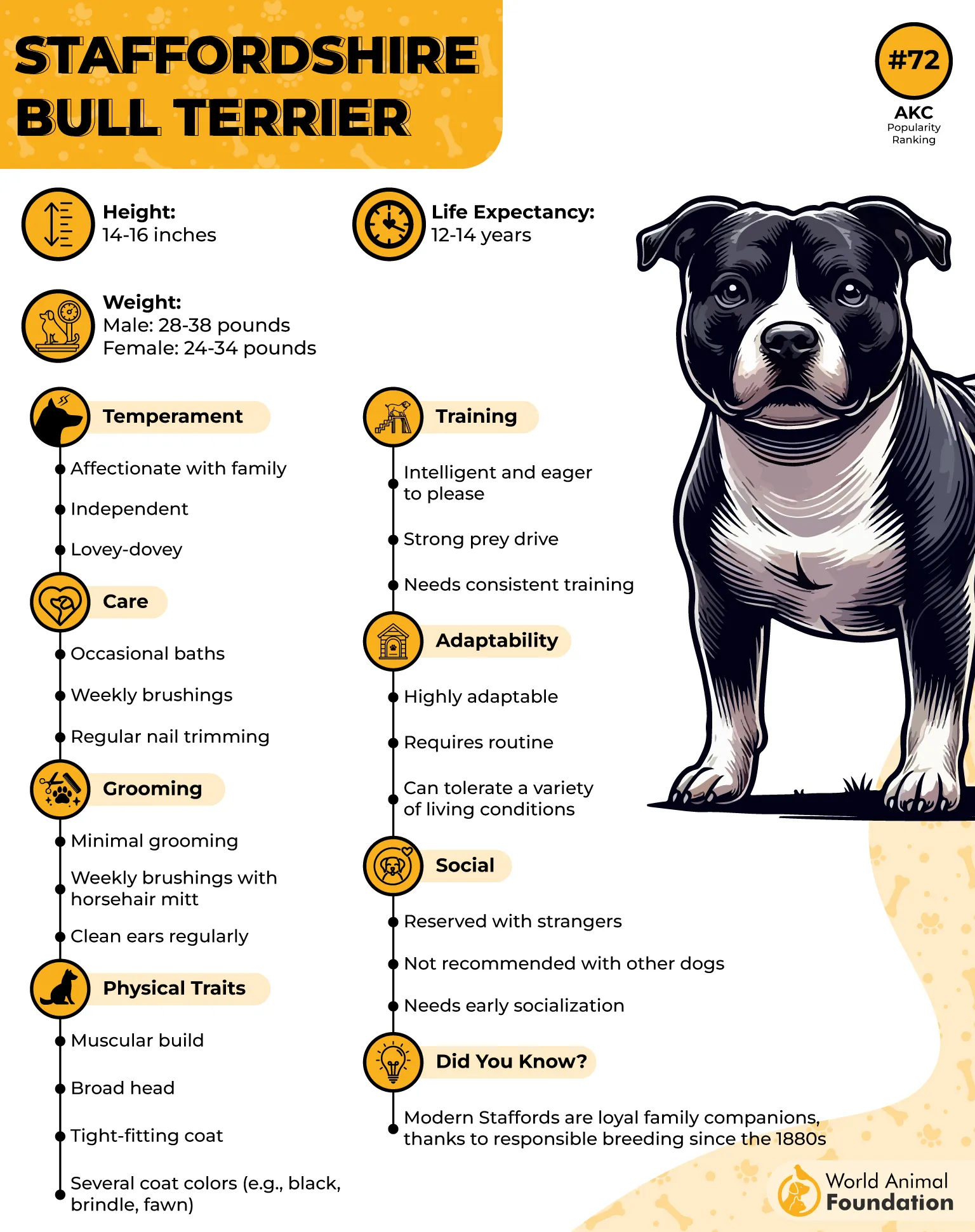
10. Staffordshire Bull Terrier
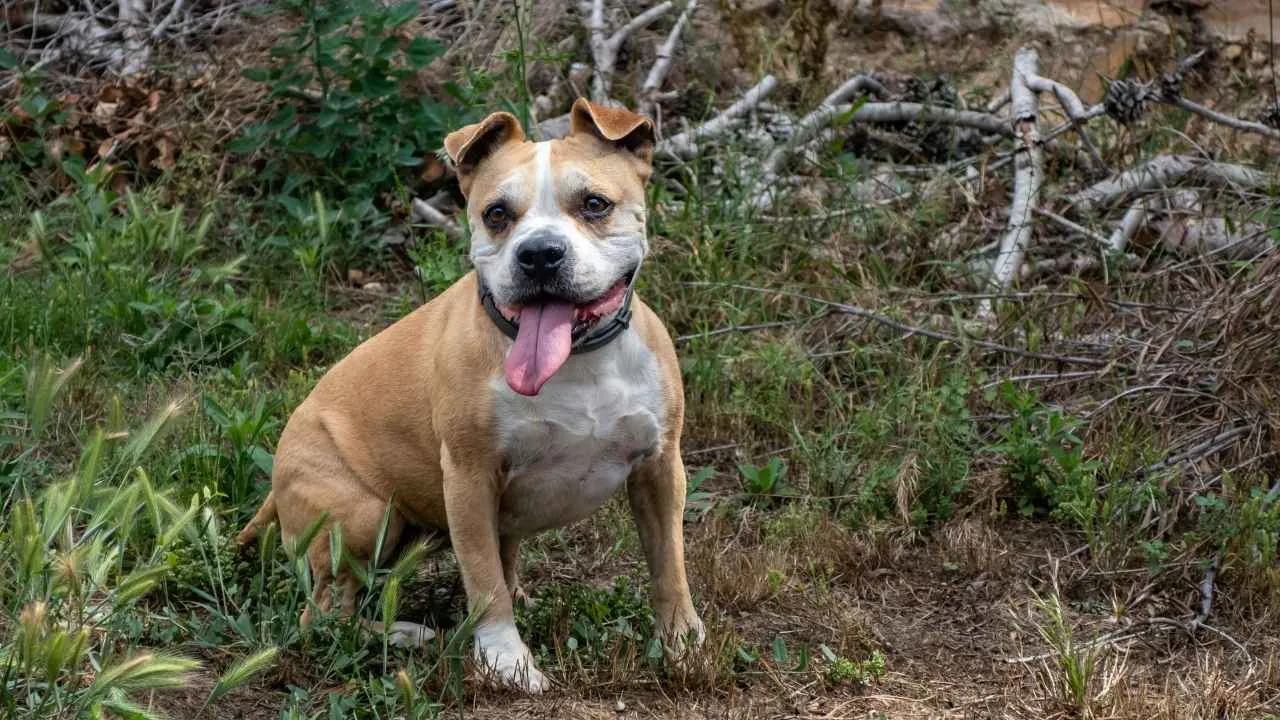
Staffordshire Bull Terrier emerged in England during the early 1800s, when Bull Terriers and Black and Tan Terriers were crossed to create a compact dog with powerful jaws.
As bull baiting became impractical in growing towns, rat pits became popular working-class spectacles, where Staffies gained a reputation for speed and agility.
A Serious Watchdog
For a smaller dog, the Staffy’s broad chest, powerful forequarters, and dense muscle give it impressive strength for its size. That physical build, paired with a naturally alert nature, helps explain why this loving family pet can serve as a practical household watchdog without constant barking.
Characteristics that make their daily care relatively straightforward:
Short, glossy coat needs little brushing
Light shedding occurs in spring and fall
Monthly bathing is usually sufficient
People Come First
Staffordshire Bull Terrier is highly people-focused and can be affectionate with family members, children, and visiting strangers. Its reputation as a “Nanny dog” comes from its patient, protective relationship with children, while prolonged isolation can be difficult for such a social breed.
Conclusion
The best family guard dog does not have to make everyday life complicated. The right guard dog can provide awareness around the home while fitting comfortably into manageable family life. Exercise, proper training, socialization, grooming, mental stimulation, and individual temperament all matter when deciding what works for your household.
Large dogs may need more space and careful handling, while smaller choices can still bring plenty of confidence and alertness. Think about your schedule, experience, living space, and ability to meet daily needs before making a decision. The protective dog breeds are those that offer useful protection while remaining calm, predictable, and comfortable to live with every day.
