




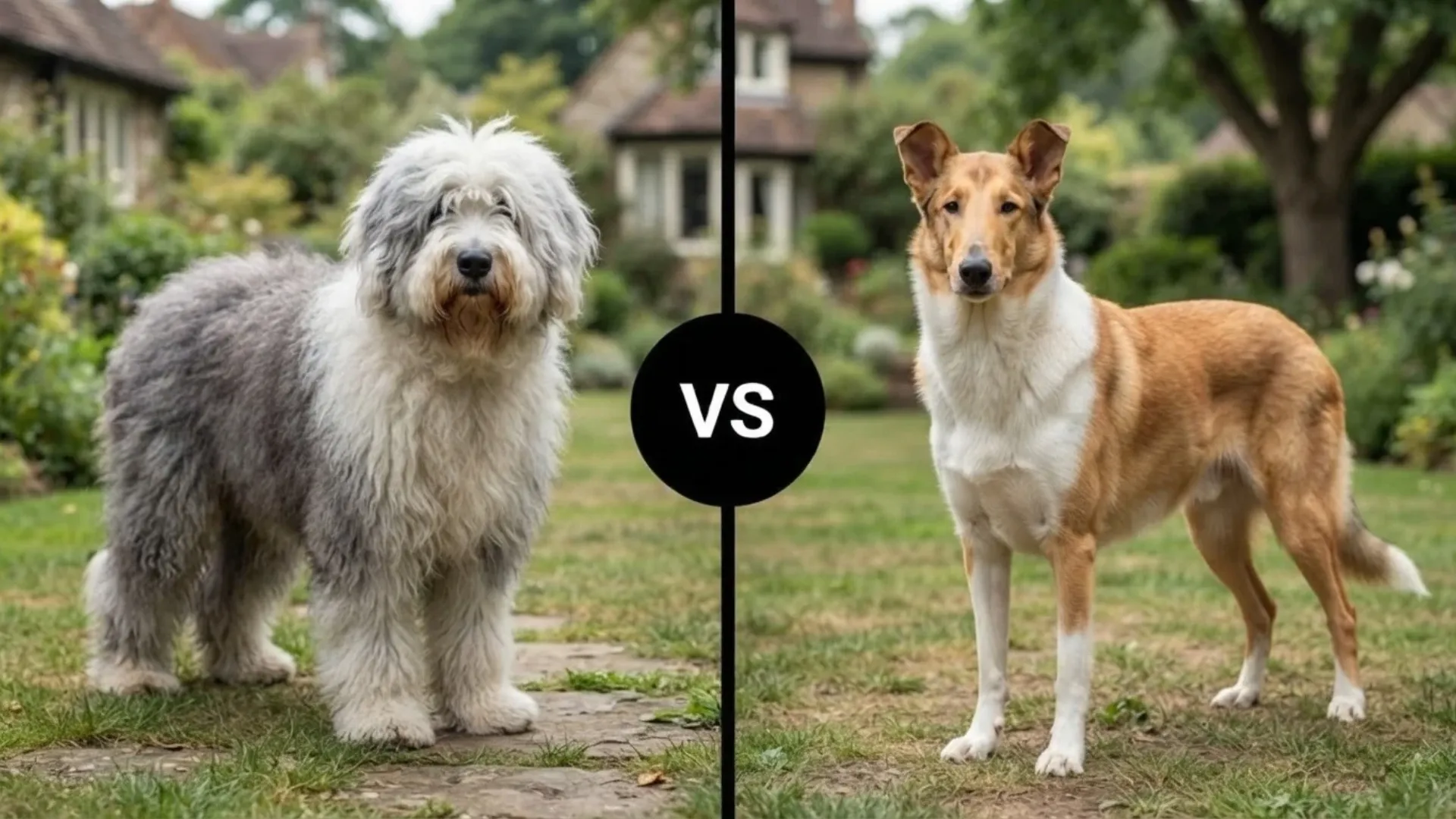
Choosing between an Old English Sheepdog and a Smooth Collie is like choosing between a shaggy comedian and an elegant mind reader. Both come from hardworking herding stock, but they run your household very differently.
The Sheepdog brings playful confidence, an untidy coat, and the energy of someone who just found an unlocked snack cupboard. The Collie brings sharp intelligence and an expression suggesting it already knows who left the gate open.
Here’s how they compare on temperament, exercise, training, grooming, health, and guarding, before one of those faces decides for you.
Old English Sheepdog vs. Smooth Collie: Proven Tips for Choosing
Deciding between the OES and Smooth Collie comes down to more than looks. This comparison breaks down the key differences so you can confidently pick the breed that fits your home, family, and lifestyle best.
Origins & Purpose
How did two British livestock workers become such different household dogs? Their history starts in the countryside. The OES emerged in western England roughly 200 years ago and was used for herding sheep and cattle from farms to market; its strength and distinctive gait suited long droving journeys, according to Britannica.
The Smooth Collie shares the Collie’s Scottish and northern English roots, but its job centered more closely on controlling and directing livestock. It’s a separate breed from the Border Collie, though the two share ancestry. Queen Victoria helped popularize Collies during the 1860s, long before Lassie turned the breed into a star of movies and television.
Both belong to the herding Group, yet their résumés diverge neatly: the Old English Sheepdog supplied sturdy driving power, while the Smooth Collie developed speed, responsiveness, and close handler cooperation. One moved the traffic; the other managed its direction.
Size & Physical Build
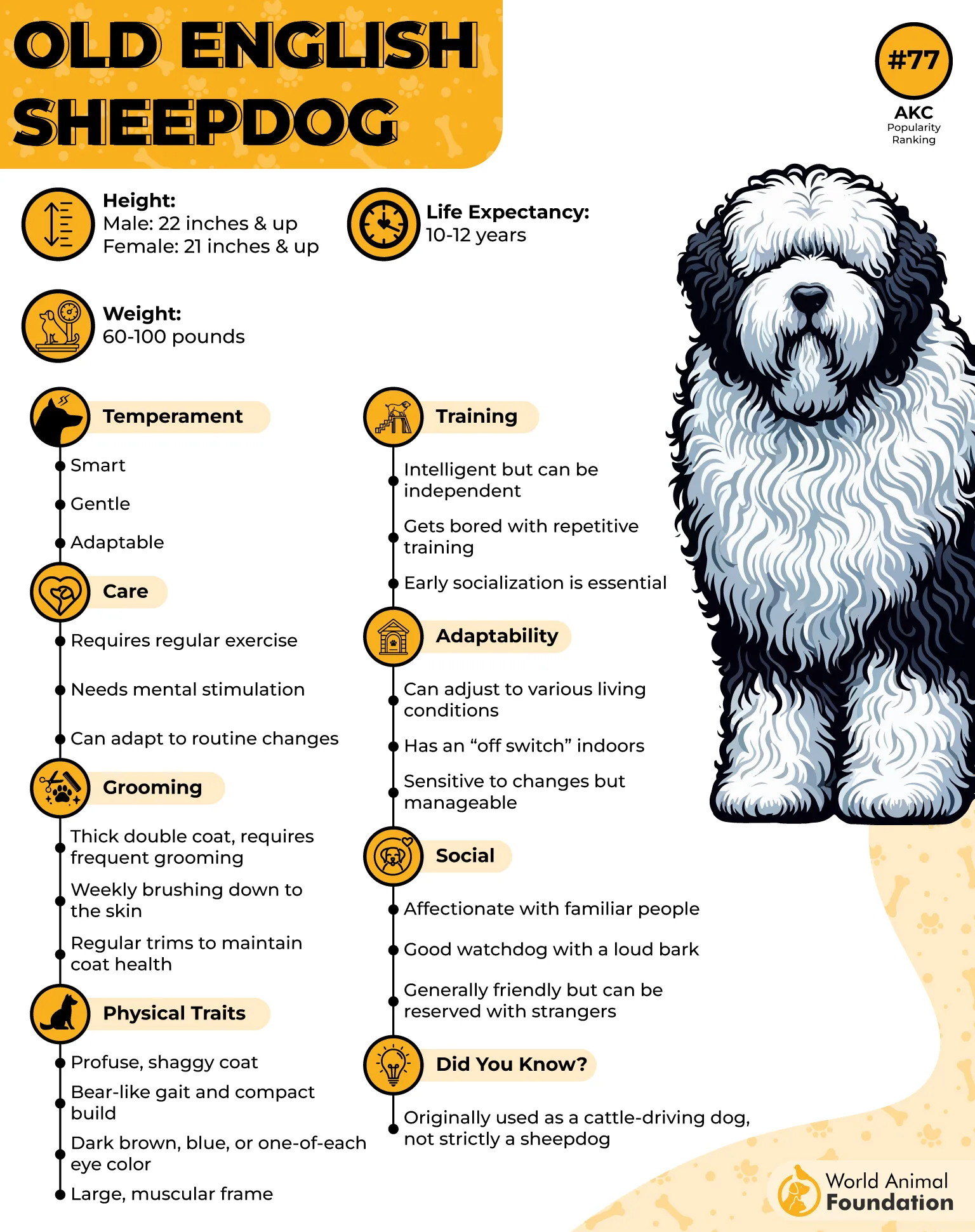
The Old English Sheepdog is a substantial, square-bodied dog hiding beneath an optical illusion of hair. The AKC breed standards set minimum heights at 22 inches for males and 21 inches for females, and the typical weight at 60–100 pounds.
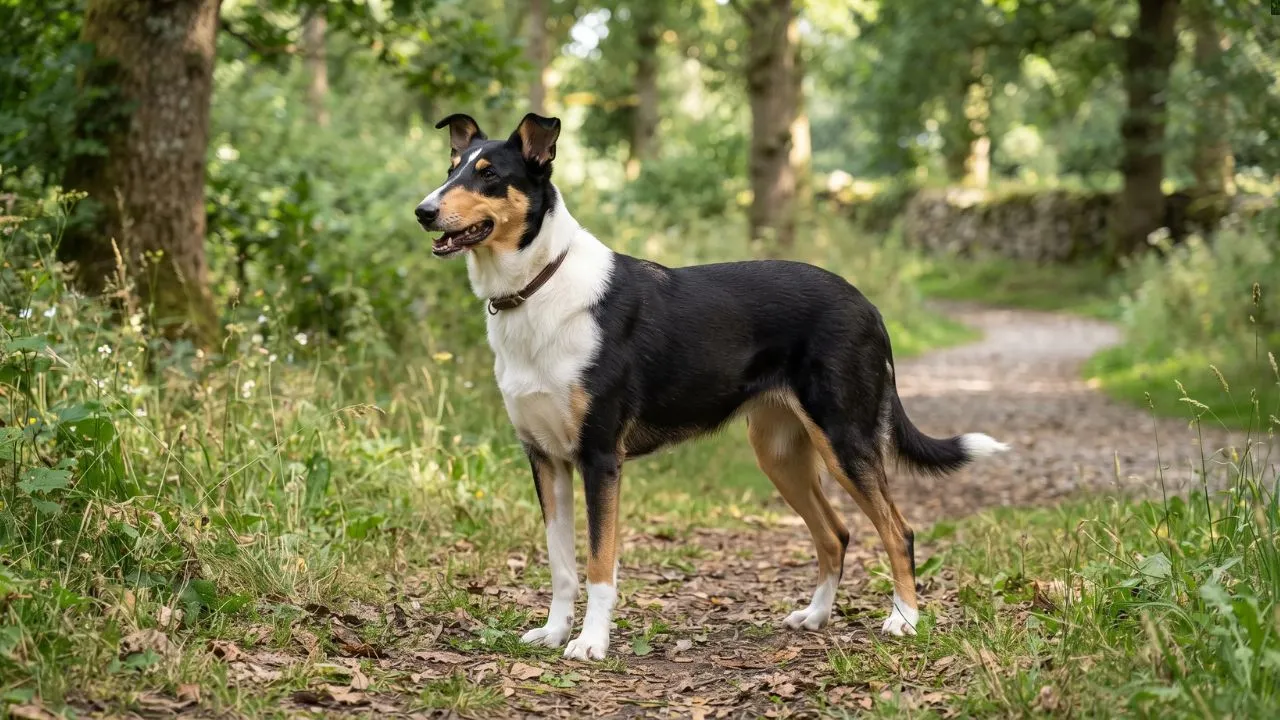
The Smooth Collie carries considerably less bulk on an athletic, longer-looking frame. They weigh 50–75 pounds and stand roughly 24 inches, although sex influences the precise measurement — a boy usually sits at the top of both ranges.
OES: Muscular, heavy-boned, and compact — denser than other breeds of similar height, and capable of accidentally rearranging lightweight furniture.
Smooth Collie: Leaner, quicker, and generally easier to lift, transport, or guide through a crowded room.
The practical split is mass versus maneuverability.
Temperament & Personality
Both breeds are smart, family-focused herders that want to be part of daily life, not left alone. Early socialization matters most before about 16 weeks — introduce puppies to other dogs, new people, and household noise until all of it feels familiar. Either dog gets noisy when bored.
The difference is style. The Old English Sheepdog is bouncy and physical — at 60–100 pounds, its greetings can knock you off balance. The Smooth Collie is more sensitive and watchful, barking at anything unusual.
Collies often struggle when left alone for 8+ hours. The OES also hates being alone but shows it through comedy, leaning, and herding.
Exercise & Energy Levels
Picture a cool Saturday morning, an empty trail, an hour to spend. The Smooth Collie walks briskly, sniffs every interesting scent at the dog park, and comes home satisfied — it needs at least an hour of daily exercise and mental work.
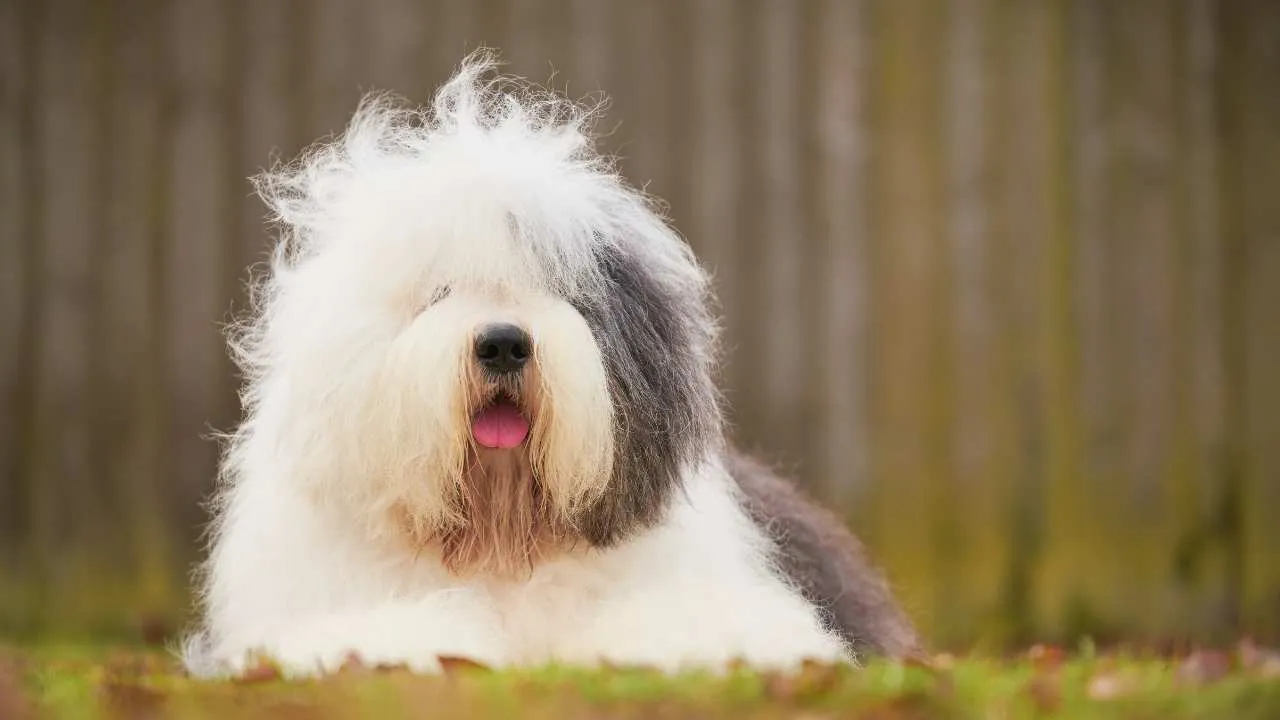
The Old English Sheepdog joins happily, but its heavier build and thick coat mean watching the temperature. It’s moderately energetic and needs daily enrichment, though no set duration.
Neither does well on a ten-minute pavement shuffle and twelve idle hours. Several walks spread through the day beat one long march. Obedience, agility, scent games, and structured play suit both, with the Collie holding the sharper athletic edge. In hot weather, go early or late — especially for the Sheepdog.
Training & Intelligence
You will live with whichever habits these clever herders rehearse, so start at whatever age your dog comes home rather than waiting for adolescence. Socialize before roughly 16 weeks, keep sessions to 5–10 minutes, and practice recall, walking politely on the lead, calm greetings, and a reliable “quiet” cue.
The Old English Sheepdog learns readily but may add a comic editorial opinion to repetitive drills. Positive reinforcement channels its strength and enthusiasm, preventing a 100-pound smart adult from treating guests like bowling pins.
The Smooth Collie is often quicker to read handlers and more sensitive to correction. Dog experts call Collies easy to train but note they bore quickly, so rotate exercises, locations, and rewards to keep the work fun while keeping rules consistent.
Coat Maintenance
How much grooming can your calendar—and your vacuum—actually absorb? The difference between these breeds becomes spectacularly obvious once brushes enter the conversation.
OES: This shaggy dog breed needs three to four hours of brushing each week. Check around its eyes daily, as the long facial hair traps leaves and debris. Some owners keep the coat shaved into a shorter puppy clip to cut brushing time.
Smooth Collie: Brush the coat at least once a week and bathe it monthly. Its undercoat typically sheds heavily twice a year, leaving plenty of loose hair around the home.
Professional help: Grooming prices vary by coat condition, dog size, region, and year.
The Smooth Collie wins on routine convenience, though “smooth” absolutely does not mean shed-free. The Old English Sheepdog demands far more: a bigger, heavier coat carries a cost. It slows the dog down, hangs into its line of sight, and raises the odds of both overheating and matting.
Health & Lifespan
The Old English Sheepdog typically lives 10 to 12 years. PetMD notes that screening should cover hip dysplasia, progressive retinal atrophy, autoimmune thyroiditis, exercise-induced collapse, dilated cardiomyopathy, congenital deafness, and MDR1 drug sensitivity.
The Smooth Collie lives 10 to 14 years. Vets flag these health problems: Collie eye anomaly, the MDR1 mutation, progressive retinal atrophy, hip dysplasia, bloat, epilepsy, and dermatomyositis. An ophthalmologist can check puppies for Collie eye anomaly at 5–6 weeks.
Before you choose: Ask the breeder for documented hip joint, eye, and DNA results — not “our lines are healthy.”
Tell your vet: Talk through MDR1 status early, since affected dogs process certain drugs abnormally and can develop serious health issues.
Watch the calendar: Book preventive exams at least once a year.
Old English Sheepdog vs. Smooth Collie: Suitability as Family Pets vs. Guard Dogs
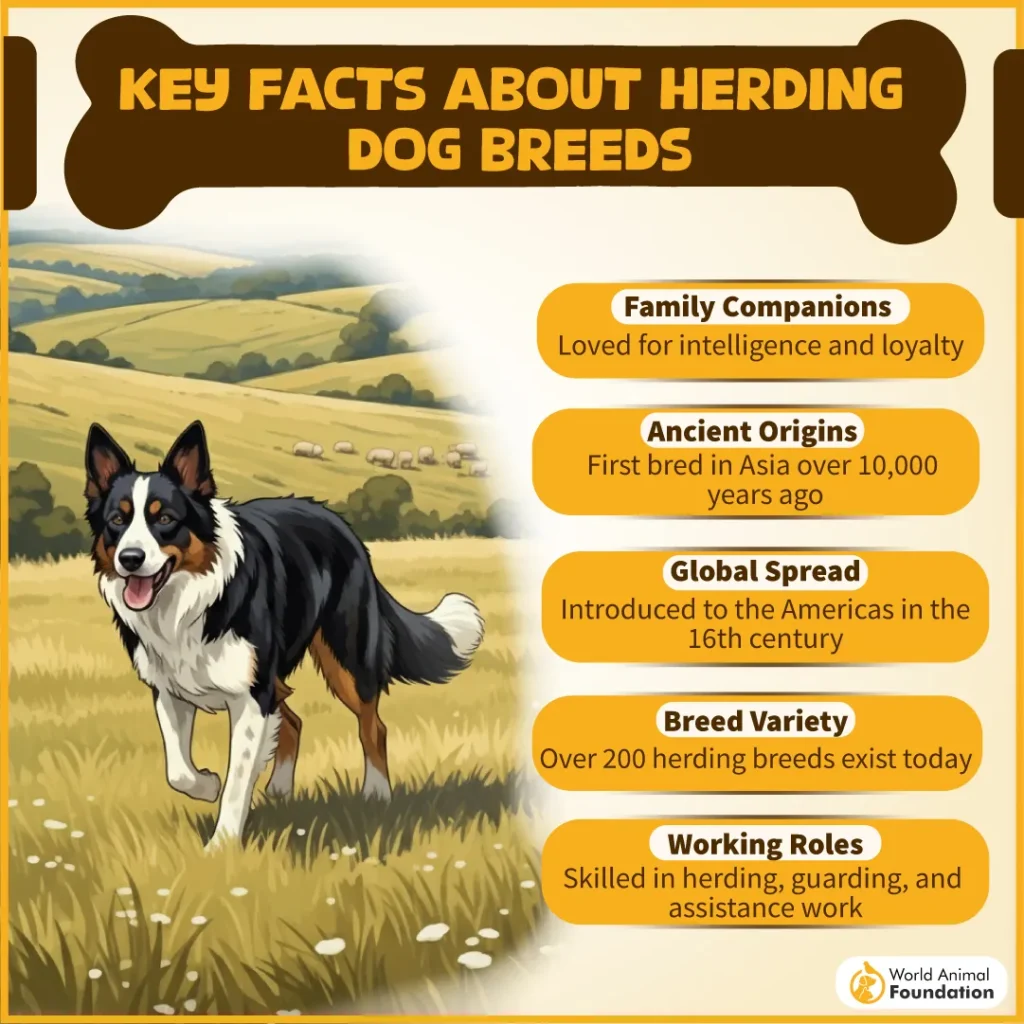
Both make warm, silly, lovable family dogs given daily attention, training, and adult supervision around kids. Neither was bred for protection work, so asking either one to be an attack dog means arguing with 200 years of herding instinct. You will lose.
The OES is the better bluff. A large, shaggy frame and a loud bark will make a stranger think twice at the gate. Then the dog will lean on him.
The Smooth Collie carries a lighter frame but usually spots odd movement first and says so immediately. Collies can act protectively, though growling and biting are rare.
Conclusion
The right choice depends less on appearances and more on how you actually live. Active families wanting a responsive, easier-to-groom dog may prefer the Smooth Collie, while households with space and genuine enthusiasm for coat care may enjoy the playful Old English Sheepdog.
Neither breed suits a hot apartment where everyone is away for eight hours daily. Either can fit perfectly into the right home, but both need companionship, exercise, and owners prepared for shedding.
Before deciding, meet adult dogs, review the health tests mentioned above, and compare each breed’s needs with your ordinary Tuesday — not your perfect Sunday.
