




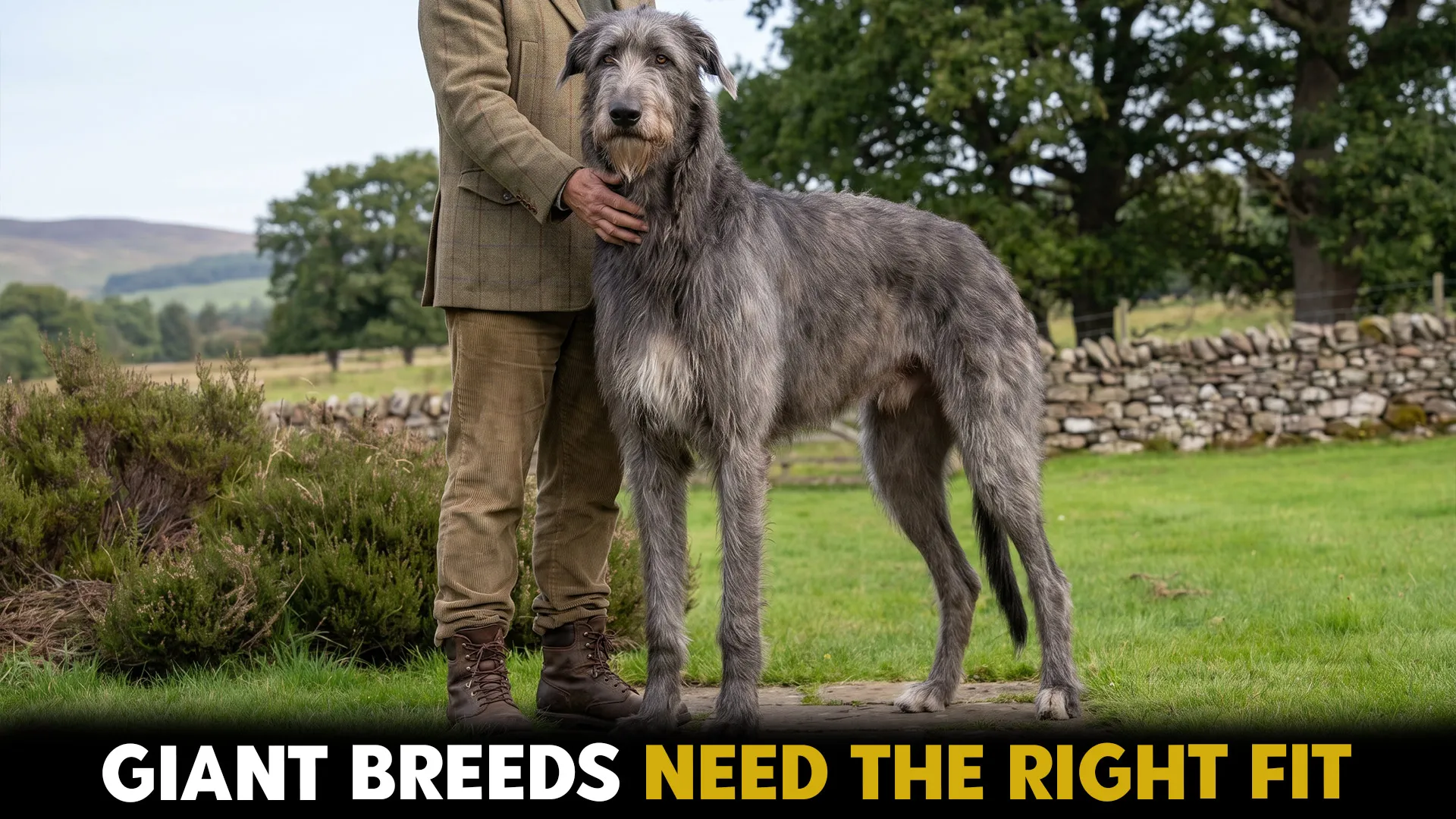
There’s something unforgettable about sharing your home with a truly giant dog. These dogs don’t just take up more space on the couch. They bring a huge personality, a strong presence, and often an incredible devotion to their families.
But being drawn to a giant dog is about more than falling in love with its impressive size. These dogs can have different exercise needs, training requirements, feeding costs, and space considerations than smaller breeds.
The good news? For the right owner, a big dog breed can be an incredibly rewarding companion. Many are gentle, affectionate, and surprisingly calm at home despite their imposing appearance.
So, if you have the space, time, and commitment these larger-than-life dogs deserve, let’s meet some rare and impressive giant breeds that could make an extraordinary addition to your family.
Rare and Impressive Giant Dog Breeds for the Right Owner
1. Scottish Deerhound

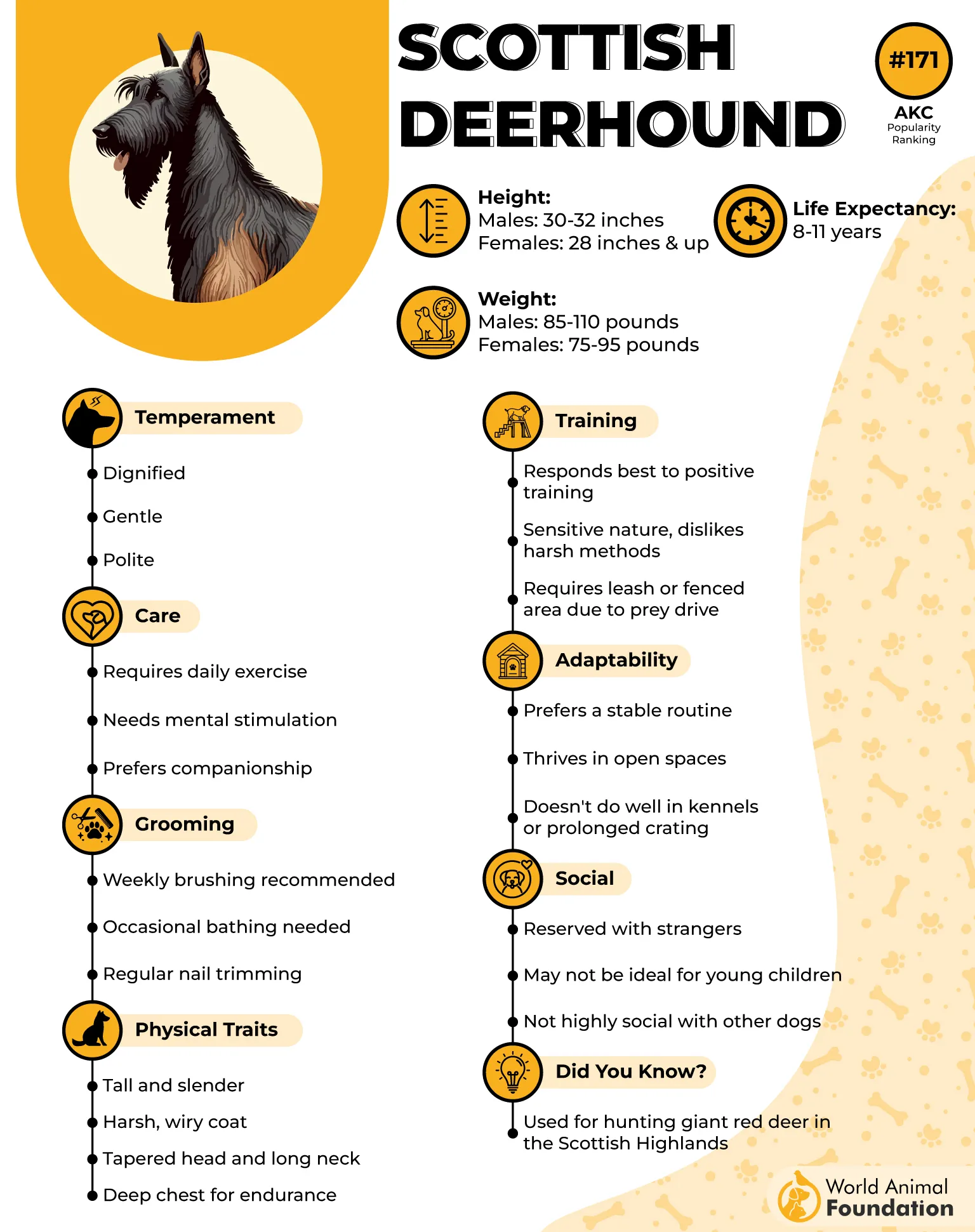
Scottish Deerhounds have a long history dating back to the Middle Ages. Originating in Scotland, they were bred to hunt deer across the rugged Highlands. They were once closely associated with nobility, and ownership was restricted to people of high rank.
The breed later declined as hunting methods changed and suffered further losses during World War I. Today, Scottish Deerhounds remain relatively rare but are admired for their graceful looks, athletic ability, and gentle nature.
What Makes Scottish Deerhounds Stand Out
Scottish Deerhounds are sighthounds with long, athletic bodies built for speed. Their wiry coats are often blue-gray, but shades of gray and brindle are also found. Despite their imposing appearance, they are loving, sensitive, and easygoing.
According to Omlet, they usually enjoy family life and can get along well with children, other dogs, and cats when raised with them. They are also quiet dogs that tend to be reserved rather than aggressive with strangers.
Caring for Scottish Deerhounds
These dogs need at least an hour of daily exercise and opportunities to run safely in a secure area. Their chasing instinct can be strong, so off-leash freedom should be limited to enclosed spaces. At home, adult Deerhounds are often calm and enjoy spending hours relaxing on soft bedding.
Training takes patience because they are sensitive and independent, responding best to gentle, reward-based methods. Early alone-time training can also help prevent separation anxiety.
2. Caucasian Shepherd
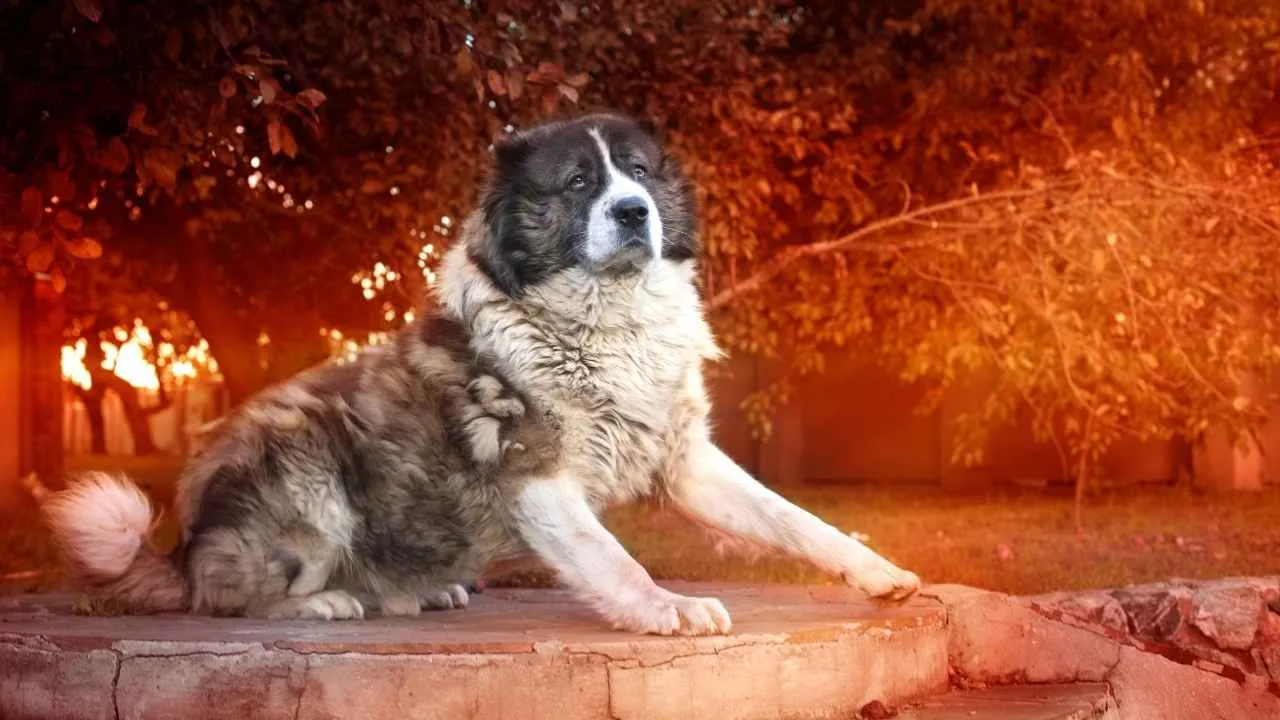
Caucasian Shepherds, also known as Caucasian Ovcharkas, Caucasian Mountain Dogs, or Russian Bear Dogs, originated in the Caucasus Mountains of Eastern Europe and Asia. In Georgia and surrounding regions, they were traditionally used to protect livestock and property from predators.
They were expected to work independently in harsh mountain conditions and stand their ground against threats such as wolves and bears.
What Makes Caucasian Shepherds Stand Out
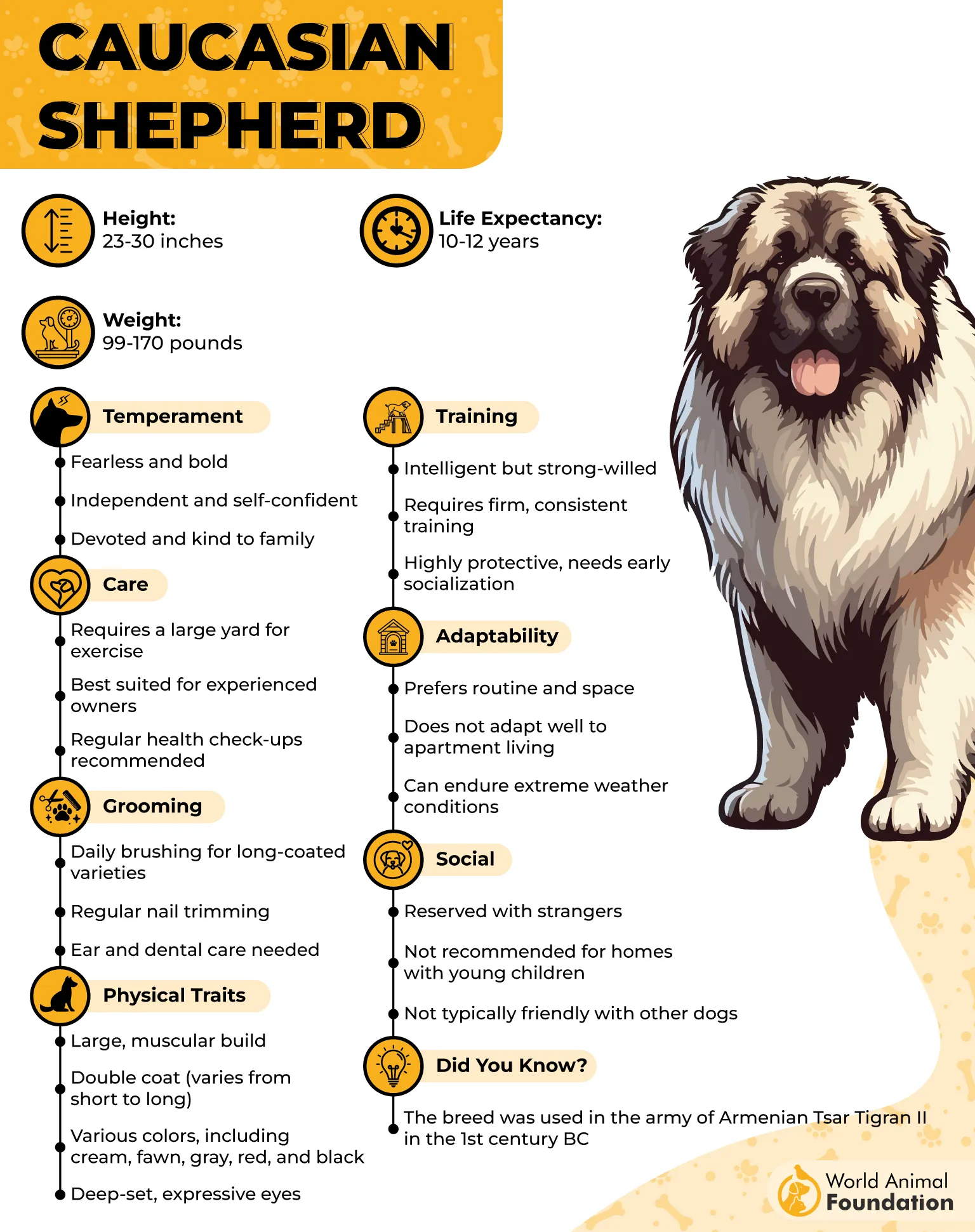
These giant dogs have a muscular, big-boned build and a thick double coat suited to cold, wet, and windy climates. Many have a heavy mane around the neck. They are highly territorial and naturally suspicious of unfamiliar people and animals.
They may patrol their surroundings, watch gates and entrances, and position themselves where they can monitor their territory. They are usually quiet until they sense a threat, when they can produce deep, sustained barking.
Caring for Caucasian Shepherds
Caucasian Shepherds need plenty of space and experienced handling. Early socialization and consistent, positive-reinforcement training are essential, as these dogs are strong-willed and do not have a natural need to please their owners.
They can become loyal, affectionate family companions with knowledgeable care, but their protective nature requires careful management around visitors and other animals. They may also be challenging in homes with small, highly active children.
3. Boerboel
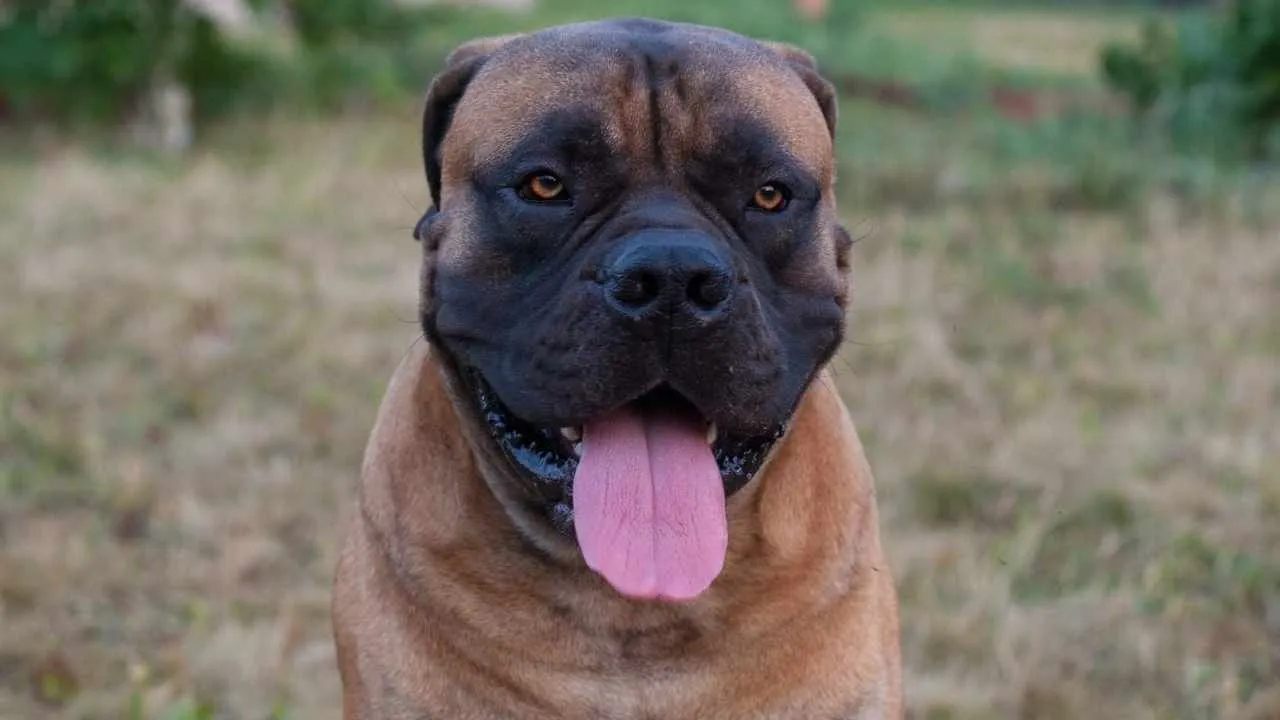
Boerboels, also known as South African Mastiffs, originated in South Africa, where they were bred to protect farms and homesteads from intruders and dangerous predators, including hyenas and lions.
They have worked alongside people for centuries, but efforts to preserve and develop the breed formally began in the 1980s. Descended from mastiff-type dogs, Boerboels have a powerful build that reflects their working past.
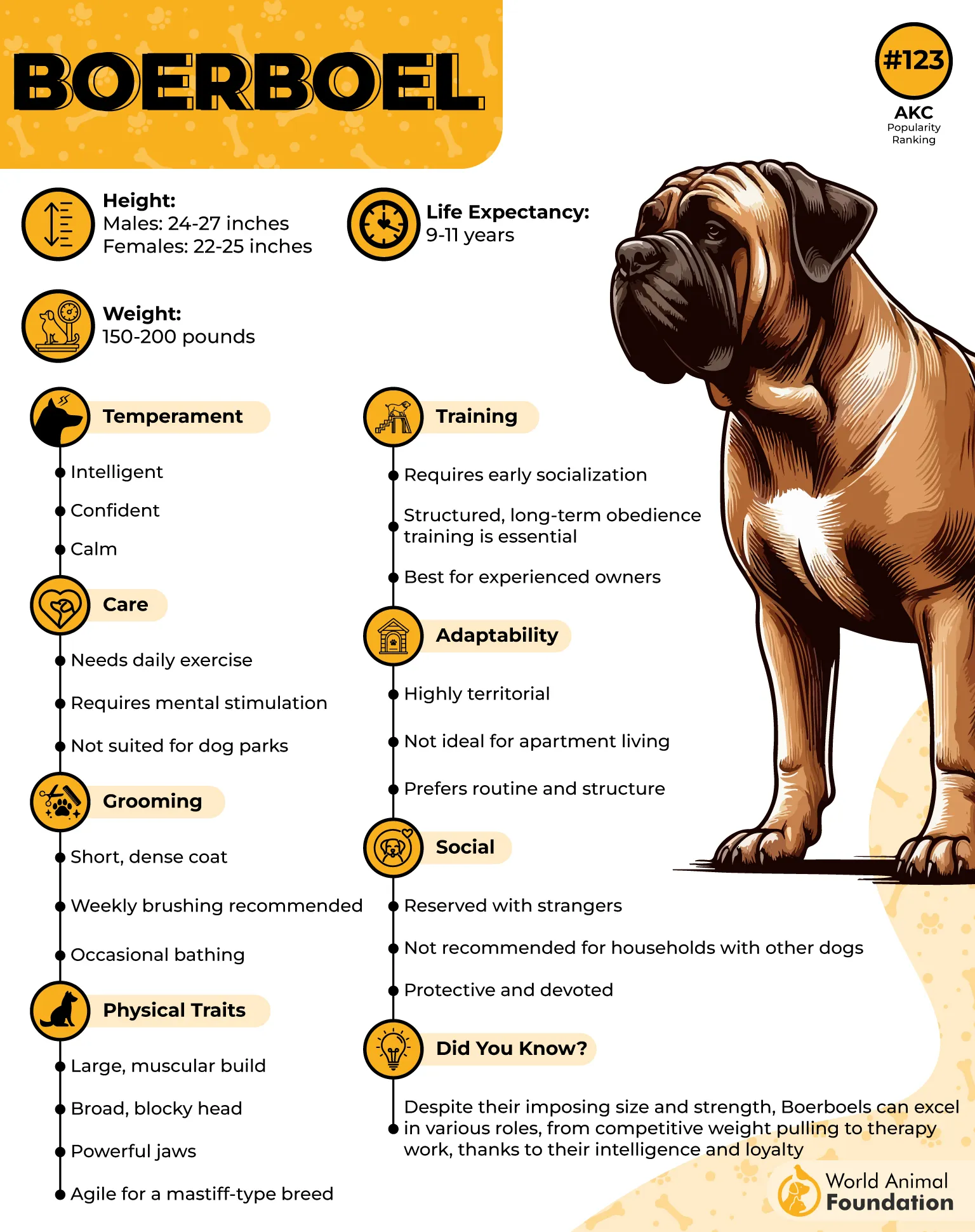
What Makes Boerboels Stand Out
Boerboels are confident, intelligent, and deeply loyal to their families. Despite their imposing appearance, they can be calm, affectionate, and playful with the people they know.
They can also be good with children when properly socialized, although play should always be supervised because of their size and strength.
Their protective instincts make them more reserved around strangers, especially when someone enters their home. With proper introductions, however, many can learn to accept guests.
Caring for Boerboels
PetMD says that Boerboels need experienced owners who can provide consistent training, early socialization, and plenty of physical and mental stimulation. Their independent and confident nature can make them challenging to manage without clear, steady guidance.
Positive reinforcement and gentle handling work best, as harsh treatment can make them fearful or reactive. They also need regular interaction and may become destructive if left alone for too long.
4. Central Asian Shepherd
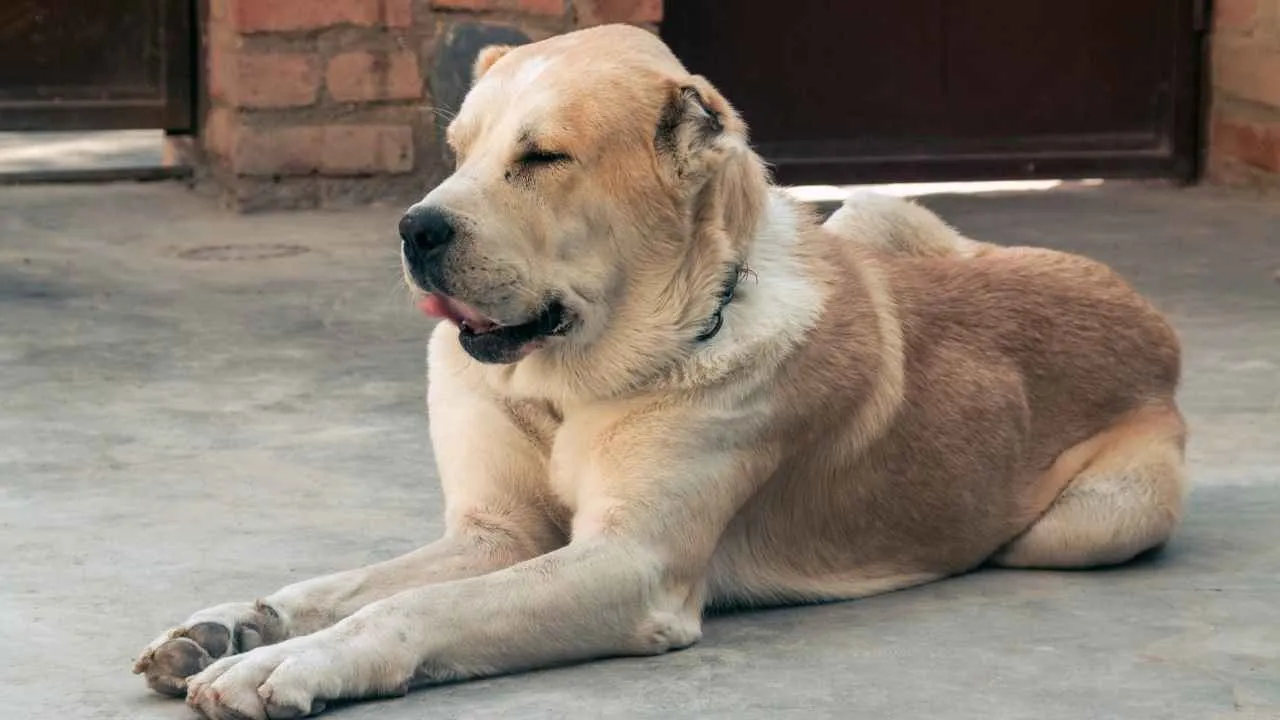
Central Asian Shepherds are one of the oldest known dog breeds, with a history that may stretch back more than 5,000 years. They originated across Central Asia and were traditionally bred to protect livestock and families from predators.
Their ability to handle harsh climates and rugged terrain made them valuable working dogs. Also known as Alabai, Alabay, and Turkmen Wolf-Hounds, they still carry many of their traditional guarding instincts today.
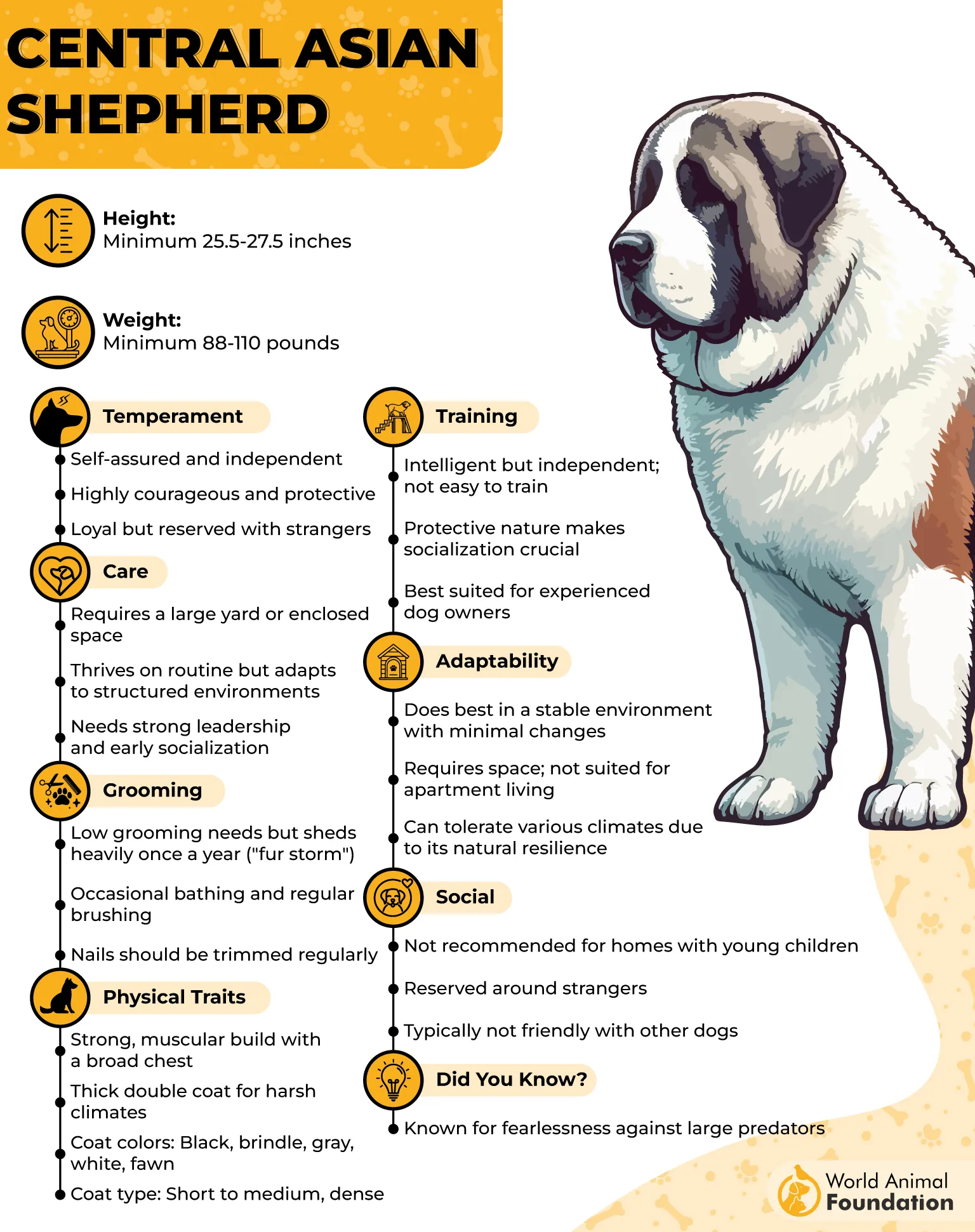
What Makes Central Asian Shepherds Stand Out
These powerful dogs are calm and confident, even in threatening situations. They are deeply devoted to their loved ones but naturally cautious around strangers and other dogs. Their territorial nature can lead them to patrol their surroundings and stay alert for potential threats.
They are usually quiet until something catches their attention, but they can be strong barkers. With the right socialization, they can become affectionate family companions, but their fearless and independent nature makes them better suited to experienced owners.
Caring for Central Asian Shepherds
Central Asian Shepherds need consistent training, patience, and confident handling from an early age. They are independent thinkers and may test boundaries, so lifelong guidance is important.
Harsh treatment or overly relaxed leadership can encourage unwanted behavior. Early socialization is especially important because of their protective and territorial instincts.
5. Spanish Mastiff
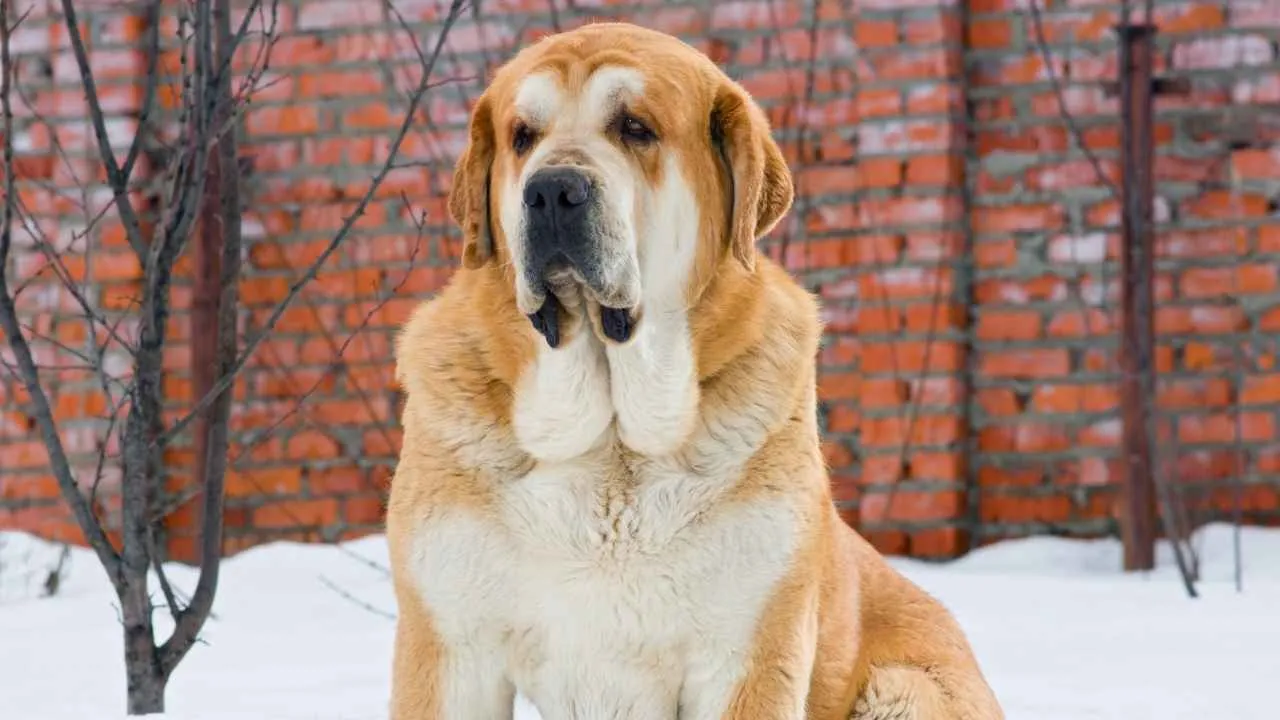
Spanish Mastiffs have guarded livestock in Spain for more than 2,000 years. They were especially valued for protecting sheep from wolves and other predators during seasonal livestock migrations.
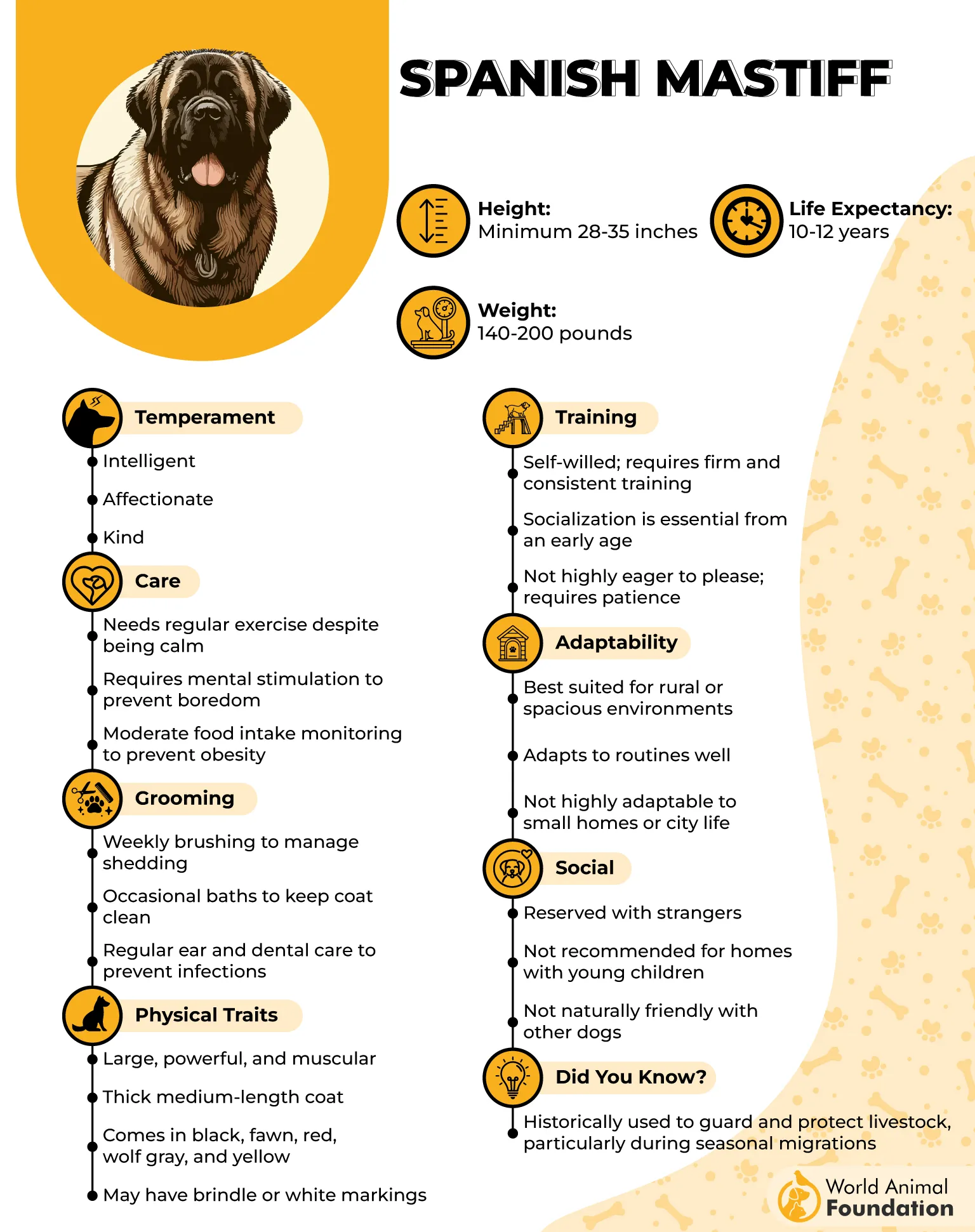
During the Middle Ages, these dogs traveled with shepherds as part of the Mesta, an association of sheep ranchers moving between grazing areas. Their role later expanded to protecting farms, properties, and people. Today, they remain powerful guardians with a calm and affectionate side at home.
What Makes Spanish Mastiffs Stand Out
These giant dogs have a muscular build, a massive head, and loose skin around the neck that helps protect them during confrontations.
They are generally gentle and loving with their family members but can be wary of strangers and other dogs, as noted by the AKC. Their deep, low bark is usually reserved for alerting their owners to something they consider a threat.
Caring for Spanish Mastiffs
Spanish Mastiffs need early training and consistent socialization to keep their protective instincts under control. Young dogs should learn basic cues, walk politely on a leash, and remain calm around people and other animals.
They generally need about an hour of daily exercise, such as walks, swimming, or playtime in a fenced yard. However, they are not suited to long-distance running.
6. Rafeiro do Alentejo
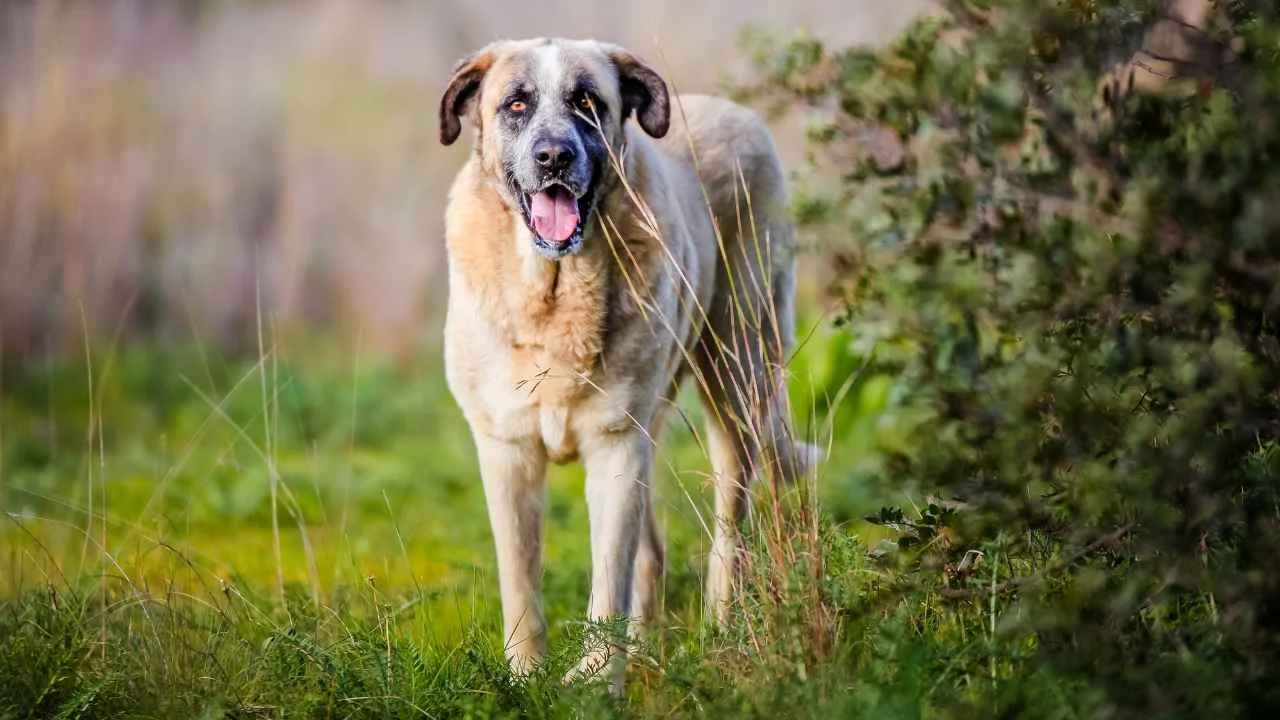
Rafeiro do Alentejo dogs have a long history as working guardians in Portugal. Originally bred to hunt large game, they gradually became valued for protecting livestock, farms, and estates.
These farm dogs were especially useful for guarding sheep and cattle, often working alone across open land and defending their herds from intruders. Their natural ability to stay more alert at night made them particularly effective livestock protectors.
What Makes Rafeiro do Alentejo Stand Out
Rafeiro do Alentejo dogs have a powerful, muscular build, a broad, bear-like head, and a thick, dense coat that can be short or medium in length. Despite their imposing appearance, they are generally calm, confident, and sober in temperament.
They are highly intelligent and trainable but also strongly independent, with protective instincts that make them naturally suspicious of unfamiliar people. They are often less alert during the day but become especially vigilant at night, making them excellent property and livestock guardians.
Caring for Rafeiro do Alentejo
Rafeiro do Alentejo dogs do best with experienced pet parents who understand the needs of a serious guardian breed. They need daily exercise and plenty of space to move around, making homes with secure outdoor areas a good fit.
Because of their protective instincts, outdoor time should be supervised with a leash or secure fencing. Early socialization and consistent, positive training are essential throughout their lives.
7. Polish Tatra Sheepdog
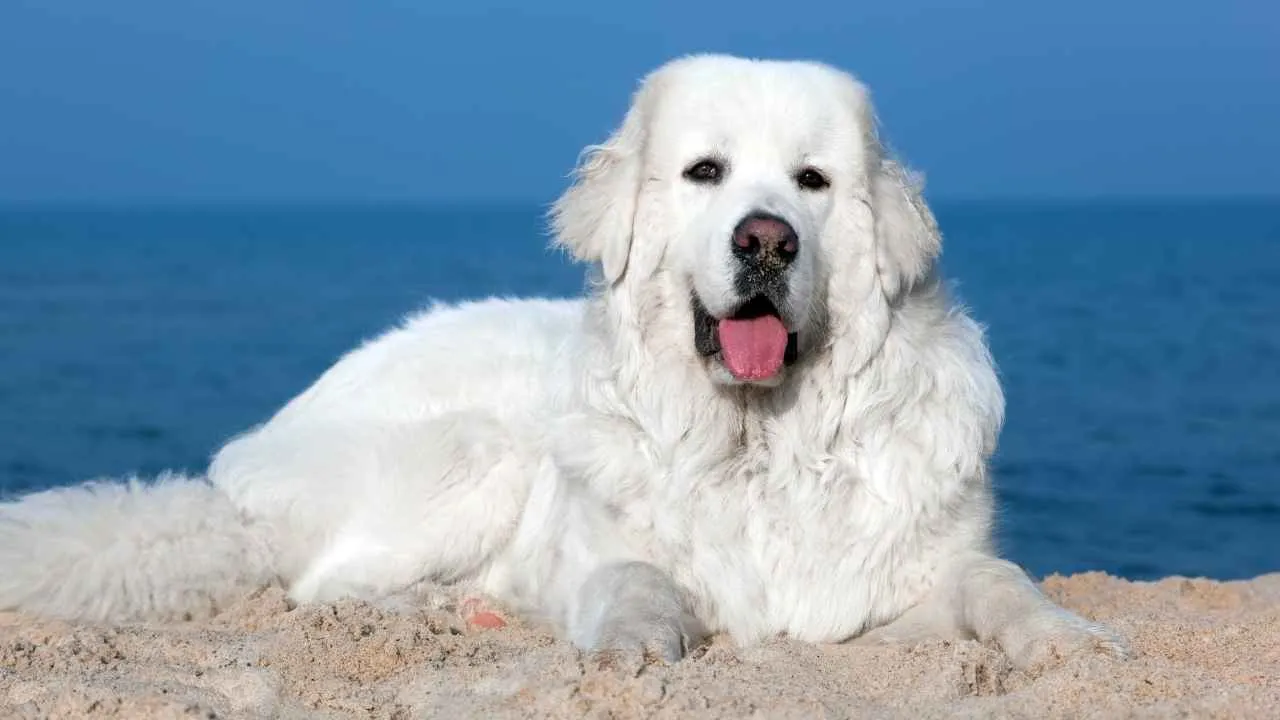
Polish Tatra Sheepdogs have guarded livestock in the mountainous regions of Poland for thousands of years. Also known as Owczarek Podhalanski or Polish Mountain Sheepdogs, they likely descended from Mastiff-type dogs and were bred to herd and protect livestock in harsh conditions.
After World War II, the breed faced possible extinction under communist rule, but preservation efforts helped rebuild its numbers. By the 1980s, Tatras had reached the U.S. and Canada, and the United Kennel Club recognized the breed in 1995.
What Makes Polish Tatra Sheepdogs Stand Out
Polish Tatra Sheepdogs are among the rarer giant breeds, known for their large frames, substantial bone, and dense, weatherproof double coats. Their white coats helped shepherds easily spot them among their flocks while allowing them to stay close to the animals they protected.
Calm, intelligent, and naturally steady, Tatras are protective without being constantly reactive. They may patrol boundaries, watch from elevated positions, and use bouts of barking to warn of unfamiliar activity.
Caring for Polish Tatra Sheepdogs
Tatras need owners who understand the needs of an independent livestock guardian. Early and lifelong socialization is important for helping them manage their natural wariness and strong protective instincts.
They can be gentle, patient, and reliable with children and generally get along well with other household pets, although their massive size means children should always be supervised around them.
Conclusion
Choosing a giant dog is about much more than being impressed by size. These rare breeds come with fascinating histories, strong working instincts, and personalities that can range from gentle and affectionate to fiercely protective.
If you’re considering one of these impressive breeds, take time to look beyond their appearance and think about your lifestyle, space, and experience with dogs.
The right match can give you a loyal companion and a truly unforgettable bond. After all, the best giant dog isn’t simply the biggest one. It’s the one that fits your life.
Looking for more large dog breeds? You can also check out the Bernese Mountain Dog, Italian Mastiff, Alaskan Malamute, German Shepherd, Irish Wolfhound, Tibetan Mastiff, French Mastiff, Great Pyrenees, Neapolitan Mastiff, and English Mastiff.
