




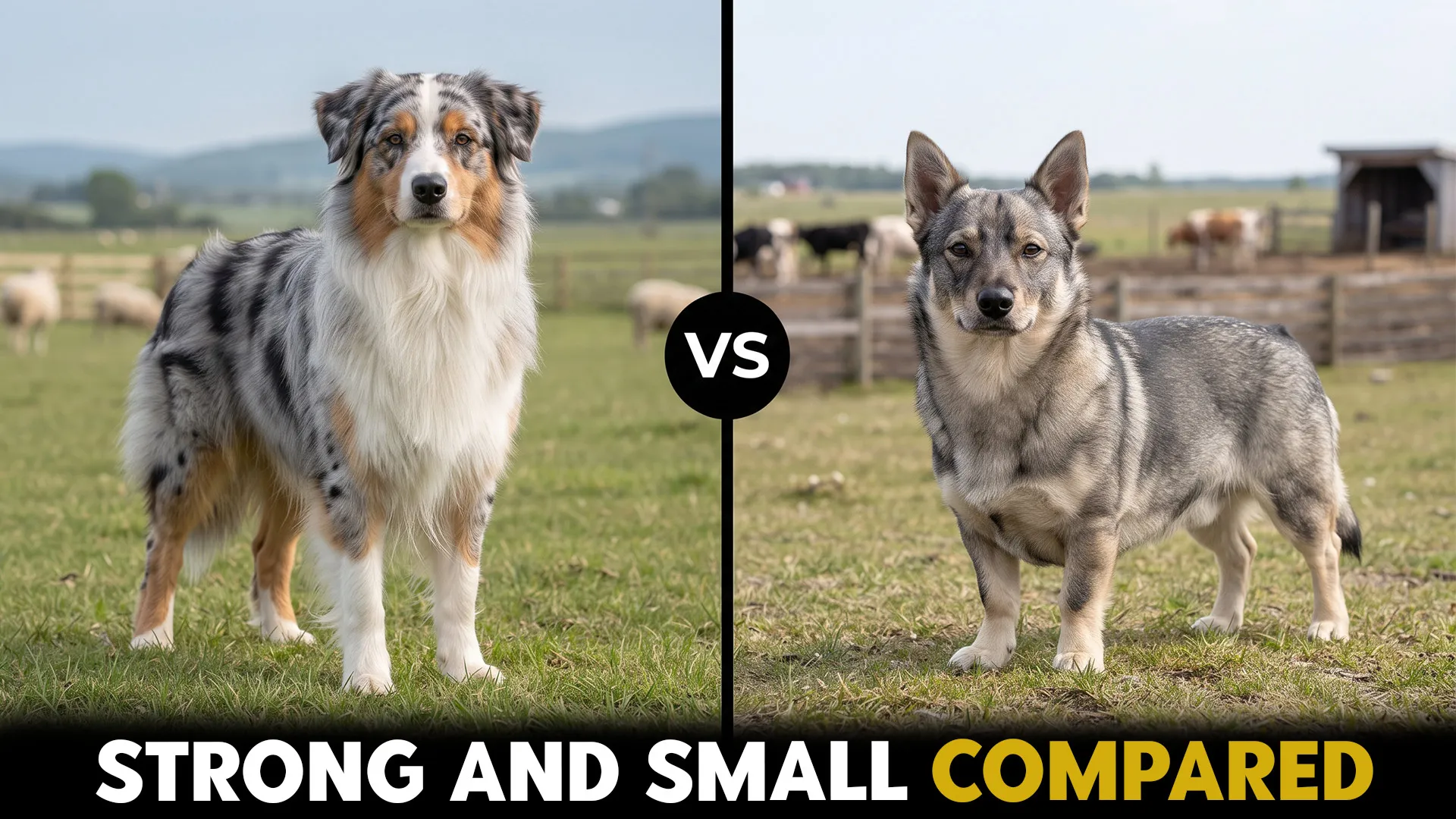
Choosing between an Australian Shepherd and a Swedish Vallhund can be tricky, especially if you’re looking for a dog that is intelligent, energetic, and eager to stay involved with the family.
While these breeds come from very different backgrounds, both are hardworking dogs with plenty of personality and a strong desire to have a job to do. The Australian Shepherd and Swedish Vallhund may differ dramatically in size, but both pack serious intelligence, energy, and herding instinct. One brings athletic power and endless drive, while the other delivers Viking-era toughness in a compact frame.
So, which breed is the better fit for your lifestyle? Comparing their temperament, exercise needs, trainability, and family compatibility reveals which hardworking companion is the better match for your lifestyle.
Aussie vs. Swedish Vallhund Dog Breeds: Key Traits Compared
The following comparison between the Aussie and Swedish Vallhund can help you decide which one matches your home and daily routine.
Origins & Purpose
Australian Shepherd
Despite its name, the Australian Shepherd was developed in the Western United States in the late 1800s as a versatile working and herding dog, according to Britannica. Originally bred to help manage livestock, Aussies were valued for their intelligence, stamina, agility, and ability to respond quickly to their handlers.
Their strong work ethic and natural herding instincts remain important parts of the breed today, making them well suited to active pet parents and families who enjoy giving their dogs plenty of physical and mental challenges.
Swedish Vallhund
The Swedish Vallhund is an ancient Swedish herding breed with a history that dates back more than 1,000 years. These compact dogs were developed to work on farms, particularly for controlling and herding cattle.
Their long bodies and short legs gave them a distinctive appearance while allowing them to work efficiently around livestock. Although much smaller than the Australian Shepherd, the Swedish Vallhund retains the confidence, energy, and strong working drive of a capable farm dog.
Size & Physical Build
Australian Shepherd
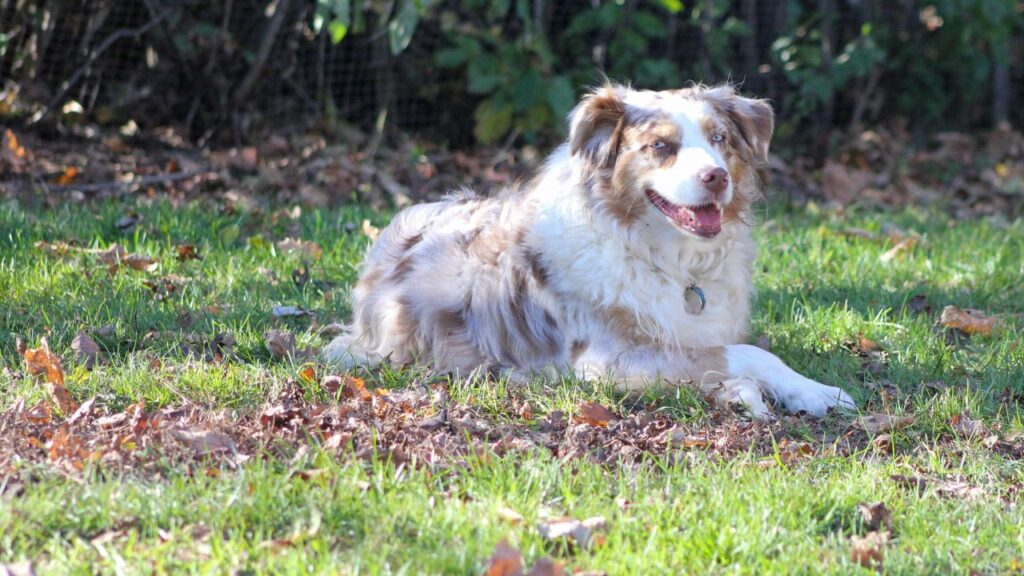
Australian Shepherds are medium-sized dogs with a sturdy, athletic build designed for agility and endurance. They are slightly taller and considerably heavier than Swedish Vallhunds, giving them a more substantial presence.
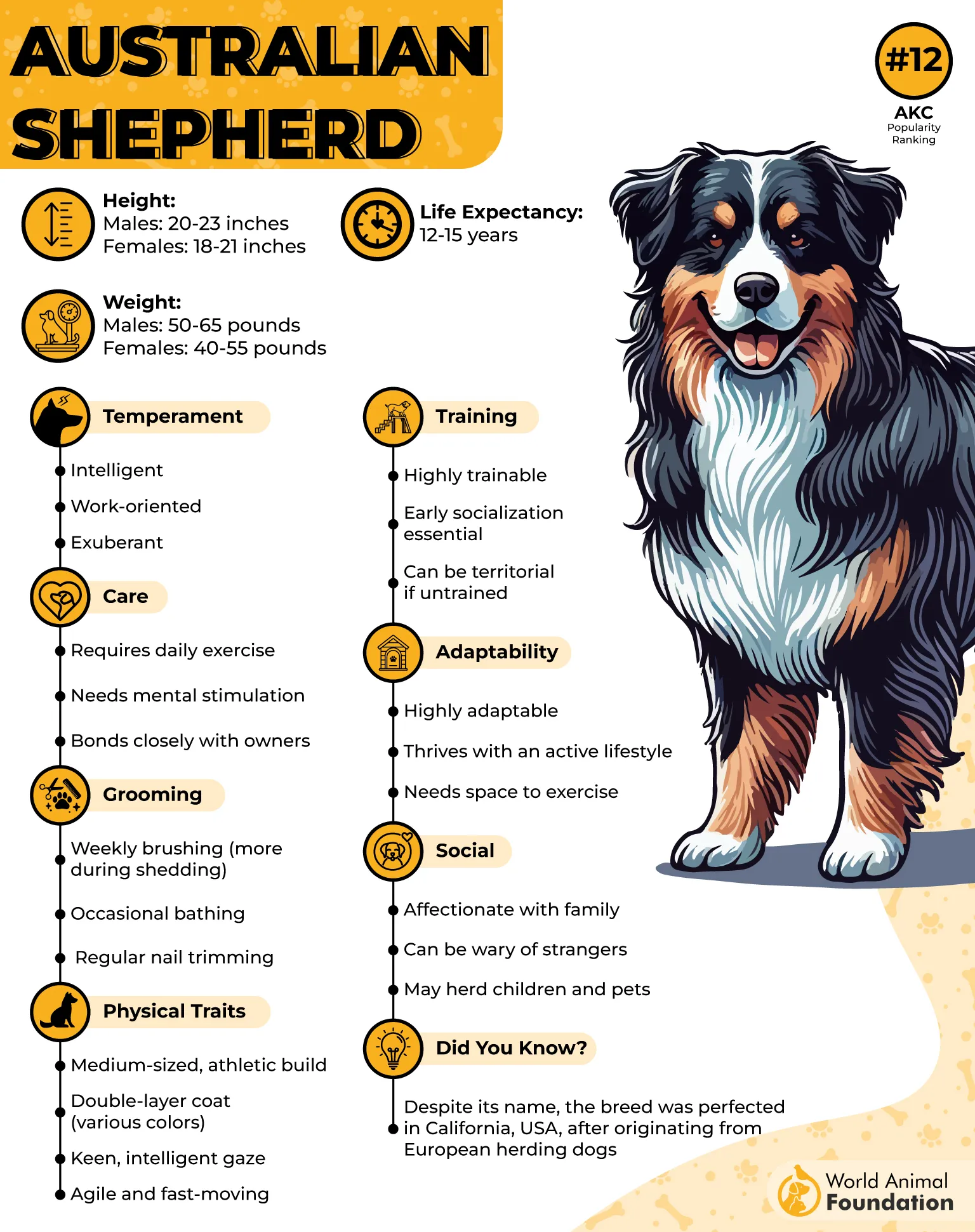
Their muscular bodies, balanced proportions, and strong legs reflect their history as active working and herding dogs.
Height: 18–24 inches
Weight: 40–65 pounds
Build: Muscular, agile, and athletic
Swedish Vallhund
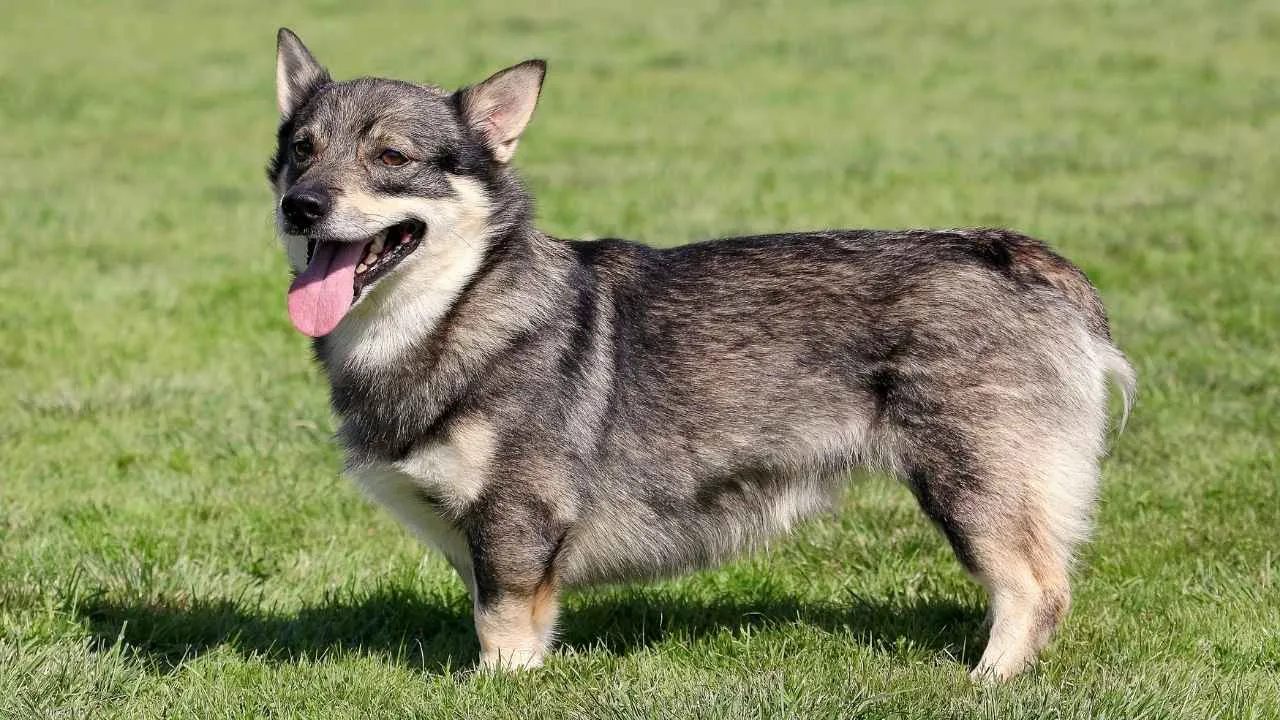
Swedish Vallhunds have a distinctive compact build, with short legs and a noticeably long body. Their unusual proportions are similar to those of the Pembroke and Cardigan Welsh Corgis, but the Vallhund has its own sturdy, energetic appearance.
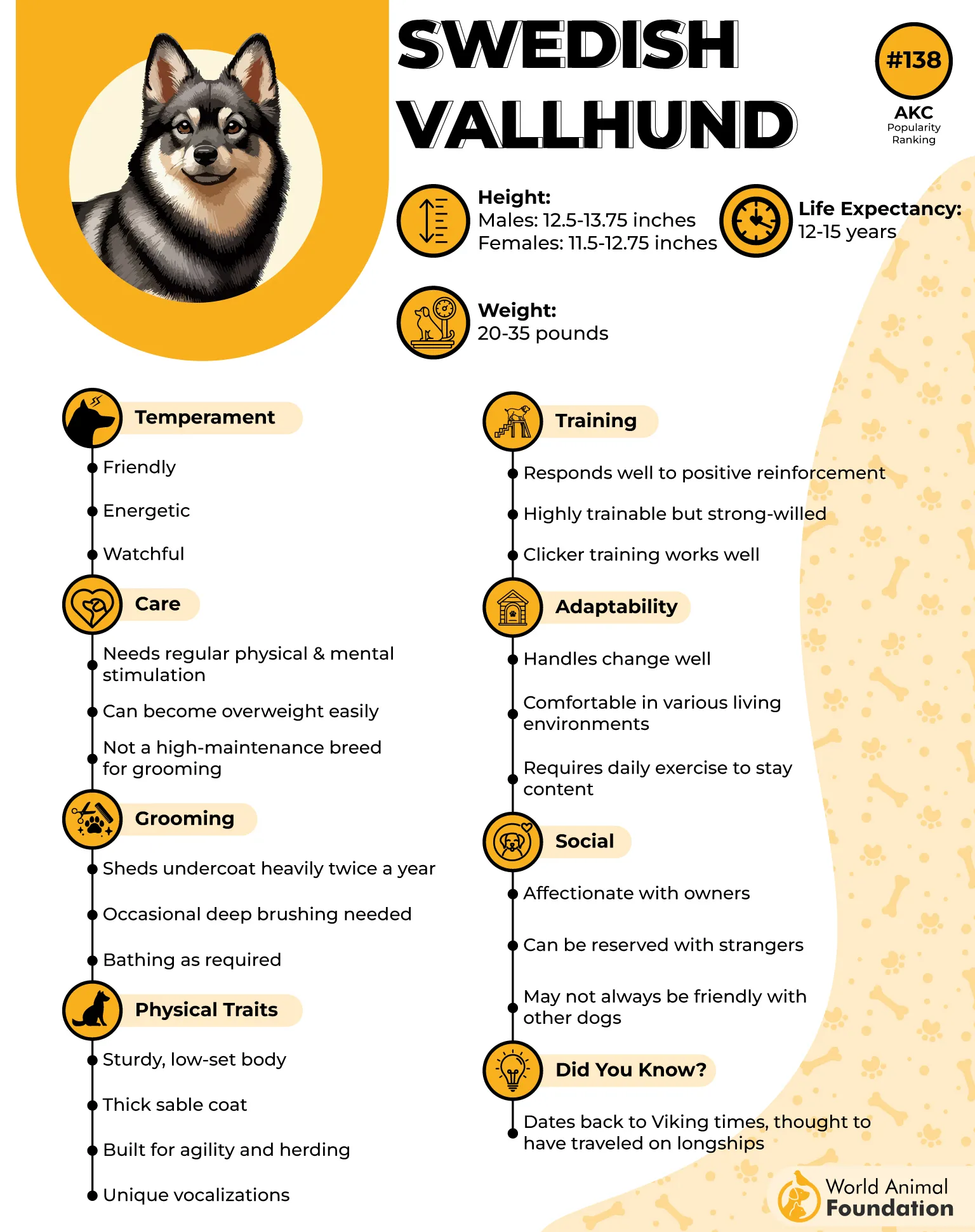
Despite their smaller size, they are built for active work and are surprisingly strong and agile for their stature.
Height: 11–14 inches
Weight: 20–35 pounds
Build: Compact, sturdy, and long-bodied
Temperament & Personality
Australian Shepherd
Australian Shepherds are intelligent, loyal, and highly energetic dogs that thrive when they have plenty of activity and interaction with their families. They are often friendly but may be somewhat reserved around unfamiliar people until they have had a chance to warm up.
Their strong herding instincts can also lead them to try to herd children, cats, or other pets, particularly when those instincts are not properly redirected.
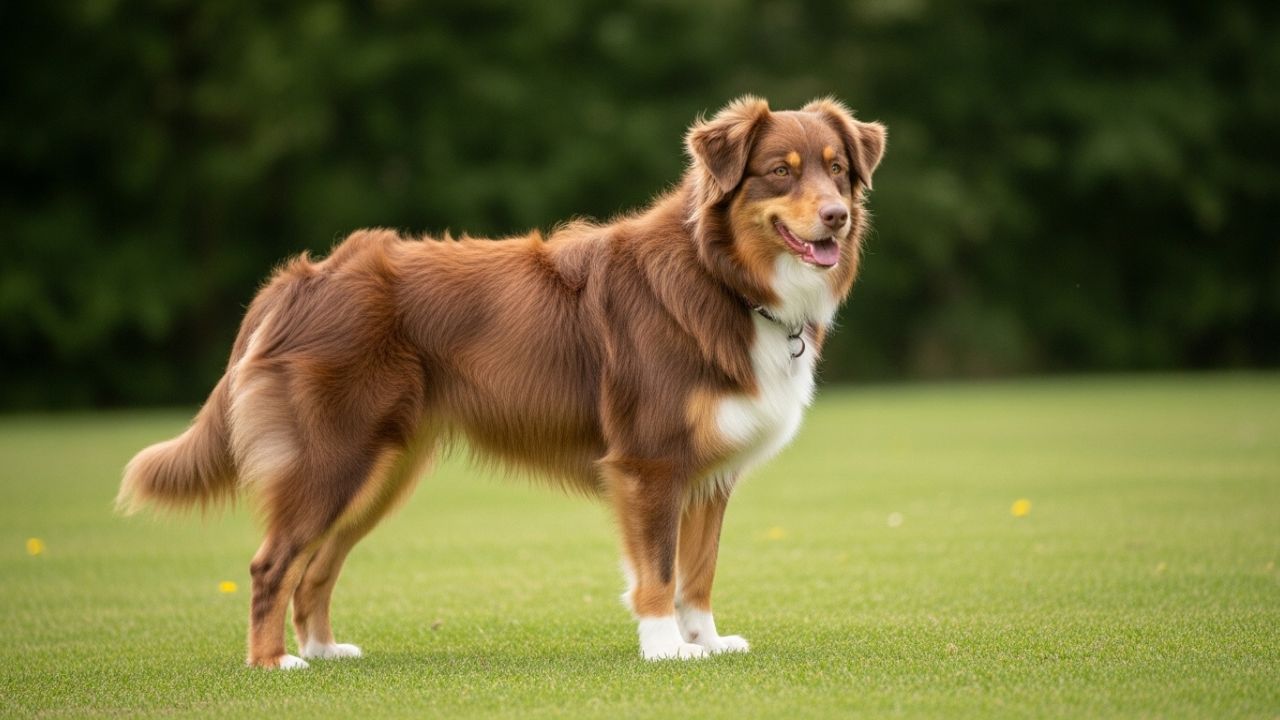
Personality: Loyal, intelligent, attentive, and energetic
With children and pets: Generally good with proper socialization, although herding behavior may occur
With strangers: Usually friendly but can be reserved at first
Exercise needs: High; requires regular physical activity and mental stimulation
Common challenges: Herding behavior, destructive habits when bored, and potential over-attachment to family members
Swedish Vallhund
Swedish Vallhunds are energetic, playful, and affectionate dogs with a confident working-dog personality. They generally enjoy spending time with their families and can be patient with children when properly socialized from a young age.
However, some may be moderately open to unfamiliar people or dogs, while their herding background can contribute to chasing and nipping behavior, as Showsight Magazine notes.
Personality: Affectionate, playful, confident, and energetic
With children and pets: Generally good with proper socialization and supervision
With strangers: May be reserved and benefit from gradual introductions
Exercise needs: High; needs both physical activity and mental stimulation
Common challenges: Excessive barking, destructive behavior when understimulated, and chasing small animals
Exercise & Energy Levels
Australian Shepherd
Australian Shepherds are highly energetic breeds that need regular physical exercise and mental stimulation throughout their lives. Daily walks, active play, training sessions, and activities that engage their natural working instincts can help keep them happy and well-behaved.
However, growing Aussie puppies need a more careful approach to exercise. High-impact activities, long-distance running, and strenuous hiking should generally wait until the puppy is fully grown, usually around 12–16 months, as mentioned by PetMD.
Swedish Vallhund
Swedish Vallhunds are energetic, active dogs that need plenty of daily mental and physical stimulation. Walks, interactive play, scent games, obedience training, and activities that allow them to use their herding instincts can help prevent boredom and unwanted behaviors such as excessive barking or destructiveness.
Despite their small size, they are not low-energy lap dogs. Their exercise should be adjusted to their age, fitness level, and individual needs.
Young puppies should avoid excessive high-impact exercise while their bones and joints are developing, while adult Vallhunds can enjoy longer walks, hikes, play sessions, and other activities that keep both their bodies and minds engaged.
Training & Intelligence
Australian Shepherd
Australian Shepherds are exceptionally intelligent, eager to please, and quick to learn new commands and skills. They respond especially well to positive reinforcement and can excel in advanced obedience, herding, agility, flyball, search and rescue, and other dog sports.
Their intelligence also means they need plenty of constructive mental challenges; without them, they may find their own, sometimes destructive, ways to stay occupied.
Early training and socialization are important for helping Aussies become confident, well-mannered companion animals. Because they are energetic working dogs, owners should be prepared to invest significant time in ongoing training rather than stopping once basic commands are mastered.
Swedish Vallhund
Swedish Vallhunds are smart, eager-to-please dogs that generally respond well to reward-based positive training. Their intelligence and working background allow them to learn commands and skills relatively quickly, but they need variety and regular mental challenges to stay engaged.
Training can also help manage behaviors linked to their herding instincts, such as attempting to herd children or chasing small animals.
Once basic obedience is established, activities such as agility, nose work, interactive games, and trick training can provide an excellent outlet for their energy and intelligence. Early socialization is equally important, particularly because some Vallhunds can be reserved around unfamiliar people and dogs.
Coat Maintenance
Australian Shepherd
Australian Shepherds have a medium-length, double-layered, water-resistant coat that needs regular upkeep, particularly because their active lifestyle often takes them outdoors.
Weekly brushing helps remove loose hair, reduce shedding, and prevent dirt and debris from building up in the coat. During heavier shedding periods, more frequent brushing may be needed.
Coat type: Medium-length, double, water-resistant coat
Brushing: At least weekly; increase frequency during heavy shedding
Bathing: As needed, especially after outdoor activities or when dirty
Shaving: Not recommended, as the double coat helps protect against heat and cold
Other care: Regularly check the ears, eyes, nails, and teeth as part of the grooming routine
Swedish Vallhund
Swedish Vallhunds have a dense, short coat that is relatively simple to maintain but sheds heavily. Regular brushing throughout the week helps keep loose hair under control, while brushing more frequently during the spring and fall shedding seasons can help prevent large amounts of fur from accumulating around the home.

Coat type: Short, dense double coat
Brushing: Several times a week; increase during seasonal shedding
Bathing: A few times a year or whenever the dog becomes particularly dirty
Shedding: Heavy year-round, with especially intense shedding in spring and fall
Other care: Routine ear cleaning, eye checks, nail trimming, and dental care are recommended
Health & Lifespan
Australian Shepherd
Australian Shepherds generally live 12–15 years, but may be prone to several inherited conditions:
Hip and elbow dysplasia
Progressive retinal atrophy (PRA)
Collie eye anomaly
Hereditary cataracts
Iris coloboma
Epilepsy
MDR1 mutation
Deafness
Lymphosarcoma
Hemangiosarcoma
Swedish Vallhund
Swedish Vallhunds are generally healthy, but some conditions can occur:
Swedish Vallhund retinopathy
Cataracts
Dental disease
Hip dysplasia
Patellar luxation
Conclusion
Choosing between an Australian Shepherd and a Swedish Vallhund comes down to more than size or appearance. Both are intelligent, energetic working dogs that need regular exercise, mental stimulation, training, and socialization.
The Aussie is larger and more demanding, while the Vallhund offers many of the same lively, herding-dog qualities in a smaller package.
Before bringing either breed home, consider your activity level, available space, grooming commitment, and ability to provide consistent training. The right choice is the dog whose needs fit naturally into your lifestyle because a well-matched dog is far more likely to become a happy, lifelong companion.
