




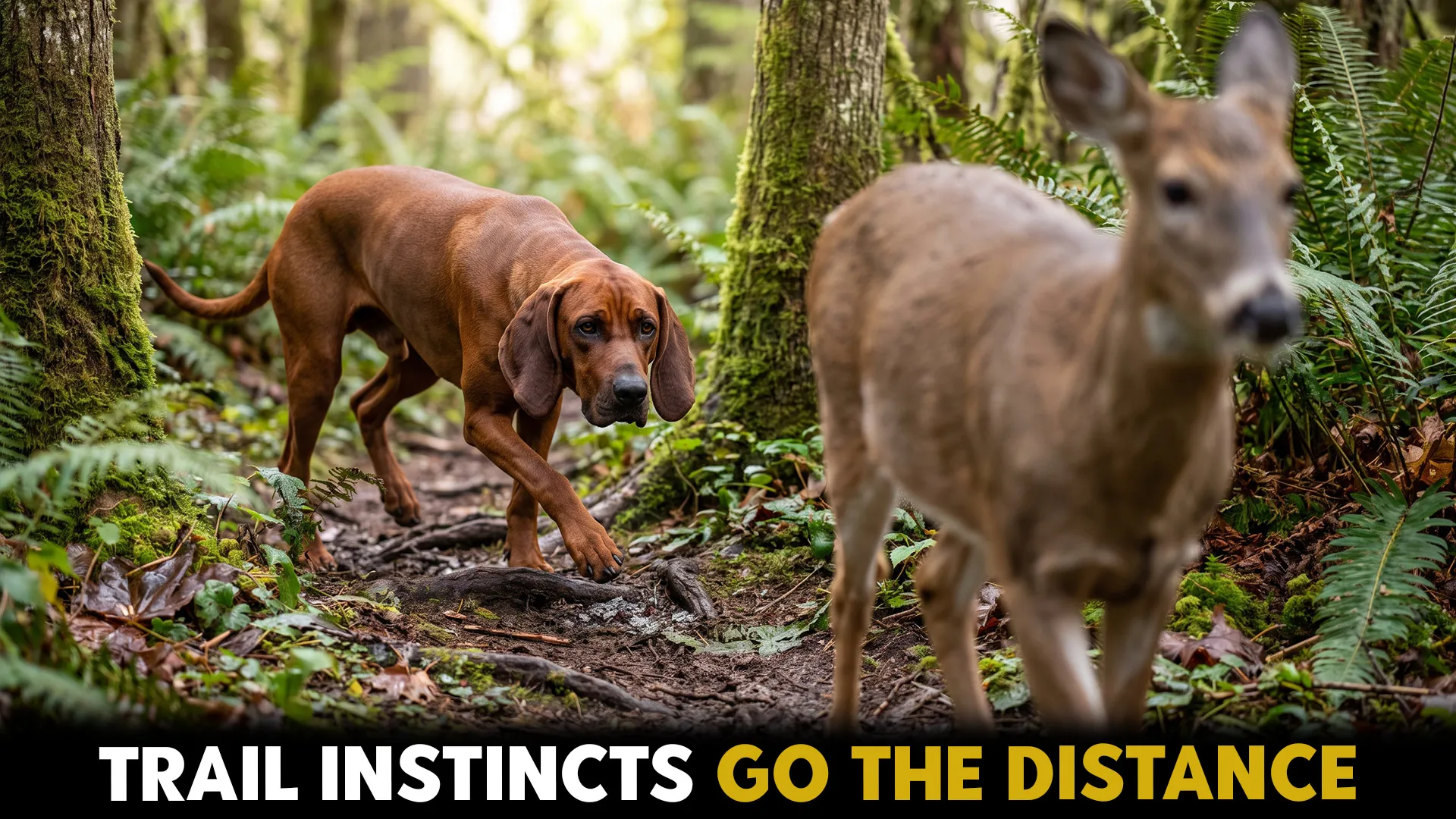
A good tracking dog does more than just put its nose to the ground and wander off as if it has found the world’s best smell. In a long-distance hunt, the dog must read scent, handle changing terrain, stay focused, and keep working when the trail gets tricky.
That is why scent hounds have earned such a strong place in hunting history. The AKC notes that a dog’s sense of smell can be about 100,000 times stronger than ours, while Bloodhounds are especially renowned for tracking work.
But no single breed fits every hunt. Below, we look at 10 breeds with different strengths, from cold-trailing specialists to fast, versatile field dogs.
Top Dog Breeds for Long-Distance Tracking Hunts
1. Bloodhound
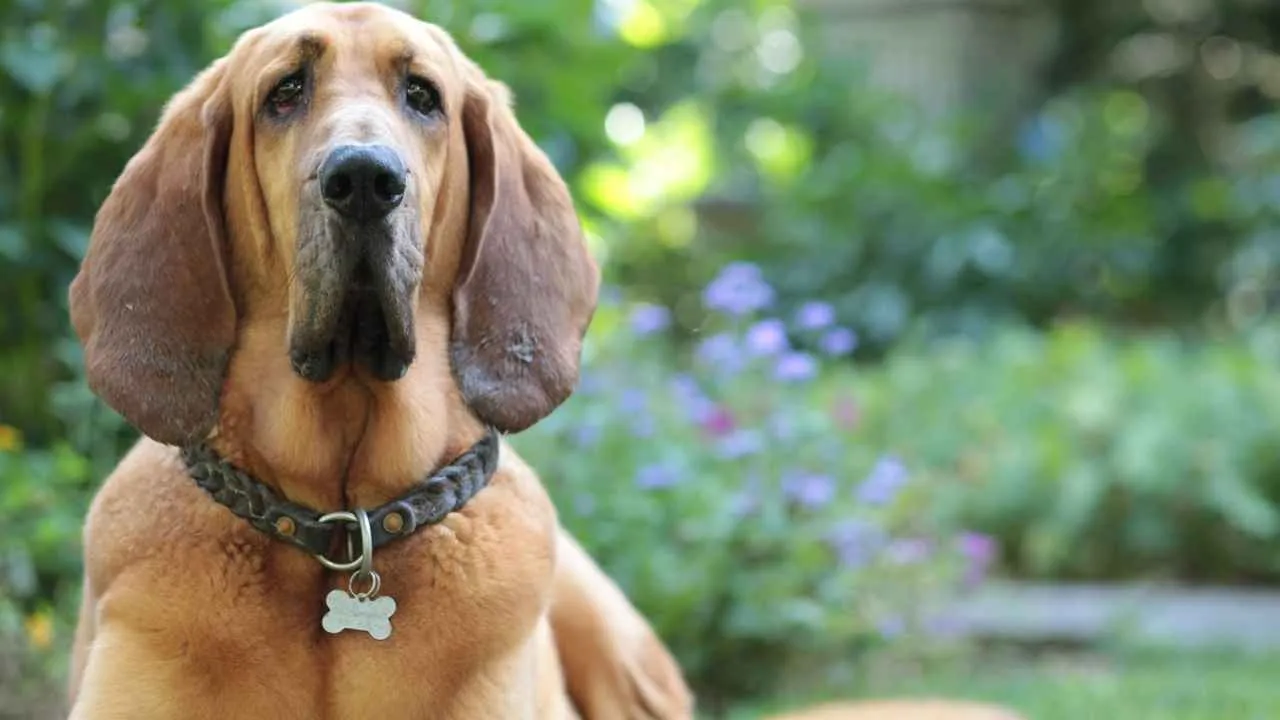
Originally bred as a hunting dog to kill deer, rabbits, and wild boars, the Bloodhound is a large scent hound descended from the hounds kept at the Abbey of Saint-Hubert, Belgium, according to Wikipedia.
Known for its keen sense of smell and natural tracking instincts, this large dog can discern human scent over long distances. The olfactory bulbs in the breed are 40 times bigger than those of humans. It has long pendent ears that prevent scattering of nearby scent particles, and wrinkles around the lips and nose direct the scent molecules to the nose.
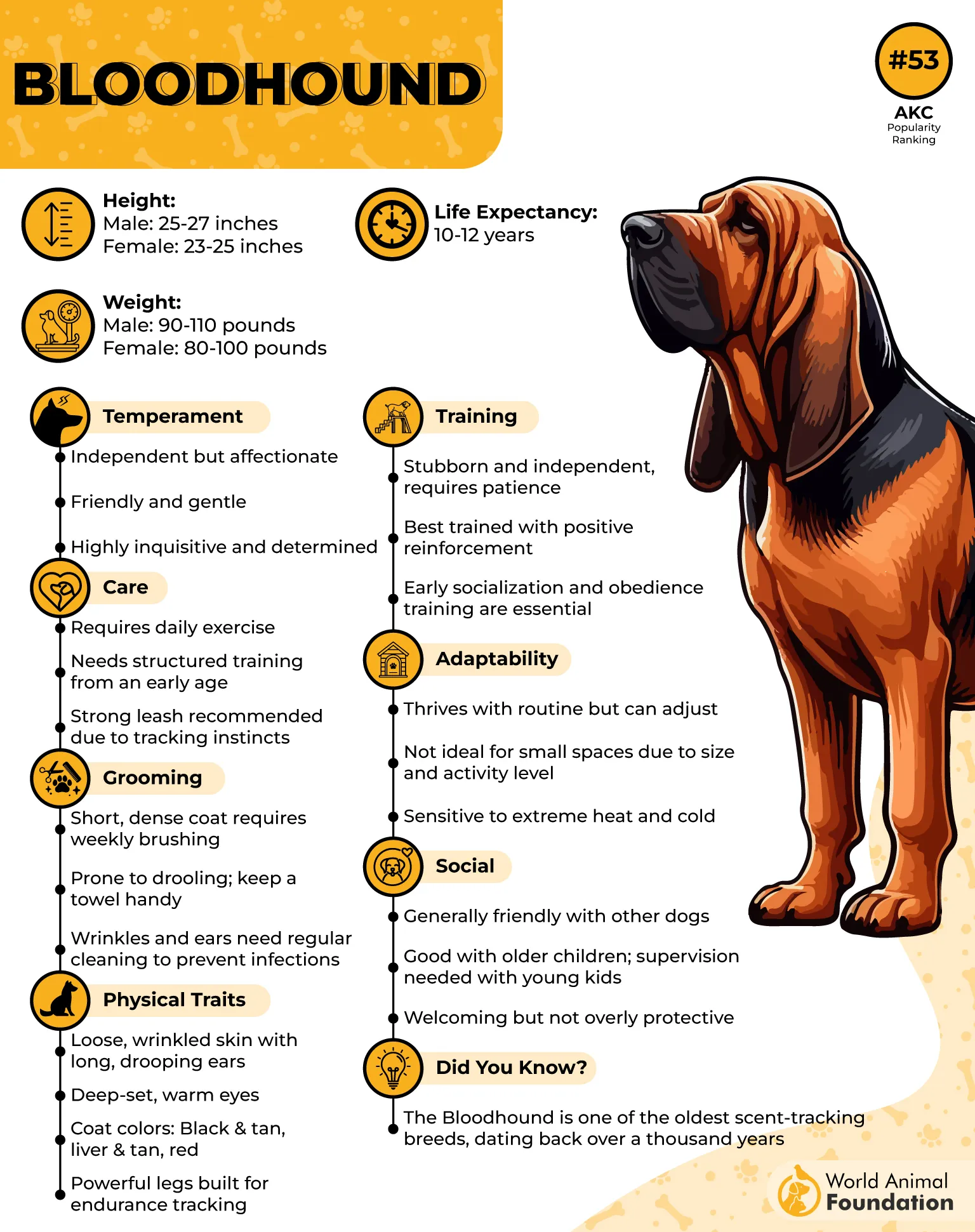
The breed is known to follow trails of a lost, a fugitive, or a wounded game or person by taking the scent from the ‘scent particle.’ A short leash is recommended for better communication.
2. Redbone Coonhound
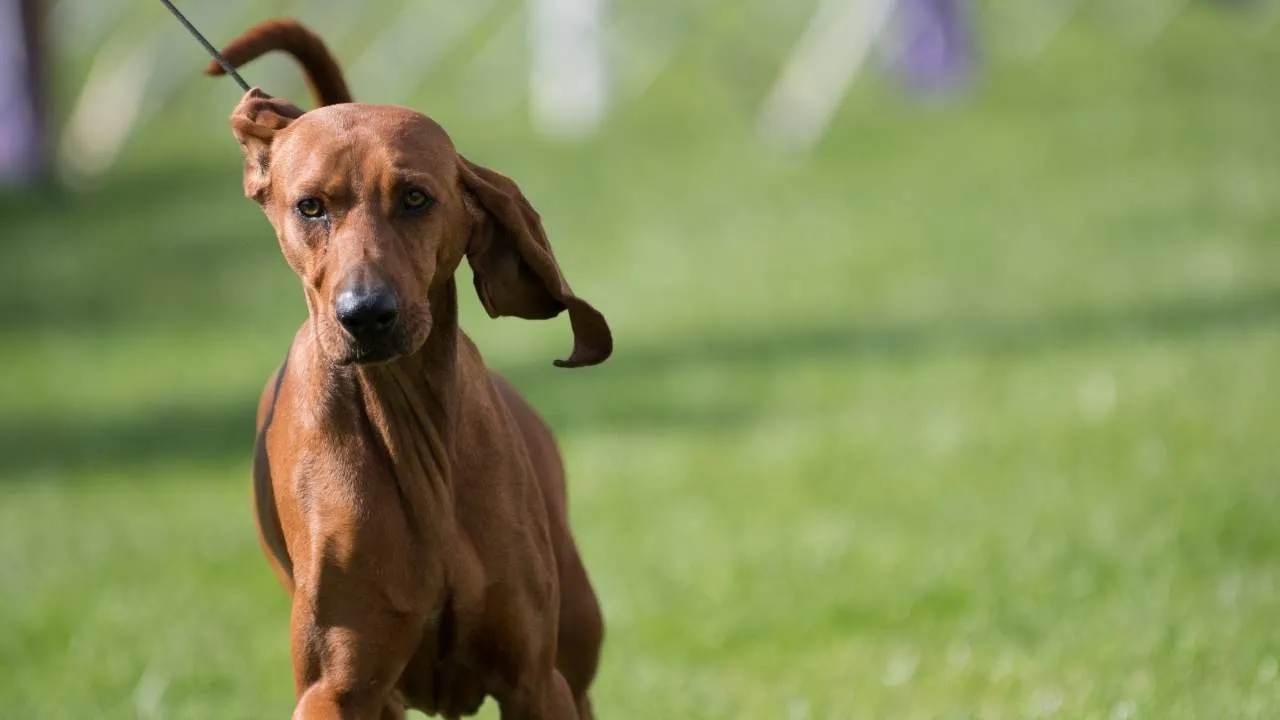
Bred in America as a hunting dog, the Redbone Coonhound serves to hunt small game, such as raccoons, squirrels, and opossums in the trees. But today, it is widely used to handle big game as well.
Because of its ‘cold nose,’ the hunting companion can track down scents weeks or even months old. The brown eyes have a pleading expression. The short coat is smooth to the skin, but hard enough to navigate through dense bushes while hunting. Cat-like, well-padded paws enable it to travel rough and varied terrain.
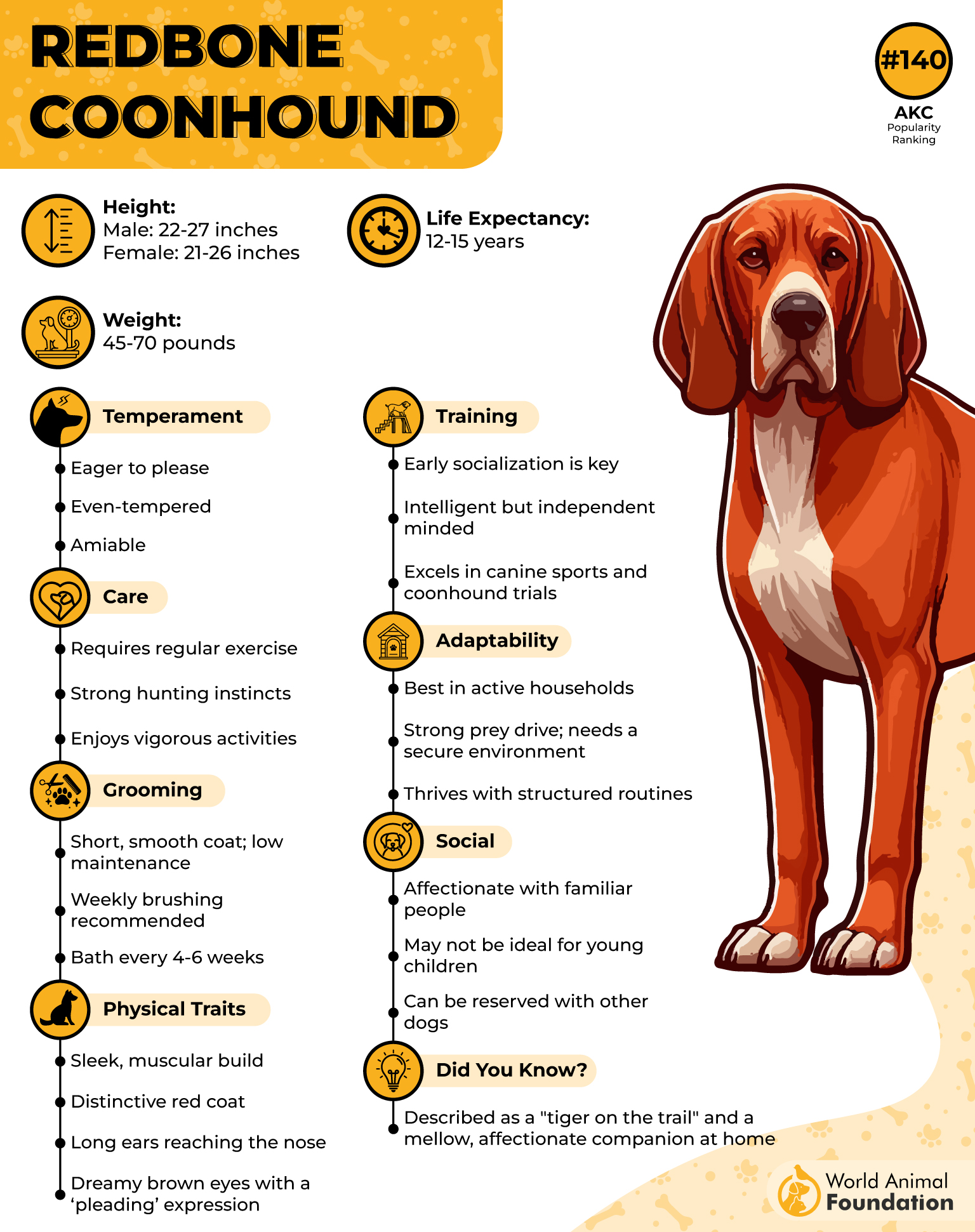
Instead of directing the hunt and subduing the prey, the dog first forces the target to the tree and keeps on barking to alert the owner so that it can shoot from the ground.
3. American Foxhound
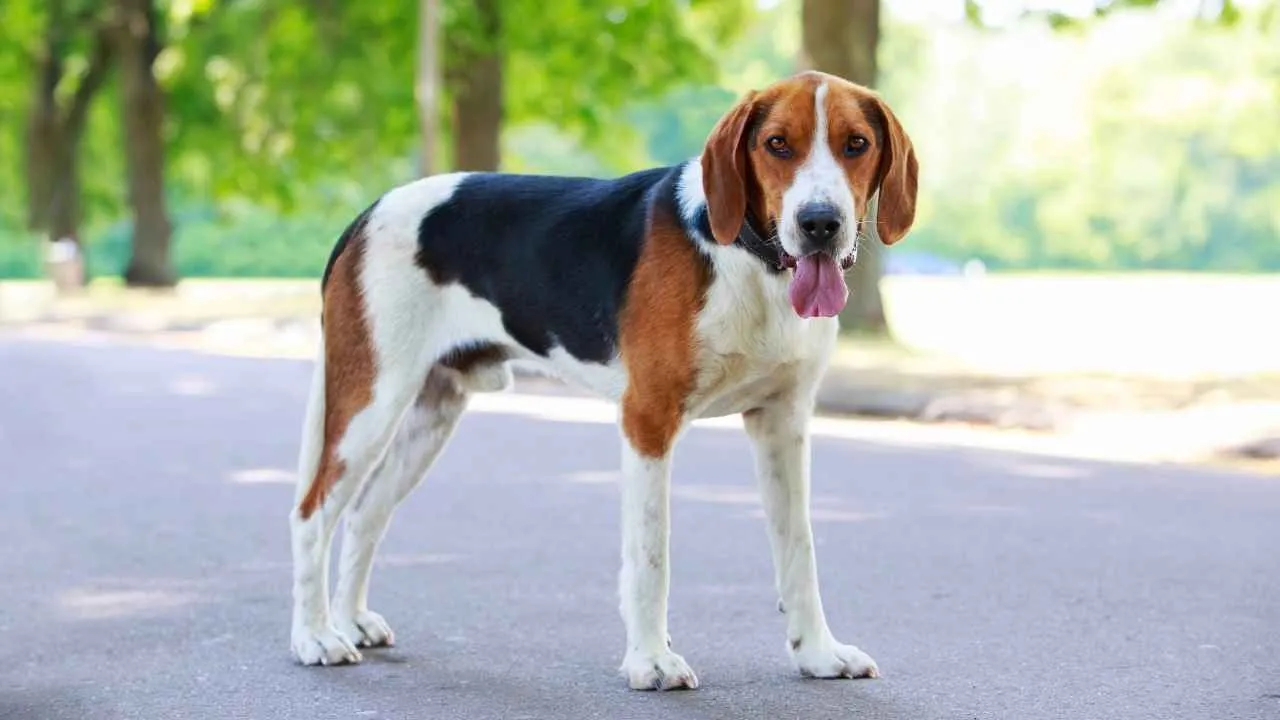
Arriving in America in the mid 17th century with the English settlers, the American Foxhound soon became a popular sport companion and a status symbol for the upper class. The modern breed was developed by crossing this dog with the American Coonhound and the Irish Foxhound.
Because of the musical bark (bay), its voice can be heard from miles away. Despite having a docile and sweet demeanor, the energetic dog has long legs, making it chase prey at a fast pace. It should not be off-leashed outdoors because of its strong prey drive.
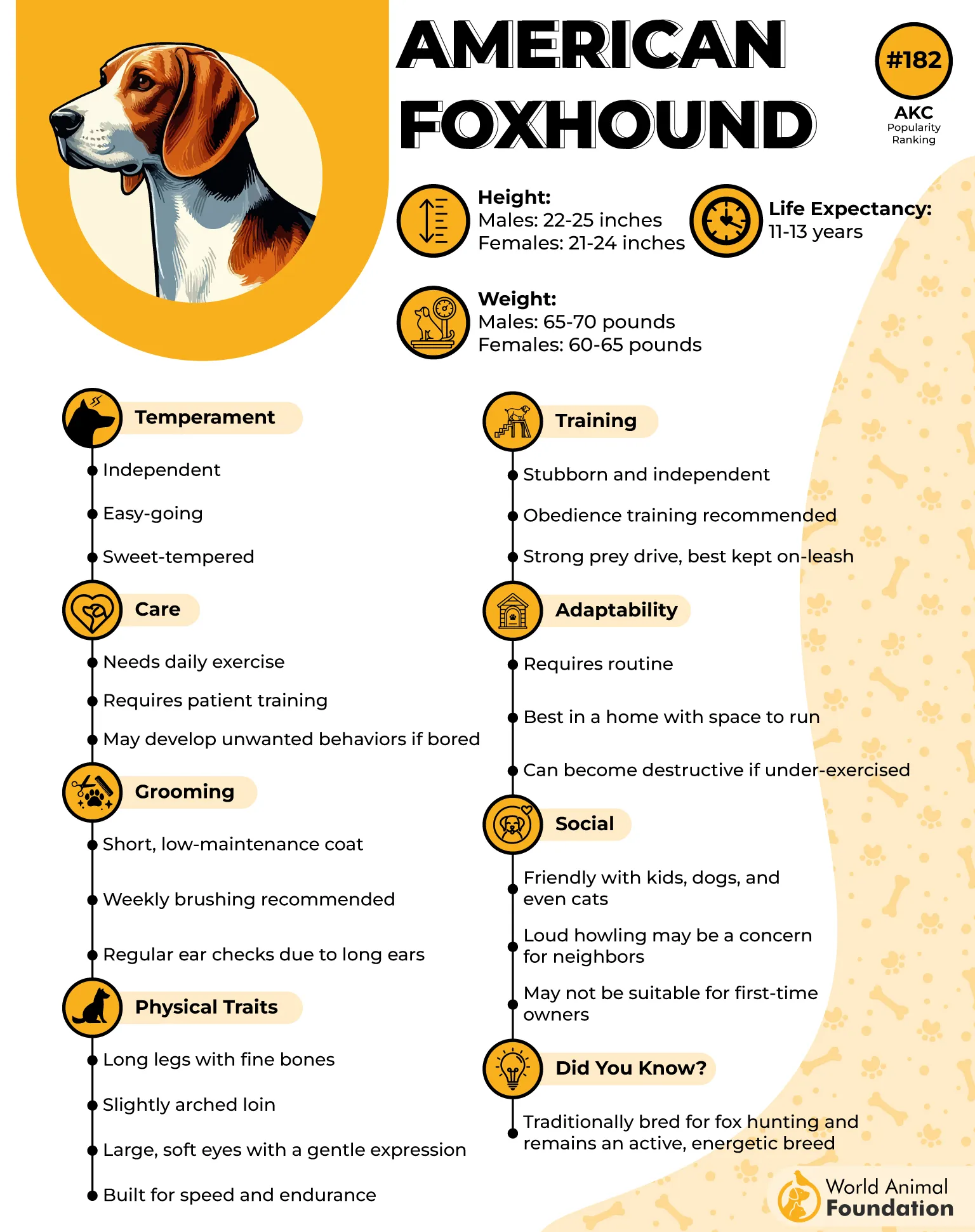
It may ignore commands while following a scent or may become stubborn because of its independent nature; thus, obedience training and proper socialization are non-negotiable.
4. Bavarian Mountain Scent Hound
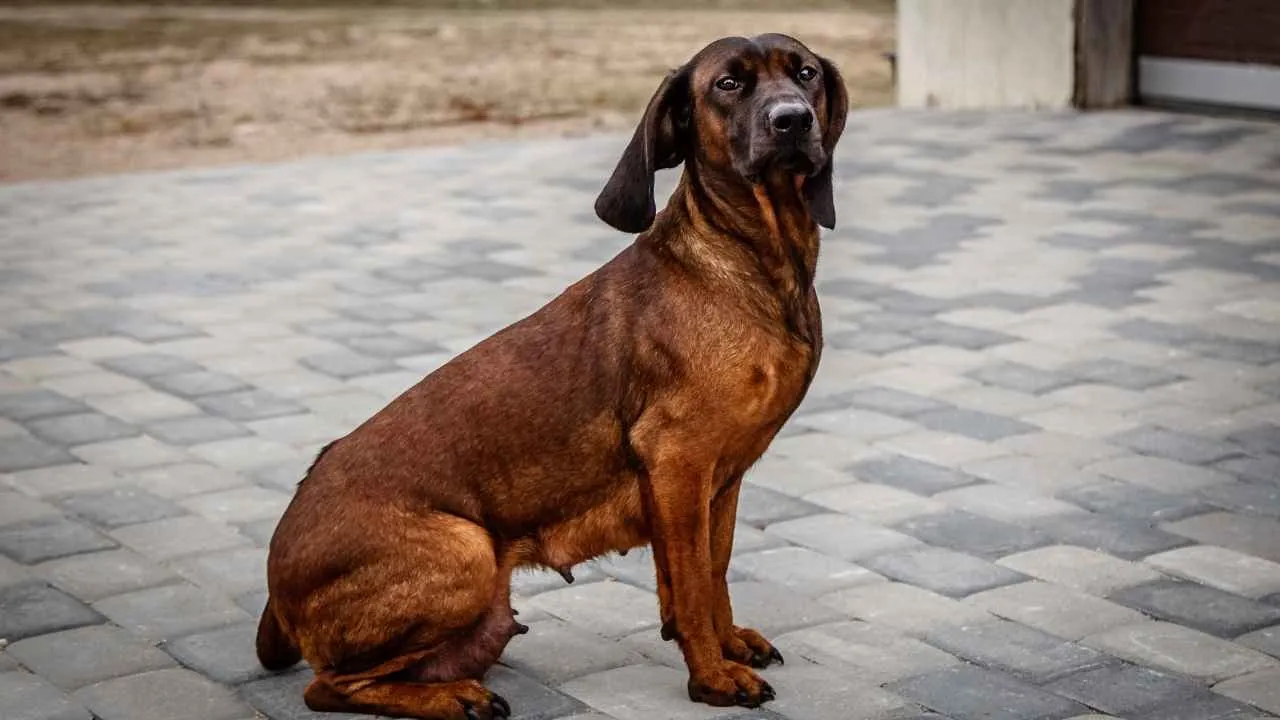
Originally developed to follow scents, the Bavarian Scenthound’s primary goal was to find the lost trail of the hunting game. After the 1848 Revolution, there was advancement in hunting techniques, leading to the modification of this breed, as per the AKC.

It has a powerful and acute nose that enables it to differentiate between the injured game and other animals of the same species. It is rarely aggressive and stays reserved around strangers, making it an excellent watchdog. Because of its high hunting instincts, it is suited for experienced hunters.
The hunting breed needs at least 1-2 hours of daily physical activity and mental stimulation. The intelligent dog becomes destructive when not properly trained or under-exercised.
5. Hanoverian Scenthound
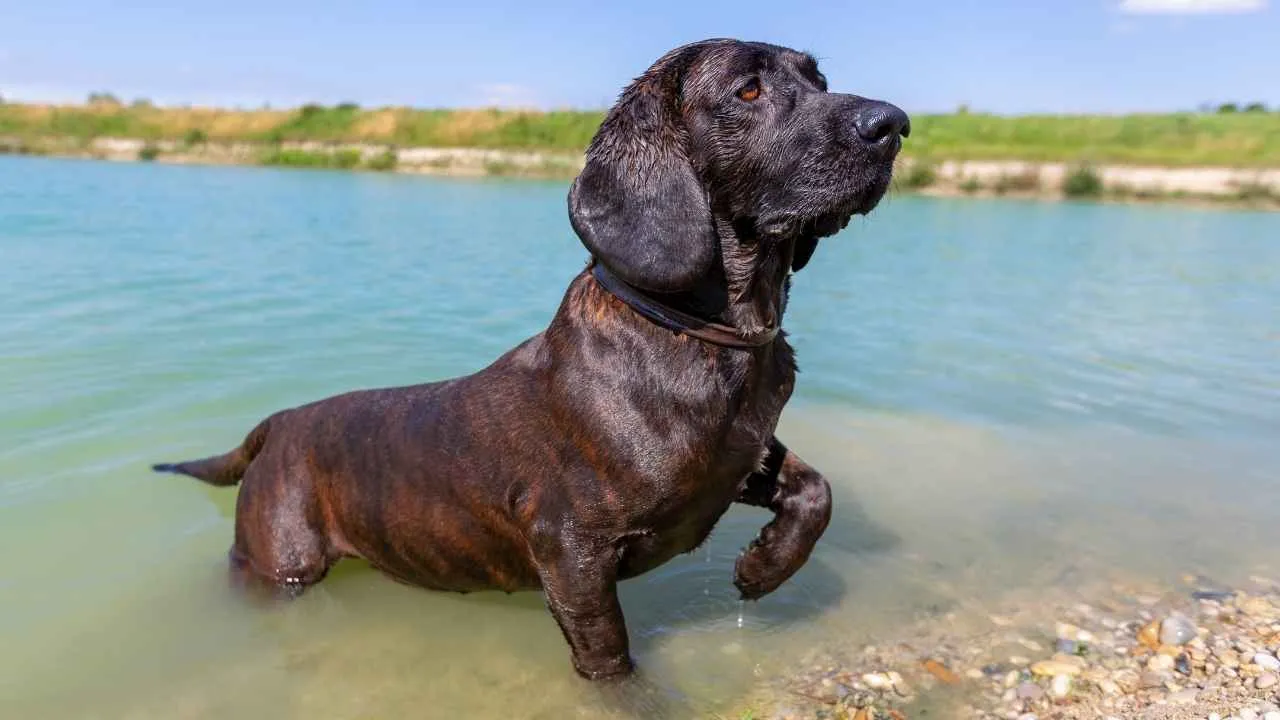
The history of this ancient dog dates back to the Middle Ages, when its ancestors, the Liam hounds, were used to help hunters. Known for its keen sense of smell, the breed was designed to have great speed to chase wounded game.
The powerful jaw exhibits a strong bite force with its scissor-teeth. Since it has a strong prey drive, it is not a good option for a multi-pet household. It has a broad and deep chest that provides ample space for lungs to catch breath while running.
Known for its friendly and calm nature, the breed is reserved around strangers; however, it makes good friends with other dogs. It has floppy ears; thus, it is susceptible to infections.
6. Black and Tan Coonhound
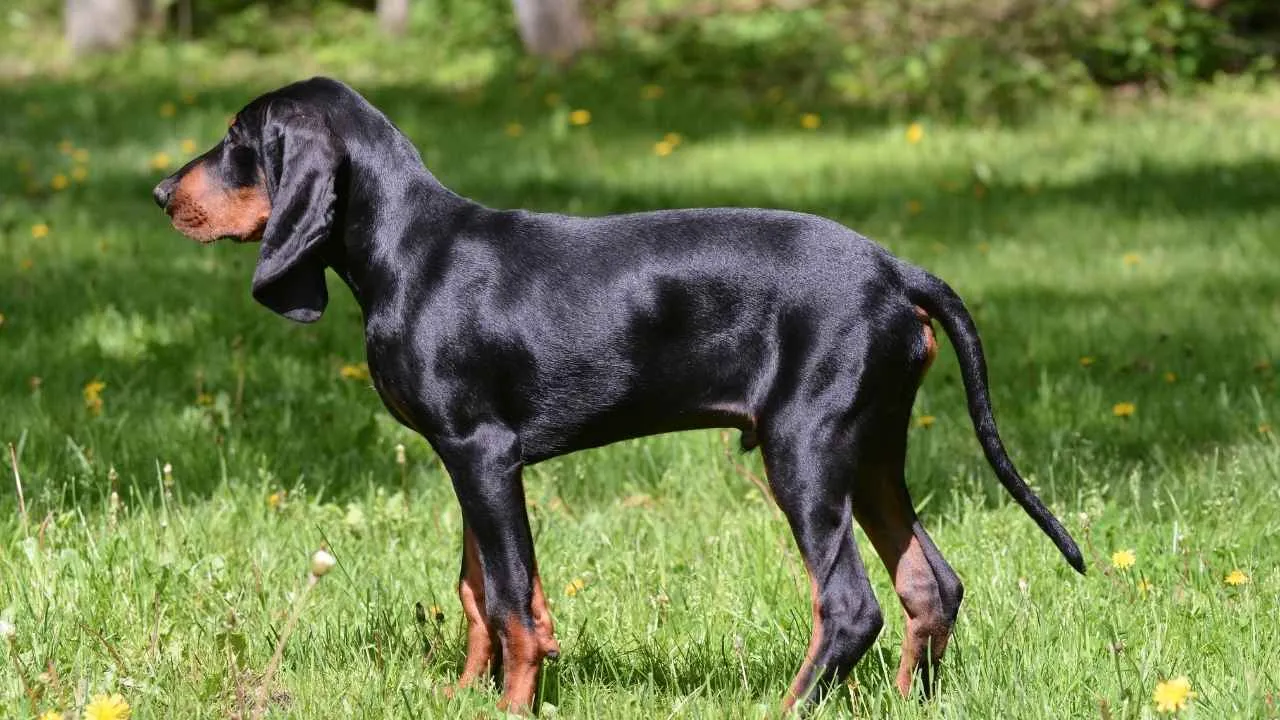
This hunting dog was developed in the United States by crossing the Bloodhound and the Black and Tan Virginia Foxhound. The primary purpose was to hunt and kill raccoons using its strong sense of smell.
An alert or excited Black and Tan Coonhound has its tail high at a right angle. Mellow and calm indoors, the breed activates its strong hunting instincts outdoors. It can run for miles without tiring with powerful rhythmic strides and has an independent streak. Today, it is widely used in cougar, bear, wolf, and deer hunting.
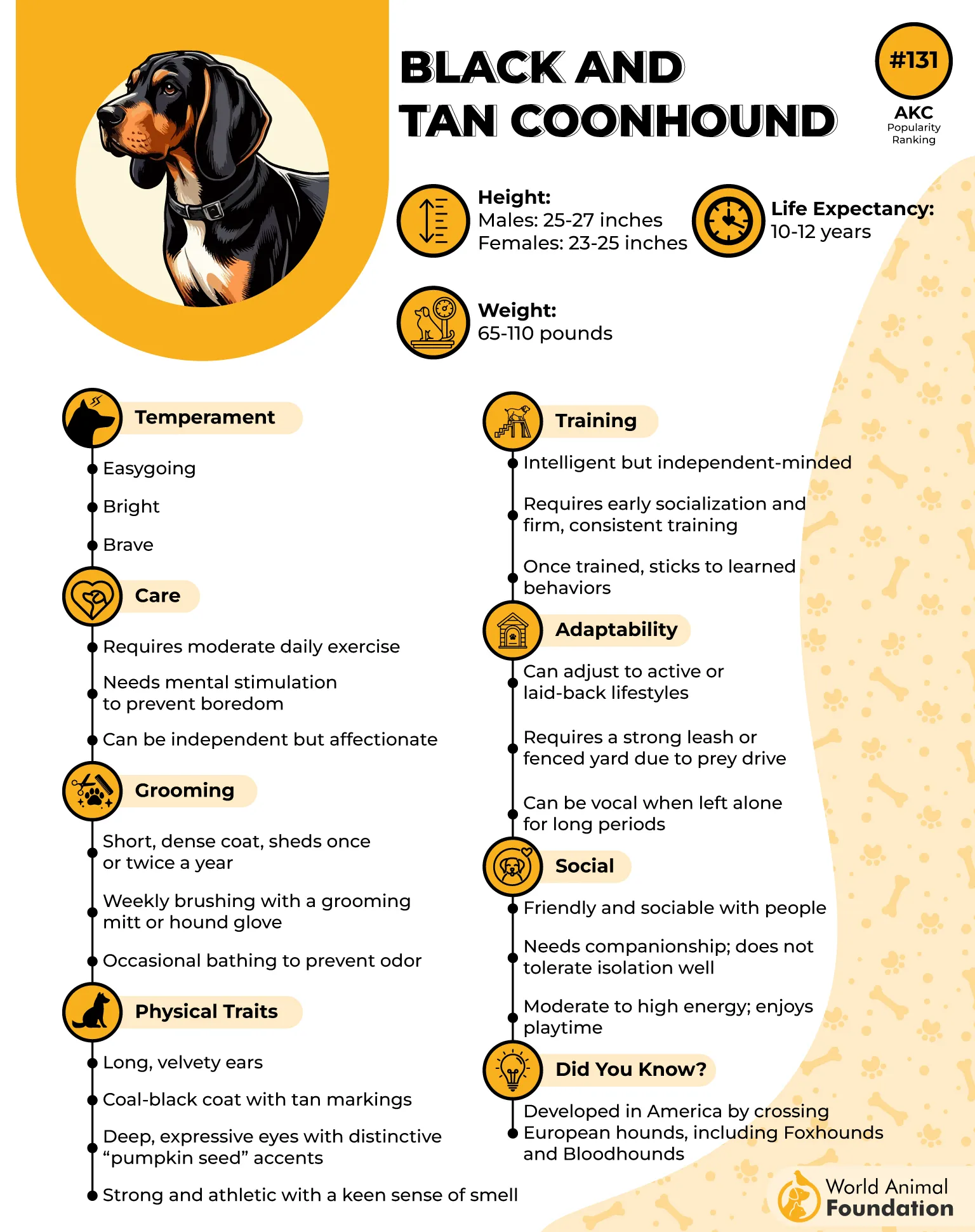
Since the breed has drooling issues, the face must be cleaned with a gentle wipe. It has a short coat, so weekly brushing is enough for the breed. Regular ear checkups are recommended for infection.
7. Plott Hound
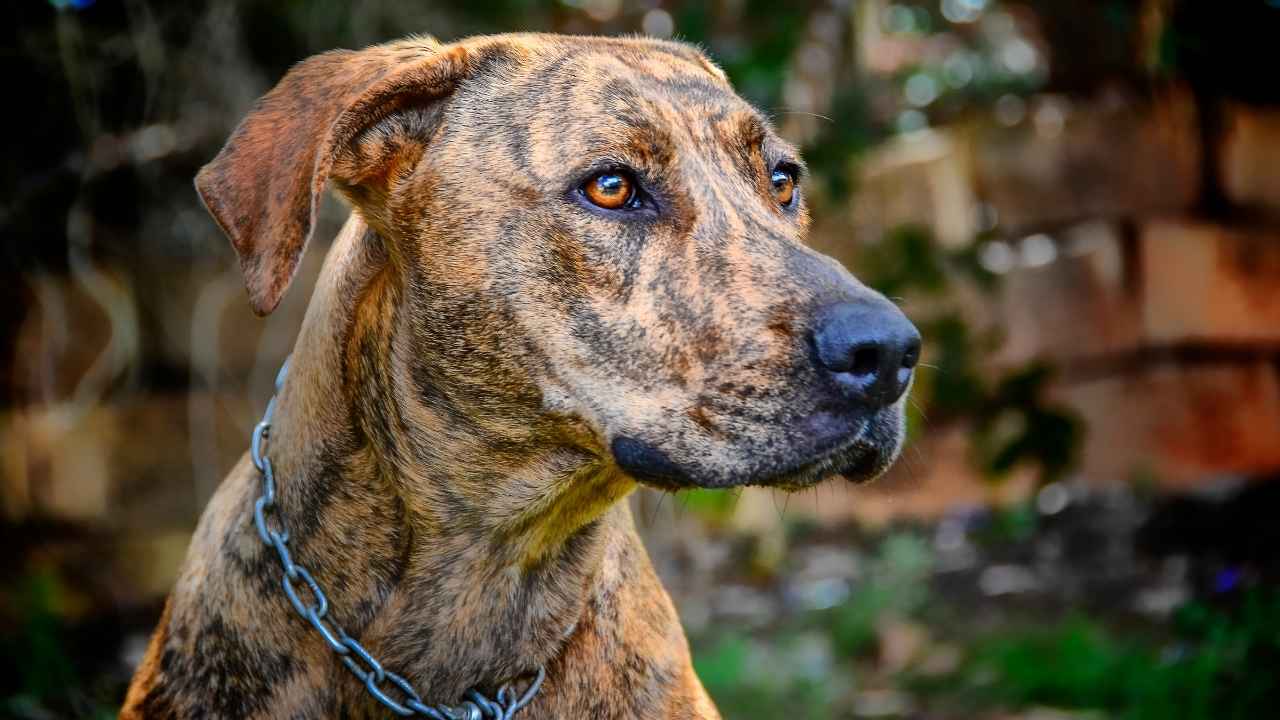
It is one of the few Coonhounds bred purely in the United States without any English Foxhound history. Developed by Johannes “George” Plott in the mid-18th century, the breed was kept pure till its 7th generation.
Despite being eager-to-please in nature, the breed may show aggression and boldness while hunting in fields. When the athletic breed bonds closely with the family and stays alert to its surroundings, it makes it a great outdoor companion and a protection dog. It was designed to assess the situation thoroughly before acting.
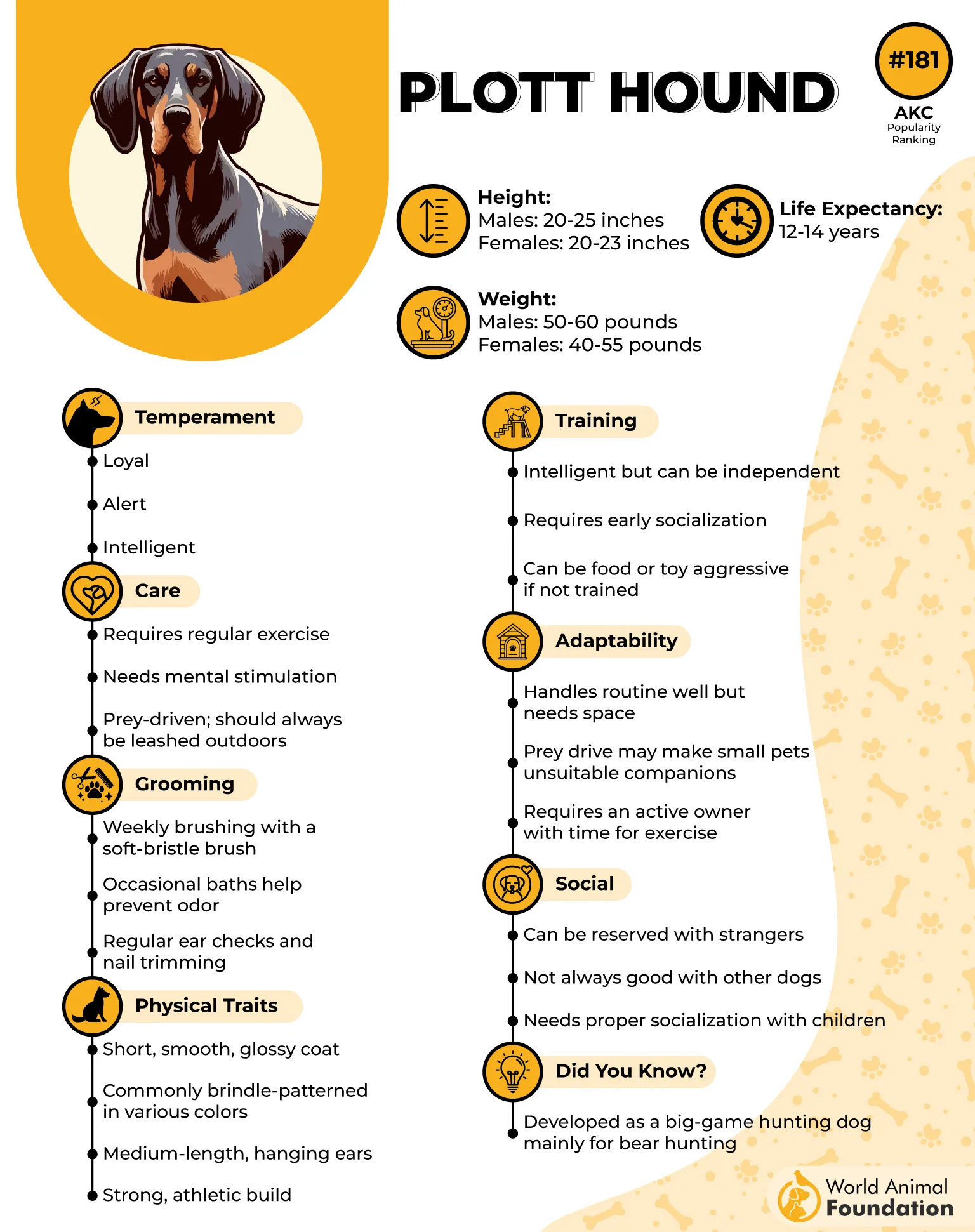
It has high exercise needs and excels in long walks, swimming, hide-and-seek, food puzzles, hiking, and scent tracking games. The short coat needs weekly brushing and occasional baths to prevent dog odor and dirt.
8. Harrier
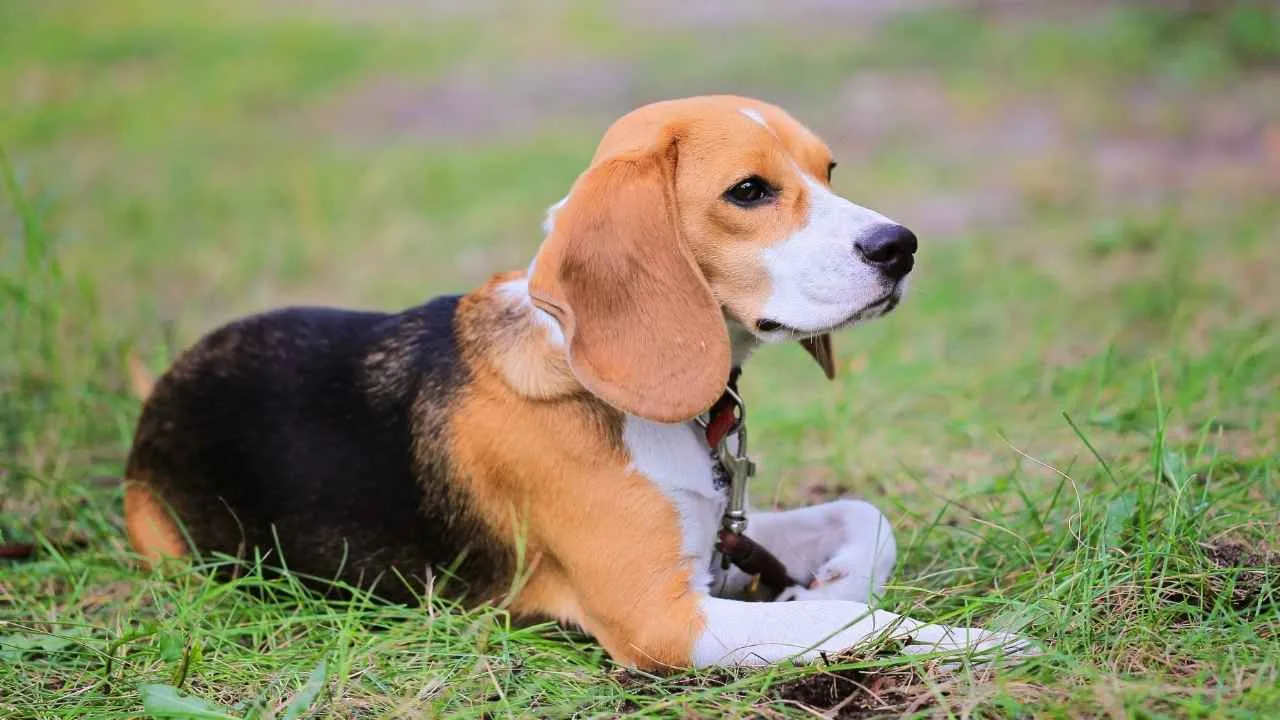
It is believed that a similar dog existed in England in the 13th century when it was used to hunt hares and quarry in packs. It was developed mainly by crossing the Bloodhound, the Basset Hound, and other hounds.
This medium-sized dog has an outgoing personality and a tendency to produce a loud bark. It has a pack mentality and thrives in fox hunting as well. It has slow speed and is ideal for ‘drag hunting.’ The breed has a high tolerance level for people but should be supervised with non-canine pets because of its strong prey drive.
The high-energy breed requires at least 1-2 hours of daily exercise: jogging, walking, cycling, hiking, agility training, and dog sports. An under-exercised Harrier is prone to destructive behavior, such as chewing.
9. Treeing Walker Coonhound
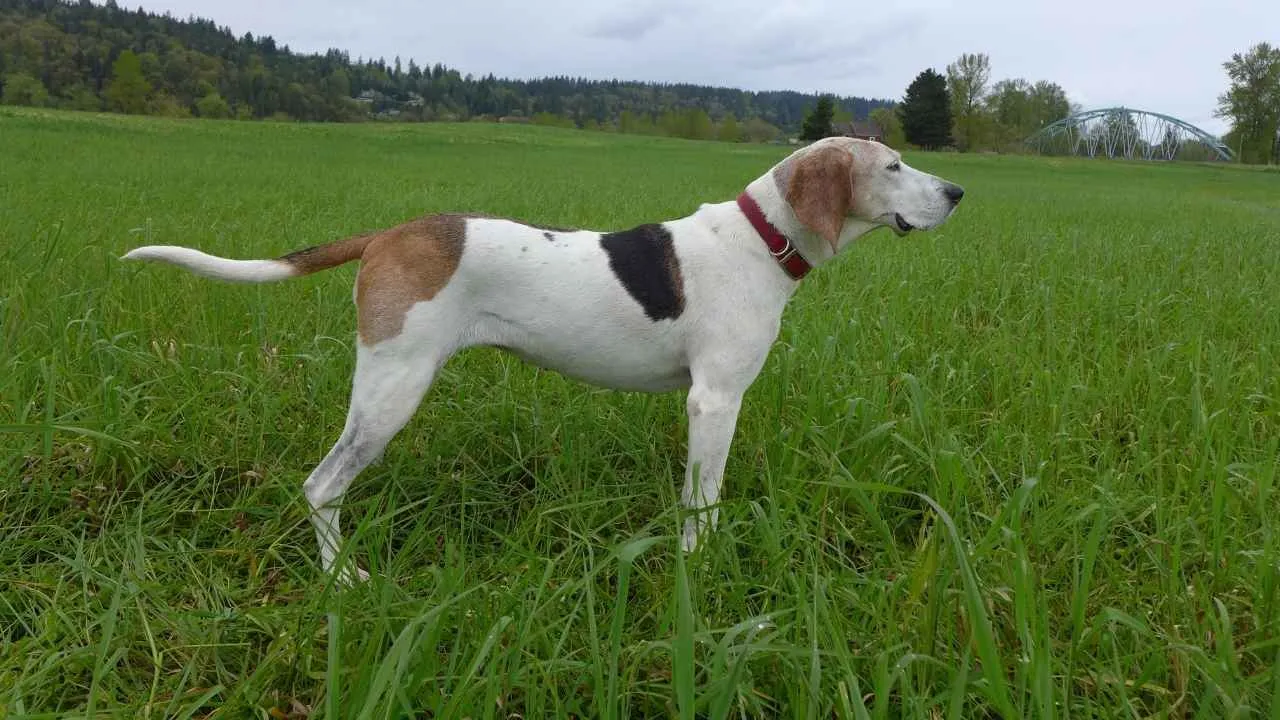
The breed was originally developed in the United States in the 19th century by crossing the English Foxhound with other hound dogs. It was rewarded for its strong work ethic.
The breed keeps on holding its prey (mostly a raccoon) on a tree and keeps on barking till the hunter arrives. The highly intelligent breed is good at taking commands and has a competitive spirit that helps increase its endurance on the field.
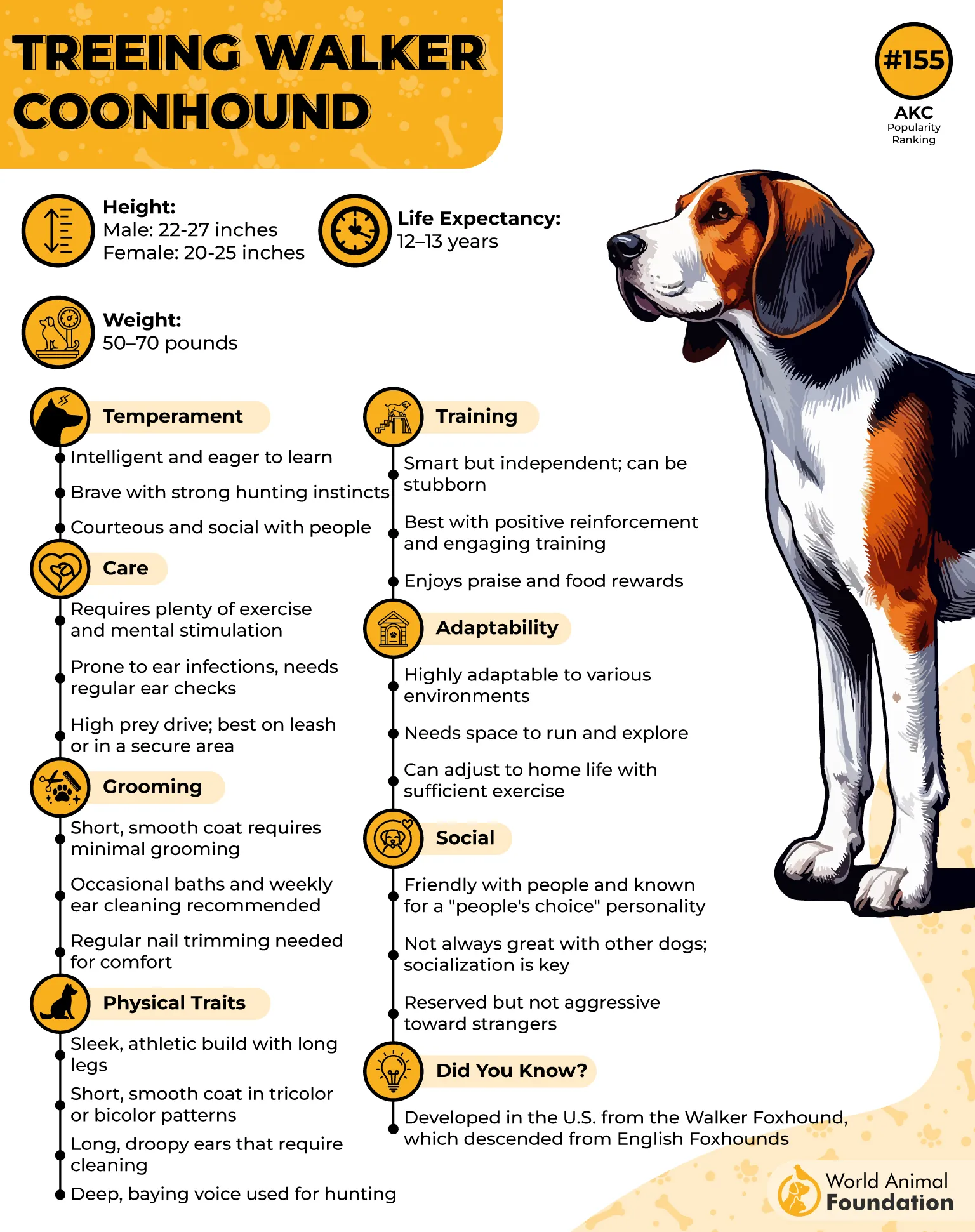
It prefers exercising with its favorite humans. 1-1.5 hours of daily exercise is suggested: running, hiking, tracking, agility, fetching, and obedience training. It has a water-resistant and dust-repellent coat that requires minimal grooming.
10. German Shorthaired Pointer
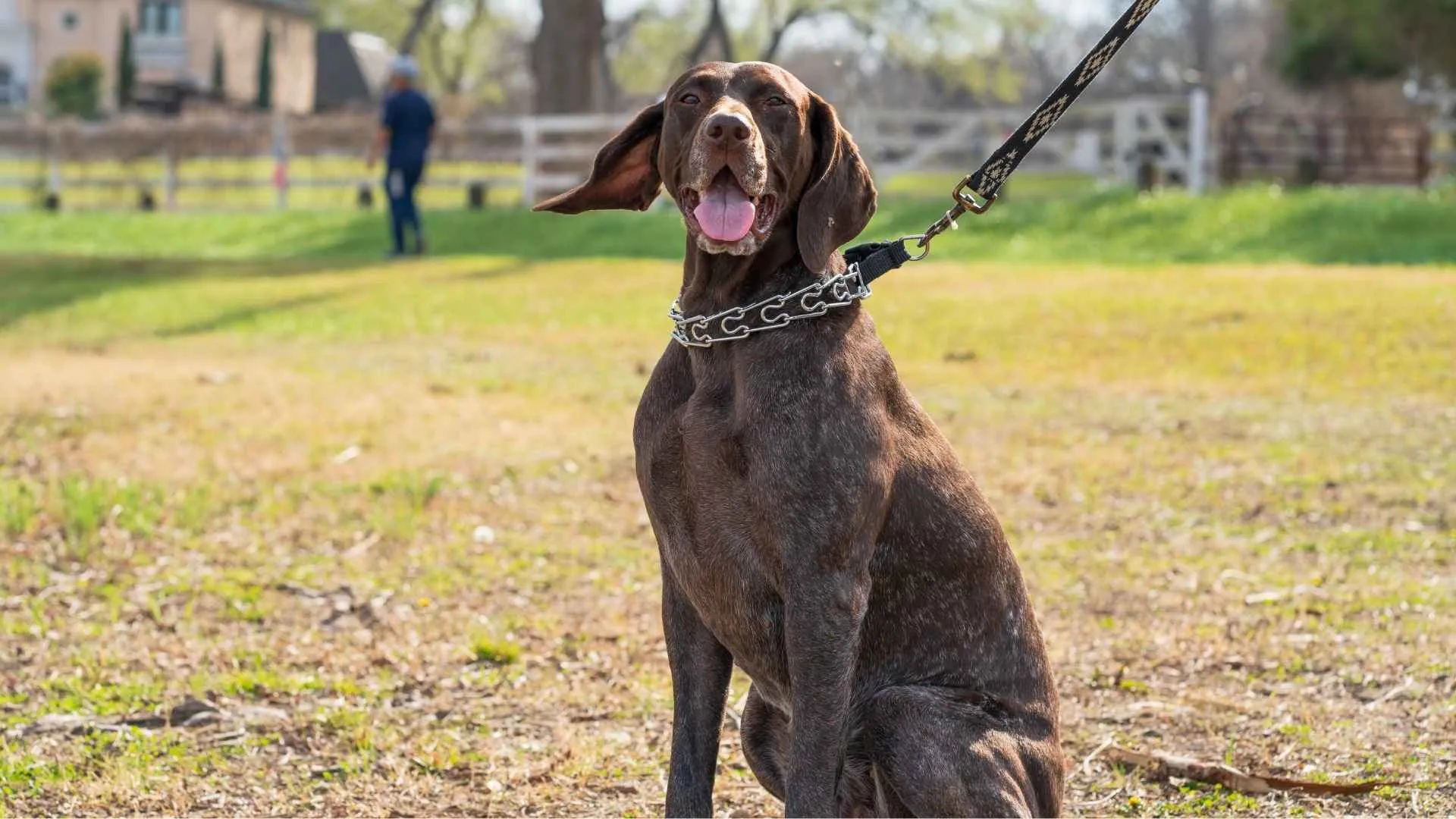
This German breed was developed from a pointing dog of Braque type in the 19th century. It is an all-purpose gun dog that is ideal for retrieving and hunting on water and land.
It is capable of working on all terrains and in all weather conditions. Once it finds its target, it freezes and points with its nose in the direction of the prey. It is also used to follow a blood trail and defend against poachers and predators. It also serves in law enforcement because of its strong nose.
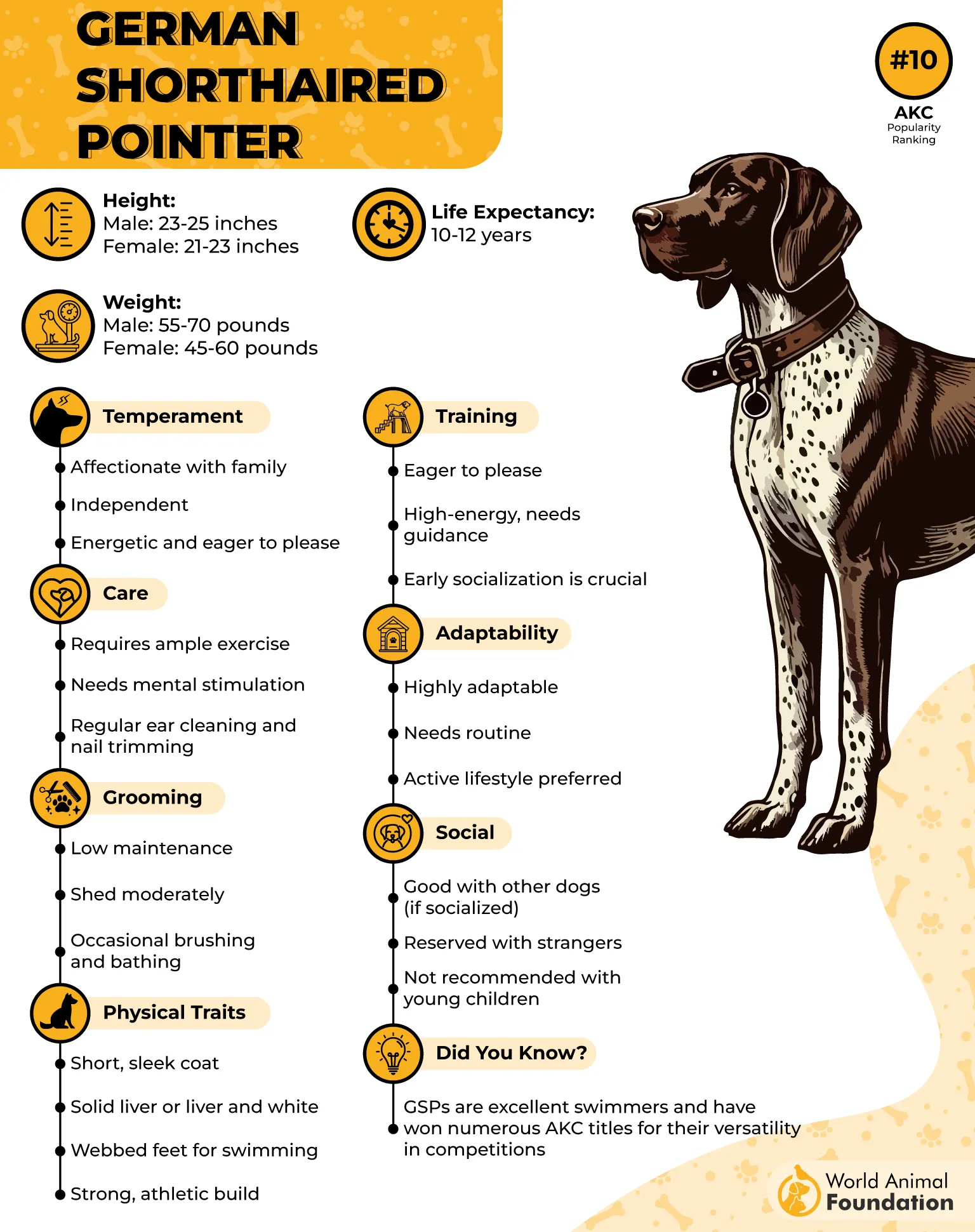
It has a natural tendency to chase small animals because of its strong prey drive. The breed excels in many dog sports, such as dock diving, obedience training, and agility.
Conclusion
Choosing a long-distance tracking dog is not simply about picking the breed with the biggest nose. Terrain, quarry, hunting style, training, climate, and your experience all matter. A dog that excels on an old, difficult trail may not suit someone who needs speed and versatility across open ground. These breeds show how varied working dogs can be.
Some are scent specialists, while others bring stamina, athleticism, or broader hunting skills. The best partner is the one whose natural abilities match the job and whose temperament fits your life. Give that dog thoughtful training, proper conditioning, and realistic expectations. Respect its limits, too. Do that, and your four-legged teammate can make a demanding day in the field far more rewarding.
