




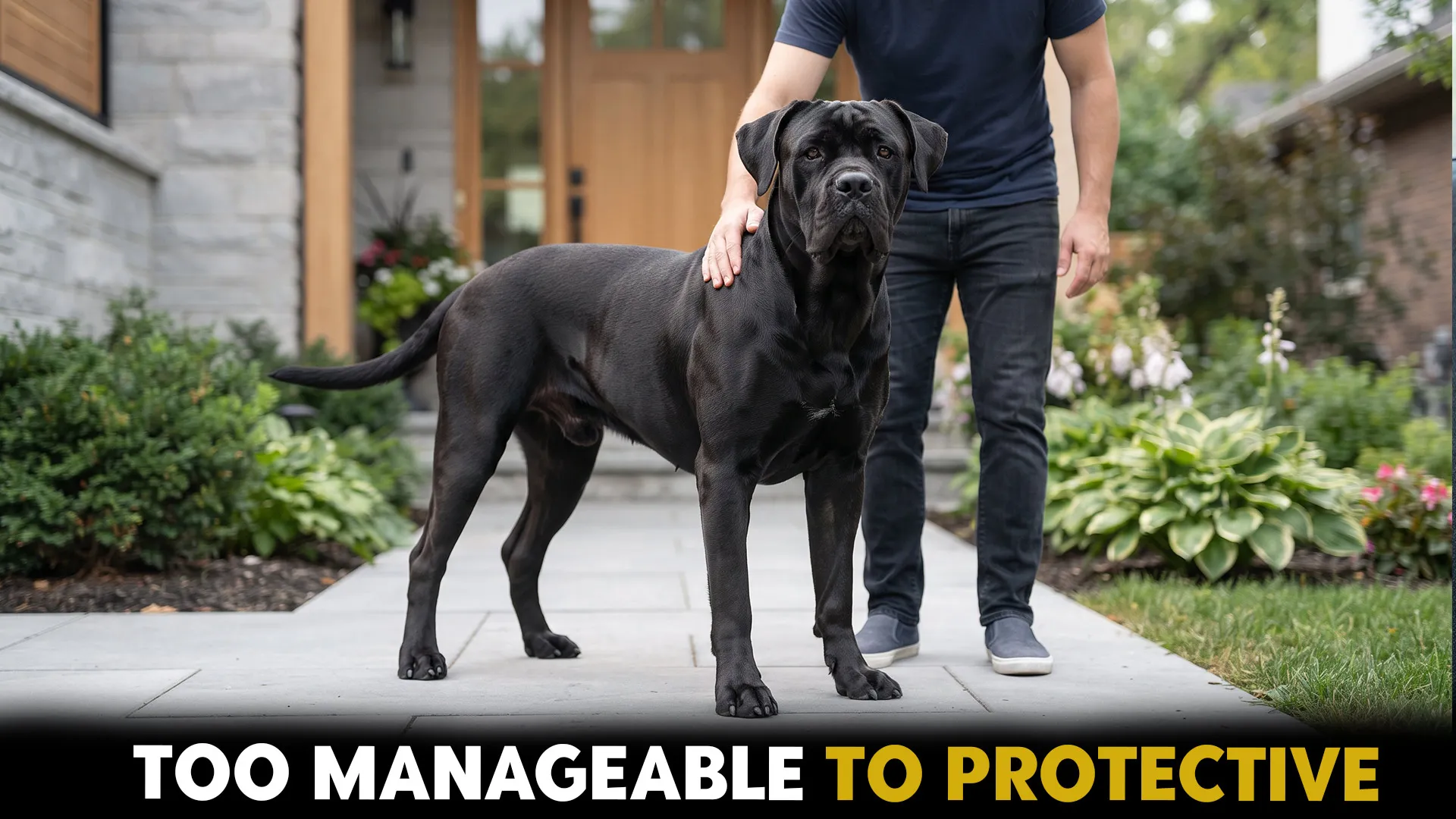
A good guard dog doesn’t need to act like a walking, barking security alarm. Some dogs can watch over a home, pick up on anything unusual, and still be total softies with the people they love. That balance is exactly what makes certain breeds worth a closer look. From the calm, watchful Great Pyrenees to the devoted Staffordshire Bull Terrier, each one brings its own flavor of protectiveness to the table.
Some lean on sheer size and presence, others rely on alertness, confidence, or a deep bond with their family. That said, “low-maintenance” deserves a bit of a reality check here; large protective breeds still need training, exercise, proper socialization, and consistent care.
The goal isn’t a dog that lives purely to guard. It’s a steady companion who can step up when it matters and happily flop down beside you the rest of the time.
Now, let’s get into some of the best ones.
Low-Maintenance Guard Dog Breeds with a Gentle Spirit
1. Great Pyrenees
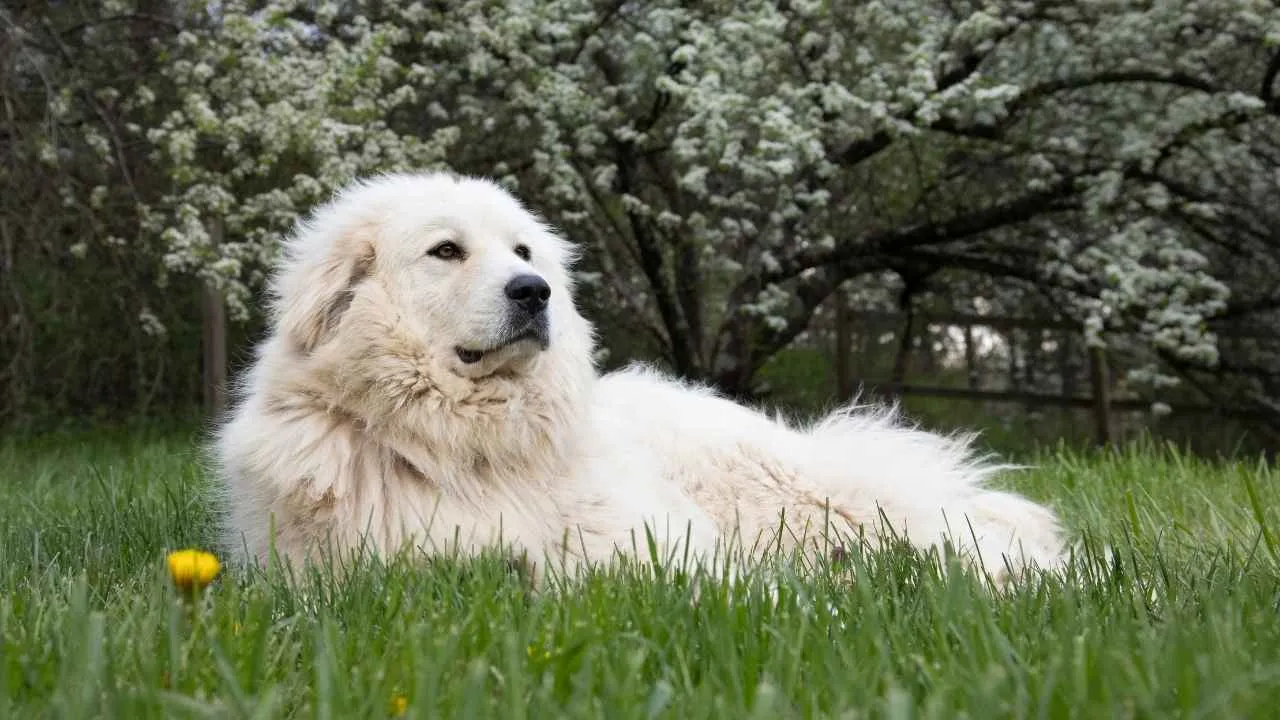
The Great Pyrenees has roots stretching all the way back to the Bronze Age, developed in the mountains between France and Spain. Originally bred as a herding and livestock guardian dog, it later caught the eye of French royalty, according to Chewy.
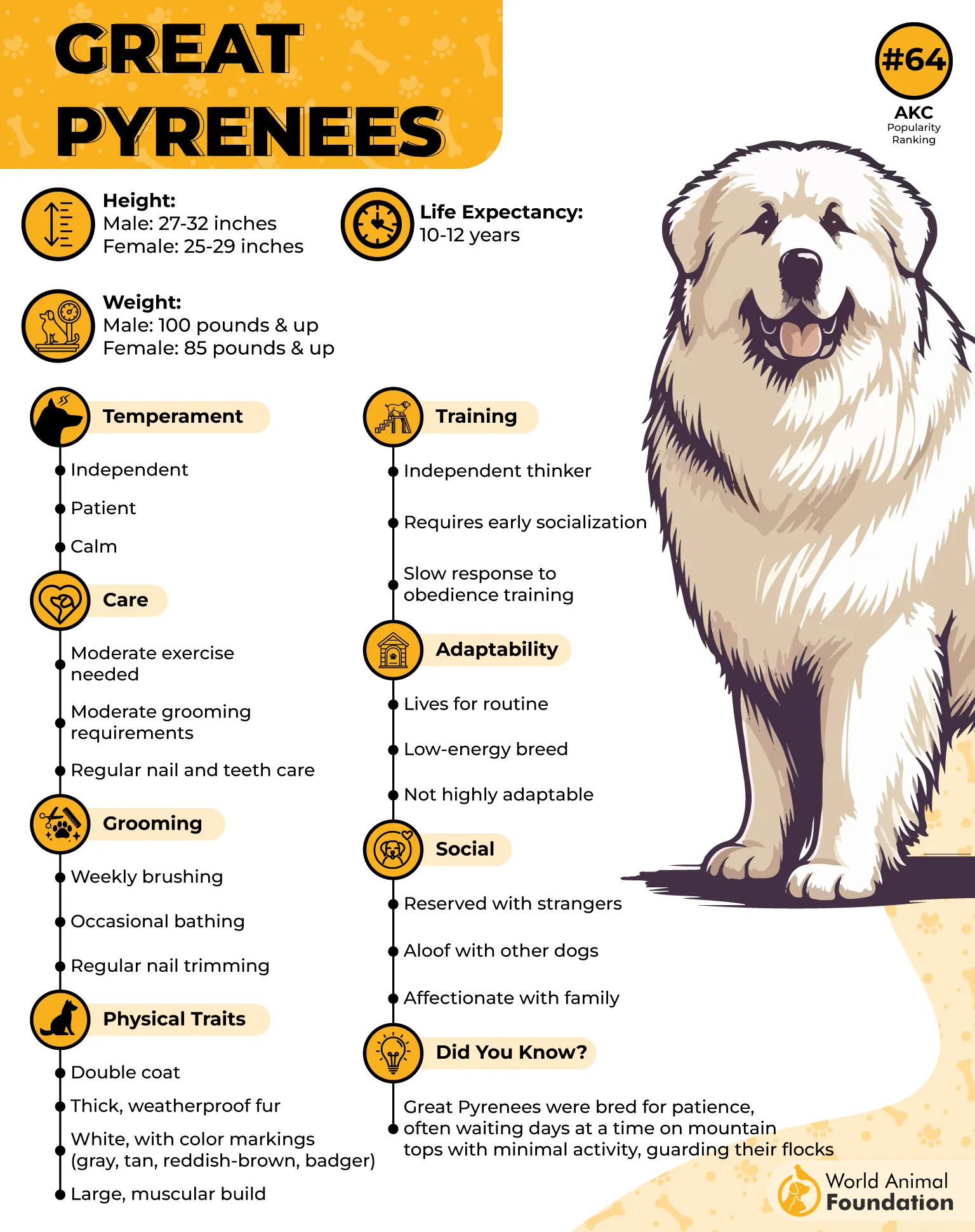
This excellent guard dog is generally warm and friendly with family members, kids, and other pets. Because its ancestors spent long hours calmly watching over sheep, the modern Great Pyrenees has inherited that same patient, easygoing nature. It’s quiet by disposition and only barks when it feels the need.
The breed sports a thick double coat with a distinctive ruff around the neck and shoulders, but grooming is surprisingly low-maintenance: a monthly bath and brushing two to three times a week (a slicker brush and rake brush work well) is usually enough, since the coat naturally resists dust and tangling.
🎧 Dogcast
Episode 37 — Why Dogs Stay Close without Touching
If you don’t hear sound, tap the button above to enable audio.
2. Mastiff
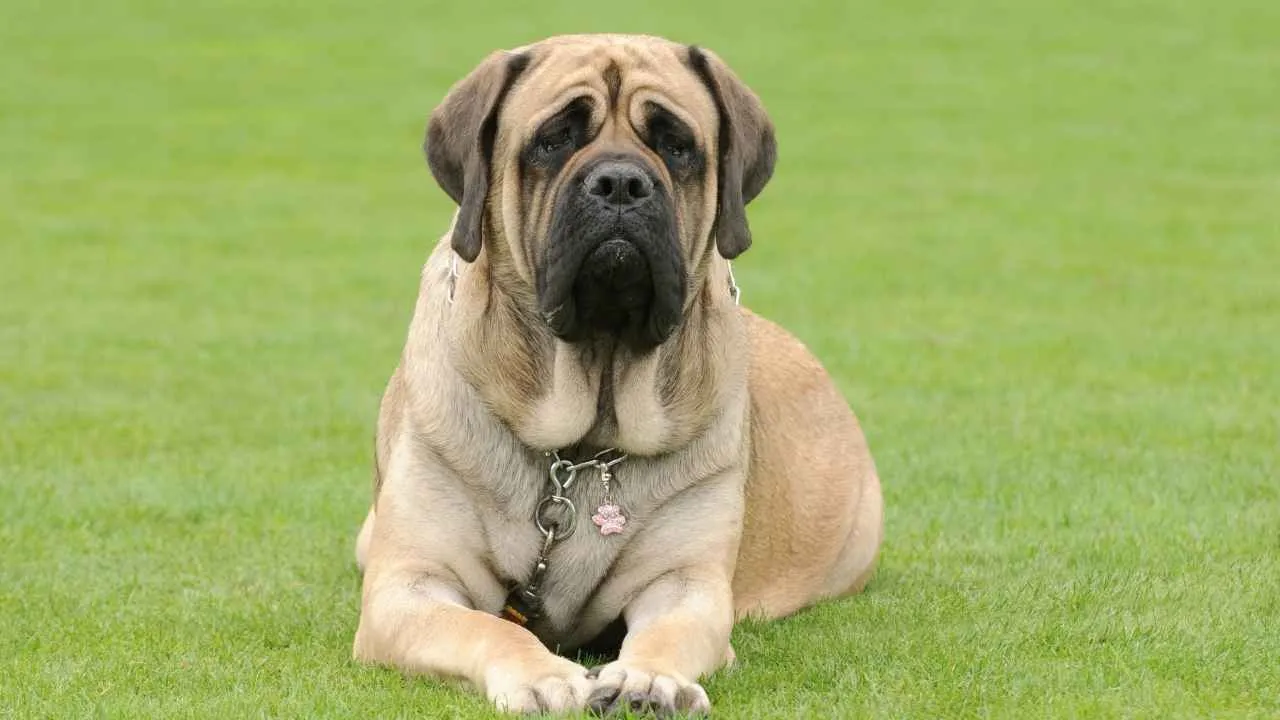
Also known as the Old English Mastiff, this breed traces its roots back to dogs once used to hunt lions in ancient times. Selective breeding in the 14th century eventually shaped the impressive size and strength we recognize in Mastiffs today.
This gentle giant has a naturally laid-back temperament, making it a wonderful family guard dog. Its wide-set eyes give it a broad field of vision, helping it pick up on any unusual activity nearby almost instantly. And when its high-set, tapered tail stands upright, that’s usually a sign the dog’s alertness has kicked in.
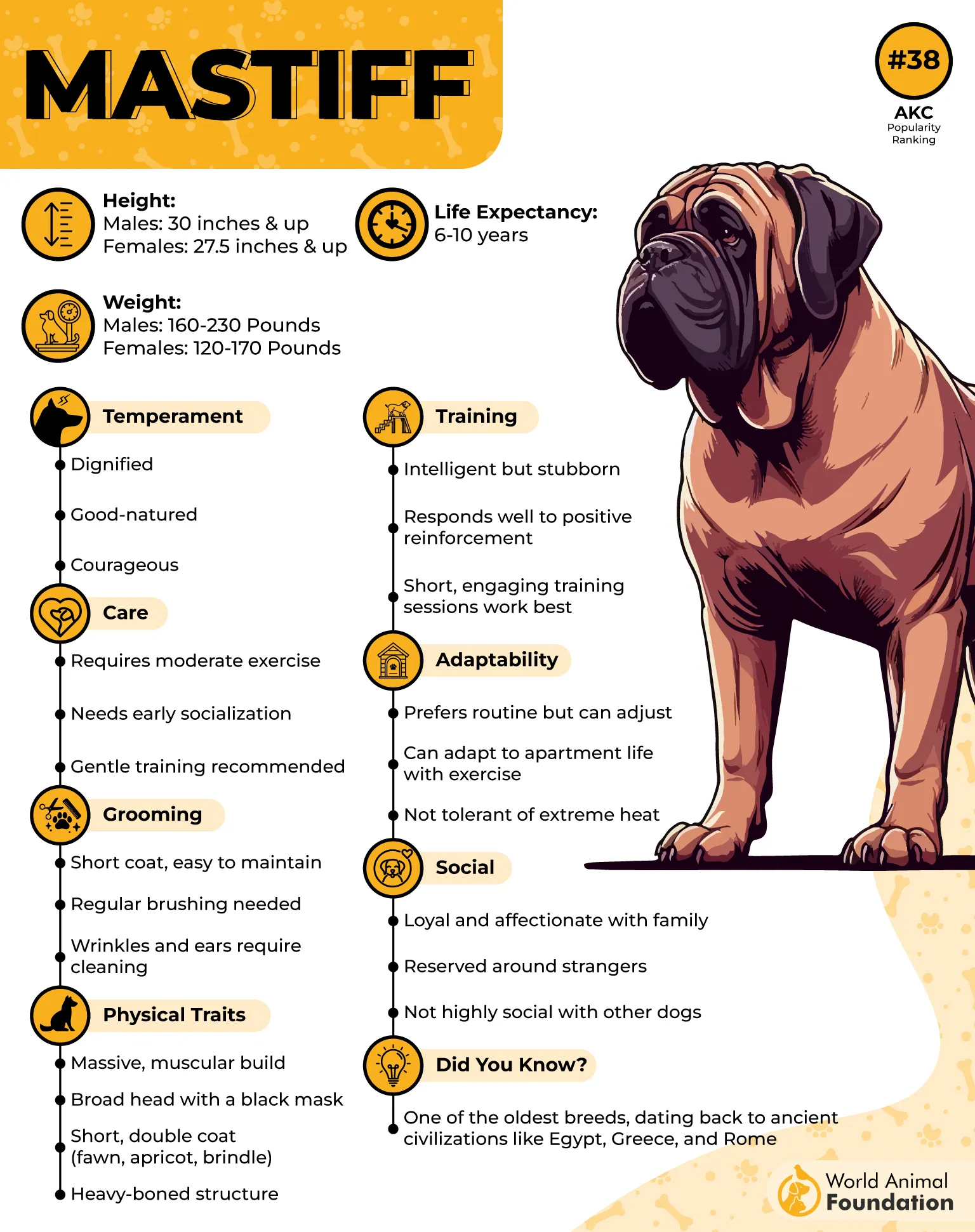
The Mastiff’s coat is short, with a dense outer layer over a close-lying undercoat, making it fairly low-maintenance overall; a bath every 4 to 6 weeks and weekly brushing should do the trick.
One thing to watch for, though: their wrinkles can make them prone to skin infections, so regular wiping with gentle, dog-safe wipes is a good habit to build in.
3. Great Dane
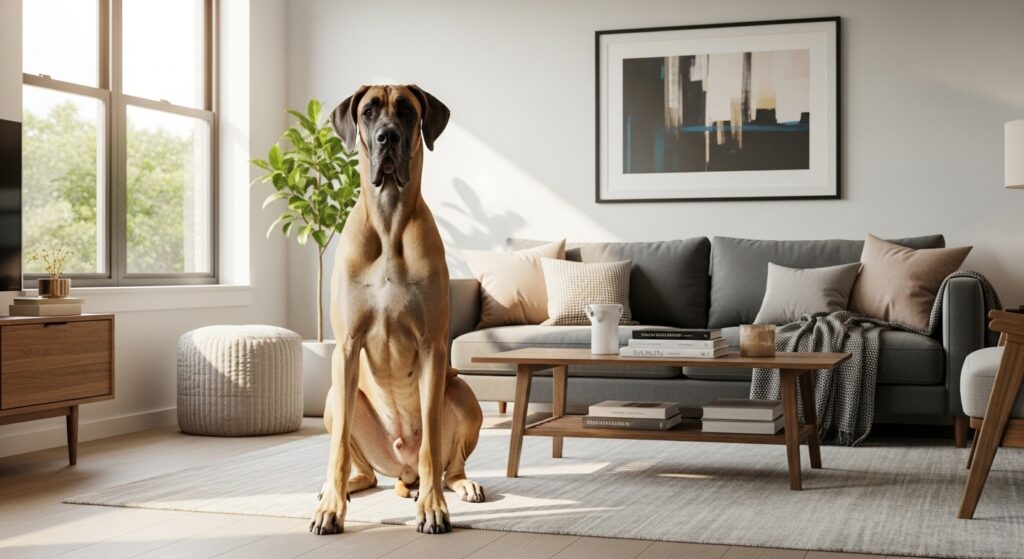
Descended from ancient Mastiff-type dogs, the Great Dane was developed in Germany, where its ancestors were used to hunt large game like wild boar, deer, and wolves back in the 19th century.
Its sheer size alone is enough to make strangers think twice, which makes it a solid family guard dog. Funny enough, though, the Great Dane tends to think of itself as a lap dog, despite being anything but small.
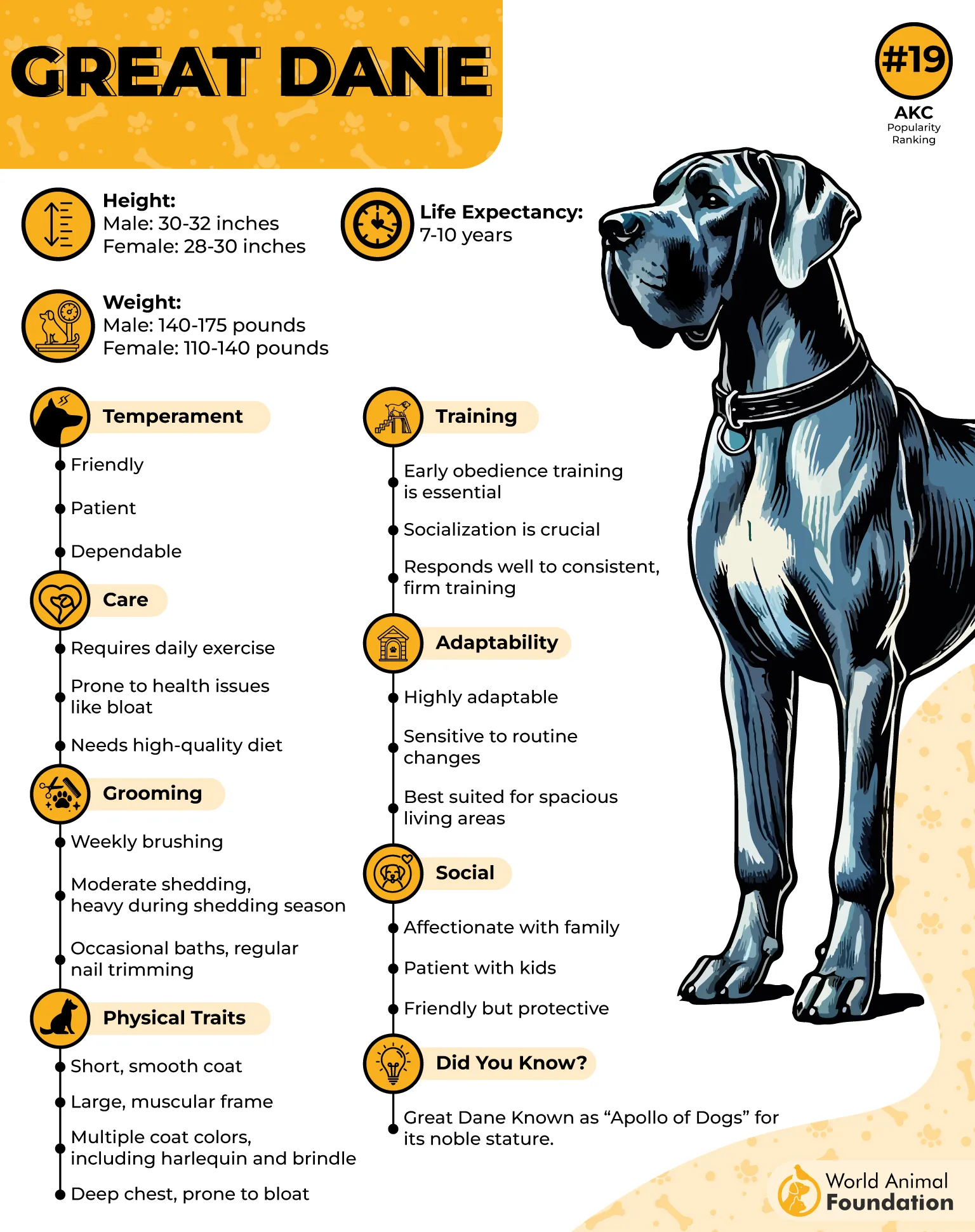
It's typically shy and reserved around unfamiliar faces, but when something catches its attention, it'll let out a deep, powerful bark to make sure you know about it.
This gentle giant has a glossy, short coat that comes in a variety of colors. They're also known for their occasional drooling, so keeping a towel handy isn't a bad idea. Since the breed can be prone to skin issues, regular baths are recommended, along with weekly brushing using a curry brush.
4. Newfoundland
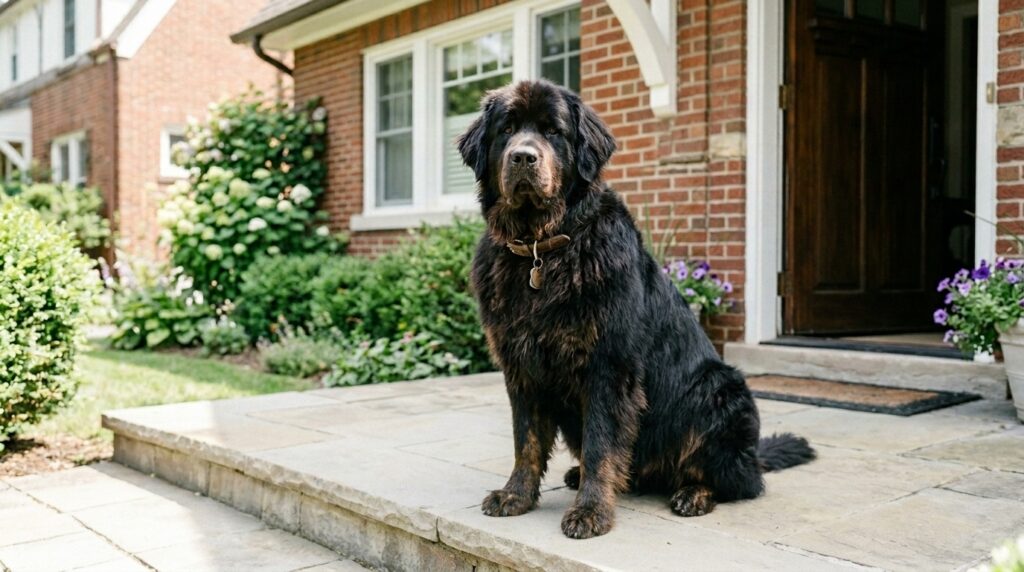
This large breed was originally developed in Newfoundland, Canada, to work alongside fishermen, and it still excels at water rescue thanks to its webbed feet, dense coat, and muscular build, as noted by Wikipedia.
That heavy muscle helps it push through powerful ocean waves and tides, while its impressive lung capacity lets it swim long distances without tiring.
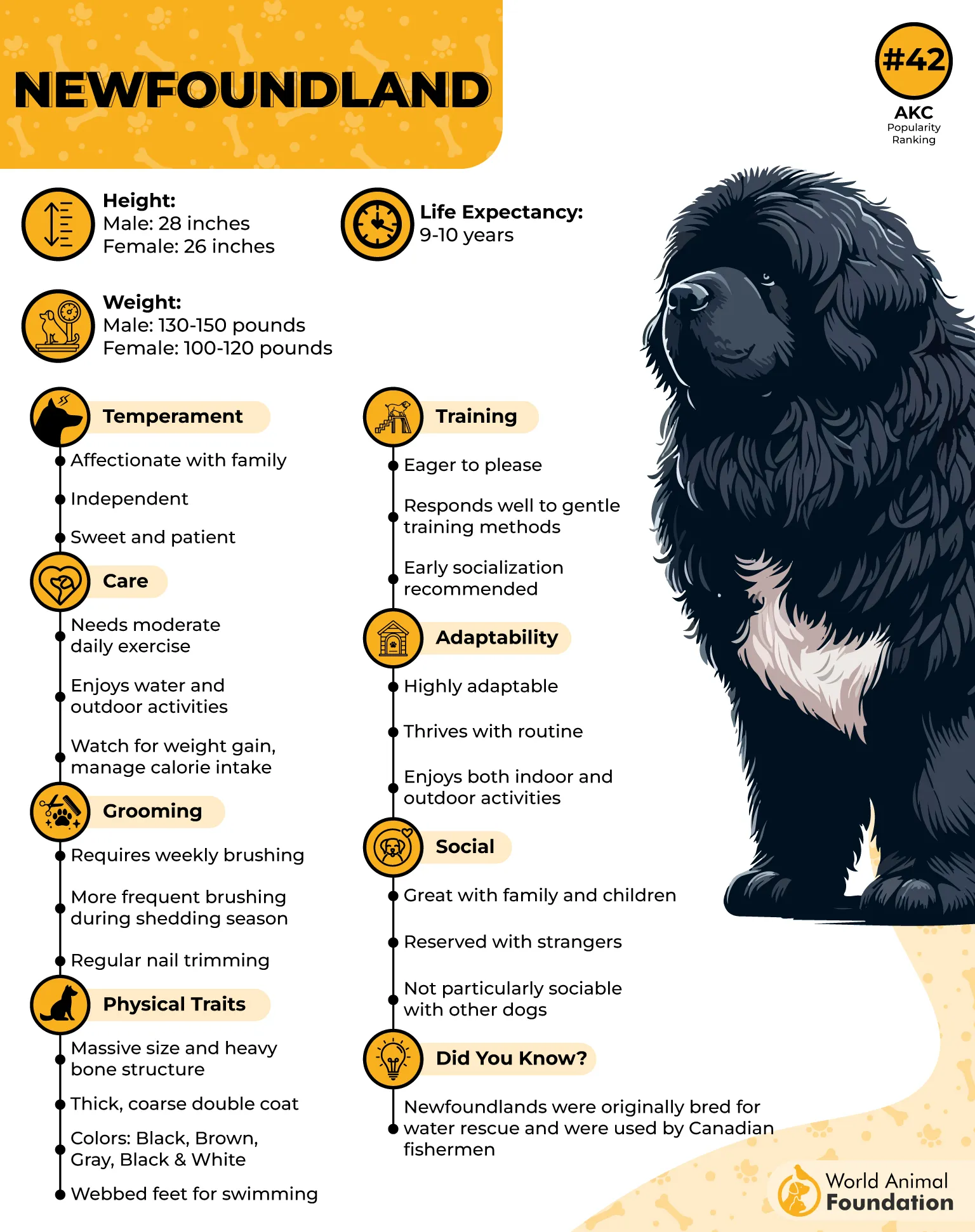
It also shares several traits with livestock guardian breeds, which is part of why it's become a popular choice as a protection dog. Its thick, bull-like neck also gives it the strength to carry hefty objects in its mouth with ease.
This gentle giant has a double coat made up of dense, soft fur with a water-resistant outer layer. A long-toothed metal comb paired with a slicker brush works well for weekly brushing, and 30 to 60 minutes of daily exercise is generally enough to keep it happy and healthy.
5. Rhodesian Ridgeback

Originally developed in South Africa, the Rhodesian Ridgeback was later refined by F.R. Barnes in South Rhodesia. Its history traces back to the hunting companions and guardian dogs of the Khoikhoi people, who crossbred their dogs with European breeds to create a dog capable of baying lions.
Though the breed tends to be aloof with strangers, it has an even temperament and won't act out without good reason.
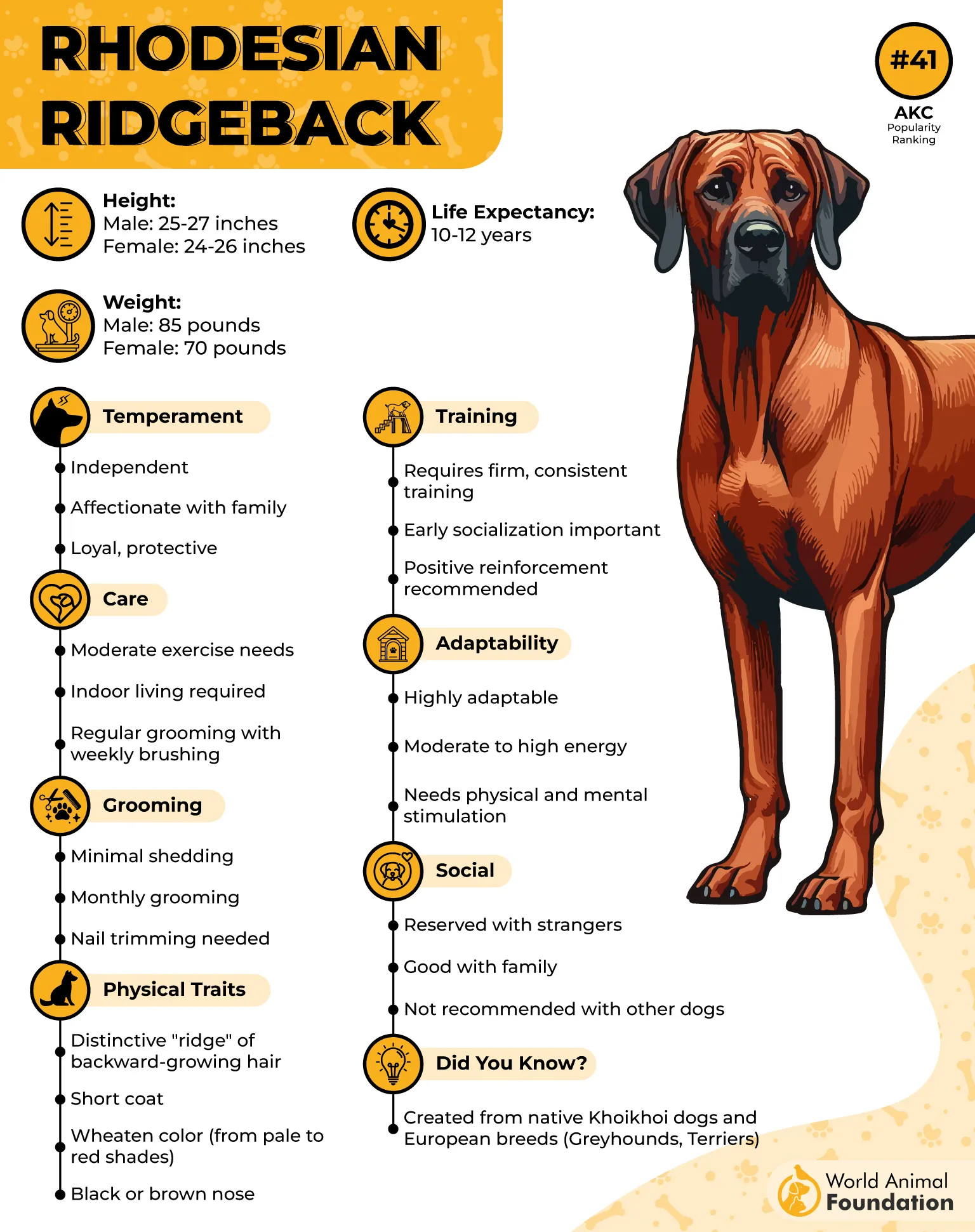
That said, it's not really recommended for first-time owners or families with young kids, since proper socialization and consistent training are non-negotiable with this breed. With around 4% pre-colonial ancestry from lion-hunting dogs, that natural hunting instinct still runs deep.
The Ridgeback's coat is neither woolly nor silky, just short, dense, glossy, and sleek. A weekly brush with a soft bristle or rubber curry brush is enough to clear loose hair and keep that signature shine.
6. Cane Corso
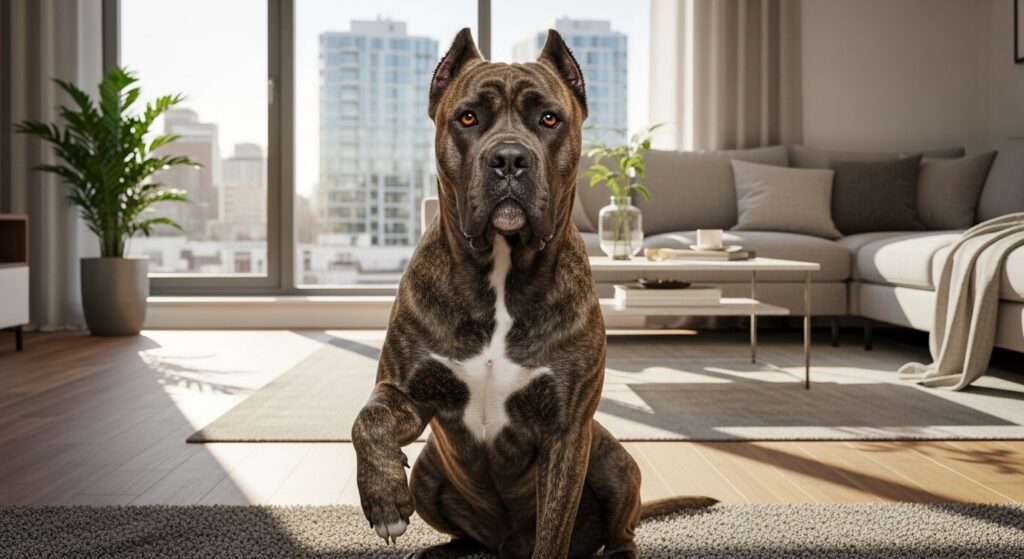
Also known as the Italian Mastiff, the Cane Corso is widely kept today as a protection dog, livestock guardian, and family companion, though it was originally bred to herd cattle and hunt large game.
The breed forms deep bonds with its family, which naturally fuels its protective instincts. Its bark alone, a genuinely thunderous sound, is often enough to scare off strangers before things go any further.
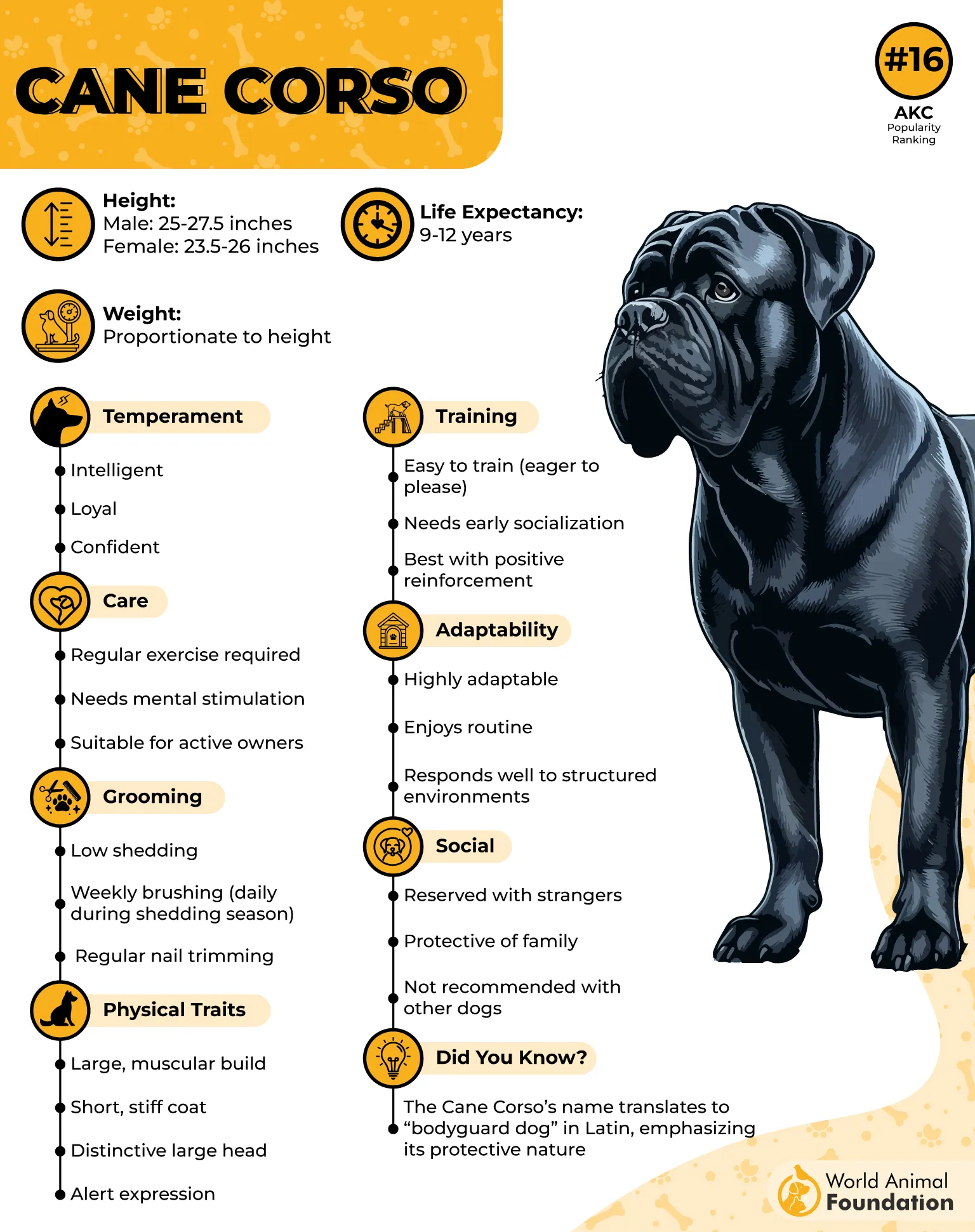
Because of its strong territorial nature, early socialization and consistent training aren't optional with this breed, and without them, it can develop fear-based aggression.
Coat type tends to vary with climate: Cane Corsos in colder regions grow a longer coat, while those in warmer areas have a coarser double coat. Shedding is moderate most of the year but picks up noticeably during shedding season, so weekly brushing is a good habit to keep up.
7. Doberman Pinscher
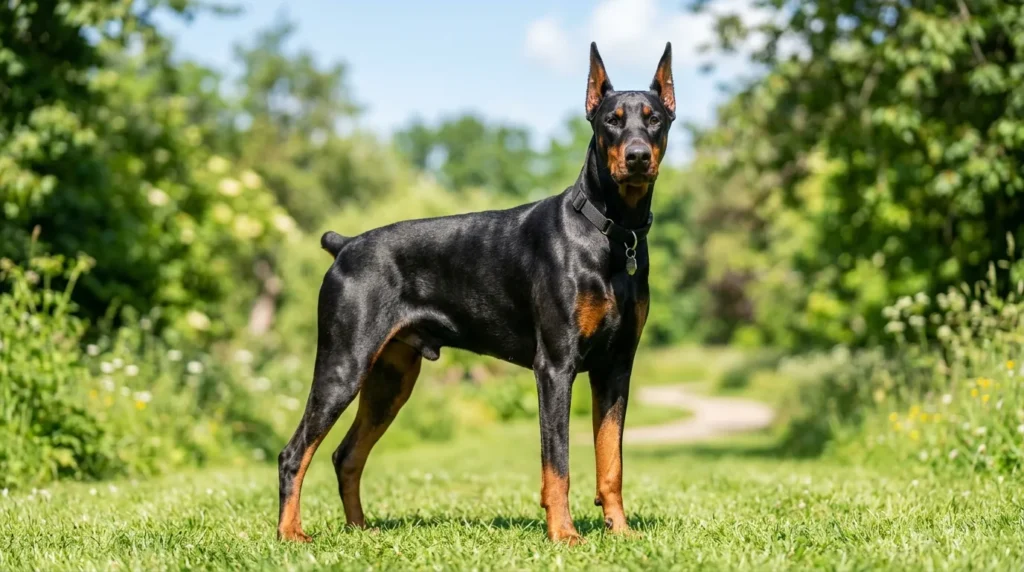
Developed by a tax collector named Karl Friedrich Louis Dobermann, this breed with famously strong protective instincts was created in Germany back in the 1880s, originally to work as a watchdog and personal protector, according to WebMD.
Thanks to its strong territorial instincts, the Doberman tends to patrol its surroundings, covering long distances while keeping an eye out for potential threats.
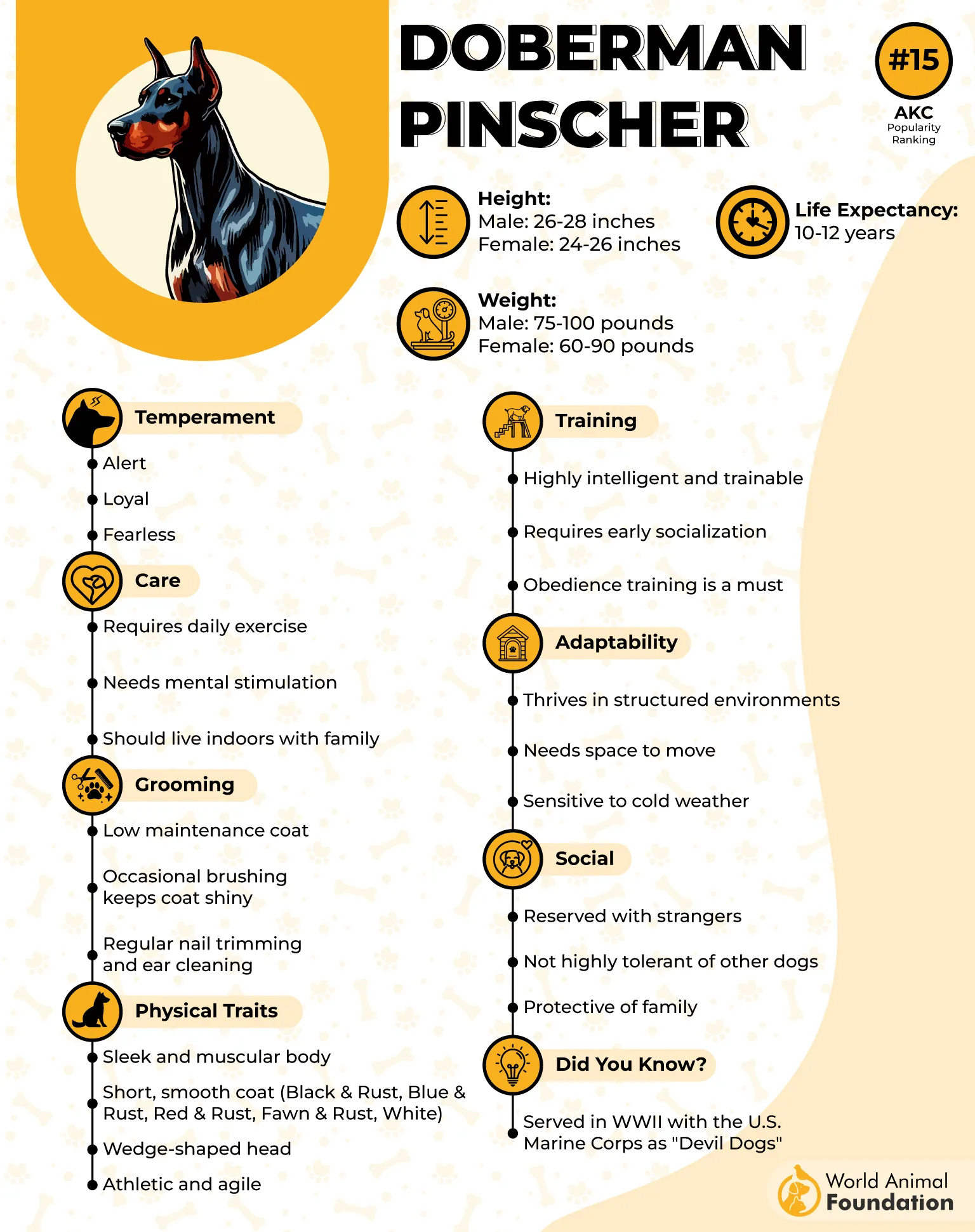
It's also highly intelligent and full of energy, which means it responds really well to proper training. Those long legs give it a ground-covering trot that makes chasing down a target look almost effortless.
Even though the Doberman's coat is short, it still benefits from a bit of a grooming routine. Just don't overdo the baths, since bathing too often can dry out its skin. A soft bristle brush used regularly is usually all it takes to keep that coat looking sleek and shiny.
8. Boxer
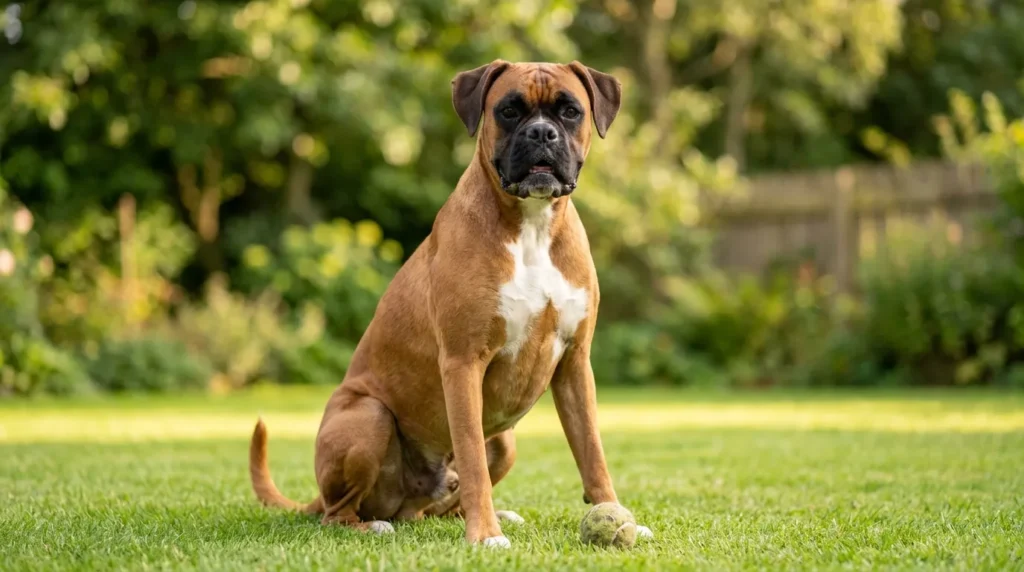
This breed's history goes back to Germany, where it was developed from the Bullenbeisser, a large hunting dog once used to take down big game. Today, the Boxer has traded that role for new ones, working as an athlete, police dog, guardian, and even a guide dog.
Despite its tough, serious-looking exterior, this is a genuinely sensitive, big-hearted breed that loves nothing more than a good play session, often "boxing" with its front paws like a little wrestler.
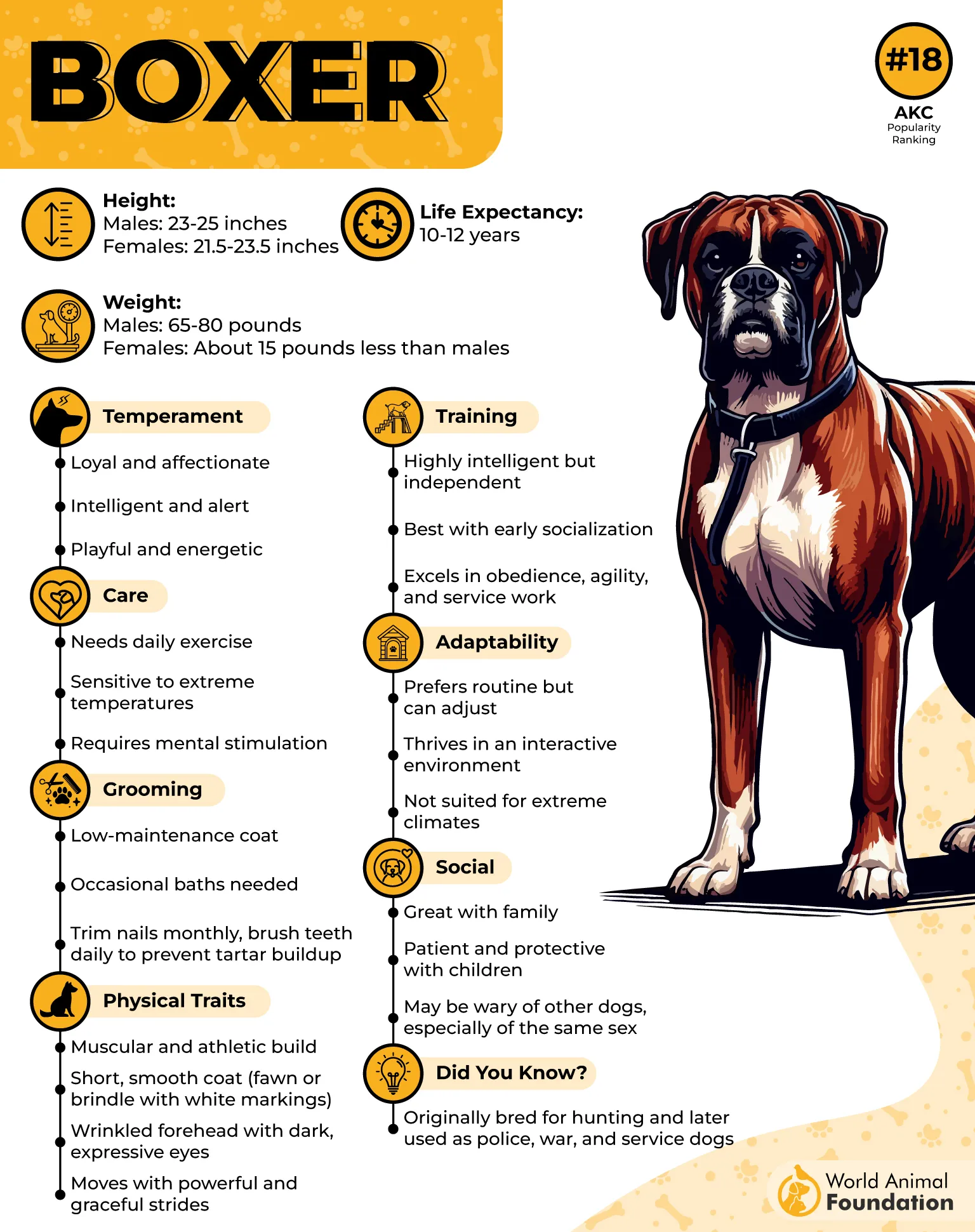
When it's feeling affectionate, don't be surprised by a hand kiss or two, and when it's excited, expect a full-body wiggle that's hard not to smile at. Around strangers, though, it still needs some supervision.
The Boxer's coat is short and smooth, typically coming in fawn or brindle, sometimes with white markings. A weekly brush with a rubber curry brush or hound glove keeps it looking neat. And since this breed absolutely loves playing in the mud, be prepared for more frequent baths than you might expect.
9. Bullmastiff
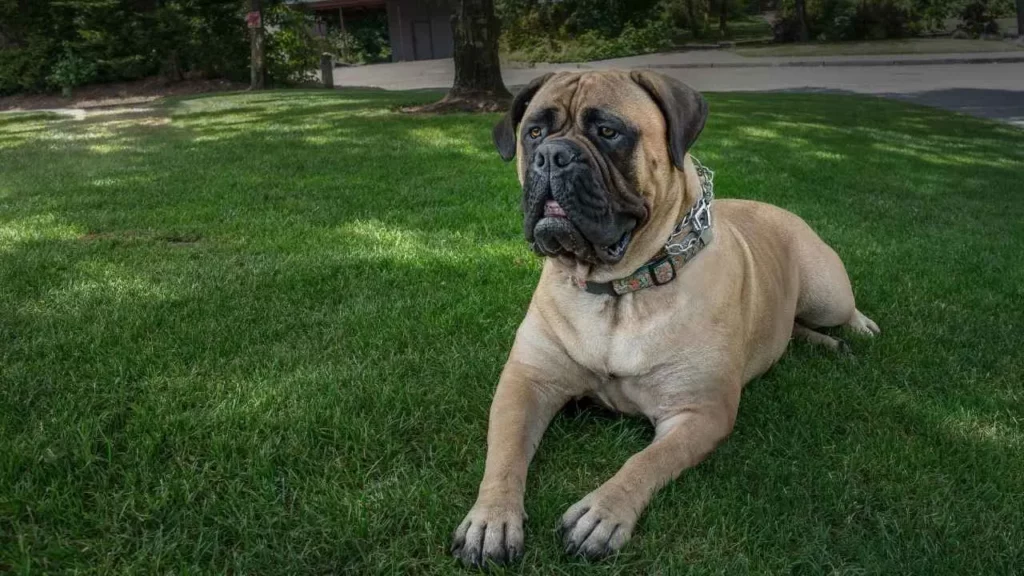
This mastiff-type breed was developed in 19th-century England, originally bred to serve as a guard dog by crossing the Old English Bulldog with the English Mastiff.
Often nicknamed the "Gamekeeper's Night Dog," it was built to patrol grounds after dark, which is why it developed such sharp eyesight and impressive speed for its size.
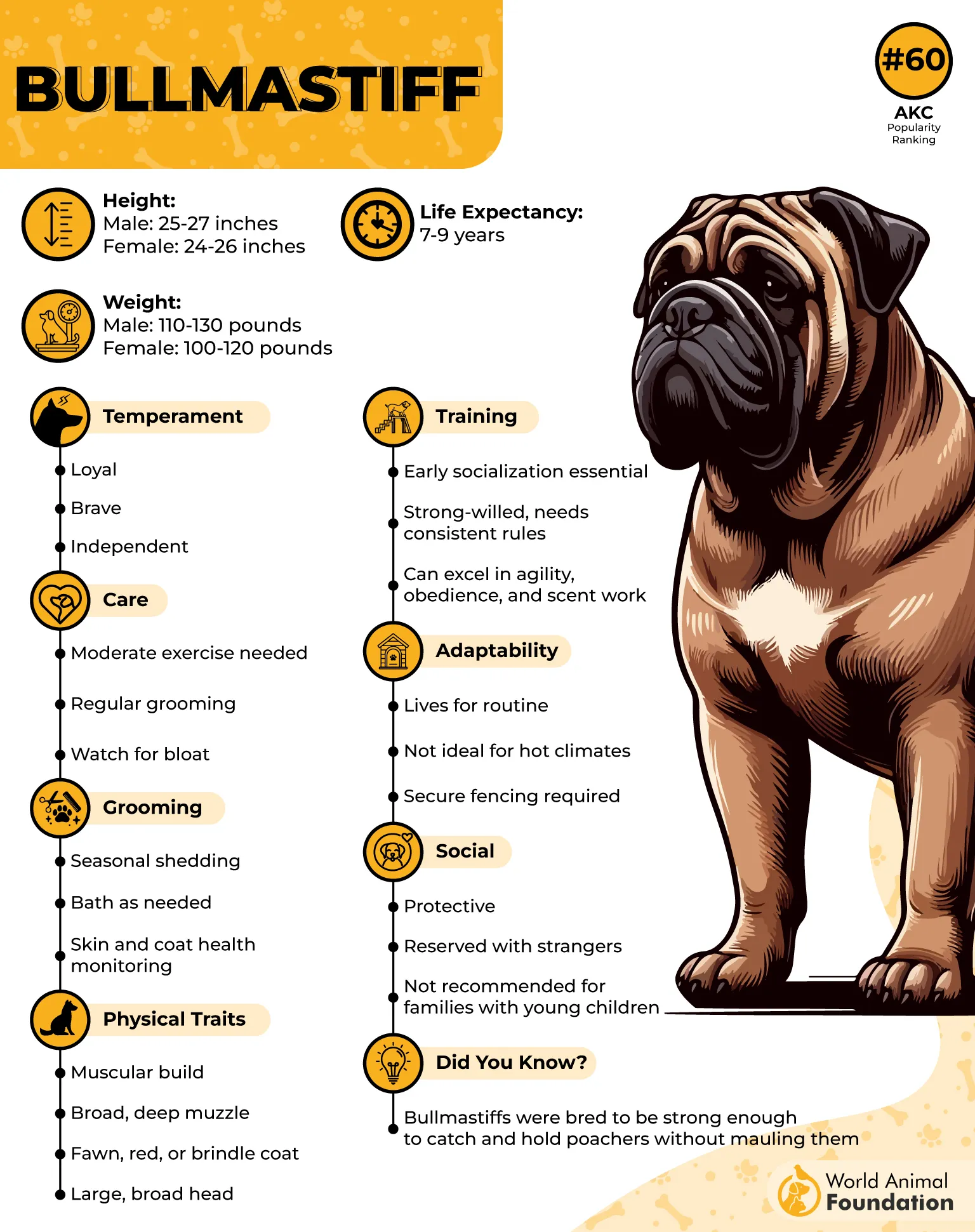
Despite its intimidating job history, it's actually a fairly easygoing, less aggressive breed. Being brachycephalic, it has a wide muzzle and narrower airways, so its exercise and breathing need a bit of extra attention.
Its coat is short and dense, coming in red, fawn, or brindle. Monthly brushing helps manage shedding, and baths are only needed occasionally. That said, the breed can be prone to skin issues and drooling, so it's worth keeping an eye on both.
10. Staffordshire Bull Terrier
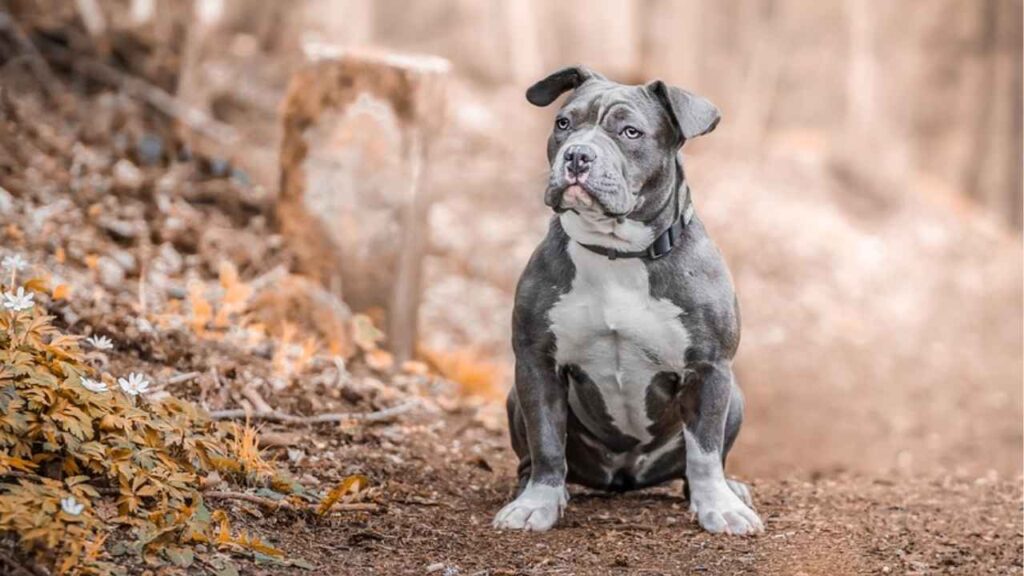
This breed was developed in 19th-century England for dog fighting, created by crossing small terriers like the Manchester Terrier. Once such sports were banned in the 20th century, the breed found a new purpose as an affectionate family companion.
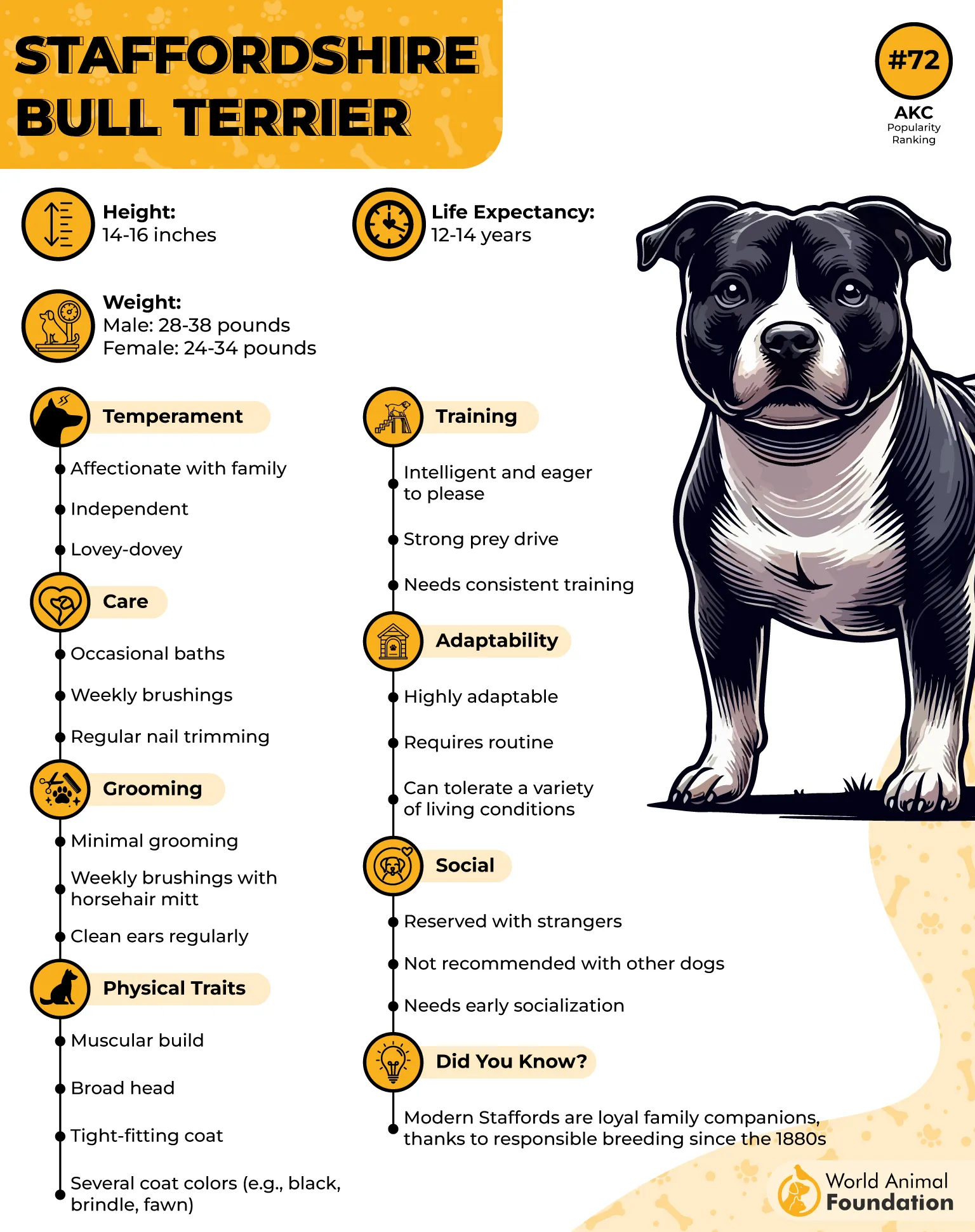
The Staffordshire Bull Terrier is medium-sized but solidly muscular and athletic. Thanks to its gentle, almost nanny-like instincts around children, it's become a favorite for families with kids. That said, it does have a strong prey drive, so consistent training is important, and it can be reactive toward unfamiliar dogs.
Its coat is short, smooth, and sheds only lightly to moderately. Given its high energy levels, this breed needs about 45 to 60 minutes of daily exercise. It's also fairly heat-sensitive, so on hot summer days, it's best to move playtime indoors.
Conclusion
The great guard dog isn't necessarily the biggest, toughest, or loudest one out there. It's the one whose temperament, energy level, grooming needs, and training requirements actually fit your everyday life. A Great Pyrenees might suit someone who wants a calm, watchful guardian, while a Boxer could be a better match for a more active household.
A Staffordshire Bull Terrier, meanwhile, might appeal to families looking for a smaller, affectionate companion with plenty of confidence to spare. Every breed brings its own mix of strengths and quirks to the table.
With early socialization, consistent training, and the right amount of exercise and care, these dogs can be both reassuring protectors and deeply loving family members. At the end of the day, the best security system in the house might just be the one that also steals your spot on the couch.
