




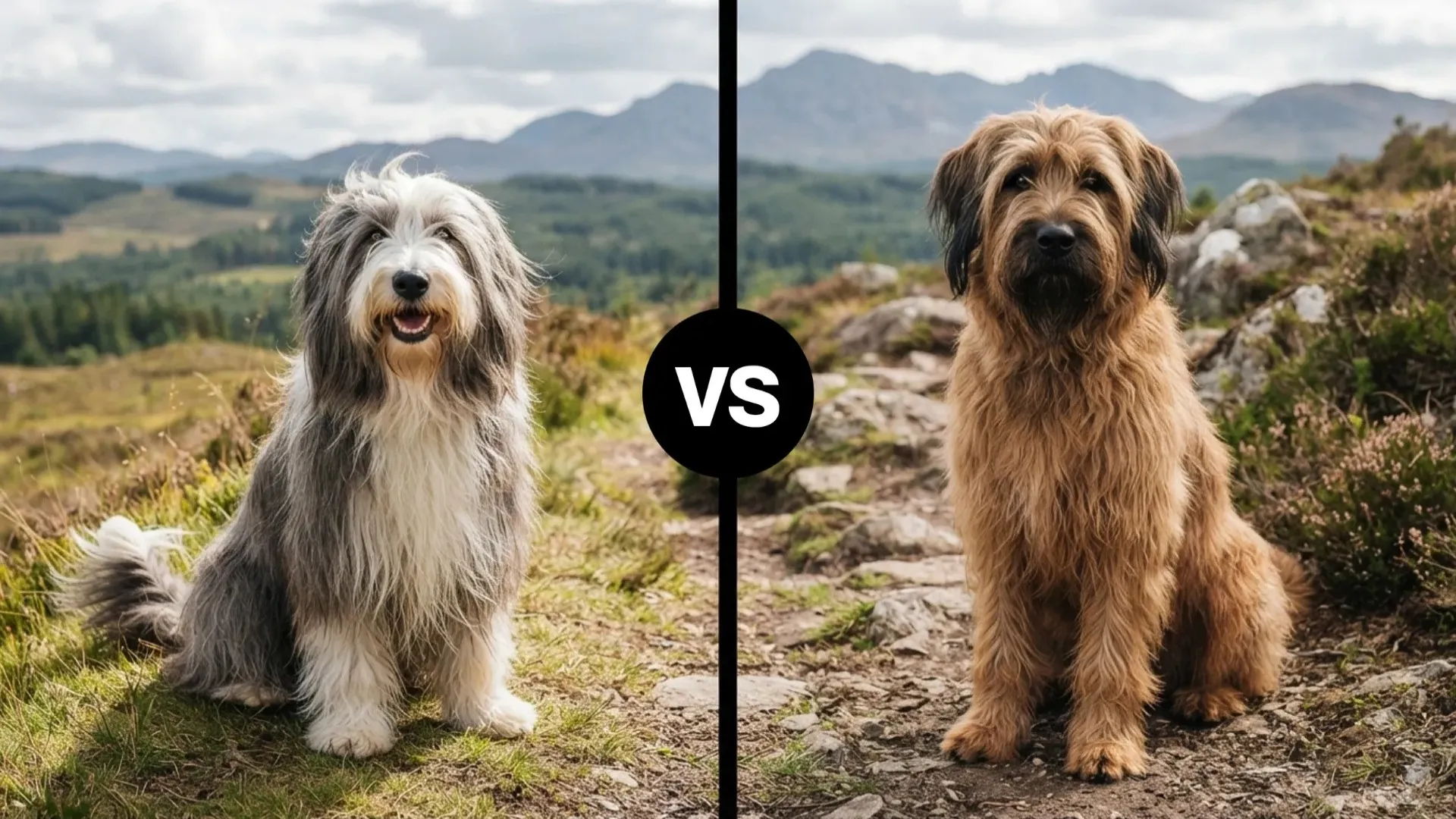
At first glance, the Bearded Collie and Briard may look like two fluffy herding dogs with plenty of personality. But behind those shaggy coats, they are quite different in the way they think, work, and bond with their families.
The Bearded Collie is usually more playful, bouncy, and social, while the Briard tends to be more serious, watchful, and naturally protective. Their energy levels, training styles, grooming needs, and guarding instincts can also vary a lot.
So, which breed is the better match for your lifestyle? Let’s compare the Bearded Collie and Briard side by side to see where each one stands out.
Bearded Collie vs. Briard: Key Comparisons
Origins & Purpose
Bearded Collie’s Scottish Heritage
The Bearded Collie developed in Scotland as a practical farm dog used for herding sheep and cattle, with its agile build and weather-resistant coat helping it work through challenging countryside; the breed’s history emphasizes independence, stamina, and versatility, as per the AKC.
Modern Beardies can still demonstrate those instincts through herding, agility, obedience, and other activities that provide a meaningful outlet for their traditional working abilities.
Briard’s French Working Background
The Briard, also called the Berger de Brie, originated in France as an old shepherding breed whose responsibilities included tending livestock and helping protect flocks.
Its development favored strength, endurance, intelligence, and independence, creating a dog capable of spending long periods working across rural properties while remaining attentive to both livestock and potential threats.
Size & Build
Bearded Collie’s Dimensions
The Bearded Collie is a medium-sized dog, with males ideally measuring 21–22 inches at the shoulder and females 20–21 inches, while healthy adults commonly weigh around 40–60 pounds depending on sex, frame, and condition.
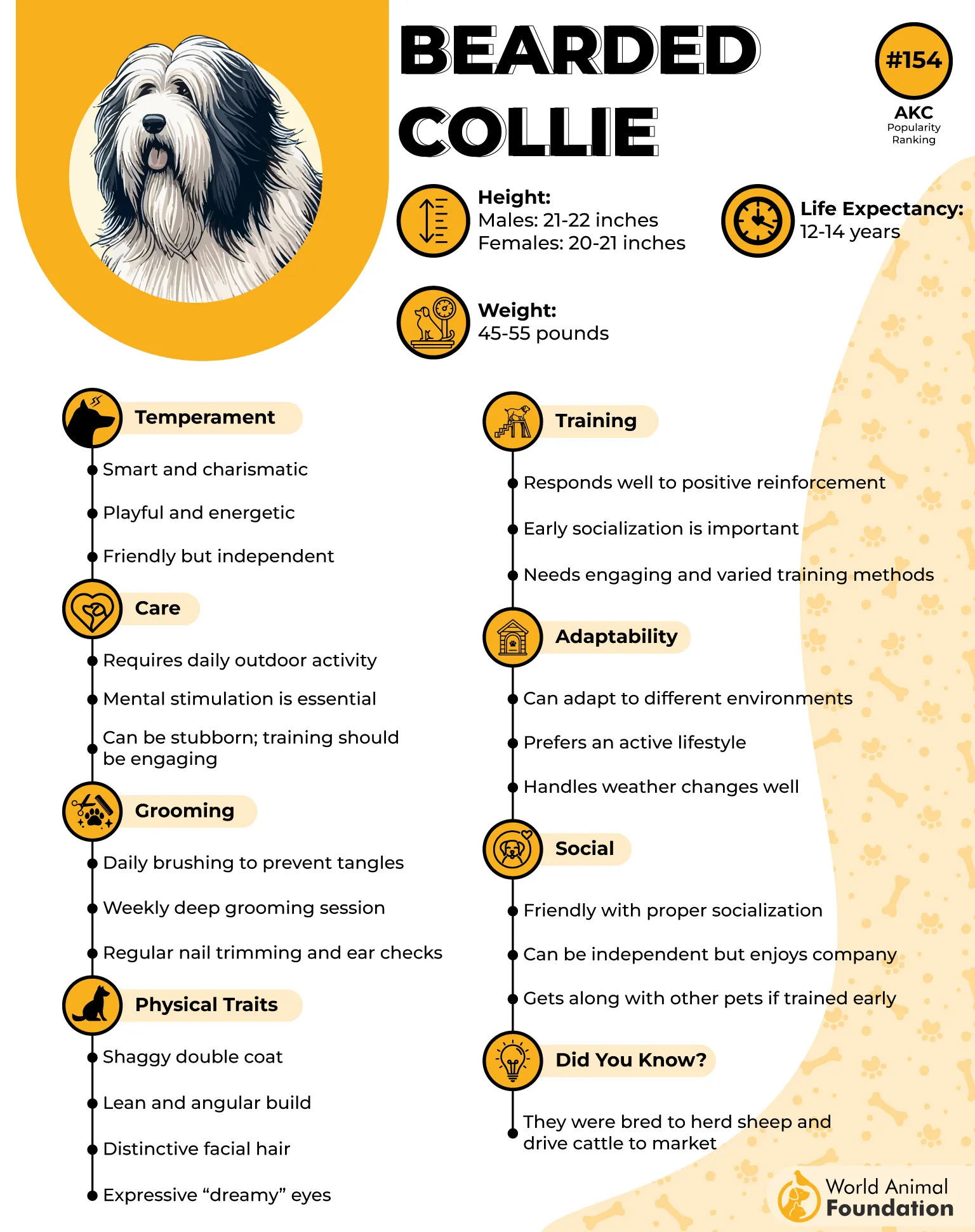
Beneath its long coat is a lean, athletic body that is slightly longer than tall and designed for agile movement rather than heavy pulling or guarding.
Briard’s Dimensions
The Briard is considerably larger, with males standing approximately 23–27 inches and females 22–25½ inches at the shoulder, while adults commonly weigh about 50–100 pounds.
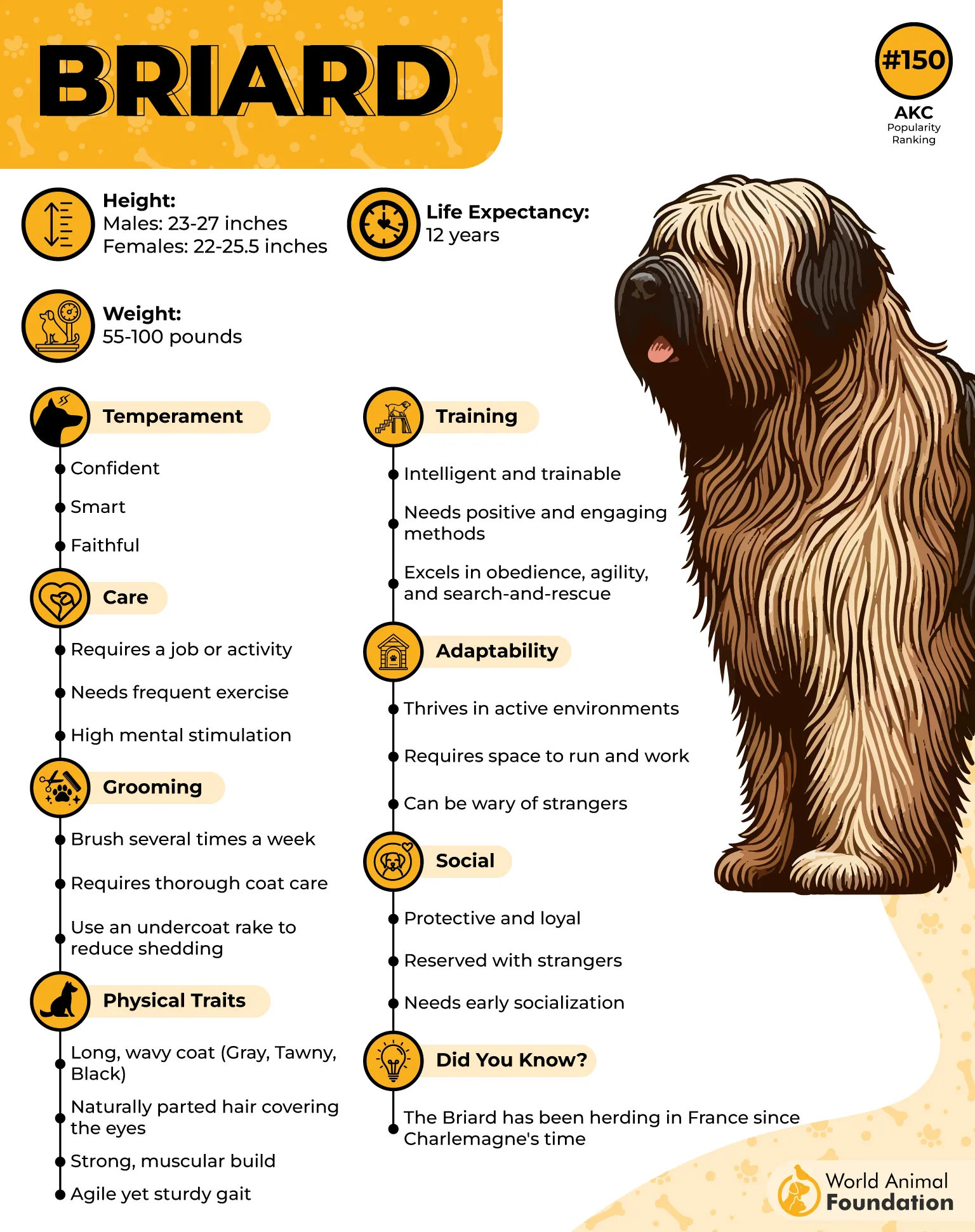
Its longer legs, strong bone, deep chest, and muscular body create a substantially more powerful physical presence than the smaller Bearded Collie.
Pricing & Availability
Bearded Collie Costs
Bearded Collie puppies from established breeders can commonly cost around $1,500–$2,500 in the United States.
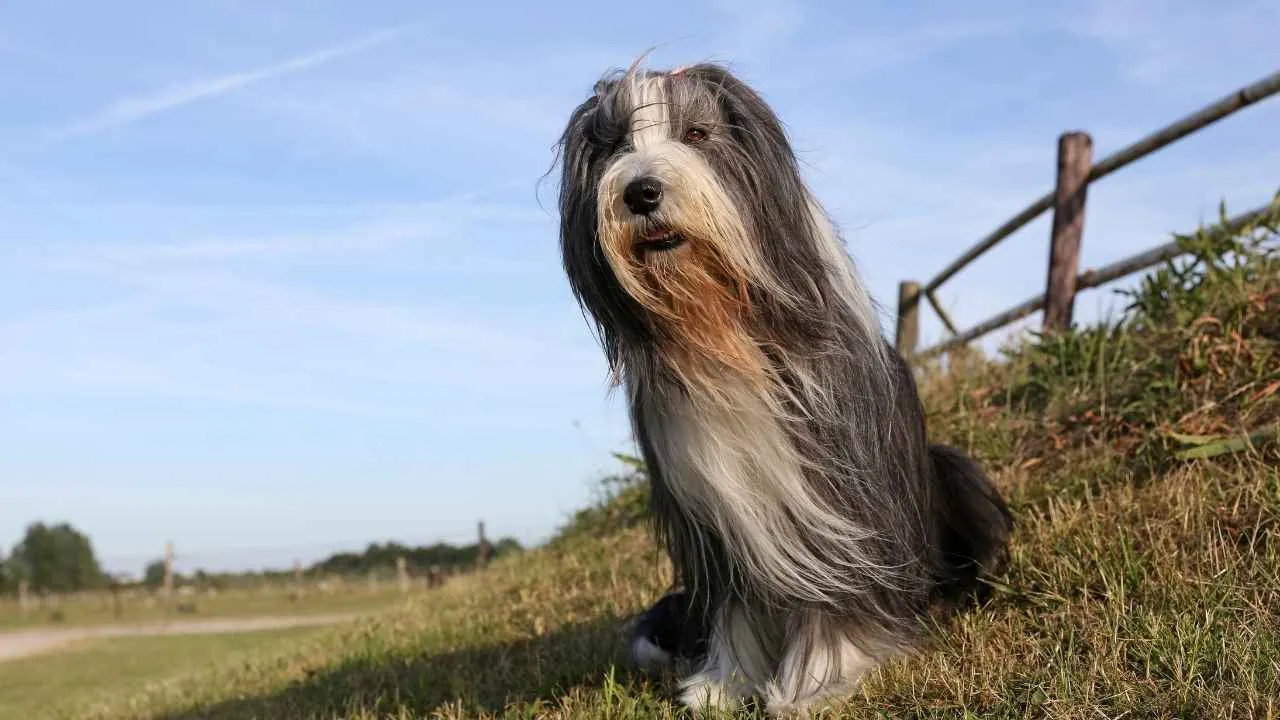
Prospective owners may need to contact specialist breeders and wait for a suitable litter rather than choosing from a large selection of readily available puppies.
Briard Costs
Briard puppies can commonly fall within approximately $1,500–$3,000 or more, with individual prices influenced by geography, pedigree, health testing, breeder experience, and breeding rights.
This powerful breed is not especially common, so buyers may encounter limited litters and longer waiting periods, making breeder research and availability just as important as the initial purchase price.
Temperament & Personality Style
Bearded Collie’s Character
Bearded Collies are generally lively, sociable, curious, and affectionate dogs, often bringing a playful attitude into family life; their working instincts can make them highly engaged with their surroundings.
Young Beardies may also be exuberant, vocal, or prone to jumping and mischievous behavior when insufficiently trained, meaning their cheerful personality is best supported with consistent boundaries and plenty of constructive interaction.
Briard’s Character
Briards are typically loyal, intelligent, courageous, and strongly attached to their families, while often displaying greater reserve toward unfamiliar people than the openly friendly Bearded Collie.
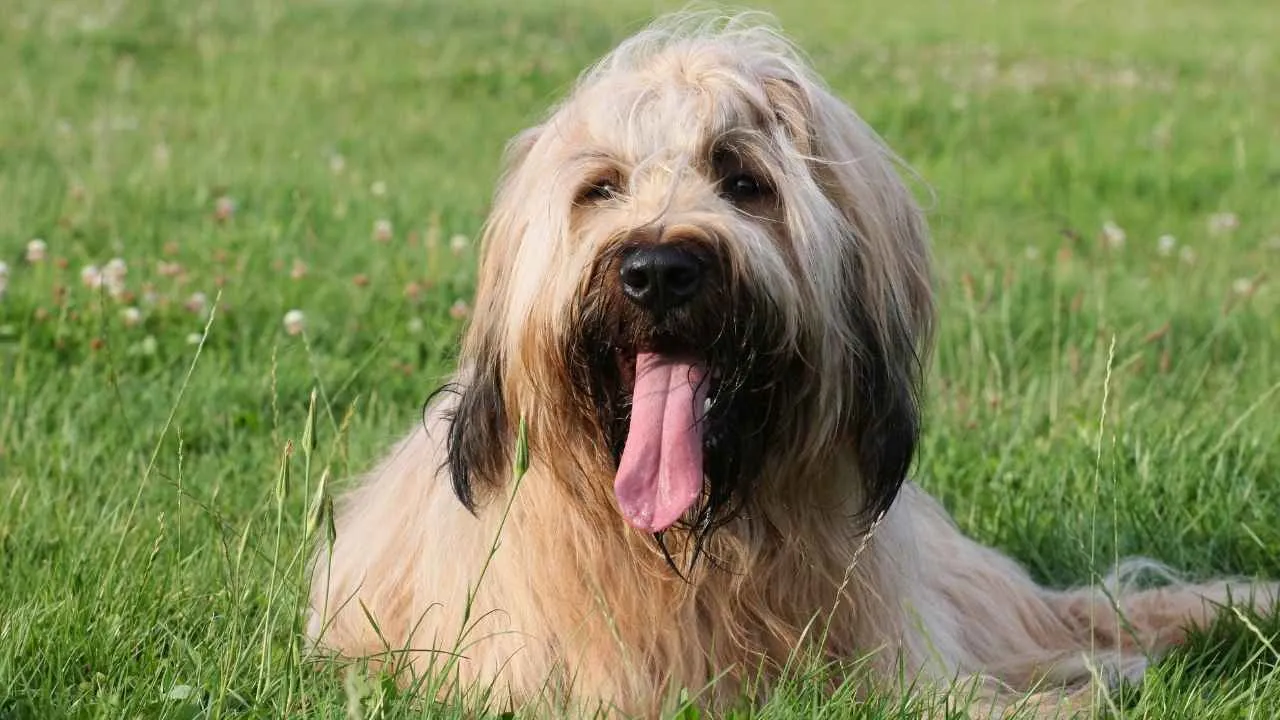
Early socialization is particularly important for helping a Briard distinguish normal visitors and everyday situations from circumstances that genuinely require concern.
Exercise Needs & Energy Levels
Bearded Collie’s Activity Requirements
The Bearded Collie has considerable energy and was bred to spend long periods moving livestock, so daily walks alone may not provide enough stimulation, as per the Royal Kennel Club.
Hiking, running, agility, herding, interactive games, obedience exercises, and other purposeful activities can help satisfy its physical and mental needs, while younger dogs should have their workload increased gradually as their bodies mature.
Briard’s Activity Requirements
Briards also need substantial daily exercise because their history as working shepherds produced a dog capable of sustained physical effort, and suitable outlets can include long walks, hiking, controlled running, herding, obedience, and other structured activities.
Their larger frames require sensible conditioning, particularly during growth, while hot weather and individual health status should always influence exercise intensity.
Trainability & Obedience
Bearded Collie’s Learning Style
Bearded Collies are intelligent and generally responsive to positive training, particularly when lessons are varied and interactive, but their playful nature can make repetitive drills less appealing.
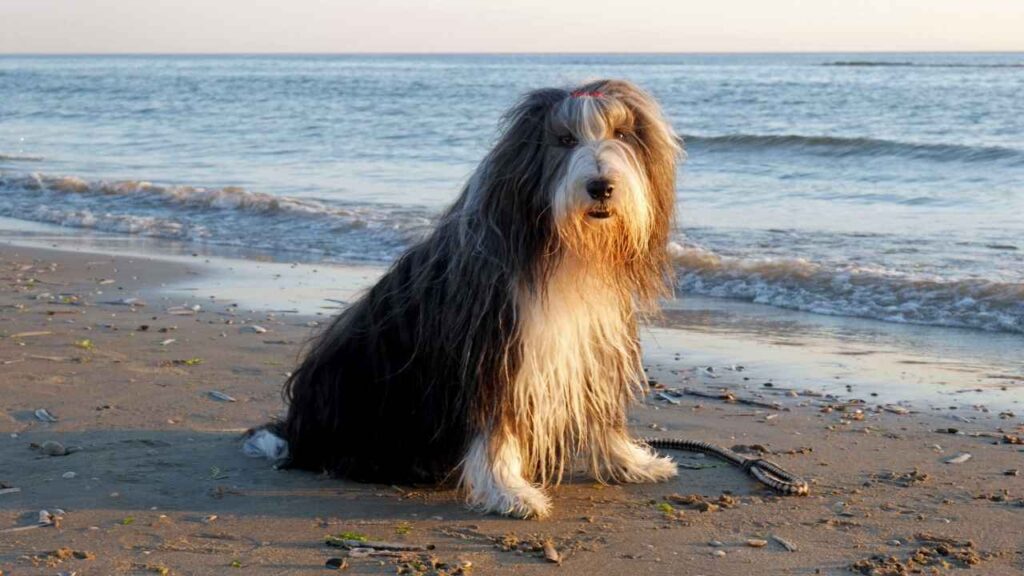
Early work should cover recall, leash manners, impulse control, calm greetings, and household boundaries, while advanced activities such as agility, herding, rally, and trick training can provide excellent mental challenges for an enthusiastic adult Beardie.
Briard’s Learning Style
Briards are intelligent dogs but can retain an independent streak inherited from their history as working shepherds, making consistency and patience essential during training.
Owners should establish clear expectations around recall, leash behavior, visitors, and social situations while using motivating rewards and avoiding unnecessarily harsh methods, as a confident Briard responds best when it understands both the task and the reason for cooperating.
Grooming Needs & Shedding
Bearded Collie’s Coat
The Bearded Collie has a long, shaggy double coat with a dense underlayer and protective outer hair, making regular brushing essential for preventing mats and removing leaves, dirt, burrs, and other outdoor debris.
Shedding can become more noticeable during seasonal changes, and owners should also maintain the ears, nails, teeth, and skin as part of the breed’s routine care.
Briard’s Coat
The Briard possesses a long, slightly wavy outer coat with a dense undercoat, along with the characteristic facial beard, moustache, and eyebrows that contribute to its distinctive appearance, as per Orvis.
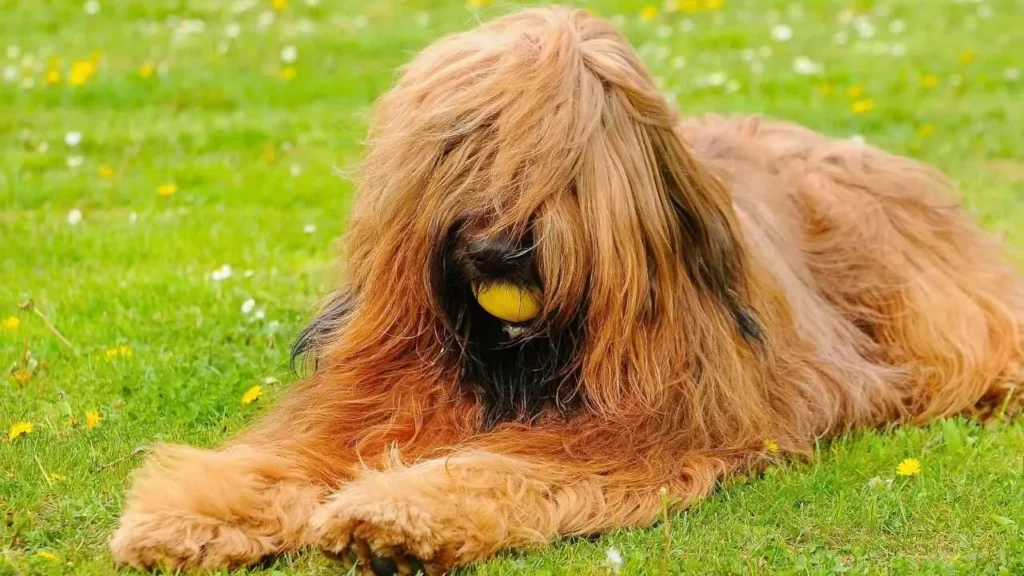
Regular brushing is necessary to control tangling and loose undercoat, while the breed’s larger size means grooming sessions can be particularly time-consuming when the coat is fully grown.
Herding & Work Drive
Bearded Collie’s Working Instinct
The Bearded Collie’s traditional role involved moving sheep and cattle across Scottish terrain, which encouraged an energetic style of herding characterized by agility, responsiveness, and continuous movement.
Modern Beardies can channel these instincts into herding trials, agility, obedience, tracking, and other dog sports, while household owners may need to teach appropriate alternatives.
Briard’s Working Instinct
The Briard’s traditional duties involved tending and protecting flocks, producing a dog that combines herding ability with greater natural vigilance and independence.
It can remain attentive to its surroundings while working and may show a stronger instinct to monitor unfamiliar people or situations, making advanced herding or working activities particularly rewarding when those instincts are guided appropriately.
Health & Lifespan
Bearded Collie’s Health
Bearded Collies commonly live around 12–14 years, but potential health concerns include hip dysplasia, elbow problems, arthritis, cruciate ligament injuries, other eye disorders, hypothyroidism, skin disease, gastrointestinal problems, pancreatitis, urinary or kidney disorders, neurological conditions, and some cancers.
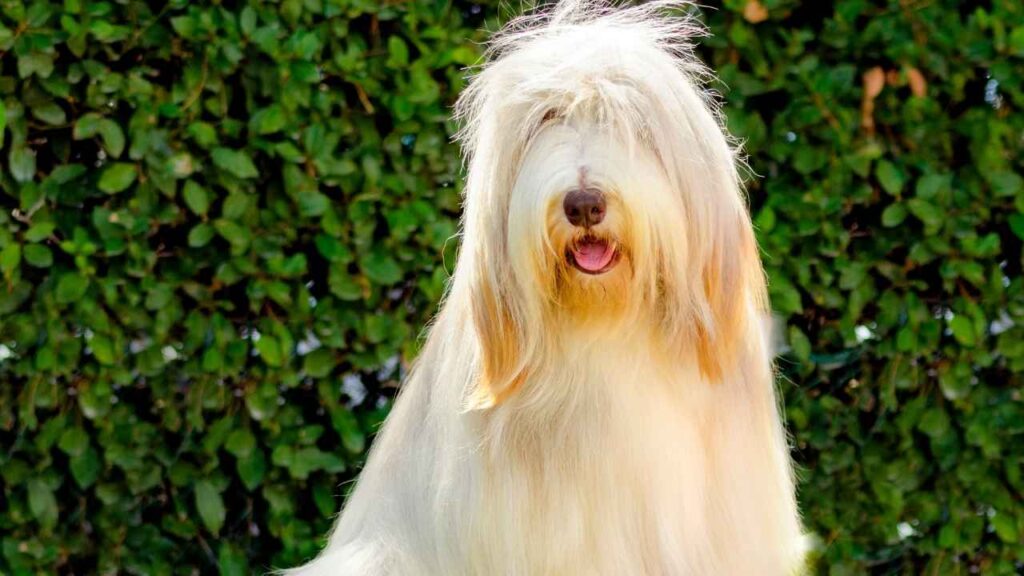
Responsible breeders should therefore use appropriate orthopedic and ophthalmic screening while maintaining detailed family health histories.
Briard’s Health
Briards generally have an expected lifespan of approximately 10–12 years, with recognized concerns including hip dysplasia, elbow dysplasia, gastric dilatation-volvulus or bloat, congenital stationary night blindness, cataracts, corneal dystrophy, retinal abnormalities, ectopic ureters, urinary incontinence, hypothyroidism, autoimmune disorders, exocrine pancreatic insufficiency, kidney disease, and cancer, as per PetMD.
The breed’s large, deep-chested structure also makes awareness of bloat symptoms particularly important because gastric torsion can become a life-threatening emergency.
Bearded Collie vs. Briard: Which Fluffy Working Dog Should You Choose?
Bearded Collie for a Lively Household
The Bearded Collie may be the better fit for an owner who wants a medium-sized, sociable, athletic companion with a playful personality and enthusiasm for activities such as hiking, agility, herding, and obedience; its smaller frame makes everyday handling easier than with a large Briard.
However, its considerable exercise requirements, exuberant temperament, extensive coat, and potential autoimmune and orthopedic health concerns still demand a committed owner.
Briard for an Experienced Owner
The Briard can suit someone seeking a taller, heavier working dog with a strong family bond, substantial endurance, and naturally watchful qualities, particularly when the household has enough space and the owner is comfortable providing consistent training and socialization.
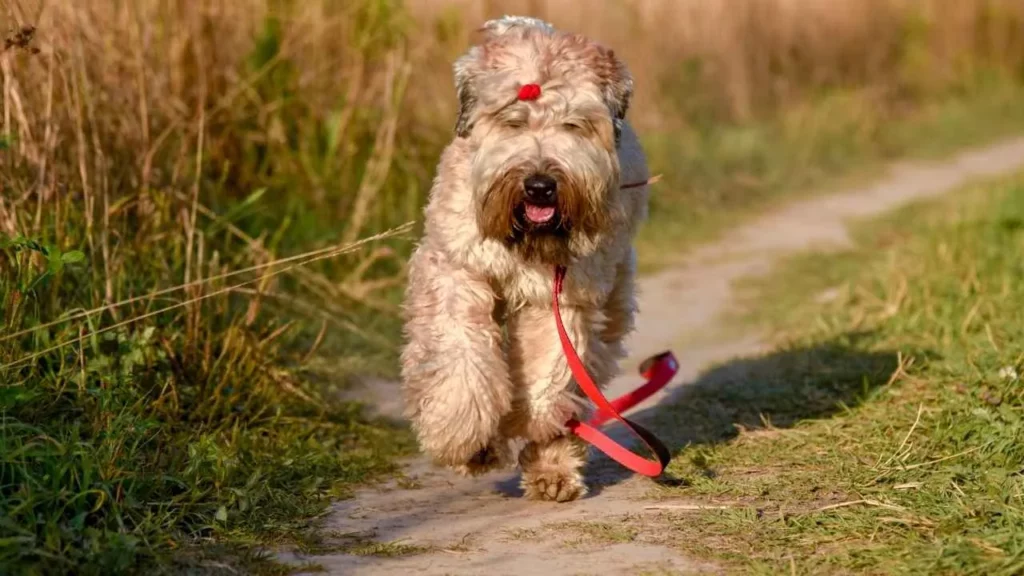
Its larger size, demanding coat, independent temperament, and health considerations such as hip disease, bloat, and stationary night blindness mean that thoughtful preparation is especially important.
Making the Final Choice
Choose the Bearded Collie if a smaller, highly energetic, playful working companion better matches your lifestyle, or consider the Briard if you prefer a larger, more serious dog with stronger guardian tendencies and considerable physical presence; both can be rewarding for active owners, but neither is appropriate for someone unwilling to invest time in exercise, training, grooming, socialization, and preventive healthcare.
Conclusion
Choosing between a Bearded Collie and a Briard is less about deciding which breed is “better” and more about understanding which temperament fits your life. The Bearded Collie often suits people who enjoy an outgoing, playful, energetic companion, while the Briard may appeal more to owners who value steadiness, confidence, and a stronger protective instinct.
Both breeds are intelligent, devoted, and capable working dogs, but they ask different things from their owners. A Bearded Collie thrives with activity, interaction, and upbeat training, whereas a Briard usually needs firm guidance, early socialization, and an owner who respects its independent guardian nature.
The best choice is the dog whose needs match the home you can realistically provide. When energy level, training commitment, grooming demands, and personality all align, either breed can become far more than a beautiful companion—they can become a deeply loyal part of the family.
