




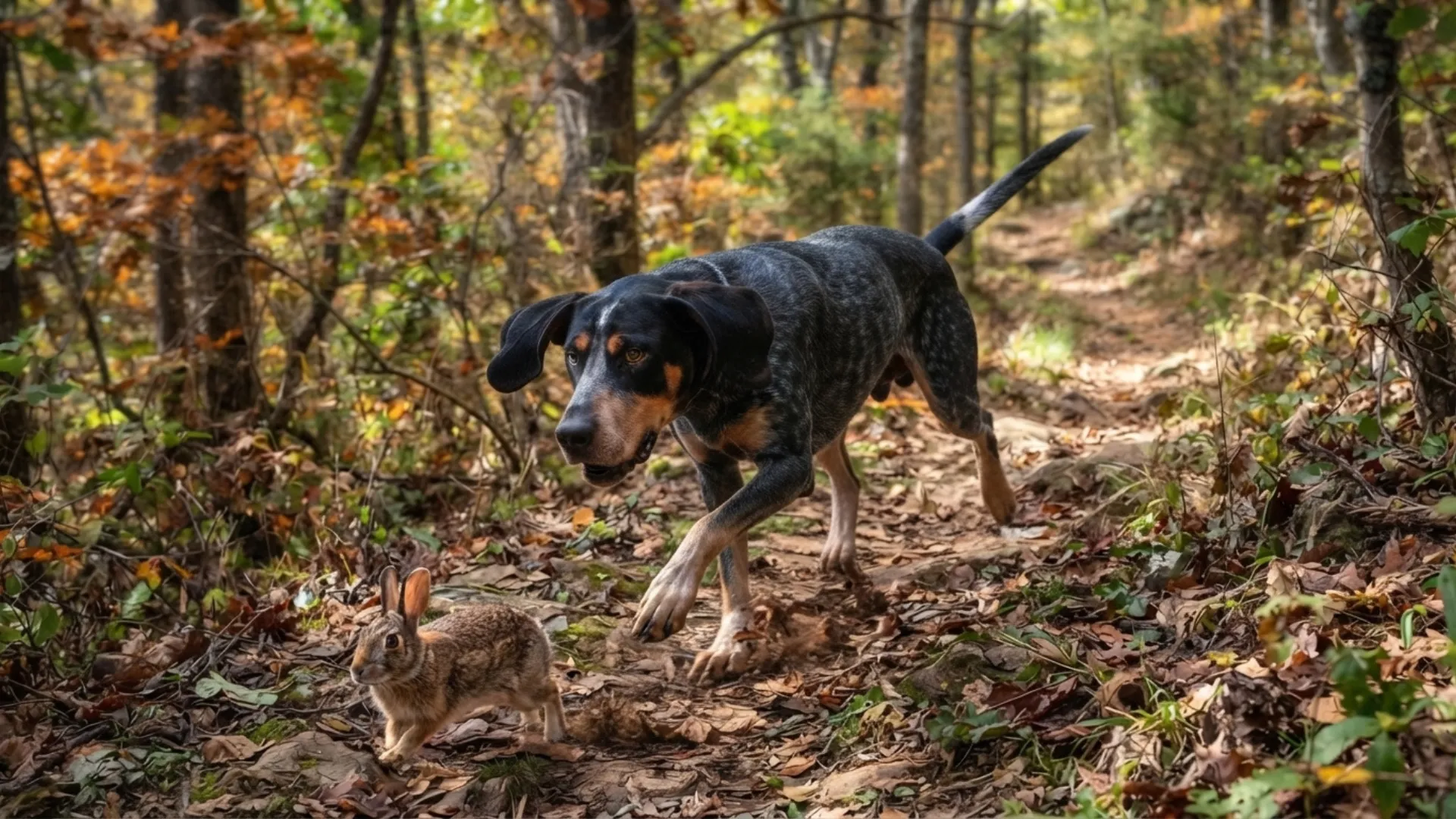
Dogs have been selectively bred for generations to perform tasks that required them to search, track, pursue, point, or retrieve. As a result, some modern breeds retain an especially strong motivation to chase moving animals or investigate compelling scents.
A hound may become absorbed in a scent trail, a sighthound may instantly react to movement, while a sporting breed can combine searching and pursuit with close cooperation with its handler.
These natural tendencies can be valuable in working environments but require thoughtful management in everyday homes.
The breeds below represent several styles of hunting ability. Their energy levels, physical capabilities, and methods of pursuing quarry vary, yet all can demonstrate a notable desire to follow something that captures their attention.
Dog Breeds With a High Drive to Hunt and Chase
1. Black And Tan Coonhound
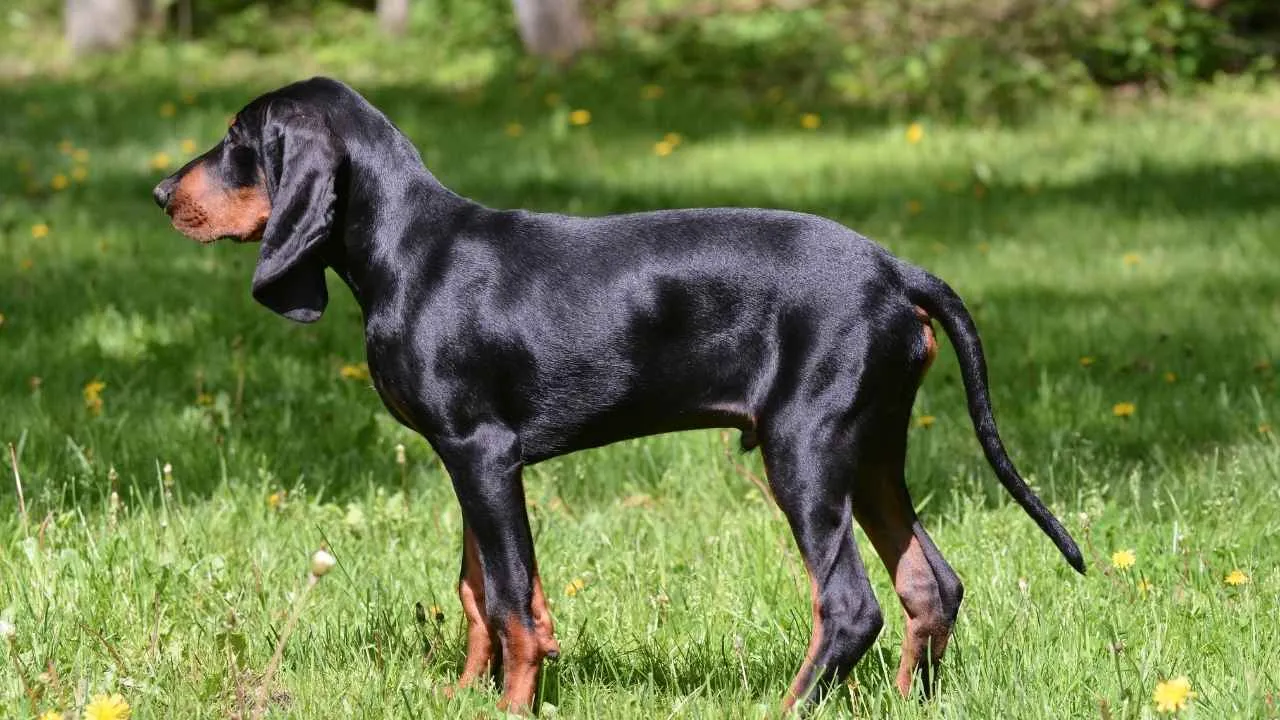
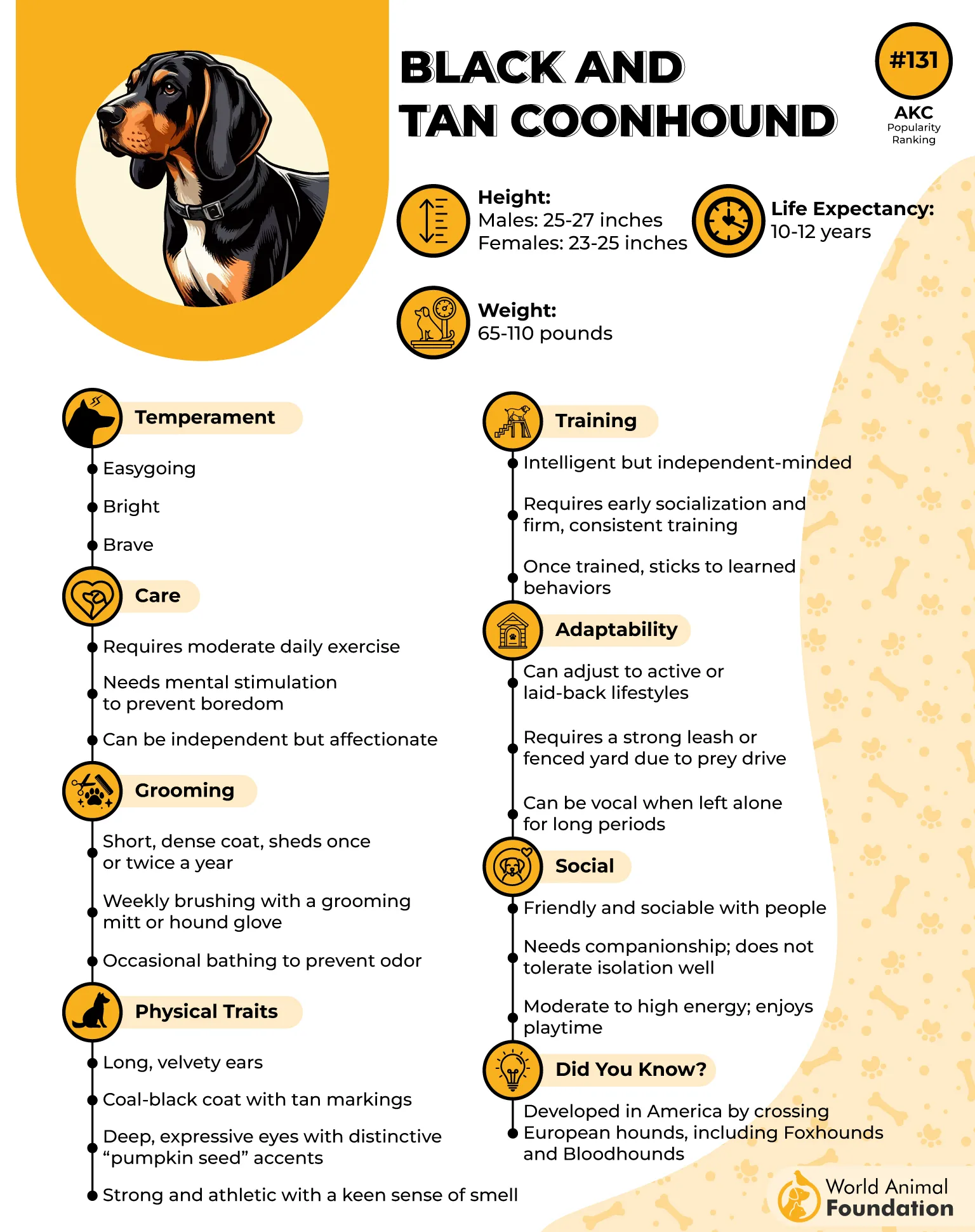
Black and Tan Coonhounds are American scent hounds historically used to track raccoons and other game. Their long ears, powerful noses, muscular bodies, and distinctive coloring reflect their development as persistent outdoor workers, as per Hill’s Pet.
They were expected to follow trails across difficult terrain and maintain their focus until quarry was located. That background has produced a dog with considerable endurance and a strong desire to investigate interesting odors.
Support Their Stamina With Outdoor Activity
Black and Tan Coonhounds benefit from long walks, hiking, supervised exploration, and scent-based games. Allowing them time to investigate appropriate smells can make exercise more mentally satisfying.
Training should emphasize recall and leash manners from an early age. Because an appealing scent can become extremely distracting, owners should practice responding to commands around progressively stronger temptations.
A Determined Dog That Loves Following Quarry
Their drive to hunt is strongly connected to scent rather than simply visual pursuit. Once a Black and Tan Coonhound picks up an interesting trail, it may remain focused on following it for a considerable distance.
This determination can make the breed excellent for tracking activities. At home, owners can use nose work and scent games to provide a controlled outlet while secure fencing helps prevent independent adventures.
2. Bluetick Coonhound
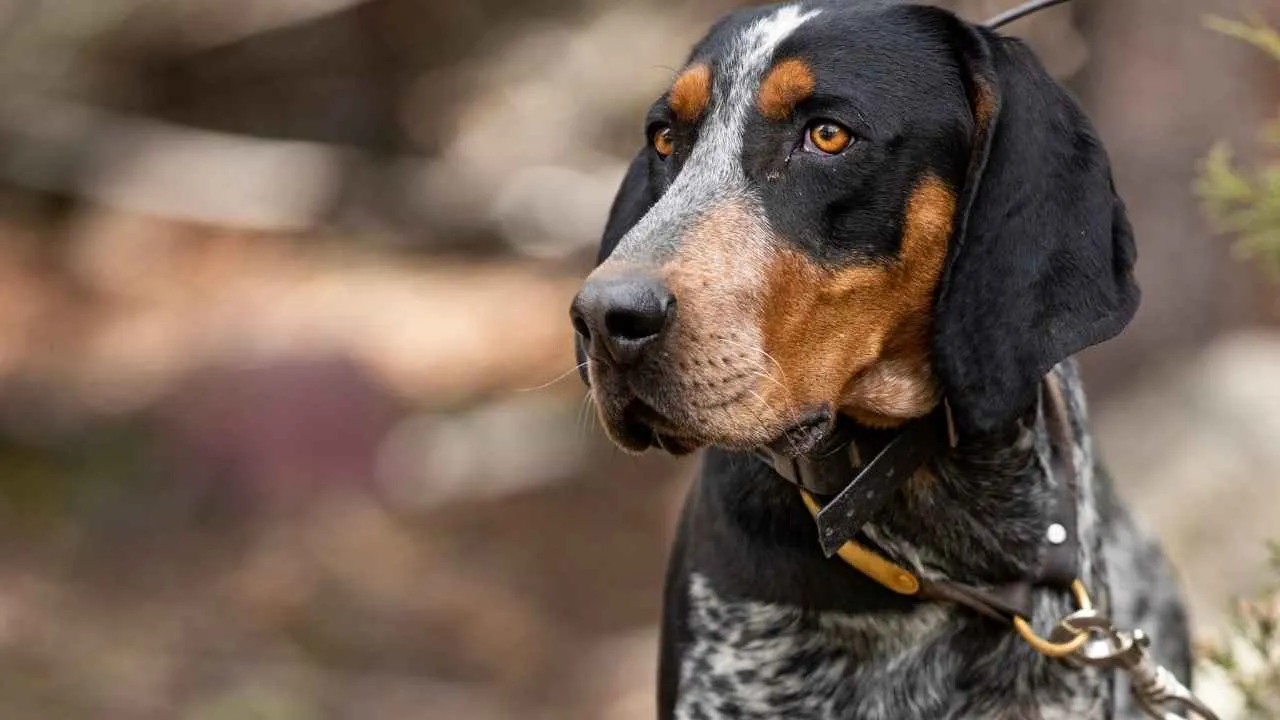
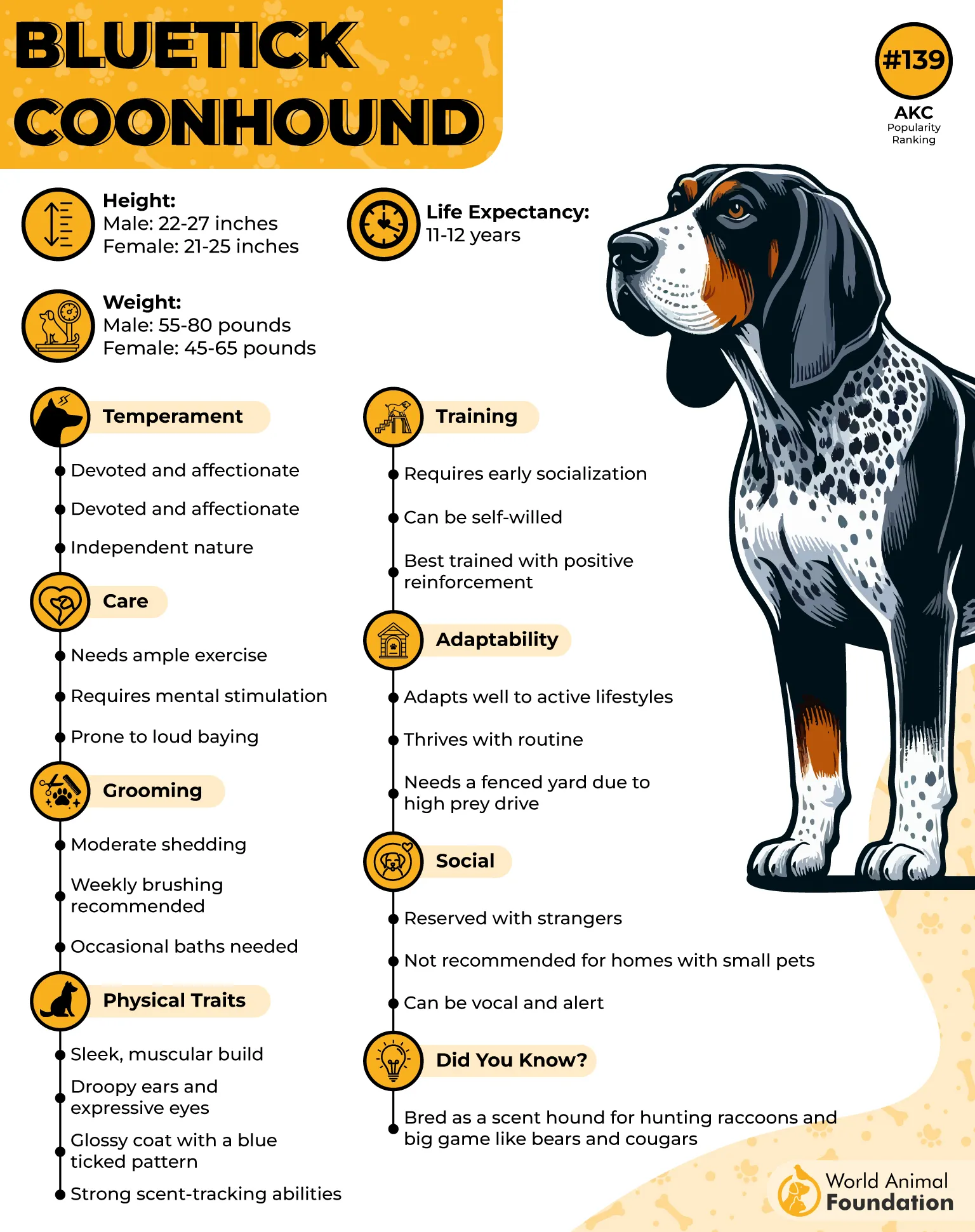
Bluetick Coonhounds developed in the United States as hunting dogs with a particular talent for scent tracking. Their striking mottled coats are paired with a strong nose and the persistence needed to work through complicated trails.
The breed can be energetic outdoors but is often capable of settling when its exercise requirements are properly addressed. Its hunting background remains an important part of understanding its behavior.
Give Their Nose and Body Plenty to Do
Blueticks need regular physical activity combined with mental stimulation. Hiking, tracking games, scent puzzles, and lengthy walks can help prevent boredom and provide suitable outlets for their energy.
Training should be patient and consistent. Reliable recall is particularly valuable because a Bluetick may become intensely focused when it encounters an intriguing animal scent.
A Powerful Scent Drive Behind the Chase
The Bluetick’s hunting instinct often begins with its nose. Detecting the odor of potential quarry can trigger concentrated investigation and a strong desire to follow the trail.
Owners can redirect this motivation through structured scent work and tracking activities. Secure outdoor spaces remain important because following a scent can take priority over staying close to its owner.
3. Pharaoh Hound
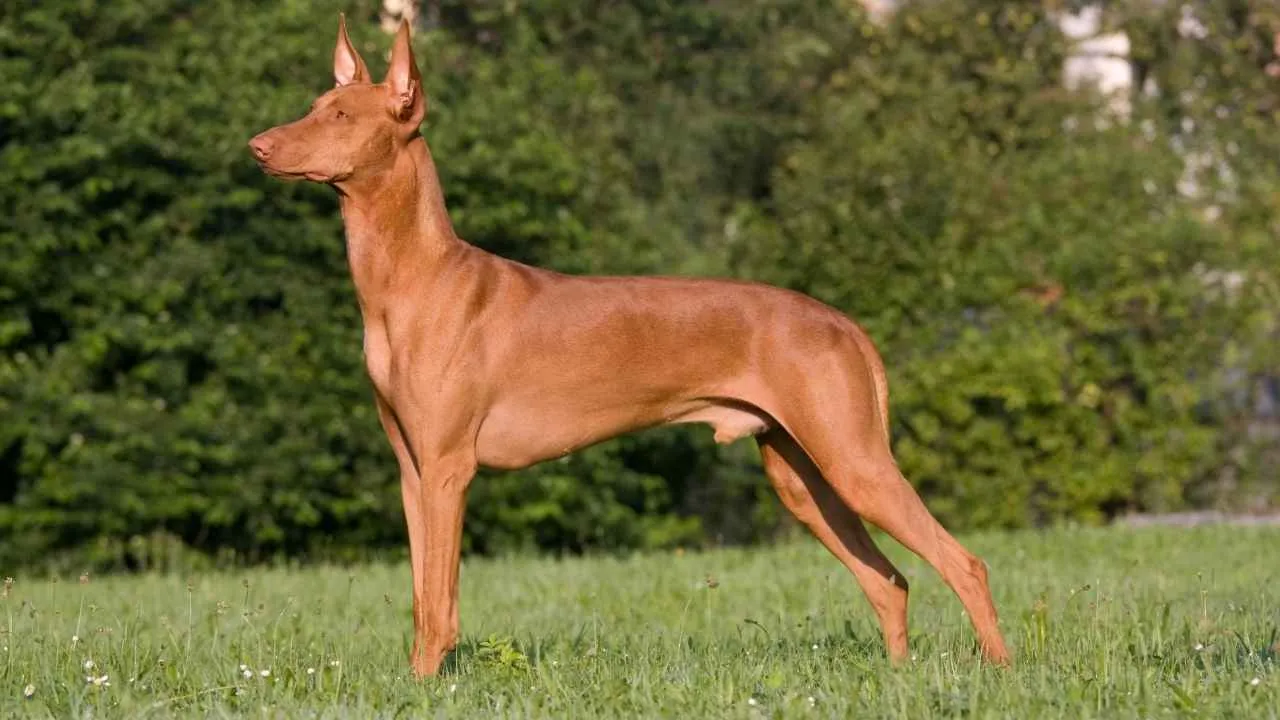
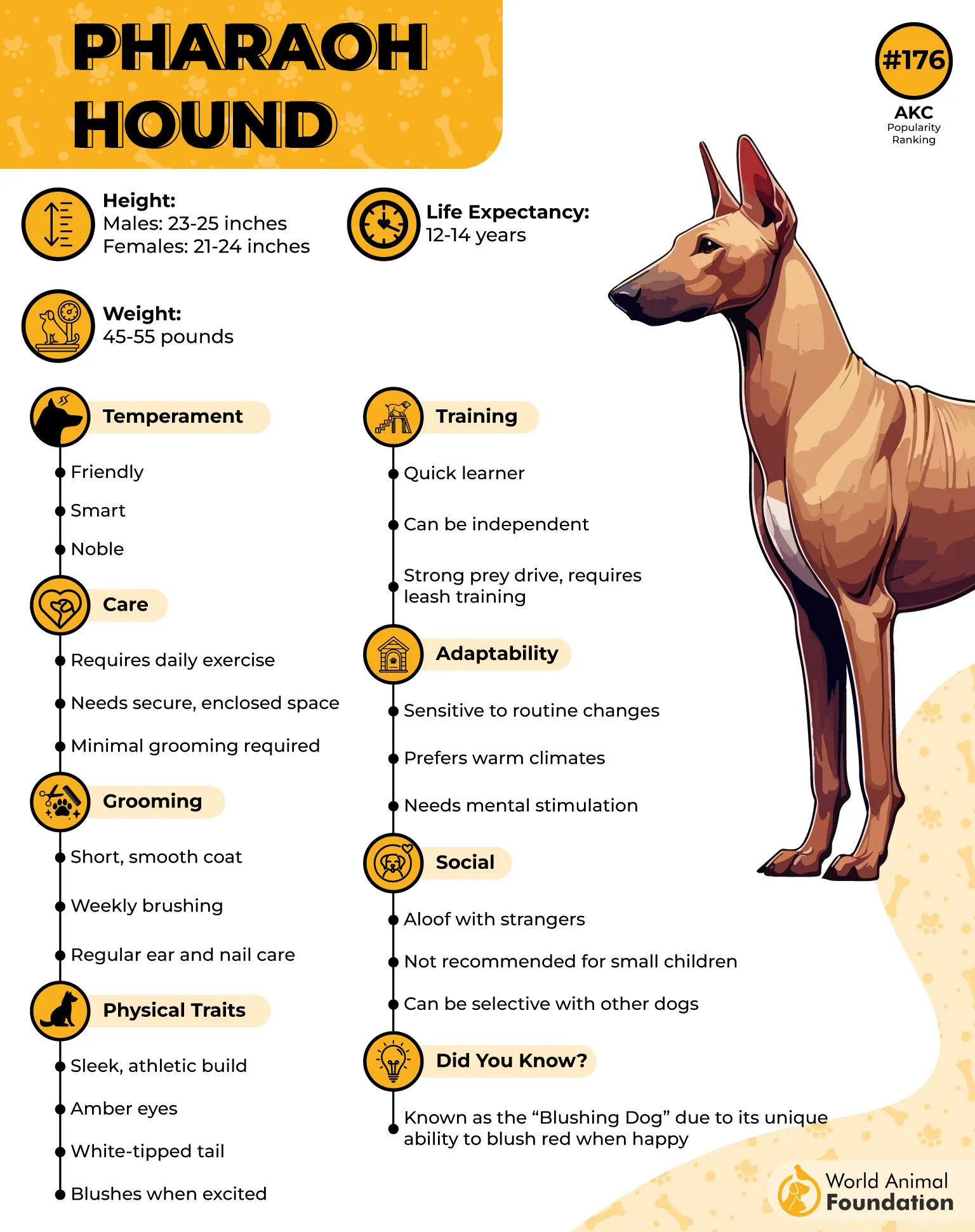
The Pharaoh Hound is associated with Malta and has a long reputation as an agile hunting dog, as per PetMD. It was developed to pursue small game and possesses the speed, eyesight, and athleticism needed for fast-moving quarry.

Its elegant appearance can make it look delicate, but the breed is a capable athlete. Outdoor movement can quickly activate its hunting instincts, particularly when a small animal suddenly runs across its path.
Provide Safe Opportunities for Speed and Exercise
Pharaoh Hounds need regular physical activity, including walks, active play, hiking, and controlled running. Secure areas are especially useful because unrestricted outdoor environments can present tempting opportunities for pursuit.
Training should prioritize recall, impulse control, and attention around distractions. Short, engaging sessions can be more effective than repetitive drills.
A Fast Hunter Triggered by Movement
The Pharaoh Hound’s chase drive can become obvious when it spots a rabbit or another rapidly moving animal. Its body is designed for acceleration, allowing it to pursue targets with impressive speed.
Controlled activities such as lure coursing can provide an appropriate outlet for this instinct. Owners should remain cautious around small pets and wildlife because a sudden chase can happen quickly.
4. Treeing Walker Coonhound
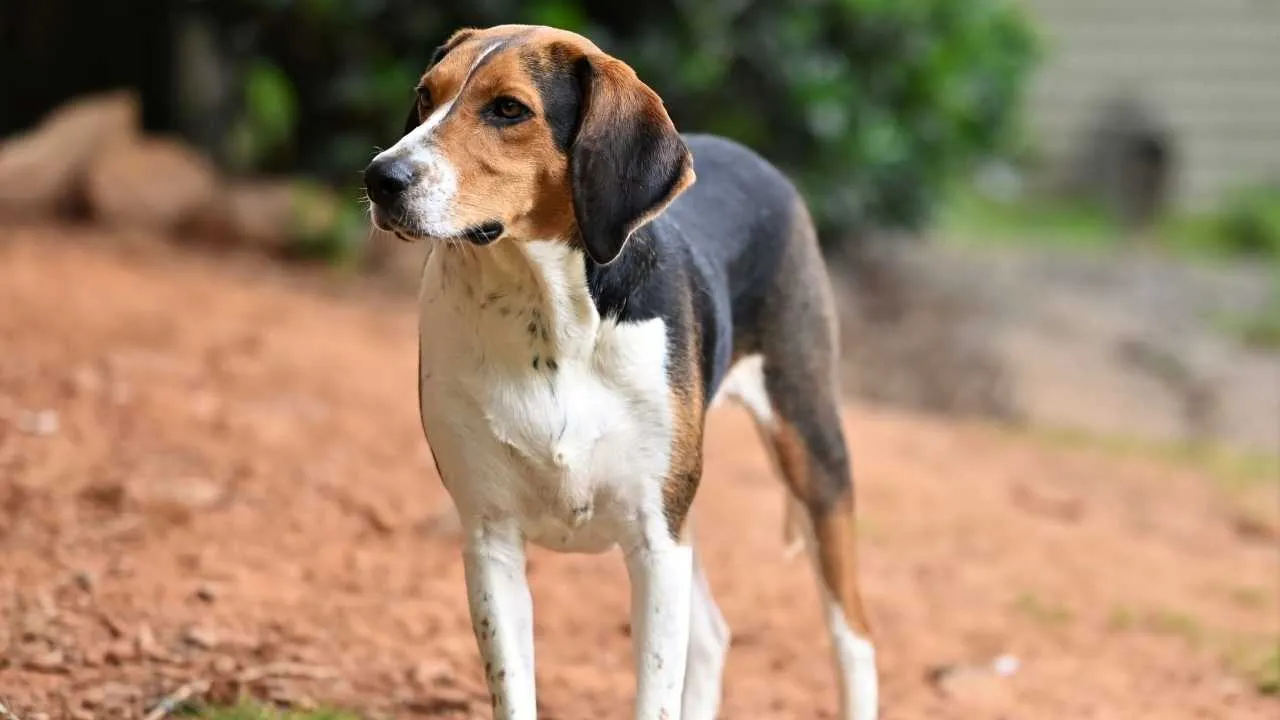
Treeing Walker Coonhounds were developed in America as fast, determined hunting hounds. Their traditional work involved following scent trails and pursuing raccoons, often driving them into trees while remaining nearby until the hunter arrived.
Their athletic construction allows them to cover large areas, while their strong nose keeps them connected to a trail. These qualities make them particularly effective working dogs.
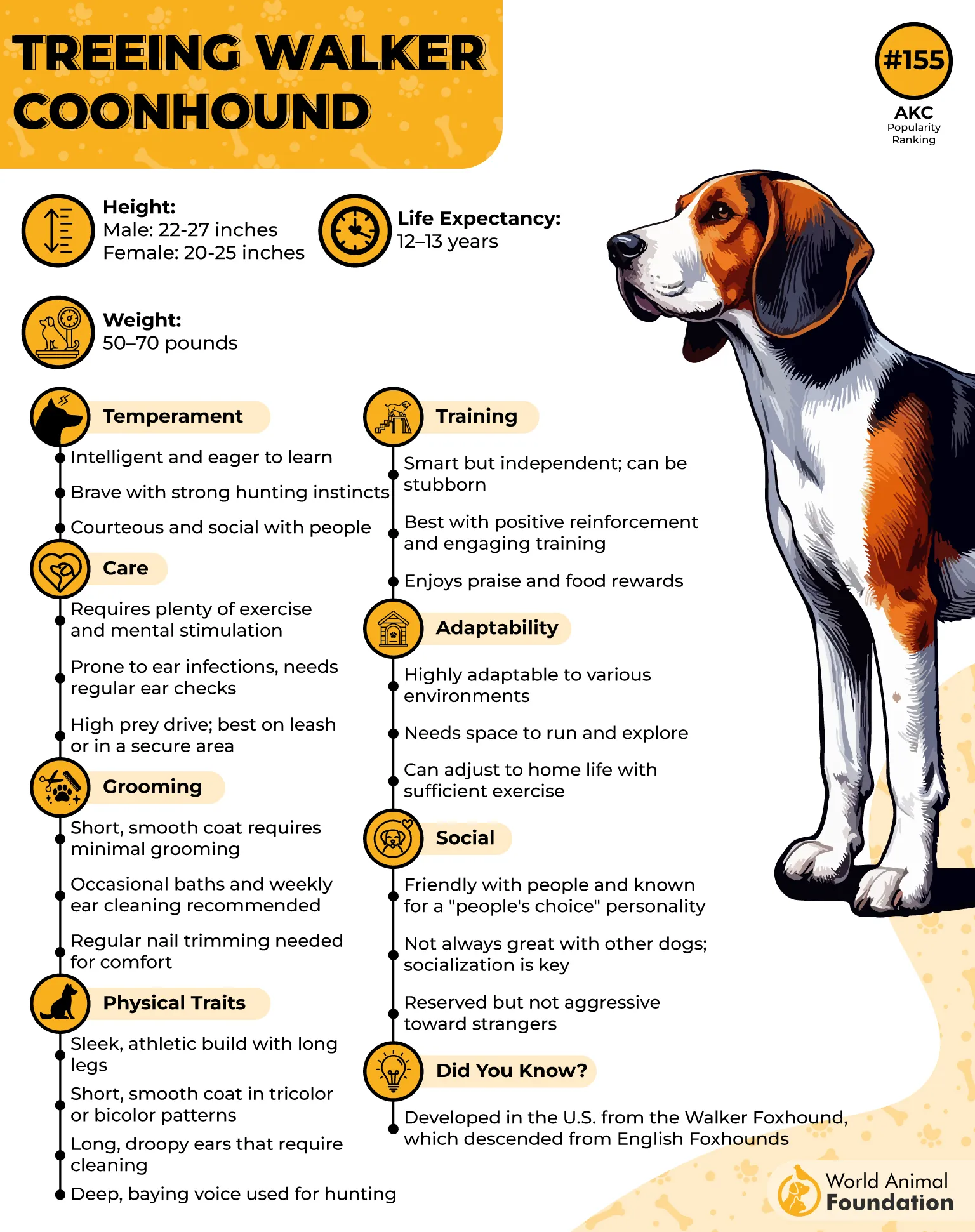
Combine Long Walks With Scent-Based Challenges
Treeing Walker Coonhounds generally require substantial daily activity. Hiking, tracking exercises, extended walks, and controlled running can help satisfy their endurance.
Recall training should be introduced early and practiced regularly. A tracking dog deeply engaged with a scent may not immediately respond, so owners should use secure areas when offering off-leash exercise.
A Persistent Tracker With a Strong Pursuit Instinct
Their desire to chase often begins with tracking rather than immediately reacting to movement. Once they identify a promising scent, they can become highly determined to discover its source.
That persistence is valuable for hunting and scent sports. Companion owners can harness the same instinct through tracking games, nose work, and other structured activities that allow the dog to investigate safely.
5. Beagle
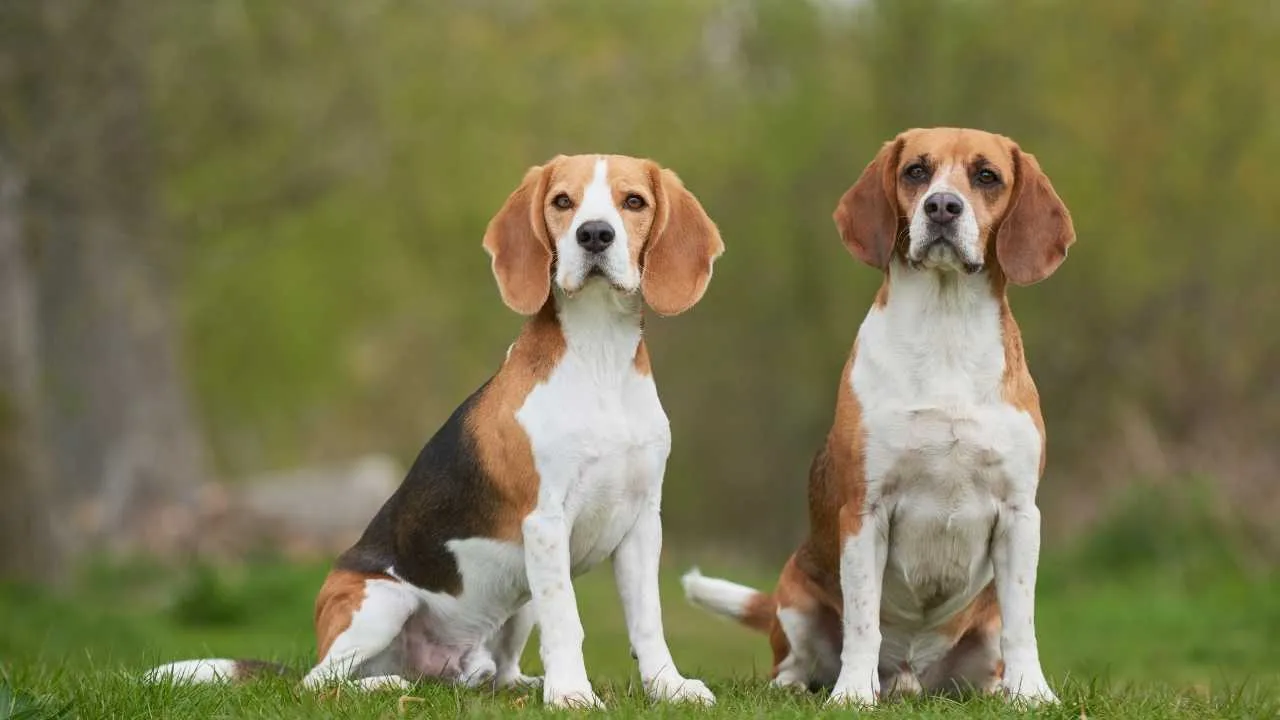
Beagles are among the best-known scent hounds and were historically bred to pursue rabbits and other small game, as per WebMD. Their compact size made them practical hunting companions, while their excellent noses allowed them to maintain contact with scent trails.
Today, they are widely kept as family dogs, but their working instincts remain noticeable. A Beagle can become completely absorbed in an interesting smell and may follow it with surprising persistence.
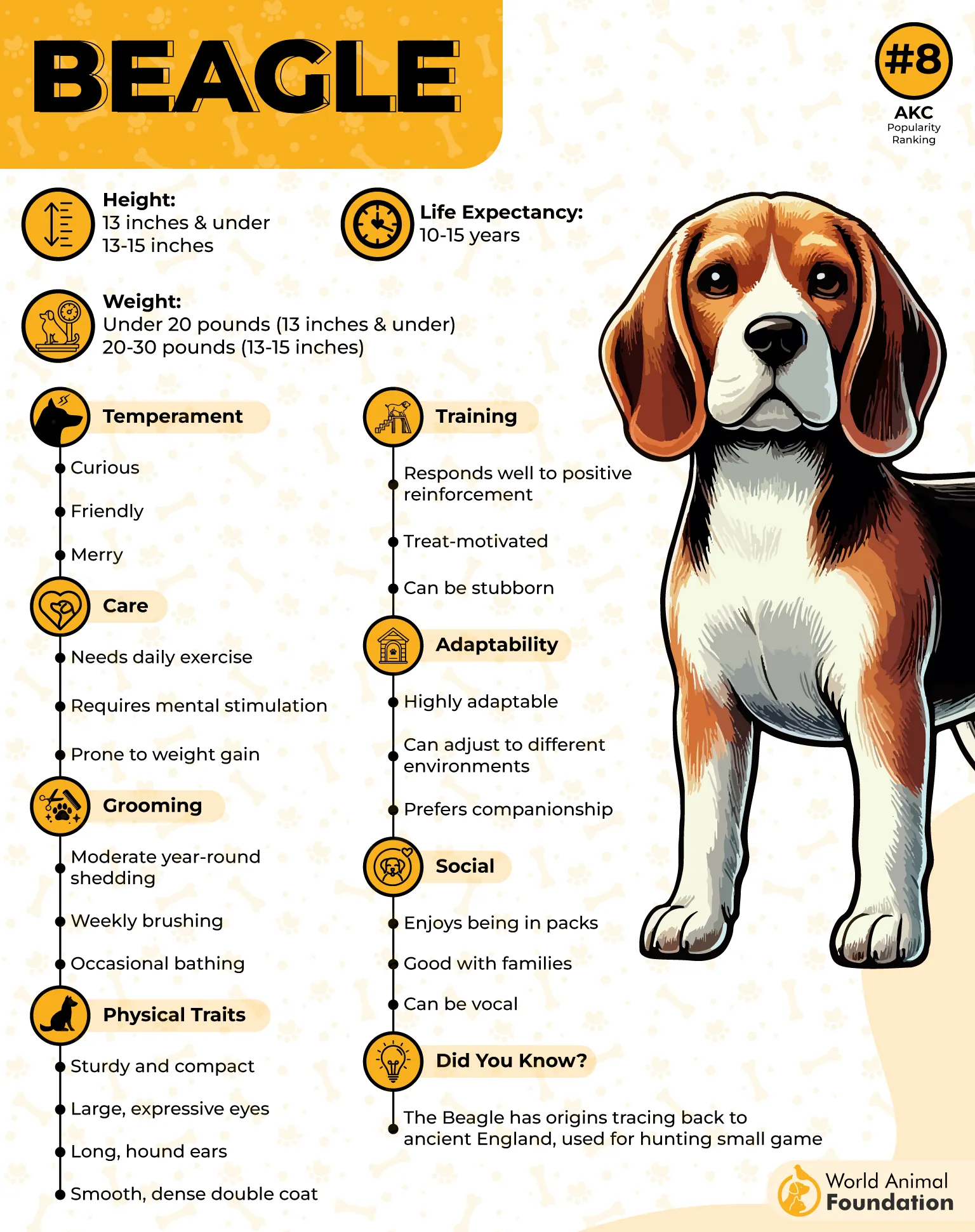
Make Exercise Mentally Interesting
Beagles benefit from walks that include safe opportunities to sniff and explore. Scent puzzles, food searches, tracking games, and interactive play can add valuable mental stimulation.
Training should be consistent and reward-based. Owners need to practice recall carefully because a Beagle may prioritize an exciting scent over an instruction it already knows.
A Small Hound With a Persistent Chase Drive
A Beagle’s desire to hunt is often expressed through its nose. Instead of immediately sprinting after an animal, it may investigate the scent, follow the trail, and methodically work out where it leads.
This natural curiosity can be turned into an advantage through nose work and tracking activities. Appropriate boundaries allow the dog to explore its instincts without turning every outdoor walk into an uncontrolled pursuit.
6. German Wirehaired Pointer
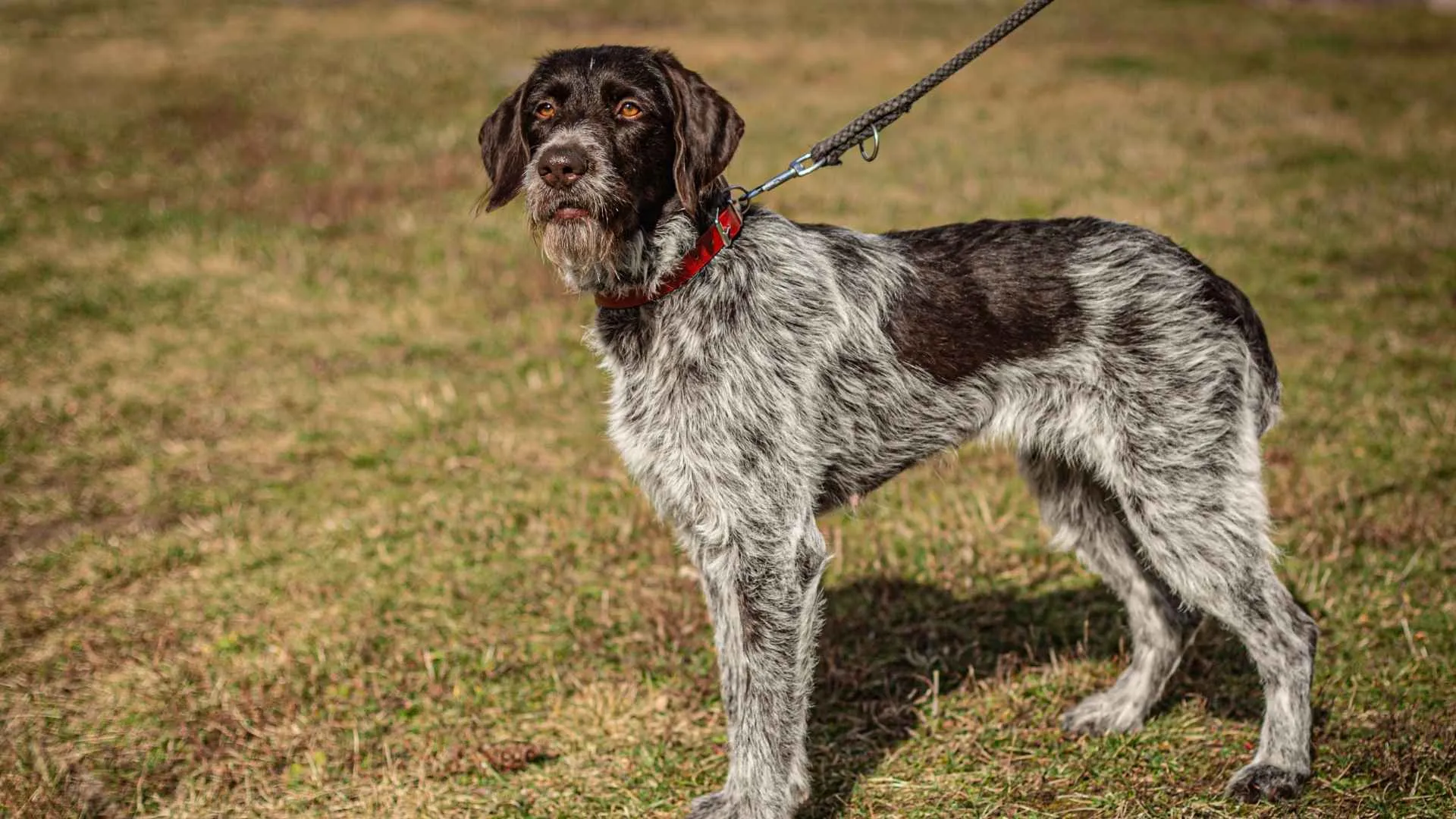
German Wirehaired Pointers were developed in Germany as versatile hunting dogs capable of working in different environments. Their rough coats offered protection during demanding outdoor work, while their athletic bodies supported long periods of activity.
The muscular breed was designed to search, point, and retrieve, giving it a broad range of hunting abilities. Its intelligence and willingness to work closely with people also contribute to its effectiveness in the field.
Give Them a Challenging Daily Routine
German Wirehaired Pointers need substantial exercise and mental engagement. Running, hiking, retrieving, swimming, field exercises, and advanced obedience can provide appropriate outlets.
Training should remain varied and purposeful. Teaching recall, impulse control, and reliable responses around wildlife can help owners manage the breed’s powerful working instincts.
A Versatile Sporting Dog With Strong Chase Motivation
Their hunting drive may be directed toward birds, small mammals, and other potential quarry. Depending on training and circumstances, the dog may search, point, pursue, or retrieve.
Owners can use sporting activities to channel these instincts productively. Retrieving games, scent exercises, swimming, and organized field activities can provide satisfying alternatives when the dog is not being used for hunting.
7. Vizsla
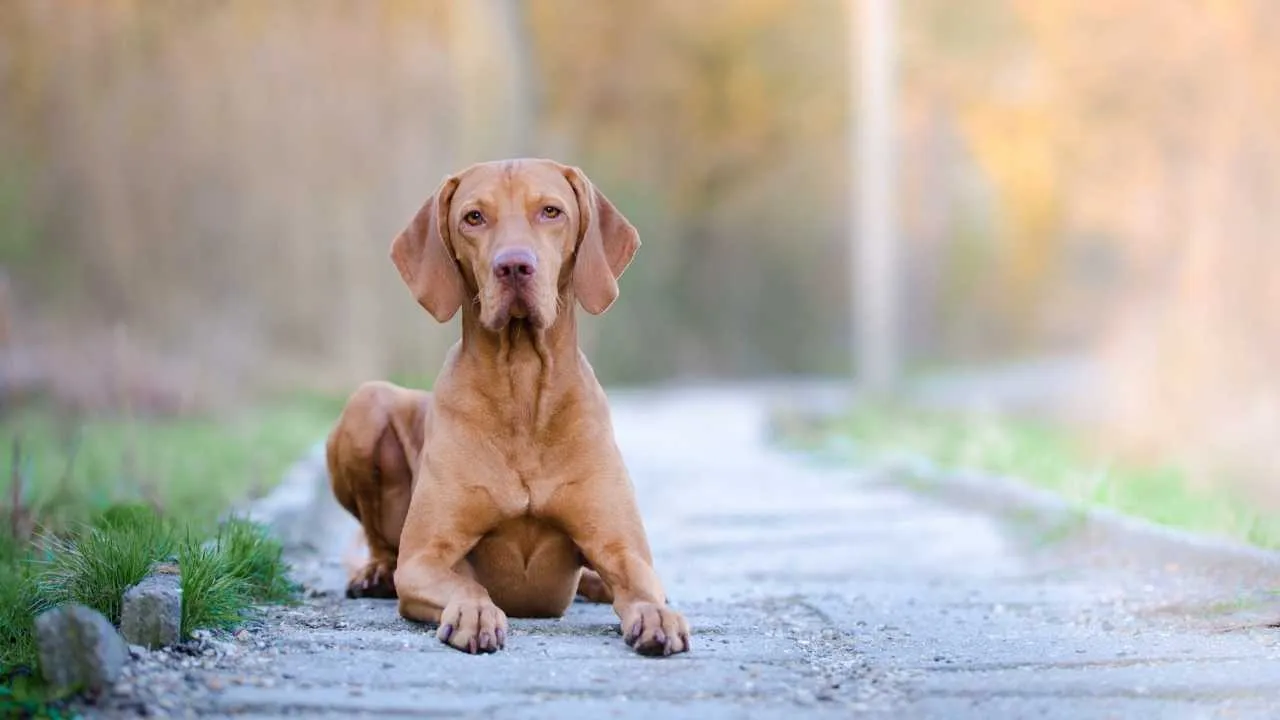
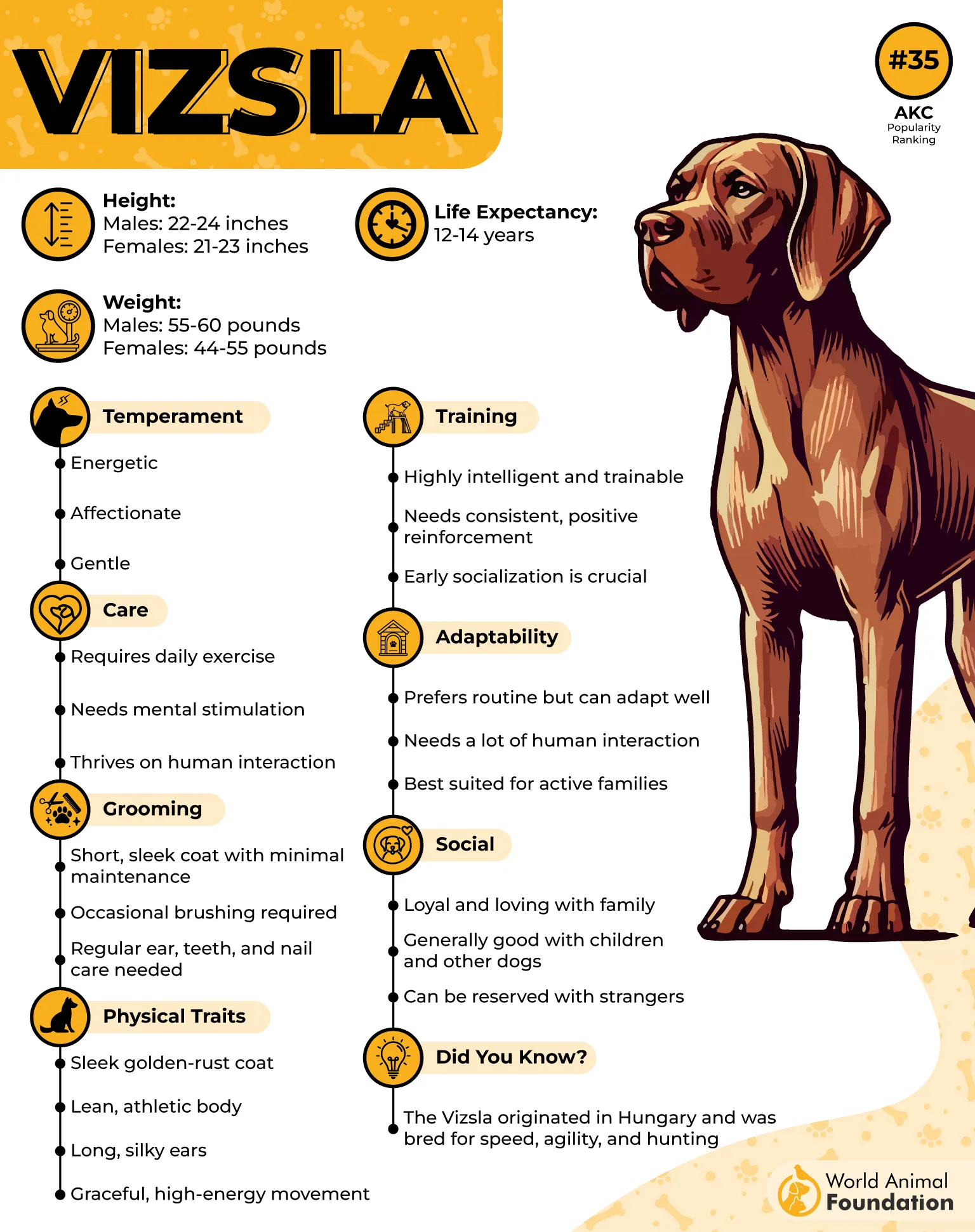
Vizslas originated in Hungary and were developed as versatile sporting dogs, according to the AKC. Their traditional work involved locating game, pointing, and retrieving, requiring a combination of athleticism, concentration, and cooperation with human handlers.
They are also highly attached to their families and often enjoy participating in daily activities. Their affectionate nature should not obscure their substantial exercise requirements or strong interest in outdoor movement.
Pair Vigorous Exercise With Consistent Training
Vizslas thrive when they receive plenty of physical activity and mental engagement. Running, hiking, retrieving, swimming, scent work, and obedience training can help meet their needs.
Training should emphasize recall and impulse control, particularly around birds and small animals. Positive reinforcement and varied activities can keep them motivated while strengthening responsiveness.
An Affectionate Athlete With a Strong Hunting Drive
Vizslas can become highly focused when they encounter potential quarry. Their sporting background gives them a natural desire to search, pursue, and work through a field environment.
That instinct can be managed through structured retrieving, scent games, and controlled outdoor activities. When their physical and mental needs are satisfied, their hunting enthusiasm can become a productive part of an active lifestyle.
Conclusion
Black and Tan Coonhounds, Bluetick Coonhounds, Treeing Walker Coonhounds, and Beagles demonstrate how powerful scenting abilities can fuel the desire to hunt and follow trails. Pharaoh Hounds bring remarkable speed and visual pursuit, while German Wirehaired Pointers and Vizslas combine searching, chasing, pointing, and retrieving skills.
These instincts can make such breeds exciting partners for hunting, tracking, and sporting activities, but they also influence everyday behavior. An appealing scent or fast-moving animal may quickly become more interesting than anything else around them.
Providing sufficient exercise, structured training, scent-based enrichment, and secure outdoor access can help owners manage these tendencies. Understanding the way each breed hunts naturally makes it easier to provide appropriate outlets while keeping its chase drive under control.
