




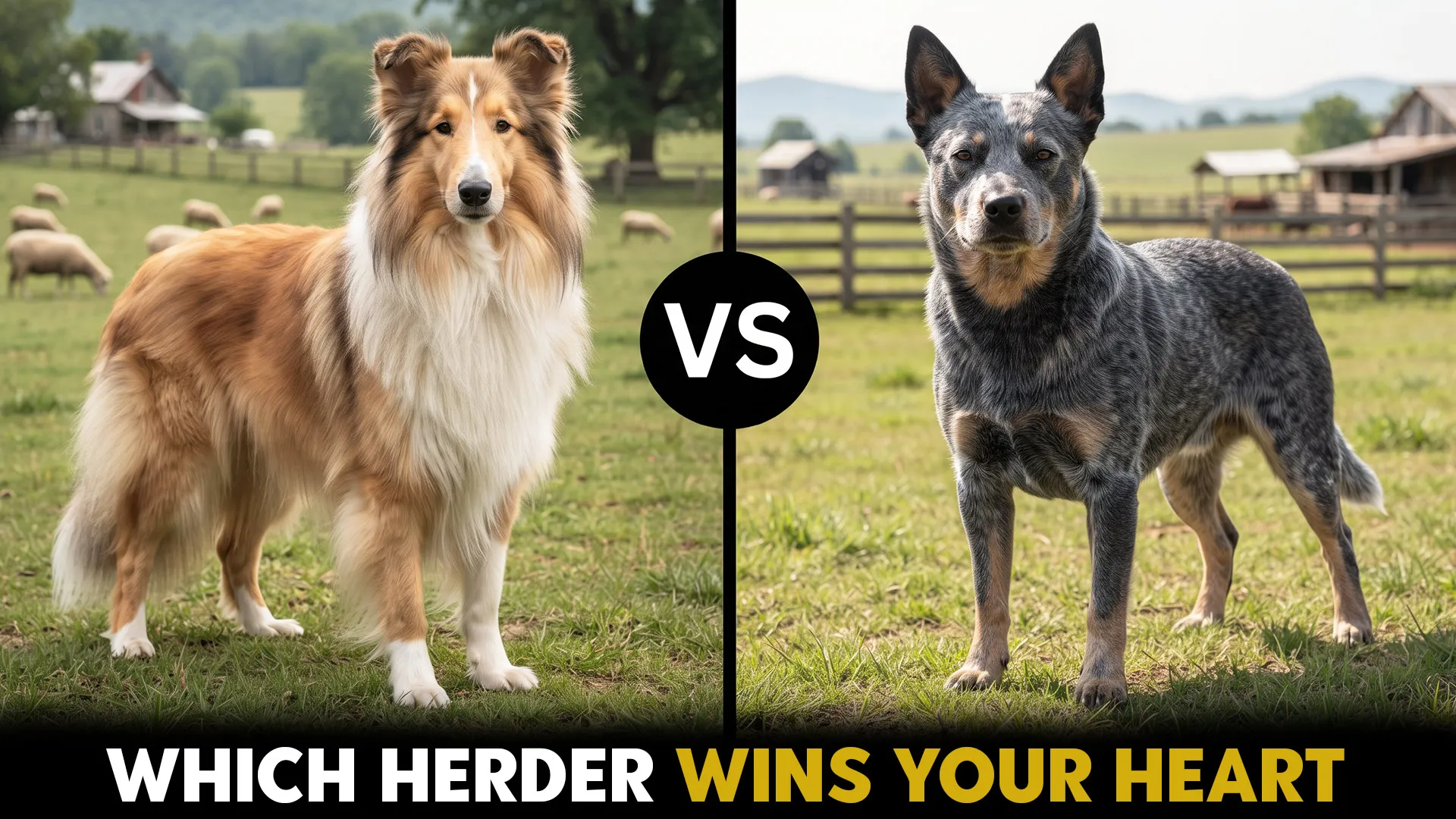
The Collie and Australian Cattle Dog are both intelligent herding breeds, but they were shaped by very different working environments. The Collie developed in the British Isles as a sheep-herding and droving dog, while the Australian Cattle Dog was developed in Australia to move cattle across difficult terrain and withstand demanding conditions.
Both breeds are athletic, attentive, and capable of learning complex tasks. However, their working styles differ considerably. Collies are generally known for being sensitive, responsive, and people-oriented, while Australian Cattle Dogs tend to be tougher, more independent, and intensely energetic.
Price is another consideration. A well-bred puppy from a responsible breeder can represent a significant investment, and the purchase price is only one part of the overall cost of ownership. Health testing, veterinary care, food, training, grooming, and enrichment should all be included when comparing these breeds.
Collie vs. Australian Cattle Dog: Which Herding Dog Fits You Better?
1. Origins & Purpose
Collie’s British Herding Heritage
The Collie developed in the British Isles as a working sheepdog valued for its intelligence, attentiveness, and ability to cooperate closely with shepherds. Over time, the breed became associated with both farm work and companionship.
The breed is available in Rough and Smooth varieties, but both share the same basic working heritage. Their ability to respond to human direction helped make Collies useful for managing livestock over varied terrain.
Australian Cattle Dog’s Australian Working Background
The Australian Cattle Dog was developed during the nineteenth century to handle cattle across Australia’s challenging conditions. Imported British herding dogs struggled with the country’s climate, terrain, and livestock, leading breeders to develop a tougher working dog that could cope with long distances and difficult cattle.
Dingo ancestry played a role in the breed’s development, alongside other working breeds. The result was a compact, resilient cattle dog capable of working independently while remaining devoted to its handler.
Key difference: The Collie was shaped around responsive sheep herding and close cooperation with people, whereas the Australian Cattle Dog was designed for physically demanding cattle work in Australia’s harsh environment. This difference helps explain why the ACD is generally more intense and independent.
2. Size & Build
Collie’s Larger and More Elegant Frame
Collies are medium-to-large muscular dogs with a balanced, athletic structure. Adult dogs generally stand around 22–26 inches tall and weigh approximately 50–75 pounds, although exact size varies between individuals and sex.
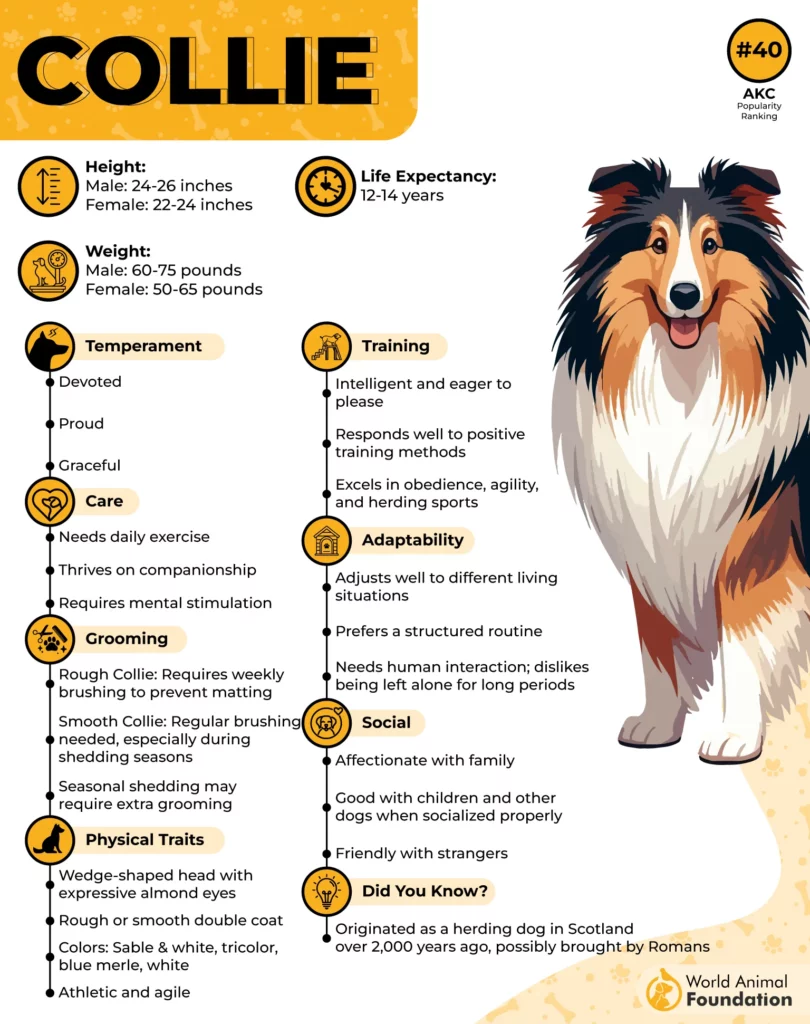
Their long, efficient stride allows them to cover ground while working livestock. Despite their elegant appearance, Collies have the physical stamina needed for active outdoor work.
Australian Cattle Dog’s Compact Athletic Body
The Australian Cattle Dog is smaller and more compact, generally standing about 17–20 inches and weighing roughly 35–50 pounds. Its muscular frame, strong hindquarters, and balanced body give it impressive agility and endurance for its size.
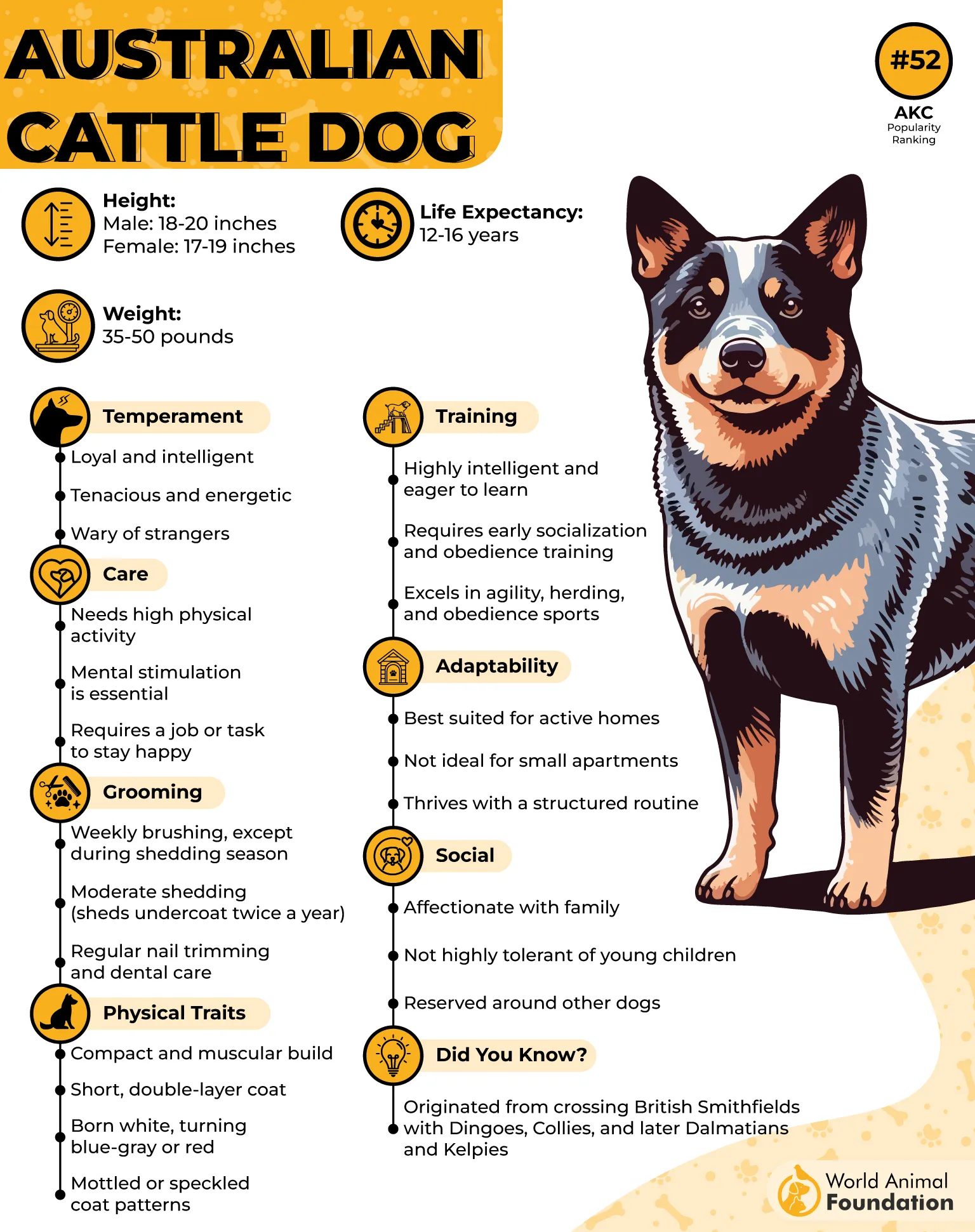
Its physical design was particularly useful when working cattle because it needed to move quickly, change direction, and avoid kicks while maintaining control of livestock.
Key difference: The Collie is taller and generally heavier, giving it a more substantial presence, while the Australian Cattle Dog is shorter and more compact. The ACD’s smaller frame does not mean lower capability; it was specifically developed for remarkable stamina, agility, and toughness.
3. Pricing & Availability
Collie’s Current Puppy Pricing
Collie prices vary considerably according to location, pedigree, registration, health testing, breeder reputation, and whether the puppy is intended as a companion or show prospect. In the United States, current breeder examples place well-bred Rough Collie puppies around $2,000–$3,000, although individual breeders may charge less or more, as noted by the AKC.
Prospective owners should prioritize breeders who provide appropriate health testing, veterinary records, identification, and written agreements rather than selecting a puppy based purely on the lowest price.
Australian Cattle Dog’s Purchase Cost
Australian Cattle Dog prices also vary significantly. Current U.S. market estimates place responsibly bred puppies at roughly $800–$2,500, with champion or proven working lines potentially costing more.
Australian pricing can be different, with recent Australian sources reporting approximately AUD $1,500–$4,000 for puppies depending on breeder and pedigree. Rescue or adult dogs are usually less expensive.
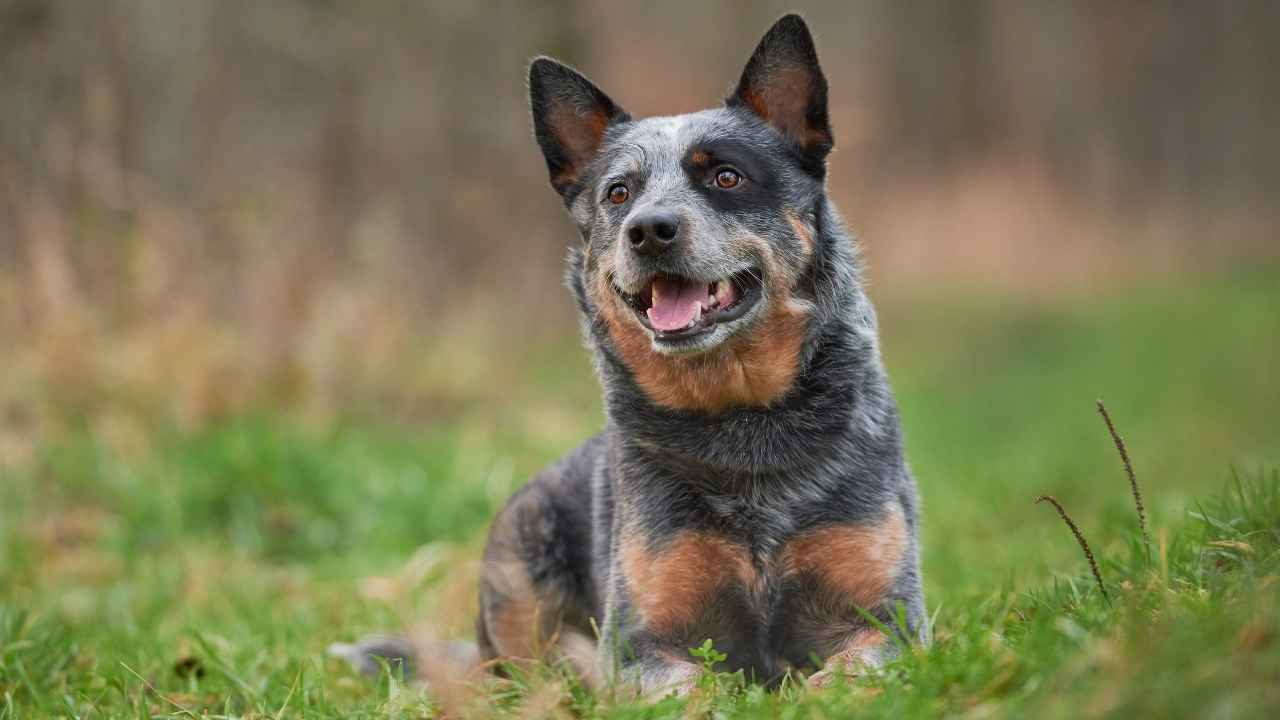
Key difference: A well-bred Collie often commands a higher purchase price than an Australian Cattle Dog in some U.S. markets, although there is considerable overlap. Location, pedigree, health testing, working ability, and breeder reputation can make the actual price vary substantially for either breed.
4. Temperament & Personality Style
Collie’s Sensitive and Devoted Character
Collies are generally intelligent, friendly, devoted, loving, and sensitive. They tend to form close relationships with their families and can be particularly responsive to human communication.
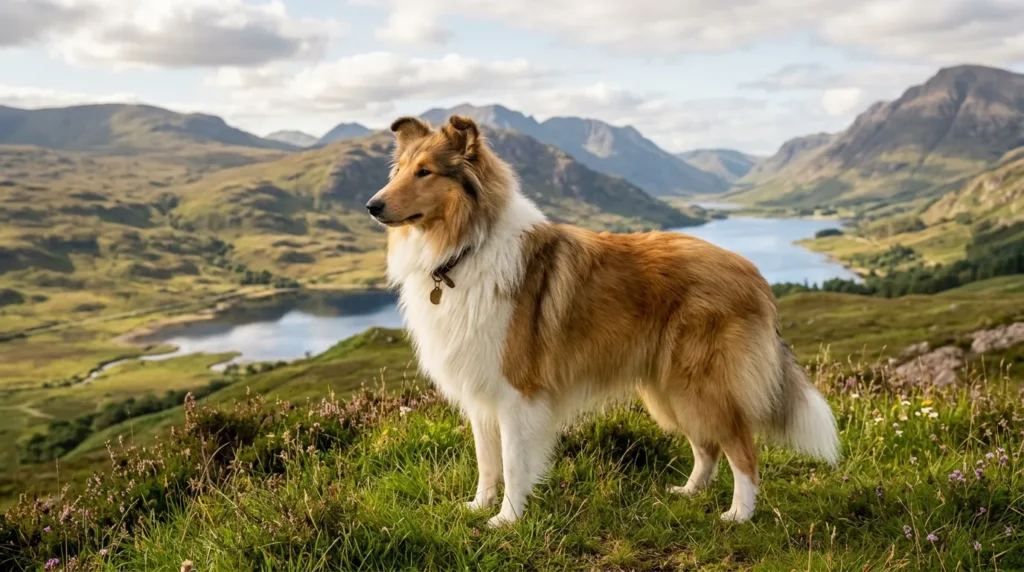
Their sensitivity means harsh handling can be counterproductive. Positive reinforcement and consistent expectations are generally more appropriate for helping a Collie develop confidence and reliable household manners.
Australian Cattle Dog’s Alert and Independent Personality
Australian Cattle Dogs are typically loyal, intelligent, alert, and energetic. They can develop extremely strong attachments to their families while remaining cautious around unfamiliar people, as per Britannica.
Their protective nature and independence can make them more demanding than their friendly appearance might suggest. Without sufficient socialization and structure, their natural suspicion and strong working instincts can become difficult to manage.
Key difference: Collies generally lean toward a softer, more sensitive, and people-responsive temperament, while Australian Cattle Dogs are typically more intense, independent, and watchful. The Collie may suit owners seeking a cooperative family companion, whereas the ACD often fits people who enjoy a more demanding working personality.
5. Exercise Needs & Energy Levels
Collie’s Active but Adaptable Routine
Collies need regular physical activity, but their exercise requirements can usually be met through a combination of walks, outdoor play, training, and interactive activities. They often enjoy participating in family activities rather than simply exercising on their own.
Herding exercises, obedience, hiking, retrieving, and canine sports can provide additional outlets. A Collie that receives little interaction or stimulation may become bored despite having access to a yard.
Australian Cattle Dog’s High-Intensity Lifestyle
Australian Cattle Dogs generally require substantial daily physical and mental stimulation. Their working history produced a powerful dog that can remain active for long periods and thrives when given meaningful tasks.
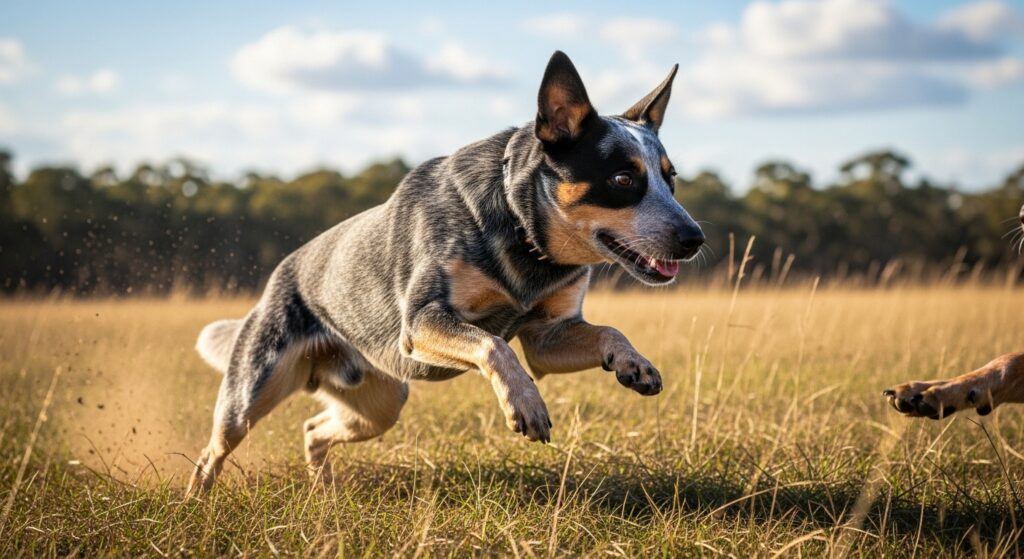
Agility, herding, obedience, running, hiking, scent work, and interactive problem-solving activities can be excellent outlets. Simply letting an ACD spend time in a backyard is rarely enough to satisfy its working mind.
Key difference: Both breeds need active homes, but the Australian Cattle Dog usually demands greater intensity and more purposeful engagement. A Collie may adapt more readily to varied family activities, while an ACD often needs a lifestyle built around regular physical and mental challenges.
6. Trainability & Obedience
Collie’s Responsive Learning Style
Collies are known for being intelligent and easily trained, with a natural ability to understand human direction. Their sensitivity can make them particularly responsive to reward-based instruction.
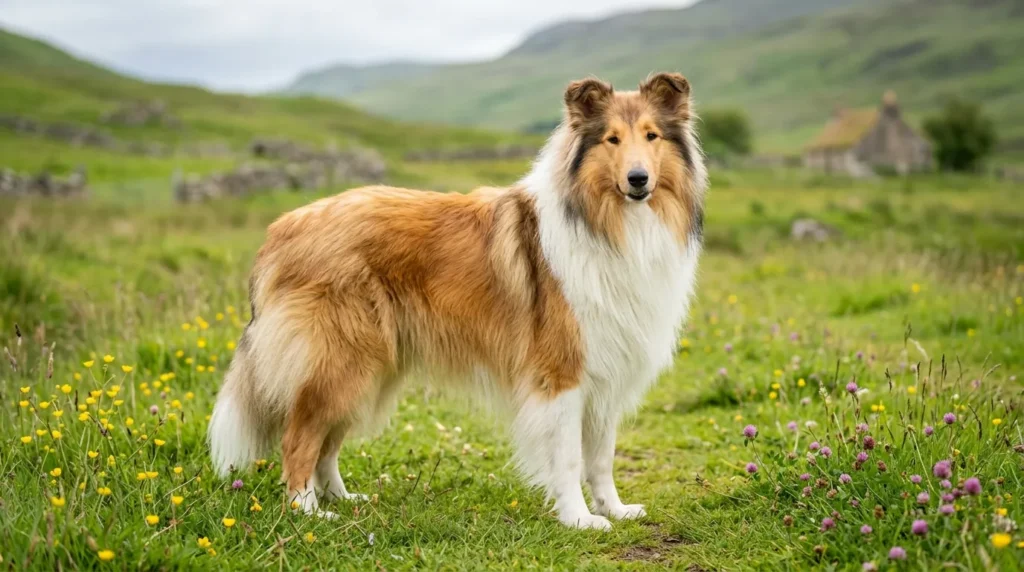
They often enjoy obedience, tricks, agility, herding activities, and other exercises that allow them to work cooperatively with their owners, as per Ollie. Clear and gentle communication generally produces better results than forceful methods.
Australian Cattle Dog’s Clever Independent Mind
The Australian Cattle Dog is exceptionally intelligent but may not always be as eager to follow instructions simply because its owner gives them. Its working background encouraged independent decision-making while managing difficult cattle.
Early obedience and socialization are essential, and training should continue throughout adulthood. The breed can excel in herding, agility, obedience, and other dog sports when its intelligence is given an appropriate outlet.
Key difference: The Collie generally has an advantage when it comes to responsive obedience because it was developed for close cooperation with people. The ACD learns quickly too, but its independent nature can make training more challenging when the dog sees no meaningful reason to comply.
7. Grooming Needs & Shedding
Collie’s Coat Care Requirements
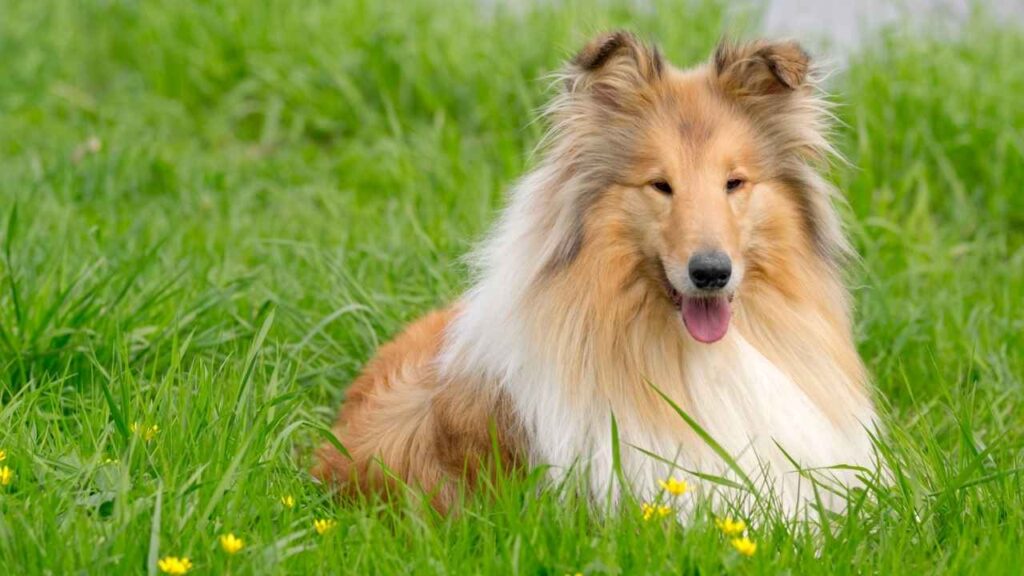
Collies come in Rough and Smooth varieties. Rough Collies have a long, abundant outer coat and dense undercoat, requiring regular brushing to prevent mats and remove loose hair. Smooth Collies have a shorter coat and generally require less maintenance.
Both varieties shed, with seasonal shedding periods increasing the amount of loose hair. Regular nail trimming, dental care, ear checks, and routine coat inspections should also be part of their care.
Australian Cattle Dog’s Low-Maintenance Coat
The Australian Cattle Dog has a short, dense, weather-resistant double coat that is comparatively easy to maintain. Weekly brushing is usually sufficient during ordinary periods, while more frequent brushing is helpful during seasonal coat blows.
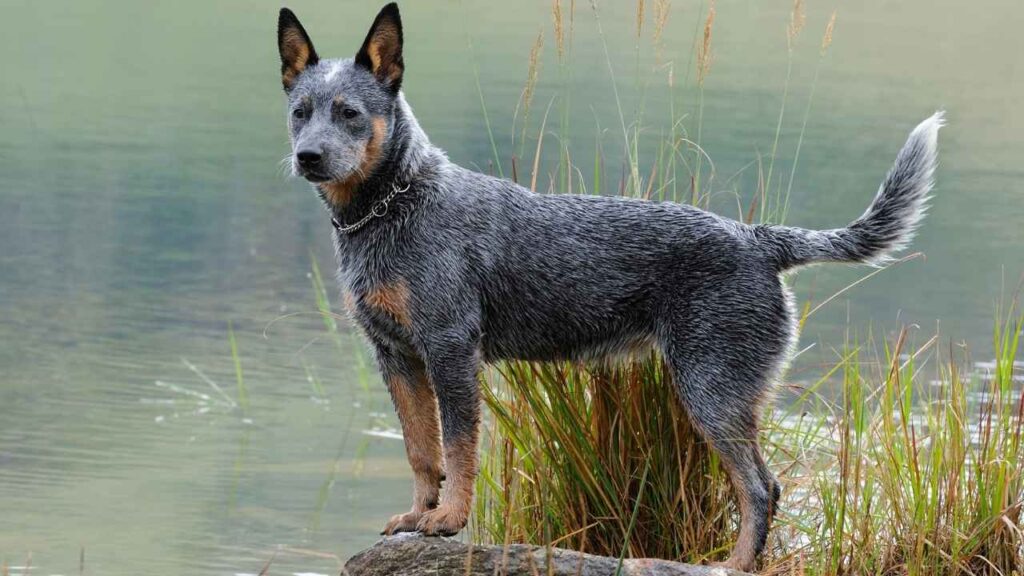
Occasional bathing, nail trimming, dental care, and ear checks complete its basic grooming routine. Its coat was developed for outdoor work, so it does not require elaborate styling.
Key difference: The Australian Cattle Dog is clearly easier to groom because of its short coat and straightforward maintenance. A Smooth Collie requires more brushing than an ACD, while the Rough Collie demands substantially more coat care and produces more noticeable shedding.
8. Herding & Work Drive
Collie’s Controlled Livestock Management
The Collie’s traditional work depended heavily on reading livestock and responding to the shepherd. Its ability to remain attentive to human direction made it effective for managing sheep without relying solely on physical force.
Modern Collies can still enjoy herding trials and other activities that use their natural working abilities. Their instinct can also appear in everyday behavior, particularly when they encounter running children or animals.
Australian Cattle Dog’s Forceful Cattle Control
The Australian Cattle Dog was created for a much more physically demanding form of herding. It was expected to influence stubborn cattle, often working close to the animals and using heel-directed behavior to move them, as per Purina.
That instinct can carry into household life. Some ACDs may attempt to chase, control, or nip at moving people or animals, making early training and supervision particularly important.
Key difference: The Collie generally relies more on attentive movement, direction, and cooperation when managing livestock, while the Australian Cattle Dog was bred to control challenging cattle at close range. As a result, the ACD’s herding instincts can be more physical and intense in everyday situations.
9. Health & Lifespan
Collie’s Long-Term Health and Longevity
Collies generally have a lifespan of around 12–14 years. Like other purebred dogs, they can have inherited health concerns, so responsible breeding and appropriate screening are important when choosing a puppy.
Routine veterinary examinations, healthy weight management, dental care, balanced nutrition, and regular exercise can help support quality of life. Prospective owners should ask breeders about relevant genetic and eye testing rather than assuming pedigree alone guarantees good health.
Australian Cattle Dog’s Durable Constitution
Australian Cattle Dogs commonly live around 12–15 years, with some individuals reaching beyond that range. Their generally robust constitution reflects the breed’s history as a demanding outdoor worker, although they are still susceptible to inherited conditions.
Reported concerns include hereditary deafness, progressive retinal atrophy, and hip dysplasia, among others. Responsible breeding, appropriate health screening, veterinary care, nutrition, and maintaining a healthy body condition all contribute to long-term wellbeing.
Key difference: The Australian Cattle Dog generally has a slight longevity advantage, with a typical range of about 12–15 years compared with roughly 12–14 years for the Collie. Both can enjoy long active lives when genetics, preventive care, nutrition, and daily management are handled responsibly.
10. Collie vs. Australian Cattle Dog: Which Breed Is Right for You?
Collie for a Responsive Family Companion
The Collie may be the better choice for someone who wants an intelligent herding breed with a gentler, more people-focused personality. Its trainability and adaptability can make it suitable for active families that want a dog capable of joining them on walks, outings, training sessions, and outdoor adventures.
The Rough variety requires considerable coat maintenance, while the Smooth Collie is easier to groom. Either variety still needs daily interaction and meaningful activity rather than being treated as a decorative household pet.
Australian Cattle Dog for an Intensely Active Owner
The Australian Cattle Dog is better suited to owners who genuinely enjoy an active lifestyle and are prepared to provide extensive physical and mental engagement. Its intelligence, endurance, loyalty, and work ethic can make it an exceptional partner for hiking, running, dog sports, farm work, and advanced training.
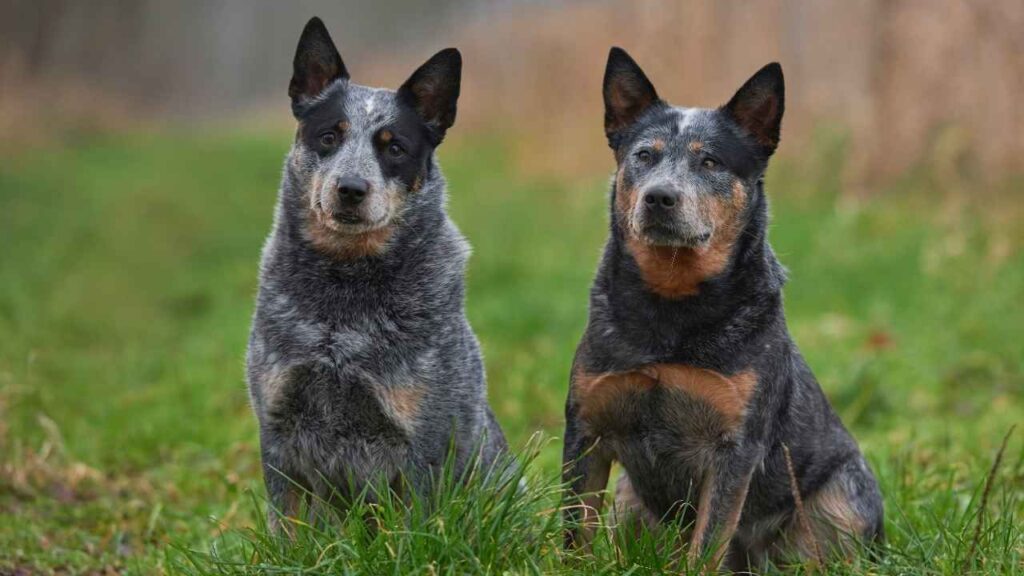
This smart breed can be rewarding for an experienced owner but may overwhelm someone seeking a naturally easygoing companion. Its herding instincts, independence, and wariness of strangers require thoughtful socialization and consistent management.
Key difference: Choose the Collie if you value sensitivity, cooperation, and a versatile, family-oriented temperament while accepting regular grooming. Choose the Australian Cattle Dog if you want a tougher, highly energetic working partner and can provide the structure, activity, and training its intense instincts demand.
Conclusion
The Collie and Australian Cattle Dog are both remarkable herding breeds, but they offer distinctly different ownership experiences. The Collie tends to be more sensitive, responsive, and people-oriented, while the Australian Cattle Dog is more intense, independent, and physically demanding.
The Collie may be the stronger match for families seeking a cooperative companion that can participate in outdoor activities and training. Its grooming requirements, especially with the Rough variety, are the main consideration for owners who prefer low-maintenance dogs.
The Australian Cattle Dog can be an outstanding choice for active and experienced owners who want a dog capable of serious work, dog sports, hiking, running, or farm duties. Its short coat is easy to maintain, but its energy and herding drive require considerably more daily commitment.
