




What does it take for a dog to keep going when the job gets tough? It’s more than size or muscle. Some dogs are built for challenges, with impressive stamina, courage, and determination that help them handle demanding work and difficult conditions.
For generations, people have relied on hardworking dogs for guarding, herding, hunting, hauling, search and rescue, and other demanding jobs.
Their toughness comes from a mix of strength, endurance, intelligence, and a strong work ethic. With proper training and care, many can also be loyal and loving companions.
But what really makes a dog tough? Is it raw strength, incredible stamina, resilience, or simply the determination to keep going? Let’s explore some of the world’s strongest dog breeds, known for their legendary toughness and endurance, and discover what makes these remarkable dogs stand out.
Dog Breeds with Legendary Toughness and Endurance
1. Siberian Husky
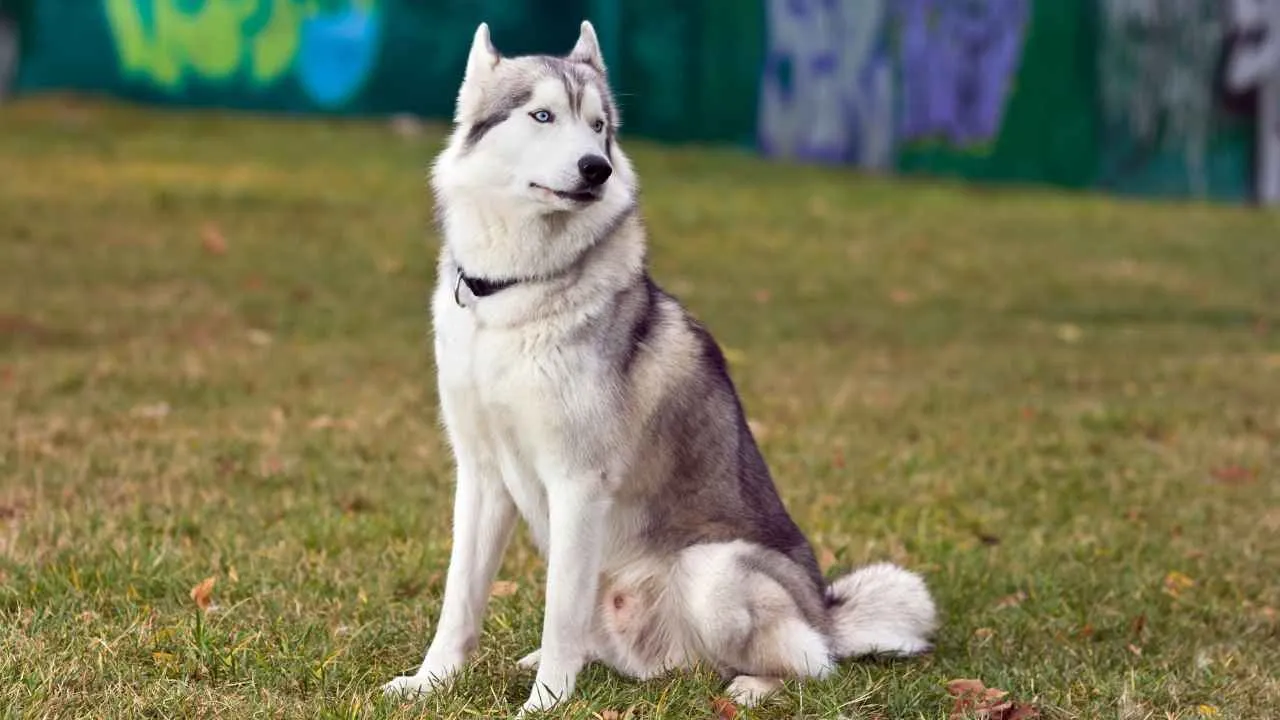
Siberian Huskies are strong, graceful working dogs with a history built around endurance. The Chukchi people developed them in Siberia to pull sleds, carry loads, help with hunting, and provide warmth during freezing nights.
Their story became famous in 1925 when teams crossed hundreds of miles of ice and snow to deliver life-saving medicine to Nome, Alaska, during the Great Race of Mercy, according to Britannica.
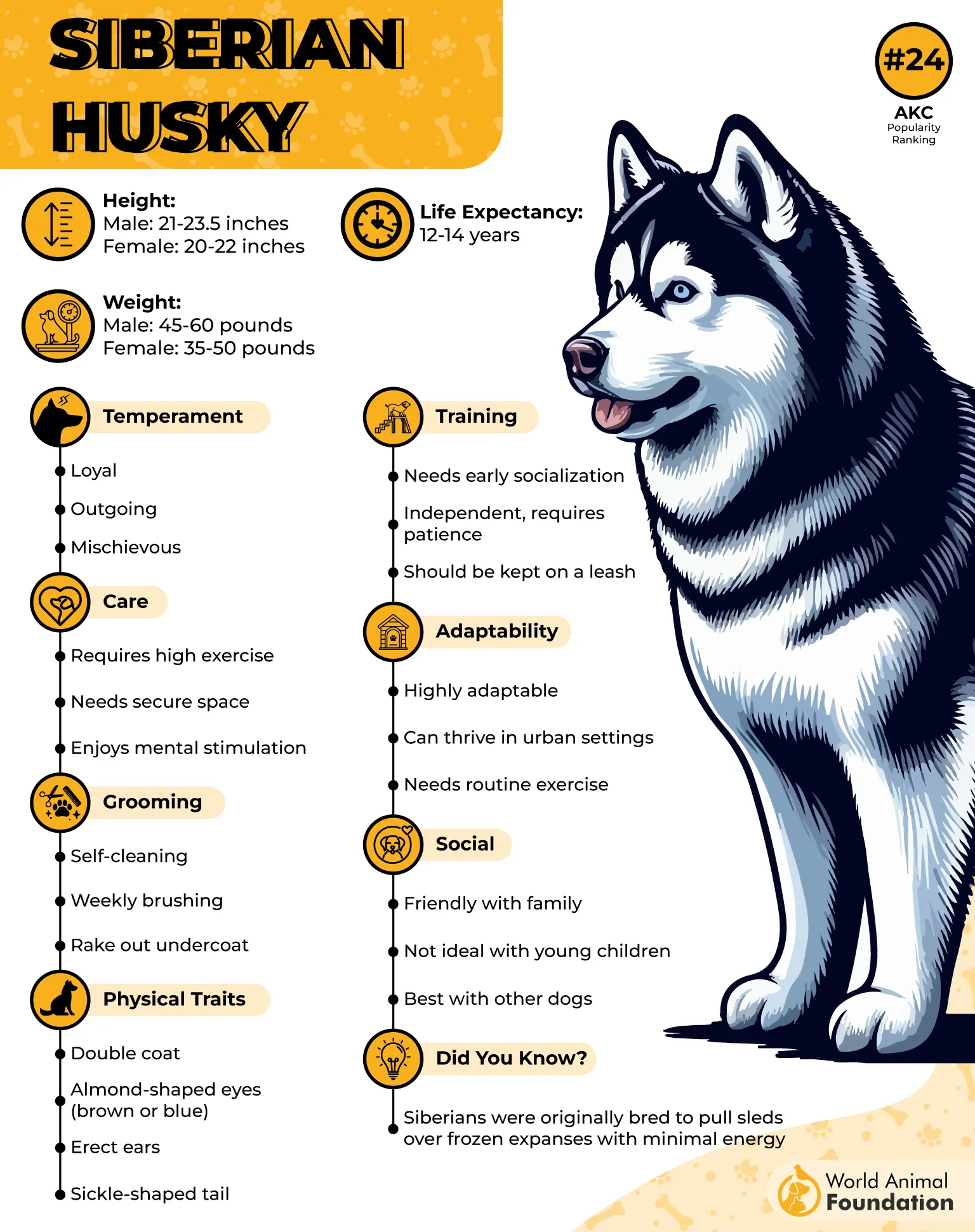
Strengths and Striking Features
These athletic dogs have erect ears, bright eyes, a plume-like tail, and thick double coats. Their coats can appear in many colors and patterns, including black and white, gray and white, red and white, and agouti and white.
They are intelligent, friendly, playful, and highly social. However, their independent nature can make training challenging. They are also very vocal, using howls, chirps, and distinctive “woos” to communicate.
Exercise, Grooming, and Lifestyle Needs
Siberian Huskies need plenty of daily activity and mental stimulation. Running, hiking, sledding, bikejoring, skijoring, and canicross can suit their energy levels. They should be exercised in secure areas because they may roam or escape.
Their thick coats need regular brushing, with daily grooming often needed during heavy shedding seasons. They also handle cold weather well but can overheat in hot climates.
2. Alaskan Malamute
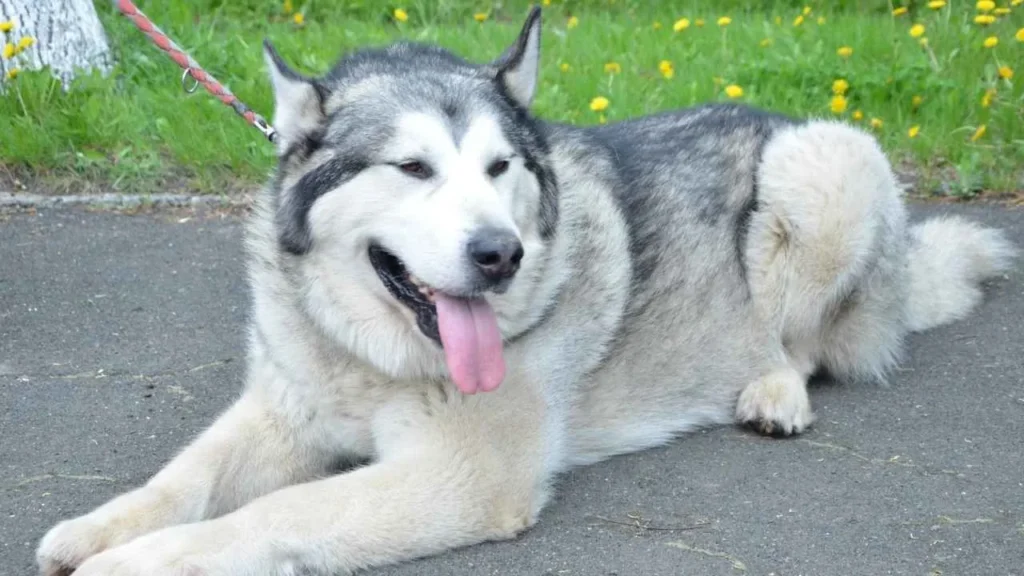
Alaskan Malamutes are powerful working dogs with a long history of helping people with demanding jobs. The native Mahlemut people in Alaska relied on them to hunt seals, scare off polar bears, and pull heavy loads.
Their strength and reliability also made them valuable during the Klondike Gold Rush, when they were prized for hauling sleds. Today, their working spirit remains strong, even when their biggest adventure is a hike with their family.
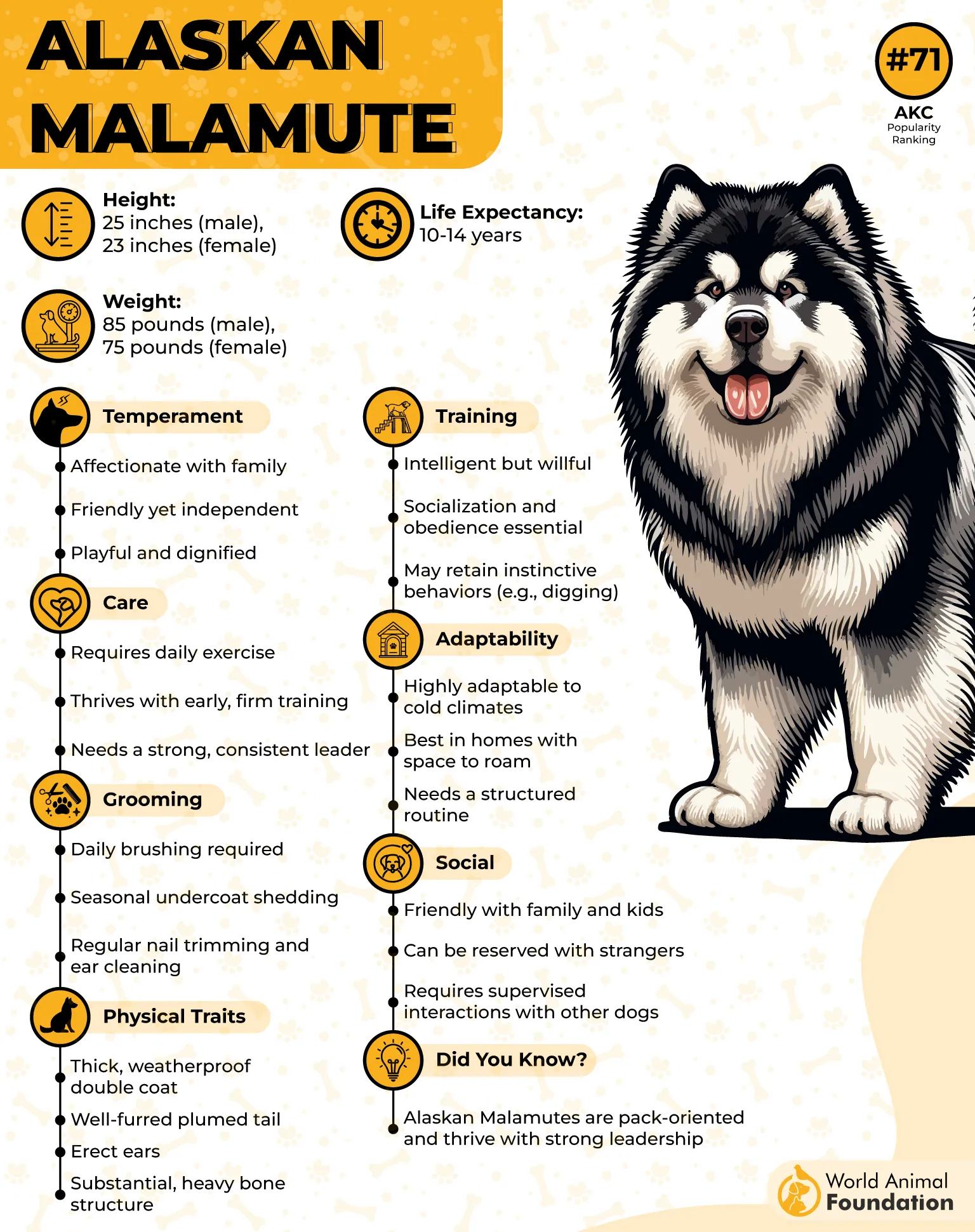
Looks, Personalities, and Working Instincts
With wolf-like features, pointed ears, brown almond-shaped eyes, and a plumed tail, Alaskan Malamutes certainly have a striking look. Their thick double coats come in colors such as white, gray, black, sable, and red. Behind that tough appearance is a playful and friendly personality.
They love human company and are often vocal, using howls and “awoos” to express themselves. Their intelligence also makes them clever problem-solvers, but it can sometimes lead to digging, chewing, or escape attempts when they get bored.
Exercise and Grooming Needs
Alaskan Malamutes need plenty of exercise, attention, and mental stimulation. Running, jogging, biking, backpacking, tracking, sled pulling, and skijoring can keep their active minds and bodies busy.
They enjoy cold weather but can struggle in heat, so early-morning outdoor activities are better during warmer months. Their thick coats also need regular, often daily, brushing to control shedding and keep the skin healthy.
3. Australian Cattle Dog
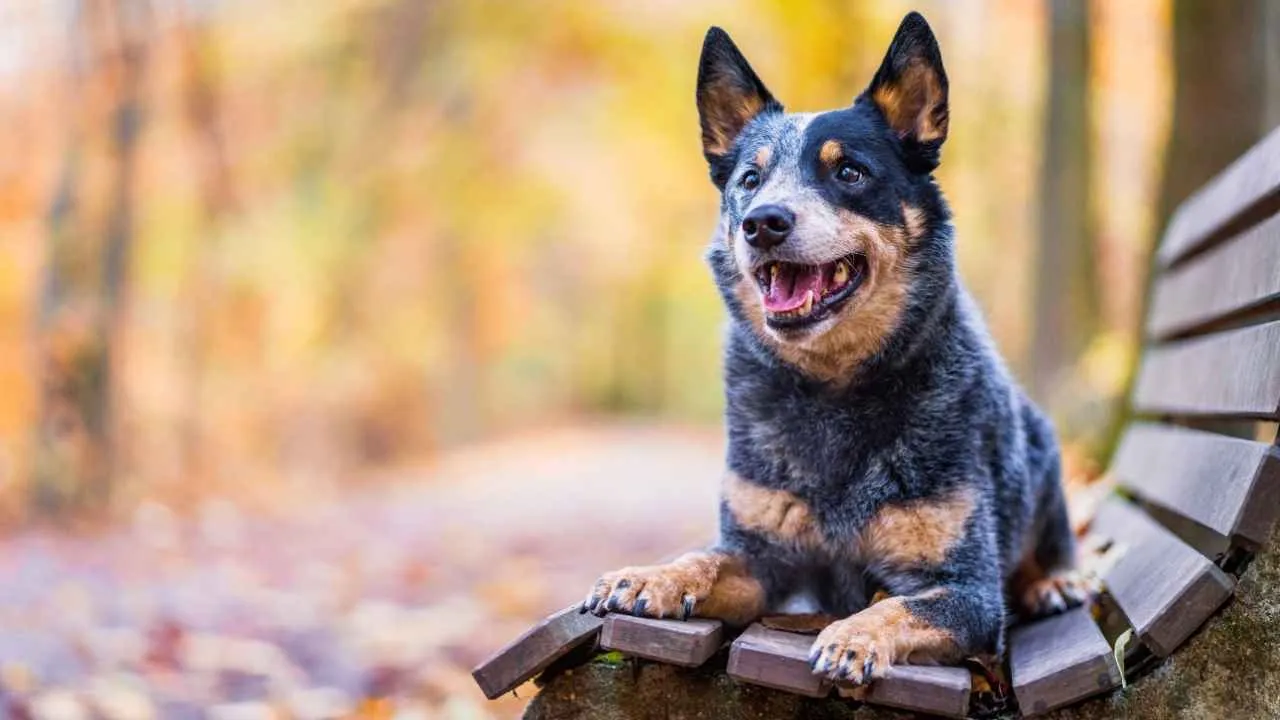
Built for hard work and long days, Australian Cattle Dogs are a standout choice among dog breeds with legendary toughness and strong endurance.
Also known as Blue Heelers or Red Heelers, these sturdy dogs were developed in Australia to handle challenging terrain, high temperatures, and long herding distances.
Their strong dingo ancestry, powerful build, and incredible stamina helped them become reliable cattle workers. Today, they still need plenty of activity and do best with owners who enjoy outdoor adventures, challenges, and an active lifestyle.
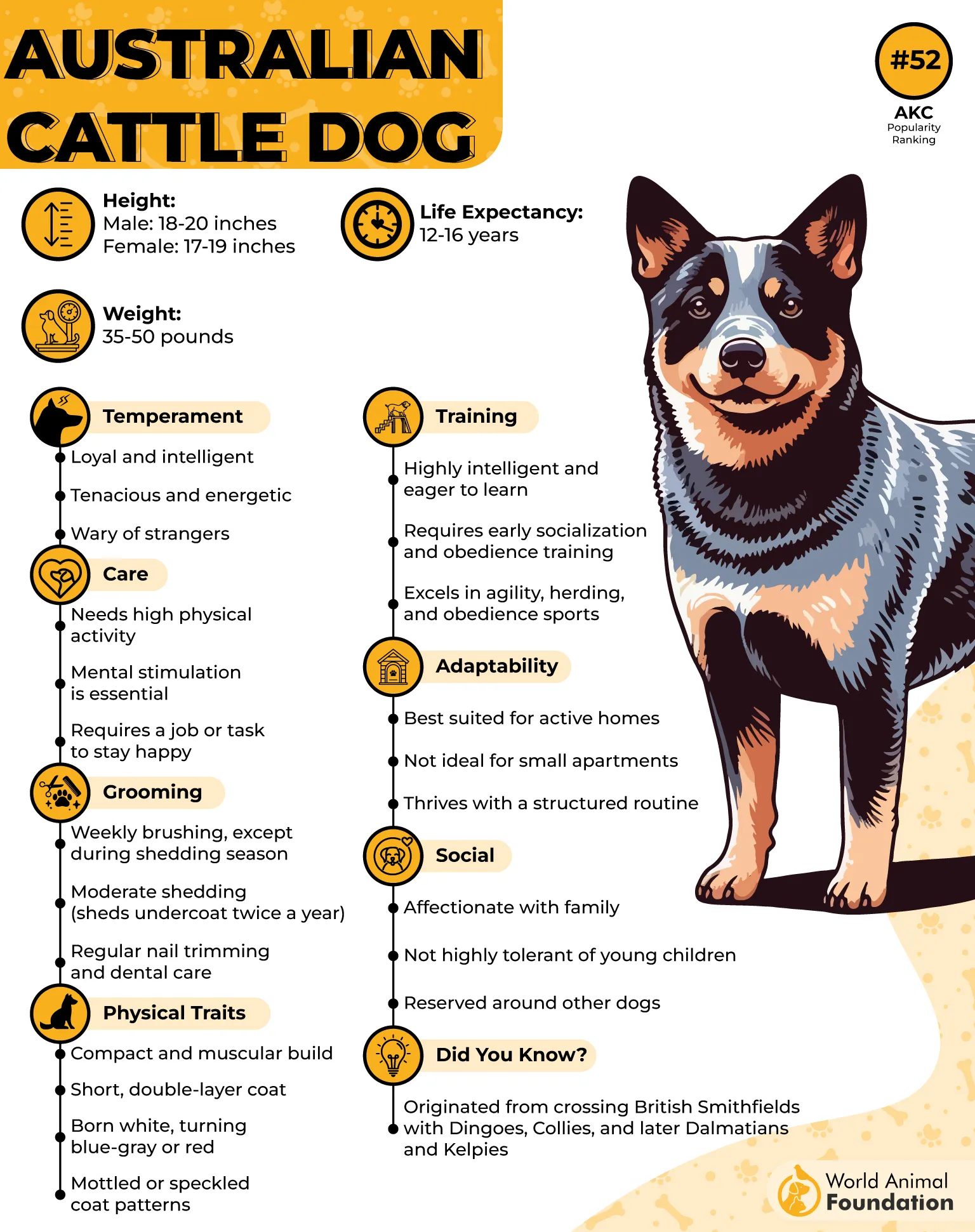
Built for Work and Endurance
Australian Cattle Dogs have a short, straight double coat that protects them in different climates. Their upright ears, dark-brown eyes, strong jaws, muscular neck, deep chest, and low-set tail give them a sturdy, alert appearance.
They are highly intelligent, courageous, watchful, and loyal. PetMD says they can be wary of strangers and protective of their families.
Active Lifestyles and Mental Challenges
Australian Cattle Dogs are happiest when they have a job or purpose. They need plenty of daily exercise and are better suited to active homes than apartments.
Hiking, camping, running, games, and sporty activities can help keep their bodies and minds busy. Their short coat is relatively easy to maintain, with weekly brushing and heavier shedding once or twice a year.
4. Australian Shepherd
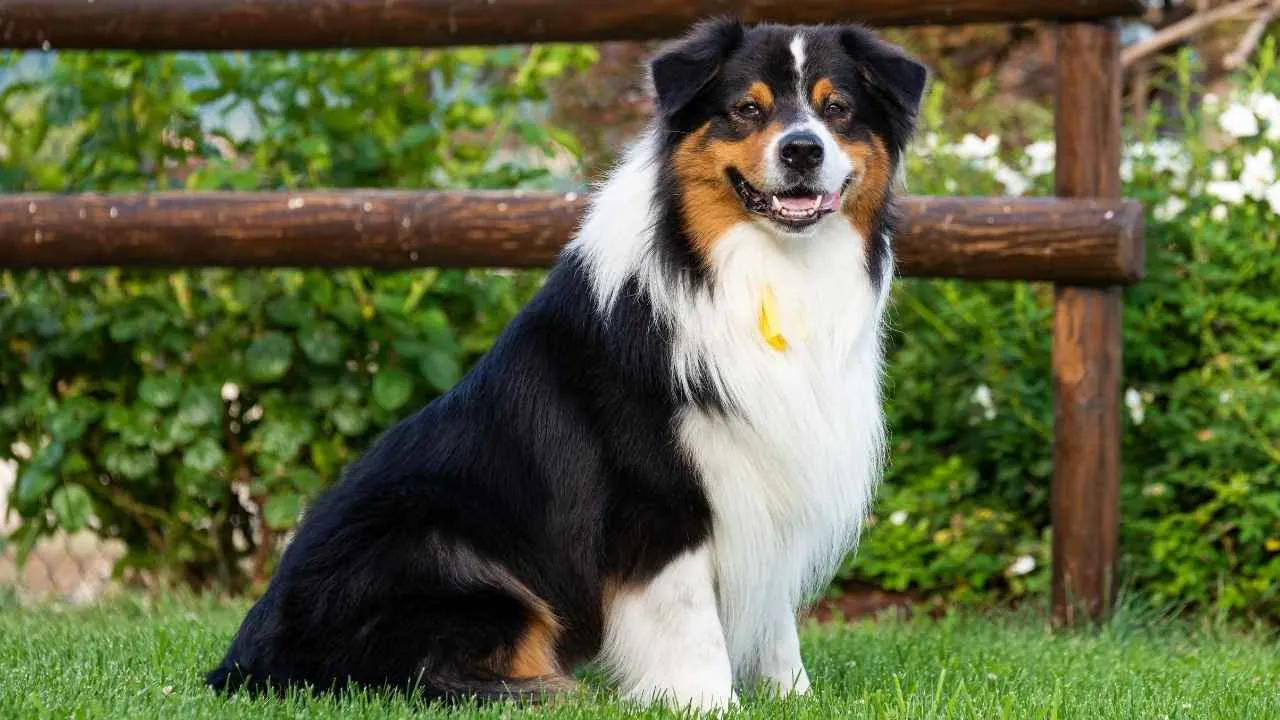
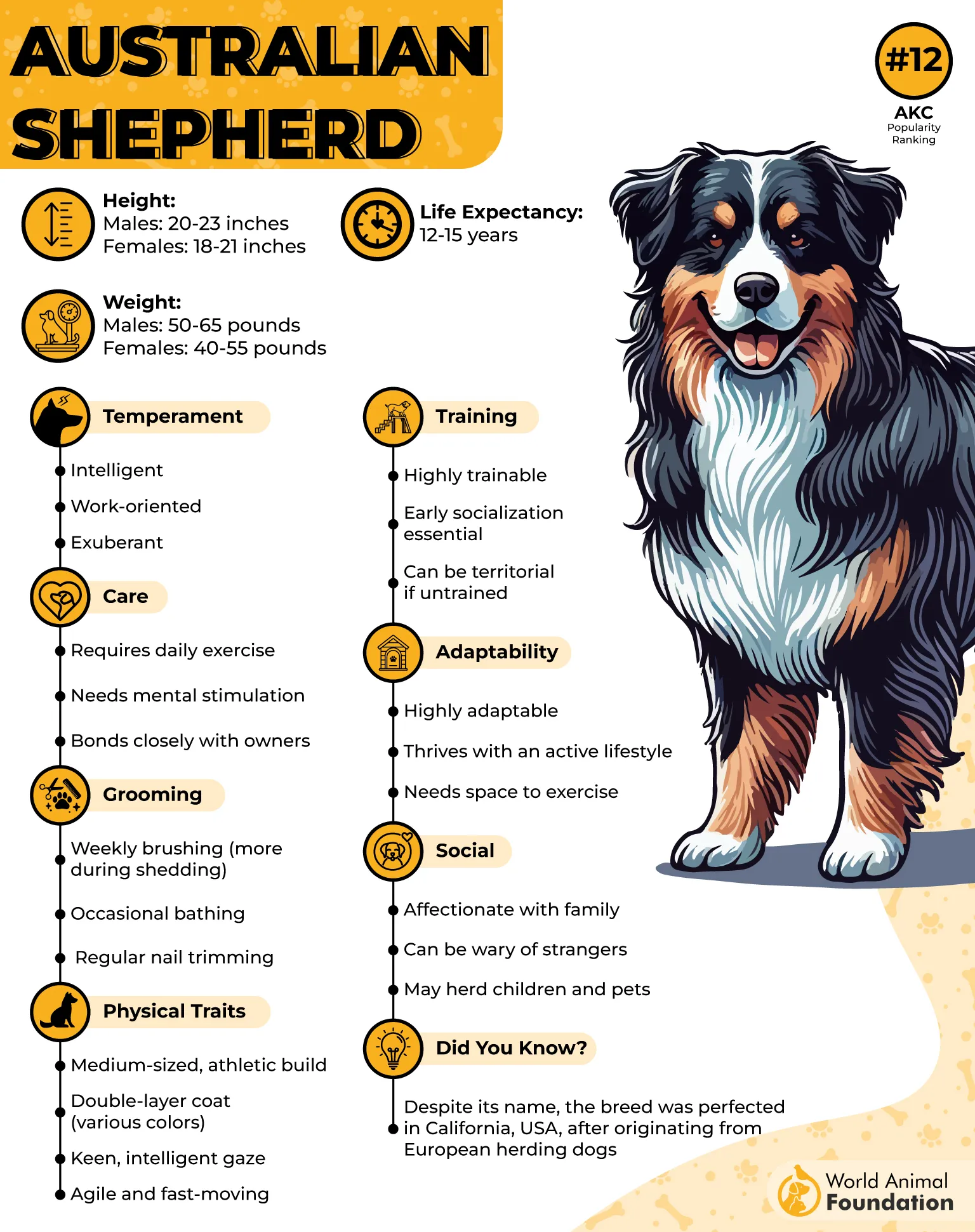
Australian Shepherds are highly intelligent, athletic herding dogs with a strong history of working alongside people. Despite their name, they were developed in the western United States, where they became valued as ranch and herding dogs.
Their natural drive to work, please their people, and stay active remains strong today, making them best suited to families who can give them plenty of exercise, training, and attention.
Looks, Personalities, and Working Instincts
With an agile, muscular build, expressive brown, blue, or amber eyes, and a medium-length double coat, Australian Shepherds have a distinctive appearance.
Behind their beautiful looks is a loyal, playful, and alert personality. They can be friendly but may take time to warm up to strangers, while their strong herding instincts can lead them to chase or herd children, cats, and moving objects.
Exercise and Grooming Needs
Australian Shepherds need plenty of daily physical activity and mental stimulation to stay happy and well-behaved. Hiking, running, fetch, swimming, agility, herding trials, flyball, tracking, obedience training, and other dog sports can give them the challenge they crave.
With early socialization, positive-reinforcement training, regular exercise, and plenty of interaction, Australian Shepherds can become loyal, energetic, and rewarding family companions.
5. Anatolian Shepherd
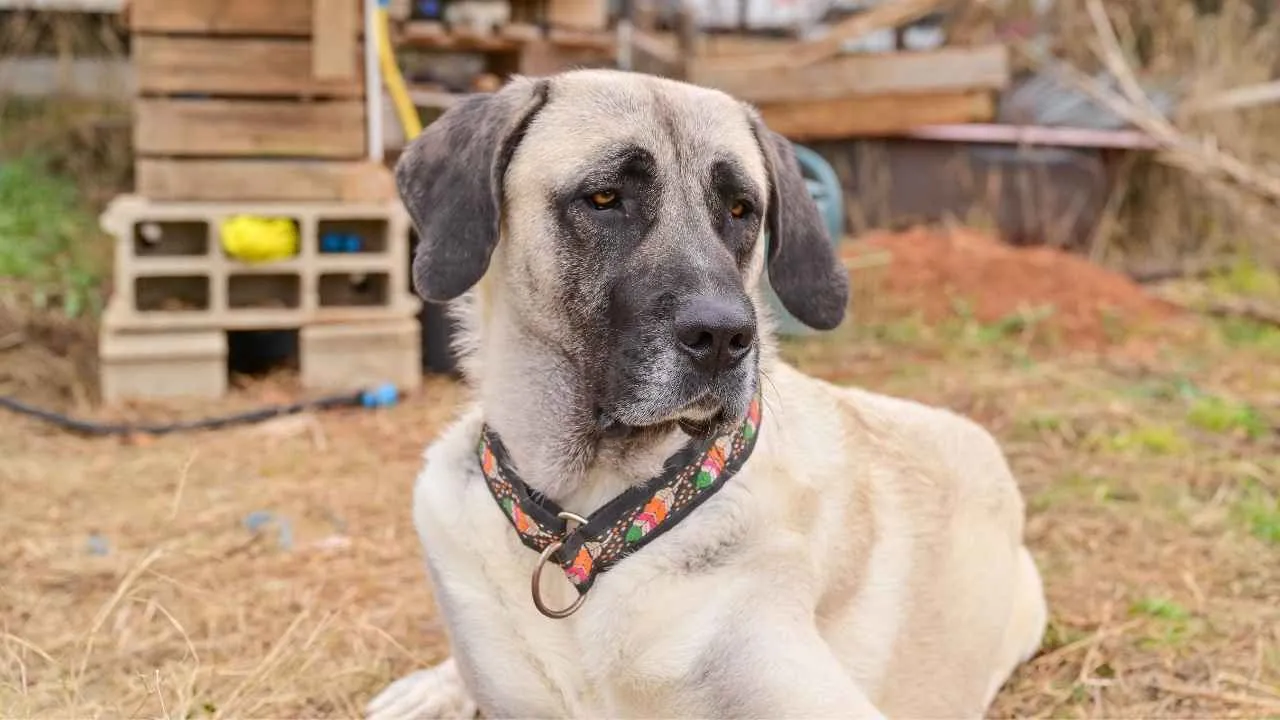
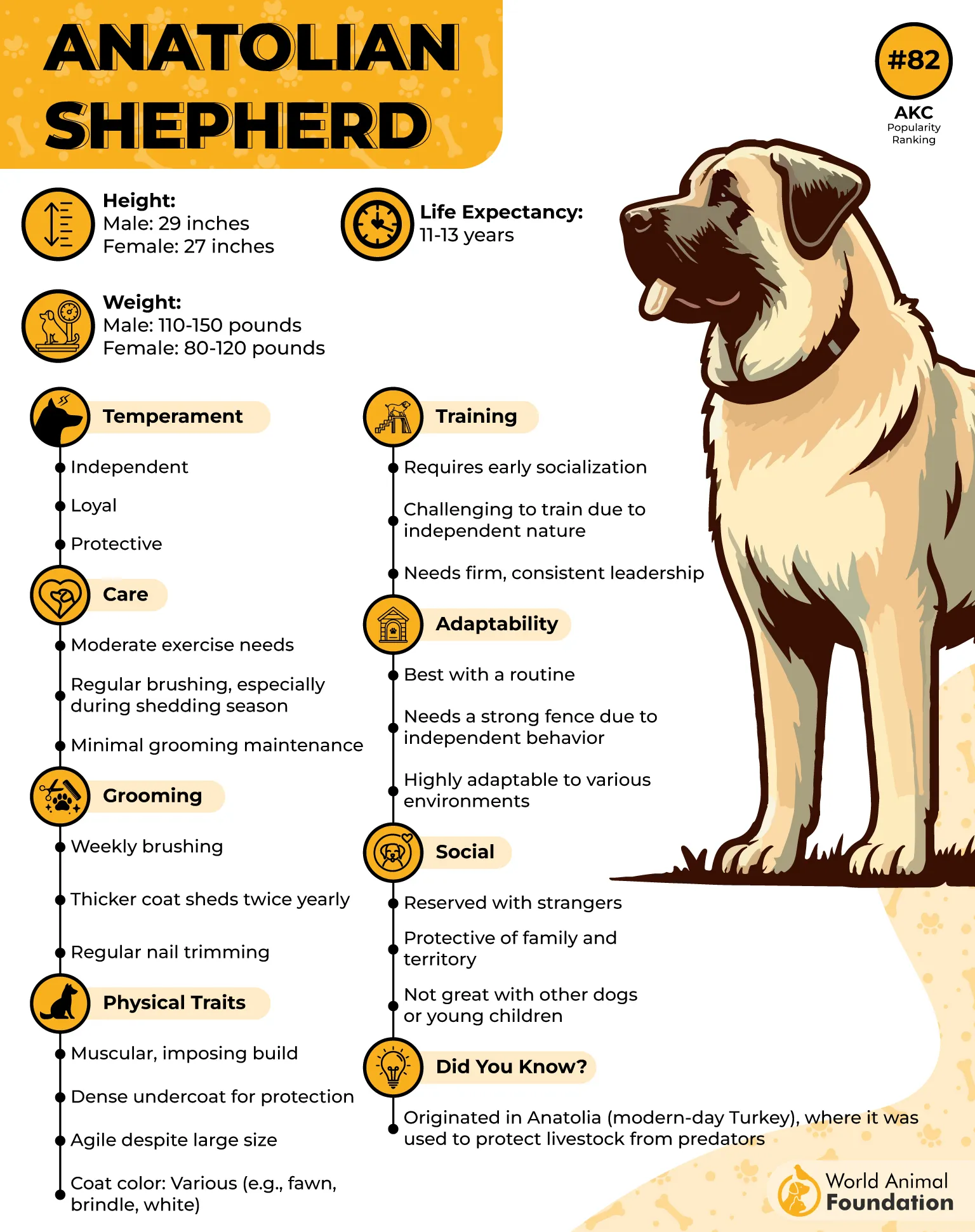
Anatolian Shepherds are large, independent working dogs with a history that stretches back thousands of years. Originally bred in Turkey to guard livestock, these dependable dogs were trusted to protect flocks from predators and threats without constant human direction.
Their protective instincts remain strong today, making them loyal family companions for experienced owners who understand their independent nature.
Looks, Personalities, and Working Instincts
With a massive build, almond-shaped amber or brown eyes, drooping ears, and a long tail that curls at the end, Anatolian Shepherds have an unmistakably dignified appearance.
Despite their reserved attitude toward strangers, they become loving and loyal with their families. Their strong guardian instincts also mean they can be wary of unfamiliar people and may bark when they sense a threat.
Exercise and Grooming Needs
Anatolian Shepherds do not need endless exercise but benefit from daily walks, outdoor time, swimming, and opportunities to stay active in a securely fenced area.
Their independent minds can make training challenging, so early socialization, consistent routines, patience, and positive reinforcement are essential.
Their short, thick double coat is relatively low-maintenance, requiring weekly brushing most of the year and more frequent brushing when they shed their undercoat twice a year.
6. Boerboel
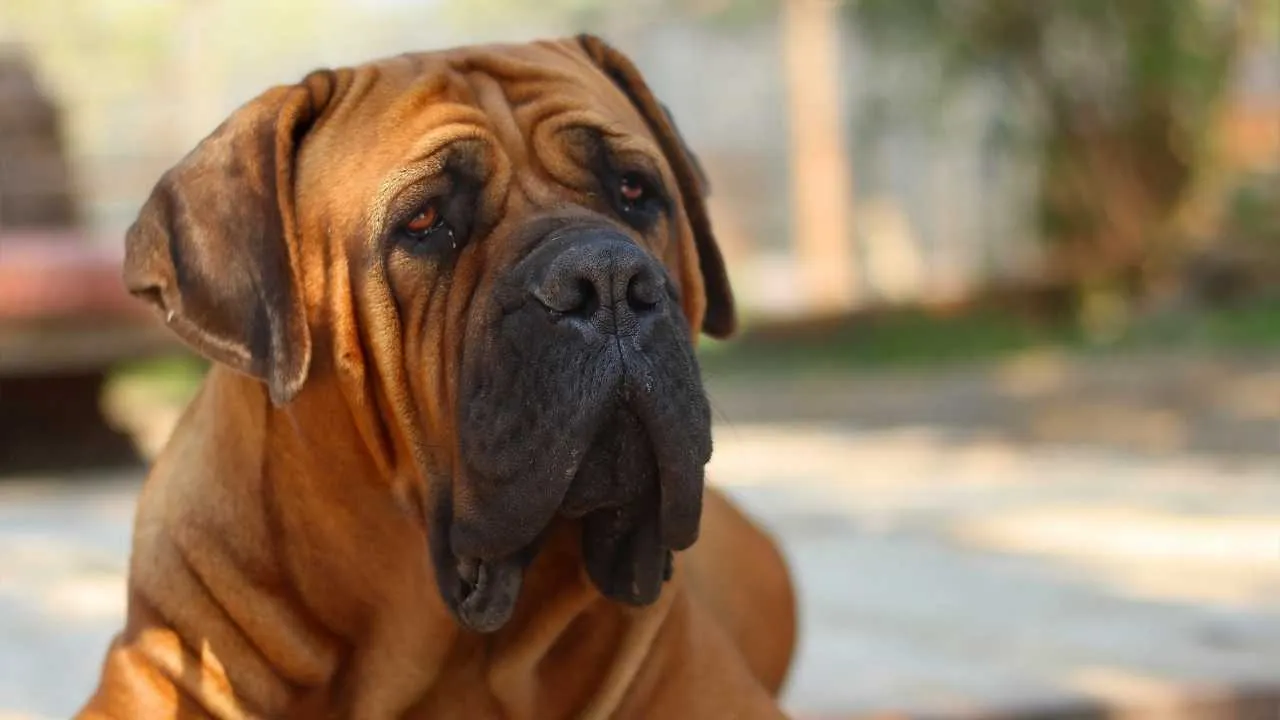
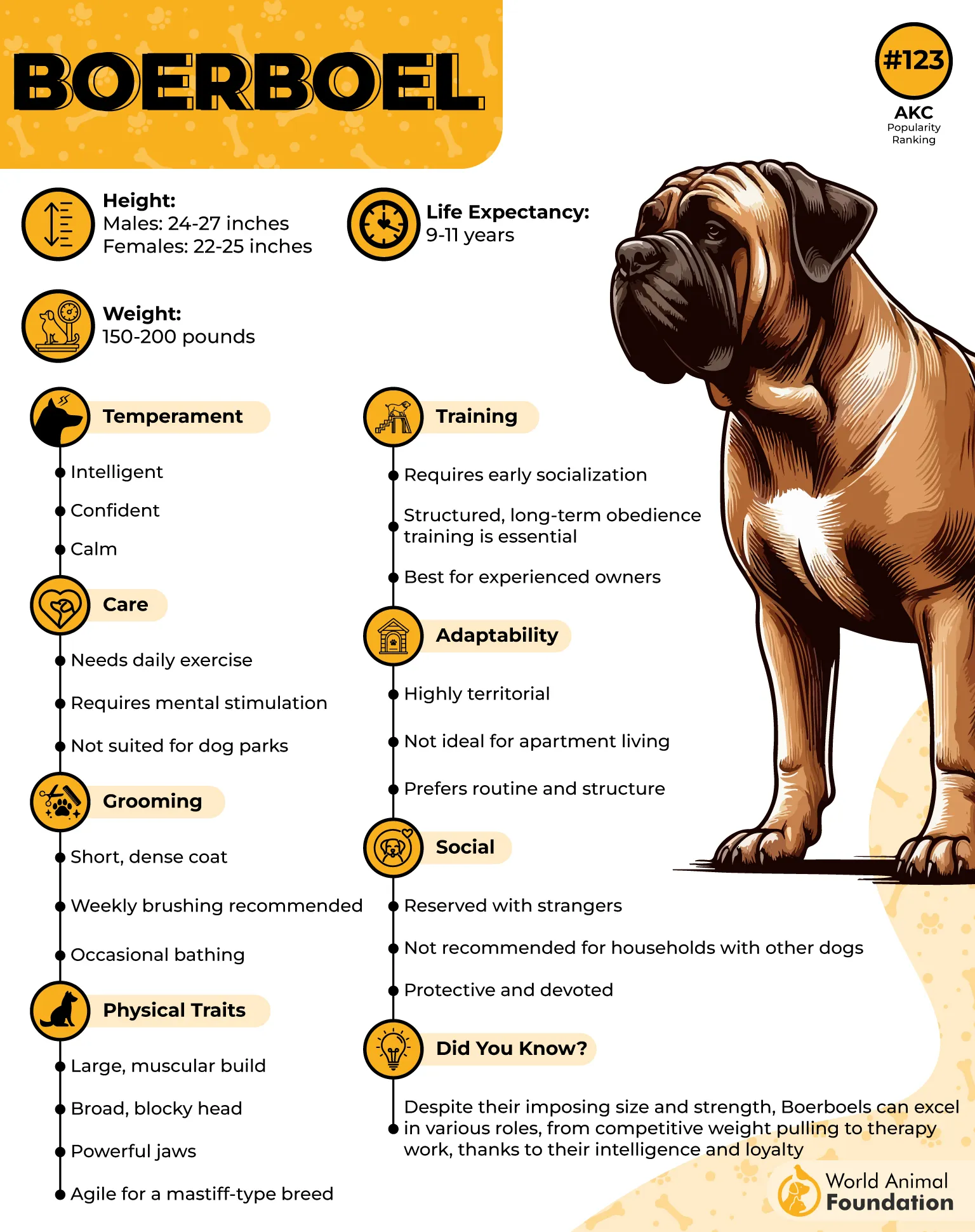
Boerboels are powerful working dogs from South Africa with a long history as fearless property guardians. Developed by European settlers in the 1600s, these muscular dogs were trusted to protect homesteads from serious threats, including lions, leopards, and baboons.
Looks, Personalities, and Working Instincts
With a massive, muscular build, broad, blocky head, drooping V-shaped ears, dark eyes, and a black facial mask, Boerboels have an imposing appearance.
Their guardian instincts make early socialization and consistent training especially important, while their affectionate side can make them loving family companions when properly managed.
Exercise and Grooming Needs
Boerboels need regular daily exercise to stay physically and mentally satisfied. Long walks, jogging, hiking, vigorous play, and puzzle toys can give their strong bodies and intelligent minds an appropriate outlet.
With early training, positive reinforcement, consistent boundaries, and plenty of space to move, Boerboels can become confident, loyal, and devoted companions for experienced owners.
7. Tibetan Mastiff
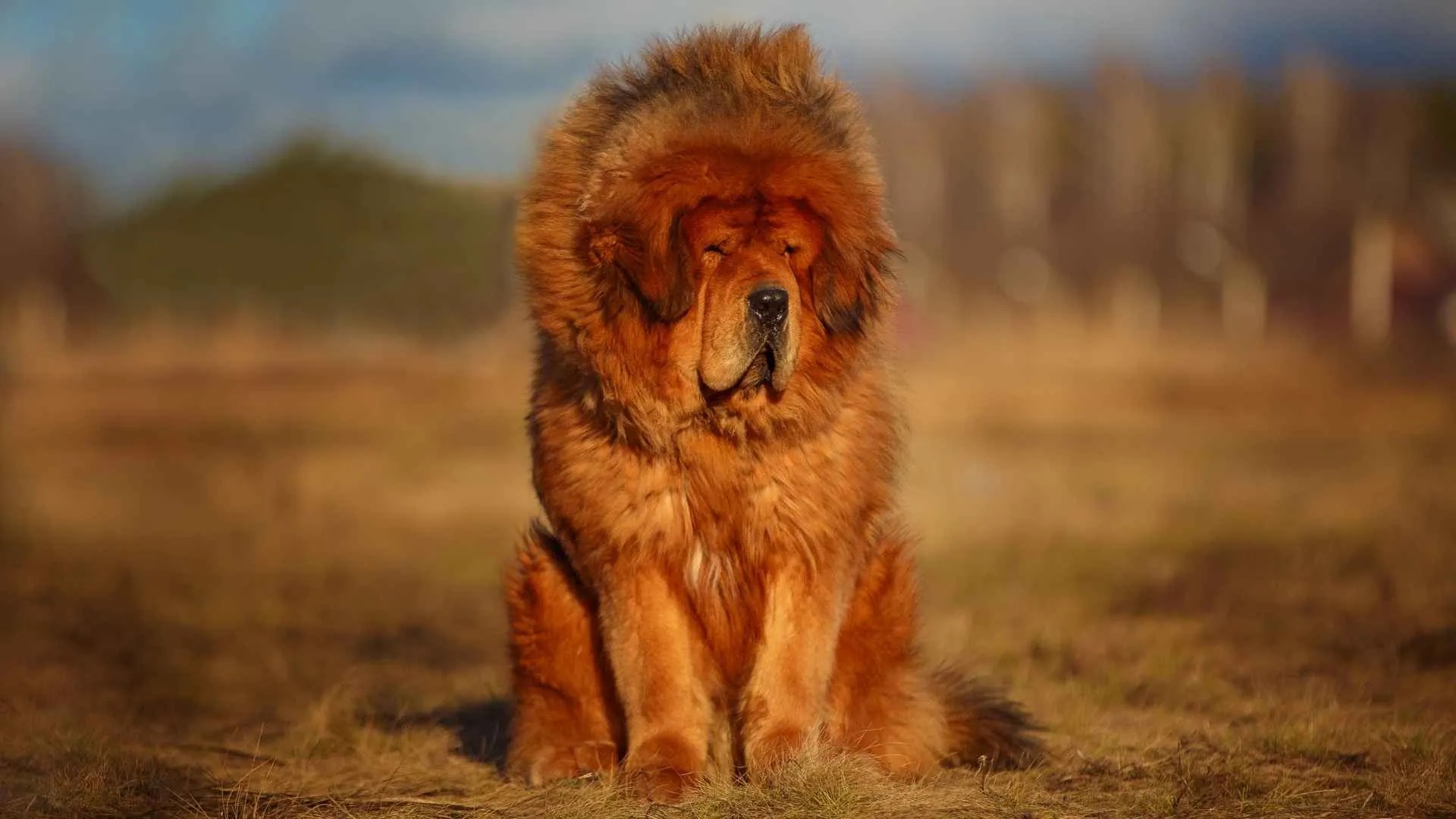
Tibetan Mastiffs are ancient guardian dogs known for their massive size, flowing coats, and lion-like appearance. Their origins trace back thousands of years in Tibet, where they protected families, livestock, villages, and monasteries.
These powerful dogs were built to work independently, and that protective nature remains strong today. While they may seem intimidating to strangers, they can be deeply loyal and loving with their families.
Looks, Personalities, and Guardian Instincts
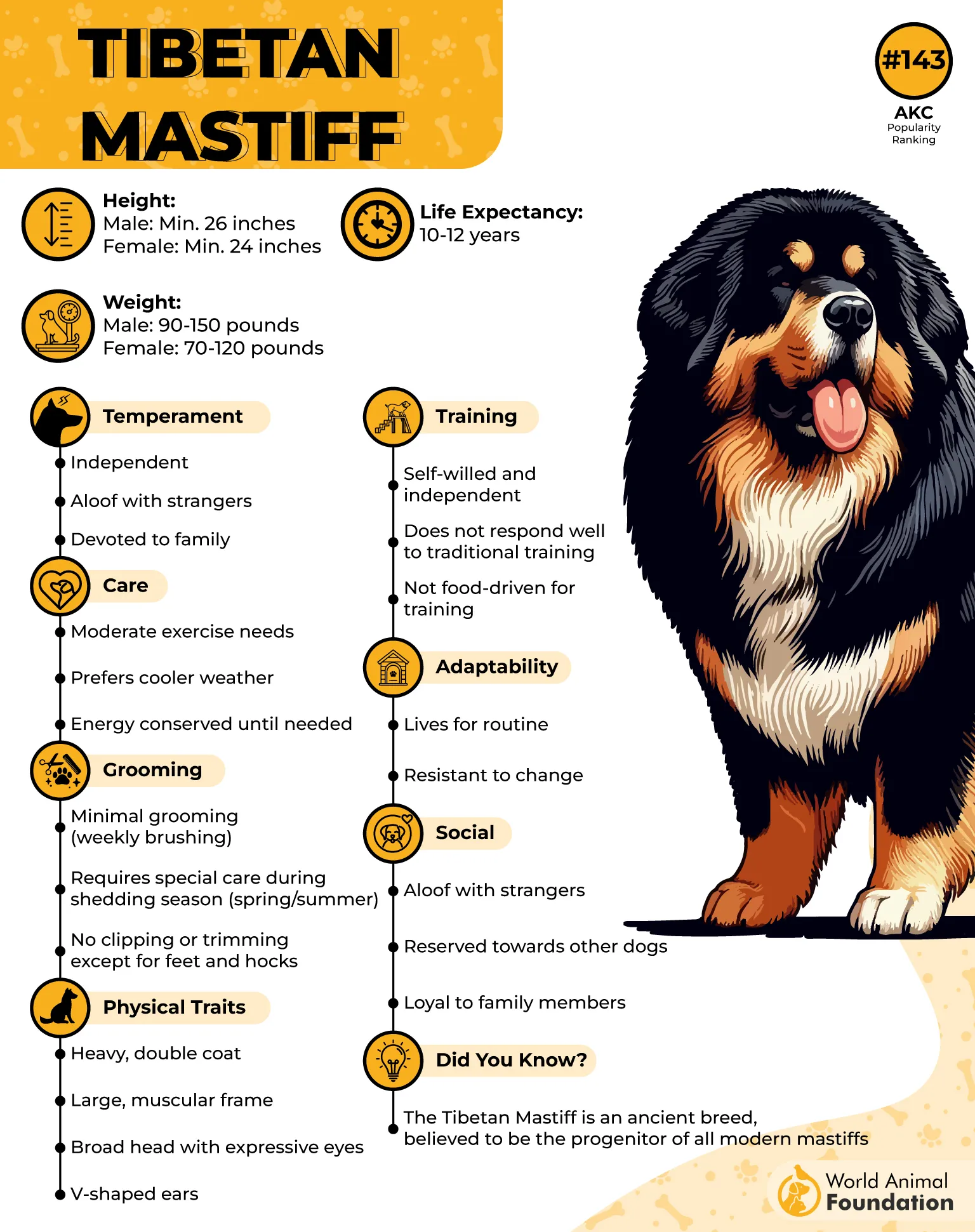
With a broad head, muscular build, recessed eyes, square muzzle, and heavily feathered tail curled over their back, Tibetan Mastiffs have a truly regal appearance.
Beneath all that fluff is an intelligent, watchful, and independent personality. They can be reserved and territorial around unfamiliar people and animals, while becoming affectionate and playful with those they trust. They are also known for barking at night when they sense something unusual around their territory.
Exercise and Grooming Needs
Tibetan Mastiffs need moderate exercise rather than intense or prolonged workouts. Daily walks, time to patrol a securely fenced yard, agility, and outdoor activities can help keep them occupied.
They tend to be more active in cooler weather and may struggle with heat because of their thick coats, so warmer climates require extra care.
8. Dogo Argentino
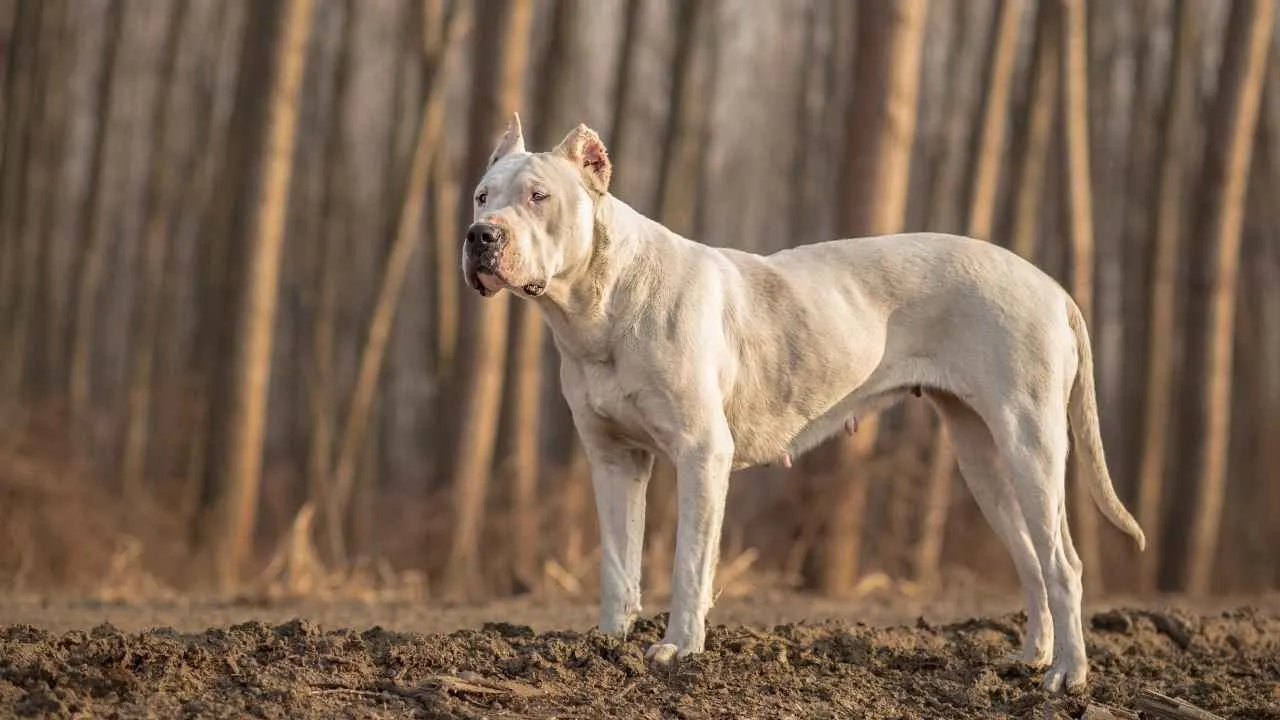
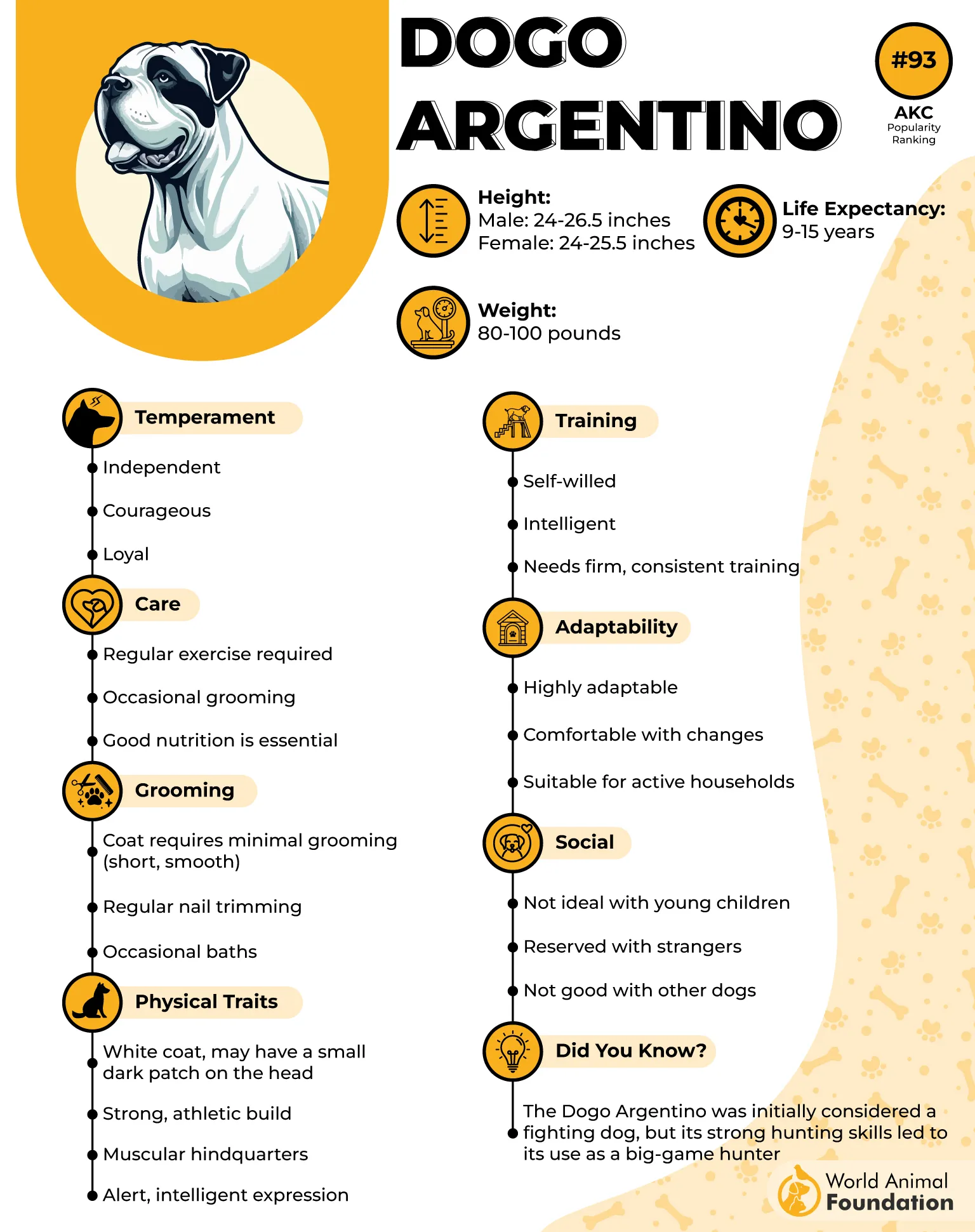
Dogo Argentinos are powerful hunting dogs known for their athletic build, striking white coats, and fearless nature. Developed in Argentina for big-game hunting, they were bred to be courageous, determined, and capable working companions.
Today, these energetic dogs can be affectionate and deeply loyal to their families, but their strong prey drive and independent streak make early training and socialization especially important.
Looks, Personalities, and Hunting Instincts
With a muscular build, broad head, strong muzzle, dark or hazel eyes, and a short, smooth white coat, Dogo Argentinos have a bold and athletic appearance. Some may have a black patch around one eye or small markings on their ears.
Beneath their powerful exterior is an intelligent, loyal, and energetic personality. They can be reserved around unfamiliar people at first but may become friendly with proper introductions and socialization.
Exercise and Grooming Needs
Dogo Argentinos need plenty of daily exercise and thrive on activities such as brisk walks, running, fetch, agility, obedience work, and other mentally stimulating games. They can become bored and destructive without enough physical and mental activity, so an active household with a securely fenced yard is ideal.
Their short coat is relatively easy to maintain with weekly brushing and occasional baths, although they shed moderately throughout the year.
9. Akita
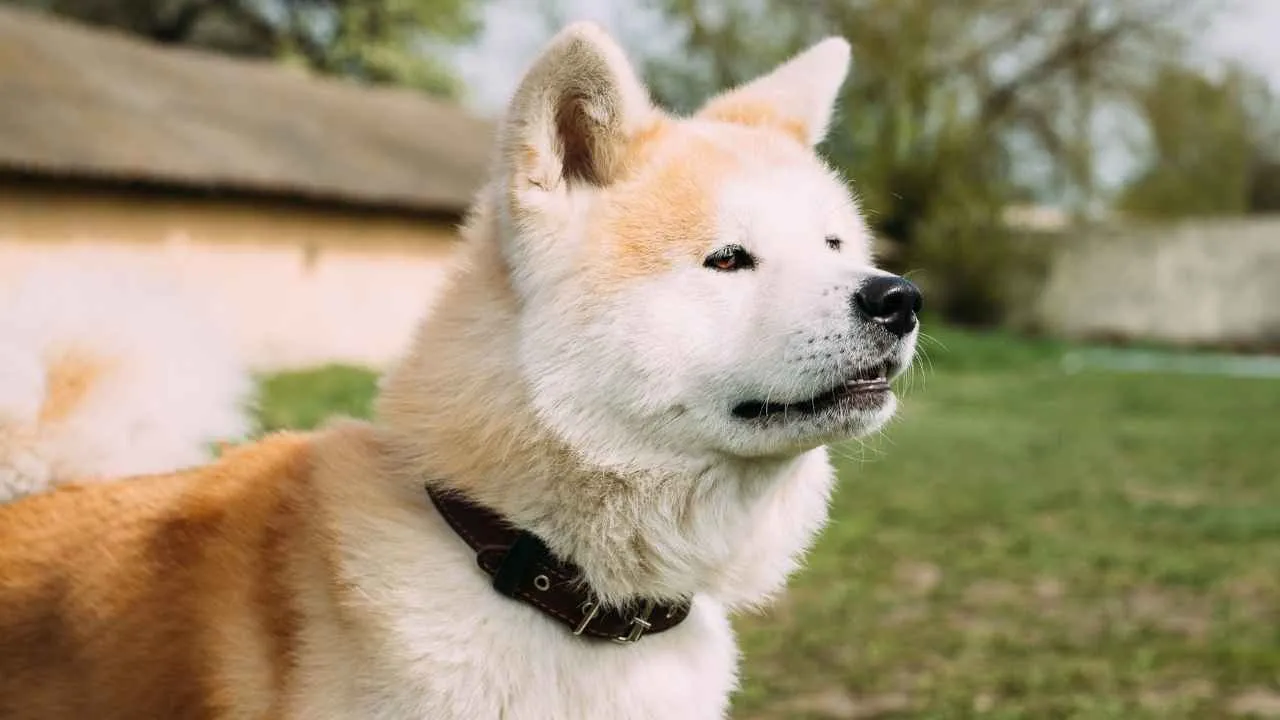
The Akita is a powerful Japanese breed known for its loyalty, courage, and calm confidence. Originally bred to hunt large game and guard, this dignified dog forms strong bonds with its family members and can be a devoted protector.
However, Akitas are independent and strong-willed, making early socialization, consistent training, and an experienced pet parent essential.
Looks, Personalities, and Guardian Instincts
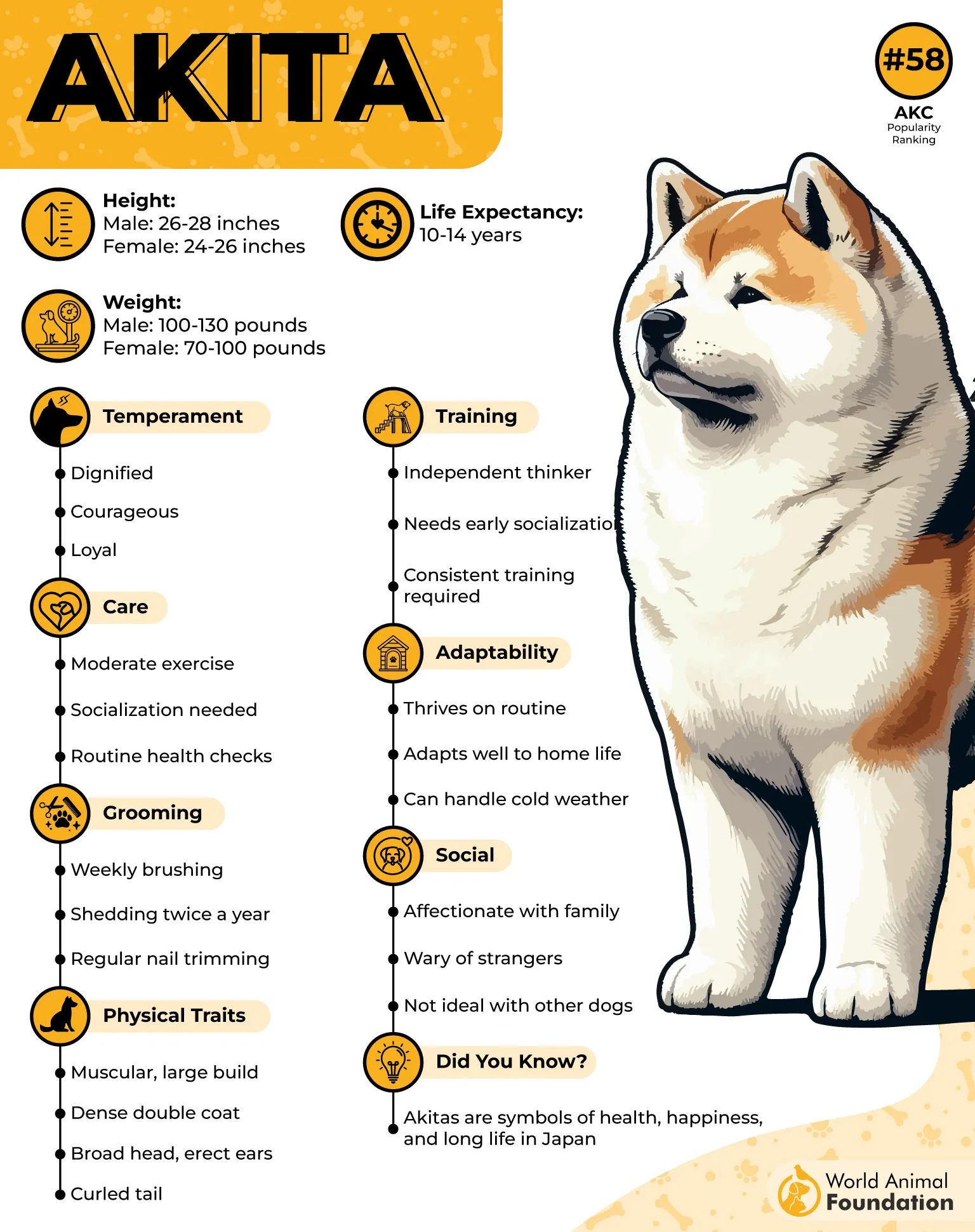
With a broad, bear-like head, small dark eyes, erect triangular ears, and a distinctive curled tail, Akitas have a striking and dignified appearance.
Akitas can be cautious around strangers and may prefer being the only pet because of their strong prey drive and tendency to be assertive with other dogs. With their families, however, they can be affectionate, protective, and devoted.
Exercise and Grooming Needs
Akitas have moderate exercise needs and benefit from daily walks, play sessions, hiking, scent activities, and other mentally engaging activities. They are not suited to chaotic environments and do best with structured routines, consistent leadership, and positive-reinforcement training.
Their thick double coat requires regular brushing, with daily grooming often needed during their heavy seasonal shedding periods. Purina mentions that they can also be sensitive to heat, so keeping them comfortable in warmer weather is important.
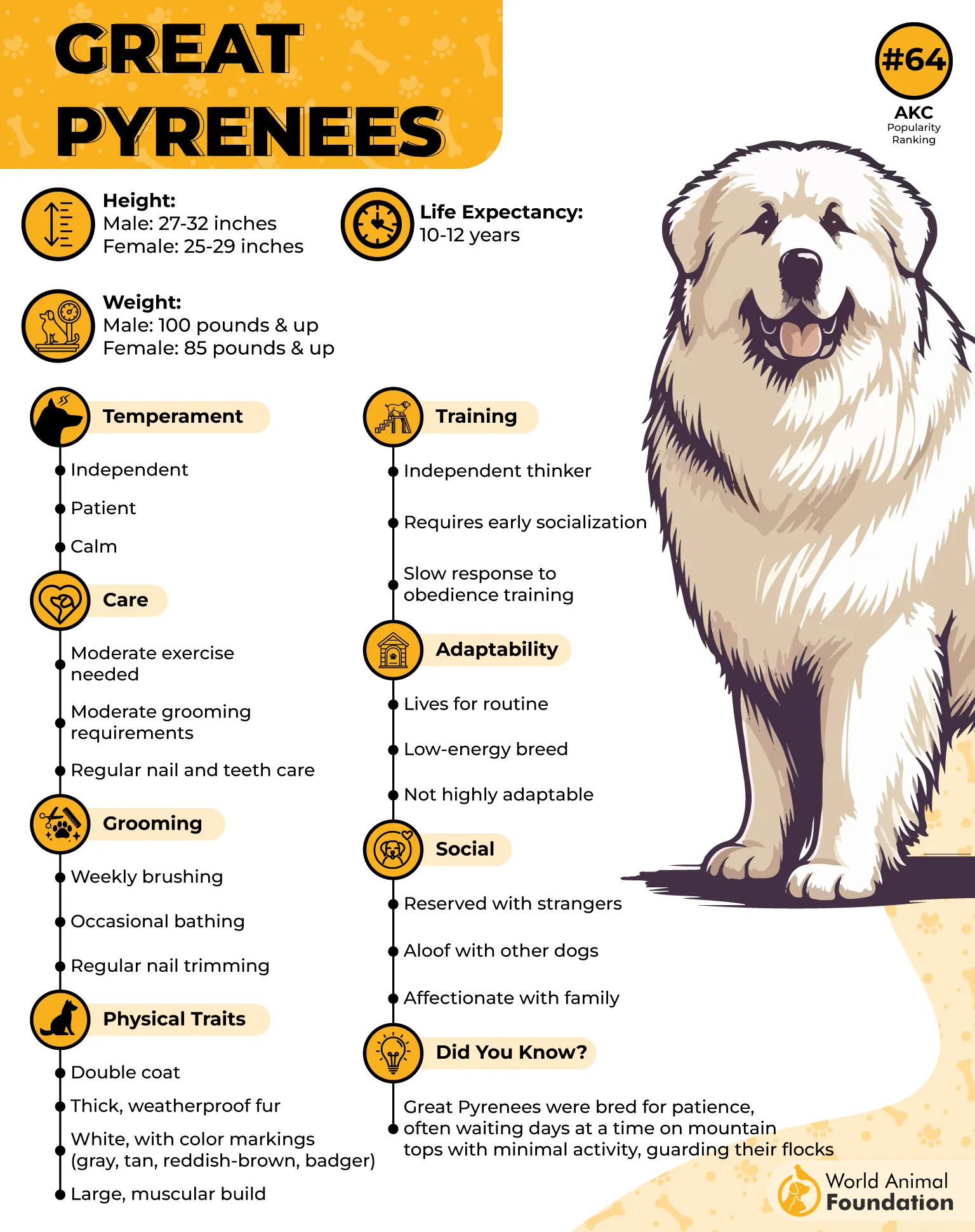
10. Great Pyrenees
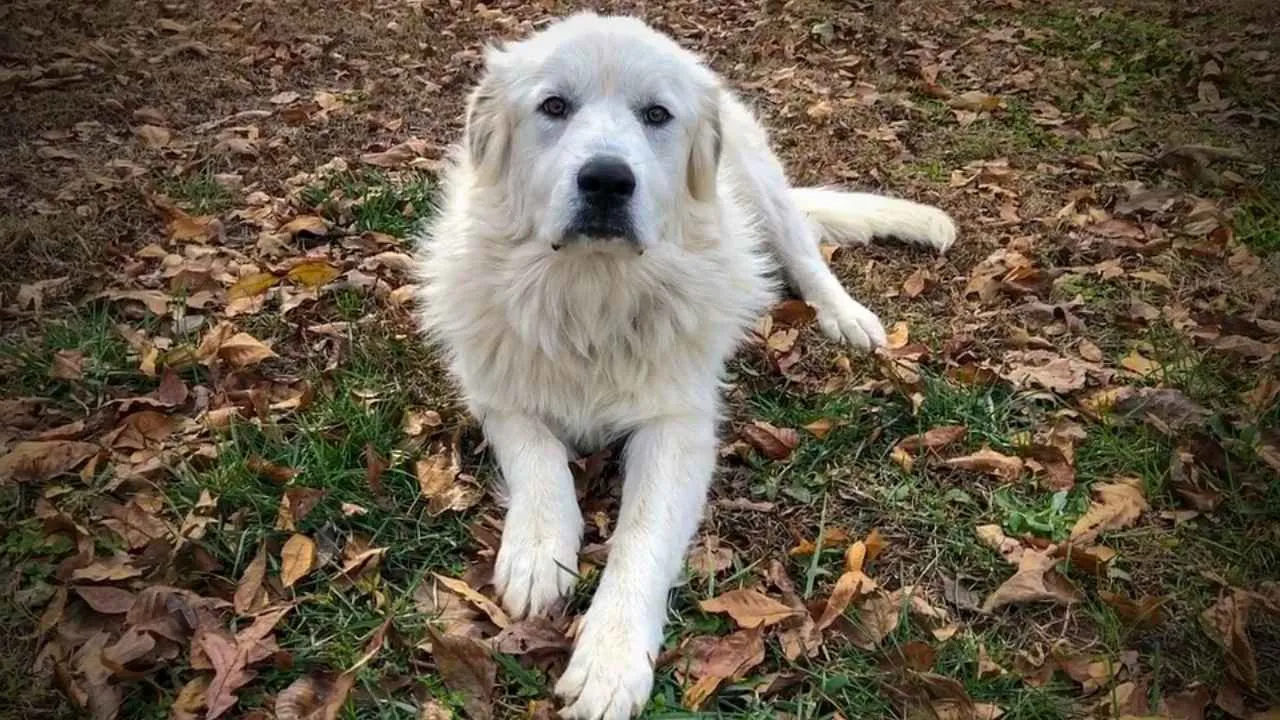
The Great Pyrenees is a majestic giant breed originally developed in the Pyrenees Mountains between Spain and France to guard livestock from predators such as wolves and bears.
Known for its impressive size, strength, and thick white coat, this calm and independent dog was bred to protect flocks with little human direction.
Looks, Personalities, and Guardian Instincts
With a large, powerful build and a long white outer coat over a soft undercoat, Great Pyrenees have a majestic and imposing appearance. Their natural livestock-guardian instincts make them watchful and protective, and they may bark to alert their family when they notice something unusual.
Exercise and Grooming Needs
Great Pyrenees have relatively low energy levels and do not require an extremely active lifestyle. Daily walks, hiking, time to roam in a securely fenced area, farm work, and activities such as cart- or sled-pulling can help keep them engaged.
Their independent nature can make training challenging, so early socialization, consistency, patience, and positive reinforcement are important. Their thick coat is surprisingly easy to maintain because the outer fur is resistant to dirt and tangles, but they are heavy shedders.
Conclusion
Tough dog breeds may differ in size, appearance, energy levels, and temperament, but they share many qualities that make them remarkable companions.
If you’re considering one of these powerful breeds, look beyond their striking appearance and ask whether their temperament, exercise needs, grooming demands, and guardian instincts fit your lifestyle.
The right match can give you more than a strong dog. It can give you a devoted companion and a loyal protector for years to come.
Looking for more dog breeds with remarkable endurance? You can also check out the Rhodesian Ridgeback, American Pit Bull Terrier, Weimaraner, Cane Corso, Belgian Malinois, German Shepherd, and Rottweiler.
