





Choosing between a Cavapoo and a Cockapoo can feel like picking a favorite. Both are sweet, clever, and full of charm. Each combines Poodle intelligence with a beloved companion breed. Yet, these two dogs can fit very different family lifestyles.
So, which one belongs in your home?
Cavapoos often shine in calm homes that enjoy cuddles, gentle play, and quieter routines. Cockapoos, on the other hand, often suit active families ready for more games and daily adventure.
Both breeds can be wonderful around children with early socialization. Their size can also make apartment living possible. Still, looks should never make the choice alone.
Energy, personality, grooming, health, and daily needs matter too. A responsible breeder can offer important health information. Adoption can also lead you to a loving companion.
Let’s compare both breeds and find your family’s better match.
Cavapoo vs. Cockapoo: Smart Dog Breeds Choices for Families
What Is a Cavapoo?
A Cavapoo blends a Cavalier King Charles Spaniel with a Poodle. This mix is often gentle, affectionate, and people-focused. Cavapoos can be a great fit for families who enjoy a calmer daily routine.
Sweet and friendly with familiar people
Often enjoys cuddles and close family time
Smart and usually eager to learn
Well suited to relaxed homes
What Is a Cockapoo?
A Cockapoo combines a Cocker Spaniel with a Poodle. These dogs often bring more playful energy to family life. They can suit pet parents who enjoy active days and plenty of interaction.
Cheerful and playful personality
Bright and responsive to guidance
Enjoys games and family activities
Often thrives with active pet parents
History & Purpose
The story behind each Poodle mix helps explain its role today. While both are mixed-breed dogs, their parent breeds brought different traits to the pairing.
According to Wikipedia, the Cavapoo developed in Australia during the late-20th-century designer-dog trend. It combines the Cavalier King Charles Spaniel with a Poodle.
Breeders hoped to bring together the Cavalier’s friendly nature and small size with the Poodle’s intelligence and coat qualities. This helped shape the Cavapoo as a popular family companion.
Cockapoo
The Cockapoo was first bred in the United States as a designer companion dog. It brings together a Cocker Spaniel and a Poodle, most often a Miniature Poodle.
Cocker Spaniels add sporting-dog roots, while Poodles contribute intelligence. Their mix helps explain the Cockapoo’s lively companion style.
Together, these parent breeds created two distinct companion dogs.
Size & Physical Build
Both breeds are small-to-medium in size, though size varies based on the Poodle parent’s classification.
Cavapoo
Cavapoos usually weigh around 9 to 18 pounds. Most stand about 9 to 14 inches tall. Their compact frame gives them a small, balanced look. Many have a soft face and rounded features.
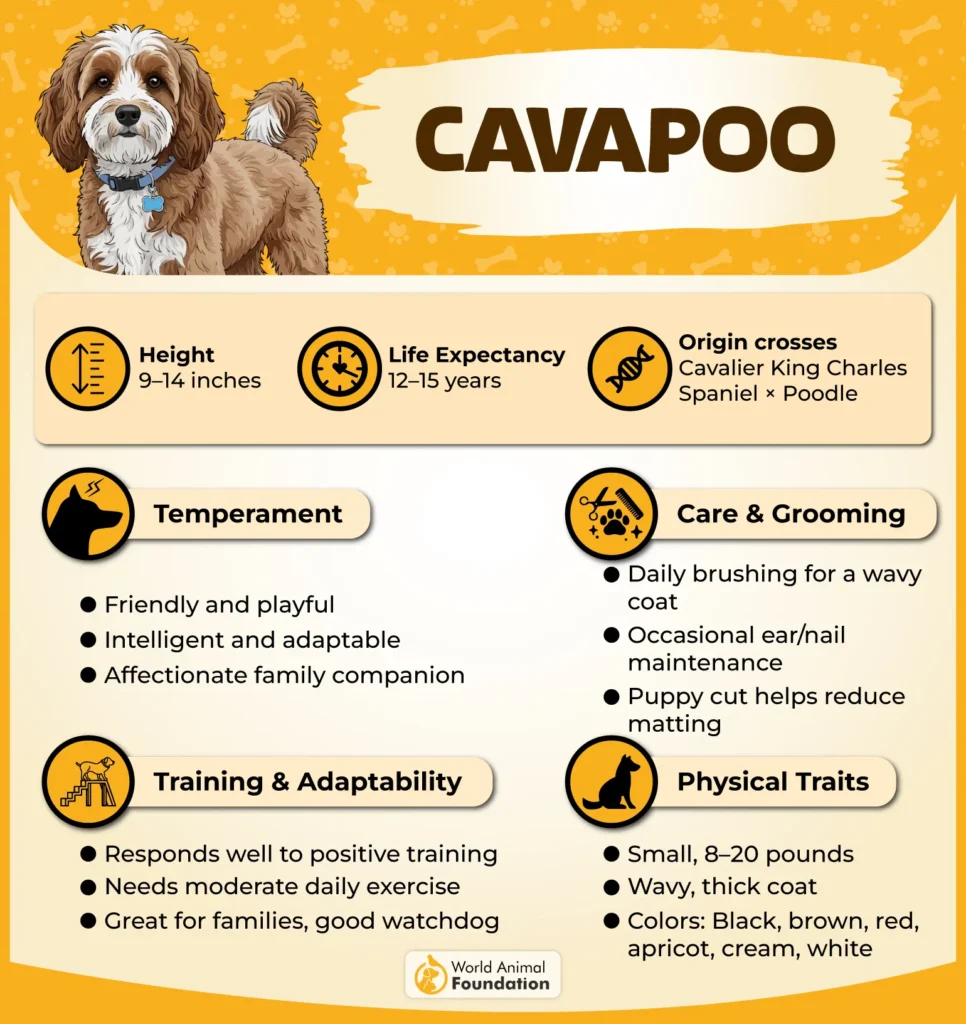
This can give some puppies an adorable teddy bear appearance. Their size can also vary when breeders use a Toy Poodle or a Miniature Poodle.
Cockapoo
Cockapoos tend to have a wider size range than Cavapoos. They often weigh about 12 to 25 pounds and stand around 10 to 15 inches tall. Their build may look compact or slightly taller and leaner.
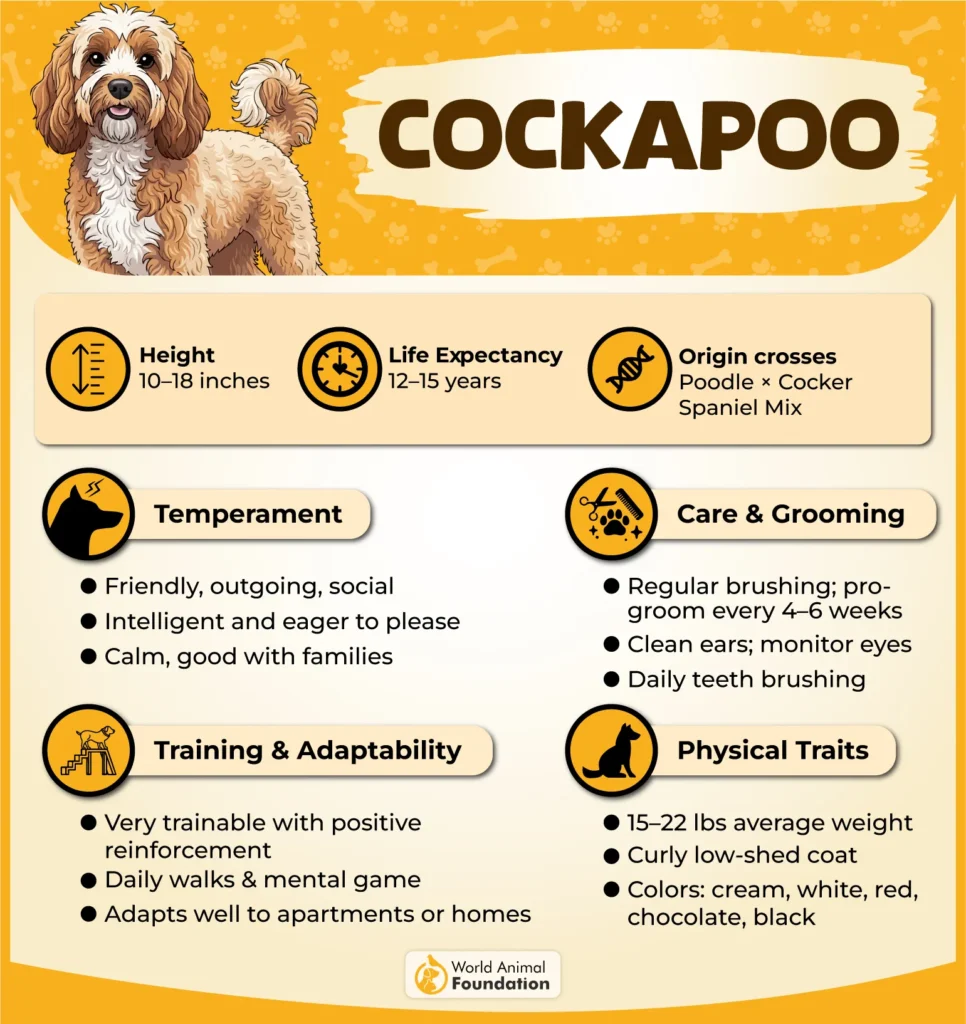
The Poodle parent’s size can greatly affect their final frame. So, individual puppies may differ quite noticeably.
Neither breed has one fixed size or body type.
Temperament & Personality
When comparing these dogs, personality can shape daily life. Their temperament also affects how they connect with family members.
Cavapoo
Cavapoos are known for their affectionate nature and gentle social style. They often enjoy staying close to their people. Their sweet personalities can make them appealing to a first-time owner.

Cavapoo puppies may enjoy cuddles, attention, and quiet family time. They can fit well with respectful children who understand gentle handling. Their relaxed temperament often suits a peaceful home.
Cockapoo
Cockapoos are typically more outgoing and eager to join family activities. They often enjoy meeting other pets and staying involved with their people. Their lively spirit can shine in an active household.
Even with a larger Cockapoo size, each dog’s personality remains individual. Hill’s Pet notes that they thrive on social interaction and may struggle when left alone too long. Their energy also means young children need supervision.
Exercise & Energy Levels
The two breeds differ most in their daily exercise needs. Knowing these key differences helps families choose a routine that fits.
Cavapoo
A Cavapoo can often stay content with 20 to 40 minutes of daily activity. This small dog may enjoy daily walks, gentle games, and indoor play. According to Purina, activity can include running, on-leash walking, and games at home.
Mental stimulation also keeps curious pups engaged. Whether linked to a Toy Poodle or Mini Poodle, this mix can adapt well to apartment life with enough exercise.
Cockapoo
Breeds tend to vary, but Cockapoos usually need more action. They may need 30 to 60 minutes of active exercise each day. Their high energy makes them enjoy playing, longer walks, and interactive games. Without enough exercise and mental stimulation, boredom can trigger unwanted behavior.

Training & Intelligence
Both Cavapoos and Cockapoos inherit intelligence from their Poodle lineage, making them generally easier to train than many other small companion dogs.
Cavapoo
As a Poodle mix, the Cavapoo often learns basic commands with ease. Its eager-to-please nature can make lessons feel simple and rewarding. A gentle approach works well for this affectionate teddy bear of a companion.
Short sessions, praise, and treats can help build good habits. Their willingness to cooperate may make Cavapoos a comfortable choice for first-time owners.
Cockapoo
Cockapoos are also bright, playful, and highly capable learners. They can master complex tricks beyond basic commands.
However, their energetic nature can bring distractions during lessons. Short, engaging sessions can help hold their attention. Patience and steady guidance also encourage better results.
Cockapoos may require more patience and consistency in training compared to Cavapoos, as they can be more easily distracted and have a shorter attention span. Overall, both are intelligent dogs, but Cavapoos may learn basic skills more readily.
Grooming Frequency
Grooming needs can vary with coat texture, Poodle size, and inherited coat types. Both Cavapoos and Cockapoos can have varying coat textures, ranging from loose waves to tighter curls, and their colors can include shades like gold, chestnut, apricot, white, black, cream, and red.
A Cavapoo with a Toy Poodle parent may have a soft, low-shedding coat with a cute teddy bear look. Still, regular brushing about three to five times weekly helps prevent mats and tangles. Routine grooming every six to eight weeks keeps the coat neat.

Despite its hypoallergenic coat, a Cavapoo still needs care, and shedding is never completely absent. A Cockapoo may develop a curlier coat, with tight curls that can hold loose hair close to the skin.
According to VCA, professional grooming is needed about every six weeks for Cockapoos. Frequent brushing helps manage shedding, while ear care supports comfort.
Neither of the two dogs is maintenance-free. Both need consistent grooming, and shedding can still occur despite their reputation for reduced shedding.
Health & Lifespan
Both breeds can enjoy happy lives with good care. Still, each can inherit health issues from its parent dog.
Cavapoo
A Cavapoo may inherit concerns linked to the Cavalier King Charles Spaniel and Poodle. Cavapoos are at risk for developing cardiac mitral valve disease, which affects a significant portion of Cavalier King Charles Spaniels by age five.
Other possible concerns include hip dysplasia, patellar luxation, and ear infections. Regular veterinary checks can help spot problems early.
Cockapoo
Cockapoos can face different inherited concerns. These include progressive retinal atrophy, allergies, hip dysplasia, and recurring ear infections.

PetMD notes that some dogs may react to certain ingredients in their food, so owners should watch for sensitivities. Eye screening can also help identify retinal conditions.
For Both Breeds
Because every mixed poodle can inherit different traits, health risks vary between dogs.
Choose ethical breeders who perform recommended health tests.
Schedule routine veterinary visits and preventive checks.
Ask about the puppy’s family health history.
Consider adoption through reputable rescue groups.
Suitability as Family Pets vs. Guard Dogs
Both breeds can bring warmth and fun to family life. The right choice depends on your home, routine, and activity level.
Family Pets
Cavapoos are gentle, highly affectionate, and very people-oriented. Their cuddly nature can suit families wanting a close companion. They are also small and adaptable, making them excellent apartment dogs. Cockapoos tend to be more playful and energetic.
They can also live happily in apartments when they get enough exercise and mental stimulation. Both breeds can do well with children after early socialization. Gradual alone-time practice can also help with separation concerns.
Guard Dogs
Neither breed is a traditional guard dog. Both may bark when they notice something unusual, but alertness is not true protection. Their small size and companion-focused nature limit their guarding role. The Poodle side, including a Mini Poodle parent, does not change that.
Cost & Ownership
A puppy can cost around $1,000–$4,000 or more. Prices vary by breeder, location, and bloodlines. Food, grooming, veterinary care, medicine, and insurance add ongoing costs. Adoption may lower the starting expense.
Conclusion
So, Cavapoo or Cockapoo? Neither is the perfect choice for every family. Each small dog breed has distinctive traits that can suit different homes.
A Cavapoo may be the better fit for calmer families seeking a gentle companion. A Cockapoo can shine in an active home that enjoys a more playful dog. Both can thrive with children when socialized early and guided well.
Before bringing home a new puppy, consider exercise, grooming, health needs, and long-term costs. Their needs can vary depending on age, size, and temperament.
Look for ethical breeders who complete recommended health testing, including eye checks and PRA screening. Rescue groups and adoption centers can also offer loving companions at a lower starting cost.
Ultimately, the perfect match comes from understanding your lifestyle and using positive reinforcement to build a happy bond.
