




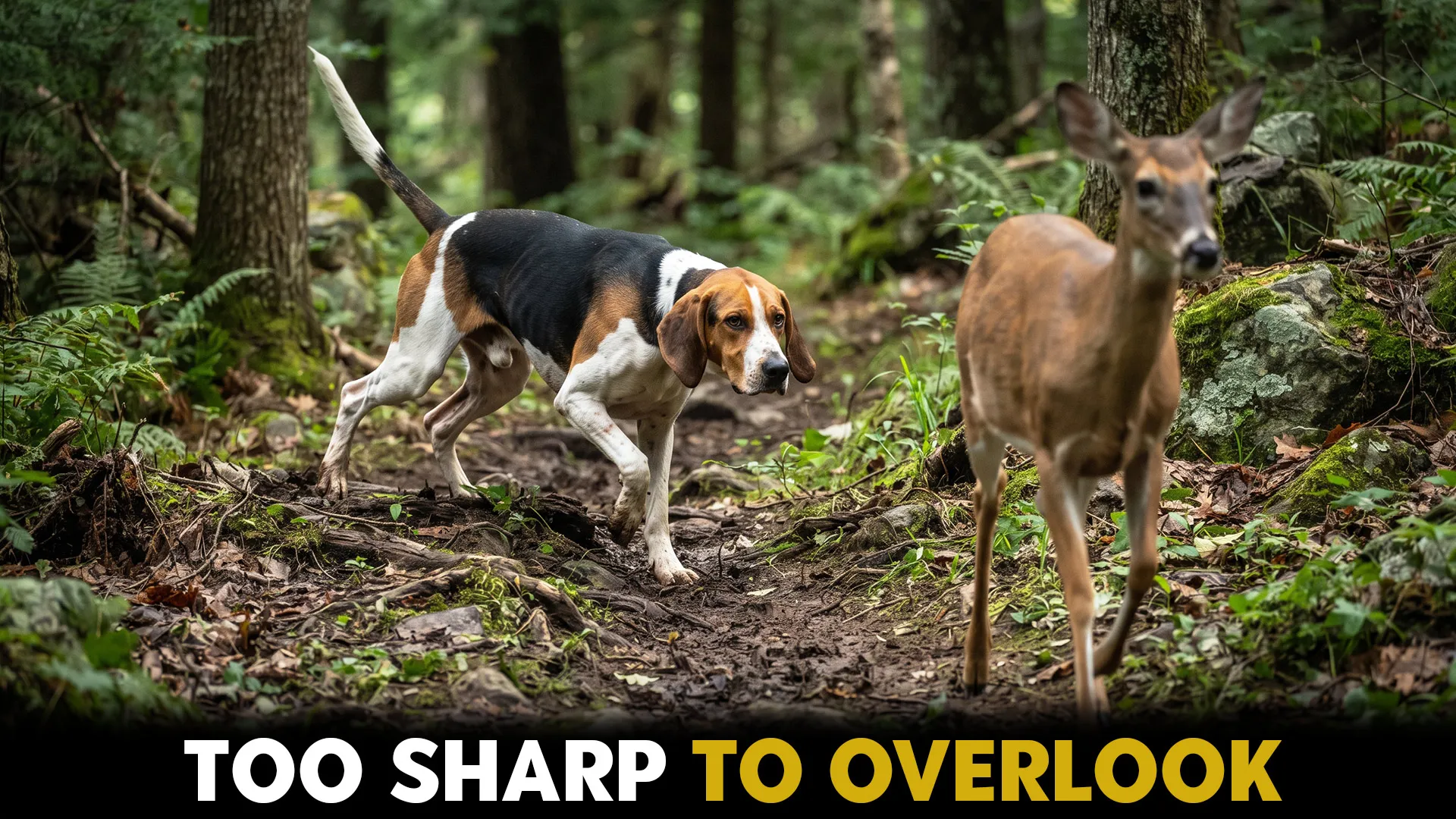
Long before GPS collars and modern tracking equipment, hunters relied on one of nature’s most sophisticated tools: a dog’s nose. A dog can distinguish and follow scents that humans cannot even detect, while its body, instincts, and temperament determine how effectively it works in forests, fields, mountains, or water.
Not every hunting dog works the same way. A Chesapeake Bay Retriever may plunge into icy water to bring back a downed bird, while a Bluetick Coonhound can patiently unravel an old scent trail through dense woodland. A German Shorthaired Pointer may locate and point toward birds, whereas an American Foxhound was bred to keep moving for miles while following a trail.
That diversity is what makes hunting and tracking breeds so fascinating. Their abilities were shaped by generations of selective breeding for particular jobs, landscapes, and types of game. Here are seven breeds that stand out for their noses, endurance, intelligence, athleticism, and natural working instincts.
Amazing Dog Breeds for Hunting and Wildlife Tracking
1. Chesapeake Bay Retriever
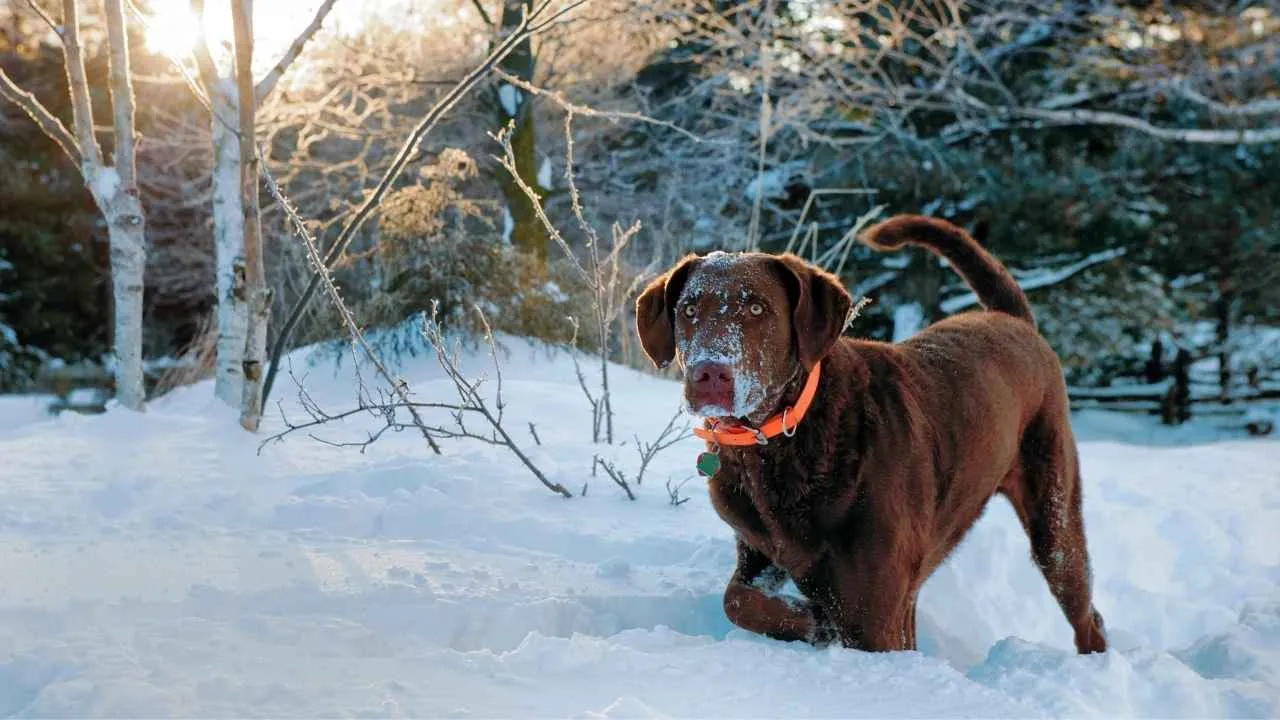
If there is one hunting dog that seems almost designed for miserable weather, it is the Chesapeake Bay Retriever. Developed around the Chesapeake Bay in the United States, this rugged retriever was bred to recover waterfowl in cold, rough conditions.
Its thick, water-resistant double coat is one of its defining features. The breed is also known for its strength and determination, allowing it to swim repeatedly when the job demands it. Unlike a dog that simply enjoys a dip, the Chessie was developed with serious retrieving work in mind.
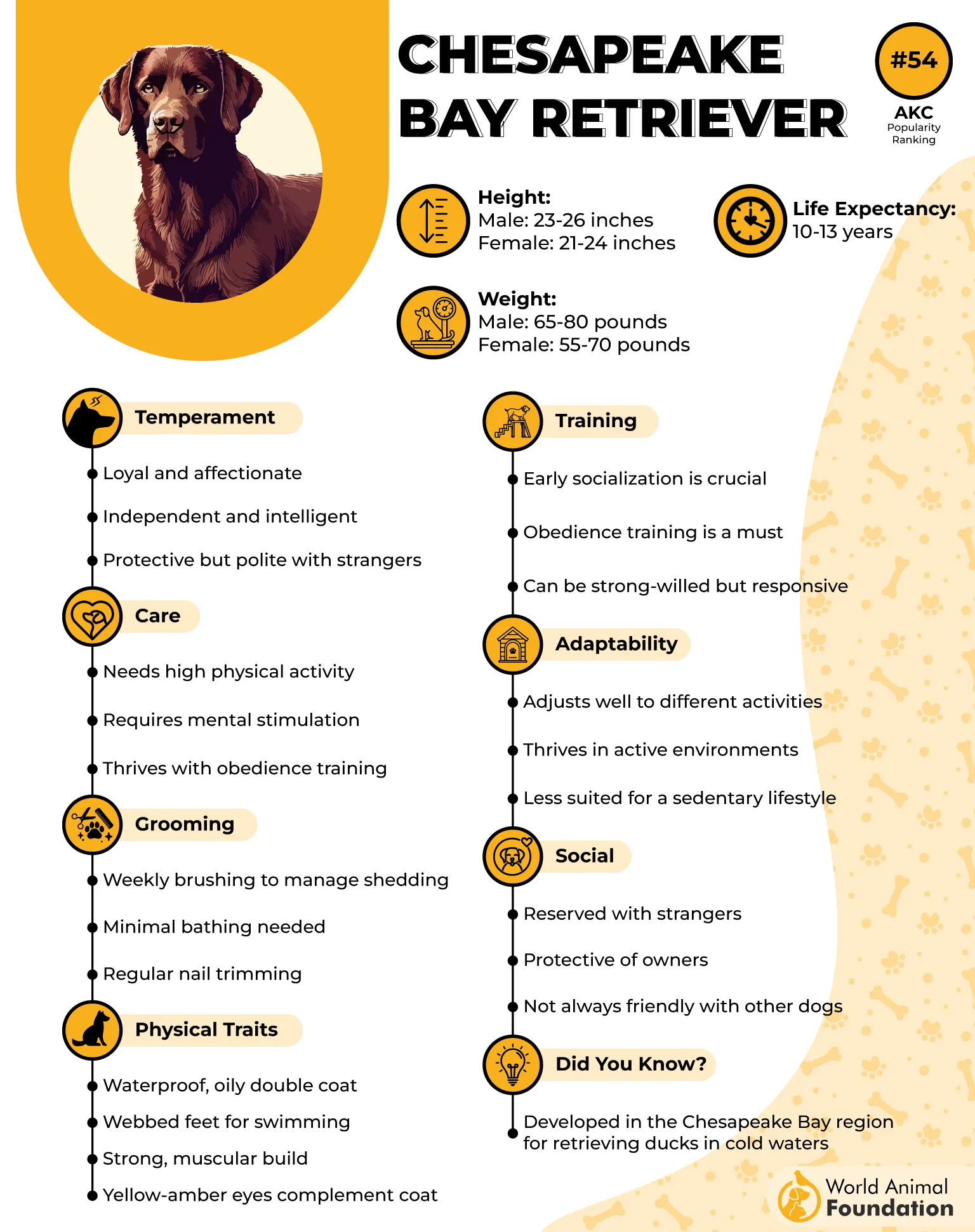
The Cold-Water Specialist
The Chesapeake Bay Retriever is at its best when its physical abilities have a purpose. Swimming, retrieving games, obedience work, and outdoor activities can help satisfy its considerable energy. Its coat generally requires relatively modest grooming beyond regular care, but its athletic lifestyle calls for much more than occasional walks.
Built for the Water
Has a dense double coat that protects in cold conditions.
Possesses powerful swimming ability and strong retrieving instincts.
Was developed specifically for waterfowl retrieval.
Can remain determined even in demanding outdoor conditions.
Makes a particularly good fit for active owners who enjoy water-based activities.
2. Bluetick Coonhound
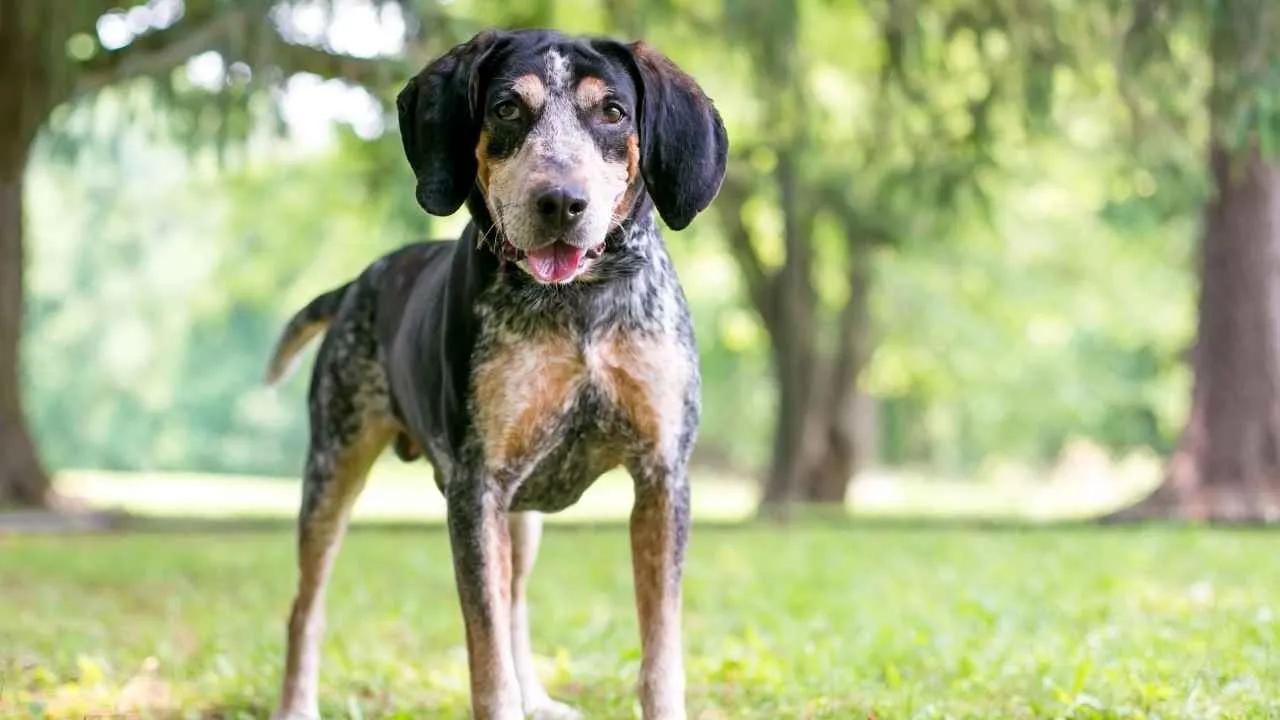
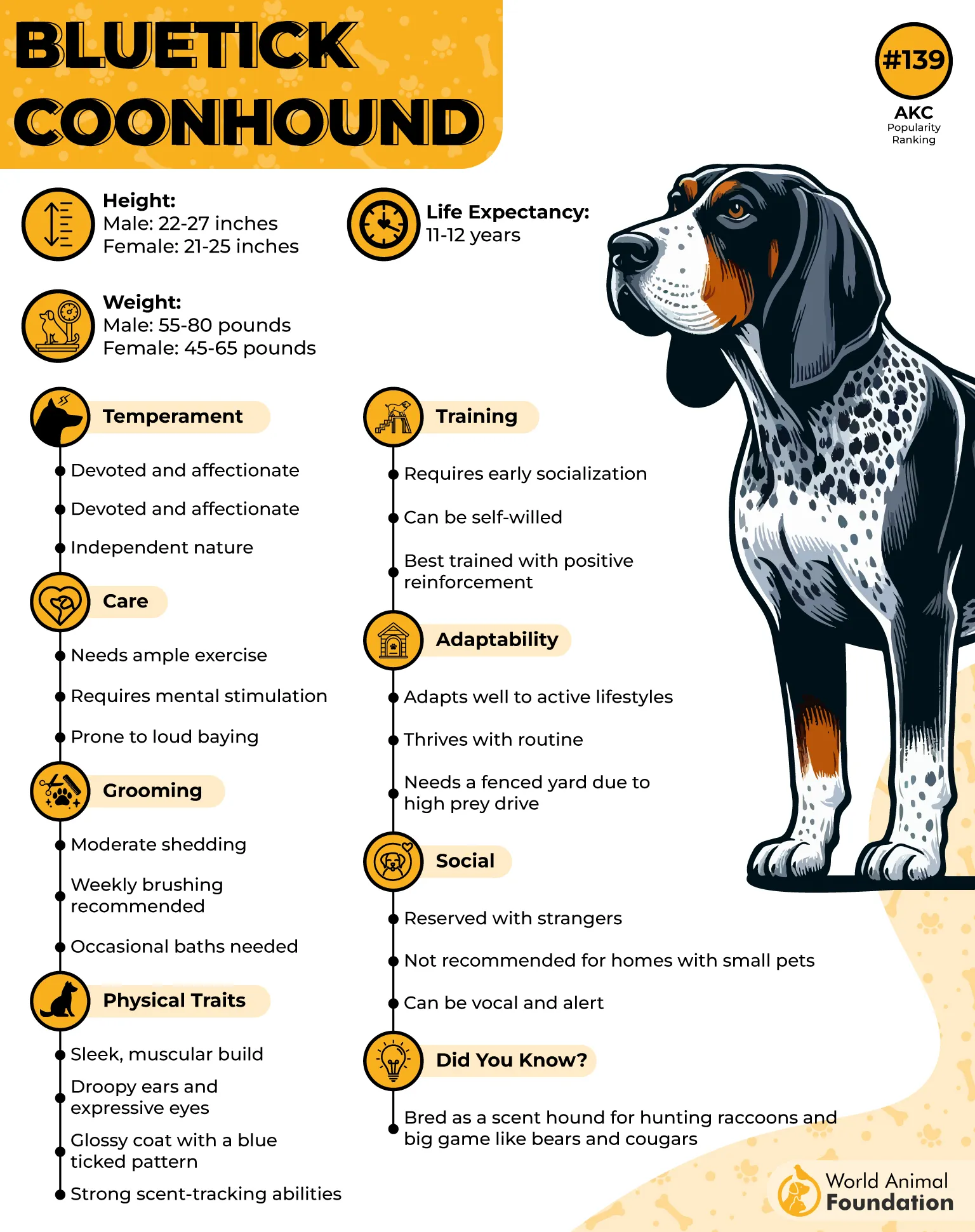
The Bluetick Coonhound brings a completely different skill set to the hunt. Rather than specializing in retrieving from water, this American scent hound is built around one extraordinary talent: following a smell, as per the AKC.
Its mottled blue-and-black coat is distinctive, but its nose is the real star. The breed was developed to track raccoons and other game, and it can stay focused on a scent trail while navigating complicated outdoor terrain. Once it picks up an interesting smell, its determination can be impressive.
The Nose That Keeps Working
Bluetick Coonhounds need more than physical exercise. Their minds need opportunities to investigate, search, and follow scents. Scent games, tracking exercises, supervised exploration, and obedience training can give their natural abilities an appropriate outlet.
A Specialist in Scent
Relies heavily on its exceptional sense of smell.
Can follow scent trails through forests and uneven terrain.
Shows considerable persistence once it begins tracking.
Enjoys activities that involve searching and scent discrimination.
Needs secure handling outdoors because an interesting trail can be highly distracting.
3. American Foxhound
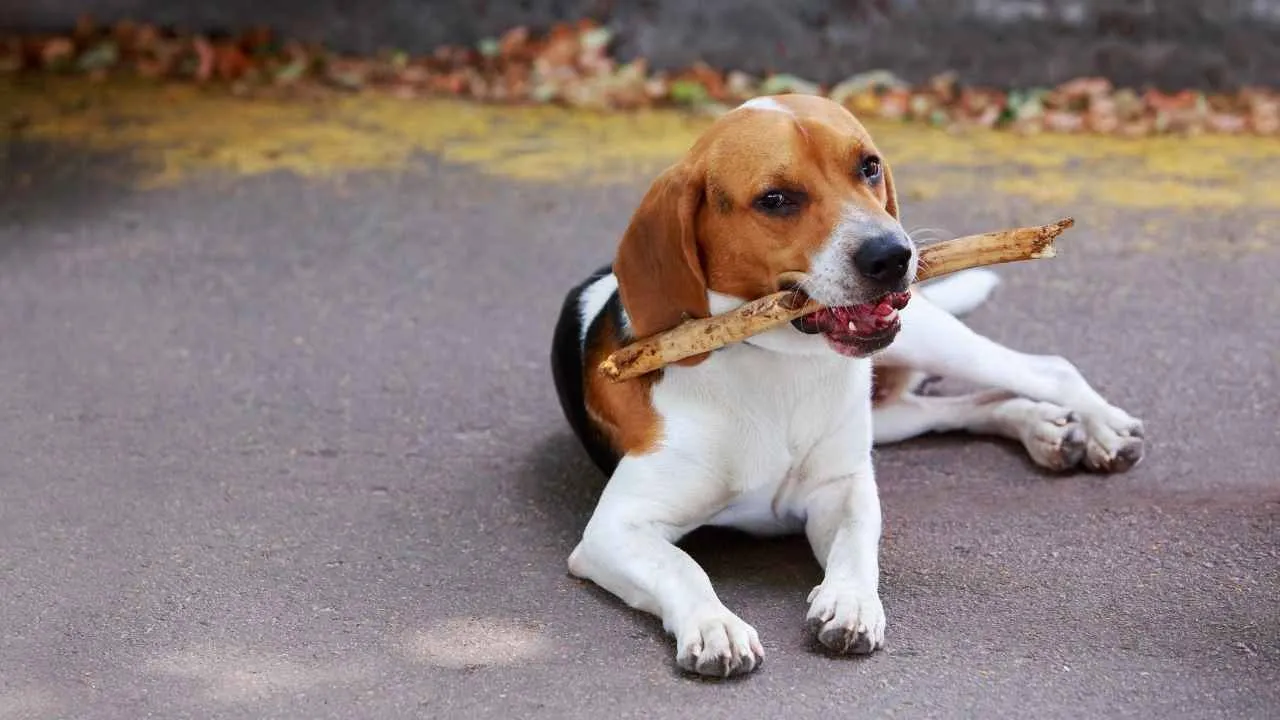
The American Foxhound was not created for short bursts of work. It was developed for the long haul.
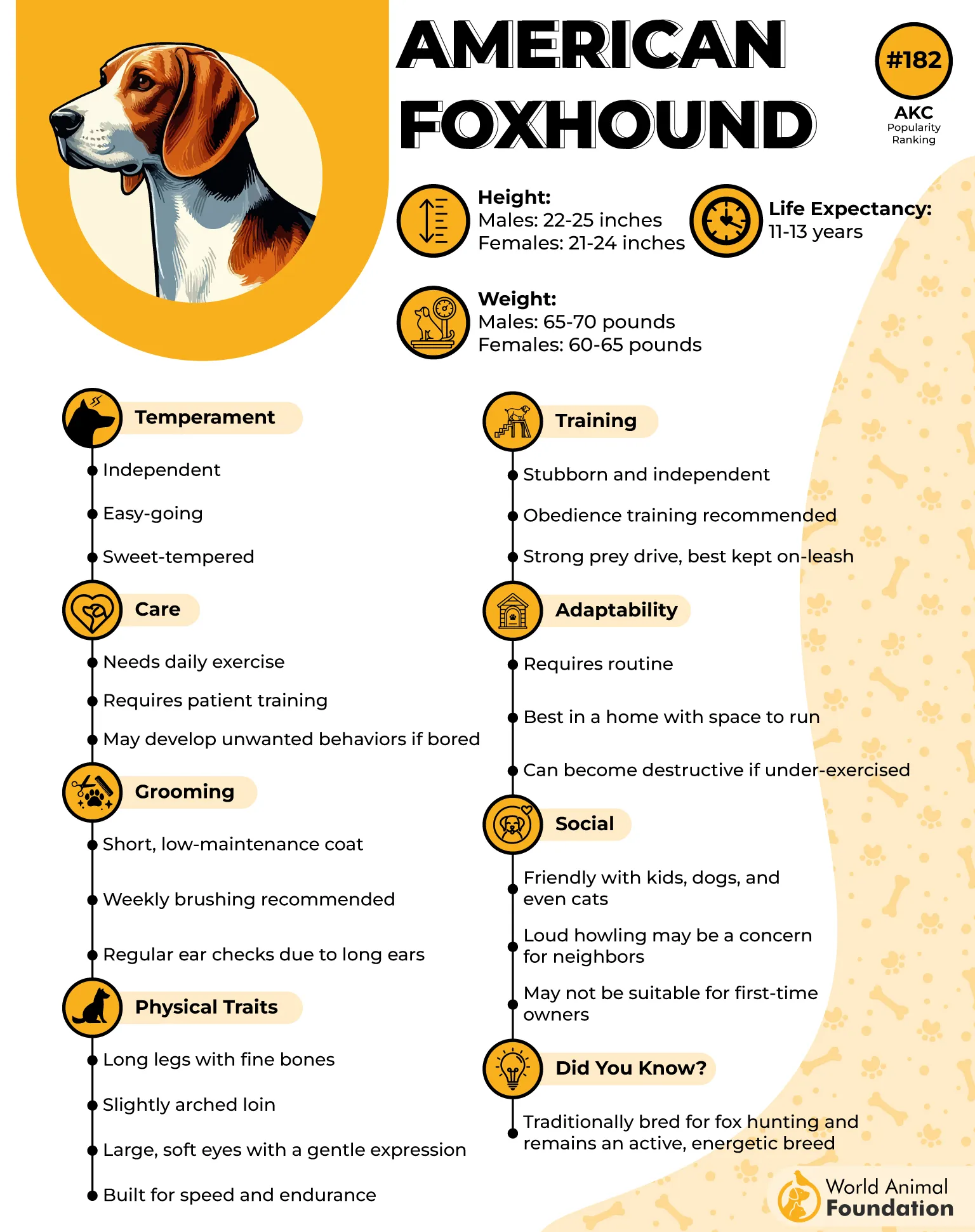
This graceful American hound combines a strong nose with remarkable stamina, allowing it to follow a scent across extensive stretches of countryside, according to Purina. Its history is closely associated with fox hunting, where dogs needed the speed and endurance to stay with a moving trail.
Its athletic frame gives it an efficient stride, while its energetic temperament makes it much better suited to an active lifestyle than a sedentary household.
The Marathon Runner of the Hound World
An American Foxhound needs room and opportunities to exercise safely. Long walks, controlled running, scent work, and other structured activities can help meet its needs. Because its nose can lead it toward whatever has captured its interest, secure fencing and responsible outdoor management are particularly important.
Made for Miles
Can maintain activity over considerable distances.
Uses scent to follow trails rather than relying primarily on sight.
Has the speed needed for demanding outdoor pursuits.
Possesses an athletic build suited to endurance work.
Thrives when its considerable exercise requirements are taken seriously.
4. German Shorthaired Pointer
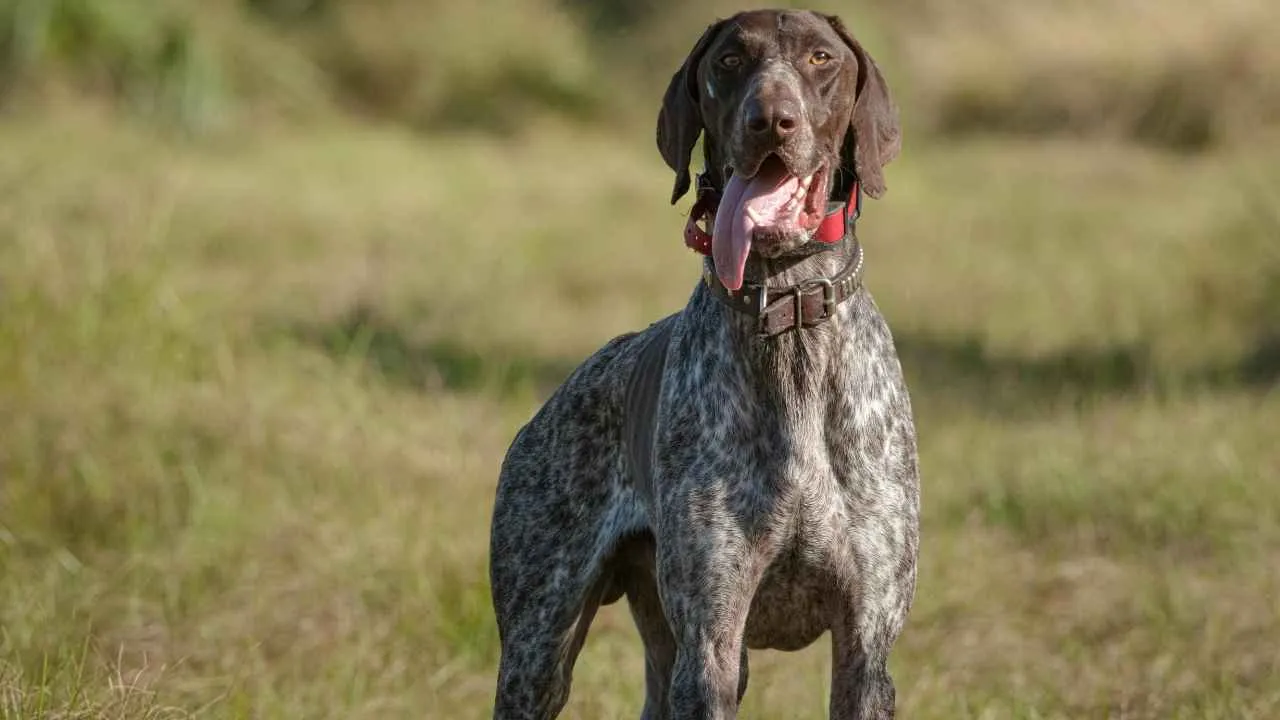
Some hunting dogs are specialists. The German Shorthaired Pointer is more like an all-round field athlete.
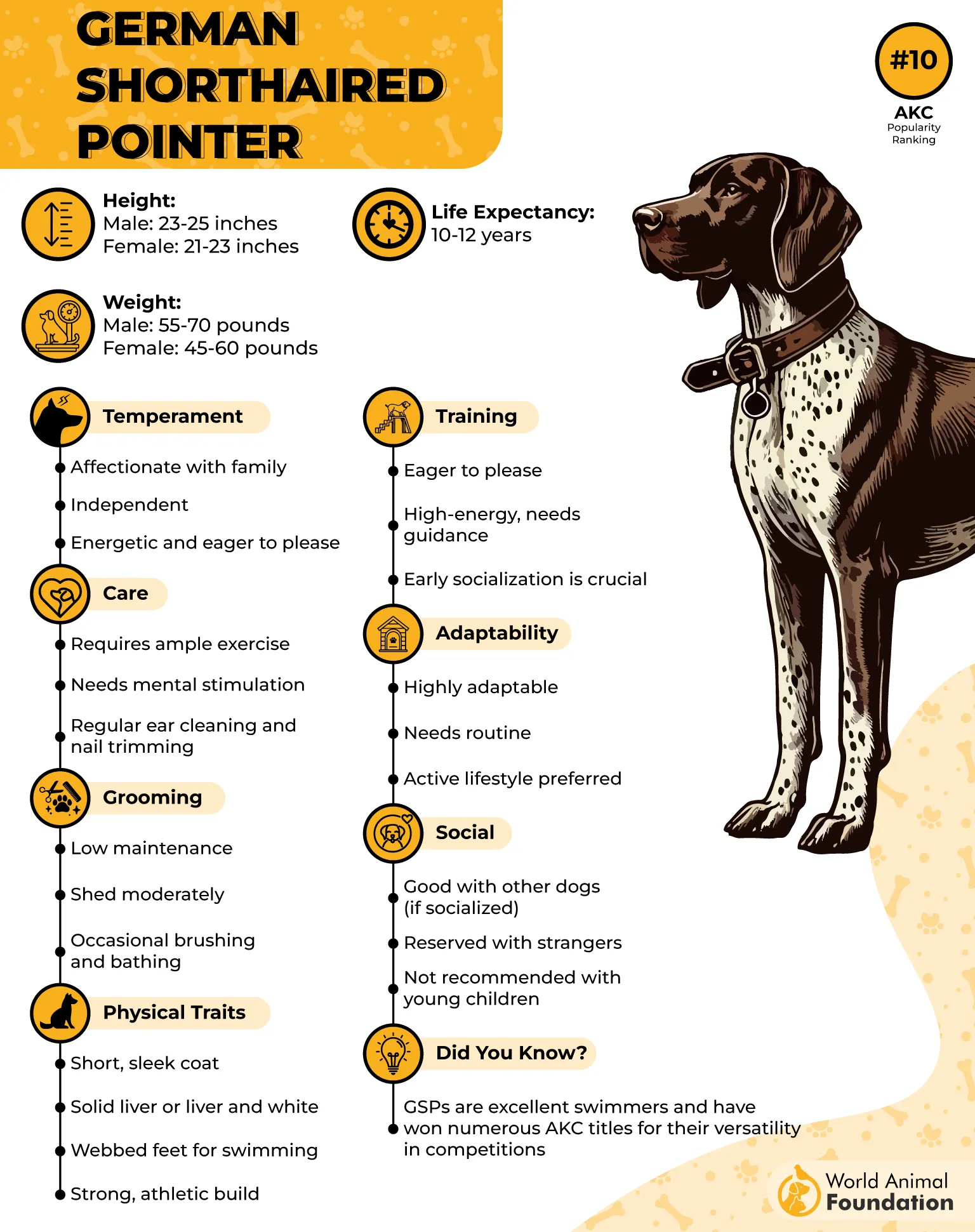
This versatile sporting breed can point toward game, retrieve, and work across different types of terrain when properly trained. Its combination of intelligence, speed, stamina, and eagerness to participate has made it a popular choice among people looking for a multipurpose hunting companion.
The muscular breed’s greatest strength may be its versatility. Rather than being defined by a single task, the German Shorthaired Pointer can learn a range of jobs and adapt to different sporting situations.
The All-Purpose Field Athlete
This is a breed that usually needs a job—or at least activities that feel like one. Running alone may not be enough. Training sessions, retrieving exercises, scent games, field work, and other mentally engaging activities can help prevent boredom.
More Than a Pointing Dog
Can locate and point toward game birds.
Can retrieve when appropriately trained.
Has the speed to cover ground quickly.
Combines physical endurance with considerable trainability.
Adapts well to owners who enjoy varied outdoor activities.
5. Mountain Cur
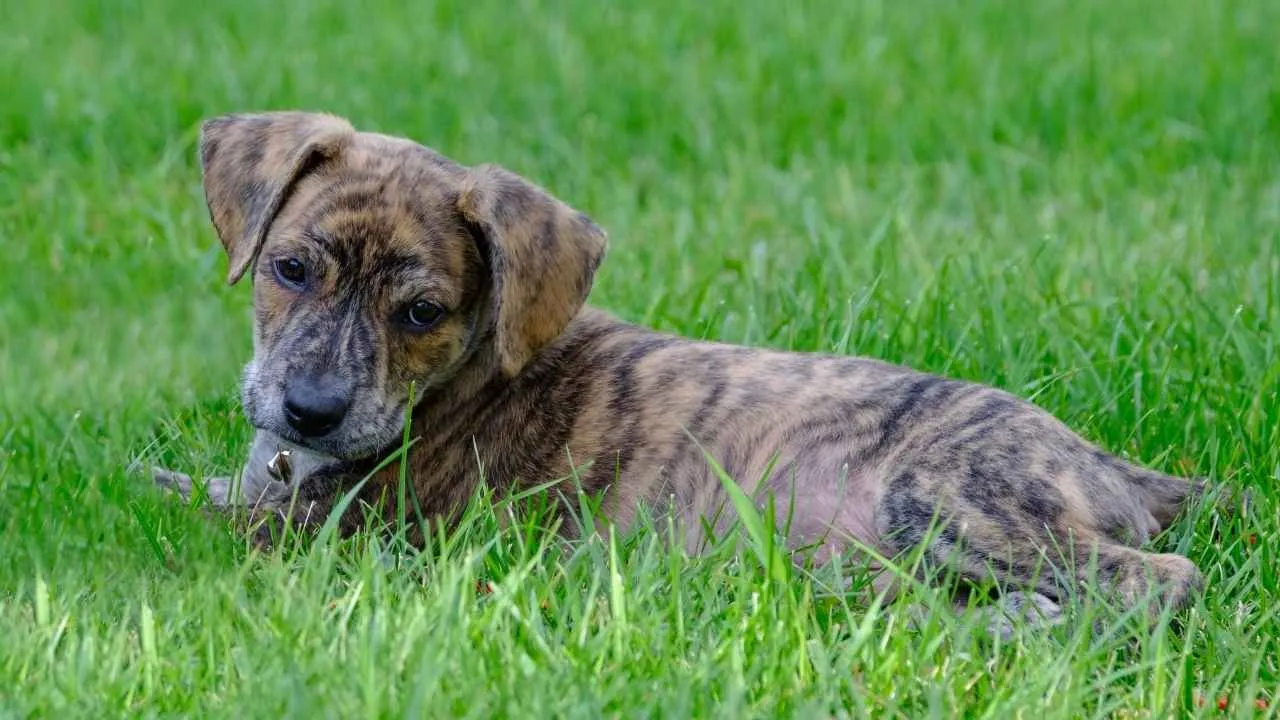
The Mountain Cur has a different kind of hunting heritage. Rather than being developed for one narrowly defined sporting role, this American working breed became valuable to settlers who needed a capable dog that could perform multiple jobs.
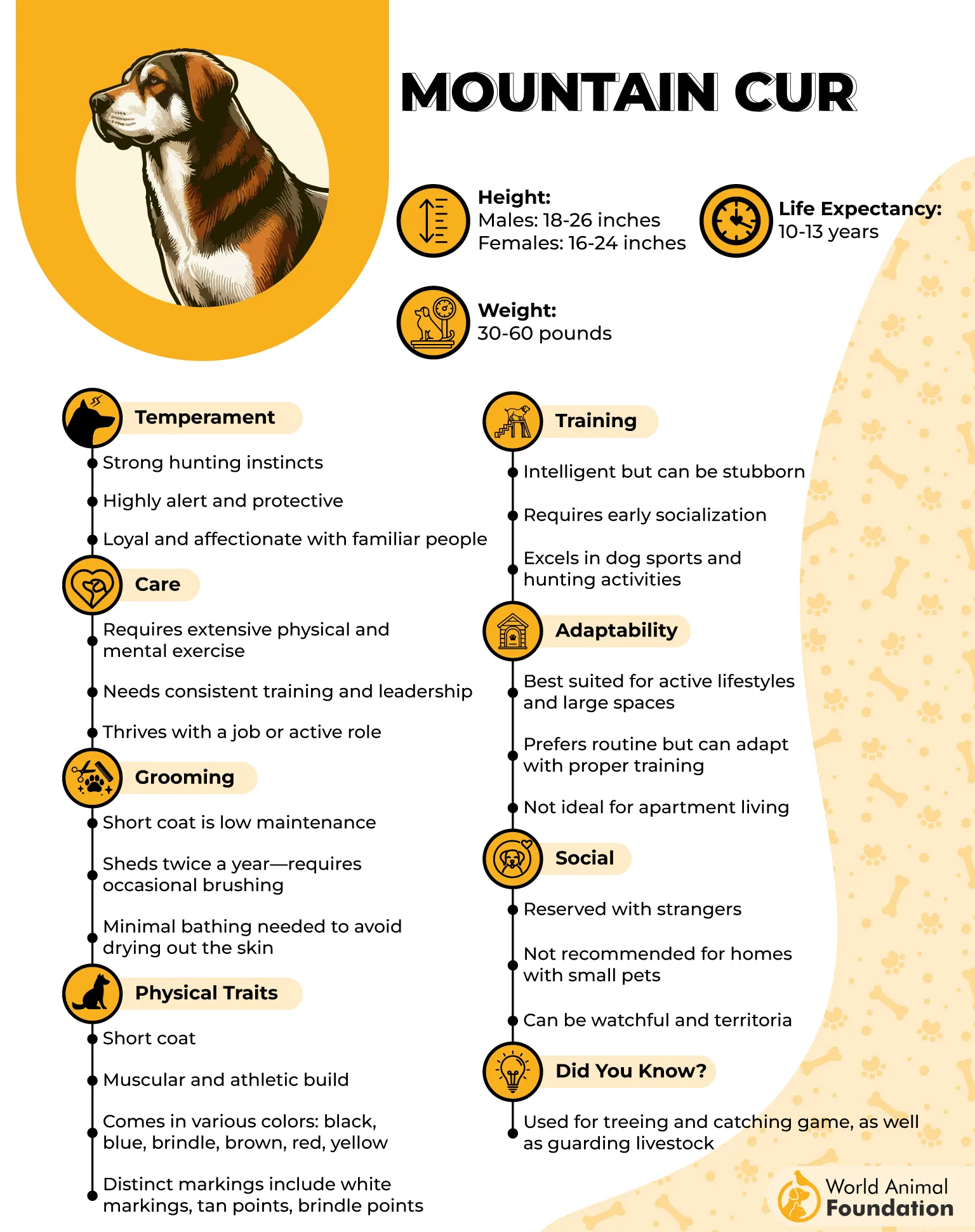
Mountain Curs were used for hunting and homestead work, and their history in rugged rural environments helped shape a confident, hardworking temperament. They are comfortable with outdoor challenges and are known for their courage and determination.
This is a breed that reflects the practical side of working-dog history: a dog was expected to be useful, dependable, and capable of handling demanding conditions.
The Backcountry All-Rounder
Mountain Curs tend to do best with owners who appreciate an active working dog. Hiking, obedience training, scent activities, and other structured outdoor pursuits can help channel their energy. Early socialization and consistent training are also important for developing a well-mannered companion.
Rugged by Nature
Has a history as a versatile hunting and working dog.
Can navigate wooded and uneven terrain effectively.
Combines athleticism with determination.
Enjoys activities that give its working instincts a constructive outlet.
Can be a devoted companion when provided with appropriate training and activity.
6. Vizsla
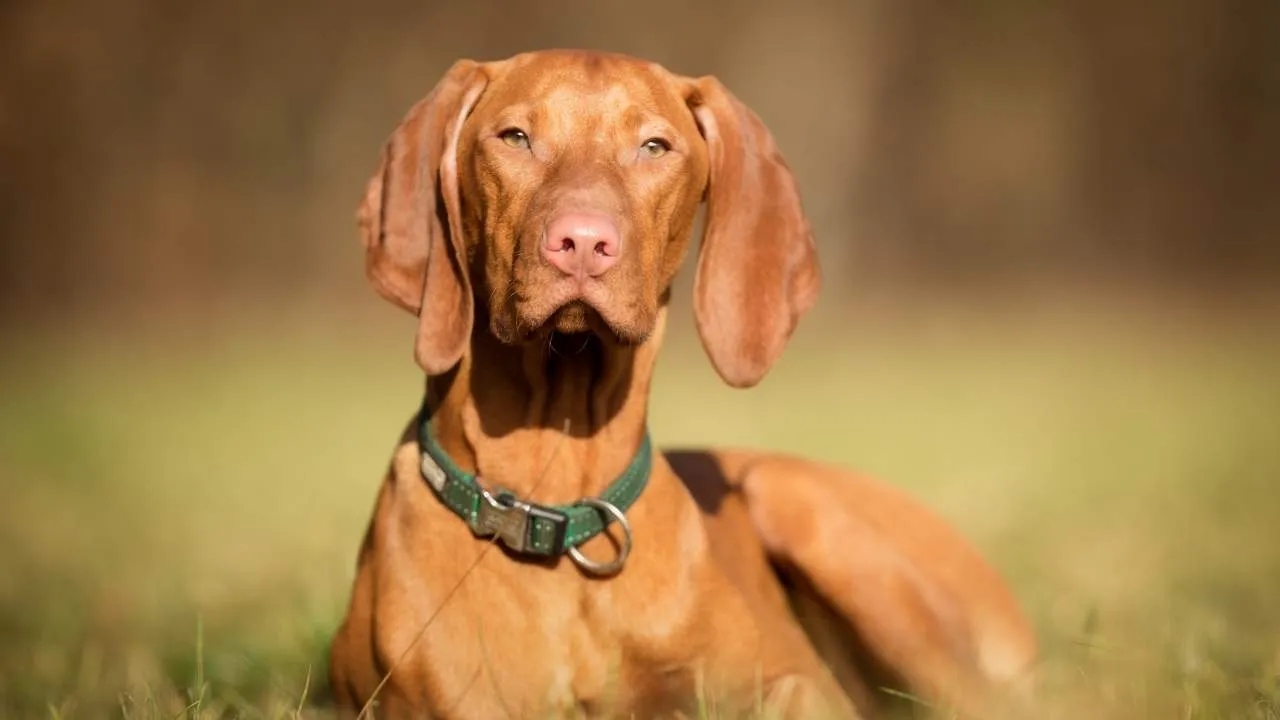
The Vizsla is often described as a close-working hunting dog because of the strong connection it forms with its handler. Originating in Hungary, this elegant sporting breed was developed to locate, point, and retrieve game.
Its athletic build gives it the speed and stamina needed for active field work, but its people-oriented nature is equally noteworthy. A Vizsla generally wants to participate alongside its human rather than simply work independently, as per PDSA.
That combination of athleticism and cooperation has helped give the breed its reputation as a responsive sporting companion.
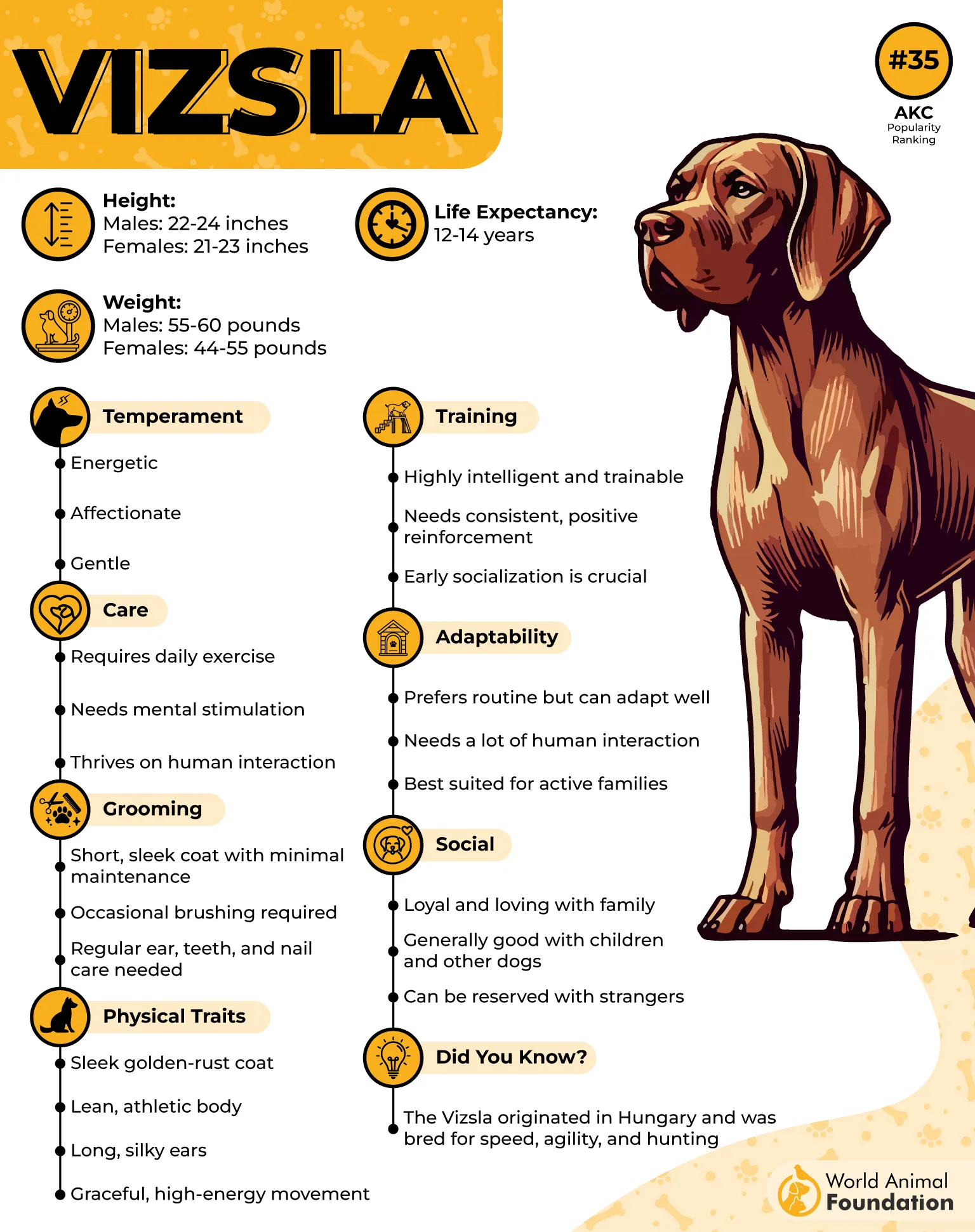
The Handler’s Shadow in the Field
Vizslas need plenty of activity and human interaction. They can excel at activities such as field training, retrieving, running, hiking, scent work, and obedience. Their short coat is easy to care for, but meeting their exercise and companionship needs is far more important than grooming.
Built to Work Together
Can locate and point toward game.
Is capable of retrieving with suitable training.
Has impressive speed and endurance.
Tends to form a close working relationship with its handler.
Responds well to consistent, reward-based training and meaningful activity.
7. Weimaraner
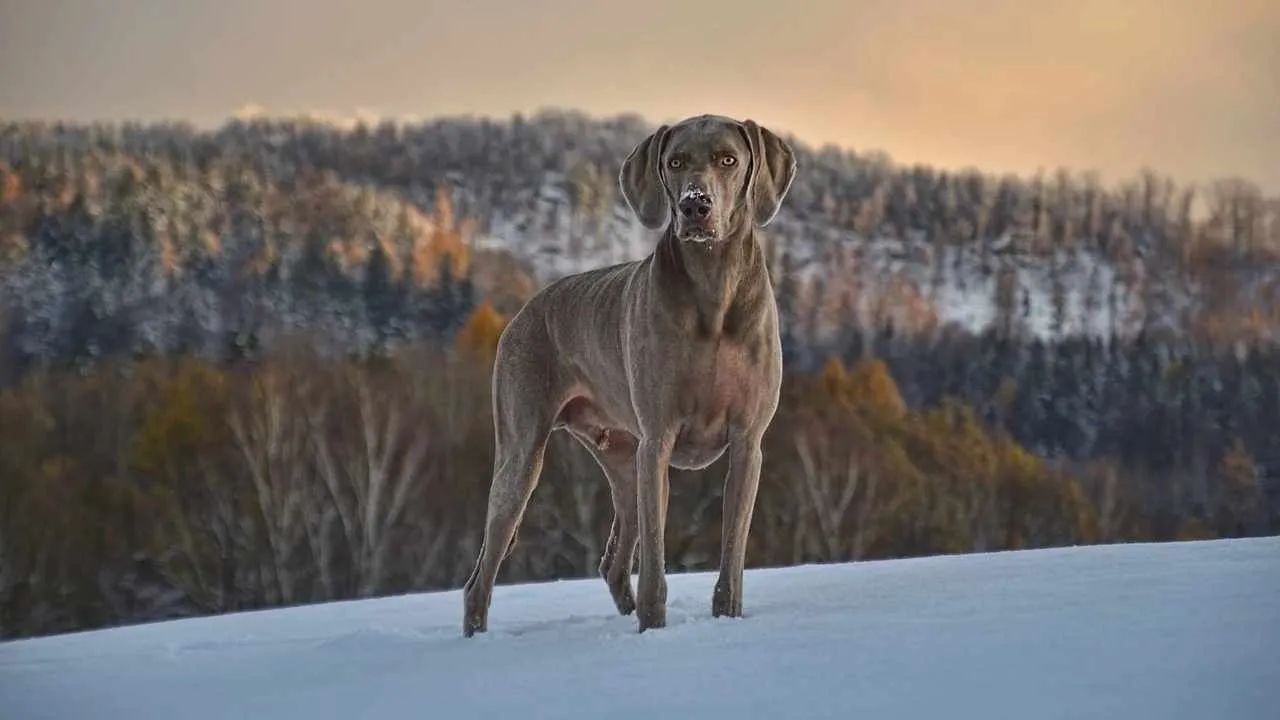
Few hunting breeds are as instantly recognizable as the Weimaraner. Its sleek silver-gray coat and striking appearance may attract attention, but beneath that elegant exterior is a powerful, athletic working dog.
The loyal breed originated in Germany and was initially associated with hunting large game before becoming useful for a broader range of sporting activities. Today, its speed, stamina, intelligence, and determination remain central to its character.
A Weimaraner is not a breed that is likely to be satisfied with a brief daily stroll. Its physical energy and desire for interaction make it better suited to people who can incorporate exercise, training, and structured activities into everyday life.
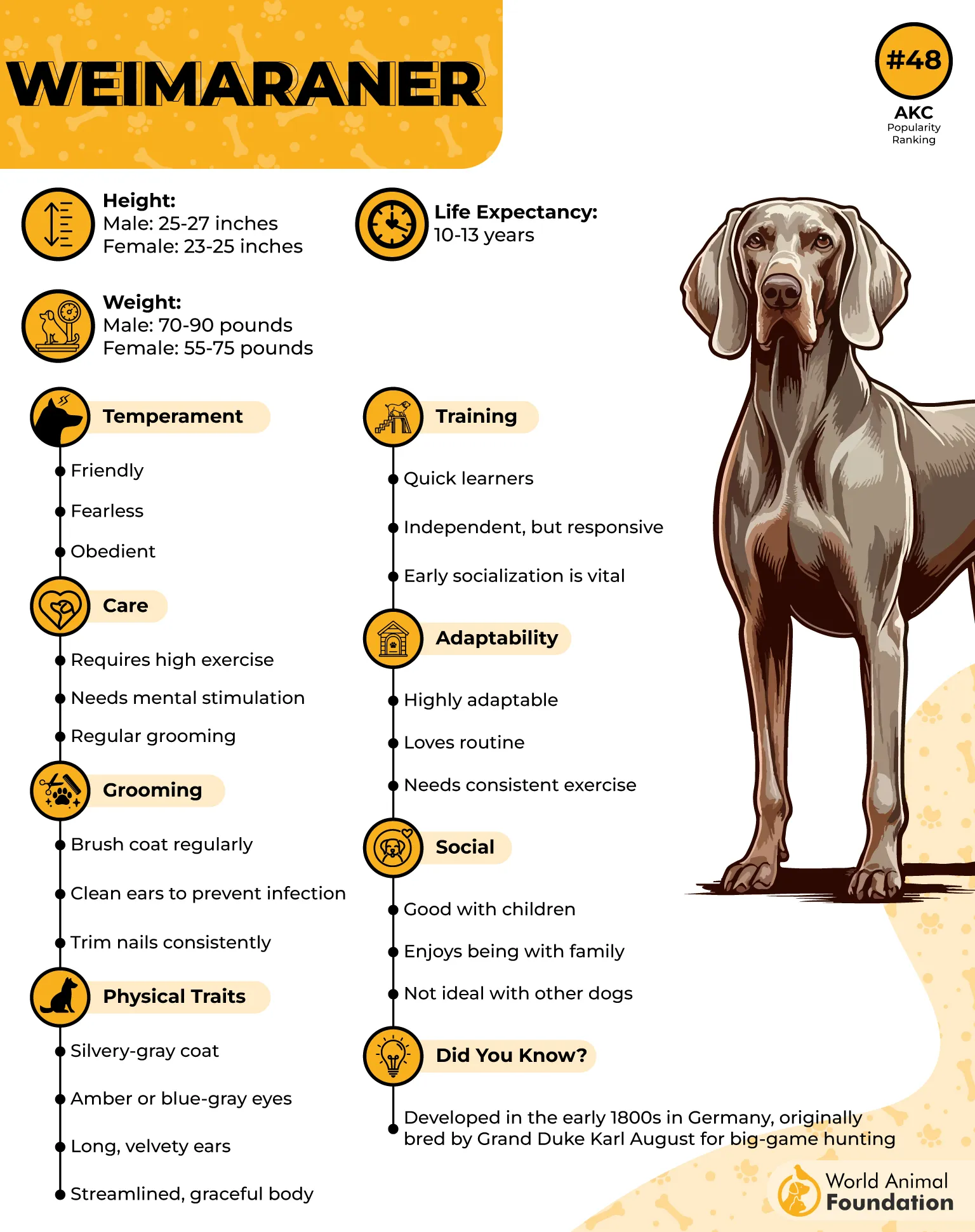
The Silver Athlete
Weimaraners benefit from activities that challenge both body and brain. Tracking exercises, obedience, retrieving, hiking, running, and other structured pursuits can help provide the stimulation they need. Consistent training is especially valuable for such an energetic and intelligent breed.
Speed With Purpose
Has a history as a versatile hunting dog.
Combines speed with considerable stamina.
Can participate in tracking and field activities when properly trained.
Enjoys challenging tasks that require concentration and movement.
Needs an active lifestyle and consistent interaction to stay content.
Conclusion
These seven breeds show just how different a working dog’s idea of “the hunt” can be. One may read the water and retrieve a bird, another may follow an invisible scent through woodland, while another covers mile after mile beside its handler. Their abilities are not interchangeable—and that is precisely what makes each breed special.
For anyone fascinated by working dogs, their greatest appeal goes beyond hunting itself. It is the relationship between instinct and training: a natural ability becomes truly useful when a dog learns how to channel it alongside its human partner.
Whether you are drawn to the Chesapeake Bay Retriever’s resilience, the Bluetick Coonhound’s extraordinary nose, the American Foxhound’s endurance, or the close partnership offered by the Vizsla, responsible ownership should come first.
These are intelligent, energetic animals with deeply rooted working instincts. Giving those instincts safe, lawful, and purposeful outlets is what allows their remarkable abilities to become an asset rather than a challenge.
