




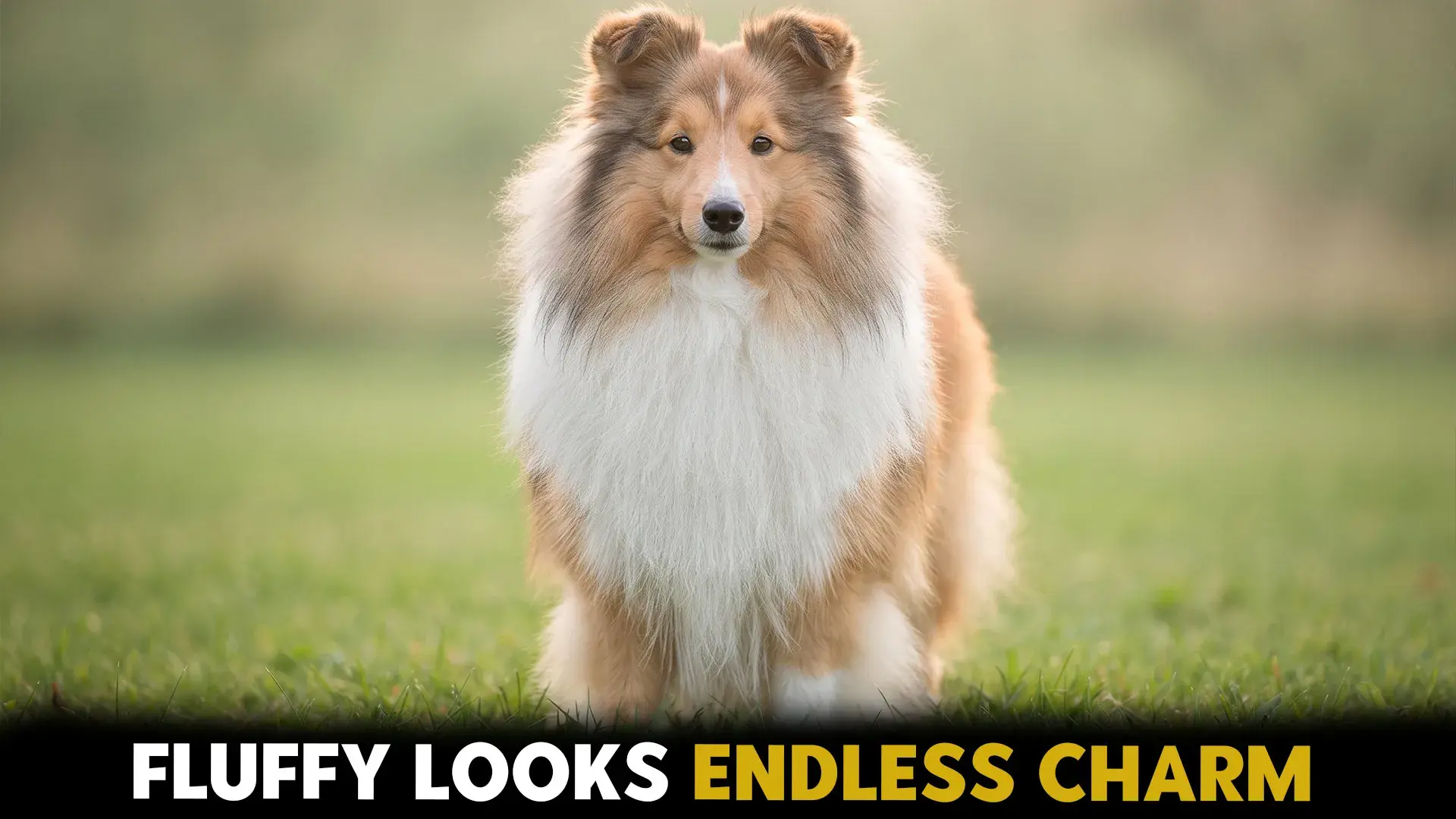
There’s something irresistible about a dog with a soft, fluffy coat. One good cuddle, and it’s easy to see why these furry companions have a way of stealing hearts.
Their plush coats can make them look like walking clouds, but that extra fluff also comes with different grooming needs, shedding levels, and care routines.
Fluffy dogs aren’t all alike, either. Some are small enough to curl up beside you, while others are large, sturdy companions with thick coats designed to handle cold weather. Their personalities can vary just as much, from playful and energetic to calm and affectionate.
Ready to meet some of the fluffiest dogs around? We’ve rounded up seven breeds known for their soft, eye-catching coats, along with what makes each one special.
Dog Breeds with Fluffy, Soft Coats That Stand Out
1. Pomeranian
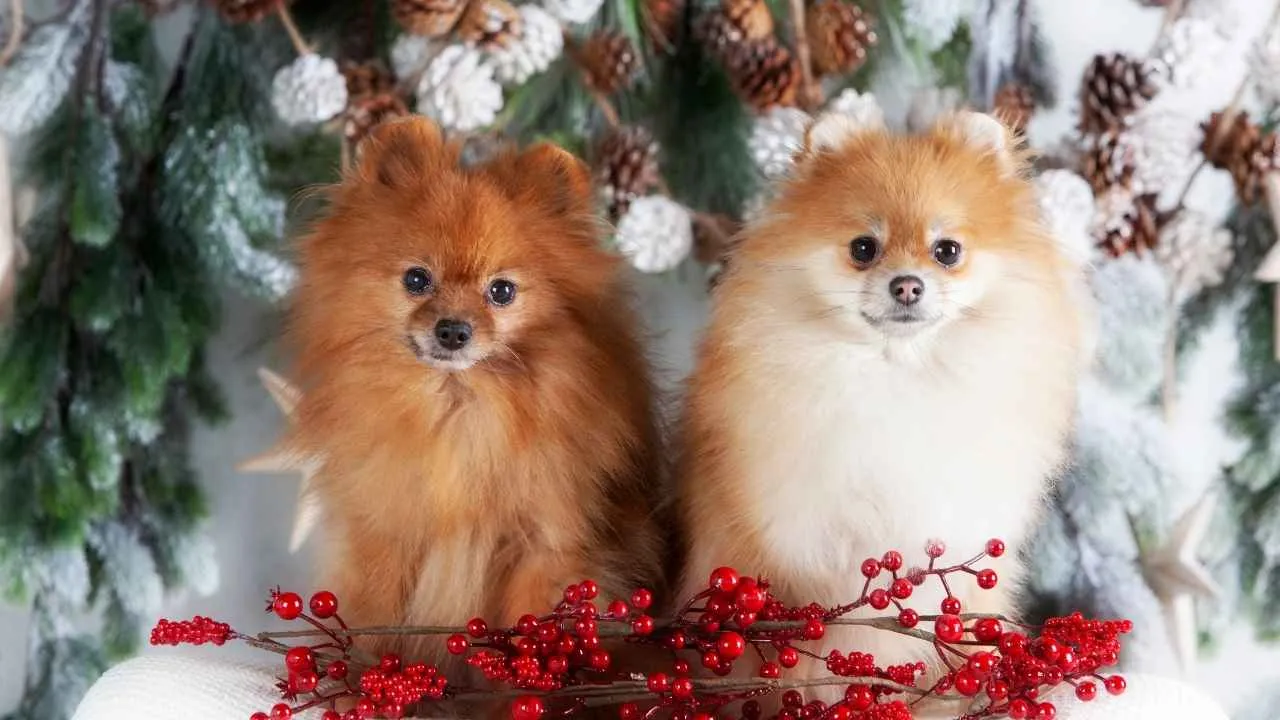
Pomeranians are small members of the Spitz family and descendants of larger sled and working dogs. Their ancestors include breeds such as the Akita, Alaskan Malamute, Chow Chow, and Samoyed, according to PetMD.
These small dogs were once much larger and used for herding before selective breeding created the tiny companion dogs we know today.
Their fox-like faces, thick neck ruffs, square bodies, and fluffy double coats give them a distinctive look. Their coats can appear in many colors and patterns, including white, black, sable, brindle, merle, and tri-colored combinations.
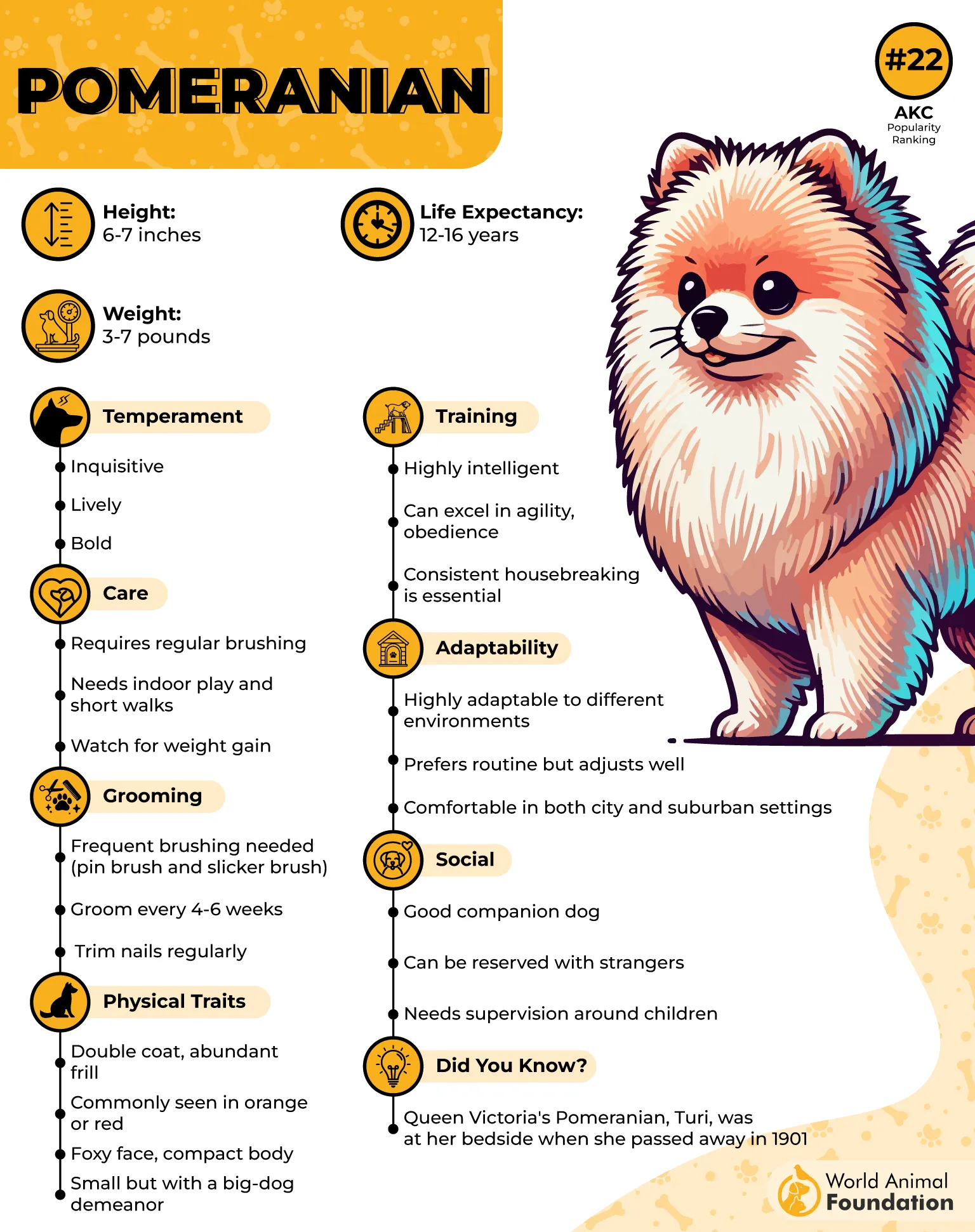
Pomeranians may be tiny, but their personalities are anything but small. They are bright, playful, confident, and full of energy. They enjoy games, adventures, attention, and social interaction.
They are also quick learners and can pick up tricks and obedience training easily, although their independent and sometimes stubborn streak can show. They usually get along well with other pets and can be entertaining companions for families, singles, and older adults.
Pomeranians can be wary of strangers and make enthusiastic watchdogs, often barking more than expected.
Grooming Needs
Daily brushing helps prevent tangles and keeps their fluffy double coats healthy.
Regular professional grooming can make coat care easier and help maintain their thick fur.
Sanitary trimming around the rear can prevent waste from becoming trapped in the coat.
Keeping their coats well-groomed is important for both appearance and overall coat health.
2. Bichon Frise
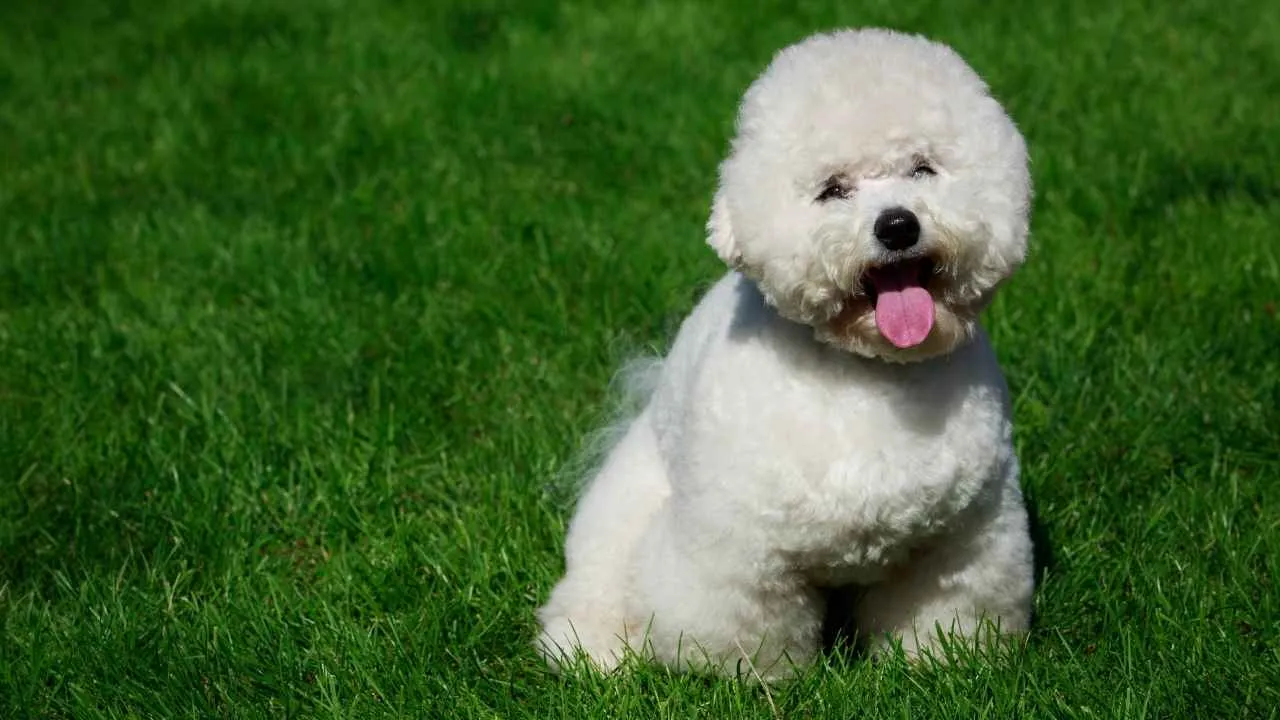
If a fluffy dog could brighten a room just by walking into it, it would be a Bichon Frise. These cheerful, affectionate dogs are playful, curious, and eager to make friends. They enjoy meeting new people and usually get along well with children and other pets.
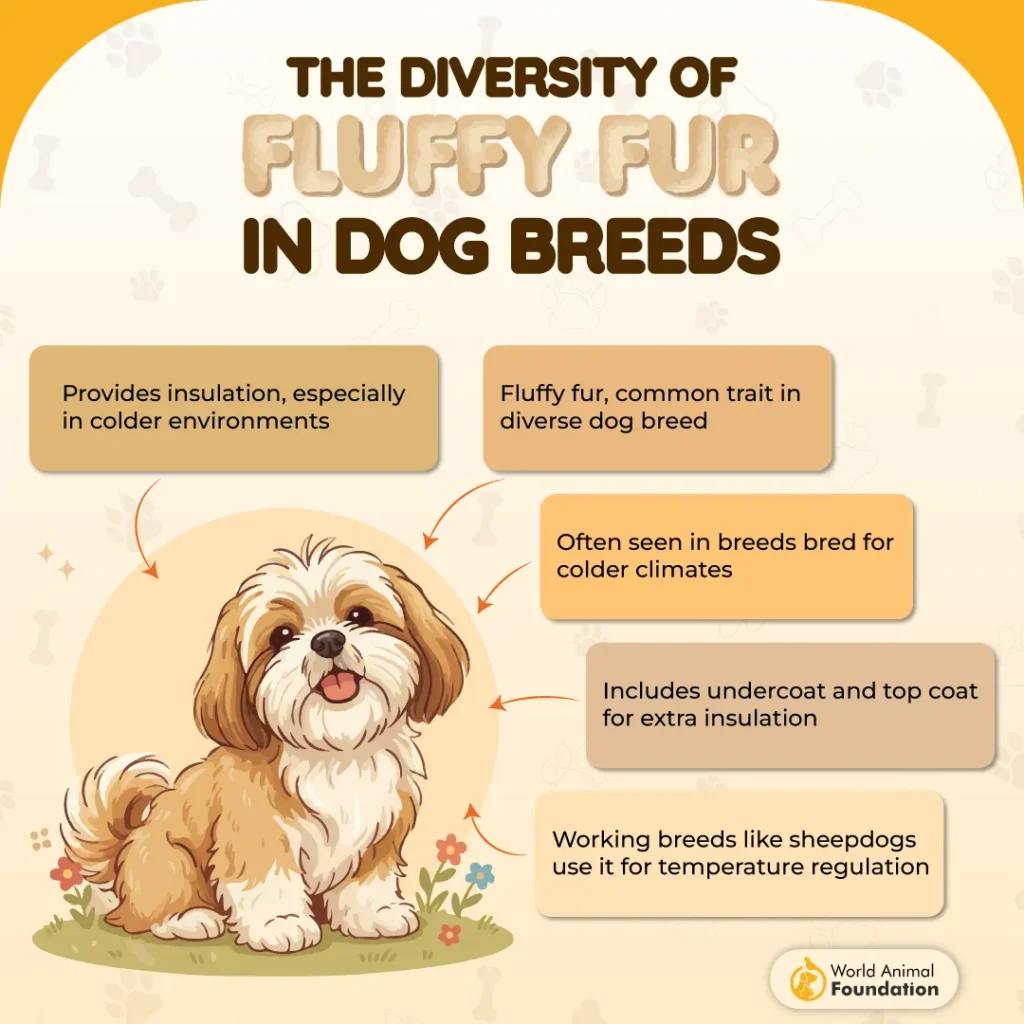
They are also smart and eager to please, which makes training easier. Their friendly nature makes them wonderful companions for many types of homes, including apartments and families. They can be enthusiastic watchdogs, though they may bark at unfamiliar sounds or become overly excited.
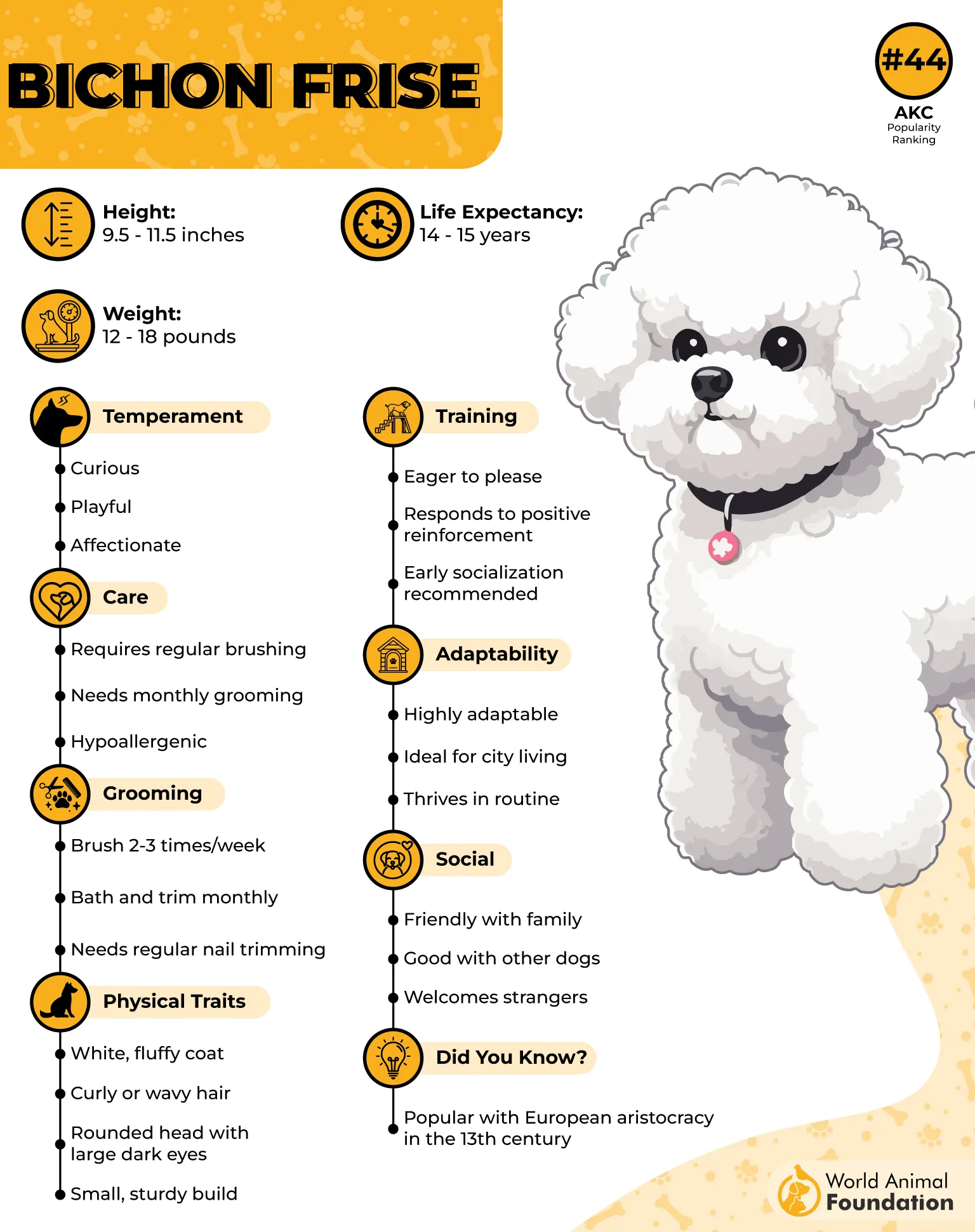
Bichons love being around their families and enjoy a good mix of playtime and cuddles. They can spend their energy learning tricks or playing with toys, then happily settle beside their people. Their social nature also means they do not enjoy being left alone for long periods.
Early training and socialization can help them become confident and well-mannered companions. While they are friendly and lively, their small size means they are not suited to being protection dogs.
Grooming Needs
Daily brushing is important to prevent mats and tangles in their curly double coats.
Monthly baths can help keep their white coats soft, clean, and fresh.
Regular professional grooming is needed to keep their fur neatly trimmed.
Bichons are minimal shedders and may suit some people with dog allergies, but no dog is completely hypoallergenic.
3. Shetland Sheepdog
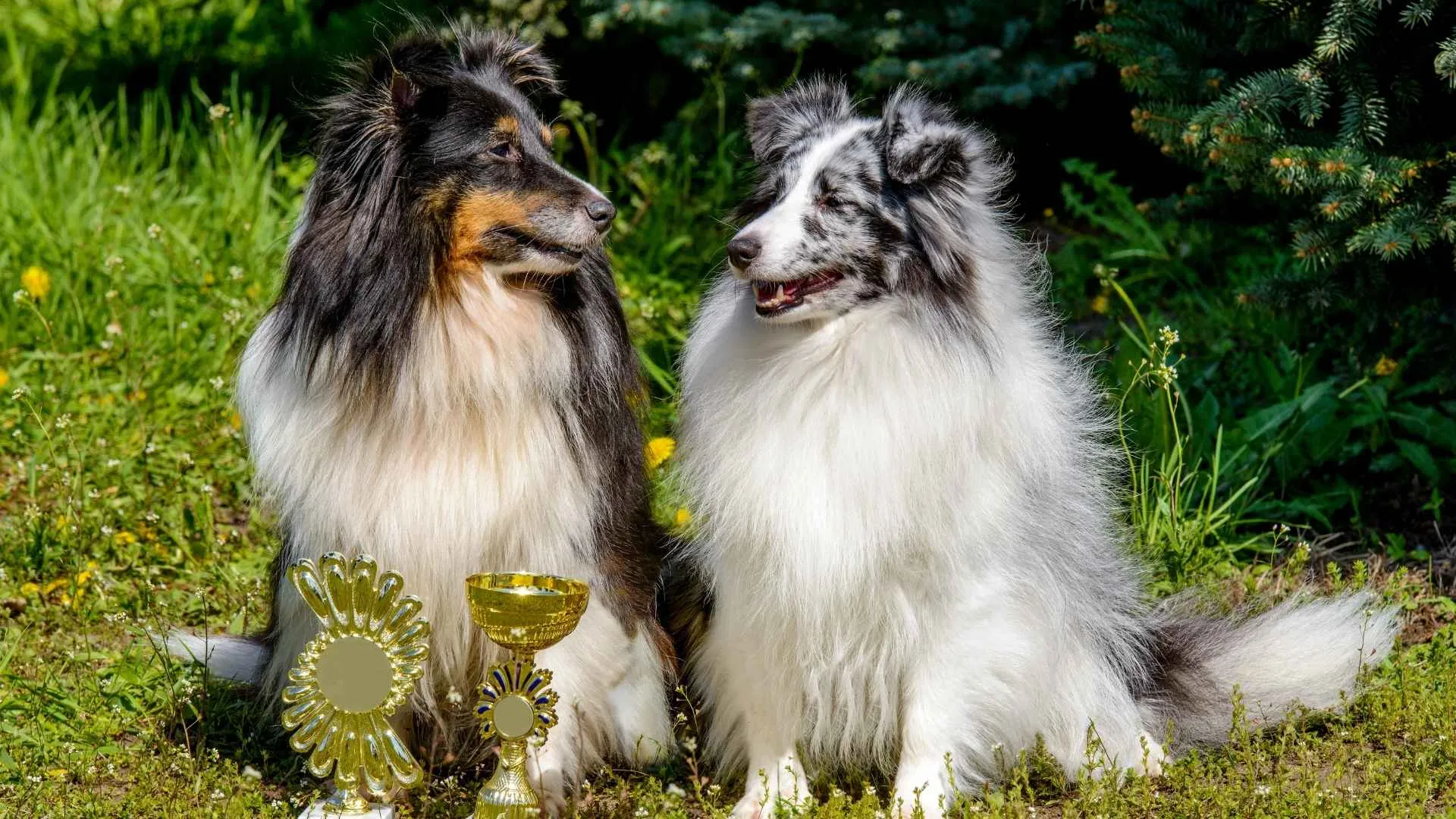
Shetland Sheepdogs, often called Shelties, come from the Shetland Islands of Scotland. The area has harsh conditions and limited vegetation, so smaller livestock and compact herding dogs were especially useful.
Although Shelties may look like smaller Collies, they are a distinct breed developed for this environment. Their long, straight coats, wedge-shaped heads, and upright ears give them an elegant and fluffy appearance.
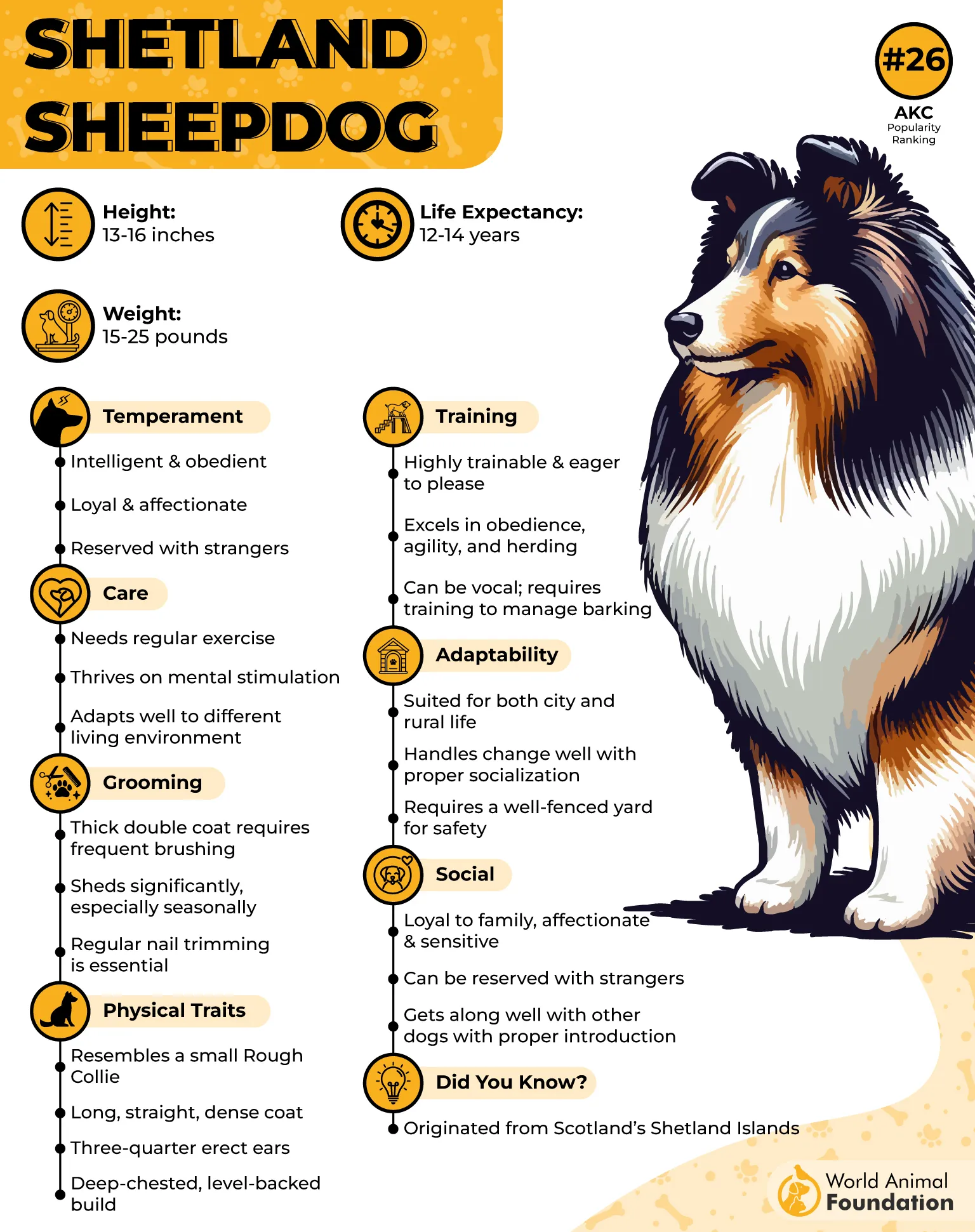
Shelties are gentle, affectionate, and deeply devoted to their families. They are also intelligent working dogs that love having a job to do. Their eagerness to please helps them excel in obedience and agility training.
They need plenty of physical activity and mental stimulation to stay happy and avoid unwanted behaviors. They can be cautious around strangers and often bark when someone approaches or when they get excited.
Orvis says some may also nip at unfamiliar people or children, so early training and socialization are helpful. Under all that beautiful fur is an active, alert, and loving companion.
Grooming Needs
Frequent brushing helps manage their heavy, long coats and reduce tangles.
Regular coat care is important to keep their fur healthy and looking neat.
Their thick coats need consistent attention, especially during heavier shedding periods.
4. American Eskimo Dog
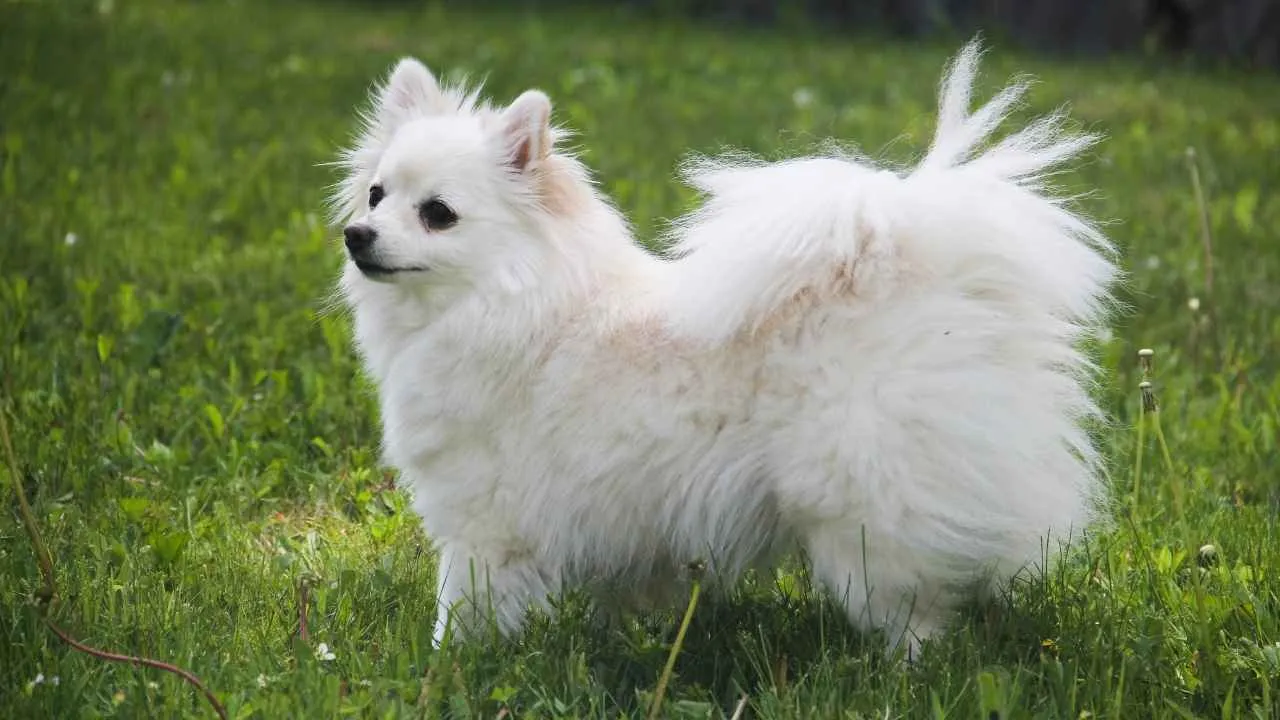
The American Eskimo Dog, often called an Eskie, is known for its striking white or cream double coat and cheerful personality. Despite its name, this breed is not related to the North American Inuit peoples.
Eskies descended from German Spitz dogs brought to the United States by German immigrants. They once worked as herding and guarding dogs and later became popular circus performers in the late 1800s. Today, they are mainly loved as loyal family companions.
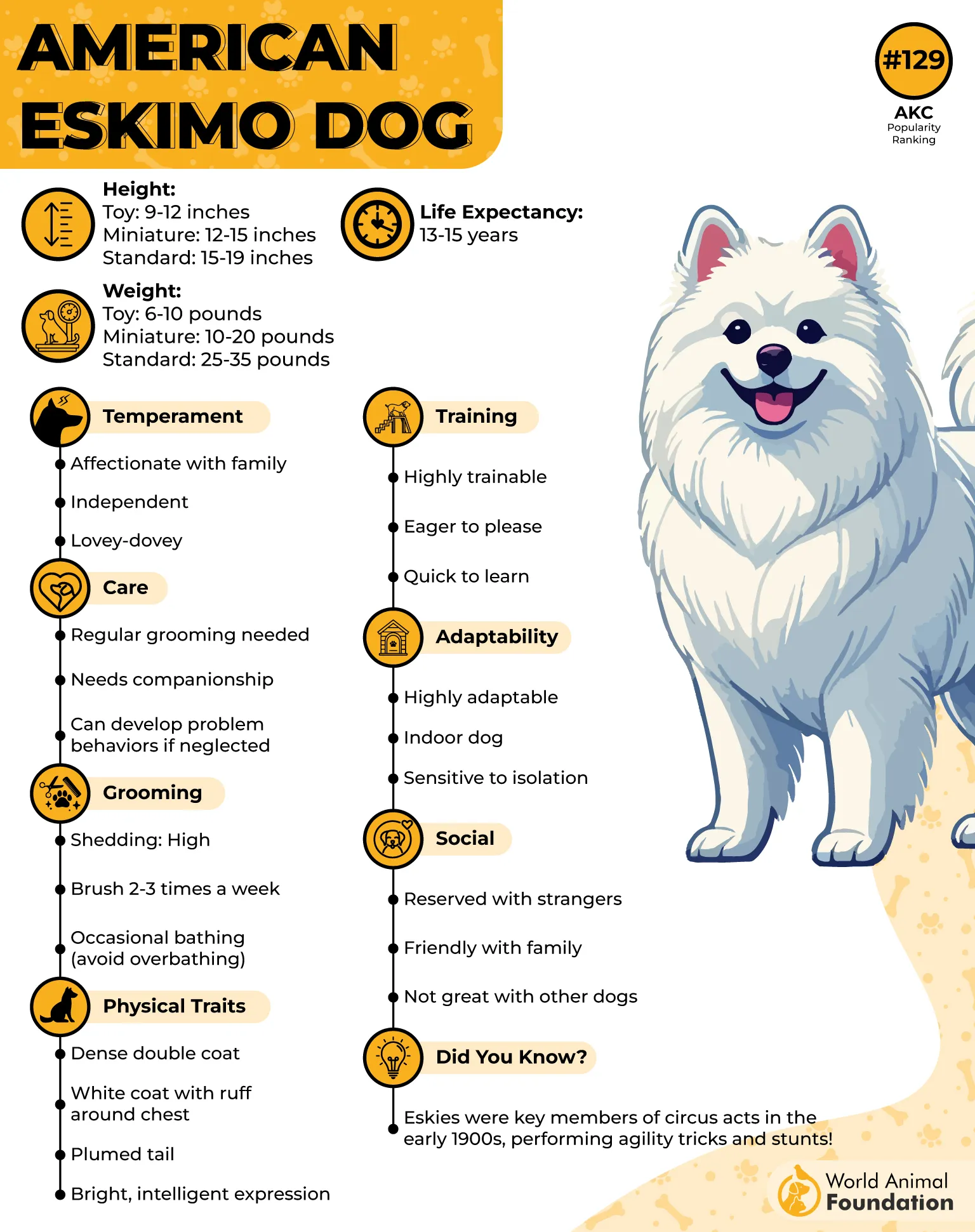
Eskies are intelligent, alert, friendly, and eager to please. They form strong bonds with their people and love being the center of attention. With early socialization, they can live happily with children, cats, and other dogs.
They are also good watchdogs, although their alert nature can lead to excessive barking. These clever dogs need regular exercise, training, and mental stimulation.
Without enough to do, they may become bored and start digging, chewing, or finding creative ways to escape. Consistent training and a little patience can help keep their mischievous side under control.
Grooming Needs
Regular brushing and combing at home help maintain their thick double coats.
Most Eskies do not need extensive professional grooming.
Consistent coat care helps keep their fluffy fur clean, healthy, and manageable.
5. Japanese Spitz
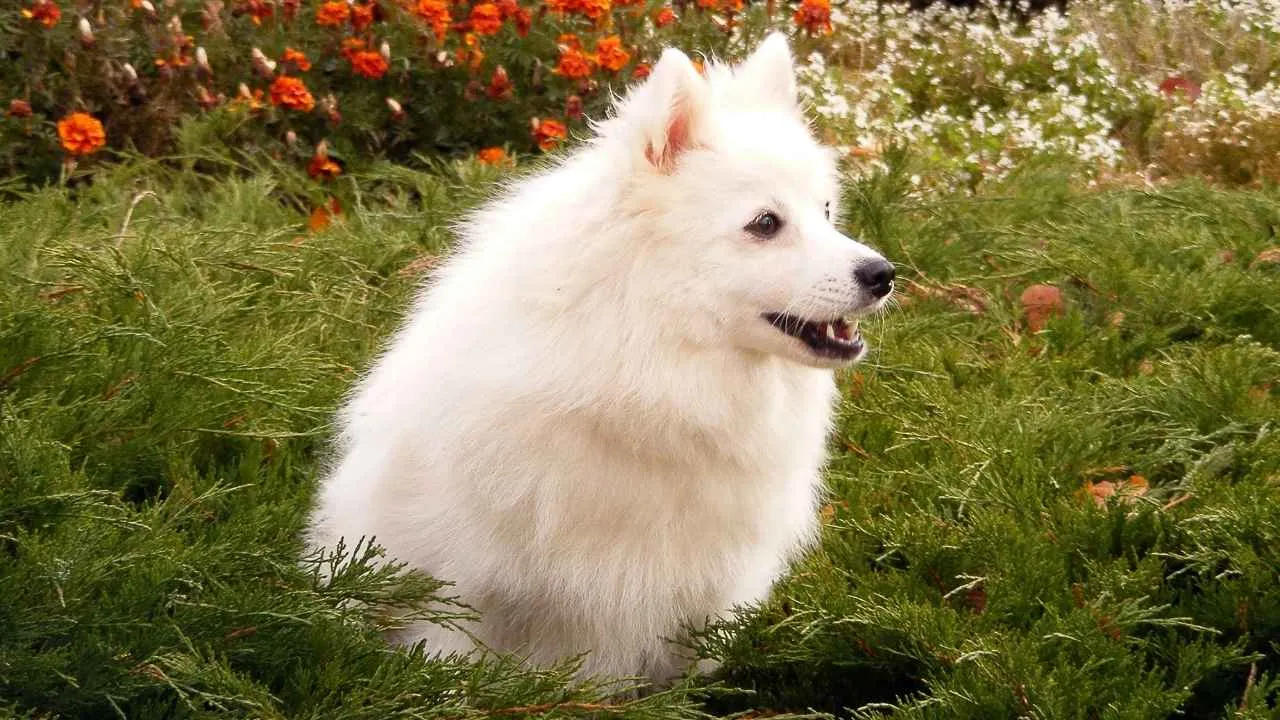
The Japanese Spitz is hard to miss with its elegant white double coat, upright triangular ears, catlike feet, and fluffy tail carried over its back.
Developed in Japan in the 1920s, this small companion breed shares the classic Spitz look seen in several related breeds. Their thick, medium-length coats add to their cloud-like appearance, while their clean and polished look makes them especially eye-catching.
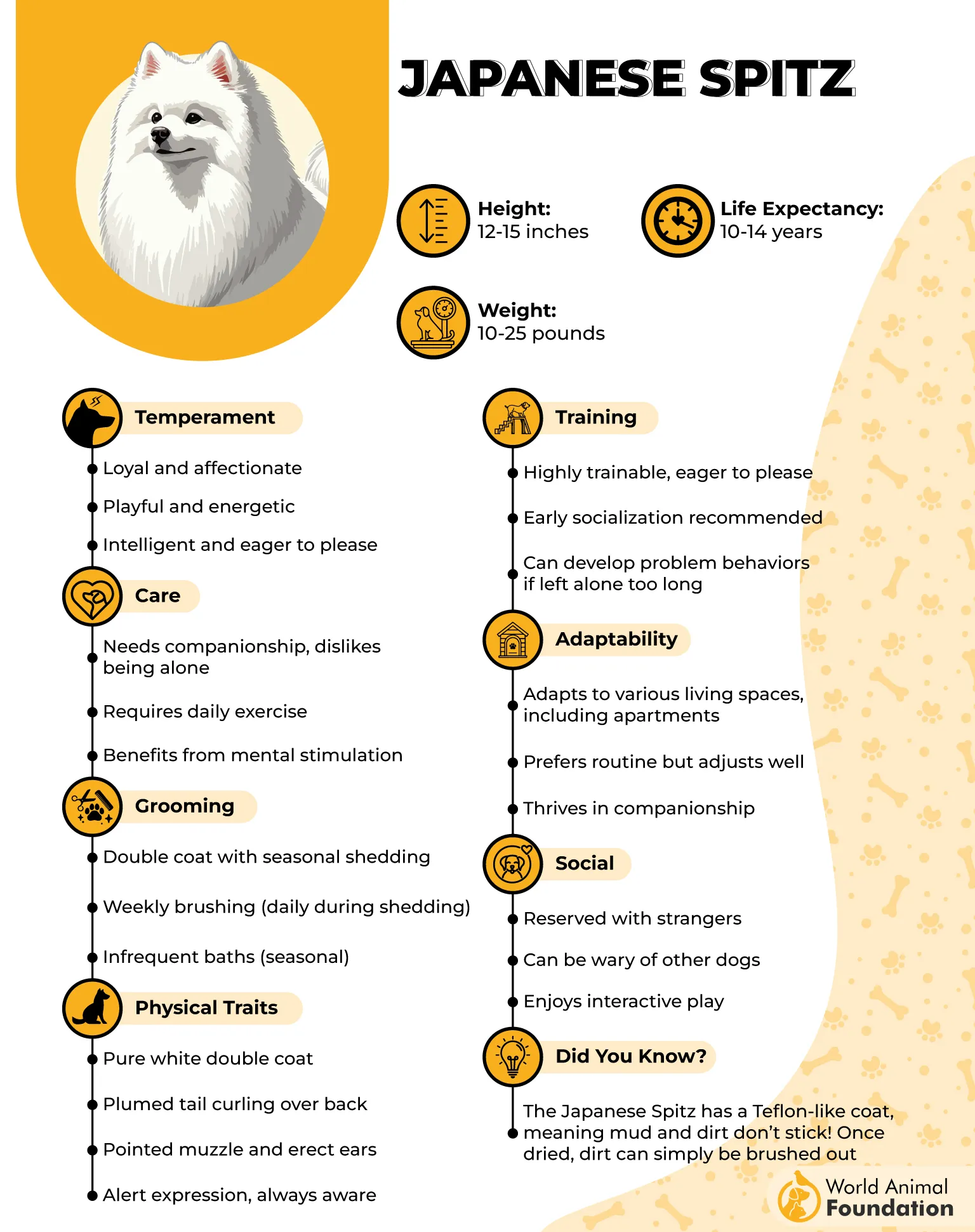
Japanese Spitz are cheerful, affectionate, playful, and easy to train. They form strong bonds with their families and usually enjoy living with children, dogs, and cats when properly trained and socialized.
Their moderate energy level makes them suitable for apartments and smaller homes, with daily walks, fetch, or backyard play helping meet their exercise needs.
PDSA mentions that they can be reserved around strangers and may bark when excited or left alone. They also thrive on companionship and may struggle with separation when left by themselves for too long.
Grooming Needs
Their coats need weekly brushing during most of the year to prevent matting.
During their twice-yearly shedding periods, daily brushing is needed for a few weeks to manage the loose undercoat.
Their coats naturally repel dirt, so dried mud can often be brushed away easily.
Baths are only needed every few months; overbathing can dry out the skin and strip away natural oils.
6. Samoyed
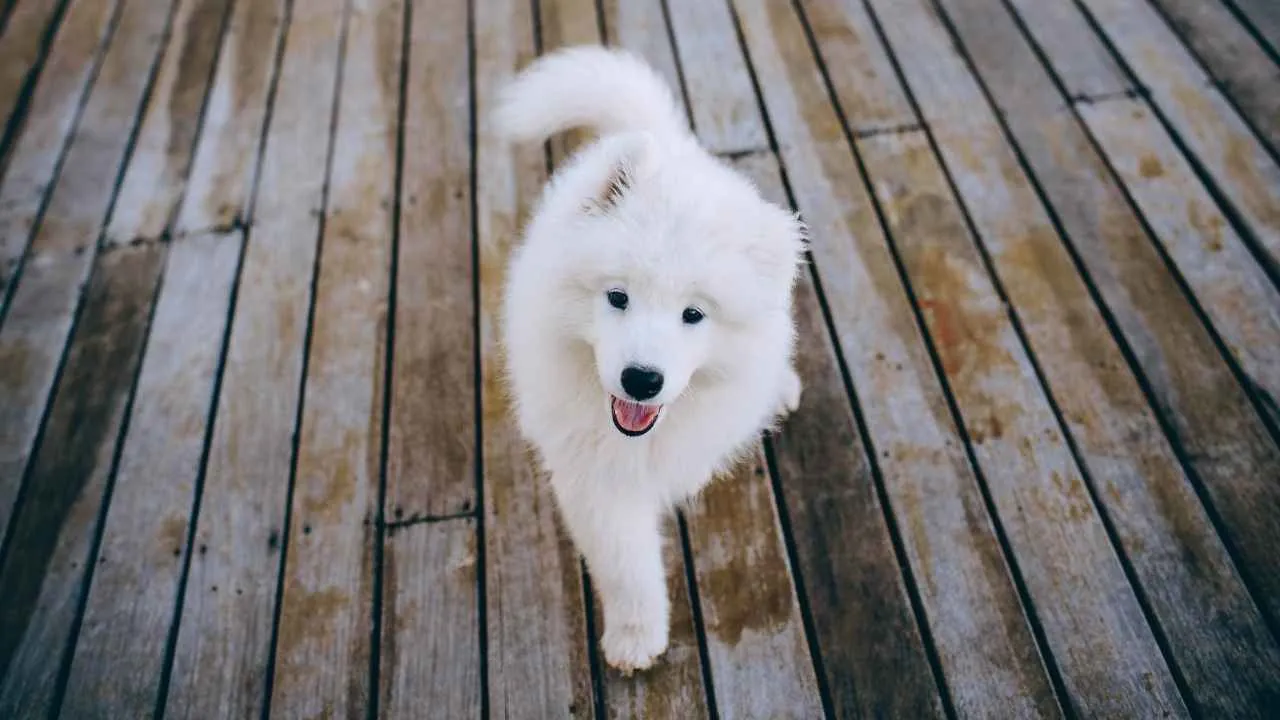
Samoyeds are famous for their bright white, cream, or biscuit-colored coats and their sweet, upturned smiles. This ancient northern breed was developed in Siberia, where its thick coat helped keep it warm while working alongside the Nenets people.
Samoyeds pulled sleds and helped herd reindeer, but today they are cherished for their affectionate and friendly nature. Their fluffy coats stand out beautifully, making them a natural choice for anyone drawn to soft, cloud-like dogs.
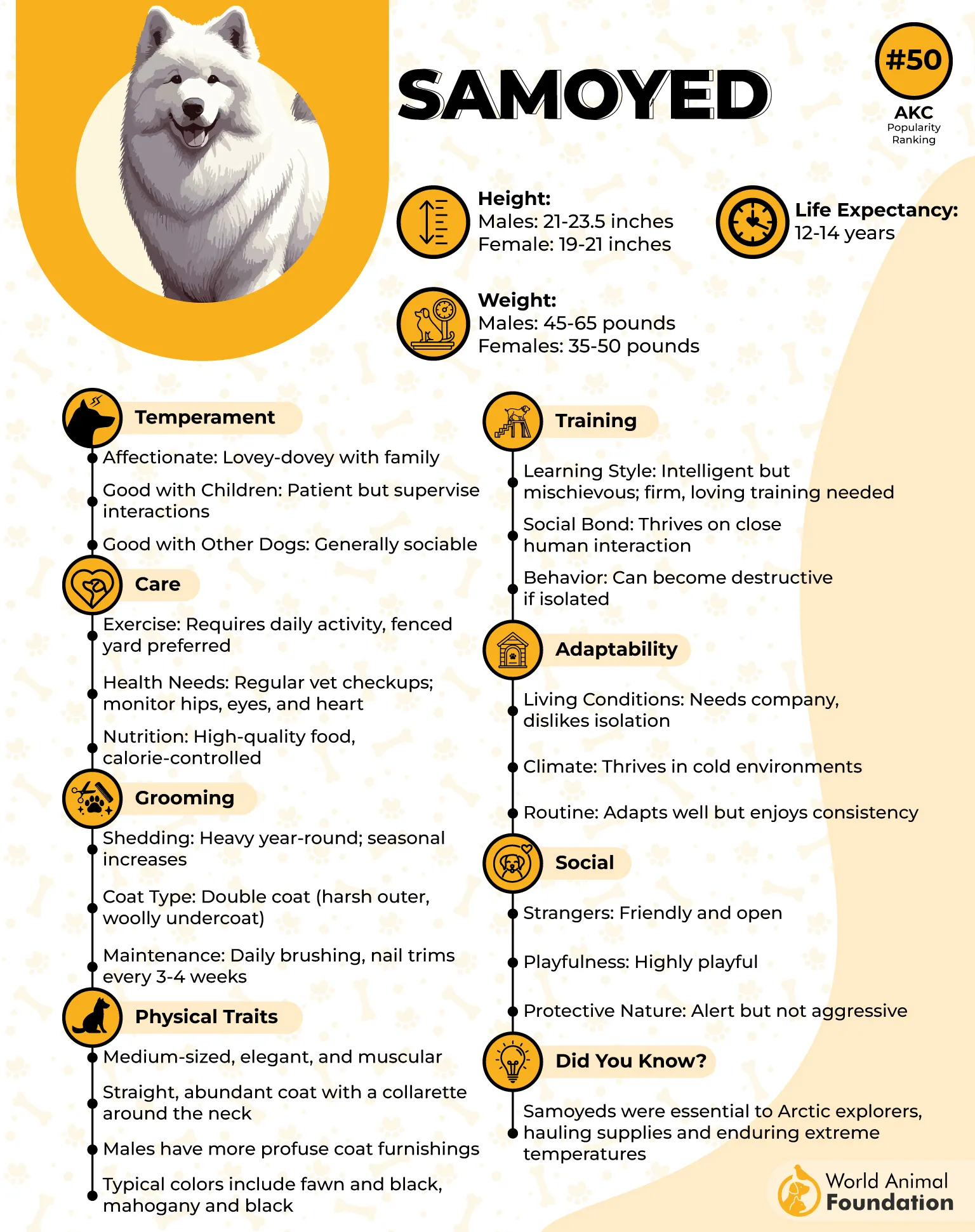
Samoyeds are playful, adventurous, and devoted to their families. They enjoy outings but are also happy to relax at home after some activity. They usually get along well with people, dogs, and other pets they are raised with, and they can be gentle with children.
These intelligent dogs can learn quickly with reward-based training, but their independent nature can make them easily distracted. They need plenty of exercise and human interaction each day. Without enough attention, they may dig, bark excessively, or become destructive.
Grooming Needs
Frequent brushing helps prevent mats and keeps their thick double coats in good condition.
Regular brushing also helps manage their heavy shedding.
Their dense undercoat needs extra attention to keep the fluffy coat clean and healthy.
7. Keeshond
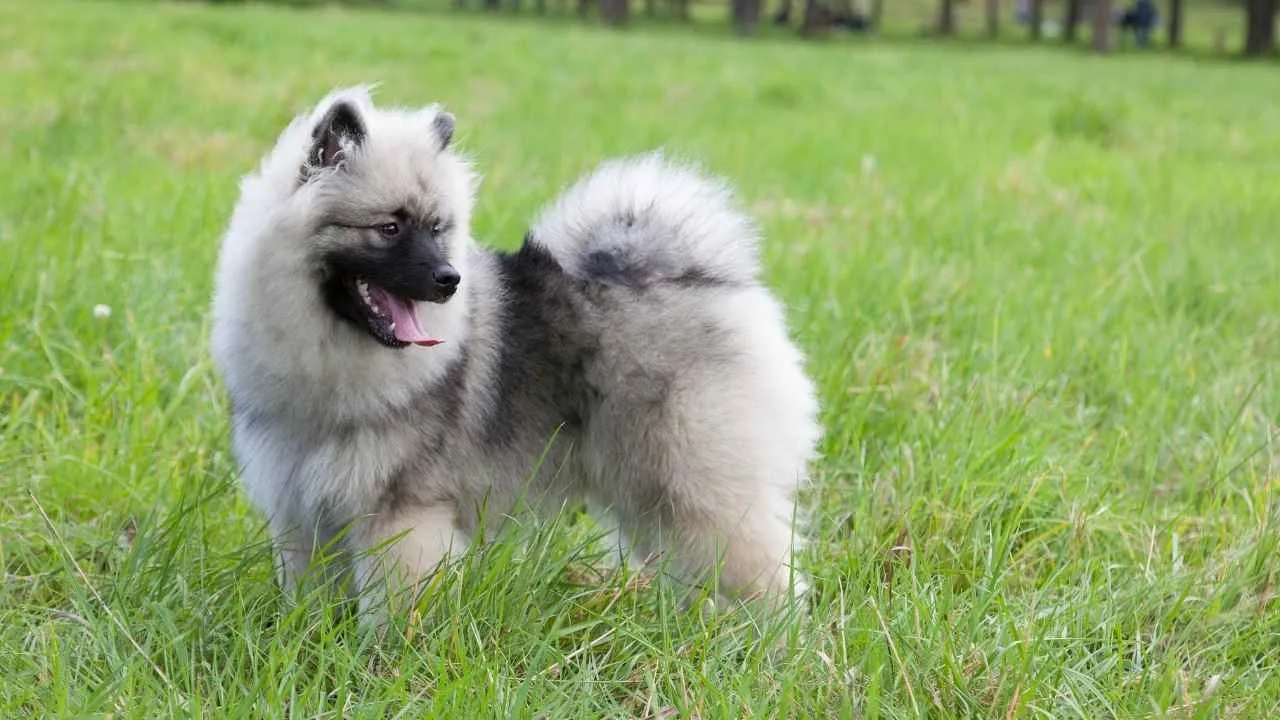
The Keeshond is a striking Dutch breed known for its plush coat, expressive eyes, pointed ears, and tightly curled tail. Originally bred as companions and watchdogs on barges traveling through the canals and rivers of the Netherlands, these dogs were never developed to hunt or attack.
Their loving purpose is still clear today. Keeshonden are affectionate, outgoing, and gentle, making them wonderful family companions.
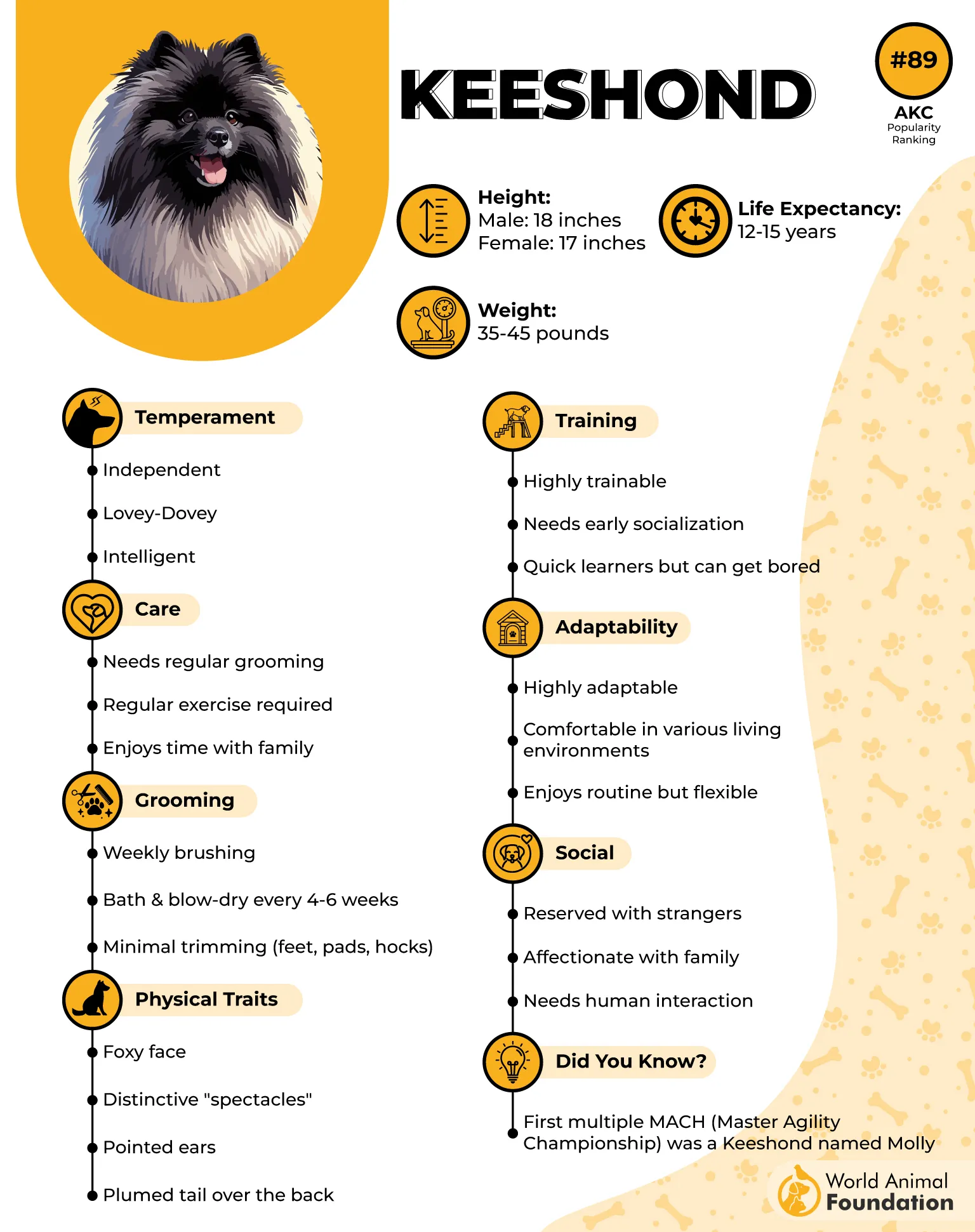
Keeshonden are intelligent, social, and moderately active. They enjoy being involved in family life and prefer staying close to their people rather than being left alone.
Their adaptable nature allows them to fit into different homes as long as they receive daily attention and companionship. They usually get along well with children, strangers, dogs, and other pets.
Their loud, watchful bark makes them excellent watchdogs, although their gentle nature means they are poor protection dogs. They are also moderately easy to train and can be playful partners or relaxed companions depending on their family’s lifestyle.
Grooming Needs
Their thick, fluffy double coats need regular brushing to stay healthy and free of tangles.
Their coats have a dense undercoat and longer outer coat, creating their signature plush appearance.
Despite all that fur, Keeshonden are surprisingly manageable when their coats are groomed consistently.
Conclusion
Fluffy dogs may look like they were made for cuddles, but their personalities, energy levels, and grooming needs can be just as different as their coats. From playful companions to devoted family dogs, each breed brings something special to the table.
The right match depends on more than a soft coat. It also depends on how well their needs fit your home and daily routine.
If one of these fluffy companions has caught your eye, take some time to learn about their exercise, training, social, and grooming needs before bringing one home.
A good brush may help keep the fluff under control, but the real reward is the bond that grows underneath all that fur. After all, the best fluffy dog is the one that fits your life and feels like part of the family.
