




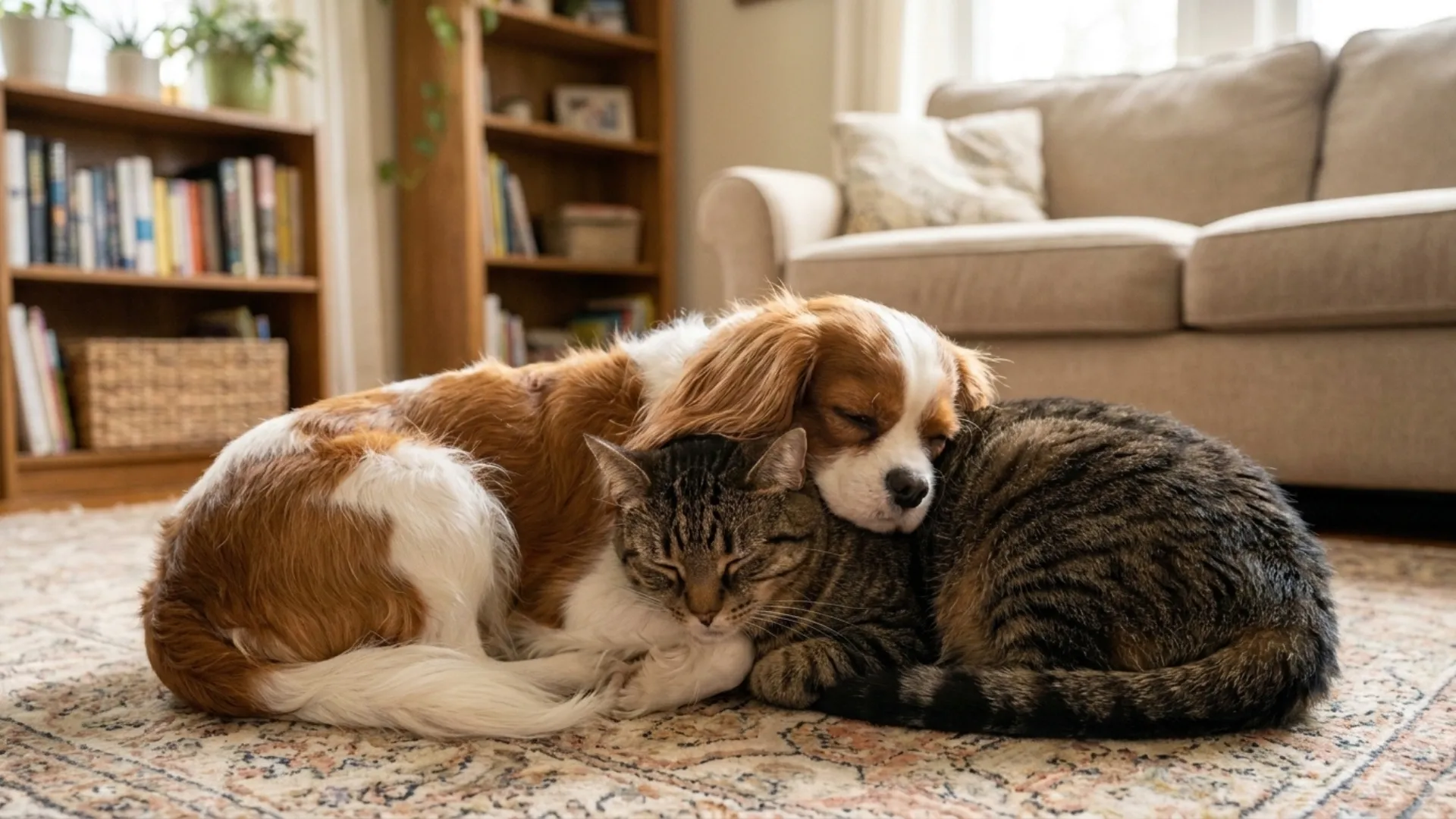
Many people wonder if dogs and cats can truly live together. The good news is that many can become close companions. Dog breeds that become best friends with cats often share traits like patience, sociability, and an easygoing nature.
Still, breed alone does not decide whether a dog will be good with cats. Each dog has its own temperament and past experiences. Socialization also plays a major role in helping a dog and cat adjust.
Puppies and kittens may adapt more easily when raised together. However, older pets can also learn to share a home peacefully. Size does not always matter, either. Even large dogs can live happily with feline companions when their behaviour suits the household.
Pet owners should use slow introductions and close supervision. Cats should also have safe spaces where they can retreat. In this guide, we’ll explore seven breeds that may thrive in homes with cats.
So, which dog breeds could become your cat’s next best friend? Let’s meet them.
Dog Breeds That Become Best Friends with Cats
1. Pug

The Pug is an ancient dog breed with a long history as a cherished companion. Originating in China around 2,000 years ago, this small breed later became popular among royals.
Today, Pugs remain affectionate family dogs that enjoy being part of daily life. According to Wikipedia, they are known for their sociable nature and gentle temperament. That social personality can help them become a cat-friendly dog breed in the right home.

Pugs often prefer company over chasing other animals, making peaceful household relationships possible. Still, every dog has a different personality, so owners should watch how their pets interact.
Early training can also encourage polite behavior around feline housemates.
Why Pugs Can Suit Cat Homes
Their playful side can create fun interactions.
They usually enjoy sharing attention with family members.
Their adaptable nature can help them coexist peacefully.
Calm introductions can help build trust between pets.
Individual supervision remains important during early meetings.
2. Cavalier King Charles Spaniel

The Cavalier King Charles Spaniel brings a gentle charm to multi-pet households. Historically bred as a companion, this affectionate breed became closely linked with British royalty.
Its friendly nature can make life with other pets easier. According to Hill’s Pet, Cavaliers are affectionate, playful, intelligent, and excellent with children. They are easy to keep and enjoyable household companions.

These traits can help a Cavalier adjust to feline company. Still, every dog has an individual personality, so a careful introduction matters. With patience, a dog and cat can learn to live harmoniously.
Why Cavaliers Can Suit Cat Homes
They usually welcome attention from their human family.
Their adaptable nature fits many household routines.
Gentle interactions may help cautious cats feel secure.
They can enjoy sharing their home with other pets.
The breed remains a popular choice among companion dogs.
3. Basset Hound

The Basset Hound is a short-legged dog breed with a fascinating hunting past. According to Britannica, this dog developed centuries ago in France and was kept as a hunting dog of the aristocracy. It once tracked hares, rabbits, deer, birds, and foxes.
The breed is a slow, deliberate hunter with a nose second only to the Bloodhound. Today, its low-energy lifestyle makes it a relaxed household companion. That gentle personality can work well around cats and other animals.

Still, its hunting roots mean owners should consider its interest in small animals. A proper introduction can help create a peaceful start with a feline housemate.
Why Bassets Can Fit Cat Homes
They can be good with kids and other dogs.
Their patient nature suits quieter household routines.
Daily walks help support healthy activity levels.
Calm playtime can provide useful mental engagement.
Training can reinforce polite behavior around animals.
Individual temperament should guide every dog-and-cat introduction.
4. Beagle

The Beagle is a social hunting dog that often thrives around company. According to the American Kennel Club, Beagles were bred to hunt in packs, so they naturally enjoy being with others. That background can help them accept a feline member as part of their household group.
Their happy-go-lucky personality also makes them typically friendly and easygoing companions. A Beagle may enjoy sharing space with a cat breed, especially when both pets receive proper guidance.

Still, their strong nose and high prey drive can spark chasing, particularly around small animals. Owners should therefore manage early encounters and provide plenty of activities.
With patient guidance, a Beagle can become a best buddy for both people and pets.
Why Beagles May Be Good With Cats
Their pack history supports strong social instincts.
Plenty of playtime helps channel their curiosity.
Interactive cat play can provide extra enrichment.
They often enjoy having other animals around.
Their size should not prevent careful introductions.
Consistent boundaries can encourage peaceful household habits.
5. Bichon Frise

The Bichon Frise is a small, social companion with plenty of charm. According to PDSA, Bichons are affectionate, loving dogs that are excellent with children and other pets. This friendly nature can help them become good with cats in the same household.
Their confident personality also makes them comfortable meeting new companions. A Bichon may enjoy playful moments with feline friends, although owners should watch out if a cat’s running turns into an exciting chase.
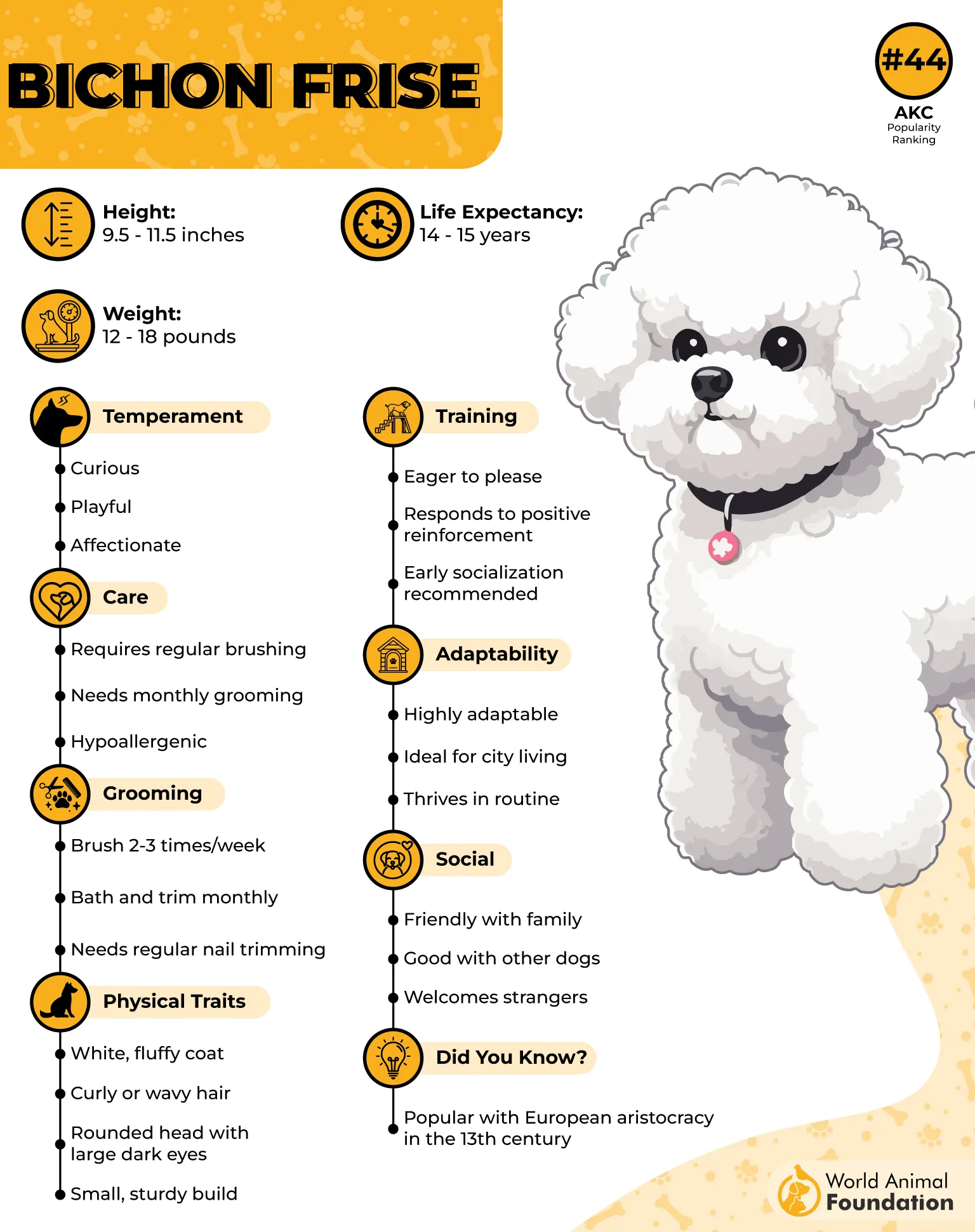
Proper training can help teach polite boundaries during these interactions. With their small size and adaptable nature, Bichons can be a good dog breed for families wanting an interactive companion.
They may also suit some allergy-conscious homes because they are considered a hypoallergenic dog breed, though no dog is truly allergen-free.
Living With Feline Friends
Their social nature can encourage close bonds.
Daily grooming keeps their distinctive coat maintained.
Coat trimming is often needed every few months.
They can become loyal companions for active families.
Calm introductions can help both pets adjust comfortably.
6. Golden Retriever

The Golden Retriever is a cat-friendly breed with a warm, social nature. It remains one of the most popular dog breeds in America for good reason. According to PetMD, Goldens have a sweet temperament and get along well with cats, children, other pets, and strangers.
Their friendly disposition can help them peacefully coexist with feline housemates. Goldens belong to the sporting group and were developed as working gundogs. They also tend to have a low prey drive, which may make household cats easier to accept.

Still, each dog needs to be properly introduced to a new feline companion. Older cats may need extra time to adjust. With patience, an eager Golden can become a fast friend. They typically enjoy social homes where they can stay close to their families.
Helping Goldens Adjust to Cats
Start meetings in a quiet, controlled space.
Let the cat choose when to approach.
Provide high areas where the cat can retreat.
Keep early interactions brief and supervised.
Reward calm behavior during shared activities.
7. Shih Tzu

The Shih Tzu is a charming companion breed with a relaxed indoor lifestyle. Bred to live around royal palaces, this small dog often enjoys close companionship with its family. According to Purina, the Shih Tzu is affectionate, playful, and intelligent.
It can also be independent and wary of strangers. That personality can suit homes with dogs and cats when introductions happen carefully. While no breed is guaranteed to get along with cats, the Shih Tzu may be the best dog for cats in the right household.

Its love of indoor life can also make shared spaces easier to manage. Still, cats should have separate rooms or safe areas when they need privacy.
Owners can use treats, gentle play, and calm routines to create positive experiences. With patience and consistency, both pets can build trust and enjoy peaceful companionship.
Helping Shih Tzus Share Their Home
Allow the cat to approach at its own pace.
Keep early meetings brief and closely supervised.
Give both pets access to their own resources.
Reward calm behavior whenever they share space.
Conclusion
Finding a dog that can get along with cats takes more than choosing a certain dog breed. Every individual dog has its own temperament, so generally friendly traits are only a starting point.
When introducing dogs to a feline furry friend, move slowly and keep early meetings supervised. A new dog may need time to understand household boundaries. This applies to many dogs, including a herding breed or larger gentle giants.
Even two dogs may react differently to the same new pet. If you feel overwhelmed, separate spaces can help both animals relax. Give each pet time, choice, and safe places to retreat. With patience, many homes can help both the dog and cat build trust.
Ready to welcome a new companion? Explore more breed guides to find a pet that fits your home and lifestyle.
