





A dog with a long coat is more than just a walking furball. Some were bred to withstand freezing mountain weather, while others hunted rats, guarded monasteries and livestock, or even served royalty.
Their coats often tell the story of the work they were bred to do, and that’s what makes long-haired breeds so fascinating. No two are quite alike either; their fur can be silky, shaggy, curly, dense, or even wiry.
Some of these dogs shed relatively little, while others tend to trap loose hair right inside their coat. Either way, regular brushing is non-negotiable. Long hair looks stunning, but it definitely comes with some grooming responsibility.
Let’s take a look at seven long-haired dogs that have a lot more going for them than just their looks, complete with the best care tips and a few fascinating facts about these furry friends along the way.
Remarkable Long-Haired Dog Breeds: Facts and Care Tips
1. Afghan Hound
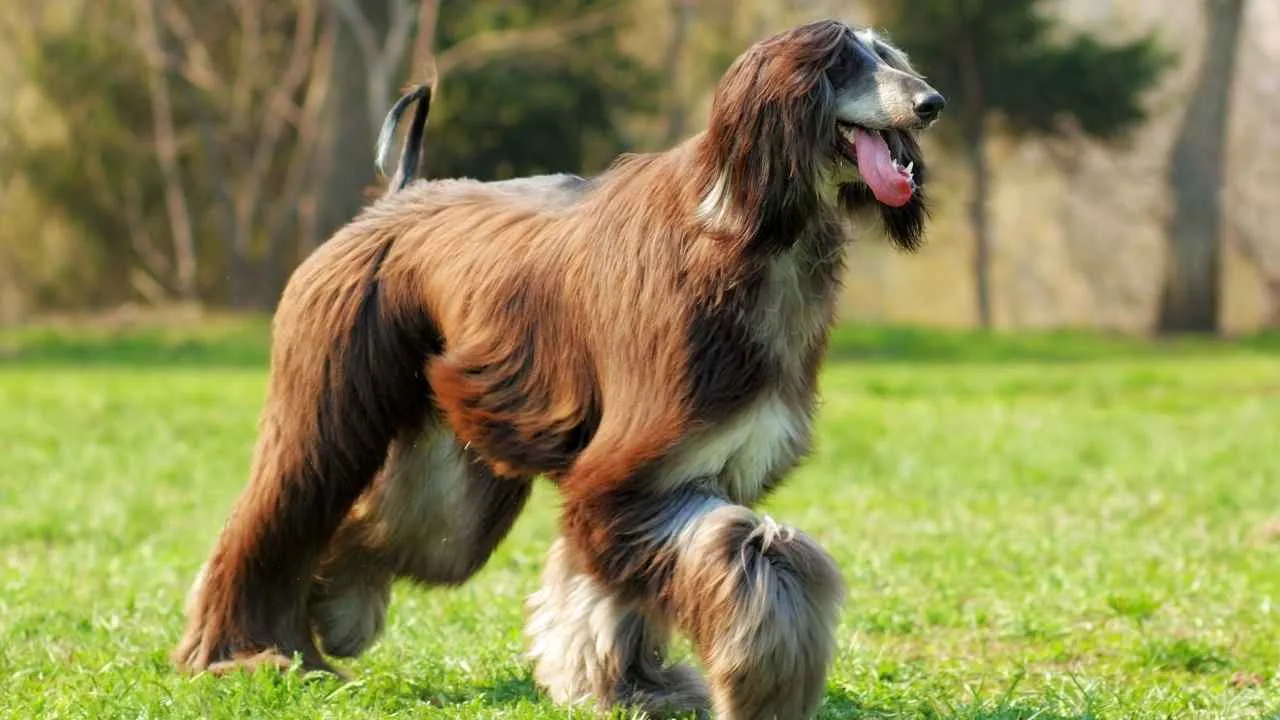
Not many dogs turn heads quite like the Afghan Hound. With its narrow face, high-set tail, and a coat that flows like silk, it certainly looks the part of a showstopper. But the Afghan Hound wasn’t bred for the show ring.
It actually originated in the mountains of Afghanistan, where these “sighthounds” were used to chase down fast-moving game across rocky terrain. This breed is fast and holds up remarkably well against extreme weather.
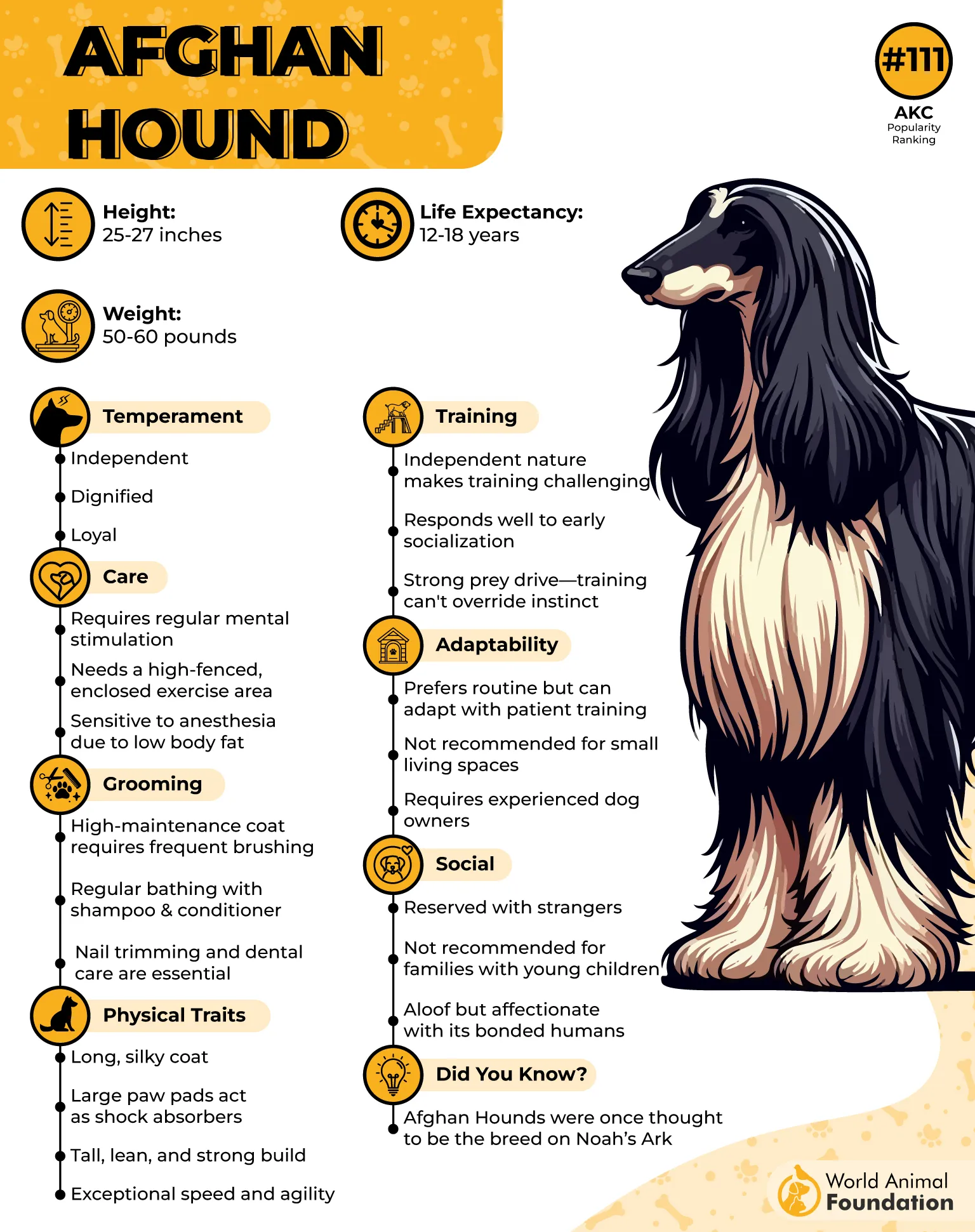
One of the most interesting things about its coat is the long, silky hair, neither woolly nor heavy, which gives the Afghan its signature flowing look. That coat also changes quite a bit as the dog matures.
According to The American Kennel Club, puppies start out with short, fuzzy coats, and the adult coat grows in slowly, requiring plenty of daily brushing to keep that glamorous look intact.
One fun fact: They are really fast. Given their wolf-like history, off-leash freedom should only ever happen in securely fenced areas.
2. Lhasa Apso
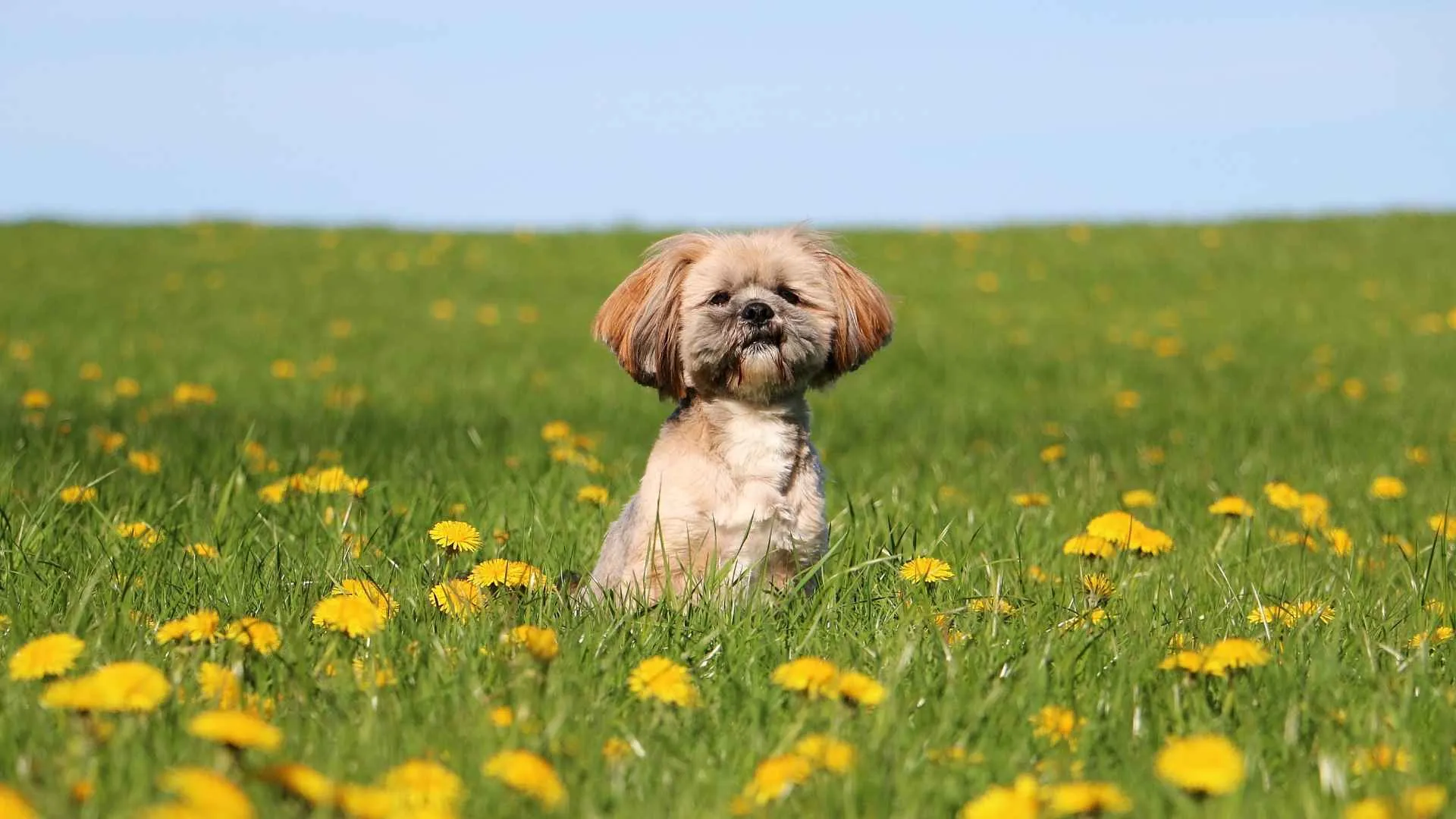
It might look like a miniature show dog plucked straight off the floor of a pageant, but the Lhasa Apso’s origins are far more serious than that. Originally bred in Tibet, this breed was kept in Buddhist monasteries and by affluent families for one important reason: excellent hearing and sharp alertness that made it a natural watchdog.
That instinct still shows up today. Despite being small enough to curl up in your lap, the Lhasa Apso is quite sensitive to unfamiliar sounds and won’t hesitate to let you know about them.
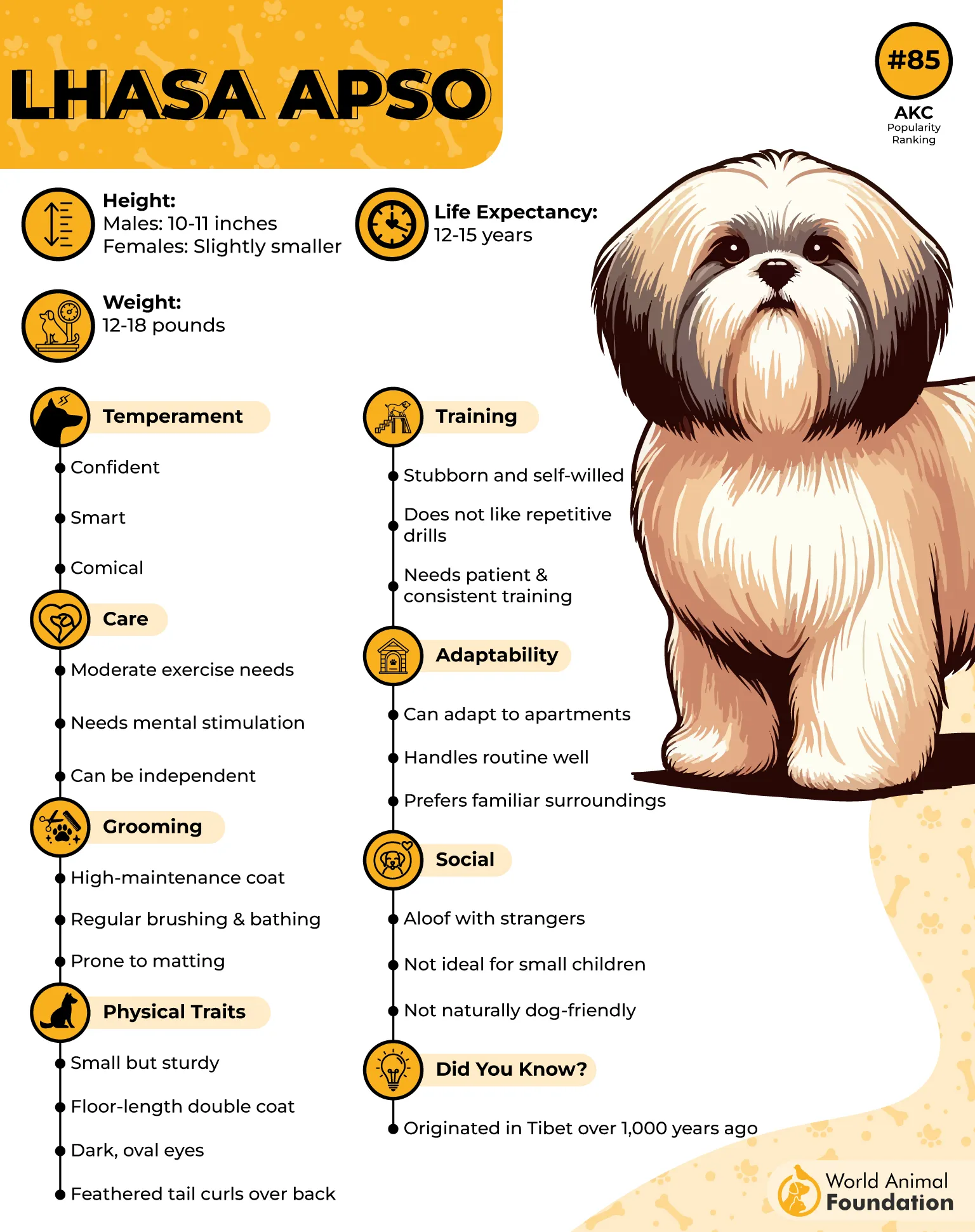
Its coat was shaped by its environment too. A long, heavy outer coat paired with an insulating undercoat kept this dog warm on the cold Tibetan plateau, but that kind of coat takes real upkeep.
Without consistent grooming, tangles can form right at the skin, so a long-toothed comb comes in handy for catching knots early. Because of this, many owners opt for a shorter trim, which cuts down on grooming without changing the dog’s naturally friendly personality.
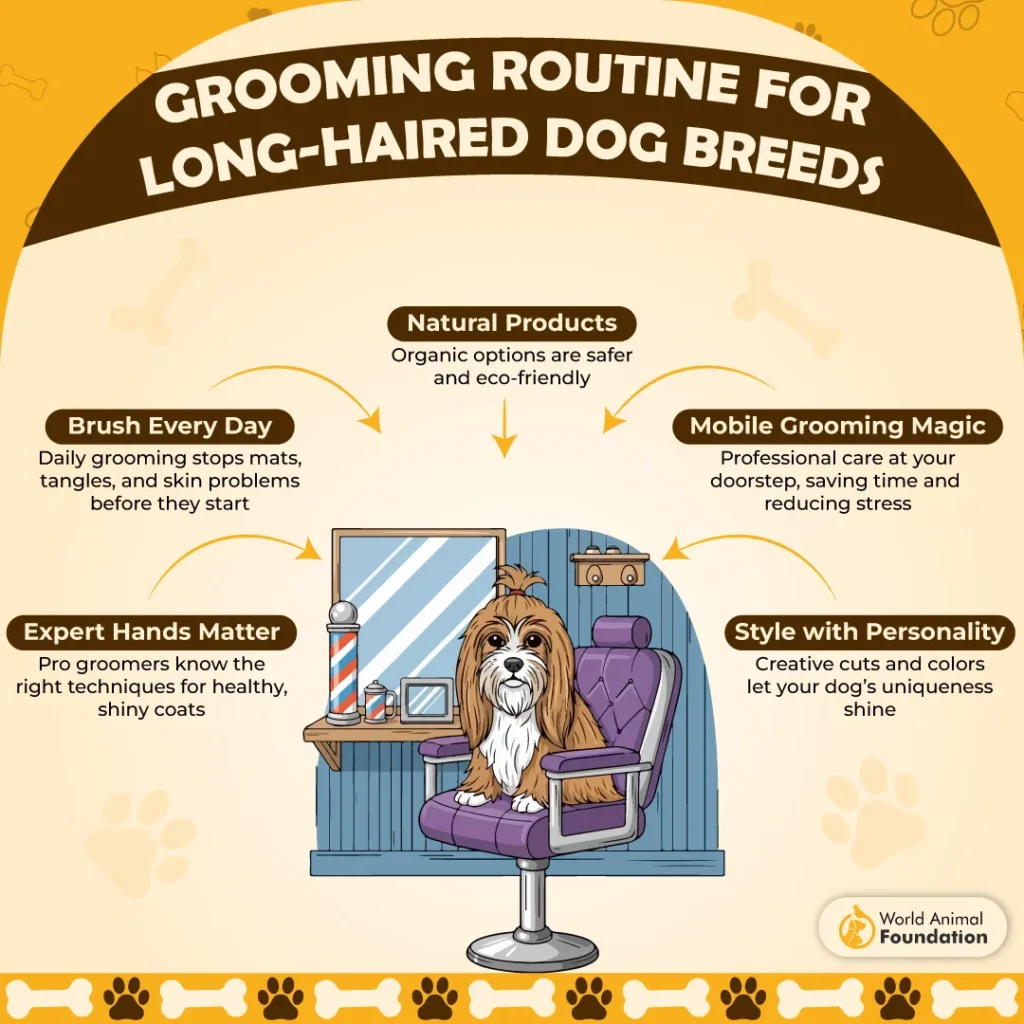
One thing to keep in mind: This breed isn’t always welcoming toward strangers and tends to stay reserved around unfamiliar dogs and visitors.
3. Yorkshire Terrier
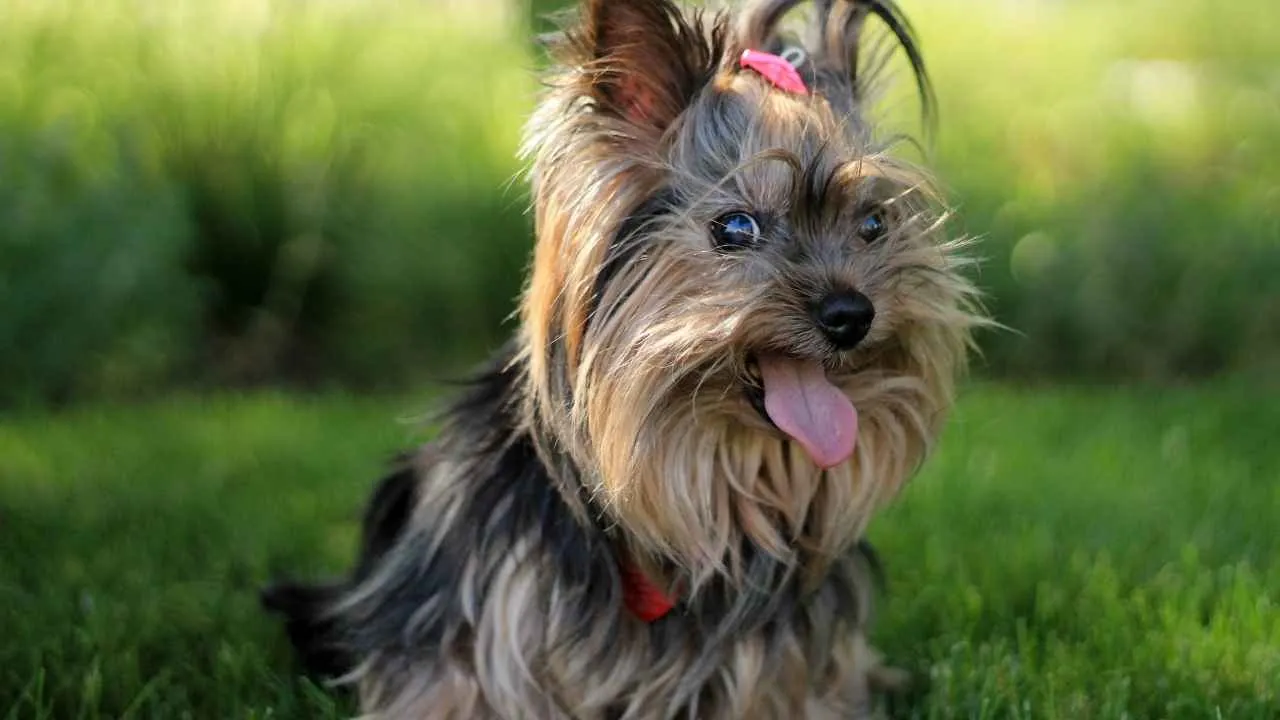
Maybe one of the biggest personality-versus-appearance gaps on this list belongs to the Yorkshire Terrier. Its coat looks straight off the dog-show ramp, but its history is rooted in factory floors and cramped underground spaces.
According to Orvis, this terrier breed was developed in northern England for working purposes. Its small size let it slip into textile mills and other tight spaces to hunt rats, and that working history is exactly where the breed gets its confidence and sharp alertness.
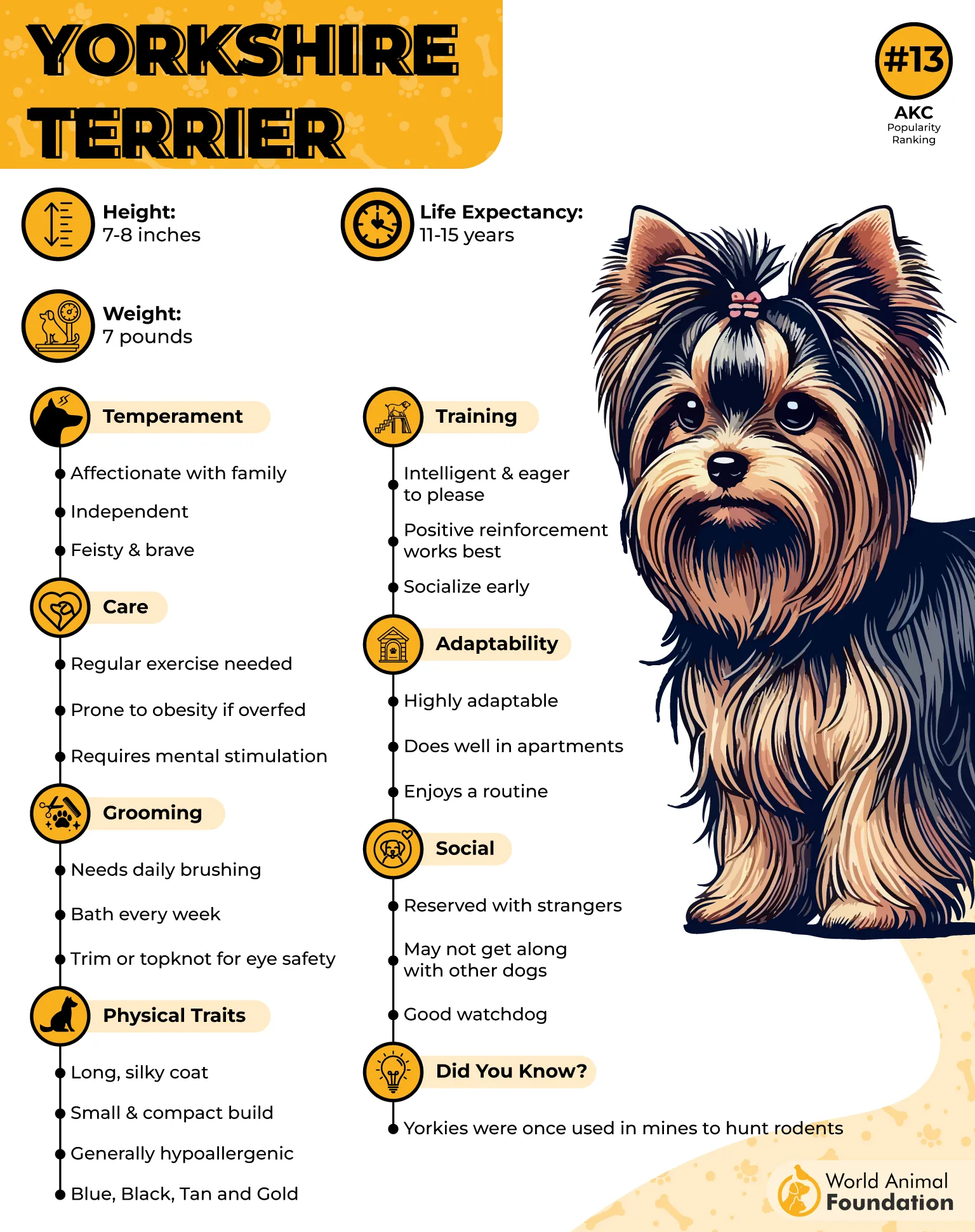
Small as they are, Yorkies aren’t fragile little toy dogs. Many of them are drawn to high-energy movement, sound, and anything that catches their interest.
Their coat is just as distinctive: fine, silky, and long, almost like human hair. If you keep it long, weekly brushing will keep it clean and manageable. The area around the face needs extra attention too, since food and water can make those strands coarse over time, so regular grooming there really matters.
One fun fact: Yorkies tend to think they’re much bigger than they actually are, which often means a lot of barking. Early socialization and obedience training can go a long way in curbing that habit.
4. Shih Tzu
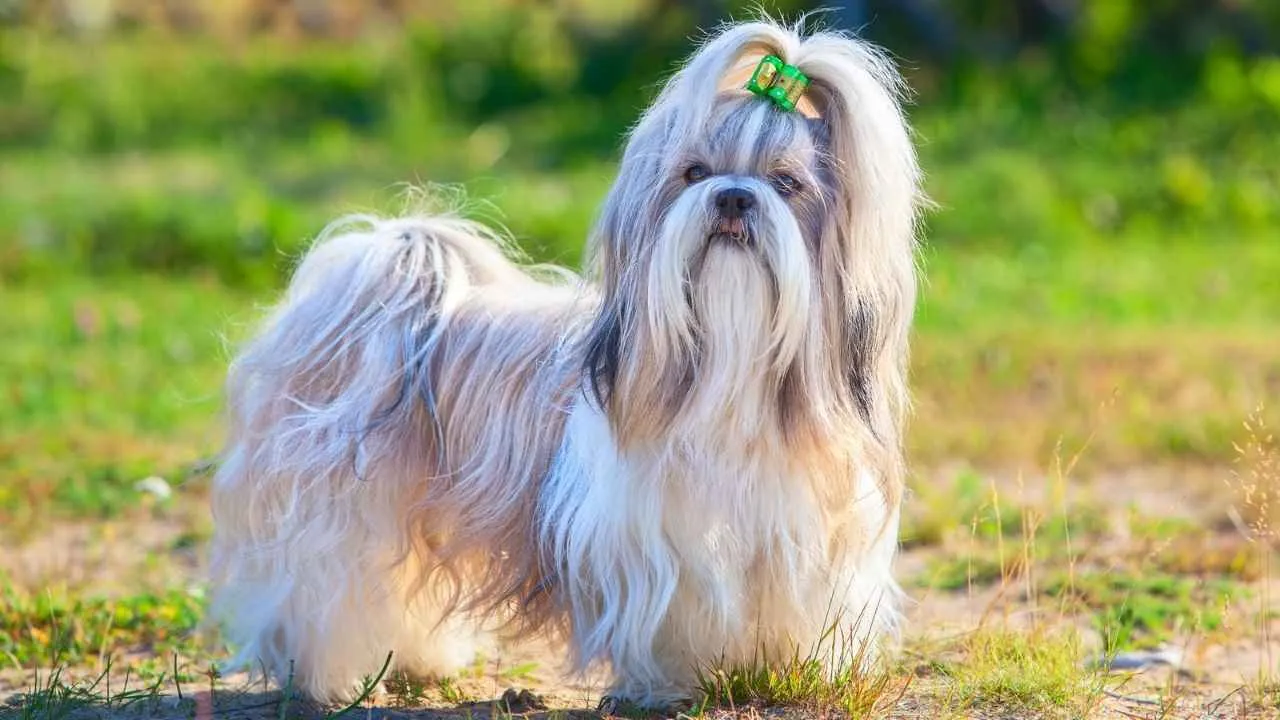
The Shih Tzu is about as far from a working dog as they come, and its background makes that clear. This cute breed was created purely as a companion animal, closely tied to Chinese imperial households, and one of its most defining features is that long, flowing coat.
Left untrimmed, the hair can grow surprisingly fast and end up covering the eyes and face entirely. The breed’s name actually translates to “lion dog,” a nod to the lion-like look it’s meant to have in Chinese culture.
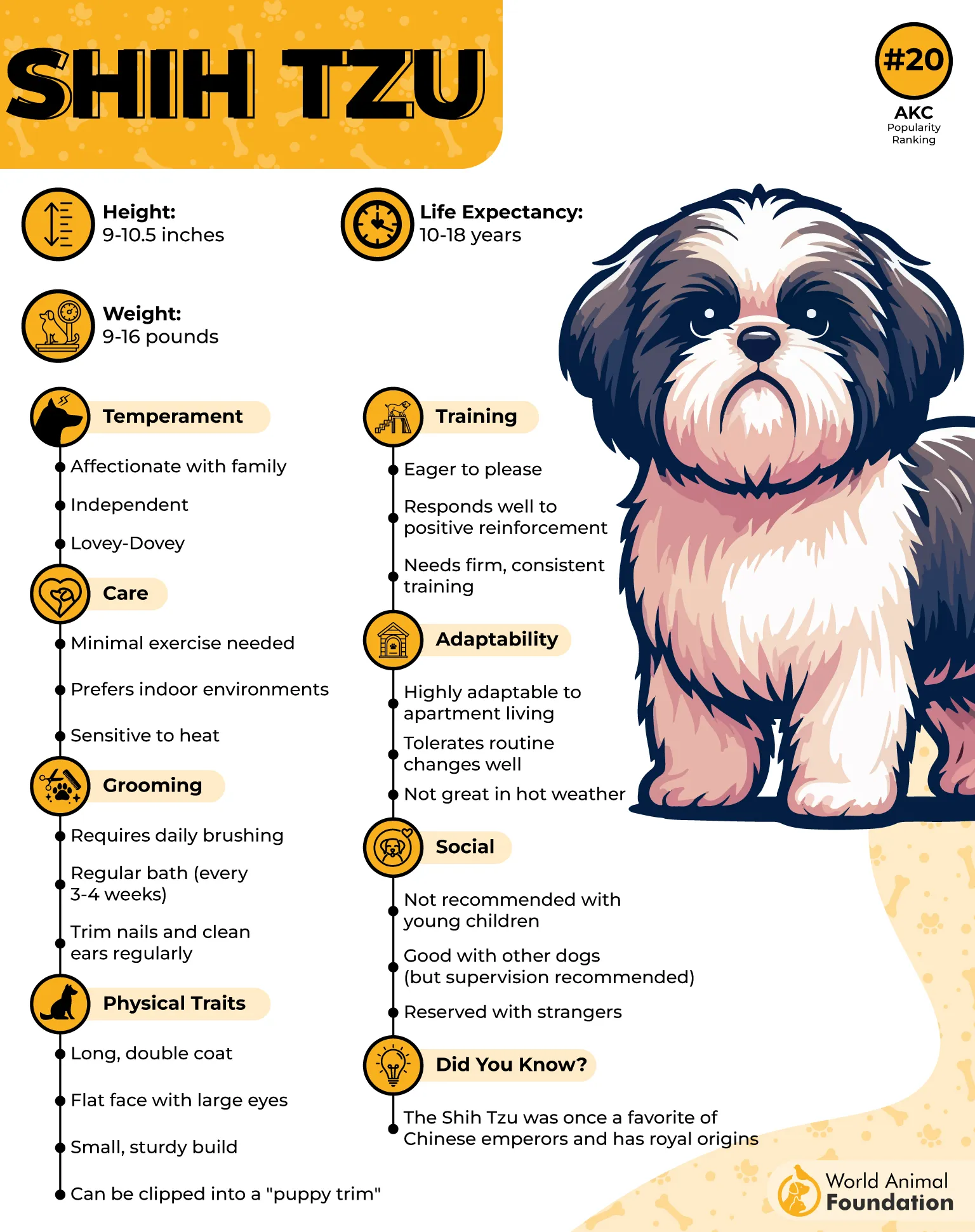
Shih Tzus with long coats need regular brushing, and daily is really the way to go here. Sticking to just once a week tends to invite tangles and knots. That grooming effort pays off, though, since these dogs make wonderful pets.
They respond well to positive training, bond closely with their families, and rarely shed, making them a solid choice for people with allergies.
A couple of things to watch out for: Since Shih Tzus are brachycephalic, extra care is needed with their thick coat in warmer weather to help them stay cool and avoid breathing trouble. Regular walks also go a long way in keeping this breed at a healthy weight.
5. Havanese
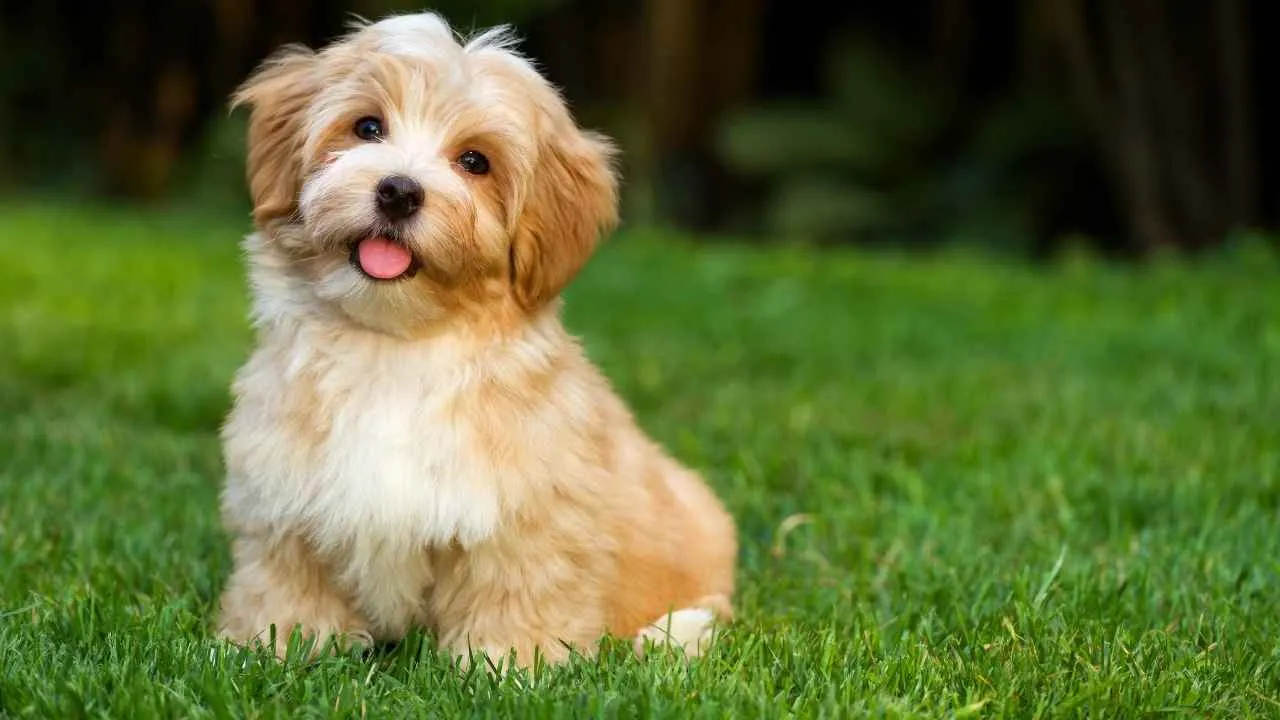
The Havanese is recognized as the national dog of Cuba, according to The Royal Kennel Club. This breed started out as a beloved pet among wealthy Cuban families before eventually making its way to other parts of the world.
One notable trait is its coat, softer and more naturally wavy than what you’ll find on many other breeds, and it comes in a wide variety of colors and combinations. That long coat does mean more grooming, though.
Loose hair can end up all over the floor if it isn’t regularly worked out with a metal comb, and it’s especially important to clear tangles and knots from behind the ears to prevent irritation.
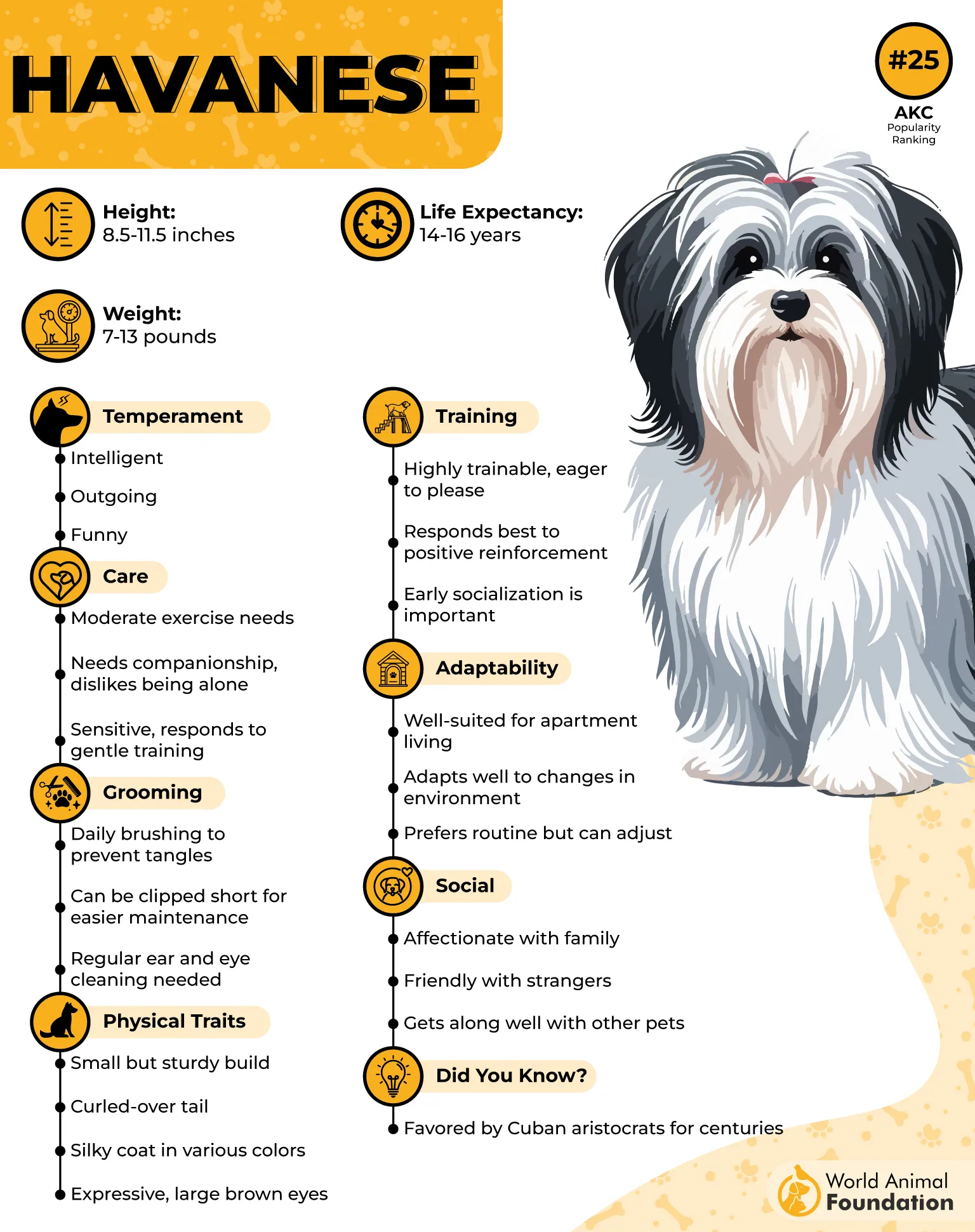
Havanese dogs are also incredibly social, and training fits naturally into everyday life through simple tricks, games, and short obedience sessions. Gentle, positive training tends to work best with this breed.
As for exercise, they don’t need a lot of space to stay happy and healthy. Even a hallway can do the trick, which makes them a great fit for smaller homes and apartments.
Helpful tip: Many owners opt for regular professional clips to reduce upkeep, adding an ongoing financial expense.
6. Bearded Collie
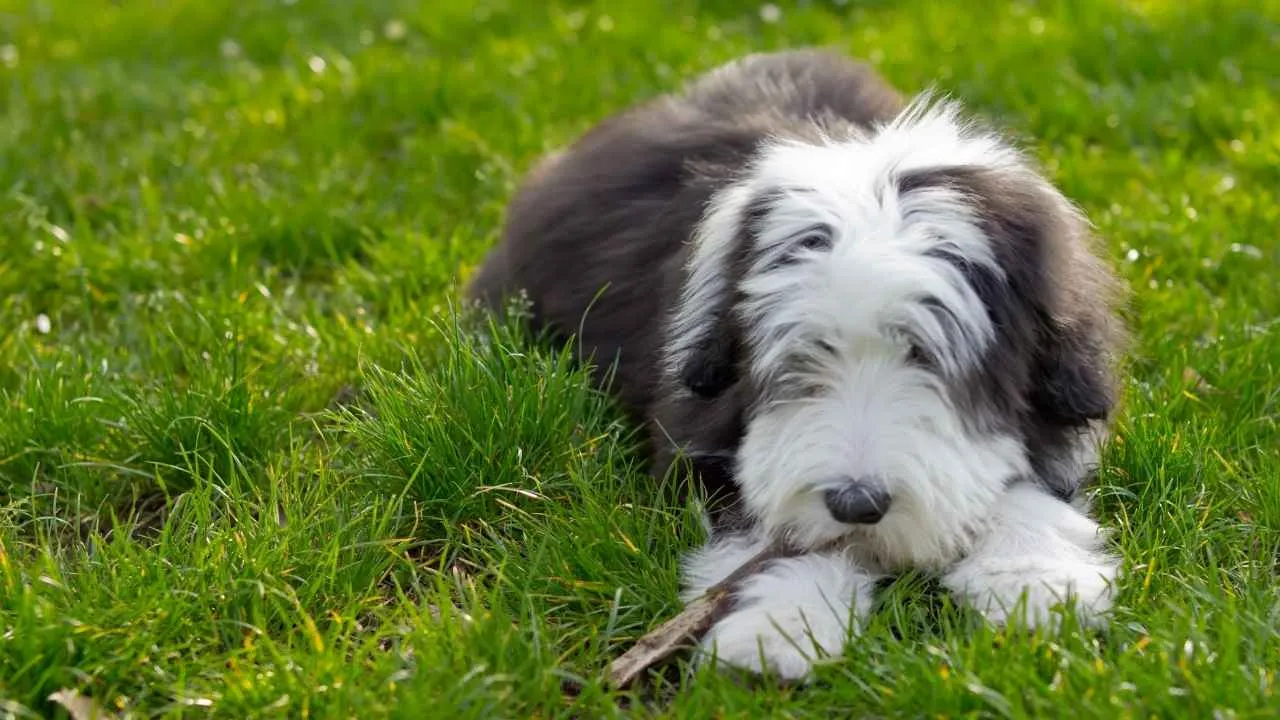
The Bearded Collie looks like it just stepped out of a windswept Scottish field, and honestly, that’s not far off. Its long, shaggy double coat is a direct reflection of its working roots.
This breed originated in Scotland, where it was bred for herding and driving cattle, often working outdoors through rain, wind, and shifting temperatures. That kind of history shows up in the coat, and it needs real attention.
Brushing all the way down to the skin matters here, since mats can hide beneath the top coat and go unnoticed if you’re not careful. Regular baths help too, especially after a day spent romping around outside.
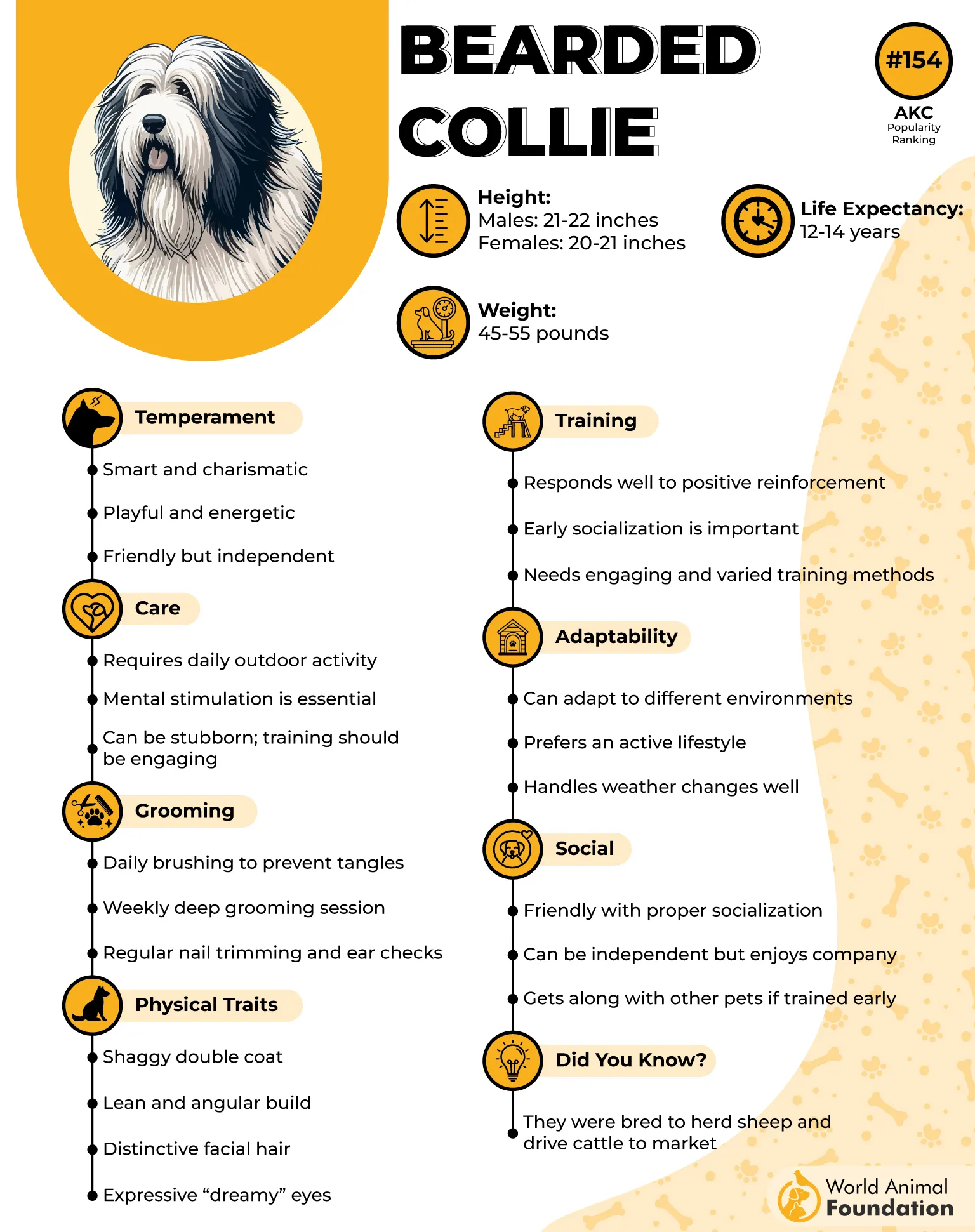
Bearded Collies also go through some noticeable changes as they age; many puppies actually lighten in color as they grow into adults.
When it comes to exercise, simple walks won’t quite cut it for this breed. These playful, intelligent dogs do best with real outlets like herding games, agility, obedience training, hiking, and plenty of interactive play. Without that kind of engagement, their sharp minds can start to struggle.
One fun fact: Bearded Collies have a special fading gene. Their puppy coat lightens as they grow, darkens as they mature, and can keep shifting shades for years like a furry chameleon
7. Tibetan Terrier
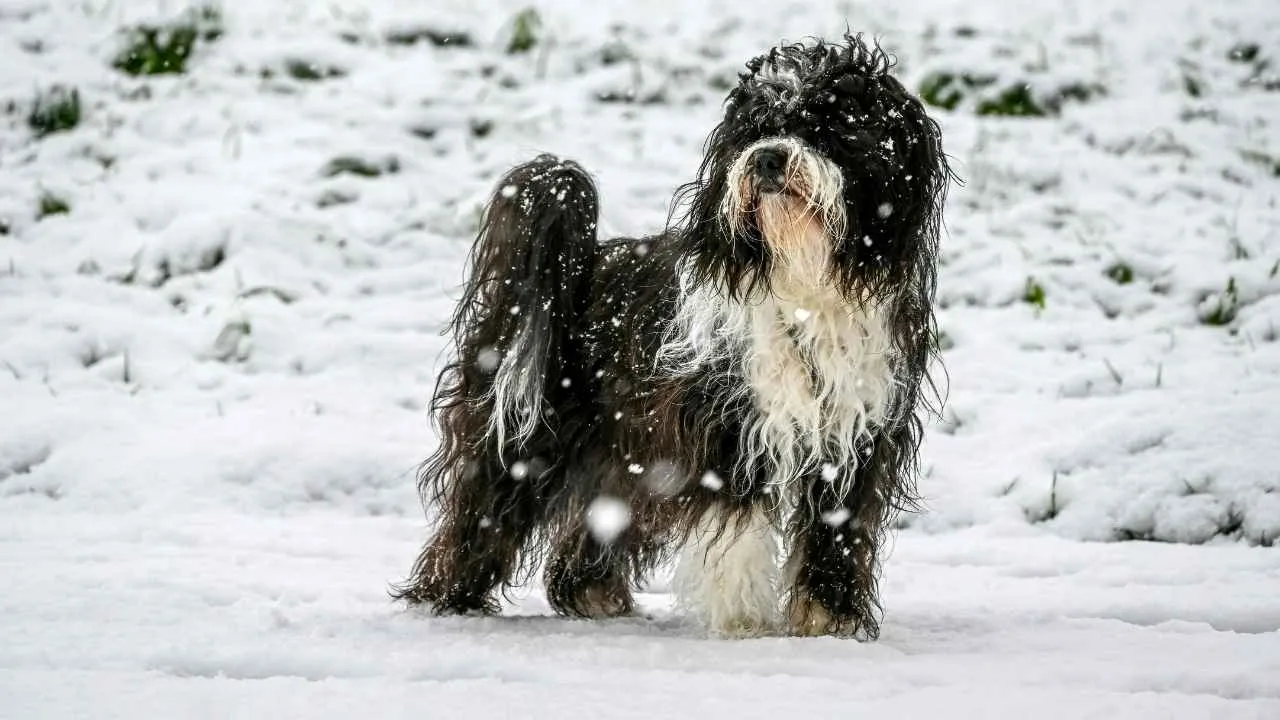
The Tibetan Terrier is an interesting one right from the name, because despite the label, it’s not actually an old-fashioned terrier at all. It was developed in Tibet to work as a companion, watchdog, and farm dog.
One standout feature is its large, flat feet, which help it move easily through snow and rocky terrain, functioning almost like built-in snowshoes.
This breed also has a double coat built to handle colder climates, and keeping it clean calls for a good shampoo and conditioner. Grooming sessions can actually become a great bonding ritual between you and your dog, a more fun routine than a chore.
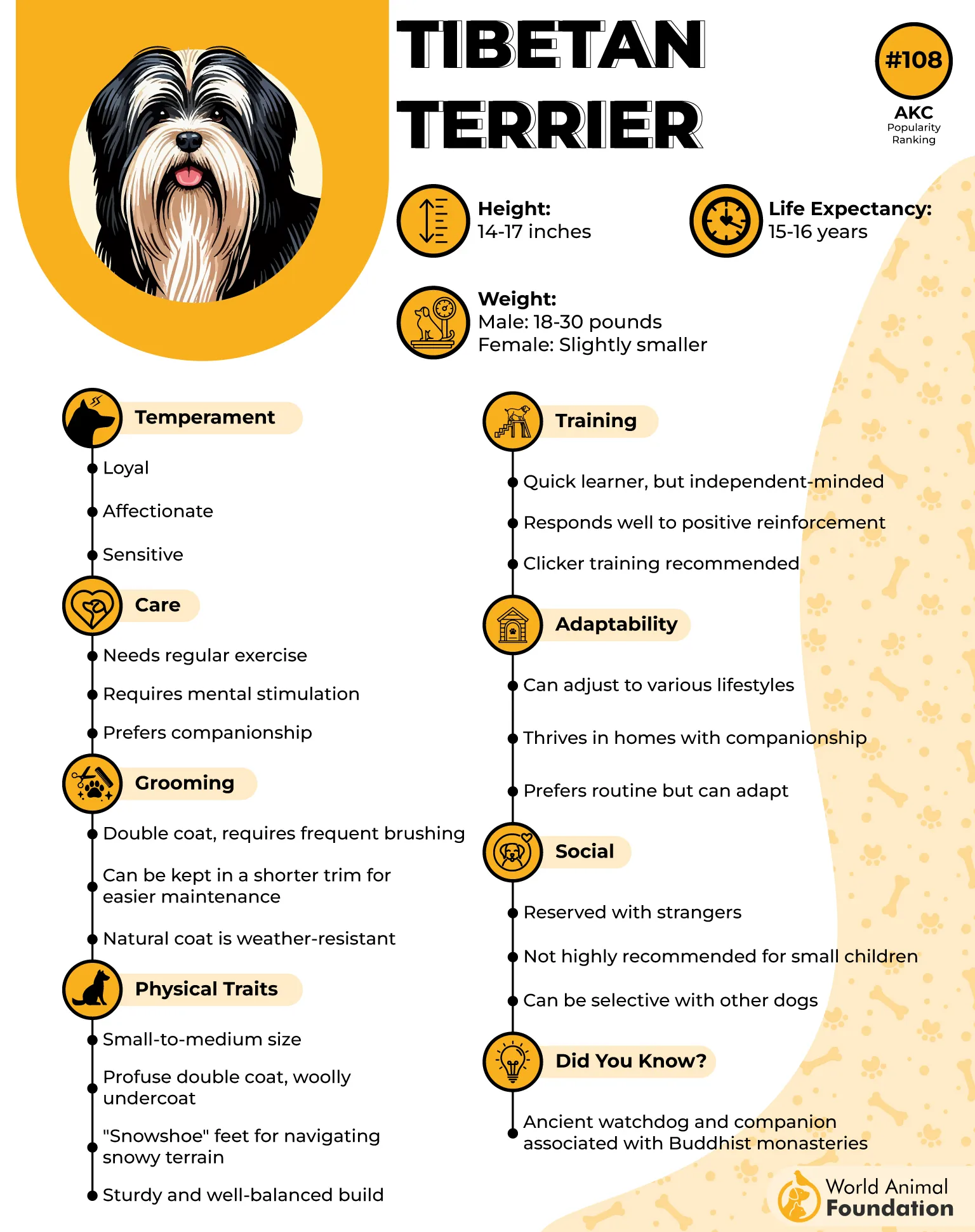
Tibetan Terriers tend to be playful and affectionate with their families, while staying alert and watchful around strangers. They thrive on love and companionship from their owners and generally do well around children of all ages, though older kids tend to handle them a bit better.
One fun fact: Ancient Tibetans never sold these dogs. They gave them away as sacred tokens of good fortune.
Conclusion
Long hair doesn’t have to mean an endless battle with tangles and knots. The most rewarding long-haired dogs aren’t necessarily the flashiest ones; they’re the ones that bring genuine joy to your home. And honestly, grooming can turn into a favorite bonding ritual once you and your pup settle into a rhythm.
There’s something pretty magical about sharing your life with a long-haired dog. One day you’re admiring a perfectly brushed coat, the next you’re picking a stray leaf out of it, and somehow that’s all part of the charm.
These dogs bring character, class, humor, and a bit of legacy into any home. Just be sure to read up on proper coat care before you bring home the long-haired companion that’s caught your eye.
