WorldAnimalFoundation.org is reader-supported. When you buy through links on our site, we may earn an affiliate commission. Learn More
If you’re part of a busy family that wants a pet but can’t dedicate hours and hours to entertaining one, you’ve landed in the right corner of the internet. While most dogs love to play and enjoy an interactive session now and then, some breeds genuinely prefer lounging with their owners over nonstop activity.
We’ve rounded up 10 chill dogs who love a laid-back lifestyle, move at a slower pace, enjoy easy walks, and are happy to be full-time couch potatoes. Their favorite part of the day is simply sitting beside their owners and relaxing. These calm breeds are the kind that bring real peace and serenity into a home.
Read on to learn more about these laid-back dog breeds, along with expert tips on caring for them and why they’re such a great fit for people with busy lifestyles.
Tranquil Dog Breeds That Love a Slow, Easy Routine
1. Cavalier king Charles spaniel
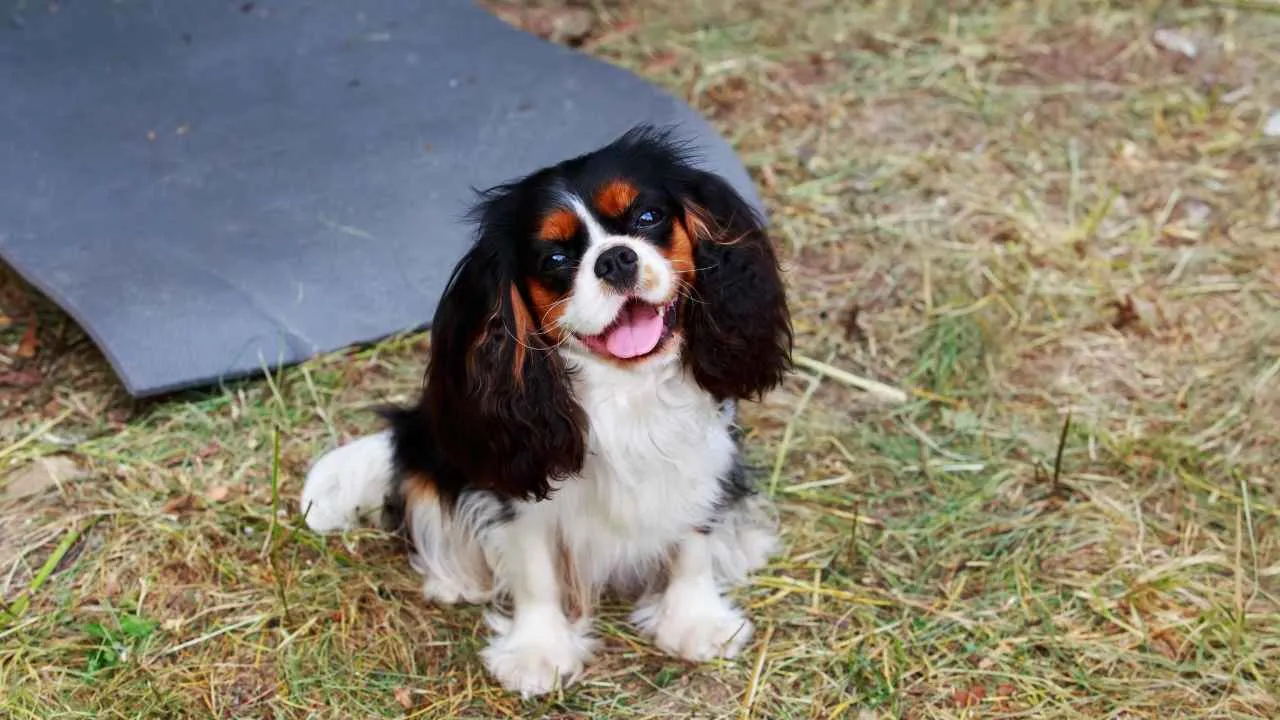
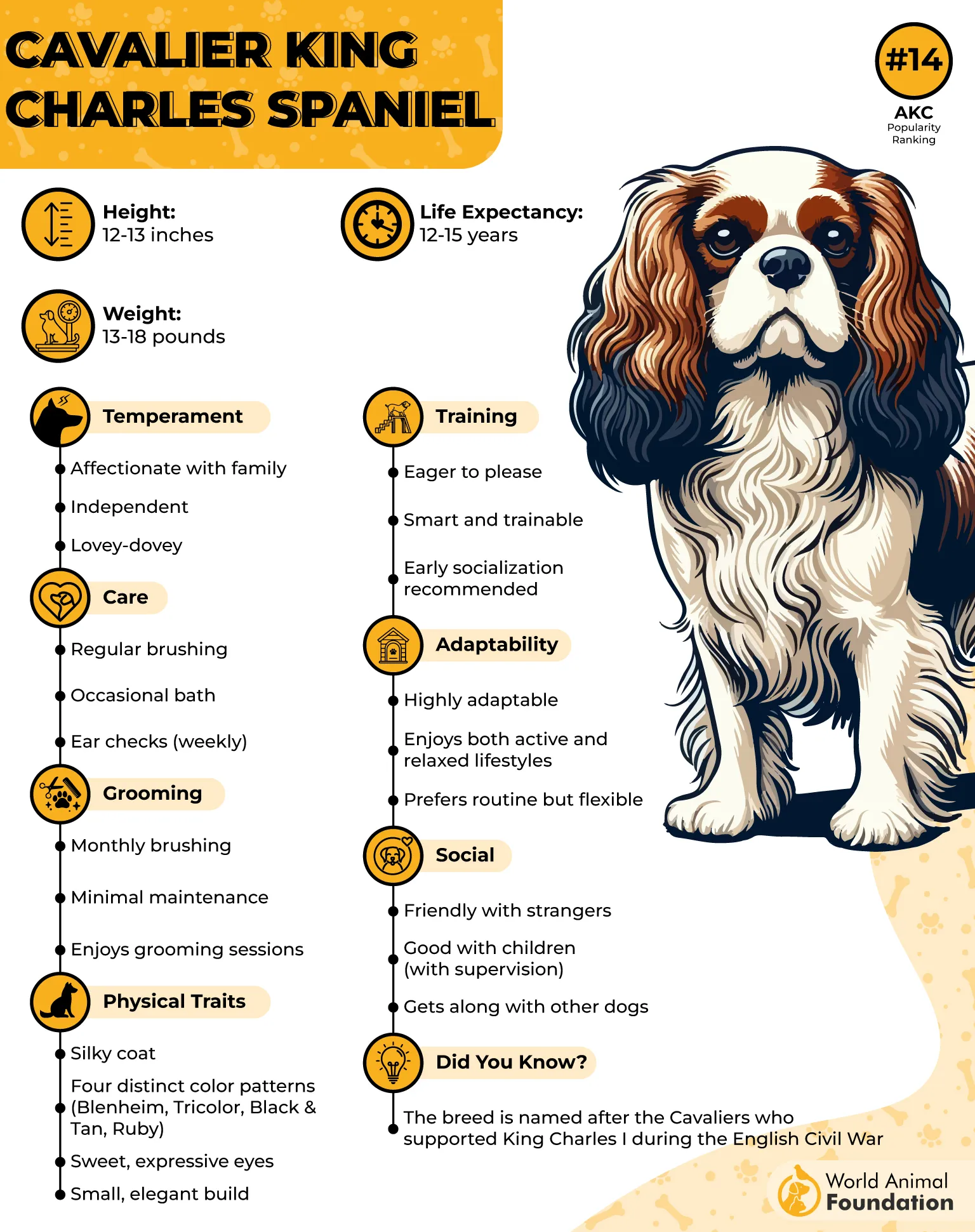
Offering the perfect blend of toy-breed sweetness and a bit of terrier-like spirit, Cavalier King Charles Spaniels are affectionate, playful, and altogether sophisticated little dogs. According to Hill’s Pet, the breed was originally bred as a lap dog to keep people warm during carriage rides.
They were often seen by King Charles’s side, which is how they got their name. Cavaliers make wonderful pets for big families and empty nesters alike. Their sweet, gentle nature means they get along beautifully with just about everyone, especially children, and they love a good interactive session with their owners.
A bit of light activity and a short walk to stretch their legs is usually plenty of exercise for these moderately active little dogs.
Easygoing, easy to keep, and easy to train, Cavaliers are happiest cuddled up with their favorite people at the end of the day. Regular grooming and weekly brushing are important, though, to keep their coat looking soft, shiny, and full of charm.
2. Bolognese
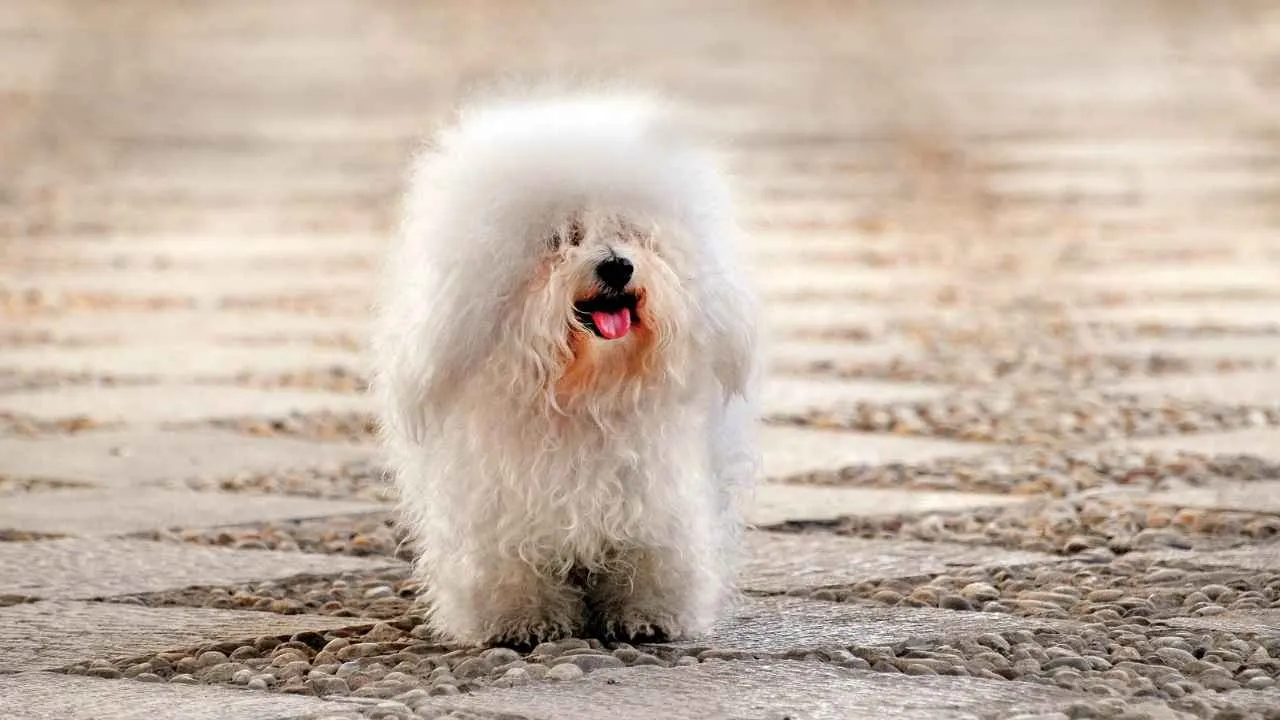
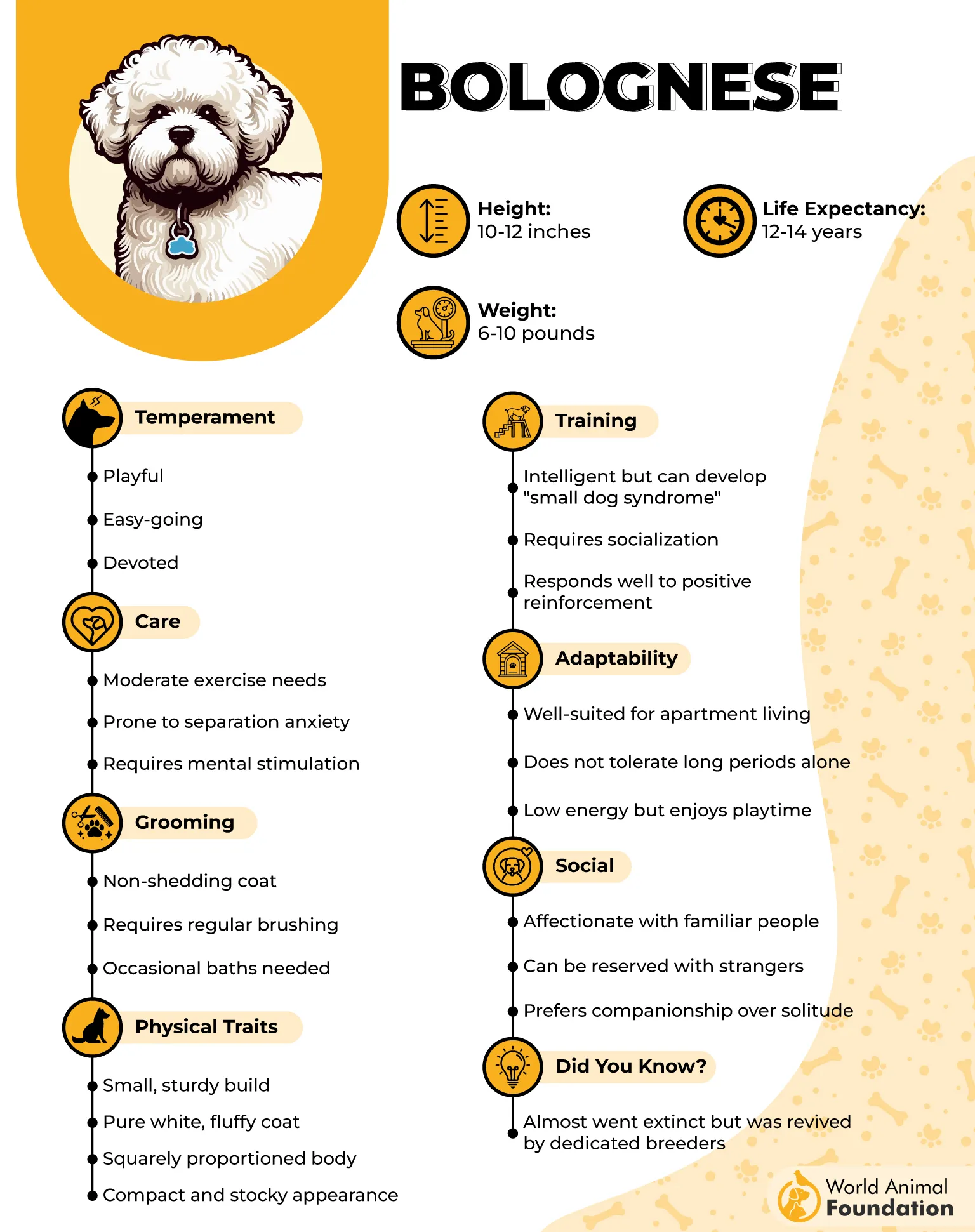
A small Italian breed from the Bichon family, Bolognese are faithful, calm dogs that love nothing more than being close to their favorite people. They share a strong family resemblance with other white companion breeds like the Bichon Frise, Maltese, and Havanese. Playful, easygoing, and deeply loyal, Bolognese make truly wonderful family pets.
They’re fairly low-maintenance in terms of energy, though socialization is important to help them get along well with children and older adults. A short play session is usually enough to satisfy their modest exercise needs, after which they’re more than happy to settle in and relax with their pet parents.
These small dogs are low-shedding as well as low-maintenance, and they adapt well to pretty much any living situation as long as their favorite humans are nearby.
Considered a hypoallergenic breed, they’re a great match for allergy sufferers too. That said, regular grooming is essential to keep their coat soft, tangle-free, and looking its best.
3. Basset Hounds
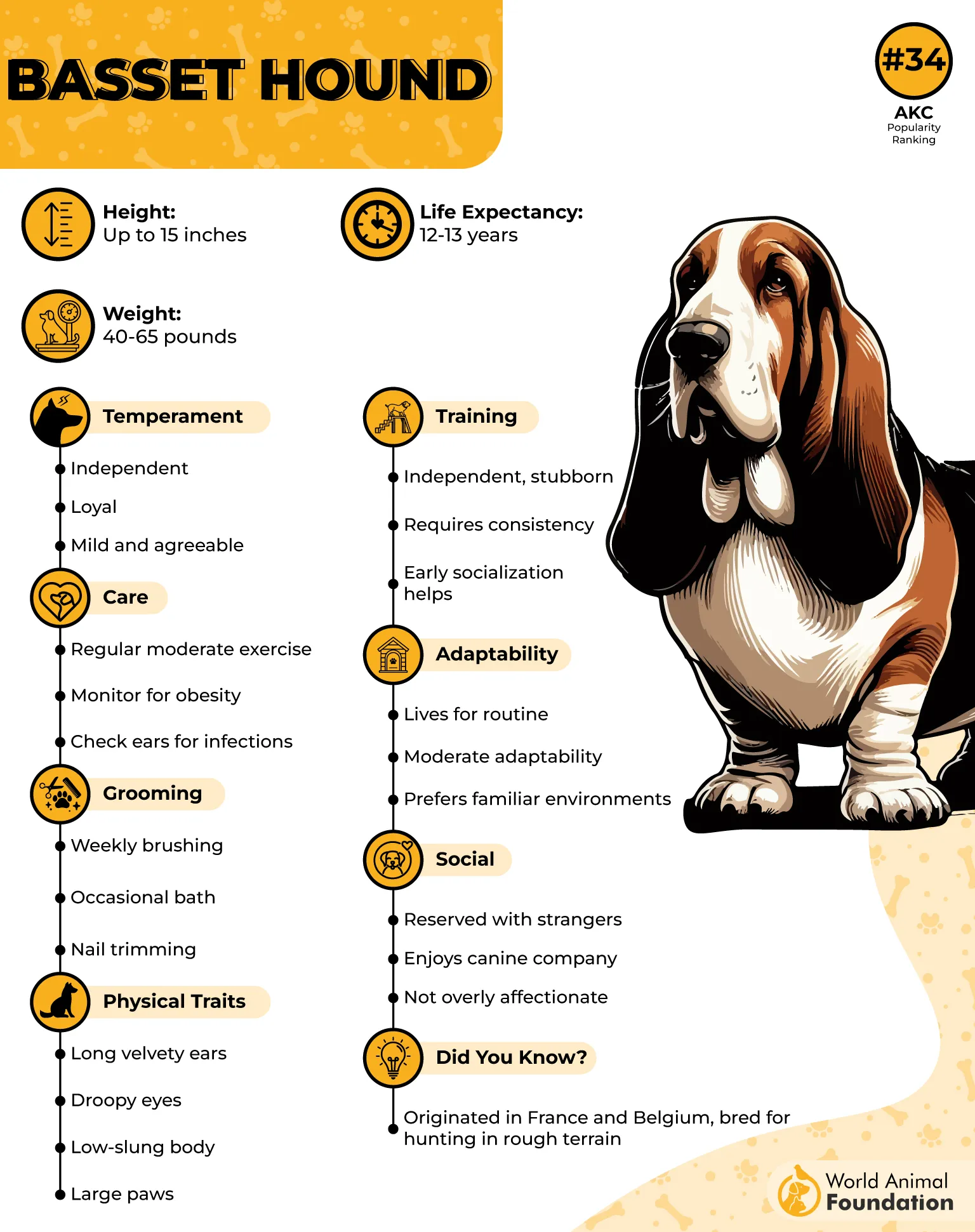
A short-legged scent hound, the Basset Hound is a low-energy breed originally bred for hunting rabbits and hares. Their name literally comes from the French word for “low” or “short,” a nod to their close-to-the-ground build. Good-natured and friendly, Basset Hounds make wonderful family pets.
Their affectionate, easygoing nature means they usually get along well with kids and other pets, though proper introductions, socialization, and supervision are still important for every meetup. This calm breed is perfectly content snoozing in their dog bed most of the day, which makes them a nice fit for busy households.
That said, pet parents still need to build daily exercise into the routine to help prevent obesity and related health issues.
Basset Hounds don’t do well when left alone for long stretches and can develop separation anxiety if they are. They’re also fairly strong-willed and independent, which can make obedience training a bit of a challenge. Positive reinforcement is the recommended approach to keep behavior issues at bay.
4. Pekingese
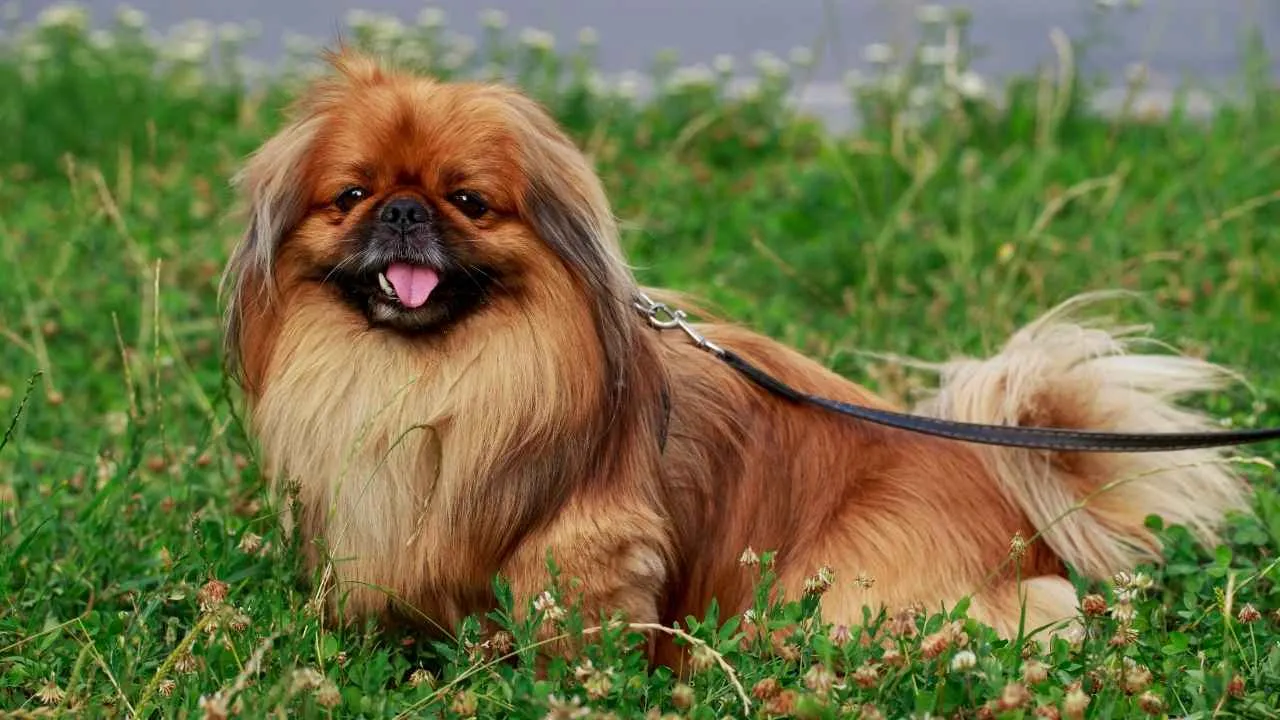
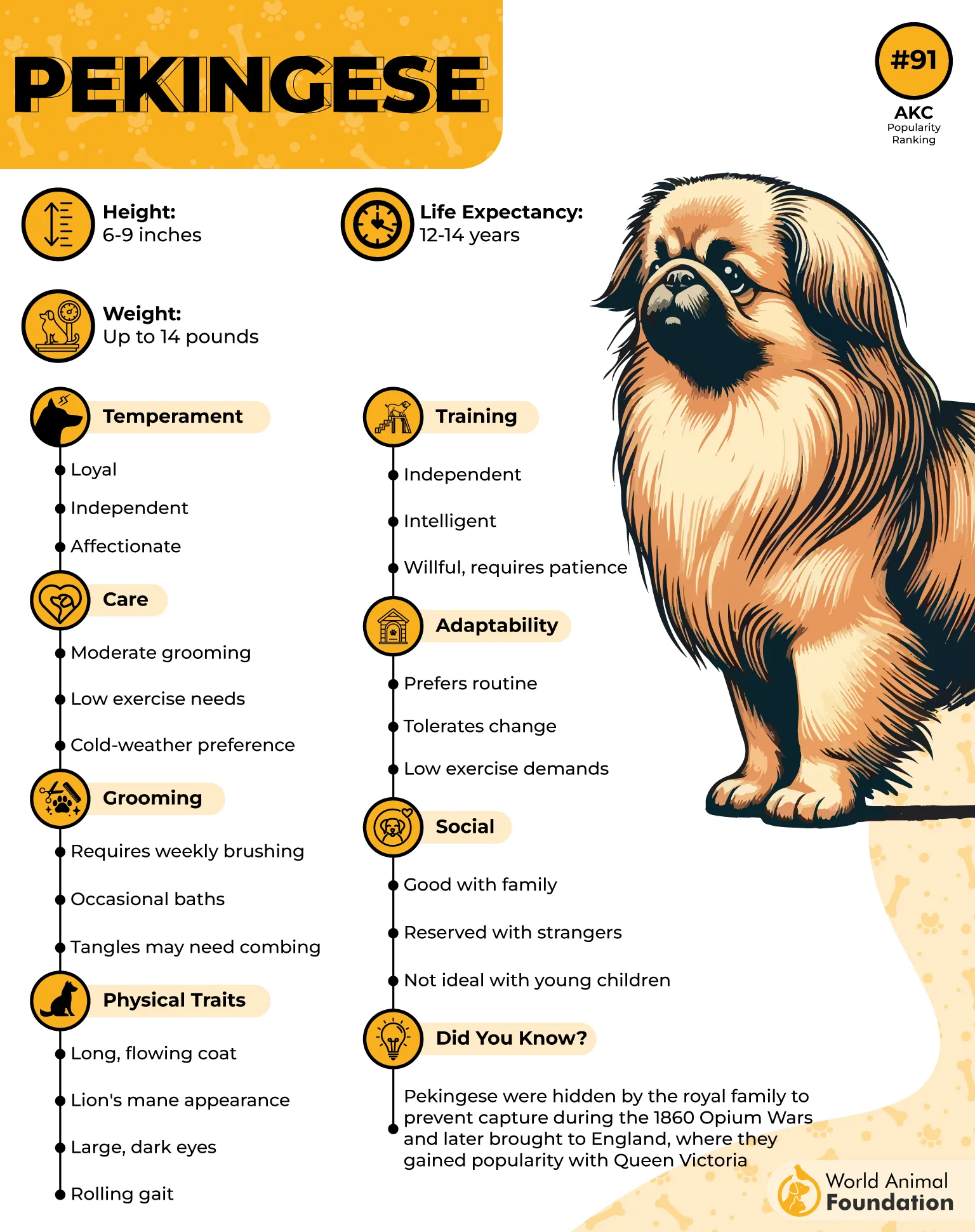
A toy breed originating from China, the Pekingese carries an air of royalty, tracing back to the Chinese Imperial Courts. With their flowing coat and distinctive markings, they even look a bit like tiny lions. Bred to be lap dogs, Pekingese are widely regarded as one of the most loyal companion breeds around.
These little dogs are highly adaptable and suited to almost any living situation, though they can be a bit sensitive around young children and other dogs. They do love kids, but tend to prefer the company of older children, since they’re not big fans of roughhousing.
Given their small size, you can easily carry them along in a bag, and they need very little living space, making them a great fit for apartment life.
Small as they are, Pekingese are alert and make surprisingly good watchdogs. They suit busy lifestyles well too, since their exercise and grooming needs are fairly moderate; occasional baths and a weekly brushing are usually enough. With their laid-back nature, Pekingese are happy with pretty much whatever you have planned, as long as they get to spend it by your side.
5. Shih Tzu
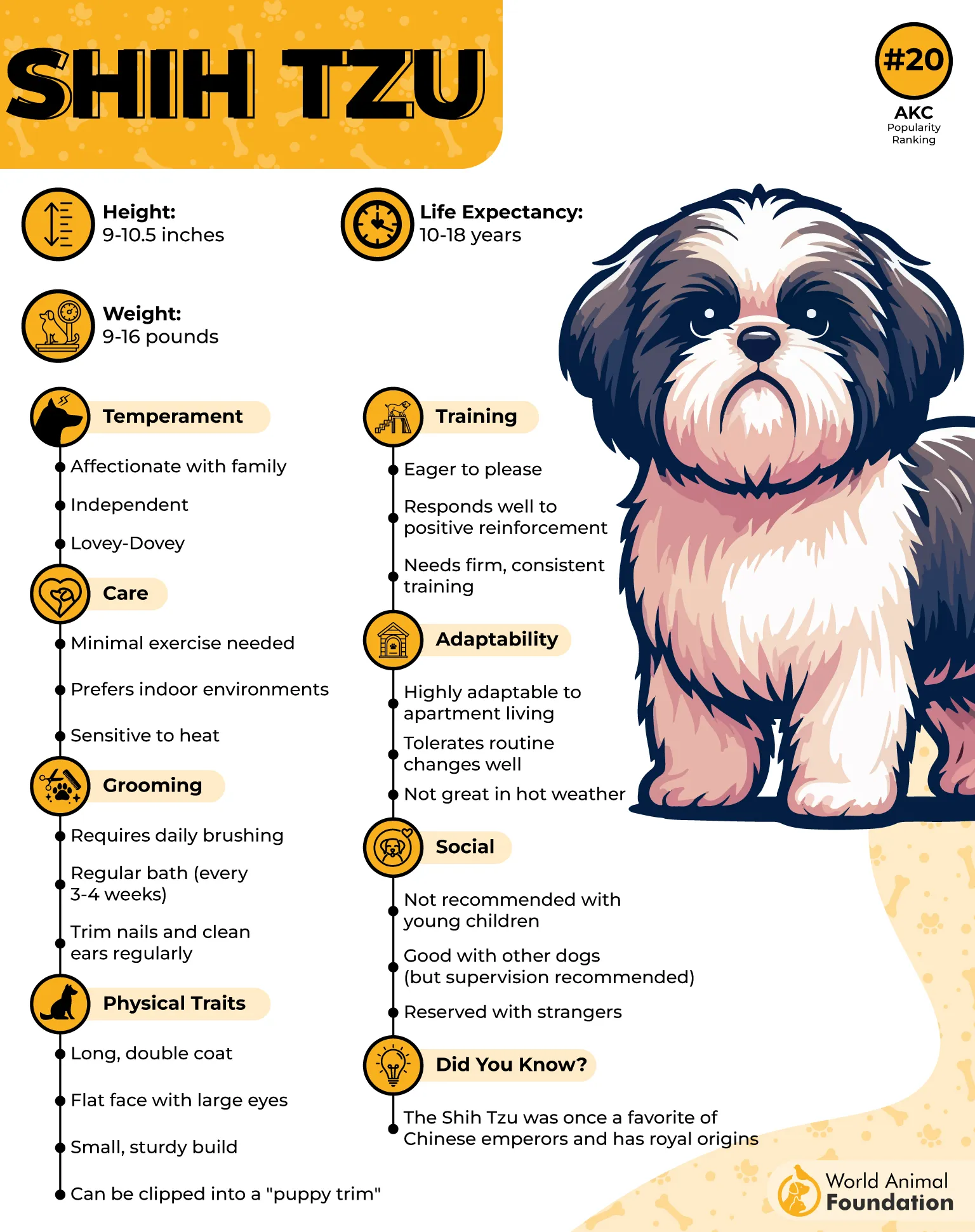
A Tibetan toy breed originally bred purely for companionship, the Shih Tzu is a pleasant, energetic little dog with strong ties to Buddhist tradition. They’re also known as reliable watchdogs thanks to their alert nature, quick to bark and let their owners know when someone’s approaching.
Shih Tzus tend to be wonderful with every member of the family. They get along well with children of all ages and typically do fine with other pets too.
Happy and sociable by nature, they thrive on attention and can develop unwanted behaviors if left alone too often. Their sweet, affectionate temperament also makes them a great choice for first-time dog owners.
According to PetMD, Shih Tzus have fairly minimal exercise needs; about 30 minutes of outdoor play paired with some indoor interactive time is usually enough. They’re highly trainable and genuinely enjoy a relaxed lifestyle spent close to their pet parents.
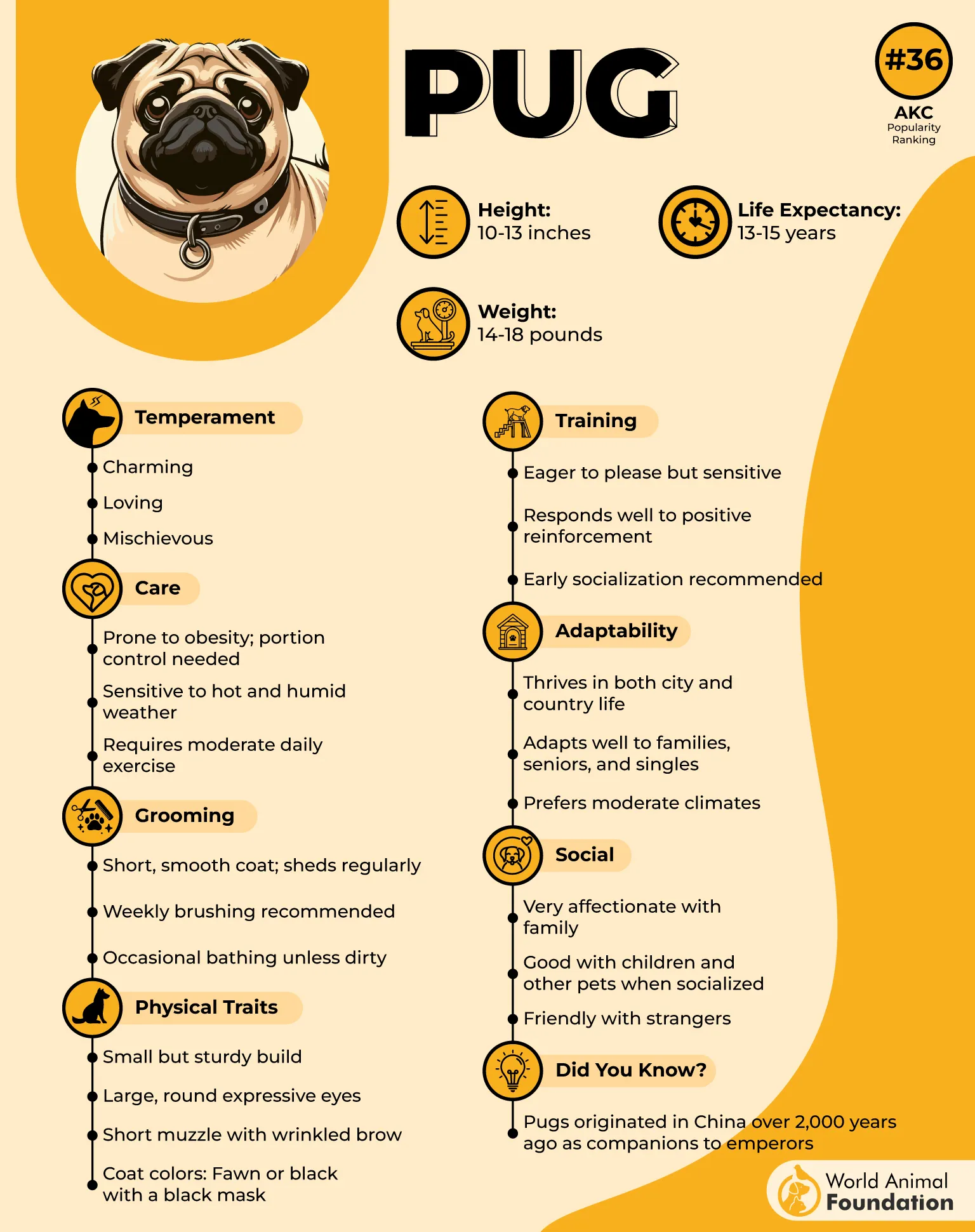
6. Pugs
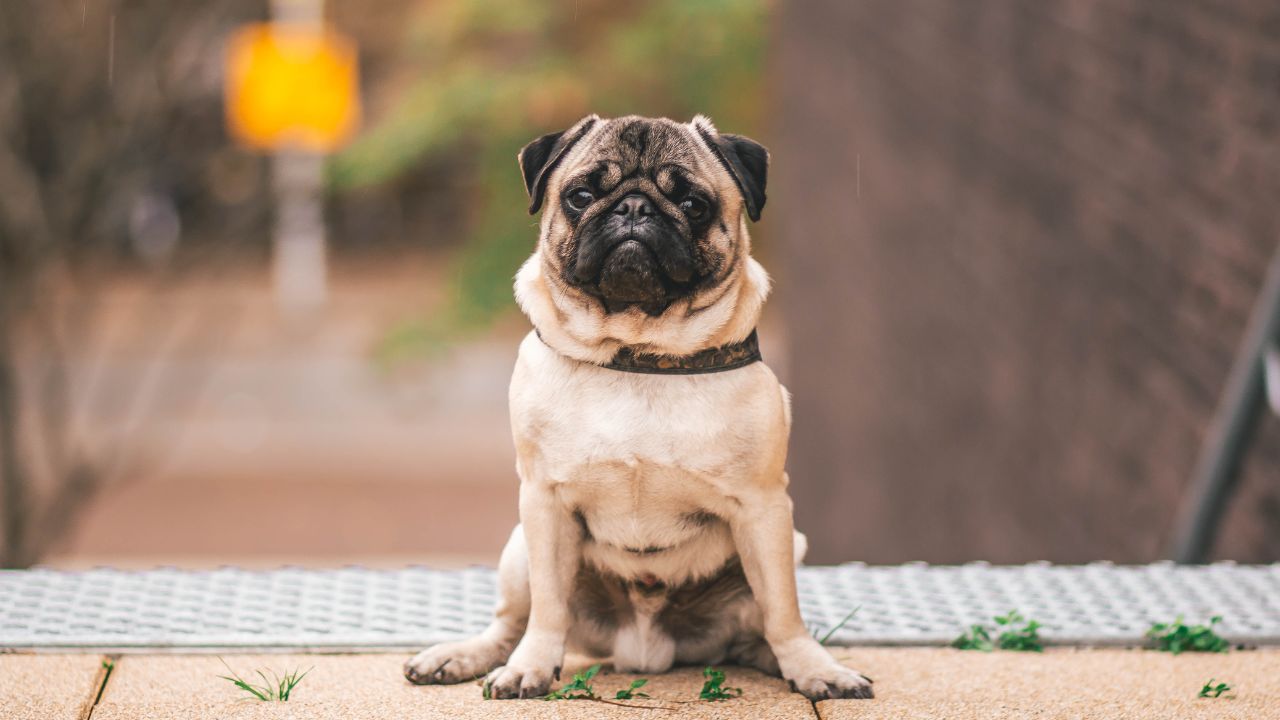
Pugs are intelligent, deeply affectionate little dogs that make wonderful family pets. They love people and constant company, which is why being left alone for long stretches really isn’t ideal for them. Small in size but big in personality, their clownish charm is a huge part of why they’re so popular.
Pugs generally love children and get along well with them, though they do better with calm play rather than roughhousing, since they’re prone to injury.
Because of their breathing challenges, they lean toward a more laid-back lifestyle and have moderate energy levels. About an hour of daily exercise is good for them, but they should never be pushed hard in hot weather.
This breed is prone to a handful of health issues, so regular vet checkups are important. Pugs respond best to consistent, firm, positive reinforcement training to stay well-behaved. They’re generally quiet dogs, though the huffing, snorting, and snoring that come with their flat face are pretty normal, and worth keeping an eye on.
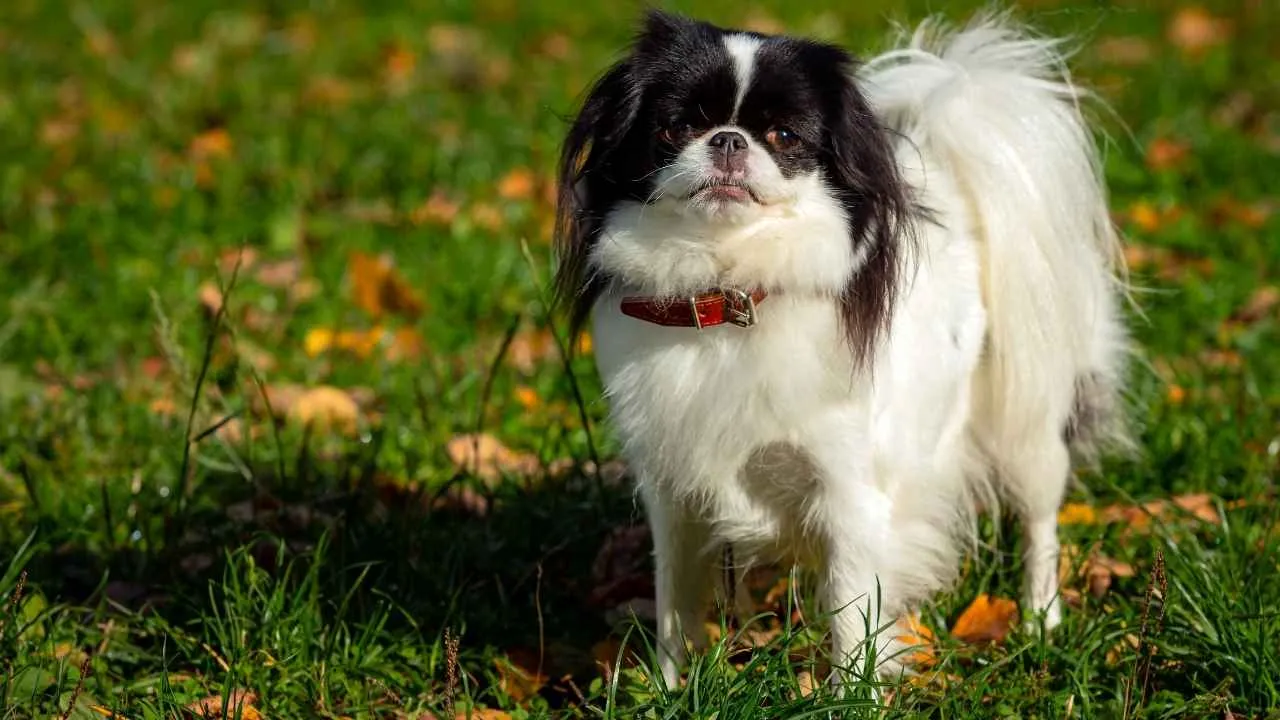
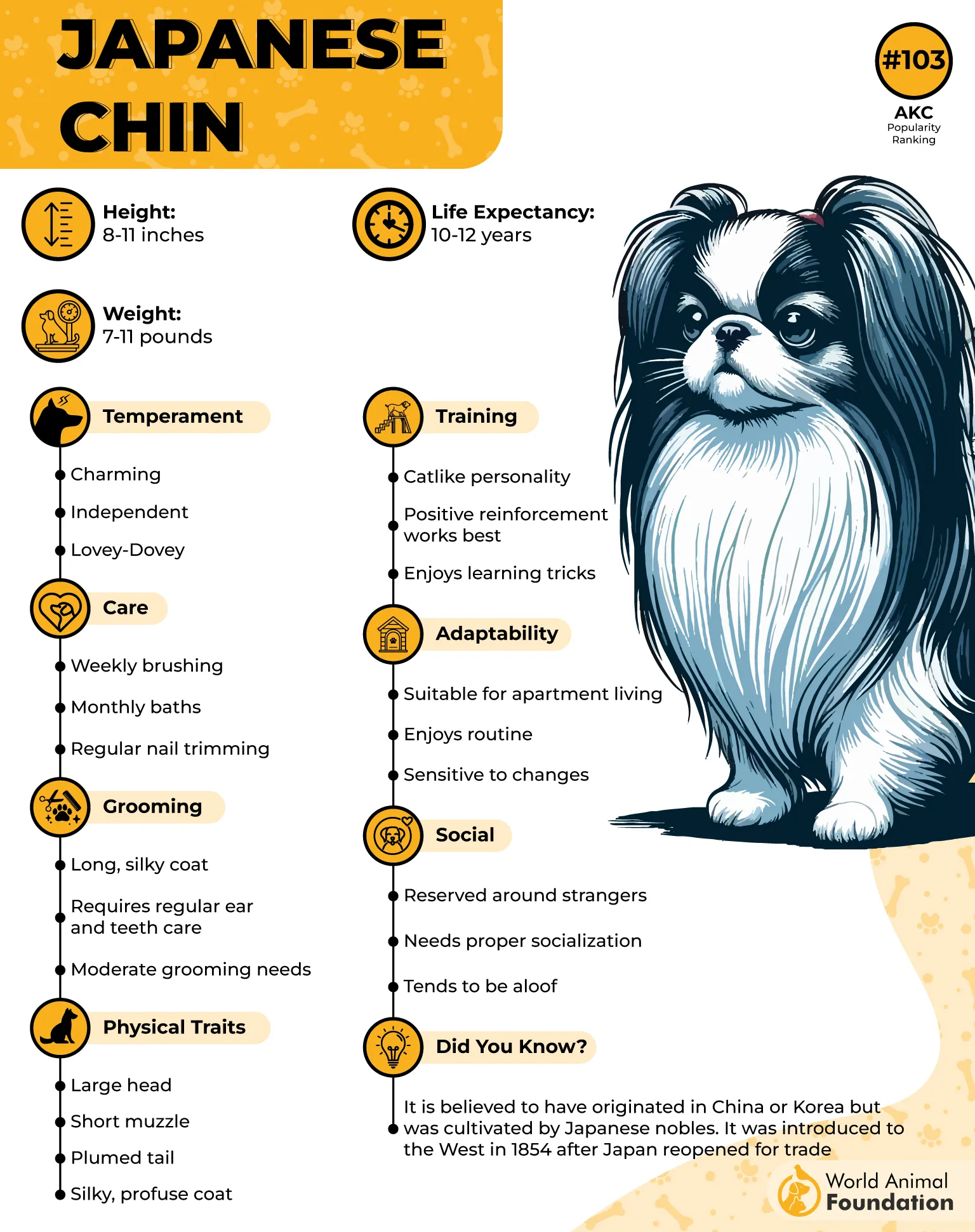
7. Japanese Chin
Sometimes called cat-like toy dogs, Japanese Chins are bright, intelligent-looking companions with a thick, luxurious coat. Responsive and affectionate, they make wonderful family dogs and are highly adaptable, doing well with big families and solo owners alike.
Chins tend to be warm and sweet with people they know, but a bit reserved around strangers. They generally enjoy being around kids, though a little extra caution is wise with very young children, who may not yet know how to behave gently around a smaller breed.
This calm breed is a great fit for owners looking for a small, loyal, entertaining companion. Chins are laid-back, and while they do have some energy, their exercise needs are fairly modest; some physical activity paired with mental stimulation is usually enough, and they enjoy a slow, easy walk around the block too.
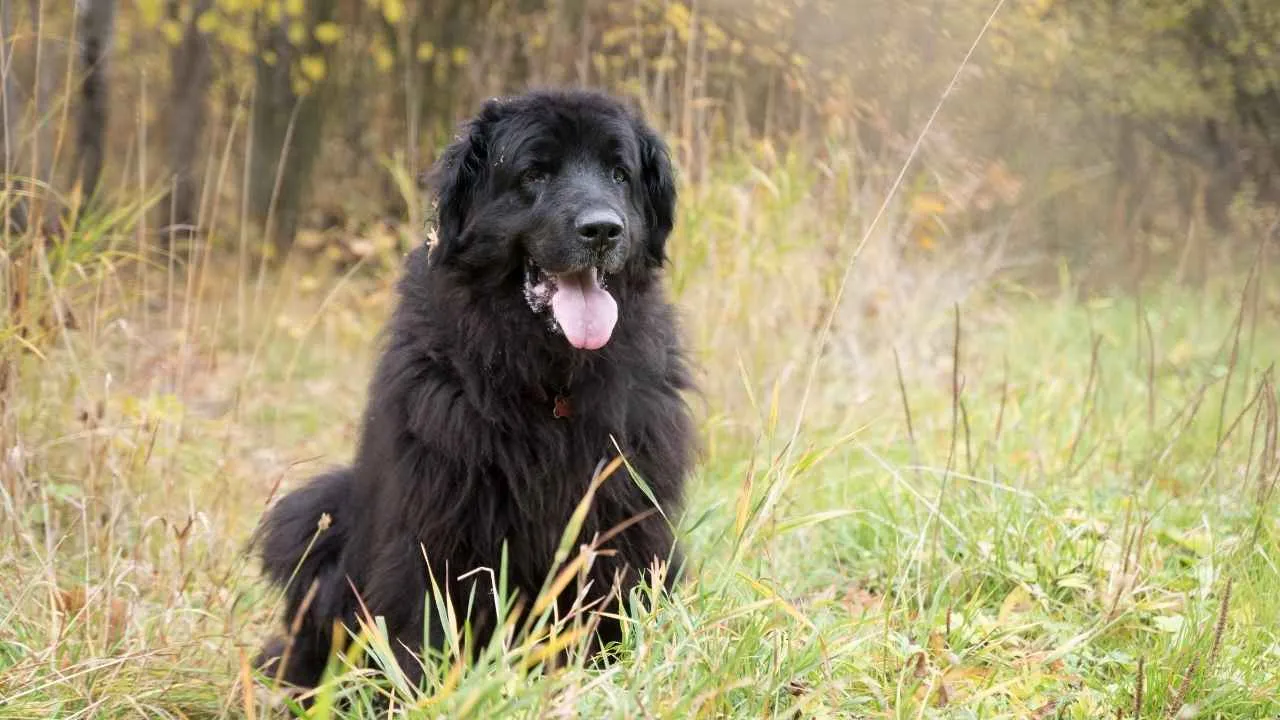
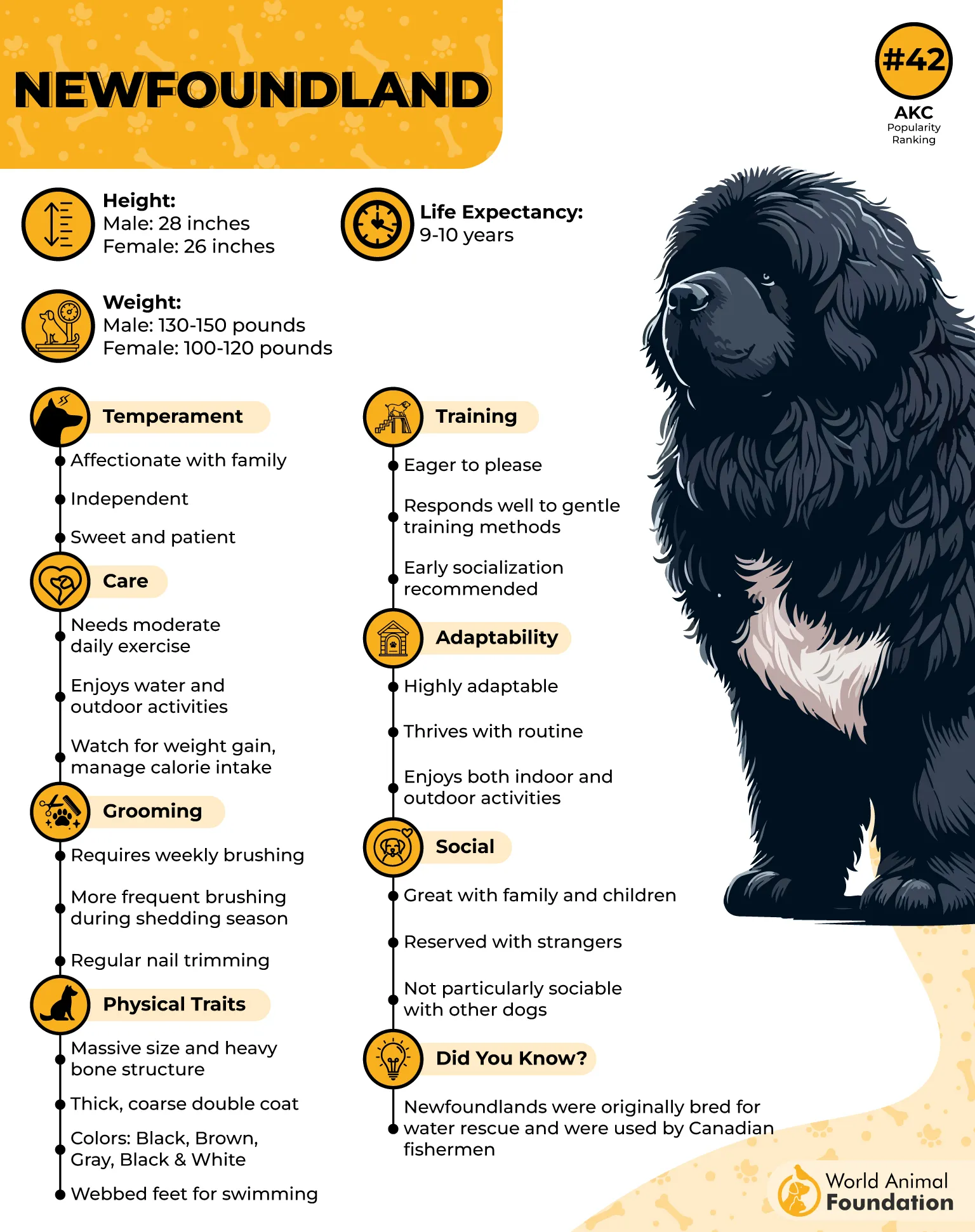
8. Newfoundland
A large working breed, Newfoundlands are heavy-boned, dignified dogs with a surprisingly sweet, calm temperament. Despite their size, they’re total softies at heart and make wonderful family pets. These gentle giants are eager to please and genuinely crave their owner’s attention.
Newfies tend to have a sweet disposition and are rarely aggressive, whether toward family members, new faces, or other pets. Because of their sheer size, though, they’re generally better suited to homes with older kids rather than very young children.
These gentle giants will happily try to climb into your lap for a cuddle, size be damned, and love nothing more than being close to you. Naturally laid-back, Newfoundlands lean toward the lazy side; you may genuinely have to coax them into going for a walk.
If you’re not sure how much exercise is right for them, our calculator can help you figure out what they actually need.
Dog Exercise Needs Calculator
Affenpinscher
Airedale Terrier
Akita (Japanese and American)
American Bulldog
Australian Labradoodle (Mini)
Australian Labradoodle (Medium)
Australian Labradoodle (Standard)
Australian Shepherd
Basset Hounds
Beagle
Belgian Shepherd (Groenendael)
Belgian Malinois
Belgian Tervueren
Bernese Mountain Dog (BMD)
Bichon Frise
Blue Heeler
Border Collie
Border Terrier
Boston Terrier
Bouvier des Flandres
Boxer dog
Brussels Griffon
Bullmastiff
Cairn Terrier
Cane Corso
Cavalier King Charles Spaniel
Cavapoo (Cavoodle)
Cattle Dog
Chesapeake Retriever
Chihuahua
Chow Chow
Cockapoo
Cocker Spaniel (American)
Cocker Spaniel (English)
Corgi
Curly Coat Retriever
Dachshund
Dalmatian
Doberman
Dogue de Bordeaux (French Mastiff)
English Bulldog
English Pointer
English Setter
Flat-Coated Retriever
Fox Terrier (Wire)
Fox Terrier (Smooth)
French Bulldog
German Shorthair Pointer (GSP)
German Shepherd
Giant Schnauzer
Great Dane
Greyhound
Goldendoodle (Mini)
Goldendoodle (Standard)
Golden Retriever
Gordon Setter
Husky
Irish Setter
Jack Russell
Japanese Spitz
Labradoodle (Mini)
Labradoodle (Medium)
Labradoodle (Standard)
Labrador Retriever
Lhasa Apso
Leonberger
Lurcher
Malamute
Maltese
Mastiff
Miniature Schnauzer
Miniature Pinscher (Min Pin)
Miniature Poodle
Newfoundland
Old English Sheepdog (OESD)
Pitbull
Pomeranian
Pug
Rat Terrier
Rhodesian Ridgeback
Rottweiler
Rough Collie
Saint Bernard
Samoyed
Schipperke
Shar Pei
Shetland Sheepdog (Sheltie)
Shiba Inu
Shih Tzu
Soft Coated Wheaten Terrier
Springer Spaniel
Staffy
Standard Poodle
Standard Schnauzer
Toy Poodle
Vizsla
Yorkshire Terrier
Westie
Weimaraner
Whippet
Small
Medium
Large
Timid
Chilled
Lovely
Invalid input. Please enter a valid age and breed.
`;
// Show the results background color
resultsDiv.style.backgroundColor = “#a67c52”;
// Show the results
resultsDiv.style.display = “block”;
});
});
const convertToHours = (minutes) => {
const hours = minutes / 60;
return hours.toFixed(1) + ” hours”;
};
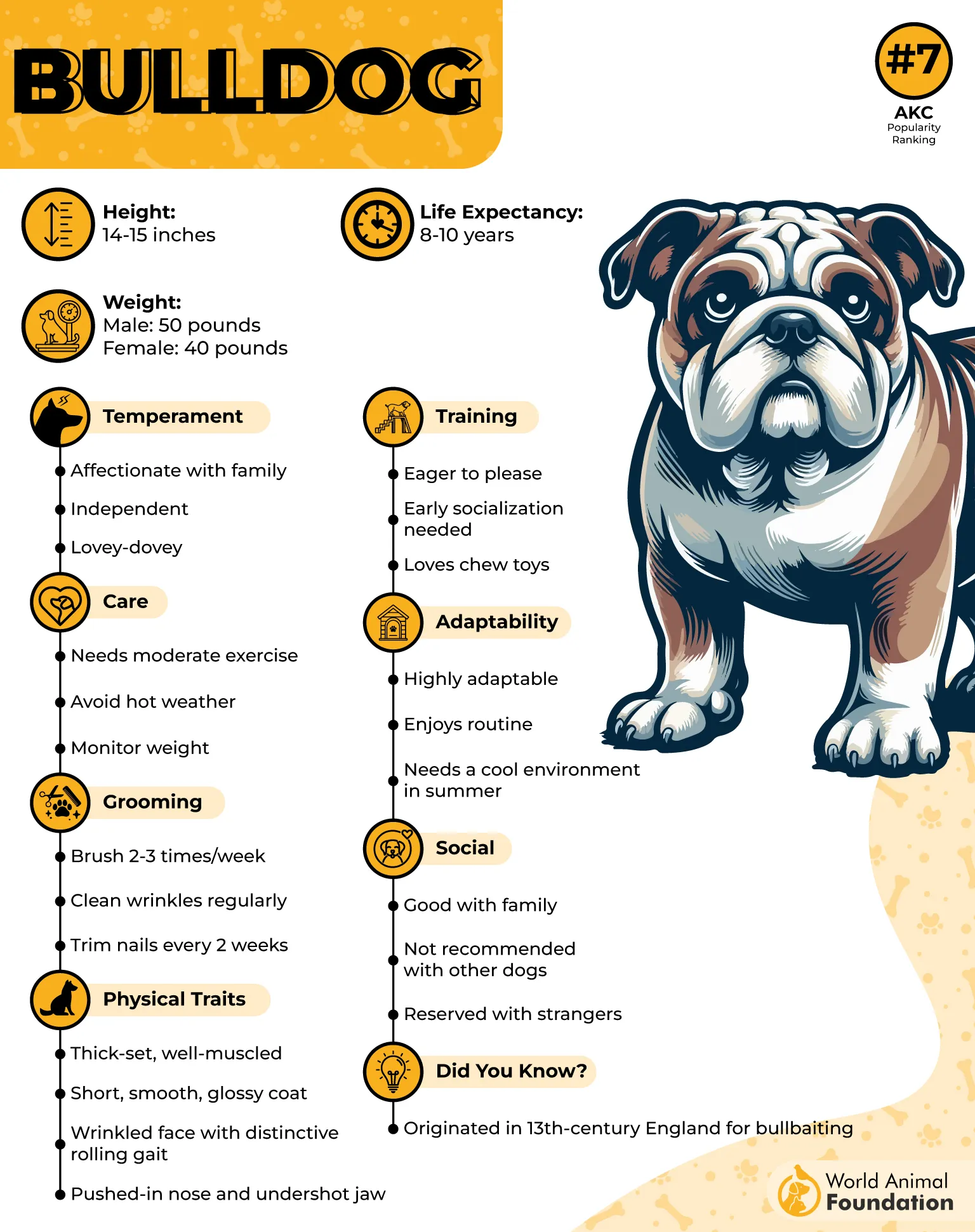
9. Bulldogs
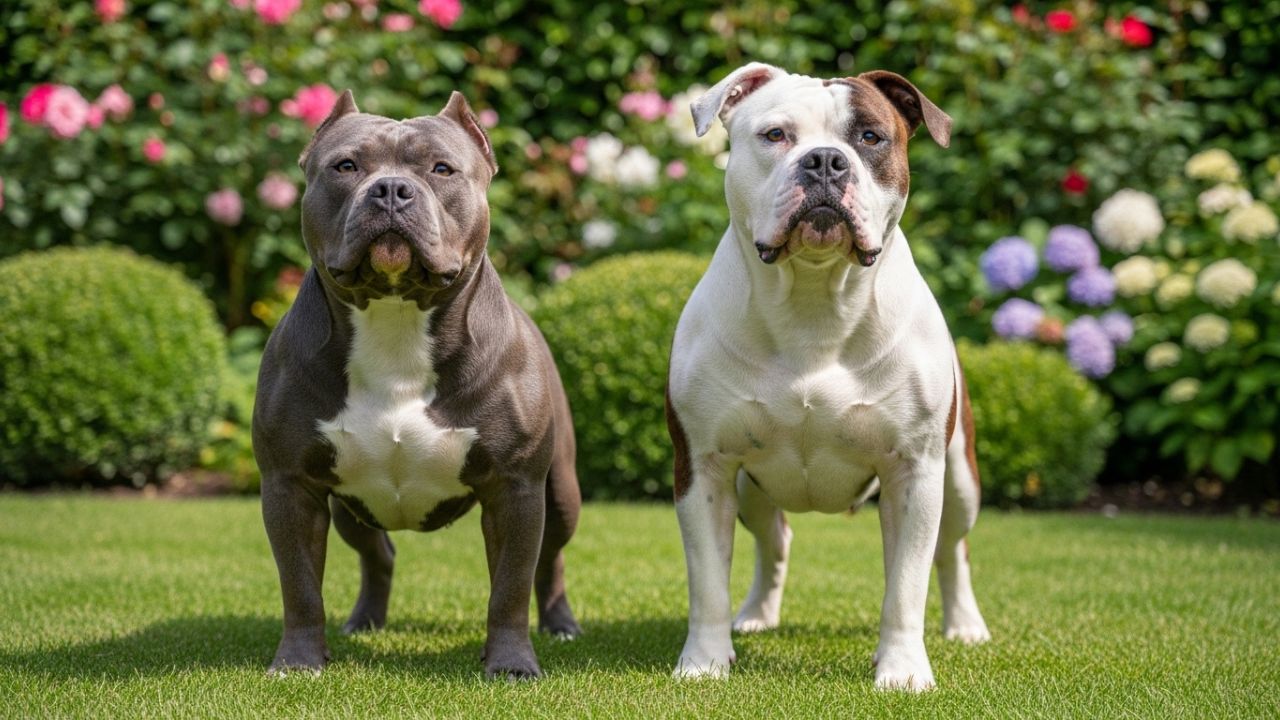
Originally bred in England for bull-baiting, Bulldogs have long since traded that history for family life, and today they form strong bonds with their owners. They tend to get along well with children and are generally tolerant of other pets and dog breeds too. That said, Bulldogs are famously lazy, which can make training and daily exercise a bit of a challenge.
Calm as they are, Bulldogs are still sturdy dogs, and they’ll bark to alert their owners when someone’s approaching, which helps keep intruders at bay. Fairly independent by nature, they don’t mind being left alone for periods of time, making them a good fit for busy households.
Because of their flat face, Bulldogs can be prone to breathing difficulties, so it’s best to avoid exercising them or letting them exert themselves in hot weather. Regular vet checkups go a long way in keeping them healthy and happy.
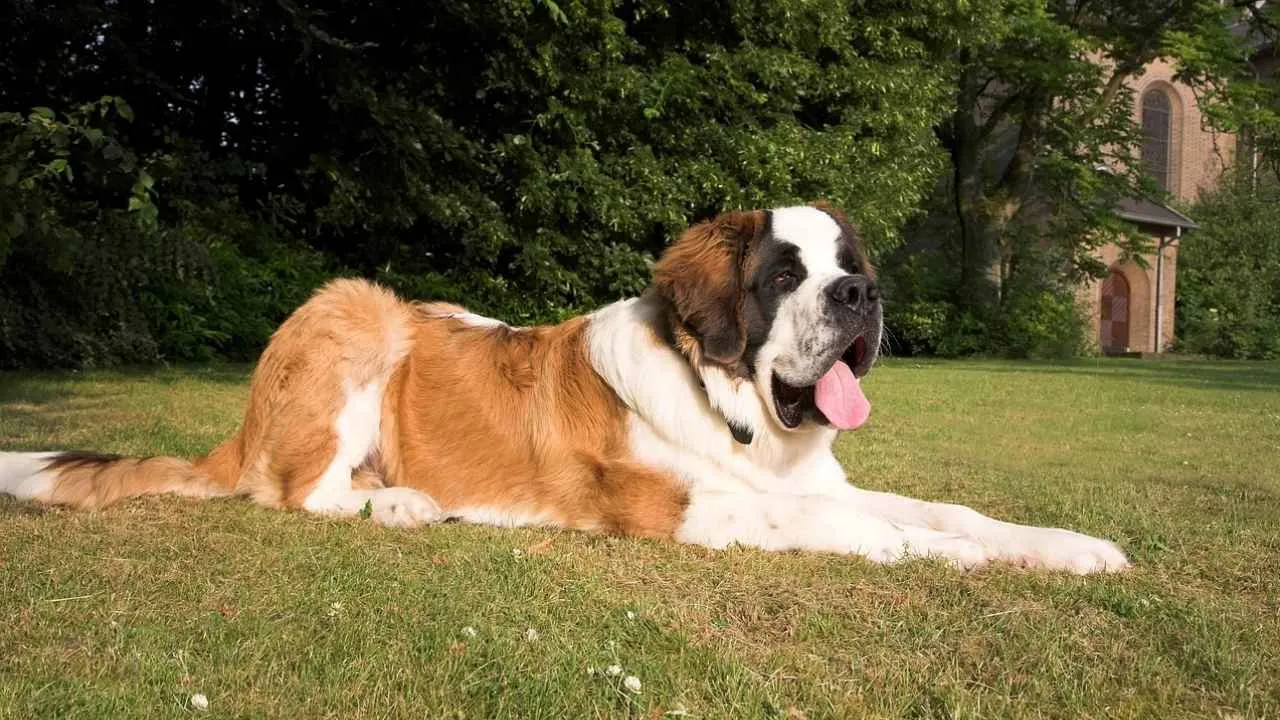
10. Saint Bernard
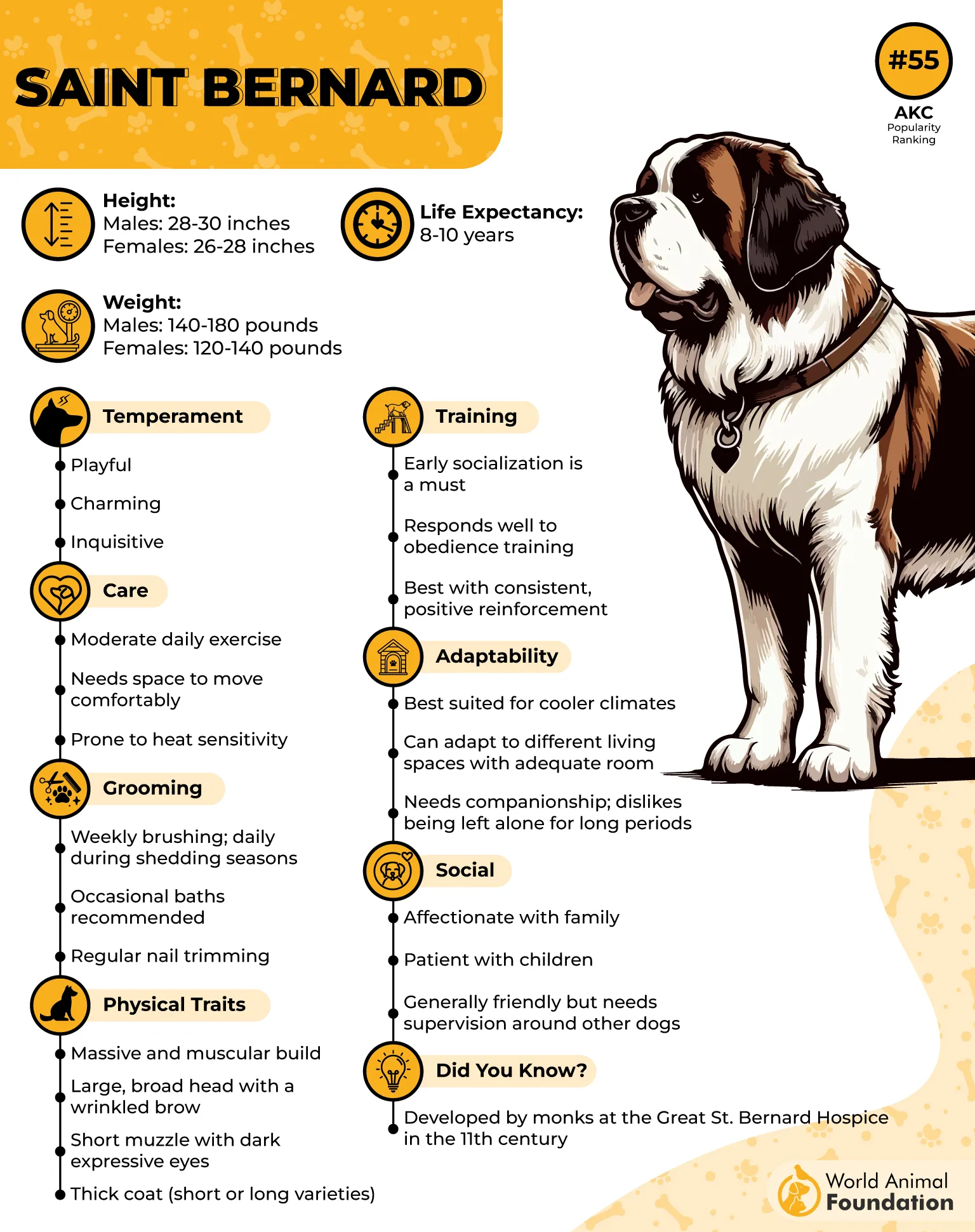
Gentle giants of the Swiss Alps, Saint Bernards are among the most famous and beloved dog breeds in the world. Large, powerful, and muscular, they’re also friendly, tolerant, and gentle at heart, which is exactly why they make such wonderful family dogs.
Saint Bernards are known for being patient and understanding, and despite their size, they’re careful not to injure children during play. Their eager-to-please attitude also makes them easier to train compared to many other large breeds.
According to WebMD, they have a remarkable ability to pick up on human emotions, making them wonderful companions for people of all ages. While Saint Bernards are a calm breed, they’re also fairly high-maintenance and need a good amount of time, care, and attention.
They’re best adopted by people who’ve thought it through carefully and genuinely have the time to give them the care they deserve.
Conclusion
If you’re someone who loves a gentle, loving, relaxed, and calm dog, these breeds are exactly what you’re looking for. They make wonderful house companions and help keep a peaceful, easygoing atmosphere at home. As long as they’re getting enough love and attention, they’ll stay calm and well-behaved in return.
All these dogs really want is to be by your side, and in exchange, they’ll reward you with good behavior, loyalty, love, and even a bit of protection when it’s needed. If you’re a first-time owner, these low-energy, quiet dogs could be your perfect match.
Fenric Hale
Fenric Hale is a seasoned writer and a dedicated Animal Support Technician with years of experience caring for animals. Known for his calm, practical approach and steady patience, Fenric is always ready to lend a helping hand — whether he's giving medication, restocking supplies, or comforting a nervous pup during a vet visit.
He has a natural connection with high-energy dogs and takes pride in turning tense, chaotic moments into calm and reassuring ones.
At home, Fenric shares his days (and plenty of snacks) with his retired greyhound, Olive — his loyal shadow and favorite nap companion.