




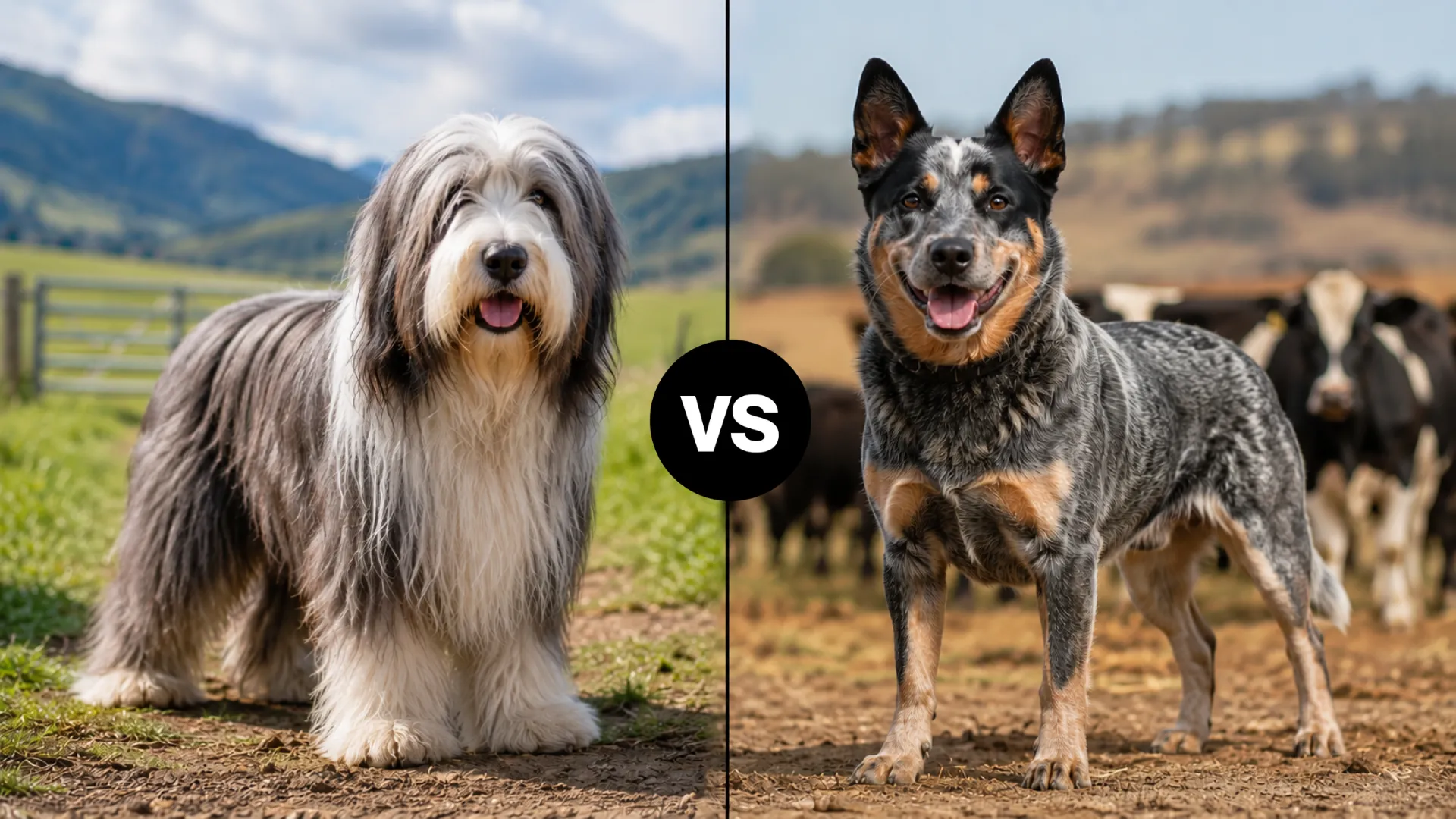
“A dog is the only thing on earth that loves you more than he loves himself.” — Josh Billings. That saying feels especially true when you’re trying to choose between two loyal breeds like the Bearded Collie and the Australian Cattle Dog.
At first glance, both seem energetic and hardworking, but they bring very different personalities into a home. One is a cheerful, shaggy entertainer, while the other is a focused worker who never likes sitting still. Think of it as choosing between your funny best friend and your ultra-disciplined gym buddy.
This comparison breaks down their history, personality, care, and everyday life in simple terms, helping you find the dog that truly matches your family and lifestyle.
Bearded Collie vs. Australian Cattle Dog: Dog Breeds Comparison
The Bearded Collie and Australian Cattle Dog are energetic, intelligent breeds, but they differ in appearance, temperament, and care needs. This guide will help you understand their key differences and decide which breed may be a better fit for you.
Origins & Purpose
The Bearded Collie is a Scottish herding dog built to handle all kinds of weather, while the Australian Cattle Dog is a smooth-coated breed built to endure hot, harsh environments.
Bearded Collie: Traders brought their Lowland Polish Sheepdogs to Scotland, where this breed was developed back in the 16th century. These Polish sheepdogs were crossed with local Scottish herding dogs to create what we now know as the Bearded Collie. Its main job was to gather and drive cattle and sheep, according to Omlet.
Australian Cattle Dog: This exceptional herding breed was originally developed in Australia in the 19th century to drive cattle over long distances across rugged terrain. British herding breeds were likely crossed with the Dingo to create this hardy, hard-working dog.
Size & Physical Build
The Bearded Collie is slightly leaner and taller than the Australian Cattle Dog, while the ACD is more muscular, compact, and dense, with a short, weather-resistant double coat.
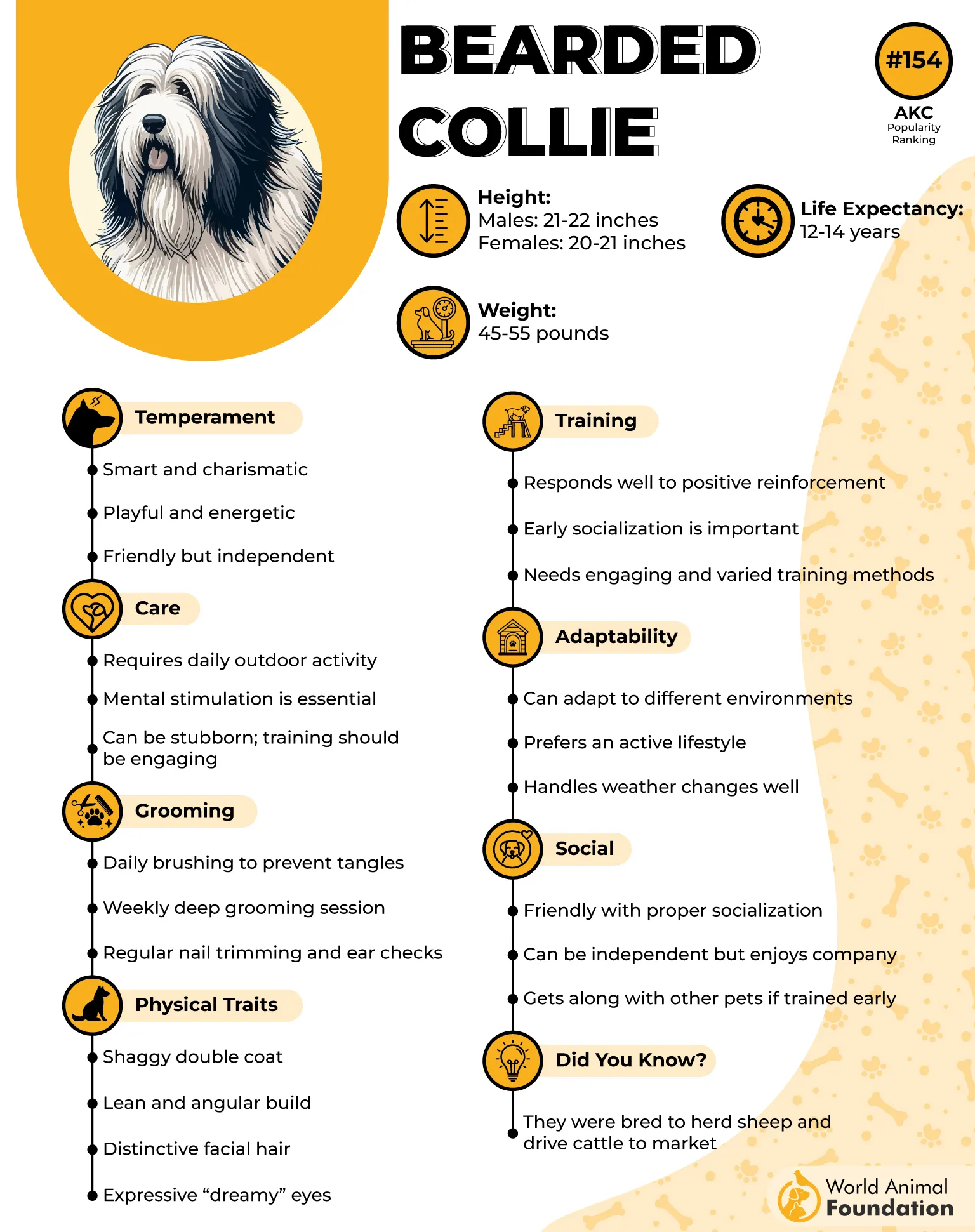
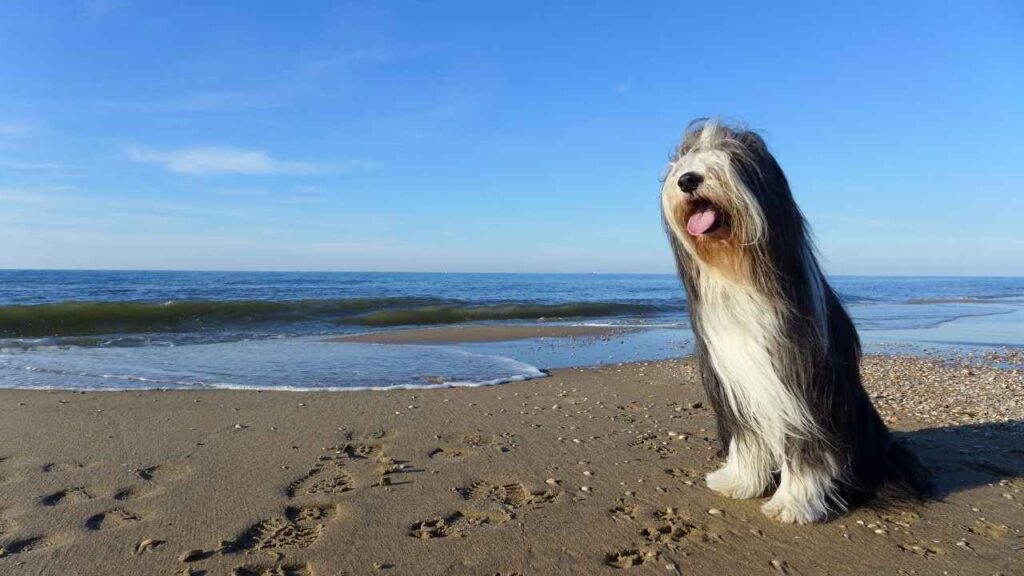
Bearded Collie: This medium-sized breed stands 20–22 inches tall and weighs around 40–60 pounds. It has a rectangular build, a square head, drop ears, and a moderate stop. Both scissor and level bites are accepted, and the low-set tail is never carried curved over the back, as reported by Wikipedia.
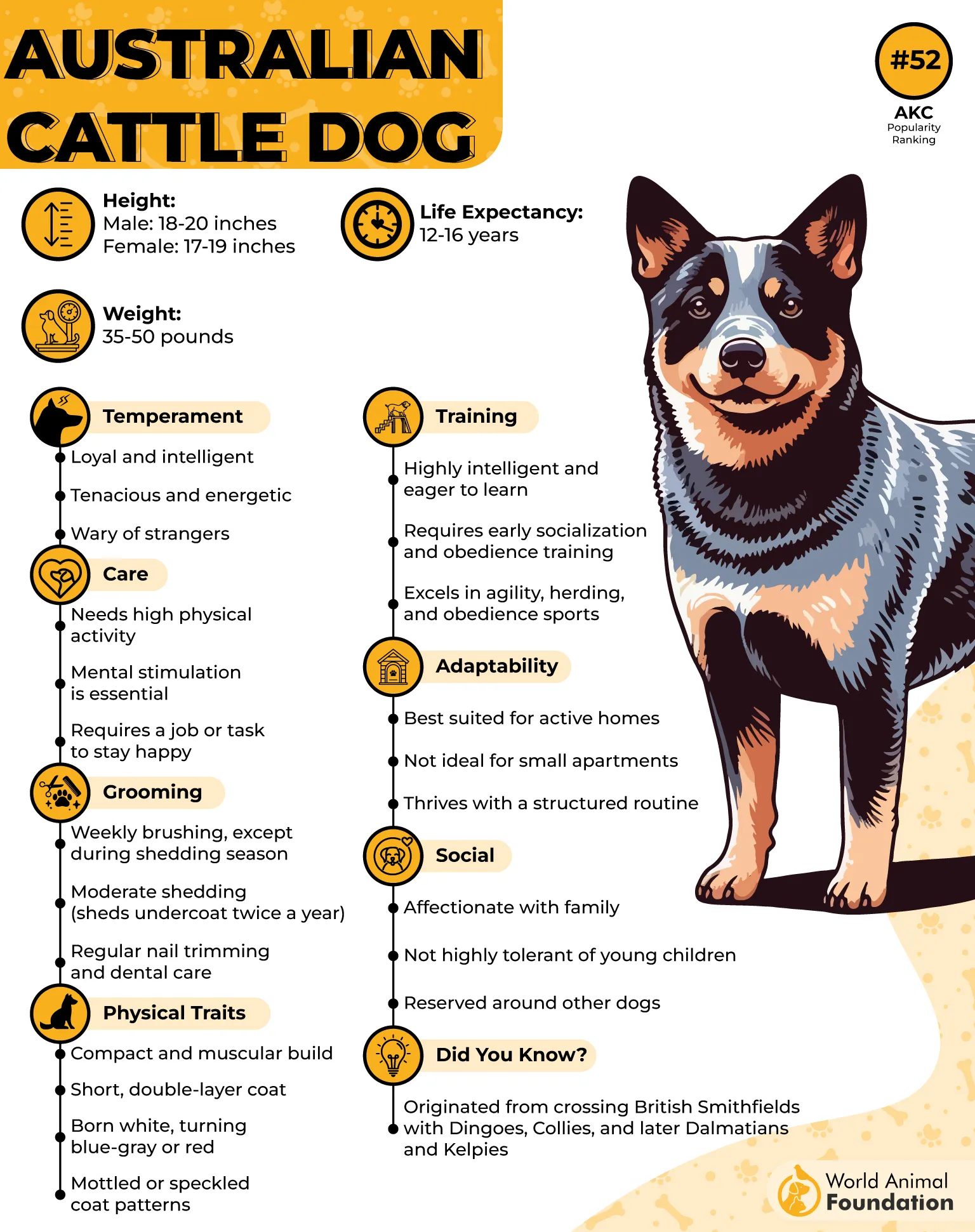
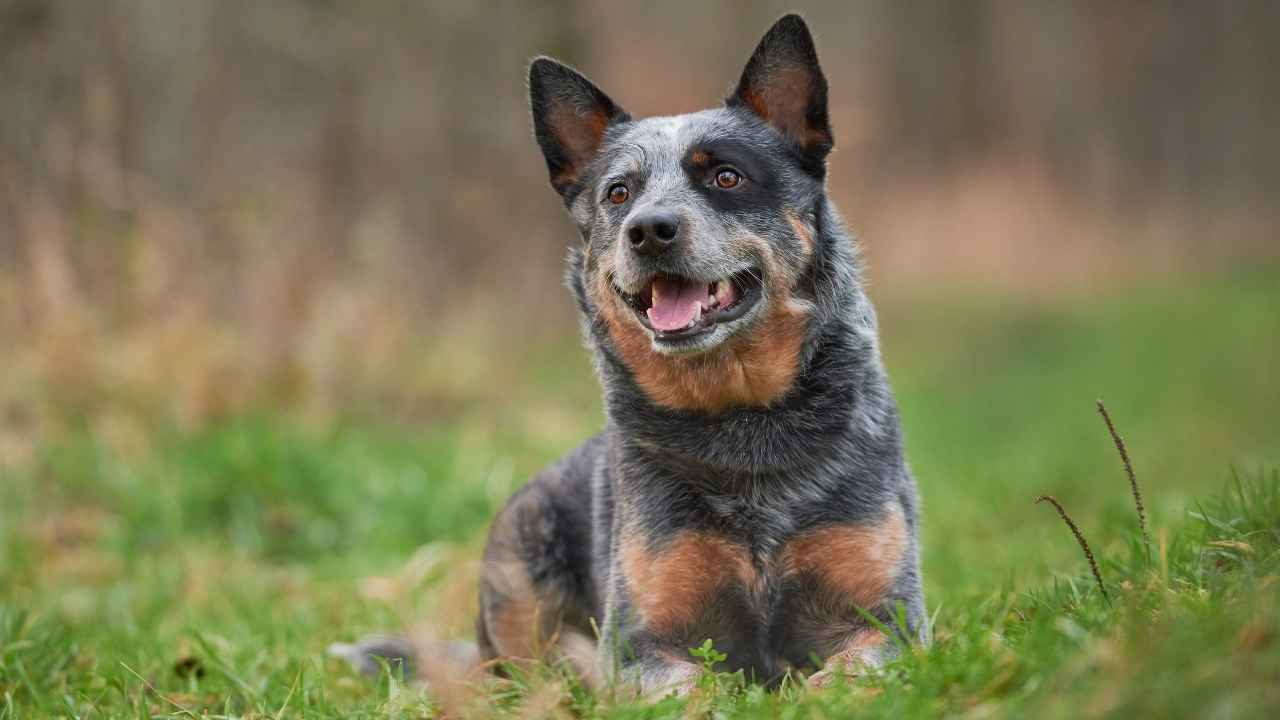
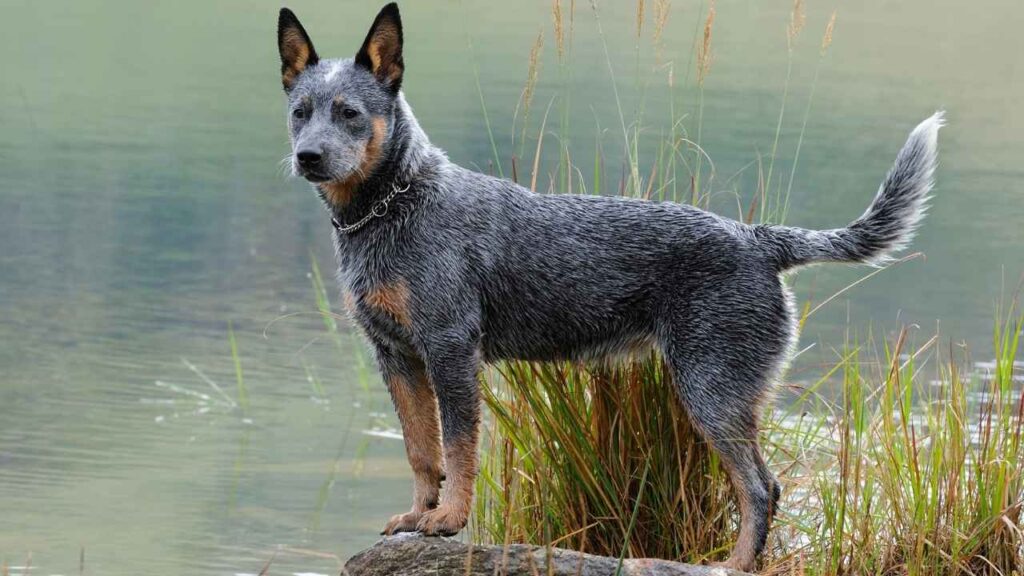
Australian Cattle Dog: There are two variants: a 20th-century strain and an older 19th-century strain. The breed stands 17–20 inches tall and weighs around 33–66 pounds. Often nicknamed the “blue heeler,” it has smooth curves throughout its body, a gentle stop between the eyes, and dark, oval eyes.
Temperament & Personality
The Bearded Collie is a sensitive family companion with a bouncy, outgoing nature, while the Australian Cattle Dog is a fiercely loyal working dog through and through.
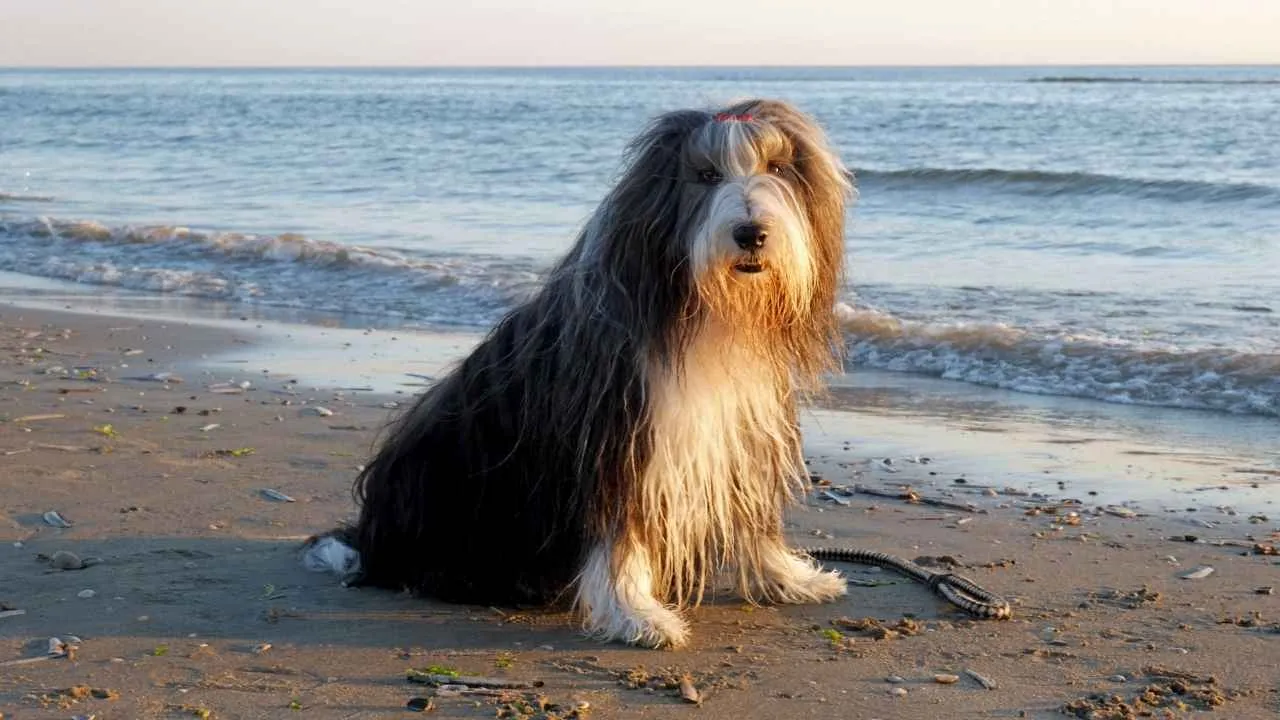
Bearded Collie: This breed is high-energy and sharp-witted, and it genuinely loves being part of the family. A total social butterfly, it thrives on making new friends and forms strong bonds with family members, kids, and other pets alike. With its strong herding instincts, it’s a great fit for active families, says The Kennel Club.
Australian Cattle Dog: Known for its speed and power, this breed carries a sharp, alert expression that matches its intelligence. It loves spending time with its human family, and while it can be wary of strangers at first, it warms up and becomes playful once it gets to know them. It also has an independent streak that can sometimes tip into stubbornness.
Exercise & Energy Levels
Both breeds are high-energy and smart, but the Australian Cattle Dog brings a whole different level of physical intensity and endurance, and needs strict, consistent management to match.
Bearded Collie: This athletic breed needs at least 1–2 hours of physical and mental stimulation a day, whether that’s biking, running, walking, agility training, dog sports, fetch, or active indoor play. Without enough exercise, boredom can quickly turn into destructive behavior like chewing and digging.
Australian Cattle Dog: Thanks to its hardworking heritage, this breed needs regular, serious physical stimulation- think hiking, swimming, treat-dispensing puzzle toys, running, and long walks. A fenced yard or a secure outdoor space is pretty much a must.
Training & Intelligence
The Bearded Collie is an independent, shaggy clown with natural herding instincts, while the Australian Cattle Dog is an autonomous workaholic bred to drive stubborn cattle across harsh terrain.
Bearded Collie: Despite a stubborn streak, this breed genuinely loves pleasing its owner, which makes obedience training go smoothly. It’s also known for sneaking food off furniture, so proper training and early socialization aren’t optional; they’re essential.
Australian Cattle Dog: Also known as “blue heelers” or “red heelers,” this smart dog tends to nip at the heels of younger children thanks to its strong herding instincts. That makes obedience training with positive reinforcement absolutely crucial. The good news is it responds really well to consistent, structured training.
Coat Maintenance
The Bearded Collie has a long, shaggy double coat that needs serious grooming to prevent painful matting, while the Australian Cattle Dog has a short, weather-resistant coat with barely any grooming demands.
Bearded Collie: This breed has a hard, shaggy, strong outer coat over a soft, furry undercoat. It comes in a range of colors, including black, blue, brown, and fawn (with or without white markings). Daily brushing is a must, more often during shedding season, using the line-brushing method with a pin brush and a metal greyhound comb. Bathing every 6–8 weeks is usually enough.
Australian Cattle Dog: This breed comes in two colors: blue and red speckle. It has a rain-resistant outer coat and a short undercoat, and only needs weekly brushing to remove loose hair and spread natural oils evenly. Occasional baths are fine, and professional grooming once or twice a year is plenty.
Health & Lifespan
Both breeds are known for their longevity, but the Australian Cattle Dog holds the record for the longest-living dog ever, Bluey, who lived to be 29 years old.
Bearded Collie: This breed has an average lifespan of 12–14 years and tends to stay healthy for most of its life. Some common health issues to watch for include hip dysplasia, Addison’s disease, progressive retinal atrophy (PRA), and infections. Regular health testing is recommended for early detection.
Australian Cattle Dog: This breed has an average lifespan of 12–16 years and is generally quite healthy, though it can be prone to a handful of conditions, including eye infections, deafness, orthopedic issues, heart conditions, skin allergies, and hip dysplasia. Sticking with reputable breeders and keeping up with regular vet checkups goes a long way in prevention.
Conclusion
The Bearded Collie and Australian Cattle Dog are both remarkable working breeds, but they shine in very different ways. If you’re drawn to an outgoing, playful companion that loves family time and doesn’t mind regular grooming sessions, the Bearded Collie could be your perfect match.
If you’re after a highly driven, intelligent partner for outdoor adventures, sports, or farm work, the Australian Cattle Dog is hard to beat. Neither breed is “better” than the other; it all comes down to fit.
The right choice depends on your daily routine, activity level, and how much time you’re ready to invest in training and care. When your lifestyle matches your dog’s natural instincts, both you and your four-legged friend are far more likely to enjoy a happy, lasting partnership built on trust, fun, and companionship.
