




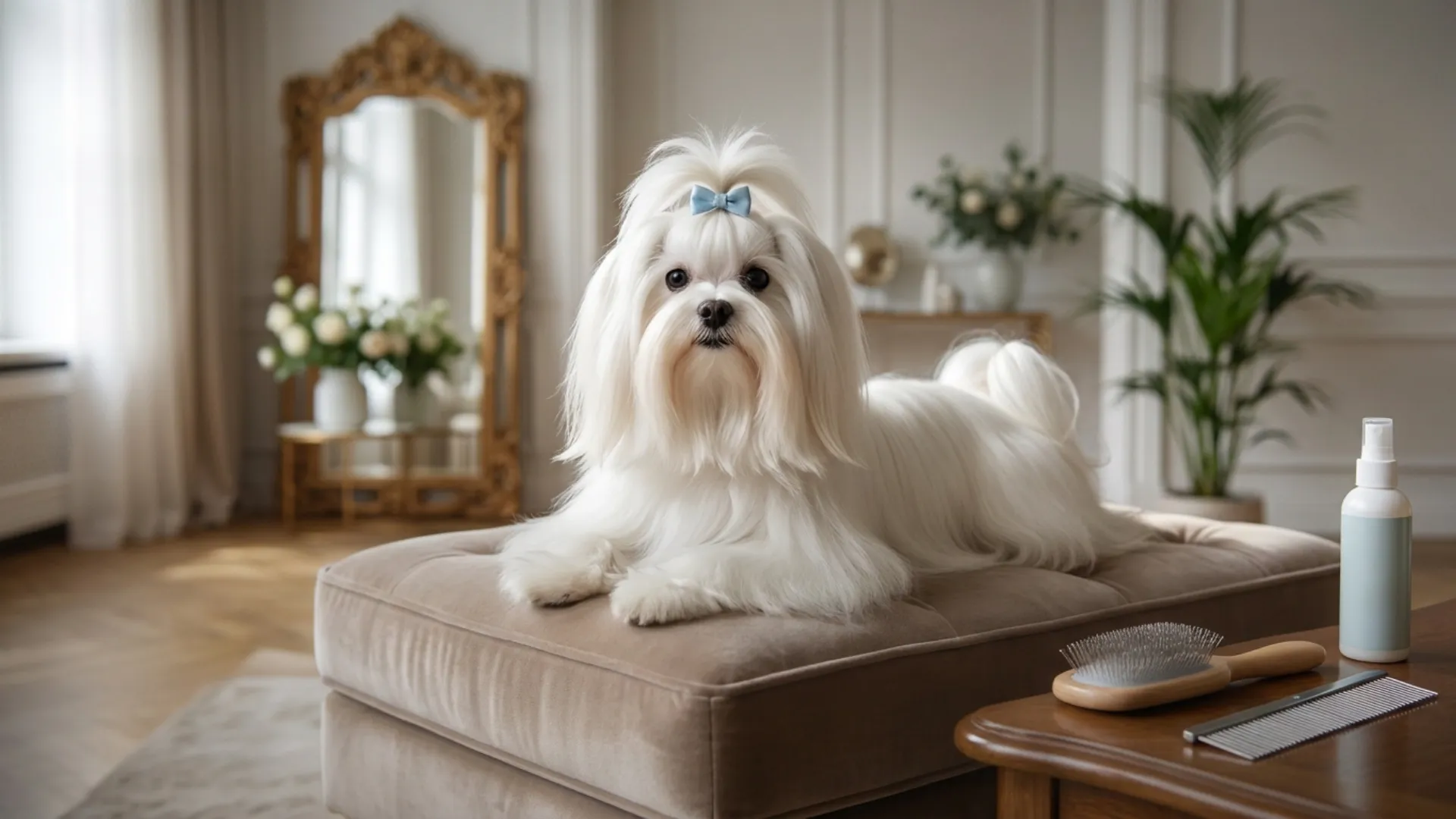
Long-haired dogs enter a room like they have a personal stylist, a professional lighting crew, and absolutely no intention of being ignored. Those flowing coats may look effortlessly iconic, but behind every silky topknot and perfectly parted mane is an owner holding a pin brush, detangling spray, and several unanswered questions about where that knot came from.
A beautiful coat is not merely a canine fashion statement, as brushing also removes debris, distributes natural oils, reveals skin changes, and helps owners detect lumps, sore spots, parasites, or irritation early.
The seven breeds below are known for their fabulous long hair and have extensive grooming needs. Let’s talk about them in detail.
Fabulous Long-Haired Dog Breeds and Their Grooming Needs
1. Afghan Hound
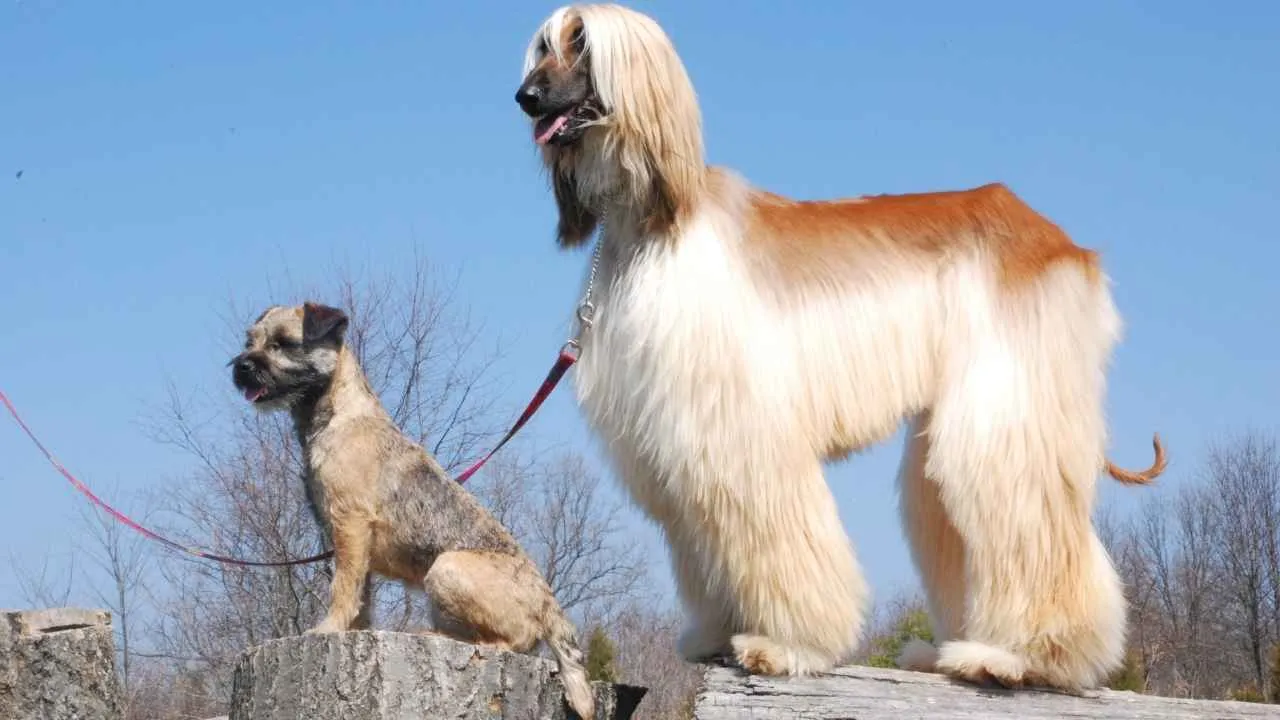
Developed in the mountainous regions of Afghanistan, the breed’s long coat helped protect it in a demanding climate. At the same time, its distinctive appearance eventually made it one of the most instantly recognizable sighthounds.
These silky coats can appear in black, cream, blue, tan, red, brindle, and numerous other shades, so this dog does not believe in limiting the aesthetic. The coat consists of long, fine, silky hair over much of the body, but the shorter area along the back creates what breed enthusiasts call the “saddle.”
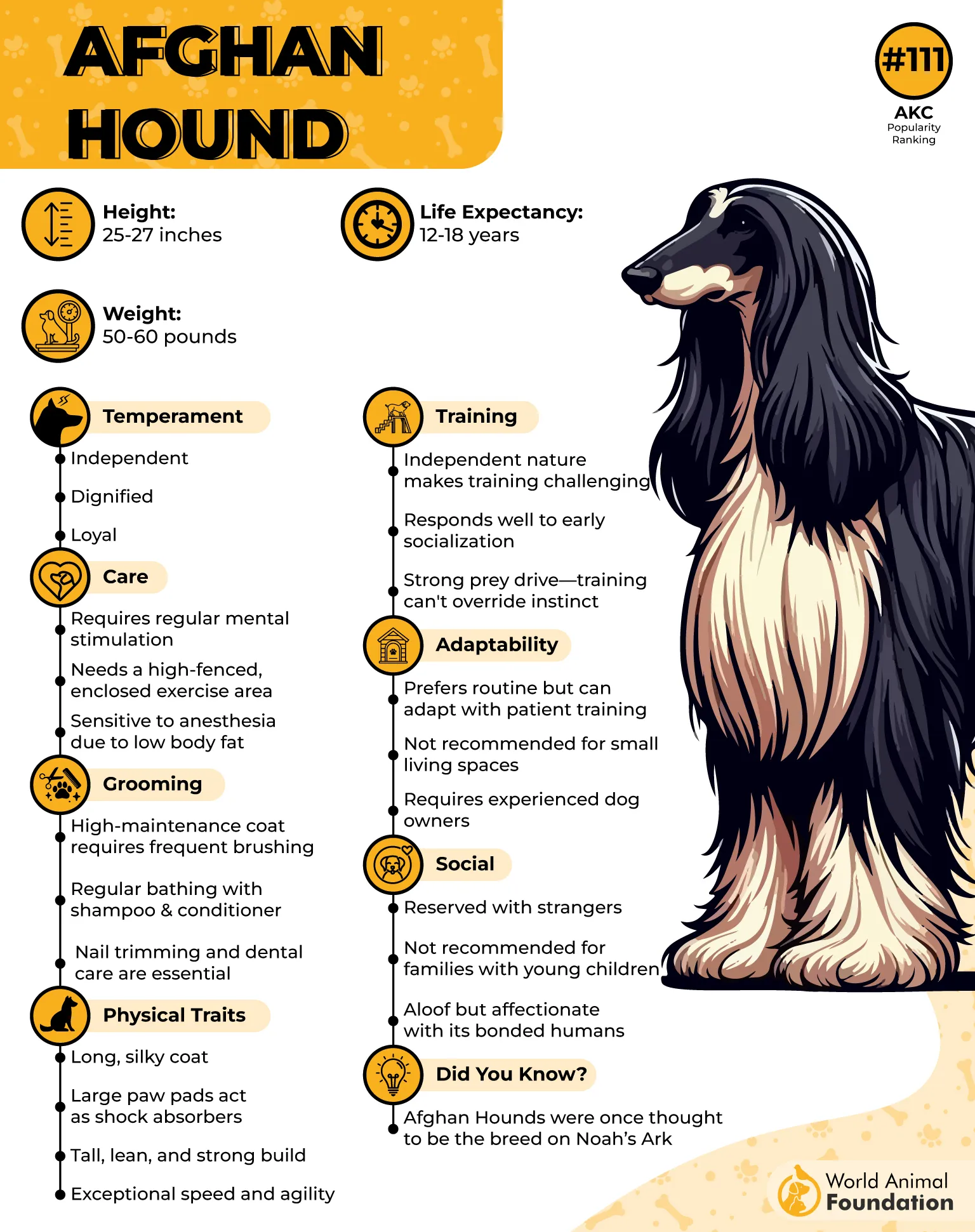
This is not a quick five-minute brush-and-vibe situation, because a full Afghan coat can demand several hours of work each week. Bathing and grooming before serious matting develops are recommended, and show coats may be washed as often as twice weekly.
The areas behind the ears, beneath the legs, around the feet, and inside the furnishings deserve extra inspection because fine hair can knot before the top layer looks messy.
Lesser Known Facts About Their Coats
Afghan owners may use fabric snoods to keep those luxurious ear fringes out of dinner, proving that even canine royalty needs practical accessories.
The shorter saddle is a natural feature of the breed’s outline rather than evidence that somebody gave the dog an unfinished haircut.
2. Maltese
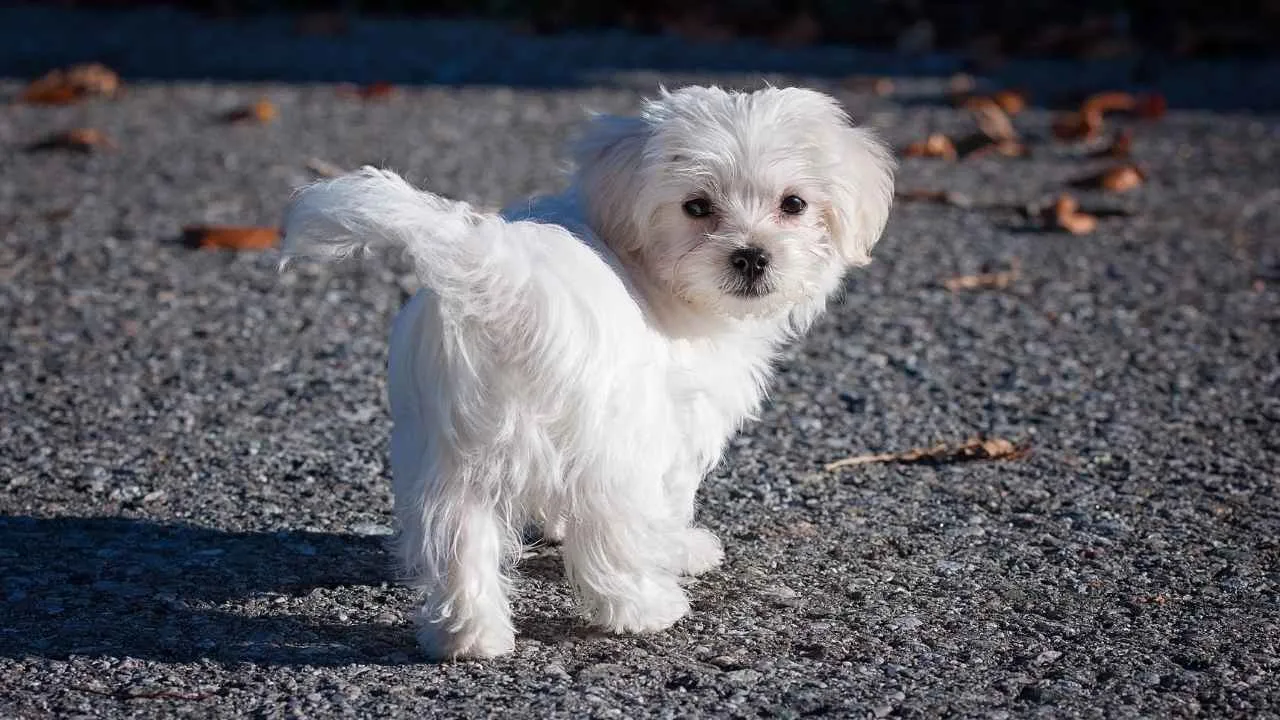
The Maltese may weigh less than seven pounds, but this small companion has been serving luxury-lap energy for centuries. Its straight, floor-length white coat creates a polished silhouette that looks delicate, although the dog underneath is playful, adaptable, and considerably lively.
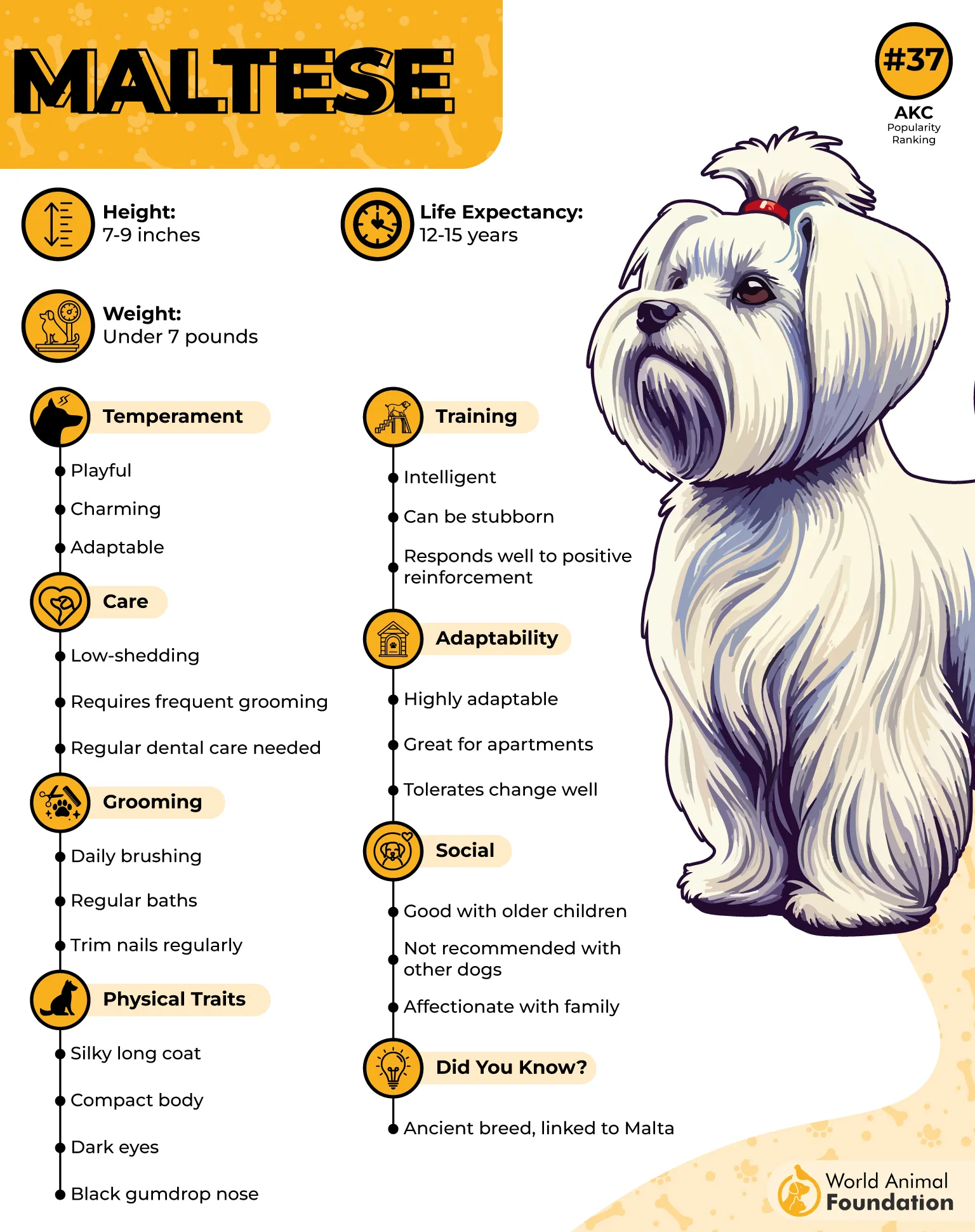
Unlike a fluffy seasonal shedder, the Maltese carries a single coat of continuously growing, silky hair without a dense underlayer. Loose strands are less likely to explode across the sofa, but they can remain caught within the surrounding coat and turn into knots.
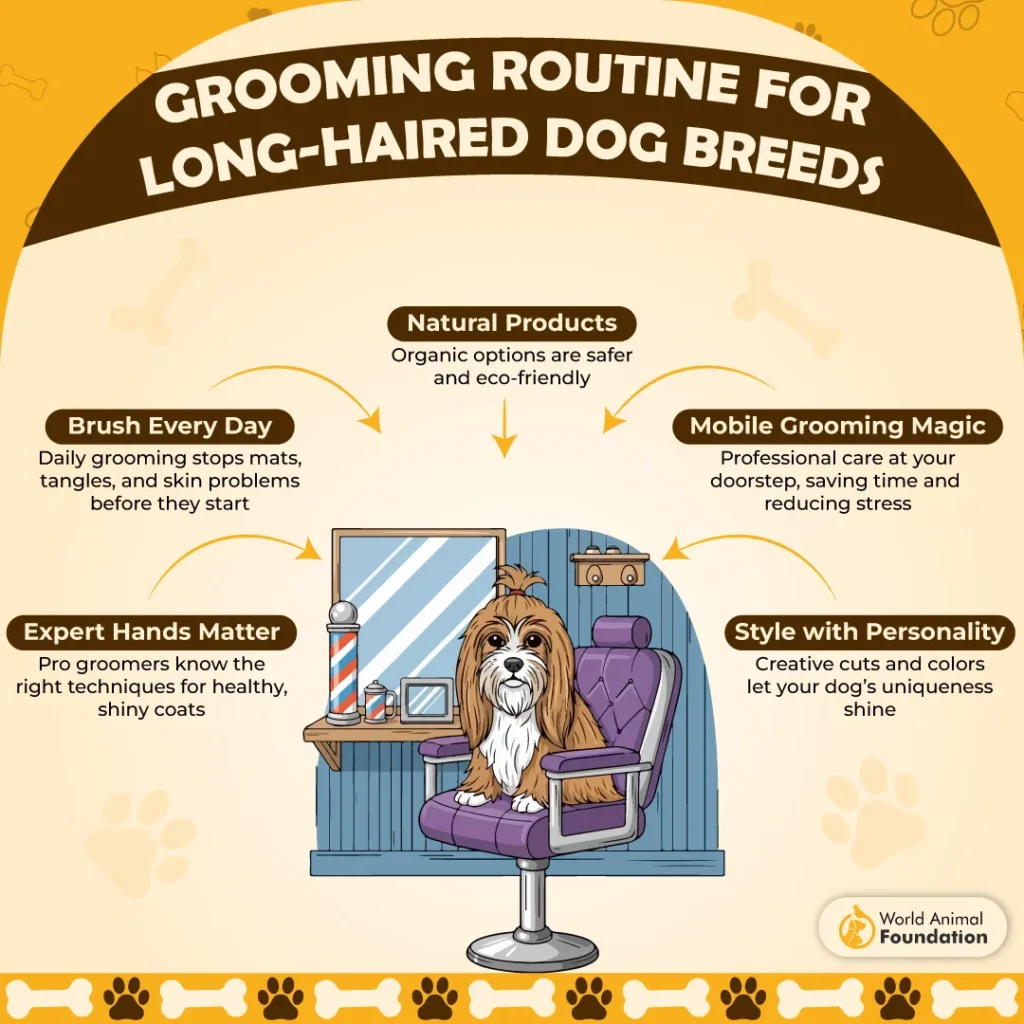
A long Maltese coat should be gently brushed and combed to the skin every day, particularly around the legs, belly, ears, beard, and friction points. Facial upkeep deserves its own routine because bright white hair makes moisture, food residue, and discoloration especially visible.
Lesser Known Facts About Their Coats
The iconic white curtain is hair rather than a conventional plush undercoat, which explains why ordinary de-shedding tools can do more harm than good.
Maltese mats should be softened and separated patiently, because ripping through them may snap delicate strands and frighten the dog.
3. Havanese
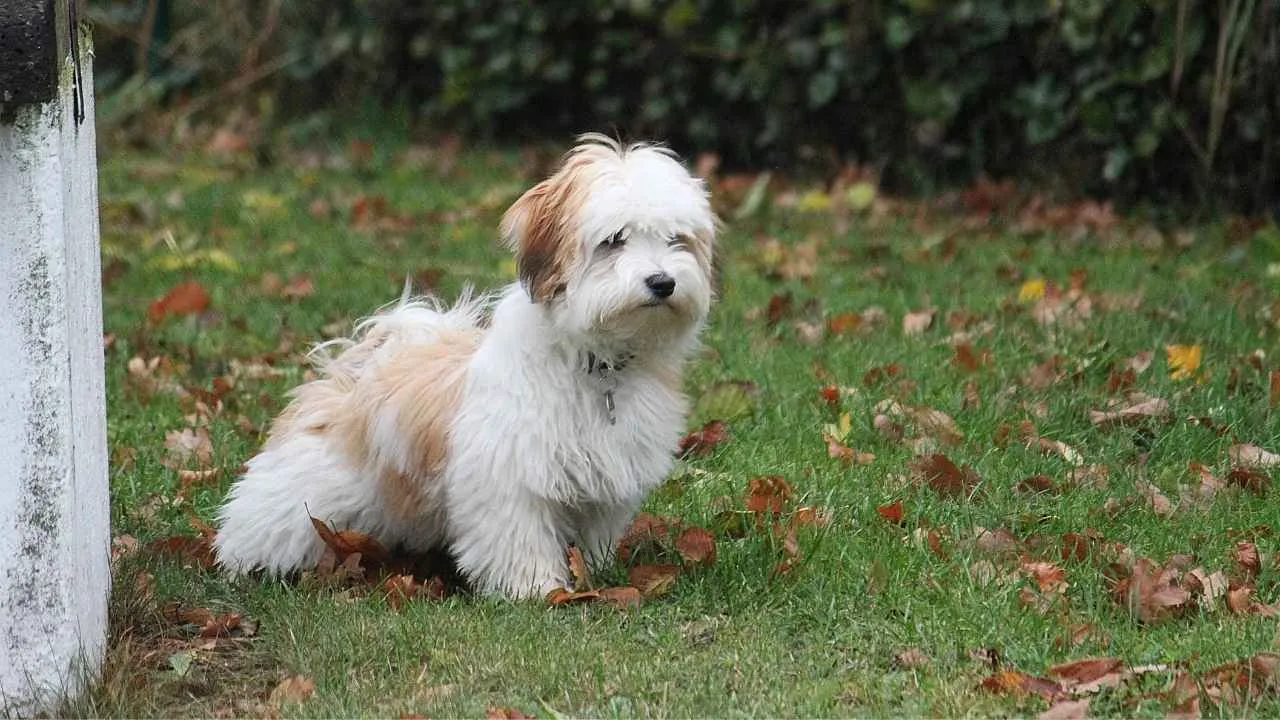
The Havanese is Cuba’s national dog and a cheerful little social expert whose coat comes in a broad range of colors and may fall straight, softly waved, or somewhere in the extremely photogenic middle.
Here is the plot twist: the Havanese has a double coat, but the topcoat and undercoat can both feel unusually soft. When loosened hair fail to fall cleanly away, they become trapped among neighboring strands and quietly build tangles beneath the visible surface.
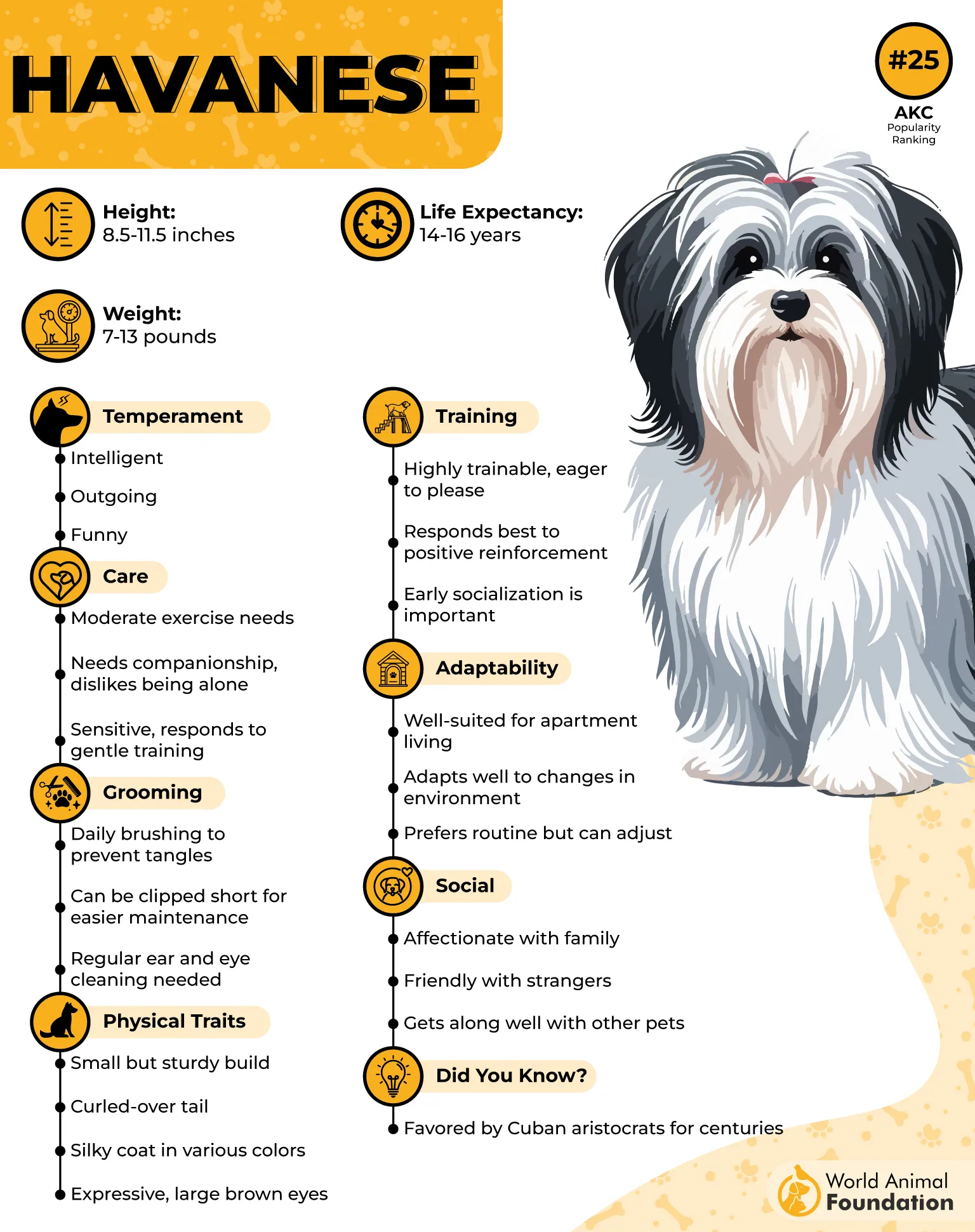
Line brushing is the gold-standard technique for longer Havanese coats, meaning the owner parts the hair into manageable sections and works through each layer from the roots to the ends. A pin brush, suitable comb, and carefully used slicker can handle different jobs.
Daily attention is ideal for full length, as per Omlet, while shorter trims may allow a slightly more flexible schedule based on the individual dog’s density and activities. A puppy cut is popular among families who would rather spend extra time playing and less time conducting a complete salon blowout.
Lesser Known Facts About Their Coats
Their two coat layers can feel similarly soft, so a loosened undercoat may remain hidden within the outer coat rather than dropping dramatically onto the floor.
Surface brushing can miss developing knots, making neat section-by-section work the difference between “fluffy” and “secretly felted.”
4. Yorkshire Terrier
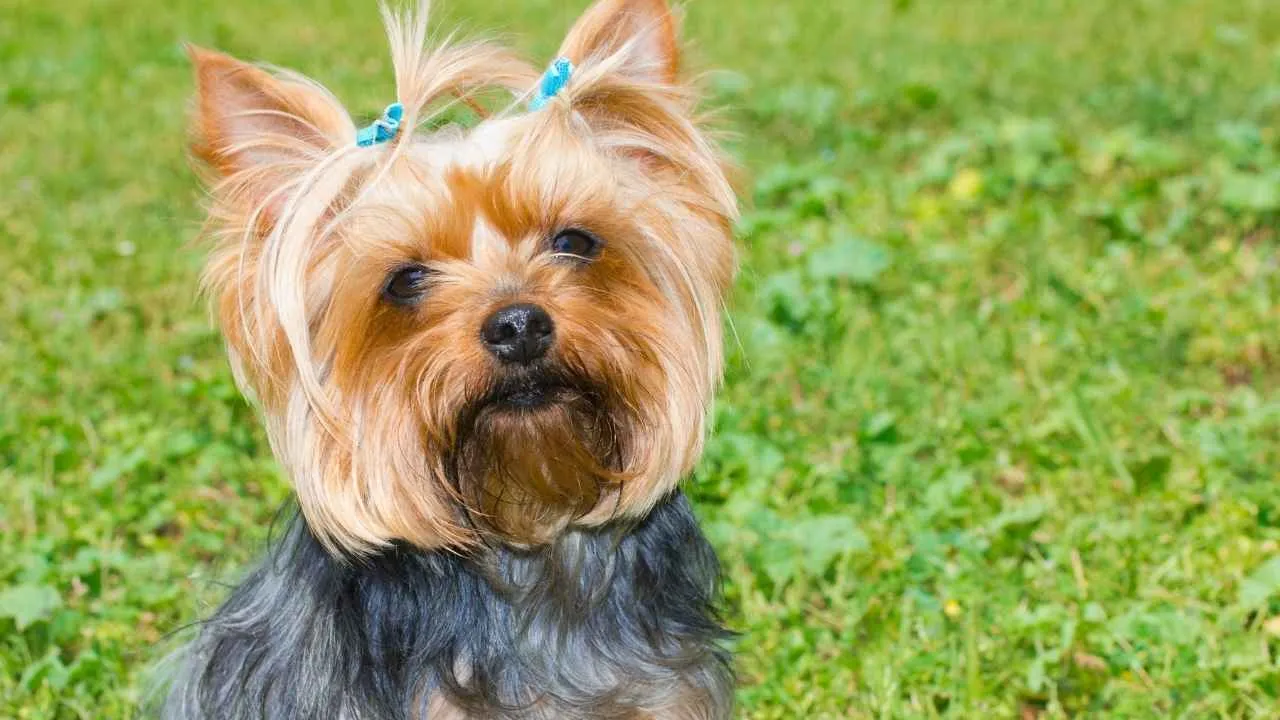
The Yorkshire Terrier comes in tiny dimensions, with glossy hair and the confidence of a dog that remembers its working-class origin story. Before Yorkies became fashionable Victorian companions, their ancestors worked as ratters around northern English mines and textile mills.
A Yorkie’s single coat is frequently compared with human hair because it grows in fine, straight strands rather than forming a thick insulating undercoat. There is approximately 1-1.5 centimetres of growth per month, which explains how quickly an untidy fringe becomes a full-on facial situation.
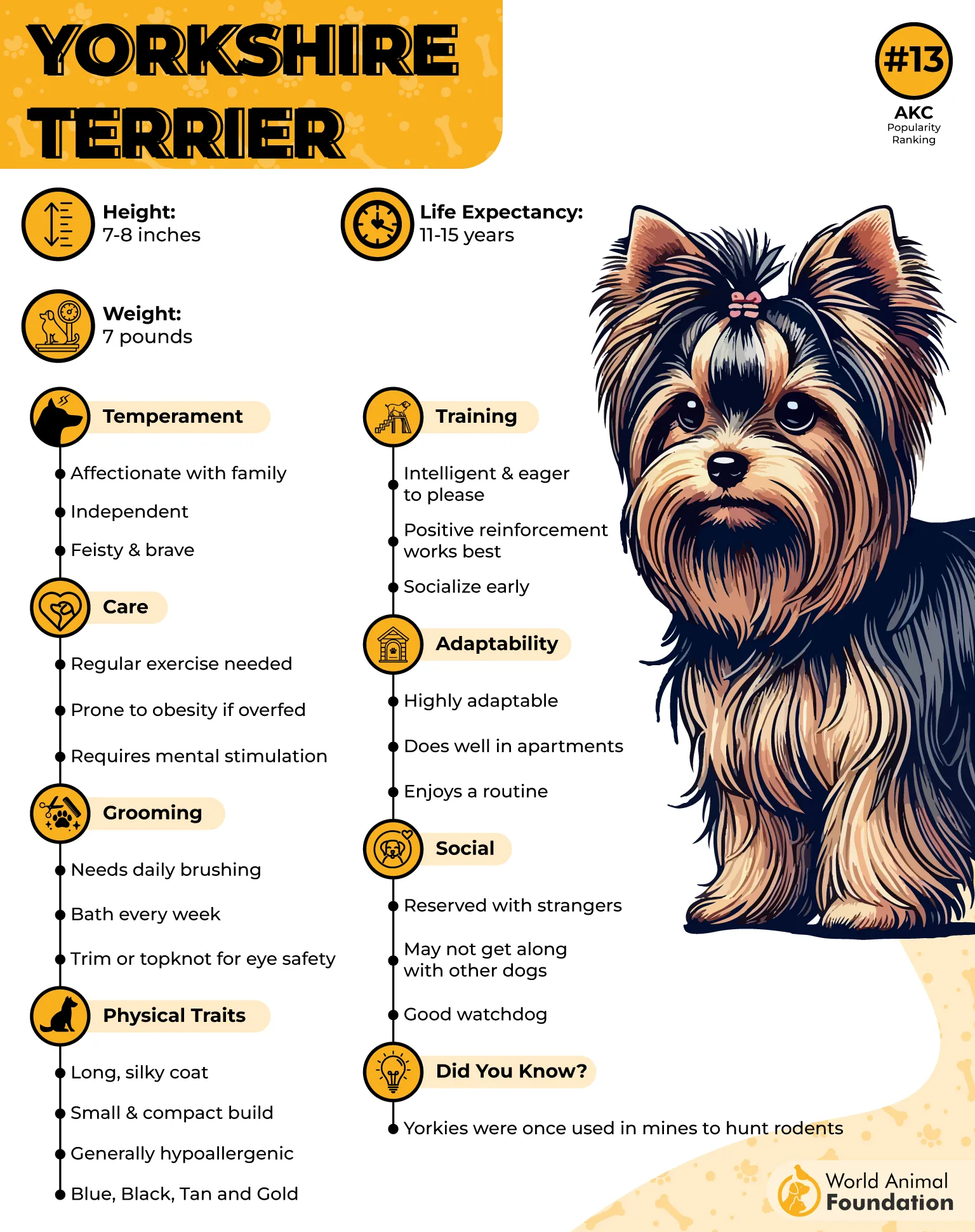
Full-length hair generally needs daily attention, whereas a neatly maintained puppy cut may only require thorough brushing several times each week. A pin brush, metal comb, and light conditioning spray form a useful toolkit for keeping the coat flexible rather than crunchy, static-filled, or tangled.
Since Purina says that the Yorkie lacks a protective undercoat, owners should also watch for skin irritation and consider weather-appropriate clothing during cold, wet, or intensely sunny outings.
Lesser Known Facts About Their Coats
Yorkie hair may continue to lengthen rather than stop at a short, predetermined fur length, hence those floor-skimming show coats.
The famous blue-and-gold adult coloring often becomes clearer as the puppy matures, giving young dogs a genuine coat glow-up.
5. Lhasa Apso
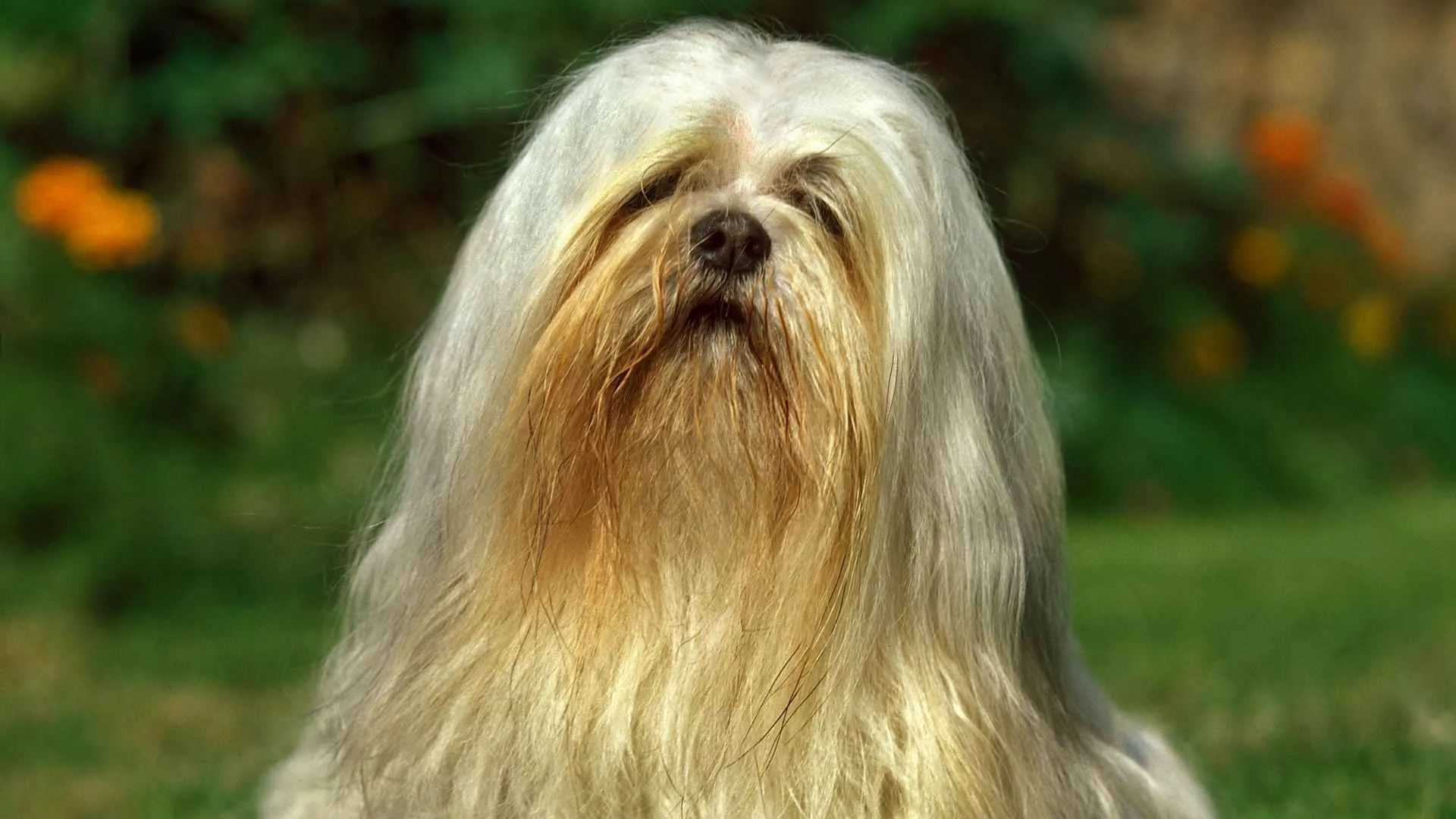
The Lhasa Apso is a compact Himalayan sentinel wrapped in enough hair to look like an enchanted creature. Unlike the extremely fine undercoat of some toy breeds, the Lhasa has a substantial double coat linked to its cold-weather heritage.
The outer hair should feel heavy, straight, and relatively hard rather than cottony, while the dense layer beneath adds fullness and insulation.
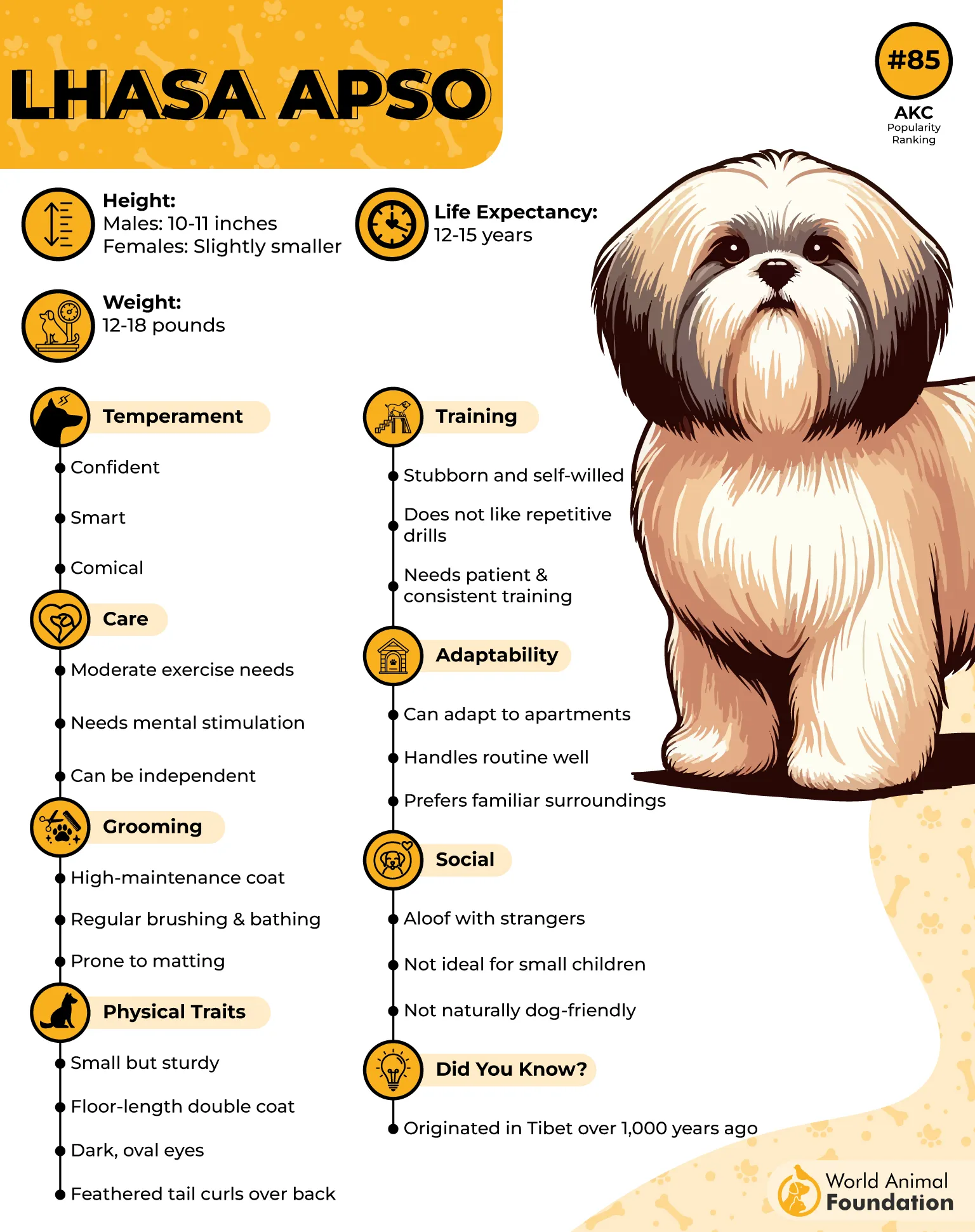
A long-coated Lhasa benefits from methodical sectioning with a coated pin brush, wide-toothed comb, and coat-safe conditioning mist. Owners lift the outer layer and work through the hair underneath rather than polishing only the visible surface.
Daily checks are practical for floor-length coats, while the PetPlan advises bathing a full coat at least every two weeks and drying it completely because even clean, damp hair can mat.
Lesser Known Facts About Their Coats
The breed’s heavy outer hair is not supposed to feel woolly or ultra-silky, despite its luxurious floor-length appearance.
Low shedding can keep loose strands within the dense covering, where they become part of a knot rather than part of the furniture.
A traditional center part runs from the head along the body, creating the balanced curtain seen in show presentation.
6. Tibetan Terrier
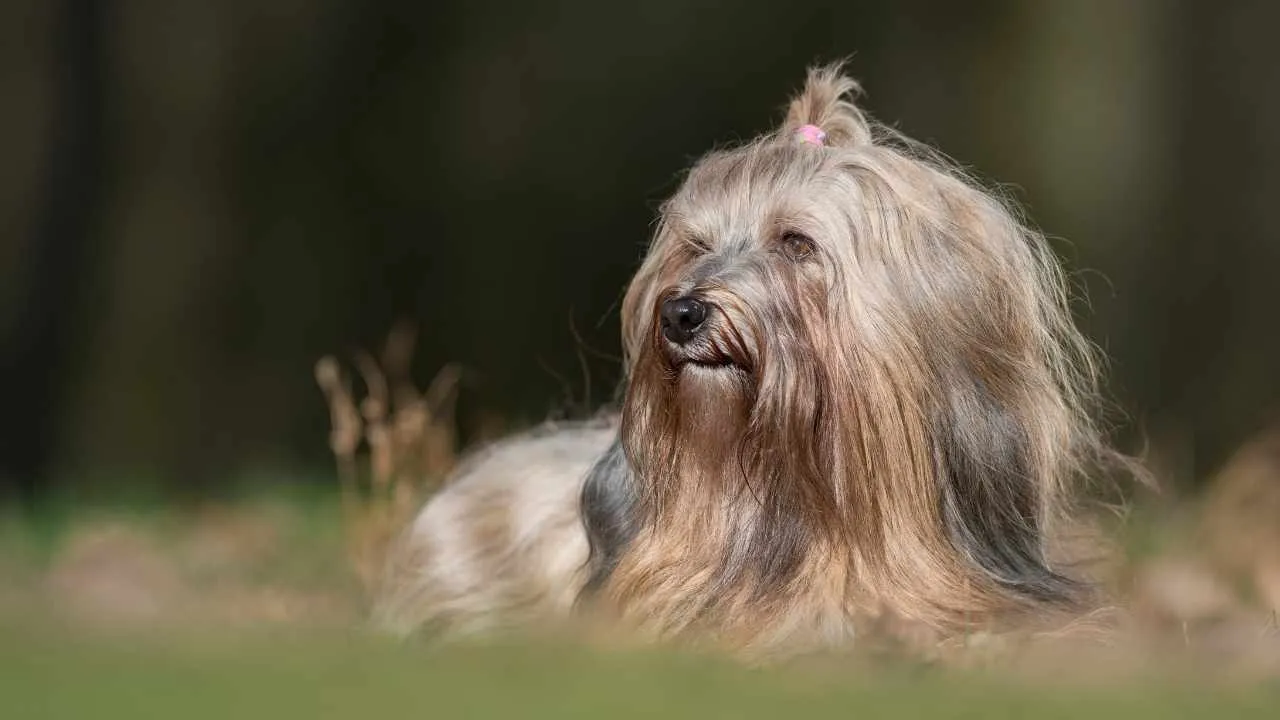
Despite the name, the Tibetan Terrier is not a true terrier and was never designed to spend the day arguing with underground rodents. Known as the “Holy Dog of Tibet,” it developed as a companion and watchdog.
The coat combines a fine, often woolly underlayer with a long outer covering that may appear straight or softly waved. Hair commonly falls over the face, while generous furnishings cover the legs, body, tail, and feet.
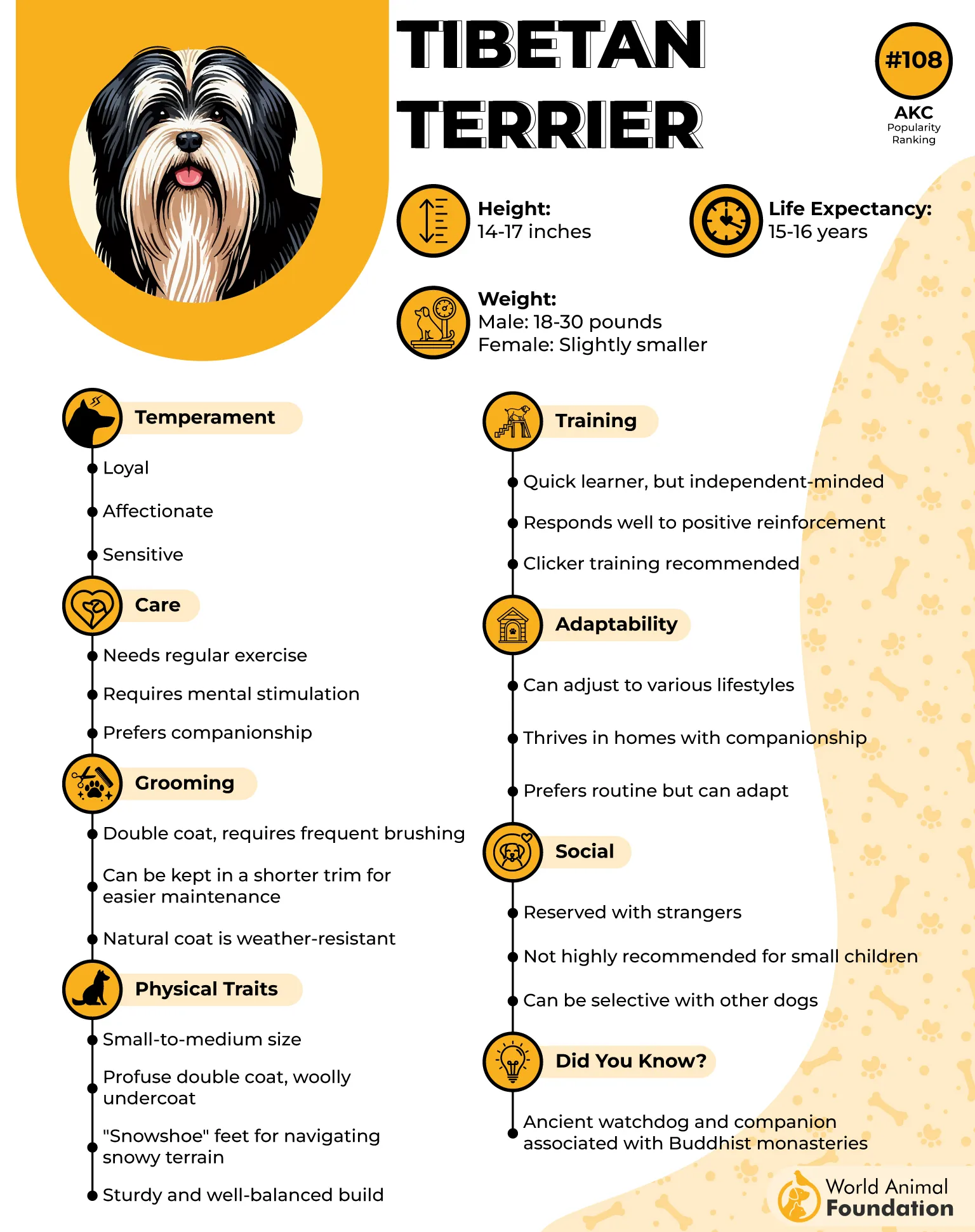
At minimum, Royal Canin says that they should be brushed and combed several times weekly, although full coats often benefit from daily or every-other-day attention. Professional trimming is typically scheduled every 6-8 weeks, and baths are often scheduled within a 4-6 week window.
Outdoor debris warrants daily inspection because leaves, seeds, mud, and tiny twigs can get trapped between the toes or beneath long body hair.
Lesser Known Facts About Their Coats
The hair covering the eyes is part of the breed’s traditional shaggy expression, yet it should stay clean and can be managed for everyday comfort.
Their wide, heavily furnished feet function like natural snowshoes, although modern owners mainly notice how efficiently they collect garden debris.
7. Silky Terrier
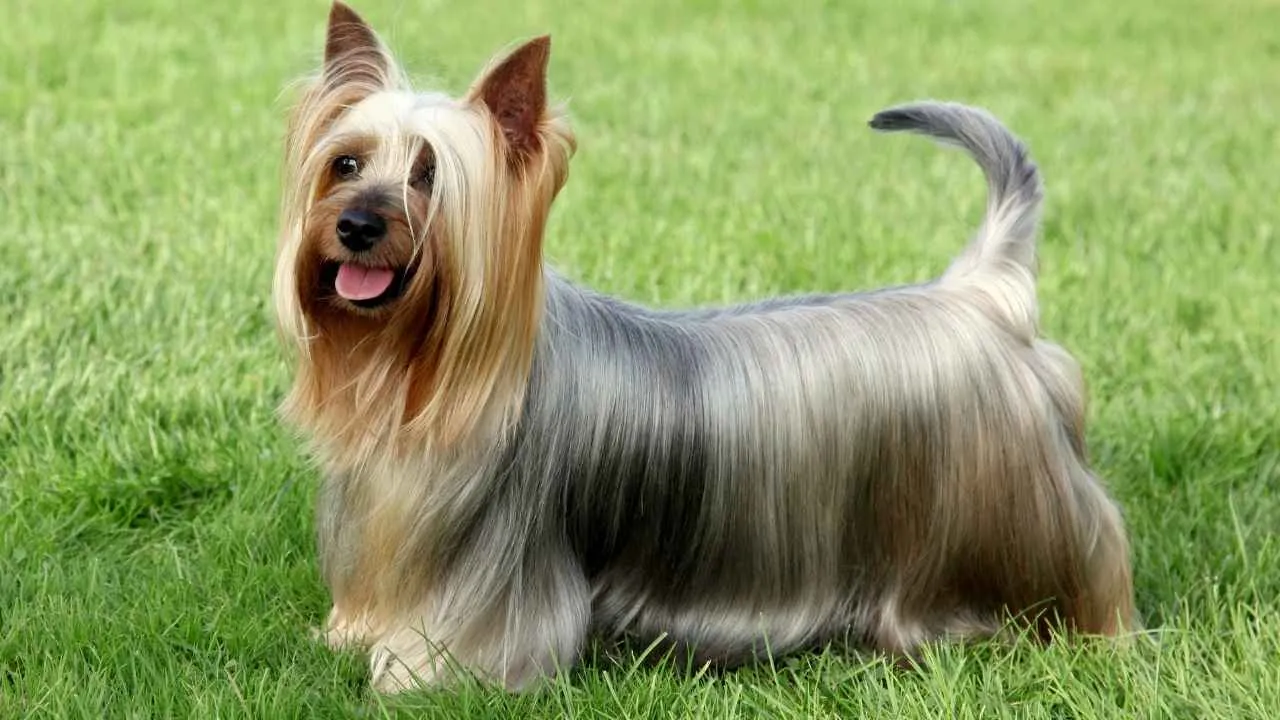
Developed in Australia, the Silky Terrier’s blue-and-tan coat may look like a “luxury accessory,” but the dog has an energetic personality.
Silkies have a single-layered coat made of long, straight, fine hair that can reach approximately 13 to 15 centimetres in adult dogs, according to the American Kennel Club. They do not usually shed heavily, yet released strands, moisture, and friction can combine to create compact tangles.
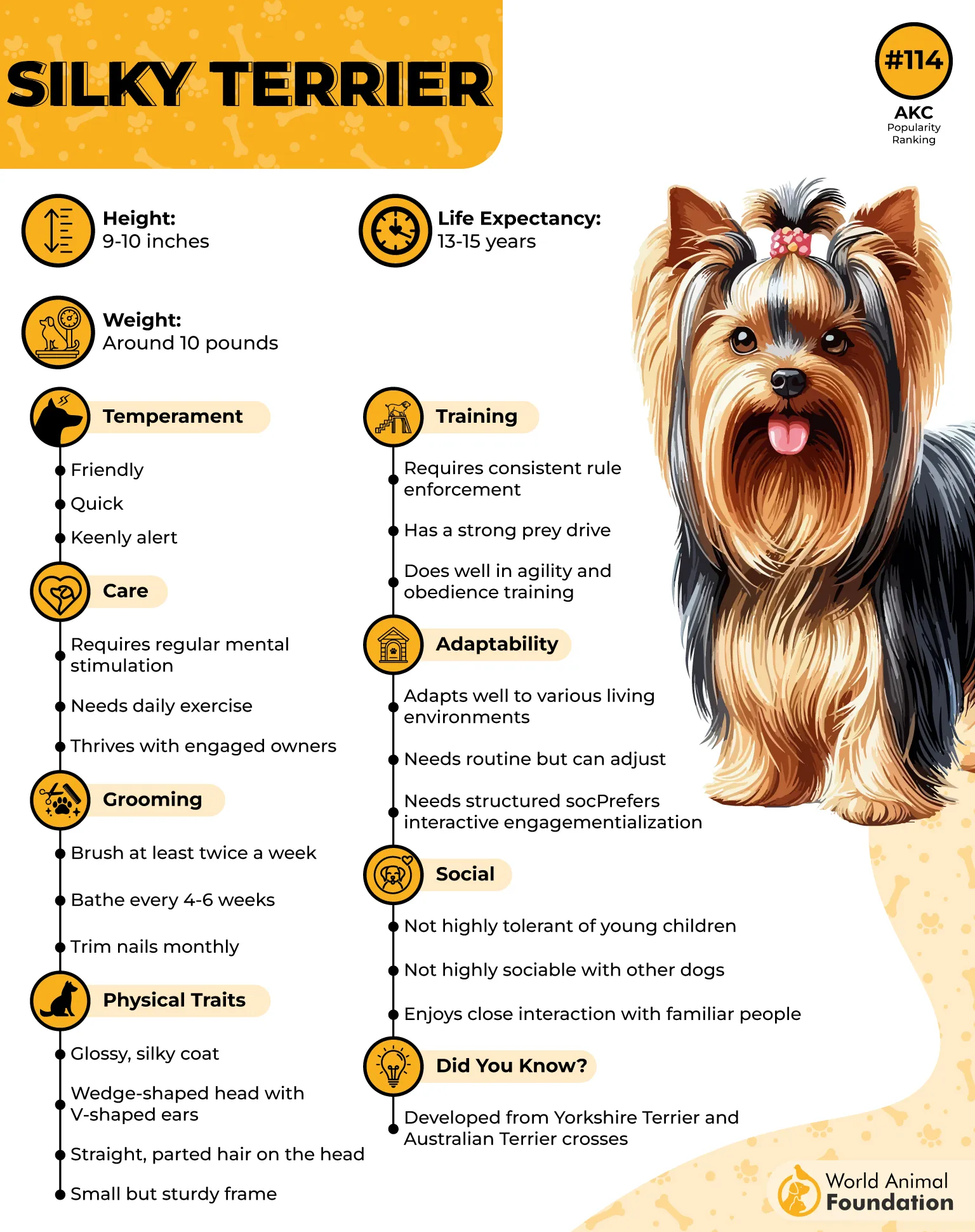
A pet Silky should be brushed at least twice weekly, though daily combing is preferable when the coat is kept near full length. Bathing may be needed every two to six weeks depending on activity, climate, skin sensitivity, and how enthusiastically the dog approaches mud.
Professional trimming every four to six weeks helps manage the feet, face, tail, and sanitary areas without disrupting the coat’s natural fall.
Lesser Known Facts About Their Coats
A Silky’s hair can collect surprising amounts of seeds, leaves, and street debris because the coat hangs close to the ground during adventures.
Circular towel rubbing creates friction and fresh tangles, so patient blotting is the less chaotic post-bath strategy.
Conclusion
Long-haired dogs are stunning, but the ideal breed is the one whose maintenance requirements genuinely fit your available time, budget, physical ability, and tolerance for finding brushes in every room. Shih Tzu, Bearded Collie, and Skye Terrier are also some wonderful companions with incredibly dramatic coats.
Before bringing home a puppy, speak with experienced owners, reputable breeders, rescue volunteers, veterinarians, and groomers who regularly handle that specific coat.
