




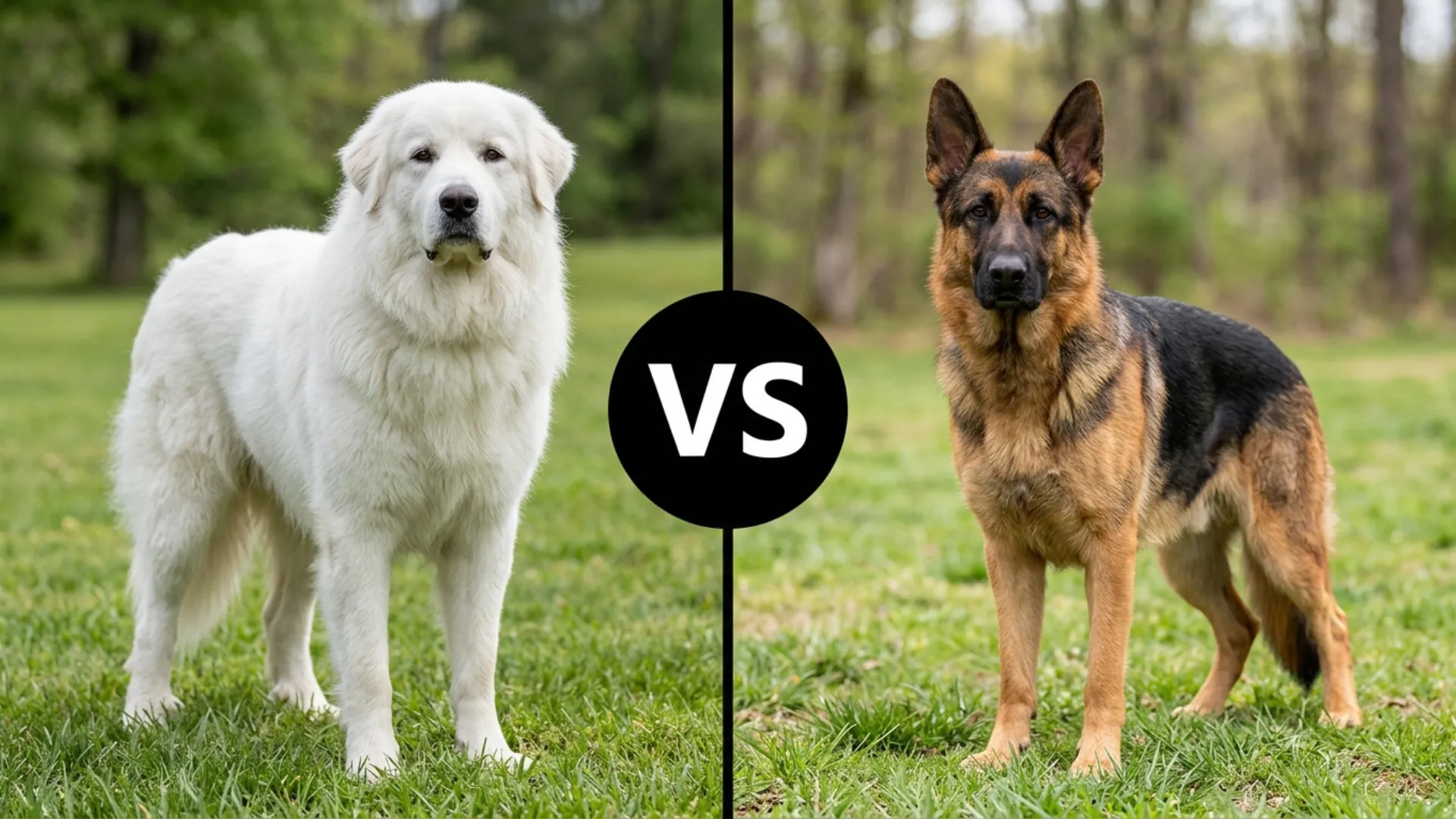
When choosing a large, loyal dog, two breeds almost always stand out: the Great Pyrenees and the German Shepherd. Both have earned worldwide admiration for their intelligence, devotion, and strong protective instincts, but they bring very different personalities and lifestyles to the table.
Although these European breeds were originally developed to guard livestock and work alongside humans, they followed different paths over time.
The German Shepherd became one of the world’s most versatile working dogs, excelling in police work, military service, search and rescue, and as a trusted family companion.
The Great Pyrenees, meanwhile, remained a calm and dependable livestock guardian, winning hearts with its gentle nature and majestic appearance.
So, which breed is the better choice for your home? In this comparison, we’ll explore their differences in temperament, size, trainability, exercise needs, grooming, and family compatibility to help you find the dog that best matches your lifestyle.
Great Pyrenees vs. German Shepherd Dog Breeds
Breed Origins & Functional Background
Great Pyrenees
The Great Pyrenees is an ancient breed that originated in the Pyrenees Mountains between France and Spain, with roots dating back to the Bronze Age (1800–1000 B.C.).
Bred to guard sheep and livestock from predators, these dogs were valued for their independence, patience, and protective instincts, as noted by the AKC. Their impressive appearance and dependable nature eventually earned them favor among French royalty.
In 1675, King Louis XIV named them the “Royal Dog of France,” and they were often used to guard castles and estates. Today, while some still work as livestock guardians, most Great Pyrenees are loyal and gentle family companions.
German Shepherd
The German Shepherd was developed in Germany during the late 1800s by Captain Max von Stephanitz, who aimed to create the ideal herding dog. Through careful breeding, he produced an intelligent, athletic, and highly trainable dog capable of managing and protecting livestock.
As herding became less common, the breed quickly proved its versatility in police work, military service, search and rescue, guide dog programs, and detection roles.
Recognized by the American Kennel Club in 1908, the German Shepherd remains one of the world’s most respected working dogs as well as a devoted family pet.
Physical Characteristics & Body Structure
Great Pyrenees
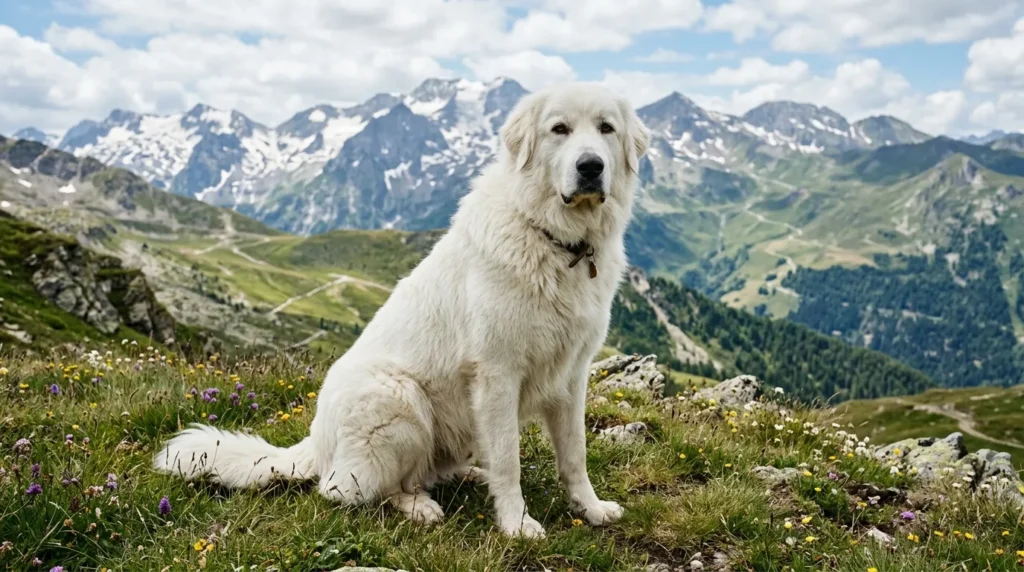
The Great Pyrenees is a giant, powerfully built breed designed to protect livestock in harsh mountain environments. They typically stand 25–32 inches tall, with females weighing around 85 pounds and males often exceeding 100 pounds.
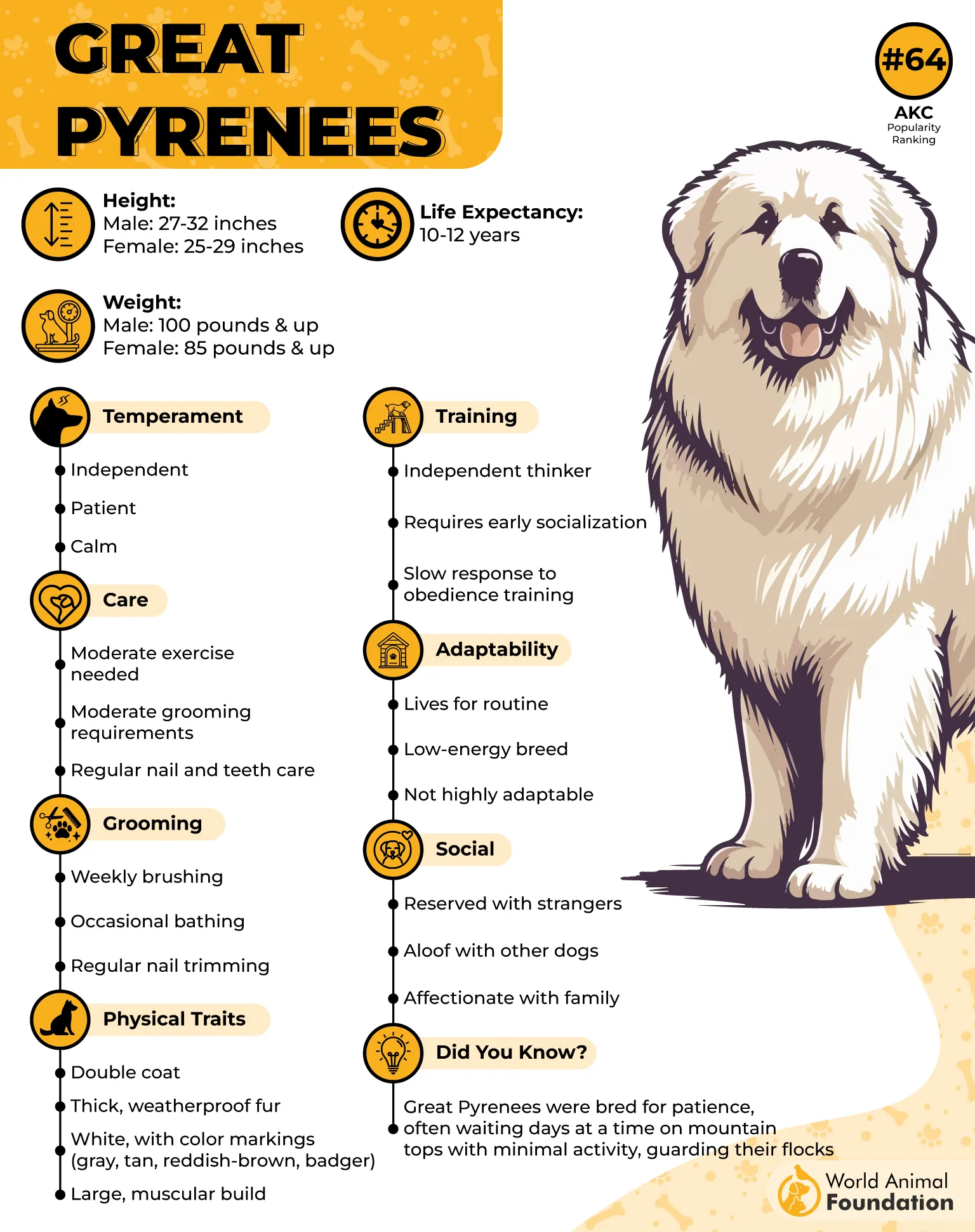
Their most recognizable feature is their thick, weather-resistant double coat, which consists of a long outer coat and a dense, woolly undercoat. The coat is usually solid white or white with gray, tan, reddish-brown, or badger markings.
They also have dark almond-shaped eyes, small V-shaped ears with rounded tips, a black nose, and a long, plumed tail. Male Great Pyrenees often develop a noticeable mane around the neck and shoulders.
German Shepherd
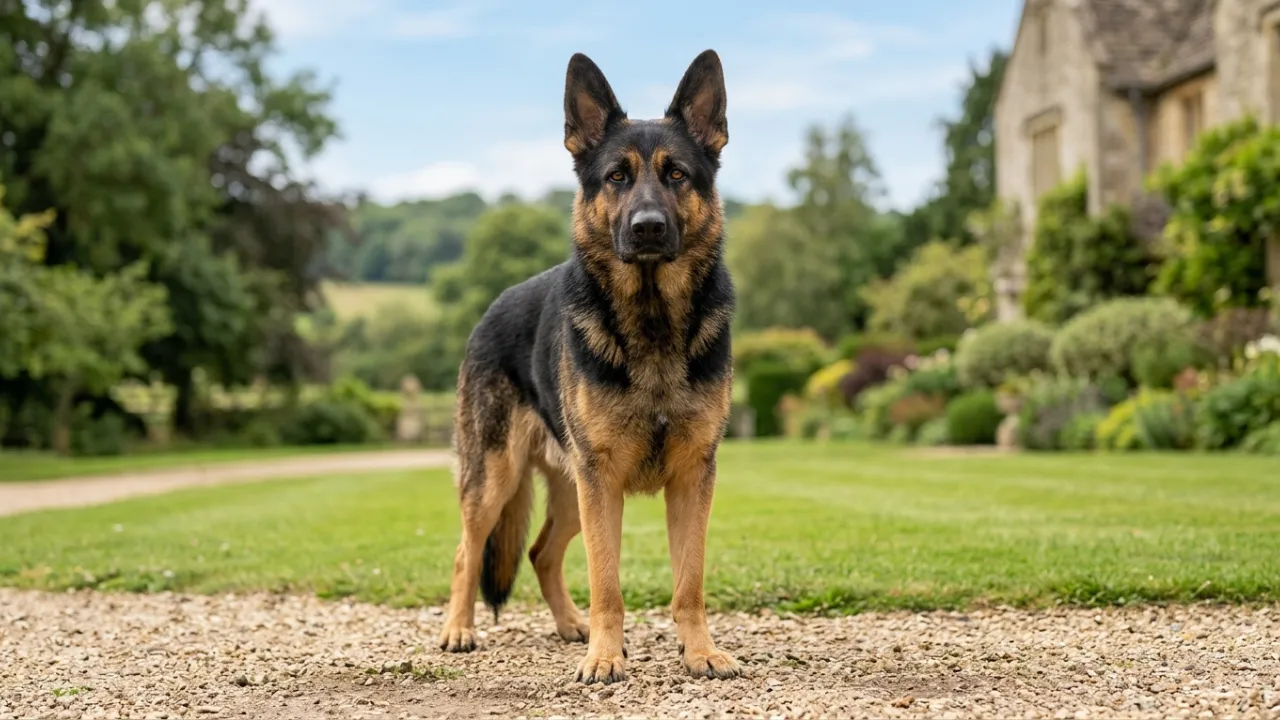
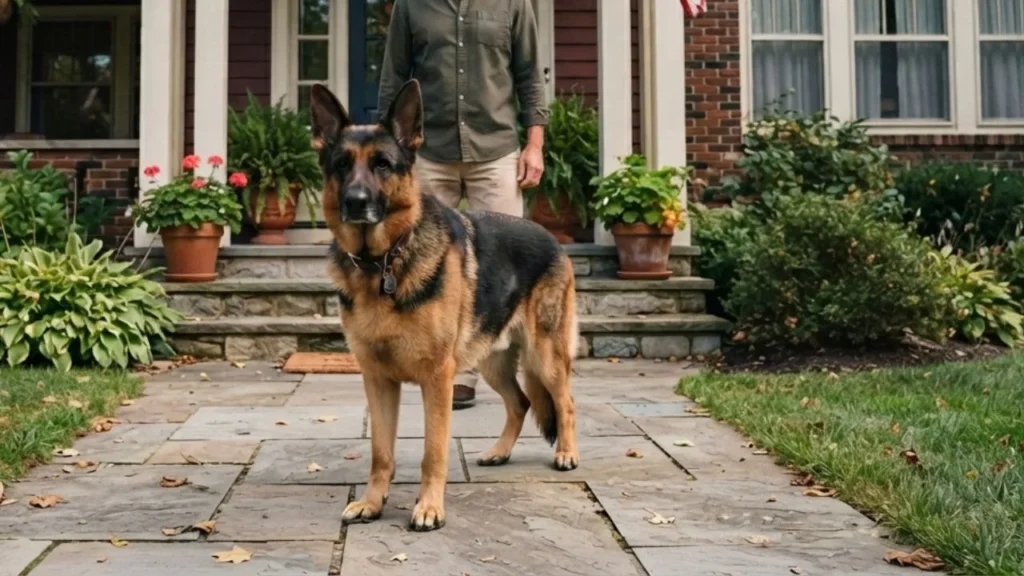
The German Shepherd is a large, athletic breed built for speed, agility, and endurance. They generally stand 22–26 inches tall and weigh 50–90 pounds, giving them a leaner, more muscular appearance than the Great Pyrenees.
Most German Shepherds have a medium-length double coat with a dense outer layer that is typically straight, though it can be slightly wavy. Their coat comes in several colors, with black and tan being the most common.
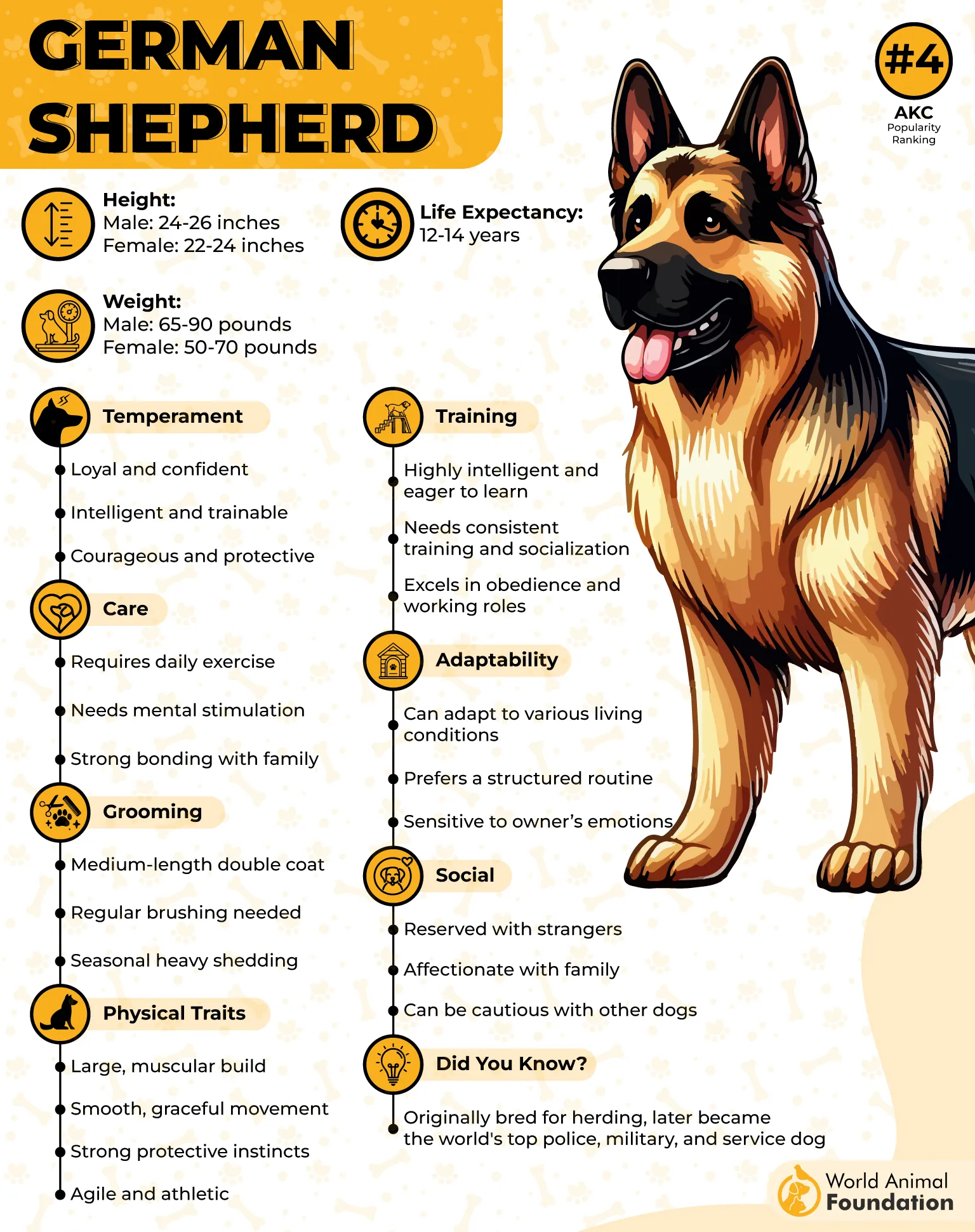
They have dark almond-shaped eyes, a black nose, erect pointed ears that naturally stand by about five months of age, and a long, bushy tail with a slight curve.
Temperament & Behavioral Profile
Great Pyrenees
The Great Pyrenees is a calm, patient, and affectionate breed with strong protective instincts. Originally bred to guard livestock independently, they tend to be gentle with their family while remaining naturally watchful of their surroundings.
Their relaxed personality makes them a great fit for owners who prefer a quieter household.
Personality highlights
Calm, gentle, and affectionate with family
Naturally protective and alert
Independent thinker that may show a stubborn streak
Generally good with children, dogs, cats, and other pets when properly socialized
Patient by nature but known to bark to warn of unusual activity
German Shepherd
The German Shepherd is a loyal, intelligent, and highly devoted breed that forms strong bonds with its family. They are naturally confident and alert, often acting as excellent watchdogs. While loving with their household, they may be reserved around strangers until they feel comfortable.
Personality highlights
Extremely loyal and protective
Highly intelligent and eager to learn
Generally good with children when well-trained and socialized
Energetic and happiest when given a job or mental challenge
Can be vocal, especially when bored or sensing something unusual
Activity Requirements & Energy Levels
Great Pyrenees
The Great Pyrenees has a moderate energy level and prefers calm, steady activities over intense exercise. Bred to patiently guard livestock rather than chase or herd them, this breed enjoys leisurely walks, gentle hikes, and spending time patrolling a securely fenced yard.
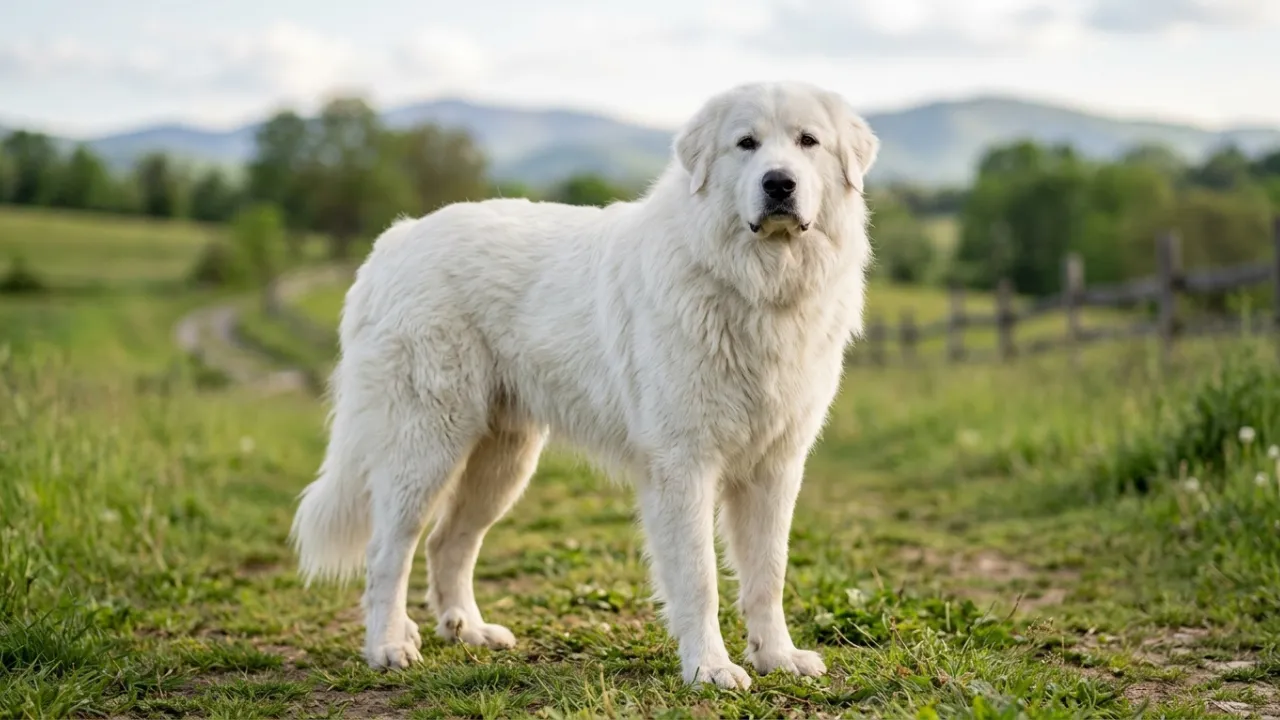
Exercise needs
Around 30–60 minutes of daily exercise, though some dogs may enjoy up to two hours of light activity
Enjoys relaxed walks, easy hikes, and roaming in a fenced yard
Not suited for running or other high-intensity activities
Performs best in cooler weather, as their thick coat can make them prone to overheating
German Shepherd
The German Shepherd is a high-energy dog that requires plenty of daily exercise and mental stimulation. Without enough activity, they can become bored and develop unwanted behaviors like excessive barking, chewing, or digging.
Exercise needs
Around 2–3 hours of combined physical and mental activity each day
Excels at jogging, hiking, fetch, agility, scent games, and obedience training
Benefits from puzzle toys and interactive challenges to keep its mind engaged
Should be exercised in a securely fenced area or on a leash due to its strong prey drive and speed
Trainability, Intelligence & Learning Ability
Great Pyrenees
The Great Pyrenees is an intelligent breed, but it was bred to think and work independently while guarding livestock. Because of this, they are more likely to make their own decisions rather than immediately follow commands.
PetMD says their independent nature can make training more challenging, especially for first-time dog owners. Consistent, positive reinforcement training works best, along with plenty of patience.
Early obedience training and socialization are essential to help Great Pyrenees puppies become confident, well-mannered adults who are comfortable around new people, animals, and environments. Owners with previous dog-training experience often find it easier to manage this breed.
German Shepherd
The German Shepherd is widely regarded as one of the most intelligent and trainable dog breeds. They learn commands quickly, enjoy having a job to do, and thrive on structured training, as noted by Orvis.
Their eagerness to please and strong work ethic make them excellent candidates for obedience, agility, search and rescue, police work, and service roles.
Like all dogs, German Shepherds benefit from early socialization and consistent, reward-based training. Without proper guidance, their intelligence and protective instincts can lead to unwanted behaviors such as anxiety, excessive guarding, or chasing smaller animals.
Coat Maintenance & Grooming Needs
Great Pyrenees
The Great Pyrenees has a thick double coat with a long, weather-resistant outer layer and a soft, woolly undercoat. Although their coat naturally repels dirt and resists tangles, they are heavy shedders, especially during seasonal coat changes.
Weekly brushing, ideally once or twice a week, helps remove loose fur and keeps the coat healthy. Despite their fluffy appearance, they only need occasional baths because their coat stays relatively clean on its own. Their coat should never be shaved, as it provides insulation against both heat and cold.
German Shepherd
German Shepherds also have a dense double coat, but they require more frequent grooming due to their high shedding rate. Their coarse outer coat and thick undercoat shed year-round, with heavier shedding during seasonal changes.
Regular brushing every few days, or even daily during heavy shedding periods, helps reduce loose hair and keeps the coat in good condition.
Their coat naturally resists dirt, so monthly or occasional baths are usually sufficient. Owners should also be prepared for frequent vacuuming, as German Shepherds are known for leaving fur around the home.
Average Lifespan & Longevity
Great Pyrenees
The Great Pyrenees has an average lifespan of 10–12 years, which is relatively long for a giant breed. They are generally healthy dogs, but responsible breeding and routine veterinary care are important because they are predisposed to several inherited health conditions.
Common health concerns include
Hip dysplasia
Elbow dysplasia
Chondrodysplasia (dwarfism)
Patellar luxation
Entropion
Cataracts
Canine multifocal retinopathy (CMR)
Neuronal degeneration (NDG)
Gastric dilatation-volvulus (GDV or bloat)
German Shepherd
German Shepherds typically live 7–10 years. Although they are strong and athletic dogs, they are prone to several orthopedic, neurological, and digestive disorders. Regular health screenings, a healthy weight, and preventive veterinary care can help improve their quality of life.
Common health concerns include
Hip dysplasia
Elbow dysplasia
Degenerative myelopathy
Gastric dilatation-volvulus (GDV or bloat)
Dilated cardiomyopathy (DCM)
Valvular heart disease
Heart murmurs
Allergies
Hemangiosarcoma
Bone and lung cancer
Intestinal cancer
Suitability for Family Life vs. Guard Duties
Great Pyrenees
The Great Pyrenees is a gentle, patient, and affectionate breed that fits well into families looking for a calm and devoted companion.
They generally get along with children, other dogs, cats, and even livestock when properly socialized. Because of their large size, interactions with young children should always be supervised.
As natural livestock guardians, Great Pyrenees are highly protective and instinctively watch over their home and family. Rather than acting aggressively, they are more likely to remain calm, stand their ground, and bark to warn of potential threats.
Their independent nature also allows them to make decisions without constant guidance, making them excellent property and livestock guardians.
German Shepherd
The German Shepherd is an outstanding choice for active families willing to invest time in training sessions and daily exercise. They are deeply loyal, intelligent, and protective, forming strong bonds with their owners.
With proper socialization, they are gentle with children and can become dependable family companions.
When it comes to guard duties, few breeds match the German Shepherd’s versatility. Their intelligence, courage, and willingness to work make them one of the world’s leading police, military, search-and-rescue, and protection dogs.
They are naturally alert and quick to respond to potential threats, making them excellent watchdogs as well as highly capable working dogs.
Conclusion
The Great Pyrenees and German Shepherd are both exceptional working breeds, but they shine in different ways.
If you prefer a calm, independent guardian with a gentle personality, the Great Pyrenees may be the perfect fit. If you’re looking for an energetic, highly trainable dog that thrives on activity and teamwork, the German Shepherd is hard to beat.
The right choice ultimately comes down to your lifestyle, experience, and the time you can dedicate to your dog. Whichever breed you choose, providing proper training, socialization, exercise, and loving care will help your loyal companion thrive and become a cherished member of your family for years to come.
