




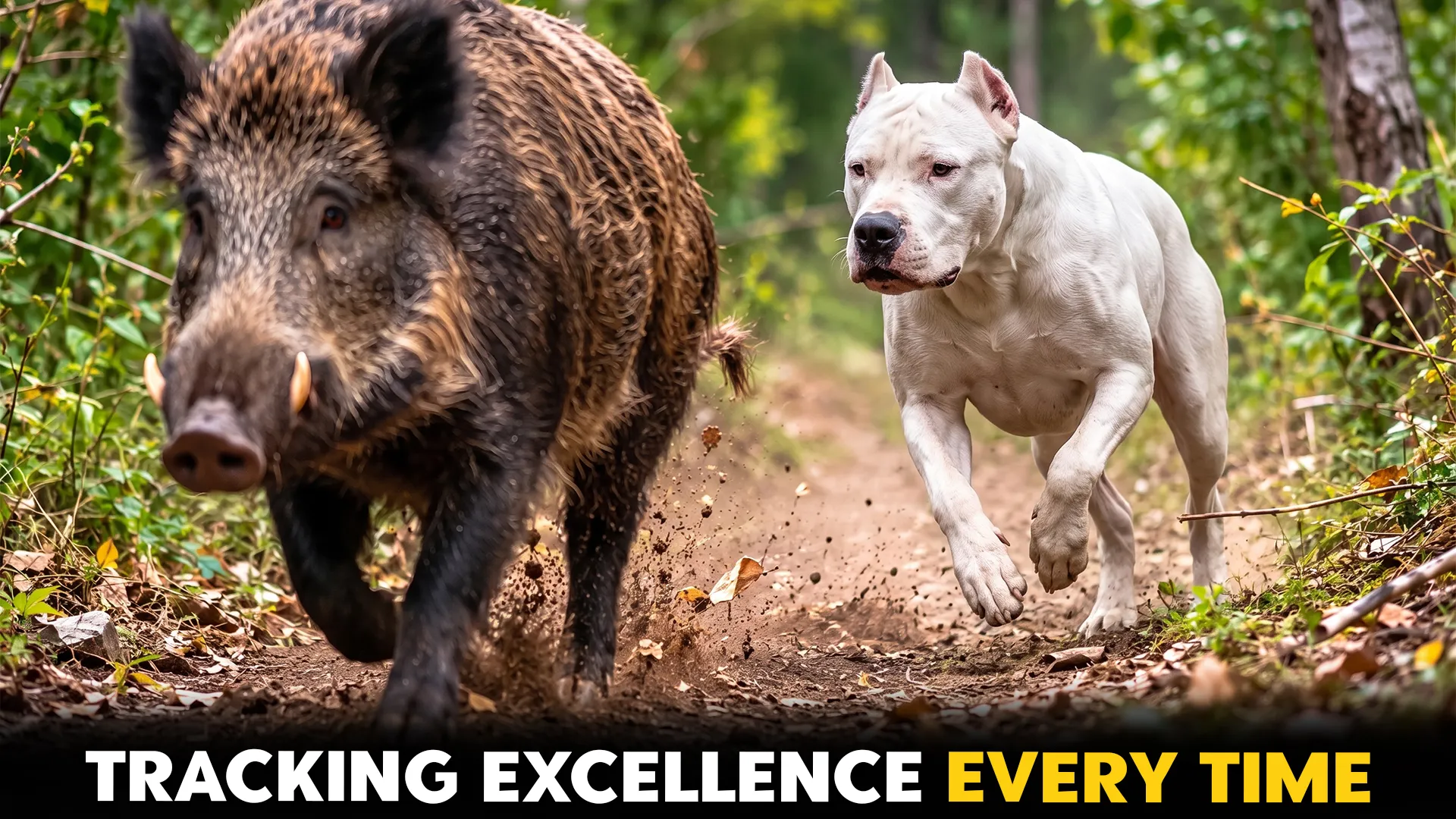
Tracking wild boars is not a simple woodland adventure that any energetic dog can handle. These powerful and unpredictable animals move through forests, wetlands, farmland, and thick vegetation, often leaving difficult scent trails behind.
A reliable tracking dog needs more than courage. Rushing carelessly into dense cover can put both the dog and handler in serious danger.
Breed heritage provides a useful foundation, but no puppy is born as an expert tracker. Proper training, strong recall, physical fitness, veterinary care, protective gear, and an experienced handler are all essential.
Now, let’s explore the most reliable dog breeds for tracking wild boars and discover what makes each one so effective.
Most Reliable Dog Breeds to Track Wild Boars
1. Dogo Argentino
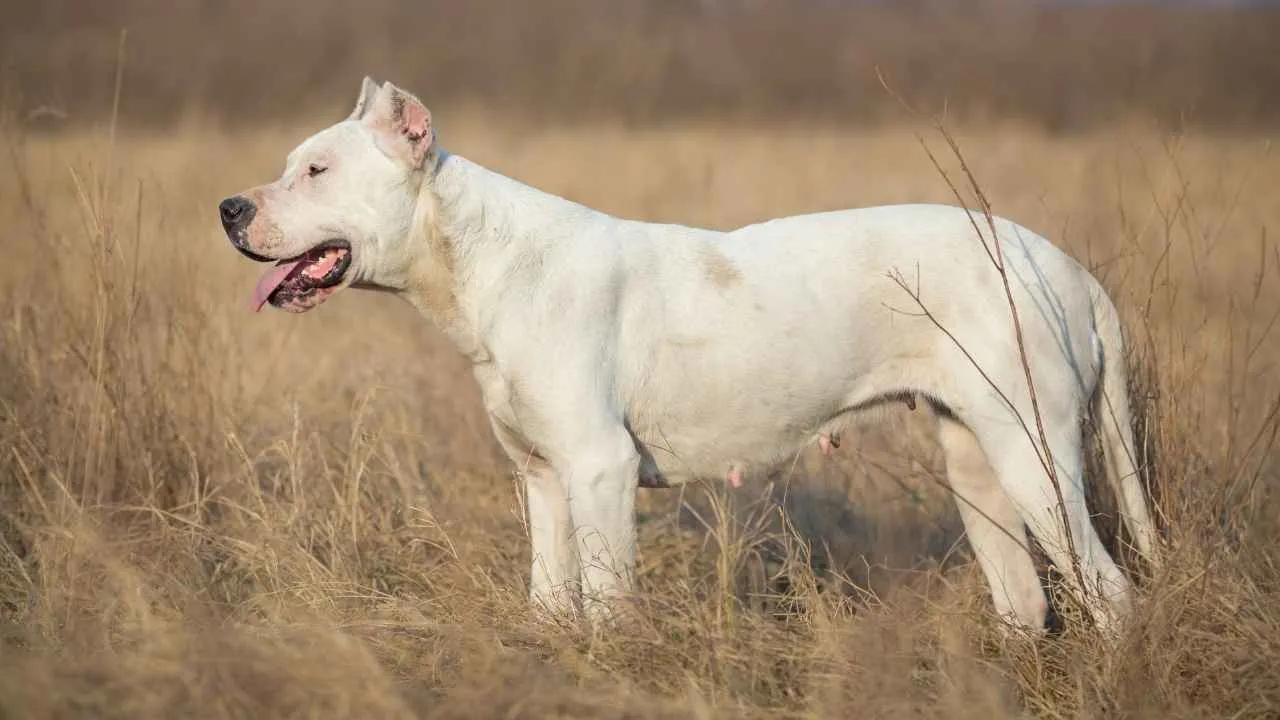
The Dogo Argentino enters this list looking like the canine equivalent of a heavyweight athlete who somehow remained remarkably agile.
Their short white coat made them easier for hunters to distinguish from dark game and vegetation, while their athletic construction helped them cover varied terrain. This hunting dog is not decorative gym-bro muscle; the breed standard emphasises lung capacity, agility and balance.
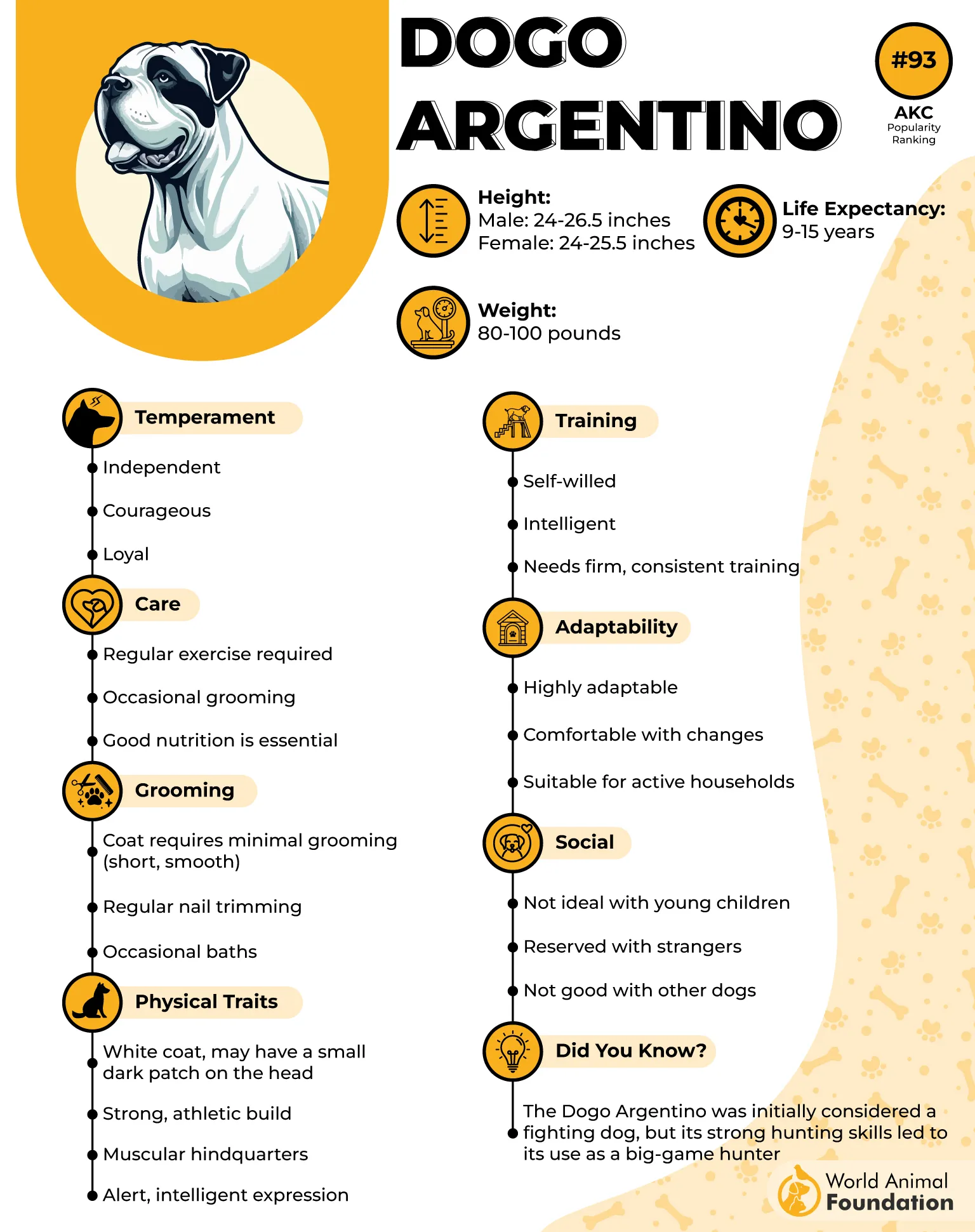
Their working style tends to be direct, determined, and intensely focused once they identify their quarry. A Dogo traditionally combines its nose with speed, close pursuit, and physical commitment as part of a coordinated pack.
These dogs can be affectionate and loyal within their families, yet their prey drive, strength, guarding instinct, and potential selectivity around other animals demand serious management. The American Kennel Club says that early socialisation is therefore not a cute-puppy extra; it is a core part of raising a stable adult who can distinguish work from ordinary life.
Their Wild Boar Tracking Strategy
Dogos generally use a combination of air scent, ground scent, speed, and visual confirmation rather than relying exclusively on slow nose-down trailing.
Their historical value becomes apparent when a pack needs an athletic dog capable of maintaining pressure on powerful game across open or broken country.
2. Plott Hound
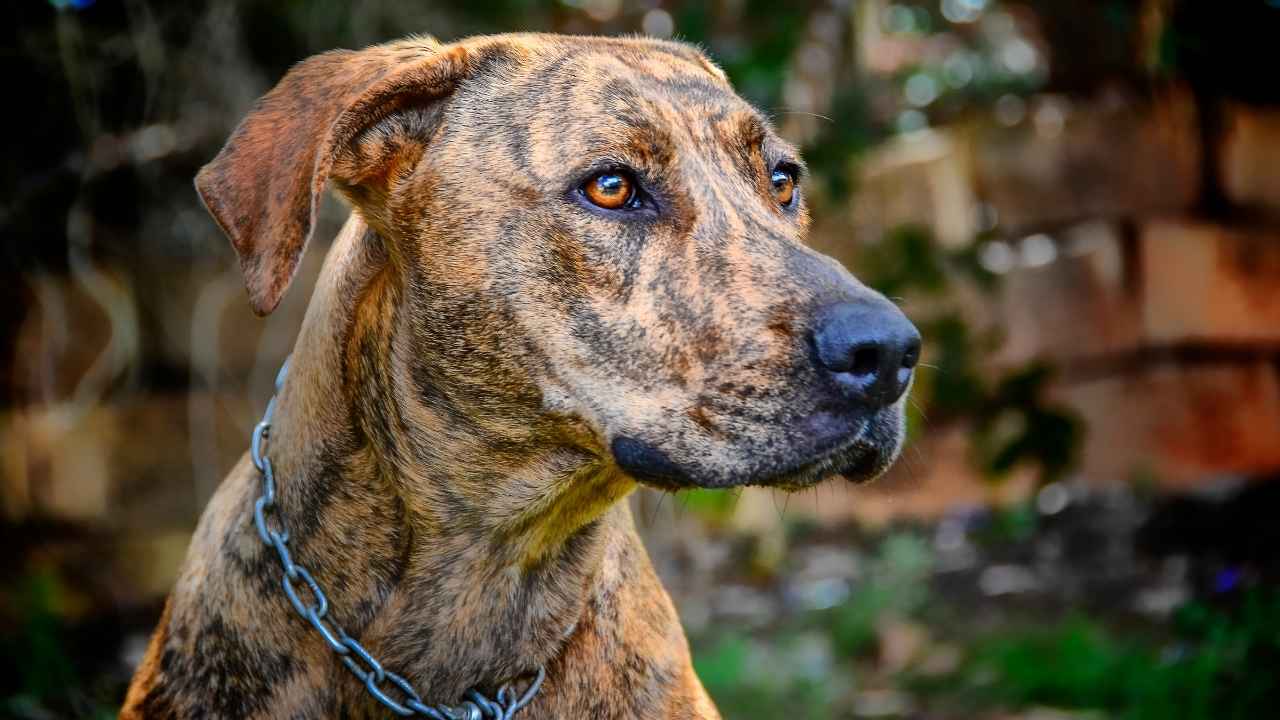
The Plott Hound is not merely a dog that looks rugged in a forest photograph; this breed has authentic boar-hunting ancestry. UKC Dogs says that their powerful but moderate build allows them to scramble over slopes, cross streams, push through cover, and remain functional during long trailing sessions.
The Plott’s nose is important, but its voice is equally valuable to a handler. The breed is capable of producing bawls, chops, and other distinctive vocal changes while following or locating game.
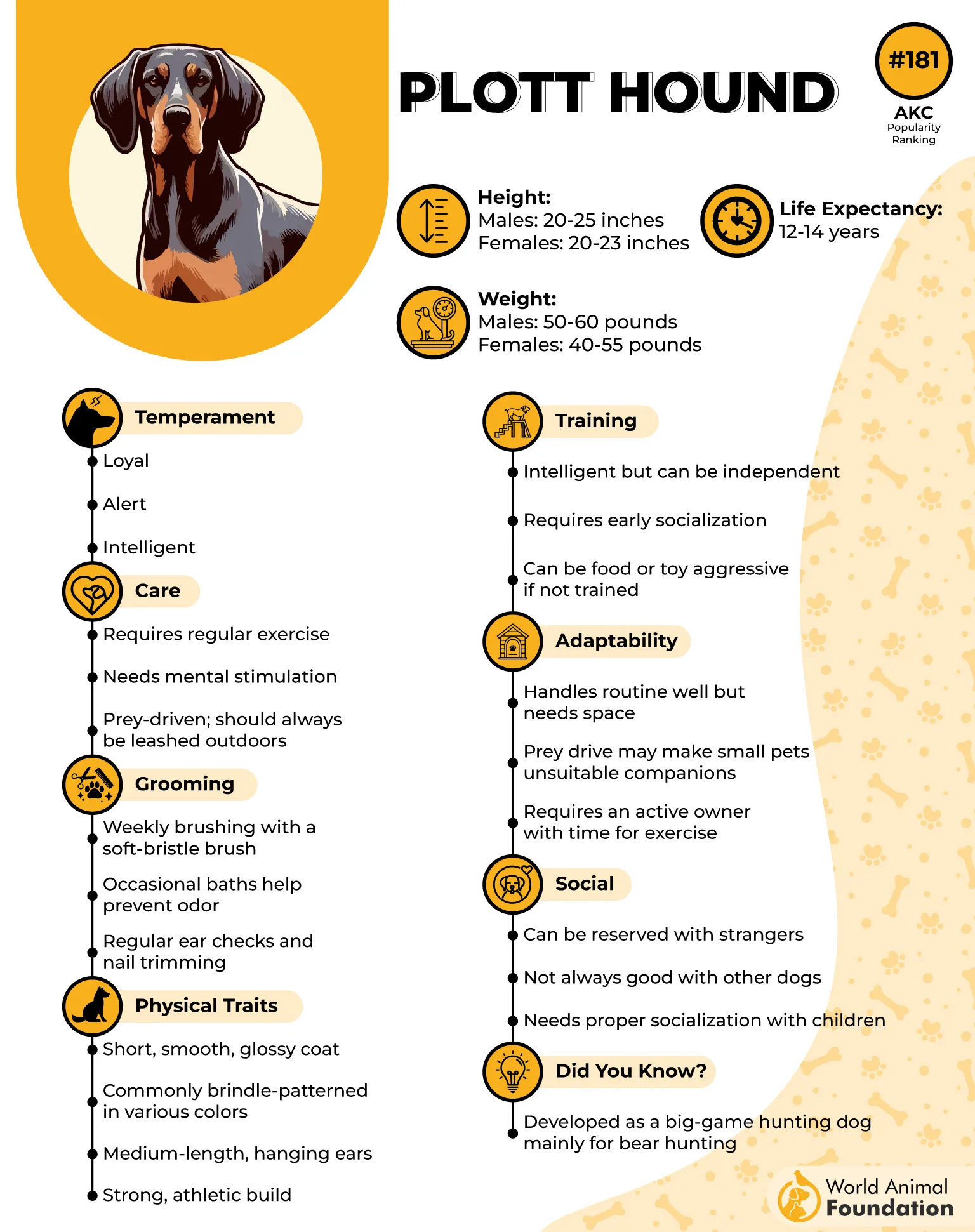
Patient reward-based work, consistent boundaries, and practical field exercises generally suit them better than repetitive drilling that can feel like office work.
A Plott needs regular exercise, secure containment, and meaningful scent-based activities, even when it is not actively working. Under-stimulated individuals may channel their talent into escaping, roaming, or delivering a full-volume concert to the surrounding neighbourhood.
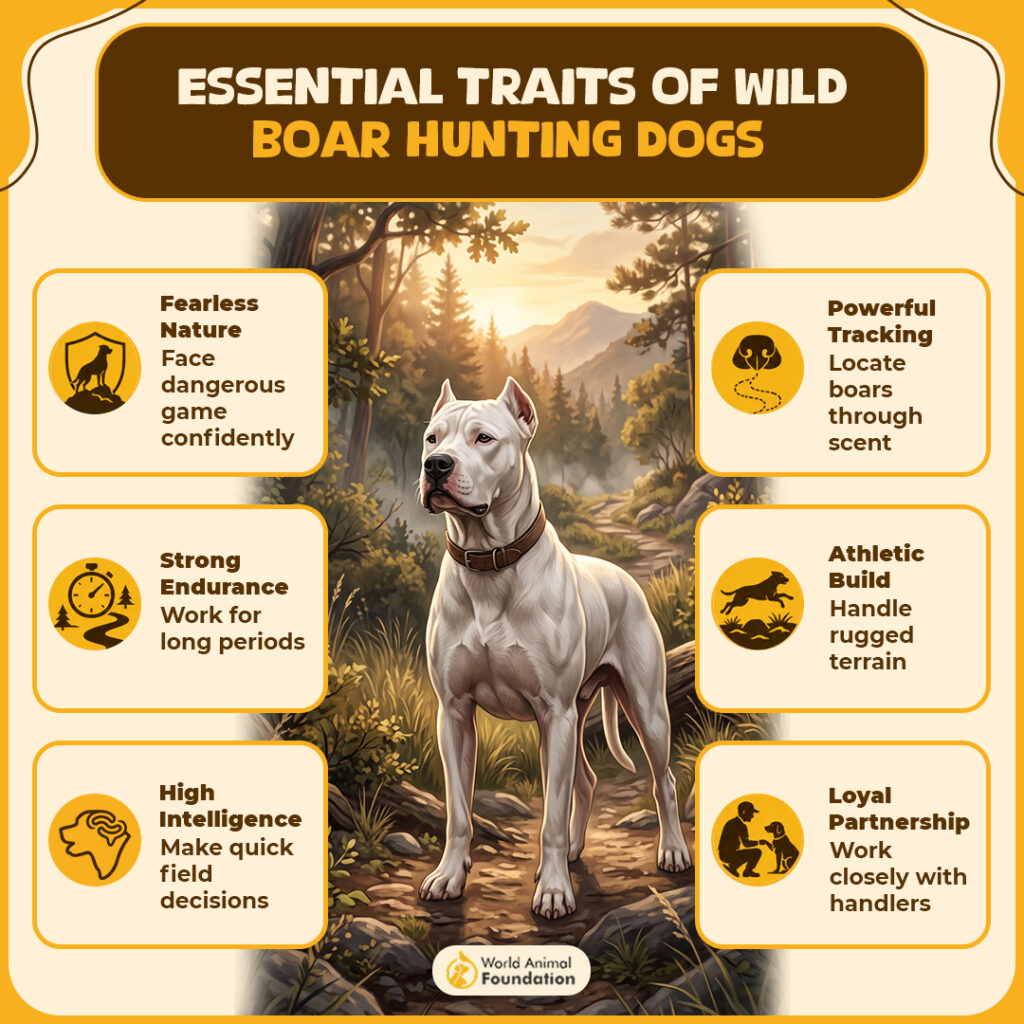
Their Wild Boar Tracking Strategy
A Plott often follows ground scent at an energetic pace, giving voice as the trail strengthens and providing the handler with an audible progress report.
Its mountain-developed agility helps it negotiate rocks, water, slopes, fallen timber, and vegetation without becoming a slow-moving liability.
3. Catahoula Leopard Dog
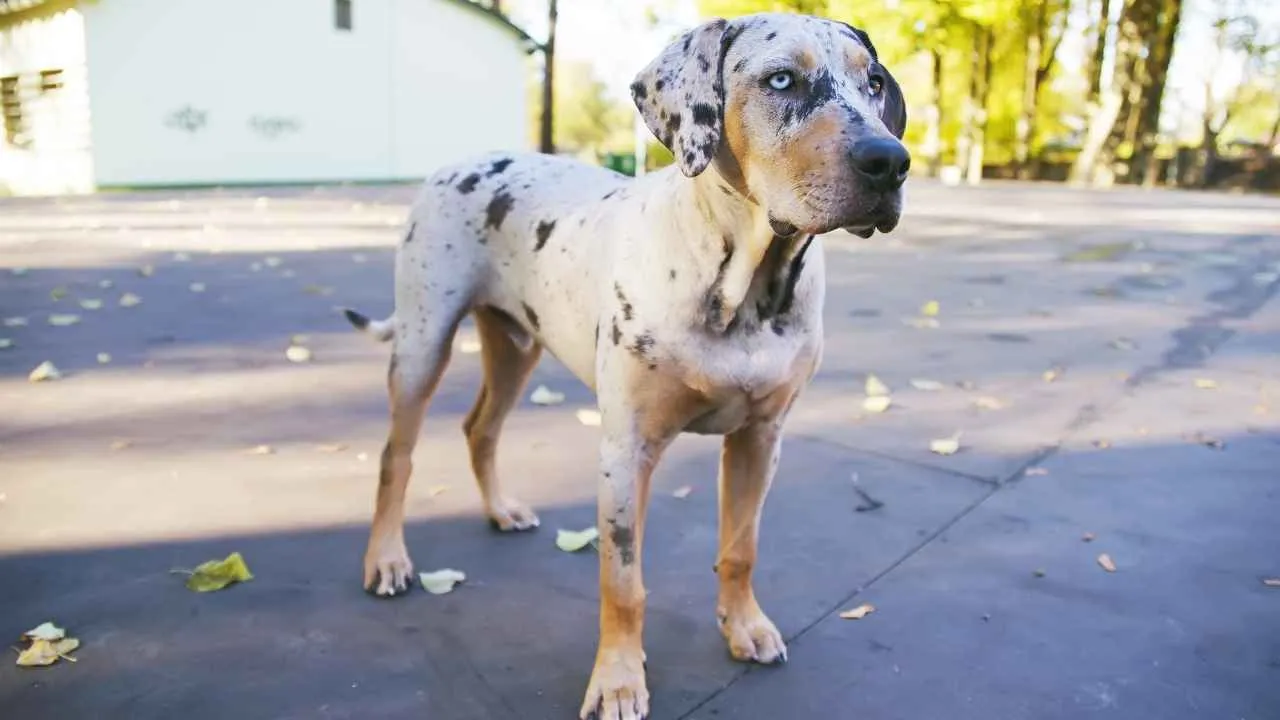
The Catahoula Leopard Dog looks as if someone let an abstract artist design a working dog, but its colourful coat is not its most important feature. PetMD records that Catahoulas could scent, trail, tree, bay, and herd, making them genuine multipurpose workers rather than one-task specialists.
Their famous hog-working style involves finding the animals and creating a controlled bay, often by moving around the group and using calculated pressure. A talented Catahoula should be bold enough to hold attention but agile and sensible enough to avoid crashing unthinkingly into danger.
Their personality is famously dual-mode. Purina describes them as serious and businesslike at work but potentially clownish at home, which is honestly a top-tier work-life balance.
Training should cultivate impulse control without erasing the initiative that makes the breed useful. Catahoulas benefit from boundary work, recall practice, stock neutrality, scent discrimination, directional cues, and structured opportunities to solve problems.
Their Wild Boar Tracking Strategy
Catahoulas commonly locate hogs through scent and then use movement, barking, and coordinated pressure to keep the animals grouped or stationary.
Their webbed, tough-footed construction can support work through wet Louisiana-style terrain where softer-footed dogs may quickly lose efficiency.
4. Rhodesian Ridgeback
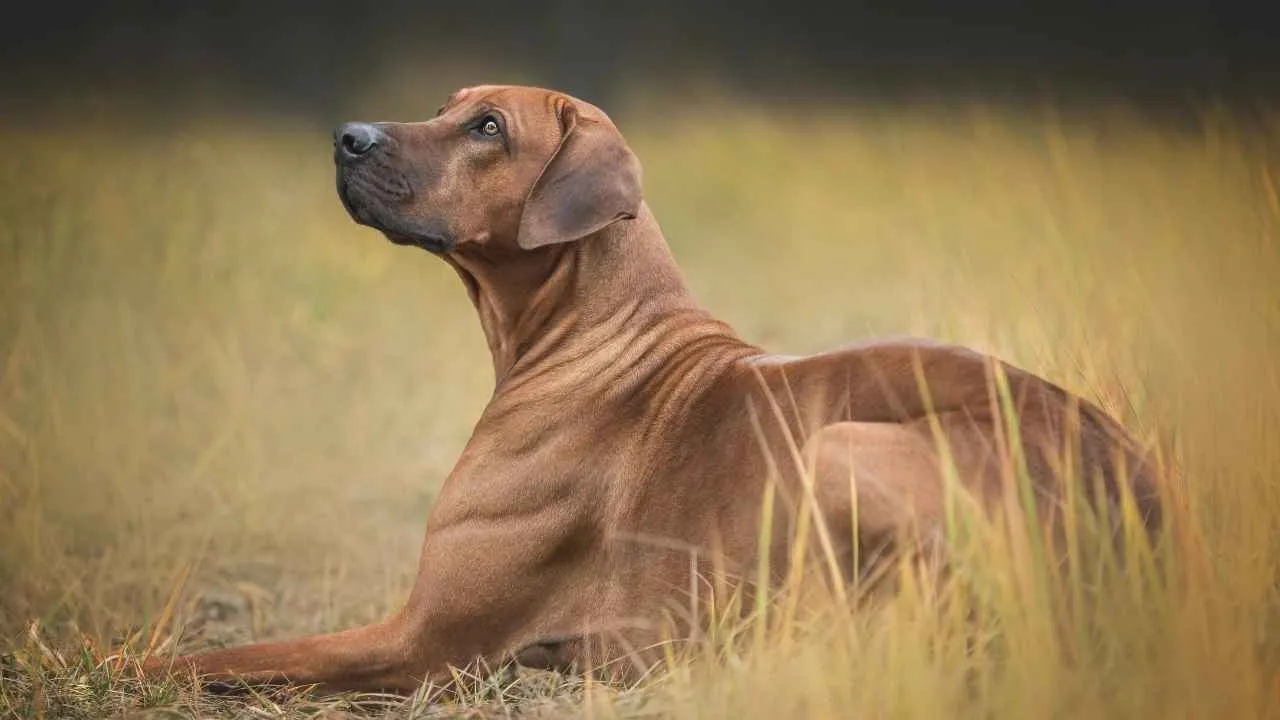
The Rhodesian Ridgeback developed in southern Africa from European dogs crossed with native ridged dogs associated with the Khoikhoi people. Hunters selected for toughness, speed, heat tolerance, intelligence, and the ability to survive encounters with formidable animals.
That history makes the Ridgeback relevant to difficult tracking work, even though it is not primarily a specialised hog hound. Its blend of scenting ability and sighthound-style awareness allows it to use information from both the ground and the wider environment.
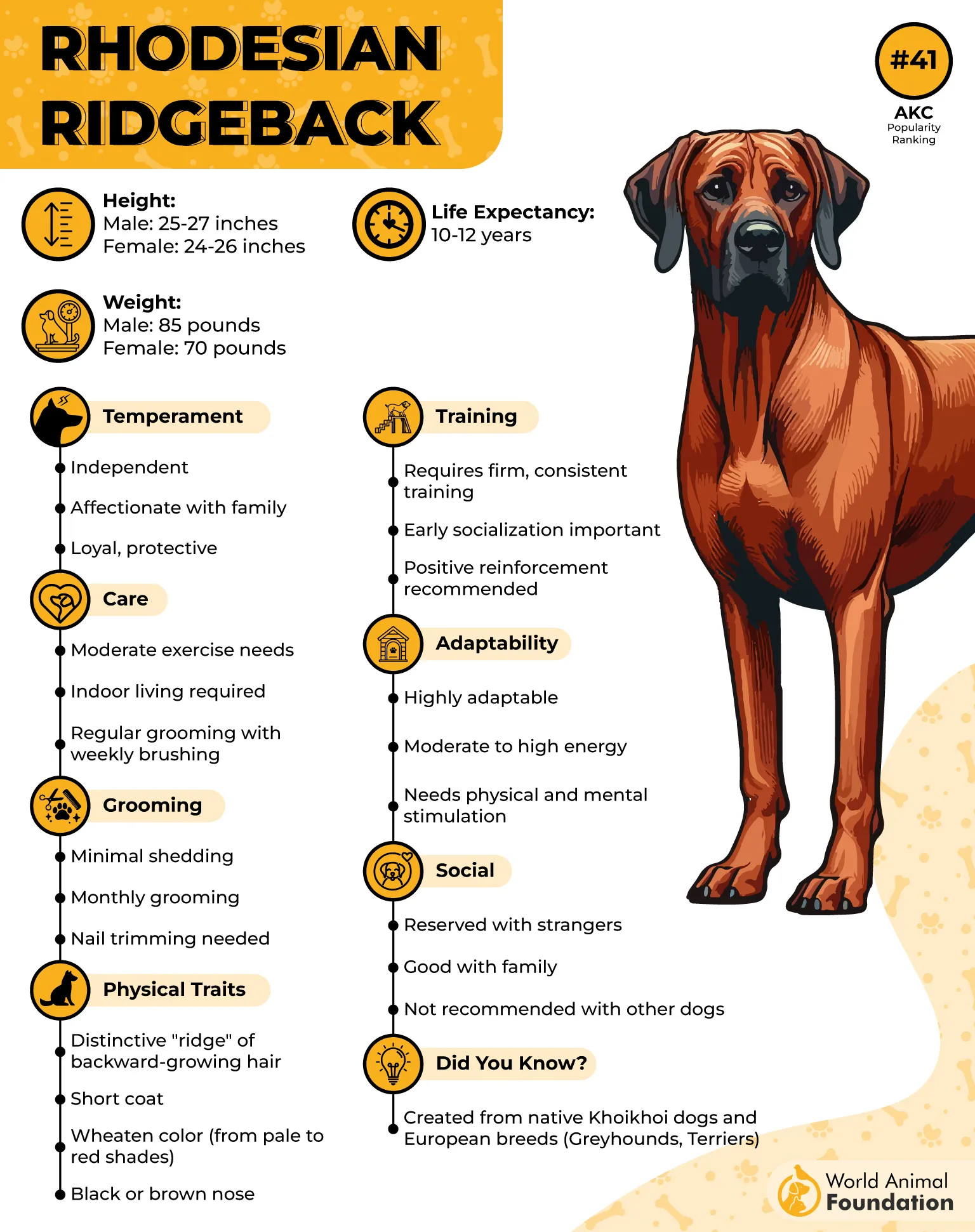
Ridgebacks were also multipurpose farm dogs that guarded property, protected livestock enclosures, coursed game, and sometimes moved cattle. Their athletic bodies were designed to travel efficiently in demanding climates rather than carry decorative bulk.
Omlet notes that early farmers favoured ridged dogs partly because those animals repeatedly survived and returned from dangerous hunts. That selection story reflects judgement and self-preservation as much as raw courage, two qualities that matter enormously around wild boars.
Their Wild Boar Tracking Strategy
Ridgebacks can alternate between scent tracking and visual scanning, making them useful where game repeatedly moves between thick vegetation and open ground.
Their traditional baying heritage favours circling, alerting, and applying pressure rather than immediately colliding with dangerous quarry.
5. Weimaraner
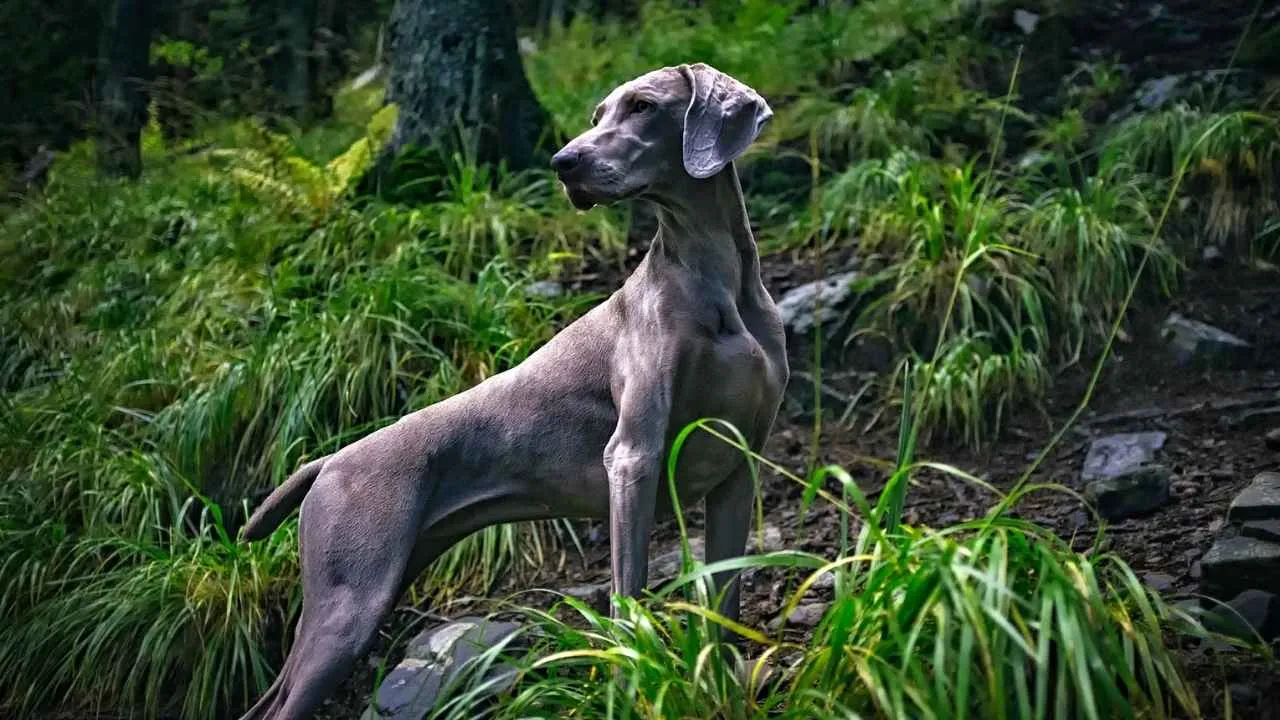
The Weimaraner, nicknamed the “Gray Ghost,” was developed in Germany during the early nineteenth century as a versatile hunting companion. Early Weimaraners were associated with noble hunters who pursued large game before the breed became increasingly specialised in pointing and retrieving birds.
Although the modern Weimaraner is not a purpose-built hog dog, experienced handlers may value its ability to follow scent, search broad areas, and indicate game’s location.
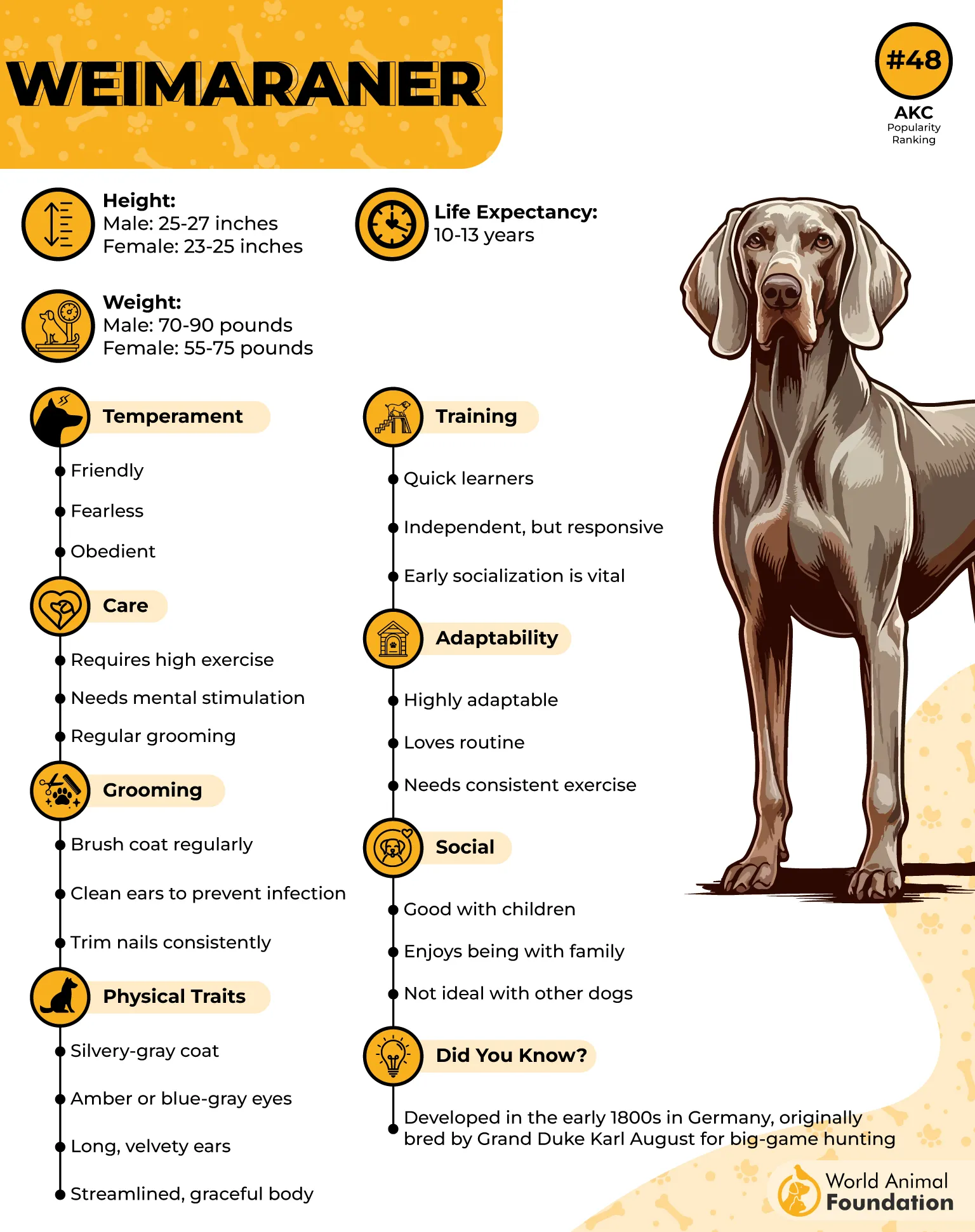
They learn desired behaviours quickly but can absorb loopholes, bad habits, and household weaknesses with equal enthusiasm. Training must therefore remain consistent, varied, and rewarding, or the dog may create a personal enrichment programme involving cupboards and unsecured garden gates.
They are deeply social dogs that often struggle when isolated for long periods. Their ideal life combines family involvement with running, scent work, retrieving, obedience, and other structured activities.
Their Wild Boar Tracking Strategy
A Weimaraner is best suited to systematic searching, fresh-trail work, or locating game while remaining responsive to the handler.
Its broad hunting background allows it to integrate air scent, ground scent, visual cues, and learned directional cues.
6. Bluetick Coonhound
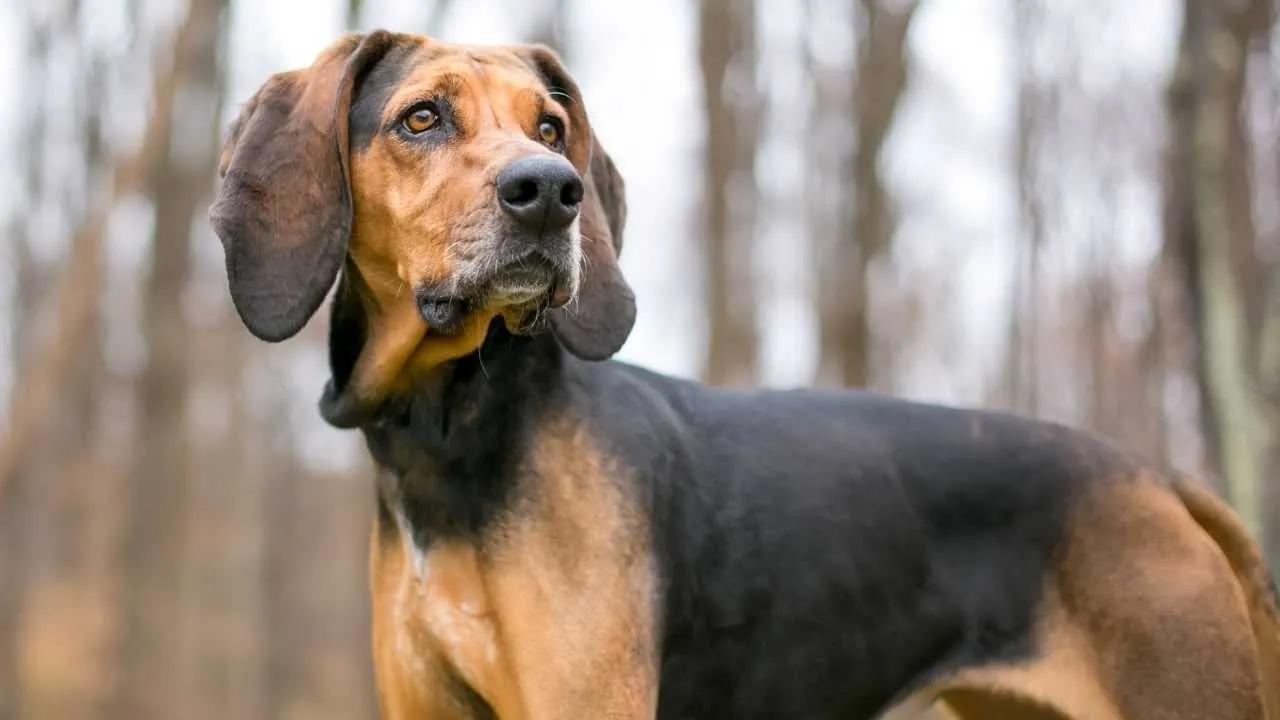
The Bluetick Coonhound brings an excellent nose, athletic build, dramatic voice, and a coat that looks like the night sky gained legs. Its ancestry includes English foxhounds and French hounds developed for pursuing large game, as well as cold-nosed dogs valued for following older trails.
They are active, ambitious, and fast once they settle onto a trail. They are open-mouthed pups whose bawl, squall, chop, or bugle voice changes when they locate game.
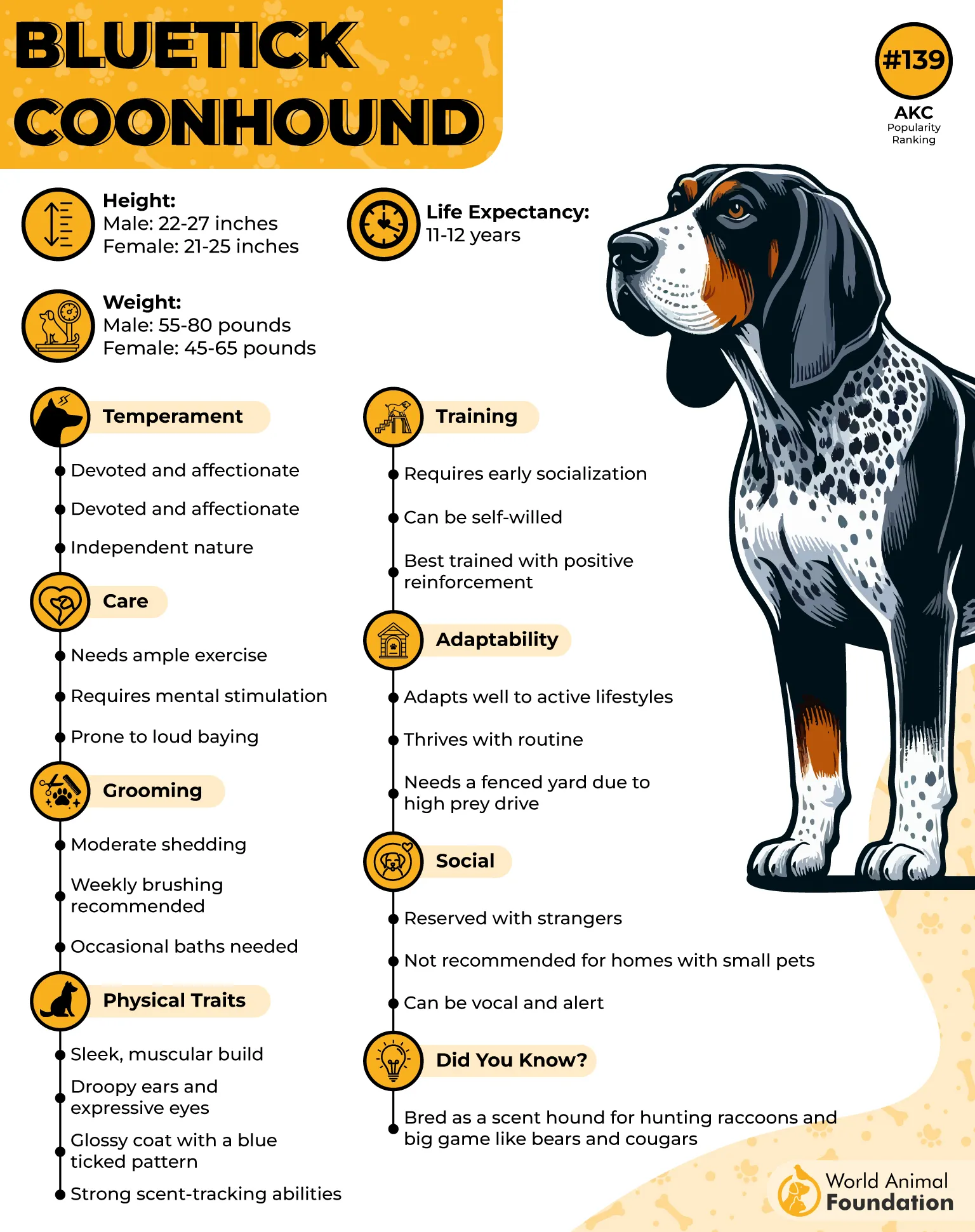
Their cold-nosed reputation makes them particularly interesting when the quarry passed through an area hours earlier. Instead of abandoning a weak scent because newer smells cross the path, a skilled Bluetick may patiently work through contaminated ground until the original line becomes clearer.
They are commonly devoted to their owners and social with familiar people or dogs, but their voices and exercise demands can overwhelm quiet suburban homes.
Their Wild Boar Tracking Strategy
Blueticks can untangle older scent lines, making them valuable when boars have travelled well beyond the location where tracks were first discovered.
Their changing trail voice helps handlers judge distance, momentum, and whether the hound has moved from uncertain searching to committed pursuit.
7. Bloodhound
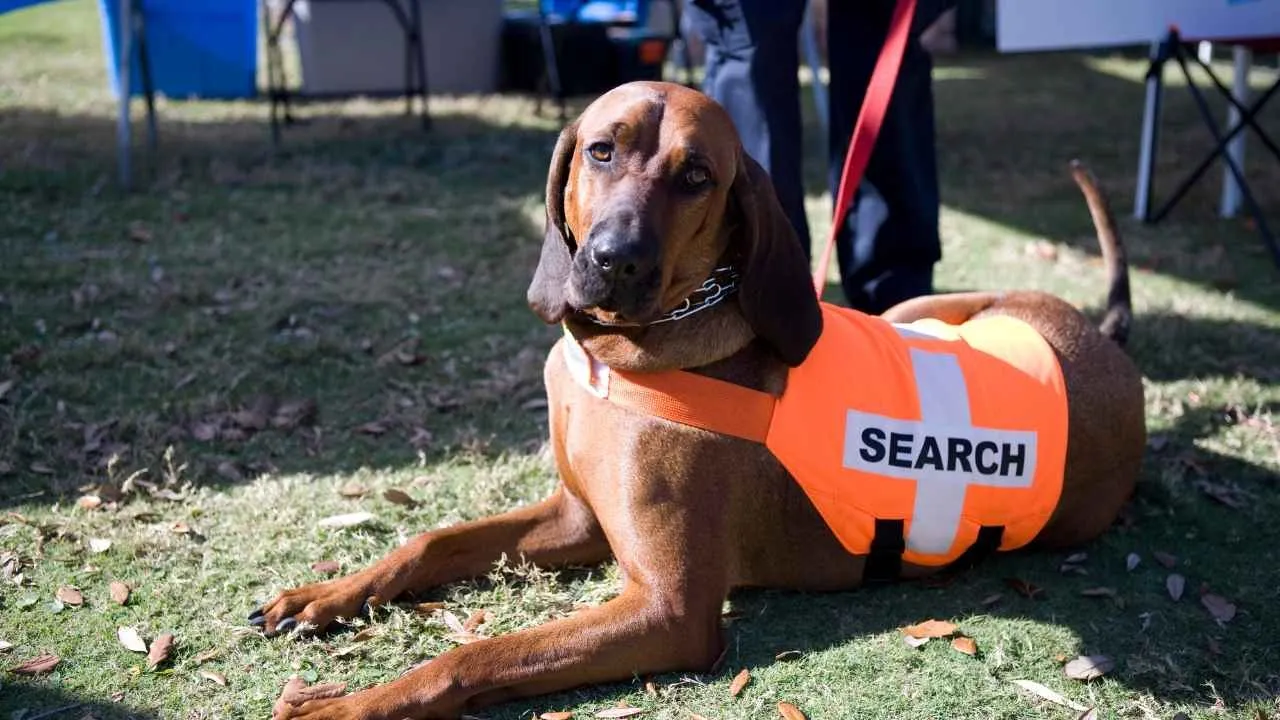
The Bloodhound is the undisputed detective of this list, complete with wrinkled face, enormous ears, and an expression suggesting it has already reviewed the evidence. For centuries, these hounds have followed human and animal trails over vast distances.
Its loose skin and long ears are not simply there to create peak sad-face aesthetics. Those physical features help the dog gather and retain scent around the head while working close to the ground.
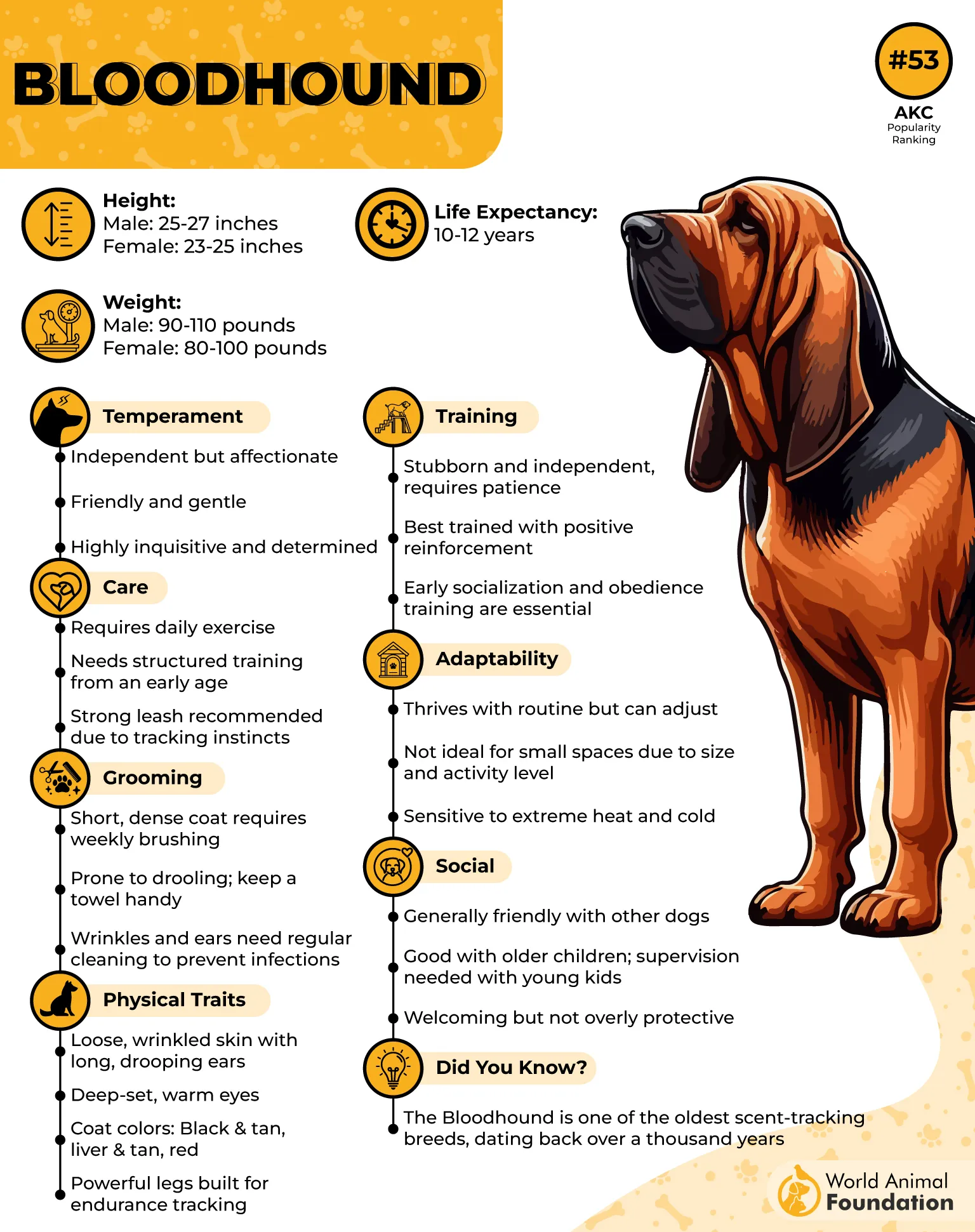
They generally excel at locating rather than baying or physically engaging game. A trained dog may work from an identifiable scent article, track disturbance or blood, and remain committed to one line despite crossing odours.
Handler experience repeatedly confirms that the Bloodhound’s nose has the final vote.
Their Wild Boar Tracking Strategy
Bloodhounds specialise in reconstructing a route, following scent particles left on vegetation, soil, water edges, and other disturbed surfaces.
They are particularly valuable for recovery work because patience and scent discrimination matter more than speed or physical confrontation.
8. Redbone Coonhound
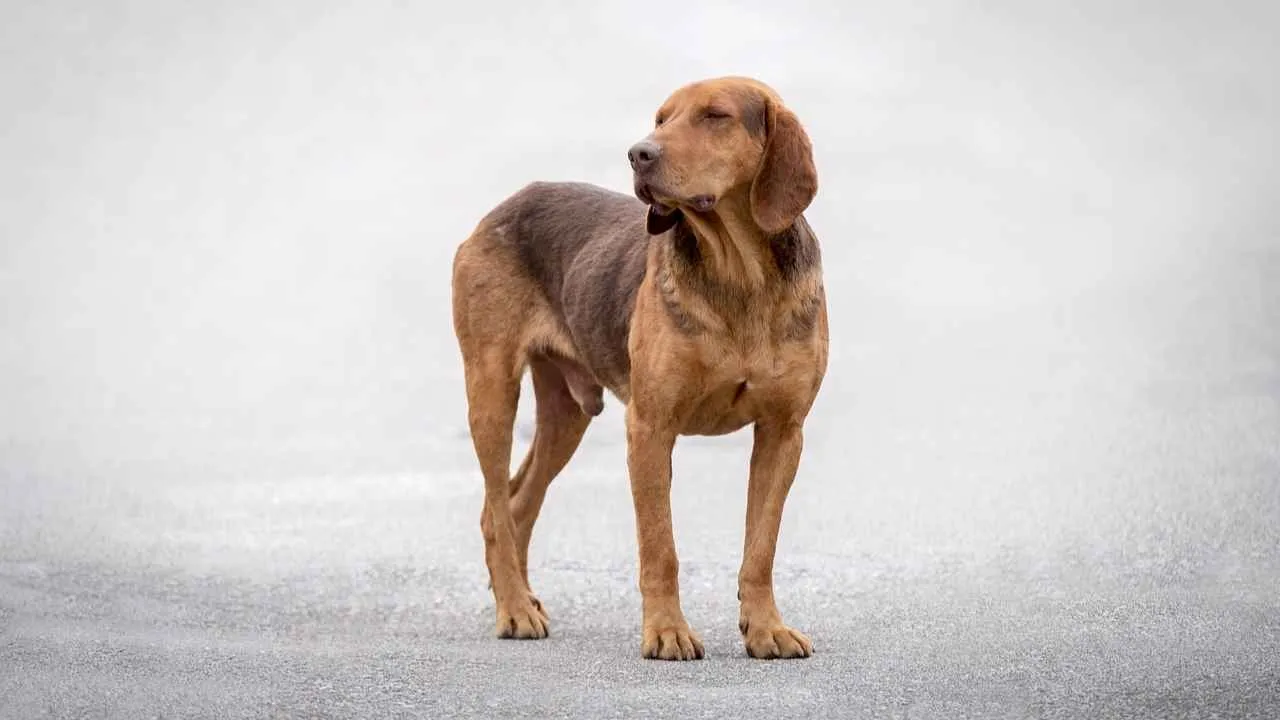
The Redbone Coonhound combines a polished mahogany coat with the energy of a dog who heard there was an adventure happening three counties away. American hunters selectively developed Redbones for tracking wild hogs and treeing ability, drawing heavily from red foxhound ancestry.
Redbones are often described as mellow and affectionate at home but transformed when they strike a meaningful trail. Spruce Pets rather memorably characterise them as kindly in domestic life yet tiger-like at work.
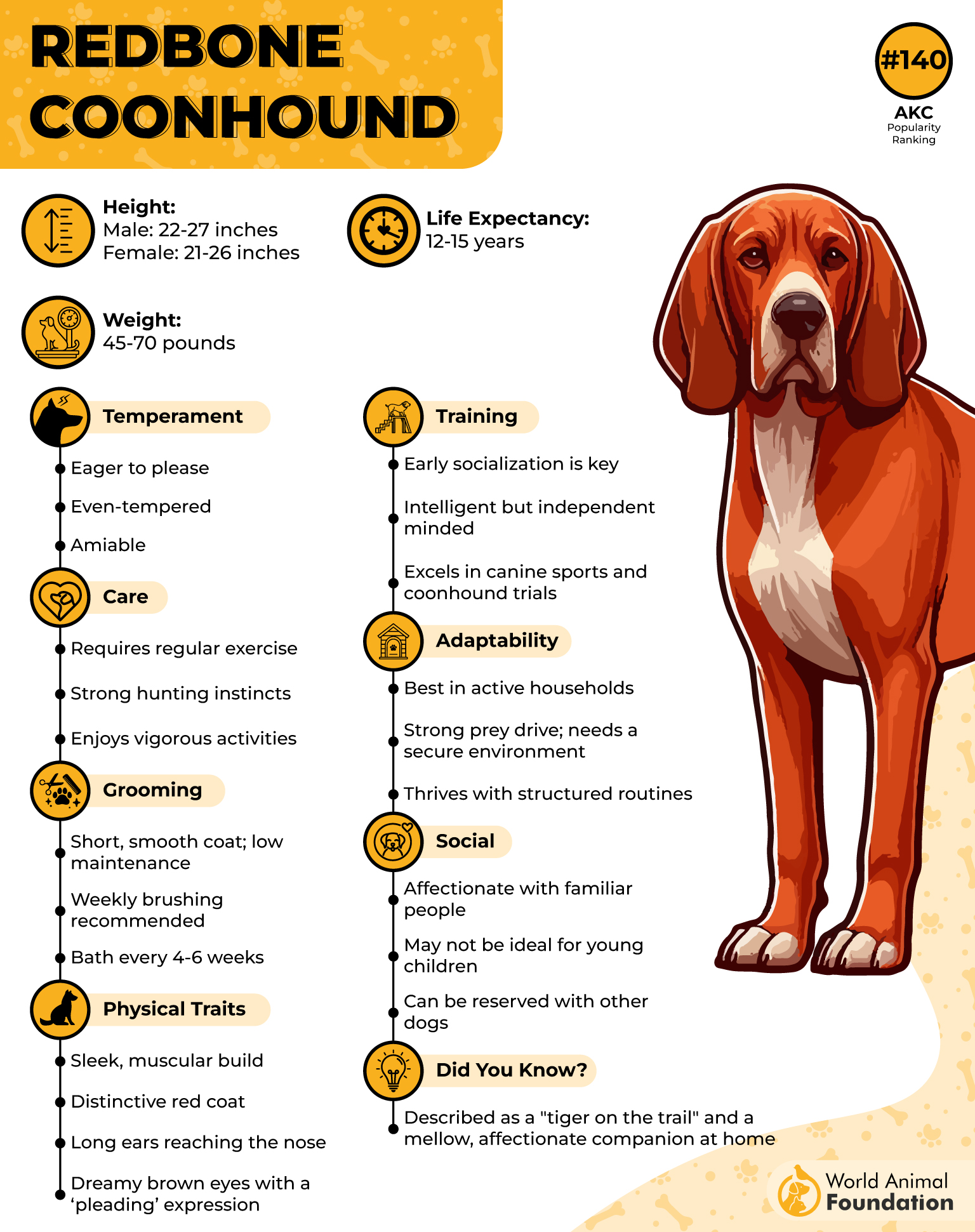
Compared with slower cold-trailing hounds, WebMD says that they are valued for their ability to move a viable scent line more quickly. Their agile bodies help them cross streams, climb inclines, negotiate uneven footing, and maintain momentum as terrain changes.
The breed is generally eager to please, although scent can outrank obedience when training has not been thoroughly proofed.
Their Wild Boar Tracking Strategy
Redbones tend to push workable scent with enthusiasm, reducing the time between locating a trail and closing distance on moving game.
Their surefooted athleticism is useful where hogs escape through creeks, hills, rocky sections, and rapidly changing cover.
9. Black and Tan Coonhound
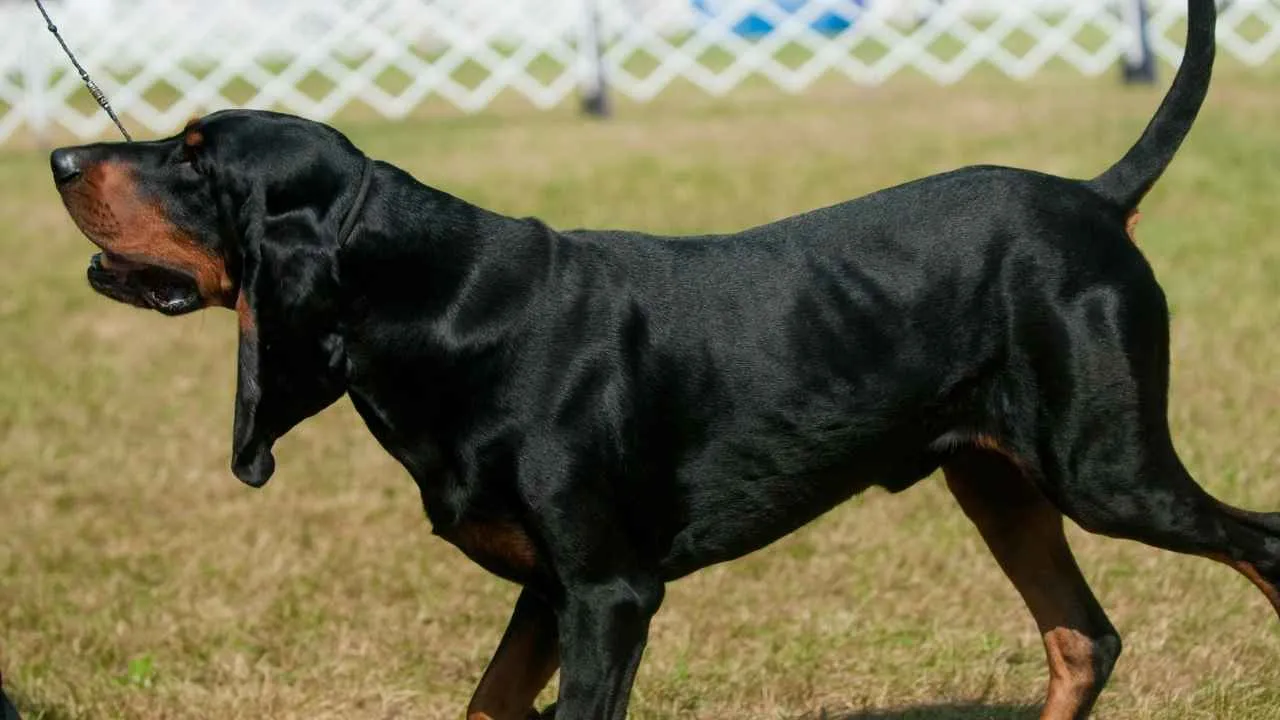
The Black and Tan Coonhound is a large American scent hound developed from old hound families, with influences from the Bloodhound and the Foxhound. The breed traditionally followed raccoons, but its powerful nose has also been used to track deer, bears, mountain lions, and other large game.
These versatile hunters frequently trail, their noses close to the ground, working through a scent problem, one careful section at a time.
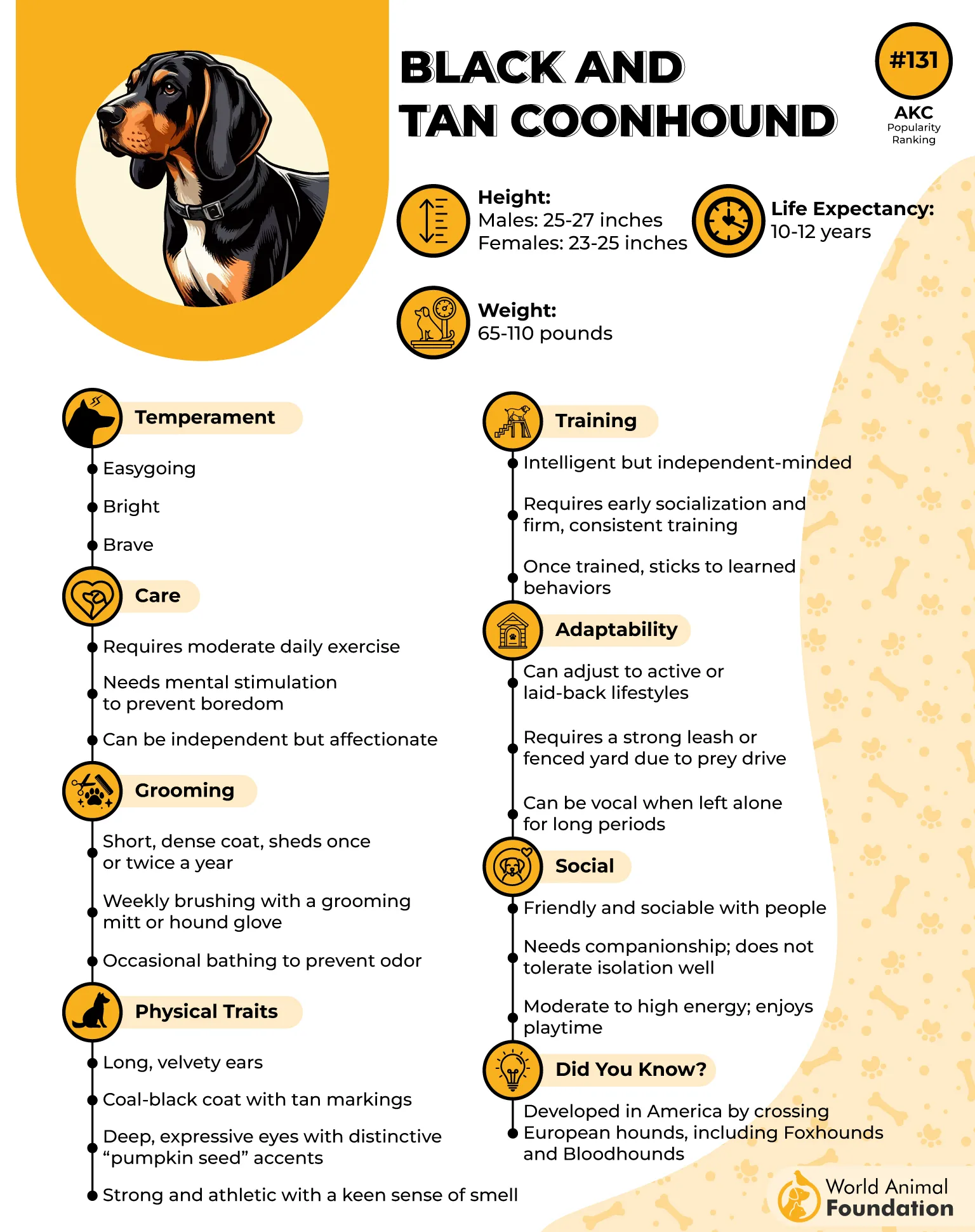
These hounds are usually friendly, sociable, and easy-going away from work, but loneliness can trigger impressive vocal performances. Their deep bays carry over considerable distances and have historically helped hunters locate them after the quarry has been found.
Training requires patience because the Black and Tan was developed to make independent decisions while separated from its handler. Reward-based tracking, leash manners, recall, and a secure home environment should begin early.
Their Wild Boar Tracking Strategy
The Black and Tan works slowly enough to analyse weak ground scent instead of overrunning every turn made by the quarry.
Its Bloodhound-like persistence can help maintain a line through areas where wind, water, livestock, or human movement have complicated the trail.
Conclusion
The most dependable wild-boar-tracking breed depends on the specific job rather than on a single universal ranking.
Individual quality matters just as much as breed identity. A thoughtfully trained dog may outperform a poorly prepared one, while a fit one can be more useful than the catch dog when the task involves controlling movement rather than reconstructing a cold trail.
