




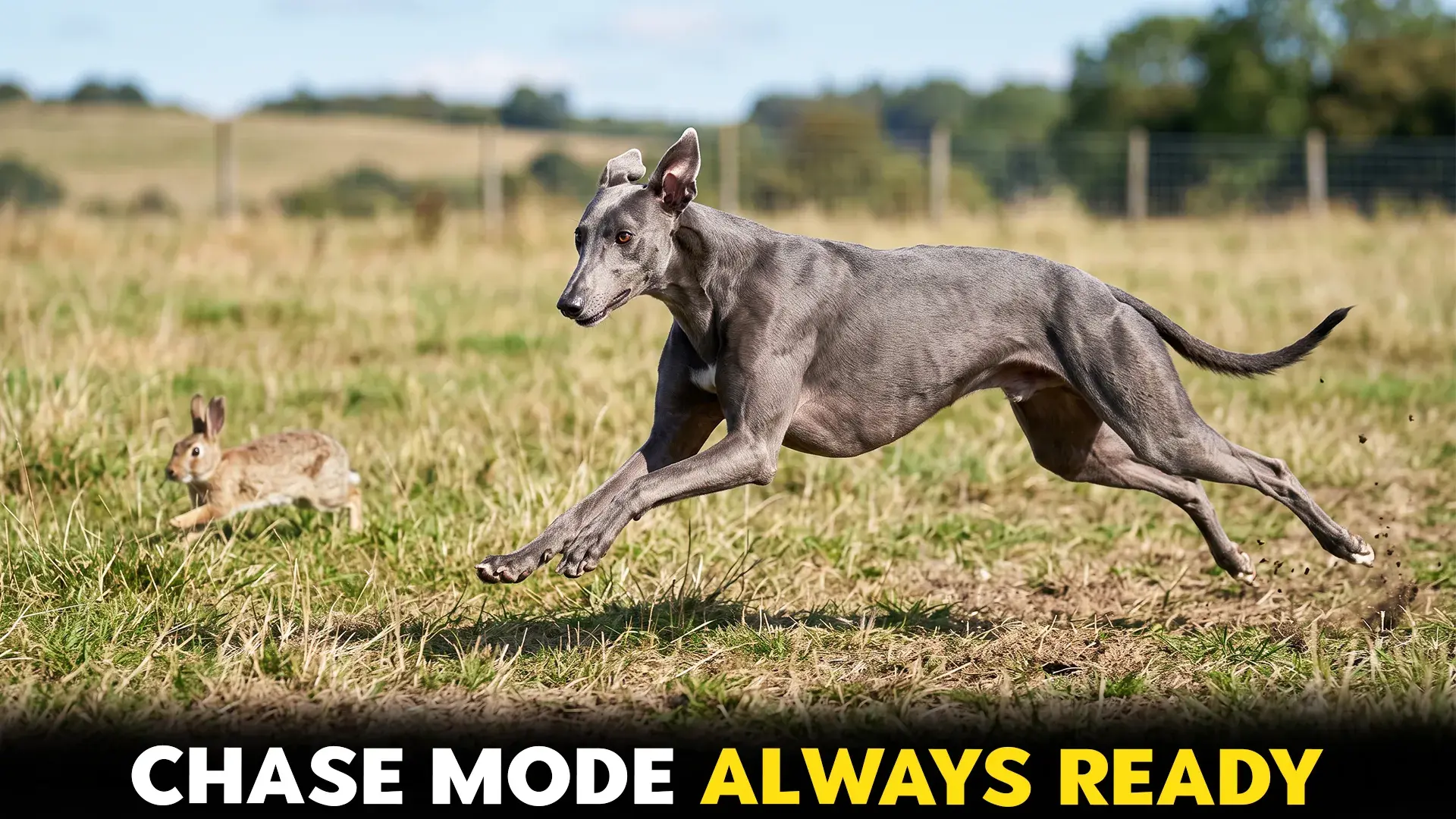
A lot of people adopt a dog and think, “He’s so sweet, he’d never hurt a fly.”
Then a squirrel runs across the yard.
And suddenly your sweet, gentle pup turns into a bomb with legs.
That’s prey drive.
It’s not bad behavior, and it’s not your dog being “bad.”
It’s an old instinct, way older than dog breeds themselves, wired straight from their wolf ancestors.
Chase. Stalk. Pounce. Catch.
It’s the same sequence a wolf uses to hunt, just repackaged into a fluffy pet that also enjoys naps and belly rubs.
Some breeds have a stronger prey instinct than others. Way stronger.
If you are adopting a new dog, or you already share your house with one, it helps to know which breeds come loaded with high prey drive traits, and what that actually means for daily life, other pets, and walks around the block.
Dog Breeds With Naturally High Prey Drive Traits
1. Greyhound
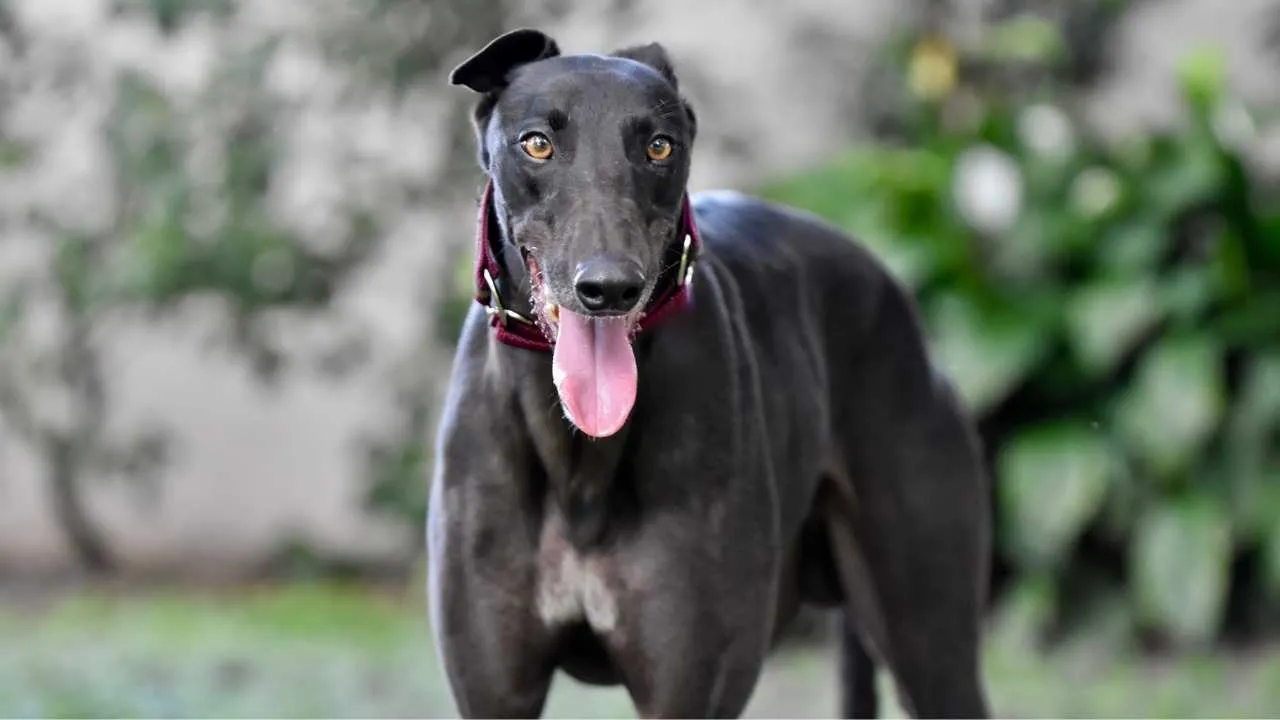
Greyhounds look lazy.
They are not.
They are just conserving energy for the exact moment something small and fast catches their eyes.
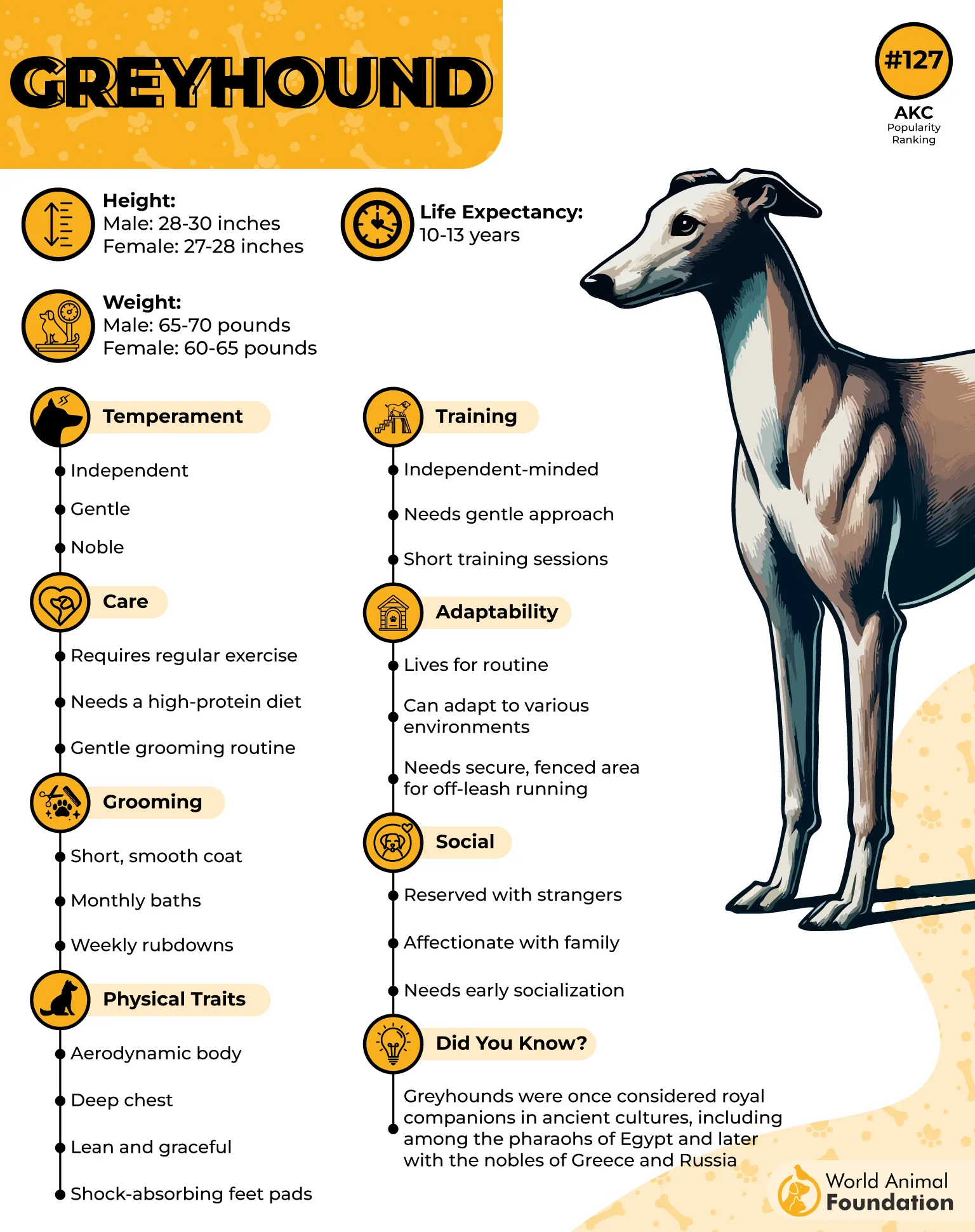
According to PetMD, Greyhounds are high-prey-drive dogs. They were bred for one job: sighthunting.
That means they hunt using sight, not smell, which is why a rabbit, a squirrel, or even a fast-moving cat can trigger an instant chase.
Once a Greyhound locks onto something, that high prey drive kicks in and the dog is gone.
Fast. We are talking speeds up to 45 miles per hour.
After all, they are one of the fastest dog breeds.
At home, these are shockingly calm dogs. Couch potatoes, honestly. But outside, in open space, that sighthound instinct takes over. Walks should always happen on a lead, and off-leash time should stay limited to securely fenced areas.
Greyhounds and small pets, like rabbits or cats, need slow, careful introductions.
Some Greyhounds do fine with other pets. Others never lose that urge to chase.
2. Siberian Husky
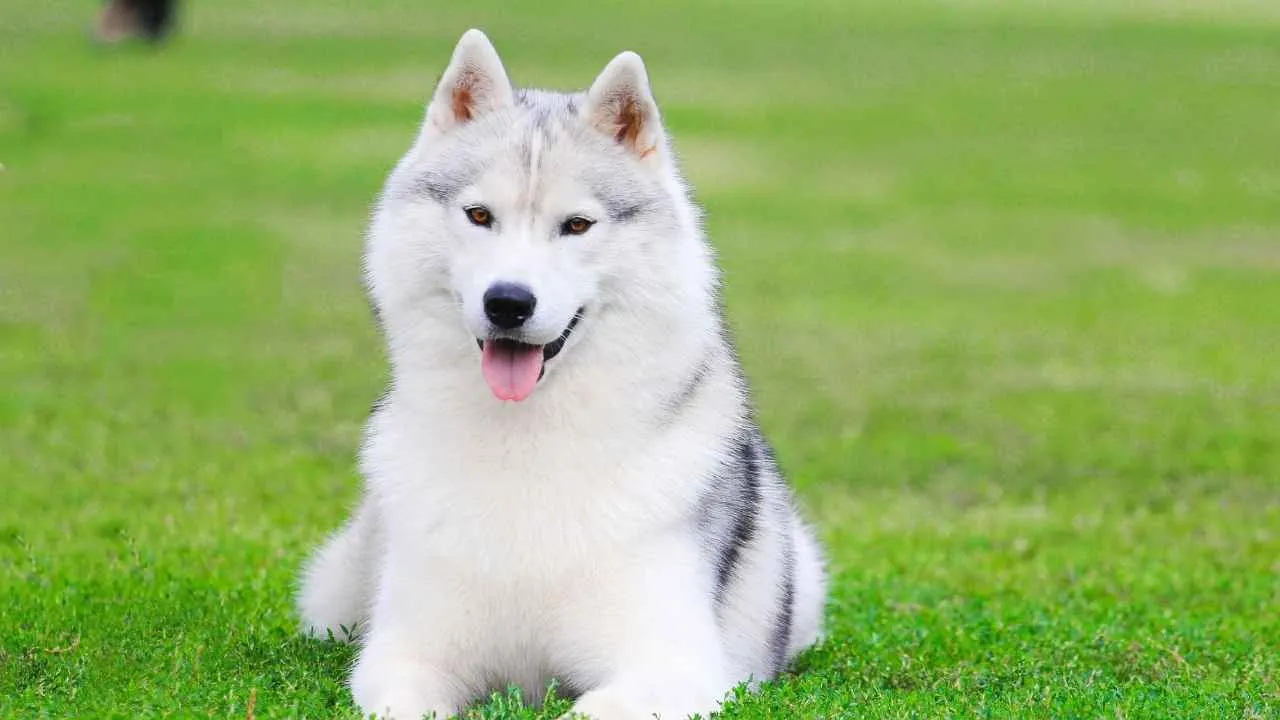
Siberian Huskies are gorgeous, playful, and just a little bit feral.
In the best way.
Mostly.
These Husky dogs were bred to pull sleds across brutal cold, working in packs alongside other dogs. That pack history means Huskies usually do fine around other animals.
Small animals, though, are a different story.
Huskies have a strong prey drive and a long history of hunting small game to survive in harsh climates.
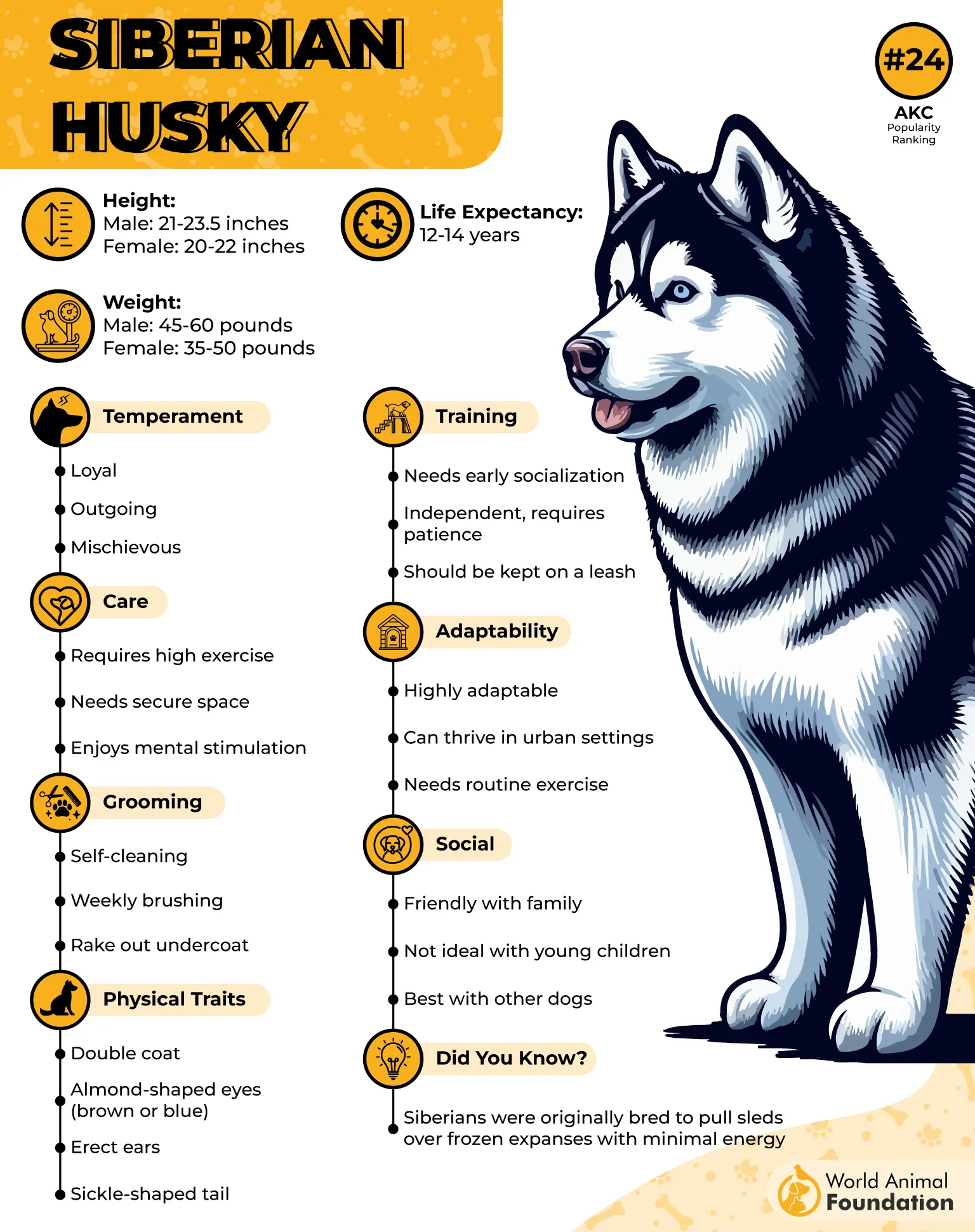
Orvis notes that cats, squirrels, birds, and even small dogs are not safe from these dogs’ strong prey drive. That chase instinct.
Huskies are high-energy dogs that need serious daily exercise, mental stimulation, and a job to do, or they will invent their own jobs, usually involving your yard, a hole, and an escape plan.
Training and early socialization help, but pet parents with small animals at home should be cautious and go slow.
3. Jack Russell Terrier
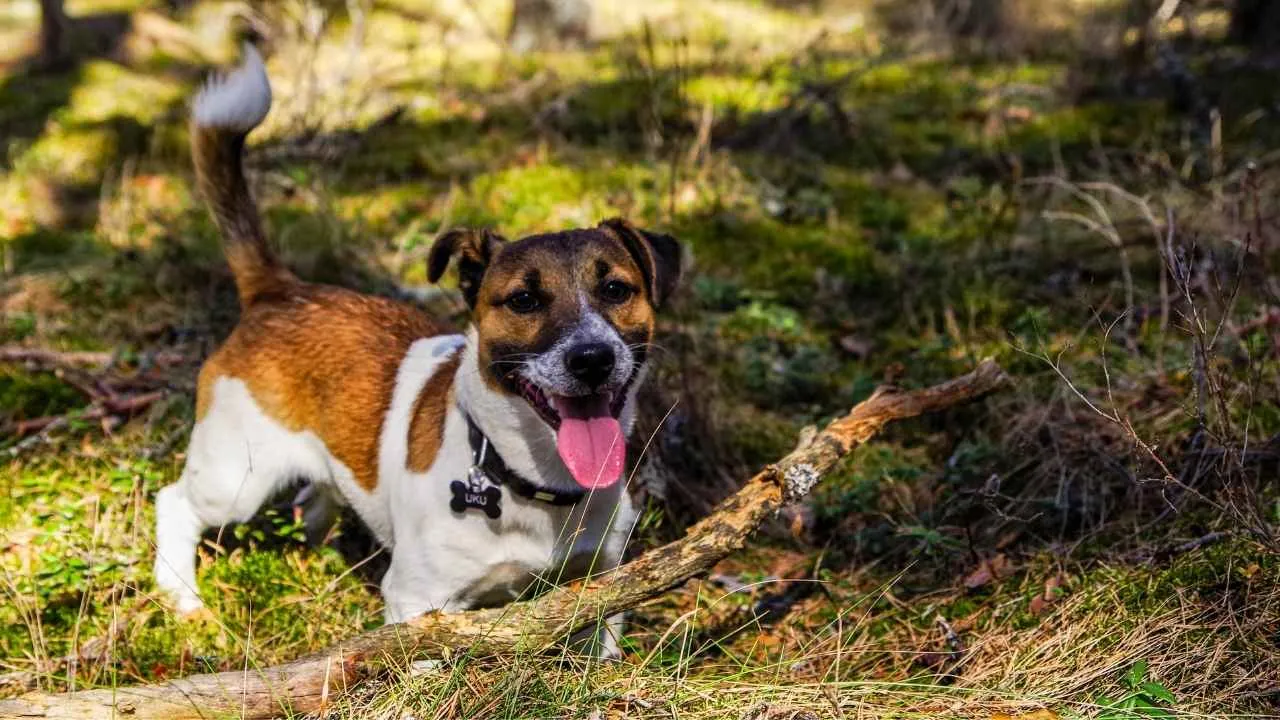
Jack Russell Terriers are small.
Their prey drive is NOT.
These little dogs think they are twelve times their actual size, and they hunt like it too.
Jack Russell Terriers were bred to hunt foxes, going right down into dens after them. That means these hunting dogs were adept at digging, chasing, and catching anything that moves fast.
Rodents, squirrels, even the neighbor’s chickens if given the chance.
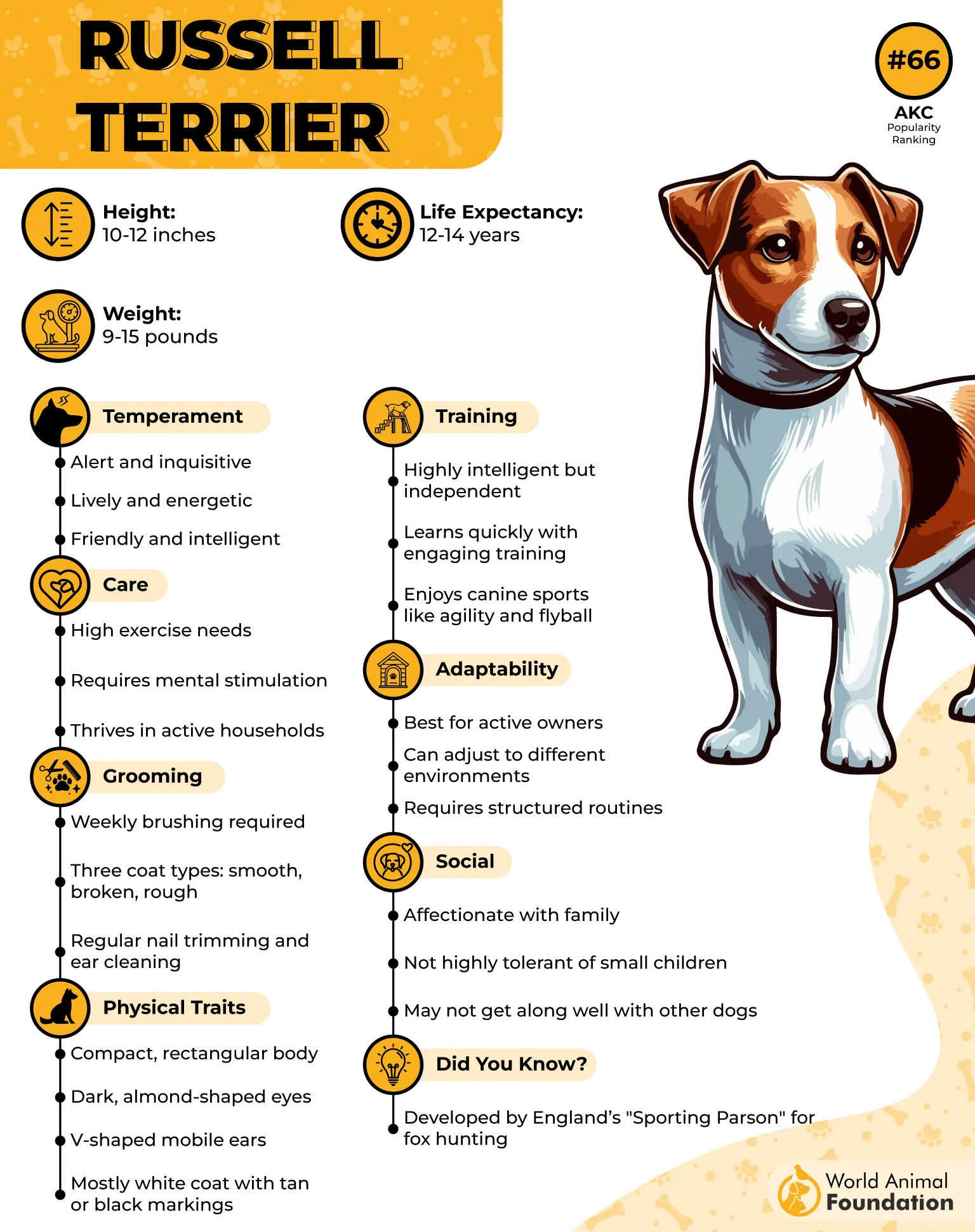
Jack Russell Terriers are relentless, clever, and endlessly energetic. These pups need daily walks, agility, flyball, and some outlet for all that drive, or that energy turns into digging up your yard or barking at LITERALLY everything.
Around cats and other small pets, careful management is important.
Some Jack Russells learn to live peacefully with a house cat. Others will always see “small and fast” as a challenge. Royal Kennel Club notes they have a strong prey drive and should be given early socialization to keep their instincts in check.
4. Rhodesian Ridgeback
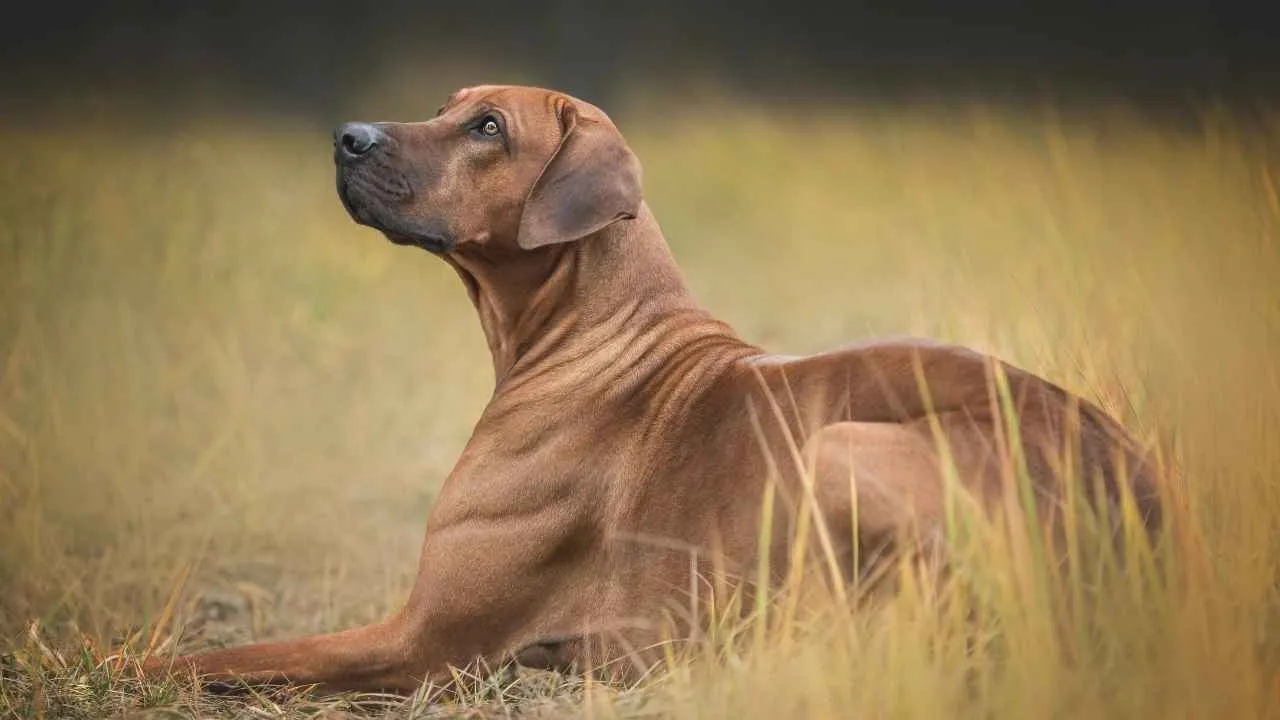
The Rhodesian Ridgeback was bred to help hunt lions.
LIONS!!
So yeah, the prey drive in dogs of this breed runs deep!
The American Kennel Club already warns that only experienced owners should dare to keep these dogs.
Originally used in Southern Africa to track and corner big game, Rhodesian Ridgebacks have strength, stamina, and a strong hunting instinct. They rarely go after the kill themselves historically.
That job belonged to hunters, but the instinct to track, chase, and corner is alive.
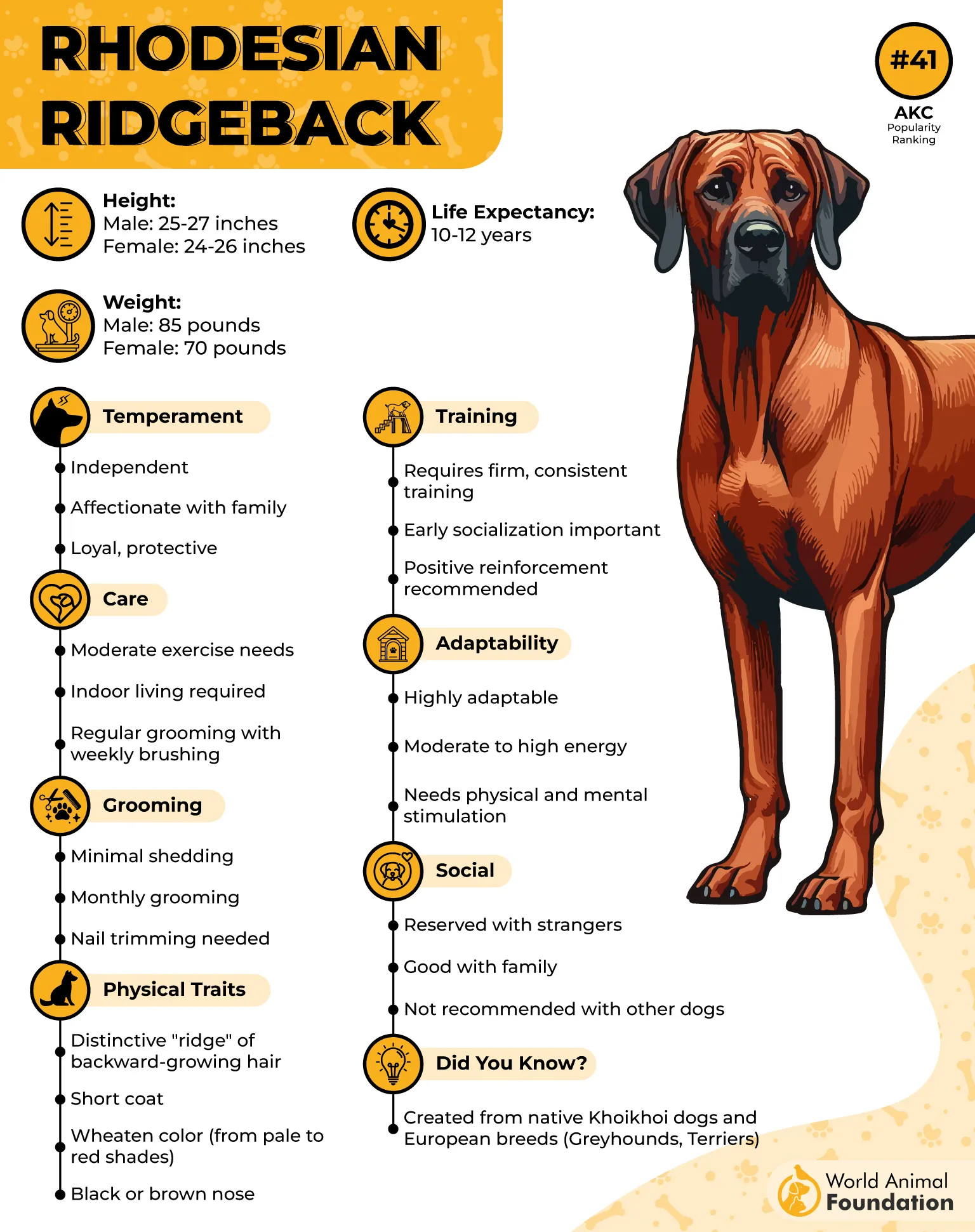
This is a loyal, calm breed at home, great with children and family.
But smaller animals can trigger that tracking instinct fast.
Cats, squirrels, and small dogs may not be safe running free around a Ridgeback without training and supervision.
Regular exercise and mental stimulation keep this breed balanced and less likely to go looking for trouble.
5. Airedale Terrier
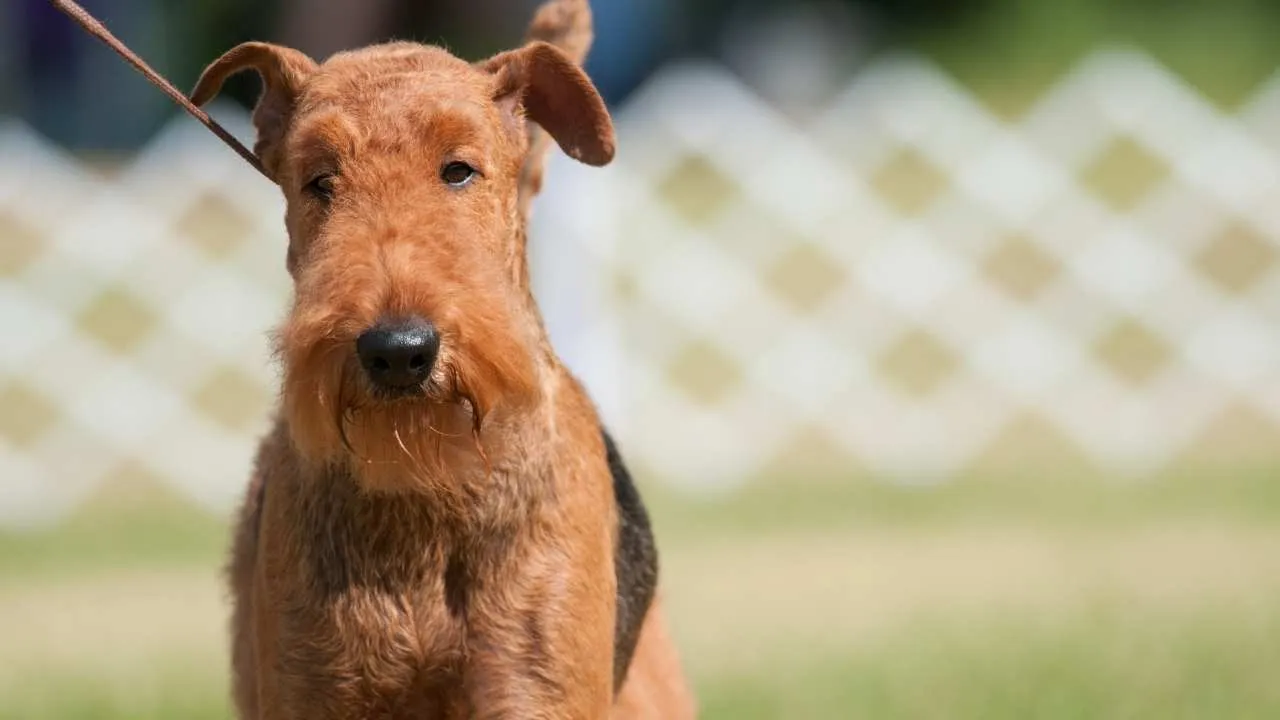
The Airedale Terrier is called the “King of Terriers.”
Fitting.
It’s a terrier with a bigger body and a bigger prey drive to match.
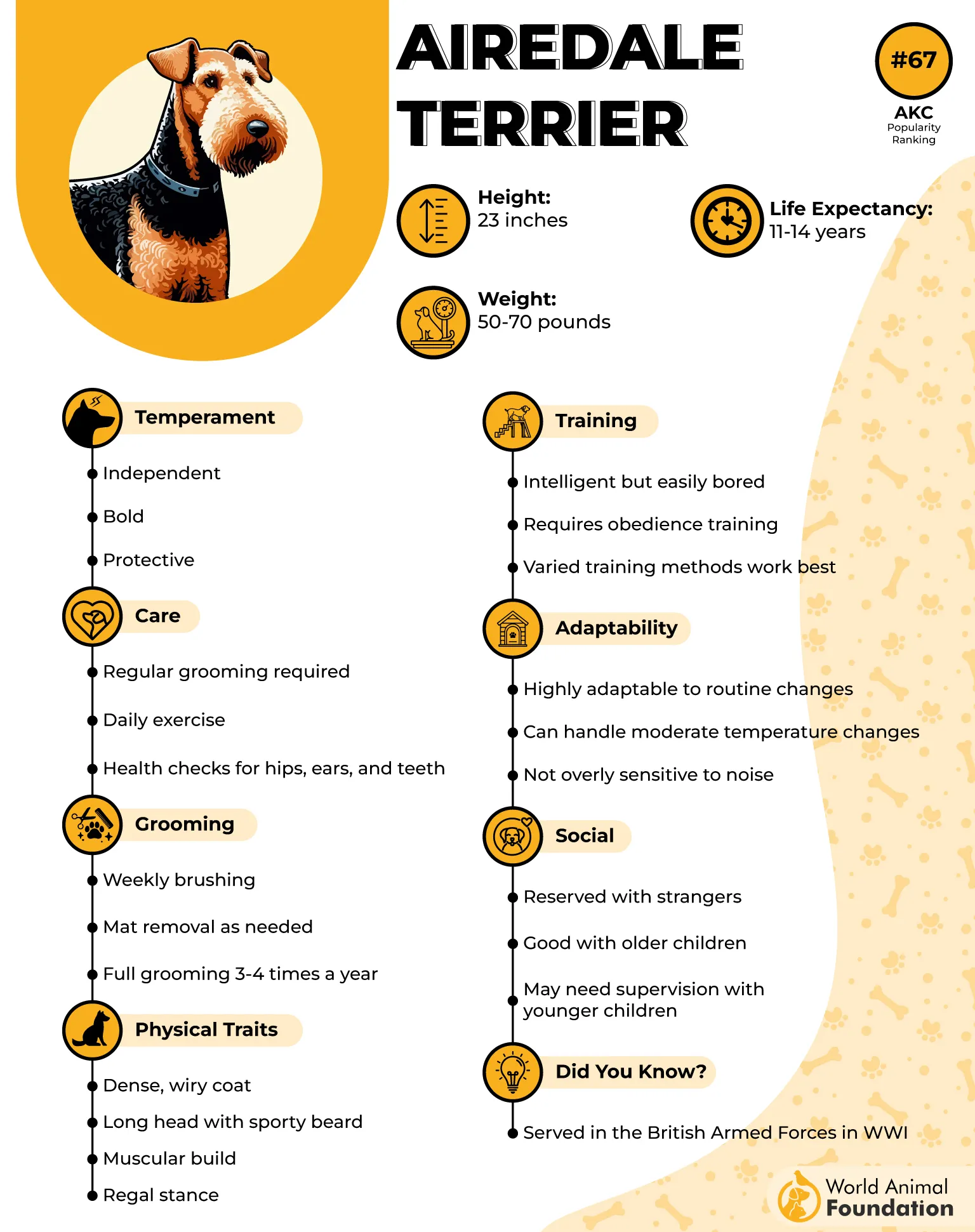
Airedales were originally bred to hunt otters, rats, and other small animals along riverbanks.
That terrier background means digging, chasing, and a strong prey instinct come standard.
Add in intelligence and stubbornness. And you have got a dog that needs consistent training from day one.
Airedales do okay with dogs they grow up with, but small pets and unfamiliar animals can trigger that terrier chase reflex, according to WebMD.
These are high-energy dogs that need walks, training, and enough mental stimulation to keep that clever brain from getting into trouble. Maybe take them to swimming; they are great water dogs.
Bored Airedales get creative. Not always in a good way.
6. Afghan Hound
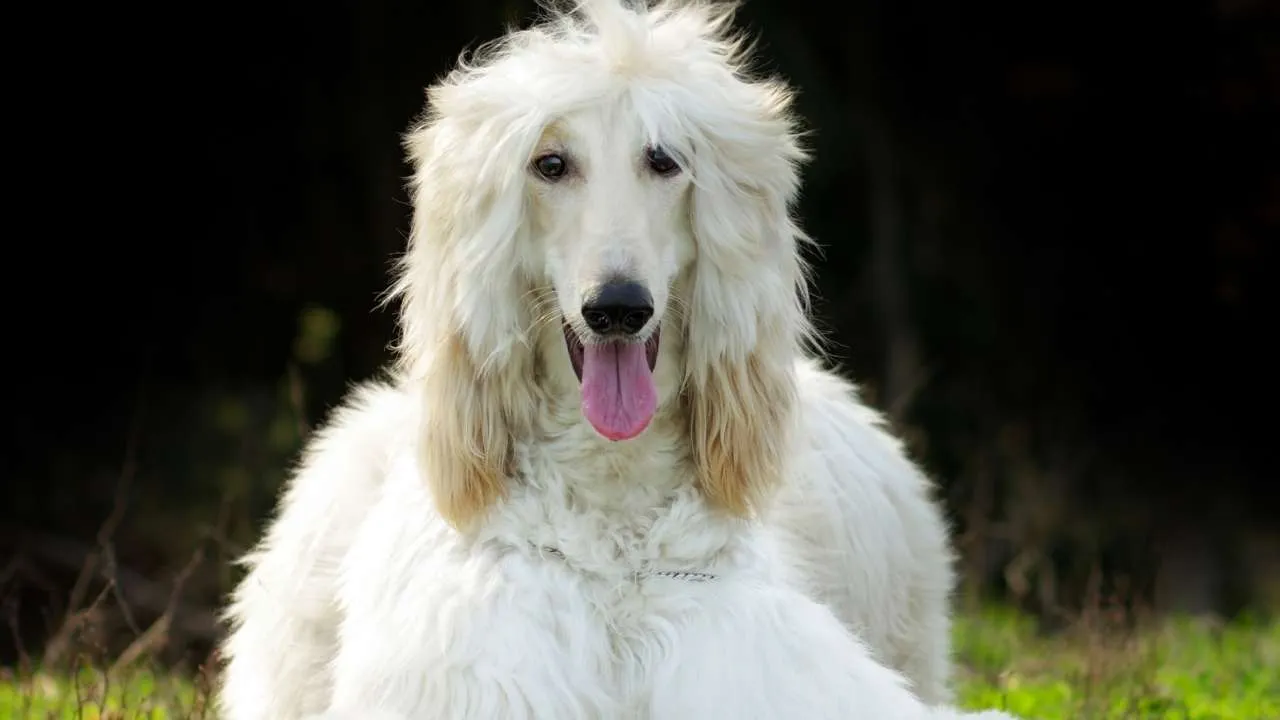
The Afghan Hound looks like it just walked off a runway.
Don’t let the glamour fool you.
Underneath all that silky hair is a sighthound with serious hunting skills.
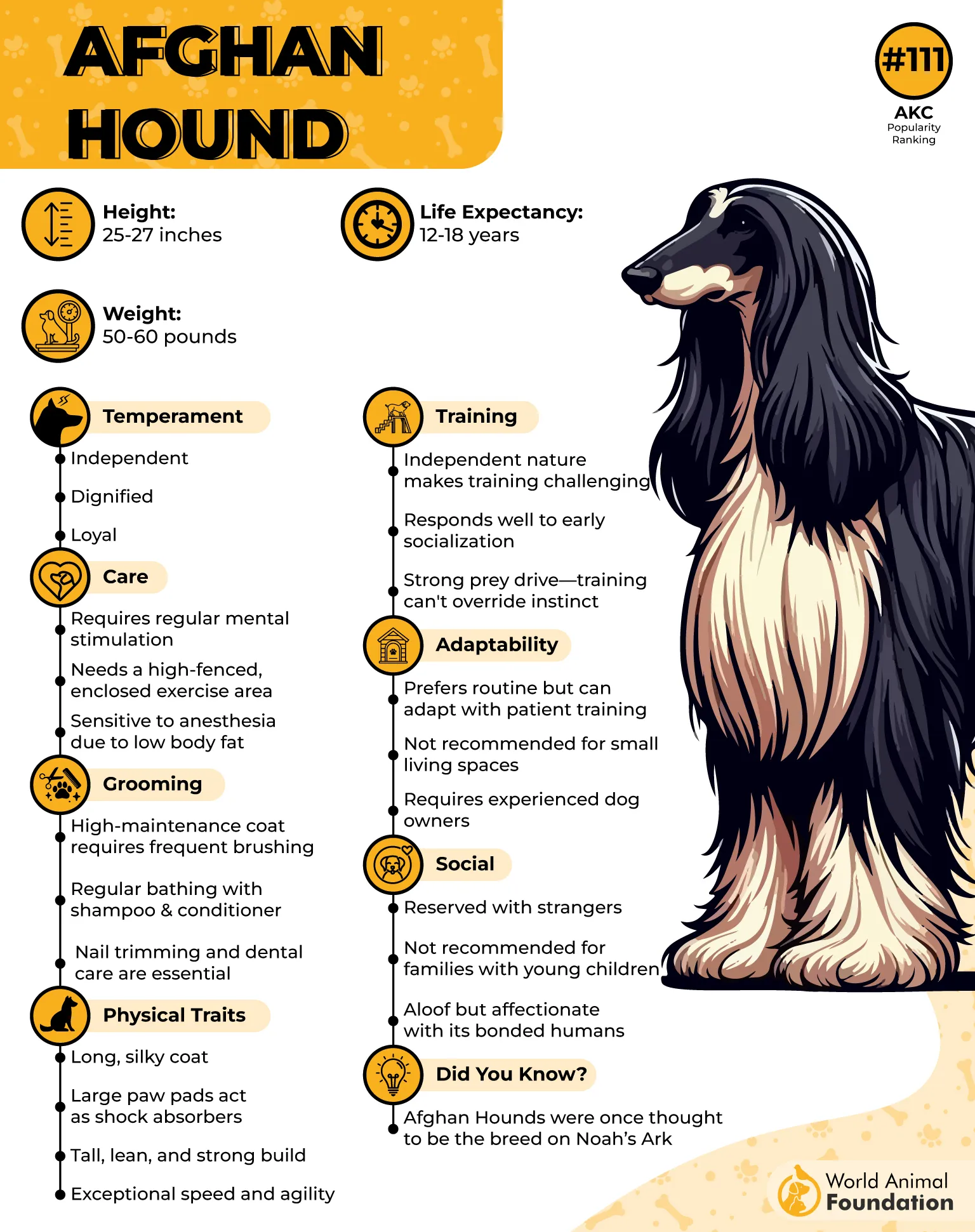
Afghan Hounds were bred in the mountains of Afghanistan to hunt fast game like hares and gazelles across rough terrain. That means incredible speed, sharp eyesight, and a strong instinct to chase anything that moves quickly.
These hound dogs can seem aloof and independent, almost cat-like in personality, but that prey drive is real. Walks should stay on a lead unless you are in a securely fenced area, because once an Afghan Hound catches signs or sights of something small and fast, recall becomes optional.
These dogs do best with pet parents who understand sighthound behavior and give them safe space to run.
7. Australian Cattle Dog
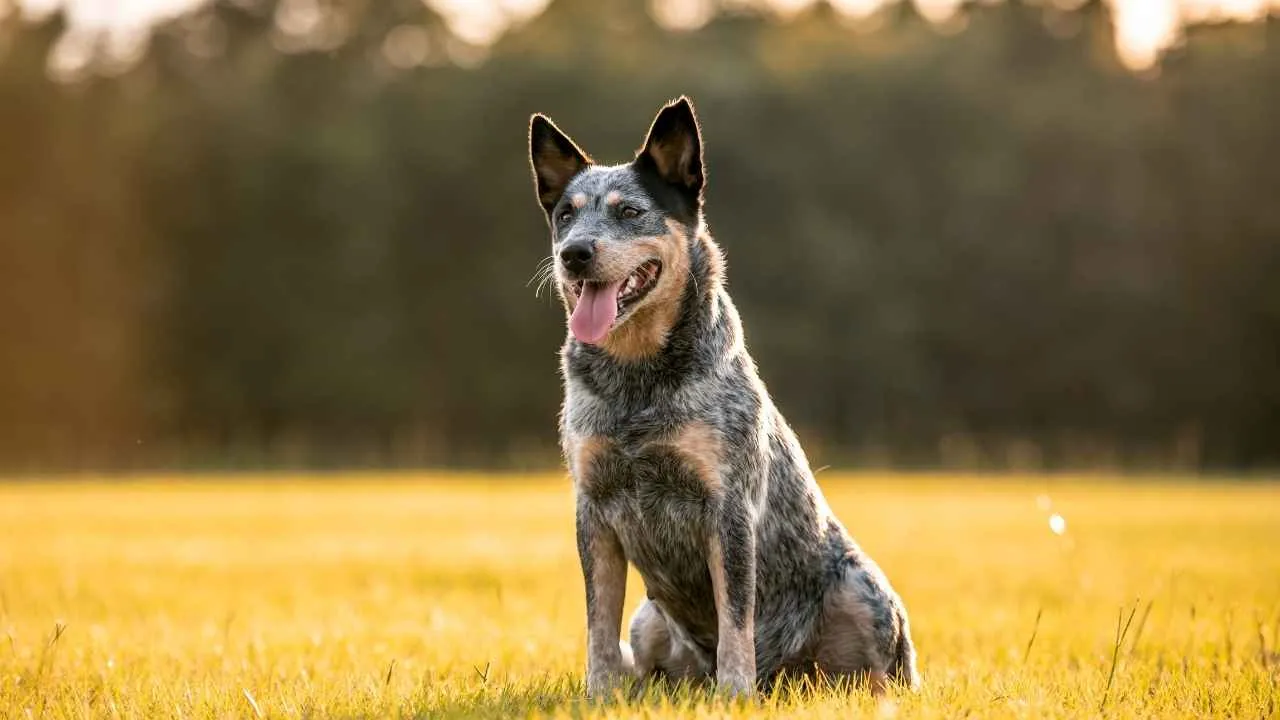
The Australian Cattle Dog was built for herding, not hunting.
But somewhere along the way, that herding instinct started looking a lot like a chase.
Bred to herd cattle across the Australian outback, this breed uses nipping, staring, and controlled movement to move animals.
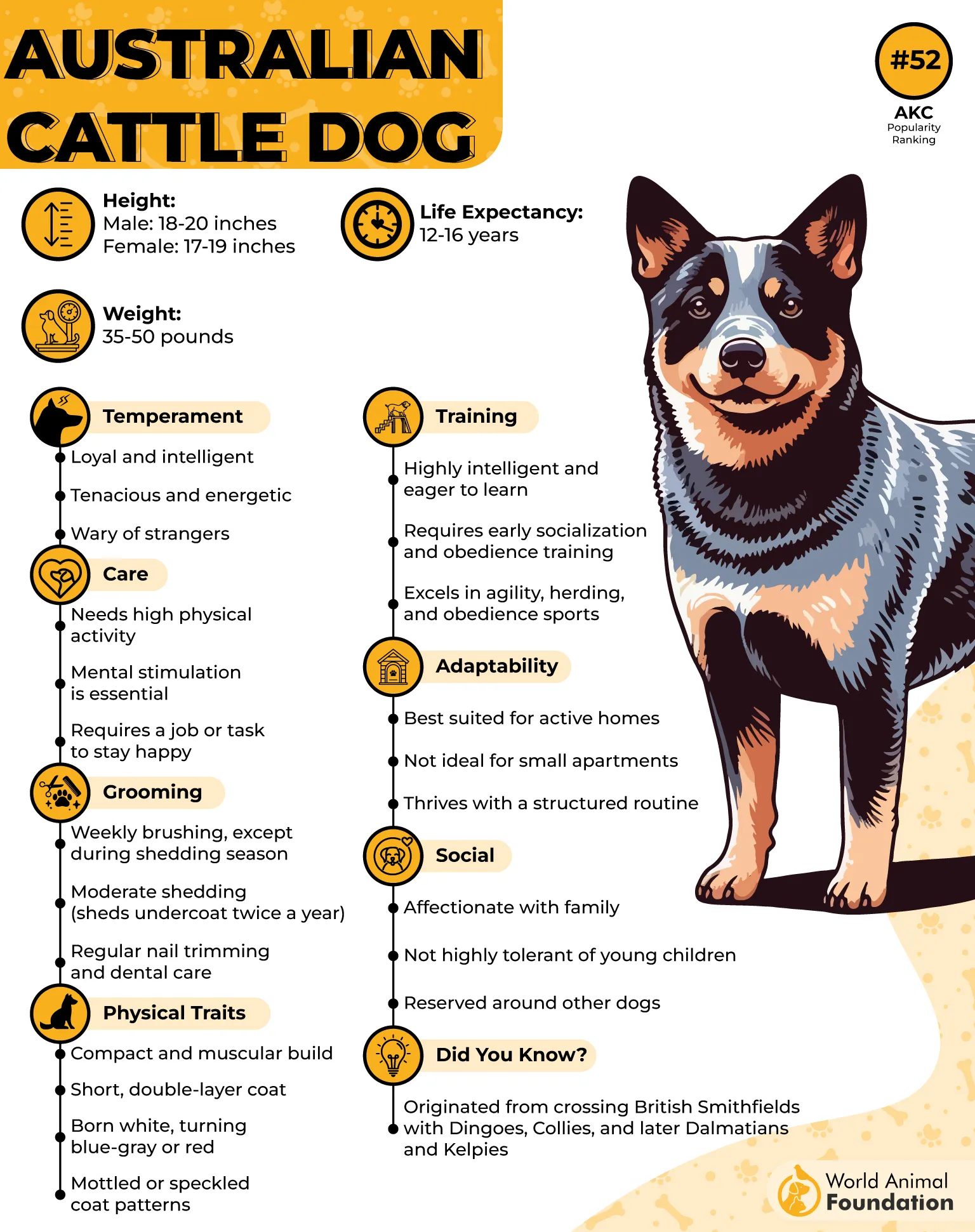
According to Greencross Vets, this dog’s prey drive is high. That herding drive sits right next to the prey drive, and in some dogs, the line blurs. Cattle dogs may chase joggers, bikes, cars, or smaller animals with the same intensity they’d use on livestock.
These are smart, high-energy dogs that need daily walks, real jobs, and plenty of mental stimulation. Bored Cattle dogs will find something to herd, chase, or nip.
Early training and boundaries help this breed channel that drive.
8. Saluki
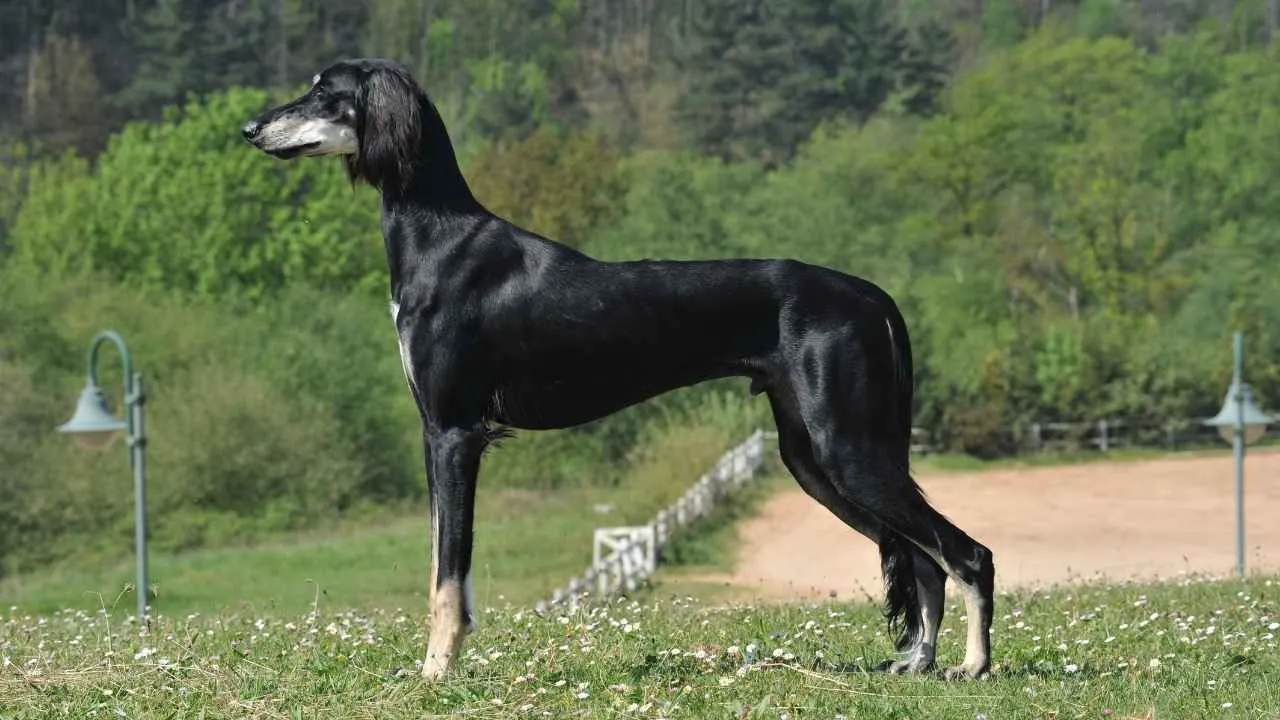
The Saluki is one of the oldest dog breeds in the world.
Ancient royalty basically kept them as hunting partners.
That history left a permanent mark on this breed’s instincts.
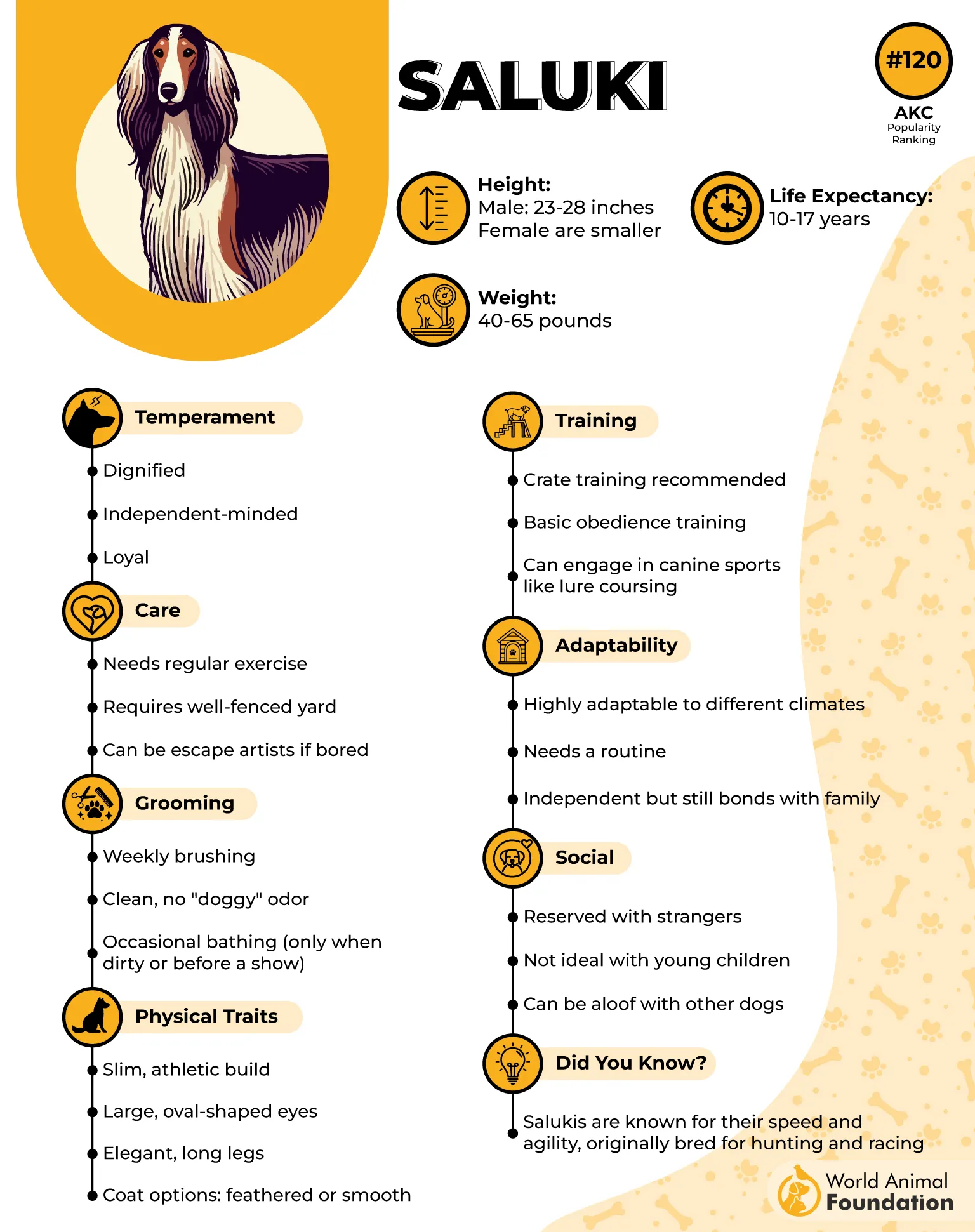
Salukis were bred in the Middle East to hunt gazelles and hares across open desert, relying on incredible speed and sharp sight.
As sighthounds, Salukis notice movement instantly, and once they see something small and fast, their chase instincts take over almost automatically.
At home, Salukis are gentle, quiet, and a little reserved. Outside, that ancient hunting drive shows up fast. Off-leash time needs to happen in securely fenced areas only.
Around cats and small pets, slow introductions and careful supervision go a long way, since this breed’s prey drive doesn’t fade with age or training alone.
9. German Shorthaired Pointer
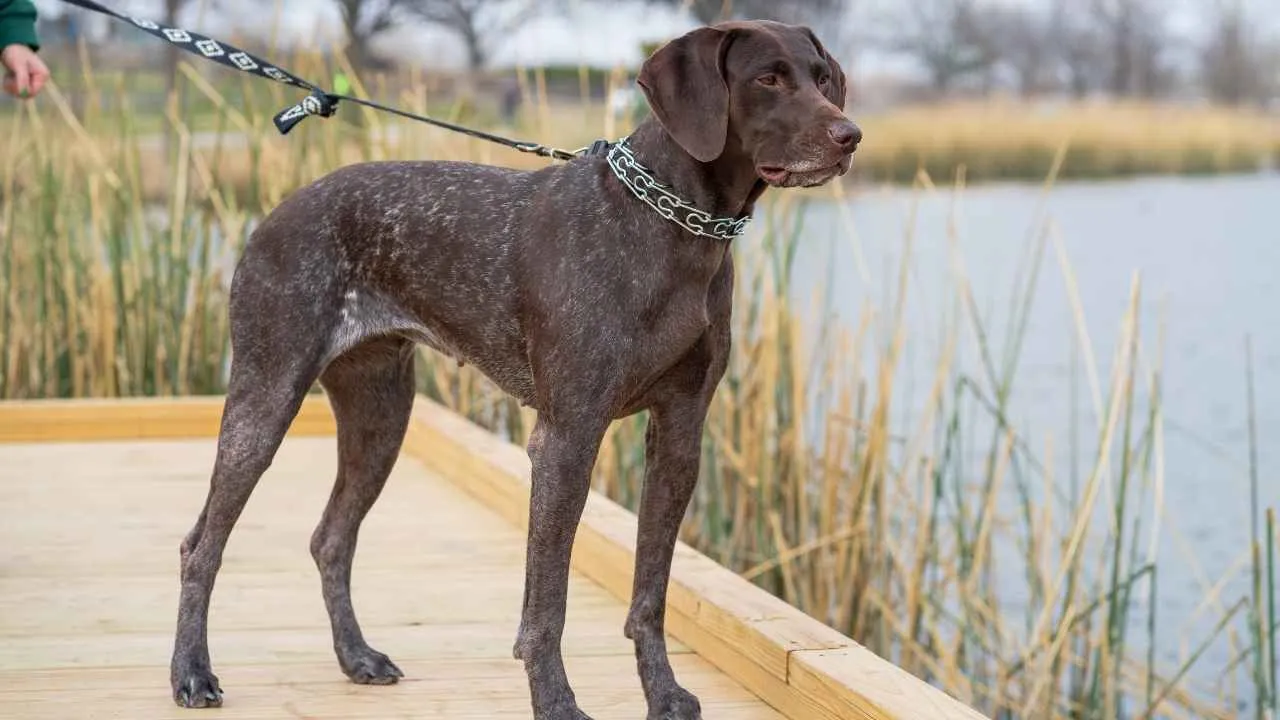
German Shorthaired Pointers were bred to do it all.
POINT. TRACK. RETRIEVE.
Basically, everything a hunter needs, wrapped into one athletic dog.
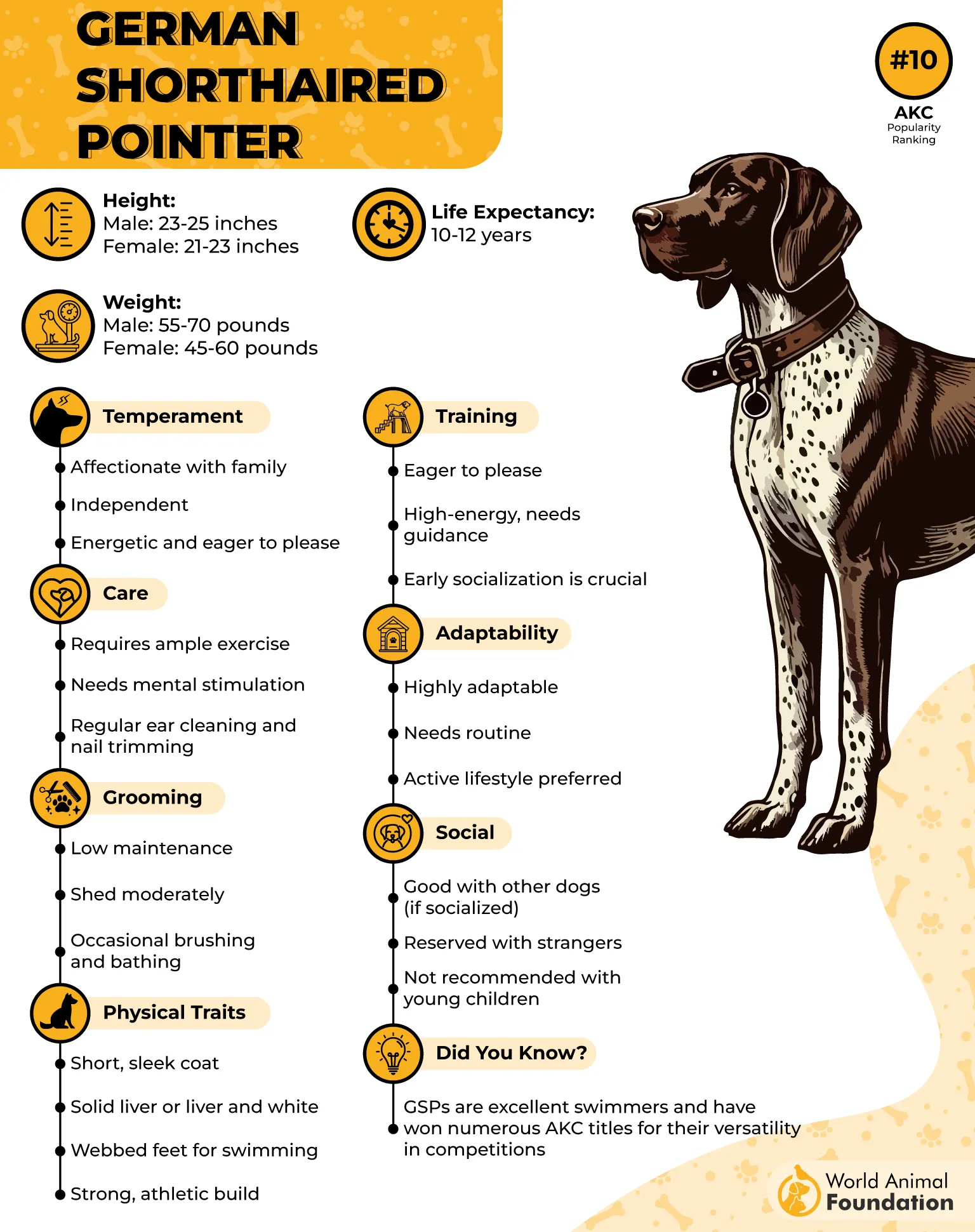
This breed’s prey drive is strong and purposeful. German Shorthaired Pointers were developed to locate birds, point at them, and retrieve after the shot.
That means an intense focus on birds, small animals, and fast movement, paired with real athleticism and stamina.
These pointer dogs are high-energy and need serious daily exercise, training, and outlets like hunting, agility, or long runs. Without enough mental stimulation, that drive turns into restlessness, digging, or chasing anything that moves… such as the family cat.
With the right training and lifestyle, German Shorthaired Pointers become loyal, focused companions who know when it’s time to hunt and when it’s time to relax.
Conclusion
High prey drive is NOT a flaw.
It’s history.
Thousands of years of breeding, instincts, and survival, all still living inside these dogs today.
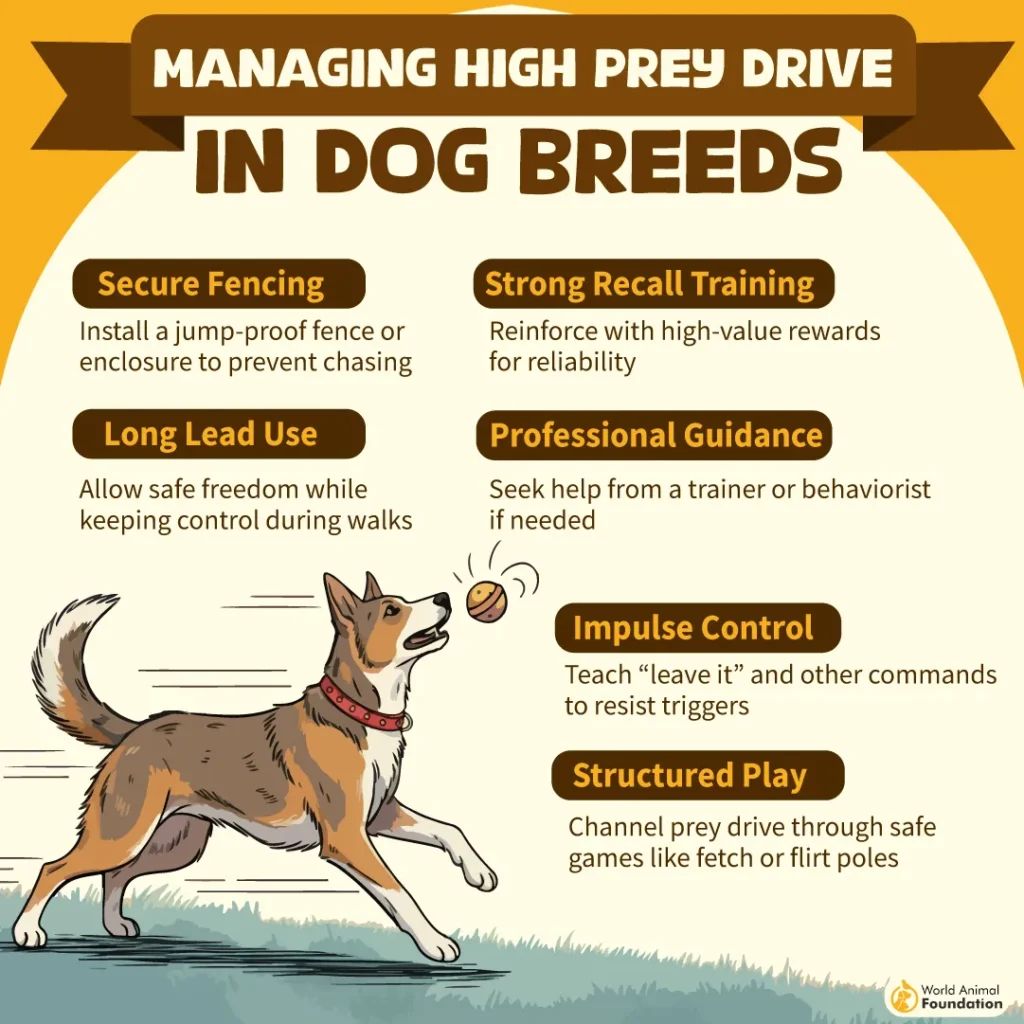
Understanding your dog’s prey drive helps you manage it. Secure fencing, aggression management, leashed walks, toys, human interactions, early socialization, food, and plenty of mental stimulation go a long way.
Many dogs learn to live peacefully with cats, small animals, and other pets.
Choose a breed that fits your life. Engage them. Train safely. Manage carefully around small animals. REMEMBER that instinct to chase a squirrel across the yard is not bad behavior. Their desire to react is natural and obvious.
It’s just a few thousand years of wolf still hanging around in there.
That’s a pretty wild thing to have curled up on your couch, if you ask us.
