




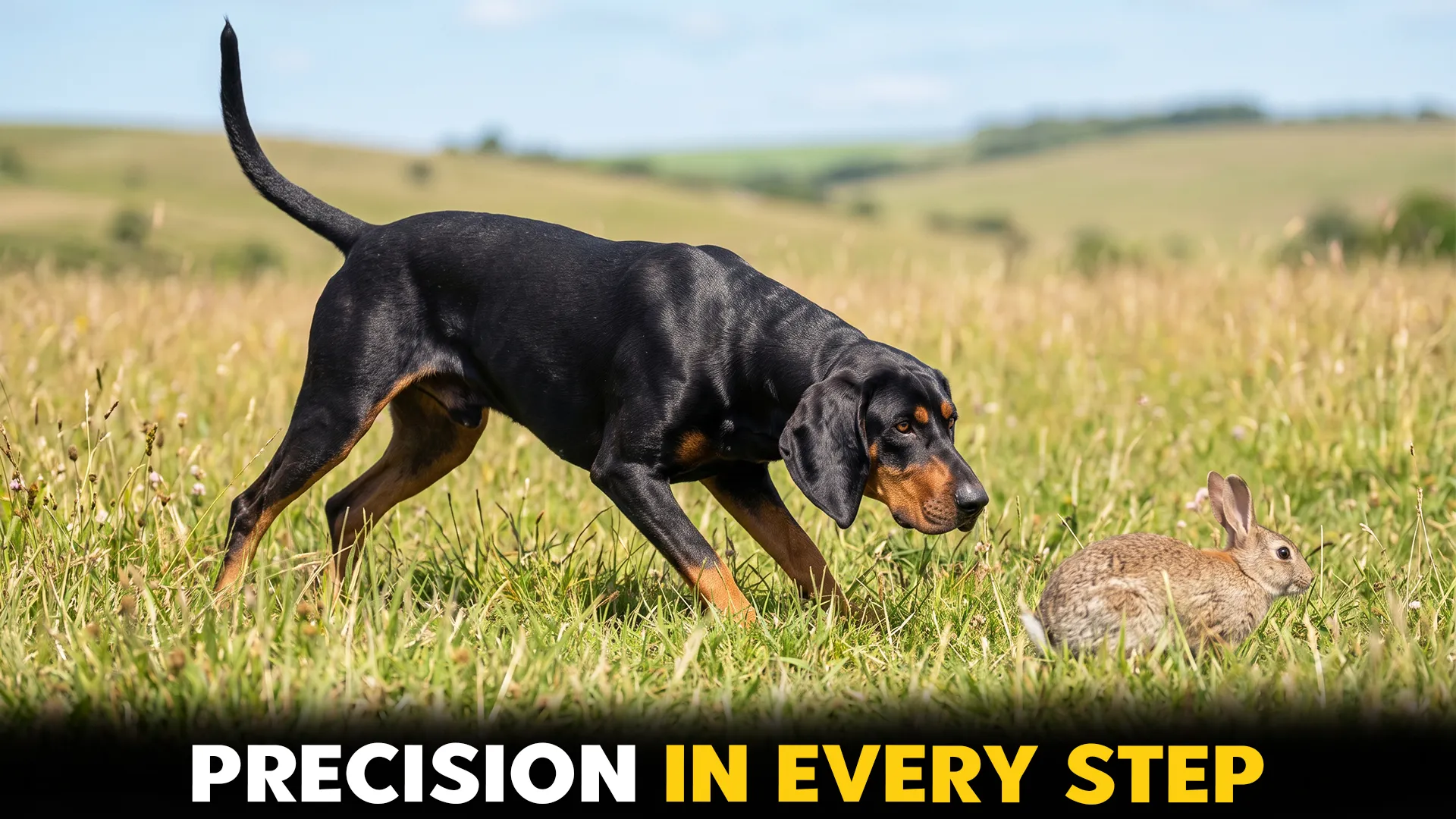
Long before modern hunting tools existed, dogs were helping people track, locate, and retrieve game. Their incredible noses, sharp eyesight, and instincts made them reliable hunting partners in forests, fields, mountains, and wetlands.
Even today, many hunting dogs continue to excel in the field while also thriving as loyal, affectionate family companions.
Certain dogs are experts at pointing out hidden game, some flush birds into the open, and others carefully retrieve game without damaging it. These specialized abilities are the result of generations of selective breeding combined with powerful instincts.
If you’re looking for the top hunting companions, you’ve come to the right place. In this guide, we’ll explore the breeds that stand out for their tracking ability, endurance, intelligence, and determination.
Key Takeaways
See why the American English Coonhound, American Foxhound, and Redbone Coonhound are elite scent trackers.
Compare the Black and Tan, Bluetick, and Treeing Walker Coonhound to find their unique hunting strengths.
Discover how the Basset Hound pairs an incredible nose with a calm, family-friendly nature.
Find the hunting breed that best fits your lifestyle and experience.
Top Hunting Dog Breeds Skilled in Prey Tracking
1. American English Coonhound
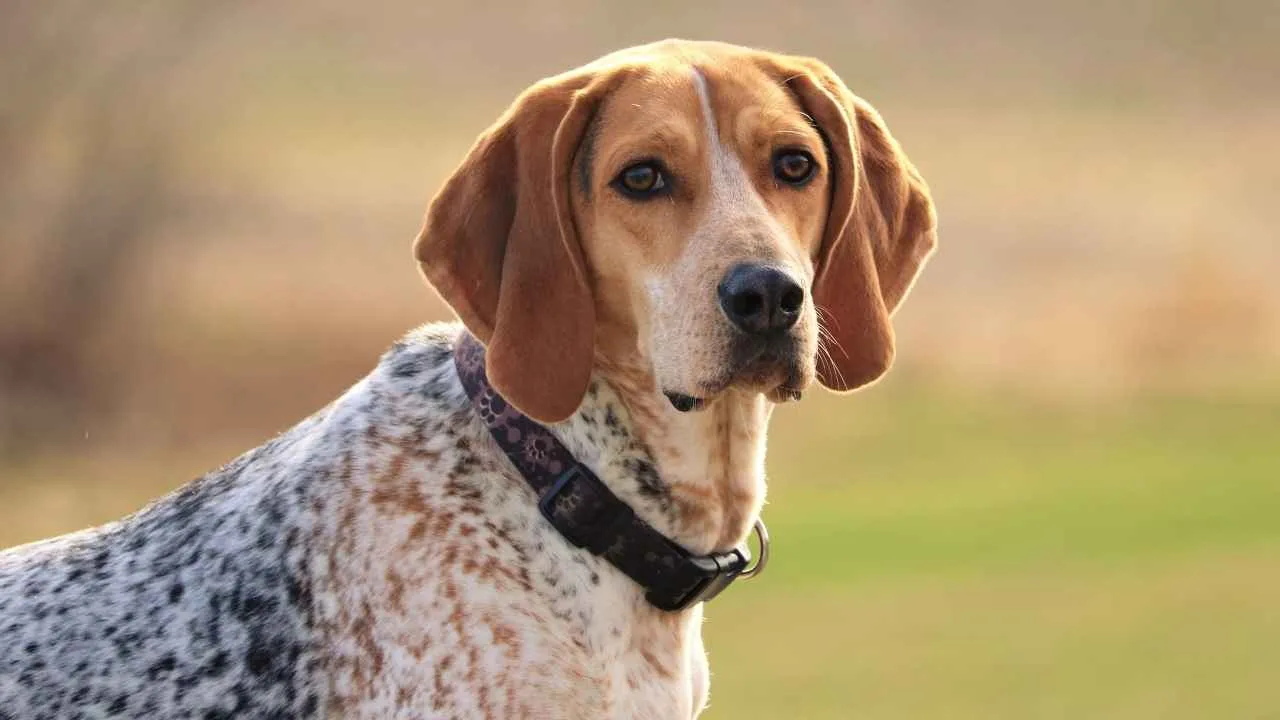
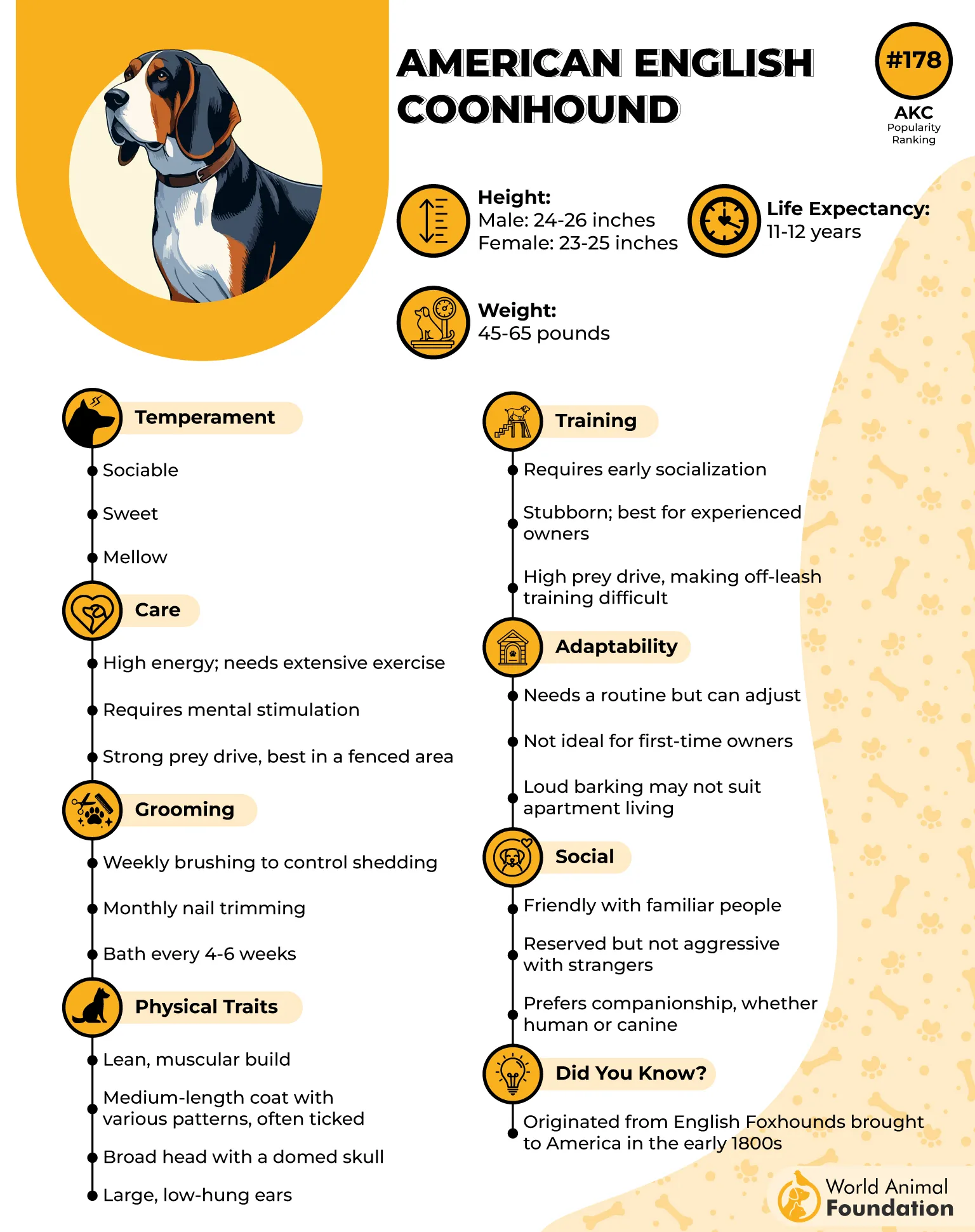
American English Coonhounds are among the top hunting dog breeds skilled in prey tracking. Originally developed in the United States from English hunting dogs, they were bred to track and tree raccoons before alerting hunters with their loud, distinctive bark.
Their excellent sense of smell, speed, and endurance also make them reliable trackers for other game across challenging terrain.
Why They Stand Out as Hunting Dogs
These dogs are energetic, determined, and always ready to follow an interesting scent. They excel at long tracking sessions and can stay focused for hours without giving up.
Their athletic build, strong hunting instincts, and ability to work independently make them valuable partners in the field. They also enjoy activities like scent work, field trials, hiking, and other outdoor adventures that keep their minds and bodies active.

Temperament and Care
American English Coonhounds are friendly, affectionate, and loyal to their families. They usually get along well with children, strangers, and other dogs when properly socialized. However, their strong prey drive means they should stay on a leash or inside a secure fenced yard when outdoors.
They have short, easy-care coats that need weekly brushing, along with regular ear cleaning, nail trimming, and daily exercise to stay happy and well-behaved.
2. American Foxhound
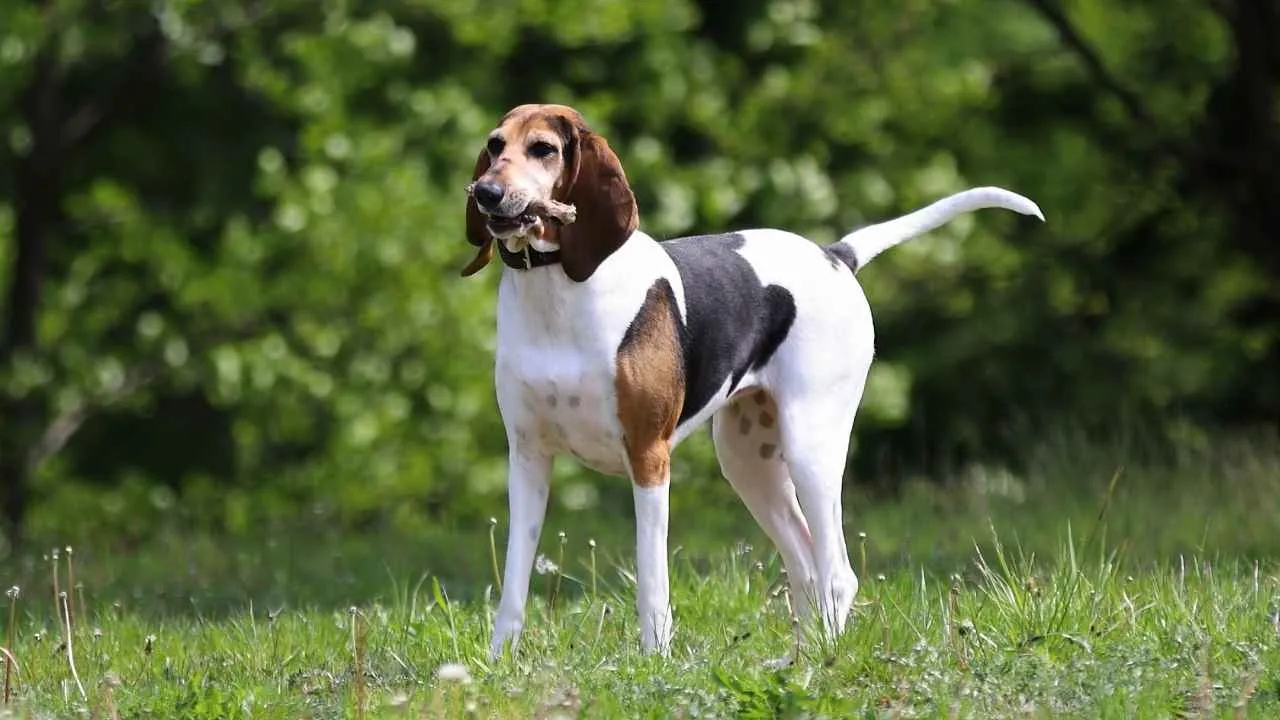
American Foxhounds were developed in the United States to hunt foxes across long distances. Their history dates back to the colonial era, and the breed was refined using English and French hunting hounds.
Known for their exceptional sense of smell, endurance, and determination, these dogs are skilled at following scent trails over challenging terrain and can work for hours without tiring.
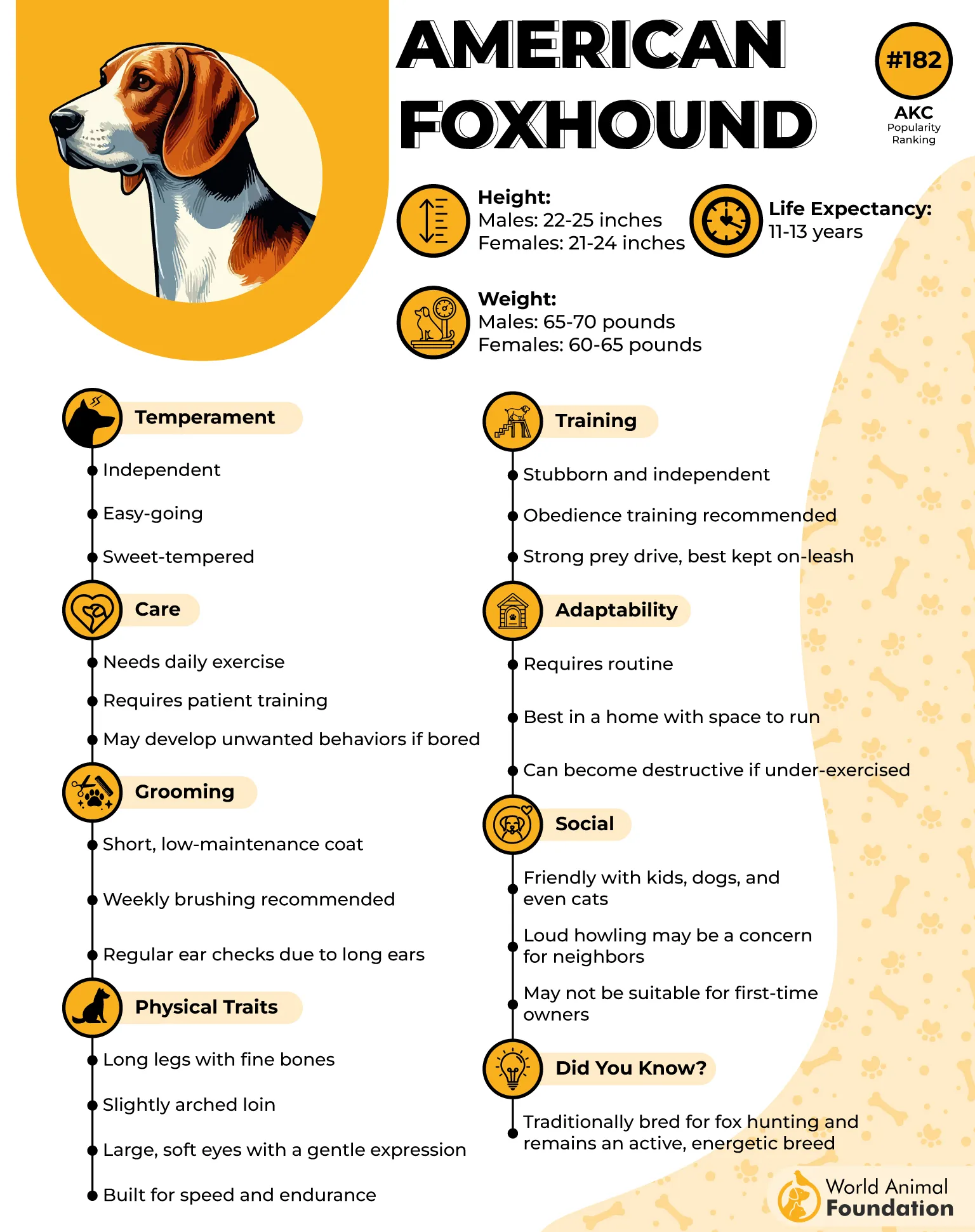
Why They Stand Out as Hunting Dogs
These hounds are intelligent, independent, and built for tracking small game at a steady pace. Their powerful noses, athletic ability, and natural drive make them excellent scent trackers in the field.
They also enjoy activities like tracking, hiking, jogging, lure coursing, and obedience training, which help satisfy both their physical and mental needs. Their loud, deep bay is another trademark, helping hunters know they are on the right trail.
Temperament and Care
American Foxhounds are sweet, easygoing, and loyal companions that usually get along well with people and other dogs. However, their strong prey drive means they should always be kept on a leash or inside a secure fenced area when outdoors, according to PetMD.
They have short, low-maintenance coats that only need weekly brushing. These high-energy dogs also require plenty of daily exercise, proper training with positive reinforcement, and early socialization to become well-mannered companions.
3. Redbone Coonhound
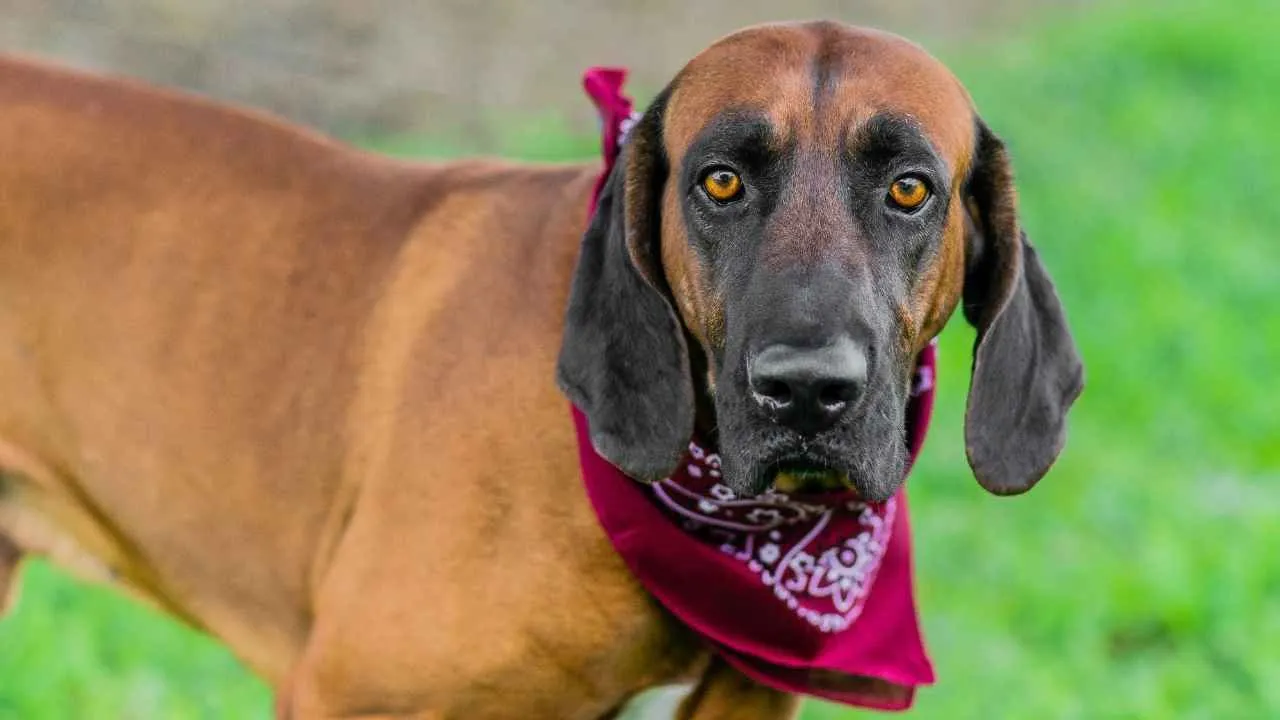
Redbone Coonhounds were developed in the United States for tracking and treeing raccoons and other game. Descended from Scottish and Irish hunting dogs, they were carefully bred to become fast, determined hunters with their signature solid red coats.
Their powerful noses, excellent scent tracking ability, and strong treeing instincts have made them trusted hunting partners for generations.
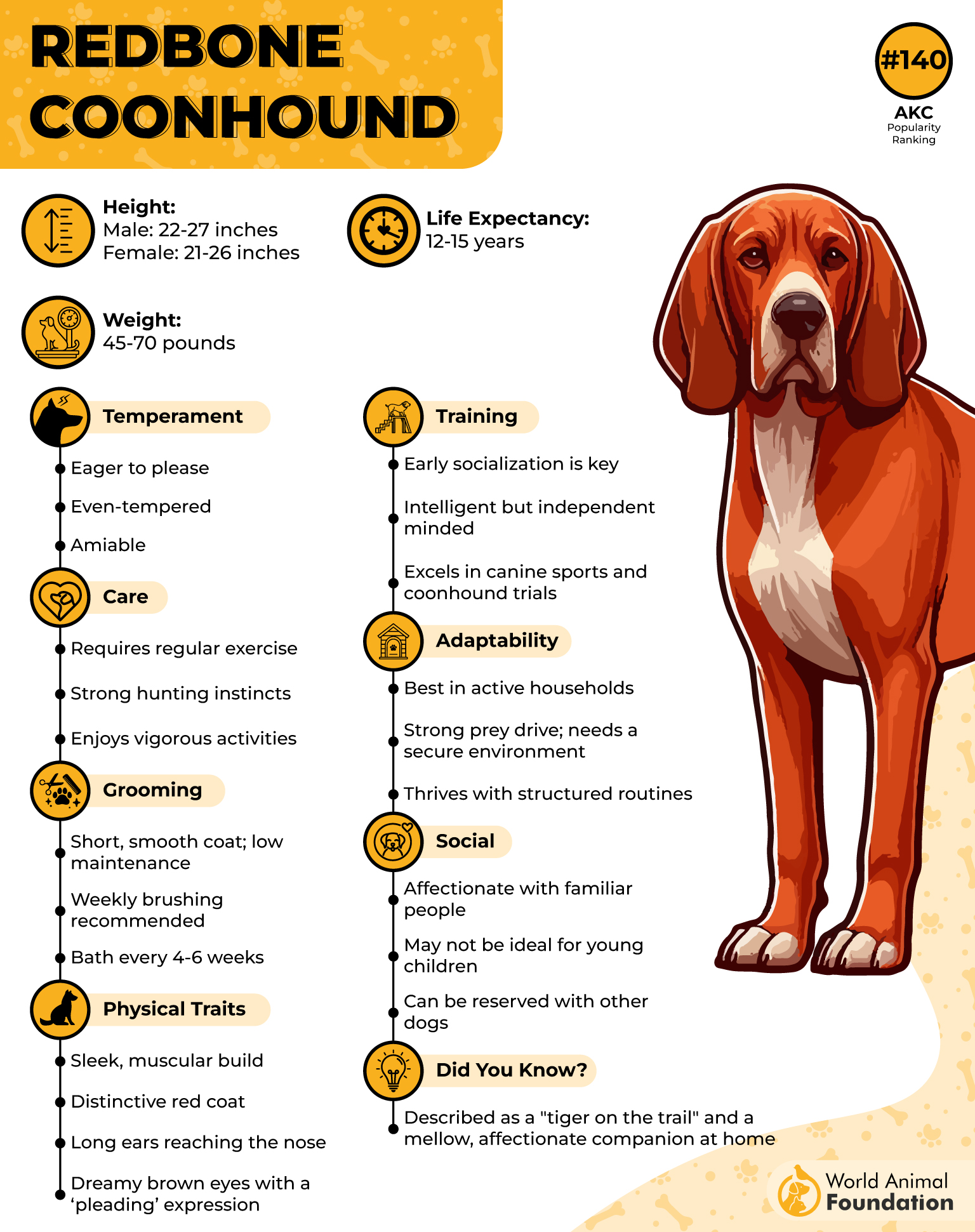
Why They Stand Out as Hunting Dogs
These hounds are energetic, intelligent, and highly focused once they pick up a scent. They can track game over long distances and stay with the trail until the hunt is complete.
Their loud, deep bay helps hunters locate them in the field, while their stamina and determination allow them to work for hours. They also enjoy activities like scent walks, swimming, and long hikes that keep their hunting instincts sharp.
Temperament and Care
Redbone Coonhounds are affectionate, friendly, and fun-loving dogs that fit well into active families. They are calm and easygoing at home but need plenty of daily exercise and mental stimulation to prevent boredom.
Their short coats are easy to maintain with weekly brushing and regular ear cleaning. Because of their strong prey drive, they should always be kept on a leash or inside a secure fenced area when outdoors, along with early training and socialization.
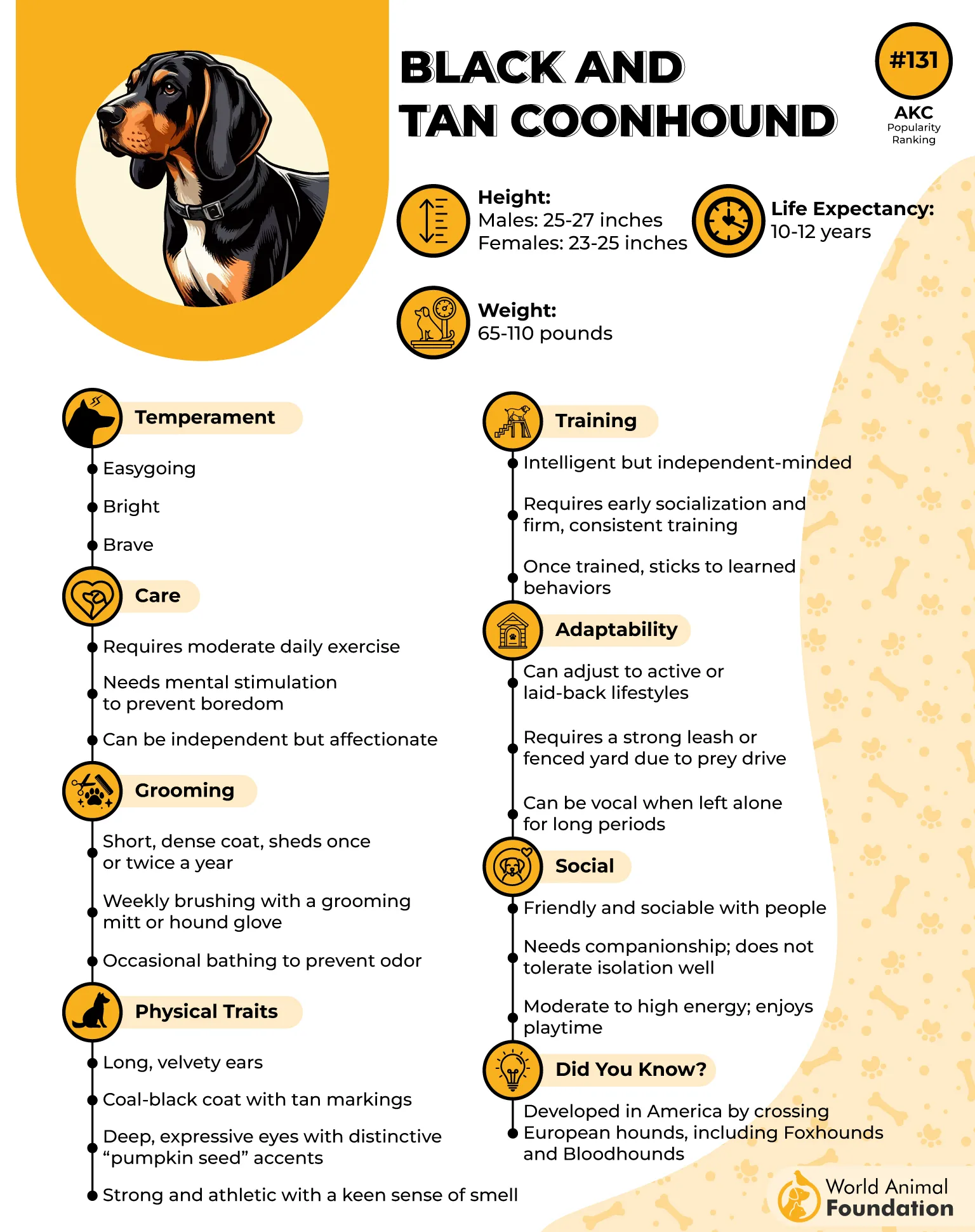
4. Black and Tan Coonhound
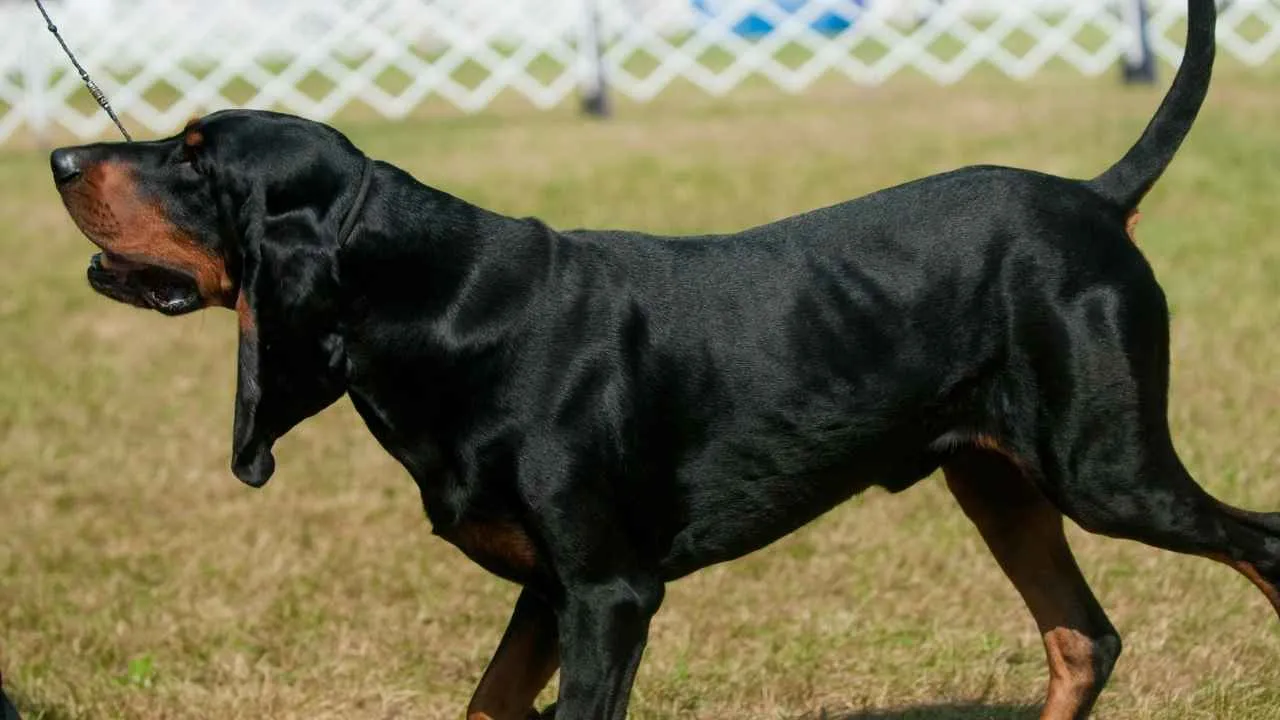
Black and Tan Coonhounds were developed in the southern United States by crossing Bloodhounds with Virginia Foxhounds, as per VCA Animal Hospitals. Bred to track raccoons, they also proved skilled at hunting larger game such as bears, deer, and mountain lions.
Their outstanding sense of smell, strong trailing ability, and determination allow them to follow scent trails over long distances with confidence.
Why They Stand Out as Hunting Dogs
These hounds are intelligent, hardworking, and built to cover plenty of ground. They trail with their noses close to the ground and use their deep, distinctive bay to let hunters know they have found their target.
Their patience, endurance, and ability to stay focused on a scent make them excellent tracking dogs. They also enjoy scent work, tracking, hiking, agility, and other outdoor activities that challenge both their minds and bodies.
Temperament and Care
Black and Tan Coonhounds are loyal, friendly, and calm indoors, but their hunting instincts quickly take over outside. Their independent nature means they respond best to patient, reward-based training and early socialization.
Because they have a strong prey drive, they should always be kept on a leash or inside a secure fenced area. Their short coats are easy to maintain with weekly brushing, while regular ear cleaning and plenty of daily exercise help keep them happy and active.
5. Bluetick Coonhound
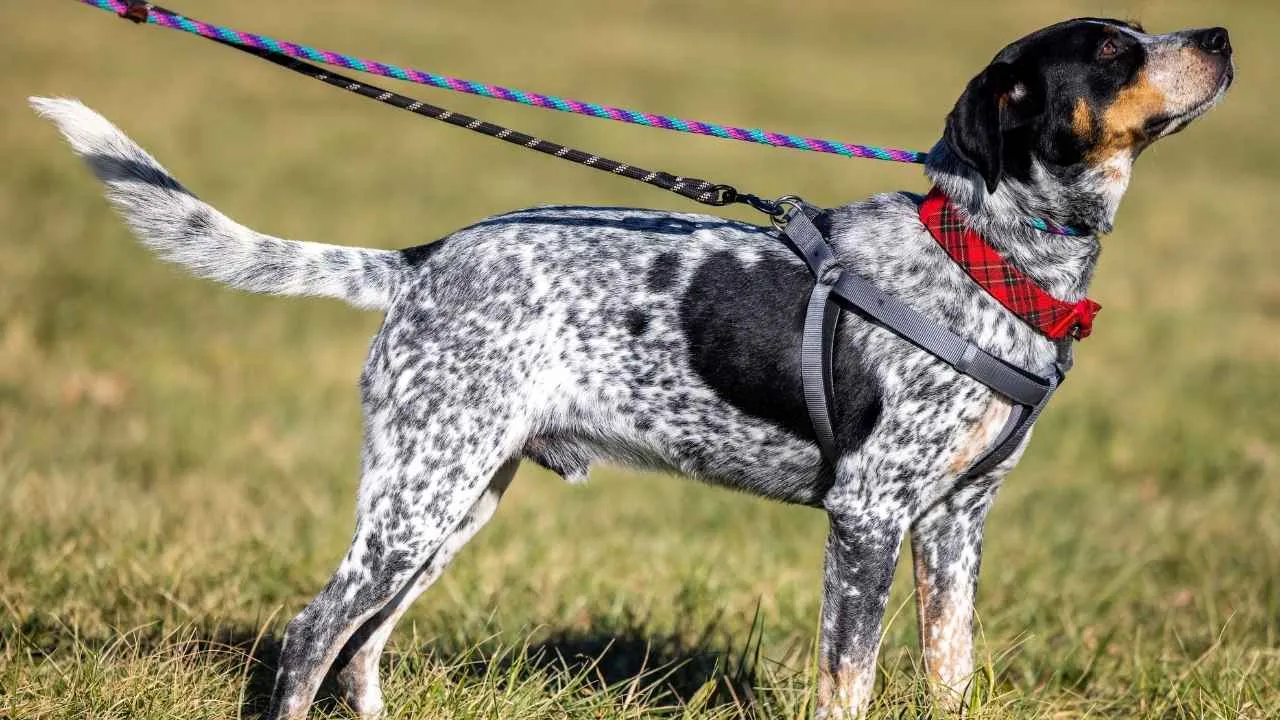
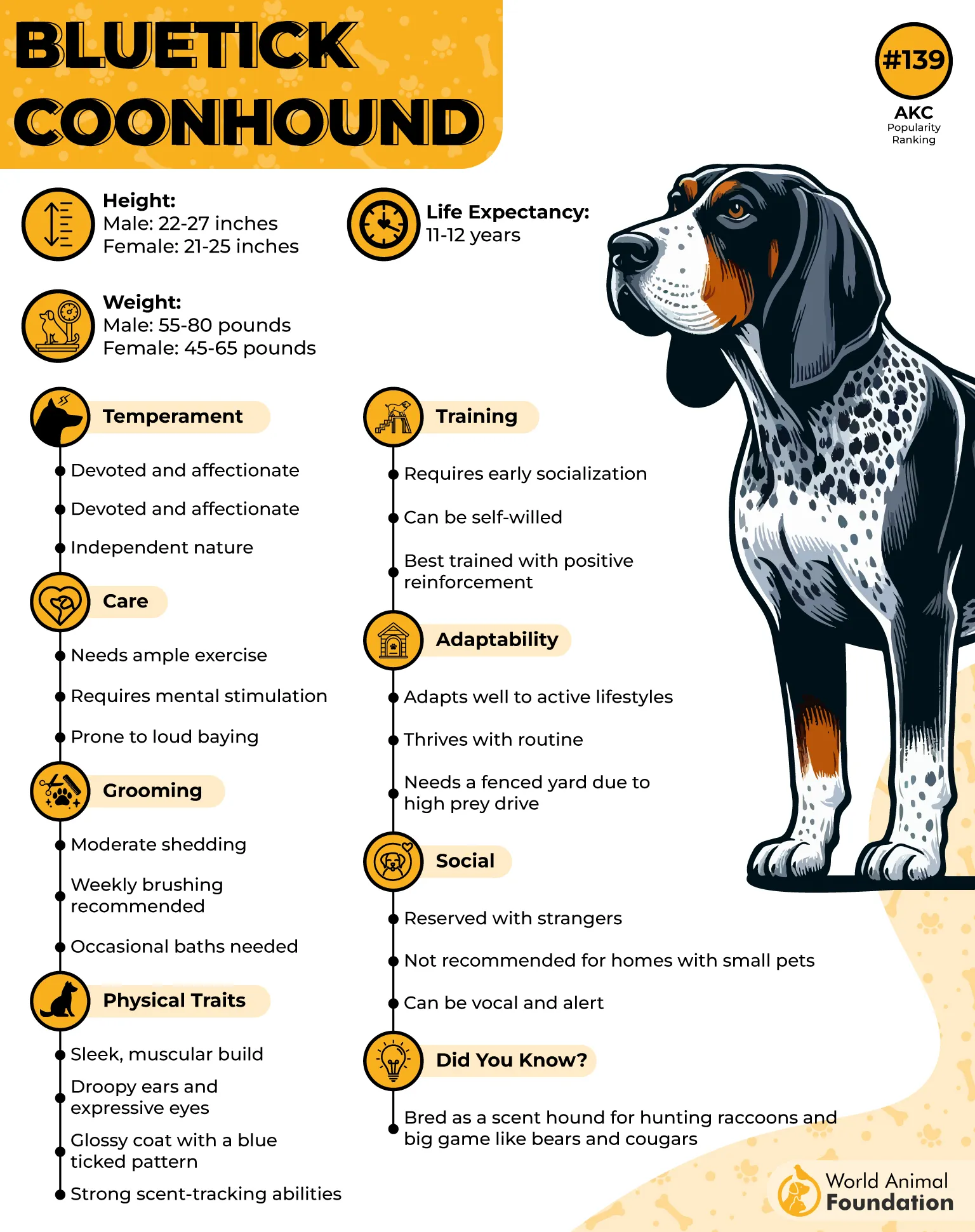
Bluetick Coonhounds were developed in the United States from French hunting hounds, English Foxhounds, and other scent hounds. Originally bred to track raccoons and larger game, they are known for their outstanding noses, stamina, and determination.
Why They Stand Out as Hunting Dogs
These hounds are athletic, intelligent, and happiest when they have a job to do. They excel at tracking game through forests and rough terrain, using their powerful sense of smell and distinctive bay to communicate with hunters.
Their endurance allows them to work for long hours, while activities like scent work, tracking, hiking, agility, and field trials help satisfy their natural hunting instincts.
Temperament and Care
Bluetick Coonhounds are affectionate, loyal, and devoted to their families, but they need plenty of daily exercise and mental stimulation to stay content. Their strong prey drive means they should always be kept on a leash or inside a secure fenced area when outdoors.
They respond well to consistent, positive training and early socialization, although their independent nature may require patience. Their short coats are easy to maintain with weekly brushing, along with regular ear cleaning and routine grooming.
6. Basset Hound
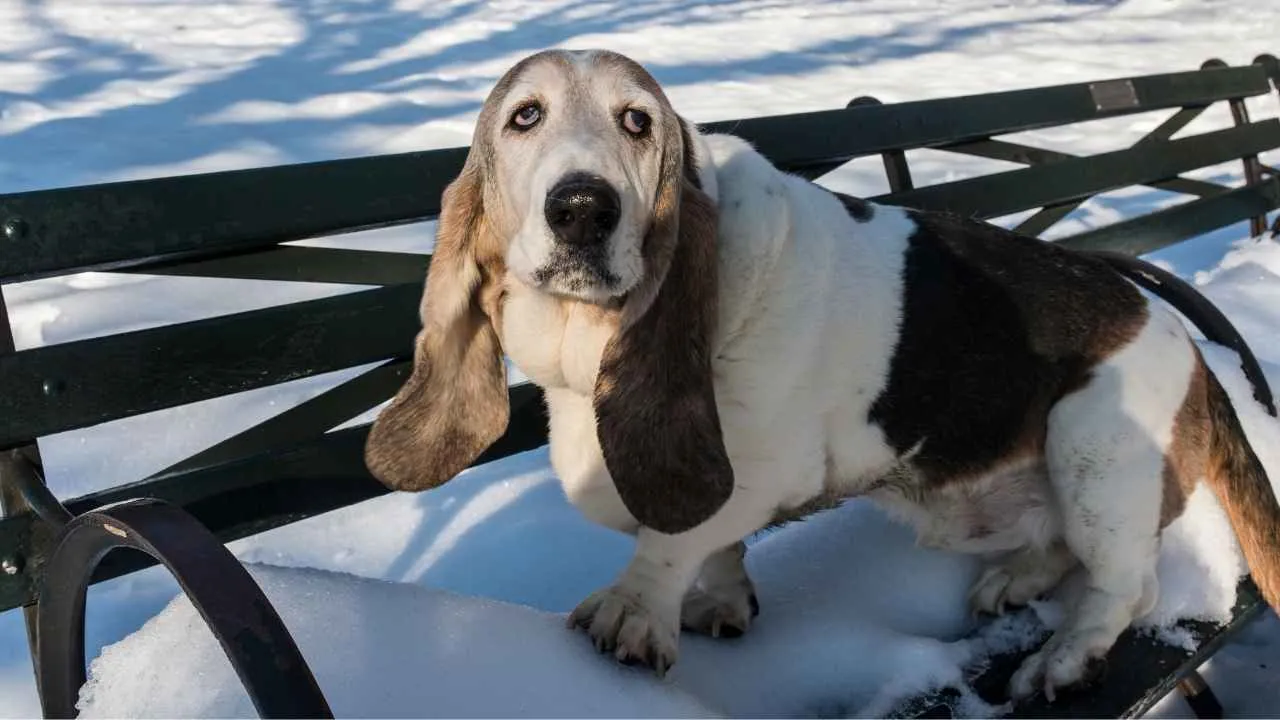
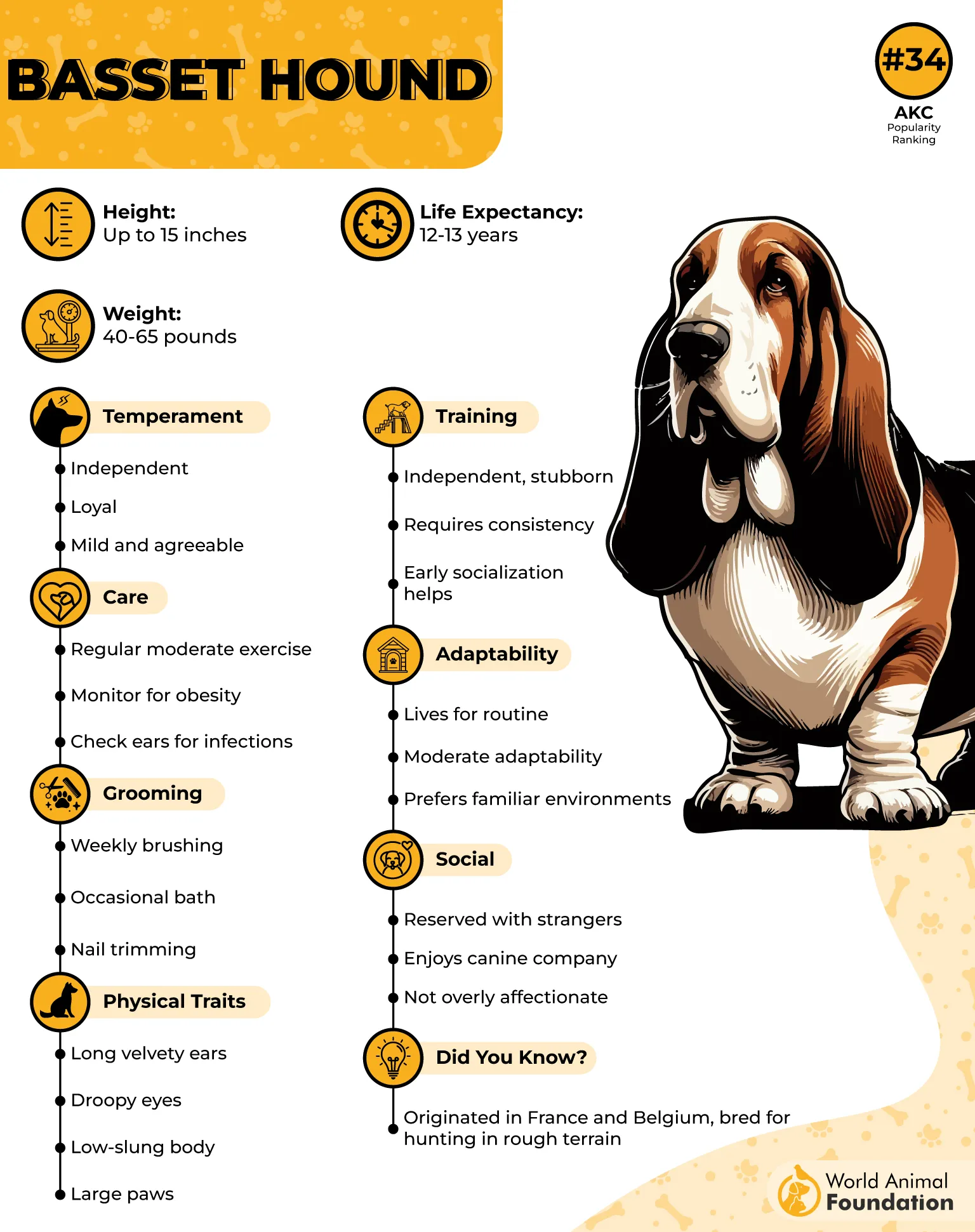
Basset Hounds were originally developed in France to hunt rabbits and hares. Their short legs and low-set bodies allow them to follow scent trails close to the ground with remarkable accuracy.
In fact, according to the AKC, they have one of the strongest noses among all dog breeds, second only to the Bloodhound.
Their patience and determination make them excellent scent trackers, even though they move at a slower pace than many other hunting dogs.
Why They Stand Out as Hunting Dogs
These hounds are independent and built for endurance rather than speed. Once they pick up a scent, they stay focused and can follow it without getting distracted. Their loud, deep bay helps hunters locate them while they work.
Today, they continue to excel in nose work and scent-based activities, proving that their natural tracking instincts remain as strong as ever.
Temperament and Care
Basset Hounds are calm, affectionate, and friendly companions that usually get along well with children, other dogs, and family life. Although they have a relaxed nature, they still need daily walks and scent-based activities to stay healthy and mentally engaged.
Their short coats are easy to maintain with regular brushing, but their long ears require frequent cleaning to help prevent infections. Because of their strong noses, they should be kept on a leash or inside a secure fenced area when outdoors.
7. Treeing Walker Coonhound
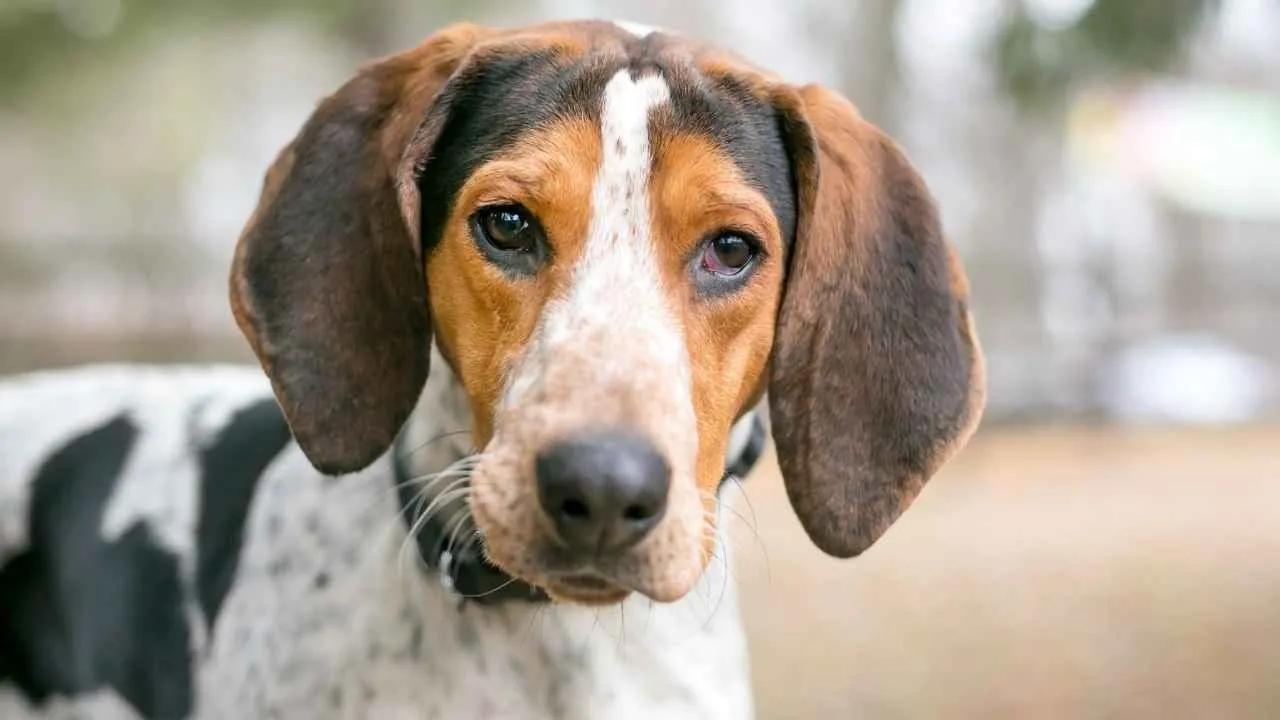
Treeing Walker Coonhounds were developed in the United States to track and tree raccoons, making them one of the most accomplished coon hunting breeds.
Descended from English Foxhounds and refined by early American breeders, these athletic dogs are prized for their speed, endurance, and exceptional scenting ability. Once they locate prey, they chase it up a tree and announce its location with their distinctive, ringing bay until the hunter arrives.
Why They Stand Out as Hunting Dogs
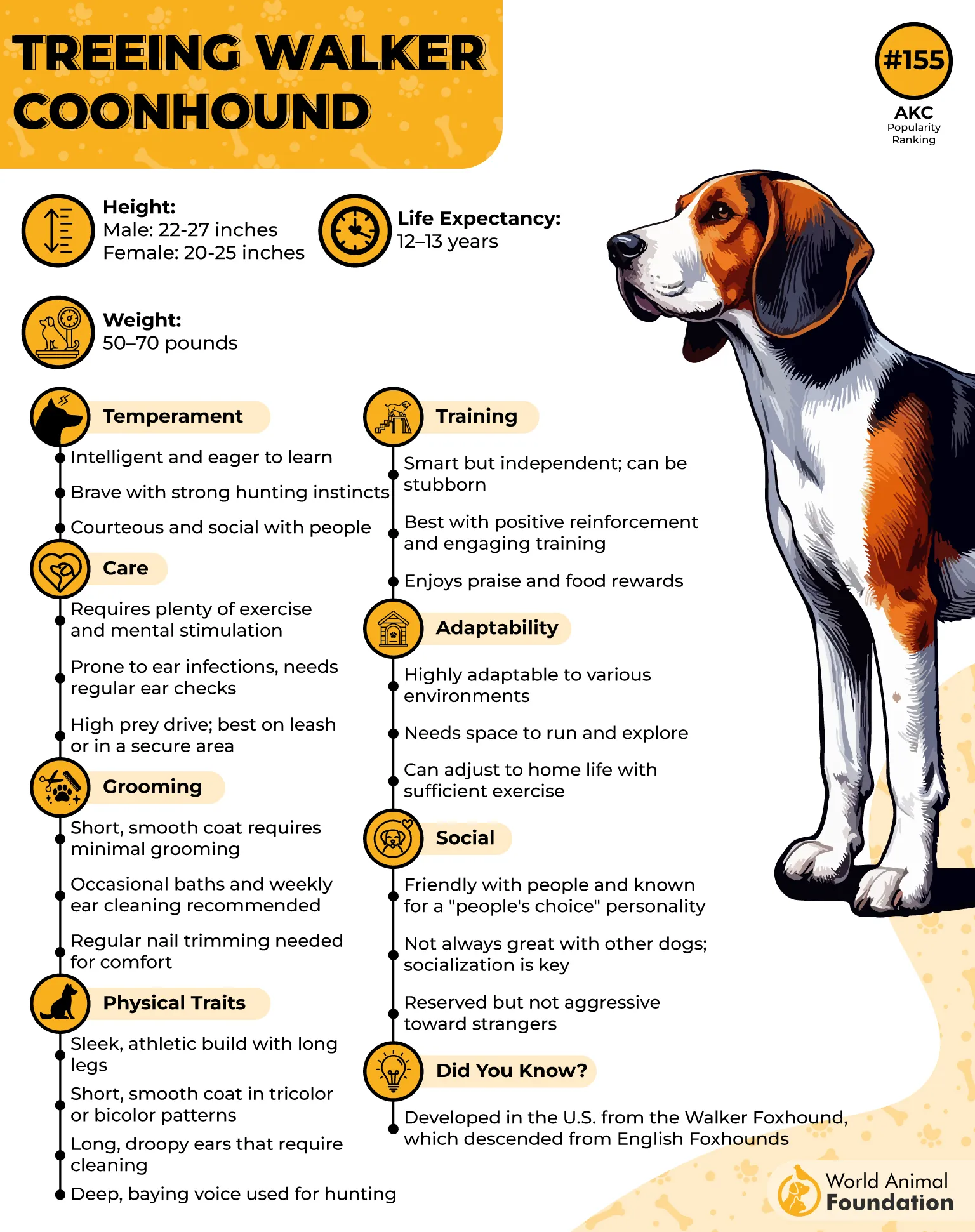
Treeing Walker Coonhounds combine remarkable speed with a powerful nose, allowing them to cover long distances while following even challenging scent trails. Their determination, stamina, and ability to accurately tree game have made them a favorite in raccoon hunting competitions.
Intelligent and highly driven, they excel in tracking, field trials, nose work, and other scent-based activities that challenge both their minds and bodies.
Temperament and Care
Treeing Walker Coonhounds are affectionate, friendly, and people-oriented dogs that form strong bonds with their families. They generally get along well with children and other dogs when properly socialized, though their high prey drive means they may not be suitable around small animals.
This energetic breed requires at least one to two hours of daily physical activity, along with plenty of mental stimulation to prevent boredom and excessive barking.
Their short coat is easy to maintain with weekly brushing, while their long, floppy ears should be cleaned regularly to reduce the risk of ear infections.
Conclusion
Whether you’re looking for a skilled hunting partner or an active, loyal companion, these hound breeds bring something unique to the table. Understanding each breed’s temperament, exercise needs, and care requirements is the key to finding the right fit for your lifestyle.
Before bringing one of these dogs home, take the time to consider how much activity, training, and mental stimulation you can provide.
Choosing a breed that matches your experience and daily routine will help ensure a happy, healthy relationship, allowing both you and your dog to thrive together for years to come.
Looking for more hunting dog breeds that also make great family dogs? You can also check out the Labrador Retriever, Chesapeake Bay Retriever, German Shorthaired Pointer, Irish Setter, Golden Retriever, English Springer Spaniel, Irish Wolfhound, English Setter, Beagle, and English Pointer.
