




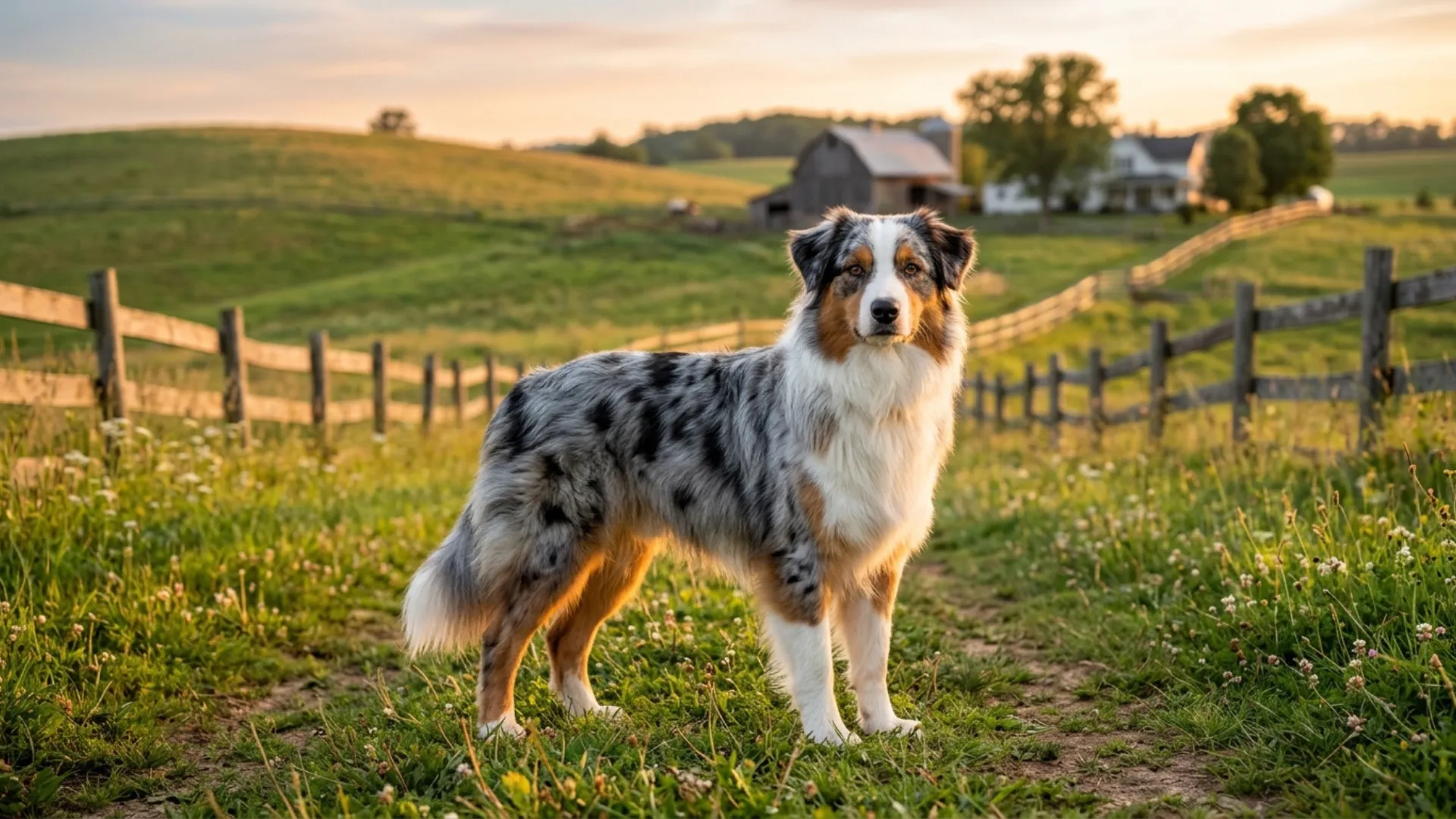
A dog with a parti-colored coat rarely goes unnoticed. Those bold patches of white mixed with black, brown, blue, or tan make every dog look like a one-of-a-kind masterpiece. Funny enough, a lot of parti-colored breeds prove that nature can create elegance without even trying, and beyond the striking looks, these dogs bring plenty of intelligence, loyalty, and personality to everyday life.
Some are energetic adventure buddies, while others are perfectly happy curling up beside you after a long day. If you’ve ever smiled at a dog because its markings looked hand-painted, you’re definitely not alone. These beautiful breeds pair eye-catching coats with equally lovable hearts, making them favorites for families everywhere.
Let’s get to know them and appreciate their beauty, inside and out.
Beautiful Dog Breeds with Stunning Parti-Color Coats
1. Australian Shepherd
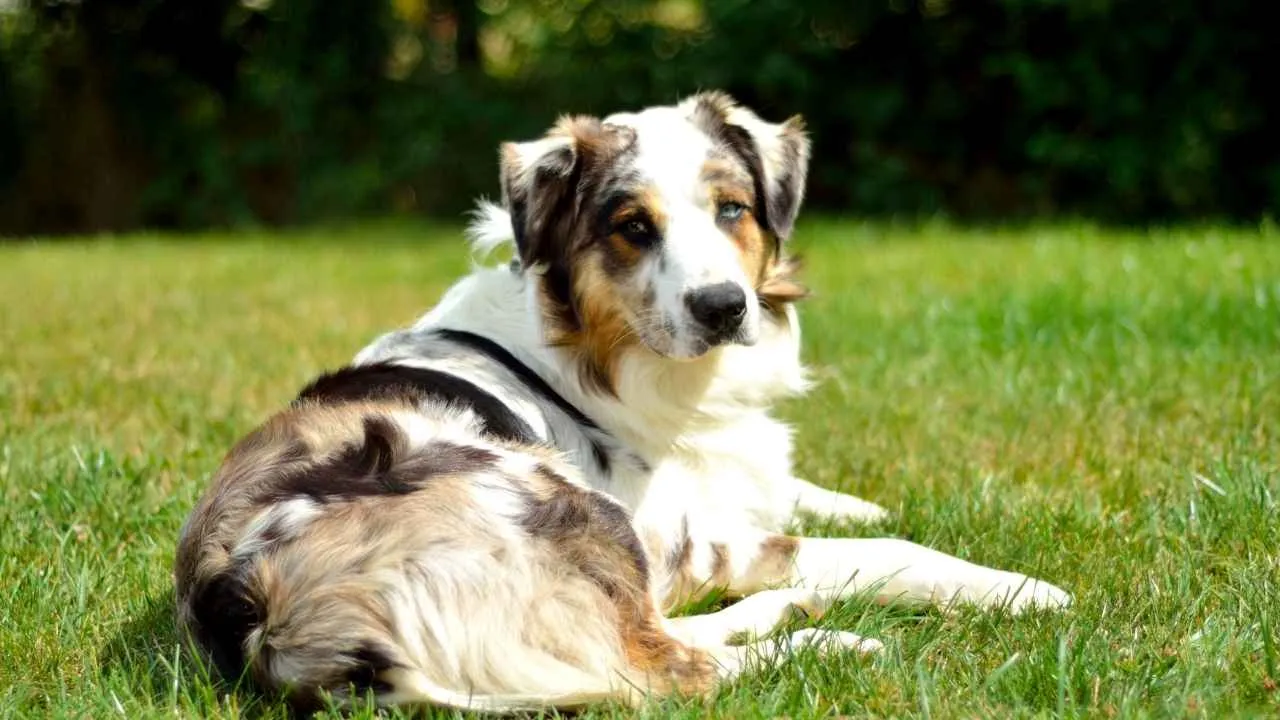
The history of this large dog breed started in the Pyrenees Mountains and then continued in North America. Because of its adaptability, strong herding instincts, and high intelligence, the Australian Shepherd was favored by ranchers and was employed as a stock dog throughout the American West, according to Orvis.
The ‘part-color’ refers to a coat with distinctive white patches. This is achieved through the combination of distinct color points and rich base colors. It comes in red merle with white and copper, blue merle with white and copper, black and white, and red and white coats.
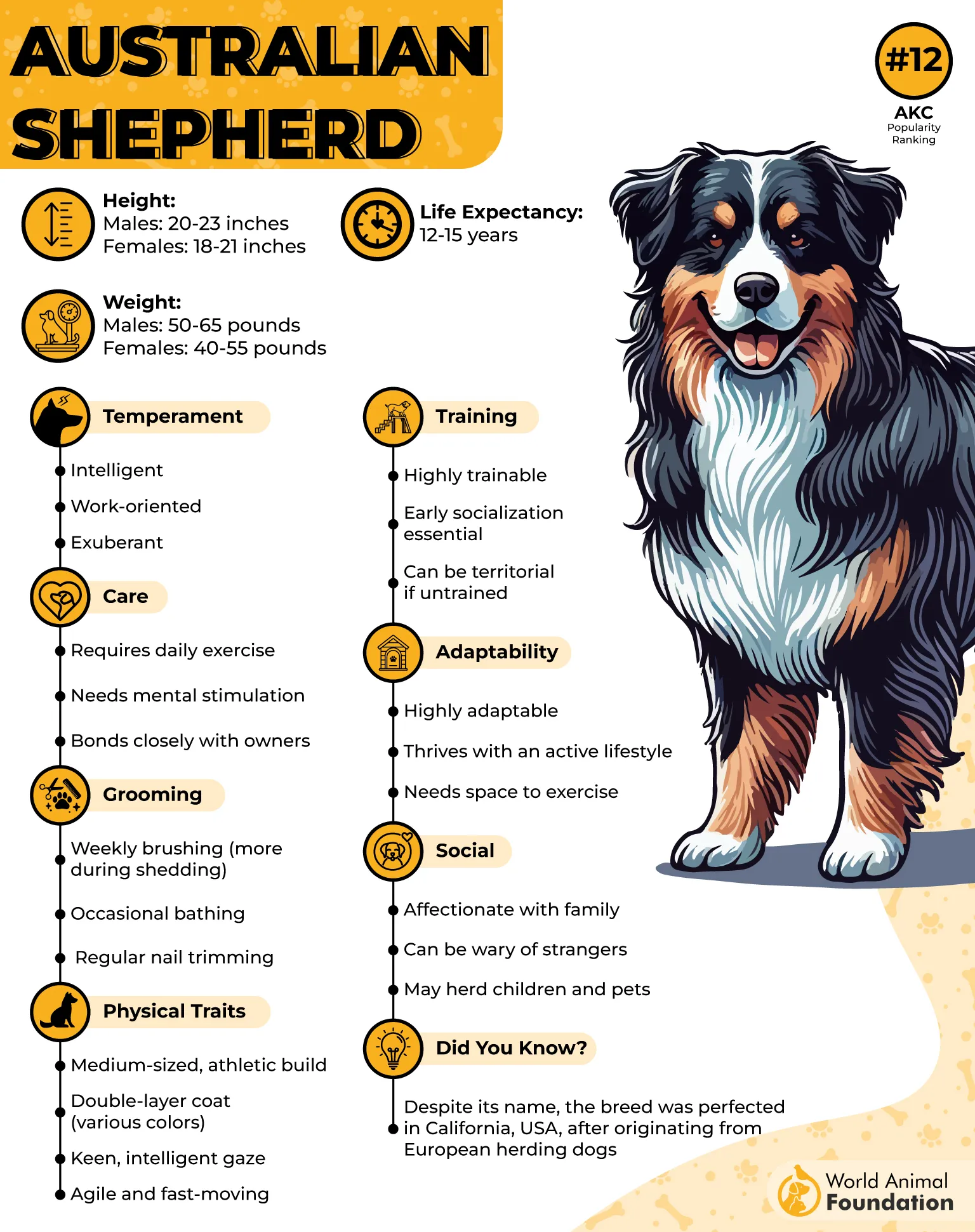
These weather-resistant double coats require regular grooming, such as daily brushing to handle seasonal shedding and prevent painful matting.
2. Border Collie
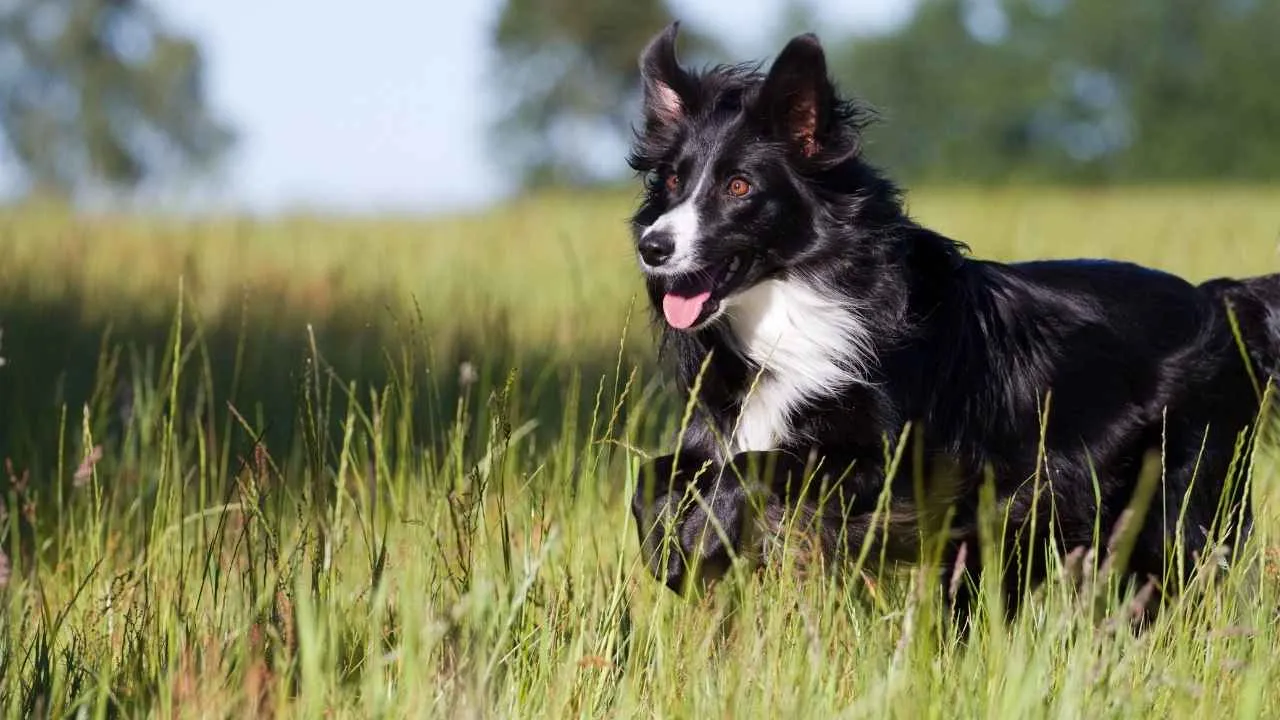
This high-energy working dog was historically bred as a herding dog for the farms of Great Britain. Being a great family dog, it excels in dog sports, police, and military departments because of its high intelligence. It is considered the smartest breed in the canine world.
There are two coat types in the breed: a medium-length, double coat of wavy hair and short hair. These colors are recognized by the American Kennel Club: black and white, all-black, red, lilac, and blue. However, the dog comes in 20 different color variations in total, including lilac and chocolate.
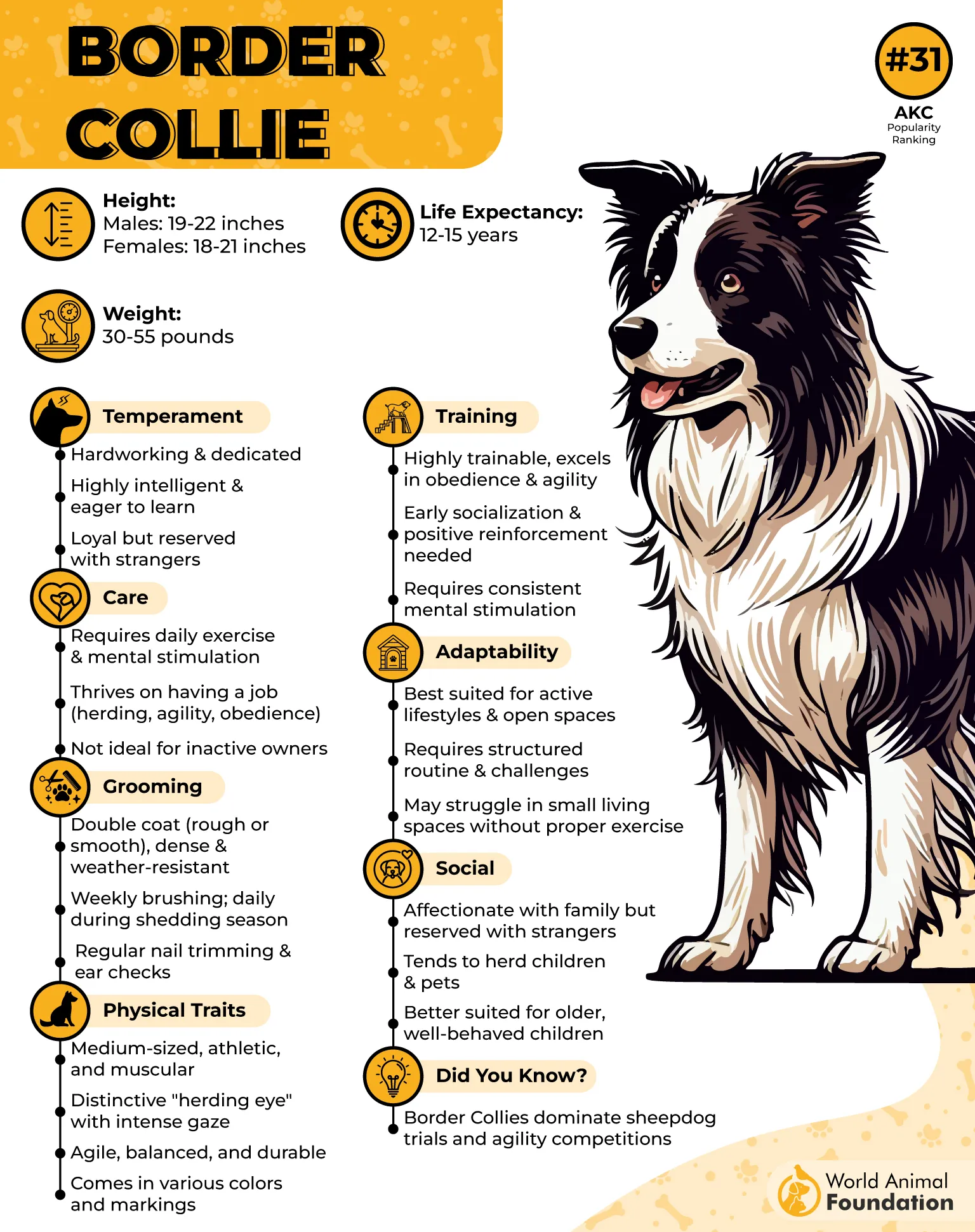
It has moderate grooming needs: use a slicker brush to brush the coat weekly, a monthly bath with an oatmeal shampoo, and check for infection in the ears.
3. Cocker Spaniel
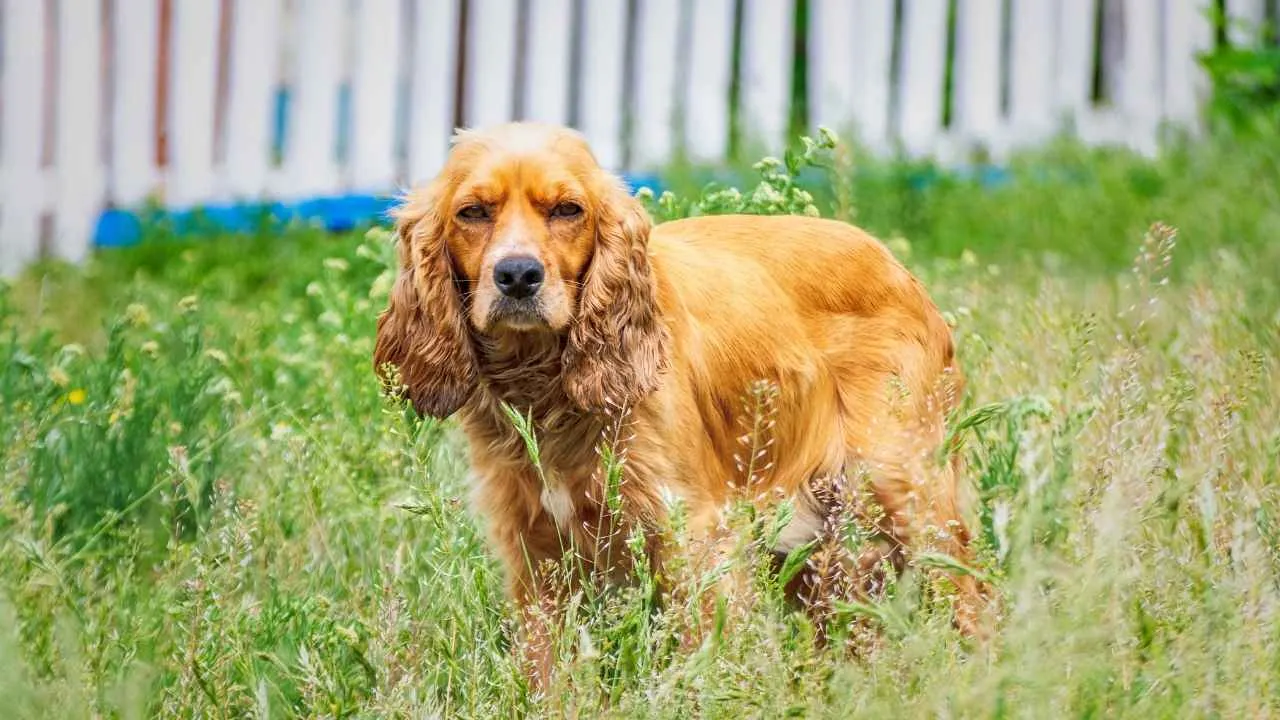
This particular dog belongs to two spaniel breeds: the American Cocker Spaniel and the English Cocker Spaniel. It was categorized as a small hunting companion in the 20th century. It was originally bred in Britain, and the name ‘cocker’ was added as it hunts Eurasian woodcock, as per Wikipedia.
Its coat color varies a lot. The coat comes in black, liver, red, and golden in solid colors. Some parti-colored coats are also accepted, such as roans, tricolors, roans and tans, and those solid colors with additional white markings.
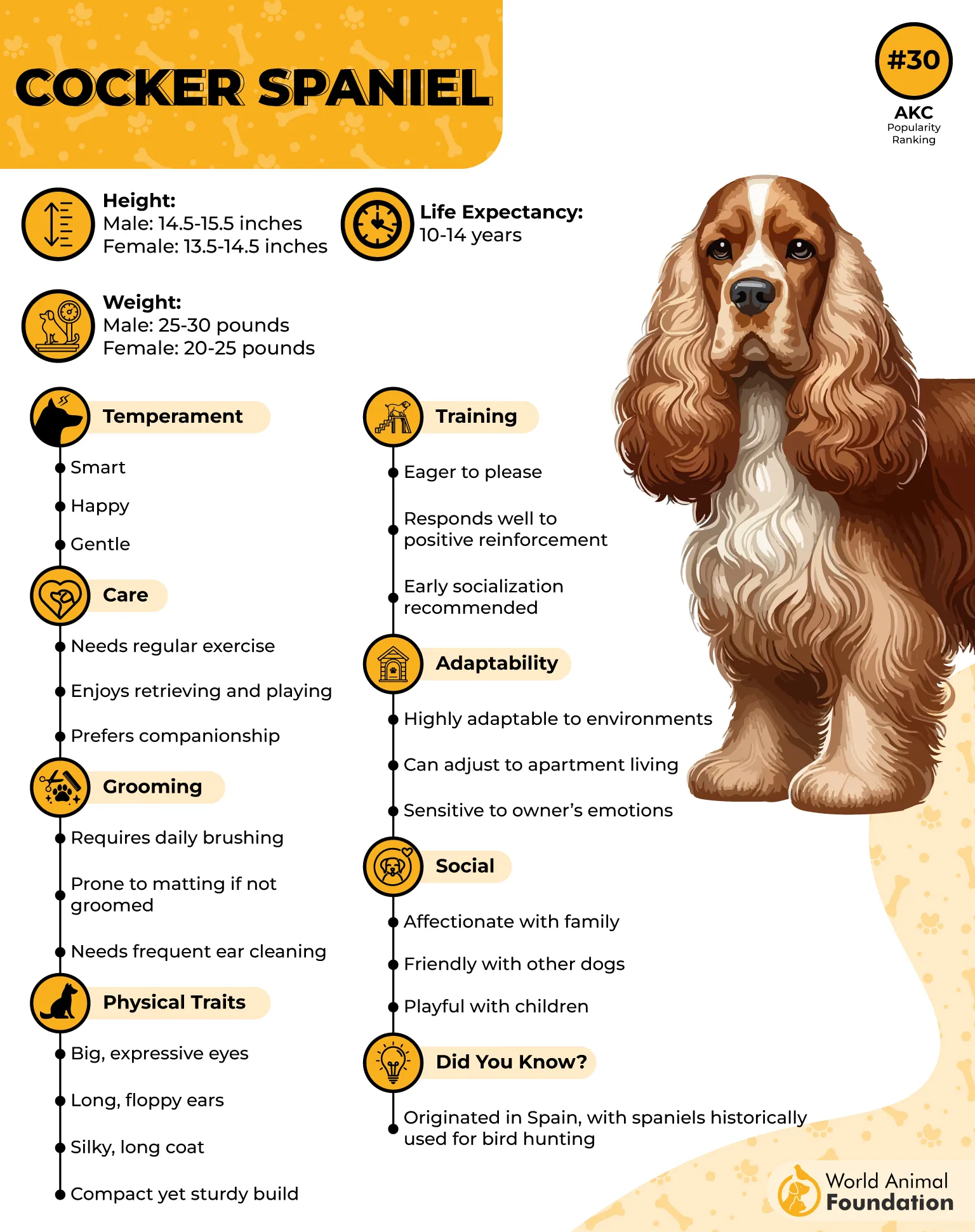
Since there are two lineages of the breed, the coat type varies depending upon the purpose. The breeders pay attention to the appearance of the show dogs (silky coat and feathering on the legs, ears, and chest), while performance is the preference in working breeds.
4. Shetland Sheepdog
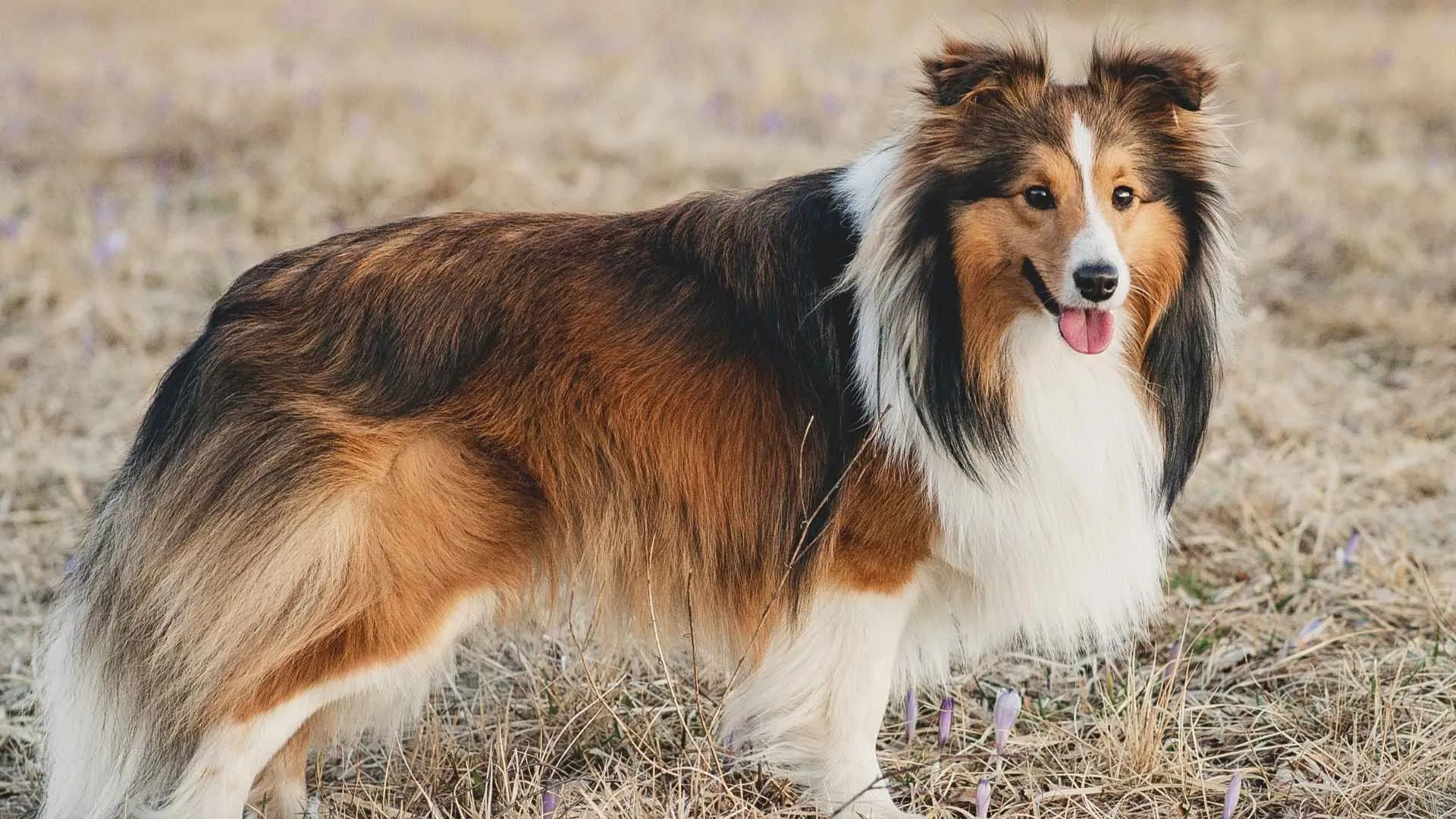
Originally developed in the Shetland Island that is located 50 miles from Scotland, the Shetland Sheepdog is a cross of a small livestock guardian breed and other Scottish herding dogs. It is often referred to as a ‘Toonie’ dog. The modern-day breeds are the product of English dogs imported after both World Wars.
The breed has a long and thick double coat with a short undercoat and a long and rough outer coat. It has a thick mane around its neck. The coat mainly comes in three colors: sable (from golden to mahogany), blue merle (blue-gray with black), or black.
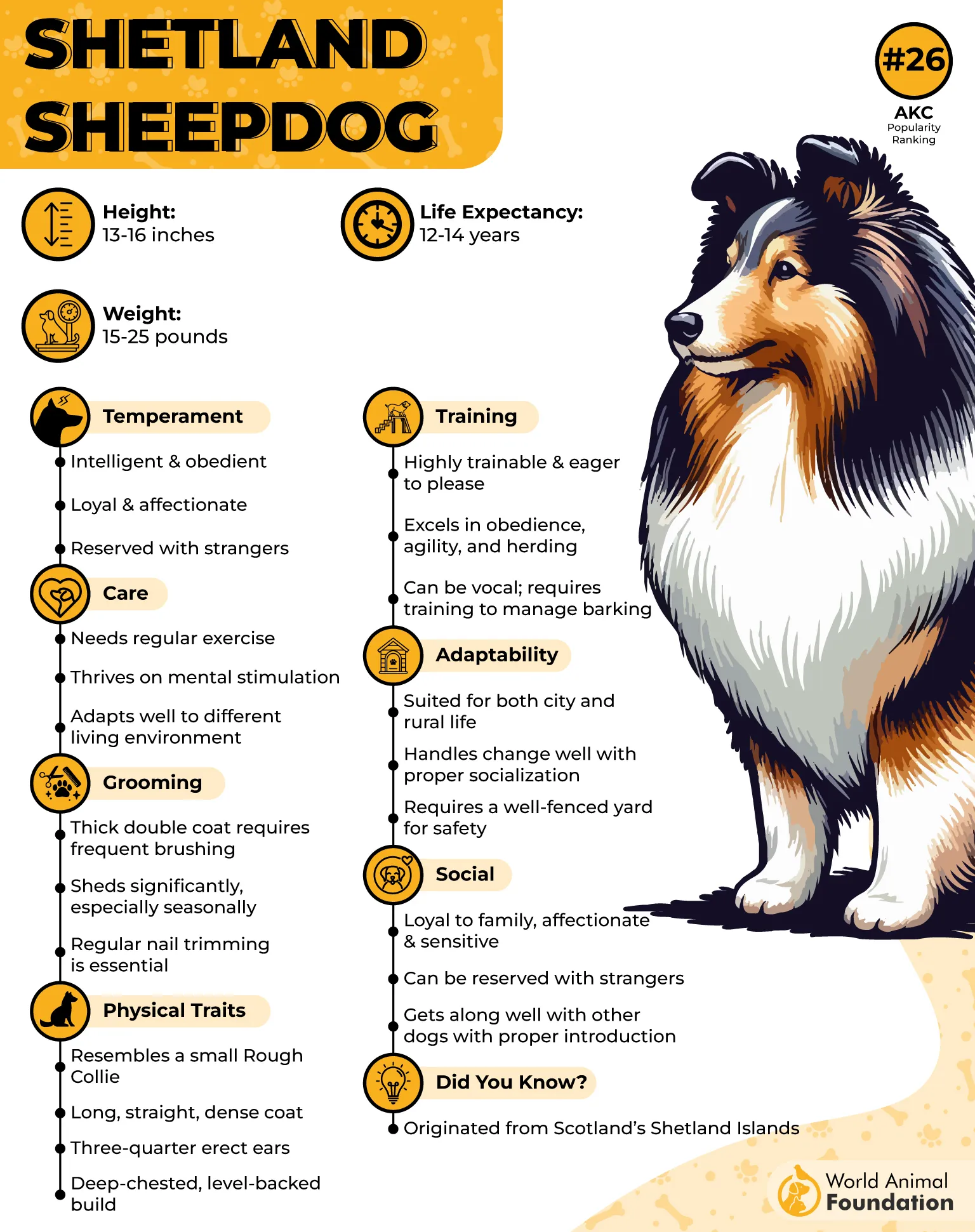
Since it has a long coat, it sheds heavily and needs regular grooming: weekly brushing (do not dry brush the breed and use a spray bottle to moisten the coat to prevent tangles) and occasional baths.
The breed is prone to Hypothyroidism that can lead to coat thinning and sensitivity and can be managed with daily meds.
5. Papillon
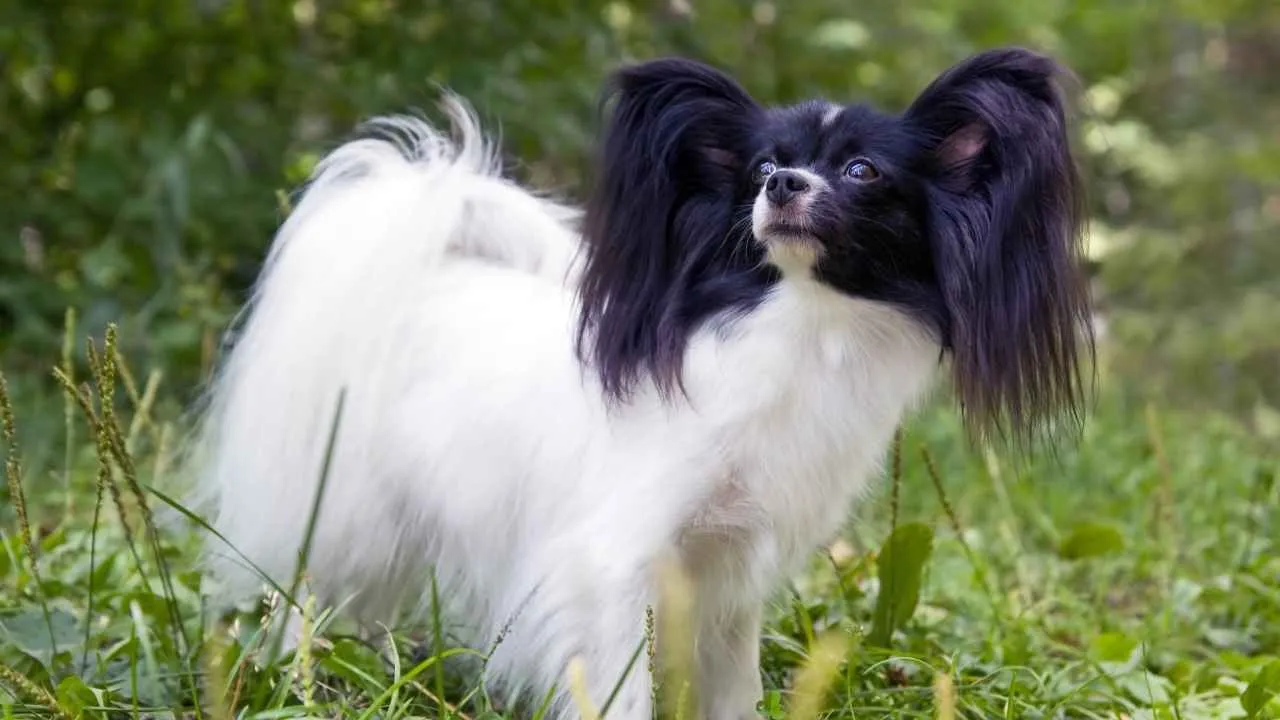
Originating in France, this toy spaniel has been the favorite of the noble ladies for centuries. It was depicted in paintings from the 13th century. It was given the name because of its ‘butterfly ears; that are not just beautiful, but function as a radar to detect any faint noise coming from afar, says Omlet.
It has a white coat with patches of colors. The signature markings are red, sable, black, and lemon. The color patches must cover the front and back of the ears. There are fringes on the ears, a long feathering on the back of the legs, and a thick chest frill.
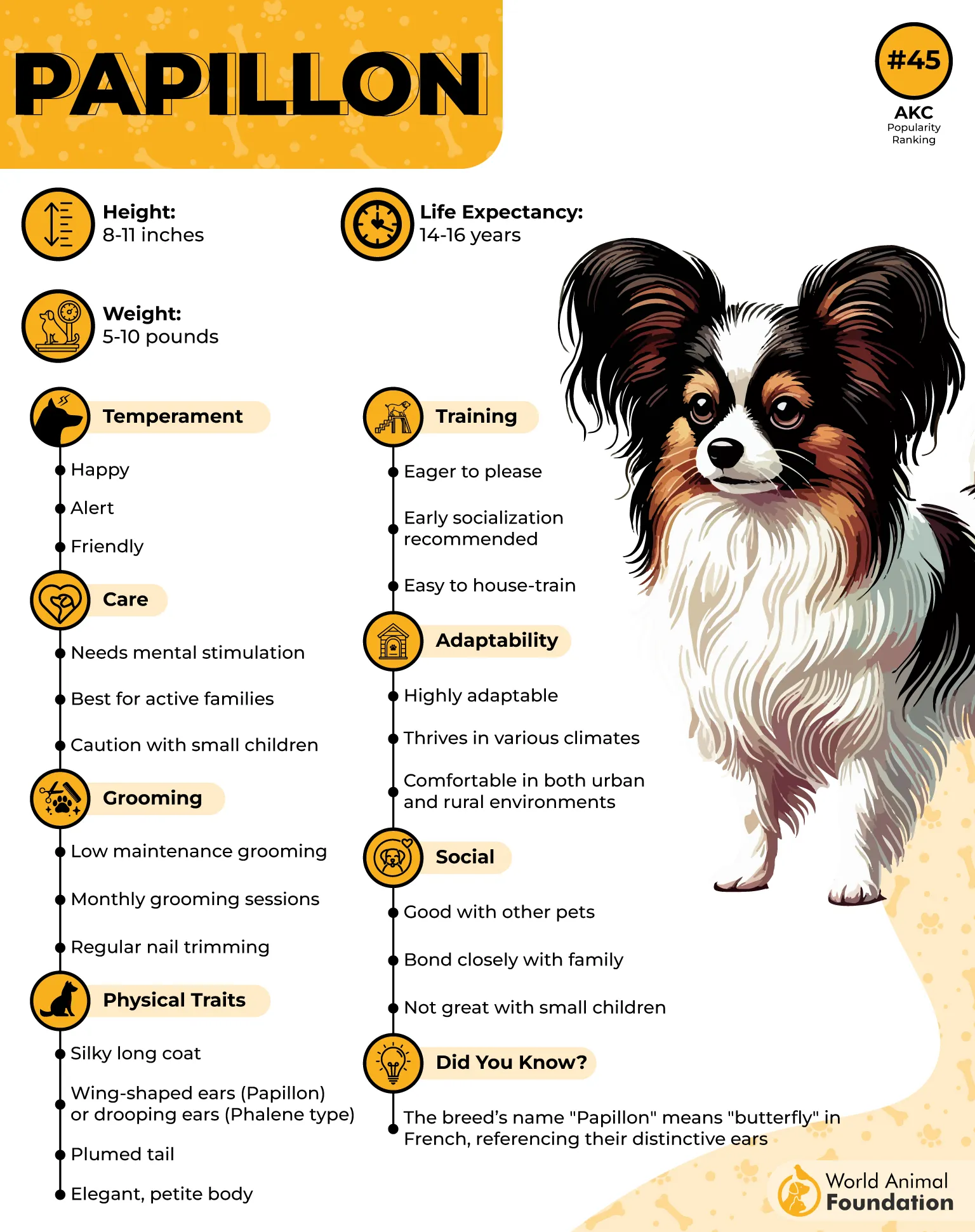
The small breed requires a strict grooming routine: regular brushing with a gentle comb and a pin brush for untangling, removing loose hair, and evenly distributing natural oils. Regular bathing is required using a high-quality dog shampoo.
6. Cavalier King Charles Spaniel
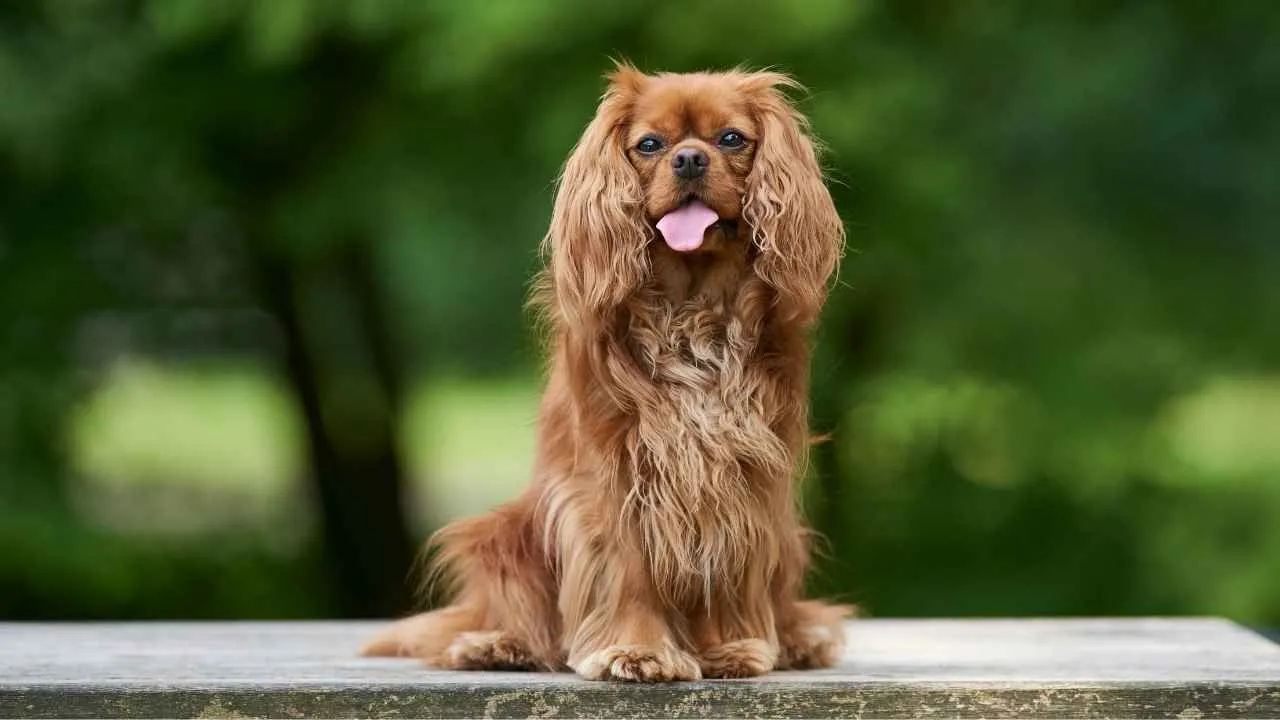
This small dog breed has been a lap dog companion of royalty since the 17th century. It was widely known as a toy spaniel back then. Queen Victoria had an immense love for the breed that she even called it her closest childhood companion. It was bred with the flatter-faced dogs during Victoria’s era to have the modern Cavalier King Charles Spaniel.
It is known for its long and sleek coat with feathering around the feet, tail, chest, and ears. The silky coat comes in 4 varieties: tricolor, Blenheim (red and white), ruby, and black and tan dogs. Out of these varieties, Blenheim and tricolor are most common.
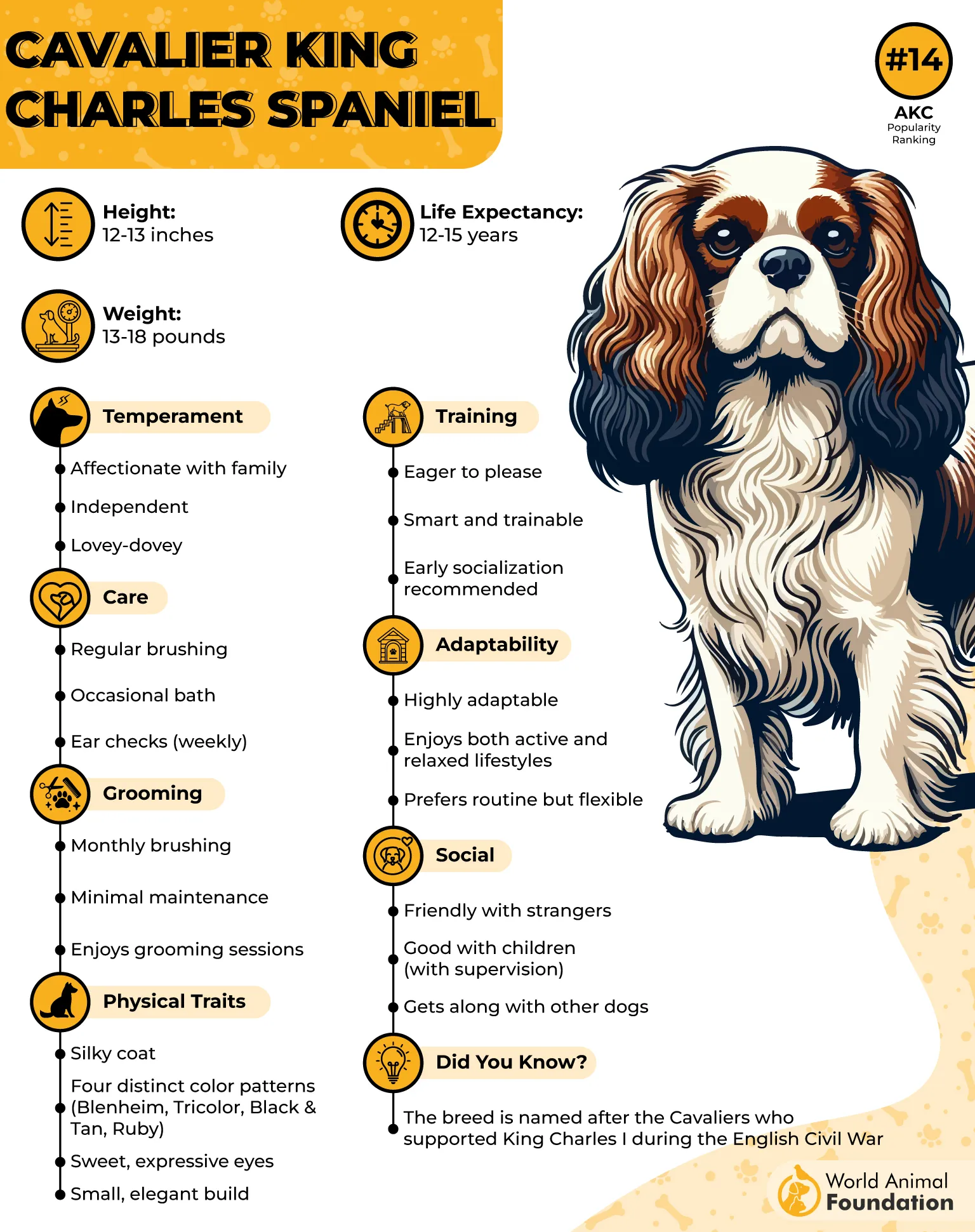
This dog’s coat can become knotted and sloppy, especially around the ears, if not properly taken care of. Pay close attention around the ears and feet. It has extensive grooming requirements: daily brushing (ideally), or you can clip the coat to minimize brushing time.
7. Yorkshire Terrier
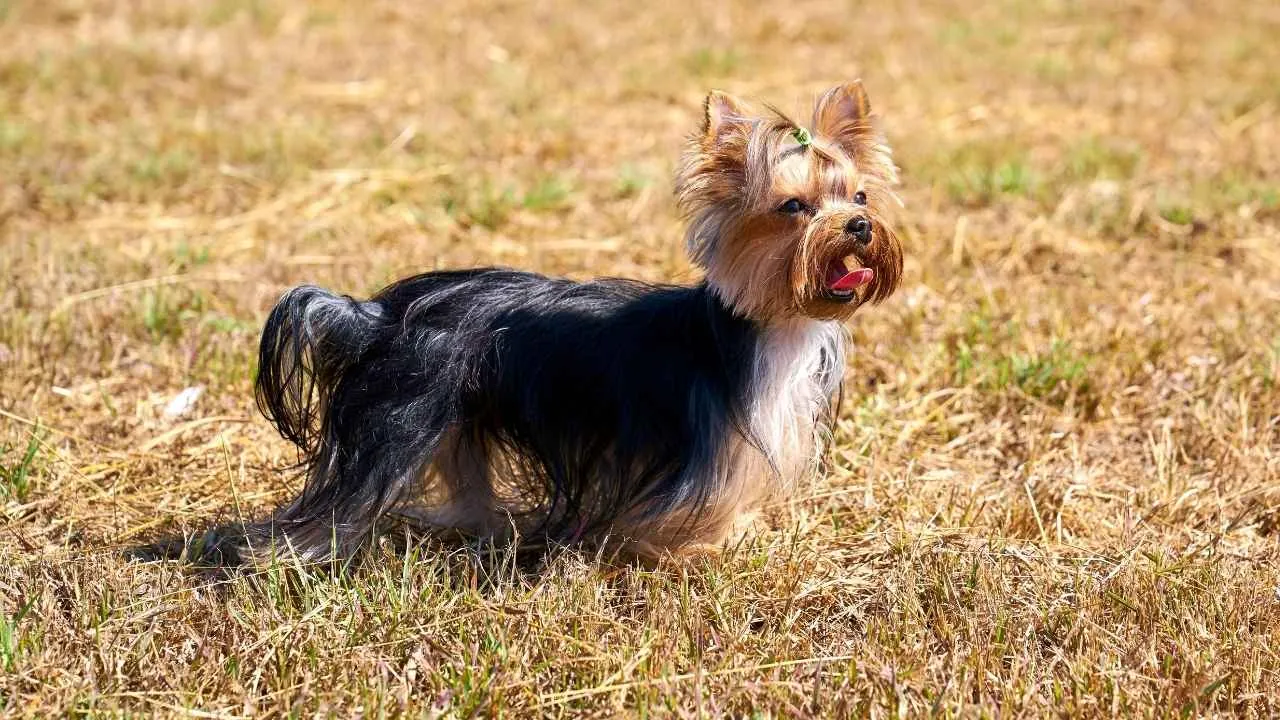
This British toy dog is the smallest of all Terrier dogs. It originated in the county of Yorkshire, England, in the 19th century. Though mostly kept as a companion dog, it actively takes part in dog shows, small spots, and hunting of small animals, such as rats and rodents.
The small breed has a steel-grey body, and there are tan markings on its head. No other color is accepted either by the American Kennel Club or the FCI. The coat grows long and is parted down in the middle. The tail is dark black. The adult dog must not have black hair intermingled with tan-colored fur.
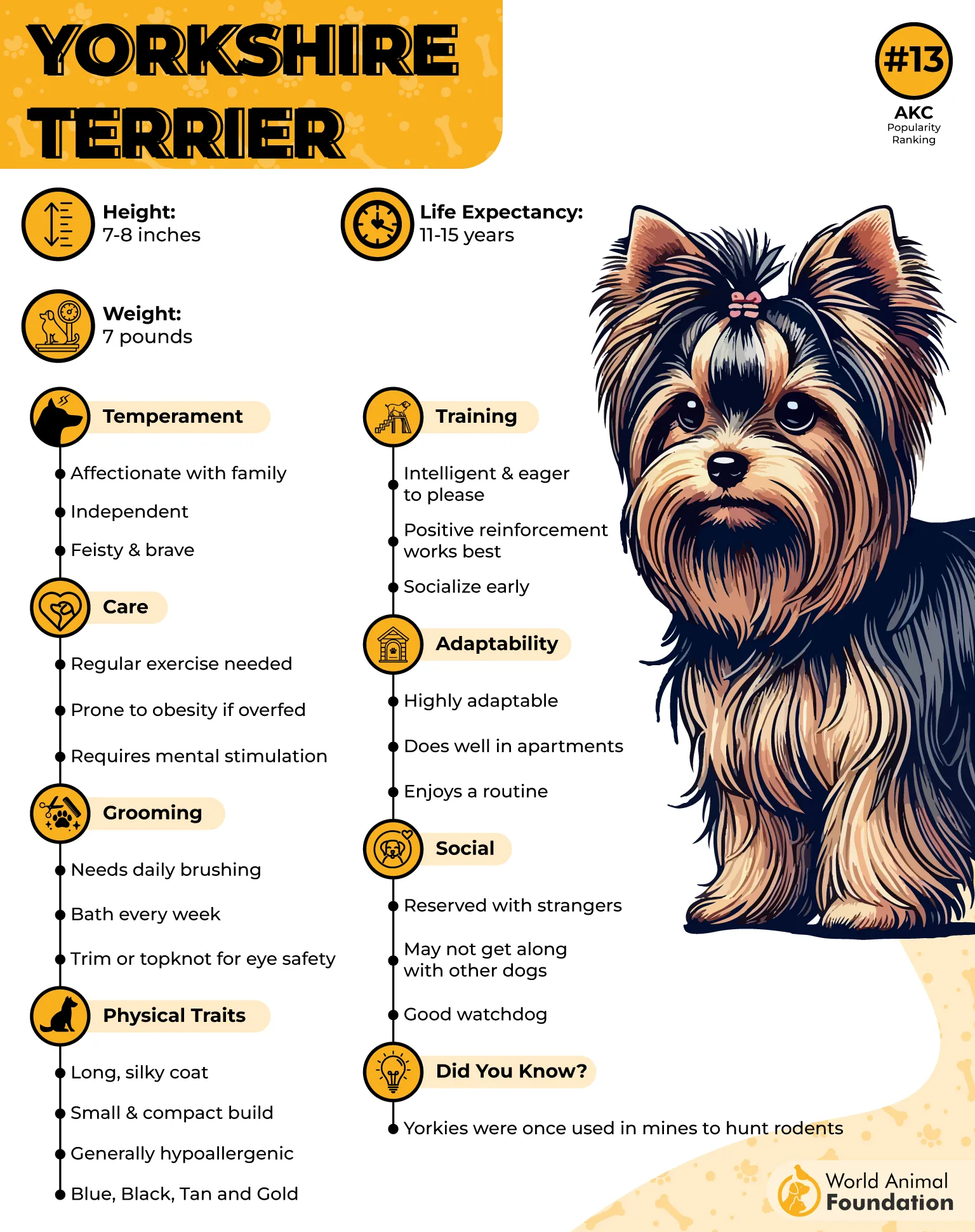
The Yorkie is mostly considered a hypoallergenic breed. Its coat is either trimmed to the floor-length to make movement easier or cut shorter to make maintenance feasible. Traditionally, it is a high-maintenance coat and requires daily brushing.
Conclusion
Parti-color coats are much more than beautiful patterns. They remind us that every dog is unique, both inside and out. Whether it is a hardworking Australian Shepherd, the quick-thinking Border Collie, the cheerful Cocker Spaniel, or the tiny yet confident Yorkshire Terrier, each breed brings something different to the table.
Their colorful markings simply make their personalities even more memorable. Choosing a domestic dog should always go beyond appearance, but there is no denying that these stunning coats often create an instant connection. With proper care, training, exercise, and lots of love, any of these breeds becomes a loyal companion who fills your home with laughter, comfort, and countless unforgettable moments.
