




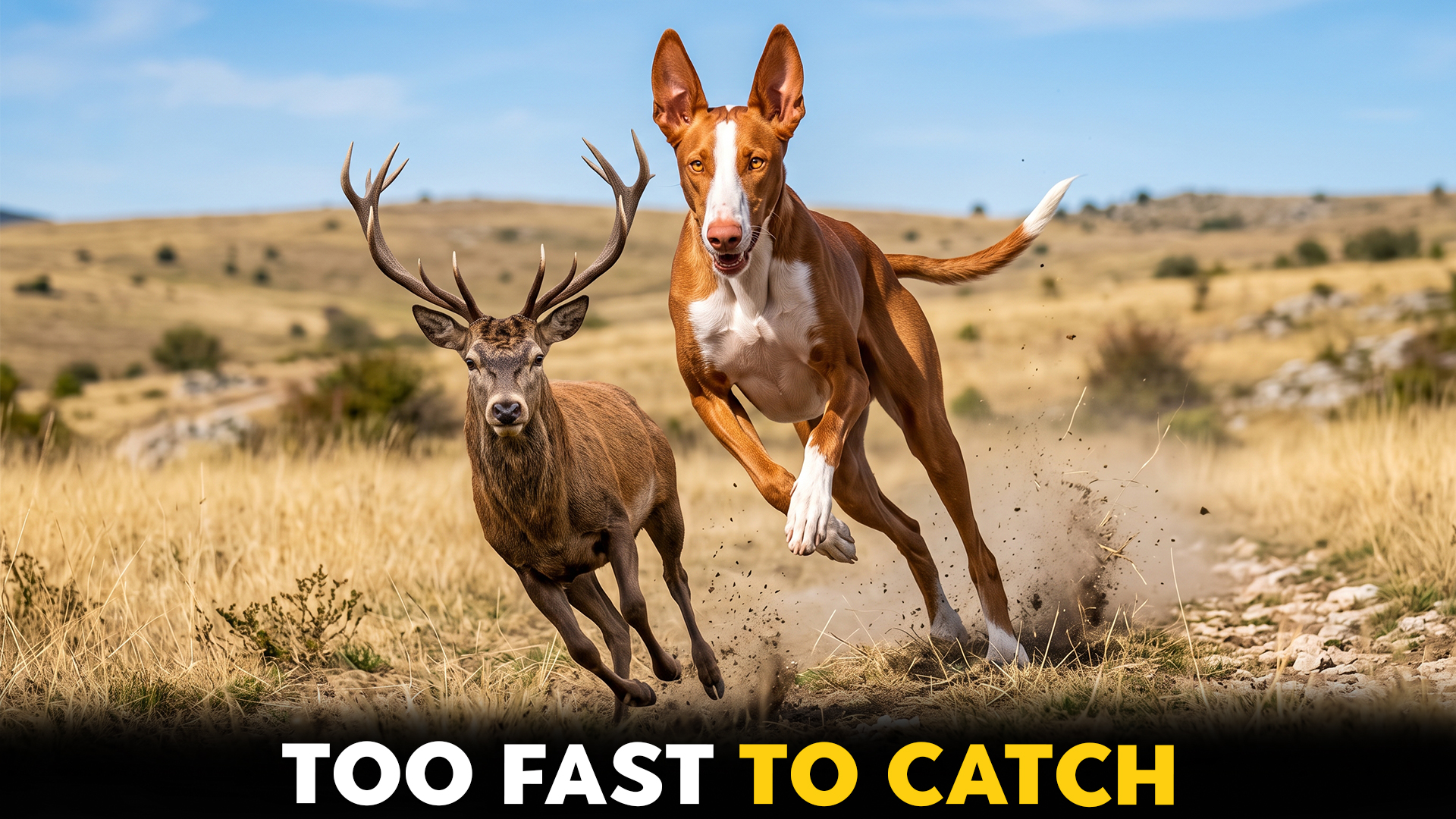
Have you ever wondered what makes some dogs fast enough to keep up with a running deer? The answer lies in generations of careful breeding and powerful natural instincts. The dog breed that chases deer at high velocity often combines blazing speed, sharp focus, and impressive stamina.
Some rely on keen eyesight to spot moving game across open land, while others trust their powerful noses to follow a scent trail for miles. This instinct, known as prey drive, has been carefully developed in many hunting breeds over time.
Today, many of these dogs are more often used to track wounded deer than to chase healthy animals, and hunting regulations vary across the United States.
Whether you’re a hunter, a dog lover, or simply curious about hardworking canine companions, understanding these remarkable breeds helps you appreciate their unique talents.
Let’s explore seven exceptional dogs and discover what makes each one stand out in the field.
Dog Breeds That Chase Deer at High Velocity
Here we go, one by one.
1. Ibizan Hound
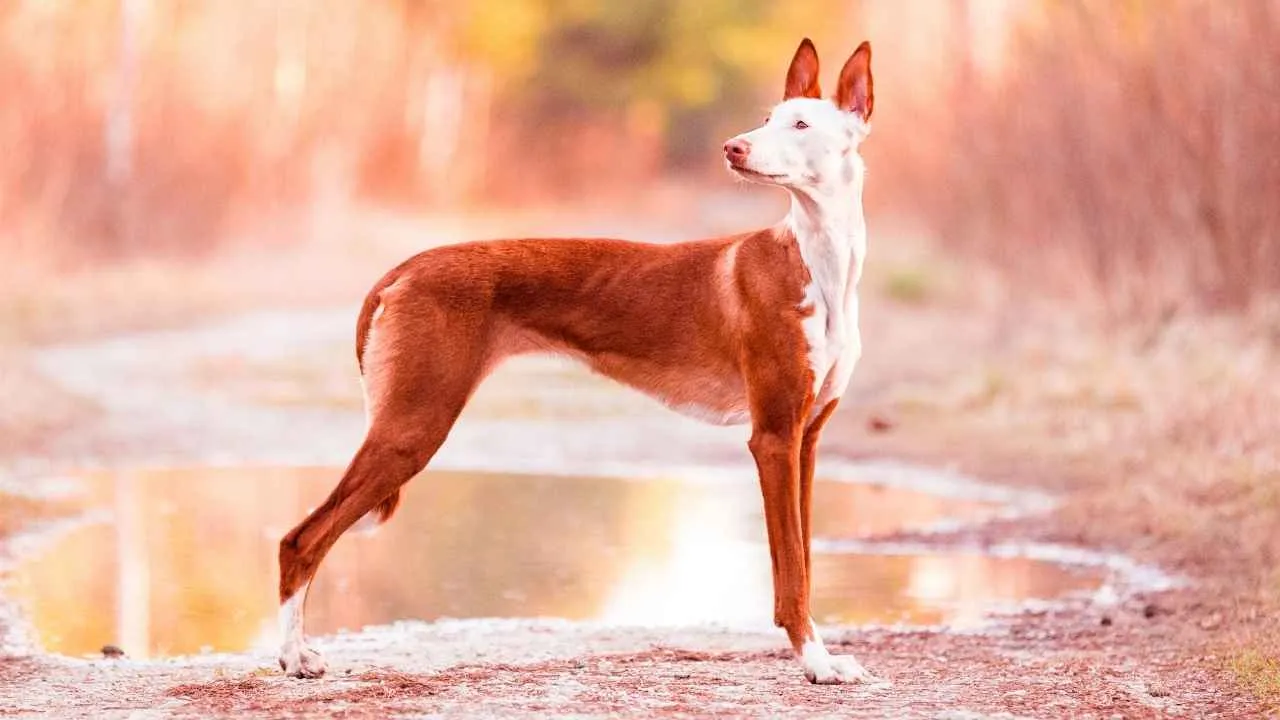
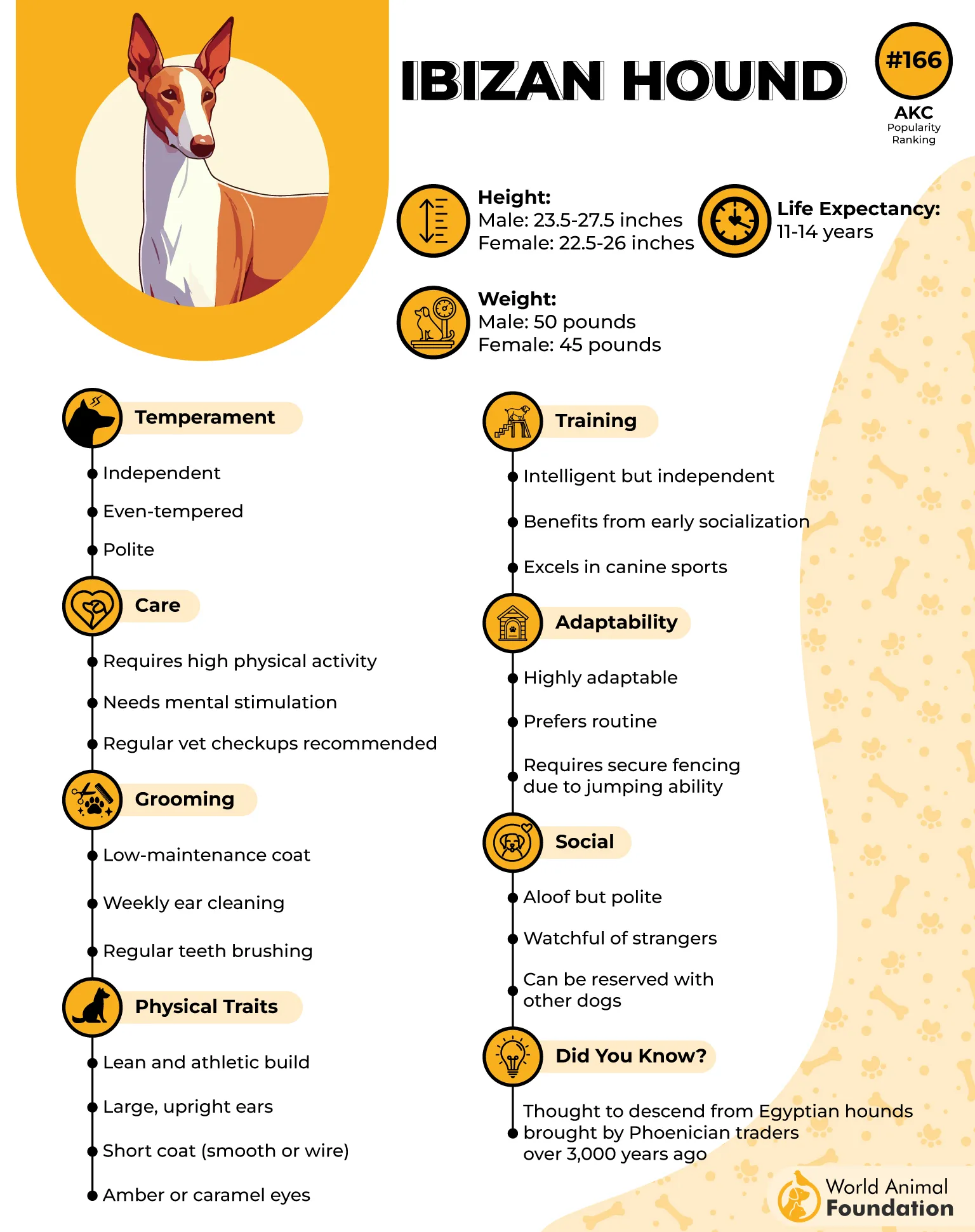
The Ibizan Hound has a history that reaches back to the ancient Mediterranean, where it earned a reputation as a skilled hunting dog breed. For centuries, many hunters valued this lean and athletic dog for chasing rabbits and other small game across rocky hills and wide fields.
Its long legs, light frame, and sharp eyesight allowed it to react in seconds when prey appeared. Unlike dogs that depend mainly on scent, the Ibizan Hound watches every movement before making a lightning-fast chase.
Even today, it carries the same natural prey drive that made it a trusted hunting companion for generations.
Built for Speed in Open Country
The Ibizan Hound performs best in open spaces where it has room to stretch its long stride. Its flexible body helps it change direction quickly without losing momentum, making it remarkably agile over uneven ground. This combination of balance and speed gives the breed an advantage during fast pursuits.
Calm at Home, Ready to Run
Despite its energetic instincts outdoors, the Ibizan Hound is usually quiet and gentle inside the house. Hill’s Pet notes that it enjoys relaxing with its family but will eagerly spring into action when given the chance to explore. Because of its strong hunting instincts, owners should supervise it carefully around smaller pets outdoors.
2. German Shorthaired Pointer
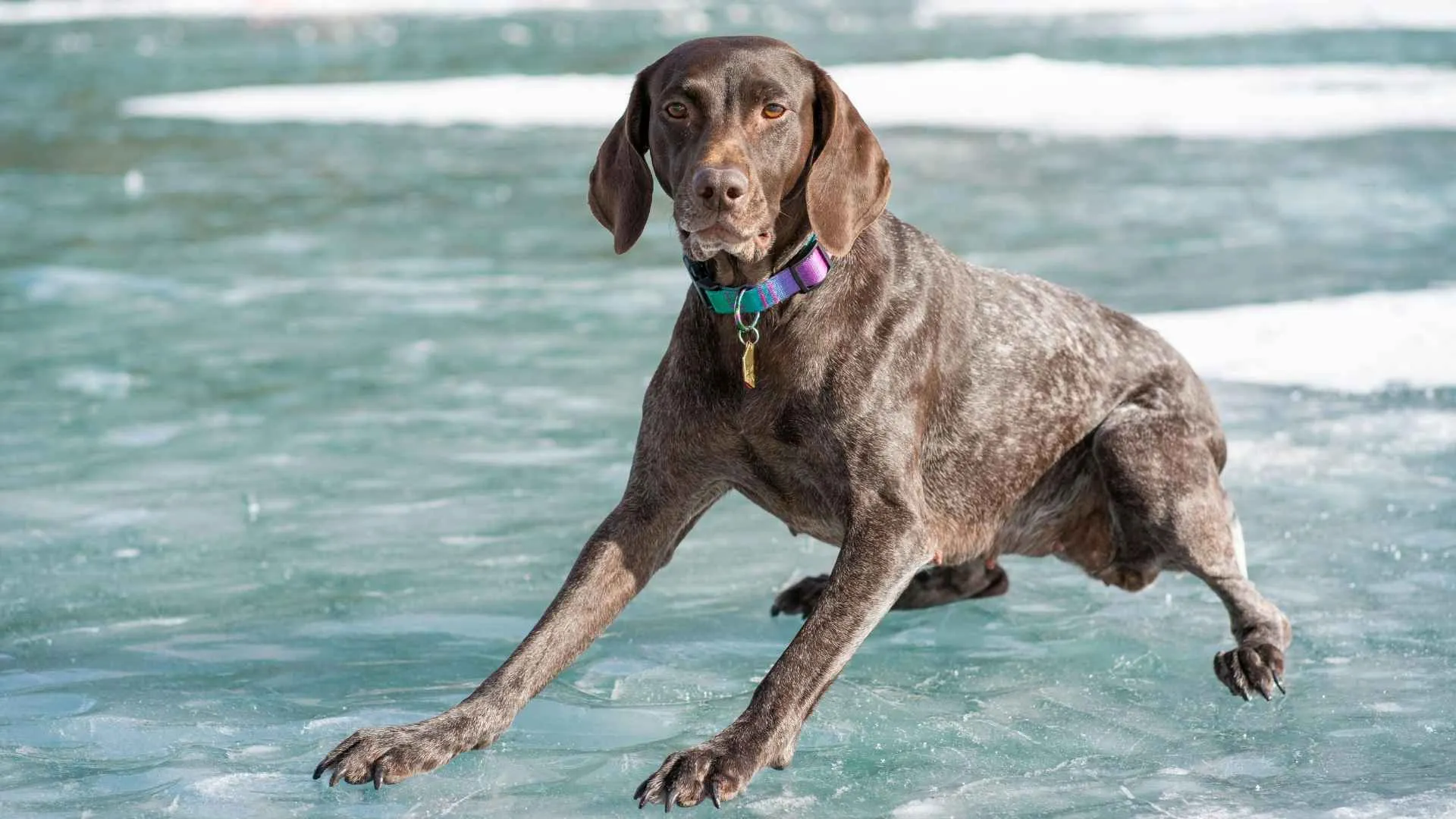
The German Shorthaired Pointer is a remarkably versatile hunting dog breed that excels in many outdoor tasks. Originally bred in Germany, it can point, track, and retrieve with impressive skill.
According to the American Kennel Club (AKC), this athletic breed has the power, speed, and endurance to work long days across forests, fields, and wetlands. Its keen nose helps it locate birds, while its natural instincts make it equally dependable when recovering downed birds.
Hunters admire this hardworking dog because it adapts quickly to different landscapes and game, making every outing more productive.
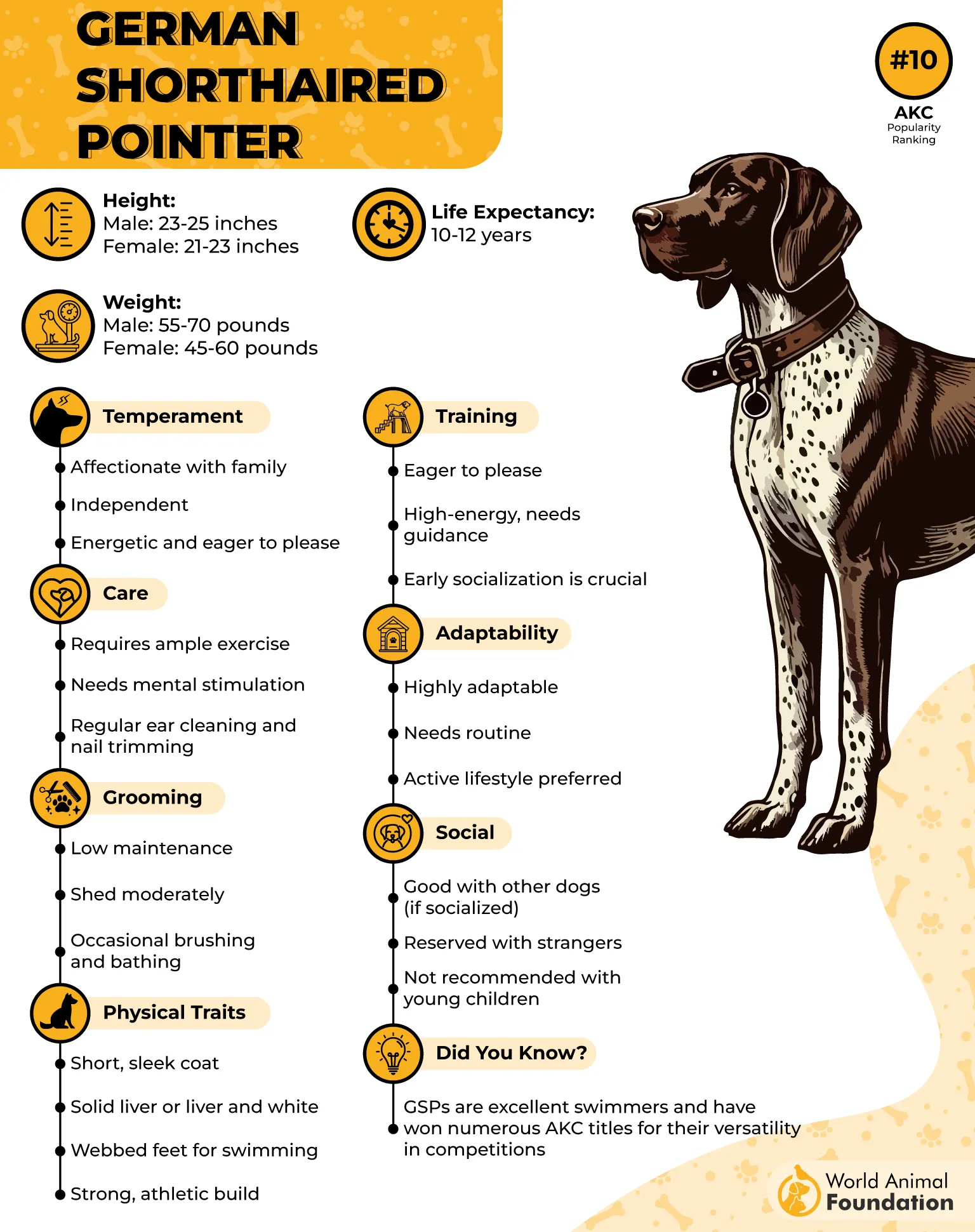
Built for Active Hunting
The German Shorthaired Pointer thrives on movement and purpose. Its athletic body allows it to cover large areas without tiring easily, while its sharp instincts help it respond quickly to changing conditions.
As one of the high-prey-drive dogs, it remains alert around small animals, so early training is essential to channel those instincts in the right direction.
A Loyal Partner Beyond the Field
This energetic breed forms close bonds with its family and enjoys spending time with people. It generally gets along well with other dogs when properly socialized and is happiest when daily exercise keeps both its body and mind engaged.
3. Vizsla
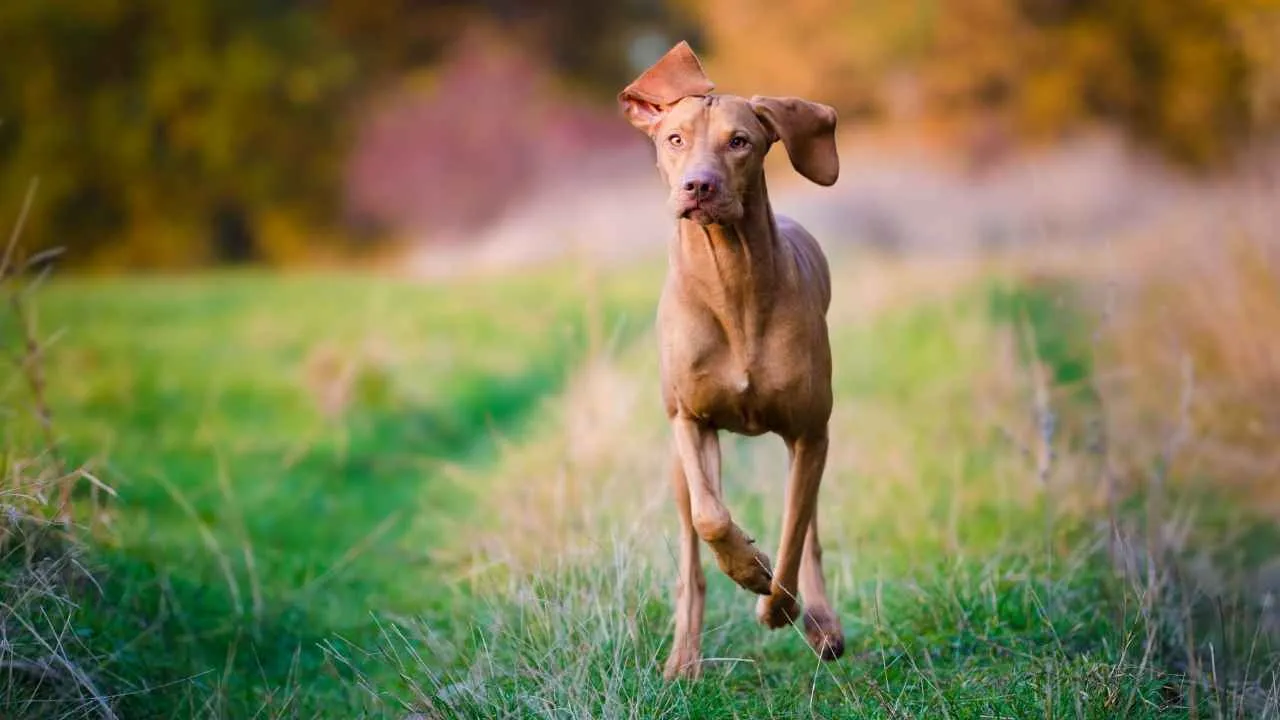
The Vizsla has worked beside hunters for centuries, earning respect for its speed, endurance, and teamwork. As noted by Wikipedia, the Hungarian Vizsla is a versatile hunting dog that naturally tracks, points, and retrieves game, even in water.
Originally developed in Hungary, it was bred to stay close to its handler instead of working far ahead. Its smooth, golden-rust coat and light, athletic build allow it to travel efficiently across fields, forests, and other harsh conditions, making it a dependable partner during long hunting days.
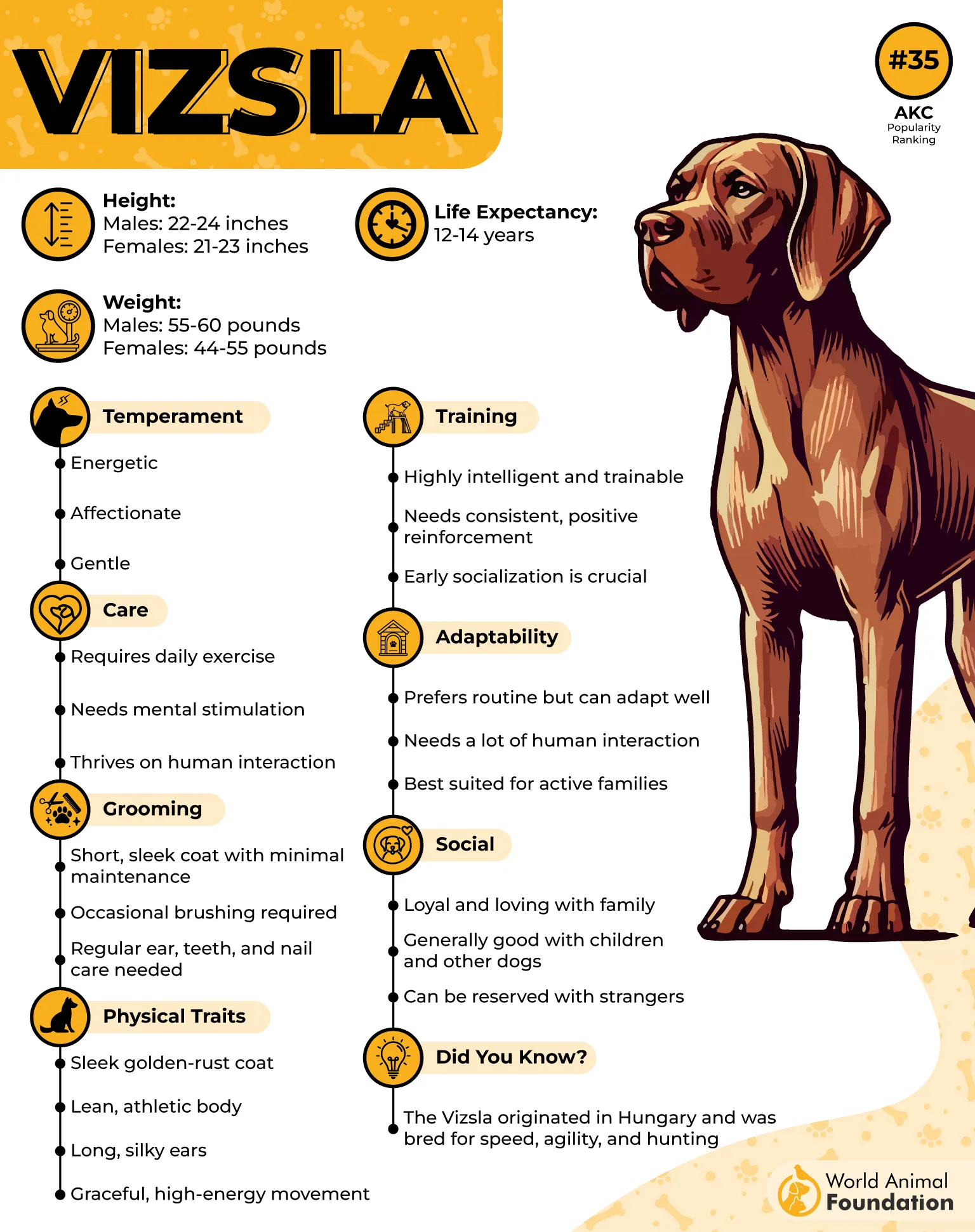
A Sharp Mind That Needs Purpose
The Vizsla is highly intelligent and thrives on mental stimulation every day. Proper training helps direct its natural instincts while building confidence and self-control. It also has a strong play drive, so active games, outdoor adventures, and problem-solving activities help keep both its body and mind fully engaged.
A Devoted Family Partner
Away from the field, the Vizsla becomes an excellent companion that forms strong bonds with its family. It enjoys being involved in daily life and prefers staying close to its people. Early socialization also helps it interact politely with other animals, allowing its gentle and affectionate personality to flourish.
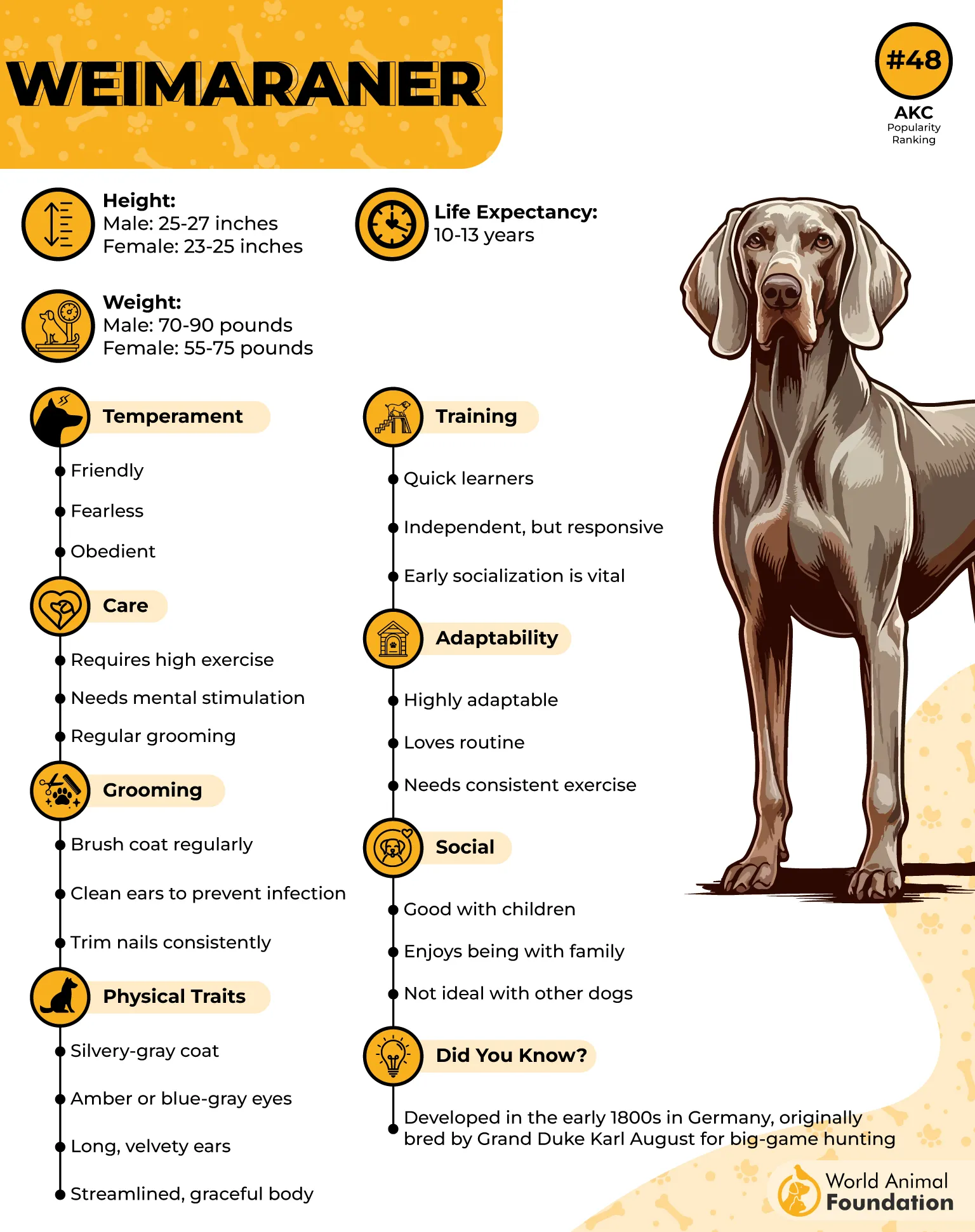
4. Weimaraner
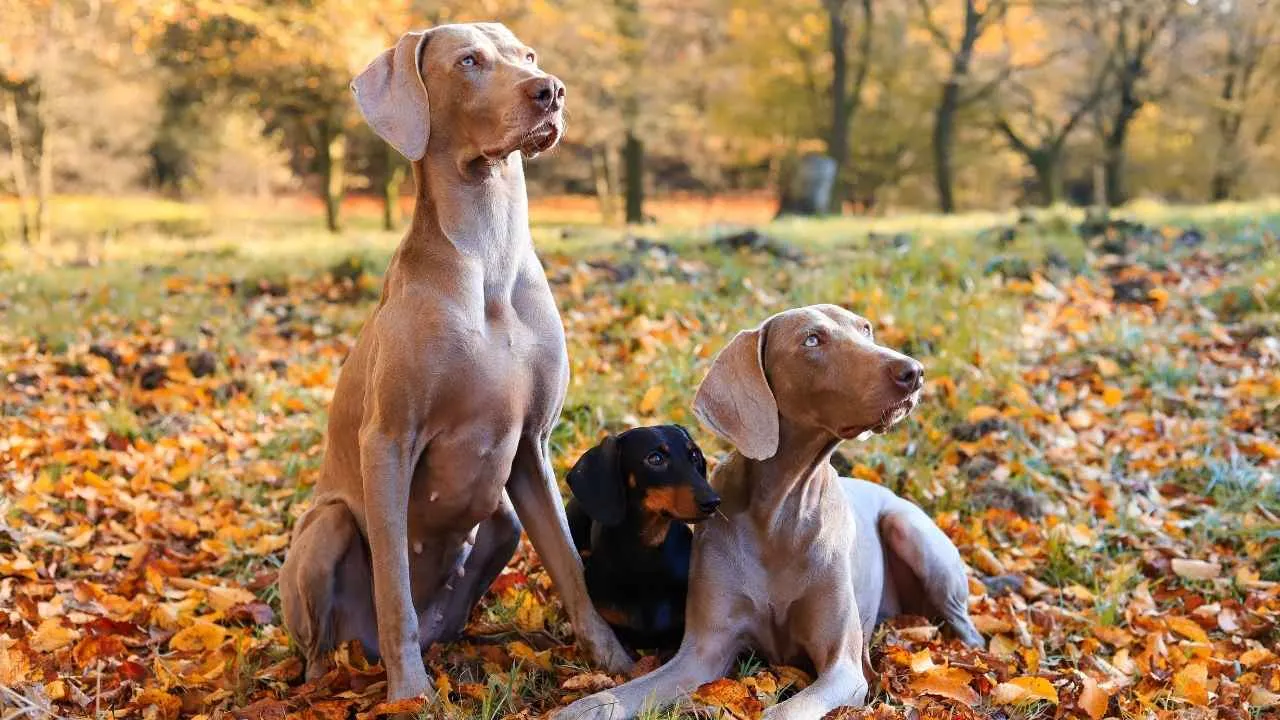
The Weimaraner, often called Germany’s famous “Gray Ghost,” was selectively bred to pursue large game with confidence and determination. This elegant hunting dog combines speed, endurance, and intelligence, allowing it to work across forests, rough trails, and challenging landscapes.
Its long, powerful stride helps it cover great distances without slowing down, while its sharp mind quickly adapts to changing hunting conditions. Unlike many retrievers that focus on recovering game, the Weimaraner was developed to chase and locate larger animals before assisting its handler.
Its courage and versatility have made it a respected working breed for generations.
Ready for Every Outdoor Challenge
This athletic breed performs well in demanding environments, including dense cover and even cold water when needed. According to PetMD, the Weimaraner is highly trainable and thrives with regular activity.
Because of its high energy level and high prey drive, it needs consistent training and meaningful tasks to stay focused.
Best With Active, Experienced Owners
The Weimaraner enjoys having a job to do and builds strong bonds with people who include it in daily adventures. Early guidance also helps it live more safely around other pets, as its hunting instincts remain strong throughout adulthood.
5. Bluetick Coonhound
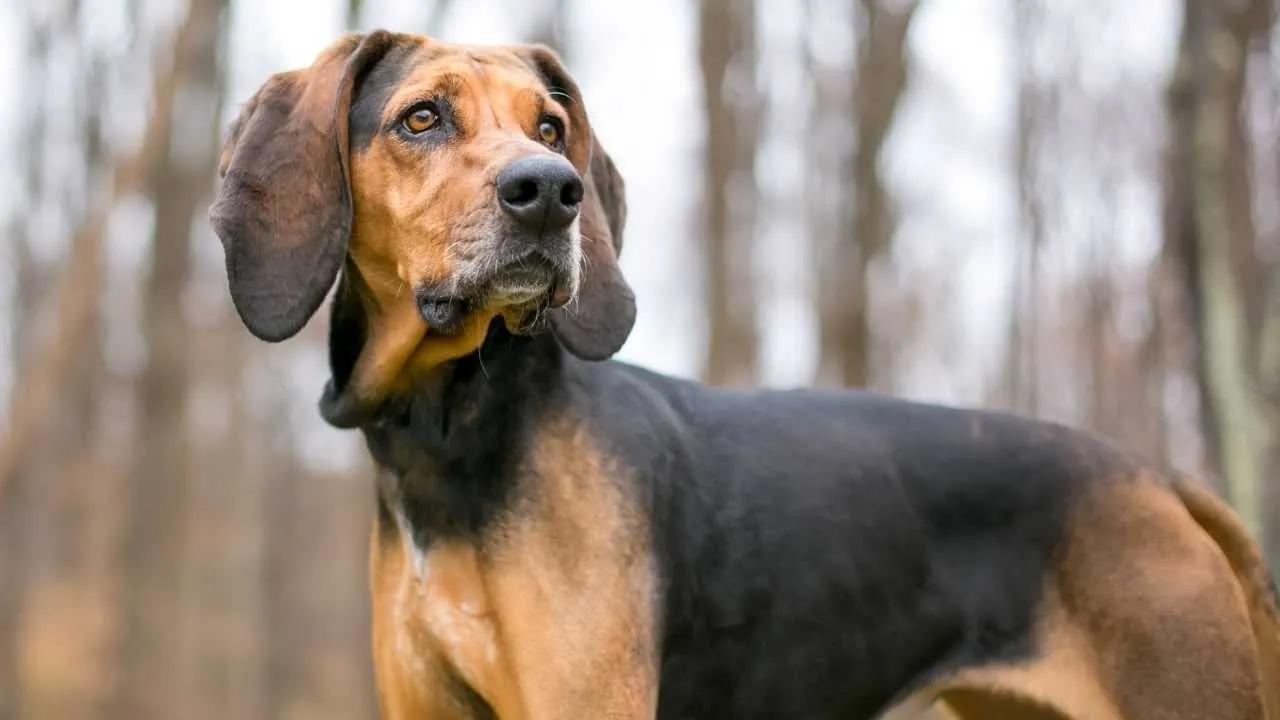
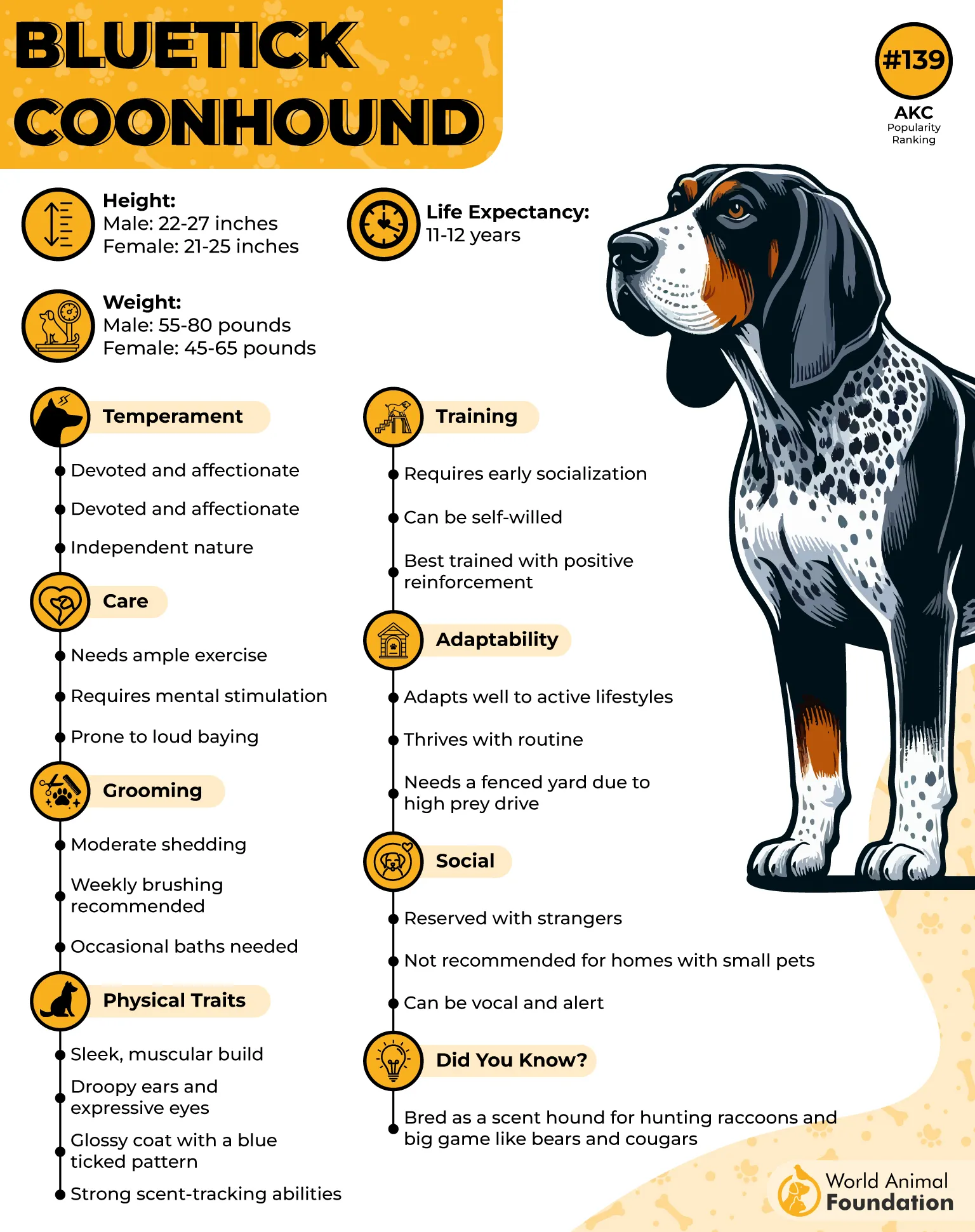
The Bluetick Coonhound is an American scent hound celebrated for its remarkable tracking ability. Instead of relying on eyesight, this breed follows every trace of smell left behind by moving animals, even when the trail is several days old.
According to WebMD, Bluetick Coonhounds became trusted companions of early frontiersmen because they could follow old scent trails through rugged wilderness. Their loud, deep bawl lets hunters know exactly where the dog is as it continues to pursue game.
Although some people mistake it for a mixed breed dog because of its unique coat pattern, the Bluetick is a recognized purebred with a long hunting history influenced by other breeds, including early American foxhounds.
Built for Tireless Tracking
The Bluetick Coonhound has the stamina to chase difficult trails for hours without giving up. Its strong prey drive keeps it focused on the job, making it especially valuable for tracking wounded deer rather than simply running after healthy game. It can even trail powerful animals, such as bears, when properly trained.
A Nose That Never Quits
This determined breed will tend to follow an interesting scent wherever it leads. Because of that instinct, secure fencing and reliable recall are important for owners who enjoy outdoor adventures with their dog.
6. Plott Hound
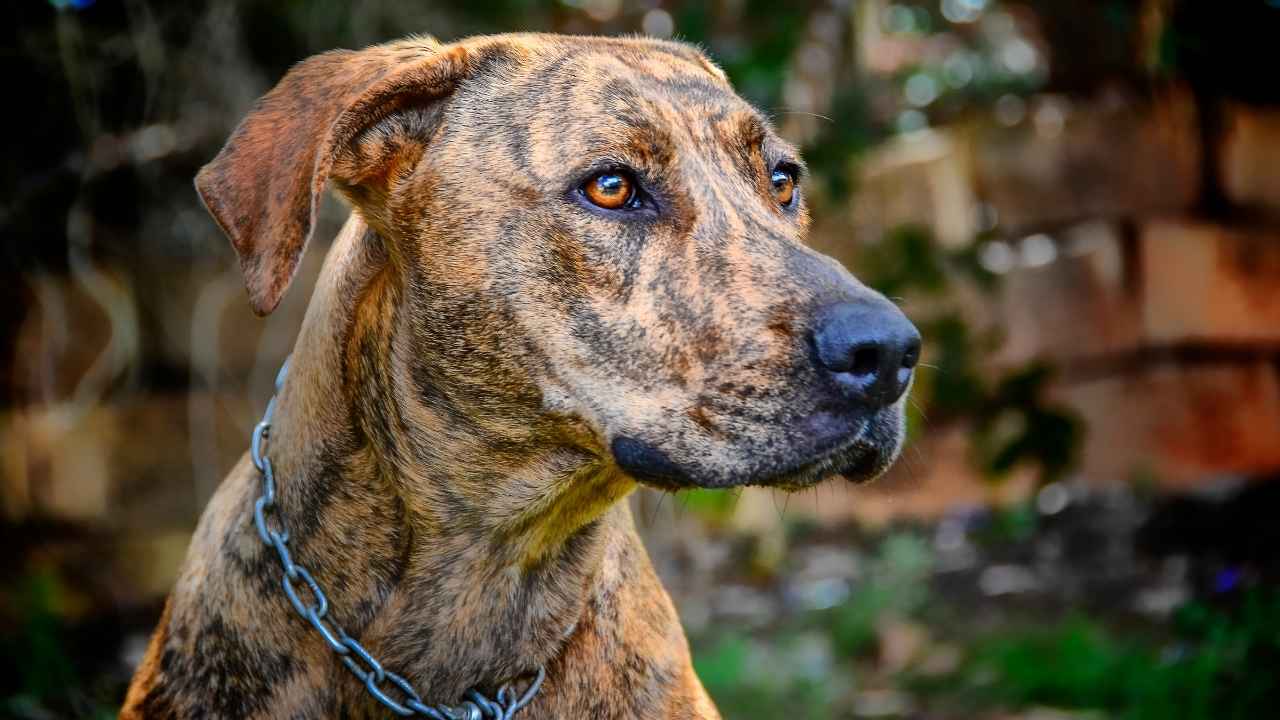
The Plott Hound is a fearless scent hound developed in the mountains of North Carolina, where rough landscapes demanded courage and endurance.
According to Purina, the breed was established by German immigrants George Plott and his son, Henry, and later became the official state dog of North Carolina. Unlike many retrievers, the Plott was bred to chase large game through steep hills and thick forests instead of recovering birds.
Its determination and powerful nose allow it to stay focused even when following difficult trails across challenging terrain. This is why experienced hunters have trusted the breed for generations.
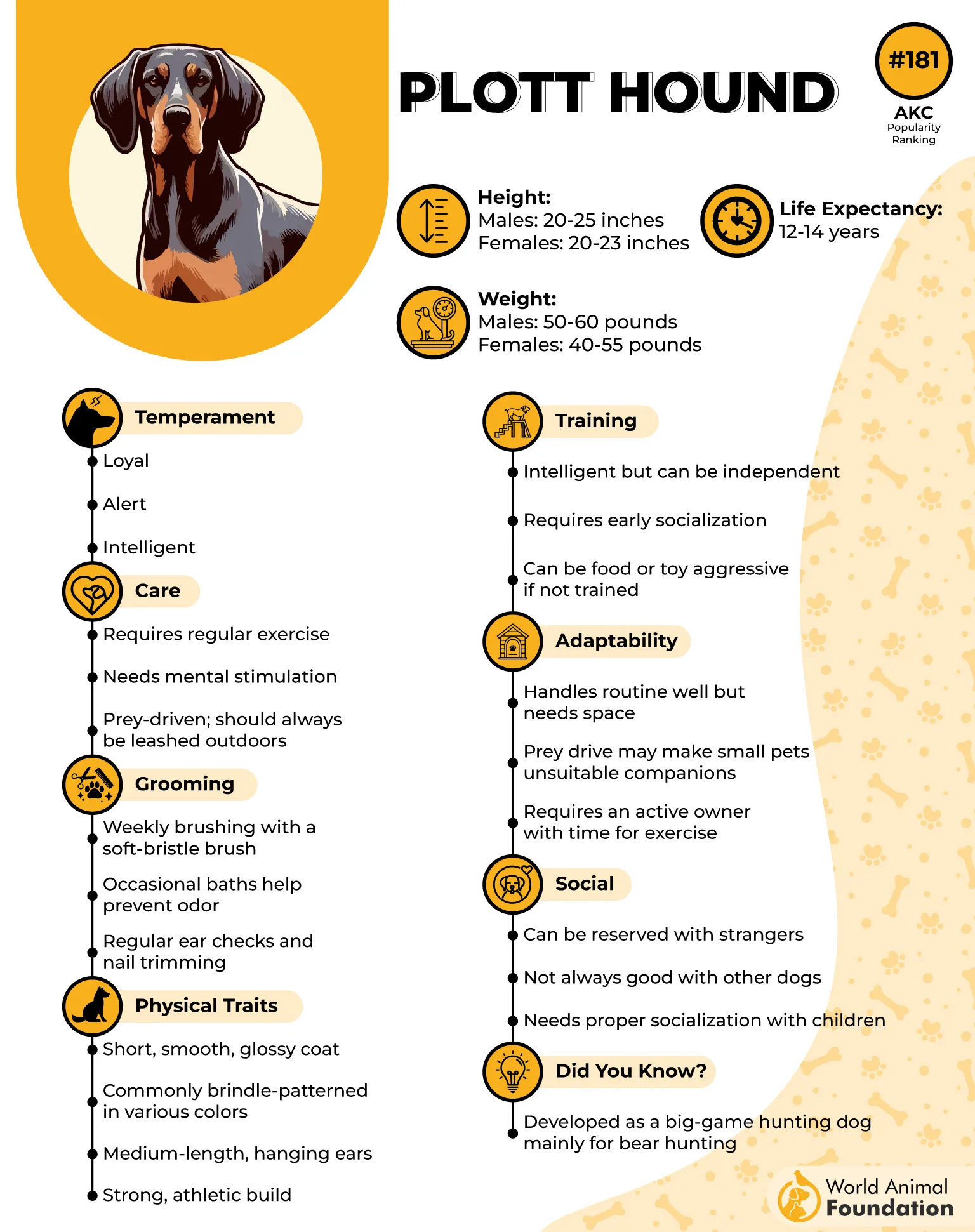
Tough Enough for Demanding Hunts
Plott Hounds are typically strong, athletic, and highly determined workers. Their high prey drive helps them stay locked onto a trail despite distractions from surrounding wildlife. Because they are naturally energetic dogs, they perform best when given regular exercise and meaningful outdoor activities.
A Confident Working Partner
The Plott Hound responds well to consistent training and enjoys working closely with an experienced handler. Early guidance also teaches it to behave calmly around livestock, including horses, while helping it distinguish everyday situations from serious hunting tasks.
7. American Foxhound
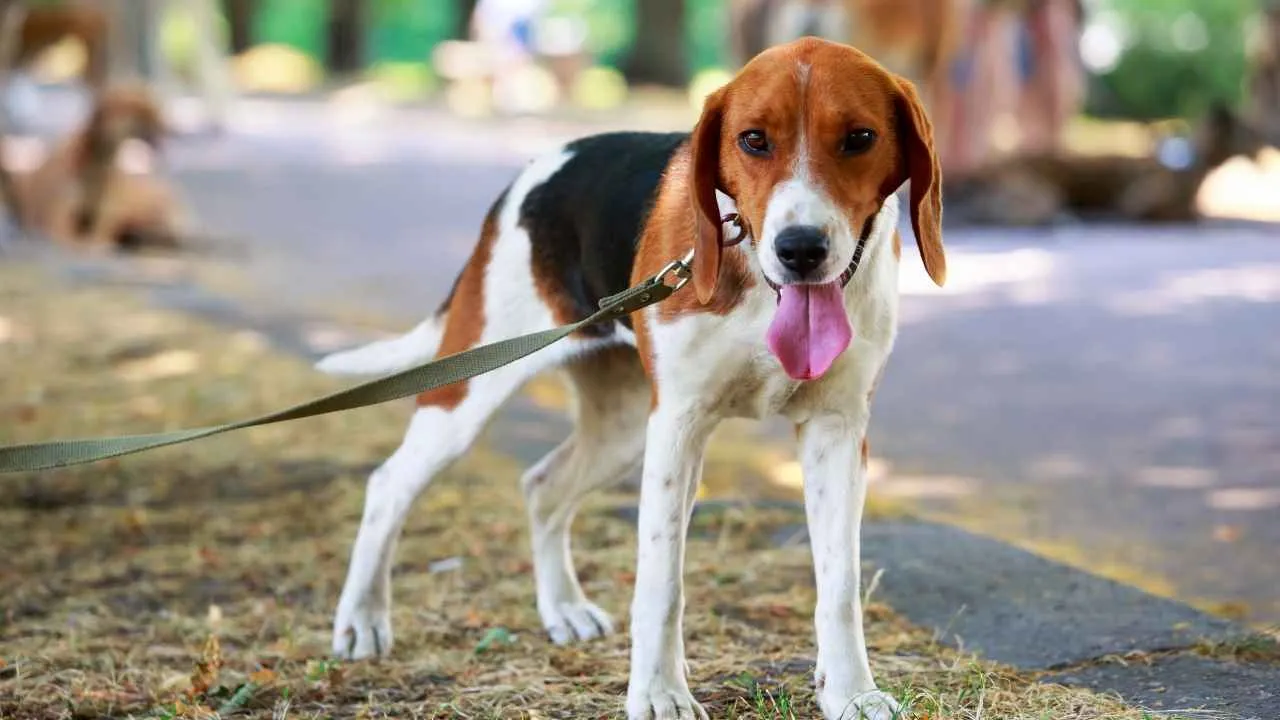
The American Foxhound has earned a lasting place in American hunting history because of its incredible endurance and outstanding nose. According to Britannica, it is the oldest sporting dog breed developed in the United States, descending from English Foxhounds brought to America in the 1600s.
Although originally bred to hunt foxes, it also became valuable for deer hunting thanks to its ability to follow scent trails over many miles. Its long legs, lean frame, and steady pace allow it to hunt deer without losing stamina, making it a popular breed among experienced hunters.
Rather than using brute force to catch game, this hound succeeds by patiently following scent until the opportunity appears.
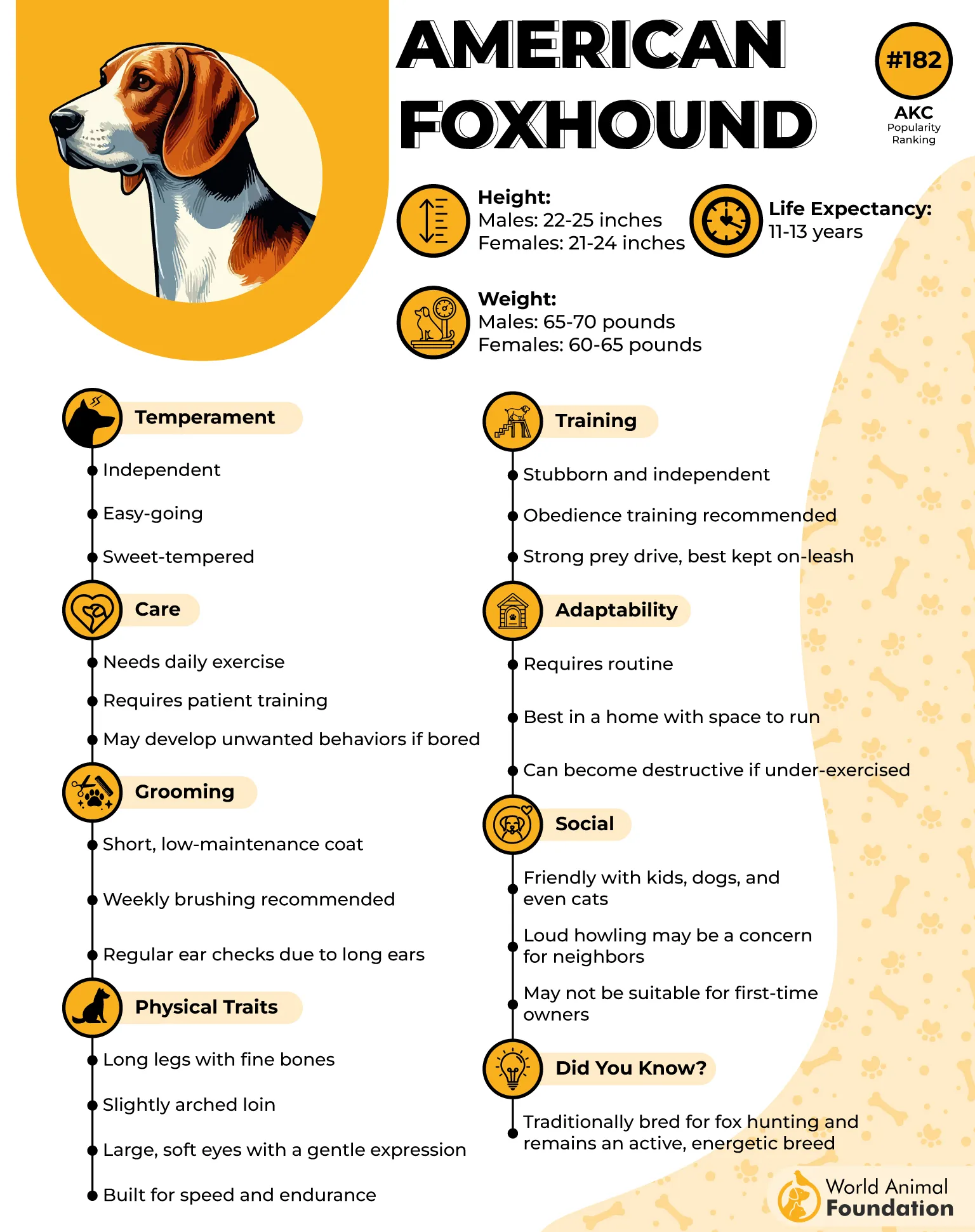
A Tireless Worker in the Field
The American Foxhound has a strong prey drive and loves to chase moving game. Consistent training teaches it when to work and when to ignore distractions. This helps prevent it from attempting to follow the scent of cats or chickens during everyday life.
Loyal to Its People
Despite its independent nature outdoors, this athletic hound enjoys spending time with its human family. With plenty of daily exercise and patient guidance, it becomes a dependable companion that balances its hunting instincts with life at home.
Conclusion
Among today’s remarkable hunting dog breeds, each one showcases talents shaped through generations of selective breeding. Some rely on sharp sight and explosive speed, while others patiently follow scent over long distances.
Whether they were developed to chase small animals or assist with larger game, many breeds possess a naturally strong prey drive that deserves careful management. The key takeaways are simple: choose a breed that matches your lifestyle, provide consistent training, and respect its natural instincts.
While many dogs also excel in jobs like herding or even assisting police, these hunting specialists need regular activity to stay happy and balanced. Keep them safely away from vulnerable pets whenever possible, and always follow local hunting regulations.
For the most part, responsible ownership creates the perfect balance between instinct and control, allowing these extraordinary dogs to thrive as confidently as a flowing waterfall in nature.
