




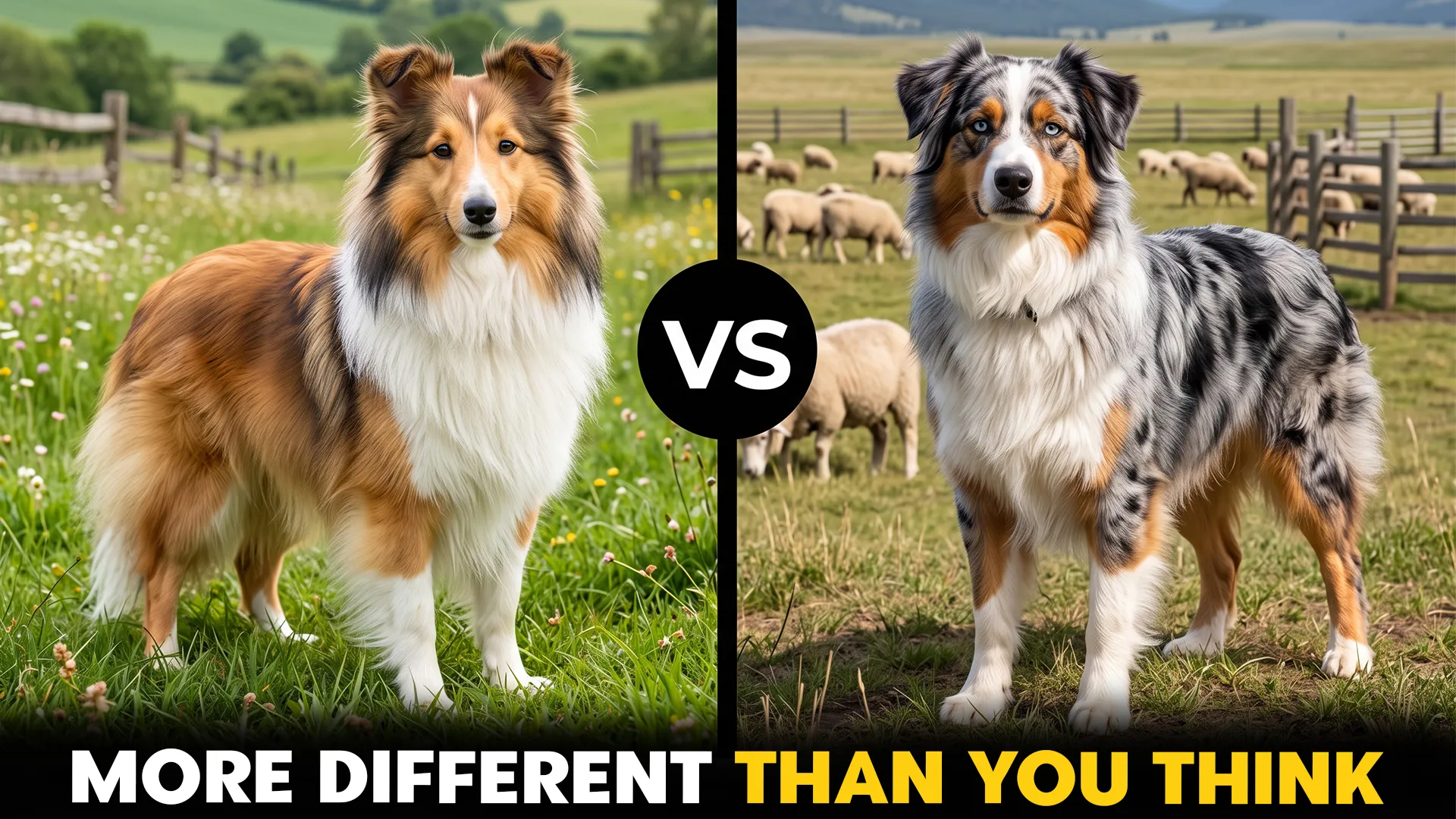
The Shetland Sheepdog and the Australian Shepherd are two distinct breeds with fascinating traits that make them wonderful companions for the right owners. Of course, comparing dog breeds is rarely simple since individual temperaments and habits can always vary. However, understanding a breed’s natural instincts and daily needs is the most important step in finding a pet that truly fits your lifestyle.
Because both are high-energy herding dogs, they are natural favorites for active families and hands-on owners. But energy levels alone don’t tell the whole story. Whether you are looking for a loyal partner for an off-grid homestead or a clever sidekick for suburban or urban living, knowing how to channel their drive is essential for keeping them happy and healthy.
While they share a herding heritage, these two breeds have several key differences. If you are trying to decide which of these smart, loyal dogs is the right match for your home, this detailed comparison will guide you through their unique traits, care needs, and temperaments.
Shetland Sheepdog vs. Australian Shepherd: Key Differences Explained
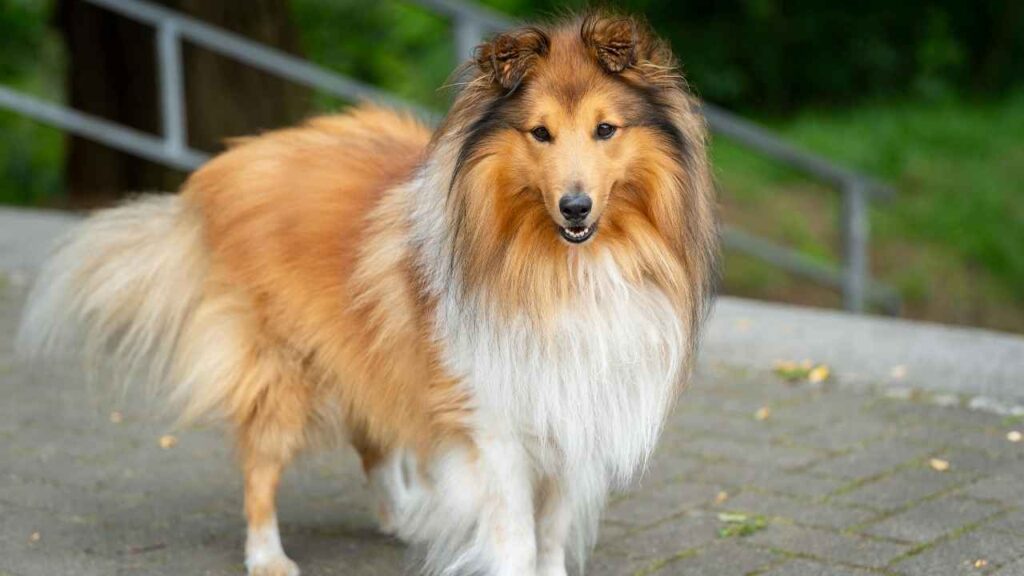
The Shetland Sheepdog, or “Sheltie,” is a herding breed that hails from the rugged Shetland Islands of Scotland, bringing plenty of classic rural charm. While they share a strong resemblance to Rough Collies, they are actually a distinct, much smaller breed.
These agile dogs feature a refined head with a tapering muzzle, and their small, sturdy bodies are covered in a thick, beautiful double coat. Thanks to a diverse genetic background, modern Shelties tend to be slightly larger than their early ancestors.
The Australian Shepherd is a striking herding dog that actually originated in the western United States during the late 1800s. According to PetMD, the breed has a rich lineage with ancestors tracing back to the American West, Australia, and even the Pyrenees Mountains alongside Basque immigrants.
This eager-to-please, hard-working dog was a favorite at both ranches and rodeos, earning its crown as the ultimate ranch dog. Today, the Aussie is one of the most popular family companions, getting along wonderfully with adults and children alike.
Size & Build Differences
The Shetland Sheepdog typically stands between 13 and 16 inches tall and weighs a manageable 15 to 25 pounds. As a small-to-medium-sized companion, the Sheltie is an excellent choice for city dwellers and apartment living, provided they get regular opportunities to stretch their legs.
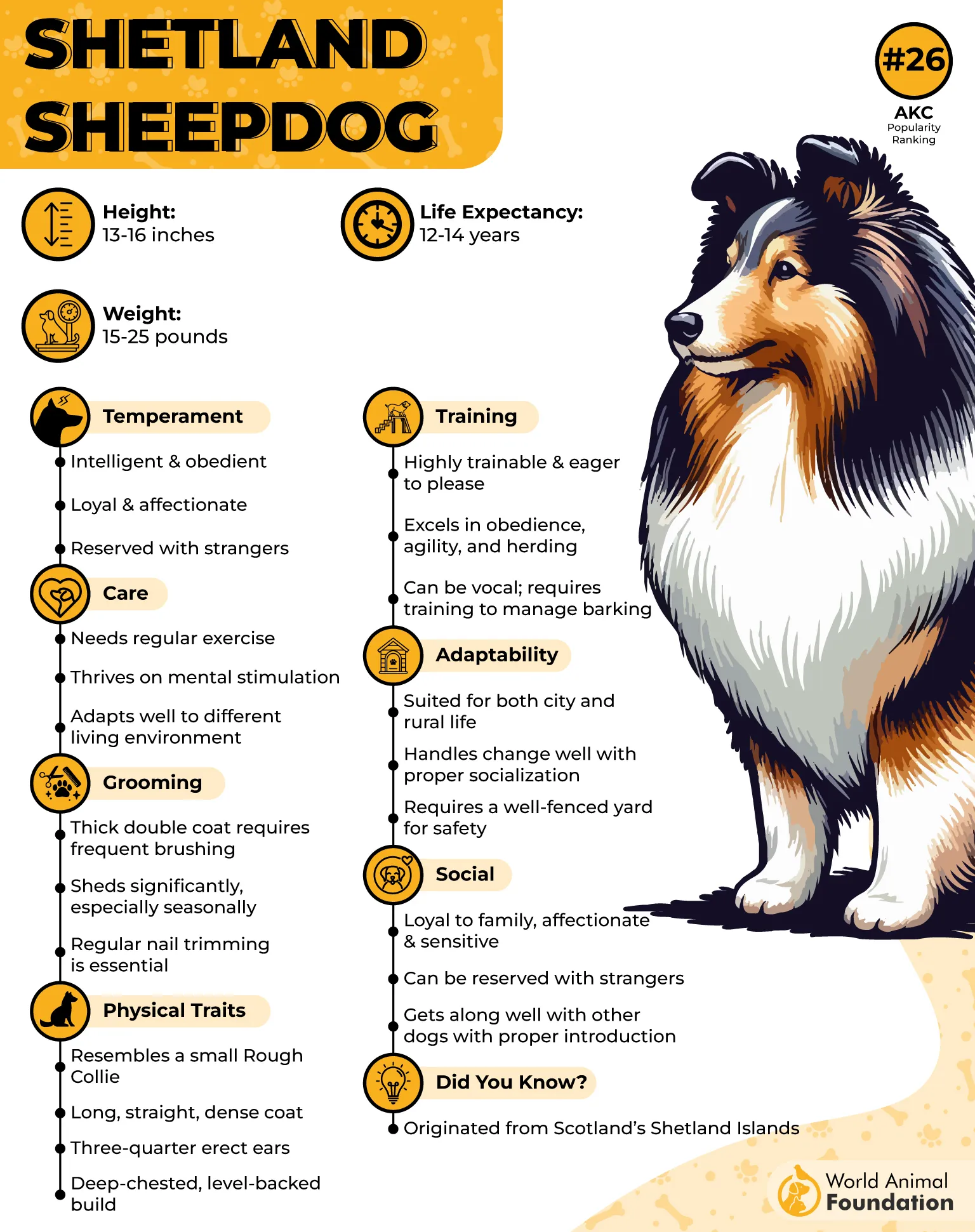
Their expressive almond-shaped eyes, alert triangular ears, and long muzzle give them a bright, inquisitive expression, while their compact, well-proportioned bodies make them incredibly agile and quick on their feet.
In contrast, the Australian Shepherd is a medium-to-large dog, typically weighing between 40 and 65 pounds and standing 18 to 23 inches tall. Built for endurance and power, their athletic frame allows them to perform demanding herding duties for hours without tiring.
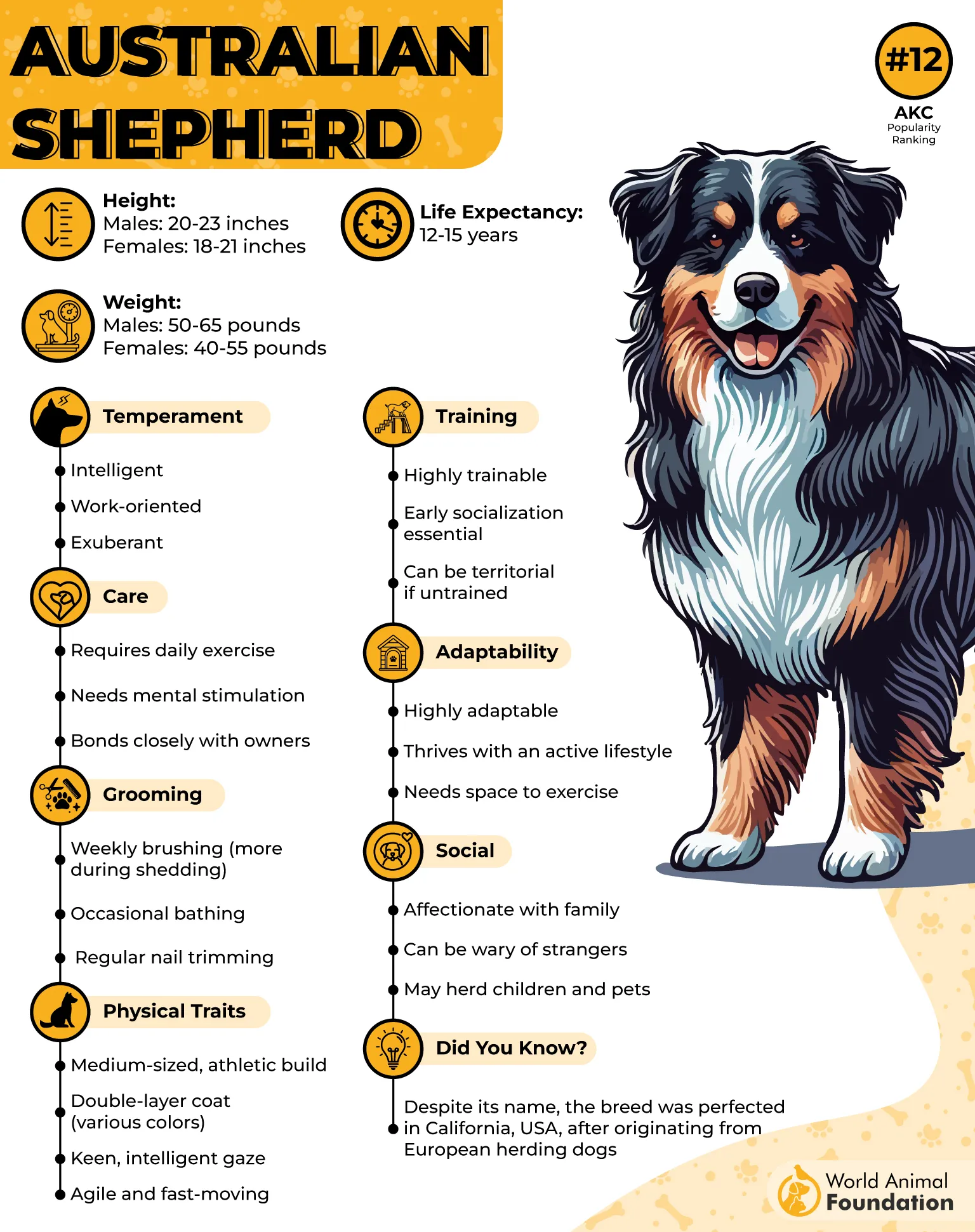
While genetics, gender, and proper nutrition will determine exactly how large your Aussie puppy grows, every adult Aussie carries a signature alert look, defined by keen, often multicolored eyes, mobile ears, and a highly sensitive nose, showcasing a dog with incredibly sharp senses.
Temperament & Personality
When it comes to temperament, the Shetland Sheepdog is a bright, energetic companion that thrives on being active and engaged. Because of their sharp minds, they can get bored easily without a task or play session, but they are just as happy to wind down and cuddle with their owners, showing the deep loyalty and affection the breed is known for.
According to The Kennel Club, Shelties live to please, making them one of the easiest breeds to train and a top choice for competitive obedience. Their playful, gentle, and friendly nature makes them a wonderful fit for families with children.
The Australian Shepherd is also a highly affectionate breed that makes an incredible family pet, especially when provided with early socialization and consistent training. True to their herding heritage, Aussies love interacting with their humans and are remarkably responsive, robust, and eager to work.
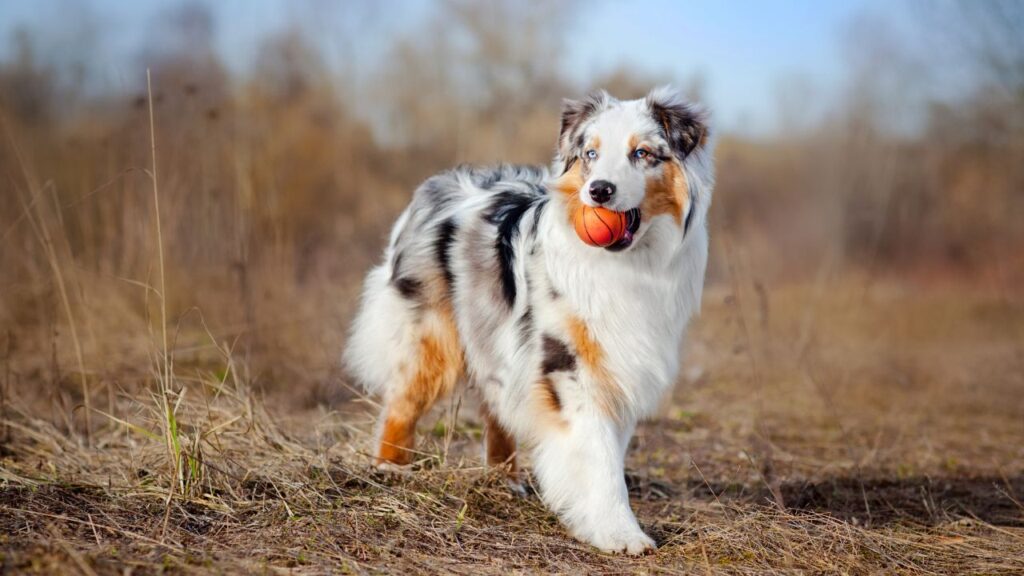
They are the perfect match for active families who love including their dog in outdoor adventures, as Aussies constantly crave both physical exercise and mental challenges. While fiercely loyal and loving with their inner circle, Aussies can be naturally reserved around strangers, making them excellent, watchful guardians of their home.
Exercise & Energy Levels
Shetland Sheepdogs are high-energy dogs that require daily physical exercise and mental stimulation to stay happy and healthy. If you prefer a low-key, relaxed lifestyle, a Sheltie might not be the best fit, as these bright working dogs thrive when they are on the move.
While their smaller size makes them great candidates for city and apartment living, they still need plenty of outdoor time, making daily on-leash walks essential to keep them content.
Similarly, the Australian Shepherd is a high-drive breed that needs vigorous daily exercise to maintain their physical health and high spirits. Built for action, Aussies will not thrive in a sedentary household. These dogs love being outdoors, making them the perfect companions for hiking, jogging, or training in dog sports like agility.
If you have a fenced yard, it is a great place to let them stretch their legs, but keep an eye on them: their strong herding instincts mean they might try to round up other family pets, especially smaller animals.
Training & Intelligence
Shelties love nothing more than being useful, and their high intelligence makes training them a breeze. Enrolling them in puppy classes at an early age is a fantastic way to ensure they grow into well-behaved, obedient companions.
Because they learn so quickly, Shelties are ideal candidates for learning complex tasks and excelling in various canine sports, including agility, competitive obedience, tracking, and herding.
The AKC states that Australian Shepherds are also highly intelligent dogs with a powerful work ethic and an eager-to-please attitude, especially when started with early, consistent training. Because they are so driven and robust, Aussies do best with experienced owners who know how to channel their intense energy in the right direction.
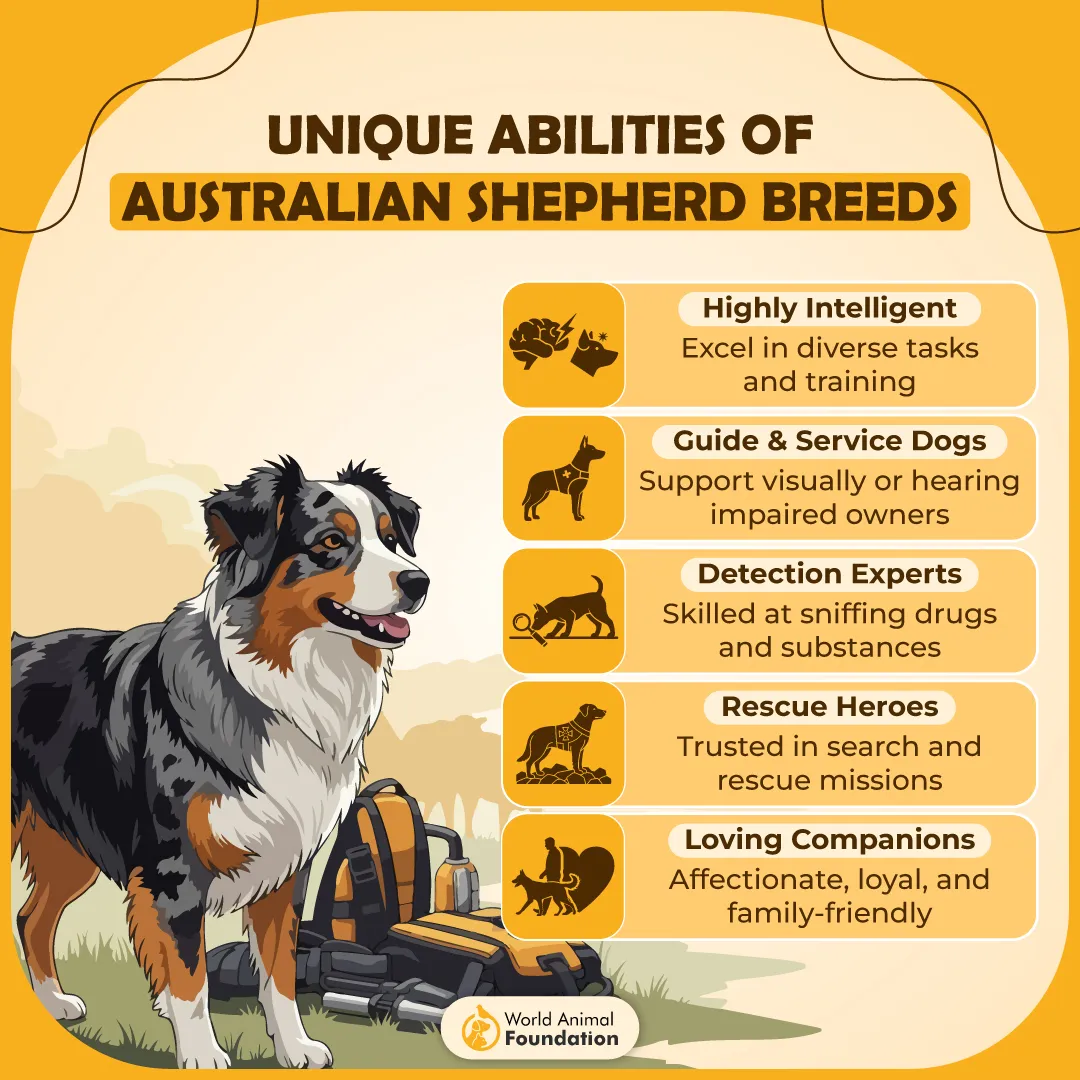
Their deeply loyal nature means they can be prone to separation anxiety if left alone for long stretches. Additionally, a bored Aussie will quickly find their own “jobs,” which often lead to destructive habits or excessive barking if their minds aren’t kept busy.
However, when properly stimulated, their brilliance shines in demanding dog sports like agility, flyball, obedience, and field trials. Just keep in mind that their high herding and prey drives mean solid leash training is a must before heading out on adventures.
Vocal Behavior
If you are looking for a quiet dog, you may want to look elsewhere, as Shelties are known for being quite vocal. As a natural herding breed, their job was historically to notice any movement, and they will absolutely let you know the moment they spot anything out of the ordinary.
While this makes them incredibly loyal and excellent watchdogs, it does mean they are quick to sound the alarm.
For a dog as active and interactive as the Australian Shepherd, barking is simply part of the package. Having spent generations communicating with ranchers and managing livestock, Aussies are natural communicators.
Beyond barking as watchdogs to notify you of perceived threats, Aussies will often vocalize with grunts, whines, and murmurs just to express their different moods and check in with their humans.
Coat & Grooming
When it comes to coat care, keeping a Sheltie looking their best is all about consistency and commitment, as their gorgeous, long hair is prone to shedding. They carry a dense, soft undercoat beneath a straight, harsh outer coat, making a thorough weekly brushing essential to prevent mats, tangles, and trapped dirt.
During their bi-annual shedding seasons, you will definitely want to reach for the undercoat rake and comb more frequently to keep up with the loose hair.
The Australian Shepherd’s weather-resistant, thick double coat also requires regular upkeep. While their coat comes in a beautiful variety of standard colors, including black, blue merle, red, and red merle, often accented with white markings and tan points, it is designed to protect them in the field and will shed moderately year-round.
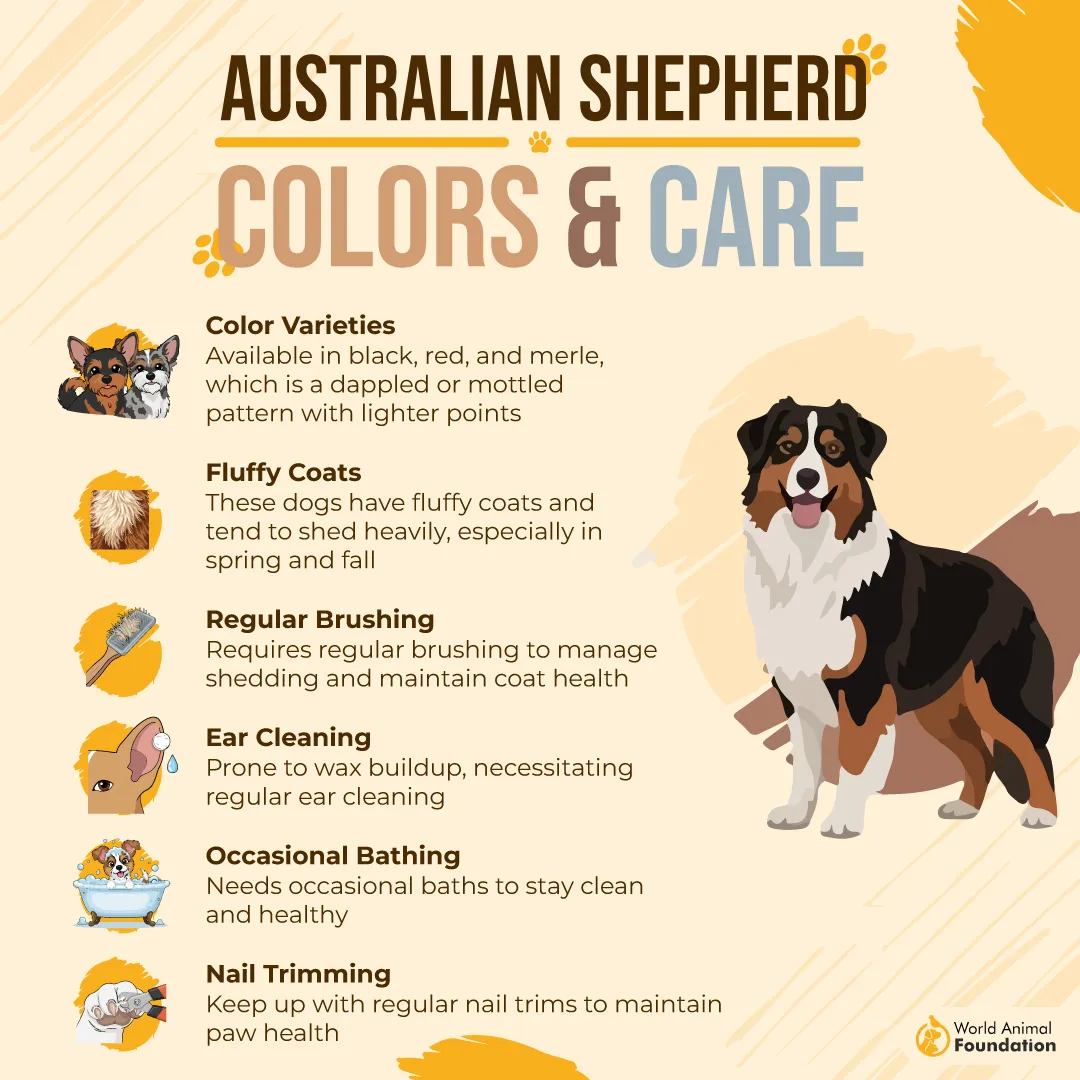
To keep their fur healthy and reduce the amount of hair on your furniture, plan on brushing your Aussie at least twice a week, bumping that up to daily sessions when they blow their coat in the spring and fall.
Health Issues & Lifespan
Shetland Sheepdogs are generally healthy dogs, especially when raised with a nutritious diet and regular exercise. However, like all breeds, they can be prone to certain hereditary health issues. Key conditions to watch out for in Shelties include:
Hip Dysplasia
Collie Eye Anomaly (CEA): A genetic condition that affects eye development.
Dermatomyositis: An inherited inflammatory disease often referred to as “Sheltie Skin Syndrome.”
Von Willebrand’s Disease: A genetic bleeding disorder.
Thyroid Disorders (specifically hypothyroidism)
Epilepsy
Be sure to ask breeders or rescue groups for health clearance certificates before bringing a puppy home. With proper care, Shelties have an average lifespan of 12 to 14 years.
The Australian Shepherd is also a robust breed known for generally excellent health, especially when sourced from an ethical breeder. Even so, they are prone to a few genetic health concerns, such as:
Hip and Elbow Dysplasia
Progressive Retinal Atrophy (PRA)
Collie Eye Anomaly (CEA)
Hereditary Cataracts
Epilepsy
MDR1 (Multi-Drug Sensitivity) Mutation: A genetic mutation that makes them highly sensitive to certain common medications and antiparasitics.
Lymphosarcoma (lymphoma)
Deafness
Early screening is vital for these conditions, so always request health test results from your breeder. On average, active and happy Aussies enjoy a lifespan of 12 to 15 years.
Conclusion
Both Australian Shepherds and Shetland Sheepdogs are outstanding options for potential pet parents searching for a fiercely loyal partner-in-crime. These clever pups aren’t just great watchdogs; they are also fantastic partners for outdoor adventures like hiking, jogging, and daily walks, helping you keep your own fitness goals right on track.
Whether you choose the compact, vocal Sheltie or the robust, driven Aussie, the journey starts with sourcing your new best friend responsibly. When adopting, always make sure to connect with an ethical breeder who prioritizes genetic health screenings, or reach out to a reputable breed-specific rescue center to give a deserving dog a loving second chance.
