




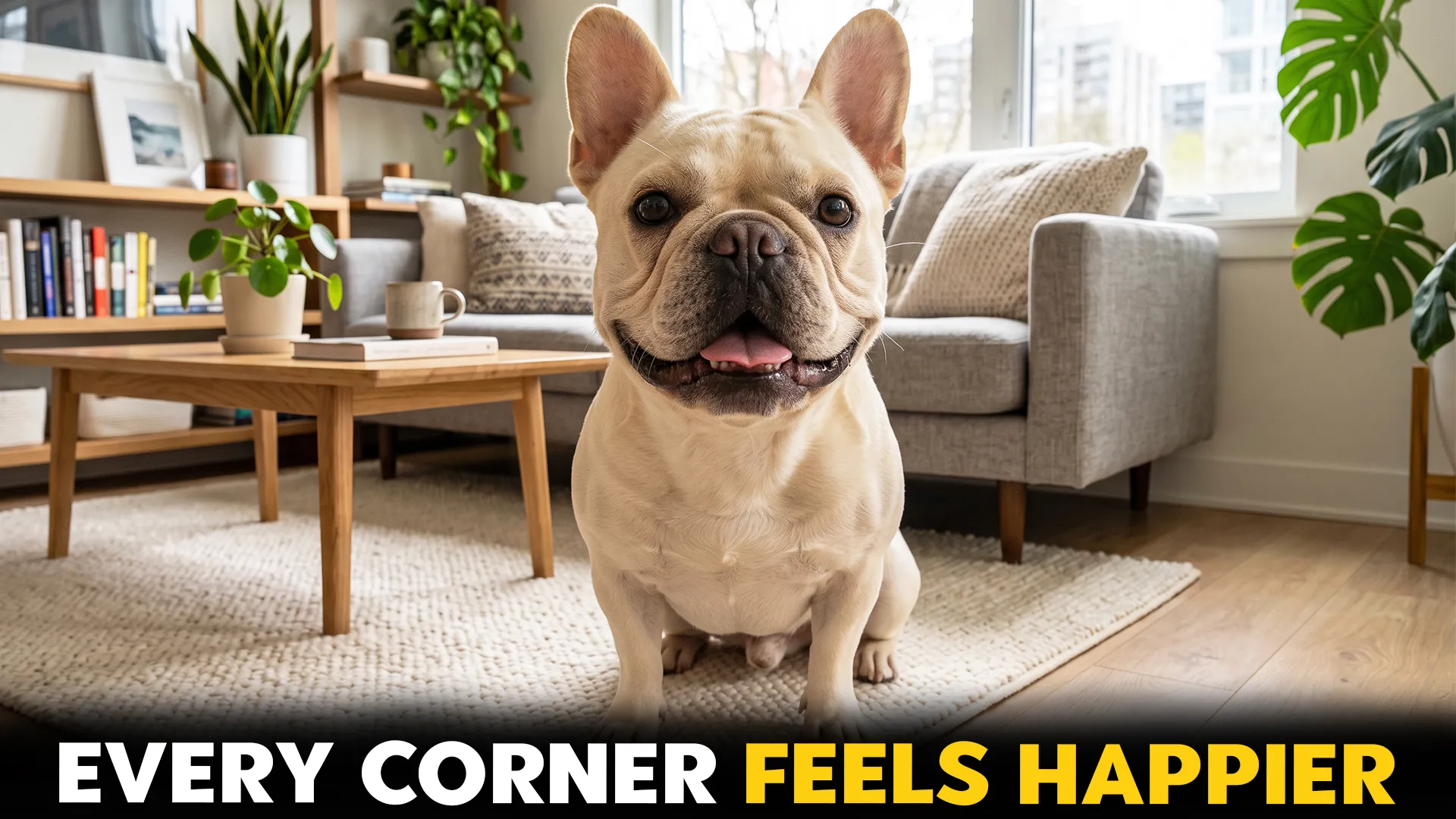
A cozy home can feel even warmer when a four-legged companion curls up beside you, but limited square footage makes choosing the right dog breed especially important. The best small-space dogs are not simply the tiniest breeds; they are dogs whose exercise needs, noise levels, temperament, and daily habits can fit comfortably into apartment life.
The American Kennel Club notes that size is only one consideration when choosing an apartment dog, since activity level, vocal tendencies, and adaptability matter just as much. Every dog still needs exercise, mental stimulation, toilet breaks, training, and opportunities to explore outside the home.
This list includes relaxed lap warmers, playful family companions, silky-coated charmers, and tiny dogs with surprisingly confident attitudes. Let’s meet seven wonderful breeds that can turn a modest home into their favourite place on Earth.
Best Dog Breeds for Cozy Homes and Limited Square Footage
1. Cavalier King Charles Spaniel
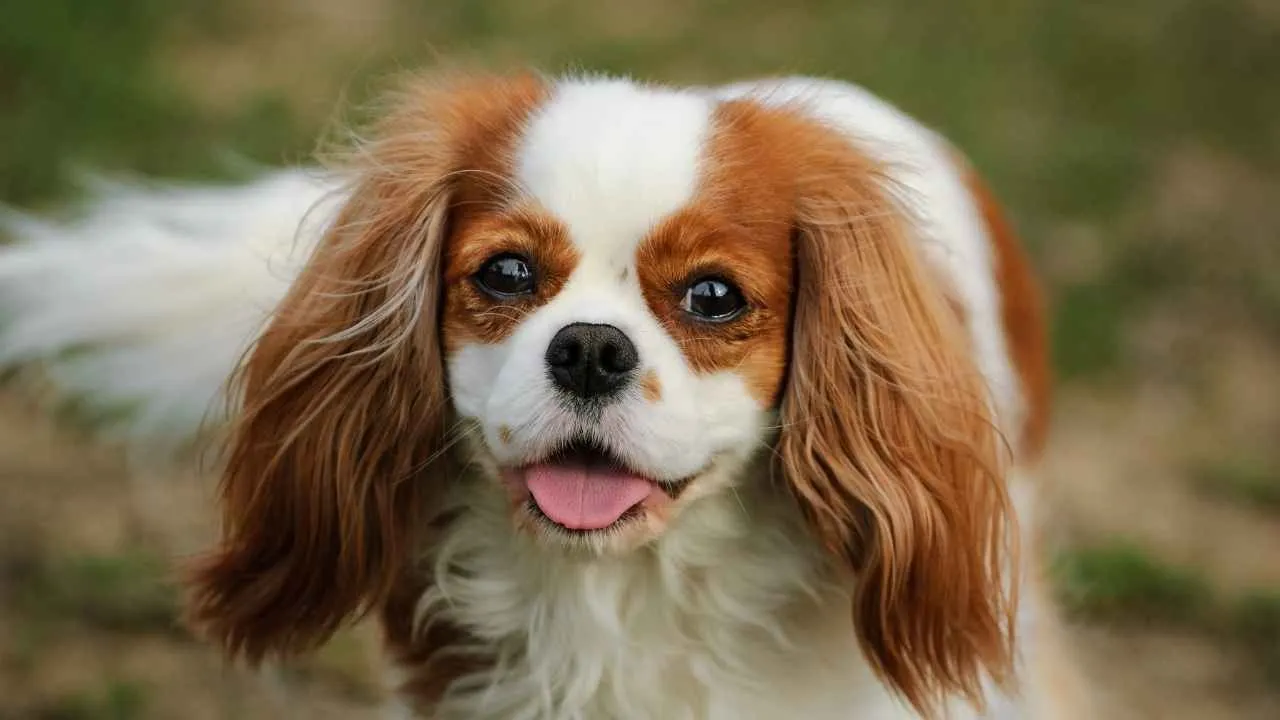
The Cavalier King Charles Spaniel is basically a professional cuddle consultant wrapped in a silky coat. Developed as a companion, this affectionate toy spaniel usually wants to stay close to its family, whether that means following someone from room to room or claiming the warmest lap in the apartment.
They are often excellent matches for families because they tend to be friendly, patient, and socially open. Many can live successfully with respectful children, other dogs, and dog-friendly cats when introductions are handled properly. Their eagerness to please also makes positive, reward-based training feel more like teamwork than a tiny battle of wills.
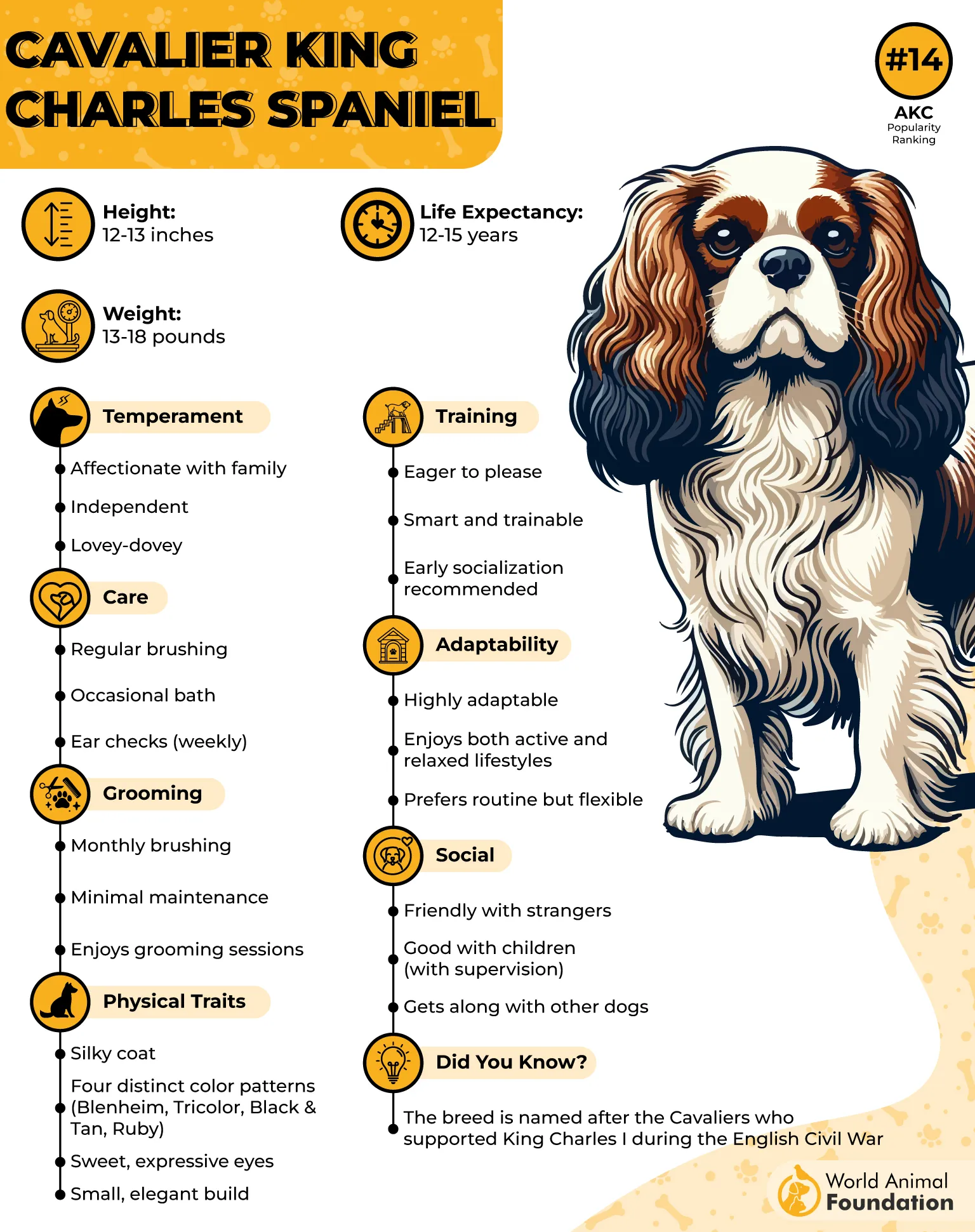
Although this breed adores sofa time, it is not an ornamental cushion with ears. The UKC says that Cavaliers descend from sporting spaniels and usually enjoy daily walks, sniffing adventures, gentle games, and short training sessions.
A couple of moderate walks plus indoor play can often meet their needs, provided the individual dog is healthy and receives consistent stimulation.
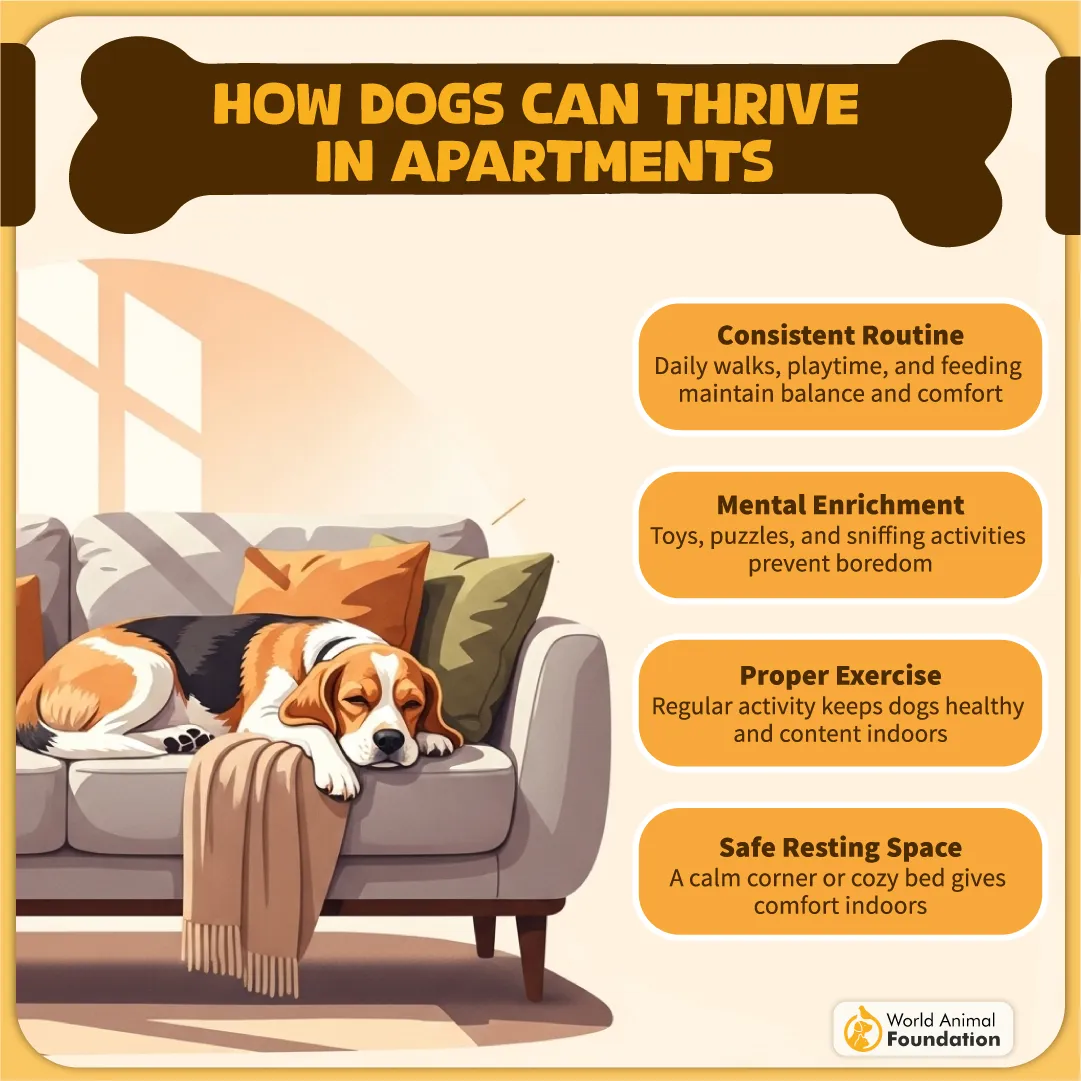
Their compact bodies allow them to move comfortably through small rooms without turning every coffee table into a crash site. They are generally adaptable enough to settle after exercise, which matters more in an apartment than simply being small.
The biggest lifestyle challenge is their strong desire for companionship. Cavaliers may struggle when left alone for long workdays, so they are better suited to households where someone is frequently home or reliable daytime care is available.
How Do They Manage In A Small Space
Their compact build and ability to relax after moderate exercise help them settle comfortably in apartments.
Short walks, puzzle toys, gentle games, and frequent interaction prevent the home environment from becoming boring.
A cosy bed near the family works better than isolating this deeply people-oriented dog in another room.
2. French Bulldog
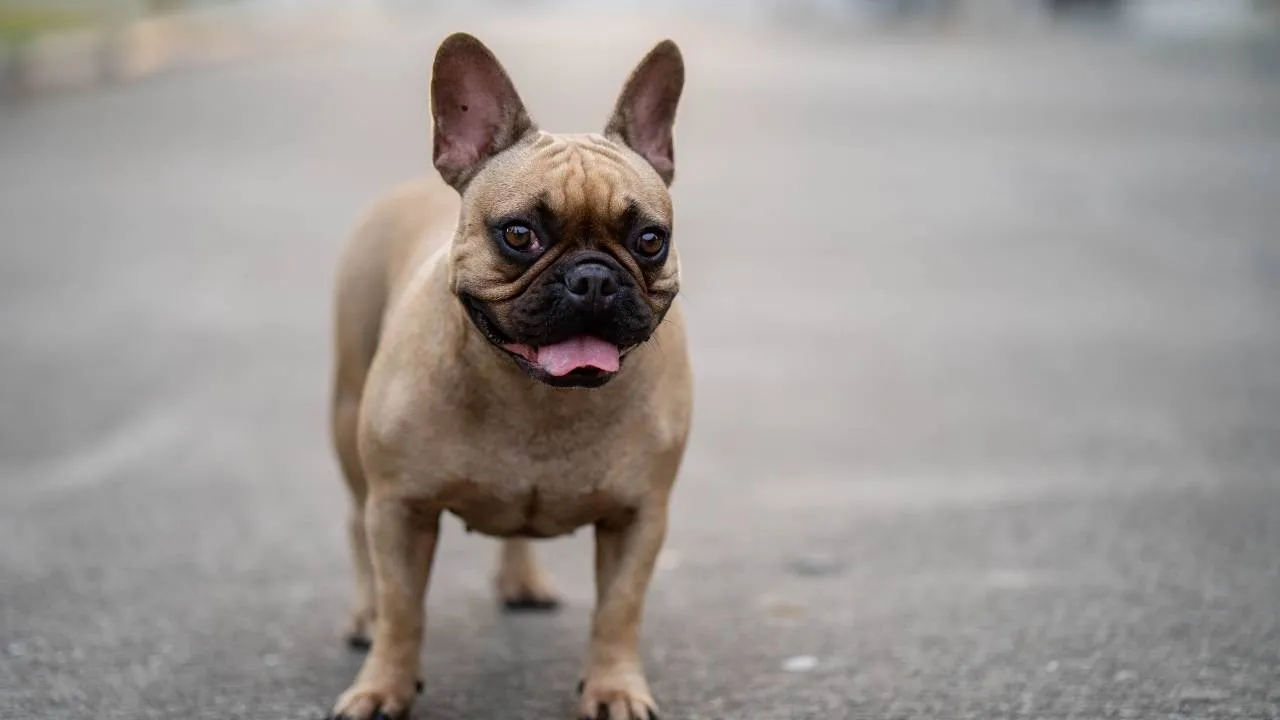
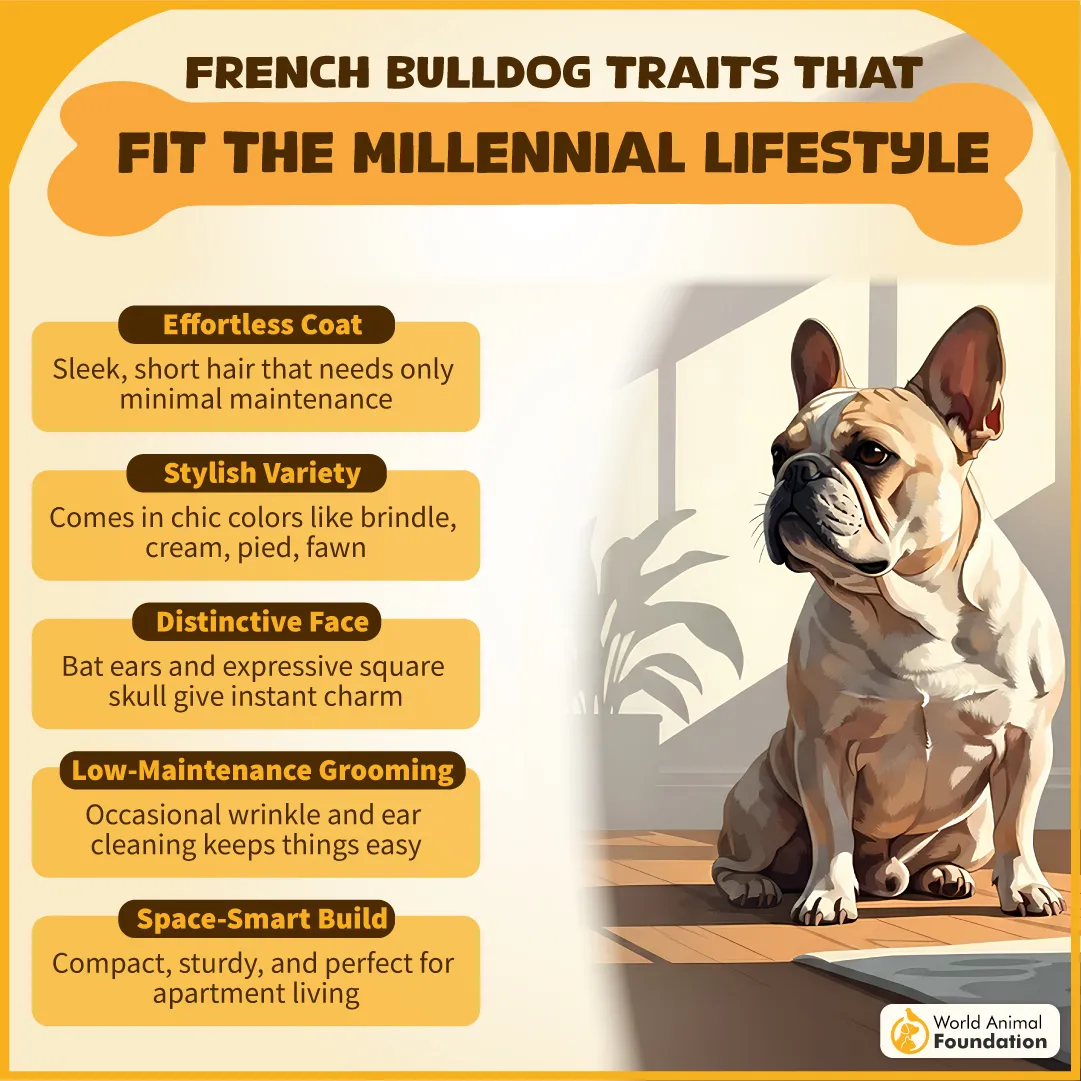
The French Bulldog is one of the most recognisable apartment companions, thanks to its compact frame, expressive face, and legendary talent for occupying the best seat in the house. These apartment-living dogs usually enjoy short bursts of play followed by serious lounging, which can suit people who prefer a moderate daily routine.
French Bulldogs do not normally require miles of running, but they still benefit from daily walks and mentally engaging activities.
Food puzzles, basic obedience, scent games, and controlled indoor play can help burn energy without turning a small living room into a racetrack. Training should begin early because their charming stubborn streak can become much less adorable when they decide house rules are merely suggestions.
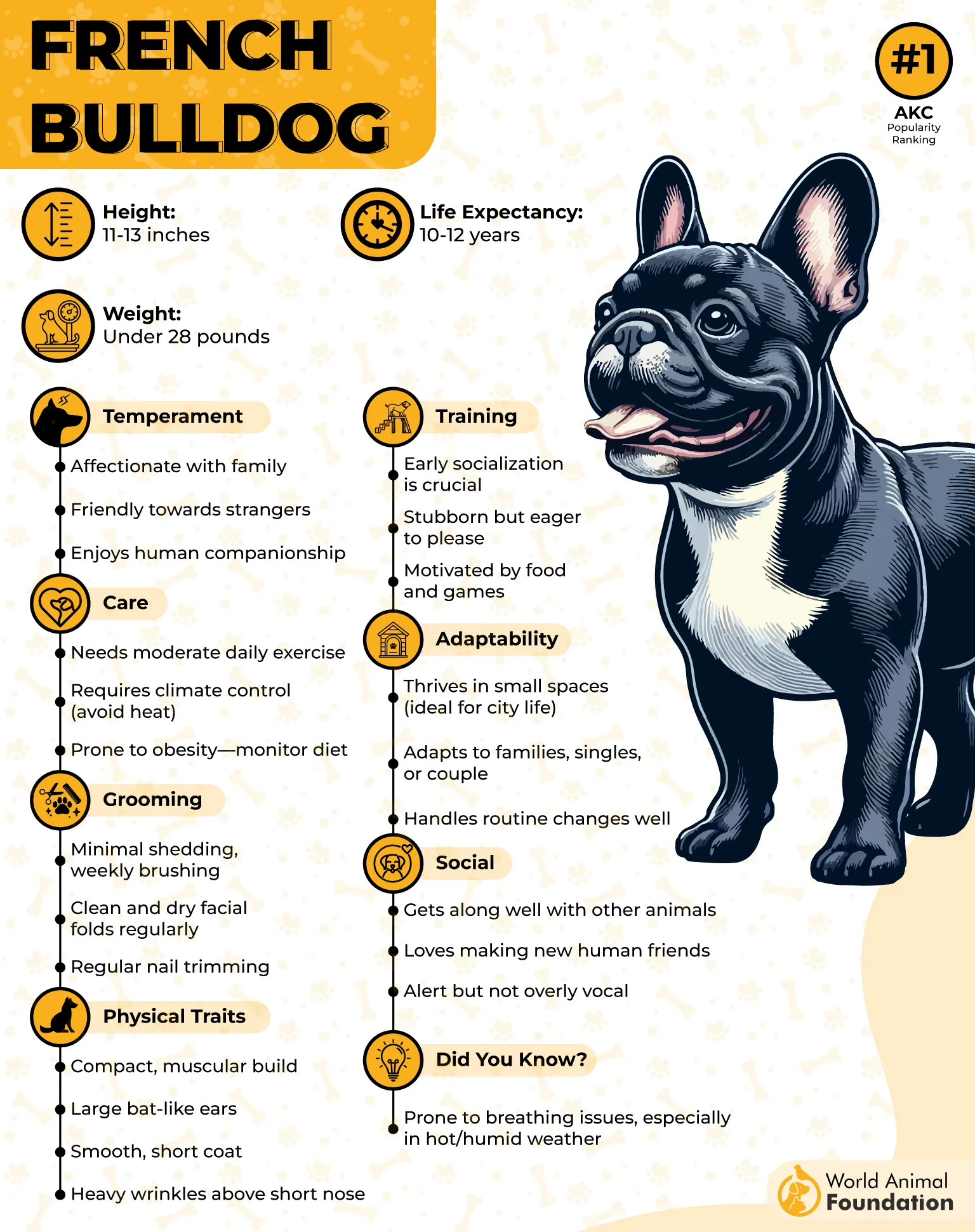
Their short coat is easy to maintain with weekly brushing and occasional bathing. However, facial folds must be kept clean and dry, nails should be regularly trimmed, and owners should monitor the ears and skin.
French Bulldogs are brachycephalic, meaning their shortened skull shape can be associated with restricted airways and breathing difficulty. They are more vulnerable to heat and should not be pushed through strenuous exercise, especially in warm or humid conditions.
VCA says veterinary sources advise particular caution with flat-faced breeds because overheating can occur even when the weather does not seem extremely hot.
They can flourish in small homes when the environment is cool, well-ventilated, and full of companionship. Frenchies often prefer to be involved in household activities rather than spend long periods alone, so remote workers and home-centred families may find them especially compatible.
How Do They Manage In A Small Space
Their moderate exercise needs make compact living practical when daily walks and enrichment remain part of the schedule.
Air conditioning, fresh water, and careful heat management are essential in warm apartments.
Place ramps or low steps near favourite furniture to reduce repeated jumping and make the home easier to navigate.
3. Shih Tzu
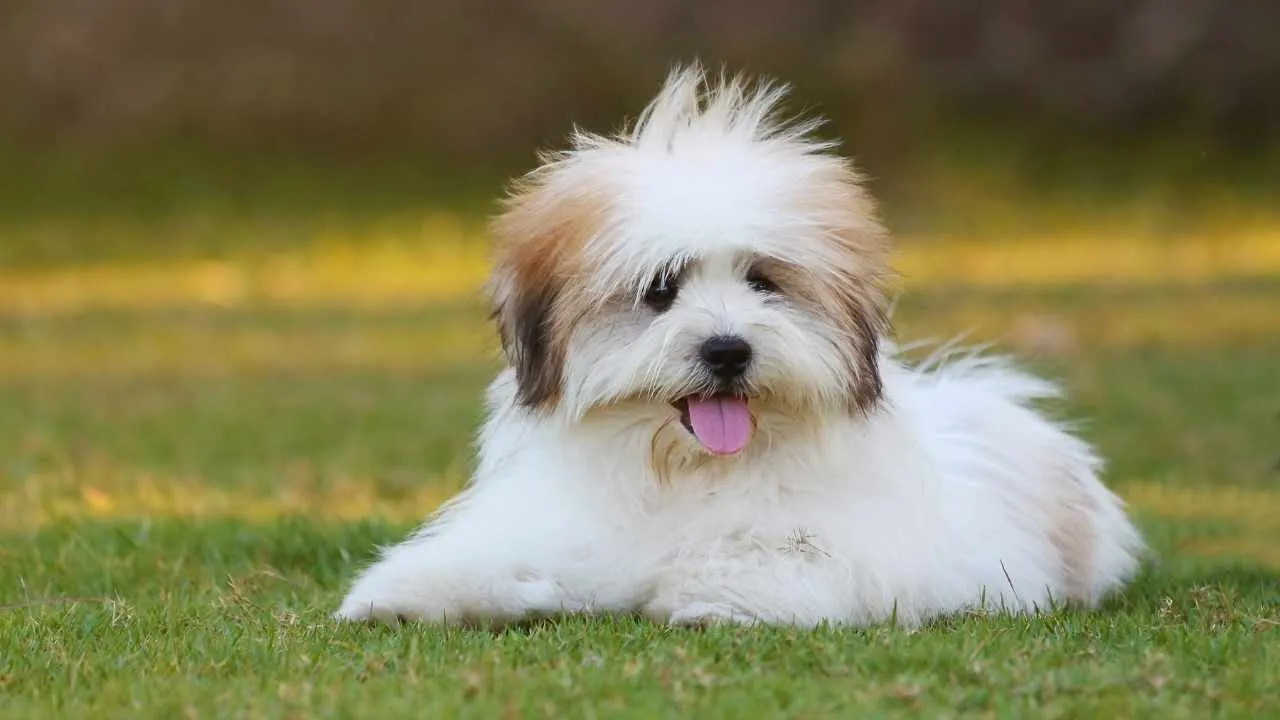
The Shih Tzu was built for companionship, and this small dog treats every home like a palace regardless of its actual floor plan. Its sturdy toy-sized body fits comfortably into apartments, while its affectionate nature makes it happiest when family members are nearby.
Shih Tzus usually need moderate exercise rather than intense athletic training. Short daily walks, gentle play, and indoor games can help maintain a healthy body and keep the brain engaged. Because they are small, several play sessions spread throughout the day can work better than a single exhausting outing.
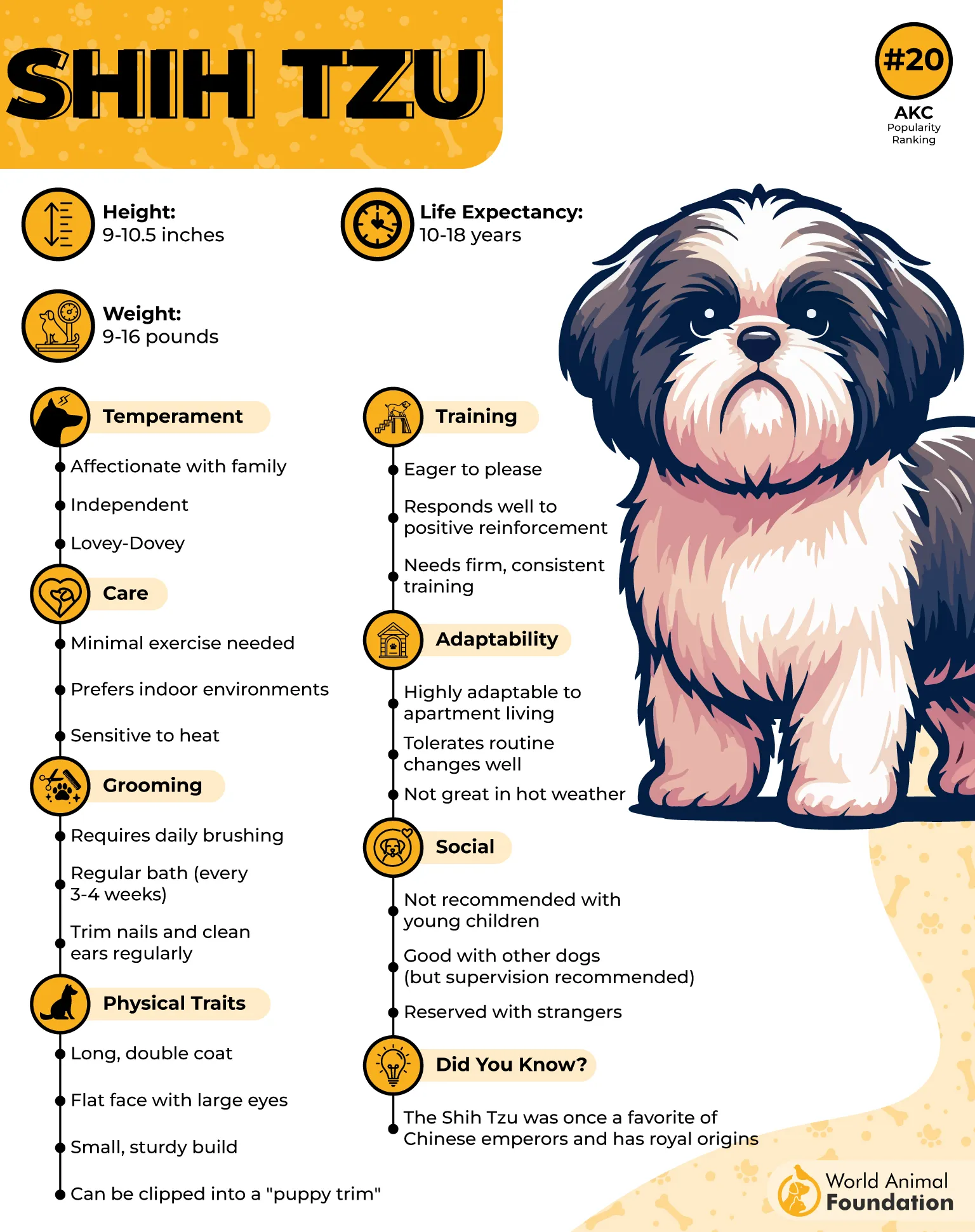
The breed’s long, flowing coat is beautiful but demands regular care to prevent mats and tangles. Many pet owners choose a shorter puppy trim, although even clipped coats require brushing, face cleaning, bathing, and professional grooming.
Limited floor space may suit the dog perfectly, but owners still need storage space for brushes, combs, shampoo, towels, and the tiny salon equipment this furry celebrity inspires.
PetMD says that they can be clever and independent, so training is most successful when it feels rewarding and varied. Harsh corrections are unnecessary and can damage trust, while treats, praise, and brief sessions usually keep them interested.
How Do They Manage In A Small Space
Gentle indoor games allow them to release energy without needing a large garden.
A predictable toilet routine is useful for upper-floor homes where outdoor access takes extra time.
Keep their resting area cool and uncluttered, particularly during warmer weather or after activity.
4. Japanese Chin
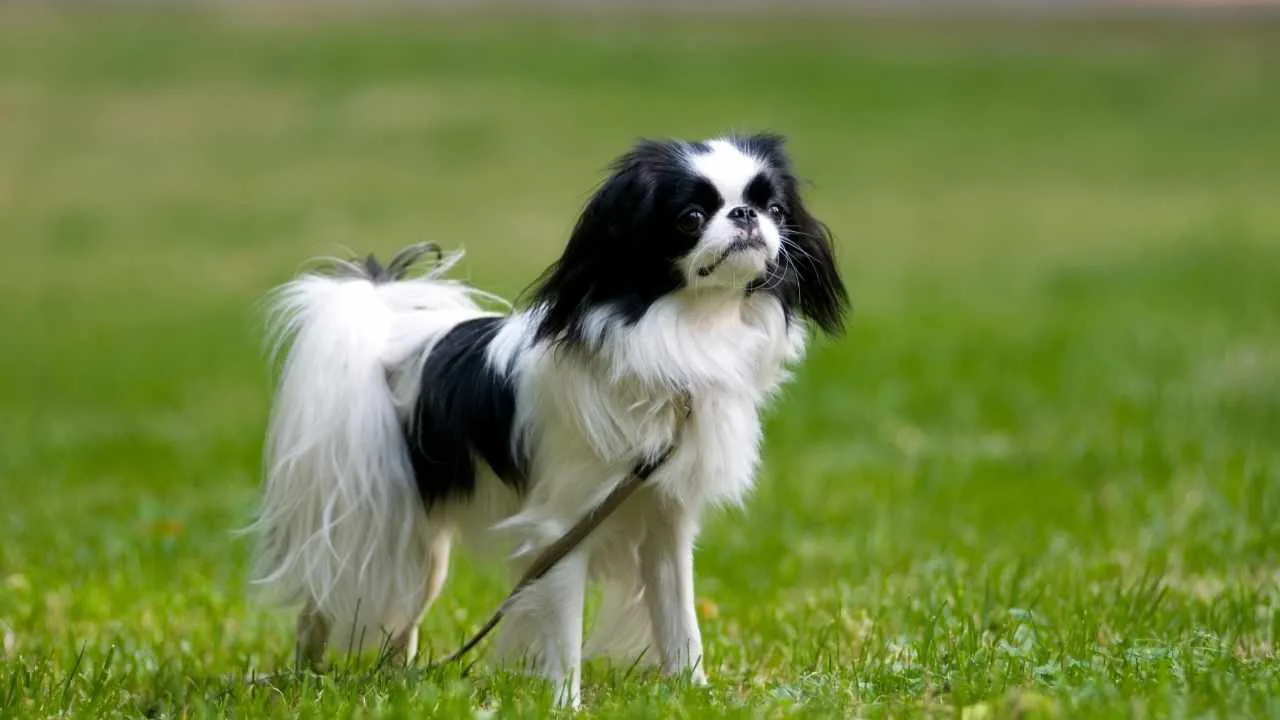
The Japanese Chin moves through a home with a graceful, almost cat-like style. This tiny companion is known for climbing onto furniture, choosing elevated resting places, and observing family life as though it has been appointed household supervisor.
Its small body and generally moderate exercise needs make it well suited to carefully managed indoor living.
These Japanese dogs are affectionate without being relentlessly boisterous. They may form strong bonds with their people, enjoy gentle play, and then settle quietly beside them. Their sensitive nature means they often do best in calm homes where people use patient handling rather than loud corrections or chaotic training methods.
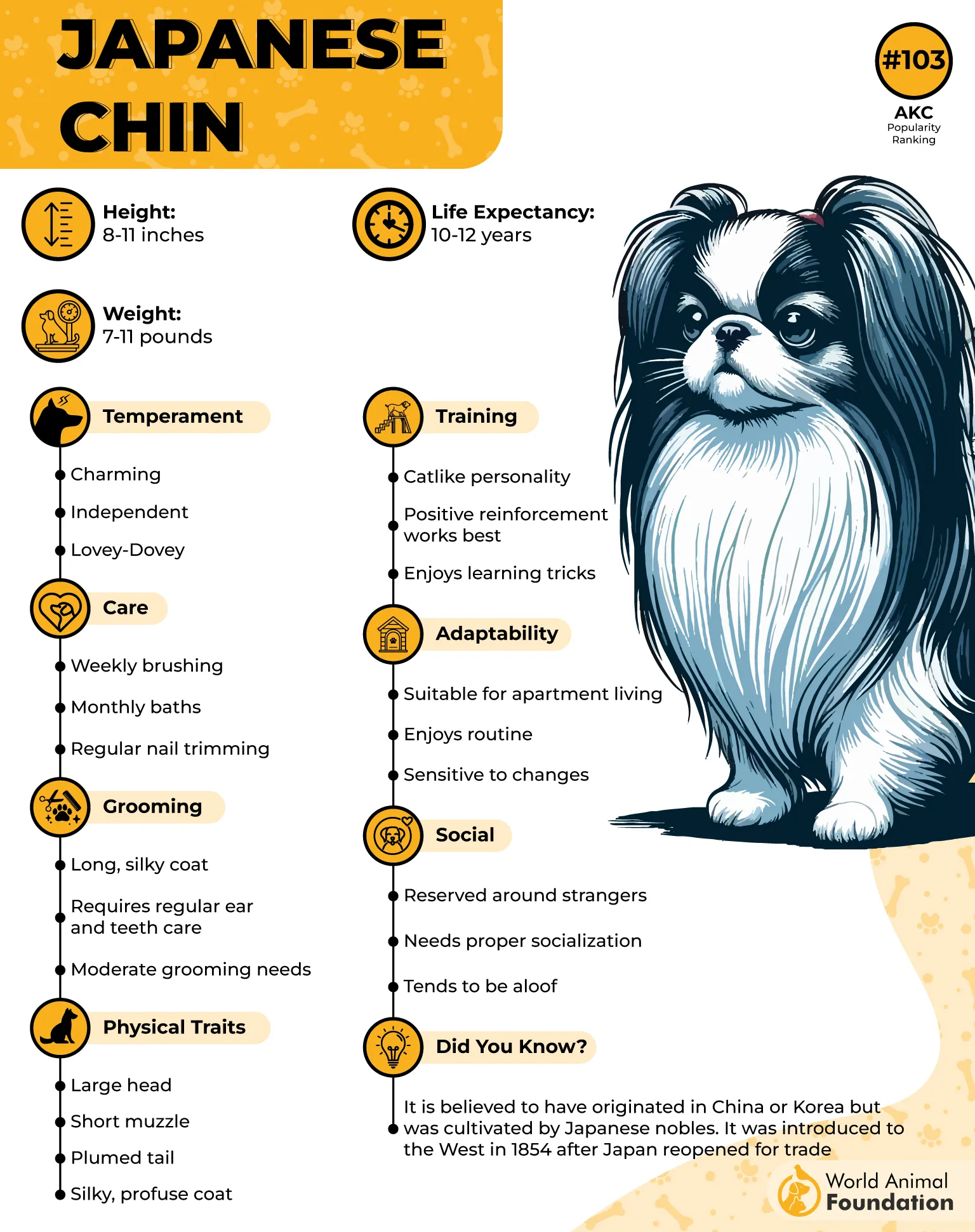
Daily exercise can include short walks, exploratory sniffing, and controlled indoor games. Their fine-boned structure makes rough wrestling, uncontrolled jumping, and rowdy play with much larger dogs risky.
In a small apartment, soft play zones and secure access to furniture can prevent their royal confidence from resulting in an undignified fall.
Japanese Chins have shortened muzzles, so heat, humidity, and strenuous exercise deserve caution. A cool indoor environment and relaxed walking schedule are especially important during summer.
How Do They Manage In A Small Space
Their light build and composed indoor behaviour allow them to move through compact rooms without creating chaos.
Provide a secure step or ramp to favourite sofas so climbing ambitions do not lead to injuries.
Quiet enrichment, window watching, and short walks often suit them better than loud, high-impact games.
5. Bolognese
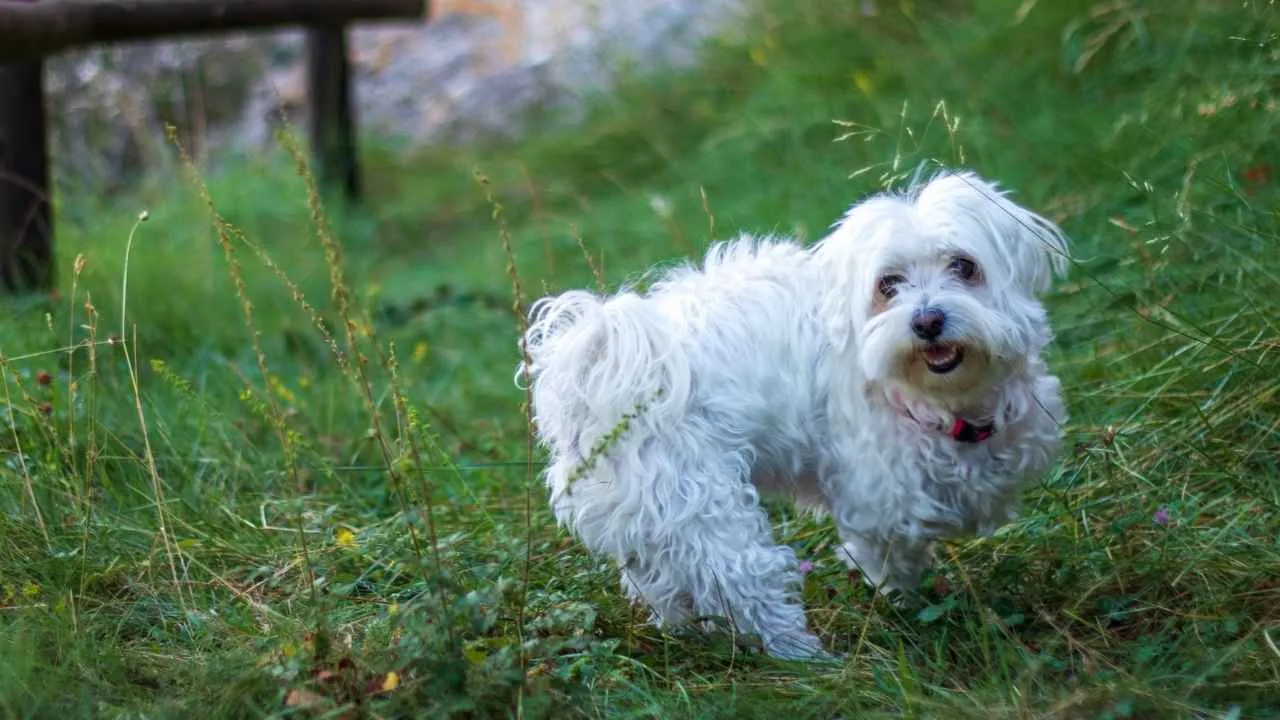
The Bolognese is a small Italian companion dog with a cloud-like white coat and a strong attachment to its people. It tends to be calmer and more thoughtful than some highly excitable toy breeds, although every individual has a distinct personality.
This combination of compact size and home-loving temperament can make the Bolognese an excellent candidate for apartment life.
These dogs often enjoy being included in daily routines, whether someone is reading, cooking, working, or performing the ancient ritual of moving laundry between chairs. They can be playful and entertaining without requiring nonstop high-intensity exercise.
A few short walks, training activities, and indoor games usually provide a practical rhythm for a healthy adult.
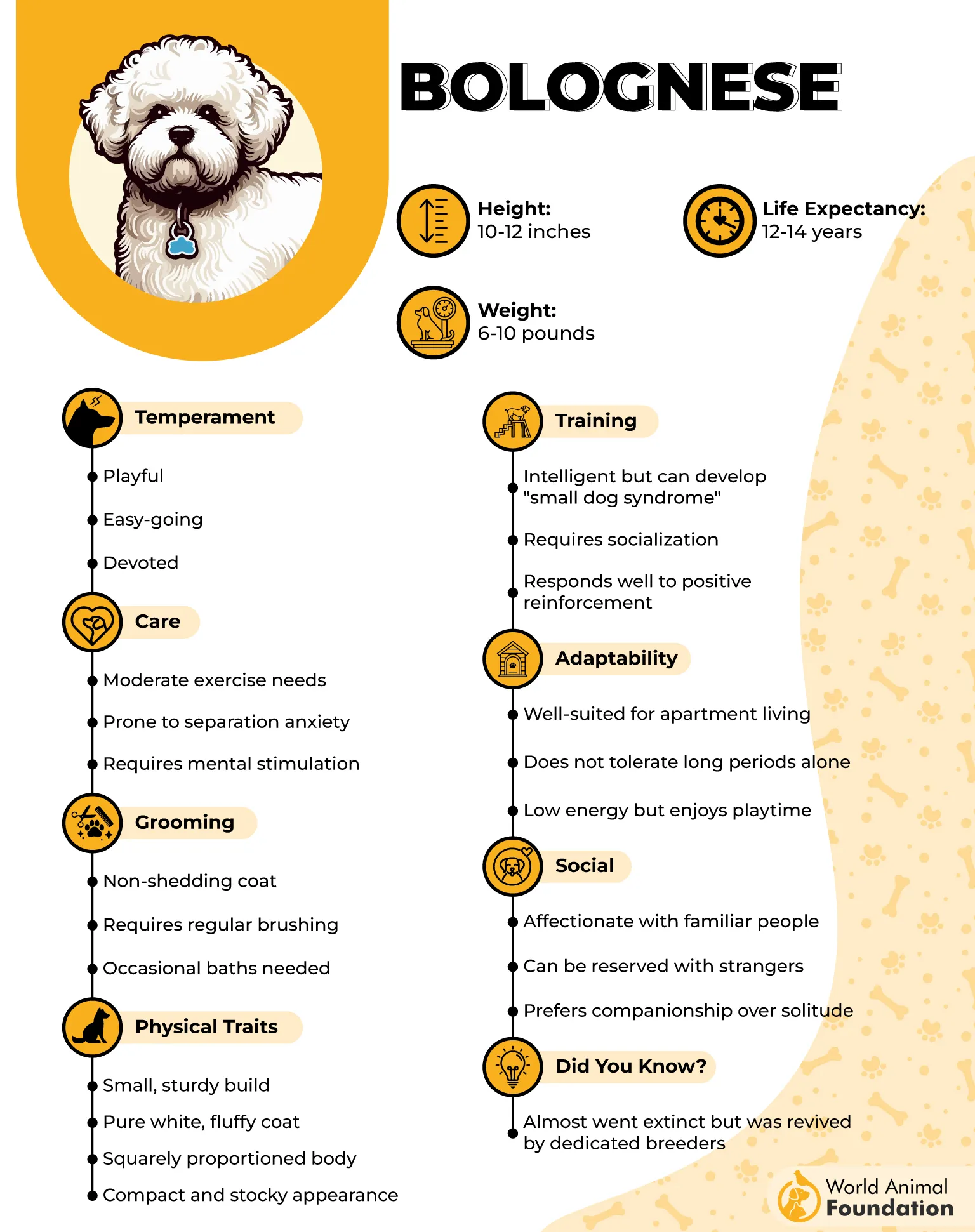
The Bolognese is intelligent but may be reserved with unfamiliar people, so early socialisation matters. Calm exposure to visitors, lifts, traffic, household noises, grooming, and other dogs can create a more confident urban companion. Positive reinforcement and reward-based training also give this people-focused breed a productive way to use its brain.
These dogs may become distressed when separated from their owners for too long. Apartment residents should gradually teach calm independence, use food toys, and avoid creating a routine in which the dog is never alone for even a minute.
How Do They Manage In A Small Space
Their moderate activity pattern works well when walks, training, and indoor interaction are provided consistently.
A designated grooming corner helps keep combs, sprays, towels, and coat-care supplies organised.
Independence exercises can reduce anxious behaviour and noise when family members briefly leave the apartment.
6. Pug
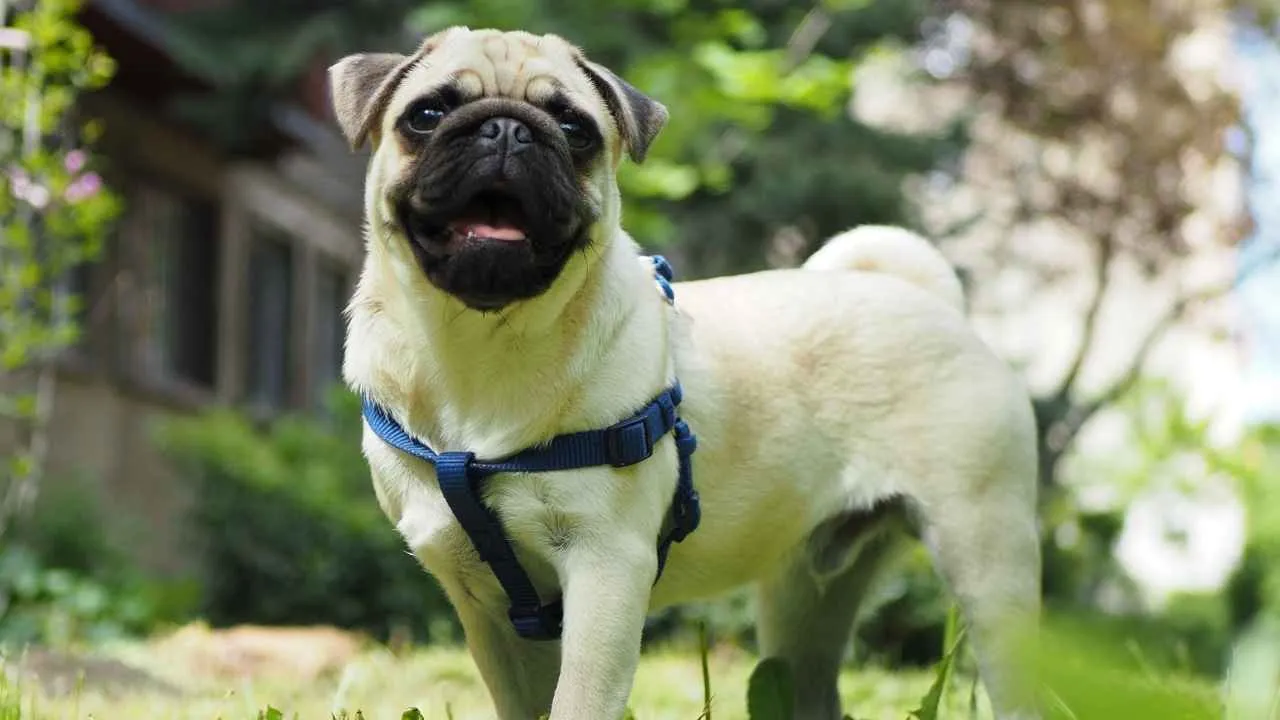
The Pug is a compact comedian with a talent for turning ordinary facial expressions into dramatic personal statements. These affectionate dogs usually love staying close to their families and can be comfortable in apartments when their health and exercise are managed responsibly.
They tend to prefer companionship, play, and cozy naps over long-distance athletic adventures. Pugs still need daily movement because too little activity can contribute to weight gain. Several brief walks and indoor games are often more suitable than a long, exhausting session.
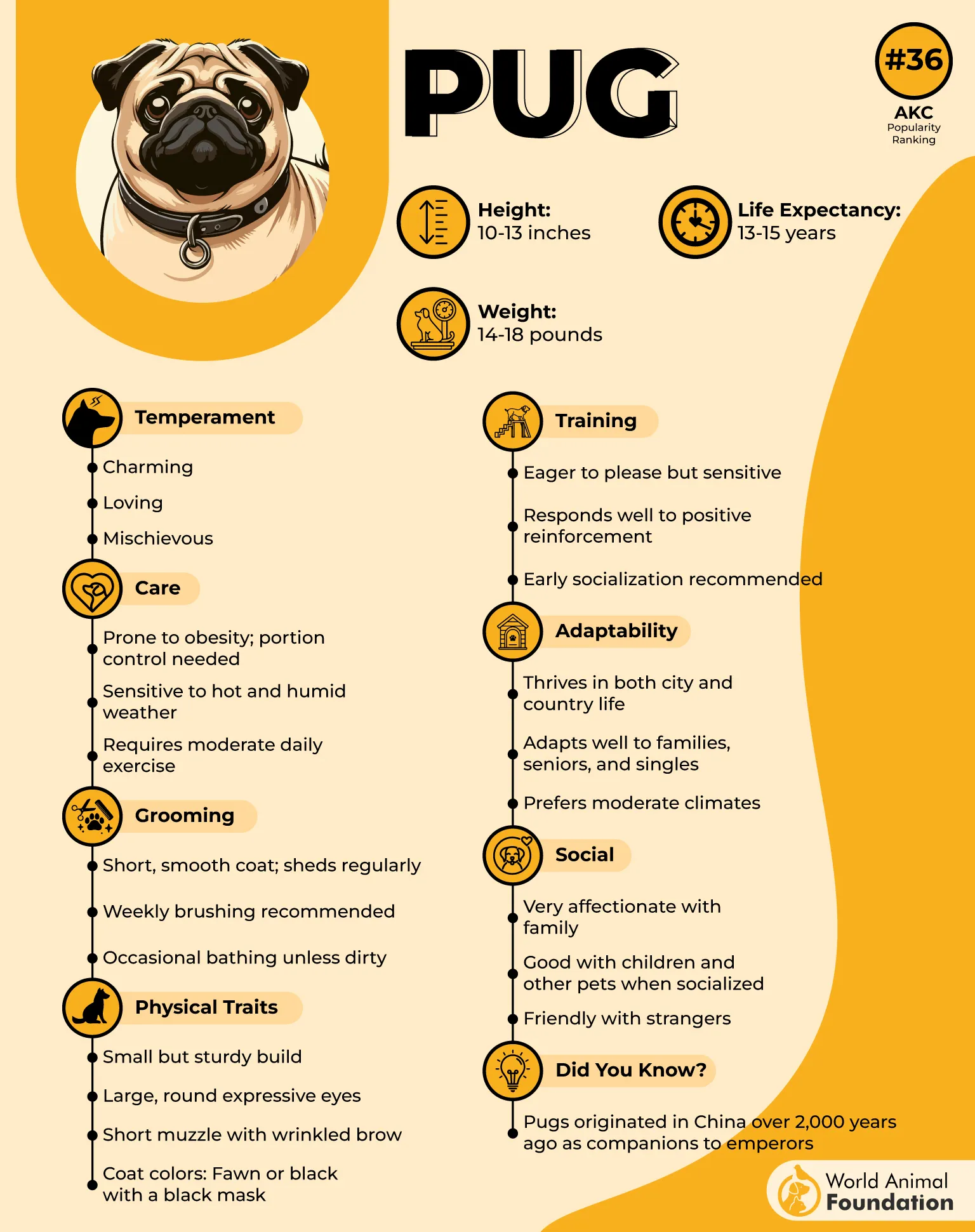
Their short coat is easy to brush, but Pugs can shed far more than their polished appearance suggests. Regular grooming helps remove loose fur before it becomes part of the sofa’s permanent design, while facial wrinkles require gentle cleaning and thorough drying.
The breed is brachycephalic and may experience airway limitations due to its shortened head shape. Heat, humidity, stress, and overexertion may make breathing more difficult, so walks should be timed for cooler parts of the day and adjusted to the individual dog.
A Pug’s success in small spaces depends on attentive management rather than simply on having a small body. Cool rooms, controlled portions, frequent companionship, and sensible exercise create a much safer lifestyle than endless treats and sedentary lounging.
How Do They Manage In A Small Space
Brief activity sessions fit apartment routines while helping prevent unhealthy weight gain.
Keep walking routes short and shaded, with immediate access to a cool indoor recovery area.
Vacuuming and frequent brushing are useful because that compact body can produce an unexpectedly impressive amount of fur.
7. Maltese
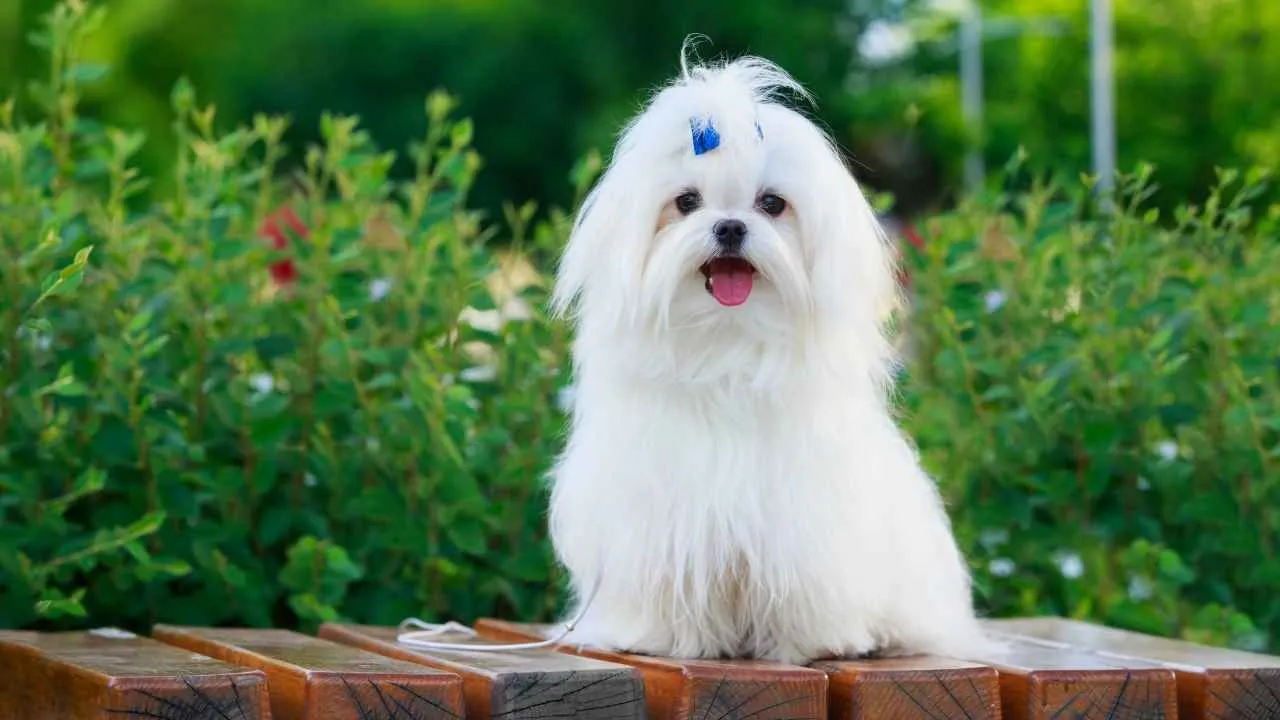
The Maltese is a tiny companion dog with a bright expression, flowing white coat, and personality much larger than its footprint. This breed can live comfortably in a limited space because it does not require a large indoor territory to stay content.
Despite the delicate appearance, these dogs can be lively, alert, and surprisingly bold. Short walks, indoor fetch, trick training, and food puzzles keep them entertained without demanding access to a private field. Their small size makes them convenient for urban routines, although they should still explore the outside world rather than spend their lives permanently indoors.
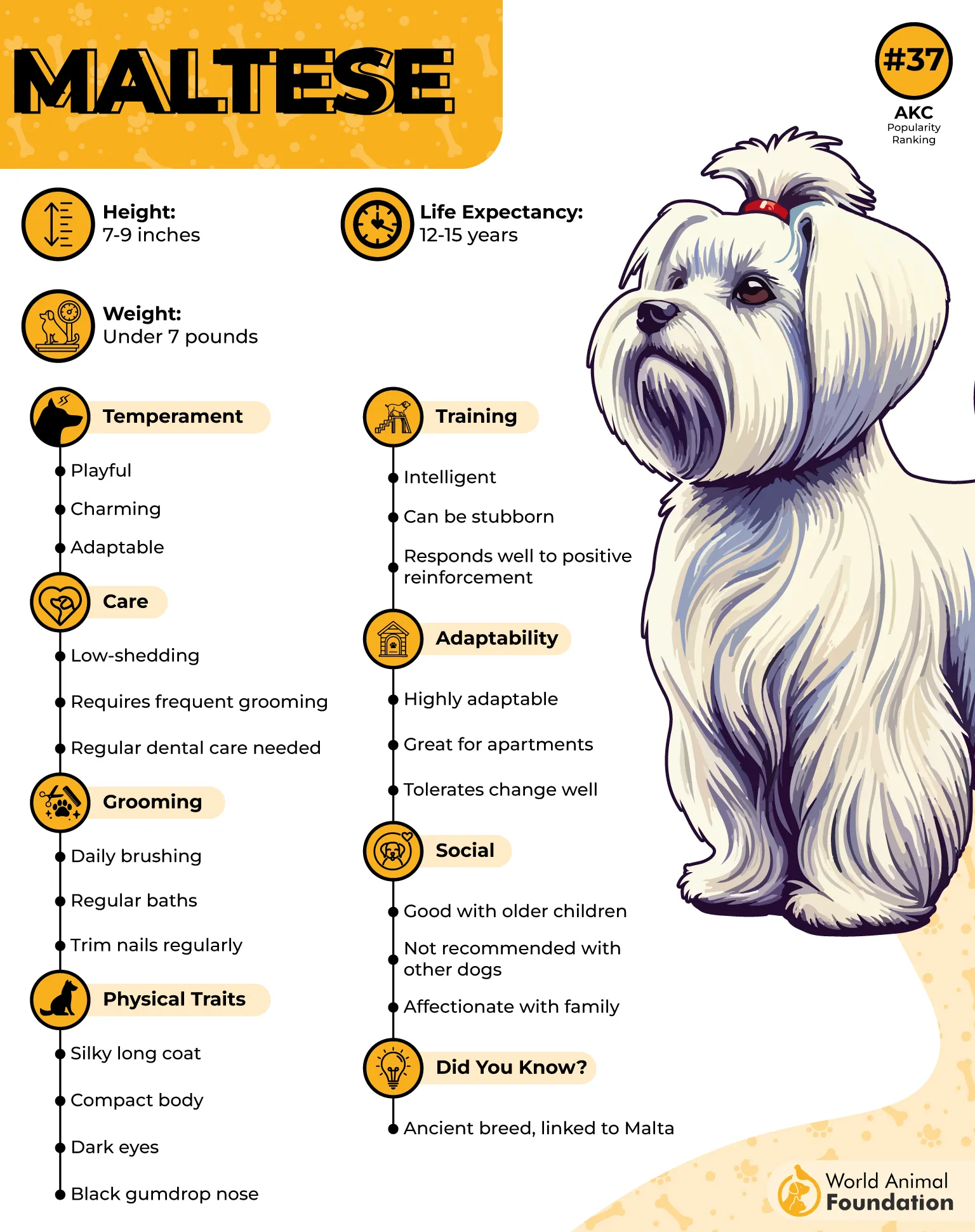
Training helps prevent nuisance barking and overly protective behaviour in shared buildings. Because they are intelligent and responsive, Maltese dogs often enjoy learning tricks when sessions remain upbeat and rewarding.
The long white coat requires near-daily attention when kept in full length. Many family pets wear a shorter trim that is easier to manage, but tear staining, tangles, face cleaning, bathing, and regular haircuts can still require considerable effort.
Their petite bodies require thoughtful household organisation. Furniture jumps, accidental kicks, rough children, and rambunctious larger pets can create hazards, so safe pathways and supervised interaction are important.
Within a secure home, the Maltese can be an affectionate little shadow who needs very little floor space but takes up a suspiciously large amount of emotional real estate.
How Do They Manage In A Small Space
Their compact size makes it easy to create separate areas for sleeping, feeding, playing, and grooming.
Teach a quiet cue and reward calm responses to corridor noises so shared-wall neighbours remain happy.
Use pet steps and block dangerous gaps behind furniture to protect this lightweight companion from falls or accidents.
Conclusion
Square footage matters less than the quality of the dog’s daily life. Reliable walks, mental challenges, social contact, comfortable resting areas, veterinary care, and patient training can make a small apartment feel like a complete world.
Some other small dog breeds that easily manage in a small living space are the Bichon Frise, Miniature Poodle, Biewer Terrier, and Boston Terrier. Even Greyhounds love lounging despite their big personalities.
Choose the personality and care requirements that fit your real routine, and your compact home may become the biggest source of happiness your dog knows.
