




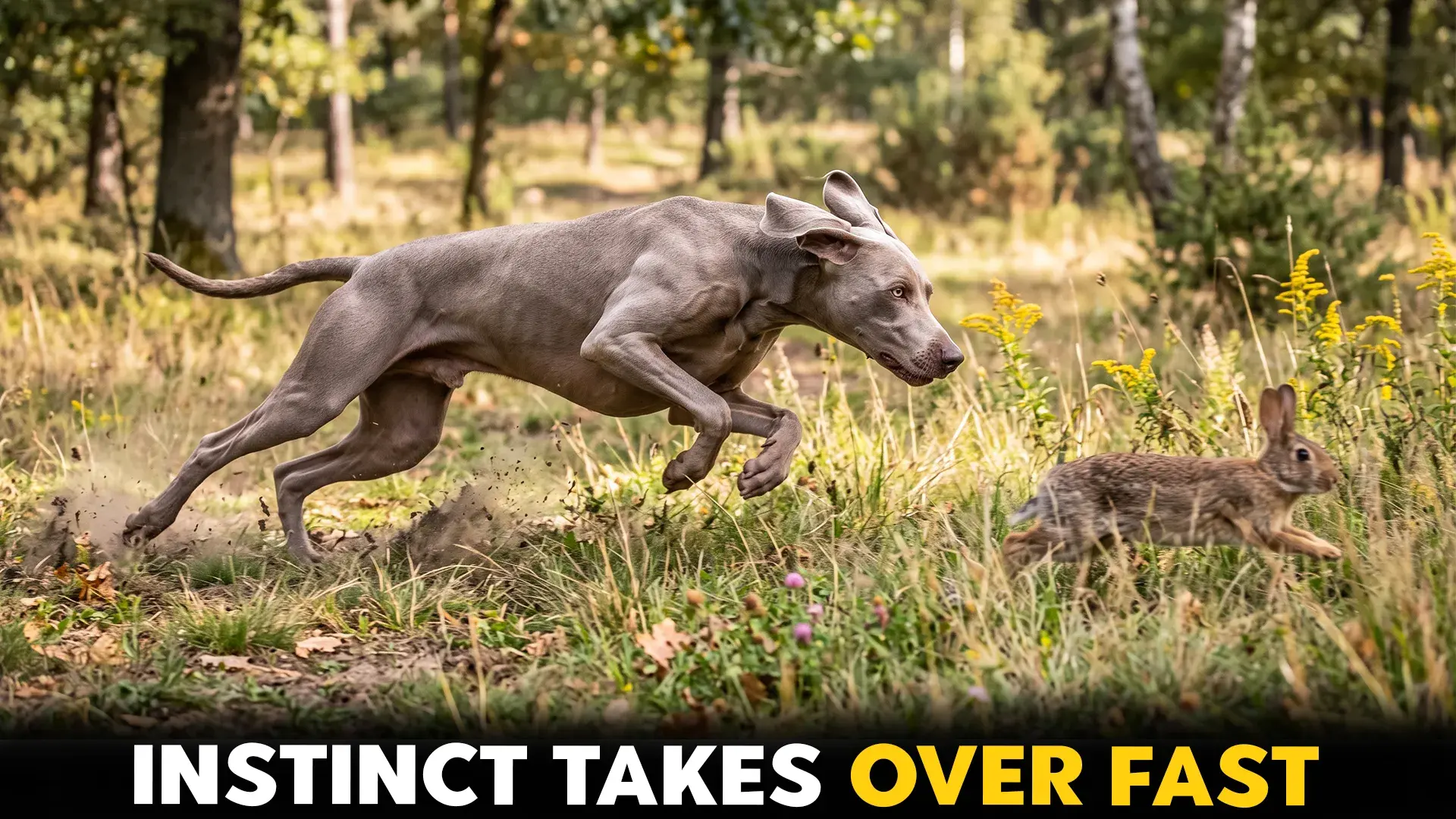
You are on a walk. Everything is calm. Birds are chirping, the sun is out, and your dog is trotting along like an absolute angel.
Then a squirrel appears.
And just like that… your sweet, well-behaved pup turns into a heat-seeking missile.
Leash snaps taut. Ears pin back. All 100% of their attention is now locked onto one single target.
That, right there, is prey drive.
And for some breeds, it is not just a switch that flips occasionally. It is their whole personality.
Prey drive is an ancient instinct, wired deep into a dog’s brain long before dogs were “pets” as we think of them today. Every dog carries a little bit of wolf in them, whether they realize it or not.
Some breeds kept that instinct sharp on purpose. Hunters and trainers bred certain dogs to chase, track, and catch. Others just happen to carry a heavier dose of it because of where they came from and what job they were born to do.
We are covering the dog breeds with remarkably high prey drive.
“Chase mode” is their factory setting.
If you own one of these breeds or you are thinking about bringing one home, you NEED to understand what you are signing up for.
Did You Know?
According to Hill’s Pet Nutrition, a dog’s prey drive is actually made up of several separate instincts working together… stalking, chasing, catching, and in some cases, the actual kill bite.
Most family dogs only display a couple of these instincts (usually chase and catch), while breeds bred for hunting or coursing can display the full sequence.
That is why a Beagle sniffing out a rabbit trail looks completely different from a Greyhound running one down at 40 miles per hour. Same instinct, different expression.
Dog Breeds with Remarkably High Prey Drive
1. Greyhound
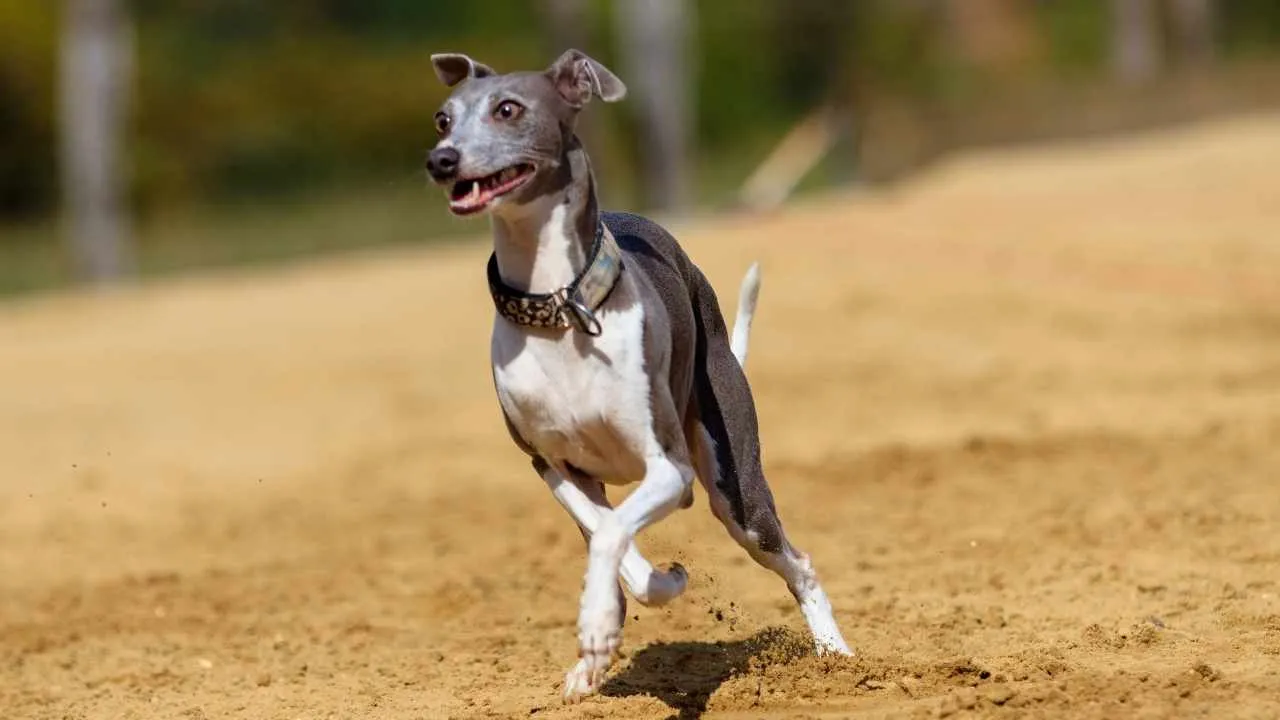
For thousands of years, Greyhounds existed for one job and one job only.
Chase small, fast-moving prey and catch it before it gets away.
Everything about this breed’s body, deep chest, long legs, and whip-thin tail exists to serve speed.
Oh, and did we mention they are one of the fastest dogs on the planet? Greyhounds can hit speeds of over 40 miles per hour in just a few strides. That is not a slow build. It is closer to a sprinter’s start off the blocks.
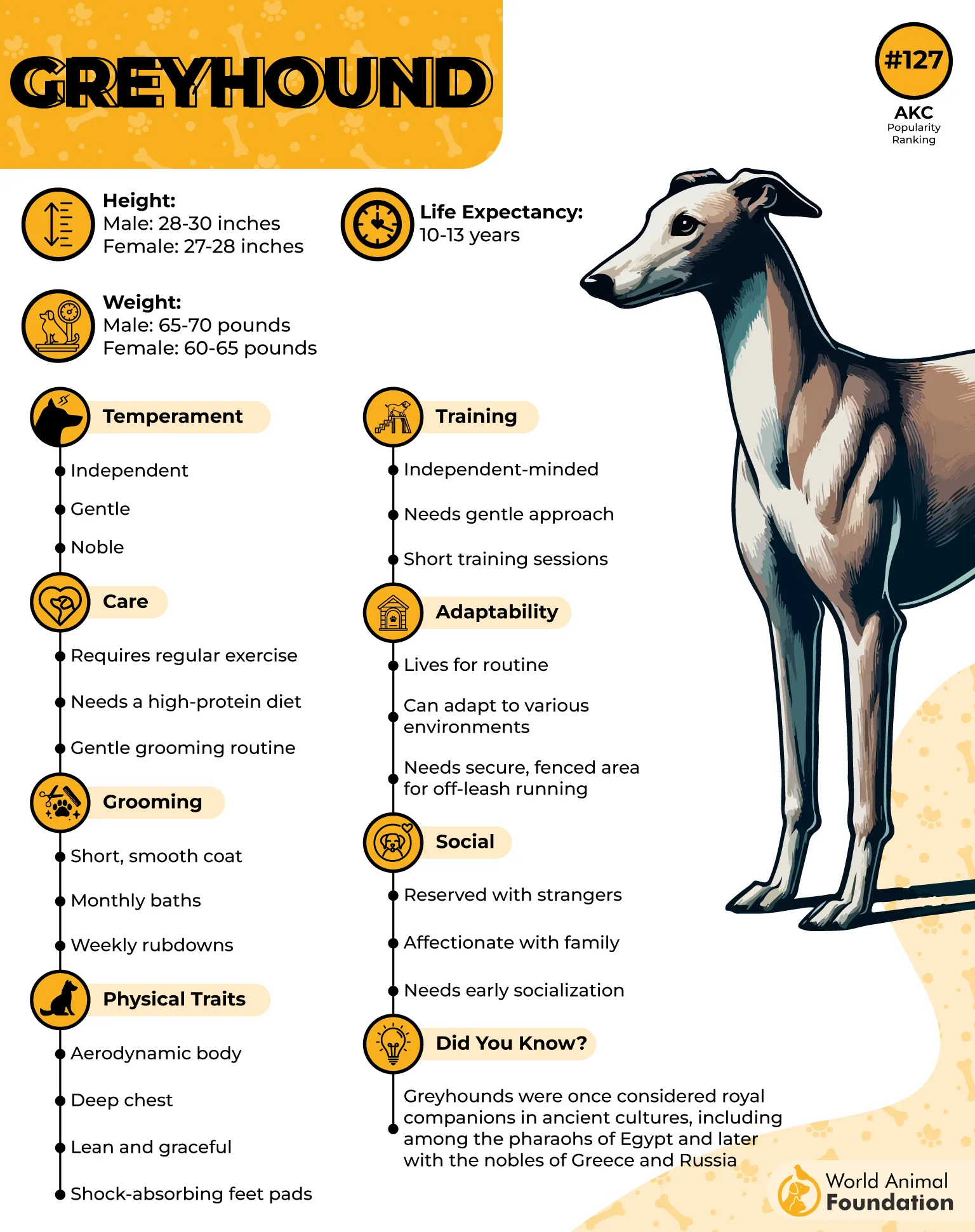
But there’s a thing pet owners usually get wrong. Greyhounds are couch potatoes at home. Showsight Magazine mentions them as “40-mph couch potatoes”. Genuinely lazy, low-key, happy to sleep 18 hours a day. But the second something darts across their field of vision, all bets are off.
A fenced yard or a proper dog run is basically non-negotiable for this breed. Off-leash walks around squirrels, rabbits, or cats are a serious gamble.
2. Whippet
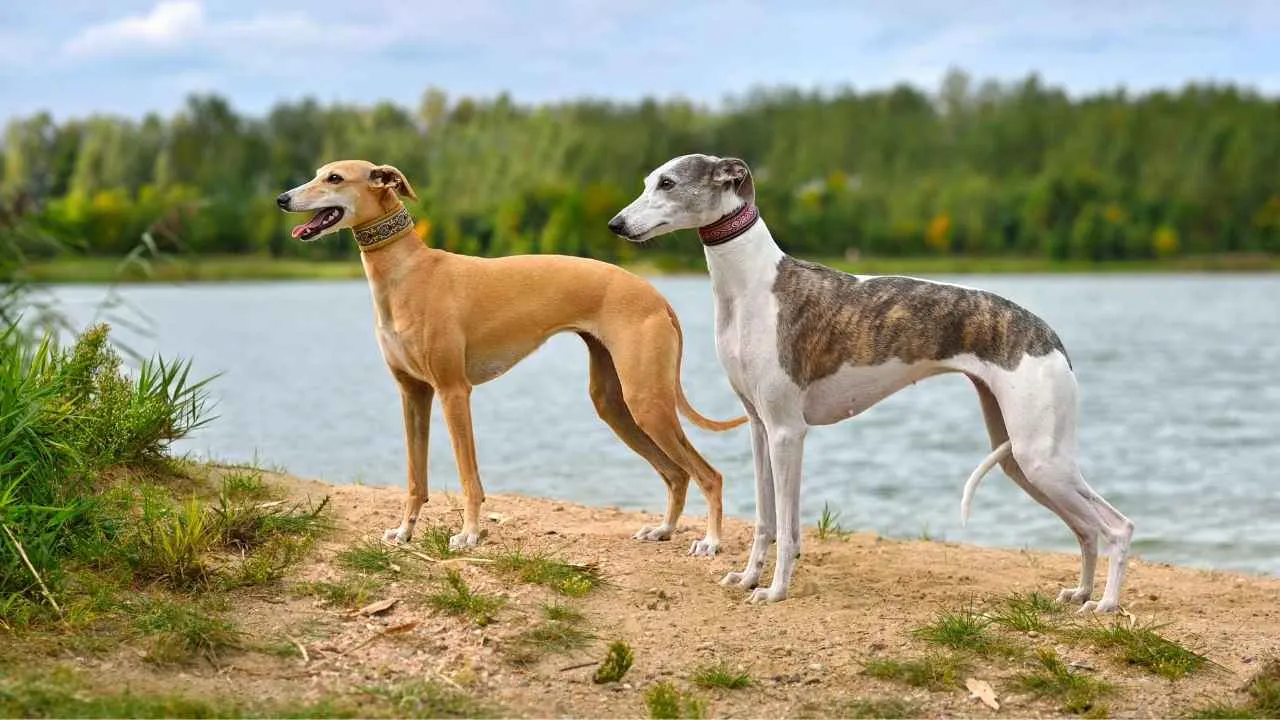
Think of the Whippet as the Greyhound’s slightly more compact cousin, with the same instincts packed into a smaller frame.
Whippets were originally developed in England for a sport called “ratting” and later for coursing small prey and game. According to WebMD, they have a super strong prey drive.
Their design mirrors the Greyhound in miniature, built for a fast, explosive chase rather than long, grinding endurance.
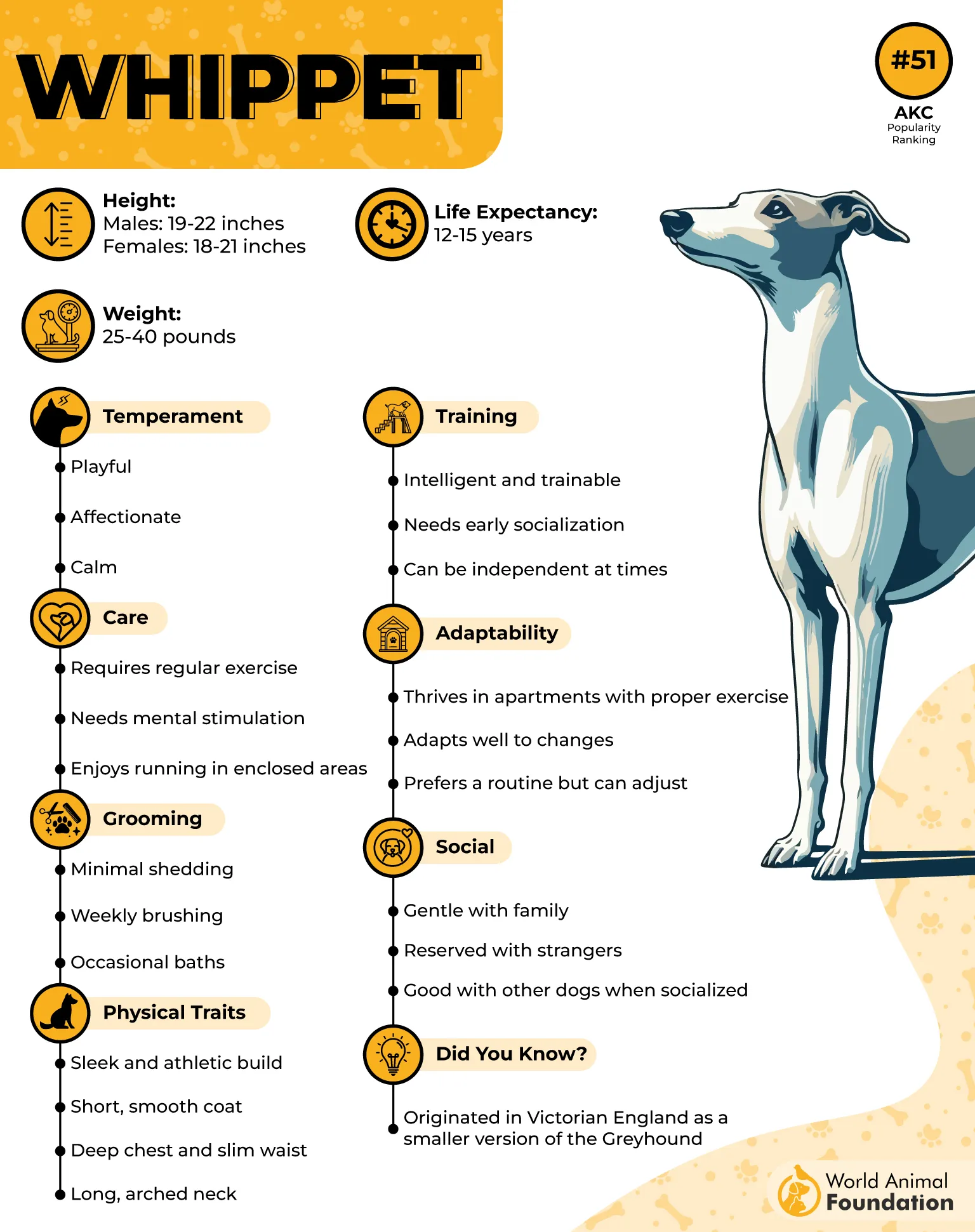
These dogs are quiet, gentle, and kind of goofy in the house. Great with families, good with kids, and low on the barking scale.
But that high prey drive does not disappear just because the dog is smaller. Proper socialization is necessary to make them well-mannered dogs.
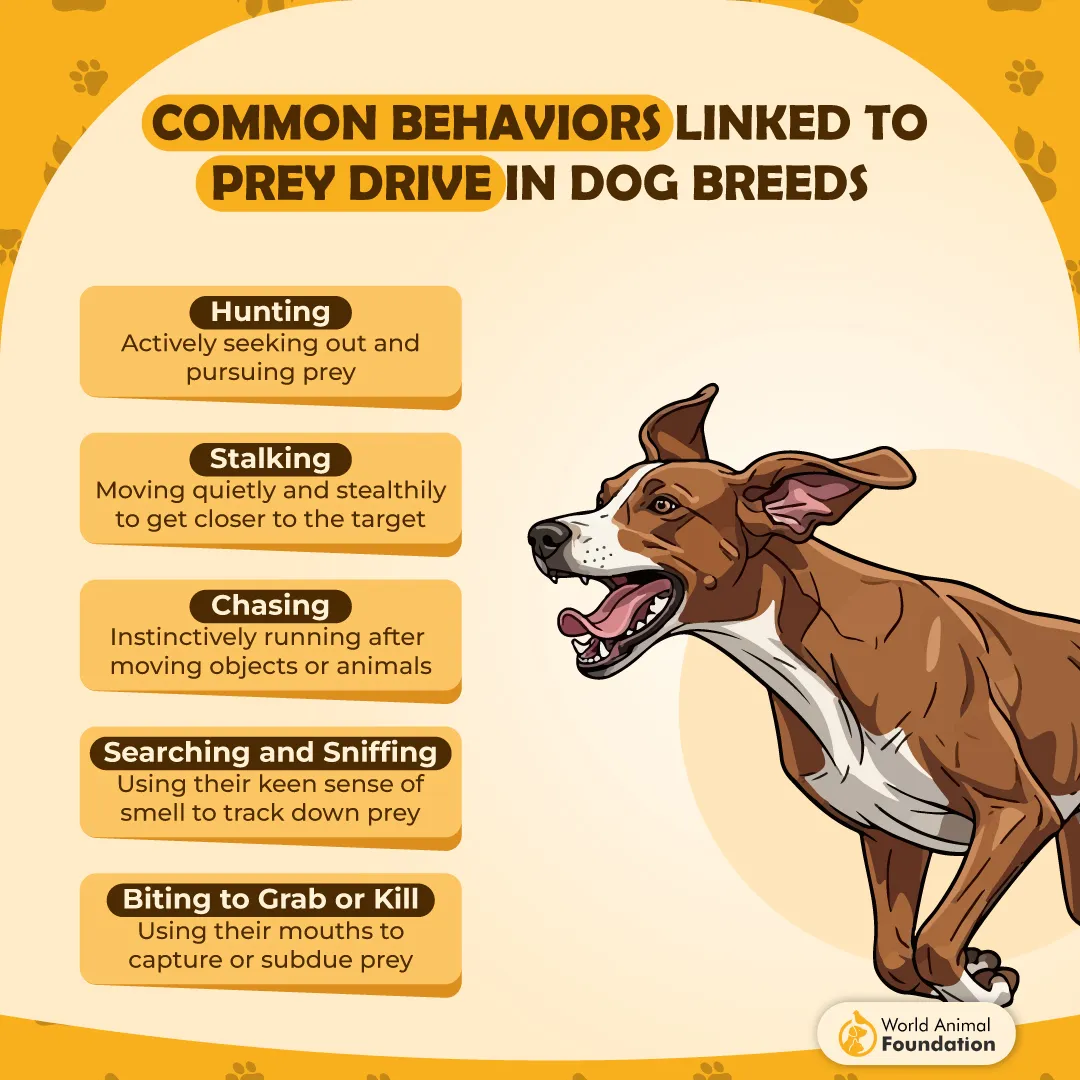
A Whippet will take off after small animals, birds, or anything that moves fast and unpredictably. High-prey-drive dogs need daily physical activity. Naturally, Whippets are active and need long walks to burn energy.
They need real outlets, such as flyball, fetch, tug, agility courses, interactive toys, lure coursing, or a securely fenced yard to sprint in. Secure fence, because dogs with high prey drive can escape through doors. Unless they have strong recall training.
Ignore that need, and you will find out the hard way what “instinct” really means.
3. Rhodesian Ridgeback
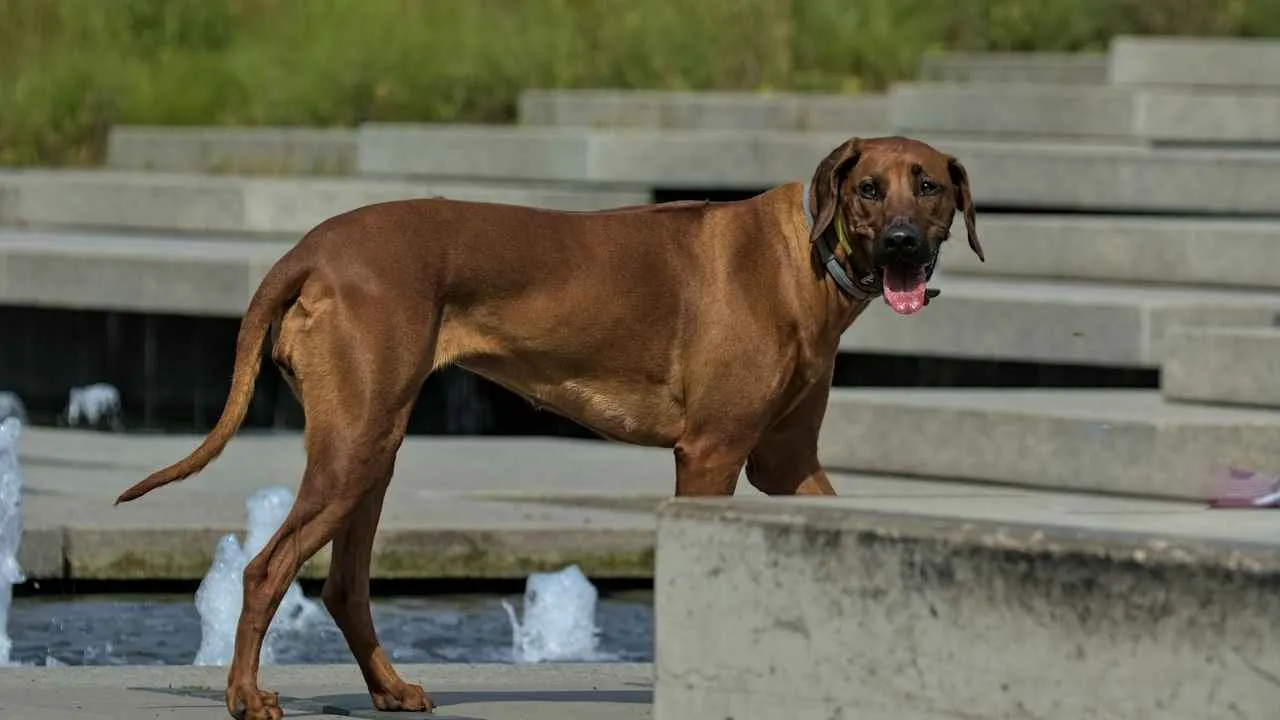
Rhodesian Ridgebacks were bred in Southern Africa to track and hold wild animals such as lions until hunters arrived.
Read that again.
Lions.
You don’t get a job description like that without ending up with a seriously intense prey drive baked into the breed. YEP!! This dog’s prey drive is something to be cautious about.
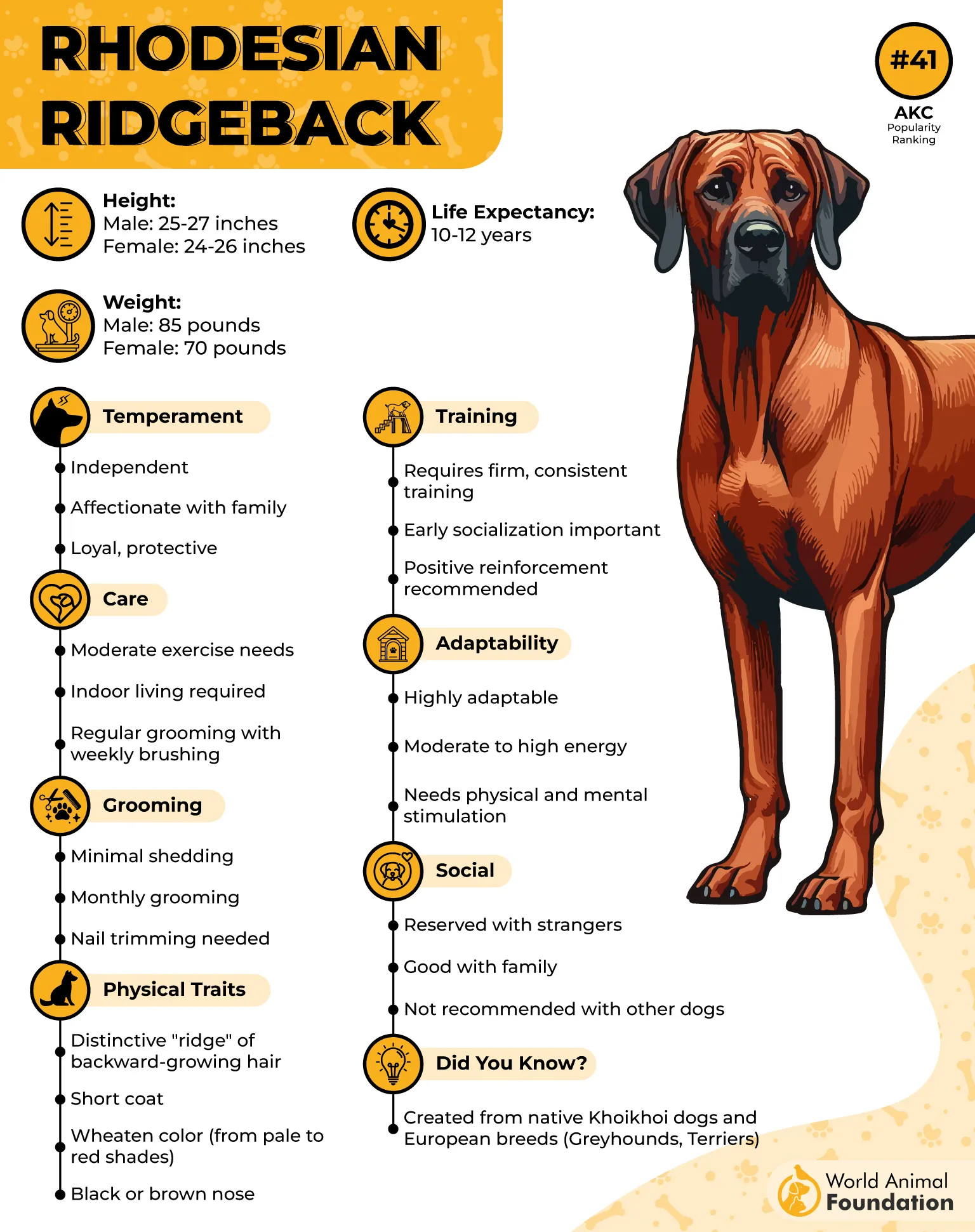
These hunting dogs are loyal, protective, and deeply bonded to their family. But they are also independent thinkers with strong instincts and a stubborn streak.
Training a Ridgeback takes consistency, patience, and an owner who is not easily out-stubborned.
Around smaller pets, this breed needs careful, early socialization. Their instinct to stalk and chase is strong, and without proper guidance, that instinct can extend to the family cat or the neighbor’s small dog.
This is not a beginner breed. But for experienced hunters and dog trainers looking for an intelligent, capable working dog, the Rhodesian Ridgeback delivers.
4. Weimaraner
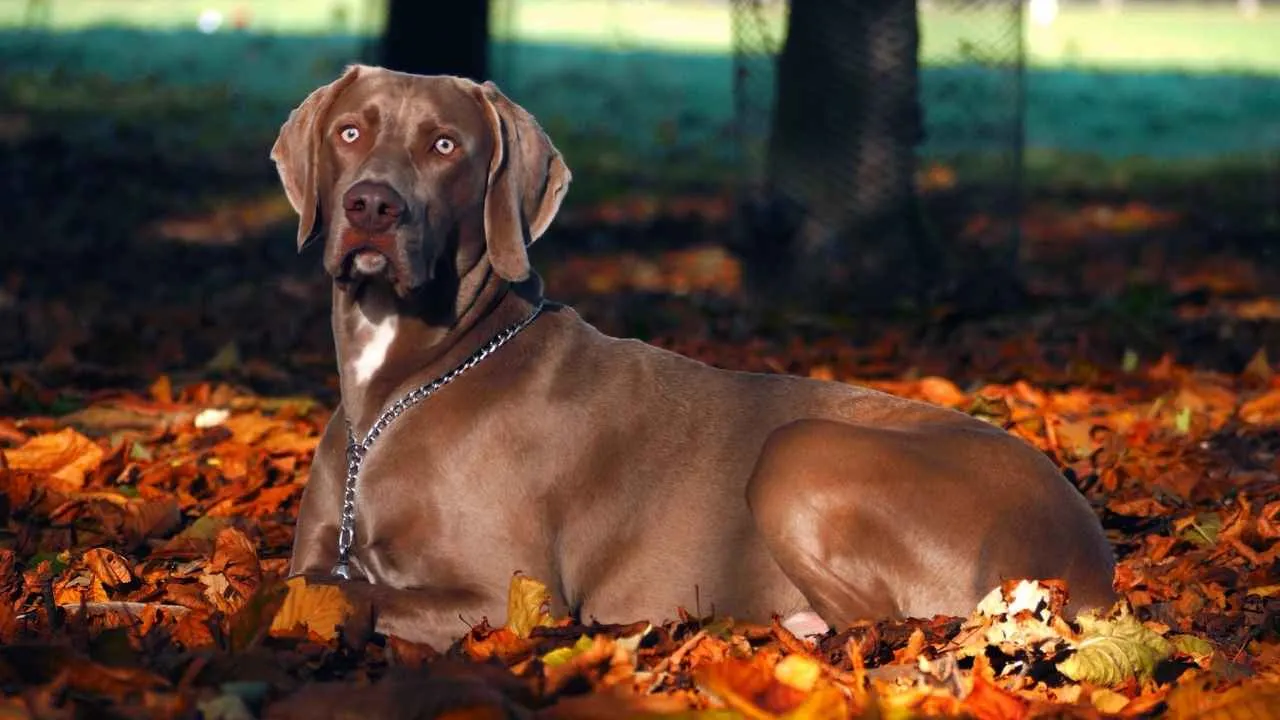
The Weimaraner, sometimes called the “Gray Ghost,” was developed in Germany to hunt large game like deer and boar before eventually shifting toward birds and small animals.
That versatility is part of the problem, actually.
A dog breed to hunt basically everything tends to want to hunt everything.
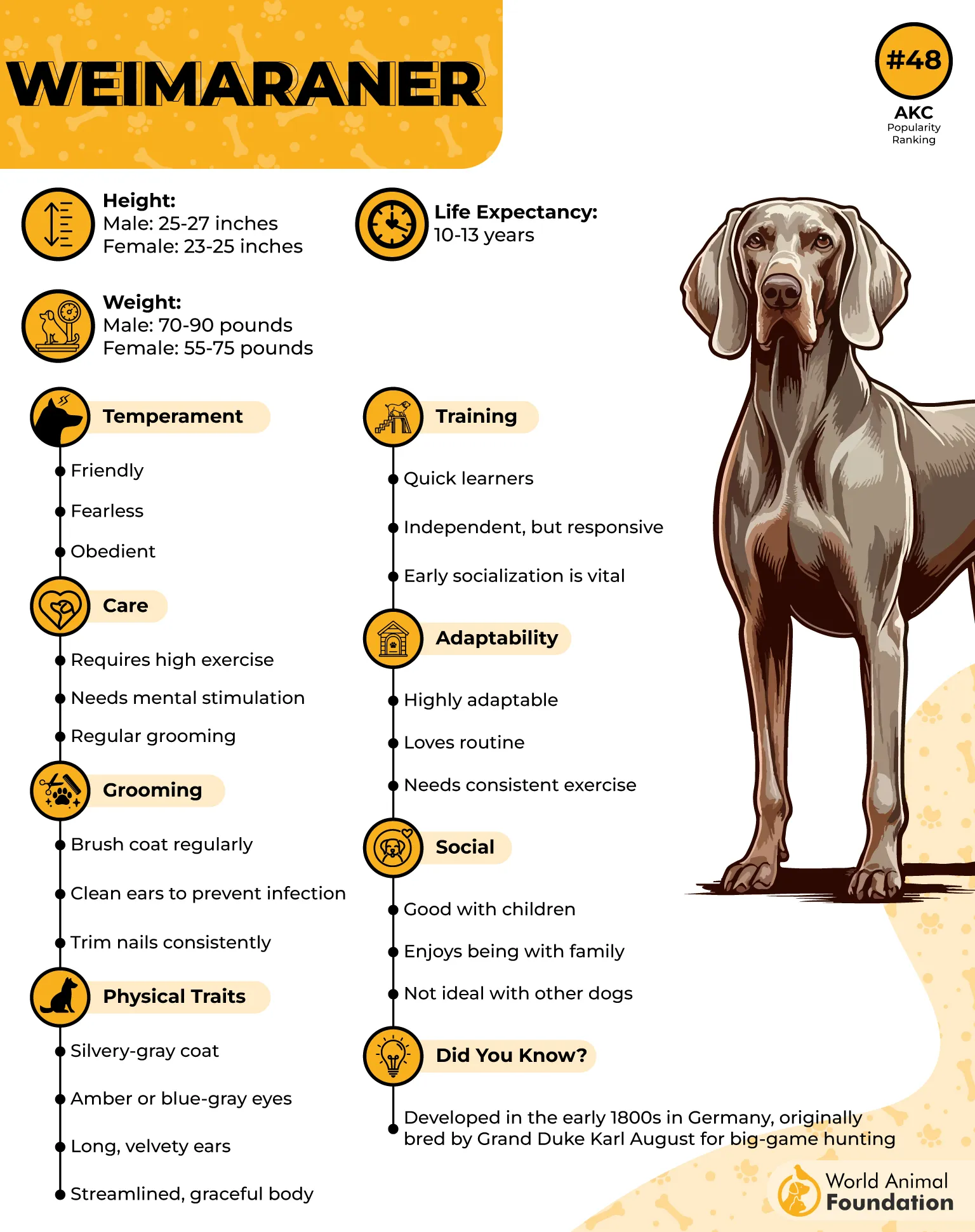
Weimaraners have high energy. These are intelligent dogs that need a serious amount of physical and mental stimulation.
Bored Weimaraners get destructive.
Their prey drive shows up in typical ways, chasing squirrels and rabbits, but also in less typical ones, like an obsessive need to track scents around the yard.
Strong recall training starting young is important.
Without it, a Weimaraner catching sights of small prey will forget you exist entirely.
5. Beagle
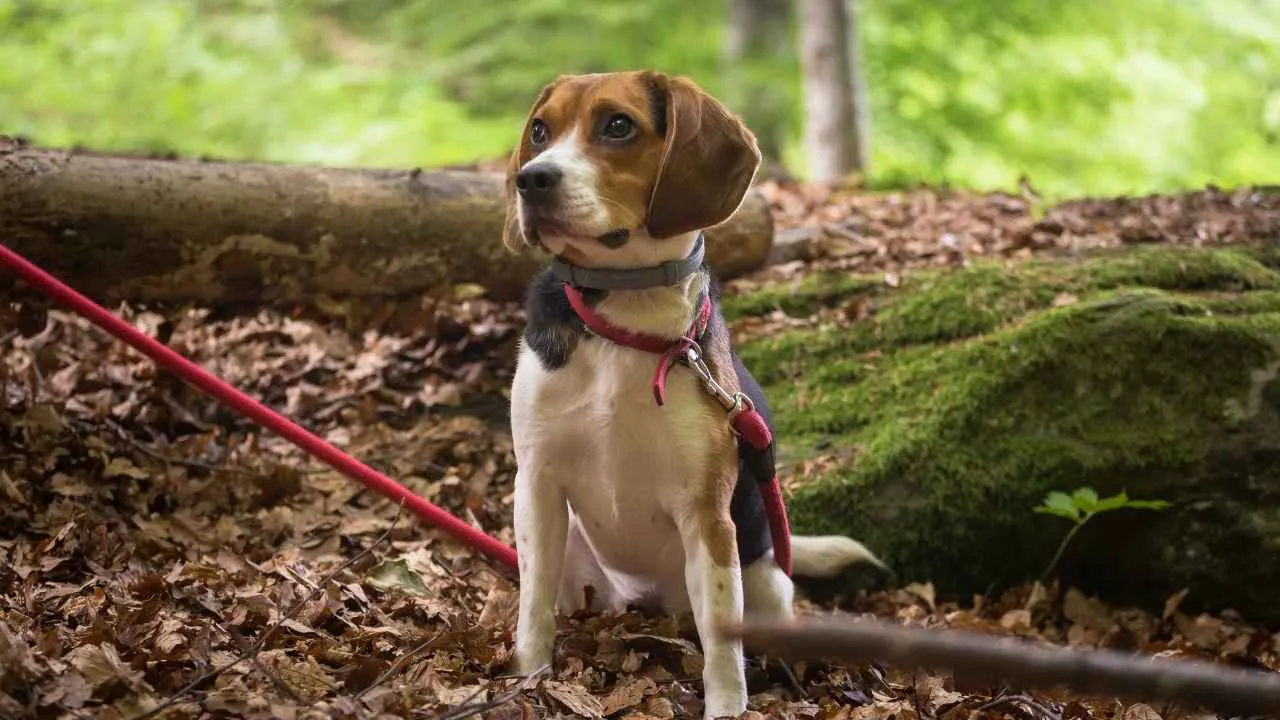
Beagles look harmless: floppy ears, big eyes, that classic “Who, me?” expression.
Do NOT be fooled.
Beagles were bred for scent tracking, specifically hunting rabbits and hares in packs. Their nose is basically running the show at all times, and once it locks onto a scent, GOOD LUCK getting their attention back.
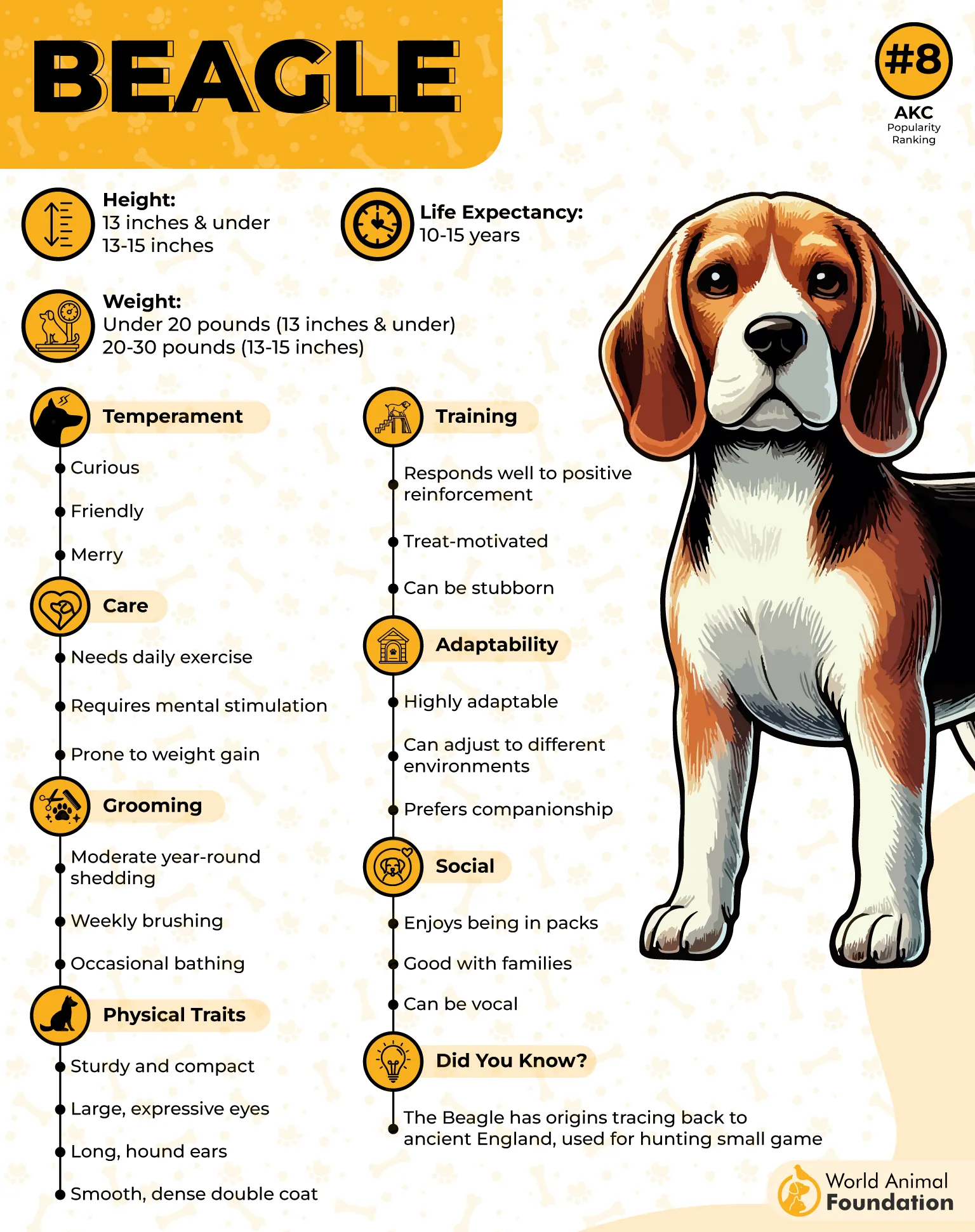
These tracking dogs have high prey drive. Naturally, that drive shows up through the nose first, feet second. A Beagle on a scent trail will follow it through brush, under fences, and straight past every command you are shouting.
They are also famously vocal. According to the Royal Kennel Club, that signature Beagle bay is a pack-hunting dog announcing to the rest of the group that it found something.
Beagles do great with families and other animals, since they were bred to work in packs.
Just do not expect one to ignore a rabbit trail because you asked nicely.
6. American English Coonhound
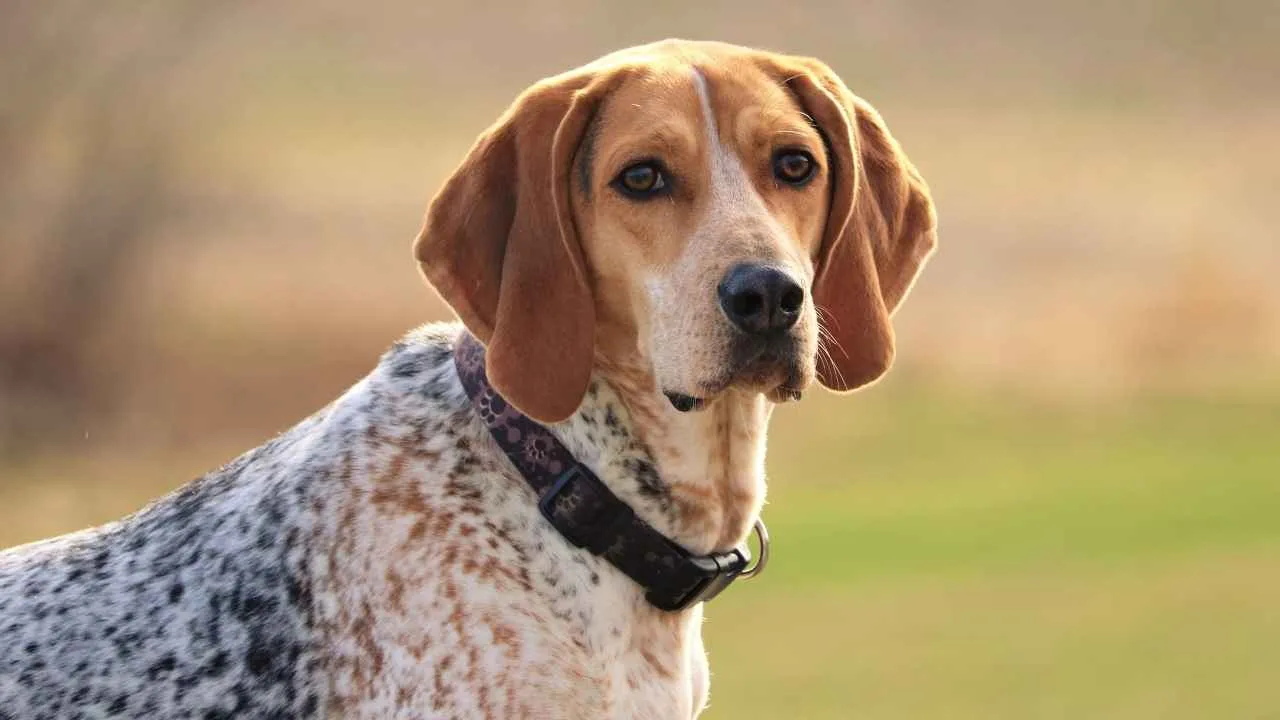
The American English Coonhound was developed in the United States specifically to track and tree raccoons, and later, other game, such as foxes.
This breed has serious stamina. Coonhounds were bred to run for hours through rough terrain, following scent trails other dogs would give up on.
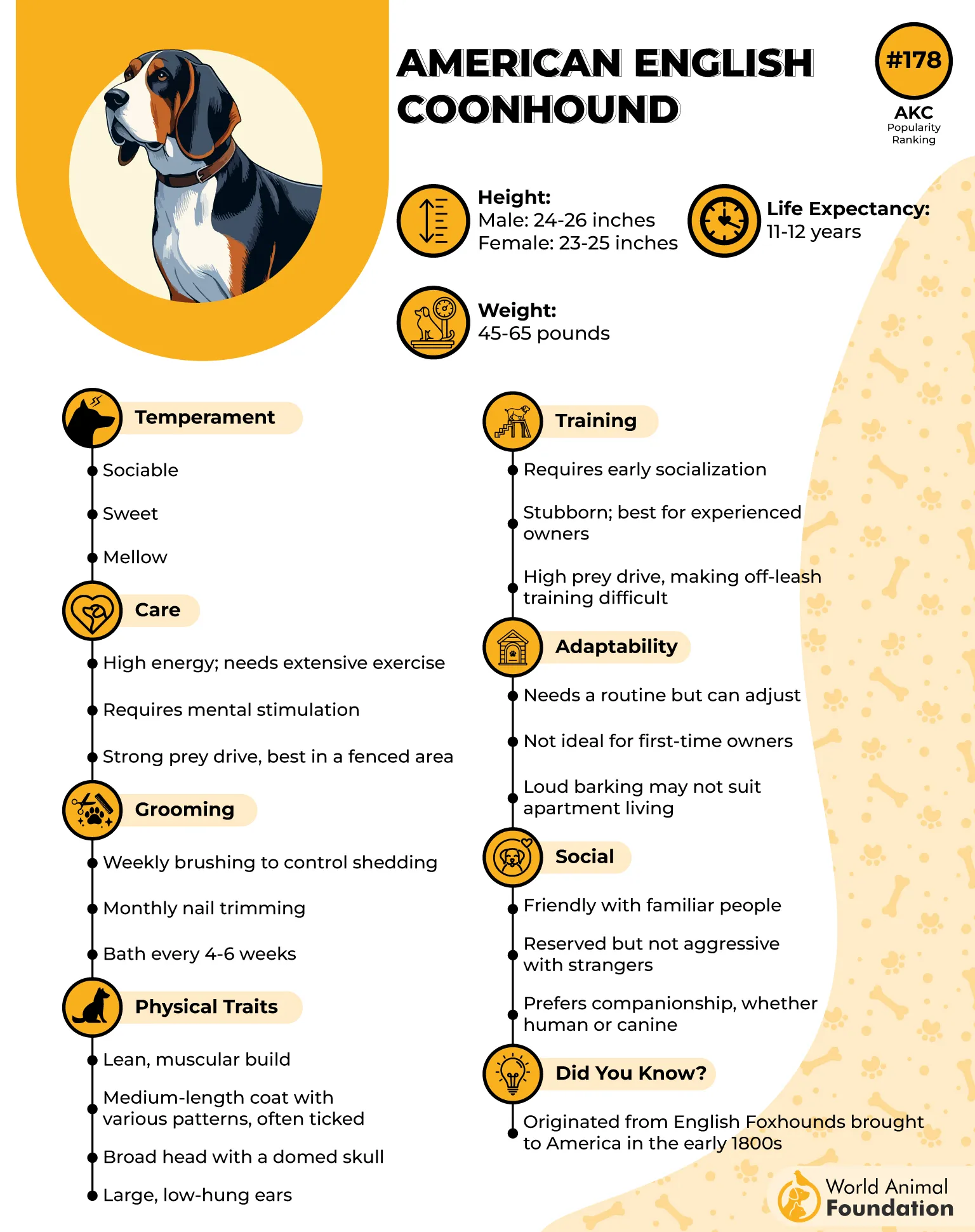
These Hound dogs are energetic and friendly with a BIG-TIME desire to hunt and track. Off-leash near squirrels, rabbits, or basically any small animal in the woods, this breed’s instincts take over.
They also tend to be loud. Baying behavior is part of the job description, since it lets hunters know where the dog and the prey are.
American English Coonhounds do best with owners who hunt regularly or who are prepared to give this breed an outlet for THAT tracking instinct.
A quick walk around the block will not cut it.
7. Afghan Hound
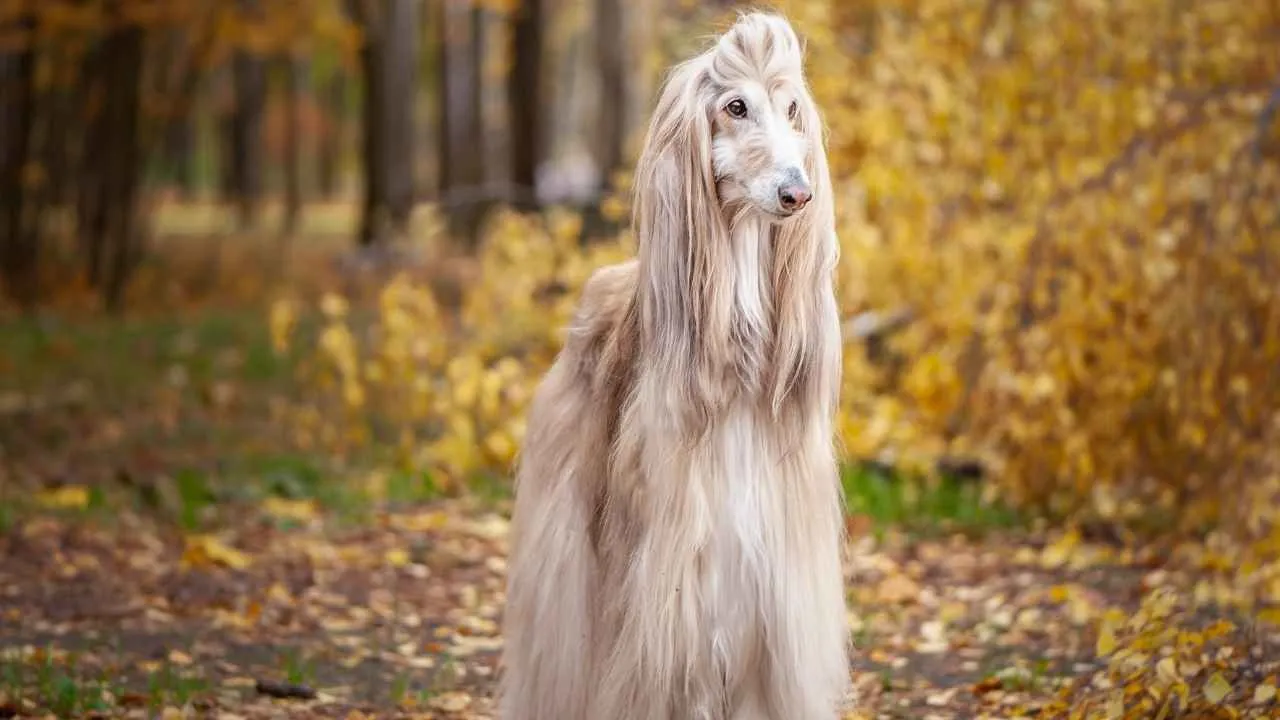
Afghan Hounds look like they walked straight out of a fashion show, but underneath all that flowing coat is a serious hunting dog.
They were originally bred in the mountains of Afghanistan to hunt game such as gazelle and wolves. This breed relied on incredible speed and sharp eyesight to spot and chase prey across long distances.
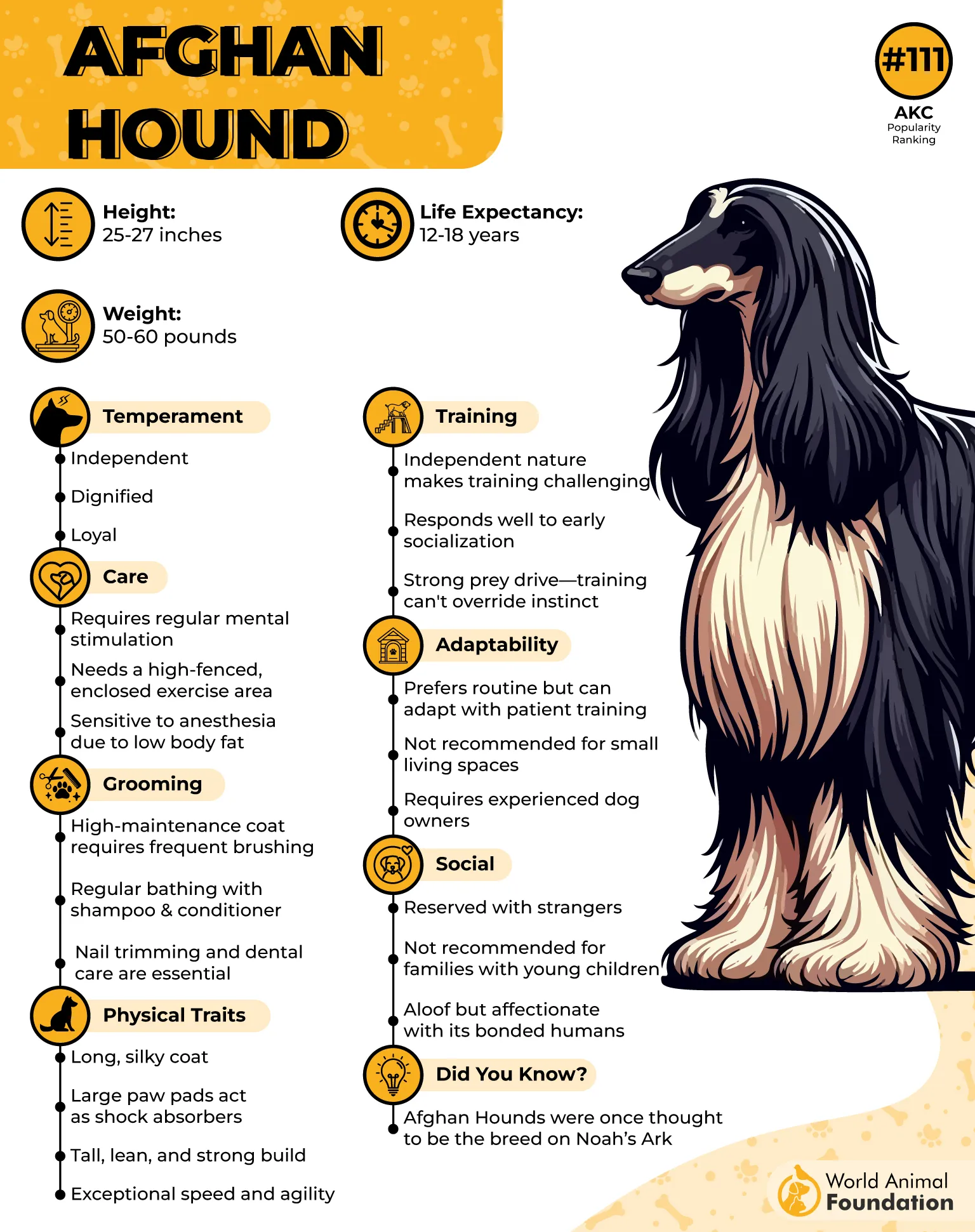
Afghan Hounds are independent, a little aloof, and more difficult to train than more eager-to-please breeds. That independence is part of the package when you breed a highly intelligent dog to make split-second hunting decisions on its own, as per Orvis.
Around small animals, the instinct to chase kicks in fast.
Afghan Hounds need secure fencing and humans who understand that this is not a breed that will reliably come when called mid-chase.
Conclusion
High prey drive is NOT a flaw.
It is not “bad behavior” either.
It is instinct, passed down from a history of hunting, tracking, and working with humans.
The goal is not to eliminate that drive.
Honestly, you probably could not even if you tried.
The goal is to manage it.
Proper training, a strong recall, secure fencing, and plenty of physical and mental outlets, toys, tracking games, flyball, even swimming, go a long way toward keeping that instinct pointed somewhere safe.
Know your breed. Understand their history.
Respect the instinct.
That same drive that makes these puppies chase a squirrel is the same one that made them such incredible hunting partners for humans in the first place.
