




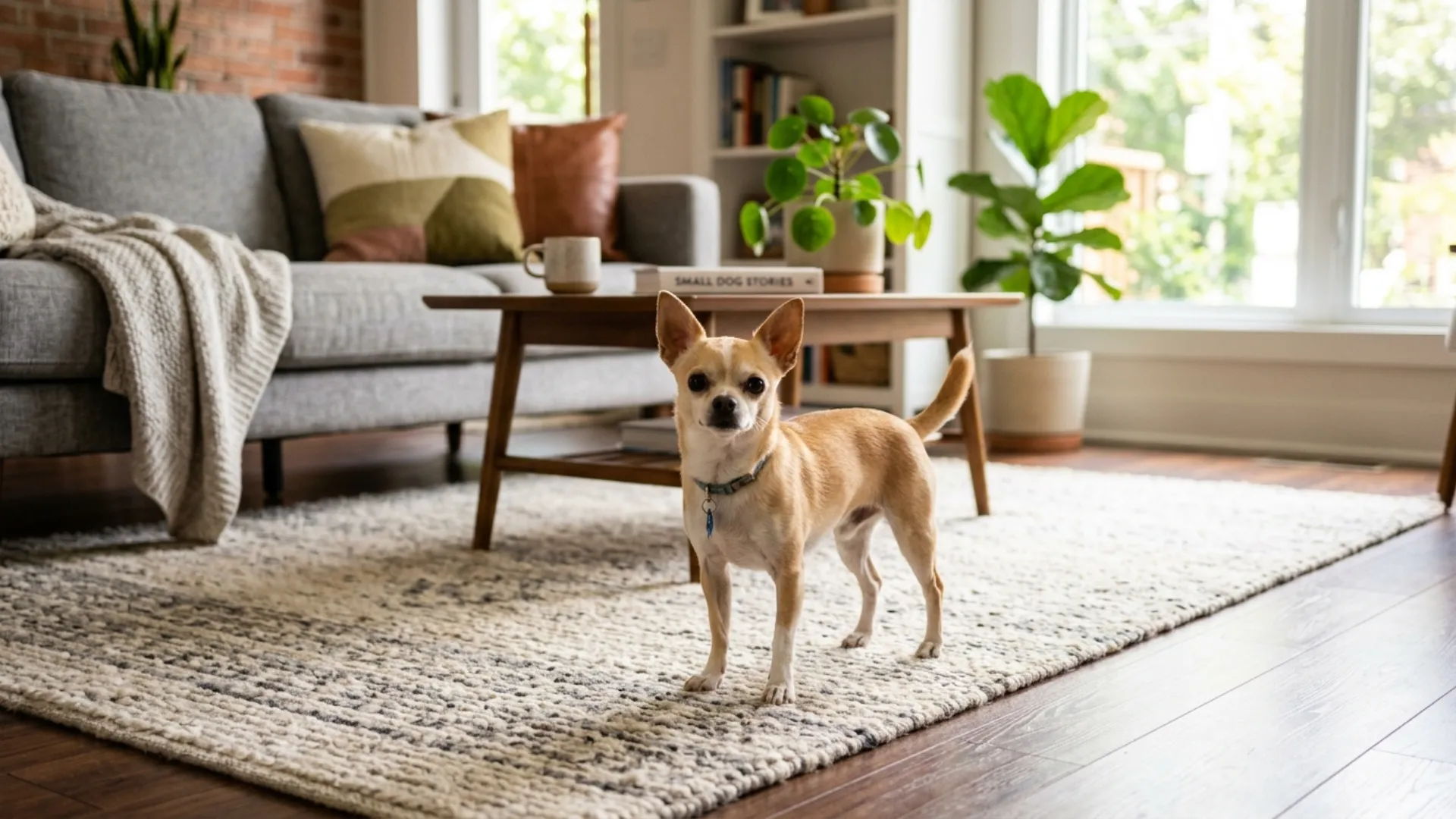
Not everyone dreams of sharing the couch with a giant dog that takes up more space than the coffee table. Sometimes, the best companion comes in a small package that fits your lifestyle just as well as your lap.
As actress Audrey Hepburn once said, “I adore my tiny Yorkshire Terrier.” It is easy to see why small dogs have won hearts for generations.
These little companions often bring big personalities, endless loyalty, and plenty of laughs without growing into oversized pets. Whether you live in an apartment, travel often, or simply.
Let us meet seven lovable breeds that remain compact while offering years of friendship.
Top Dog Breeds That Stay Small and Manageable
1. Chihuahua
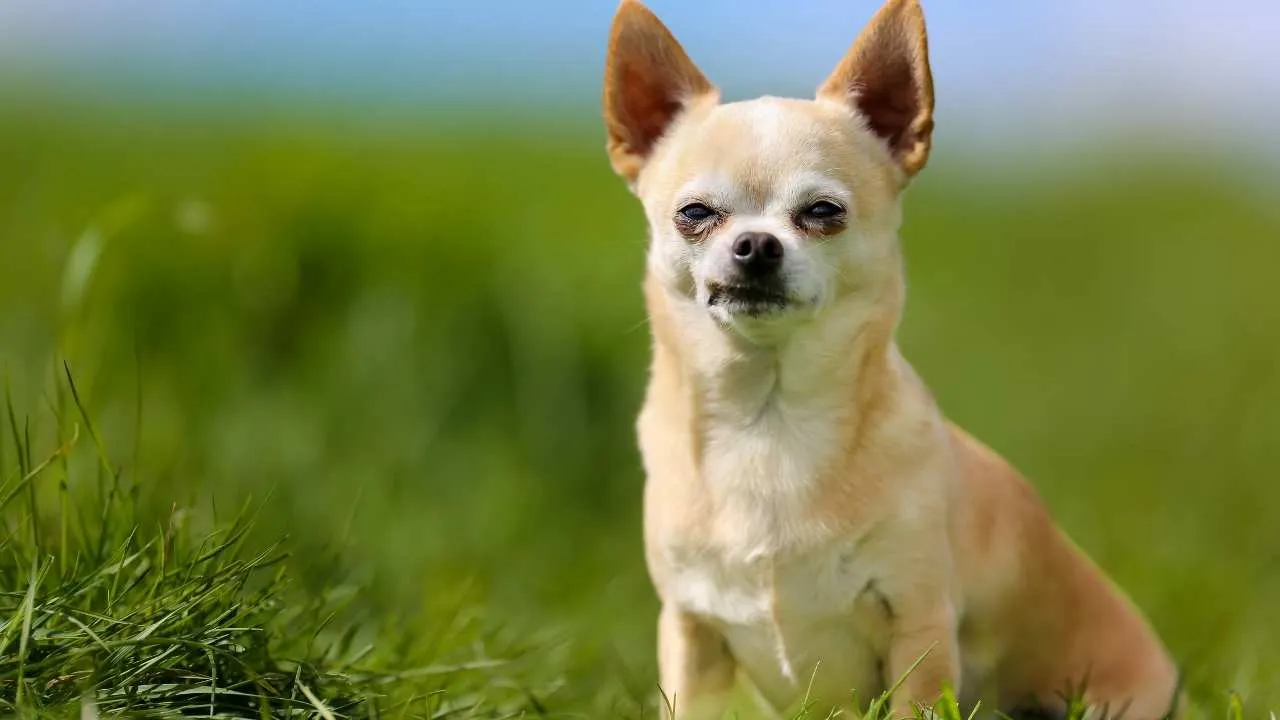
This is the smallest dog breed to ever exist, and its history dates back to ancient Mesoamerica, where the breed was kept by the Toltecs in the 9th century and later the Aztecs. The small breed used to live in the small villages of Spain when the Americans discovered the breed in the 1800s, says the AKC.
Since the breed has a tiny stomach and bladder, it requires minimal food, cutting the monthly food expenses. It carries its puppy-like features into adulthood (neotenous behavior), triggering nurturing and protective responses in humans. The large ears adapt well to the warmer climate and aid in heat distribution.
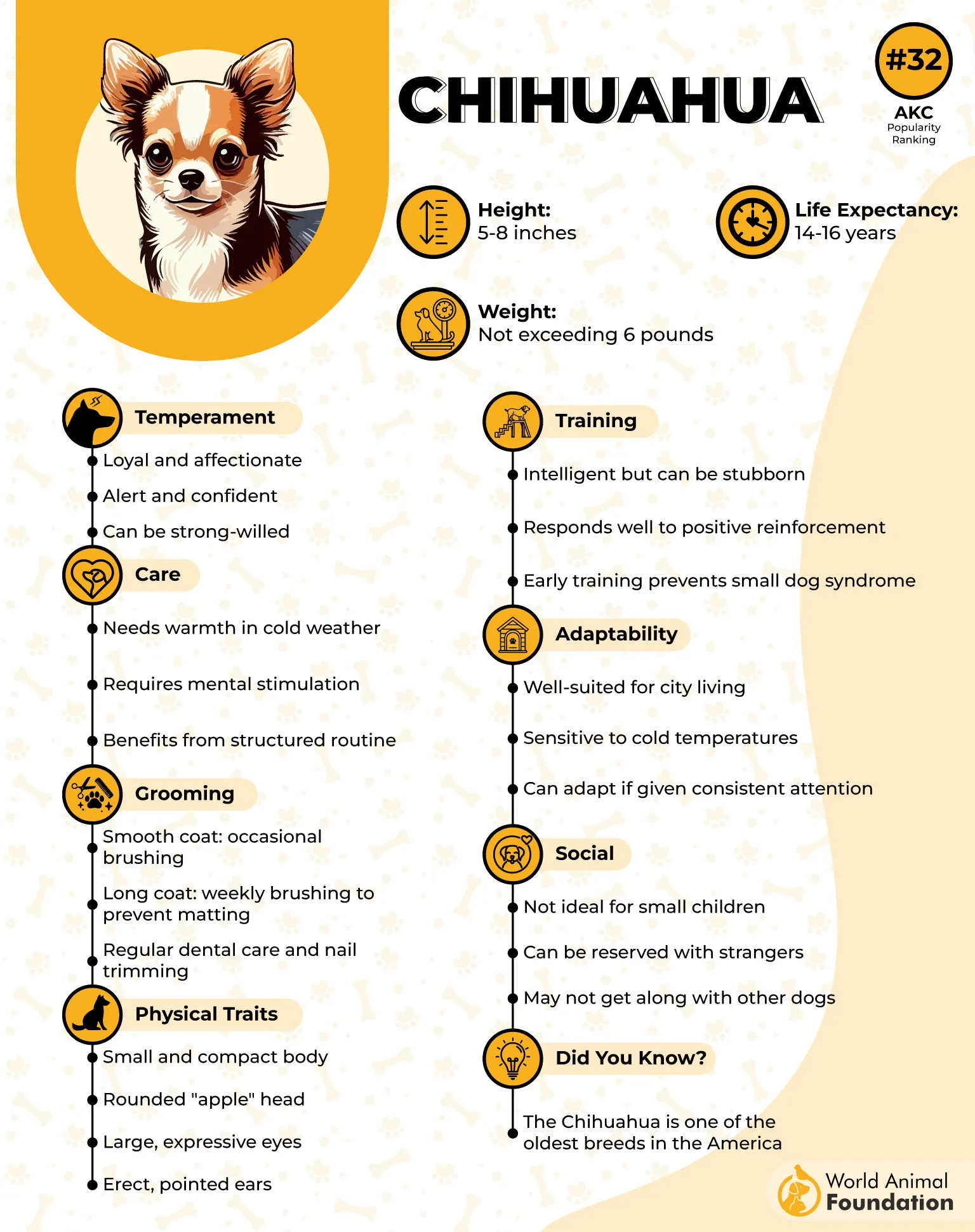
The small dog breed has moderate exercise needs (30-60 minutes daily): 2-3 short walks, indoor play, and mental stimulation. Keep the high-impact exercise to a minimum to protect its small and delicate knees. It has a short coat that needs weekly brushing, making it a hypoallergenic breed.
2. Pug
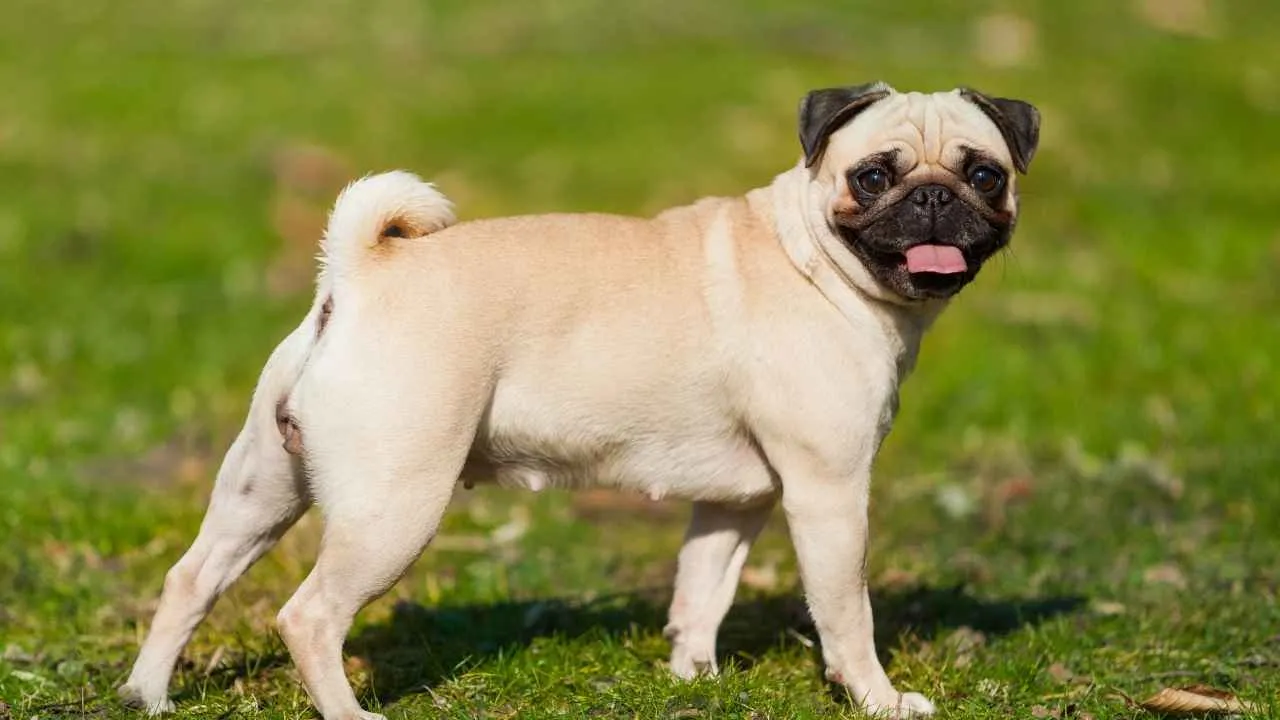
This is one of the ancient dog breeds and has its roots in China, where it was originally bred by the Chinese imperial and Buddhist monks. It eventually gained popularity in Japan and Europe, where it was kept as a companion dog by the royalty, such as Marie Antoinette and Josephine, Napoleon Bonaparte’s wife.
This family dog is a brachycephalic breed (with its short muzzle, narrowed airways, and a flat face). This may cause difficulty in breathing, limiting outdoor activity in summer.
It is emotionally attuned to the owner’s moods and tends to remain as close to the owner as possible. It produces short and quick barks and alerts the family to visitors, making it a great watchdog.
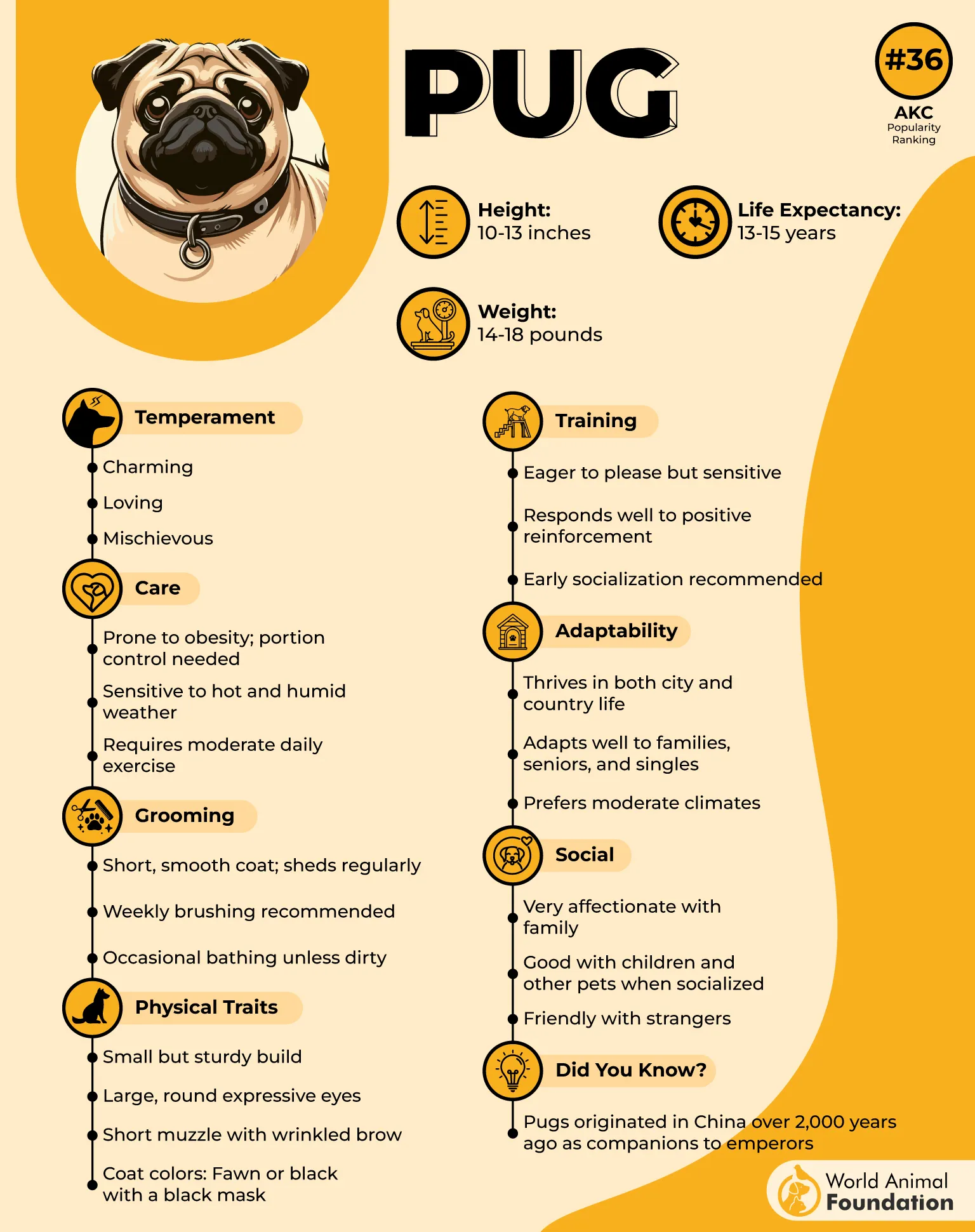
The little dog has minimal exercise needs (30-60 minutes a day): 2-3 walks, gentle fetching, tug-of-war, and interactive toy puzzles. It is highly food-motivated, making it a highly trainable breed.
It needs brushing 1-3 times a week using a short-bristled pin brush or a rubber brush. Use pet-safe grooming wipes to deeply clean wrinkles.
3. Cavalier King Charles Spaniel
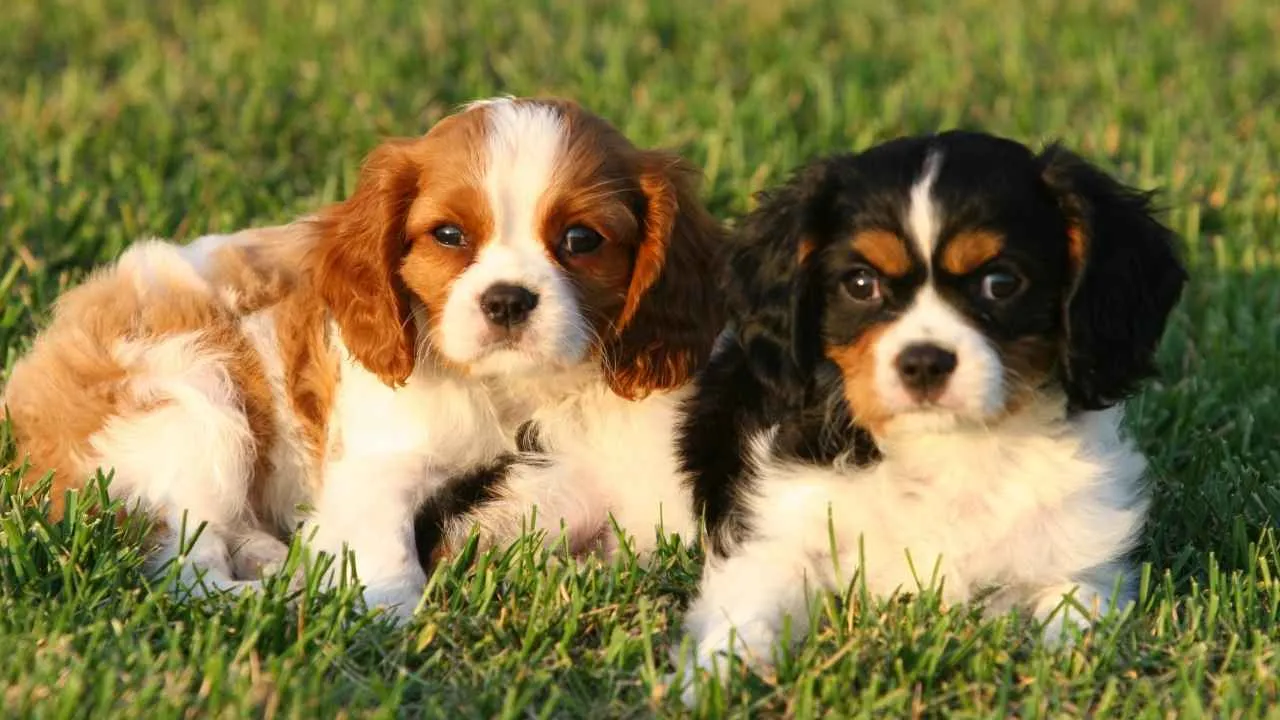
This toy spaniel breed is a relatively young dog pampered by the British royalty. The modern-day toy breed was developed by a toy spaniel enthusiast, Roswell Eldridge. It was named after King Charles I and his son in the 17th century, according to Orvis.
It psychologically matches its energy levels with the owner. Having a gentle and affectionate nature, it is widely used as a therapy dog with Deep Pressure Therapy to console patients with panic attacks. The silky and hypoallergenic coat resists heavy tangling in certain areas.
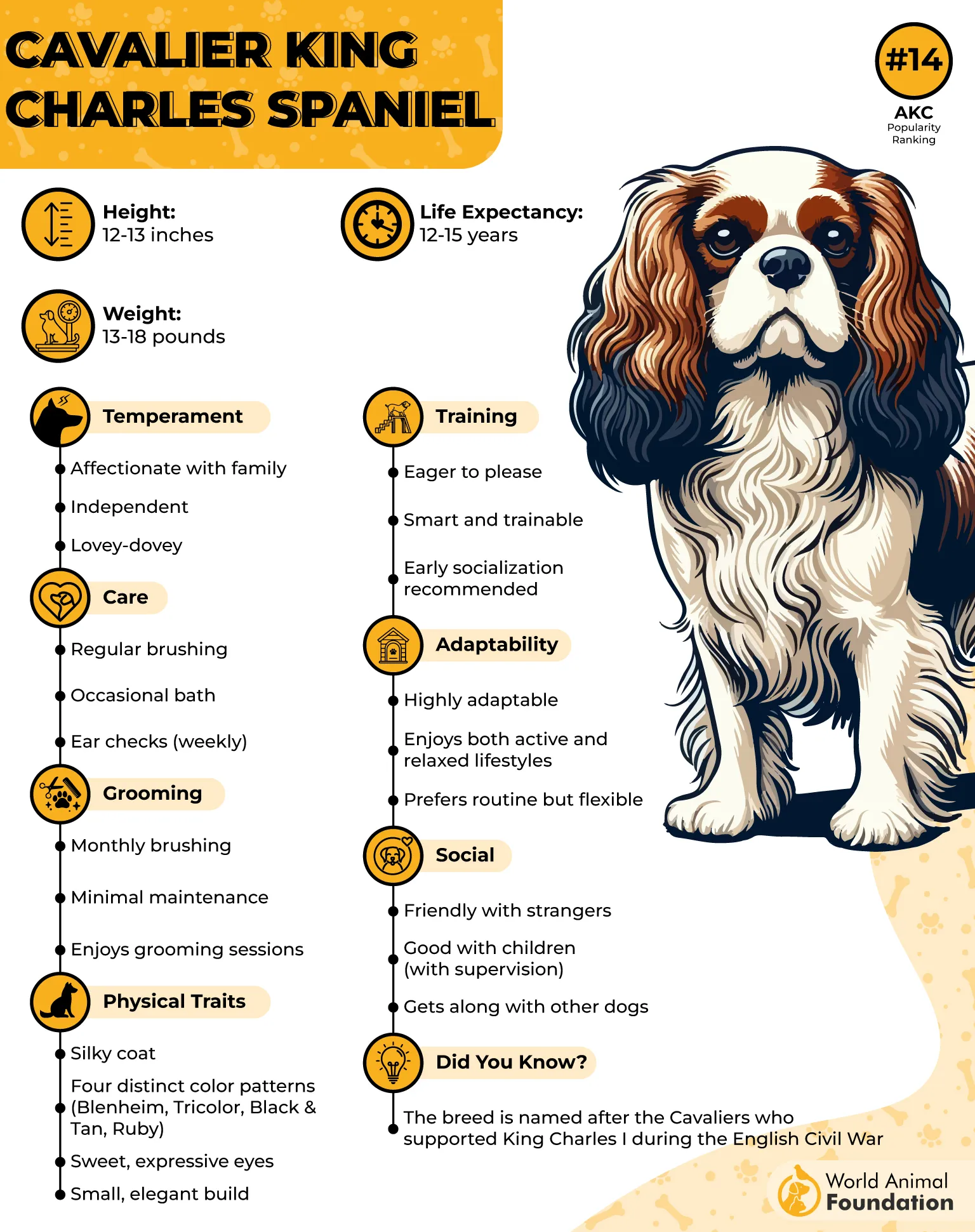
Despite being a couch potato, it has moderate energy levels and needs 30-60 minutes of daily exercise: agility training, fetching, puzzle toys, and 1-2 walks. The silky coat requires brushing 2- 3 times a week using a pin brush or a bristle brush. Trim the fur on the bottoms of their paws and between their pads to maintain traction on slippery floors.
4. French Bulldog
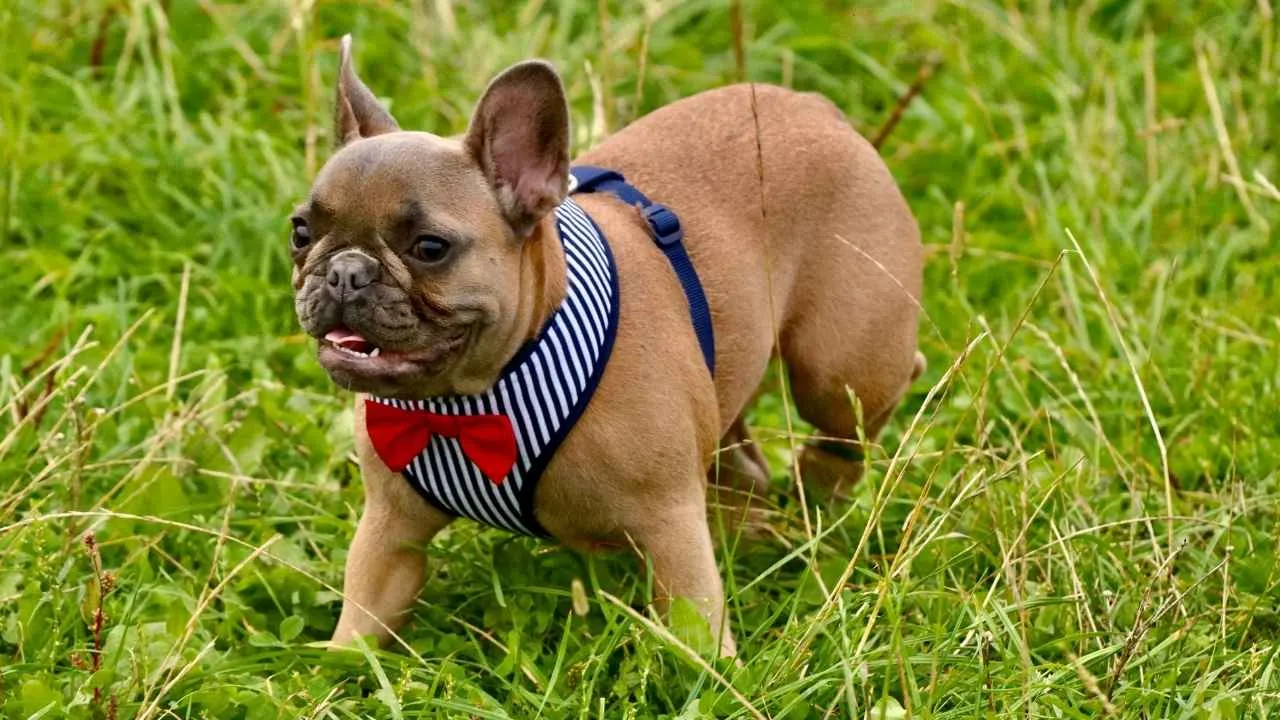
When the English lacemakers moved to France with their toy bulldogs in the 1800s, they interbred these dogs with the local breeds with erect ears, producing the ‘Frenchies.’ This resulting breed became the favorite of the royalty and remained a lap dog til the French Revolution.
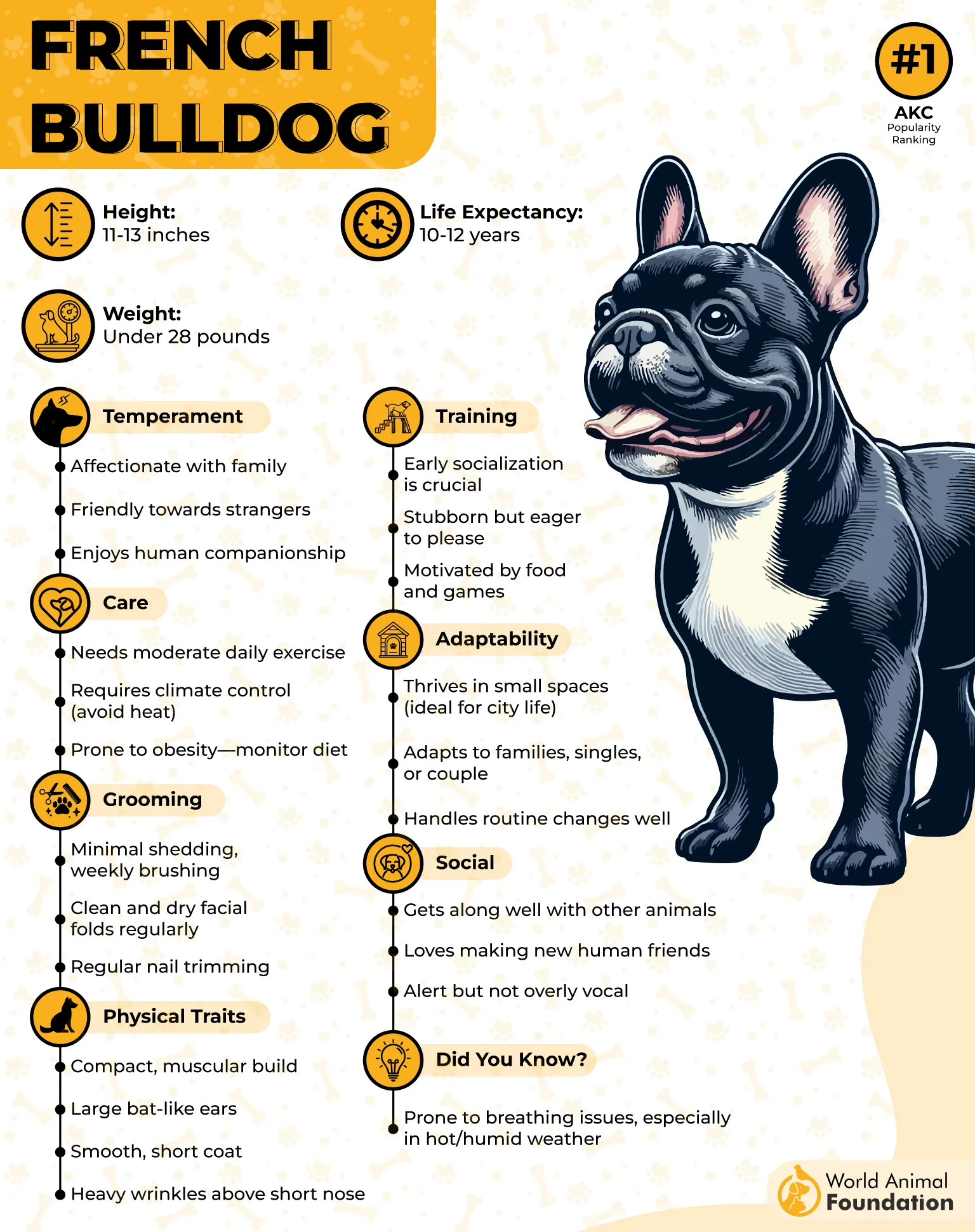
Because of its extremely small stature, it is highly portable and can be carried to coffee shops and buses. The nervous and cardiovascular systems are geared toward relaxation rather than working or herding. The short muzzle and compact throat mean it has a low barking frequency, ideal for quiet homes.

While friendly with family members, children, and other pets, it is aloof with strangers and may bark to alert the owners. The breed has minimal exercise needs (20-30 minutes to avoid weight gain). It sheds moderately and does not require frequent brushing.
5. Boston Terrier
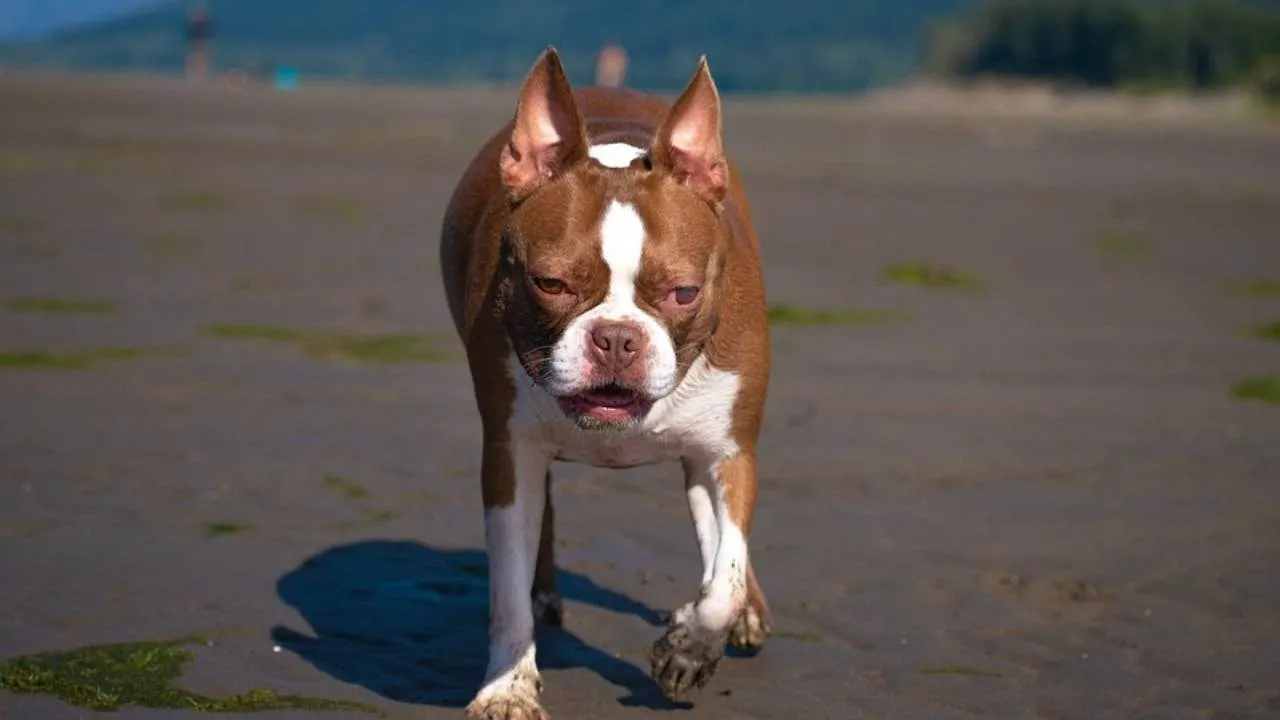
The ‘American Gentleman’ was developed by crossing an English Bulldog and an English White Terrier in the 19th century. The resultant breed went through further crossbreeding with the English Bull Terrier, Boxer, and the Pit Bull Terrier to produce a much smaller version, as reported by Purina.
The lively little dog possesses a natural short tail, so the owners do not have to navigate through the complex medical procedures of docking tail bones. Its manageable size also makes it ideal for apartment living. The athleticism and high speed make it a perfect candidate for dog sports.
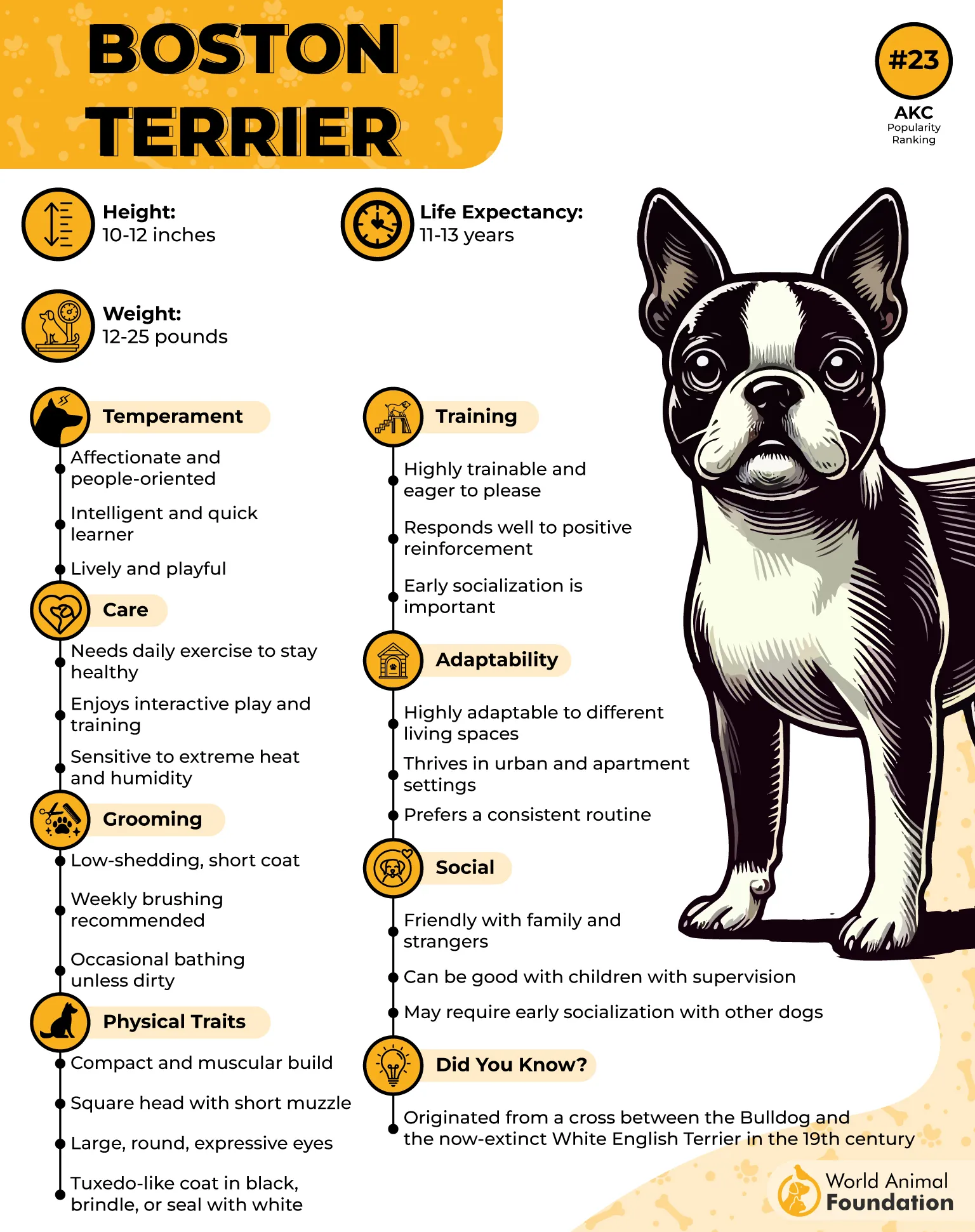
The dog is sensitive to hot temperatures and requires regular exercise daily: rally, flyball, agility, multiple short walks, and puzzle toys. It exhibits short bursts of energy before finally coming back to the resting phase. The low-shedding coat needs weekly brushing and occasional baths to avoid stripping its coat of essential oils.
6. Miniature Pinscher
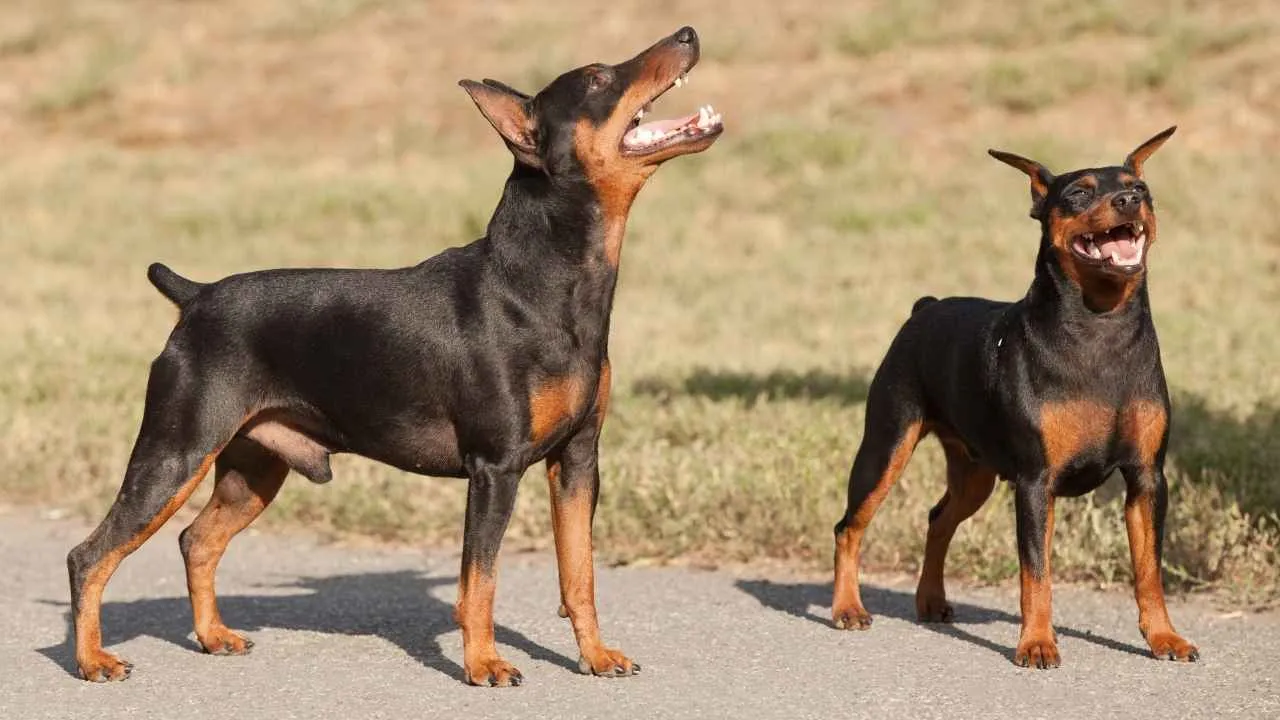
Also known as Zwergpinscher, the Miniature Pinscher is a pinscher-type dog breed that was developed as a hunting breed to hunt mice, lizards, small birds, rabbits, pests, and vermin. It is a highly energetic and fearless breed with an affectionate and independent streak.
Because of its hackney-style high-stepping trot, it can actively play and keep up with its humans. The square muscle-to-bone ratio and upright posture enable natural athleticism, making it a perfect candidate for active families. The large ears and sharp senses induce an alert nature, contributing to the watchdog instincts.
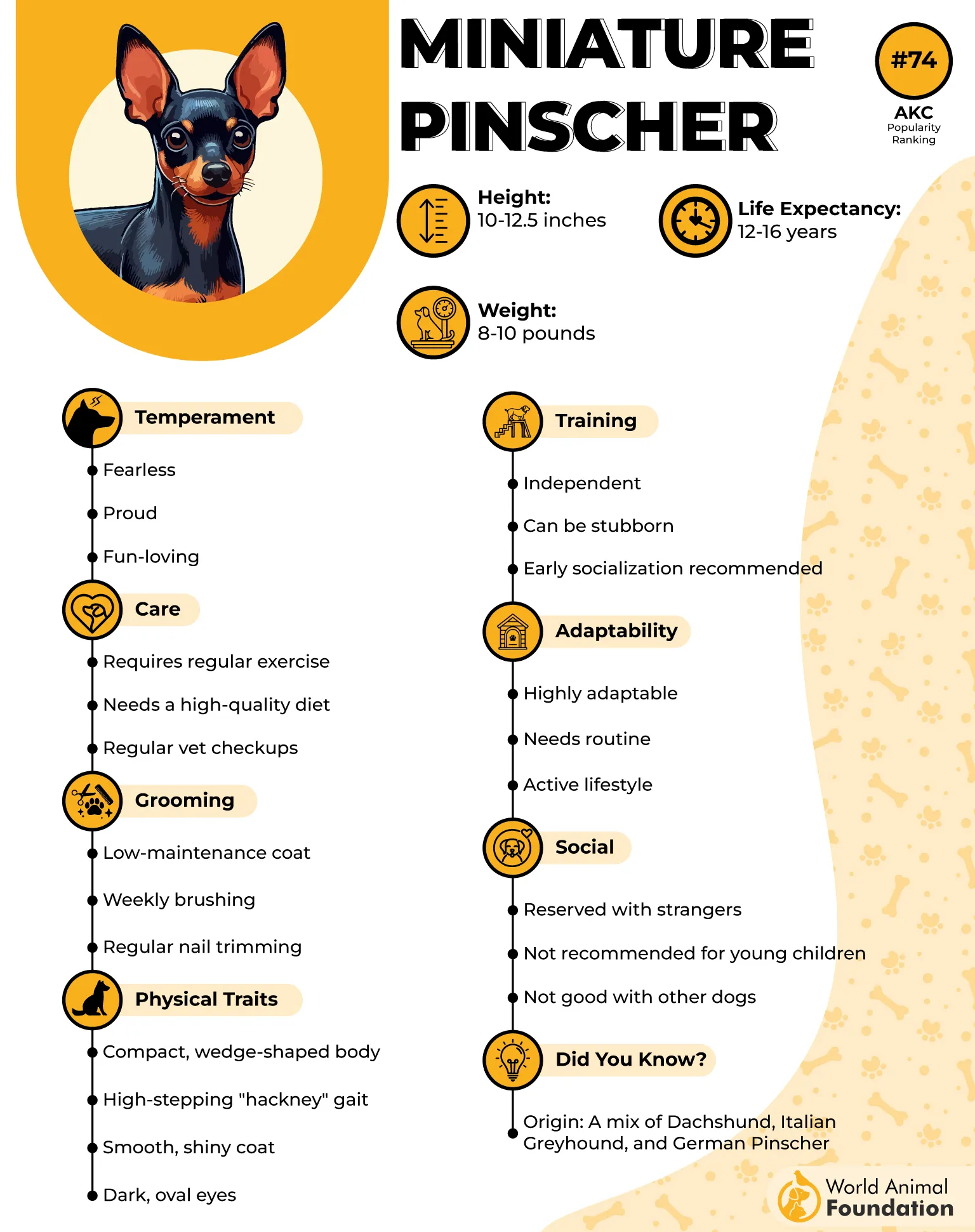
Despite being a great sport companion, it is widely kept as a family dog, and proper training helps it learn home rules quickly. The breed needs 1-2 hours of total daily stimulation. A combination of brisk daily walks, a game of fetch, or safely fenced yard zoomies is recommended.
7. Chinese Crested
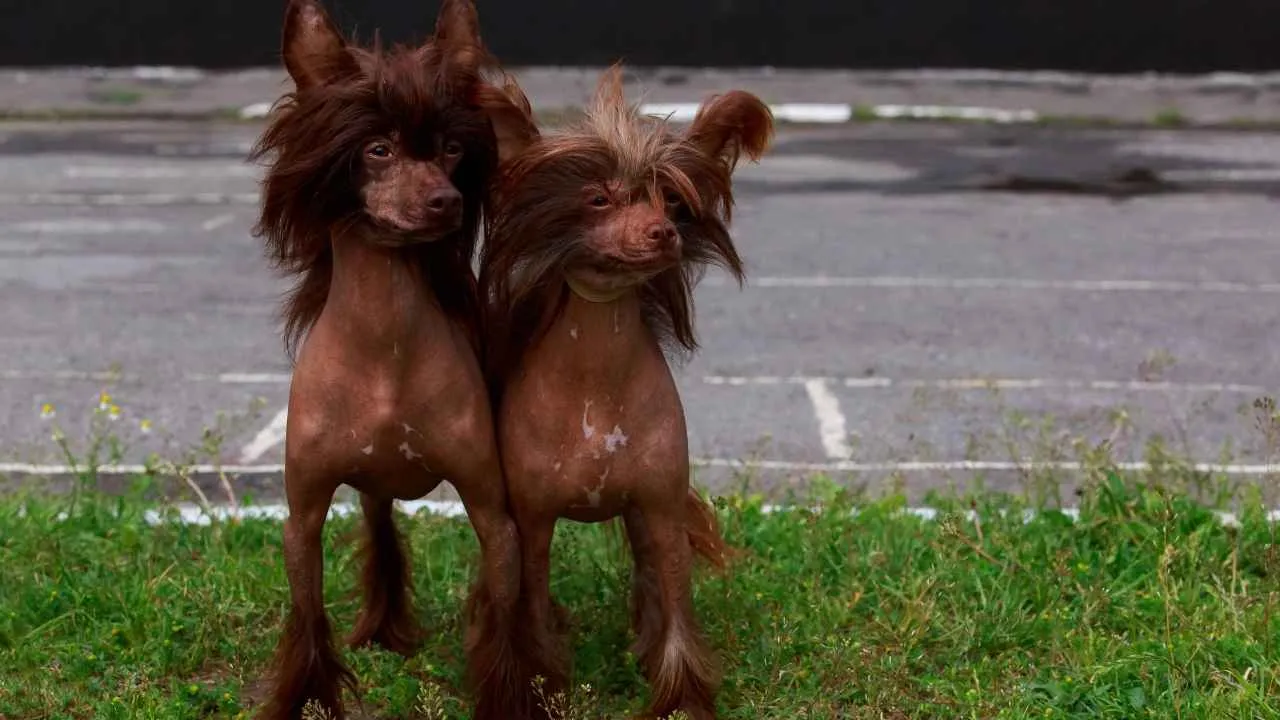
The ancestors of the breed are thought to be the hairless dogs of Africa. Some genetic evidence suggests that it also has connections with the hairless dog breeds of Mexico. When these dogs arrived in China, they were interbred to hunt rodents and were called ‘Chinese Ship Dog.’
It lacks a protective hair coat, reducing insulation. This makes it act like a highly effective lap heater but highly susceptible to cold and sunburn. It is a Velcro dog and may develop separation anxiety when left alone for too long. High intelligence makes it a quick learner.
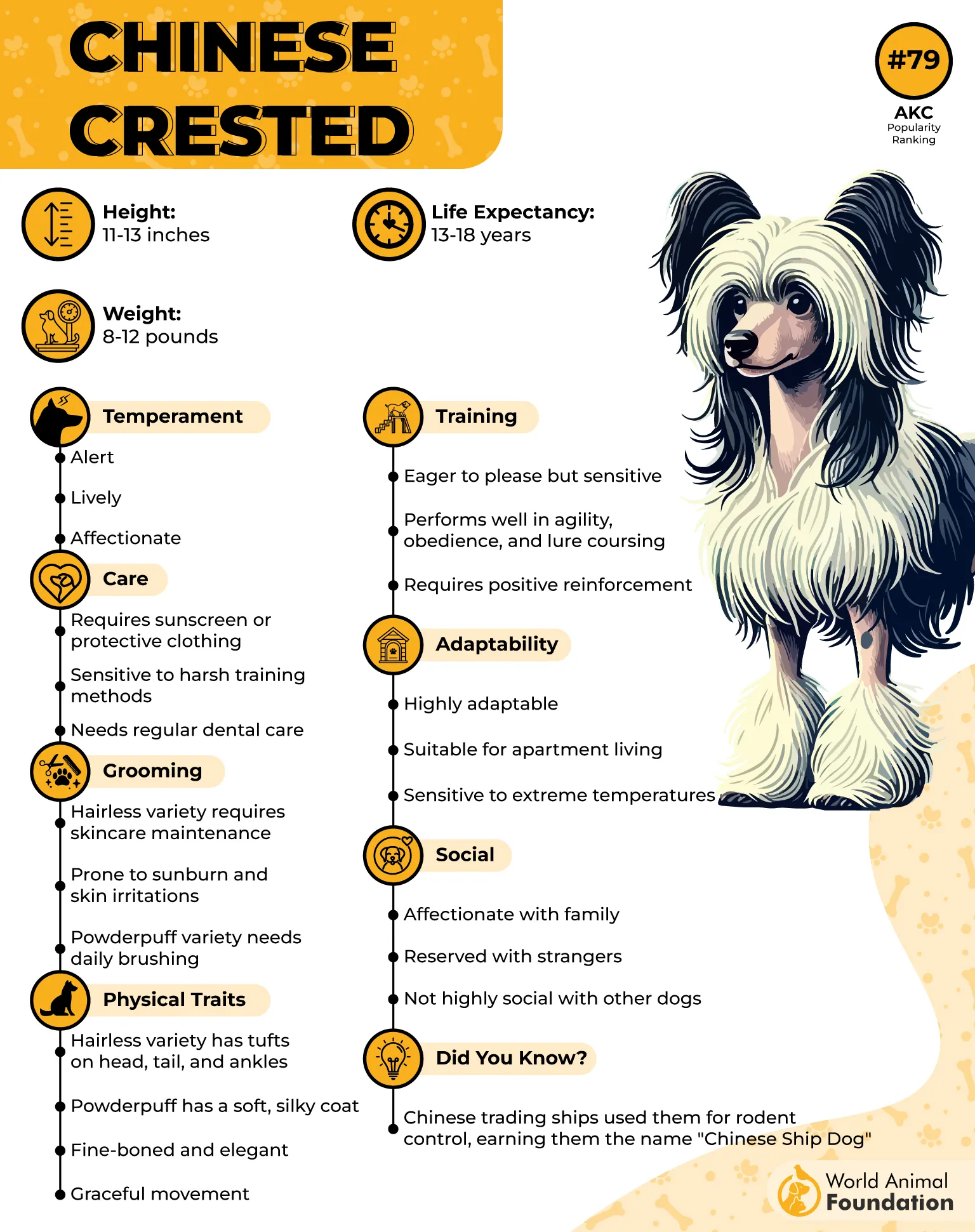
Since it has a high prey drive, it can easily navigate through tight ship compartments; thus, it is widely used in the pest control & extermination department. It has low exercise needs (30 minutes): daily walks, indoor play, and soft fetching are highly recommended.
Conclusion
A small dog does not mean a small personality. Each breed on this list brings something different, whether it is playful energy, gentle affection, quiet confidence, or an entertaining streak that keeps life interesting. The key is choosing a dog whose temperament, exercise needs, and grooming requirements fit your daily routine rather than picking based on appearance alone.
With the right match, a compact companion can become your walking buddy, movie night partner, and loyal friend for many years. In the end, the best small dog is not the most popular one; it is the one that feels right for your home, your schedule, and the life you want to share together.
