




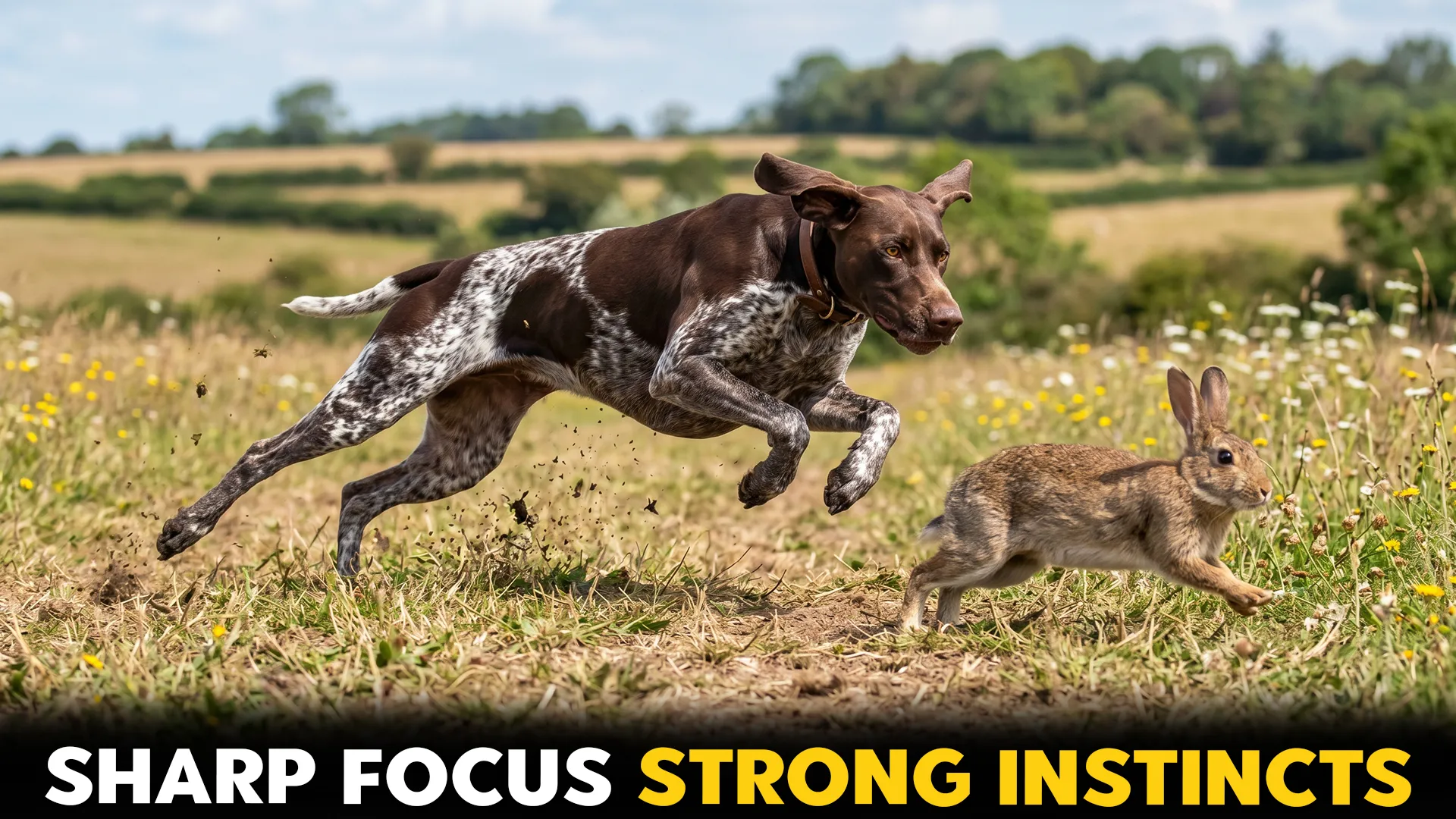
Different breeds express prey drive in different ways. Some rely on their incredible noses to trail game for miles, while others use sharp eyesight, lightning-fast reflexes, or strategic teamwork to locate prey.
Organizations such as the American Kennel Club recognize that many sporting and hound breeds still retain these instincts, even when living as beloved family companions.
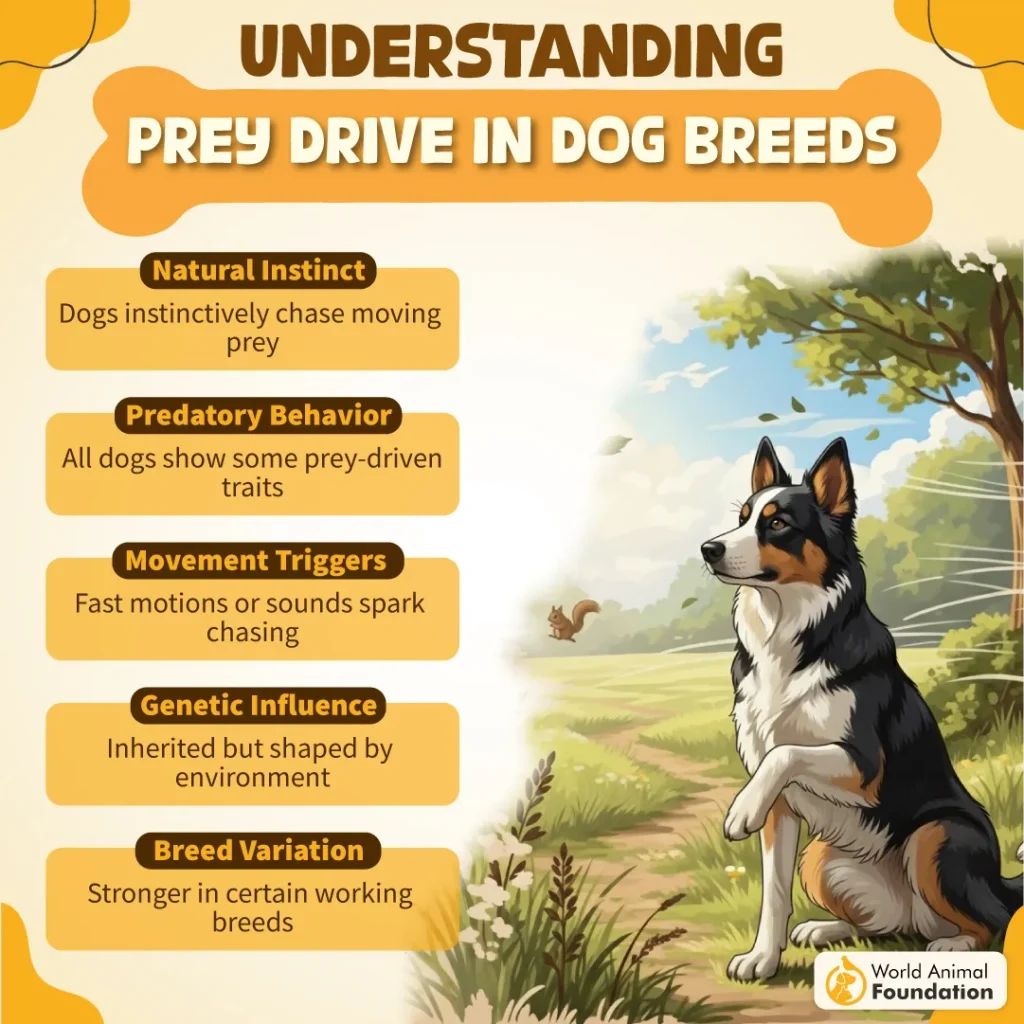
If you’re considering one of these dogs, understanding prey drive is essential. With proper training, enrichment, and exercise, these instincts can be channeled into healthy outlets such as scent work, retrieving games, lure coursing, or advanced obedience.
Let’s embark on a journey to explore dog breeds with notable prey drive.
Dog Breeds with Notable Prey Drive
1. Cirneco dell’Etna
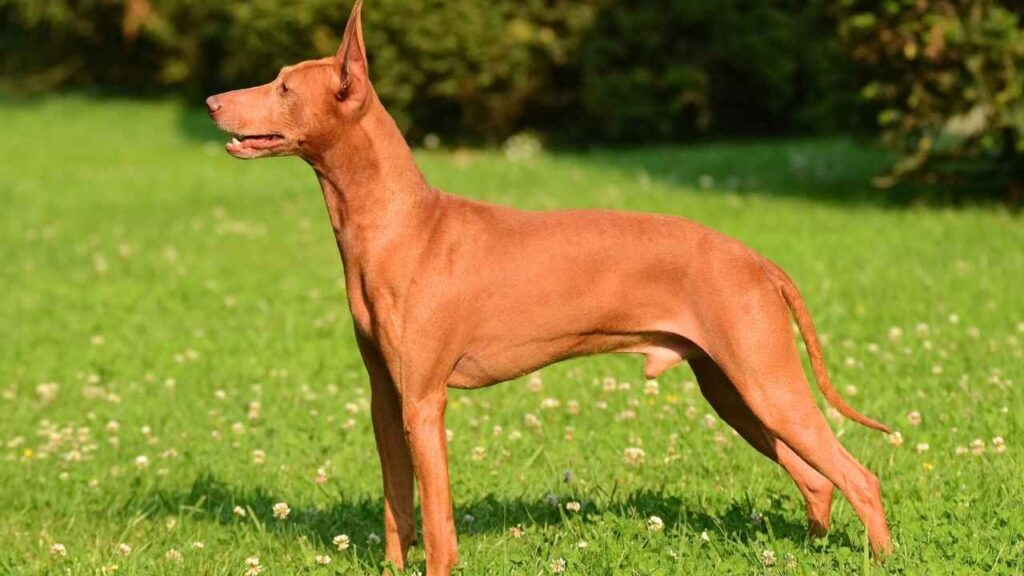
The Cirneco dell’Etna is an ancient Sicilian hunting dog that has been pursuing rabbits and small game around the slopes of Mount Etna for centuries. Lean, elegant, and remarkably agile, this breed combines speed with exceptional visual awareness.
Unlike some hounds that follow only their noses, the Cirneco frequently hunts using both sight and smell in tandem, says The Royal Kennel Club. It scans the landscape for movement while simultaneously processing scent trails, allowing it to adapt quickly when prey changes direction.
When a target appears, the Cirneco’s body language changes almost instantly. Ears perk up, posture stiffens, and every movement becomes calculated as it prepares to chase. Owners often describe this transformation as flipping an invisible “hunt mode” switch that reveals the breed’s ancient instincts.
At home, that prey drive may emerge during games involving balls, flirt poles, or fast-moving toys. Many Cirnecos enthusiastically pursue anything that darts across the yard, making secure fencing and reliable recall training especially important. Positive reinforcement helps channel these impulses into safe and enjoyable activities.
Despite their hunting heritage, Cirnecos are affectionate companions that bond closely with their families. Daily exercise and mental challenges are essential because an under-stimulated dog may invent its own entertainment by chasing neighborhood wildlife.
2. Otterhound
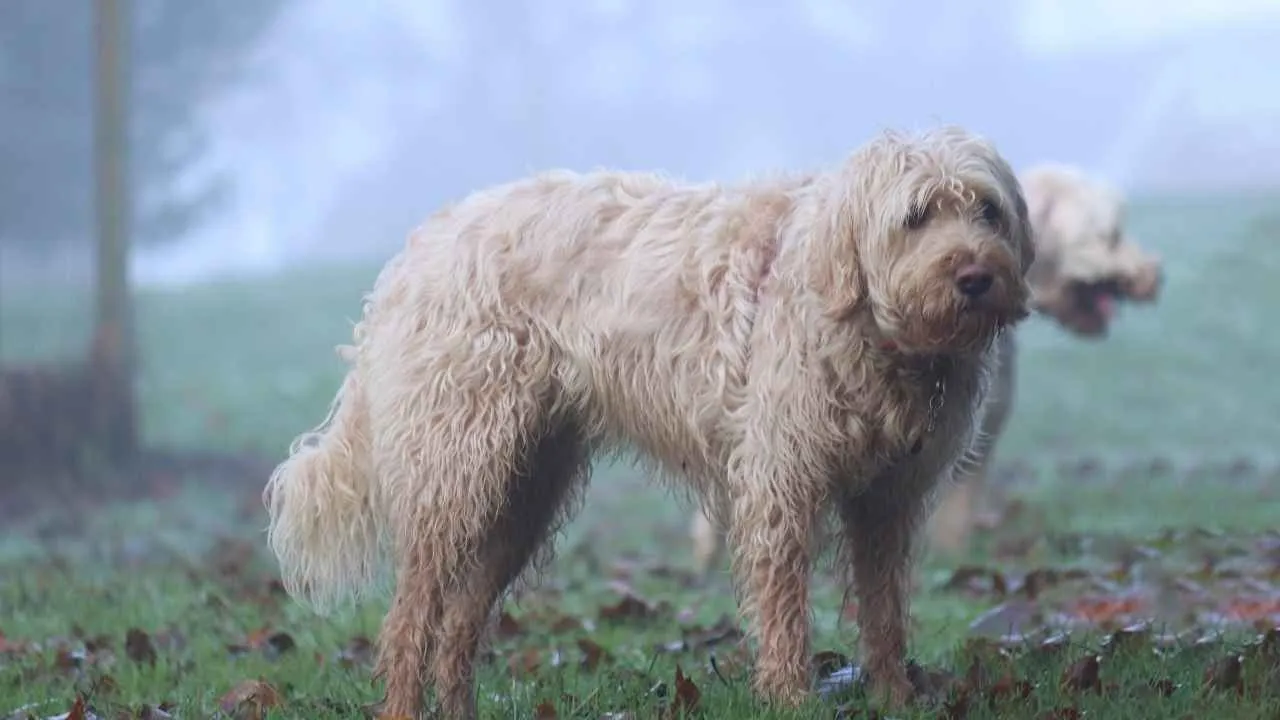
The Otterhound is one of the rarest dog breeds in the world, originally developed in Britain to track otters through rivers and marshes. Its extraordinary prey drive centers on scent, supported by a nose so sensitive that it can follow trails many hours after they were laid.
They often begin by patiently analyzing scent particles in the air and on the ground. Once they identify a promising trail, they pursue it with determination and surprising stamina.
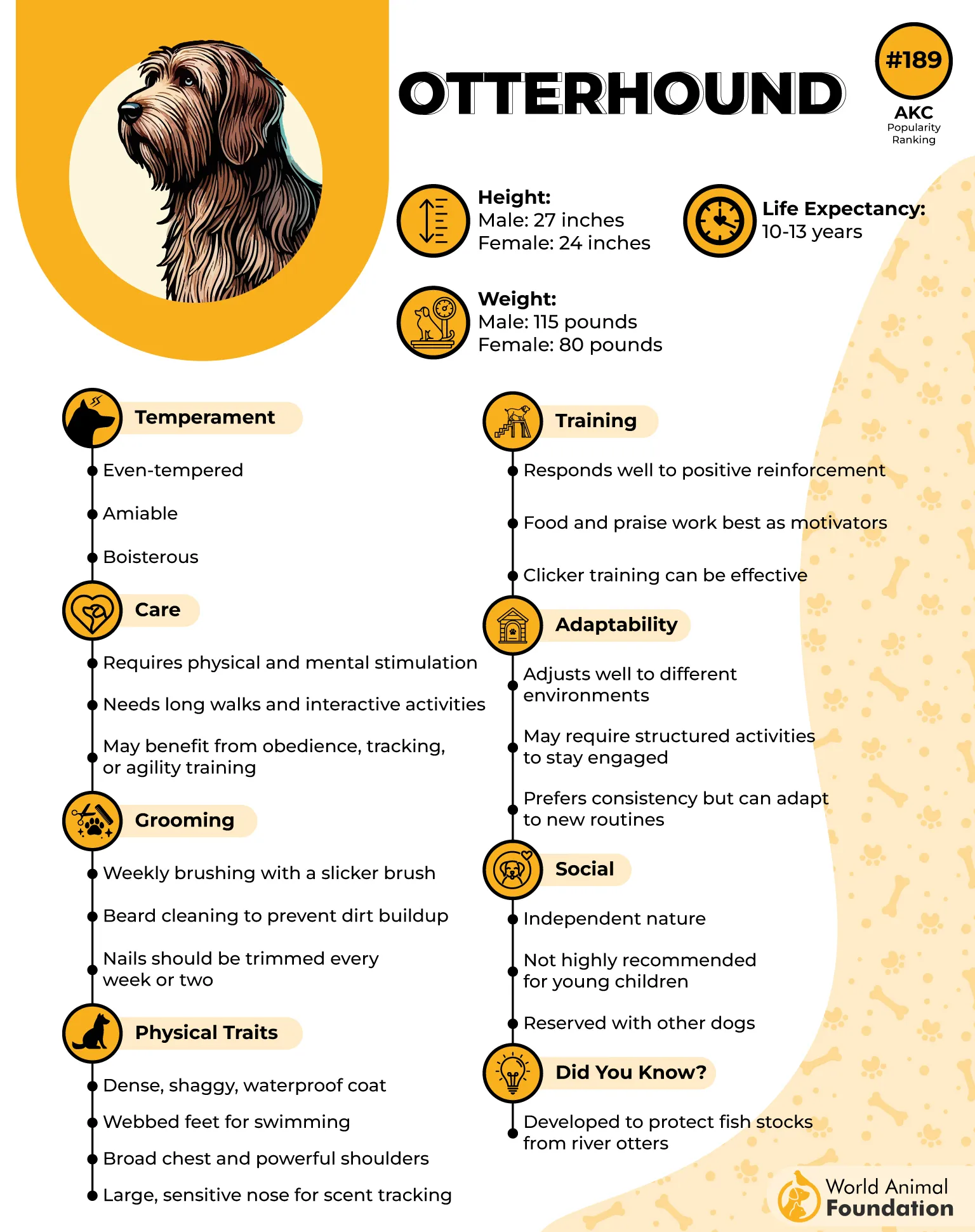
The breed’s booming voice also plays a role in its hunting style. Historically, handlers could track an Otterhound’s location through distinctive baying while the dog followed scent across difficult terrain. Even today, PetMD reports that these dogs enjoy “announcing” exciting discoveries with enthusiastic vocalizations.
Modern Otterhounds benefit from activities that engage their noses, including scent games, tracking exercises, and hidden-treat puzzles. These forms of enrichment satisfy instincts without requiring actual hunting. Many enthusiasts note that a mentally engaged Otterhound is calmer and more content indoors.
Although friendly and good-natured, Otterhounds can become completely absorbed in an interesting scent trail. Because of this focus, off-leash adventures should occur only in secure environments where wandering after wildlife won’t create safety risks.
3. German Shorthaired Pointer
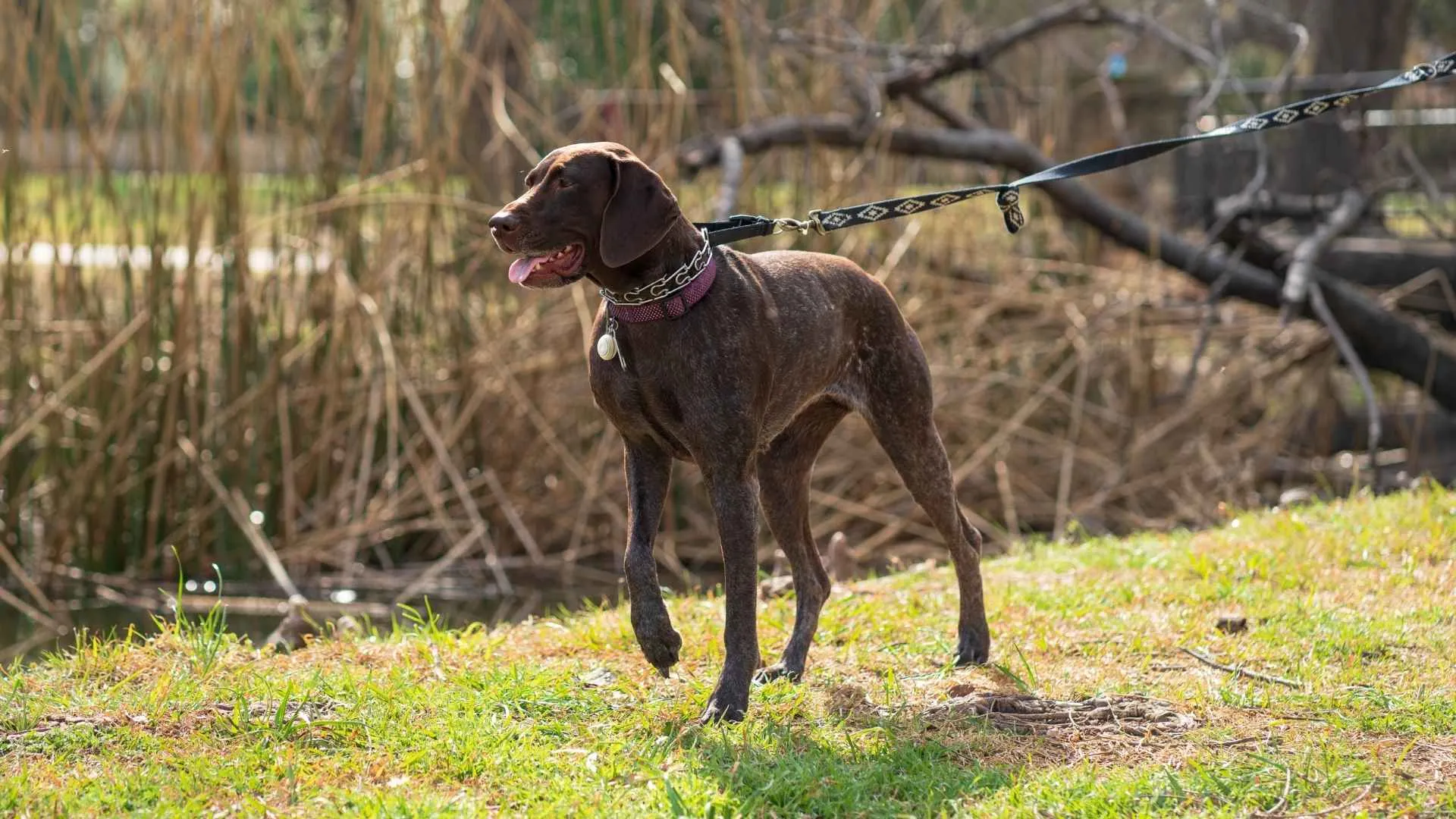
The German Shorthaired Pointer is often described as the ultimate all-purpose sporting dog, capable of locating, pointing, and retrieving game across fields and wetlands. Few breeds display such enthusiasm for pursuing birds and small animals.
One hallmark behavior is the classic “point,” where the dog freezes with intense concentration, often lifting one paw while directing its nose toward hidden game. This instinct allows hunters to approach without startling birds before the flush.
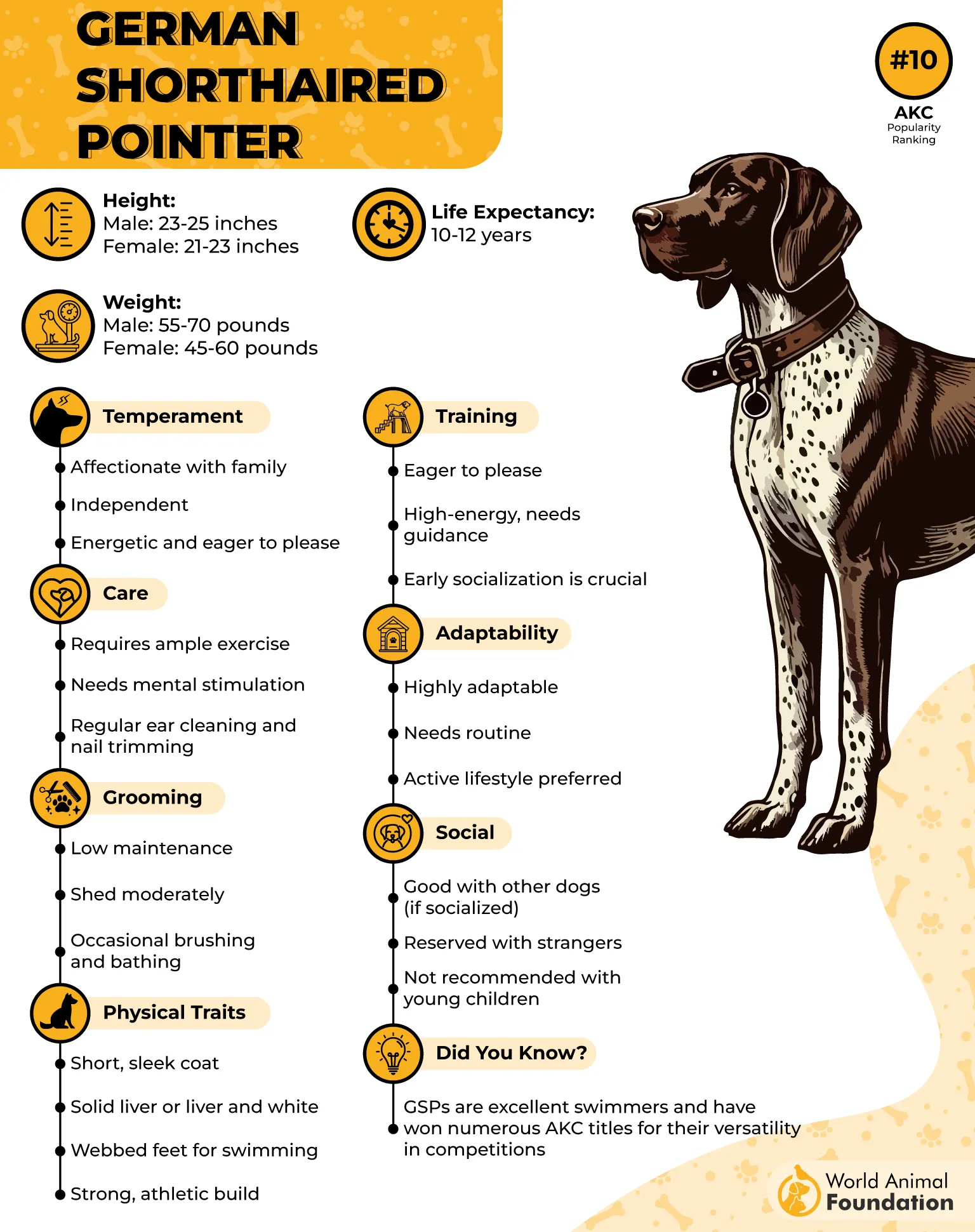
Unlike purely scent-driven hounds, German Shorthaired Pointers integrate smell, vision, and teamwork with their handlers. They quarter fields in organized patterns, covering ground efficiently while remaining responsive to commands.
These dogs require substantial physical and mental exercise to remain balanced companions. Long hikes, advanced obedience, dock diving, retrieving drills, and nose-work sports all provide excellent outlets for their energy.
Without enough stimulation, however, their instincts may lead them to chase squirrels, birds, or anything else that suddenly moves. Early training and consistent recall practice are essential, especially in areas rich with wildlife.
4. Vizsla
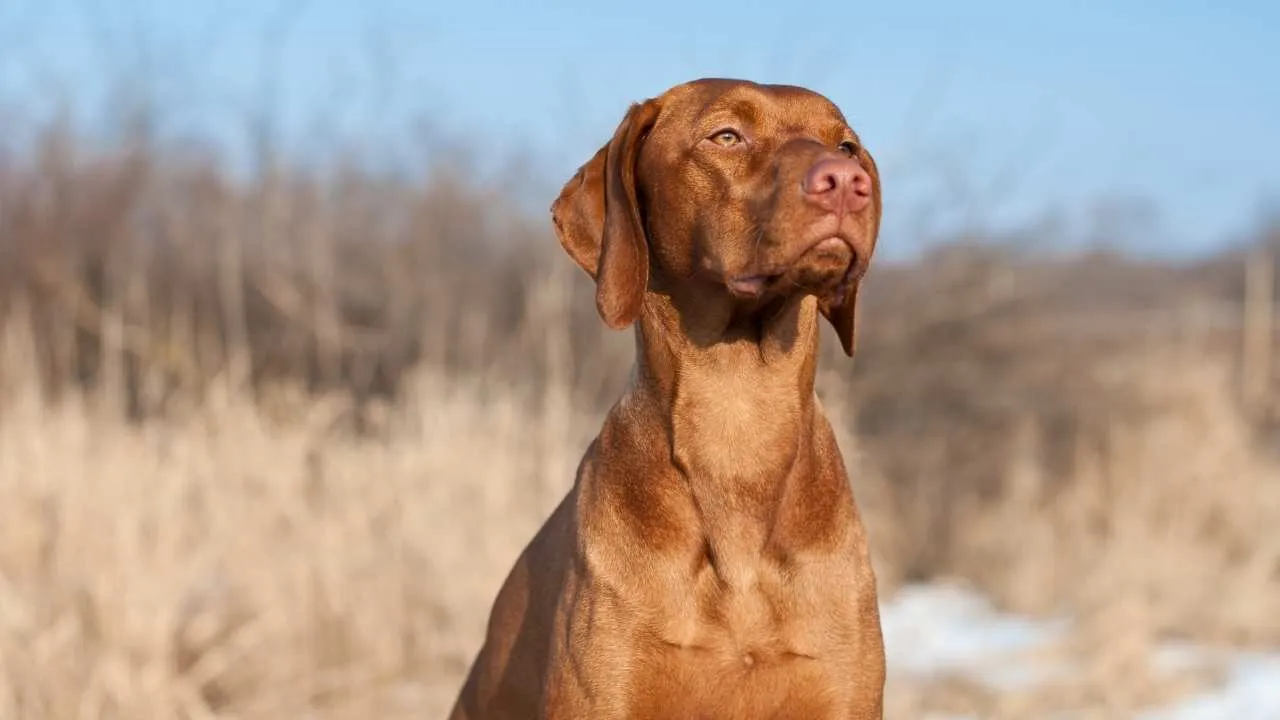
The Vizsla is often called the “Velcro dog” because it tends to stick close to its favorite humans, but don’t let that affectionate nickname fool you. Beneath its loving personality lies a highly refined hunting instinct that has been carefully developed over centuries in Hungary.
They typically work in close partnership with their handlers. They sweep through fields in an organized pattern, using both their nose and eyesight to detect movement before freezing into the classic pointing stance.
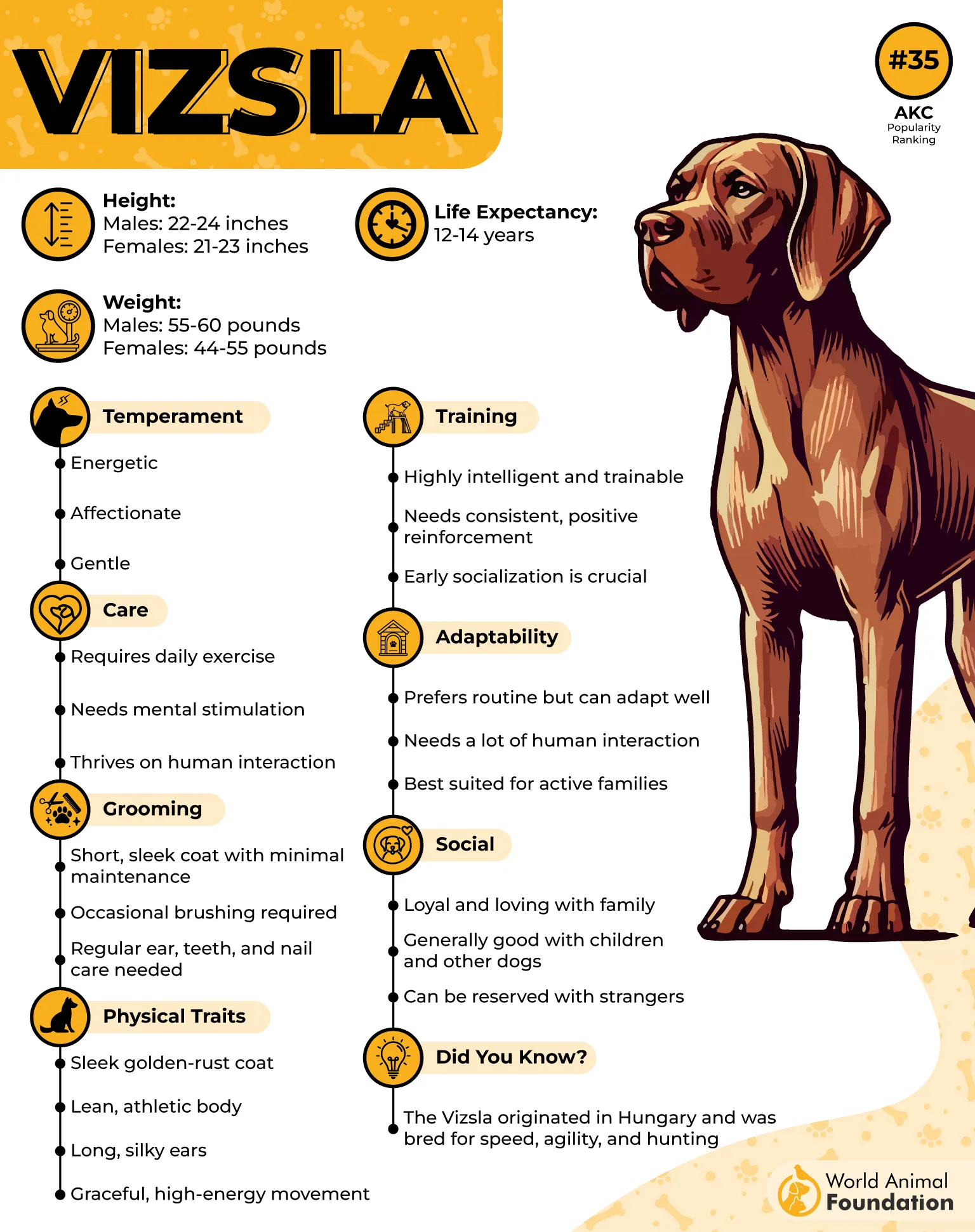
One of the breed’s greatest strengths is its ability to transition smoothly between intense focus and calm companionship. During outdoor adventures, a fluttering bird or rustling rabbit can instantly capture its attention, activating instincts that have been reinforced for generations.
Because of this strong prey drive, structured outlets are essential. Activities like scent work, retrieving games, field trials, and agility training allow the breed to satisfy its instincts in productive ways.
Early socialization and recall training play an important role in managing the breed’s enthusiasm for chasing wildlife. A well-trained Vizsla learns when to switch between work mode and relaxation while maintaining a close bond with its family.
5. American Foxhound
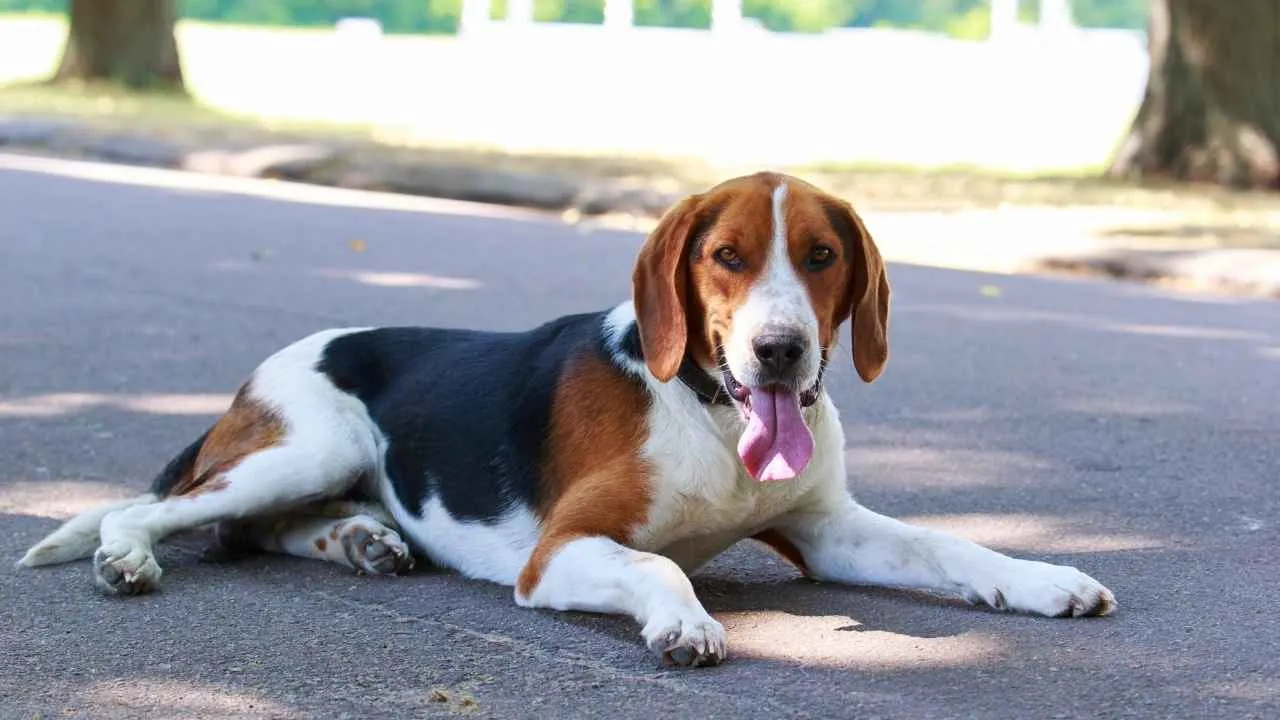
The American Foxhound was developed with one goal in mind: following scent trails over long distances with incredible endurance. Descended from European hunting hounds and refined in the United States, this hunting breed has an exceptionally strong prey drive centered almost entirely around its remarkable sense of smell.
Rather than relying on eyesight, the American Foxhound lowers its nose to the ground and patiently pieces together information carried by scent molecules. It can track game through forests, fields, and uneven terrain while maintaining focus for hours. This persistence made it highly valued in traditional fox hunting and other scent-based pursuits.
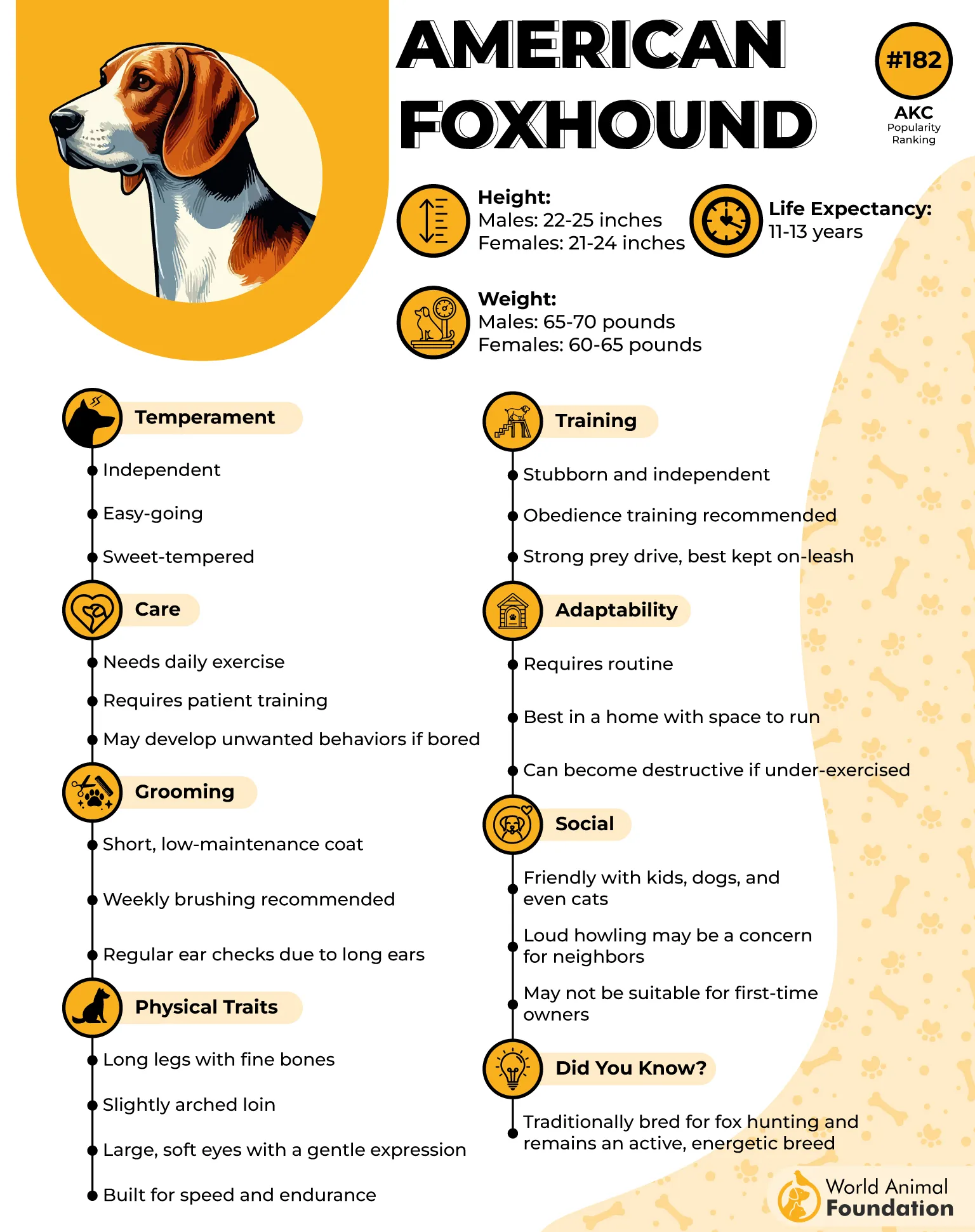
One of the breed’s defining characteristics is its musical bay, a distinctive vocalization used to communicate with hunters and fellow hounds during a chase. That booming voice can carry across large distances, helping handlers monitor progress without constantly seeing the dogs.
Living with an American Foxhound means embracing its love of exploration. Long walks, scent games, and tracking activities provide healthy outlets for instincts that might otherwise lead to wandering or persistent sniffing.
Although independent while working, American Foxhounds are generally sociable and enjoy the company of people and other dogs. Their prey drive is directed more toward following scents than displaying aggression, making them friendly companions with proper management.
6. Bluetick Coonhound
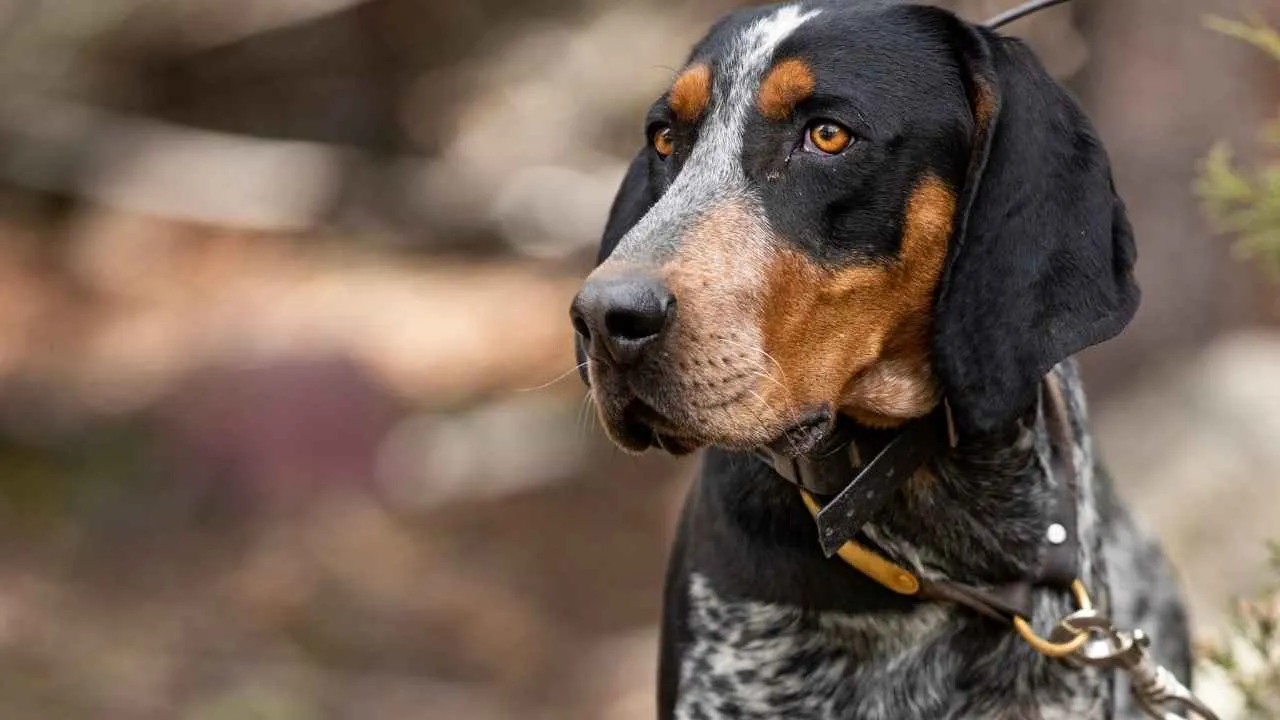
The Bluetick Coonhound is famous for its striking blue-speckled coat and extraordinary scent-trailing abilities. Originally bred to track raccoons and other game through dense forests, this breed possesses one of the strongest prey drives in the hound group.
Unlike breeds that rely on bursts of speed, the UKC says they excel through persistence and methodical tracking. They carefully analyze scent trails, following even faint clues across challenging terrain until they locate their target.
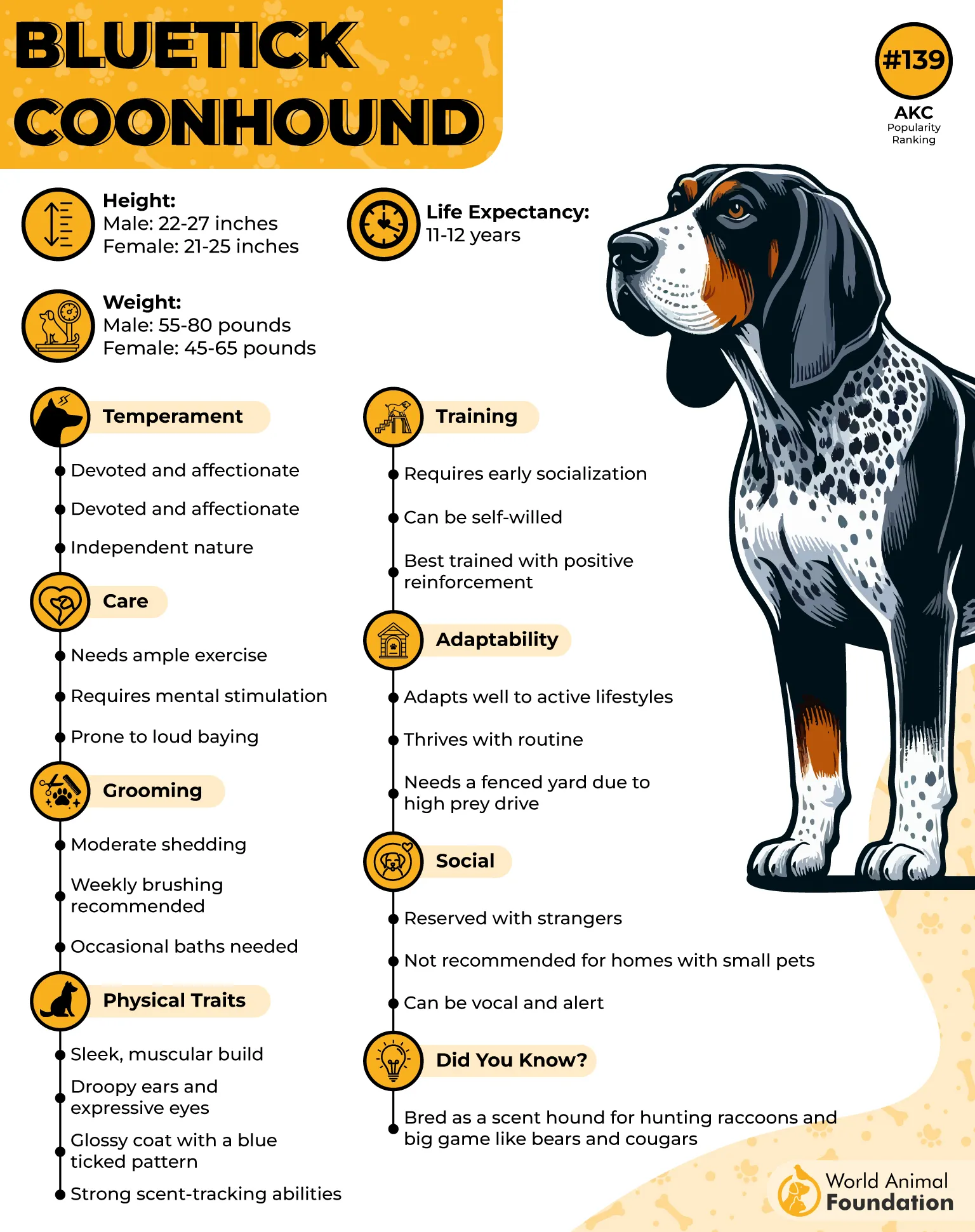
Once engaged in pursuit, the Bluetick uses its signature baying voice to communicate location and progress. Hunters historically depended on these vocal cues when navigating forests at night, trusting the dogs to stay on trail while broadcasting updates. Even today, many Blueticks express excitement vocally whenever they encounter an interesting scent or unfamiliar wildlife.
The breed thrives when given opportunities to use its nose in constructive ways. Tracking games, scent-detection exercises, and supervised hiking adventures provide mental stimulation that matches its natural talents.
Despite their intense prey drive outdoors, Bluetick Coonhounds are often affectionate and easygoing with their families at home. They typically enjoy companionship and appreciate owners who understand their need for both exercise and enrichment.
7. Bloodhound
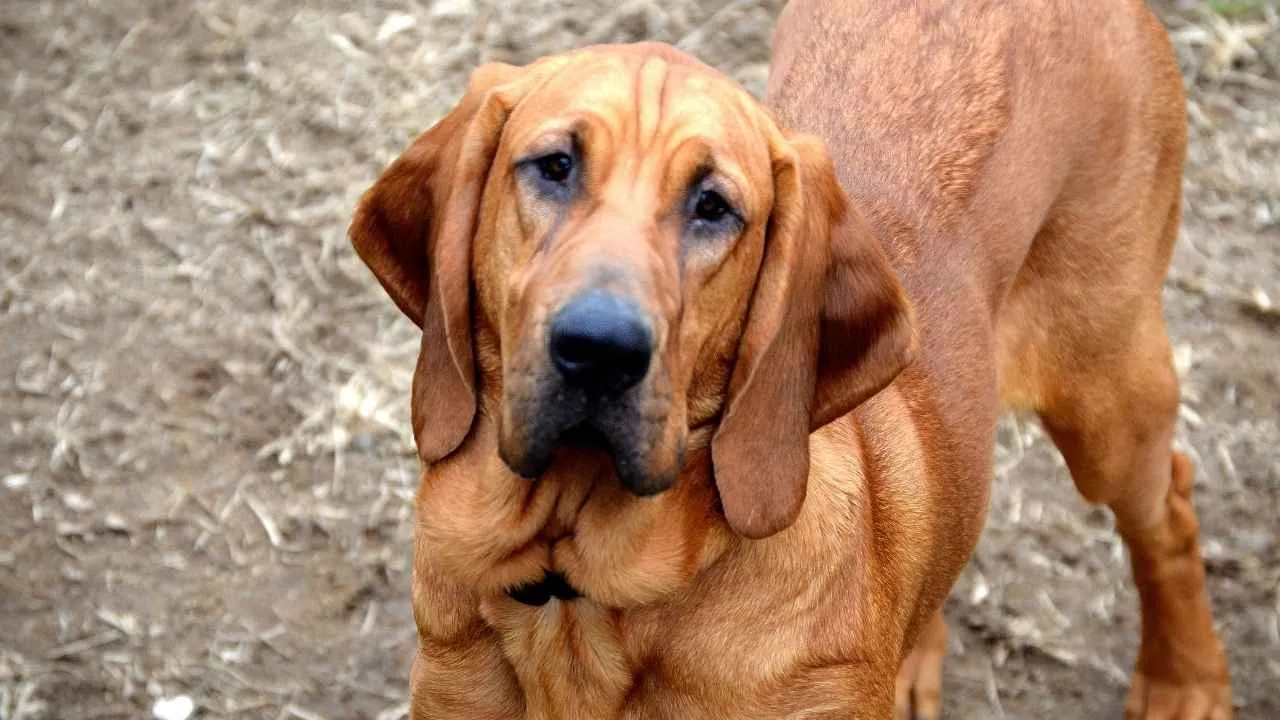
The Bloodhound is legendary for having one of the most powerful noses in the canine world, with scenting abilities so precise that its tracking evidence has been accepted in courts in some jurisdictions. Bred to follow human and animal trails over long distances, this breed relies almost entirely on scent rather than speed or eyesight.
Once it locks onto an odor, its prey drive becomes a mission fueled by patience and determination.
Unlike many hunting breeds that chase whatever they see moving, Bloodhounds methodically piece together scent molecules left behind on the ground and in the air.
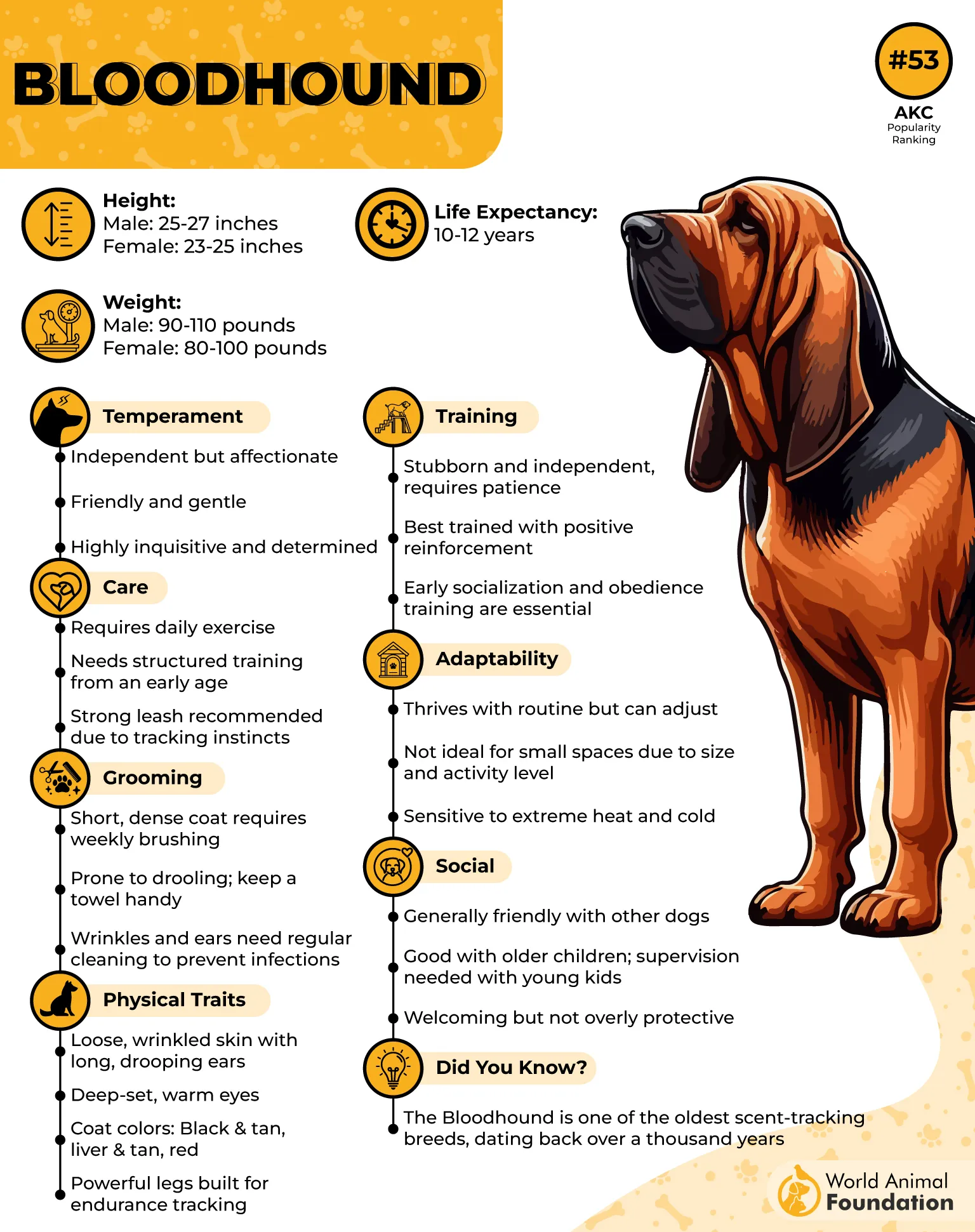
A Bloodhound’s prey drive is less about catching prey and more about solving a scent puzzle. Owners often notice their dogs becoming completely absorbed in following a trail, ignoring distractions that would pull other breeds off course. This laser focus is why secure leashes and fenced areas are essential during walks.
Because their instincts are so scent-oriented, enrichment should include nose-first activities. Tracking games, scent work classes, and hide-and-seek with treats or toys can provide satisfying mental exercise without encouraging unsafe chasing behavior.
Despite their serious work ethic outdoors, they are often gentle, affectionate, and surprisingly laid-back at home. They enjoy human company and usually get along well with families, but their independent streak means training requires consistency and patience. With the right outlets, their remarkable prey drive becomes an asset rather than a challenge.
8. American English Coonhound
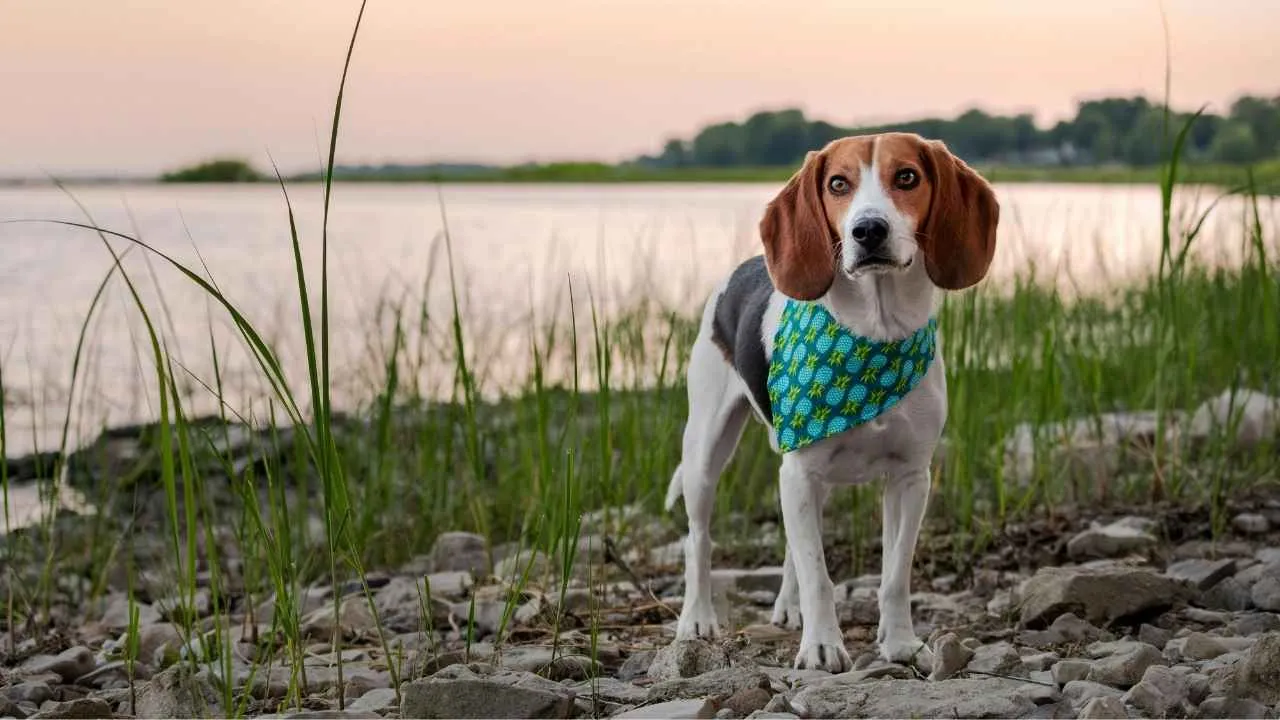
The American English Coonhound was developed to pursue raccoons, foxes, and other game across forests and rugged countryside with relentless stamina. This breed combines speed with an exceptional sense of smell, creating a hunting dog that can maintain a trail over impressive distances.
When tracking, these dogs lower their noses and follow scent with remarkable confidence, adjusting direction as the trail changes. Once they locate their target, they often use loud, distinctive baying to signal their discovery.
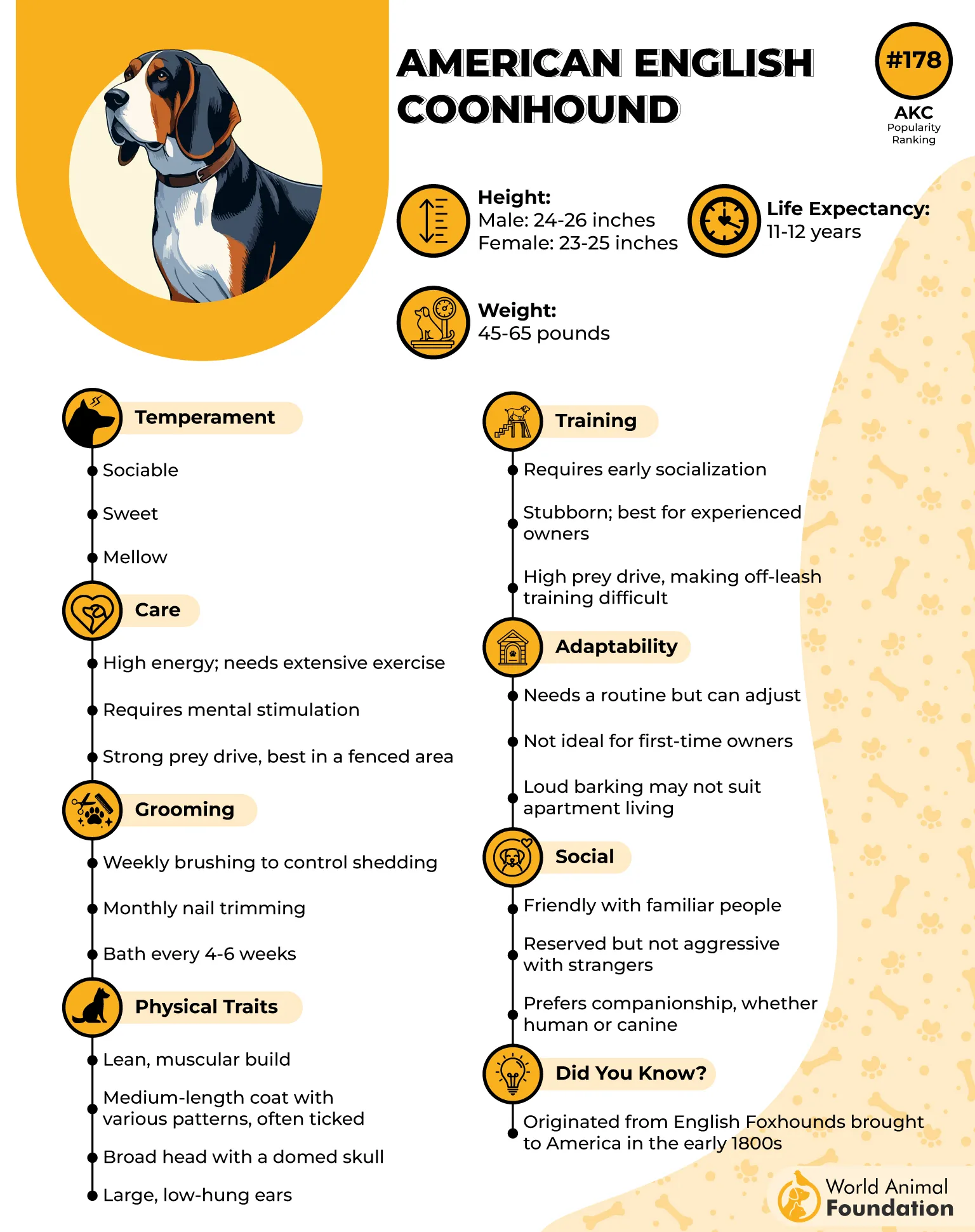
Unlike breeds bred for stealth, they openly express excitement while working. Their energetic personalities and eagerness to pursue scents make them enthusiastic participants in tracking sports and field activities. Even as household pets, many instinctively investigate every interesting smell they encounter.
Regular physical exercise is only part of what keeps this breed happy. Mental stimulation through scent games, advanced recall training, and exploratory hikes satisfies their natural curiosity and reduces boredom. Without these outlets, their prey drive may lead them to follow wildlife or become distracted by every scent crossing their path.
Friendly and social by nature, American English Coonhounds often thrive in active homes where adventure is part of daily life.
9. Nova Scotia Duck Tolling Retriever
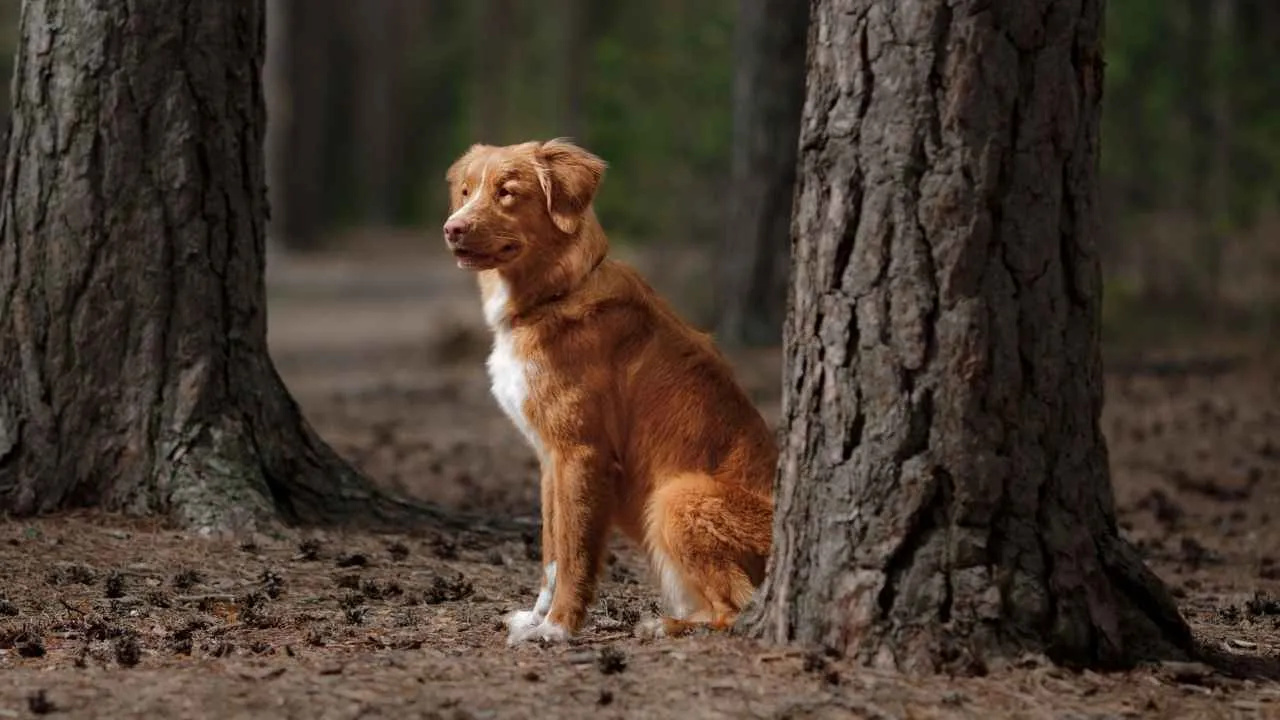
The Nova Scotia Duck Tolling Retriever, often called the Toller, has one of the most unusual hunting strategies in the canine world. Rather than chasing prey directly, it was bred to lure curious waterfowl within range by playfully running, jumping, and retrieving along the shoreline.
A Toller’s prey drive combines intelligence, athleticism, and strong retrieving instincts. The dog performs energetic, fox-like movements near the water’s edge while remaining responsive to hidden hunters waiting nearby.
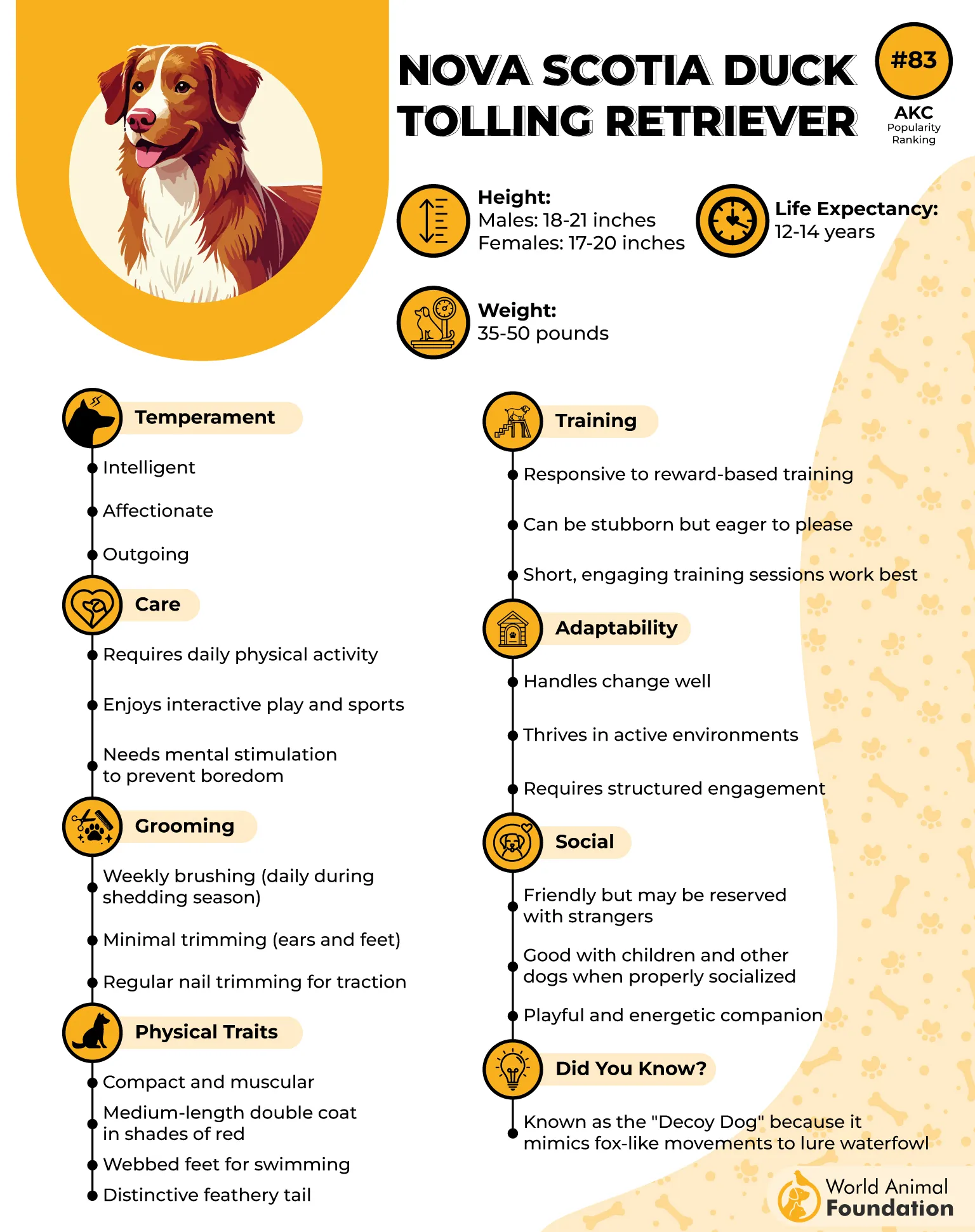
Unlike many sporting breeds that work independently, the domesticated dogs excel through close cooperation with their handlers. They constantly look for cues, making them highly trainable and eager participants in organized field work.
This partnership-based prey drive also translates well into obedience competitions and canine sports.
Daily life with a Toller should include activities that mimic natural hunting behaviors. Fetch, dock diving, scent games, and swimming provide excellent outlets for their instincts while strengthening the bond between dog and owner.
Conclusion
Prey drive is one of the most fascinating instincts in the canine world, and these nine breeds prove that there’s no single way to express it.
A strong prey drive doesn’t make a dog aggressive or unsuitable as a pet—it simply reflects deeply rooted instincts that need healthy outlets. Activities such as scent work, lure coursing, field trials, retrieving games, agility, and structured fetch sessions allow these dogs to express natural behaviors in safe and rewarding ways.
Siberian Huskies, Jack Russell Terriers, Australian Shepherds, Border Collies, Greyhounds, Bull Terriers, Rhodesian Ridgebacks, Beagles, and Great Pyrenees are other dogs with a high prey drive. Their instincts have been refined over generations to perform specialized tasks that still shine through today, even in suburban backyards and city parks.
