




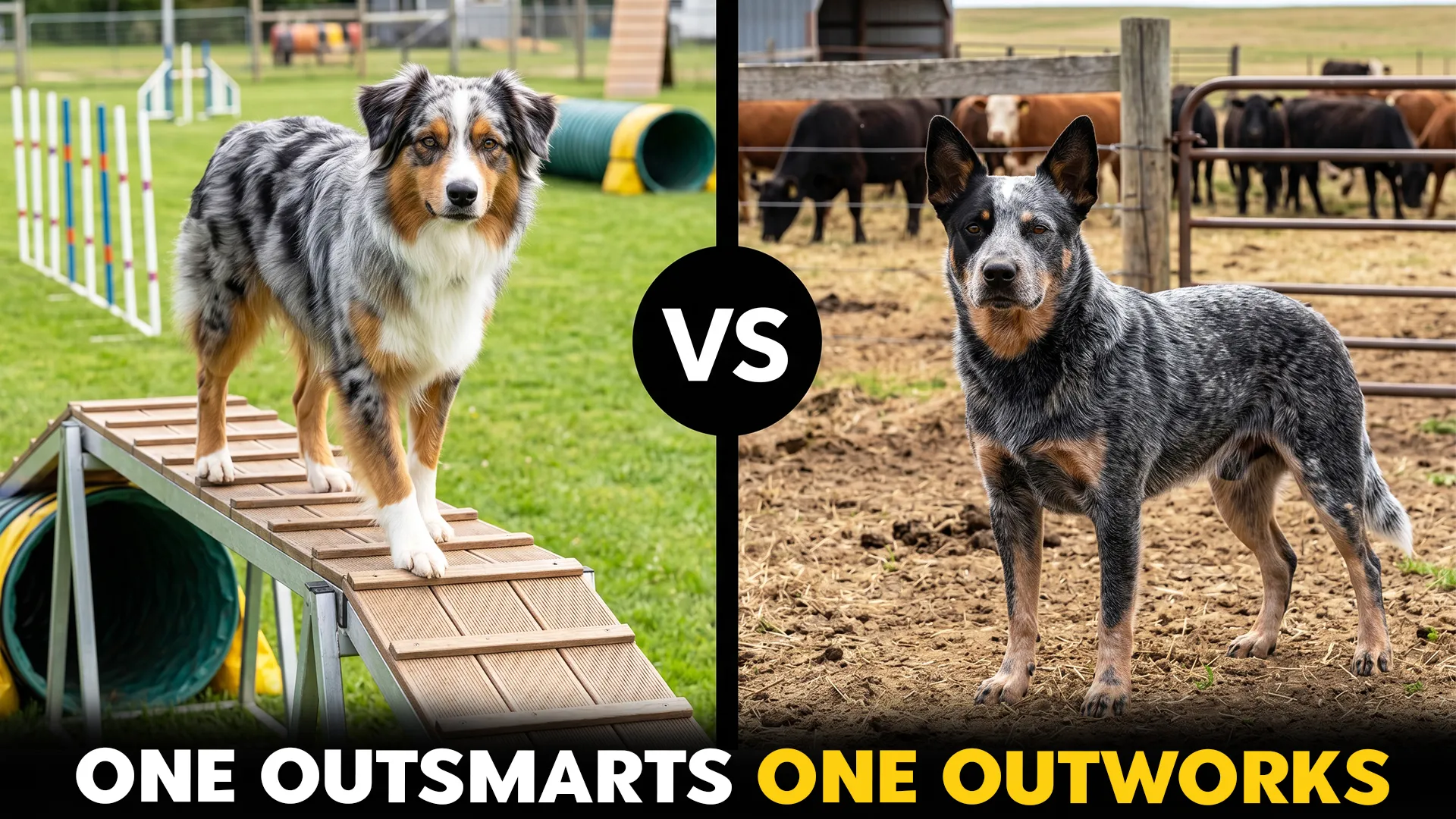
Choosing between two highly intelligent herding dogs isn’t as simple as picking the one that learns tricks the fastest. Both were developed to work long days alongside humans, making quick decisions, solving problems, and managing livestock in challenging conditions.
What makes this comparison especially interesting is that these two dogs were shaped by very different histories. One traces its roots back to tough Australian cattle stations, where endurance and grit were essential, while the other became a favorite on American ranches thanks to its versatility and trainability. Despite sharing a herding background, they use their intelligence in surprisingly different ways.
So, when it comes to Australian Shepherd vs. Blue Heeler, which one is actually smarter? The answer goes beyond obedience and trick training.
From problem-solving skills and work ethic to adaptability and emotional intelligence, we’ll break down the key differences to help you discover which of these brilliant canine companions comes out on top.
Key Takeaways
Compare two smart herding dog breeds head-to-head to see which one truly learns, thinks, and works better.
Australian Shepherd shines as a friendly, trainable, all-round active companion for busy, social homes.
Blue Heelers stand out for toughness, independence, and serious protective instincts built for hard work.
From energy and training to health and guarding instincts, this article helps you quickly spot your perfect match.
Australian Shepherd vs. Blue Heeler: Which One is Smarter?
Size and Strength
Australian Shepherd
Australian Shepherds are generally the larger of the two breeds, standing 18–23 inches tall and weighing 40–65 pounds. Their lean yet muscular frame gives them the perfect balance of speed, endurance, and athleticism.
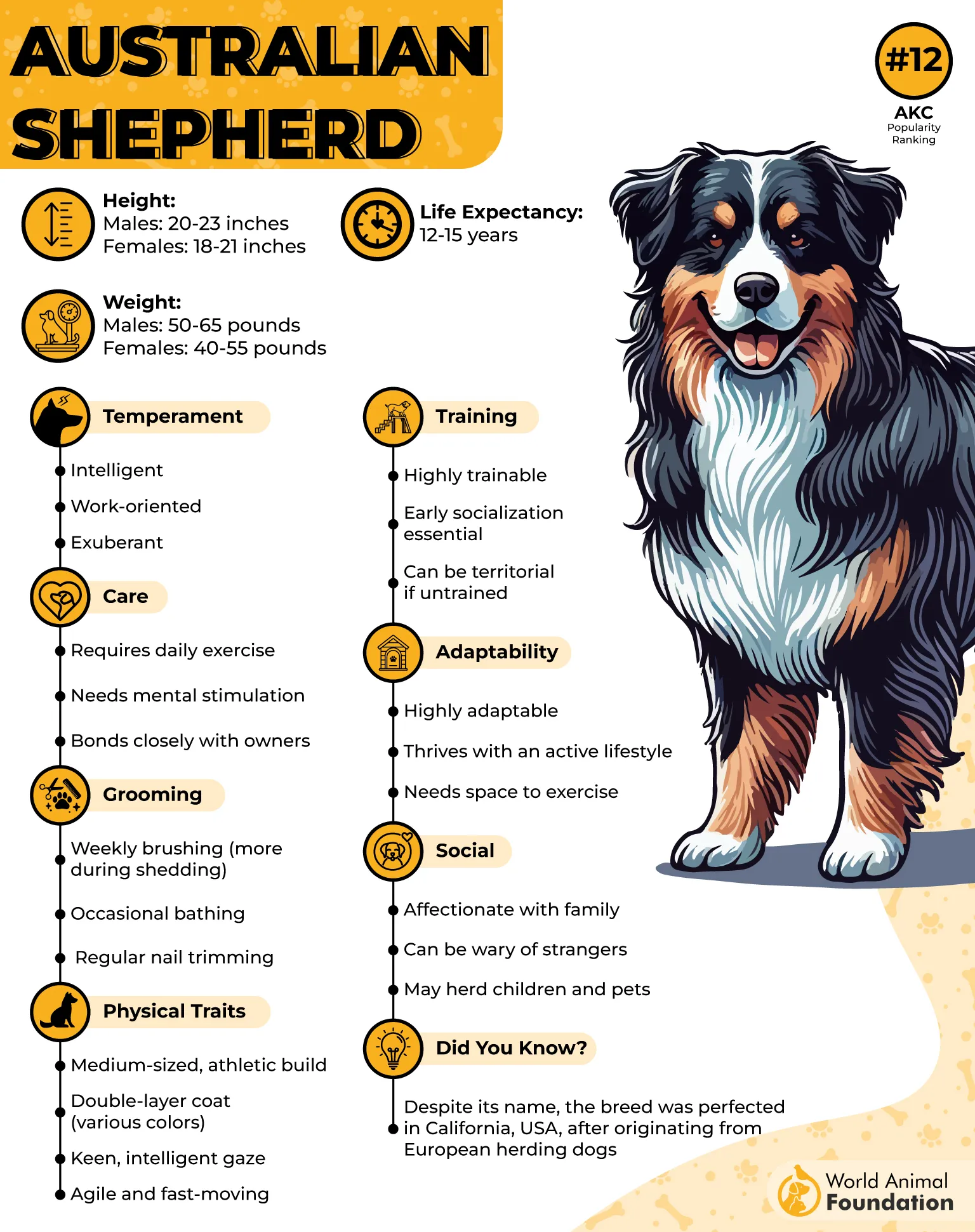
Key Physical Traits:
Taller and heavier overall
Slightly longer body than height
Strong, athletic build designed for all-day work
Thick double coat that protects against harsh weather
Their size and agility allow them to excel in activities that require quick movements, jumping, and endurance.
Blue Heeler
Blue Heelers may be smaller, typically measuring 17–20 inches tall and weighing 35–50 pounds, but don’t mistake their compact size for weakness. These dogs are incredibly sturdy and packed with muscle.
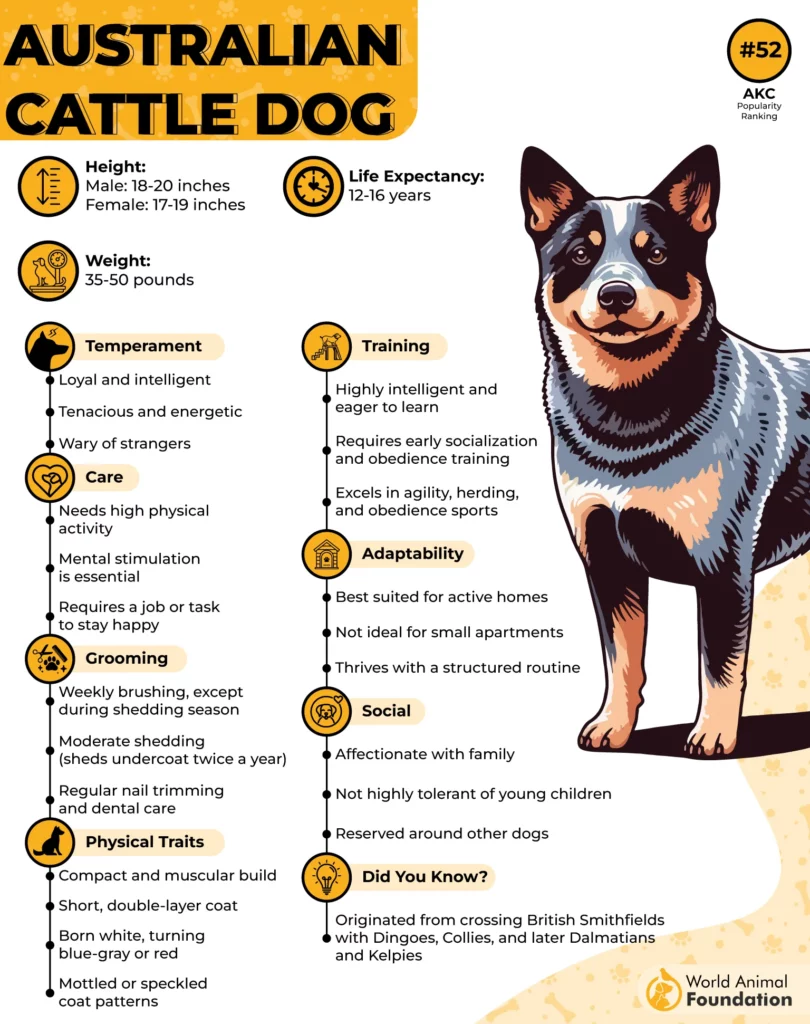
Key Physical Traits:
More compact and stocky build
Dense muscles and exceptional stamina
Strong legs built for quick bursts of speed
Distinctive upright ears and dingo-like appearance
Originally developed to move cattle over long distances, Blue Heelers are tough, resilient dogs that seem to have endless energy.
Which Breed Is Stronger?
When it comes to raw size, the Australian Shepherd has the advantage. However, pound for pound, the Blue Heeler is often considered the tougher and more rugged worker. Its compact frame, powerful muscles, and relentless endurance make it exceptionally durable in demanding conditions.
Temperament and Personality
Australian Shepherd
Australian Shepherds thrive on companionship and love being involved in everything their family does. They form strong bonds with their owners and are usually affectionate, playful, and eager to work alongside their people.
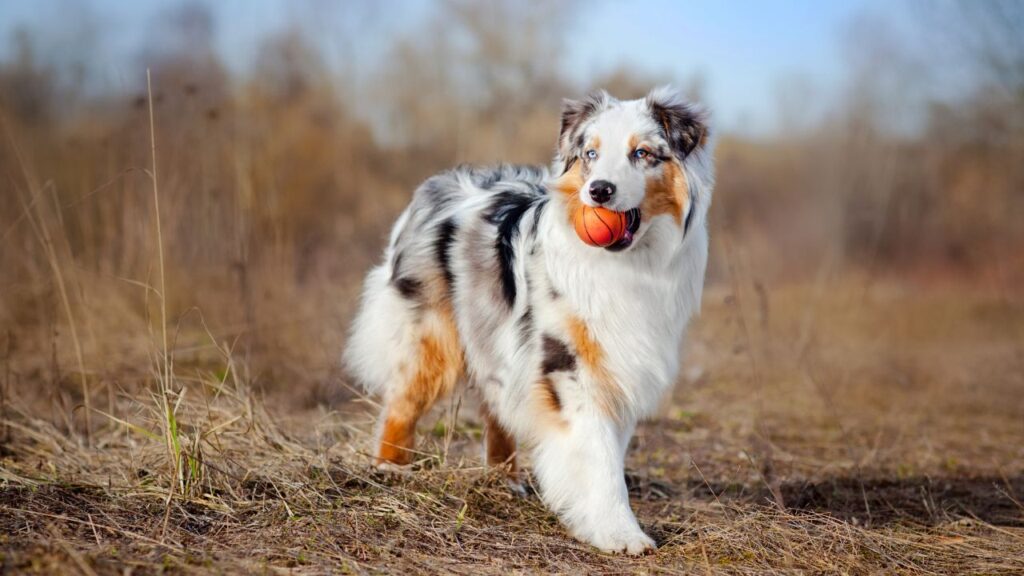
What to Expect from an Australian Shepherd:
Friendly and affectionate with family members
Usually gets along well with children and other pets when socialized
Intelligent and highly trainable
Can be reserved around strangers at first
Loves having a job and staying mentally engaged
Because they crave both physical activity and human interaction, Aussies can become bored and destructive if left without enough exercise or stimulation, as stated by PetMD.
Blue Heeler
Blue Heelers are known for their intense loyalty and strong work ethic. They often form an especially close bond with one person and are naturally watchful of their surroundings. While affectionate with their family, they tend to be more cautious around unfamiliar people.
What to Expect from a Blue Heeler:
Extremely loyal and protective
Confident and independent-minded
Alert and naturally suspicious of strangers
Strong herding instincts that may lead to nipping behaviors
Thrives when given tasks, training, and challenges
These dogs are problem-solvers by nature and prefer being busy. Without enough physical and mental stimulation, they can develop unwanted behaviors and become difficult to manage.
Health and Lifespan
Australian Shepherd
Australian Shepherds typically live 12–15 years and are generally healthy, though they are predisposed to several genetic health issues.
Potential Health Concerns:
Hip Dysplasia
Elbow Dysplasia
Progressive Retinal Atrophy (PRA)
Collie Eye Anomaly
Hereditary Cataracts
Iris Coloboma
Epilepsy
Multidrug Resistance Mutation (MDR1)
Deafness
Lymphosarcoma
Hemangiosarcoma
Blue Heeler
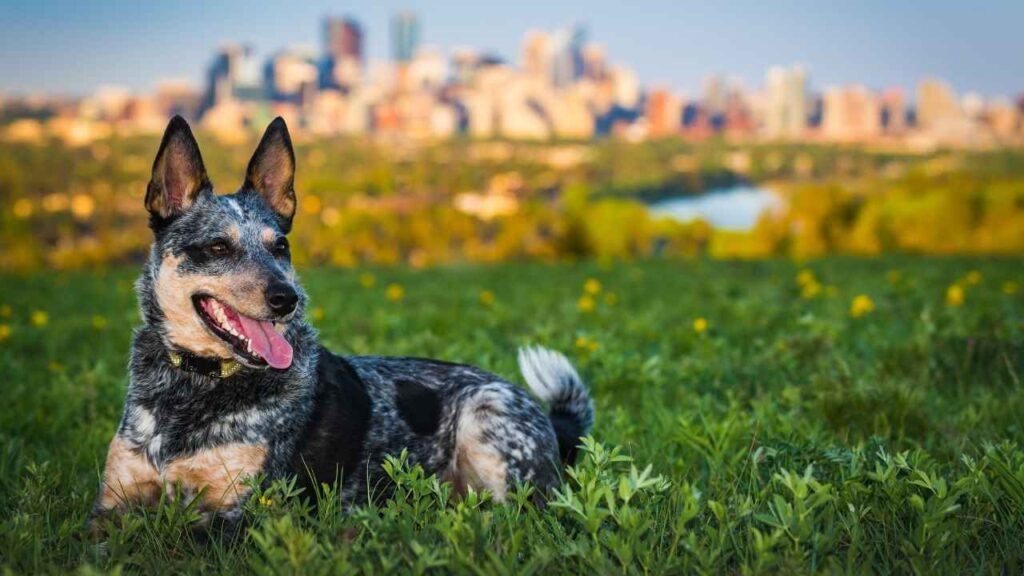
Blue Heelers are often regarded as one of the healthiest herding breeds and tend to have a slightly longer lifespan of 12–16 years.
Common Health Concerns:
Deafness
Hip Dysplasia
Progressive Retinal Atrophy (PRA)
Which Breed Is Healthier?
While both breeds are relatively healthy, the Blue Heeler generally has fewer inherited health concerns and often enjoys a longer lifespan. Australian Shepherds remain robust dogs, but prospective owners should be aware of their greater risk for certain eye disorders, neurological conditions, and cancers.
Training and Exercise
Australian Shepherd
Australian Shepherds are highly trainable and love working with their owners. They pick up new commands quickly and excel in activities that challenge both their minds and bodies.
Exercise and Training Needs:
Require 1–2 hours of vigorous exercise daily
Respond exceptionally well to positive reinforcement
Excel in agility, flyball, obedience, and other dog sports
Benefit from puzzle toys and scent-based games
Need early socialization and consistent training
Because Aussies are eager to please, they are often slightly easier for first-time dog owners to train.
Blue Heeler
Blue Heelers are just as intelligent, but they tend to be more independent thinkers, according to WebMD. They learn quickly, yet they often like to decide whether a command is worth following, making consistent training essential.
Exercise and Training Needs:
Need at least 30–60 minutes of intense daily activity, plus mental stimulation
Thrive with structured training and clear boundaries
Enjoy agility, flyball, dock diving, and advanced obedience work
Require puzzle toys, problem-solving games, and interactive play
Need early socialization to prevent overly protective behaviors
Without enough exercise or mental challenges, Blue Heelers can become bored and channel their boundless energy into unwanted behaviors like chewing, digging, or herding family members.
Grooming Needs
Australian Shepherd
Australian Shepherds have a medium-length, water-resistant double coat that sheds throughout the year, so grooming is a regular responsibility rather than an occasional task. Their coat helps protect them from different weather conditions, but it also means loose fur can quickly build up without consistent care.
They usually need brushing 1–2 times per week, with extra sessions during seasonal shedding periods, especially in spring when they “blow” their winter coat. Attention should be given to areas that mat easily, such as behind the ears, under the legs, and around the tail.
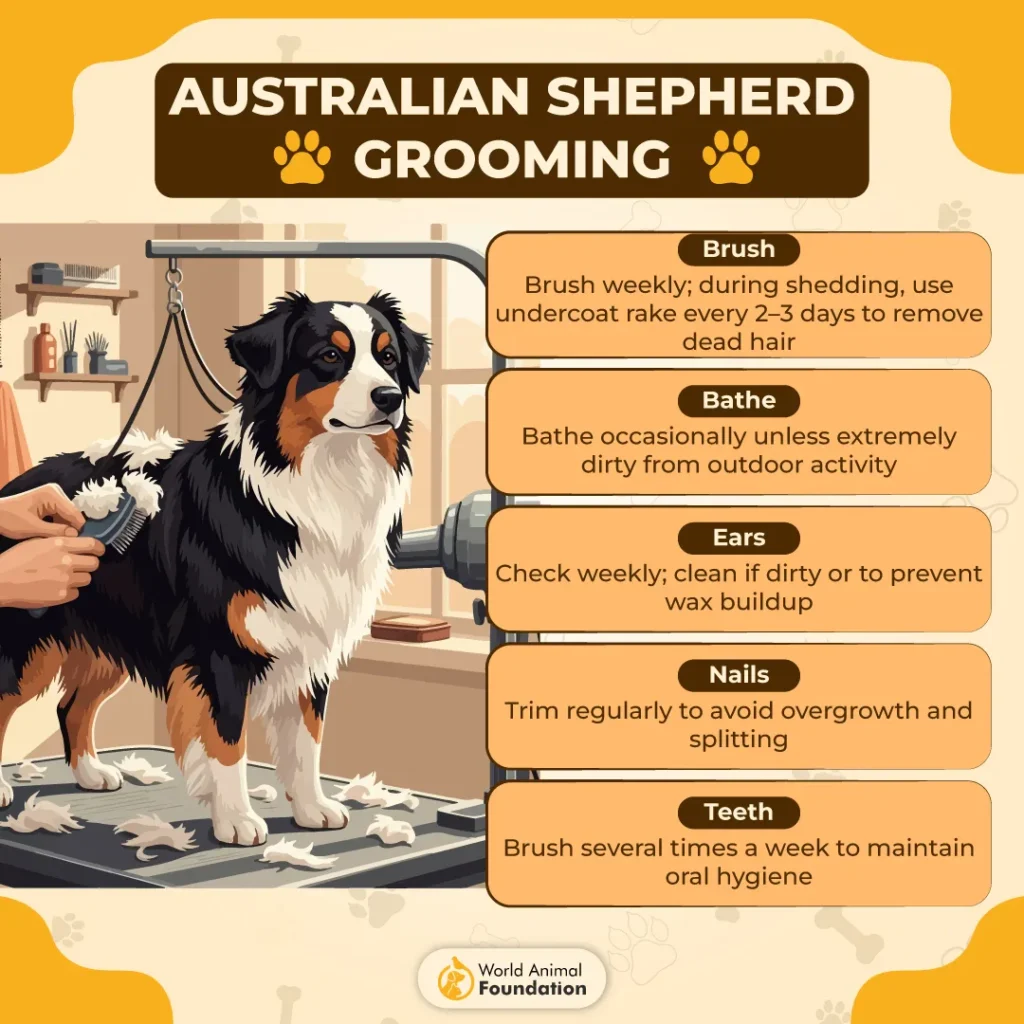
Bathing should be done occasionally, particularly after muddy outdoor activity, but not too frequently to avoid stripping natural oils.
Shaving is not recommended, as the Australian Shepherd’s coat plays an important role in temperature regulation. Regular ear cleaning, nail trimming, and dental care are also essential to keep them in good overall condition.
Blue Heeler
Blue Heelers have a short, dense coat that is generally easier to maintain compared to longer-haired breeds. They are naturally clean dogs with minimal odor, which makes their routine grooming fairly simple for most of the year.
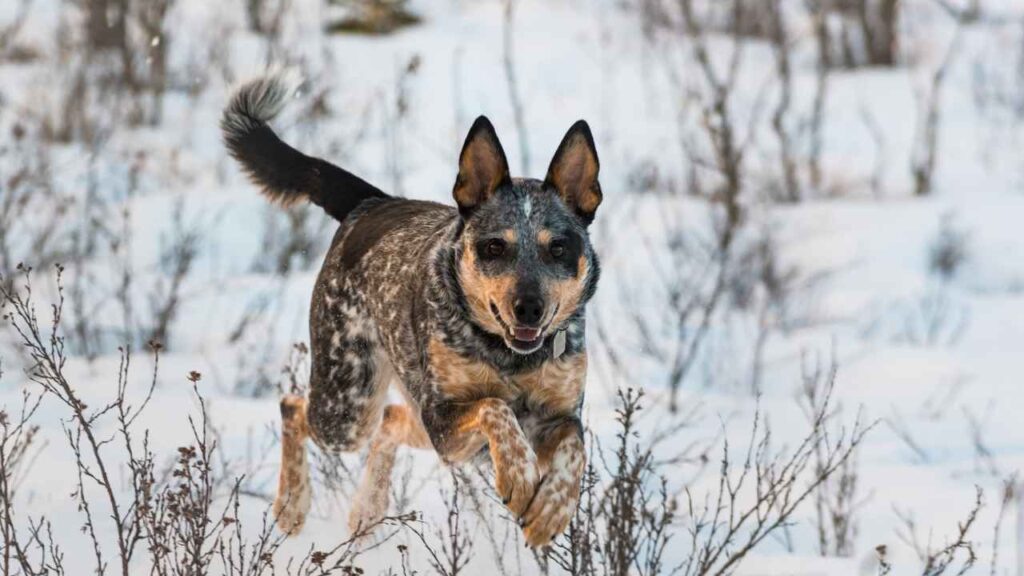
They typically shed less continuously, but instead go through heavy seasonal shedding periods, where they lose their dense undercoat in clumps. During these times, more frequent brushing is needed—often several times a week—to manage loose hair and keep the coat healthy.
Outside of shedding seasons, weekly brushing is usually enough. Bathing is only needed occasionally, especially if they get dirty during outdoor activities. Their active lifestyle often helps naturally wear down their nails, but they should still be checked regularly.
Energy Level
Australian Shepherd
Australian Shepherds are extremely high-energy dogs that were bred to work long hours in demanding environments. Even as pets, they retain that “always ready to go” mindset and need both physical exercise and mental stimulation every single day.
They are not the type of dogs that are satisfied with a short walk. Instead, they thrive on structured activity and tasks that challenge them mentally and physically.
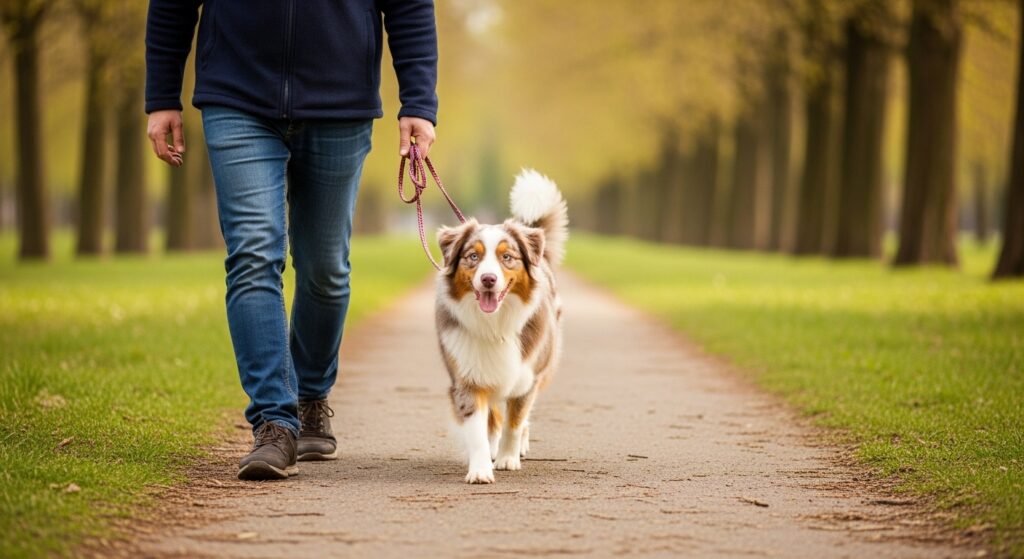
Energy traits of Australian Shepherds:
Very high stamina and endurance
Need 1–2+ hours of daily activity
Enjoy running, hiking, and agility-based games
Require mental challenges like training or puzzle work
Can become bored and destructive without stimulation
If their energy is not properly directed, they may develop behaviors like chewing, digging, or herding people and objects indoors.
Blue Heeler
Australian Cattle Dogs also have very high energy levels, but their drive is more intense, focused, and task-oriented. Bred to move and herd cattle across long distances, they are built for endurance and mental toughness.
Unlike some highly playful breeds, their energy is often expressed through work-like behavior and problem-solving.
Energy traits of Blue Heelers:
Extremely high stamina with strong working drive
Require at least 30–60 minutes of intense activity daily, plus mental stimulation
Love structured tasks, training, and problem-solving games
Enjoy activities like herding trials, agility, and fetch
Can become restless or destructive if under-stimulated
Without enough physical and mental outlets, they may start creating their own “jobs,” which can include nipping, chasing, or destructive chewing.
Natural Guard Instincts
Australian Shepherd
Australian Shepherds are naturally alert and observant dogs, always aware of what’s happening around them. While they are not aggressive guard dogs, they do have a strong instinct to watch over their family and surroundings.
They are quick to notice anything unusual and will often respond with barking to signal that something has caught their attention. However, this behavior is usually limited to alerting rather than actual confrontation.
Key guarding traits:
Highly alert and attentive to surroundings
May bark at strangers, visitors, or unusual sounds
Protective of their family but not typically aggressive
More of an “alarm system” than a guard dog
With proper socialization, they learn to differentiate between real threats and normal situations, becoming well-balanced watchdogs.
Australian Cattle Dog
Australian Cattle Dogs have a much stronger and more serious guarding instinct. Bred to protect livestock and property, they naturally take on the role of watchdog and protector without needing much encouragement.
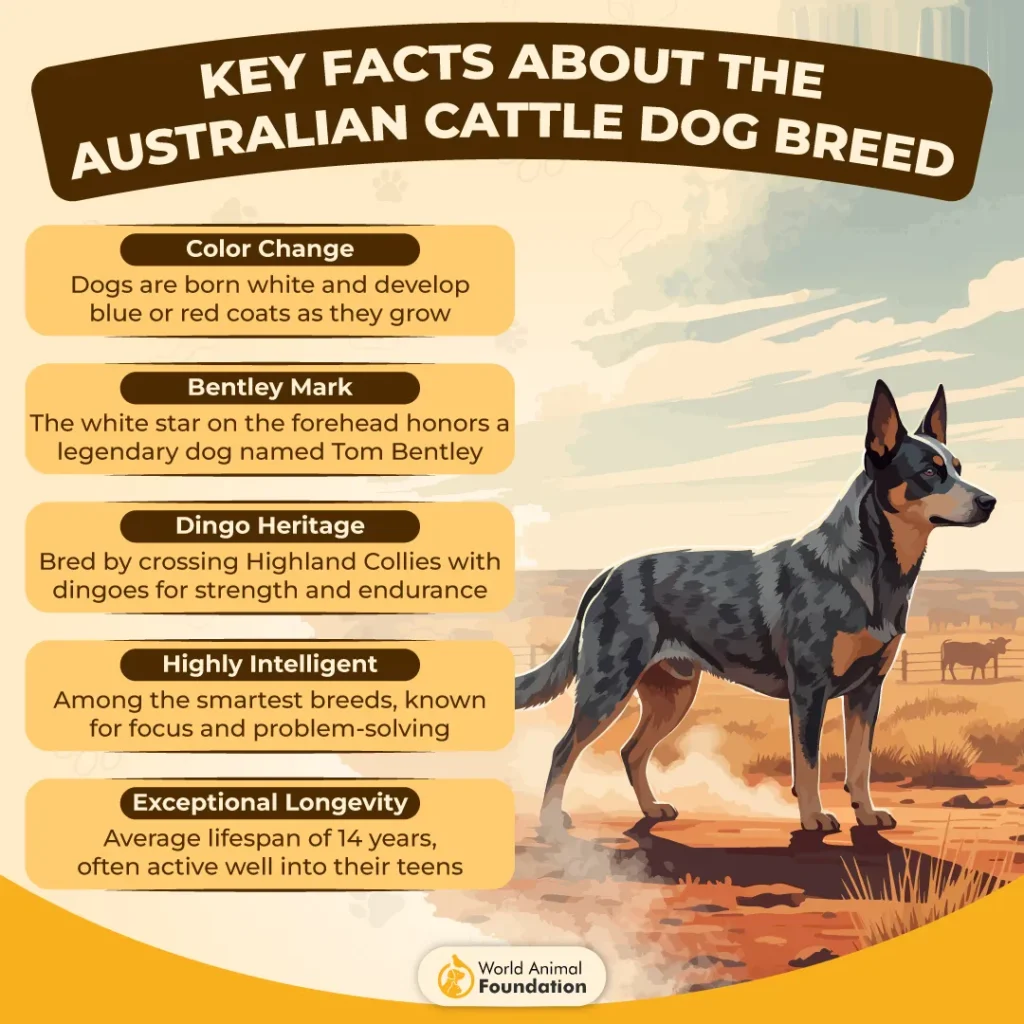
Orvis mentions that they are highly territorial and will actively monitor their environment, often patrolling spaces and staying alert for anything they perceive as unusual. Their barking is typically purposeful, used to warn their owners of potential danger.
Key guarding traits:
Strong protective and territorial instincts
Naturally suspicious of strangers
Will actively patrol and monitor their space
Can show aggression if they feel threatened
Excellent watchdogs with a serious guarding style
Because of their intensity, early socialization is extremely important. It helps them understand the difference between genuine threats and normal social interactions.
Protective Temperament
Australian Shepherd
Australian Shepherds are naturally protective, but their style of protection is more subtle and people-focused rather than aggressive. They form strong bonds with their family and can become very attentive to their owner’s emotions and surroundings.
Because of this close attachment, they may position themselves between their family and anything unfamiliar, especially in new environments or around strangers.
While they will bark to alert their owners if something seems unusual, Aussies are generally not confrontational. Their protective behavior is more about staying close, observing, and warning rather than physically intervening. With proper socialization, they learn to stay calm around guests while remaining watchful.
Australian Cattle Dog
Australian Cattle Dogs have a much stronger and more intense protective temperament. They are naturally territorial and deeply loyal to their family, often forming a very tight bond with their primary caretaker.
Unlike more passive protectors, Cattle Dogs can become assertive or even aggressive when they sense danger. They are quick to respond, fearless in challenging situations, and will not hesitate to stand their ground.
However, this strong protective instinct also means they require early and consistent socialization to ensure they can distinguish between real threats and everyday situations.
Conclusion
Both the Australian Shepherd and the Australian Cattle Dog are highly intelligent, loyal, and energetic herding breeds, but they express these traits in different ways. One is more social, eager to please, and family-oriented, while the other is more independent, intense, and naturally protective.
In the end, the better choice depends on your lifestyle and experience. Both dogs need purpose, proper training, and plenty of activity to thrive—so the right match is the one that fits your energy and commitment, not just the smarter-sounding label.
If you’re still unsure, spend time with both breeds before deciding. Their personalities become much clearer in real life, and the right dog will naturally feel like a good fit for your daily routine and long-term lifestyle.
