




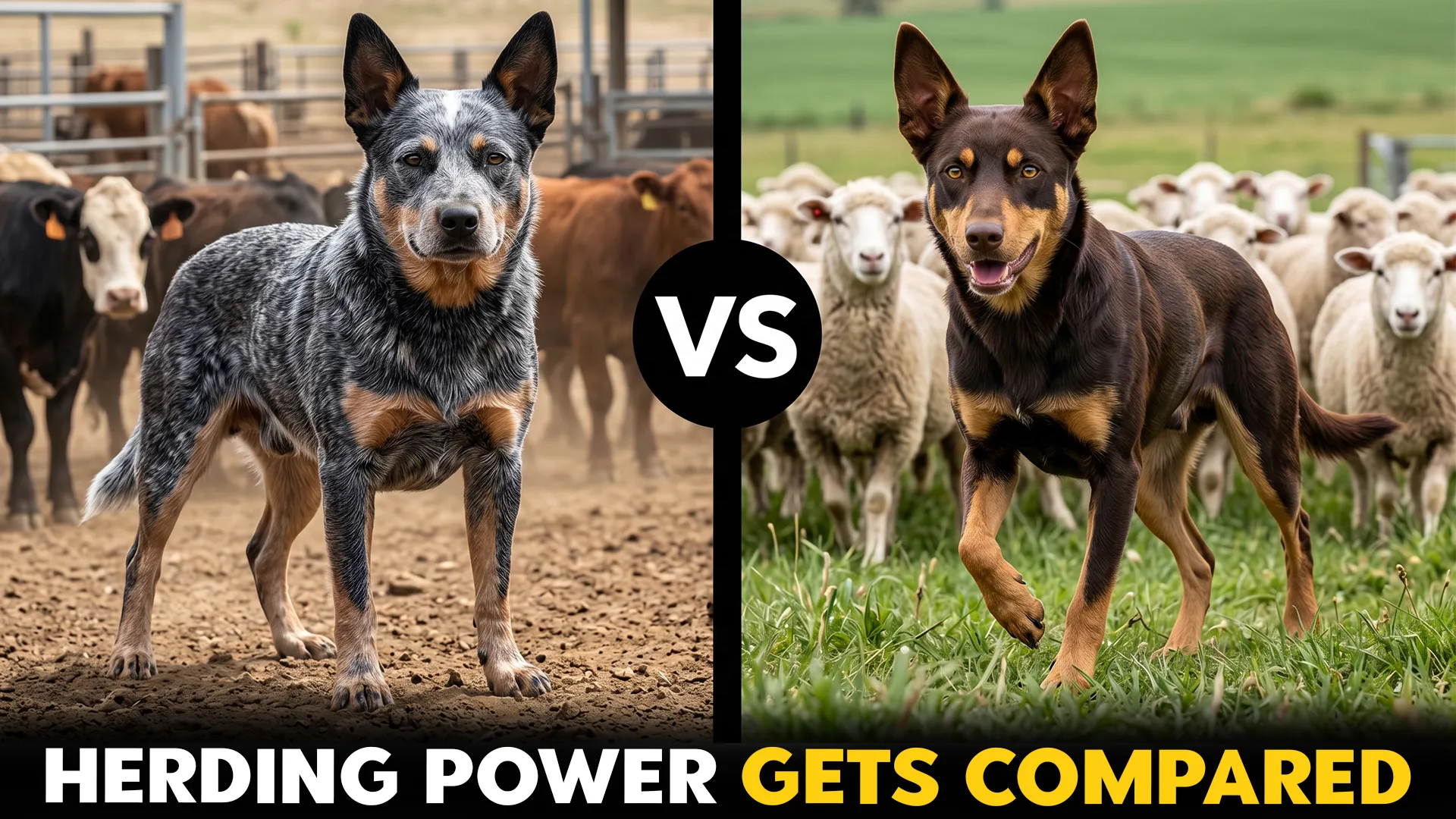
At first glance, the Australian Cattle Dog and the Australian Kelpie may seem like two sides of the same working-dog coin.
Both were shaped by Australia’s demanding landscapes, where heat, distance, livestock, and long days required dogs with courage, stamina, and sharp instincts.
But look closer, and their differences begin to stand out. The Australian Cattle Dog was bred to handle tough cattle with strength, confidence, and a protective nature, making it a steady partner for demanding droving work.
The Kelpie, on the other hand, is known for its speed, agility, and tireless movement, qualities that make it especially valuable in fast-paced livestock work.
Both breeds are intelligent, loyal, and full of purpose, but they are not interchangeable. Understanding how they differ in build, temperament, training, energy, and working style can help owners, farmers, and dog lovers choose the breed that truly fits their needs.
Key Takeaways
The Australian Cattle Dog was developed mainly for tough cattle work across harsh terrain.
The Australian Kelpie was bred for speed, stamina, and agile livestock handling.
Cattle Dogs are more compact, muscular, and forceful in their working style.
Kelpies are lighter, quicker, and highly flexible when moving around livestock.
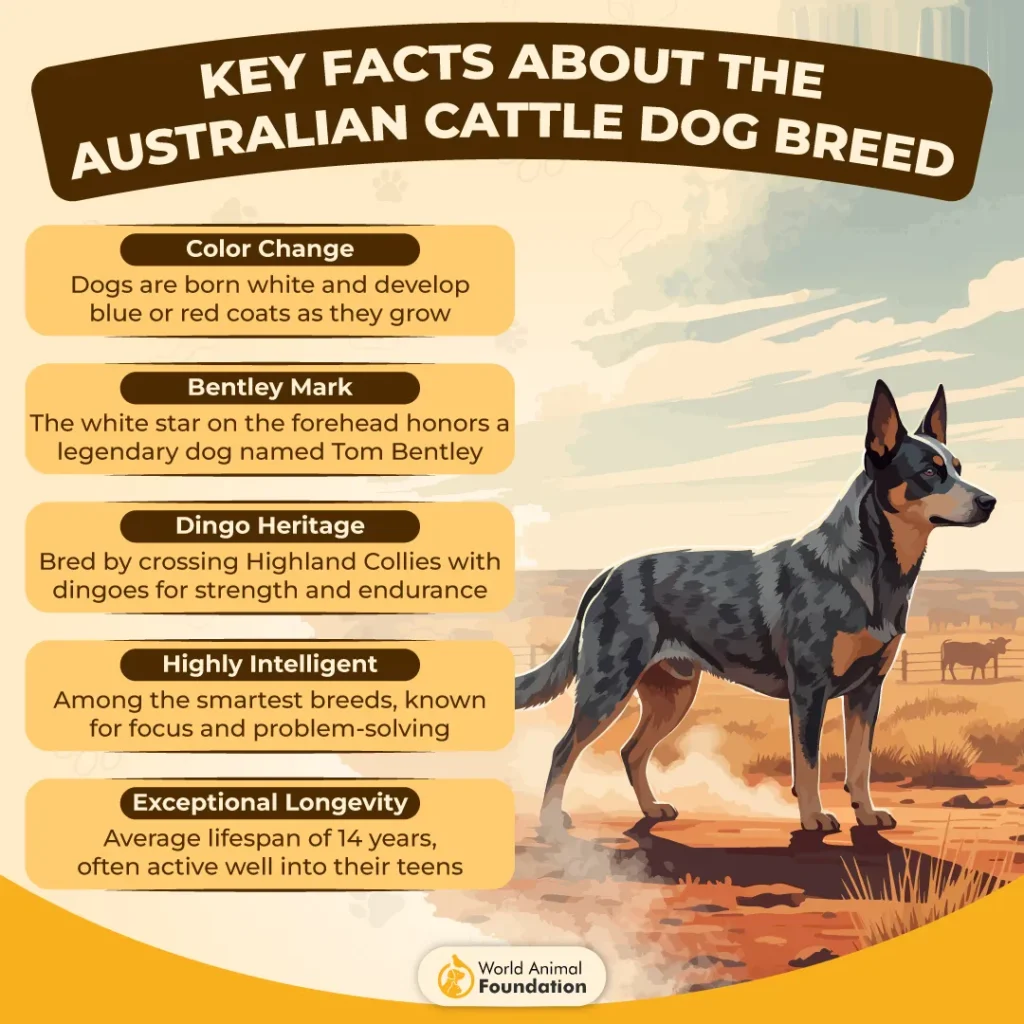
Both breeds are highly intelligent and need consistent training from an early age.
Australian Cattle Dog vs. Kelpie
Origins & Purpose
The Australian Cattle Dog and Australian Kelpie were both shaped by Australia’s demanding rural life, but their working purposes developed in different directions.
The Australian Cattle Dog was bred in the 19th century to help drovers handle tough cattle across harsh terrain and long distances.
Strong, resilient, and quick-thinking, this dog needed the courage to face stubborn stock while still listening to its handler. Its “Heeler” nickname comes from its habit of nipping at cattle’s heels to keep them moving.
The Kelpie, meanwhile, rose from the growing wool industry, where farmers needed a tireless sheepdog able to work over vast paddocks. With roots linked to British herding dogs, the Kelpie became known for speed, agility, and clever stock control.
In simple terms, the Cattle Dog was built for bold cattle work, while the Kelpie became a sharp, energetic sheep-working specialist.
Size & Physical Build
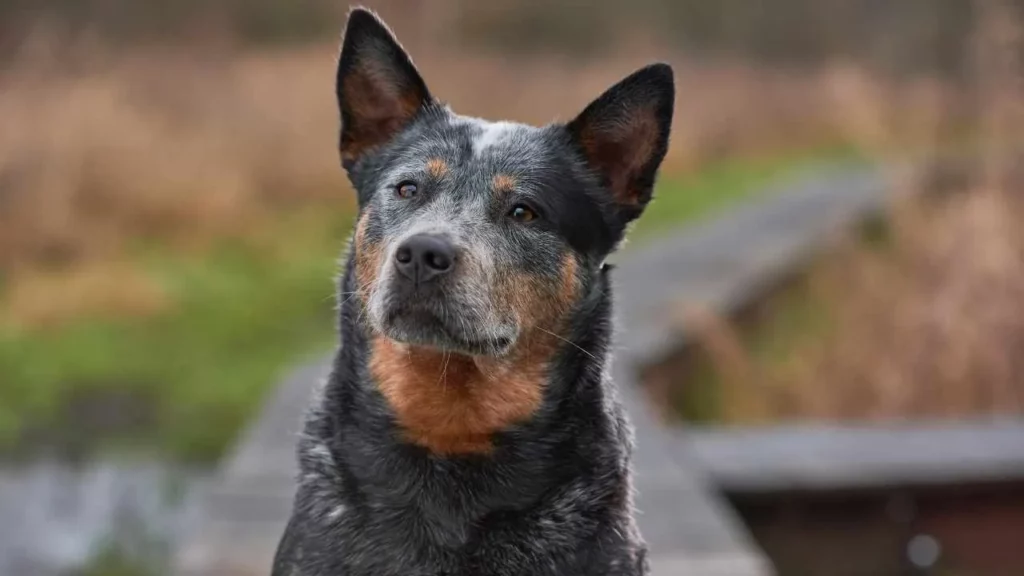
Both breeds are medium-sized dogs, but their bodies reflect the jobs they were bred to do. The Australian Cattle Dog is compact, sturdy, and powerfully muscled, giving it the strength and toughness needed to push cattle through difficult conditions.
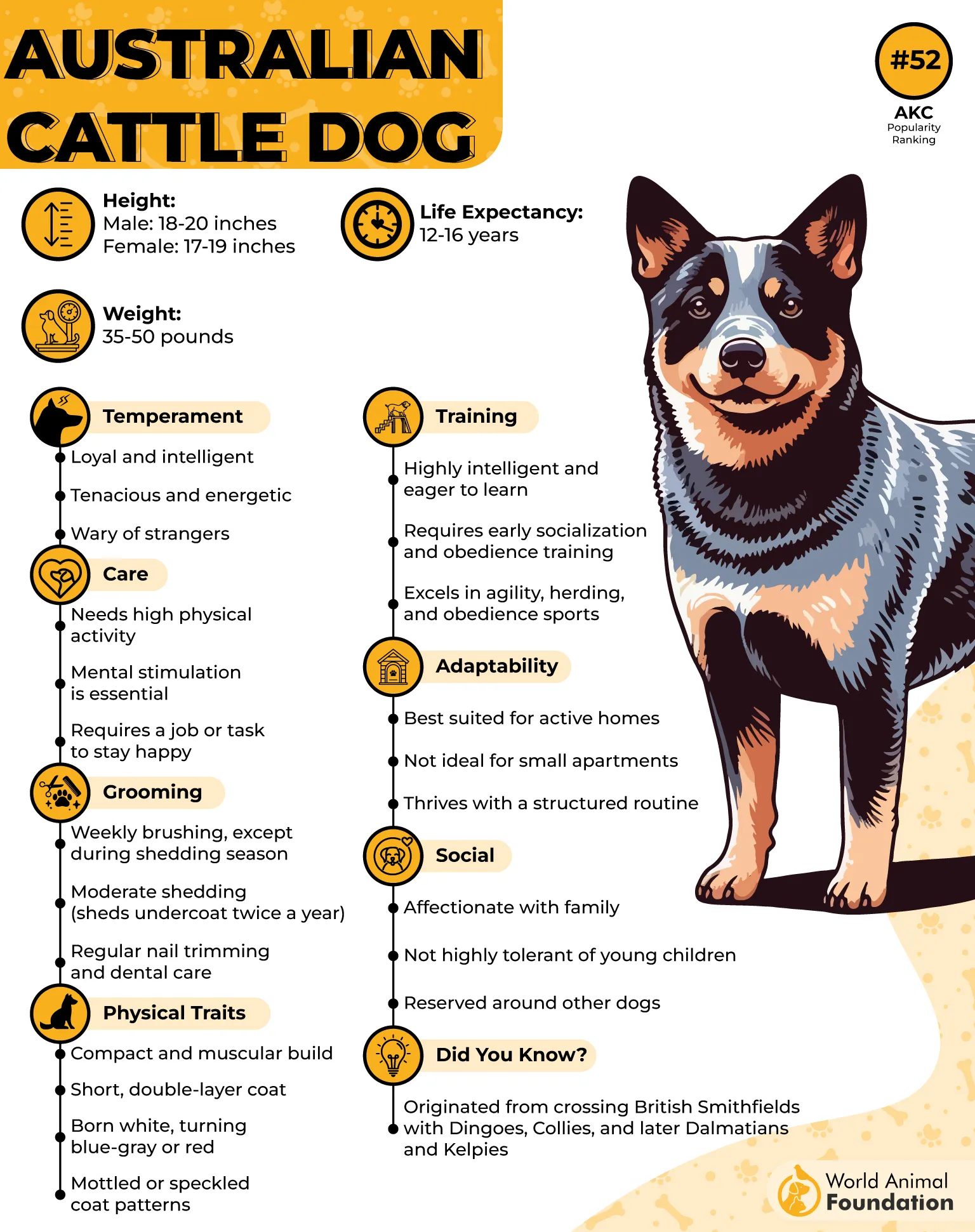
It has a dense, weather-resistant coat and a solid frame built for endurance. Its blue-gray or red coat often carries speckled or mottled markings, adding to its distinctive look.
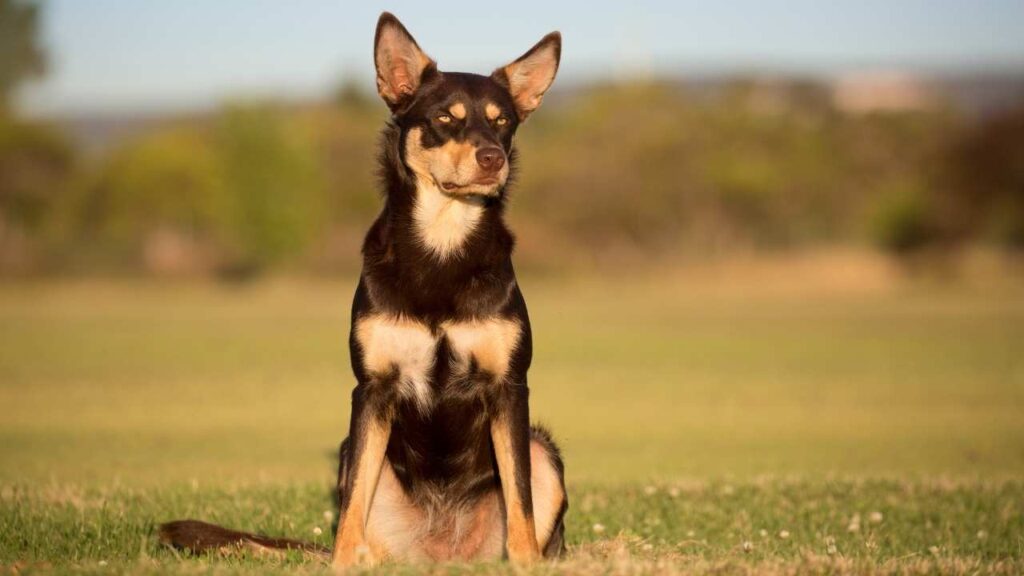
The Australian Kelpie is also medium-sized, but it has a lighter, more athletic shape, according to Greencross Vets. Lithe, agile, and slightly longer than tall, the Kelpie looks ready to turn, crouch, sprint, and work all day.
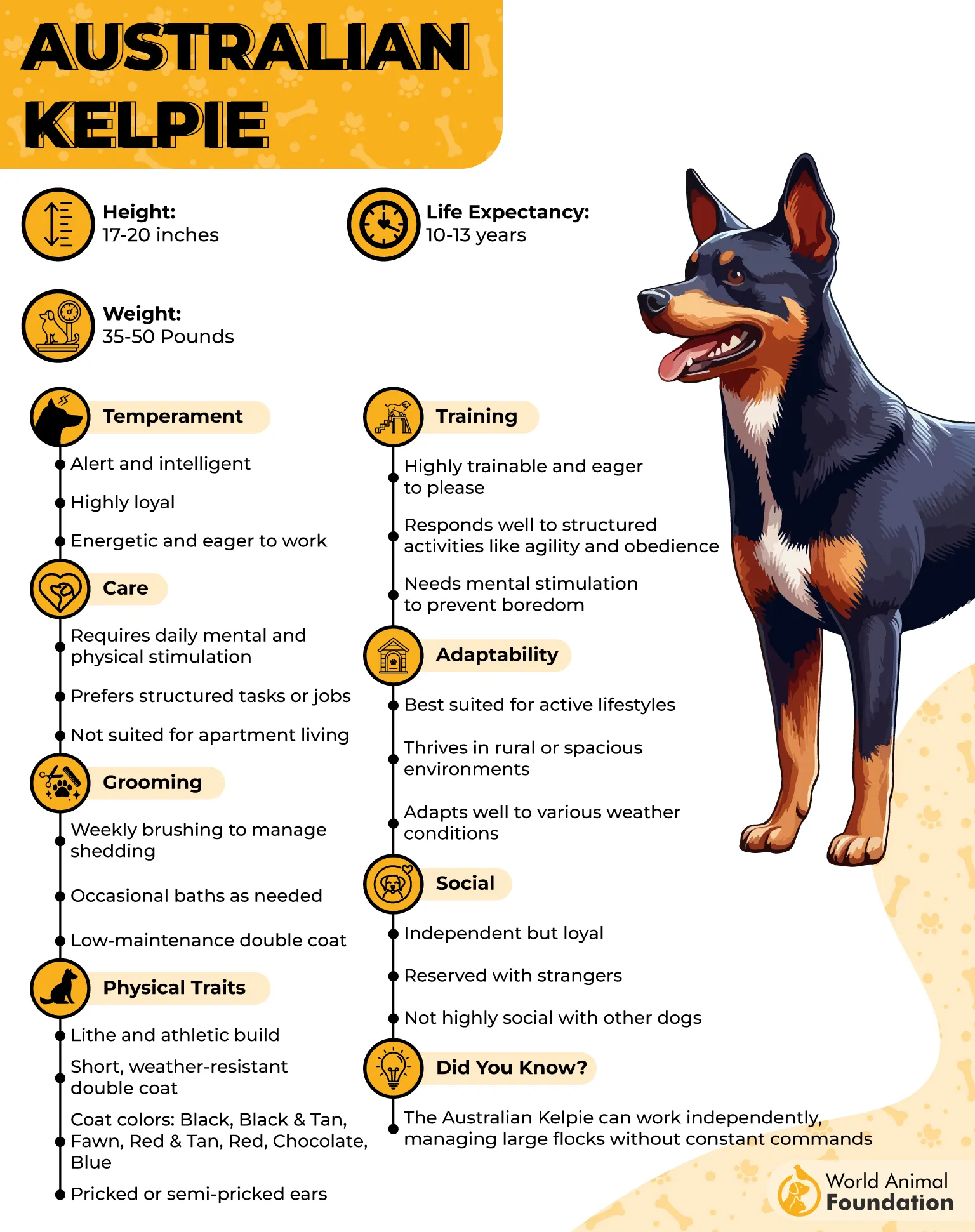
Its smooth coat appears in colours such as black, red, tan, chocolate, fawn, and blue. The Cattle Dog feels rugged and forceful; the Kelpie feels quick, flexible, and fluid.
Temperament & Personality
The Australian Cattle Dog and Australian Kelpie are both highly intelligent, loyal, and work-focused, but their personalities carry different flavours.
The Cattle Dog is famously alert, tenacious, and deeply devoted to its family. It can be naturally wary of strangers and may show protective instincts, making early socialisation and steady training essential.
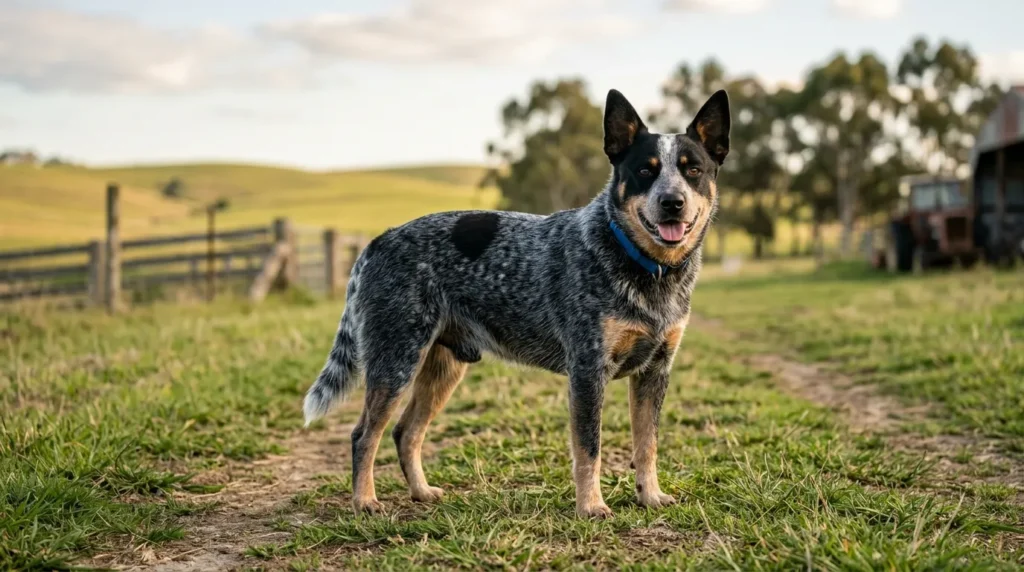
Because it was bred to move livestock with confidence, it may also try to nip or herd people if not guided properly. The Kelpie is equally smart, but often described as cheeky, lively, and full of personality.
It bonds closely with its people and likes to stay near them, whether working, walking, or relaxing at home. Kelpies can be timid around strangers, which may make them good watchdogs, though they are not typically guard dogs.
Both breeds need purpose, but the Cattle Dog is more intense and guarded, while the Kelpie is often more playful and people-attached.
Exercise & Energy Levels
Neither breed is suited to a slow, inactive lifestyle. The Australian Cattle Dog has enormous stamina and needs far more than a short walk or quick backyard play session.
It is happiest when given a job, whether that means herding, obedience, agility, running, or another structured activity that challenges both body and mind, as stated by Purina.
Without enough work, it can become bored, restless, and destructive. The Australian Kelpie is just as energetic and also thrives when kept busy. Bred to cover large distances while managing sheep, it needs space, movement, and mental tasks to stay balanced.
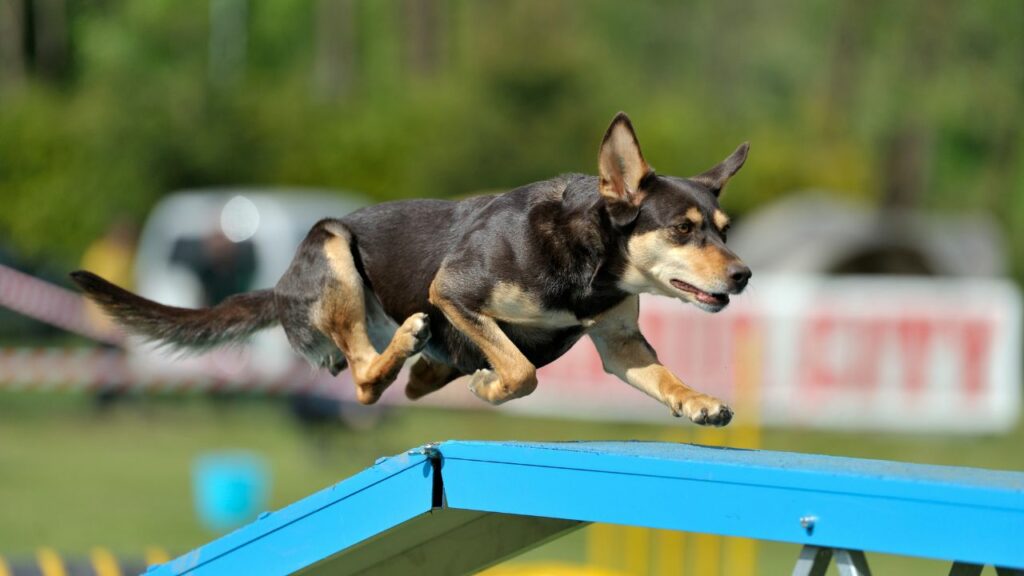
Kelpies enjoy activities such as agility, hiking, swimming, flyball, and herding-style work. Once properly exercised, they can be affectionate and relaxed with their family.
The key difference is style: the Cattle Dog brings powerful, determined drive, while the Kelpie brings quick, agile, almost endless working energy.
Training & Intelligence
Both the Australian Cattle Dog and Australian Kelpie are sharp, work-minded breeds, but they think and learn in slightly different ways. The Australian Cattle Dog is clever, determined, and naturally protective, so training must begin early with socialisation, structure, and calm consistency.
This smart breed learns fast, but its independent streak means it needs a confident owner who can guide its instincts without harshness. A bored Cattle Dog may invent its own “jobs,” including nipping, barking, or destructive behaviour.
The Kelpie is also highly intelligent, but often brings a lighter, quicker style to training. It enjoys problem-solving, games, agility, obedience, and tasks that make it feel useful.
Kelpies respond especially well to positive reinforcement, clear boundaries, and variety, as repetitive lessons can quickly lose their attention. In short, both breeds are trainable, but neither suits a passive owner. They need purpose, patience, and daily mental engagement.
Coat Maintenance
When it comes to grooming, both breeds are practical working dogs rather than high-maintenance showpieces. The Australian Cattle Dog has a short, dense double coat designed to protect it from rough weather and outdoor conditions.
A weekly brush usually helps remove loose hair, spread natural oils, and keep the coat tidy, as suggested by UKC. It may shed more during seasonal changes, so extra brushing can help manage fur around the home. Bathing is only needed when the dog becomes dirty or develops an odour.
The Kelpie also has a short, weather-resistant coat that is easy to care for. Weekly brushing is usually enough, though brushing more often during heavier shedding seasons can keep the coat smooth and clean.
Like the Cattle Dog, the Kelpie should also have regular nail checks, ear care, and dental attention. Neither breed needs fancy grooming, but both benefit from steady, simple care.
Health & Lifespan
The Australian Cattle Dog and Australian Kelpie are both known as hardy working breeds, but responsible care still matters.
The Cattle Dog is generally robust, with a lifespan often listed around 12 to 16 years in the provided material, though some sources mention shorter ranges. Health concerns may include hip and elbow dysplasia, progressive retinal atrophy, hearing loss, skin issues, obesity, and dental disease.
Regular vet checks, exercise, and weight control can help support long-term health.
The Australian Kelpie is also considered a strong and generally healthy breed, with a typical lifespan of about 12 to 15 years. Possible concerns include hip dysplasia, elbow dysplasia, progressive retinal atrophy, cerebellar abiotrophy, patellar luxation, and obesity.
For both breeds, good breeding practices, early health screening, balanced nutrition, and consistent activity make a real difference. These are tough dogs, but toughness should never replace proper care.
Australian Cattle Dog vs. Kelpie Dog Suitability as Farm Dog vs. Guard Dogs
As farm dogs, both breeds shine, but their strengths are not identical. The Australian Cattle Dog was built for demanding cattle work, especially in harsh country where strength, courage, stamina, and firmness were essential.
Its heeling instinct, territorial nature, and watchful personality make it a powerful farm partner and a naturally alert watchdog. However, that same intensity means it needs training, boundaries, and careful handling around people, children, and other animals.
The Kelpie is a tireless herding dog with speed, agility, and strong problem-solving ability. It is especially valued for managing livestock across wide spaces and staying focused on active work.
As a guard dog, the Kelpie may alert its family and show caution around strangers, but it is generally better described as a watchdog than a true guard dog, according to Vets Love Pets.
The Cattle Dog is usually the stronger protective presence, while the Kelpie is the more flexible, agile farm worker.
Conclusion
The Australian Cattle Dog and the Australian Kelpie may share the same working spirit, but they bring very different strengths to the paddock. The Cattle Dog is bold, sturdy, and intensely loyal, the kind of dog built to stand its ground and handle tough cattle with confidence.
The Kelpie is lighter on its feet, quick-thinking, and endlessly agile, made for covering ground and reading livestock with sharp instinct. Both breeds need more than affection; they need purpose, movement, and a person willing to guide their intelligence.
In the right hands, either dog can become an extraordinary worker and a deeply bonded companion. The choice depends on what you value most: the Cattle Dog’s strength and protective nature, or the Kelpie’s speed and flexible working style.
Whichever you choose, life with these dogs is never dull, because their hearts are happiest when they have meaningful work to do.
