




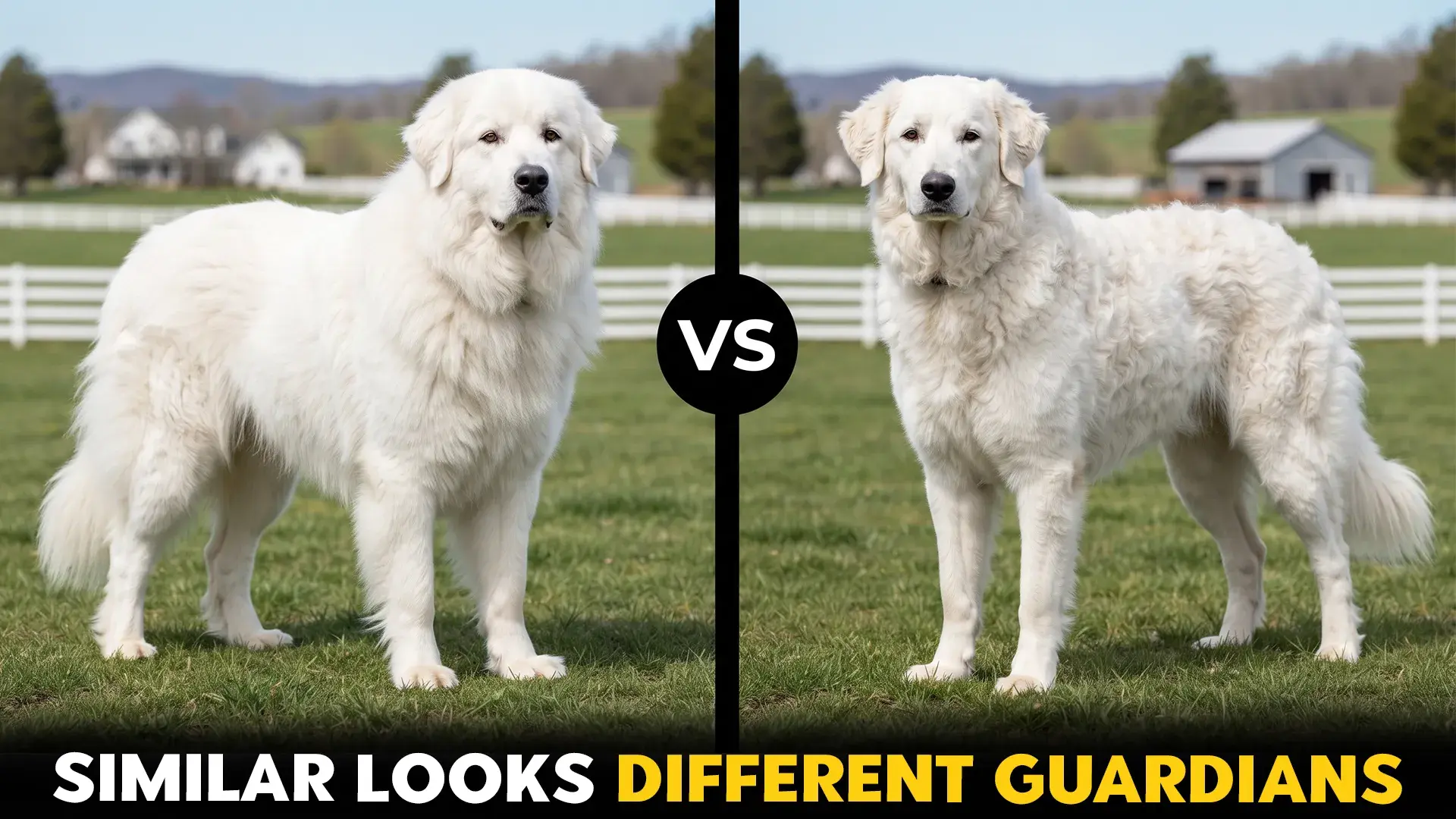
What makes a great guardian dog for your home or farm?
Many families want safety and loyalty in one strong companion.
That is where livestock guardian dog breeds come in. These powerful dogs have worked for centuries to guard sheep, farms, and open land. They are trusted livestock guardian breeds known for courage and calm thinking under pressure.
Two famous examples are the Great Pyrenees and the Kuvasz. Both were originally bred to protect livestock in different parts of the world.
The Great Pyrenees comes from the Pyrenees mountains between France and Spain. The Kuvasz comes from Hungary, where it guarded flocks across wide fields. Today, both remain strong guardian dogs with deep instincts to protect family, children, and pets.
This article helps compare these impressive dogs. At first glance, they look similar. However, their behavior and working style show clear differences.
Let’s explore how guarding instincts, temperament, training needs, and lifestyle fit set them apart.
Great Pyrenees vs Kuvasz: Guardian Traits Compared
Size & Build Differences
Both breeds are powerful, large dogs with strong bone structure and a confident stance. They were developed to guard livestock in rough mountain areas and wide open fields.
Because of this history, both dogs look strong, balanced, and ready to protect their surroundings. Their thick white coats also helped them blend in with sheep while watching for predators.
Great Pyrenees
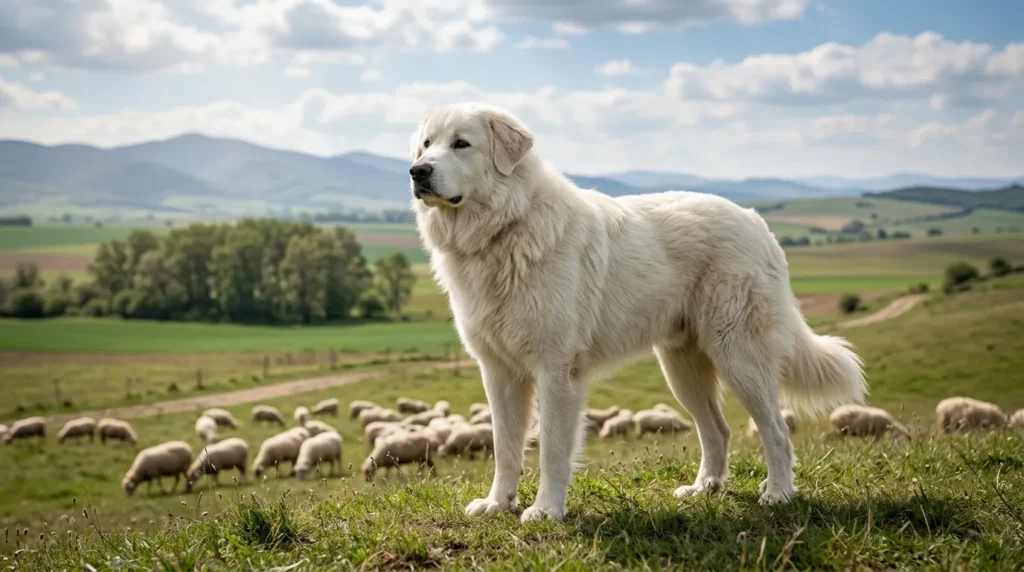
The Great Pyrenees has a heavier frame with a broad chest and massive build. This calm giant usually stands between 25 and 32 inches tall and weighs over 85 pounds. Its thick body gives it an impressive presence around farms and property.
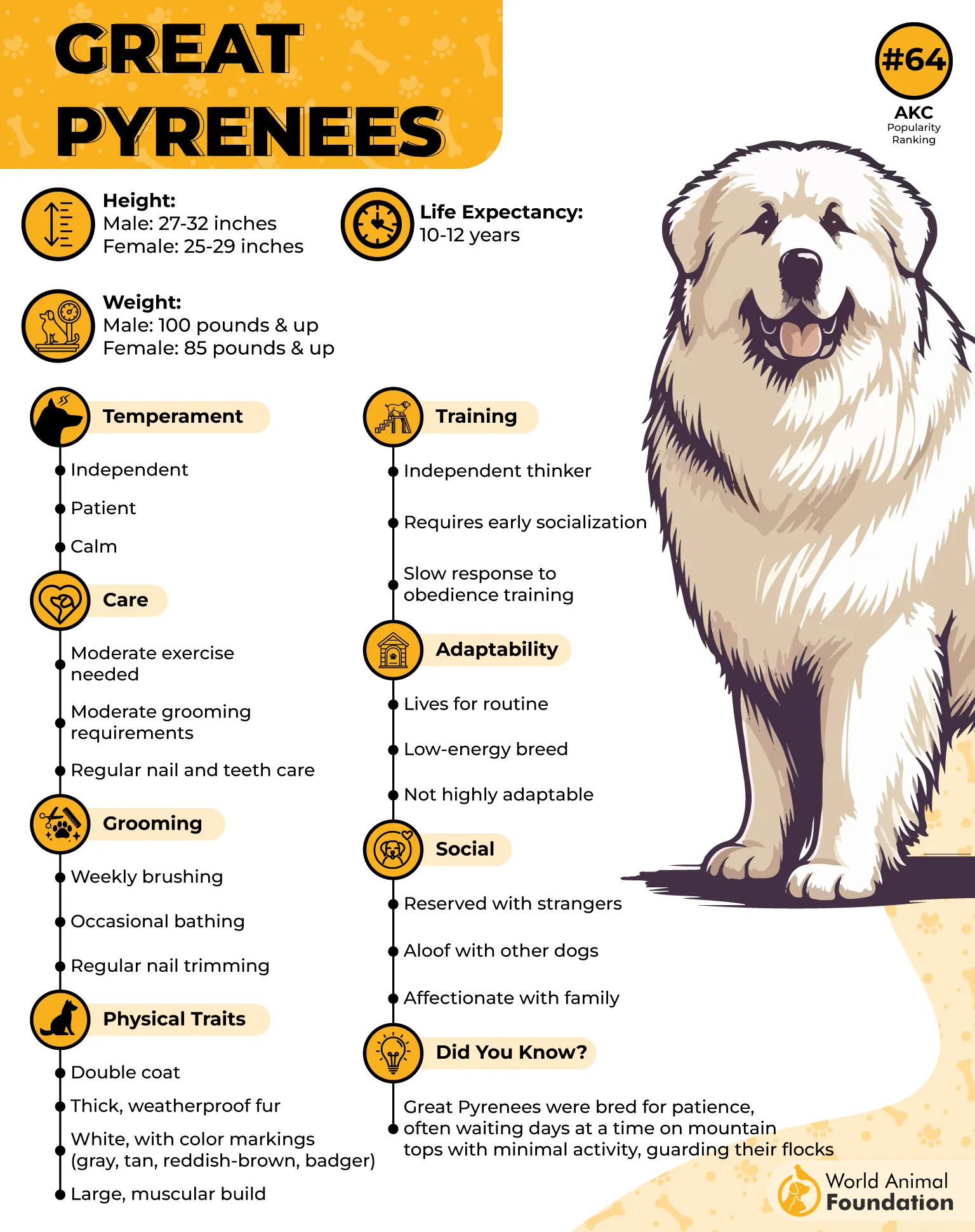
It also has a weather-resistant, thick double coat made for snow, cold winds, and mountain life. Many people see it as the classic white farm guardian. One unique feature is the double dew claw on its back legs, which helped the breed move safely across rocky ground.
Kuvasz
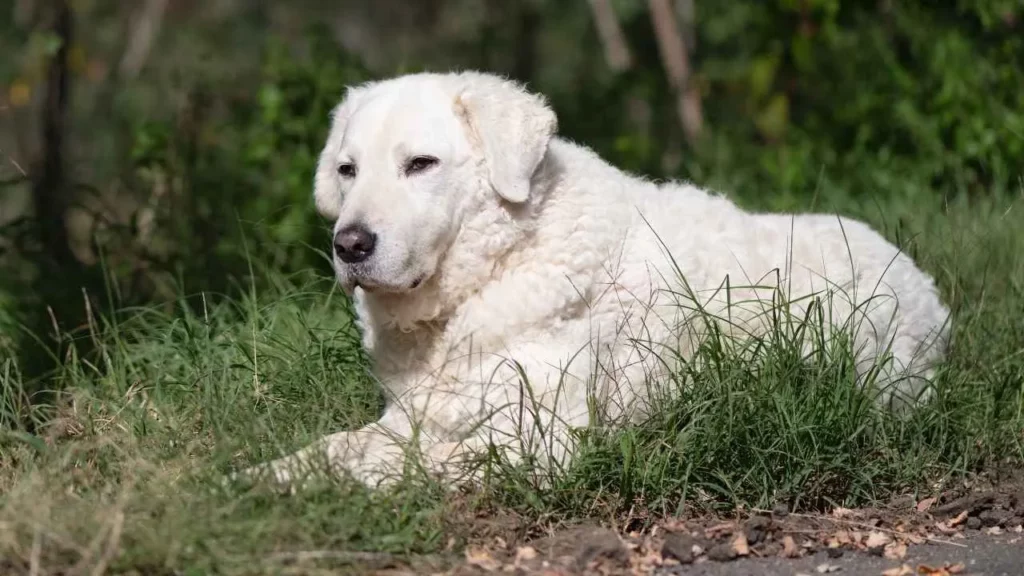
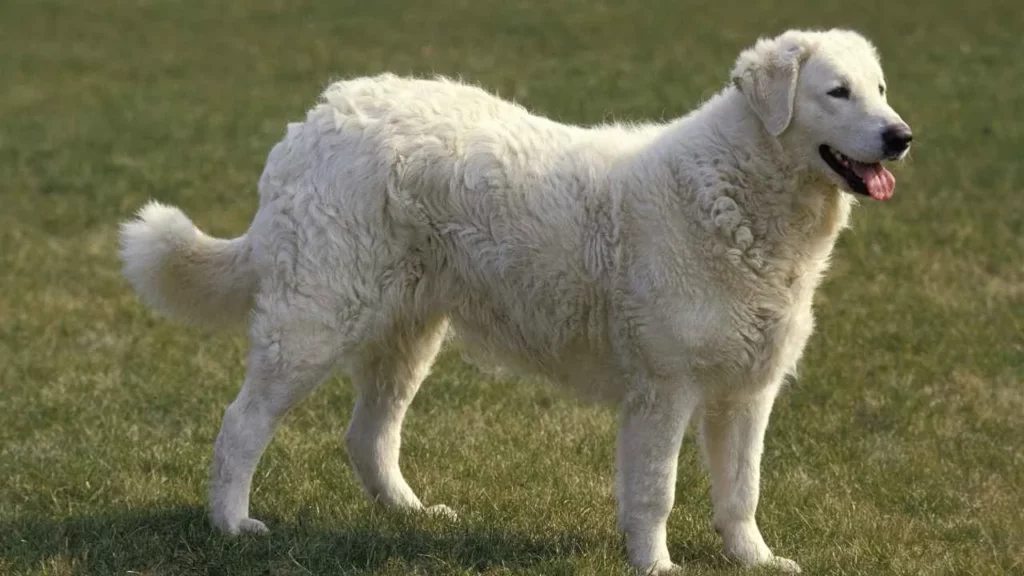
The Kuvasz has a leaner but muscular body with smoother and slightly more agile movement. According to the American Kennel Club, this livestock guardian can stand as high as 30 inches at the shoulder and weigh between 72 and 110 pounds.
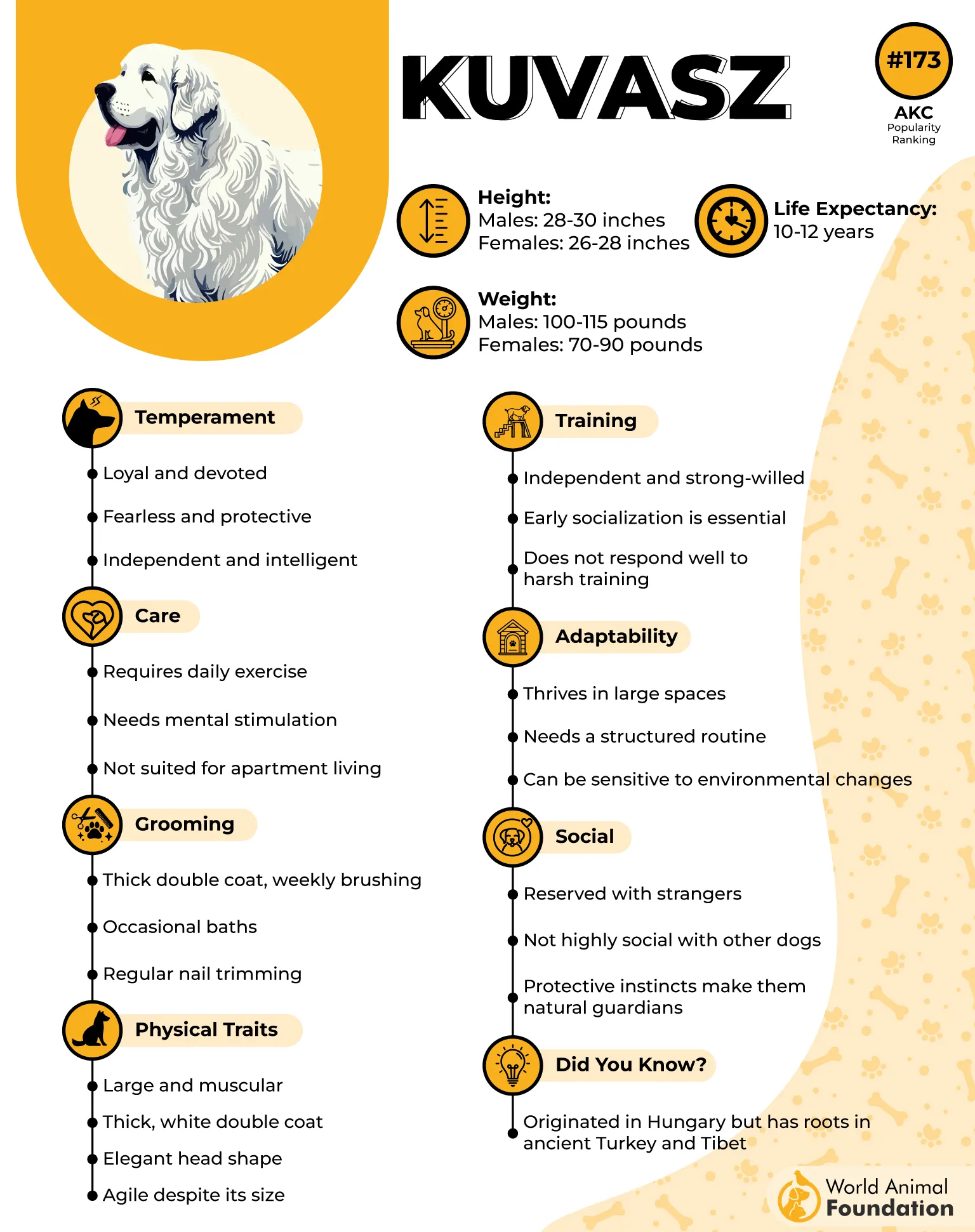
Its white coat feels softer and more wavy than the Pyrenees coat. Unlike some other guardian breed types, the Kuvasz combines elegance with strength.
Both dogs were built mainly for endurance, protection, and long hours of guarding work rather than pure speed.
Temperament & Personality
These two breeds show a calm versus an alert personality difference in daily life. The Great Pyrenees tends to stay relaxed and patient, while the Kuvasz acts more watchful and independent around its surroundings.
Great Pyrenees
The Great Pyrenees is a gentle and affectionate guardian breed that loves staying close to family members. According to PetMD, these dogs are usually calm around the humans they trust and can become wonderful family pets.
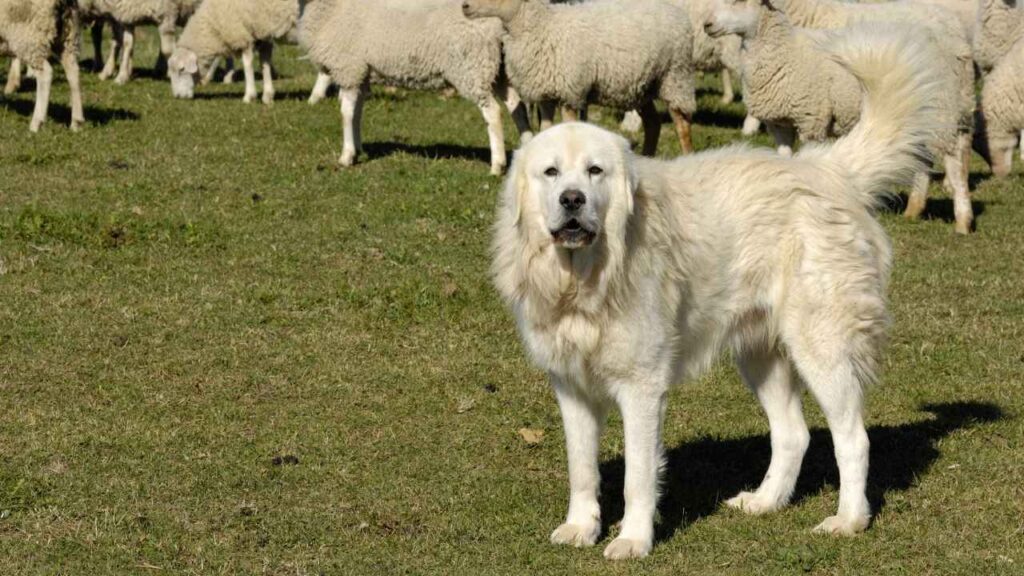
They are patient with children, cats, and deeply loyal to their owners. Many also form strong bonds with the herd or the people they protect. With early socialization from an early age, they often become suited for homes with small animals and active families.
Kuvasz
The Kuvasz tends to be more alert, stubborn, and independent than the Great Pyrenees. It can show a strong protective reaction toward strangers and may require more guidance during training. While less openly affectionate, it stays deeply devoted to family once trust develops.
Both quickly pay attention when danger appears and naturally defend property, livestock, and loved ones. Even though they stay calm at home, they remain highly watchful guardians.
Exercise & Energy Levels
Both have moderate but steady activity needs. They enjoy movement and outdoor time, but they do not need nonstop running or intense sports every day.
Great Pyrenees
This livestock guardian breed generally prefers slow walks and calm patrol behavior.
Many enjoy roaming around a yard, pasture, or farm space while watching their surroundings.
They were raised to stay with livestock for long hours, so they often create their own routine outdoors.
This independent breed may bark at night when it considers something unusual nearby.
Regular exercise is important, but excessive exercise requirements are usually not needed.
Kuvasz
The Kuvasz has slightly more energy and quicker movement than the Great Pyrenees.
This dog enjoys structured activities and short daily tasks with its owners.
It stays happiest when given a job, especially guarding property or livestock.
Mental stimulation is also needed because it likes to think and stay alert.
While active, the Kuvasz still does not require intense athletic training every day.
Both breeds fit a true working dog lifestyle and prefer purpose over endless play sessions.
Training & Intelligence
Both are intelligent dogs, but they also have an independent mindset. This common livestock guardian dog trait can make training slower compared to some other breeds. Still, both dogs can learn well with patience, structure, and gentle guidance.
Great Pyrenees
The Great Pyrenees tends to respond more slowly during training sessions, but it remains smart and trainable. This dog prefers calm teaching methods with repeated commands and steady routines. Because of its protective nature, it often likes to observe situations before reacting.
Many handlers consider this thoughtful personality part of the breed’s quality and charm. When raised with family, children, and other dogs, they usually develop into calm and reliable protectors.
Kuvasz
The Kuvasz is often a quick thinker and more alert during training. According to Purina, this breed can benefit from positive reinforcement training. However, its independent difference in personality may sometimes make obedience harder.
Kuvasz tends to require firm but gentle leadership from an early age. Early socialization is very important because it helps reduce fear or aggression toward strangers.
With consistent training, both become protective pets that can guard property while still showing a playful and caring appearance around loved ones.
Vocal Behavior
Barking is an important communication tool for these two breeds. As working guardians, they use their voice to warn owners, alert the pack, and respond to unusual activity around the property.
Great Pyrenees
Deep and slow warning bark
Primarily used to signal possible threats
Often barks at night while watching the yard
Calm but powerful vocal traits
May bark when strangers or animals come close
Kuvasz
Sharper and more frequent bark
Reacts quickly to movement or sudden noise
More alert and vocal during patrol behavior
Uses barking to explain danger
Tends to respond faster than the Great Pyrenees
Both developed these vocal habits to protect sheep, livestock, and open farm spaces from predators. One major difference is how often they bark and how quickly they react to activity nearby.
In home settings, they may bark at strangers, passing animals, or anything unusual around the yard. Training helps control excessive noise, but these watchdogs are not naturally quiet dogs. Their protective instincts remain one of their strongest working traits.
Coat & Grooming
These white dogs are beautiful, but they are not low-maintenance pets. Their thick coats need regular grooming throughout the year. Without proper care, loose hair, dirt, and shedding can quickly become difficult to manage inside the home.
Great Pyrenees
The Great Pyrenees has a thick double coat made to protect it from snow, rain, and freezing mountain weather. This wonderful coat helps the dog stay suited for cold outdoor conditions, but it also means heavy seasonal shedding.
According to Hill’s Pet Nutrition, regular brushing will help keep the coat in good condition, although owners should prepare for a major yearly shed. While most Great Pyrenees are white, some can also have markings in other colors around the face or body.
Kuvasz
The Kuvasz has a dense white coat with a slightly wavy texture and strong outer hair. It also tends to shed heavily during seasonal coat changes. Regular brushing is important because it prevents matting and dirt buildup under the thick coats. Grooming also keeps the skin healthy as the dog continues to grow.
Even though both need quite a few grooming sessions each week, they are naturally clean dogs. Their bright appearance and light colors simply require extra care to stay fresh and healthy in different weather conditions.
Health Issues & Lifespan
Both are generally strong and healthy livestock guardian breed types. They are built for endurance and outdoor work. Still, because of their large weight, they can face joint stress as they age.
Hip and bone pressure are common in big dogs. Owners must also manage diet to avoid weight-related issues. Regular vet care and balanced exercise help both dogs stay healthy for longer lives.
Great Pyrenees
The Great Pyrenees is strong but can develop age-related health issues due to its size. It has a slower aging lifestyle compared to smaller dogs.
According to PDSA, Pyrenean Mountain Dogs may face:
Deafness
Hip dysplasiaEpilepsy
Bone cancer
These conditions can affect movement, comfort, and overall eye and body health in later life.
Kuvasz
The Kuvasz is usually a hardy breed with fewer specific health problems.
According to WebMD, the Kuvasz is typically a healthy breed with few inherited health issues, especially when well cared for from a young age.
Common concerns include:
Hip dysplasia
Joint stress in large dogs
Bloat (gastric issues in deep-chested breeds)
Weight-related pressure on bones
Both rely heavily on responsible owners for preventive care. When managed properly, they stay active, alert, and protective well into adulthood, even around smaller animal environments and homes.
Suitability For Home Security
Both are powerful livestock guardian dog breeds used for home and farm protection. They share strong guarding instincts, but their handling needs and behavior with families can be quite different. These other guardian breeds were developed to protect land, animals, and people in rural spaces.
Great Pyrenees
The Great Pyrenees is excellent for calm farms. It is very protective but gentle with kids and pets. According to Britannica, it is a large working dog breed used for centuries to guard sheep from wolves and bears.
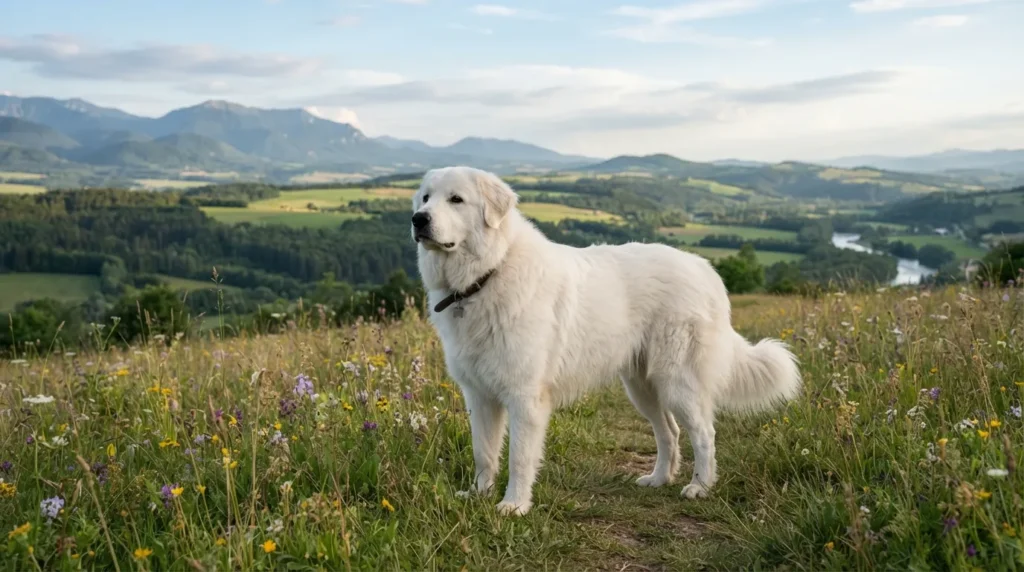
It is loyal, intelligent, and can easily learn routines. For many homes, it brings both safety and joy while staying calm around its charges.
Kuvasz
The Kuvasz has a stronger territorial instinct and is better suited for experienced dog owners. According to Wikipedia, it was historically a royal guard dog and livestock protector, later becoming more common in homes over the last 70 years.
It is highly intelligent and independent, often needing firm guidance. Owners must learn how to manage their strong guarding behavior, especially when it quickly loses alertness toward threats.
Both of them protect against threats and predators, and naturally defend homes, livestock, and property. They fit best in farms, large yards, and rural areas. Kuvasz needs more confident handling, while the Great Pyrenees is more beginner-friendly. Choice depends on lifestyle, space, and experience.
Conclusion
Both Great Pyrenees and Kuvasz are powerful guardian dogs with strong loyalty, intelligence, and a calm, protective nature. To start, understanding their differences helps answer every question more clearly.
Your reply should always depend on what is possible in your space, experience, and ability to manage regular exercise. Each place and home situation is different, so the right choice matters a lot. Kuvasz owners especially must think carefully before they make a final post or decision.
In the end, both breeds can become excellent protectors when trained well and raised with care. Always consider an approach that includes care, attention, training, and safety before you end the process.
Choose the dog that fits your lifestyle, family, and routine for the best long-term result.
