




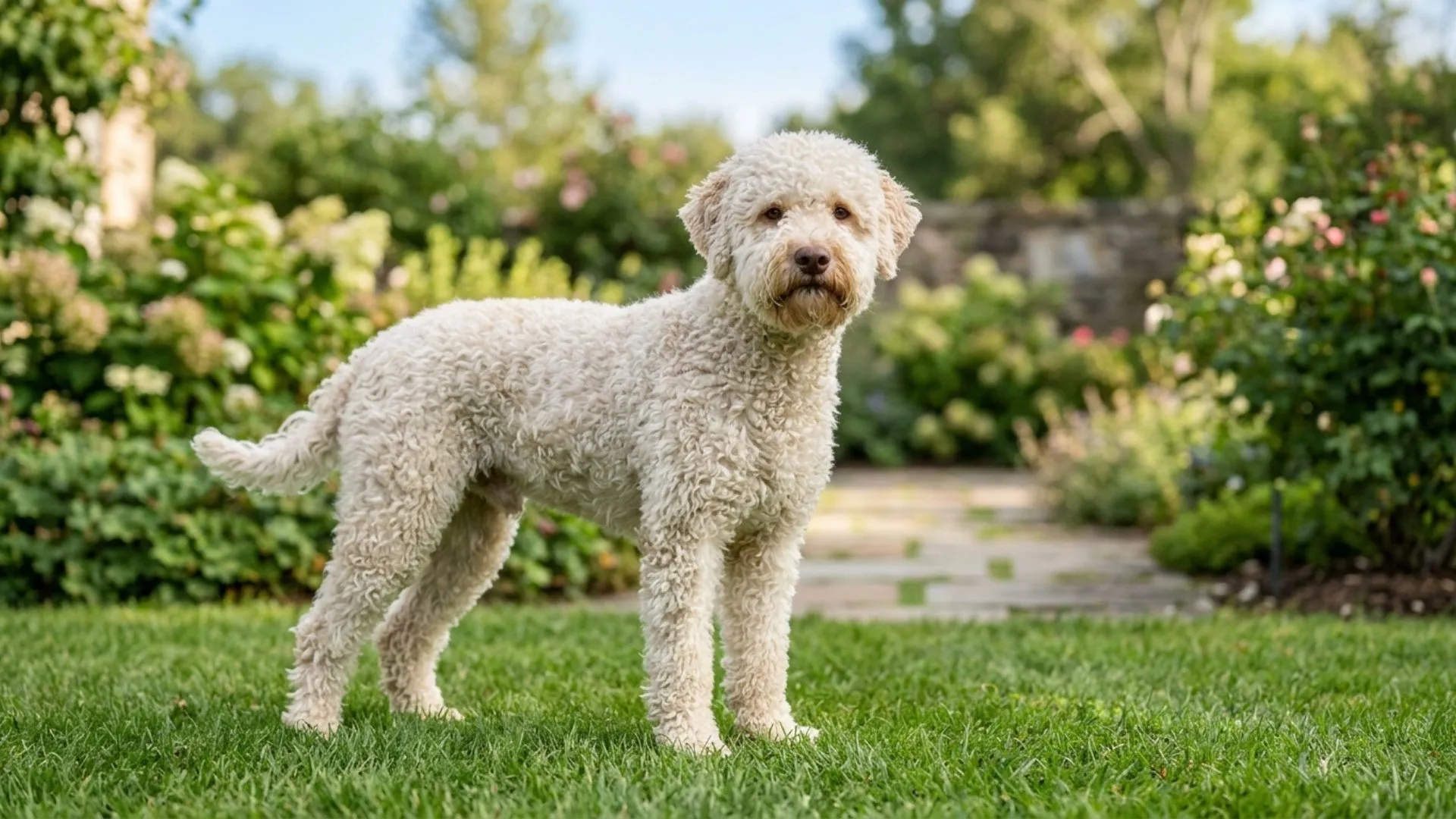
Have you ever wondered why some dogs have curly coats while others have smooth skin or long flowing fur? The answer lies in genetics, environment, and centuries of adaptation.
In this guide, you’ll discover how different coats help dogs stay comfortable in various climates and perform specific jobs.
Hair follicles play a major role in creating curly, straight, rough, or smooth coats, while some dogs have a single coat and others have a thick double coat that offers extra insulation. Coat types also affect grooming needs, shedding, comfort, and everyday care.
In addition, coat colors and patterns can vary greatly, giving each breed its own unique look. Whether you’re a pet owner, a family searching for a new companion, or simply a dog lover, understanding coat types can help you make better choices.
Now, let’s explore some remarkable breeds whose coats truly set them apart.
Amazing Dog Breeds and Their Distinct Coat Types
Here we go, one by one.
1. Komondor
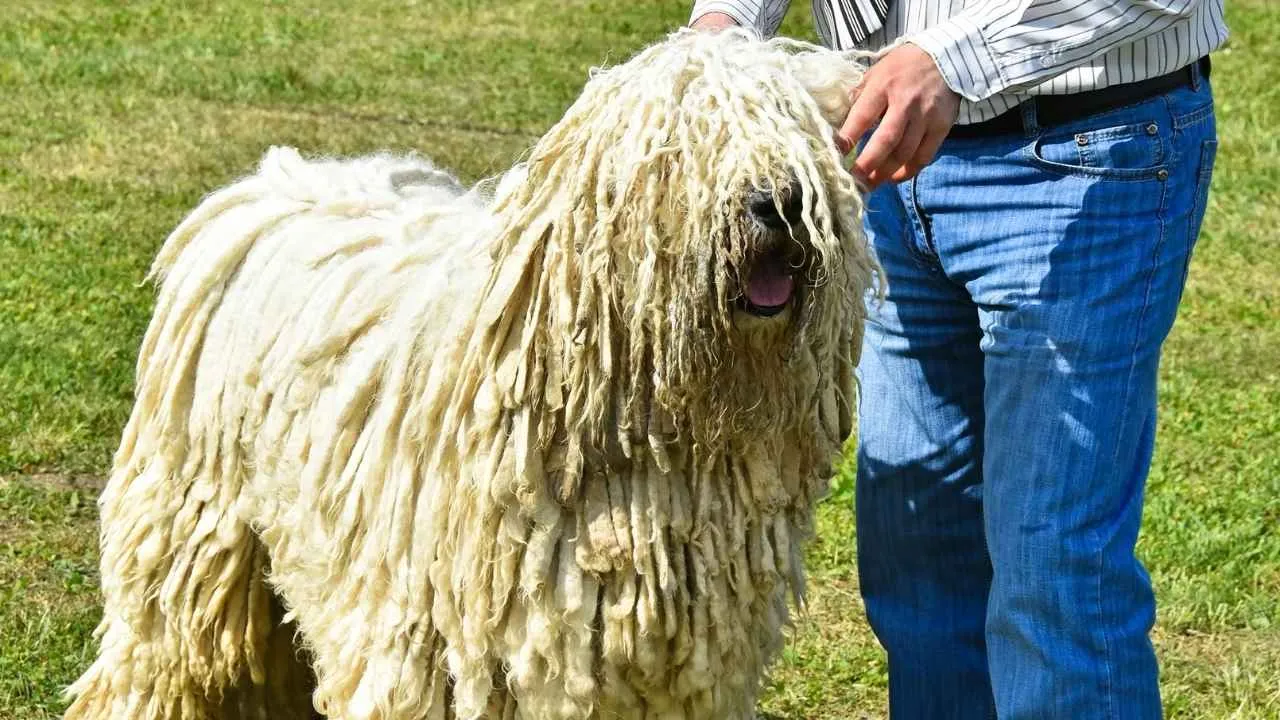
Known as the “mop dog,” the Komondor is one of the most recognizable breeds in the world. This large Hungarian livestock guardian dog has spent centuries protecting sheep from predators.
According to the PDSA, Komondors were bred to guard herds and flocks, and that strong protective instinct remains today. Their distinctive appearance and unusual dog coat type make them impossible to forget.
What Makes This Coat Unique?
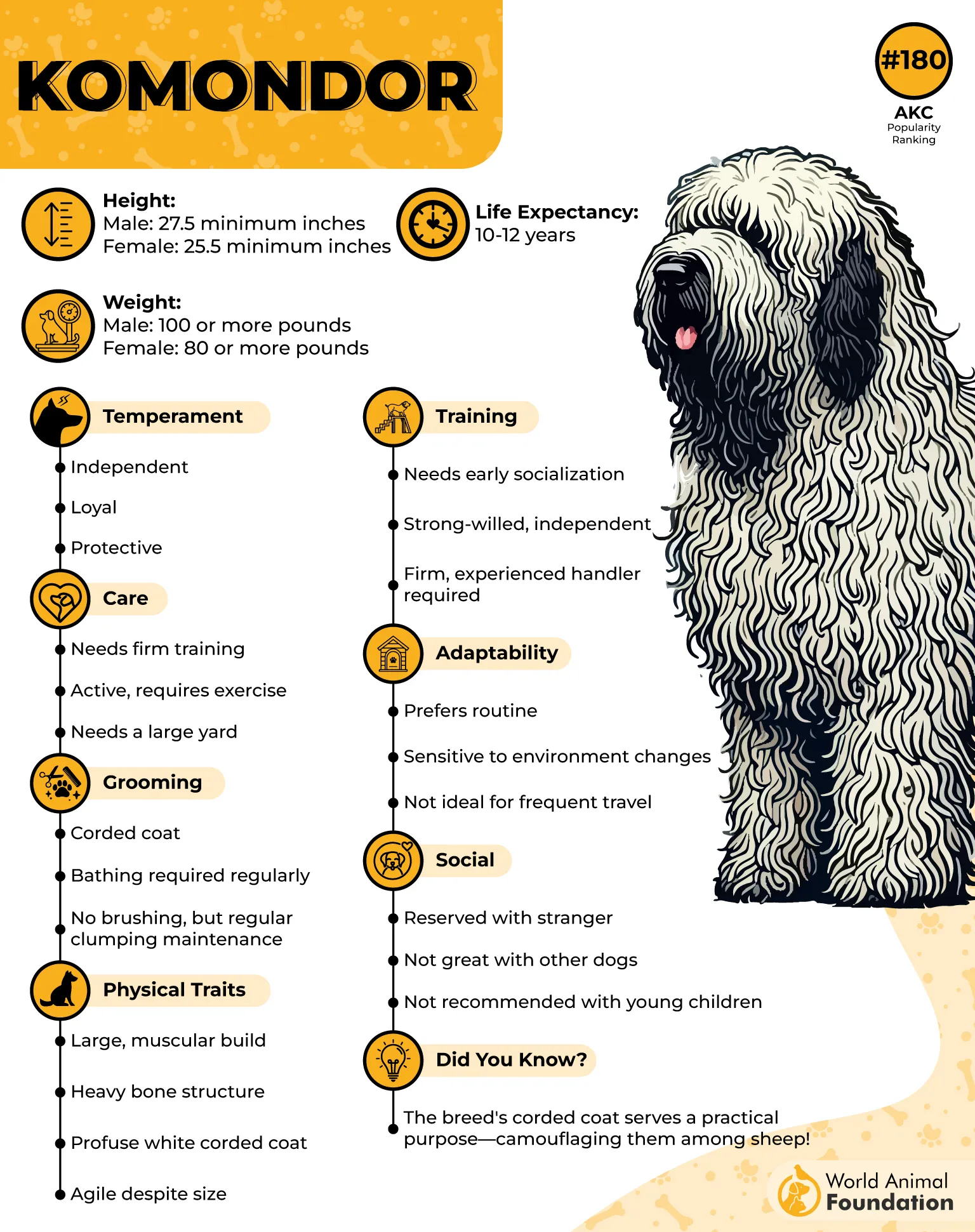
The Komondor is famous for its long white cords that form naturally as the dog grows. Over time, the outer coat and undercoat twist together to create rope-like strands. This double-coated dog breed was developed to help working dogs survive harsh outdoor conditions while guarding livestock.
Why The Coat Matters
Those thick cords provide excellent insulation during cold weather and help shield the dog from rough terrain. The fluffy white coat also helped Komondors blend into sheep flocks, allowing them to surprise predators when danger appeared.
Grooming Challenges
This coat requires special care. Owners must separate cords by hand to prevent large mats from forming. Baths can take time because the cords dry slowly, and leaves or debris can become trapped within the coat.
Best Match For
The Komondor is best suited for active owners who enjoy specialized grooming and unique breeds. With proper care and space, these impressive dogs thrive as loyal guardians and devoted family companions.
2. Portuguese Water Dog
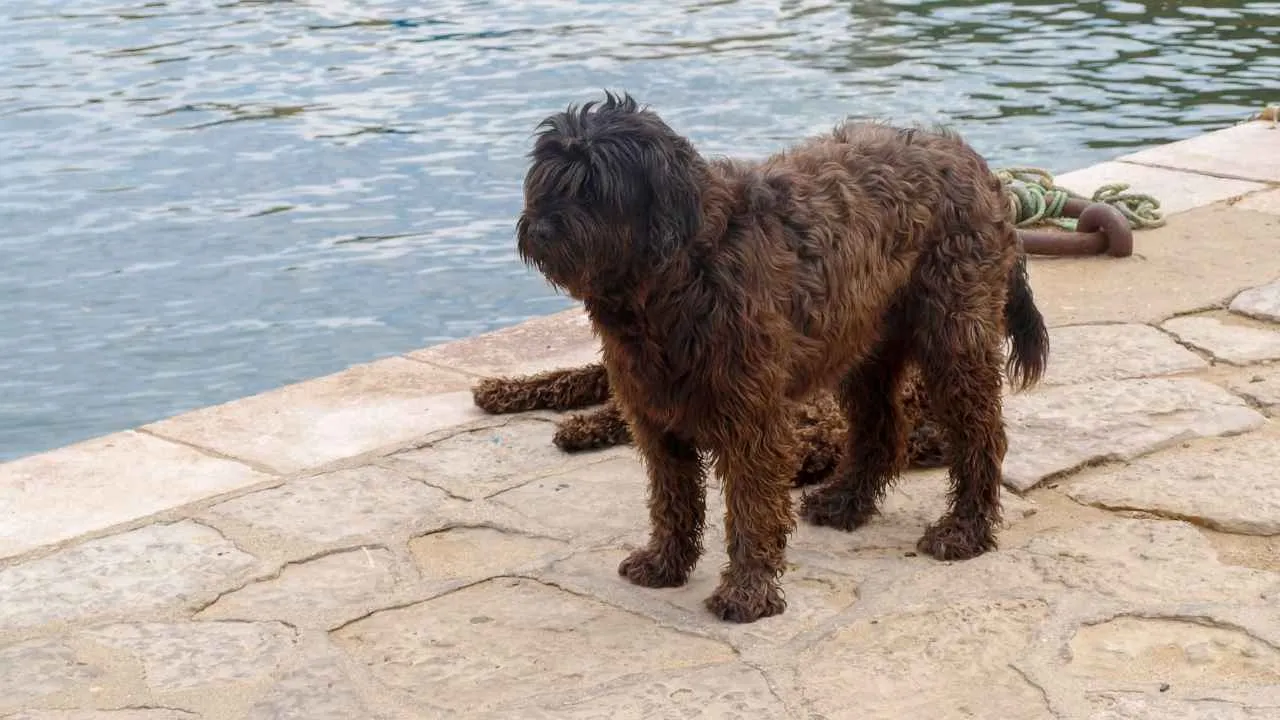
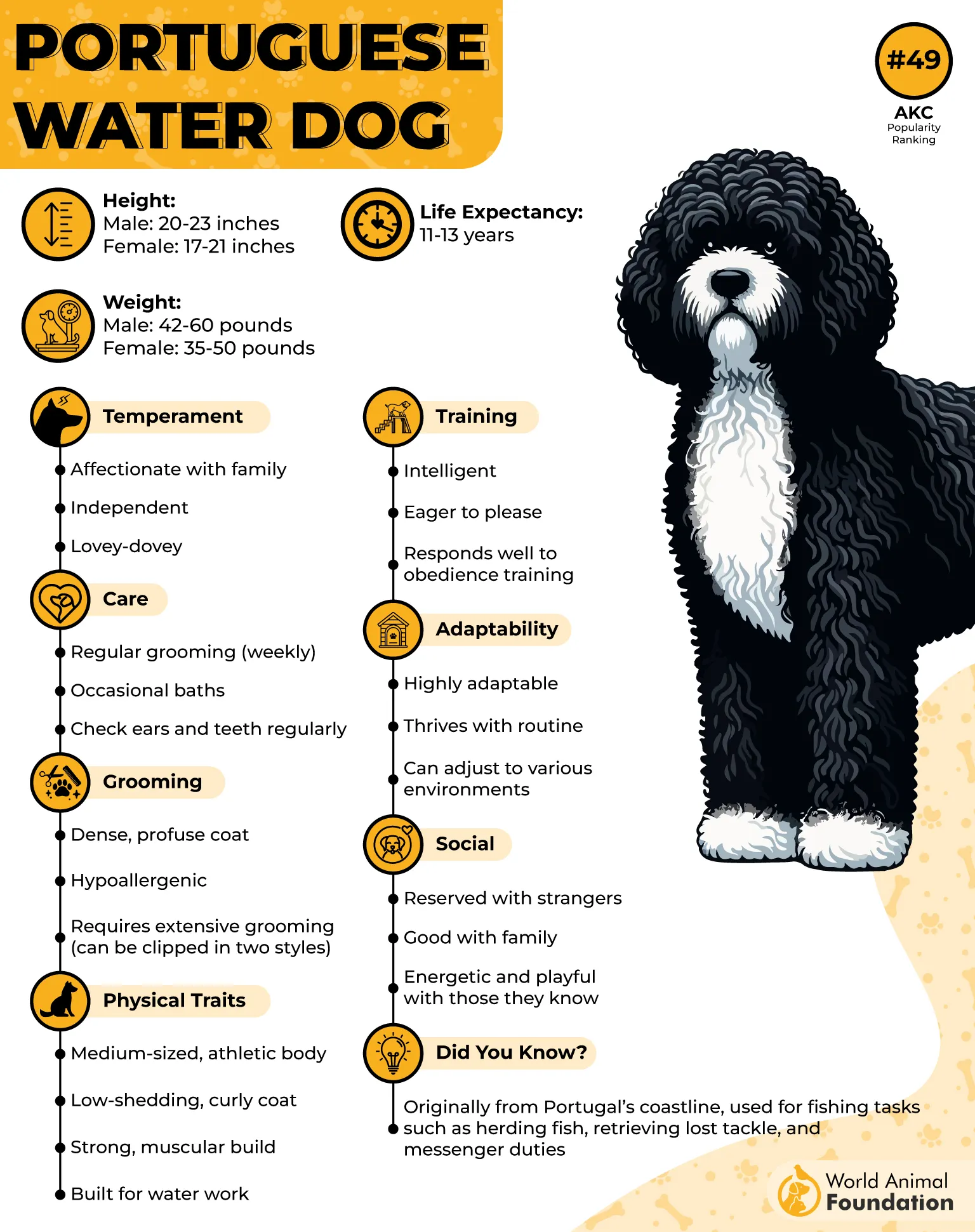
The Portuguese Water Dog is a rare and hardworking breed with deep roots in Portugal’s Algarve region. According to Wikipedia, this breed is also known as the Portuguese Fishing Dog because it spent centuries helping fishermen at sea.
Originally bred to retrieve lost gear, carry messages between boats, and help manage fish near nets, these dogs became trusted working partners. Today, this intelligent breed is admired for its athletic nature, loyalty, and love of water.
A Coat Designed for Swimming
The Portuguese Water Dog has a thick, dense coat that helps it perform well in wet conditions. Its coat can be either curly or wavy, but both varieties offer protection from cold water.
This special coat traps warmth close to the body while helping repel moisture. Because of this natural insulation, the breed could spend long hours working alongside fishermen.
Low-Shedding Advantages
Many owners appreciate the breed’s low-shedding curls, which leave less loose fur around the home. The curly coat forms tighter ringlets, while the wavy coat falls in softer waves.
Although no dog is completely non-shedding, this breed’s unique hair tends to stay trapped within the coat instead of spreading everywhere.
Maintenance Needs
Regular grooming is important to keep the coat healthy. Frequent brushing helps prevent matting, especially in areas where friction occurs. Many owners also schedule routine trimming to keep the coat neat and manageable throughout the year.
Ideal Homes
This energetic breed thrives with active families who enjoy hiking, swimming, boating, and other outdoor activities. With daily activity and attention, the Portuguese Water Dog becomes a devoted companion that is always ready for the next adventure.
3. Miniature Poodle
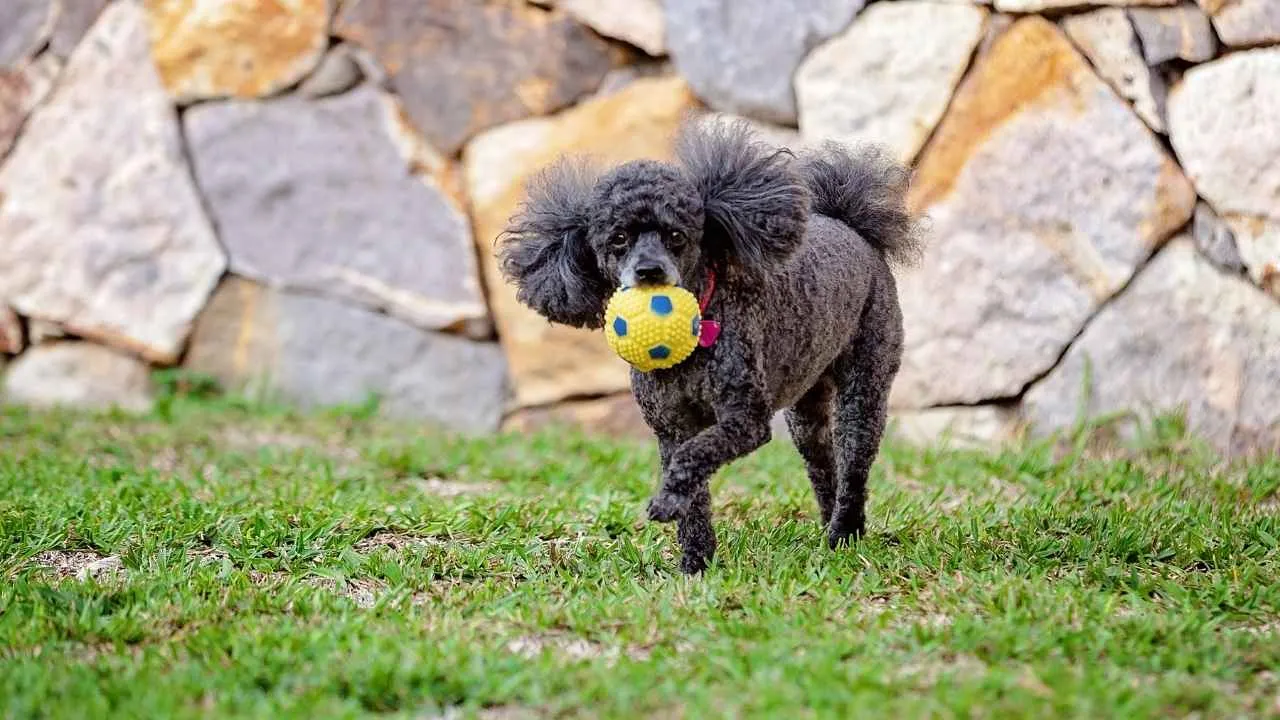
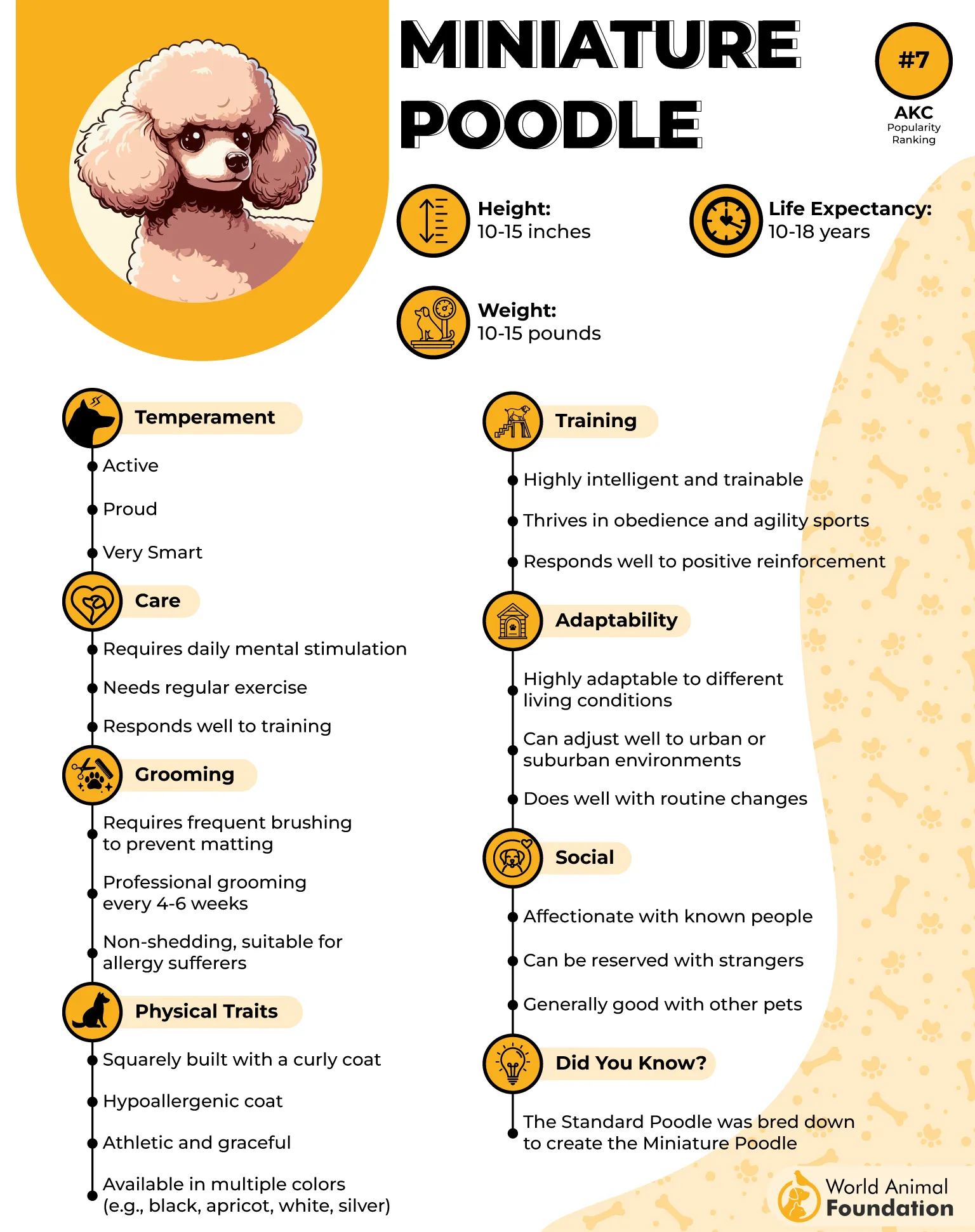
The Miniature Poodle proves that great things come in small packages. This popular small dog breed is known for its sharp mind, playful spirit, and eye-catching curls. According to PetMD, Miniature Poodles are active dogs that enjoy learning tricks, taking long walks, and even swimming with their owners.
Their intelligence and athletic ability have also made them stars in many forms of dog sport. With their expressive eyes and graceful look, they have remained favorites for generations, especially in France, where Poodles became a beloved national breed.
How Curly Coats Differ From Other Coat Types
A Miniature Poodle’s tight curls grow continuously rather than shedding heavily like many other breeds. These curls trap loose hair within the coat, which helps reduce fur around the home. The texture feels soft and often appears beautifully silky when properly maintained.
A Look At Coat Variety
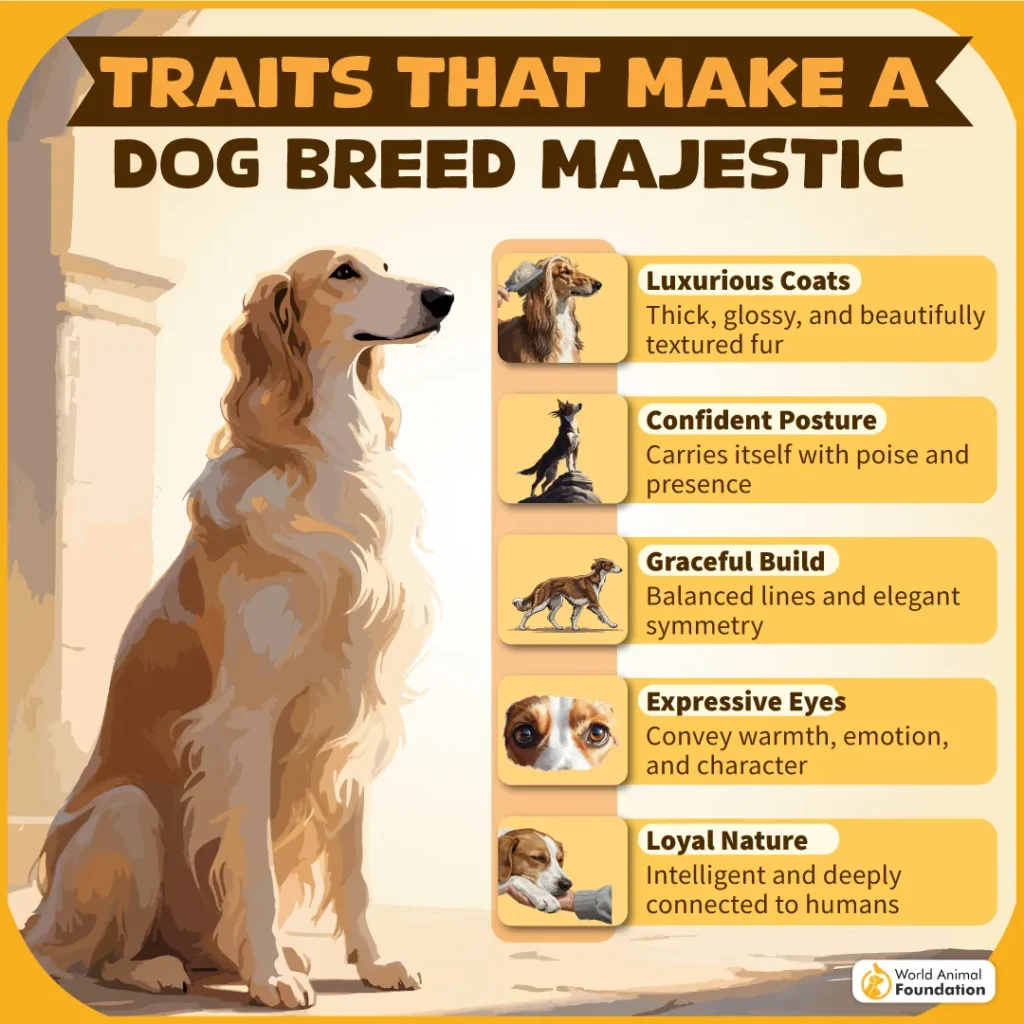
Miniature Poodles come in several colors, including black, white, brown, gray, apricot, and cream. Genetics play a major role in determining both coat color and texture, giving each dog a unique appearance.
Grooming Requirements
Regular brushing is essential to prevent tangles and mats from forming. Most owners schedule professional grooming every few weeks to keep the coat neat, healthy, and comfortable.
Why Owners Love This Coat
Beyond its elegant appearance, the Poodle coat offers incredible styling options. Combined with the breed’s gentle nature and reputation as an intelligent dog breed, those famous curls continue to win admirers around the world.
4. Puli
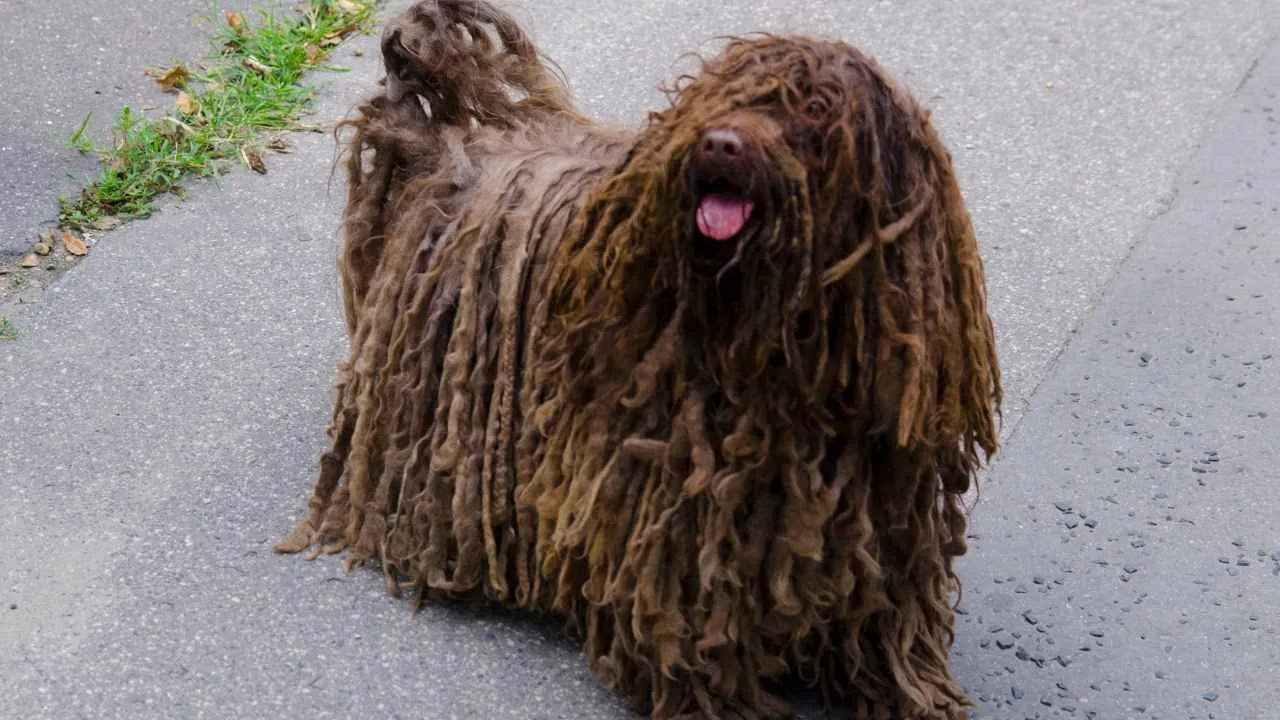
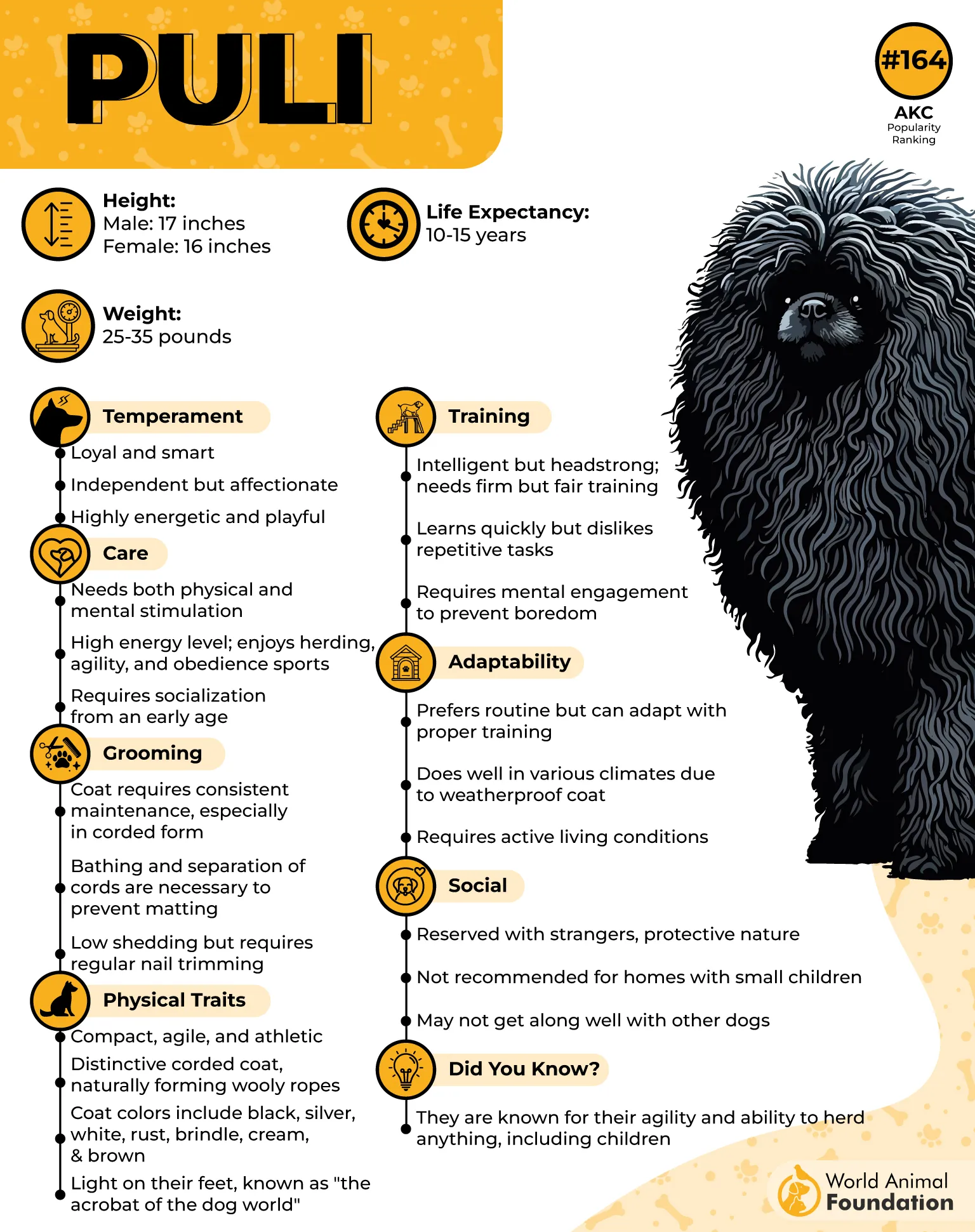
The Puli is an ancient herding breed with a look unlike any other dog. According to Hill’s Pet, the breed has Asiatic roots and may descend from the Tibetan Terrier brought to Hungary before A.D. 900.
Originally developed for herding, the Puli combines a strong work ethic with a loyal nature and lively personality. Beneath its famous cords lies a compact, muscular build, a refined muzzle, and surprising elegance.
The Purpose Behind the Cords
The Puli’s unique dog coat is formed to support long days of farm work. As the coat grows, the outer hair and softer undercoat naturally twist into cords. These cords act like natural insulation, helping protect the dog while working outdoors in cooler climates.
Weather Resistance Benefits
The corded coat offers excellent protection from rain, wind, and cold temperatures. Its durable structure helps Pulik stay comfortable during long workdays while watching over livestock. Some dogs even develop cords with a subtle rust coat tint as the coat ages.
Caring for a Corded Coat
Maintaining the coat takes dedication. Owners must separate cords by hand and remove trapped dead hair to keep them healthy. After bathing, the cords require thorough drying, which can take several hours.
Who Appreciates This Breed Most?
The Puli is a great match for owners who admire traditional working dogs. Its hypoallergenic coat, intelligence, and need for mental stimulation make it especially appealing to active and engaged households.
5. Chinese Crested
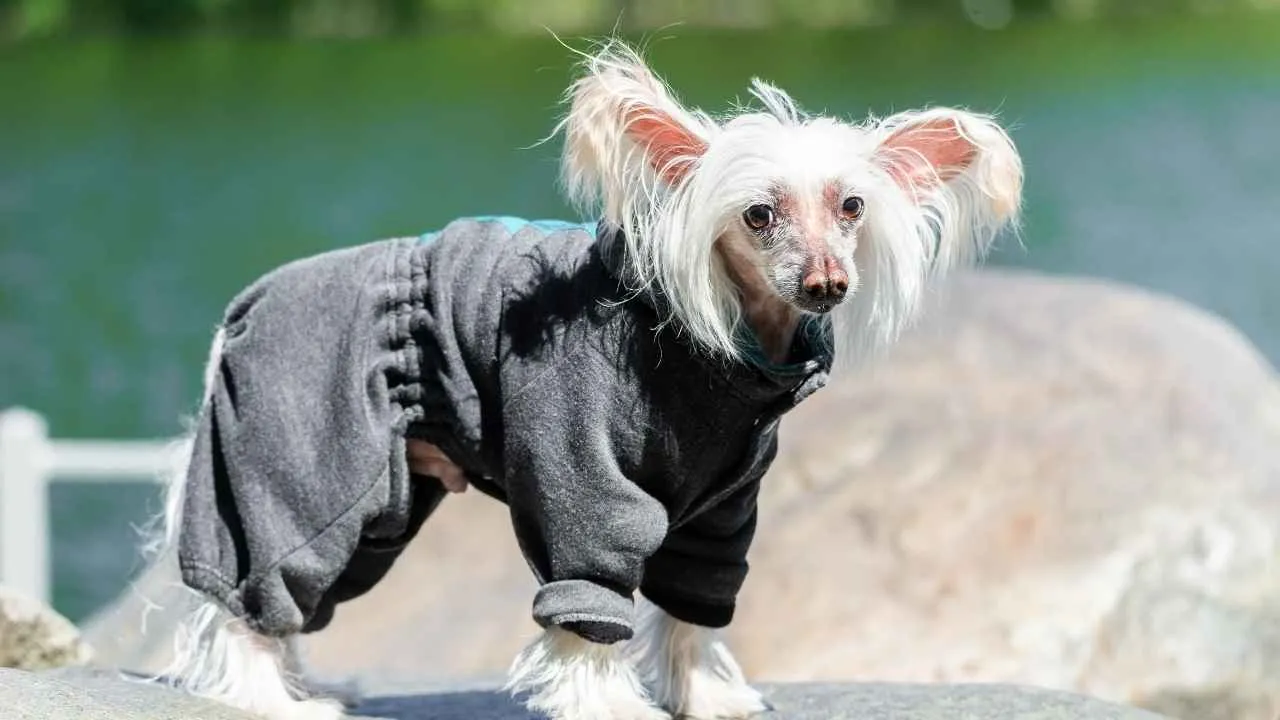
The Chinese Crested stands out from almost every other breed because of its unusual appearance. This charming companion dog is known for its affectionate nature, loyal personality, and eye-catching look.
Chinese Cresteds even have striking eyes and a naturally confident posture. While many people focus on the breed’s lack of fur, its unique dog coat type requires more care than most expect.
Understanding Hairless Dogs
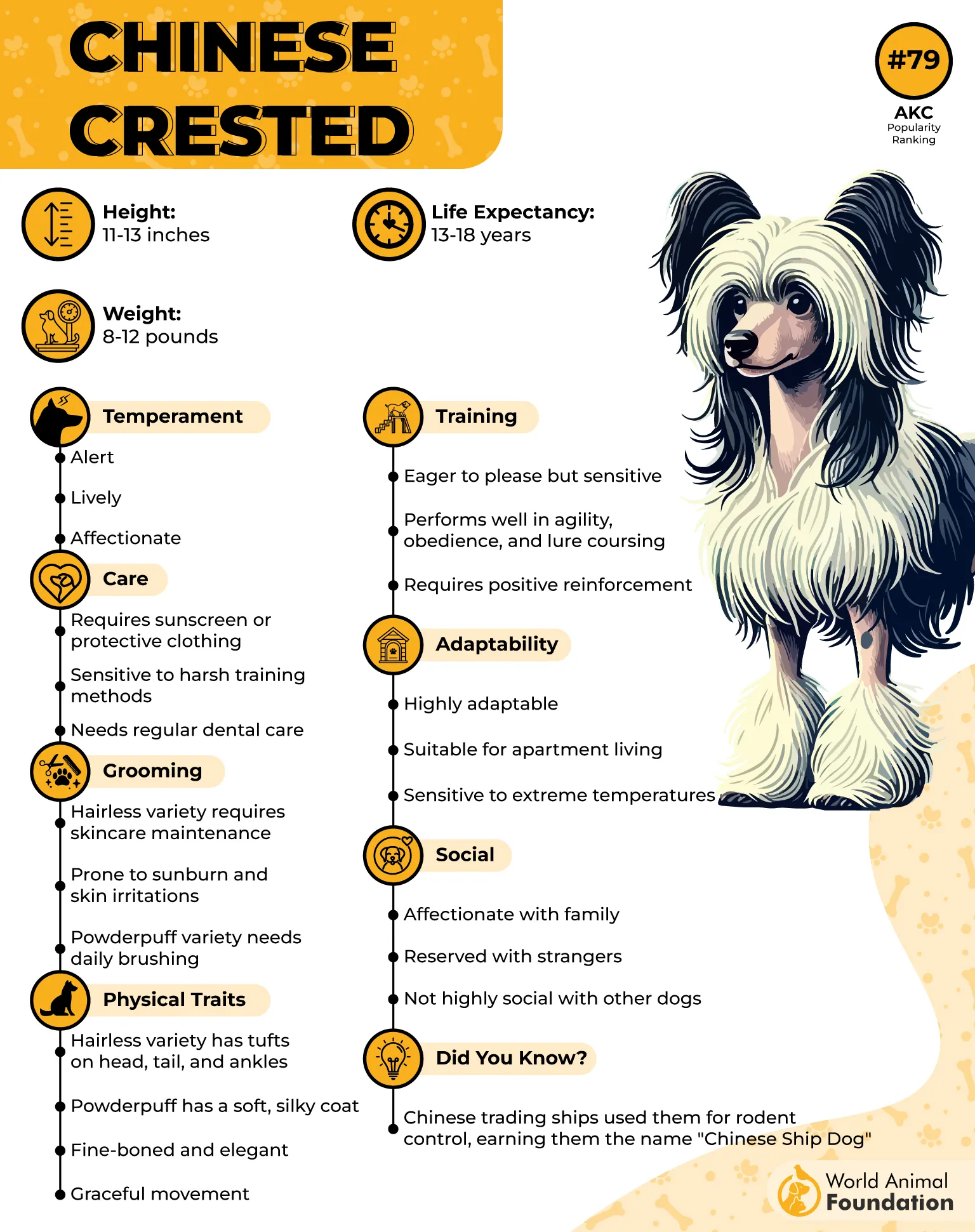
The Chinese Crested comes in two varieties that can be born in the same litter. The hairless variety has smooth skin with small tufts of silky hair on the head, feet, and tail.
According to the American Kennel Club, the coated variety, known as the Powderpuff, is covered in a soft, silky coat, making it one of the most attractive silky-coated dogs.
Unique Skin Care Needs
Hairless Cresteds need protection from strong sunlight and harsh weather. Many owners use pet-safe moisturizers to keep the skin healthy. Seasonal care is also important because cold temperatures and dry air can affect exposed skin.
Common Misconceptions
Many people assume less hair means less work. In reality, this loving breed often requires extra grooming and regular skin checks. Monitoring the skin helps owners spot irritation before it becomes a problem.
Great For
The Chinese Crested is ideal for an active owner looking for a very different canine companion with plenty of charm and personality.
6. Bergamasco Sheepdog
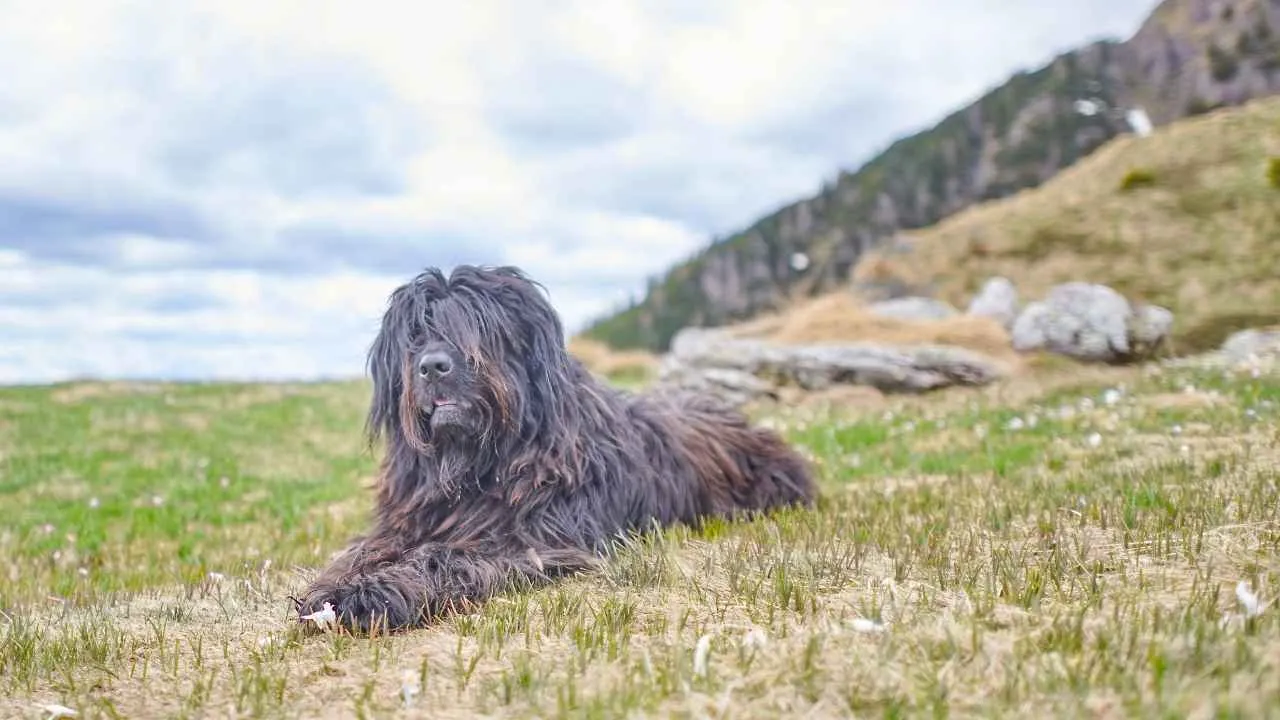
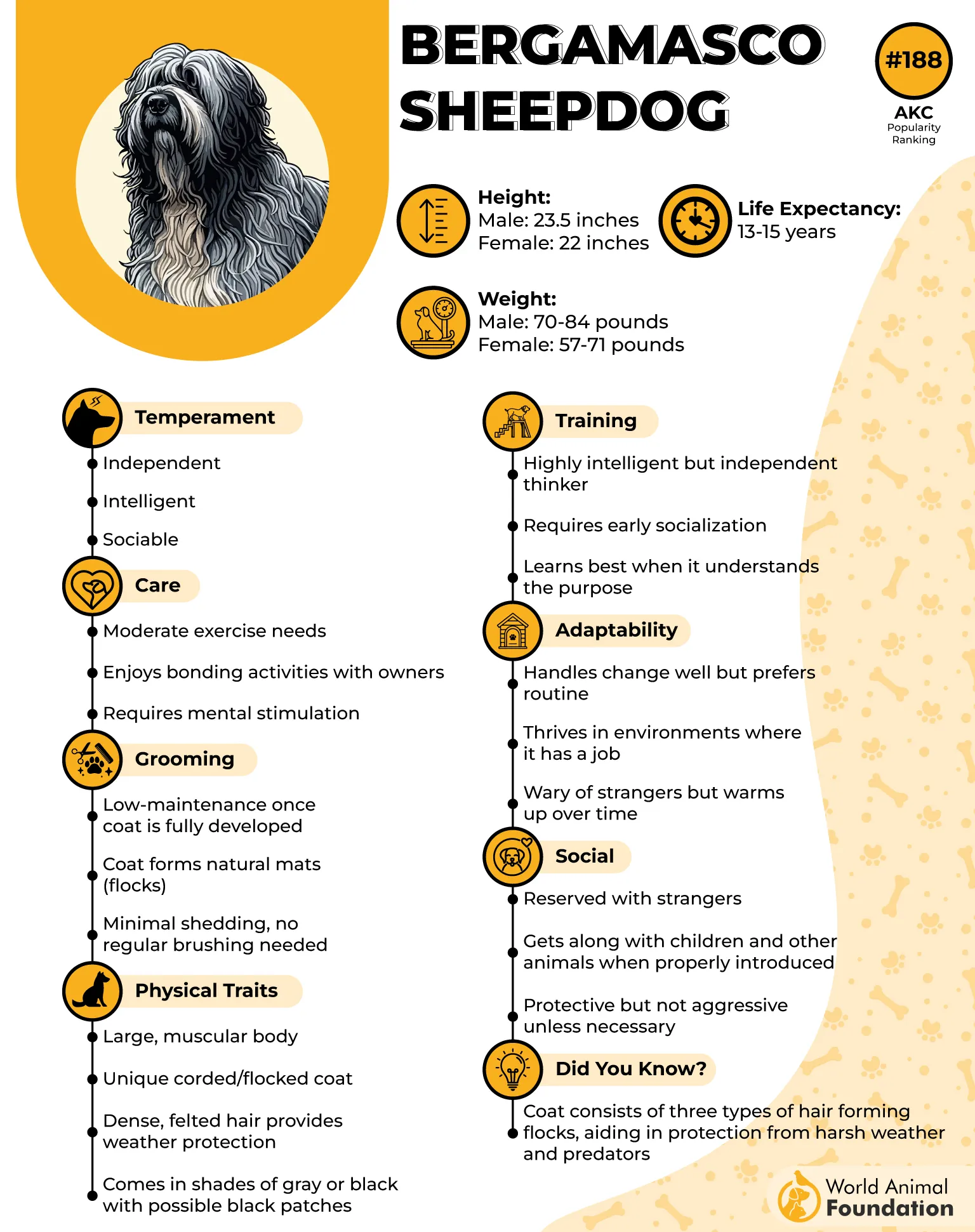
The Bergamasco Sheepdog is one of the most fascinating breeds in the dog world. According to Purina, this ancient breed is believed to be around 2,000 years old and was originally bred to herd and guard livestock.
Known for its intelligence and loving temperament, the Bergamasco combines hardworking instincts with calm confidence. Its unique coat and elegant movement make it unforgettable.
A Coat Unlike Any Other
Unlike a typical long coat or thick coat, the Bergamasco’s coat develops into loose mats called flocks. These form when three different hair types combine: a dense undercoat, a goat-like outer coat, and a woolly layer.
Together, they create a protective covering that gives this remarkable coated dog its distinctive appearance.
Historical Purpose
The flocked coat served an important purpose in the mountains of northern Italy. It protected the dog while guarding sheep and cattle against harsh weather and rough terrain. This natural shield helped the breed thrive in challenging climates.
Surprisingly Simple Maintenance
Although the coat looks demanding, mature flocks need surprisingly little brushing. The coat’s natural oil helps keep it healthy, while occasional inspections and cleaning are usually enough. Owners should also provide plenty of mental stimulation to keep this incredibly intelligent working breed happy.
Why This Coat Stands Out
Few breeds have a coat structure as unusual as the Bergamasco. Its naturally formed flocks make it one of the most distinctive and recognizable coats in the canine world.
7. Lagotto Romagnolo
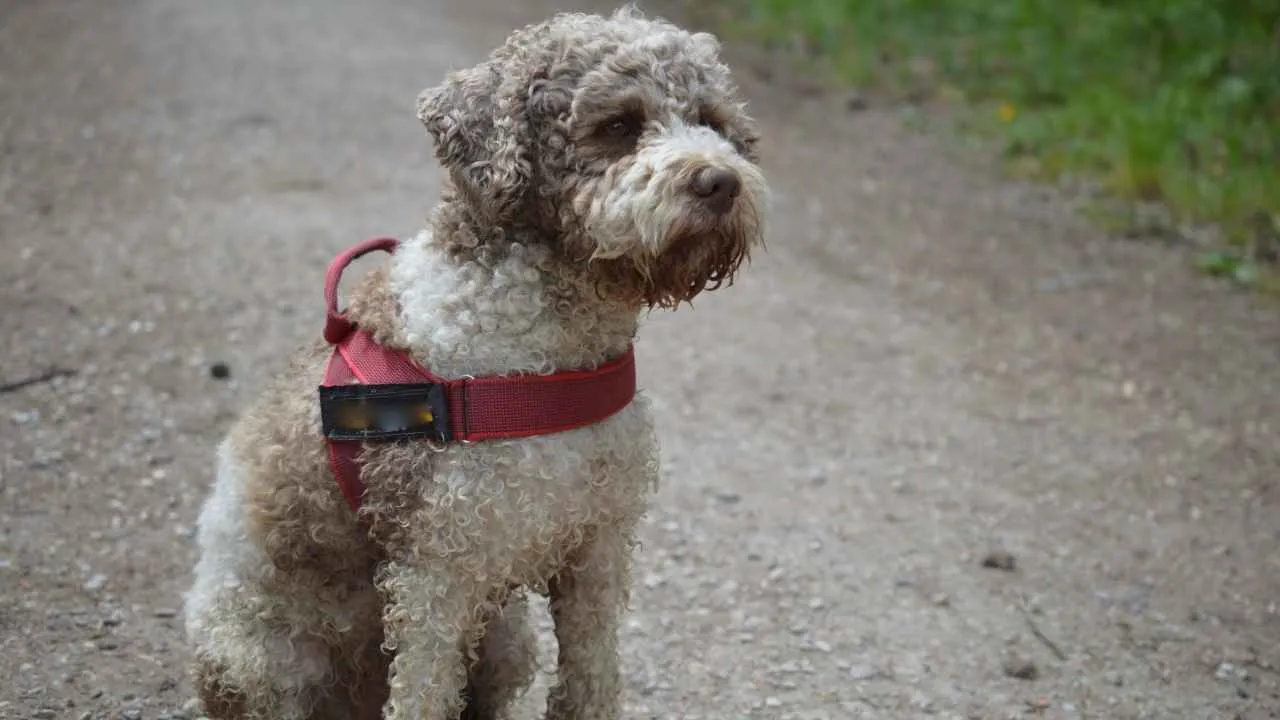
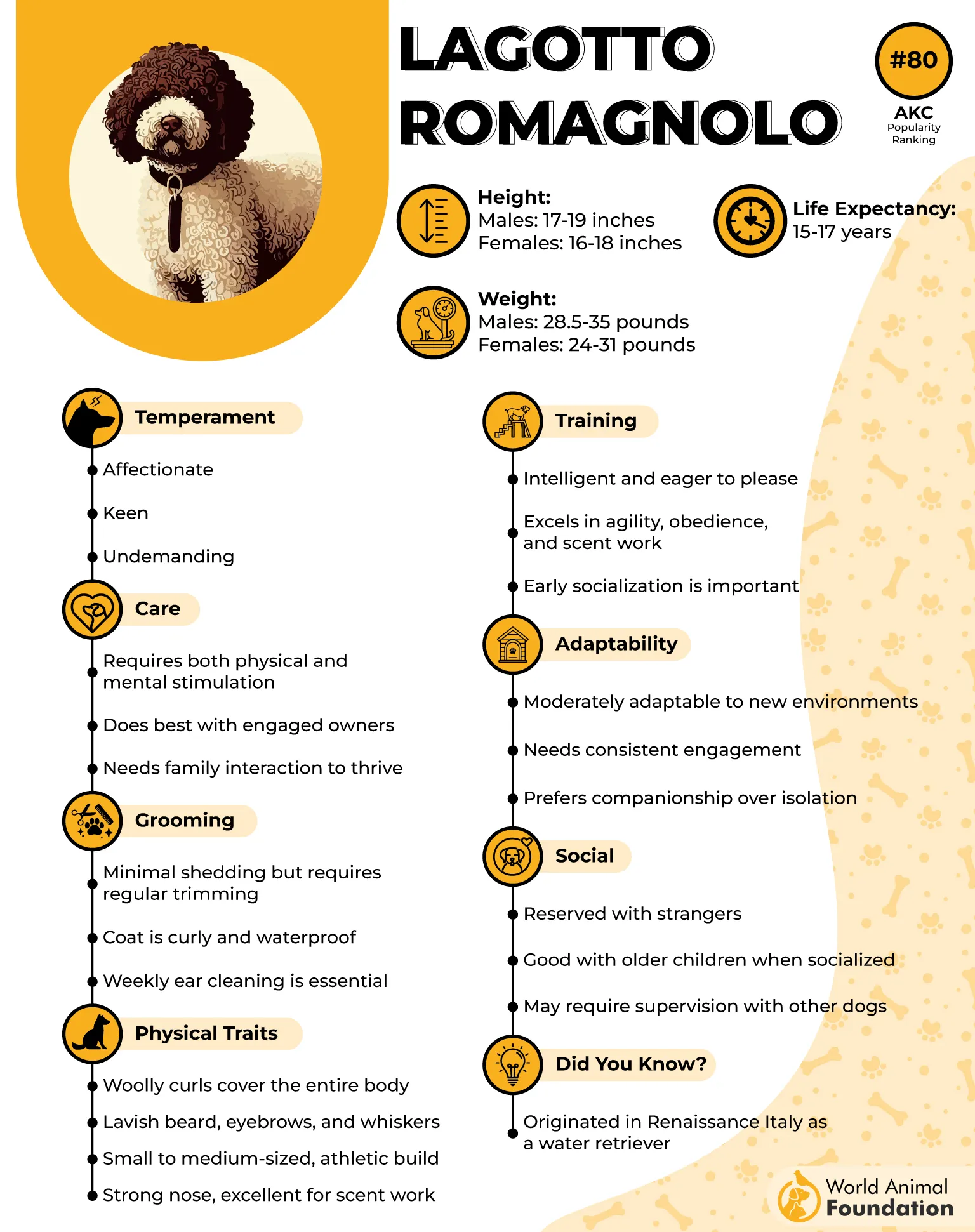
The Lagotto Romagnolo is Italy’s famous truffle-hunting dog, loved for its curly coat and cheerful personality. This breed originated in Italy and became known for its remarkable nose and strong work ethic.
With a beard, bushy eyebrows, and an adorable expression, the Lagotto often looks like a plush toy. However, behind those charming features is a hardworking dog with impressive endurance and several unique characteristics that set it apart from other breeds.
A Coat Built For Work
The Lagotto’s dense, woolly curls were designed for outdoor work. Its protective coat helped shield the dog from cold weather, wet fields, and rough vegetation. During truffle hunts, the curls protected the skin as the dog searched through brush and soil for hidden treasures.
Texture And Appearance
Unlike a Poodle’s tighter and more polished curls, the Lagotto’s coat has a natural, rustic appearance. The curls feel more like human hair than fur and may feature white markings in some dogs. This textured dog coat adds to the breed’s distinctive charm.
Keeping The Coat Healthy
Owners should clip the coat regularly to maintain its shape and prevent excessive matting. Seasonal grooming and routine checks help keep the curls clean, comfortable, and healthy throughout the year.
Conclusion
Every coat tells a story.
Dog coats are more than looks. They reflect history and purpose. Many coats developed for specific jobs in different environments. This amazing diversity in coat types reminds us how unique every dog is in the dog world.
Grooming needs also vary greatly, so owners must understand what each coat requires in everyday life. So, note this: always choose the right dog that fits your time and care style. In the end, your four-legged friend becomes easier to love and care for when you truly understand their coat.
